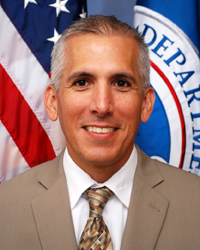
George Mason Biodefense is very excited to launch the Biodefense Policy Seminar, the D.C. area’s premiere speaker series focused on biodefense and biosecurity issues. The monthly seminars – free and open to the public – feature leading figures within the academic, security, industry, and policy fields of biodefense. Our speakers for the next few months include Dr. Charles Bailey, Executive Director at the National Biodefense Center, Dr. Alexander Garza, Assistant Secretary for health affairs and Chief Medical Officer of the Department of Homeland Security, and Dr. Daniel Gerstein, Deputy Undersecretary for Science & Technology at the Department of Homeland Security.
March Seminar Speaker: Dr. Charles Bailey When: Wednesday, March 20th, 2013, 7:20 – 8:30PM Where: Johnson Center Meeting Room B, George Mason University, 4400 University Drive, Fairfax, VA 22030
Charles Bailey is the Executive Director of the National Center for Biodefense and Infectious Diseases. He manages a Biosafety Level -3 containment laboratory and conducts translational research aimed at developing diagnostics, antiviral drugs, therapeutics and vaccines against biological threat pathogens or newly emerging infectious diseases. Prior to joining George Mason, Dr. Bailey served in the US Army for 25 years where he conducted research on arthropod borne viral diseases in the US, Southeast Asia and Africa. Dr. Bailey also served as a senior analyst with the Defense Intelligence Agency and as an analyst for the Battelle Memorial Institute. RSVP
Highlights include secondary transmission of vaccinia through sex, humidity – good for something?!, two new cases of H1N1 in Taiwan, another H5N1 fatality in Cambodia, viruses with immune systems, and avian influenza (no, not that one- it’s H7N3) in Mexico. Happy Friday!
This is one of the ongoing problems with the ACAM2000 vaccine – it sheds. More specifically, you shed for a couple days after receiving the vaccine. Which means you can pass it on, in a number of different ways.
MMWR – “On June 24, 2012, CDC notified Public Health Services, County of San Diego Health and Human Services Agency, of a suspected case of vaccinia virus infection transmitted by sexual contact. The case had been reported to CDC by an infectious disease specialist who had requested vaccinia immune globulin intravenous (VIGIV) (Cangene Corporation, Berwyn, Pennsylvania) for a patient with lesions suspicious for vaccinia. The patient reported two recent sexual contacts: one with a partner who recently had been vaccinated against smallpox and a later encounter with an unvaccinated partner. Infections resulting from secondary transmission of vaccinia virus from the smallpox vaccinee to the patient and subsequent tertiary transmission of the virus from the patient to the unvaccinated partner were confirmed by the County of San Diego Public Health Laboratory.”
High levels of humidity – the bane of DC metro riders, women who straighten their hair, and people who don’t like being able to drink their air – are apparently very good for keeping the flu at bay:
Science Daily – “Higher humidity levels indoors can significantly reduce the infectivity of influenza virus particles released by coughing, according to research published February 27 in the open access journal PLOS ONE by John Noti and colleagues from the National Institute for Occupational Safety and Health, Centers for Disease Control and Prevention. The researchers tested the effect of relative humidity on the capacity of flu virus released in a simulated ‘cough’ to re-infect cells. They found that an hour after being released in a room at a relative humidity of 23% or less, 70-77% of viral particles retained their infectious capacity, but when humidity was increased to about 43%, only 14% of the virus particles were capable of infecting cells.”
Full credit to Taiwan and China: during the Chinese New Year a huge swath of the population travels, creating a really tremendous logistical challenge in terms of disease surveillance. Both states have nonetheless managed to keep a sharp eye on new cases of influenza:
The China Post – “The H1N1 flu strain claimed two lives this month, as the number of diagnosed influenza cases surged due to increased travel over Chinese New Year, the Centers for Disease Control (CDC, 疾病管制局) said yesterday. During the recent flu season, 365 cases of influenza were reported, resulting in 29 deaths, according to the CDC, which has attributed 26 of the deaths to the H3N2 virus strain and three deaths to H1N1. The first victim to be claimed by H1N1 earlier this month, a 48-year-old man, had reported flu-like symptoms of fever, soreness and pain on Jan. 19, but did not seek medical attention until Jan. 24. The man died on Feb. 5 despite the efforts of doctors. The second victim, a 38-year-old woman, became feverish and felt discomfort on Feb. 14, but did not receive medical attention until Feb. 18 when she was rushed to the ER. She was resuscitated but died on Feb. 21.”
The man was known to have come in contact with infected poultry in his village. Cambodia is having difficulty halting the disease incidence due to the ongoing practice of slaughtering poultry within residences. This practice is also thought to explain the disproportionately high incidence of the disease amongst children – approximately 20 of the 30 cases of H5N1 in Cambodia have occurred in children under the age of 14.
WHO – “The ninth case, a 35-year-old man from Kbal Ou village, Me Sar Chrey commune, Stueng Trang district in Kampong Cham province, was confirmed positive for influenza H5N1 on 23 February 2013 by Institut Pasteur du Cambodge. He developed fever on 8 February 2013 and his condition worsened on 10 February 2013 with fever, frequent cough, and dyspnea….The man is the ninth person this year and the 30th person to become infected with the H5N1 virus, and the 27th person to die from complications of the disease in Cambodia.”
What do you think? Should viruses be classified as “living”?
Discovery News – “Viruses can acquire fully functional immune systems, according to new research that bolsters the controversial theory that viruses are living creatures. Until now, scientists thought that viruses existed only as primitive particles of DNA or RNA, and therefore lacked the sophistication of an immune system. The study, published in the journal Nature, is the first to show that a virus can indeed possess an immune system, not to mention other qualities commonly associated with complex life forms.”
Just as a FYI – stick it in the back of your mind for the time being.
The Poultry Site – “The dreaded avian influenza has returned to central Mexico again this year, this time causing significant poultry deaths in Guanajuato state, writes Carlos Navarro, Editor of SourceMex. The outbreak of the H7N3 virus—which had forced poultry farmers in the state of Guanajuato to destroy more than 2 million birds as of the end of February — affects municipalities in northern Guanajuato as well as in Jalisco state.”
By Jomana Musmar Ms. Musmar is a PhD student in the Biodefense program at George Mason.
In a letter published on January 23, 2013, in Nature and Science, forty scientists announced an end to the self-imposed moratorium on research involving highly pathogenic avian influenza transmission. The moratorium was first triggered by the controversial publication of two H5N1 experiments in 2011. In their letter, the scientists provide two major conclusions: that the aims of the moratorium have been reached, and that the benefits of conducting research on H5N1 outweigh the risks. They emphasize that scientists have a public health responsibility to conduct life-saving research, and that they are fully aware of the high risks involved in its potential misuse. They also highlight that the moratorium helped foster robust global dialogue on the benefits and existing efforts to secure this research, in addition to the formal review of international policies.
Two such policies have been recently released by the US government (both available at http://www.phe.gov/s3/dualuse/Pages/default.aspx). The first is a White House proposed policy-update aimed at maximizing the benefits of life sciences research. The other is a US Department of Health and Human Services draft framework guiding funding decisions for conducting H5N1 research. The first of seven criteria in the draft framework to determine funding is that “the virus anticipated to be generated could be produced through a natural evolutionary process.” This criterion echoes the final key point in the scientist’s letter in support of their conclusion–that the risks of an emerging H5N1 capable of mammalian transmission already exist in nature.
Although some may argue that the year-long moratorium has impeded the advancement of science and research related to influenza, I believe it has provided several benefits: (1) An opportunity for scientists to publicly voice their opinions and debate the topic on a global scale; (2) a chance for decision-makers to renew efforts at globally standardizing frameworks and guidelines related to research that present international security concerns; and (3) an increase in awareness on the public health benefits and security concerns of research in the life sciences.
In conclusion, the debate on the risks versus the benefits of controversial life science research is necessary to ensure that all stakeholders are participating in open dialogue, and that the frameworks drafted to help guide this sort of research are nimble enough to keep up with the pace of scientific advancements.
The Russian Meteor (image credit: Alex Alishevskikh)
Highlights include person-to-person transmission of the NCov, new drug to stop drug-resistant flu, plant viruses: yes they exist, sweat more to prevent TB, blacklegged ticks are spreading an unnamed disease (blackleggedia?), and did the meteor bring a virus which will kill us all? More news to come. Happy Friday!
Note: No updates on the deaths of two people in China from H5N1 – the cases were of particular concern due to the inability of health investigators to establish connections between either case and infected poultry. Person-to-person? We’ll keep you posted.
The UK patient infected with the novel coronavirus (NCov) after travelling in the Middle East has died, raising the number of deaths to seven (out of thirteen known infections). The virus was not thought to be contagious until two family members of the sickened UK patient also became infected.
Bloomberg – “Two probable cases of human-to-human transmission of the new coronavirus that’s killed six people increase the pathogen’s threat to the European Union, according to the bloc’s disease-tracking agency. The appearance of a mild case of the disease caused by the virus also raises concern because it suggests more people may be infected than are known, have few or no symptoms, and are spreading the bug to others, the European Centre for Disease Prevention and Control said in a report late yesterday.”
One of the reasons why the Influenza viruses are so difficult to handle is their phenomenal ability to mutate. Due the prevalence and high infectivity of the viruses, drug resistance is understandably a cause for serious concern. A group of University of British Columbia researchers are seeking to mitigate this concern by developing drugs which inhibit neuraminidase binding in drug-resistant strains.
Science Daily – “Published online February 21 in the journal Science Express, the study details the development of a new drug candidate that prevents the flu virus from spreading from one cell to the next. The drug is shown to successfully treat mice with lethal strains of the flu virus. In order to spread in the body, the flu virus first uses a protein, called hemagglutinin, to bind to the healthy cell’s receptors. Once it has inserted its RNA and replicated, the virus uses an enzyme, called neuraminidase, to sever the connection and move on to the next healthy cell.”
Plants don’t get a lot of attention here at GMU Biodefense, which is unfair because they’re so prevalent. Plants have feelings too, right? Well no, but they can still catch viruses.
The Economist – “History casts a long shadow. Many of the first bacteria to be discovered were agents of disease, and that is how most people perceive bacteria to this day, even though less than 1% of them are pathogens. Something similar is turning out to be true of viruses, as Marilyn Roossinck of Pennsylvania State University told the AAAS meeting in Boston. Dr Roossinck works on plant viruses and she has assembled evidence suggesting a lot of such viruses are harmless to their hosts, and in some cases may actually be beneficial. That has implications for biology. It also has implications for agriculture.”
So I have some bad news everyone. Apparently in addition to making you happier and prolonging your life, exercise may also save you from TB. Or, to be explicit, the secretion of the natural antibiotic dermcidin in sweat effectively kills bacteria which may enter at open cuts or wounds. The bad news? This makes avoiding exercise that much harder.
Science Daily – “These natural substances, known as antimicrobial peptides (AMPs), are more effective in the long term than traditional antibiotics, because germs are not capable of quickly developing resistance against them. The antimicrobials can attack the bugs’ Achilles’ heel — their cell wall, which cannot be modified quickly to resist attack. Because of this, AMPs have great potential to form a new generation of antibiotics.”
Blacklegged ticks are well established vectors for Lyme disease. However, the arthropods are now apparently carrying a recently discovered bacteria, Borrelia miyamotoi, which causes an as-yet-unnamed disease. The bacterium was first found to be pathogenic to humans in 2011, with the first US cases occurring in New England in January of this year. It’s now been found on the West Coast.
The Record Searchlight – “The bacteria have been found in ticks in 19 of California’s counties, including Shasta, Siskiyou and Trinity counties, according to the state Department of Public Health. Symptoms of the disease are similar to Lyme disease, which is caused by a bacteria called Borrelia burgdorferi, according to the state…It could be that the disease hasn’t been found in Shasta County, or anywhere else in California, because no one has been looking for the bacteria in sick people, district Vector Ecologist John Albright told the trustees during a board meeting Tuesday.”
OK, technically this shouldn’t be an oddball piece. There are whole scientific theories dedicated to the possibility of life on our planet being starting with alien bacteria, right? It’s just, we saw this and immediately thought, “Killer Viruses from Outer Space!!” Which made us laugh. So we included it. Happy Friday? [extra points if you can tell us what a “canny bolide” is]
The Voice of Russia – “This space guest which paid us a visit could actually be a Trojan Horse and physical damage from its explosion could be nothing compared to other potential dangers. This canny bolide that managed to sneak away from telescopes might have brought new viruses or bacteria to Earth.”
The case number of the novel coronavirus (NCov) has increased to 13 with the World Health Organization announcing a new case in Saudi Arabia. Thus far seven of the 13 patients have died.
World Health Organization – “The patient was hospitalized on 29 January 2013 and died on 10 February 2013. The case was laboratory-confirmed on 18 February 2013. Further investigation into this case is ongoing.
In the United Kingdom, the Health Protection Agency continues to investigate the family cluster where three members of the family tested positive for NCoV infection. One member of this family, who had an underlying health condition, has died.”
Highlights include H5N1 is making health investigators in China very nervous, the reasons why we are still leery of mutating it in the lab, bureaucratese strikes PAHPA, polymer sheets in bandages = less infection, the US fighting Ebola, and human life! now featuring bacteria. Happy Friday!
OK, now before you start making plans for that bird-flu apocalypse bunker, just put down the canned beets and listen for a sec. It’s too early to tell. It’s entirely possible the health investigators missed a link. But also, and forgive the soapbox, this is exactly why things like a scientific moratorium on the potential aerosolization of H5N1 is so potentially dangerous.
International Business Times – “Health authorities in Guiyang, Guizhou province, announced that the 21-year-old woman, Shuai Pengyue, died on Wednesday due to multiple organ failure as a result of the flu. Shuai was one of two women reported in the area to have contracted the new strain of the avian influenza. Health officials have investigated the two of them and concluded that neither patient was in contact with poultry before showing symptoms of the illness. Victim proximity is important to note because typically, the bird flu is contracted by being in contact with poultry. In this case, health officials worry this could be signs that the H5N1 strain can now be transmitted between humans.”
This clearly isn’t a black and white issue, and both sides of the debate raise valid points. Here’s a good presentation of why we aren’t all gung-ho H5N1.
Harvard Magazine – “BIRD FLU (H5N1) has receded from international headlines for the moment, as few human cases of the deadly virus have been reported this year. But when Dutch researchers recently created an even more deadly strain of the virus in a laboratory for research purposes, they stirred grave concerns about what would happen if it escaped into the outside world. ‘Part of what makes H5N1 so deadly is that most people lack an immunity to it,’ explains Marc Lipsitch, a professor of epidemiology at Harvard School of Public Health (HSPH) who studies the spread of infectious diseases. ‘If you make a strain that’s highly transmissible between humans, as the Dutch team did, it could be disastrous if it ever escaped the lab.’…Lipsitch, who directs the Center for Communicable Disease Dynamics at HSPH, thinks the risks far outweigh the rewards. Even in labs with the most stringent safety requirements, such as enclosed rubber ‘space suits’ to isolate researchers, accidents do happen. A single unprotected breath could infect a researcher, who might unknowingly spread the virus beyond the confines of the lab.”
PAHPA reauthorization, new and apparently improved in the Senate. The extent of the improvement? Changing bill language from “redployment” to “reassignment”. Yes, apparently this is a significant difference. No, representative was available to clarify why/how. No, we are not speculating.
NTI – “The Senate Health, Education, Labor and Pensions Committee sent the full chamber its own version of the Pandemic and All-Hazards Preparedness Reauthorization Act in place of a bill approved by the House of Representatives last month. The proposals are nearly identical, but the latest text would still require House endorsement upon receiving Senate approval. Congress failed in its previous session to reconcile separate reauthorization drafts endorsed by each side. ‘This was a reauthorization of this important act, and … we not only reauthorized it, we made it better,’ Senator Richard Burr (R-N.C.) said in a morning session to mark up the legislation.”
If viable, the potential implication of such bandages would be significant, especially in areas of higher risk of infection – triage centers during a disaster or soldiers in theatre, for example.
The Engineer – “Researchers at KTH Royal Institute of Technology in Stockholm have discovered an antibacterial polymer that can be used in products including sportswear and bandages. It is claimed the discovery could be an important breakthrough in the search for environmentally-friendly ways to control bacteria while preventing antibiotic resistance and resistant bacteria.‘We have managed to find an antibacterial polymer that attaches stably to cellulose and therefore cannot be released into the environment,’ said Josefin Illergård, a chemistry researcher at KTH.”
It’s bad form here at Mason Biodefense to go too long without talking about Ebola, but luckily the virus is remaining quiet. So instead, a little blurb about US efforts to keep it that way.
Uganda Daily Monitor – “The $10m (about Shs26b) project dubbed Emerging Pandemic Threat Programme aims at equipping doctors and veterinarians to strengthen their coordination in carrying out joint research and and treatment of zoonotic diseases.”
Are humans still human if the majority of our genome is derived from a common ancestor we share with bacteria? Is that a silly question? Maybe. For a thorough and thought-provoking piece on the role of bacterial species in our humanity, read below.
Phys.org – “Throughout her career, the famous biologist Lynn Margulis (1938-2011) argued that the world of microorganisms has a much larger impact on the entire biosphere—the world of all living things—than scientists typically recognize. Now a team of scientists from universities around the world has collected and compiled the results of hundreds of studies, most from within the past decade, on animal-bacterial interactions, and have shown that Margulis was right. The combined results suggest that the evidence supporting Margulis’ view has reached a tipping point, demanding that scientists reexamine some of the fundamental features of life through the lens of the complex, codependent relationships among bacteria and other very different life forms.”
coronavirus, so named due to their distinctive crown shape
The novel coronavirus which emerged in the Middle East has made its way to the United Kingdom. The UK patient had recently traveled to Saudi Arabia and Pakistan, which is where they are thought to have become infected. This newest patient brings the total number of cases to ten, five of whom have died.
AP – “The World Health Organisation (WHO) said the latest infection was ‘a sporadic case’ and did not alter the WHO’s risk assessment. It added, however, that the new case ‘does indicate that the virus is persistent’. The British patient, who recently had traveled to Saudi Arabia and Pakistan, is receiving intensive care treatment in hospital in the city of Manchester, northern England.
The new virus, which the WHO refers to as novel coronavirus or NCoV, shares some of the symptoms of SARS, or Severe Acute Respiratory Syndrome – a coronavirus which emerged in China in 2002 and killed about a tenth of the 8,000 people it infected worldwide.”
This is a Canadian superbug-killing robot. No news yet on whether it also plays hockey.
Highlights include DNA sequencing and privacy, H5N1: yes it does actually have a case fatality of 60%, premature babies with H1N1, your gut releasing hidden mycotoxins, Canadian farmers and biosafety standards, and an awesome robot which kills superbugs. Happy Friday!
DNA sequencing is one potenential future of bioterrorism – as it becomes easier and easier, the technical hurdles required to simply make a bioagent oneself (perhaps in a DIY community biolab) continue to diminish.
Homeland Security News wire – “The growing ease of DNA sequencing has led to enormous advancements in the scientific field. Through extensive networked databases, researchers can access genetic information to gain valuable knowledge about causative and preventative factors for disease, and identify new targets for future treatments. The wider availability of such information, however, also has a significant downside — the risk of revealing personal information. New study finds that new policies are needed to safeguard participants’ identity in genetic studies.”
Breaking news: H5N1 is as deadly as the WHO says it is. C’mon people, it is the WHO, believe it or not disease surveillance is kind of their thing. The study below tested the argument of the naysayers who insisted H5N1’s case fatality was lower than 60%, due to the mis – or non diagnosis of asymptomatic patients. The findings? Very few cases were missed.
Clinical Infectious Diseases – “It has been suggested that the true case fatality rate of human H5N1 influenza infection is appreciably less than the figure of approximately 60% that is based on official WHO confirmed case reports because asymptomatic cases may have been missed. A number of sero-epidemiological studies have been conducted in an attempt to identify such missed cases…This review suggests that the frequency of positive H5 serology results is likely to be low; therefore, it is essential that future studies adhere to WHO criteria and include unexposed controls in their laboratory assays to limit the likelihood of false positive results.”
It remains unclear how the premature babies, all three of which are asymptomatic, caught the virus.
Times of Israel – “Three premature babies at the Rambam Medical Center in Haifa were found on Thursday to be carrying the swine flu virus. The H1N1 virus has remained dormant in all three infants, who have been isolated from the other newborns while the hospital conducts an investigation to determine the source of the virus. So far this winter, two Israelis have died as a result of swine flu. A 3-year-old boy succumbed in mid-January, marking Israel’s first swine flu death since 2009. Two weeks later, a 28-year-old woman died as well. Health Ministry officials said last month that there were currently no special safeguards prepared against swine flu in Israel, but that the flu vaccine administered this year includes immunization against the life-threatening virus.”
According to a new study, plants can neutralize mycotoxins by adding a sugar or sulfate group. While the mycotoxins are rendered harmless to the plants, when they enter our lower intestine, the added group is broken down, and the toxins again become pathogenic.
Chemical and Engineering News – “Scientists have long known that fungi, such as Fusarium graminearium, deposit toxins on food crops. These so-called mycotoxins can contaminate the food supply, causing a wide range of nasty effects and even death in people and livestock. As a result, many countries set a limit for the amount of mycotoxins in food and animal feed…But in the past decade, scientists have discovered that mycotoxins can hide. The toxins are harmful to the crops themselves, so, as a defense strategy, the plants neutralize the mycotoxins by tacking on a sugar or sulfate group to the chemicals. Because of this chemical modification, these masked mycotoxins slip past current detection methods used by food safety inspectors…’what happens to the compounds during human digestion?'”
Meanwhile, in Canada, farmers are implementing voluntary biosafety standards to prevent the spread of agricultural pathogens. This may seem superfluous but after taking Dr. Breeze’s Agroterrorism class, any attempt by the farming industry at biosafety self-regulation is highly appreciated.
Manitoba Co-Operator – “Canada’s food safety agency has formally introduced its biosecurity standard designed specifically for the Canadian dairy farm. Launched Tuesday, the voluntary biosecurity standard maps out dairy farmers’ ‘control areas’ and target outcomes in the areas of animal health management, animal movement, premises management and conditions for workers, visitors, vehicles and equipment.The standard, designed to help farmers cut and control the risk of disease entering their farms, spreading within the farm or to neighbouring farms, ‘will be a tool for all proactive farmers who want to bring animal health to a superior level,’ Wally Smith, president of Dairy Farmers of Canada, said in the Canadian Food Inspection Agency’s release Tuesday.”
Canada is clearly out to show us up. Can we please talk about how cool the above headline is? Why don’t we get superbug-killing robots?
BioscienceTechnology.com – “She’s just 5’5” and quiet, but don’t let her demure looks fool you—she’s a ruthless killer who moves at the speed of light. Meet Tru-D, the newest member of Vancouver General Hospital’s (VGH) Housekeeping and Infection Control teams. Tru-D SmartUVC, or “Trudi” as staff affectionately call her, is a superbug slaying robot being piloted at VGH for the next few months. The machine disinfects surfaces with a measured dose of ultraviolet (UV) light to kill germs and viruses, such as norovirus, influenza, C. difficile, Methicillin-resistant Staphylococcus aureus (MRSA) and Vancomycin-resistant Enterococcus (VRE).”
Yes, E.coli, as in the frequent bathroom visit kind.
“20 year old medical student participates in an extraordinary research project at Haukeland University Hospital, where healthy students voluntarily get infected with E. coli bacteria. Then students’ stool samples are evaluated for developing a vaccine against the disease. Talking to TV2, project researcher Halvor Sommerfelt says that many children in developing countries still die from diarrheal disease, approximately 1.5 to 2 million children annually. This project aims to help developing a vaccine against one of the main causes of diarrhea among children in developing countries.”
“So far, 24 volunteers participated in the project, which is a collaboration between several countries, including the U.S. and Norway.”
Chem and bio are in some ways kissing cousins, so when we hear that Israel hit a Syrian research center involved with chemical weapons, we perk up. The damage to the chem center is thought to be collateral.
From the Washington Post – “An Israeli airstrike in Syria last week targeted a shipment of weapons and caused minor collateral damage to a nearby research center that deals with chemical weapons, two U.S. officials said Sunday. Syrian television showed images of broken glass and other damage at the Syrian Scientific Studies and Research Center, which is suspected of involvement in developing missiles to carry chemical weapons. But the video contained no evidence of a crater or the type of damage that would have been expected from a direct bombing.”