DoD Biosafety Failures

By Stevie Kiesel

On April 29, 2016, the Department of Defense Office of Inspector General (OIG) published “Evaluation of DoD Biological Safety and Security Implementation” (Report No. DODIG-2016-078).  This report had two objectives: (1) examine the application of biosafety and biosecurity policy and guidance across DoD laboratories that work with biological select agents and toxins (BSAT) and (2) evaluate biological safety and security oversight, compliance with applicable policy, and actions on recommendations from previous assessments. Although this review was initiated six months before the highly publicized Dugway Proving Ground anthrax inactivation incident, such biosafety and biosecurity lapses have made this report all the more relevant today.  The OIG ultimately found four areas of deficiency in federal BSAT labs, with potentially grave consequences for public health and safety.

First, DoD did not maintain biosafety and biosecurity program management, oversight, and inspections of BSAT labs in accordance with the applicable governing documents. Because of this lack of standardization (which had been noted in previous reviews), the military Services conducted laboratory inspections based on Service-level guidance and procedures that was not standardized, and went beyond being tailored to suit individual Services’ needs. In some cases, inspection procedures even varied within a Service. Specifically, the inspection procedures varied because of (1) a lack of standardized training, (2) a lack of the requisite professional experience and/or expertise among inspection team members, and (3) failure to track inspection findings and ensure long-term implementation of recommendations. These deficiencies occurred because there is no single DoD entity that can track and correct deficiencies and implement standardization procedures. Therefore, the OIG recommended that the Deputy Secretary of Defense appoints an Executive Agent for Biosafety and Biosecurity, who would conduct standardized oversight and inspections, track and follow up on inspection results, improve training, and ensure that members of the inspection teams are adequately qualified.

Second, the BSAT labs did not consistently undergo internal or external technical or scientific peer reviews, which are essential for proper oversight. Although DoD guidance required the formation of institutional-level Biological Safety Committees (which must meet at least quarterly), implementation of this requirement varies widely among the many BSAT labs. Current guidance does not contain a requirement for a similar committee on biosecurity, nor does the guidance require reporting or tracking of incidents related to physical security or personnel reliability. There is also no mechanism currently in place for incorporating lessons learned. The OIG recommended two courses of action to mitigate these shortcomings: (1) the Executive Agent should implement an external technical and scientific peer review process that addresses both biosafety and biosecurity issues, and (2) the Under Secretary of Defense for Acquisitions, Technology, and Logistics (USD [AT&L]) should issue guidance that requires all DoD BSAT labs to implement such a peer review process. Continue reading “DoD Biosafety Failures”

Week in DC: Events 6.6-6.10.2016

Monday, June 6th, 2016
Sustaining NATO’s Strength And Deterrence– Atlantic Council
Time: 9am-12:45pm
Location: Kempinski Hotel Cathedral SquareUniversiteto g. 14, Vilnius 01122, Lithuania (map)
The discussions will feature a keynote address by Ben Hodges, Commanding General of US Army Europe, and opening remarks by Lithuania’s Minister of National Defense, Juozas Olekas.
The conference will convene key regional and US officials, military leaders, and senior experts for a high-level discussion on the strategic issues facing NATO’s eastern flank, one month before its seminal 2016 Warsaw Summit.
The Baltic region has become a potential flashpoint between NATO and Russia. Russia has ratcheted up tensions in the region through large-scale military exercises, dramatic air and sea encounters, and the development of a potent anti-access/area denial (A2/AD) network. Establishing new approaches and strategies to sustain NATO’s strength and presence in the region will be a key priority for the Alliance. This conference will contribute directly to the discussions in the Alliance as it prepares for its Warsaw Summit.
If you have any questions or wish to RSVP, please contact Monika Korolioviene at the Ministry of National Defense of Lithuania at Monika.Korolioviene@kam.lt. We hope that you will be able to join us for this important event. Thank you very much, and we look forward to hearing from you soon. On Twitter? Follow @ACScowcroft and @Lithuanian_MoD and use #FutureNATO to join the conversation!

Global Nuclear Challenges And Solutions For The Next U.S. President– Arms Control Association
Time: 9am-2:30pm
Location: Carnegie Endowment for International Peace1779 Massachusetts Ave NW, Washington, DC 20036 (map)
Root Room
On June 6, shortly after President Barack Obama’s historic visit to Hiroshima, we will host our 2016 Annual Meeting featuring keynote remarks from President Obama’s Deputy National Security Advisor Ben Rhodes and Hiroshima atomic bomb survivor and 2015 “Arms Control Person of the Year” award winner Setsuko Thurlow.

Tuesday, June 7th, 2016
Climate, Air Pollution, And Public Health—Revisiting The Energy Innovation Agenda– Carnegie Endowment for International Peace
Time: 9-11:45am
Location: Carnegie Endowment for International Peace1779 Massachusetts Ave NW, Washington, DC 20036, USA (map)
The nexus between air quality and climate change is of growing importance, as developing countries grapple with intensifying air pollution. Some believe that local air pollution—an environmental challenge that is more visible and immediately harmful to public health than longer-term climate change—may in fact drive policy and technology that can ultimately both improve air quality and work to mitigate climate change. Yet the impression of mutual gains may be illusory or at least incomplete—there is no guarantee that action on air quality will bring about coherent climate policymaking, nor vice-versa. Continue reading “Week in DC: Events 6.6-6.10.2016”

Pandora Report: 6.3.2016

Which country do you think is the biggest consumer of antibiotics? You’ll be shocked to see the results in this infographic. The organization, No More Epidemics, has also created an infographic on pathogens and poverty, depicting the “general trajectory of infectious disease outbreaks from outbreak to epidemic, showing the potential power of interventions to interrupt the course of progression.” You may want to rethink baking this weekend as the CDC is currently working to control an E. coli outbreak related to General Mills flour. Before we start our adventure down the biodefense rabbit hole, check out this experiment showing just how far sneezes really spread (brace yourself for a “violent explosion of saliva and mucus”).

The Importance of a Resilient Health System
Sure, this may seem like a pretty obvious concept but it’s something we still struggle with. The 2014 Ebola outbreak proved it and Zika virus is just adding some salt with a side of lime juice to the wound. Between climate change, spillover, and antibiotic resistance, the need for a resilient and robust public health system has never been more dire. “The point is that resilience in the health sector is not static but rather an ongoing and evolving state of affairs. Well-performing health systems provide sustained, equitable access to essential services for all without financial hardship. They are better able to bounce back when adversity strikes; are prepared to detect and respond to emerging disease threats; are able to adapt to adverse conditions; address a wide range of health challenges; and offer innovative solutions by leveraging diverse skills and views.” USAID is working to help fix holes in the existing system through their initiatives like Fighting Ebola: A Grand Challenge for Development and the newer Combating Zika and Future Threats Grand Challenge. The world is moving at a rapid pace and with innovation and globalization, the potential for a pandemic is only a flight away. Now is the time to strengthen our public health system.

NSABB Select Agent & Gain of Function Progress
A few weeks back we discussed the National Science Advisory Board for Biosecurity’s (NSABB)’s meetings regarding Gain-of-Function (GoF) work and their risk assessment with subsequent recommendations for evaluation and oversight of proposed GoF research. Six meetings and two workshops later, NSABB approved the final proposal. The May 24th, 2016 version is similar to the earlier draft however, specific examples of “studies of concern” were provided. Seasonal flu GoF studies are not considered concerning and NSABB did modify its definition of GoF Research of Concern. “The report has new wording that is apparently aimed at critics who have argued that the HHS should not review studies it funds, because that would represent a conflict of interest. The report says the HHS review ‘should be structured to avoid real or apparent conflicts of interest,’ but doesn’t specify how that can be done.” While implementation will be challenging and require immediate initiation, it’s believed that agencies won’t have trouble adapting to the new policy. You can also check out Gryphon Scientific’s final analysis on the risks and benefits of GoF research. Enjoy Chapter 11 regarding the loss of trust in science -GMU Biodefense MS student Julia Homestead helped write it!

Ancient Plague Epidemiology F2.large
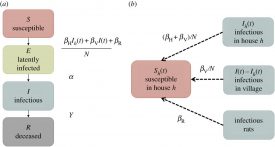
Get your Indiana Jones hat ready, we’re going back in time to look at bioarcheology and the Eyam plague outbreak of 1665-1666. Researchers used a stochastic compartmental model and Bayesian analytical models to study this outbreak that started in September 1665 in the Derbyshire village of Eyam. Updated data from parish records allowed scientists to study this specific outbreak in a more in-depth manner, leading to the discovery that both rodent-to-human and human-to-human transmission played an important role in the spread of the disease. “We also found that the force of infection was stronger for infectious individuals living in the same household compared with the rest of the village. Poverty significantly increased the risk of disease, whereas adulthood decreased the risk. These results on the Eyam outbreak contribute to the current debate on the relative importance of plague transmission routes.”

Health on the G7 Summit Agenda
Last week, international officials met for the G7 Summit and during this gathering the topic of infectious diseases and control methods came to the table. “At the G7 Ise-Shima Summit, leaders will consider issues including strengthening the response to public health emergencies, by taking into account the lessons learned from previous outbreaks, such as Ebola. In addition, they will discuss ensuring the provision of lifelong healthcare services, from maternal, newborn and child health, through to non-communicable diseases and aging, in the pursuit of universal health coverage (UHC)”. Ebola, Zika virus, and Yellow Fever are all hot topics (see what I did there…) of concern. Improving investment in pandemic response was a vital part of the G7, as well as endorsement of the Global Health Security Agenda. Hopefully, with more international awareness and investment, the practice of putting out infectious disease fires will be a thing of the past.

Zika Weekly Roundup
The WHO has released their latest global response report on the Zika virus outbreak. The report gives an overview regarding the Strategic Response Framework and Joint Operations Plan as well as current funding gaps for “critical activities until the end of June 2016, as well as the approach to setting a new strategy from July 2016 onwards.” You can also find a scoping review of the Zika literature here. 233 studies were compiled with findings that “several knowledge gaps were identified by this review with respect to ZIKV epidemiology, the importance of potential non-human primates and other hosts in the transmission cycle, the burden of disease in humans, and complications related to human infection with ZIKV.” A woman in New Jersey has given birth to a baby girl with microcephaly, making her the second Zika-related microcephaly case in the U.S. Entomologists and medical experts are participating in a Zika Symposium and you can check out some of the presentations here. President Obama commented on the need for Zika funding during his speech in Elkhart, IN, this week, noting that “we need more who are willing to work with us to lower health care costs, give us the funding we need to fight public health challenges like Zika and the opioid epidemic — Joe Donnelly is working on that diligently.” Researchers are looking at the risk factors for eye abnormalities in congenital Zika infections and scientists are now raising concern over transmission related to oral sex. Lastly, as of June 1st, 2016, the CDC has reported 618 travel-associated cases in the U.S. 

Stories You May Have Missed:

  • First Locally-Acquired Chikungunya Case in Texas–  The Texas Department of State Health Services has confirmed the first case of local transmission. ” A Cameron County resident got sick with the illness in November 2015 and was diagnosed with a lab test in January 2016. The case, however, was not reported to the local health department until last month. The investigation performed by the Cameron County Department of Health and Human Services determined the patient had not traveled, and the case was confirmed last week by testing at the US Centers for Disease Control and Prevention.”
  • Edge of the Antibiotic Abyss – There’s been a lot of talk about antibiotic resistance and the impending dangers if we don’t act soon. Here’s an overview of the concerns and recent case that is causing so much worry. While it may not get the media attention of Zika virus, this is a very real issue and recent estimates indicate that we’re teetering on the edge of the antibiotic abyss.
  • India’s HIV Blood Transfusion Transmission Reality– The National AIDS Control Organization has released their report following a petition by activist Chetan Kothari, revealing that at least 2,234 Indians have contracted HIV while receiving blood transfusions. Scarier yet, these cases occurred in the past 17 months. Kothari has pushed for investigations, citing that while it is mandatory for hospitals to screen donors, the cost of the test and limited availability of testing facilities (Mumbai has only three private hospitals with HIV testing facilities) makes this a growing threat to anyone requiring blood transfusions. India currently has around 2.09 million people living with HIV/AIDS.
  • The European Centre for Disease Prevention and Control – The ECDC has updated its rapid risk assessment for the current yellow fever outbreak that is impacting Angola, DRC, and Uganda. “In the EU/EEA, the risk of yellow fever virus being introduced is limited to unvaccinated viraemic travellers coming from areas with active local transmission.”

Week in DC: Events 5.29.2016-6.3.2016

Monday, May 30th, 2016
Happy Memorial Day!

Tuesday, May 31st, 2016
The Iran Nuclear Deal: Prelude To Proliferation In The Middle East?– Brookings Institution
Time: 9:30-11am
Location: Brookings Institution1775 Massachusetts Ave, NW, Washington, D.C. 20036 (map)
Sign up to watch the live webcast instead »The Joint Comprehensive Plan of Action (JCPOA) adopted by Iran and the P5+1 partners in July 2015 was an effort not only to prevent Iran from acquiring nuclear weapons but also to avert a nuclear arms competition in the Middle East. But uncertainties surrounding the future of the Iran nuclear deal, including the question of what Iran will do when key JCPOA restrictions on its nuclear program expire after 15 years, could provide incentives for some of its neighbors to keep their nuclear options open.In their Brookings Arms Control and Non-Proliferation Series monograph, “The Iran Nuclear Deal: Prelude to Proliferation in the Middle East?,” Robert Einhorn and Richard Nephew assess the current status of the JCPOA and explore the likelihood that, in the wake of the agreement, regional countries will pursue their own nuclear weapons programs or at least latent nuclear weapons capabilities. Drawing on interviews with senior government officials and non-government experts from the region, they focus in depth on the possible motivations and capabilities of Egypt, Turkey, Saudi Arabia, and the United Arab Emirates for pursuing nuclear weapons. The monograph also offers recommendations for policies to reinforce the JCPOA and reduce the likelihood that countries of the region will seek nuclear weapons.On May 31, the Brookings Arms Control and Non-Proliferation Initiative will host a panel to discuss the impact of the JCPOA on prospects for nuclear proliferation in the Middle East. Brookings Senior Fellow and Deputy Director of Foreign Policy Suzanne Maloney will serve as moderator. Panelists include H.E. Yousef Al Otaiba, ambassador of the United Arab Emirates to the United States; Derek Chollet, counselor and senior advisor for security and defense policy at the German Marshall Fund; Brookings Senior Fellow Robert Einhorn; and Brookings Nonresident Senior Fellow Richard Nephew.Following the discussion, panelists will take questions from the audience. This event will be live webcast.

A Security System For The Two State Solution– Center for a New American Security
Time: 1:30-4pm
Location: Willard interContinental Hotel1401 Pennsylvania Avenue NW Washington, DC, 20004 (map)
The challenges associated with coming to a permanent status agreement between Israelis and Palestinians that can meet Israeli security requirements and Palestinian requirements for sovereignty and dignity are growing more challenging.  During the Oslo period of the 1990s security was considered the least challenging of the core final status issues when compared to borders, refugees, or Jerusalem. But the pull out from Gaza and regional instability in the aftermath of the Arab revolutions has made this issue a central challenge for any future negotiation. For the past year a team of American and Israeli former government and security officials have been working together on a study that details a sustainable security system to support a lasting peace between Israelis and Palestinians. The purpose of the study is to demonstrate, through deep and comprehensive analysis, that well thought-through security measures in the context of the two-state solution can provide Israel with a degree of security, equal or greater to the one provided today by its deployment into the West Bank, while at the same time being compatible with Palestinian requirements for sovereignty and dignity.

Wednesday, June 1st, 2016
How Jihadists Weaponize Islamic History And How To De-Weaponize It- Westminster Institute
Time: 7:30-8:45pm
Location: Westminster Institute6729 Curran St, McLean, VA 22101, United States (map)
Religious extremists in the Middle East, both Sunni and Shia, have succeeded in weaponizing history. They wield an airbrushed version of past events to inform and legitimize their actions and strategies. We can counteract their revisionism by drawing on the fields of Islamic history, contemporary politics, strategy, media, and psychology. Continue reading “Week in DC: Events 5.29.2016-6.3.2016”

Pandora Report 5.27.2016

Before you start your holiday weekend, what’re your thoughts on Usain Bolt outrunning a mosquito? The Jamaican sprinter jokingly responded to questions regarding athlete concerns over Zika virus, noting that he’s not worried “because I’m fast – they can’t catch me”. (Hint – it looks like he can outrun a mosquito with his 22 mph capabilities versus the 1.12-3.35 mph of an Aedes mosquito). Sticking with the Olympian theme..bacterial teams? Researchers recently found that two strains of E.coli, resistant to different antibiotics, can protect each other in an environment containing both antibiotics. The phenomenon is called mutualism and researchers at MIT are now looking looking into the range of this practice and the potential for population synchronization. At the 69th World Health Assembly this week, the WHO revealed plans to revamp itself however, many point out that for an agency better at giving advice than taking action, it’s too little too late. In the case of the WHO, critics are calling for acta non verba. 

The World Bank Rolls Out the Pandemic Insurance Plan
Following the Ebola outbreak in West Africa, the World Bank has announced a new program that will enable funds to rapidly be mobilized during outbreaks. In hopes of ensuring a more speedy response to infectious disease disasters, World Bank President Jim Yong Kim stated that “pandemics pose a serious threat to global health and economic security.” The new Pandemic Emergency Financing Facility (PEF) is “a combination of catastrophe insurance and bonds, is a direct reaction to the sluggish donor response to the outbreak of Ebola”. Presented at the G7 meeting for finance advisors, Japan has already committed support with a $50 million contribution. The insurance will cover several classes of infectious disease outbreaks most likely to cause epidemics – ranging from new influenza or coronavirus strains, filoviruses like Marburg and Ebola, and other zoonotic diseases. The initial plan is to have a total of $500 million  and hopefully avoid outbreaks, like Ebola, rapidly growing due to poor financial support and response.

Antibiotic Apocalypse
As much as I’d love to say this title is a dramatic take on the issue of antibiotic resistance, the truth is pretty startling. A report done by the Review on Antimicrobial Resistance  (commissioned by the UK government and reviewed by officials including economist Jim O’Neill), estimated that by 2050, 10 million lives per year and $100 trillion are at risk due to drug-resistant infections. That’s quite a stark estimate, but as many have pointed out “the problem of drug-resistant microbes isn’t just about biology and chemistry; it’s an economic problem at heart, a catastrophic and long-bubbling mismatch between supply and demand. It’s the result of the many incentives for misusing our drugs, and the dearth of incentives for developing new ones.” Can we really tackle this issue though? It still amazes me hearing people in an emergency department or urgent care asking for an antibiotic and the physician having to explain that they have a viral infection or that antibiotics simply aren’t warranted. In many ways, when we are sick enough to go to the doctor, we want to walk away with some “cure” and the notion of bedrest and hydration isn’t all that comforting. So what can we do? The report notes some steps to help prevent this impending reality – massive global public awareness campaigns, improve hygiene, improve global surveillance of drug resistance and antimicrobial consumption in humans and animals, promote development and use of vaccines, promote new, rapid diagnostics to cut out the unnecessary use of antibiotics, better incentives to promote investment for new drugs and improve existing ones, improve the numbers, pay, and recognition of people working in infectious diseases (hear, hear!), etc. Other recommendations include improving sanitation and a global innovation fund for early-stage research. Scientists were recently startled to find for the first time in the U.S., a patient with a bacteria that is resistant to antibiotics that are used as a last resort. While the predictions are daunting, the threat of antibiotic resistance is one we can get ahead of if we make the commitment and start immediately.

The Growing Threat of Spillover Screen Shot 2016-05-23 at 9.38.18 AM
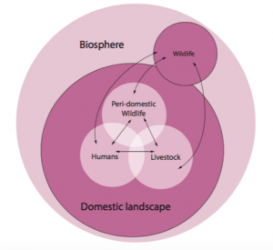
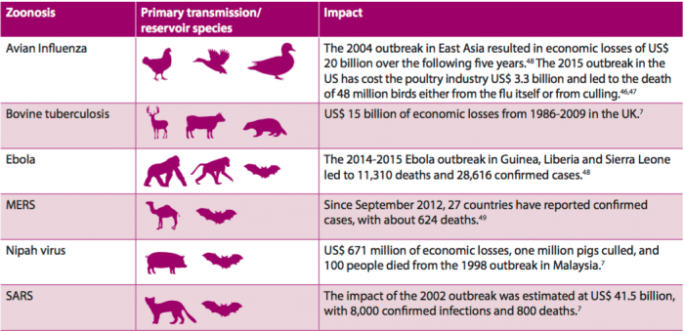
The United Nations Environmental Programme (UNEP) released their 2016 Frontiers Report “Emerging Issues of Environmental Concern”. One of the six major issues was zoonosis. “There is a worldwide increase in disease emergence and epidemics particularly from zoonoses – diseases that can be passed on between animals and humans. The report illustrates how the emergence and re-emergence of zoonotic diseases are closely interlinked with the health of ecosystems. The risk of disease emergence and amplification increases with the intensification of human activities surrounding and encroaching into natural habitats, enabling pathogens in wildlife reservoirs to spill over to livestock and humans.” The report notes that around 60% of all infectious diseases in humans are zoonotic and 75% of emerging infectious diseases are zoonotic. You can also find several great infographics that paint a very surprising picture regarding the emerging zoonotic disease events from 1940-2012 and the top three reported zoonoses for specific continents. The growing Zika epidemic is just another in a long list of spillover cases including those of MERS, SARS, Ebola, and Rift Valley fever.

A Need To Rebalance
GMU Biodefense professor and Program Director, Dr. Gregory Koblentz, is pointing to the need for the U.S. to refocus its nonproliferation efforts on South Asia. Given the region’s high risk for nuclear crisis as a result of territorial disputes, cross-border terrorism, and increasing nuclear arsenals, there is a crucial need to re-allign nonproliferation efforts to include South Asia. “As of 2015, India was estimated to have 120 nuclear warheads while Pakistan was believed to possess 130 weapons. Both countries have also continued to develop, test, and deploy new missiles designed to deliver nuclear warheads. Pakistan has tested seven different types of nuclear-capable ballistic and cruise missiles, including the 2,750-kilometer range Shaheen-3 ballistic missile. Meanwhile, India has tested nine different types of nuclear-capable missiles, including the Agni-V intercontinental ballistic missile with a range of over 5,000 kilometers.” Dr Koblentz points to the impacting introduction of tactical nuclear weapons in South Asia and their ability to be deployed on short-notice – also concerning is India’s planned development of strategic missile submarines, which will likely trigger development from Pakistan. He notes that the international community can help restrain this dangerous competition by encouraging both countries to adopt confidence-building measures (limits on development of tactical nuclear weapons, etc.) and engage in high-level talks with “other nuclear weapon states to discuss measures that could further reduce the risk of nuclear weapons being used deliberately, by accident, or in an unauthorized manner.”

Rebuilding Trust in Biology 
Between the gain-of-function talks and biosecurity failures at major U.S. labs, there’s been a subtle shifting in the trust and support for biological sciences. New regulations could change oversight for sciences within the U.S. and many are wondering how we can restore trust back into this field. While we can all agree that forgotten smallpox vials and an accidental bird flu release translates to a need to revamp practices and facilitate more effective and efficient oversight, there’s been little mention of how we can combat the trust issues. This week the National Science Advisory Board for Biosecurity (NSABB) met to conclude their 18-month deliberation on select pathogen research practices and regulations. Let’s hope that with more effective and efficient practice recommendations, they are also looking into repairing the reputation of science and biology. Dr. Filippa Lentzos and Dr. Nicholas Evans recommend four ways to rebuilt this trust- transparency in process and outcome of experiments and review, life scientists need to play their part in monitoring and preventing deliberate misuse of biology, accountability needs to be built into scientific norms, and decisions on pursuing dangerous experiments need more transparency in regards to their process. “There should also be clear, internationally-recognized red lines about the sorts of experiments—such as attempting to make Ebola virus transmit like the flu, or modifying an extinct virus like smallpox—that simply should not be done.”

Energy & Commerce Subcommittee Looks at U.S. Biological Threat Preparedness
The Energy and Commerce Subcommittee on Health held a hearing regarding H.R. 3299, Strengthening Public Health Response Act, last week to discuss and review legislation that would enable the U.S. to prepare and defend against biological attacks. The act was presented in response to the October 2015 Blue Ribbon Study on Biodefense that highlighted the general lack of preparedness against emerging biological threats. “Thirty-three recommendations to improve the U.S. response to biological threats were made by the Blue Ribbon Study on Biodefense, which was led by former U.S. Sen. Joe Lieberman (I-CT) and former Pennsylvania Gov. Tom Ridge, the first Secretary of Homeland Security. The panel’s report was based on meetings, interviews and research.” Acting Biomedical Advanced Research and Development Authority (BARDA) Director Dr. Richard Hackett noted that “the array of threats for which we must be prepared is vast. Such threats include bioterrorist agents such as anthrax, smallpox and botulism; evolving and emerging threats causing substantial regional disruption such as Ebola and Zika; and highly communicable diseases with pandemic potential such as influenza.” This act would also expand the Priority Review Voucher program within DHS and work to facilitate BARDA’s partnership with the private sector.

Weekly Zika Updates
On Monday, WHO Director-General Dr. Margaret Chan pointed to the failure to maintain mosquito-control efforts and the spread of Zika. “Let me give you a stern warning. What we are seeing now looks more and more like a dramatic resurgence of the threat from emerging and re-emerging infectious diseases. The world is not prepared to cope. Above all, the spread of Zika, the resurgence of dengue, and the emerging threat from chikungunya are the price being paid for a massive policy failure that dropped the ball on mosquito control in the 1970s,”. The European Centre for Disease Control and Prevention (ECDC) released a risk assessment for European travelers to the Olympic Games, finding that they’re most at risk for gastrointestinal illness and vector-borne diseases. Researchers are also considering the association between Zika virus and eye problems in babies that have microcephaly. During your holiday weekend, take a minute to learn about the Scottish professor who discovered Zika virus. Experts are also pointing to the role of misinformation (via social media conspiracy theories) in prevention efforts.  “The researchers behind the study—from Johns Hopkins University, George Washington University, and the University of Georgia—say the misinformation they detected by analyzing thousands of Twitter posts could cause many vulnerable people to refuse future Zika vaccinations.” The CDC has estimated that a fetus infected with Zika virus during the first trimester has a 1-13% risk of developing microcephaly. As of May 25th, the CDC has reported 591 travel-associated and 11 sexually transmitted cases in the U.S.

Stories You May Have Missed:

  • Why Victorian Diseases Are Making a Comeback – Scarlet fever and TB have been on the rise in the UK and many are pointing to the growing threat of antibiotic resistance and poor vaccination compliance. Many of these diseases have been under control for centuries so any uptake can cause a sensational public response, however it’s important to remember the recent plethora of measles outbreaks and just how vital vaccination is. Antibiotic resistance alone could bring back these diseases and take us back to a time where infectious diseases were the major cause of death.
  • The Threat of Agroterrorism and Zoonotic Disease in the U.S. –  Gary Flory, Agricultural Program Manager of the Virginia Department of Environmental Quality, discusses the threat of these diseases for the Non Conventional Threat CBRNe Meeting. “The threat of agroterrorism and naturally occurring disease outbreaks in the United States continues to expand as new diseases emerge and existing diseases become endemic in many parts of the world. The food and agricultural sector is one of the easiest sectors of any nation’s economy to disrupt and its disruption could have catastrophic consequences both nationally and regionally. Both developing and developed countries will be impacted by a disease outbreak or agroterrorism attack.”
  • The Awful Diseases on the Way– check out this overview of Sonia Shah’s book, Pandemic: Tracking Contagions from Cholera to Ebola and Beyond, that also discusses the impact of infectious disease outbreaks from smallpox to Ebola. The review is done by a pediatric physician who has worked with UNICEF and the Global Fund to Fight AIDS across three continents. Aside from the wonderful points on infectious disease outbreaks and the importance of public health, Annie Sparrow gives a delightful segment on the corrupt schemes of outbreak coverups.

Week in DC: Events 5.23-27.2016

Monday, May 23rd, 2016
The Changing Face Of Kremlin Propaganda: Recent Developments And Strategies For 2016- Atlantic Council
Time: noon
Location: Atlantic Council1030 15th St NW, Washington, DC 20005, United States (map)
Manipulation of the media space is a powerful tool in Russia’s “non-linear” war on the West. The Kremlin has weaponized TV, news, and social media by spreading disinformation, which portrays the West as hypocritical, declining, and seeking to dominate the global order. Russia’s propaganda manipulates national and international media, confusing and distracting citizens and policymakers. This campaign erodes global support for Western multilateral institutions and liberal democratic values. The West’s response to this growing threat to global security has, so far, been tepid and uncoordinated. As a result, the space for alternative Russian language news continues to shrink.
Independent Russian-language journalists operate in a state media-dominated environment on a daily basis. This panel will focus on the challenges they face and what the West should do to support independent Russian-language journalism.
We hope you can join us for this important and timely discussion.
On Twitter? Follow @ACEurasia and use #ACRussia

Tuesday, May 24th, 2016
Cybersecurity After Information Sharing- Center for Strategic and International Studies
Time: 8:30-10am
Location: Center for Strategic and International Studies1616 Rhode Island Ave NW, Washington, DC 20036 (map)
Increasing the sharing of cyber threat intelligence has been the main focus of the US Government’s strategy to enhance the cyber posture of the United States. With the passage of the Cybersecurity Information Sharing Act, what are the next steps that Congress and the incoming administration should take to successfully implement the legislation and to shore up the US cybersecurity posture?
Zika In The U.S: Can We Manage The Risk?– Woodrow Wilson International Center for Scholars
Time: 11a-12:15pm
Location: Woodrow Wilson Center1300 Pennsylvania Ave., NW, Washington, D.C. 20004 (map)
This month, for the first time, a fetus in Puerto Rico was infected by the Zika virus and diagnosed with microcephaly. Already, more than 500 Zika cases linked to foreign travel have been reported across the continental United States, from California to Maine – and several dozen of these affect pregnant women. Public health officials warn the Zika virus poses an imminent threat in the United States and we may only be a few steps closer to understanding the full spectrum of risks. How will U.S. officials manage the spread of the disease, while communicating a complex, evolving crisis to a worried nation?  Photo Credit: A woman in the Dominican Republic participates in an outreach program by the Office of the First Lady, courtesy of the Presidency of the Dominican Republic. Speakers: Jane Harman, Director, President and CEO, Wilson Center Anthony S. Fauci, MD, Director, National Institute of Allergy and Infectious Diseases, National Institutes of Health The Honorable Susan Molinari, Vice President for Public Policy, Google and former Congresswoman from New York Rear Admiral Anne Schuchat, MD, Principal Deputy Director, Center for Disease Control and Prevention Jason Beaubien, Global Health and Development Correspondent, NPR Continue reading “Week in DC: Events 5.23-27.2016”

Pandora Report 5.20.2016

The biodefense world was pretty busy this week – between Zika funding, cloning, and debates over dual-use technologies, we’ve got a lot to recap! Check out this great infographic on mosquitoes and the diseases they spread. The “State of Innovation” report revealed a decrease in biotech patents in 2015, with many pointing to the correlation between three U.S. Supreme Court decisions that limited patentability of some biotechnologies. If you were wondering how the sale of Plum Island is going, the House has actually temporarily halted any transactions.

Congrats GMU Biodefense Graduates!IMG_3491
We’re so happy to announce the convocation of some of our phenomenal graduate students. Earning a MS in Biodefense- Julia Homstad (also awarded the Frances Harbour Award for Community Leadership), Brittany Linkous (earning the Outstanding Biodefense MS Student Award), Francisco Cruz, Mary Dougherty, Moneka Jani, Sadaf Khan, Brittany Ferris, Michael Smith, and Robert Smith. Graduating with their PhD’s – Jonathan Gines (also the recipient of the Outstanding Biodefense PhD Student award and his dissertation was: Designing Biorisk Oversight: Applying Design Science Research to Biosafety and Biosecurity, Patricia Kehn (Flu News You Can Use? An Analysis of Flu News Quality 2008-2010), and Mittie Wallace (Emergency Preparedness in Virginia, Maryland and DC: Using Exchange Theory to Identify Government-Nonprofit Incentives and Barriers to Collaboration). Congrats to all our Biodefense graduates in the hard work and dedication they’ve put forth to contribute to such a diverse and exciting field!

Evaluation of DoD Biological Safety & Security Implementation
The Inspector General of the Department of Defense (DoD) has released their report regarding the biosafety and biosecurity policies and practices within DoD laboratories working with select agents. The report also evaluated DoD oversight of these laboratories and compliance with Federal, DoD, and Service Policy, with careful consideration to recent GAO (among others) recommendations. Several findings were reported, which include: “DoD has not maintained biosafety and biosecurity program management, oversight, and inspections of its BSAT laboratories according to applicable Federal regulations. BSAT laboratories in Military Services were inspected according to different guidance, standards, and procedures, risking dangerous lapses in biosafety practices. Lack of coordinated oversight of DoD laboratories led to multiple, missing, and duplicative inspections, and, therefore, an excessive administrative burden that could interfere with scientific research performance.” The report also noted that public health and safety was put at risk due to the poor protection of these agents. Recommendations pushed for better internal and external tracking of inspections, coordination of external technical and scientific peer reviews, standardized training for inspectors, the creation of site-specific laboratory security vulnerability assessments, etc. Overall, the report addresses several key failures within select agent laboratories that have been gaining increasing attention. While these recommendations are a necessary first step, there is definitely an up-hill battle to better secure and work with select agents.

Public Health & Emerging Disease Outbreaks – The Importance of Communication 
Outbreak prevention and response isn’t a new concept…in fact it’s something we’ve been perfecting since John Snow took off the Broad Street pump handle. Sometimes, the fastest spreader isn’t the disease, but rather poor communication and fear. In every after-action report, communication tends to be the biggest failure. Not only do people fail to talk to each other enough, but information dissemination and comprehension tends to be poorly emphasized, when in fact it could save lives. “In particular, healthcare workers may benefit from knowing about newly found transmission risks or disease findings from a novel case under intensive care. Knowledge drives behavioural change that can save lives. We live in a global community. Even if the lives saved are not citizens of our country, withholding information because it is unlikely to benefit our own countrymen, or even delaying dissemination of important information until it is published in a scientific journal is a poor choice.” Dr. Ian Mackay and Katherine Arden point to communication failures regarding the zoonotic transmission of MERS-CoV and the illness of a nurse from the UK who recovered from Ebola and was later hospitalized for meningitis. Both instances involved poor communication, especially to healthcare workers. “Good communicators and reliable communications are vital. Create a dialogue with the public now to build a partnership for later, to reduce distrust when an outbreak, epidemic or pandemic occurs. In this way, communities know which voices to trust and where to turn for their information. Leaving an information void invites others to fill it and more often than not, it is those who delight in titillation, invention, make-believe and fear-mongering.”

Weekly Dose of Zika Virus
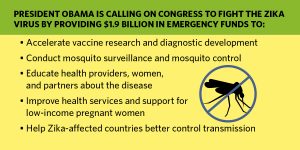
H.R. 5243 – Zika Response Appropriations Act of 2016 is the hot topic of discussion this week, as President Obama’s Administration is opposing the act. “While the Administration appreciates that the Congress is finally taking action to address the Zika virus, the funding provided in H.R. 5243 is woefully inadequate to support the response our public health experts say is needed.  Specifically, the Administration’s full request of $1.9 billion is needed to:  reduce the risk of the Zika virus, particularly in pregnant women, by better controlling the mosquitoes that spread Zika; develop new tools, including vaccines and better diagnostics to protect the Nation from the Zika virus; and conduct crucial research projects needed to better understand the impacts of the Zika virus on infants and children.On May 17th, the Senate voted to provide $1.2 billion to fight the growing outbreak. A team from the University of Texas Medical Branch at Galveston has traveled into uncharted territory – they are the first to genetically engineer a clone of the Zika virus strain.  Their work could help speed up vaccine development and research of the virus. As the Zika outbreak rages onwards, many are pointing to the need to understand how and why it mutated from Africa to Asia and then to the Americas.  “‘Like many arboviral agents, given the appropriate environmental and human conditions, new pathogens can be easily moved around the globe,’ Ann Powers said. And that’s what Zika did. The virus began to ripple across the Pacific—and as it traveled, it seemed to change.” The Olympic Games are fast approaching and the debate about the safety of the games has been spreading (see what I did there?). Last week you read about how some are saying the games should be cancelled, while others say it poses a minimal threat. You can also find a snapshot of Zika virus here. The WHO reported that the overall risk of Zika virus moving across the WHO European region is low to moderate during late spring and early summer. Rutgers is taking the lead on an IBM-sponsored project that will utilize supercomputing resources to identify “potential drug candidates to cure the Zika virus.” The Wilson Center is hosting an event, “Zika in the U.S: Can We Manage the Risk?” on Tuesday, May 24th, at 11am. Many are also wondering why humans and not mice are susceptible to the virus. Lastly, as of May 18th, the CDC has reported 544 travel-associated cases and 10 sexually transmitted cases within the U.S.

Governance Structures for Reducing Dual-Use Technology Risks
The American Academy of Arts & Sciences has published an examination of dual-use technology governance and the state of current efforts to control the spread of potentially dangerous technologies. “Governance of Dual-Use Technologies examines the similarities and differences between the strategies used for the control of nuclear technologies and those proposed for biotechnology and information technology. The publication makes clear the challenges concomitant with dual-use governance.” The report looks at the potential objectives of these measures, what they translate to in a technical format, and if these measures are even feasible.

Global Avian Influenza A H5N1 Trends
Researchers recently looked at the epidemiology of human H5N1 cases from 1997-2015. This was the first comprehensive analysis of human cases on a global scale. The number of affected countries rose between 2003 and 2008, traveling from east Asia into west Asia and Africa. “Most cases (67·2%) occurred from December to March, and the overall case-fatality risk was 483 (53·5%) of 903 cases which varied across geographical regions. Although the incidence in Egypt has increased dramatically since November, 2014, compared with the cases beforehand, there were no significant differences in the fatality risk, history of exposure to poultry, history of patient contact, and time from onset to hospital admission in the recent cases.”

Stories You May Have Missed:

  • Health Security Available – The newest volume of Health Security is now available online. The recent issue includes pieces on Zika and microcephaly, preparing for climate disruption, adapting to health impacts of climate change in the DoD, and more!
  • Secret Genome Meeting – Last week saw a meeting hosted by Harvard Medical School’s George Church, to discuss “feasibility and implementation of a project to synthesize entire large genomes in vitro.” Initially the meeting was open to the public and media however, the decision was made to keep it private (from the media) so that researchers, lawyers, entrepreneurs, and government officials could speak freely without fear of being misquoted. “Our ability to understand what to build is so far behind what we can build,” said Jeremy Minshull, chief executive of DNA synthesis company DNA2.0, told The New York Times. “I just don’t think that being able to make more and more and more and cheaper and cheaper and cheaper is going to get us the understanding we need.”
  • Four Countries Fend Off Avian Influenza- Cambodia, Ghana, and Indonesia have been battling H5N1 and Italy has just reported its second H7N7 occurrence this month. Ghana and Cambodia have reported significant bird mortalities, with the virus killing 155 of 505 susceptible birds. “In Ghana, the H5N1 virus turned up in four commercial layer and breeding farms in three of the country’s regions: two in Greater Accra and one each in Eastern and Central regions.”
  • Bavarian Nordic Smallpox Vaccine Contract – the pharmaceutical company announced that BARDA has ordered a bulk supply of their new IMVAMUNE smallpox vaccine. The $100 million supply of the non-replicating vaccine requires Bavarian Nordic to manufacture and store the bulk supply. “The freeze-dried version of IMVAMUNE is expected to reduce the life cycle management costs based on a longer shelf life and will replace the liquid-frozen version that is currently stockpiled in the U.S. Strategic National Stockpile (SNS).”
  • Early Detection Lyme Disease Test Successful – GMU researchers have proven that their early-detection urine test works to rapidly identify Lyme diseases. “The National Institutes of Health funded the research that led to Mason’s patented technology, which traps tell-tale clues (such as the Lyme bacteria protein) that a disease is present. The Mason technology, which is licensed to Ceres, works during the earliest stages of disease and finds the tiniest traces missed by most diagnostic tests.”

Week in DC: Events 5.16-20.2016

Monday, May 16th, 2016
The Department Of Defense Cyber Strategy: An Assessment- Homeland Security Policy Institute
Time: 11am-1pm
Location: Cloyd Heck Marvin Center800 21st St NW #505, Washington, DC 20052 (map)
Grand Ballroom | Third Floor
The Center for Cyber & Homeland Security (CCHS) at the George Washington University would like to invite you to attend a special forum on the Department of Defense Cyber Strategy to be convened jointly with Northrop Grumman Corporation. Particular attention will be accorded to the issue of Cyber Deterrence.
Keynote –Congressman James R. Langevin (D-RI) – Ranking Member, Subcommittee on Emerging Threats and Capabilities, House Armed Services Committee, U.S. House of Representatives; and Co-Chair, Congressional Cybersecurity Caucus

‘Crimes Against The Security Of The Nation’: World War II, The Cold War, And The Evolution Of Mexico’s Anti-Subversion Laws, 1941-1970– Woodrow Wilson International Center for Scholars
Time: 4-5:30pm
Location: Wilson Center1300 Pennsylvania Ave NW, Washington, DC 20004(map)
While, until recently, relatively little attention has been given to the importance of international conditions in accounting for the longevity of Mexico’s post-revolutionary regime, Halbert Jones will show how World War II and the Cold War played a pivotal role in enabling successive Mexican governments to enact, expand, and apply one of its most controversial legal tools, a provision in the federal penal code criminalizing what it described as acts of “social dissolution.”  The legislation, in force from 1941 to 1970, prescribed severe penalties for vaguely defined crimes of subversion, and it was invoked over the course of those decades against striking workers, student protesters, and a famous communist muralist, among others who were said to be spreading “foreign propaganda” and undermining national security.  By the time Mexico’s 1968 student movement called for the repeal of the measure, however, it had become a symbol of what critics saw as the arbitrary nature of the regime.  The removal of the provision from the books in 1970 – and its replacement with a clause introducing the new crime of “terrorism” – therefore highlights the ability of an authoritarian political system to adapt to changing international and domestic political conditions.

Tuesday, May 17th, 2016
Drone Proliferation: Impacts On Security, Strategy, And Policy- The Stimson Center
Time: 9:30-11am
Location: Stimson Center1211 Connecticut Ave NW, 8th floor, Washington, DC 20036 (map)
Drones are increasingly used in military operations around the world. While the United States maintains a temporary dominance in its use of armed drones, it does not hold a monopoly on the technology and several countries continue to seek similar programs and capabilities. These patterns raise a number of questions about the impact of drone proliferation on international security and stability. As more countries join the ranks of those using drones as a regular part of their military arsenals, the potential future uses of drones could change the ways in which conflicts are fought, peace is maintained, and the balance of power is sustained or upended. RSVP HERE Continue reading “Week in DC: Events 5.16-20.2016”

Pandora Report 5.13.2016

Nothing like a little biodefense news to get your Friday the 13th started off on an auspicious note! If you happened to be in Grand Central terminal in New York City on Monday, you may have witnessed a bioweapon simulation drill. A harmless, odorless gas was released on a subway platform to test air movement and the potential contamination range for a biological weapon within the subway system. The perfluorocarbon tracer gases allowed officials to observe particle dispersal and settlement. Last but not least, hundreds of passengers on a UK-to-US cruise are victims of a suspected norovirus outbreak. Health officials are working with the cruise line to determine the source of the outbreak and reduce transmission.

Evaluation and Oversight Recommendations for Gain-of-Function Research
The National Science Advisory Board for Biosecurity (NSABB) Working Group has released a draft of their evaluations and subsequent recommendations regarding the risks and benefits associated with gain-of-function (GOF) research. The report highlights the existing Federal policies in place to ensure the safety of current work with biological organisms and the recent biosafety failures at several Federal facilities. The NSAAB working group established seven major findings and seven recommendations. Findings include focus on the specific types of GOF research as only a small subset of GOF research (GOF research of concern – GOFROC) which may entail risks that are significant enough to warrant oversight, need for an adaptive policy approach, limited scope and applicability of oversight policies, etc. Recommendations include an external advisory body that is built upon transparency and public engagement, adaptive policy approaches to ensure oversight remains “commensurate with the risks associated with the GOF research of concerns”, etc. The recommendations also emphasized the need for strengthening of U.S. laboratory biosafety and biosecurity. The report provides a substantial overview of the GOF debate and existing concerns related to GOF studies with influenza, SARS, and MERS.

GMU Biodefense MS Application Deadline – June 1st!
Learn about the complex world of global health security from your living room or at one of our amazing campuses! GMU’s Biodefense MS program provides you with the knowledge and skills to understand and operate within the unique field of biodefense – where science and policy meet. Fall application deadlines have been extended to June 1st, which means you still have time to apply! Our MS program is offered in person or online, which allows students to balance work or family responsibilities while still earning a graduate degree in this exciting field.

Military & CDC Lab Biosafety Failures 
A few weeks ago, we wrote on the GAO office report on the laboratory failures and biosafety issues in relation to the investigations surrounding the 2014 National Institute of Health (NIH) smallpox discovery. The GAO report also points to laboratory safety/security failures that include shipping live anthrax and the poor dissemination of information to NIH staff after the smallpox discovery. This article, like many, emphasizes the lackluster Department of Defense (DoD) efforts regarding safety and security within their labs that handle select agents. Despite reports highlighting the poor education and training of laboratory personnel, infrequent lab inspection, and gaps in reporting, some are pointing to the eventual regression back to poor habits. Despite the GAO report, ‘the program is going to continue as before, with a new layer of managerial review that will not change matters, and with no accountability,’ says Richard Ebright, a molecular biologist and professor of chemistry and chemical biology at Rutgers University who has been critical of the operations of high-containment labs. ‘The report makes it clear that DOD considers the matter concluded, and any impetus for change is going to have to come from outside DOD,’ Ebright says.” A recent report also noted that the CDC is among several other facilities to have their permits suspended in recent years for serious lab safety and security violations.  “The CDC’s own labs also have been referred for additional secret federal enforcement actions six times because of serious or repeated violations in how they’ve handled certain viruses, bacteria and toxins that are heavily regulated because of their potential use as bioweapons, the CDC admitted for the first time on Tuesday.” The CDC has stated that the suspensions involved a specific lead scientist and those labs associated with his/her work, which focused on Japanese encephalitis virus.

Is Dole the Food Safety Canary in the Coal Mine?
Food safety has long been considered America’s soft underbelly. Food-borne illness outbreaks are relatively common but are some a canary in the coal mine for diminishing industry standards? Executives at Dole are now involved in a criminal investigation related to their knowledge of the Listeria outbreak at their Springfield, Ohio plant. Executives were aware of the Listeria issues for over a year prior to shutting down the production plant. The company is now under investigation, highlighting a growing concern related to food safety standards within the U.S. This particular outbreak involved 33 people in the U.S. and Canada, of which four died. Rep. Rosa DeLauro, D-CT, the senior Democrat on the U.S. House Committee that oversees FDA funding, wrote a letter to the FDA regarding the lag between company knowledge and action. DeLauro wrote: “Given that consumers have been severely sickened, and even killed, by salads produced at this facility, I urge you to immediately shut down the Dole Springfield plant. Their blatant disregard for the health and safety of American families shows that Dole executives put company profits first, at the expense of consumers, and this type of behavior should not be tolerated. The fact that Dole officials were aware of a food borne illness contamination in their facility, yet continued to ship out the product, is absolutely unconscionable. People have died, and rightfully the Department of Justice has opened an investigation into Dole’s Springfield plant. However, it is more than just foodborne pathogens that the FDA inspection reports point to. FDA reports dating back to March 2014 cite at least sixteen problems that could contribute to food safety issues in the facility. It is an outrage that people had to die in order for Dole to temporarily close this plant for four months during the January Listeria outbreak. … Dole must be held accountable”. Dole isn’t the only company heavily scrutinizing their processes. In light of recent outbreaks associated with their restaurants, Chipotle has hired two former food safety critics and consultants to help improve food safety. 

A Dash of Zika Goes a Long Way ZikaFunding
The 2016 Rio de Janeiro Olympics are fast approaching and the “wait and see” trepidation is starting to evolve into more heated debates about the safety of the games. With Brazil being the epicenter of this particular Zika virus outbreak, many are calling for action before the international games. “Simply put, Zika infection is more dangerous, and Brazil’s outbreak more extensive, than scientists reckoned a short time ago.  Which leads to a bitter truth: the 2016 Olympic and Paralympic Games must be postponed, moved, or both, as a precautionary concession.  There are five reasons.” These reasons include the heavy hit Rio took by Zika, the current Zika strain is considered much more dangerous, the games will surely speed up the transmission of the virus on an international level and when this does happen, the role of technological response will become more challenging. Lastly, “proceeding with the Games violates what the Olympics stand for.  The International Olympic Committee writes that ‘Olympism seeks to create … social responsibility and respect for universal fundamental ethical principles’.  But how socially responsible or ethical is it to spread disease? ” The CDC updated diagnostic testing guidelines this week, noting that higher levels of the virus can be found in the urine rather than blood. The White House is calling for emergency funding to help combat the spread of the disease and speed the development of a vaccine. What impact will Zika have in the future? The unique aspect of a virus that impacts developing brains earns it a special place in the history books and as this outbreak unfolds, the long-term impacts of infectious diseases will become all the more evident. As of May 11th, the CDC has reported 503 travel-associated cases in the the U.S. 

Stories You May Have Missed:

  • Challenges of Emerging Infections and Global Health Safety – you can now access the Indo-U.S. workshop summary regarding the collaborations between people, businesses, and governments. “The Indo-U.S. Workshop on Challenges of Emerging Infections and Global Health Safety, held in November 2014, encouraged scientists from both countries to examine global issues related to emerging and existing infections and global health safety, to share experience and approaches, and to identify opportunities for cooperation to improve practice and research in these areas. This report summarizes the presentations and discussions from the workshop.”
  • The Internet of Things and Infectious Diseases – “The Internet of Things (IoT) is all about devices that are programmed to sense, report on and react to certain behaviours or conditions, providing a new level of efficiency, evidence-based data and automation.” So how can we use this for infectious diseases? Validation of outcomes, analysis of behaviors, and collaboration may just help us use the Internet of Things in healthcare to reduce infection and even perform syndromic surveillance. Outcomes and objective behavior analysis may help us increase hand hygiene or reduce hospital-acquired infections.
  • Anthrax Outbreak in Kenya– 16 people were sickened and hospitalized in Kenya after consuming tainted cows. Joseph Mbai, Murang’a County health chief officer said, “The four cows that were slaughtered were sickly and the owner decided to sell the meat to neighbors and share with others”. Those hospitalized (ten children, five men, and a woman) have been treated and discharged.

Week in DC: Events 5.9-5.13.2016

Monday, May 9th, 2016
Islamist Terrorism In Europe : A History– New America Foundation
Time: 12:30-1:45pm
Location: New America740 15th St NW #900, Washington, DC 20005, United States (map)
In 2015 Islamist terrorism in Europe dominated the news with deadly attacks in Paris in January and November. Yet the attacks are only the latest in a long history of jihadist terrorism in Europe. In his new book Islamist Terrorism in Europe Petter Nesser provides a comprehensive account of the rise of jihadist militancy in Europe drawing upon a wide range of new primary sources and tracing the phenomenon back to the late 1980s. Nesser also examines how jihadist terrorism in Europe reflects the ideological agendas of armed organizations in conflict zones, and how entrepreneurial jihad-veterans facilitate the transnationalization of militancy. Dr. Petter Nesser is a senior research fellow at the Norwegian Defence Research Establishment (FFI) and the author of Islamist Terrorism in Europe: A History. He is trained in the areas of Social Science, Middle Eastern Studies and Arabic at the University of Oslo (UiO) and The American University in Cairo (AUC). Dr. Nesser has conducted extensive research on militant Islamism in Europe for more than a decade while focusing on motivational factors, recruitment and radicalization processes.  New America is pleased to welcome Dr. Nesser for a discussion of his book and the history of Islamist terrorism in Europe.

Tuesday, May 10th, 2016
The State Of Defense Acquisition– Center for Strategic and International Studies
Time: 10-11:30am
Location: Center for Strategic and International Studies1616 Rhode Island Ave NW, Washington, DC 20036(map)
Please join us for a conversation on the state of defense acquisition with the Under Secretary of Defense for Acquisition, Technology and Logistics (AT&L), the honorable Frank Kendall.

Schieffer Series: Breaking ISIL’s Brand– Center for Strategic and International Studies
Time: 5:30-6:30pm
Location: Center for Strategic and International Studies1616 Rhode Island Ave NW, Washington, DC 20036(map)
Continue reading “Week in DC: Events 5.9-5.13.2016”