Pandora Report 10.25.2024

Happy almost Halloween! This week’s Pandora Report includes news from the Biodefense Graduate Program and discussion of the Biden administration’s latest National Security Memorandum, a new multilateral effort from the US, Canada, and Mexico to improve regional health security, the WHO’s praise for Rwanda’s swift and effective Marburg response, and more.

Upcoming Virtual Information Sessions on the Biodefense Graduate Program

If you are interested in a career in biodefense or global health security or want to develop the knowledge and skills necessary to work at the nexus of health, science, and security, find out what the Schar School of Policy and Government has to offer. 

The Schar School PhD programs will be holding a virtual open house on Wednesday, October 30 from 6-7:30 PM. Please join Dr. Gregory Koblentz, director of the Biodefense Graduate Program, to learn more about the Biodefense PhD program and ask any questions you may have. Register here.

GMU Biodefense Students Tour Mason’s Biomedical Research Laboratory

Last week twelve Biodefense students had the opportunity to visit George Mason’s 52,000 square-foot Biomedical Research Laboratory (BRL) located on the SciTech campus in Manassas, Virginia. The BRL was inactive after being decontaminated for annual maintenance . The tour, led by the BRL’s Director of Research Operations, Rachel Pepin, provided students with a firsthand look at Mason’s Biosafety Level 3 (BSL-3) and supporting Biosafety Level 2 (BSL-2) labs. Among the many highlights was the BRL’s autoclaves and gloveboxes, which left students impressed.

The BRL is one of 12 Regional Biocontainment Labs in the United States funded by the National Institute of Allergy and Infectious Diseases NIAID. Constructed in 2010, it became an active “hot” lab in 2012. Fifteen Mason faculty members and thirty students at any time work within the facility on research pertaining to a variety of infectious diseases, new vaccines, diagnostics, and therapeutics. The stated mission of Mason’s BRL is to 1) advance pathogen biology, 2) train the future workforce to safely handle infectious agents and conduct innovative research in BSL-3 environments, 3) evaluate diagnostics, therapeutics and vaccines, and 4) serve as a resource in the event of a bioterrorism or infectious disease emergency. Overall, students gained an appreciation for the critical work and numerous safety controls in George Mason’s BSL-3 laboratory.

This write up was written by Biodefense MS Student Will MacDonald.

OPCW Workshop on Legislative and Regulatory Frameworks for Chemical Security
On October 21-22, 2024, Dr. Gregory Koblentz, director of the Biodefense Graduate Program, attended a meeting of chemical security experts sponsored by the Organization for the Prohibition of Chemical Weapons (OPCW) to discuss best practices for establishing legislative frameworks for chemical security. According to INTERPOL, from the records of 4,100 captured ISIS members, 109 of them have a background related to chemistry, science, technology, engineering, and mathematics. Meanwhile, across the word, the chemical industry and trade are rapidly growing, increasing the risk of toxic chemicals being misused, especially by non-state actors. Many countries are therefore seeking to strengthen their legal and regulatory regimes to address risks such as attacks on chemical facilities, the theft of toxic chemicals, or their release with malicious intent. Initial take-aways from the meeting included a recognition that there is an urgent need for robust national legislative frameworks for chemical security in many countries, that national threat assessments and risk analyses should be the basis for identifying legislative needs, and best practices are most useful if they can be adapted to country-specific contexts and resource setting. This meeting of an international group of chemical security experts kicks off a longer-term discussion on best practices for establishing legislative frameworks for chemical security sponsored by the Implementation Support Branch of the International Cooperation and Assistance Division at OPCW.
A Risky Review of Research
On September 25, 2024, Senator Rand Paul introduced a revised version of the Risky Research Review Act (S. 4667) which was voted out of the Senate Homeland Security and Government Affairs Committee by a vote of 8-1. In a recent OpEd in StatNews, Gregory Koblentz, director of the Biodefense Graduate Program, and David Gillum and Rebecca Moritz, past presidents of the American Biosafety Association (ABSA) wrote of the original bill: “this legislation threatens to cast a shadow over the future of life sciences research and slow it down.” While this revised bill contains some positive changes, it remains deeply flawed and does not represent a viable solution to the challenges posed by dual-use research. You can read their analysis of the good, the bad, and the ugly of the revised Risky Research Review Act here.
Russia Expanding Secret BSL-4 Lab at Sergiev Posad
The Washington Post has identified new construction activity at Sergiev Posad-6, part of the former Soviet and current Russian biological weapons program, consistent with the building of additional high containment laboratories, including BSL-4 lab suites. The construction started in 2022, shortly after Russia’s invasion of Ukraine which was accompanied by unfounded allegations that Ukraine was developing biological weapons with the help of the United States and other NATO countries. Dr. Gregory Koblentz, director of the Biodefense Graduate Program, is quoted in the article as saying, “I would not be surprised if some influential segment of the Russian national security community has drunk the Kool-Aid and really believes that the United States really is developing biological weapons.” Satellite imagery obtained and analyzed by the Washington Post has identified the construction of “10 new buildings, totaling more than 250,000 square feet, with several of them bearing hallmarks of biological labs designed to handle extremely dangerous pathogens.” The Global BioLabs Initiative identified Sergiev Posad-6 as having a BSL-4 lab in 2021. The existence of a BSL-4 lab at this site was confirmed by a 2017 scientific article co-authored by a researcher at the 48th Central Research Institute of the Ministry of Defense at Sergiev Posad. Russia has not declared the existence of a BSL-4 lab at this site on Form A of the confidence building measures that it submits to the Biological Weapons Convention. 

White House Releases New National Security Memorandum on Advancing AI Leadership

The Biden administration issued this week the first-ever National Security Memorandum (MSM) on AI. The NSM direct the federal government to take steps to 1) “ensure that the United States leads the world’s development of safe, secure, and trustworthy AI,” 2) “harness cutting-edge AI technologies to advance the U.S. Government’s national security mission,” and 3) “advance international consensus and governance around AI.”

The NSM directives are focused on actions to improve chip supply chain security and diversity, making collection on competitors’ operations against the US AI sector a top-tier intelligence priority, formally designating the AI Safety Institute, doubling down on the National AI Research Resource, directing “the National Economic Council to coordinate an economic assessment of the relative competitive advantage of the United States private sector AI ecosystem,” and more.

Among its other measures, the NSM also directs the creation of a Framework to Advance AI Governance and Risk Management in National Security, which was published alongside the NSM. This framework and any successor document will specify that each covered agency has a chief AI officer and guidance boards, offer guidance on AI activities that pose “unacceptable levels of risk and that shall be prohibited,” and more.

A fact sheet for the new NSM is available here.

US, Canada, and Mexico Announce Efforts to Improve Regional Health Security

This week, the US Departments of Health and Human Services, State, Agriculture, and Homeland Security, along with their counterparts in Canada and Mexico made good on commitments made at the 2021 and 2023 North American Leaders’ Summits in releasing the North American Preparedness for Animal and Human Pandemics Initiative (NAPAHPI). NAPAHPI is “…a flexible, scalable, and cross-sectoral platform to strengthen regional capacities for prevention, preparedness, and response to a broad range of health security threats that builds on lessons learned from COVID-19 and other health security events in the last decade. It is based on a long-standing trilateral collaboration under the 2007 North American Plan for Avian and Pandemic Influenza and the 2012 North American Plan for Animal and Pandemic Influenza. This initiative recognizes that the high degree of interconnectedness among our three countries of our critical infrastructure, supply chains, and societies means that disruptions affecting one country often impact the others. Only by working together can we protect the health security of our region.”

Learn more here.
Egypt Declared Malaria Free

Egypt was officially certified malaria-free by the World Health Organization this week. Following Morocco and the UAE, Egypt is just the third country in the WHO’s Eastern Mediterranean region to receive this certification. Globally, 44 countries and one territory currently have this designation.

“This certification of Egypt as malaria-free is truly historic, and a testament to the commitment of the people and government of Egypt to rid themselves of this ancient scourge,” said WHO Director-General Tedros Adhanom Ghebreyesus in a statement. “I congratulate Egypt on this achievement, which is an inspiration to other countries in the region, and shows what’s possible with the right resources and the right tools.”

WHO Praises Rwanda’s Marburg Response

WHO Director-General Tedros Adhanom Ghebreyesus praised Rwanda’s response to its Marburg virus outbreak, noting their success in treating patients infected with this especially deadly disease. As of earlier this week, Rwanda has made it a full week with no new cases, and its total number of patients still in treatment is down to just one. “Leadership from the highest levels of government is essential in any outbreak response, and that’s what we see here in Rwanda,” Tedros said during the press briefing. The Director-General also noted that multiple patients experiencing multiple organ failure were put on life support, intubated, and eventually extubated. “We believe this is the first time patients with Marburg virus have been extubated in Africa. These patients would have died in previous outbreaks,” Tedros explained. 

Burgers, Deli Meat, and Waffles-Oh My! US Responding to E. Coli and Listeria Outbreaks

It has been a rough couple of weeks for many major food suppliers in the United States amid headlines about recalls and reports of multiple cases of E. coli and listeria across the country. McDonald’s, KFC, Burger King, and other restaurant chains have pulled onions from their menus following an outbreak of E. coli traced back to McDonald’s Quarter Pounders. The CDC announced this week it is investigating 49 cases linked to “slivered onions used in the Quarter Pounder and sourced by a single supplier than serves three distribution centers.” One person is dead and ten more have been hospitalized. The supplier, Taylor Farms, has issued a recall on all of its peeled, diced, and whole peeled yellow onion packs due to potential contamination.

This comes amid multiple listeria outbreaks affecting several kinds of products, including deli meat, frozen waffles and pancakes, and even salmon. While these recalls are certainly nothing to ignore, they might not necessarily be happening more frequently than before as some have suggested. Dr. Céline Gounder, CBS News medical contributor and editor-at-large for public health at KFF Health News, told CBS this week that “Every step of food processing, there’s the opportunity for contamination. That’s number one. Consumers want ready-to-eat food, so of course, they’re more processed as a result.” She continued, saying “We have better tests. So it used to be we might not have been aware or known what made you sick. Now we can actually test, detect and tell you what made you sick.”

“Assessing the Burden of and Potential Strategies to Address Antimicrobial Resistance”

From NASEM: “Antimicrobial resistance (AMR) is linked to millions of deaths globally each year. As an evolving public health threat, there is a need to further develop methods to quantify AMR’s burden within medical practice and other sectors like food production. The National Academies Forum on Microbial Threats hosted a public workshop in March 2024 to explore the burden of AMR and discuss clinical, scientific, and policy strategies for addressing the growing AMR health threat across sectors.”

“This proceedings highlights the presentations and discussions that occurred at the workshop.”

“The Changing Face of Pandemic Risk: 2024 Report”

From GPMB: “The 21st century has seen a significant rise in global health threats. Epidemics and pandemics are now a constant danger rather than rare events. The 2024 GPMB reportThe changing face of pandemic risk, is a call to action for global leaders, policy-makers, health professionals, and communities to build a safer, more resilient future. It outlines the key drivers of pandemic risk and provides a roadmap for strengthening our defences.”

“Mpox: Neglect Has Led to a More Dangerous Virus Now Spreading Across Borders, Harming and Killing People. Leaders Must Take Action to Stop Mpox Now”

McNab et al. recently published this opinion article in PLOS Global Public Health, writing in part “In other words, mpox is an ever-growing regional health crisis in Africa, and without urgent action to stop the epidemics when and where they occur, it will continue to spread across borders and continents. The few tools we have that could help to stop the outbreaks have yet to become adequately available in the most affected low-income countries where they are urgently required, as is financing to support the public health response. Mpox cannot be allowed to continue spreading widely across the African continent or anywhere. The world cannot continue to simply ‘learn’, but not apply the costly lessons of neglecting disease outbreaks.”

“Are We Ready For A Bird Flu Vaccination Campaign?”

Ram Koppaka and Richard Hughes IV discuss the possibility of H5N1 human transmission and a hypothetical mass vaccination program against this virus in this piece for Health Affairs. They write in their conclusion, “The most recent pandemic clearly demonstrated the inadequacy of our existing level of vaccine preparedness. So far, we have failed to seize this moment and put in place the infrastructure to support immunization of both children and adults. Worse still, it indicates a failure to learn some of the pandemic’s hardest lessons. As a result, we are destined to once again endure the consequences, knowing that they had been largely avoidable…Or we can do it differently this time. We can act now to be truly ready and prepared to mount a mass vaccination campaign against the next pandemic threat—whenever it comes. We have risen to the occasion before, and we can do it again.”

“COVID, Mpox, Cholera: Is the World Prepared for Another Pandemic?”

Faras Ghani discusses recent outbreaks and infectious disease developments, alongside analysis of global lack of adequate access to essential healthcare services and an interview with Dr. Ahmed Ogwell, Vice President of Global Health Strategy at the UN Foundation, in this piece for Al Jazeera.

“Inside the Bungled Bird Flu Response, Where Profits Collide With Public Health”

Katherine Eban discusses the USDA’s action or lack thereof in responding to H5N1 cases in Texas dairy cattle in this Vanity Fair article, writing in her summary “When dairy cows in Texas began falling ill with H5N1, alarmed veterinarians expected a fierce response to contain an outbreak with pandemic-sparking potential. Then politics—and, critics say, a key agency’s mandate to protect dairy-industry revenues—intervened.”

“Combining AI Breakthroughs and Better Policy to Defeat Superbugs”

Akhila Kosaraju discusses the transformative opportunity AI poses in addressing AMR in this piece for the Stanford Social Innovation Review: “Superbugs may have met their match in generative AI, but to fully tackle the crisis of antimicrobial resistance, policy makers need to find new ways to help scientists and researchers overcome long-standing obstacles and revitalize a broken antibiotic market.”

“NTI | Bio Champions Effort to Enhance Transparency to Strengthen the Biological Weapons Convention”

From NTI: “From September 30 to October 2, 2024, NTI | bio convened more than 30 experts for a workshop on enhancing transparency for bioscience research and development and bolstering confidence in compliance with the Biological Weapons Convention (BWC). Held in Amsterdam, The Netherlands, the workshop gathered an international group of participants from 15 countries spread across five continents with expertise in biosecurity and biotechnology governance and international security, as well as previous experience working to establish a verification mechanism for the BWC and involvement in ongoing discussions to strengthen the Convention.”

“The meeting updated existing concepts and generated new ideas about options to enhance transparency in regard to BWC compliance. NTI helped frame these discussions by tabling a concept paper on this topic, and the group discussed approaches to advance these goals, including through scientific and technical measures for data collection and analysis, procedural approaches, and institutional structures to house such efforts. Dozens of approaches were discussed during the meeting which will inform NTI’s continued efforts to highlight and explore promising opportunities to further advance this work.”

Read more here.

“Preparing for Ecological Disruption: A Strategic Foresight Approach to Ecological Security”

Lily Boland recently authored this report for the Council on Strategic Risks: “This report leverages insights gained from the use of strategic foresight as an approach for better anticipating how risks to global security are heightened by ecological disruption. It offers a range of use-cases for applying the foresight toolkit to the field of ecological security and to establish a knowledge base to assist practitioners, governments, and institutions in enhancing their anticipatory decision-making and planning processes for addressing the security ramifications of large-scale destabilization and decline of the biosphere and ecosystems.”

“How Zombies and Vampires Help Me Grapple with Disaster”

Neil Vora, a physician who has served in the Epidemic Intelligence Service and now treats TB patients and works with Conservation International, discusses what many in this field know all too well-an obsession with works of horror, especially those about contagions and disasters. Vora explains in part, “To help manage my anxieties about the fate of the world, I often turn to scary stories about contagions and other doomsday scenarios. This may seem counterintuitive, but I find the horror genre to be a perfect sandbox to explore pressing societal problems without real-world repercussions. Horror allows me to navigate my fears to their extremes from the comforts of my living room.”

However, the author also cautions, “But while fictionalized catastrophes help me grapple with my worst fears, I’ve also come to realize that consuming them without a critical eye can lead to a paralyzing level of despair—a luxury we can’t afford at this pivotal moment in history.”

While you’re at it, check out this episode of the Poisons and Pestilence podcast guest starring Biodefense PhD Program alumna and faculty member Saskia Popescu reviewing the films, Contagion and Outbreak, and read about her intro to the field at just 9-years-old via Richard Preston’s book, The Hot Zone.

NEW: Vision for Health Forum

From Johns Hopkins: We hope you can join us in November for the Vision for Health Forum with collaboration between Johns Hopkins Howard County Medical Center and Johns Hopkins Applied Physics Laboratory. 

Panel Discussion 
Moderator:  
M. Shafeeq Ahmed, M.D., MBA, F.A.C.O.G
President, Johns Hopkins Howard County Medical Center

Topic: Partnership between JHHCMC and APL
Jeanette Nazarian, M.D., Vice President, Medical Affairs and Chief Medical Officer- Johns Hopkins Howard County Medical Center 

Topic: Revolutionizing Health through Science and Engineering
Sheri Lewis, MPH, Deputy Mission Area Executive, Global Health -Johns Hopkins Applied Physics Lab 

Topic: APL-HCMC Partnership for Project Firstline: Safeguarding Our Nation’s Frontline Healthcare Workers
Lucy Carruth, Ph.D, Assistant Program Manager- Johns Hopkins Applied Physics Lab 
Brian Damit, Ph.D, Project Manager- Johns Hopkins Applied Physic Lab 

This event will take place at the Johns Hopkins Applied Physics Laboratory on November 4 at 4:30 pm EST. Learn more here.

The Advancing Threat Agnostic Biodefense Webinar Series

From PNNL: “Please join us in welcoming Drs. Matthew Kasper and Lindsay Morton from the Department of Defense (DoD) Global Emerging Infections Surveillance (GEIS) program for their talk titled “Challenges and Opportunities in Pathogen Agnostic Sequencing for Public Health Surveillance: Lessons Learned From the Global Emerging Infections Surveillance Program.” This webinar will take place Tuesday, October 29th, at noon PT.”

Learn more and register here.

13th Annual Jonathan Tucker Symposium

“The James Martin Center for Nonproliferation Studies cordially invites you to the 13th annual Jonathan Tucker Symposium on chemical and biological weapons issues on November 13th and 14th, 2024.”

Among this year’s speakers are Dr. Yong-Bee Lim, an alumnus of the Biodefense PhD Program and Deputy Director of the Converging Risks Lab and Biosecurity Projects Manager at the Council on Strategic Risks, who will give a talk titled “Technology Democratization and its Implications for CBW Safety and Security: Lessons Learned from Engagement with Non-Traditional Communities.”

Learn more and register here.

One Health and the Politics of COVID-19 Book Launch

The Writer’s Center is hosting a book launch for Dr. Laura Kahn’s new book, One Health and the Politics of COVID-19 (blurb below) on November 23 at 2 pm EST in Bethesda, MD. Learn more and RSVP here.

One Health and the Politics of COVID-19 unpacks the mysteries of COVID-19’s origins to impart important lessons for future outbreaks. The One Health concept recognizes the interconnected links among the health of humans, animals, plants, and the environment. By comparing the history, science, and clinical presentations of three different coronaviruses—SARS-CoV-1, MERS, and SARS-CoV-2 (COVID-19)—Kahn uncovers insights with important repercussions for how to prepare and avoid future pandemics. The One Health approach provides a useful framework for examining the COVID-19 pandemic. Understanding the origins of this zoonotic disease requires investigating the environmental and molecular biological factors that allowed the virus to spread to humans. The book explores the many ways in which the wild animal trade, wet markets, and the camel industry contributed to the spread of the earlier SARS-CoV-1 and MERS coronaviruses. For SARS-CoV-2 (COVID-19), Kahn examines the biosafety, biosecurity, and bioethics implications of gain-of-function research on pandemic potential pathogens. This book is a must read to understand the geopolitics of the COVID-19 pandemic.”

2024 CBD S&T Conference

From DTRA: “The CBD S&T Conference brings together the most innovative and influential chemical and biological defense community members from around the globe to share insights and collaborate on the emerging chem-bio threats of tomorrow.”

“Join the Defense Threat Reduction Agency’s (DTRA) Chemical and Biological Technologies Department in its role as the Joint Science and Technology Office (JSTO) for Chemical and Biological Defense, an integral component of the Chemical and Biological Defense Program, as we Focus Forward to uncover novel concepts and examine groundbreaking discoveries within the chem-bio defense landscape.”

“The 2024 CBD S&T Conference will be held at the Broward County Convention Center, December 2–5, 2024.”

Learn more and register here.

BID2025 Stakeholder Input Request
“From BARDA: We are excited to host our next BARDA Industry Day (BID) conference on June 30 – July 1, 2025, in Washington, D.C.! BID2025 will delve into the critical intersection of health security and sustainability with experts from various sectors to discuss cutting-edge medical countermeasure (MCM) innovations and strategies.”

“We want to make sure that the event reflects the interests of our attendees. Your feedback will help us curate sessions, speakers, and topics that are relevant and engaging for you. This short questionnaire should take no more than three minutes to complete. Please share your thoughts on what you would like to see at the conference by October 30, 2024.

Share thoughts here.

US AI Safety Institute Issues RFI on Responsible Development of Chem-Bio Models

From AISI: “The U.S. Artificial Intelligence Safety Institute (U.S. AISI), housed within the U.S. Department of Commerce’s National Institute of Standards and Technology (NIST), released a Request for Information seeking insight from stakeholders regarding the responsible development and use of chemical and biological (chem-bio) AI models.”

“Input from a broad range of experts in this field will help the U.S. AISI to develop well-informed approaches to assess and mitigate the potential risks of chem-bio AI models, while enabling safe and responsible innovation.”

“Respondents are encouraged to provide concrete examples, best practices, case studies, and actionable recommendations where possible. The full RFI can be found here.”

“The comment period is now open and will close on December 3, 2024, at 11:59PM Eastern Time. Comments can be submitted online at www.regulations.gov, under docket no. 240920-0247.”

Pandora Report 10.11.2024

This week’s Pandora Report covers updates from ARPA-H, new UK guidance for use of nucleic acid synthesis technologies, the UK’s recently-announced sanctions on Russian troops and organizations for use of CW in Ukraine, and more.

Upcoming Virtual Information Sessions on the Biodefense Graduate Program

If you are interested in a career in biodefense or global health security or want to develop the knowledge and skills necessary to work at the nexus of health, science, and security, find out what the Schar School of Policy and Government has to offer. 

A virtual open house for the MS in Biodefense will be held online on Thursday, October 17, 7 to 8 p.m. ET The Biodefense Program offers flexible part-time or full-time options that teach applicable, real-world skills for bridging the gap between science and policy.  The online session will provide an overview of the program, as well as the application process, student experience and graduate outcomes.  Register here.

The Schar School PhD programs will be holding a virtual open house on Wednesday, October 30 from 6-7:30 PM. Please join Dr. Gregory Koblentz, director of the Biodefense Graduate Program, to learn more about the Biodefense PhD program and ask any questions you may have. Register here.

ARPA-H Launches Predictive Drug Safety and Efficacy Model Program

The Advanced Research Projects Agency for Health (ARPA-H), part of the Department of Health and Human Services, recently announced a new funding opportunity through its Computational ADME-Tox and Physiology Analysis for Safer Therapeutics (CATALYST) program. The program aims to create human physiology-based computer models to accurately predict safety and efficacy profiles for Investigational New Drug (IND) candidates.

The announcement explains “Through a forthcoming Innovative Solutions Opening (ISO) solicitation, CATALYST invites proposals across three technical areas: data discovery and deep learning methods for drug safety models, living systems tools for model development, and in silico models of human physiology. If successful, CATALYST will significantly improve drug safety testing in preclinical and clinical studies and create a drug development tools pipeline for use in regulatory science applications.”

Read more here.

UK Announces Sanctions on Russian Troops Using CW in Ukraine

The UK government announced this week that it has sanctioned Radiological, Chemical and Biological Defence Troops of the Russian Armed Forces and their leader, Igor Kirillov, following their use of chemical weapons in Ukraine. The announcement also described Kirillov as “a significant mouthpiece for Kremlin disinformation, spreading lies to mask Russia’s shameful and dangerous behaviour.” The UK also sanctioned two Russian MOD laboratories (the 27th Scientific Centre and the 33rd Central Scientific Research and Testing Institute) for the support they provided in developing and deploying the weapons.

UK Publishes Voluntary Guidance for Providers and Users of Synthetic Nucleic Acid

“The UK National Vision for Engineering Biology, published in December 2023, set out an ambition for the UK to be a world leader in responsible innovation in engineering biology. This Guidance delivers on that ambition by championing and enabling the legitimate use of nucleic acid synthesis technologies, whilst reducing the risks which could result from accidental or purposeful misuse.”

“The Guidance makes recommendations to UK providers and users of synthetic nucleic acid to promote screening practices. It supports the safe study or engineering of existing or novel biological systems to help unlock the exciting benefits of this technology in applications across healthcare, chemical and materials, low carbon fuels, and agriculture. Uptake of the Guidance will be reviewed to ensure that it is providing proportionate guardrails.”

Read Christopher East’s discussion of this guidance in this piece from the Council on Strategic Risks-“New “Gene Synthesis Screening Guidance” in the UK: A Positive Step Towards Responsible Innovation”

UK Department for Science, Innovation and Technology Launches Regulation Innovation Office

The UK government also recently announced the creation of the Regulation Innovation Office, which aims to “reduce the burden of red tape and speed up access to new technologies that improve our daily lives – from AI in healthcare to emergency delivery drones”. The announcement explains that “The new Regulatory Innovation Office (RIO) will reduce the burden for businesses hoping to bring new products and services to the market in some of the UK’s fastest-growing sectors through innovations like –AI training software for surgeons to deliver more accurate surgical treatments for patients and drones which can improve business efficiency and quickly send critical deliveries to remote parts of the country.”

“To do so, it will support regulators to update regulation, speeding up approvals, and ensuring different regulatory bodies work together smoothly. It will work to continuously inform the government of regulatory barriers to innovation, set priorities for regulators which align with the government’s broader ambitions and support regulators to develop the capability they need to meet them and grow the economy.”

“National Security Debate on Global Health Enters a New Phase”

David P. Fidler discusses the debate about the expansion of the concept of national security and how global health fits into this in this piece for Think Global Health: “To date, the securitization of pandemics and climate change in U.S. policy has become orthodoxy but has failed, which raises questions about the value of national security arguments concerning global health problems. Geopolitical competition and polarized domestic politics are shrinking what national security means in U.S. policy, making national security claims about global health threats even more difficult to sustain.”

“Pathway to a Healthier America: A Blueprint for Strengthening Public Health for the Next Administration and Congress”

This report from Trust for America’s Health “…provides the Administration and Congress taking office in 2025 a policy roadmap for improving the nation’s health, economy, and national security.” It outlines several priorities, such as investing in public health infrastructure and workforce, improving health security threat readiness, and promoting health across the lifespan.

“Optimizing Federal, State, and Local Responses to Public Health Emergencies: Lessons from COVID Proceedings of a Workshop—in Brief”

From NASEM: The National Academies of Sciences, Engineering, and Medicine’s Committee on Science, Technology, and Law is pleased to announce the release of the proceedings of its May 30-31, 2024 workshop, Optimizing Federal, State, and Local Response to Public Health Emergencies. The workshop, which was organized by a planning committee co-chaired by Georges Benjamin (American Public Health Association) and Erwin Chemerinsky (University of California, Berkeley School of Law), featured the following sessions: Optimizing Federal, State, and Local Public Health Preparedness, The COVID-19 Pandemic: What happened? What went right? What went wrong? –, Public Health Emergency Authorities: What we know about them and how did we experience them before, during, and after the COVID-19 pandemic?, Exploring Routes and Barriers to Effective Public Health Response Efforts During the COVID-19 Pandemic, Looking to the Future: Where do we go from here?, and Concluding Thoughts from Workshop Planning Committee.

“AI in Public Health: Gaps, Disparities, and Remarkable Potential”

Shi En Kim covers a panel-“Making AI a Lifesaver”-hosted by the Johns Hopkins University Bloomberg Center in Washington DC in this article for Global Health Now, writing in part “The panelists broadly agreed that there needs to be more transparency in how AI is being used. For starters, noted Ehrenfeld, better visibility into AI will help flag flaws that lead to inequity as well as make AI a more effective tool for public health workers. Stuart noted the clear need for training on AI’s ethical issues and applications presents a big opportunity for schools of public health and medical schools.”

“Framework for Nucleic Acid Synthesis Screening”

The NSTC’s Fast Track Action Committee on Synthetic Nucleic Acid Procurement Screening recently released this framework: “This framework outlines a unified process for screening purchases of synthetic nucleic acids and benchtop nucleic acid synthesis equipment. While the framework will be incorporated into requirements for recipients of federal research funding, including through domestic and international funding documents, broader use of the framework is encouraged. This approach guides providers of synthetic nucleic acids (“Providers”) and manufacturers of benchtop nucleic acid synthesis equipment (“Manufacturers”) to screen purchase orders to identify sequences of concern (SOCs) and assess customer legitimacy.”

“A New Biosecurity Strategy for the World to Follow”

CSR’s Jackson du Pont discusses CEPI’s recently launched Biosecurity Strategy in this blog post, writing in part “On Wednesday, September 25th, the Coalition for Epidemic Preparedness Innovations (CEPI) launched its inaugural Biosecurity Strategy—an incredibly important contribution towards galvanizing efforts to advance global biosecurity prioritization and governance. It represents a significant step in strengthening biosecurity norms and should serve as a model for future efforts to increase investments in addressing biological risks in the safest, most responsible ways possible.”

DHS Releases 2025 Homeland Threat Assessment

The Department of Homeland Security (DHS) recently released its Homeland Threat Assessment (HTA) for 2025. The HTA aims to “…inform both the public and the Department’s partners of the threats to public safety and security, in order to assist federal, state, and local partners in preparing, preventing, and responding to an ever-evolving threat environment.” This year’s HTA explains that the threat environment is expected to “remain high” in the coming year. Among other topics, the HTA also discusses the potential for CBRN attacks and nefarious use of emerging technologies:

“We expect predominantly aspirational and rudimentary interest in CBRN attacks will continue in 2025. Among foreign and domestic threat actors, we assess that DVEs and criminals will remain the most likely perpetrators of deliberate CBRN-related attacks. Over the last year, there were 18 known deliberate chemical- or biological-related incidents in the Homeland, four of which were linked to political or ideological motives while the rest were criminal in nature. All of the incidents employed simple methods, and one incident caused at least one death. Two of the 18 incidents involved the alleged use of ricin, while 14 of the incidents employed easily obtainable chemicals—including a range of pesticides, chlorine, bear spray, and other chemical irritants. Fentanyl was weaponized in two instances. Foreign and domestic threat actors maintain aspirational interest in radiological and nuclear attacks, but these attacks remain unlikely.”

“We expect threat actors will continue to explore emerging and advanced technologies to aid their efforts in developing and carrying out chemical and biological attacks. Over the last year, foreign and domestic extremists online expressed interest in using DNA modification to develop biological weapons to target specific groups. We remain concerned about the potential exploitation of advances in artificial intelligence (AI) and machine learning to proliferate knowledge that supports the development of novel chemical or biological agents. (For more information on AI and threat actors, see pages 26–27.) Such advances could be exploited by state and state-sponsored adversaries, but the necessary expertise for such exploitation most likely exceeds that of most nonstate actors. We also remain concerned about the potential for threat actors to use unmanned aircraft systems (UAS) in chemical or biological attacks due to the continued advancement of UAS technology and the growing availability of UAS.”

“Tehran’s Tactical Knockout: Weaponized Pharmaceutical-Based Agents”

Matthew Levitt discusses Iran’s use of PBAs in this article from the CTC Sentinel: “As early as the 1980s, the U.S. intelligence community documented the ways in which Iran deployed chemical weapons for tactical delivery on the battlefield. Nearly 40 years later, U.S. officials formally assessed that Iran was in non-compliance with its Chemical Weapons Convention (CWC) obligations, pointing specifically to Tehran’s development of pharmaceutical-based agents (PBAs) that attack a person’s central nervous system as part of a chemical weapons program. Over time, concern about this program has increased, with reports to the Organisation for the Prevention of Chemical Weapons (OPCW), statements by multilateral groups such as the G7, and a variety of U.S. government reports and sanctions. Today, with Iran’s proxies wreaking havoc throughout the region, officials worry Tehran may have already provided weaponized PBAs to several of its partners and proxies. Such a capability, tactically deployed on the battlefield, could enable further October 7-style cross-border raids or kidnapping operations. With the region on edge following the targeted killing of Hezbollah leader Hassan Nasrallah, followed by an Israeli ground campaign targeting Hezbollah infrastructure along the border, and the Iranian ballistic missile attack on Israel, concern about the use of such tactical chemical weapons is high.”

What We’re Listening to 🎧

Poisons and Pestilence: ‘Back to Source’ with Seth Carus

“In this bonus episode I am joined by Seth Carus, as we explore some of the earliest allegations of biological warfare- as well as the more recent modern developments, which transformed ancient fears, into Cold War era weapon systems.”

Listen here.

NEW: The Advancing Threat Agnostic Biodefense Webinar Series

From PNNL: “Please join us in welcoming Drs. Matthew Kasper and Lindsay Morton from the Department of Defense (DoD) Global Emerging Infections Surveillance (GEIS) program for their talk titled “Challenges and Opportunities in Pathogen Agnostic Sequencing for Public Health Surveillance: Lessons Learned From the Global Emerging Infections Surveillance Program.” This webinar will take place Tuesday, October 29th, at noon PT.”

Learn more and register here.

Potential Research Priorities to Inform Readiness and Response to Highly Pathogenic Avian Influenza A (H5N1)

“The National Academies will host a 2-day virtual public workshop, October 22-23, to explore research priorities for the ongoing H5N1 outbreak in the U.S. Recognizing the interconnection between people, animals, and their shared environment, this workshop will take a One Health approach to bring together federal government agencies, the academic community, and the private sector, as well as other relevant stakeholders across the health, agriculture, and food safety sectors.”

“Workshop discussions will focus on basic science and research areas of concern and may help inform future research that could provide local, national, and global communities with information about virus transmission, mitigation of risks, and appropriate measures to prevent the spread of disease.”

Learn more and register here.

One Health and the Politics of COVID-19 Book Launch

The Writer’s Center is hosting a book launch for Dr. Laura Kahn’s new book, One Health and the Politics of COVID-19 (blurb below) on November 23 at 2 pm EST in Bethesda, MD. Learn more and RSVP here.

One Health and the Politics of COVID-19 unpacks the mysteries of COVID-19’s origins to impart important lessons for future outbreaks. The One Health concept recognizes the interconnected links among the health of humans, animals, plants, and the environment. By comparing the history, science, and clinical presentations of three different coronaviruses—SARS-CoV-1, MERS, and SARS-CoV-2 (COVID-19)—Kahn uncovers insights with important repercussions for how to prepare and avoid future pandemics. The One Health approach provides a useful framework for examining the COVID-19 pandemic. Understanding the origins of this zoonotic disease requires investigating the environmental and molecular biological factors that allowed the virus to spread to humans. The book explores the many ways in which the wild animal trade, wet markets, and the camel industry contributed to the spread of the earlier SARS-CoV-1 and MERS coronaviruses. For SARS-CoV-2 (COVID-19), Kahn examines the biosafety, biosecurity, and bioethics implications of gain-of-function research on pandemic potential pathogens. This book is a must read to understand the geopolitics of the COVID-19 pandemic.”

NEW-US AI Safety Institute Issues RFI on Responsible Development of Chem-Bio Models

From AISI: “The U.S. Artificial Intelligence Safety Institute (U.S. AISI), housed within the U.S. Department of Commerce’s National Institute of Standards and Technology (NIST), released a Request for Information seeking insight from stakeholders regarding the responsible development and use of chemical and biological (chem-bio) AI models.”

“Input from a broad range of experts in this field will help the U.S. AISI to develop well-informed approaches to assess and mitigate the potential risks of chem-bio AI models, while enabling safe and responsible innovation.”

“Respondents are encouraged to provide concrete examples, best practices, case studies, and actionable recommendations where possible. The full RFI can be found here.”

“The comment period is now open and will close on December 3, 2024, at 11:59PM Eastern Time. Comments can be submitted online at www.regulations.gov, under docket no. 240920-0247.”

NEW-Infodemic Management Course from Open WHO

“In the recent years, the circulation of health misinformation and disinformation has exploded with the digitalized information ecosystem. They cause confusion and risk-taking behaviours that can harm health. They also lead to mistrust in health authorities and undermines the public health response. Misinformation and disinformation can intensify or lengthen outbreaks when people are unsure about what they need to do to protect their health and the health of people around them especially during health emergencies. Public health workers need knowledge and skills to manage harm from health misinformation and disinformation. This course will help them to better understand the infodemic mechanisms that underlie the emergence and spread of misinformation, the complex and harmful nature of disinformation and how to intervene to better prevent and respond to both of these types of information-based harms.”

Access this self-paced course here.

NEW-ACHS Fellowship Program 2025

From the Asia Centre for Health Security: “The ACHS Fellowship Program aims to inspire and connect the next generation of biosecurity leaders and innovators.”

“Newly launched in 2025, ACHS Fellowship is a highly competitive, part-time program that provides an opportunity for talented graduate students and professionals to deepen their expertise, expand their network, and build their leadership skills through a series of training and project work coordinated by the Asia Centre for Health Security based at the Saw Swee Hock School of Public Health, National University of Singapore (NUS).”

“This 12-month fellowship does not require relocation to Singapore and can be completed alongside full-time employment or an academic schedule.”

Learn more and apply here.

External Review of Ethical, Legal, Environmental, Safety, Security, and Societal Issues of Engineering Biology Research and Development

From NASEM: “Engineering biology holds significant potential to transform the U.S. and global economy, with promise to deliver innovative solutions in health, climate, energy, food and agriculture, and more. As research and development in engineering biology and other areas of the bioeconomy advance, addressing the societal issues related to these technologies is imperative. As requested by the CHIPS and Science Act, this study will conduct an evaluation of the ethical, legal, environmental, safety, security, and other societal issues related to engineering biology, and make recommendations on research needs related to these issues and means to effectively incorporate their consideration into research practice.”

“The National Academies of Sciences, Engineering, and Medicine (NASEM) will appoint an ad hoc committee to review and make recommendations on the ethical, legal, environmental, safety, security, and other appropriate societal issues related to engineering biology research and development. The committee will address the scholarship and practice of addressing these issues, focusing specifically on:

(1) An assessment of the current knowledge and practice on assessing and mitigating various societal issues including ethical, legal, environmental, safety, and security issues.
(2) A description of the gaps and needs relating to such issues, focusing on approaches for co-generation of assessment approaches and design of products, technologies, and services with users of engineering biology research and development
(3) Actionable recommendations on how the National Engineering Biology Research and Development Initiative, established by the CHIPS and Science Act, can address the identified gaps and needs.
(4) Actionable recommendations on how researchers across the range of disciplines engaged in engineering biology can best incorporate considerations of such societal issues into the development of research proposals and the conduct of research.”

“NASEM will produce a consensus report presenting the results of its work and offering its findings, conclusions, and recommendations.”

“We invite you to submit suggestions for experts to participate in this activity. The call for experts closes on October 16, 2024 at 11:59 (ET).”

Recommend an expert here.

Pandora Report 10.4.2024

This week’s Pandora Report covers the recently-reported outbreak of Marburg virus disease in Rwanda, the recent discovery of four more Missouri healthcare workers who experienced respiratory symptoms after caring for a patient infected with H5 avian influenza, new human cases of bird flu in California, and more.

Upcoming Virtual Information Sessions on the Biodefense Graduate Program

If you are interested in a career in biodefense or global health security or want to develop the knowledge and skills necessary to work at the nexus of health, science, and security, find out what the Schar School of Policy and Government has to offer. 

A virtual open house for the MS in Biodefense will be held online on Thursday, October 17, 7 to 8 p.m. ET The Biodefense Program offers flexible part-time or full-time options that teach applicable, real-world skills for bridging the gap between science and policy.  The online session will provide an overview of the program, as well as the application process, student experience and graduate outcomes.  Register here.

The Schar School PhD programs will be holding a virtual open house on Wednesday, October 30 from 6-7:30 PM. Please join Dr. Gregory Koblentz, director of the Biodefense Graduate Program, to learn more about the Biodefense PhD program and ask any questions you may have. Register here.

Marburg Outbreak Confirmed in Rwanda

Last week, the Rwanda Ministry of Health announced that it had confirmed cases of Marburg virus disease (MVD) in the country. Blood samples taken from symptomatic people were tested using RT-PCR, and were found to be positive for Marburg virus. So far, there have been 36 confirmed cases and eleven deaths across at least seven of the country’s 30 districts. As of last week, over 70% of cases were in healthcare workers from two locations in Kigali, the nation’s capital. More than 300 contacts have been traced so far.

This is the first time MVD has been reported in the country, and the WHO has emphasized that it is likely the disease will spread to neighboring countries, many of which are currently struggling amid the mpox outbreak. There is currently no available treatment or vaccine for MVD. WHO has assessed the risk of this outbreak to be very high nationally, high regionally, and low globally.

MVD, formerly known as Marburg hemorrhagic fever, is severe, often fatal in humans, and is caused by a virus in the Filoviridae family, which also includes Ebola virus. Egyptian fruit bats are natural hosts of the virus; it is spread from them to people, and it then spreads further via human-to-human transmission. While the average MVD case fatality rate is about 50%, this has varied from 24% to 88% during past outbreaks. Early supportive care improves survival odds.

Experts are concerned as there were already more than two dozen confirmed cases by the time the Rwandan government announced the outbreak. It can take as long as 21 days between exposure and symptom onset with MVD. Furthermore, because Rwanda has never had an outbreak before, healthcare professionals may have not been suspicious of MVD and did not think to test for it. All of these are worrying signs that the disease may have been circulating in the country for a few weeks before the announcement.

The Centers for Disease Control and Prevention issued a Health Alert Network Health Advisory on Thursday to inform clinicians and health departments in the US about the outbreak and advise them to be aware of the potential for imported cases.

Read more:

World Leaders Announce Target of 10% Fewer Superbug Deaths by 2030

World leaders gathered during a meeting at the UN General Assembly announced a new political declaration on antimicrobial resistance (AMR) that was signed by 193 member states. Each year, AMR is linked to 4.7 million deaths, and that number is projected to reach 8.2 million by 2050. The declaration calls for increased action across sectors like farming, pharmaceutical manufacturing, environmental protection, and healthcare to combat AMR. Furthermore, it calls for financial support for poorer countries, who are most affected by this issue, and to commit to scaling up efforts in order to reduce AMR-related deaths by 10% by the end of the decade. The declaration also invites the Quadripartite organizations (WHO, UN Environment Programme, World Organisation for Animal Health, and the Food and Agriculture Organization of the UN) to create an independent panel to provide scientific evidence to support strategies to combat AMR. They will also update a global AMR action plan by 2026.

Avian Influenza Updates

Four More Missouri Healthcare Workers Develop Respiratory Symptoms After Contact with Bird Flu Patient

Four more healthcare workers who came into contact with a hospitalized bird flu patient in August are now confirmed to have later developed mild respiratory symptoms, bring the total to six. The Missouri patient had no contact with infected animals. One worker tested negative on a flu test, while the others’ symptoms were discovered too late to do testing. Missouri is continuing to investigate this situation with CDC’s assistance.

New Human Cases in California

CDC has confirmed two additional human cases of H5 bird flu from specimens submitted by California. Both cases are in people with occupational exposure to infected cattle. While California’s investigation is ongoing, there is no known link or contact between the two cases, which suggests these are two separate instances of animal-to-human spread of the virus. As the identification of H5 in people with exposure to infected animals is expected, CDC has not changed its risk assessment for the general public.

Read more:

ISC Announces Expert Group for the Biological Weapons Convention

The International Science Council (ISC) recently announced the formation of its Expert Group dedicated to enhancing the Biological Weapons Convention (BWC). In May, ISC and the UN Office for Disarmament Affairs were jointly awarded a grant by the Geneva Science Policy Interface to strengthen the BWC. In a statement, ISC said this “…initiative is a significant step toward integrating scientific advancements into the operations of the BWC, addressing the critical need for a structured mechanism to review relevant science and technology developments.”

It further explained that “The ISC project “Science-policy synergies for the Biological Weapons Convention” fosters collaboration between BWC delegates and scientific experts, developing methodologies that build mutual understanding and trust. By facilitating targeted discussions and creating tailored knowledge products, the initiative aims to equip delegates with tools to tackle current and future biological threats, enhancing the BWC’s effectiveness in global biosecurity.”

Learn more here.

“Inside HHS’ ‘One-Stop Shop’ for Health sector Cybersecurity”

Federal News Network’s Justin Doubleday interviews Biodefense PhD Program alumnus and Schar School adjunct professor Brian Mazanec in this article and accompanying Federal Drive episode. Mazanec is currently the deputy director of the Administration for Strategic Preparedness and Response’s Center for Preparedness. He discusses how his organization is responding to recent attacks like the Change Healthcare ransomware attacks and what HHS can offer health organizations recovering from major cyber incidents.

“Anonymous Answers: How Can We Manage Infohazards in Biosecurity?”

Anemone Franz and Tessa Alexanian discuss input from eleven experts on how to best manage infohazards in biosecurity in the third part of this series from 80,000 Hours. Answers focus on helping researchers use information responsibly, limiting secrecy to improve problem solving, considering the effects of withholding information, and more.

“Vanishing Workforce: An Antimicrobial Resistance Threat”

James Anderson, Chair of the AMR Industry Alliance, discusses the decline of the antimicrobial research and development field, its importance to the fight against AMR, and how this decline can be reversed, writing in his conclusion, “Ultimately, to meet the need for new antimicrobials that can stay ahead of the resistant bacteria, both the public and private sectors should invest in the people who are responsible for the discovery of antimicrobials to attract and retain the best scientists into the future.”

“Proceedings of Workshop: Mitigating Arboviral Threat and Strengthening Public Health Preparedness”

From NASEM: “Arboviruses, or viruses carried by arthropods like mosquitoes or ticks, are responsible for hundreds of thousands of deaths worldwide each year. As the climate changes globally, the geographic distribution of these diseases, including Zika, dengue, chikungunya, West Nile, and yellow fever, are steadily expanding. The National Academies Forum on Microbial Threats hosted a public workshop in December 2023 to explore avenues of threat reduction from known and emerging arboviral diseases in the context of public health preparedness and capacity building. The workshop featured talks from experts in entomology, public health, ecology, virology, immunology, disease modeling, and urban planning.”

“This proceedings highlights the presentations and discussions that occurred at the workshop.”

“WHO Technical Advisory Group on the Responsible Use of the Life Sciences and Dual-Use Research: Report of the Meeting, Geneva, Switzerland, 16-18 April 2024”

“The WHO Technical Advisory Group on the Responsible Use of the Life Sciences and Dual-Use Research (TAG-RULS DUR) was established to provide independent advice to WHO on the monitoring and mitigation of biorisks, the advances in the life sciences and related technologies, the governance of dual-use research and the responsible use of the life sciences. The first hybrid meeting of the group took place at WHO headquarters in Geneva, from 16 to 18 April 2024, in order to provide the opportunity for TAG-RULS DUR members to exchange on WHO and related advisory groups activities relevant to their areas of work; to discuss current and upcoming activities related to the implementation of the WHO Global Guidance Framework for the responsible Use of the Life Sciences and to provide technical guidance to WHO.”

Read the meeting report here.

“Exclusive: Sen. Todd Young on biosecurity, National Security Commission on Emerging Biotechnology (NSCEB)”

“Sen. Todd Young (R-IN) was recently named Chair of the National Security Commission on Emerging Biotechnology (NSCEB), established by Congress to recommend policy on biotech and national security. Bio.News spoke to him in an exclusive interview about the work of the commission, the BIOSECURE Act and PASTEUR Act, and more.”

1540 Compass Second Issue

“The second issue of the 1540 Compass explores the critical components of United Nations Security Council resolution 1540 (2004), with a focus on border and export control systems crucial for its full and effective implementation. This edition particularly underscores the significance of clauses in operative paragraph 3, highlighting the global commitment to securing a world where proliferation risks are minimized through robust domestic controls.”

“This issue offers a comprehensive look at the implementation, especially across Africa, examining the varied approaches to managing exports of biological weapons-related materials. It presents a range of contributions and in-depth interviews that delve into national efforts to develop voluntary action plans and regional collaborations.”

“Discussions also extend to the impact of emerging technologies, including artificial intelligence, on the resolution, especially concerning the need for end-user controls in exports. The edition further explores strategic trade controls with best practices from selected countries that have effectively implemented such measures.”

“A significant portion of this issue is dedicated to addressing the challenges of proliferation finance, providing insights into the complexities of this area without an official definition and offering practical recommendations for future approaches.”

“In recognizing the role of civil society in preventing weapons of mass destruction proliferation, the journal includes discussions on how various stakeholders can collaborate with governments and international organizations to ensure compliance with the resolution.”

“This issue also introduces a new Letters-to-the-Editor section, encouraging a thoughtful and nuanced discussion within the dedicated community towards enhancing global security through stringent border and export controls.”

“Reforming the Australia Group to Better Combat Biological Threats”

Kyle Wilgus discusses recent moves by the Department of Commerce’s Bureau of Industry and Security to remove export controls on biological materials and technologies for companies and individuals residing in nations participating in the Australia Group. He argues that this is an important step in strengthening biotechnology and broader technological innovation because it “…incentivized free, unburdened trade in biological materials and technologies among its members and showcased the potential impact of the Australia Group.” He argues that, in the future, the group should build on this progress by “reformulating and expanding to better mitigate the ever-evolving spectrum of biological threats.”

“Healthy Ecosystems, Healthy Humans”

Tomas Weber discusses how biodiversity acts as a barrier against disease as “Flourishing ecosystems safeguard humans from a panoply of zoonotic illnesses,” in this piece from Hopkins Bloomberg Public Health. He covers multiple drivers of biodiversity loss and research work that is being done to help combat these effects.

“‘He Began to Complain of Sharp Pain in the Stomach”: Official Documents Obtained by The Insider Confirm Navalny Was Poisoned in Prison”

Roman Dobrokhotov re-visits Navalny’s death in this piece, writing in part “The Insider has obtained access to hundreds of official documents related to Russian opposition leader Alexei Navalny’s death in the Polar Wolf penal colony in the Russian Far North on Feb. 16, 2024. Officially, Navalny’s death was attributed to natural causes, and Russia’s Investigative Committee stated in July that the case “does not have a criminal nature.” However, the contents of the documents in The Insider’s possession demonstrate that Russian authorities consistently removed references to symptoms Navalny was noted by prison doctors to have been suffering — symptoms that did not fit with the Russian state’s official cause of death. As medical experts confirm, these symptoms clearly indicate that Navalny was poisoned.”

“Chemical Terrorism Threat Perceptions”

 In his latest working paper, Alexander Kelle of the Arms Control and Emerging Technologies program at IFSH Hamburg examines the evolving salience of chemical terrorism within the CWC framework and the contribution of the OPCW. He finds that responses have been linked most often to the international cooperation and assistance norms, and regularly noted the work of the Open-Ended Working Group on Terrorism. Read the working paper here.

ICYMI: NTI|Bio Briefs Capitol Hill on Innovative Solutions to Biotechnology Risks

From NTI: “Against a backdrop of growing risks associated with advances in bioscience and biotechnology, NTI | bio and the Center for Arms Control and Non-Proliferation (CACNP) hosted a September 17 Congressional staff briefing on “Preventing Biological Catastrophe and Protecting the U.S. Bioeconomy.”’

“The event, which explored opportunities for Congress and the White House to mitigate the risks, featured a panel discussion on safeguarding evolving capabilities that arise from the combination of artificial intelligence with biotechnology and providing oversight of dual-use life science research of concern. Participants included:

Dr. Ryan Ritterson, specialist lead, Deloitte.

Mr. Daniel Gastfriend, director for Biodefense and Pandemic Preparedness, National Security Council

Dr. Gregory Koblentz, associate professor and director of the Biodefense Graduate Program, George Mason University”

Read more here.

NEW: Synthesis Screening Workshop 2-Securing Bioproduction Against an Evolving Threat Landscape

From AI for SynBio: “Advances in AI are changing the threat landscape in many fields, including in the field of biology. With AI assisted design tools, the complexity and obfuscation potential of the synthetic biological materials is expected to increase. Conversely, the same AI advances can be deployed to help screen DNA/RNA synthesis requests before they can be used for malicious purposes. This workshop seeks insight on current and future advances that will shape both the threat and countermeasure landscapes and prepare the community for the changing threat landscape. The workshop seeks perspectives from academia, industry, and government….The Fall Workshop will focus on the evolving landscape in the years beyond 2026 with an eye towards 2030.”

This hybrid event will take place on October 9. Learn more and register here.

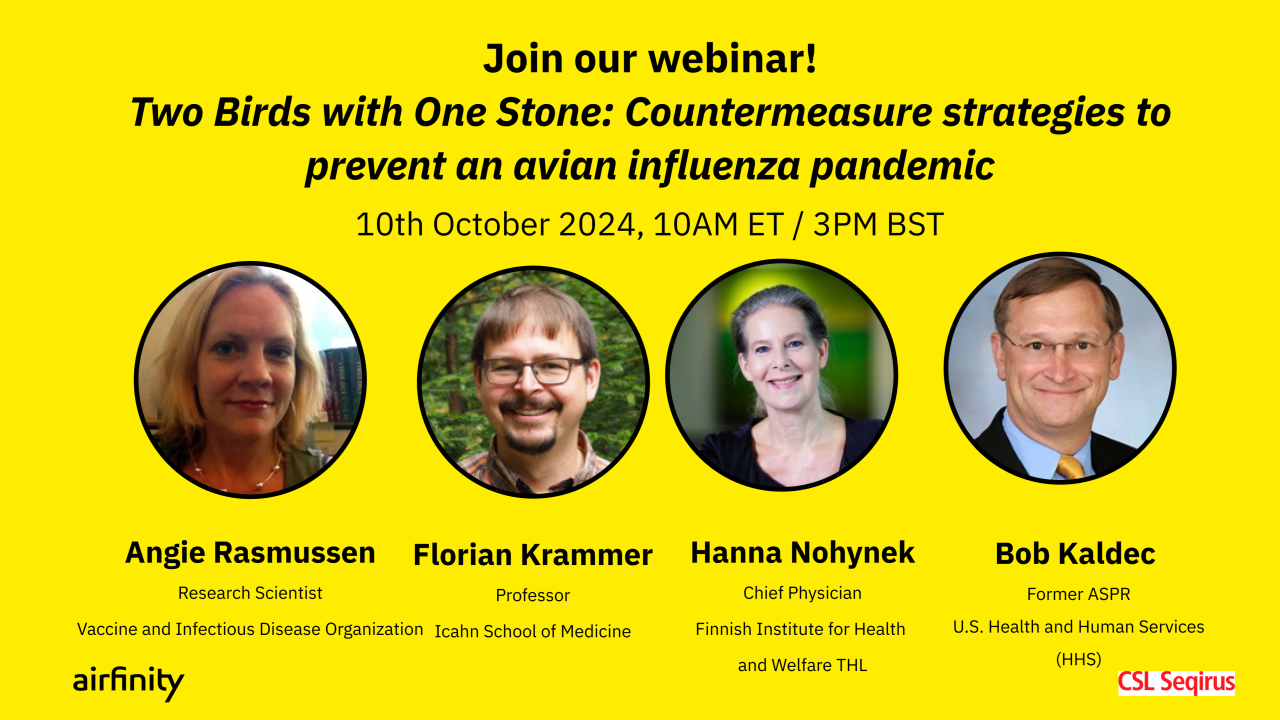
NEW: Airfinity Avian Influenza Webinar

“Join Airfinity and its expert panelists in a discussion of the current avian influenza outbreak. Key topics will include the evolution of the virus, the potential of a recombination event and the current state of pandemic preparedness.”

This event will take place on October 10 at 10 am ET. Learn more and join here.

NEW: Potential Research Priorities to Inform Readiness and Response to Highly Pathogenic Avian Influenza A (H5N1)

“The National Academies will host a 2-day virtual public workshop, October 22-23, to explore research priorities for the ongoing H5N1 outbreak in the U.S. Recognizing the interconnection between people, animals, and their shared environment, this workshop will take a One Health approach to bring together federal government agencies, the academic community, and the private sector, as well as other relevant stakeholders across the health, agriculture, and food safety sectors.”

“Workshop discussions will focus on basic science and research areas of concern and may help inform future research that could provide local, national, and global communities with information about virus transmission, mitigation of risks, and appropriate measures to prevent the spread of disease.”

Learn more and register here.

NEW: One Health and the Politics of COVID-19 Book Launch

The Writer’s Center is hosting a book launch for Dr. Laura Kahn’s new book, One Health and the Politics of COVID-19 (blurb below) on November 23 at 2 pm EST in Bethesda, MD. Learn more and RSVP here.

One Health and the Politics of COVID-19 unpacks the mysteries of COVID-19’s origins to impart important lessons for future outbreaks. The One Health concept recognizes the interconnected links among the health of humans, animals, plants, and the environment. By comparing the history, science, and clinical presentations of three different coronaviruses—SARS-CoV-1, MERS, and SARS-CoV-2 (COVID-19)—Kahn uncovers insights with important repercussions for how to prepare and avoid future pandemics. The One Health approach provides a useful framework for examining the COVID-19 pandemic. Understanding the origins of this zoonotic disease requires investigating the environmental and molecular biological factors that allowed the virus to spread to humans. The book explores the many ways in which the wild animal trade, wet markets, and the camel industry contributed to the spread of the earlier SARS-CoV-1 and MERS coronaviruses. For SARS-CoV-2 (COVID-19), Kahn examines the biosafety, biosecurity, and bioethics implications of gain-of-function research on pandemic potential pathogens. This book is a must read to understand the geopolitics of the COVID-19 pandemic.”

Responsible AI: Design, Development, and Use

Join the Mason Autonomy and Robotics Center (MARC) for this 3-day in-person course on Responsible AI: Design, Development, and Use!  As AI becomes increasingly pervasive across various domains, it is essential that we prioritize responsible principles, policies, and practices. Learn from top AI scholars and industry experts about ethical and safe AI deployment. You’ll also gain the critical skills to navigate the complexities of AI in business, healthcare, transportation and more.
Course Dates: October 15-17, 2024
Registration Deadline: October 8, 2024

FLUency: True Expertise and Effectiveness in the Battle Against Influenza

“This Commission meeting, FLUency: True Expertise and Effectiveness in the Battle Against Influenza, will be held on Tuesday, October 8th, in Washington, DC. The focus of this meeting will be to provide the Bipartisan Commission on Biodefense with a better understanding of: (1) national leadership to defend food and agriculture against influenza; (2) federal operational requirements for preparedness, coordination, and response; (3) biosurveillance, forecasting, and the need for diagnostic tests; and (4) front-line needs and partnerships in the fight against influenza.”

This event will take place in-person on October 8 from 9:20 am to 2 pm EST. Learn more and register here.

Register now: https://bit.ly/3zMvZOR

Bio and Beer (October 10)

From the Northern Virginia BioHub: Join us for a panel discussion with local investors as they share their funding priorities, insights on what’s ahead, and tips for meaningful engagement. Also, connect with our dynamic community of professionals from industry, academia, healthcare, investment, and government for a fun evening of networking!

Our panelists include:

  • Deborah Hemingway, Managing Partner, Ecphora Capital
  • Bibhash Mukhopadhyay, Managing Partner, Sound Bioventures
  • Kevin O’Connell, Senior Vice President, In-Q-Tel

Register to attend for free at: https://ibi.gmu.edu/event/october-2024-bio-beer/

Location: JLL Tysons Office, 1800 Tysons Boulevard, McLean, Virginia 22102

Hosted by: The Northern Virginia BioHub

Signature Sponsor: JLL

Additional Sponsors: Virginia Bio, the Prince William County Department of Economic Development, and George Mason University’s Institute for Biohealth Innovation

External Review of Ethical, Legal, Environmental, Safety, Security, and Societal Issues of Engineering Biology Research and Development

From NASEM: “Engineering biology holds significant potential to transform the U.S. and global economy, with promise to deliver innovative solutions in health, climate, energy, food and agriculture, and more. As research and development in engineering biology and other areas of the bioeconomy advance, addressing the societal issues related to these technologies is imperative. As requested by the CHIPS and Science Act, this study will conduct an evaluation of the ethical, legal, environmental, safety, security, and other societal issues related to engineering biology, and make recommendations on research needs related to these issues and means to effectively incorporate their consideration into research practice.”

“The National Academies of Sciences, Engineering, and Medicine (NASEM) will appoint an ad hoc committee to review and make recommendations on the ethical, legal, environmental, safety, security, and other appropriate societal issues related to engineering biology research and development. The committee will address the scholarship and practice of addressing these issues, focusing specifically on:

(1) An assessment of the current knowledge and practice on assessing and mitigating various societal issues including ethical, legal, environmental, safety, and security issues.
(2) A description of the gaps and needs relating to such issues, focusing on approaches for co-generation of assessment approaches and design of products, technologies, and services with users of engineering biology research and development
(3) Actionable recommendations on how the National Engineering Biology Research and Development Initiative, established by the CHIPS and Science Act, can address the identified gaps and needs.
(4) Actionable recommendations on how researchers across the range of disciplines engaged in engineering biology can best incorporate considerations of such societal issues into the development of research proposals and the conduct of research.”

“NASEM will produce a consensus report presenting the results of its work and offering its findings, conclusions, and recommendations.”

“We invite you to submit suggestions for experts to participate in this activity. The call for experts closes on October 16, 2024 at 11:59 (ET).”

Recommend an expert here.

DARPA Invites Proposals for AI Biotechnology Pitch Days Dec. 5-6

“DARPA funds the research and development of technologies with the potential for transformational impact, central to delivering on the agency’s mission to create and prevent strategic surprise for national security. The agency’s Biological Technologies Office focuses on the natural world to derive revolutionary capabilities centered on:

  • Foundational technologies that promote simulation and prediction of biological systems and outcomes, like simulation, foundational models, and data generation,
  • Warfighter readiness, health, and recovery, such as medical countermeasures, diagnostics, health IT and medical devices, and
  • Operational support of U.S. forces to enable their execution of missions across the spectrum, ranging from fibers for garments to distributed, point-of-need manufacturing.”

“To capitalize on these new opportunities and further accelerate the pace of scientific and technological discovery and development, DARPA looks to include targeted and limited-scope investments via an AI BTO solicitation seeking proposals on technologies focused at the intersection of artificial intelligence and biotechnology.”

‘“AI BTO seeks to fund proposals that catalyze the formation of future research projects by clarifying the opportunity space and de-risking technical barriers to achieving high impact,” said BTO Director Dr. Michael Koeris. “To this end, the office is providing $4.5 million to support up to 45 revolutionary catalyst projects and will be finalizing research agreements day of. We look forward to reviewing the novel biotechnology approaches to further our national security mission.”’

“BTO leadership is interested in engaging first-time or non-traditional proposers and seeks revolutionary approaches to emerging or anticipated Department of Defense challenges. During these events, BTO will introduce five new overarching topics that align with AI/ML applications:

  • Prediction and Health
  • Autonomous Science
  • Biomanufacturing/Synthetic Biology
  • Challenges with Scale
  • Exciting Frontiers”

Pitch Days

“DARPA will host AI BTO Pitch Days on December 5-6, 2024, in the Washington, DC, region to select and award AI BTO catalyst projects. To be considered for AI BTO Pitch Day participation, offerors must submit a short white paper consisting of a technical description of the proposer’s idea in response to one of the focus areas listed above.”

“DARPA will notify offerors if they are selected for further evaluation via an in-person Pitch Day presentation to a panel of BTO program managers at the AI BTO Pitch Day event.”

“If selected for award at Pitch Day, DARPA may issue a Research Other Transactions award for one of three award scenarios – $100,000, $200,000, or $300,000. The maximum amount of government funding given to any single proposer will be $300,000.”

“To submit a white paper, register at https://usg.valideval.com/teams/aibto_2024/signup. The deadline is Friday, October 9, 2024 by 4:00PM EDT. Late applications will not be accepted.”

“Additional information is available on SAM.gov.”

Call for Experts: Health-Security Interface Technical Advisory Group (HSI-TAG)

“The World Health Organization (WHO) is seeking two experts to serve as new members of the Health-Security Interface Technical Advisory Group (HSI-TAG). This “Call for experts” provides information about the advisory group in question, the expert profiles being sought, the process to express interest, and the process of selection.”

“The concept of Health-Security Interface (HSI) applies to those public health activities whose performance involves to some extent the security sector broadly understood (e.g. international and non-governmental organizations, civil defense, military health personnel, law enforcement and armed forces, defense-related research programmes), certain international organizations and other entities with a security relevant mandate. These activities may include protection of health from traditional and emerging infectious disease threats; deliberate events and investigation of alleged use of chemical and biological agents including non-permissive environments and conflict zones; and any health activities performed in collaboration with security actors.”

“The HSI-TAG is multidisciplinary, with members who have a range of technical knowledge, skills and experience relevant to the Health-Security Interface.”

“Considering the recent developments and global trends, the Secretariat realized that there was a need to strengthen the following areas of expertise/experience, hence welcomes expressions of interest from:

  • Bioterrorism experts (knowledge on pathogens of security concern, their microbiological characterization and application/modification for weaponization, diagnostics, countermeasures and containment measures),
  • Decision/policy makers with hands-on experience dealing with significant deliberate event(s) (biological/chemical) response at the local, regional, or national level.”

“For the improved geographical and gender representation of the HSI-TAG members, the WHO Secretariat encourages applications from the WHO African, Western Pacific, European, Eastern Mediterranean and Pan American Health Organization/Americas regions and female or non-male gender identities.”

Learn more about the HSI and express interest by October 7 here.

­­The Hidden Pandemic: COVID-19’s Impact on Antimicrobial Resistance

By Theresa Hoang, Biodefense MS Student

Introduction

The COVID-19 global pandemic has threatened public health security by adversely altering the health of patients and overwhelming hospital systems throughout the world. Not only is COVID-19 a global health threat, but antimicrobial resistance (AMR) is a public health crisis too. AMR happens when microbes become resistant to antimicrobials that are designed to kill them.[1] AMR contributes to healthcare-associated infections (HAI)­ in patients, which spreads within healthcare facilities and throughout the community and environment.[2] The CDC reports that “each year in the U.S., at least 2.8 million people are infected with antibiotic-resistant bacteria or fungi, and more than 35,000 people die as a result.”1 AMR is a serious public health concern, especially during the pandemic, because experts have noted that COVID-19 may have reversed the progress on reducing AMR by creating a “perfect storm” for antibiotic-resistant infections in healthcare settings.[3] How has the COVID-19 pandemic impacted AMR in clinical patients, and why is it important? This issue is important because it affects patients, who are undergoing antibiotic treatments, and healthcare systems that are trying to prevent the spread of AMR. The current literature has discussed extensively the direct and indirect effects of the COVID-19 pandemic on AMR. A group of authors focuses on the increase of secondary drug-resistant infections and how they are affecting COVID-19 patients. Another group discusses the deterioration of healthcare systems allowing AMR transmission to escalate. Other authors analyze the disruption of antibiotic stewardship and its adverse effects during the pandemic. To fight against this growing pandemic, patients should work together with their healthcare providers to learn about the troubling effects of AMR and how to prevent it from spreading by practicing enhanced antimicrobial stewardship.

Secondary Drug-Resistant Infections from AMR

The surge in AMR during the pandemic has resulted in a rise of secondary drug-resistant infections. The three drug-resistant microorganisms that will be discussed are methicillin-resistant Staphylococcus aureus (MRSA), carbapenem-resistant Enterobacterales (CREs), and Candida auris.

Scanning Electron Micrograph of MRSA (from CDC)

Methicillin-resistant Staphylococcus aureus

MRSA is commonly spread in healthcare facilities and communities, and it can cause staphylococcus infections that are usually difficult to treat because of its resistance to some antibiotics.[4] Segala et. al explain that, during the pandemic, MRSA co-infections have increased significantly in COVID-19 patients who were admitted to intensive care units (ICUs).[5] “Up to 86.4% of all COVID-19 patients admitted to the ICU received a wide spectrum antibiotic therapy,” which helps treat against a vast majority of co-infections, including MRSA.5 However, exposing patients to these unnecessary antibiotics in a combination therapy can induce AMR. In another case study completed in Italy on mechanically ventilated patients, researchers compared the proportion of ventilator associated pneumonia (VAP) due to MRSA, between COVID-19 patients and non-COVID-19 patients.5 They found VAP rates were significantly higher in COVID-19 patients due to receiving a broad spectrum antibiotic therapy. Their findings also suggest there is higher rate of MRSA colonization and environmental contamination in COVID-19 ICUs.5 MRSA has not only evolved to become more resistant to antibiotics, but it continues to spread and colonize in healthcare facilities and other communities, in addition to infecting COVID-19 patients at increasing rates.

Infographic of the Risk of CRE Infections (from CDC)

Carbapenem-Resistant Enterobacterales (CREs)

Carbapenem-resistant Enterobacterales (CREs), formerly known as CR Enterobacteriaceae and nicknamed “Nightmare bacteria,” are a large group of different types of Gram-negative bacteria, such as Escherichia coli (E. coli) and Klebsiella pneumoniae, that commonly causes multiple infections in humans and in healthcare settings. CREs also develop resistance to a group of antibiotics called carbapenems.[6] CRE infections are spread from person-to-person by infecting or colonizing people (without causing infections or symptoms), specifically contact with wounds or stool, and through medical devices that have not been properly cleaned.[7]

CREs are a threat to public health because they are difficult to treat and are resistant to almost all available antibiotics.6 Their resistance comes from producing carbapenemases, which are enzymes that spread to other germs and cause resistance in carbapenems, rendering them ineffective.4 The CDC states that high levels of antibiotic resistance in CREs necessitate more toxic and less effective treatments, harming patient outcomes.7

Studies have shown that CRE infections are increasing among COVID-19 patients. According to a recent review on CRE infections during the pandemic, “secondary infections caused by CR-Klebsiella pneumoniae (Cr-Kp) show high prevalence of co-infection in COVID-19 patients.”5 Researchers have noticed that CR-Kp colonization and infections were associated with a high mortality rate in COVID-19 patients and increased use of antimicrobial agents.5 This represents a significant challenge for both infection control and clinical practice because as new antibiotics continue to be overused, CRE infections continue to rise and manifest in healthcare facilities and throughout communities.

Candida auris on CHROMagar Candida after Salt Sab Dulcitol Broth enrichment (from CDC)

Candida auris

Candida auris is an emerging multidrug-resistant (MDR) yeast that brings severe infections and spreads easily between hospitalized patients and nursing home residents through skin-to-skin contact.4 It can also cause invasive infections by entering the bloodstream, and even cause wound and ear infections.[8] Moreover, C. auris can trigger outbreaks in healthcare settings by contaminating hospital surfaces and medical equipment, especially if they are used for COVID-19 critical care. This indicates that patients are at high risk of C. auris colonization and infections.[9]

C. auris is an extreme public health threat to communities, and it has become a more serious concern during the pandemic. Since some patients with severe COVID-19 have required intubation and other invasive devices, they are put at a higher risk of C. auris infections; the pandemic may have contributed to an increase in these cases.[10] In another report from the CDC, 39 cases of C. auris have appeared in Florida during the pandemic that were attributed to “unconventional personal protective equipment (PPE) practices and environmental contamination.”[11] Risk factors like these have caused critically ill COVID-19 patients with C. auris infections to stay longer at ICUs and require antifungal drugs for long periods of time.5 This proves that improper and extended use of PPE has played a role in self-contamination and transmission of C. auris among COVID-19 patients.5 To prevent C. auris from spreading, especially among COVID patients, it must be detected immediately and IPC practices must be implemented.

Overall, the three different pathogens share a common goal, which is to induce AMR and increase secondary infections among patients. These drug-resistant microorganisms are a few out of the many other agents that have impacted patients during the COVID-19 pandemic.

AMR Implications for Healthcare Systems

Additionally, during the COVID-19 pandemic, the exacerbation of healthcare systems has increased transmission of AMR. Studies have shown that the rise of AMR in healthcare facilities was caused by a variety of factors, such as prolonged stays in the ICU,[12] overcrowding,[13] “contaminated PPE, increased workload among hospital staff, and prolonged glove usage.”[14] Furthermore, “shortages of PPE, staff shortages, fatigue, and deployment of inexperienced staff members with only basic training” are other factors that may contribute to the increased risk of AMR.[15] These determinants not only led to a surge in AMR, but also increases in morbidity, mortality, and healthcare costs for patients.14

To reduce AMR from escalating any further, Rawson et. al propose that social distancing, increased hand hygiene practice, and pre-emptive discharge of patients and cancellation of routine procedures are potential interventions that healthcare systems can implement during the pandemic.13 In addition, Knight et. al mention “enhanced infection prevention and PPE usage and control measures, in response to the COVID-19 pandemic, will help prevent infections and limit the spread of AMR.”15 Therefore, better health infrastructure and enhanced IPC measures set in place mean minimization of AMR amongst patients.

Disruption of Antimicrobial Stewardship

Disruption of antibiotic stewardship is another problem that needs to be addressed with the rise of AMR driven by COVID-19. Antimicrobial stewardship (AMS) is “promoting the appropriate use of antimicrobials, improving patient outcomes, reducing AMR, and decreasing spread of infections caused by multidrug-resistant organisms (MDROs).”[16] However, AMS has not been emphasized enough during the pandemic. For instance, researchers are concerned that increased antibiotic use during the pandemic could enhance the long-term threat of AMR.[17] Popescu states that “misuse and overprescribing of antibiotics, poor stewardship, and generalized lack of surveillance,” are some reasons why AMR continues to be a public health problem.[18]

Moreover, misinformation on antibiotic use (whether it is low public awareness or increased consumption of them) is another factor that may enhance the rise and spread of AMR.[19] For example, Arshad et. al explain that 44% of respondents to a population survey in Australia assumed that antibiotics could treat or prevent COVID-19, and university students in Jordan who believed in conspiracy theories around COVID-19 also thought antibiotics can cure it.[20] Additionally, clinical uncertainty about the disease process and pathology of an infection can increase antibiotic use. “When clinicians do not have all the necessary information to truly understand what is happening to the patient, they tend to prescribe more antibiotics.”17 Altogether, these factors can increase the spread of AMR and disrupt AMS.

In contrast, Toro-Alzate et. al argue that “telemedicine consultations could be useful to educate patients on improving antibiotic use.”19 But at the same time, they mention how telemedicine can also increase over-prescription of antibiotics due to physicians’ decision making.19 Because they are not with patients in-person, healthcare providers tend to misdiagnose more often and not order as much lab tests with these remote services.

#BeAntibioticsAware: Do I really need antibiotics? (from CDC)

Another AMS strategy is using social media to manage online media campaigns that combat misinformation of antibiotic use. Some organizations, such as WHO and Nigeria Centre for Disease Control, correct antimicrobial misinformation and discuss ineffectiveness of antibiotics as a treatment for COVID-19 by using their digital platforms.20 Taking everything into consideration and how the pandemic impacted the public health community, AMS must be further improved and emphasized among patients and healthcare providers to reduce AMR.

Are Hospital Stays of COVID-19 Patients (with AMR) Longer than Those of Non-COVID Patients?

The literature does not yet analyze the question of whether the length of hospital stays for COVID-19 patients with AMR are longer compared to hospital stays of non-COVID-19 patients. One study has claimed that AMR has led to adverse consequences for patients, including “more prolonged hospital admissions.”[21] Srinivasan mentions and compares the patient discharge data and AMR rates between patients with influenza-like illness and COVID-19.11 Yet, the data between patients with flu and COVID-19 were collected at different time frames.

Source: CAPT Arjun Srinivasan, MD, USPHS (CDC PowerPoint)

In the current literature, there is no evidence and comparison recorded between hospital stays of COVID-19 and non-COVID patients during the pandemic, over the same time period. Considering that the surge in AMR has been driven by the pandemic, and that it has caused ill patients to stay at hospitals based on their conditions, it is hypothesized that COVID-19 patients with AMR have stayed at the hospitals much longer than non-COVID patients during the pandemic. To examine this gap, further research needs to be conducted by attempting to gather data through a survey and compare hospital stay rates between COVID-19 and non-COVID patients from different hospitals in the Northern Virginia area. This would also explore the critical steps needed to treat patients with AMR and to mitigate its transmission before discharging patients.

Conclusion

Antibiotics save lives but any time antibiotics are used, they can induce side effects and lead to AMR.4 Along with the rise in AMR, COVID-19 has compounded this issue, creating more challenges for patients and hospital systems to overcome. The surge of secondary infections among patients, the exacerbation of hospital infrastructures, and the disruption of antimicrobial stewardship are the results of COVID-19’s impact on AMR.

Bibliography

Arshad, Mehreen, Syed Faisal Mahmood, Mishal Khan, and Rumina Hasan. 2020. “COVID-19, Misinformation, and Antimicrobial Resistance.” BMJ371 (November): m4501. https://doi.org/10.1136/bmj.m4501.

CDC. 2021. “Candida auris.” Centers for Disease Control and Prevention. July 19, 2021. https://www.cdc.gov/fungal/candida-auris/index.html.

CDC. 2021. “CRE: Healthcare-Associated Infections (HAI).” Centers for Disease Control and Prevention. April 7, 2021. https://www.cdc.gov/hai/organisms/cre/index.html.

​​CDC. 2021. “Patients | CRE | HAI”. Centers for Disease Control and Prevention. February 18, 2021. https://www.cdc.gov/hai/organisms/cre/cre-patients.html.

CDC. 2020. “What Exactly Is Antibiotic Resistance?” Centers for Disease Control and Prevention. March 13, 2020. https://www.cdc.gov/drugresistance/about.html.

CDC. 2020. “Where Antibiotic Resistance Spreads.” Centers for Disease Control and Prevention. March 10, 2020. https://www.cdc.gov/drugresistance/about/where-resistance-spreads.html.

Centers for Disease Control and Prevention (U.S.). 2019. “Antibiotic Resistance Threats in the United States, 2019.” Centers for Disease Control and Prevention (U.S.). https://doi.org/10.15620/cdc:82532.

Jul 27, Chris Dall | News Reporter | CIDRAP News | and 2021. n.d. “CDC Reports Two Outbreaks of Pan-Resistant Candida Auris.” CIDRAP. Accessed October 6, 2021. https://www.cidrap.umn.edu/news-perspective/2021/07/cdc-reports-two-outbreaks-pan-resistant-candida-auris.

Chowdhary, Anuradha, and Amit Sharma. 2020. “The Lurking Scourge of Multidrug Resistant Candida Auris in Times of COVID-19 Pandemic.” Journal of Global Antimicrobial Resistance 22 (September): 175–76. https://doi.org/10.1016/j.jgar.2020.06.003.

“COVID-19 & Antibiotic Resistance | CDC.” 2021. June 8, 2021. https://www.cdc.gov/drugresistance/covid19.html.

Hsu, Jeremy. “How Covid-19 is Accelerating the Threat of Antimicrobial Resistance.” BMJ: British Medical Journal (Online) 369, (May 18, 2020). http://dx.doi.org.mutex.gmu.edu/10.1136/bmj.m1983.

Knight, Gwenan M., Rebecca E. Glover, McQuaid C. Finn, Ioana D. Olaru, Gallandat Karin, Quentin J. Leclerc, Naomi M. Fuller, et al. 2021. “Antimicrobial Resistance and COVID-19: Intersections and Implications.” ELife 10. http://dx.doi.org/10.7554/eLife.64139.

Majumder, Md Anwarul Azim, Sayeeda Rahman, Damian Cohall, Ambadasu Bharatha, Keerti Singh, Mainul Haque, and Marquita Gittens-St Hilaire. 2020. “Antimicrobial Stewardship: Fighting Antimicrobial Resistance and Protecting Global Public Health.” Infection and Drug Resistance 13: 4713–38. http://dx.doi.org/10.2147/IDR.S290835.

Manning, Mary Lou, Edward J. Septimus, Elizabeth S. Dodds Ashley, Sara E. Cosgrove, Mohamad G. Fakih, Steve J. Schweon, Frank E. Myers, and Julia A. Moody. 2018. “Antimicrobial Stewardship and Infection Prevention—Leveraging the Synergy: A Position Paper Update.” American Journal of Infection Control 46 (4): 364–68. https://doi.org/10.1016/j.ajic.2018.01.001.

Popescu, Saskia. 2019. “The Existential Threat of Antimicrobial Resistance.” Bulletin of the Atomic Scientists 75 (6): 286–89. https://doi.org/10.1080/00963402.2019.1680053.

Rawson, Timothy M, Luke S P Moore, Enrique Castro-Sanchez, Esmita Charani, Frances Davies, Giovanni Satta, Matthew J Ellington, and Alison H Holmes. 2020. “COVID-19 and the Potential Long-Term Impact on Antimicrobial Resistance.” Journal of Antimicrobial Chemotherapy 75 (7): 1681–84. https://doi.org/10.1093/jac/dkaa194.

Segala, Francesco Vladimiro, Davide Fiore Bavaro, Francesco Di Gennaro, Federica Salvati, Claudia Marotta, Annalisa Saracino, Rita Murri, and Massimo Fantoni. 2021. “Impact of SARS-CoV-2 Epidemic on Antimicrobial Resistance: A Literature Review.” Viruses 13 (11): 2110. https://doi.org/10.3390/v13112110.

​​Srinivasan, Arjun. “The Intersection of Antibiotic Resistance (AR), Antibiotic Use (AU), and COVID-19.” Centers for Disease Control and Prevention. February 10, 2021. https://www.hhs.gov/sites/default/files/antibiotic-resistance-antibiotic-use-covid-19-paccarb.pdf.

Sun Jin, Louisa and Fisher, Dale. 2021. “MDRO Transmission in Acute Hospitals during the COVID-19 Pandemic.” Wolters Kluwer Health, Inc. (34) 4: 365–371.

Toro-Alzate, Luisa, Karlijn Hofstraat, and Daniel H de Vries. 2021. “The Pandemic beyond the Pandemic: A Scoping Review on the Social Relationships between COVID-19 and Antimicrobial Resistance.” International Journal of Environmental Research and Public Health 18 (16): 1–20. https://doi.org/10.3390/ijerph18168766.        

Vidyarthi, Ashima Jain, Arghya Das, and Rama Chaudhry. 2021. “Antimicrobial Resistance and COVID-19 Syndemic: Impact on Public Health.” Drug Discoveries & Therapeutics 15 (3): 124–29. https://doi.org/10.5582/ddt.2021.01052.


[1] CDC. 2020. “What Exactly Is Antibiotic Resistance?” Centers for Disease Control and Prevention. March 13, 2020. https://www.cdc.gov/drugresistance/about.html.

[2] CDC. 2020. “Where Antibiotic Resistance Spreads.” Centers for Disease Control and Prevention. March 10, 2020. https://www.cdc.gov/drugresistance/about/where-resistance-spreads.html.

[3] “COVID-19 & Antibiotic Resistance | CDC.” 2021. June 8, 2021. https://www.cdc.gov/drugresistance/covid19.html.

[4] Centers for Disease Control and Prevention (U.S.). 2019. “Antibiotic Resistance Threats in the United States, 2019.” Centers for Disease Control and Prevention (U.S.). https://doi.org/10.15620/cdc:82532.

[5] Segala, Francesco Vladimiro, Davide Fiore Bavaro, Francesco Di Gennaro, Federica Salvati, Claudia Marotta, Annalisa Saracino, Rita Murri, and Massimo Fantoni. 2021. “Impact of SARS-CoV-2 Epidemic on Antimicrobial Resistance: A Literature Review.” Viruses 13 (11): 2110. https://doi.org/10.3390/v13112110.

[6] CDC. 2021. “CRE: Healthcare-Associated Infections (HAI).” Centers for Disease Control and Prevention. April 7, 2021. https://www.cdc.gov/hai/organisms/cre/index.html.

[7] CDC. 2021. “Patients | CRE | HAI”. Centers for Disease Control and Prevention. February 18, 2021. https://www.cdc.gov/hai/organisms/cre/cre-patients.html

[8] CDC. 2021. “Candida auris.” Centers for Disease Control and Prevention. July 19, 2021. https://www.cdc.gov/fungal/candida-auris/index.html.

[9] Chowdhary, Anuradha, and Amit Sharma. 2020. “The Lurking Scourge of Multidrug Resistant Candida Auris in Times of COVID-19 Pandemic.” Journal of Global Antimicrobial Resistance 22 (September): 175–76. https://doi.org/10.1016/j.jgar.2020.06.003.

[10] Jul 27, Chris Dall | News Reporter | CIDRAP News | and 2021. n.d. “CDC Reports Two Outbreaks of Pan-Resistant Candida Auris.” CIDRAP. Accessed October 6, 2021. https://www.cidrap.umn.edu/news-perspective/2021/07/cdc-reports-two-outbreaks-pan-resistant-candida-auris.

[11] Srinivasan, Arjun. “The Intersection of Antibiotic Resistance (AR), Antibiotic Use (AU), and COVID-19.” Centers for Disease Control and Prevention. February 10, 2021. https://www.hhs.gov/sites/default/files/antibiotic-resistance-antibiotic-use-covid-19-paccarb.pdf.

[12] Vidyarthi, Ashima Jain, Arghya Das, and Rama Chaudhry. 2021. “Antimicrobial Resistance and COVID-19 Syndemic: Impact on Public Health.” Drug Discoveries & Therapeutics 15 (3): 124–29. https://doi.org/10.5582/ddt.2021.01052.

[13] Rawson, Timothy M, Luke S P Moore, Enrique Castro-Sanchez, Esmita Charani, Frances Davies, Giovanni Satta, Matthew J Ellington, and Alison H Holmes. 2020. “COVID-19 and the Potential Long-Term Impact on Antimicrobial Resistance.” Journal of Antimicrobial Chemotherapy 75 (7): 1681–84. https://doi.org/10.1093/jac/dkaa194.

[14] Sun Jin, Louisa and Fisher, Dale. 2021. “MDRO Transmission in Acute Hospitals during the COVID-19 Pandemic.” Wolters Kluwer Health, Inc. (34) 4: 365–371.

[15] Knight, Gwenan M., Rebecca E. Glover, McQuaid C. Finn, Ioana D. Olaru, Gallandat Karin, Quentin J. Leclerc, Naomi M. Fuller, et al. 2021. “Antimicrobial Resistance and COVID-19: Intersections and Implications.” ELife 10. http://dx.doi.org/10.7554/eLife.64139.

[16] Manning, Mary Lou, Edward J. Septimus, Elizabeth S. Dodds Ashley, Sara E. Cosgrove, Mohamad G. Fakih, Steve J. Schweon, Frank E. Myers, and Julia A. Moody. 2018. “Antimicrobial Stewardship and Infection Prevention—Leveraging the Synergy: A Position Paper Update.” American Journal of Infection Control 46 (4): 364–68. https://doi.org/10.1016/j.ajic.2018.01.001.

[17] Hsu, Jeremy. “How Covid-19 is Accelerating the Threat of Antimicrobial Resistance.” BMJ: British Medical Journal (Online) 369, (May 18, 2020). http://dx.doi.org.mutex.gmu.edu/10.1136/bmj.m1983.

[18] Popescu, Saskia. 2019. “The Existential Threat of Antimicrobial Resistance.” Bulletin of the Atomic Scientists 75 (6): 286–89. https://doi.org/10.1080/00963402.2019.1680053.

[19] Toro-Alzate, Luisa, Karlijn Hofstraat, and Daniel H de Vries. 2021. “The Pandemic beyond the Pandemic: A Scoping Review on the Social Relationships between COVID-19 and Antimicrobial Resistance.” International Journal of Environmental Research and Public Health 18 (16): 1–20. https://doi.org/10.3390/ijerph18168766.          

[20] Arshad, Mehreen, Syed Faisal Mahmood, Mishal Khan, and Rumina Hasan. 2020. “COVID-19, Misinformation, and Antimicrobial Resistance.” BMJ 371 (November): m4501. https://doi.org/10.1136/bmj.m4501.

[21] Majumder, Md Anwarul Azim, Sayeeda Rahman, Damian Cohall, Ambadasu Bharatha, Keerti Singh, Mainul Haque, and Marquita Gittens-St Hilaire. 2020. “Antimicrobial Stewardship: Fighting Antimicrobial Resistance and Protecting Global Public Health.” Infection and Drug Resistance 13: 4713–38. http://dx.doi.org/10.2147/IDR.S290835.