Pandora Report: 9.16.2022

It has been a busy week and this issue reflects that! We kick this issue off with updates on the conclusion of the Biological Weapons Convention Article V Formal Consultative Meeting in Geneva before getting into everything from the United States’ inclusion on the WHO’s list of countries with circulating vaccine-derived polio (yikes) and new US government health security leadership and funding. As always, there are enough new publications, podcasts and upcoming events to keep you way too busy until next Friday.

BTWC Consultative Meeting Wraps Up

Last Friday, the Biological Weapons Convention Article V Formal Consultative Meeting requested by Russia concluded in Geneva. The meeting was held in response to Russia’s claims that the US supports biological weapons development in Ukraine. The US State Department issued a statement accusing Russia of abusing the consultative meeting process by using it as an international stage to further spread disinformation. The statement reads in part, “The United States delegation, led by Special Representative Kenneth D. Ward, effectively exposed Russia’s disinformation tactics and dispelled Russia’s spurious allegations seeking to malign peaceful U.S. cooperation with Ukraine.”

“In the presence of delegations from 89 countries, the United States and Ukraine presented a thorough, in-depth series of presentations that strongly refuted Russia’s absurd and false claims of U.S. biological weapons development and bio-labs in Ukraine. Technical experts from the U.S. and Ukrainian delegations unambiguously explained their cooperation and U.S. assistance related to public health facilities, biosafety, biosecurity, and disease surveillance as part of the broader U.S. Cooperative Threat Reduction Program. The United States and Ukraine also highlighted how such activities are consistent with—and further support—the provisions of the BWC, particularly Article X, which promotes cooperation and assistance by States Parties. States Parties affirmed and supported the United States in this regard, with over 35 of the 42 countries that spoke noting the importance of such work.”

Belarus, China, Cuba, Nicaragua, Russian Federation, Syrian Arab Republic, Venezuela, and Zimbabwe also submitted a joint statement on Friday, showing that the Russians just aren’t ready to give this up-“We have to conclude that the questions as to the military biological activities conducted by the United States in the context of the functioning of biological laboratories on the Ukrainian territory still remain unresolved. We have not received exhaustive explanations that could completely allay the doubts concerning the said activities and thus straighten out the situation that had prompted the Russian side to convene the Consultative meeting under BTWC Article V. This is regrettable.”

The statement later continued, “In addition, given the outcomes of the Consultative meeting as well as to facilitate the resolution of the existing situation, we call for making use of all opportunities available within the framework of the BTWC, including the mechanism under Article VI of the Convention.”

Article VI of the convention is the provision of “Right to request the United Nations Security Council to investigate alleged breaches of the BWC, and undertaking to cooperate in carrying out any investigation initiated by the Security Council.”

Though China’s Xi Jinping has yet to officially back Russia’s claims, his representative at the consultative meeting, Li Song, said “China was “deeply concerned” about the allegations and called for an independent international investigation of the United States’ activities involving biological research,” according to the New York Times. “My delegation believes that a series of specific questions raised by Russia have not yet received pointed response from the U.S.,” Li said in a statement provided by the UN Office of Disarmament Affairs.

What Purpose Does This Disinformation Serve?

While Soviet and, later, Russian disinformation surrounding US BW programs (or the lack thereof) is nothing new, it is important to understand what purposes it serves. With Russian claims about supposed US BW work in Ukraine doing everything from developing an ethnic bioweapon to target Russians to training birds to deliver biological weapons, these claims are broad and have far-reaching consequences. For starters, these claims help the Russians justify and legitimize the invasion of Ukraine to their people by offering a threat to the homeland that justifies the severe cost this has had for the country.

However, claims like this also damage public health, especially since the facilities targeted by this disinformation, both in Ukraine and other countries assisted by the United States’ Cooperative Threat Reduction program, are those with important public health missions. This was the case when allegations were aimed at the Richard G. Lugar Center for Public Health Research in Tbilisi, Georgia, home to the Georgian National Center for Disease Control and Prevention and US Army Medical Research Directorate-Georgia. The Lugar Center was instrumental in Georgia’s management of the COVID-19 pandemic in 2020, shoring up diagnostic capability for the country. Targeting facilities with such important missions, especially when they are well-documented to be working on strictly peaceful work, undermines their legitimate service to the public and their role in protecting health security globally.

Furthermore, the RAND Corporation’s John V. Parachini explains, “It’s tempting to write off such claims as cartoonish propaganda. But Russia is also making similarly outrageous claims to the United Nations and other international forums, and that’s more serious. Such maneuvers could dangerously undermine international arms control agreements.” He also explains of Russia’s Permanent Representative to the UNSC Vassily Nebenzia’s claims about Ukraine that “What the ambassador failed to mention was that Russian scientists visited these same laboratories in the past and never noted anything like what Russian officials now claim. Moreover, the United States had been collaborating with Russia in the same way—providing similar assistance to Russia to refocus the activities of former Soviet biological weapons laboratories, until Russia pulled out of the program in 2014, the same year it invaded Crimea.”

United States Added to WHO’s List of Countries with Circulating Vaccine-Derived Poliovirus

At one point in the 1940s, polio disabled an average of over 35,000 Americans annually. However, thanks to a robust vaccination push, the Pan American Health Organization announced in 1994 that “…three years had passed since the last case of wild polio in the Americas. A three-year-old Peruvian boy, Luis Fermín, had the last registered case there.” There have been no cases of polio originating in the US caused by wild poliovirus since 1979. However, wild poliovirus has been brought into the country by travelers, with the last occurrence in 1993.

This week, “CDC…announced that polioviruses found in New York, both from the case of paralytic polio in an unvaccinated adult in Rockland County and in several wastewater samples from communities near the patient’s residence, meet the World Health Organization (WHO)’s criteria for circulating vaccine-derived poliovirus (cVDPV) – meaning that poliovirus continues to be transmitted in Rockland County, NY, and surrounding areas.”

The press release continued, “CDC is working closely with WHO, the Pan American Health Organization (PAHO), and other international public health partner organizations. As previously reported, the virus’ genetic sequences from the patient from Rockland County, NY, and wastewater specimens collected in New York have been linked to wastewater samples in Jerusalem, Israel, and London, UK, indicating community transmission. The viral sequences from the patient and from three wastewater specimens had enough genetic changes to meet the definition of a vaccine-derived poliovirus (VDPV).  These two things – one individual with VDPV and at least one detection of a related VDPV in an environmental sample – meet WHO’s definition of cVDPV, and CDC submitted this data to WHO for inclusion on its list of countries with cVDPV. There are global recommendations for countries with cVDPV2 outbreaks to protect people from polio, and the United States is taking all appropriate actions to prevent new cases of paralysis.”

While polio spreading in wealthy countries is concerning, check out Leslie Roberts’ article in Science news-“Polio is back in rich countries, but it poses a far bigger threat to developing world”.

US Announces Investments in Bioeconomy and Commits to Improving Biosecurity…Sorta?

Late this week, the White House announced $2 billion in “new investments and resources to advance President Biden’s National Biotechnology and Biomanufacturing Initiative.” The funding aims to expand domestic biomanufacturing, help bring new bio-products to market, train future generations of biotechnologists, and “drive regulatory innovation to increase access to products of biotechnology,” among other goals. However, the fact sheet also discusses the goal to “reduce risk through investing in biosecurity innovations,” which states that “DOE’s National Nuclear Security Administration [(NNSA)] plans to initiate a new $20 million bioassurance program that will advance U.S. capabilities to anticipate, assess, detect, and mitigate biotechnology and biomanufacturing risks, and will integrate biosecurity into biotechnology development.”

This has drawn some criticism as $20 million towards biosafety is a small amount of the (1%) of the overall $2 billion in funding announced, particularly with the growing need to address gaps in global biosafety. Furthermore, its placement under the NNSA has brought some concern, particularly as the Office of Defense Nuclear Proliferation, which “works globally to prevent state and non-state actors from developing nuclear weapons or acquiring weapons-usable nuclear or radiological materials, equipment, technology, and expertise,” will be tasked with overseeing the program.

US Government Gets New Health Security Leadership

Dr. Renee Wegrzyn Appointed First Director of Advanced Research Projects Agency for Health (ARPA-H)

President Biden appointed Dr. Renee Wegrzyn, a biologist currently at Gingko Bioworks, to lead the recently created Advanced Research Projects Agency for Health (ARPA-H). Biden proposed the creation of the Advanced Research Projects Agency for Health to “improve the U.S. government’s ability to speed biomedical and health research. Public Law 117-103 was enacted on March 15, 2022, authorizing the establishment of ARPA-H within the U.S. Department of Health and Human Services.”

STAT reports, “Wegrzyn, 45, currently works at Boston-based Ginkgo Bioworks, a company focused on biological engineering, but has prior experience in two government agencies Biden has said he hopes to emulate with ARPA-H — the Pentagon’s Defense Advanced Research Projects Agency and the Intelligence Advanced Research Projects Activity.” STAT also explains that “Wegrzyn is one of four former DARPA officials that STAT reported in July had been interviewed for the ARPA-H job by White House science adviser Francis Collins. She will not need Senate confirmation for her role but is sure to face scrutiny from lawmakers who have questioned the need for a new health agency, arguing it could replicate efforts at the National Institutes of Health.”

FDA Names Dr. David Kaslow New Director of Office of Vaccines Research and Review

Dr. David Kaslow, Chief Scientific Officer for Essential Medicines and Head of Center for Vaccine Innovation and Access at PATH, will become the FDA’s new director of the Office of Vaccines Research and Review on October 11. “Dr. Kaslow has more than 35 years of experience in vaccine research and development. He joined PATH in 2012 as Director of PATH’s Malaria Vaccine Initiative (MVI), leading the development of well-tolerated and effective vaccines against malaria. Prior to joining PATH, he was a Vice President of Vaccines and Infectious Disease at Merck Research Laboratories, while serving in key advisory positions with MVI and the Bill & Melinda Gates Foundation.” He was also the founder of the NIH’s Malaria Vaccine Development Unit.

His predecessor, Dr. Marion Gruber, retired last year and her deputy, Dr. Philip Krause, left the FDA a month later in November. According to the New York Times, “One reason is that Dr. Gruber and Dr. Krause were upset about the Biden administration’s recent announcement that adults should get a coronavirus booster vaccination eight months after they received their second shot, according to people familiar with their thinking.” Biopharma Dive explains further that “Shortly after the departures were announced, both were listed as co-authors of an article published in The Lancet that then argued against broad rollout of COVID-19 vaccine boosters, at a time when the Biden administration was preparing to begin a booster campaign.”

World Bank and WHO Launch Financial Intermediary Fund (FIF) for Pandemic Prevention, Preparedness, and Response

This week, World Bank and WHO announced the establishment of the FIF for pandemic prevention, preparedness, and response. “The fund will provide a dedicated stream of additional, long-term financing to strengthen PPR capabilities in low- and middle-income countries and address critical gaps through investments and technical support at the national, regional, and global levels. The fund will draw on the strengths and comparative advantages of key institutions engaged in PPR, provide complementary support, improve coordination among partners, incentivize increased country investments, serve as a platform for advocacy, and help focus and sustain much-needed, high-level attention on strengthening health systems.” The first round of calls for investments to be funded by the FIF will be available in November this year.

United Nations General Assembly Passes Resolution A/76/L.76%20

The UNGA earlier this month passed Resolution A/76/L.76%20 calling on the 78th UNGA to hold a high-level meeting on pandemic prevention, preparedness, and response. Among other things, the resolution states, “Recognizing that health is a precondition for and an outcome and indicator of all three dimensions – economic, social and environmental – of sustainable development and that, despite progress made, challenges in global health, including major inequities and vulnerabilities within and among countries, regions and populations, still remain and demand persistent and urgent attention,…

  1. Decides to hold a one-day high-level meeting, to be convened by the President of the General Assembly in collaboration with the World Health Organization, and at the level of Heads of State and Government, by no later than the last day of the general debate of the Assembly at its seventy-eighth session, to adopt a succinct political declaration aimed at, inter alia, mobilizing political will at the national, regional and international levels for pandemic prevention, preparedness and response;
  2. Recommends that the President of the General Assembly appoint two co-facilitators to present options and modalities for the high-level meeting, as well as the political declaration.”
The Lancet-“COVID-19 Response: A Massive Global Failure”

With COVID-19 deaths the lowest they have been since March 2020, the Lancet released its much anticipated commission report and accompanying infographic this week discussing global failures in responding to the COVID-19 pandemic and recommendations for improvement. The report explains “The Commission delivers a number of recommendations that are divided into three main areas. First, practical steps to finally control and understand the COVID-19 pandemic. Second, realistic, feasible, and necessary investments to strengthen the first line of defence against emerging infectious agents in countries by strengthening health systems and widening universal health coverage. Third, ambitious proposals to ignite a renaissance in multilateralism, integrating the global response to the risk of future pandemics with actions to address the climate crisis and reversals in sustainable development.”

“Global Guidance Framework for the Responsible Use of the Life Sciences: Mitigating Biorisks and Governing Dual-Use Research”

This week, the WHO released the Global guidance framework for the responsible use of the life sciences, which calls on leaders and other stakeholders to “mitigate biorisks and safely govern dual-use research, which has a clear benefit but can be misused to harm humans, other animals, agriculture and the environment.” According to the WHO’s press release, “This is the first global, technical and normative framework for informing the development of national frameworks and approaches for mitigating biorisks and governing dual-use research,” and “The Framework addresses the decades-long challenges of preventing the accidental and deliberate misuse of biology and other life sciences, as well as how to manage governance and oversight to both accelerate and spread innovation, while mitigating negative impacts. The life sciences are increasingly crossing over with other fields, such as chemistry, artificial intelligence and nanotechnology, which changes the landscape of risks, with those that span multiple sectors and disciplines more likely to be missed.” The Schar School’s Dr. Gregory Koblentz contributed to several of the working groups formed in the creation of this framework.

“100 Days of Monkeypox: Evaluating the U.S. Response to the Emerging Global Outbreak”

Dr. Daniel P. Regan, a biomedical engineer and a Fellow at the Janne E. Nolan Center on Strategic Weapons, recently authored this Council on Strategic Risks briefer on the United States’ first 100 days dealing with monkeypox. The brifer “…details the early dynamics of the outbreak, evaluates the testing, vaccination, and therapeutic rollout, and provides an outlook and analysis meant to help the United States prevent and address similar biological threats.”

“Differential Technology Development: A Responsible Innovation Principle for Navigating Technology Risks”

This article, available as a pre-print on SSRN, discusses differential technology development  and its potential benefits for private and government research funding and technology regulations. The abstract reads “Responsible innovation efforts to date have largely focused on shaping individual technologies. However, as demonstrated by the preferential advancement of low-emission technologies, certain technologies reduce risks from other technologies or constitute low-risk substitutes. Governments and other relevant actors may leverage risk-reducing interactions across technology portfolios to mitigate risks beyond climate change. We propose a responsible innovation principle of “differential technology development”, which calls for leveraging risk-reducing interactions between technologies by affecting their relative timing. Thus, it may be beneficial to delay risk-increasing technologies and preferentially advance risk-reducing defensive, safety, or substitute technologies. Implementing differential technology development requires the ability to anticipate or identify impacts and intervene in the relative timing of technologies. We find that both are sometimes viable and that differential technology development may still be usefully applied even late in the diffusion of a harmful technology. A principle of differential technology development may inform government research funding priorities and technology regulation, as well as philanthropic research and development funders and corporate social responsibility measures. Differential technology development may be particularly promising to mitigate potential catastrophic risks from emerging technologies like synthetic biology and artificial intelligence.”

“Over Half of Known Human Pathogenic Diseases Can be Aggravated by Climate Change”

While Mora et al.’s August article re-confirms what we intuitively know, it offers a sobering reminder and quantification of the immense risks unchecked climate change brings. Their abstract explains “It is relatively well accepted that climate change can affect human pathogenic diseases; however, the full extent of this risk remains poorly quantified. Here we carried out a systematic search for empirical examples about the impacts of ten climatic hazards sensitive to greenhouse gas (GHG) emissions on each known human pathogenic disease. We found that 58% (that is, 218 out of 375) of infectious diseases confronted by humanity worldwide have been at some point aggravated by climatic hazards; 16% were at times diminished. Empirical cases revealed 1,006 unique pathways in which climatic hazards, via different transmission types, led to pathogenic diseases. The human pathogenic diseases and transmission pathways aggravated by climatic hazards are too numerous for comprehensive societal adaptations, highlighting the urgent need to work at the source of the problem: reducing GHG emissions.”

Dr. Jennifer Doudna Authors Piece on the Benefits of Gene Editing

Dr. Jennifer Doudna, a pioneering American biochemist who received the 2020 Nobel Prize in Chemistry alongside Emmanuelle Charpentier for their work on CRISPR gene editing, recently authored a piece in the Atlantic, “Starting a CRISPR Revolution Isn’t Enough,” discussing the great strides and improvements that the technology has experienced in recent years. She covers the origins of modern biotechnology from the 1970s onwards before moving on to the growing CRISPR economy, which was valued at $5.2 billion in 2020, and what investments she thinks governments and research organizations need to make today to ensure the benefits of the technology are broad in application. She also cautions that “Powerful technology, of course, comes with the potential for misuse, and CRISPR’s powers raise important questions…These strategies could help fight the spread of invasive species and devastating diseases such as malaria, but without careful assessment and governance, they could also pose a risk to whole ecosystems.”

She further elaborates on this in her discussion of the “CRISPR babies” scandal that resulted from He Jiankui’s work editing the genomes of viable human embryos that later became twin children. She explains the need for regulations to prevent such use of the technology, writing “Without these guardrails, we may not only harm humans and our environment, but also risk societal backlash against the very technologies that could preserve and improve our health and make our planet more livable.”

While Dr. Doudna focuses primarily on the benefits of this technology, it does bring significant security concerns as discussed by the Schar School’s Dr. Sonia Ben Ouagrham-Gormley in her award-winning paper, “From CRISPR babies to super soldiers: challenges and security threats posed by CRISPR,“ and by Dr. Gregory Koblentz and his co-authors in their report, “Editing Biosecurity: Needs and Strategies for Governing Genome Editing“.

“Conspiracy Theories About COVID-19 Help Nobody”

Dr. Angela Rasmussen, a virologist at the Vaccine and Infectious Disease Organization (VIDO) at the University of Saskatchewan, and Dr. Michael Worobey, department head of Ecology and Evolutionary Biology at the University of Arizona, recently published an argument piece in Foreign Policy discussing how COVID-19 conspiracy theories harm us all. They focus on ” the idea that SARS-CoV-2, the virus that causes COVID-19, was engineered in a laboratory” and the appointment of Dr. Jeffrey Sachs, who they describe as “a Columbia University economist with no expertise in virology, evolution, epidemiology, or public health,” as the chair of the Lancet‘s COVID-19 commission.

They write, “Although biosafety and biosecurity are of paramount importance, especially to virologists who actually handle these dangerous pathogens, they are irrelevant to the zoonotic origin of SARS-CoV-2 and polarize an ongoing discussion that must occur in a multidisciplinary, bipartisan way. Fictional origin stories that politicize regulating essential research only serve to remove the science from a necessarily scientific discourse…The suspicion cast on virologists and epidemiologists is profoundly harmful.”

Rasmussen and Worobey were co-authors of the two Science papers released this summer that strongly supported the idea that SARS-CoV-2 is zoonotic in origin and initially infected people naturally at the Huanan Seafood Wholesale Market in Wuhan-“The molecular epidemiology of multiple zoonotic origins of SARS-CoV-2” and “The Huanan Seafood Wholesale Market in Wuhan was the early epicenter of the COVID-19 pandemic.” They also authored an opinion piece discussing this work in plain language for the Globe and Mail in July that is available here.

What We’re Listening To 🎧

Radiolab: 40,000 Recipes for Murder

The Schar School’s Dr. Sonia Ben Ouagrham-Gormley was interviewed on NPR’s Radiolab. The episode, 40,000 Recipes for Murder, asks the question, “Two scientists realize that the very same AI technology they have developed to discover medicines for rare diseases can also discover the most potent chemical weapons known to humankind. Inadvertently opening the Pandora’s Box of WMDs. What should they do now?” Listen here.

The Retort Episode 3: The Evolving Chemical and Biological Weapon Challenge

In this episode, Dr. Edwards talks with Dr. Jean Pascal Zanders, founder of The Trench, about developments leading to modern CBW, the development of modern international law, and current and emerging challenges in this area. Read Dr. Zanders blog about it here and watch/listen to the episode here.

Interested in Studying Biodefense? Come to Our Information Session!

Are you a Pandora Report reader who just can’t get enough? Consider applying to the Schar School’s Biodefense Program, which offers several graduate certificates, an MS in Biodefense (both in-person and online), and a PhD in Biodefense if you’re really into this. On October 11 at 12 pm ET you can join us virtually to learn more about admissions for the MS and graduate certificates, including info on the application process, student experiences, and graduate outcomes. Register here.

Monkeypox: Have We Learned Anything from COVID-19?

“The Scowcroft Institute of International Affairs at the Bush School of Government & Public Service at Texas A&M University will host a panel discussion entitled Monkeypox: Have we learned anything from COVID-19?, featuring moderator Dr. Gerald Parker and panelists Drs. Robert Carpenter, Syra Madad, Jennifer A. Shuford, and Bob Kadlec. Dr. Gerald Parker will moderate a panel of experts, including Drs. Robert Carpenter, Syra Madad, Jennifer A. Shuford, and Bob Kadlec, as they explore the Monkeypox outbreak. Recently declared a public health crisis by the federal government, Monkeypox is the thing on everyone’s mind. The panel will answer questions such as: Are we making the same mistakes with Monkeypox as we did with COVID-19? How can we do better with this and future pandemic threats? Is this something we need to be concerned about? And more. This will be a hybrid event. It will take place in person in Hagler Auditorium in the Annenberg Presidential Conference Center and virtually via zoom, (link available upon registration) and will start promptly at 5:30 PM CT.” Register online to attend.

Building Capacities for Addressing Future Biological Threats

On Tuesday, September 20 from 9:00am–10:30am ET, the Council on Strategic Risks (CSR) will host a webinar entitled “Building Capacities for Addressing Future Biological Threats.” n this webinar, experts will discuss the changing biological threat landscape and some key avenues to improve preparedness and response capabilities for addressing future biological threats. The webinar will begin with a keynote address from Dr. David Christian Hassell. As Deputy Assistant Secretary in the Administration for Strategic Preparedness and Response in the U.S. Department of Health and Human Services, Dr. Hassell will share his expertise and vision on how the United States may continue to build on successes and opportunities to address future biological threats. A panel discussion will follow Dr. Hassell’s address featuring Dr. Pardis Sabeti, Professor at the Center for Systems Biology at Harvard University, who will share her ongoing work in biosurveillance and pathogen early warning and Dr. Akhila Kosaraju, CEO and President of Phare Bio, who will discuss the role of the private-sector in developing medical countermeasures and other technologies for reducing biological threats. You can register to attend here.

iGEM Responsibility Conference: Navigating the Future of Synthetic Biology

“For the first time ever, iGEM’s Responsibility Program is running a dedicated Responsibility Conference on the margins of this year’ s Grand Jamboree. The theme is ‘Navigating the future of synthetic biology’. The event is taking place from 26-27 October 2022 at the Paris Expo, Porte de Versailles, Paris, France. Join policy makers, technical experts, and other experts from around the world in exploring: Safe, secure, & responsible synbio beyond containment; Negotiating competing ideas of doing good; Applied biosafety & biosecurity; Lessons for governance of emerging technologies. If you are interested in taking part in this exciting new event, please register your interest online here, or contact us directly at responsibility@igem.org.”

Post-Pandemic Recovery: From What, For Whom, and How?

“The Johns Hopkins Center for Health Security invites you to a webinar on “Post-Pandemic Recovery: From What, For Whom, and How?” to be held on October 4 and October 6, 2022, 12:00-2:30pm ET. During this online symposium, we will engage a broad community of practitioners in discussions about operationalizing a holistic process of post-pandemic recovery: What systems can local jurisdictions set up and strengthen that sustain the long view on getting through and past the pandemic, reverse the social determinants of uneven impacts, and develop resilience to future public health emergencies?

On Day 1, representatives from diverse sectors will diagnose tangible harms from COVID-19 (urgent and enduring), prescribing remedies that can facilitate a comprehensive post-pandemic recovery. On Day 2, community advocates and practitioners will describe their experiences in planning for post-pandemic recovery in their jurisdictions, sharing lessons learned for peers elsewhere. A full list of speakers can be found in the agenda. The symposium kicks off a larger project, sponsored by the Open Philanthropy Project, that supports local decision makers in assessing COVID-19 recovery efforts.” Please register here.

National Science Advisory Board for Biosecurity Virtual Meeting

The National Science Advisory Board for Biosecurity (NSABB), chaired by Dr. Gerald Parker, Associate Dean for Global One Health at Texas A&M University, will host a virtual meeting on September 21 at 1 pm ET. The meeting will include a working group update on Potential Pandemic Pathogen Care and Oversight (P3CO) policy review and more with an opportunity for public comments. Read the preliminary draft findings and recommendations here and access the webcast here.

ICYMI: September 1 White House Webinar on the Annual Report of the American Pandemic Preparedness Plan

Earlier this month, the Biden administration hosted a webinar to discuss the first Annual Report of the American Pandemic Pandemic Preparedness Plan. Check it out on the White House YouTube channel.

Smithsonian’s Outbreak: Epidemics in a Connected World Exhibit to Close October 3

The Smithsonian Museum of Natural History’s temporary exhibit, Outbreak, is scheduled to close permanently next month following its four-year run. The exhibit helps guests “Learn how to think like an epidemiologist—find the connections between human, animal, and environmental health in an interactive simulation; Reflect on personal memories and photos from disease survivors and frontline healthcare workers; and Work cooperatively with other visitors to contain an outbreak before it spreads further in a multi-player game.” While this exhibit is closing, the Smithsonian plans to offer a new One Health webinar series this fall and you can still apply to be granted access to the DIY version of the exhibit for show anywhere in the world! Also, if you can’t make it to DC in time for the closure, check out the virtual tour available here.
Pandora Report: 9.2.2022

Happy Labor Day Weekend! This week we cover the Biden administration’s first annual report on the progress of the American Pandemic Preparedness Plan, German officials’ searches of several companies suspected to be exporting restricted chemicals to Russian companies, and more. We also discuss several new publications, including a RAND Corporation ebook discussing North Korea’s chemical and biological weapons programs, and several upcoming events–the most exciting of which are the Biodefense Program’s upcoming open houses for prospective graduate students!

United States Announces First Death of Monkeypox Patient

The Texas Department of State Health Services (DSHS) announced the first death of someone diagnosed with monkeypox this week, though Healio reports officials have not determined if the disease was the person’s cause of death or not. “The adult, who died on Aug. 28 at a hospital in Harris County, had “various severe illnesses [and] was also presumptive positive for monkeypox,” according to Harris County Public Health. DSHS stated that the patient was severely immunocompromised and that autopsy results should be available in the coming days. “Monkeypox is a serious disease, particularly for those with weakened immune systems,” said Dr. John Hellerstedt, DSHS Commissioner. “We continue to urge people to seek treatment if they have been exposed to monkeypox or have symptoms consistent with the disease.”

White House Releases Annual Report on American Pandemic Preparedness Plan

Yesterday, the White House Office of Science and Technology Policy released the first Annual Report on Progress Towards Implementation of the American Pandemic Preparedness Plan, detailing matters like investment priorities and areas needing the most attention in the coming years. The report documents progresses made in implementing transformational capabilities in the areas of: transforming our medical defenses, ensuring situational awareness, strengthening public health systems, building core capabilities, and managing the mission. It also identifies “utilizing current infectious disease health challenges to “exercise” pandemic preparedness” and “achieving a ‘portfolio view’ of U.S. government pandemic preparedness investment to ensure readiness and maximize impact” as key goals. To achieve these goals, the document identifies numerous smaller goals, ranging in everything from developing flexible vaccine administration techniques to developing standard efficacy testing methods for air treatment technologies.

FDA Authorizes Moderna, Pfizer-BioNTech Bivalent COVID-19 Vaccines

The FDA announced this week that the emergency use authorizations in place for the Moderna and Pfizer-BioNTech COVID-19 vaccines were amended to authorize bivalent versions for use as a single booster dose at least two months after primary or booster vaccination. This comes as we near fall, during which it is predicted that the BA.4 and BA.5 lineages of the omicron variant, which are currently causing most US COVID-19 cases, will circulate heavily. FDA explained in a press release “The bivalent vaccines, which we will also refer to as “updated boosters,” contain two messenger RNA (mRNA) components of SARS-CoV-2 virus, one of the original strain of SARS-CoV-2 and the other one in common between the BA.4 and BA.5 lineages of the omicron variant of SARS-CoV-2.” Moderna’s bivalent offering is authorized for use in those 18 and older, while Pfizer’s is authorized for those over 12.

‘“The COVID-19 vaccines, including boosters, continue to save countless lives and prevent the most serious outcomes (hospitalization and death) of COVID-19,”’ said FDA Commissioner, Dr. Robert M. Califf. ‘“As we head into fall and begin to spend more time indoors, we strongly encourage anyone who is eligible to consider receiving a booster dose with a bivalent COVID-19 vaccine to provide better protection against currently circulating variants.”’

Science published answers to FAQs regarding these vaccines, explaining the authorization process, the data the companies collected in creating these boosters, and the benefits they offer.

German Officials Conduct Raids on Companies Exporting Dual-Use Chemicals to Russia

Earlier this week, German customs officials conducted searches of multiple company facilities across the country on suspicion that the companies have been sending export-restricted materials, including a precursor of Novichok, to Russian companies known to work with the Russian military and intelligence services.

The core company in the network, Riol Chemie GmbH, completed more than 30 shipments of different chemicals and lab equipment to Russia-based Chimmed Group over the course of the last few years without proper export permits. According to the Organized Crime and Corruption Reporting Project, “Chimmed is a wholesaler of such goods, and Russian media have reported that its customers include the military and intelligence services.”

Tagesschau explained further that “In the course of the attack on Navalny, the company Riol Chemie GmbH was already in the focus of Western intelligence services. After the assassination, the United States imposed sanctions on Russian state officials and issued export restrictions for a dozen companies. The list, which was not adopted by the EU, also includes Riol Chemie, which has now been searched. The Russian chemical wholesaler Khmmed [Chimmed], which Riol Chemie apparently supplied according to the investigation, also ended up on the list.”

Multiple Countries Issue Joint Statement on “the Contribution of Cooperative Threat Reduction Partnerships to Global Health Security”

The Governments of the United States of America, Armenia, Georgia, Iraq, Jordan, Liberia, Philippines, Sierra Leone, Uganda, and Ukraine released this statement this week in light of the opening of the consultative meeting requested by Russia to discuss its false claims that the US is running a network of BW facilities in Ukraine. The statement reads, “The COVID-19 pandemic has underscored the importance of strong national capacities for infectious disease surveillance, diagnosis, and response. International cooperation and assistance play a critical role in building these capacities. Our governments have partnered openly and transparently through the Biological Threat Reduction Program, which is a part of the U.S. Department of Defense Cooperative Threat Reduction Program. These partnerships are devoted exclusively to peaceful purposes; they have nothing to do with weapons. These partnerships protect the health of humans and animals in our countries, including in the prevention, detection, and control of infectious disease outbreaks, and in enhancing laboratory biosafety and biosecurity. As partners in this program, we each have firsthand knowledge of its relevance to our shared goal of cooperating to strengthen global health security and reduce the impacts of infectious diseases on our societies. Our governments strongly affirm the common view that such cooperation should not be undermined, but rather promoted and reinforced. Pursuant to Article X, we encourage all Biological Weapons Convention States Parties to work together, including at the forthcoming Review Conference, in support of this goal.”

Statement of the G7 Non-Proliferation Directors’ Group on Nuclear Safety and Security at the Zaporizhzhya Nuclear Power Plant

The G7 Non-Proliferation Directors Group issued a statement this week reiterating the G7 Foreign Ministers August 10 statement in “support of the IAEA’s efforts to promote nuclear safety and security at the Zaporizhzhya Nuclear Power Plant in Ukraine.” The statement explains, “The G7 Non-Proliferation Directors Group remains profoundly concerned by the serious threat the continued control of Ukrainian nuclear facilities by Russian armed forces pose to the safety and security of these facilities. These actions significantly raise the risk of a nuclear accident or incident and endanger the population of Ukraine, neighbouring states, and the international community. The Russian Federation must immediately withdraw its troops from within Ukraine’s internationally recognized borders and respect Ukraine’s territory and sovereignty. We reaffirm that the Zaporizhzhya Nuclear Power Plant and the electricity that it produces rightly belong to Ukraine and stress that attempts by Russia to disconnect the plant from the Ukrainian power grid would be unacceptable. We underline that Zaporizhzhya Nuclear Power Plant should not be used for military activities or the storage of military material.”

The statement also reads, “As founders of the G7-led Global Partnership, we have worked together with Ukraine for more than 20 years to increase the safety and security of its nuclear facilities. We therefore have a particular responsibility to support international efforts aimed at sustaining these facilities and assisting Ukraine in countering the serious risks Russia’s war of aggression poses to the safety and security of Ukrainian nuclear installations.”

It concludes with “We deeply regret that Russia blocked consensus at the Nuclear Non-Proliferation Treaty (NPT) Review Conference because it refused to accept responsibility for the grave situation around the safeguards, safety and security of Ukraine’s nuclear facilities. This cannot be seen as an act of good faith. Every other NPT state supported the draft outcome. Even though it was not adopted, it provides a solid blueprint for progress on all three NPT pillars.”

“Characterizing the Risks of North Korean Chemical and Biological Weapons, Electromagnetic Pulse, and Cyber Threats”

The RAND Corporation recently published this free ebook discussing the DPRK’s WMD capabilities. “The authors present a theory of deterrence and suggest how the ROK-U.S. alliance could rein in North Korean efforts to augment or enhance its WMD and cyber capabilities and deter the North from attacking the ROK and beyond. Throughout, the authors acknowledge the uncertainties involved and argue that any effective action on the part of the ROK-U.S. alliance will require recognizing and managing those uncertainties.”

“Learning, Relearning, and Not Learning the Lessons of COVID-19”

Dr. Daniel M. Gerstein, an alumnus of the Biodefense Program, recently published this OpEd in The Hill. In it, he “…makes the case that to date, there has been no coherent national discussion on the COVID-19 gaps and shortfalls we experienced in our national pandemic preparedness and response systems. These concerns cut across federal departments and agencies; state and local governments; and the private sector, and therefore need to be considered and coordinated across all of these stakeholders.” He further explains, “However, at lower levels changes—policy, organizational and resource decisions—are being implemented piecemeal. Furthermore, despite two and a half years of living through COVID-19, as the money pox outbreak demonstrates we continue to flounder, often repeating the same mistakes. In short, we are “learning, relearning and not learning the lessons of COVID-19.”

“Controlling Chemical Weapons in the New International Order”

National Defense University’s Center for the Study of Weapons of Mass Destruction (CSWMD) recently published this edition of CSWMD Proceedings. In it, “Mr. John Caves, CSWMD Distinguished Fellow, and Dr. Seth Carus, NDU Emeritus Distinguished Professor of National Security Policy examine the breakdown in consensus decision-making at the Organization for the Prohibition of Chemical Weapons (OPCW) and place this development in the context of Russia, China, and Iran’s larger challenge to a rules-based international order. The article further considers how this dynamic may play out in the OPCW in the coming years and discusses how the United States can continue to use the Chemical Weapons Convention and OPCW to defend the international norm against chemical weapons while better protecting itself and its allies and partners from a greater chemical weapons threat.”

“Optimizing and Unifying Infection Control Precautions for Respiratory Viral Infections”

The Journal of Infectious Diseases recently published this piece by Klompas and Rhee discussing current guidelines on respiratory precautions for healthcare workers. In it, they argue “…it is high time to modify infection control guidelines for respiratory viruses to recognize that that their transmission is more alike than different and that most transmission is attributable to aerosol inhalation. We recommend switching from the current confusing and non-evidence-based mosaic of different precautions for different viruses to one universal set of respiratory viral precautions that includes wearing gowns, gloves, eye protection, and fitted respirators in well-ventilated spaces.”

“Latest from the WHO Hub for Pandemic and Epidemic Intelligence, Issue 3: Summer 2022”

The WHO Hub for Pandemic and Epidemic Intelligence recently released the latest edition of its newsletter recently. This one introduces a new section by the Assistant Director-General for Health Emergency Intelligence, Dr. Chikwe Ihekweazu, and a new collaboration with the Hasso Plattner Institute. It also provides updates on the WHO’s monkeypox response and upcoming events sponsored by the Hub.

“Three Solutions for Public Health—And One Dangerous Idea”

Dr. Tom Frieden, who directed the CDC during the Obama administration, recently published an opinion piece in the Atlantic discussing the way forward for his former agency. In it, he writes, “But even if the CDC’s proposed reforms succeed, much of what’s broken is outside of the agency’s control. The United States suffers from chronic underfunding of local, city, and state public-health departments; a health-care system that is not structured to provide consistent care to patients; lack of standardization across states for collecting and reporting anonymized data for disease detection and response; and a broad increase in political polarization that shrinks the space for nonpartisan action and organizations. White House actions under both Republican and Democratic administrations have undermined the CDC’s credibility, its freedom to speak directly to the media and public, and the public’s perception of its scientific independence.”

What We’re Listening To 🎧

The Lawfare Podcast: Sean Ekins and Filippa Lentzos on a Teachable Moment for Dual-Use

“Back in March, a team of researchers published an article in Nature Machine Intelligence showing that a drug discovery company’s AI-powered molecule generator could have a dangerous dual use: The model could design thousands of new biochemical weapons in a matter of hours that were equally as toxic as, if not more toxic than, the nerve agent VX.

Lawfare associate editor Tia Sewell sat down with two of the paper’s authors: Dr. Filippa Lentzos, senior lecturer in science & international security at the Department of War Studies at King’s College London, and Dr. Sean Ekins, CEO of Collaborations Pharmaceuticals. They discussed the story of their discovery and their reaction to it, as well as how we should think about dual-use artificial intelligence threats more broadly as new technologies expand the potential for malicious use. They also got into why governments need to work more proactively to address the challenges of regulating machine learning software.” Find this episode here.

Technologically Speaking Episode 7: Speed Up the Cleanup

DHS S&T’s podcast “Technologically Speaking has a sobering and important conversation about preparing for chemical and biological contamination. Whether it’s intentional or unintentional, the impact of such an event would be staggering. S&T exists, in part, to research and test tools for complex cleanup scenarios that require acting quickly, efficiently and with confidence that hazardous material, like anthrax, is decontaminated. Guest Dr. Don Bansleben, a program manager at S&T specializing in chemical and biological threat detection, talks about the current work S&T is doing with U.S. government partners to prepare for these scenarios.” Find this episode and others here.

Public Health On Call Episode 512: FDA Commissioner Dr. Robert Califf on Bivalent COVID-19 Vaccines, Combatting Misinformation, and Building Trust

From Johns Hopkins University, Bloomberg School of Public Health-“Throughout COVID-19, the FDA has been among many government agencies charged with communicating lifesaving information. Commissioner Dr. Robert Califf talks with Dr. Josh Sharfstein about how the politicization of the pandemic raised the stakes for the FDA and how the agency is learning to adapt in an age of rampant misinformation. They also discuss the FDA’s consideration of bivalent vaccines for authorization and what’s next for the pandemic response.” Check it out here.

Interested in Studying Biodefense? Come to Our Information Sessions!

Are you a Pandora Report reader who just can’t get enough? Consider applying to the Schar School’s Biodefense Program, which offers several graduate certificates, an MS in Biodefense (both in-person and online), and a PhD in Biodefense if you’re really into this. On September 15 at 7 pm ET AND October 11 at 12 pm ET, you can join us virtually to learn more about admissions for the MS and graduate certificates, including info on the application process, student experiences, and graduate outcomes. On September 13 at 7 pm ET, prospective PhD students are invited to the Schar School PhD Virtual Open House to learn about the school’s different doctoral programs and hear from faculty members.

Public Meeting-Presidential Advisory Council on Combating Antibiotic-Resistant Bacteria

The 21st PACCARB public meeting is tentatively being planned as an in-person event on September 12 and 13 from 9-5 pm ET each day. The meeting will focus on pandemic preparedness and AMR policy. This meeting is open to the public. Members of the public can choose to attend in-person (attendance will be limited) or view the meeting via webcast. The meeting will be held at the Tysons Corner Marriott, 8028 Leesburg Pike, Tysons Corner, Virginia, 22182. Learn more and register here.

Protecting Genetic Information Against Cyber Threats

Join CRDF Global for this event on September 13 at 10 am ET. “Our current lack of genetic information security is more than just an issue for privacy. Our adversaries’ access to our genetic data can be used to find and exploit weaknesses. Genetic data would be required for a bioweapon to be developed against a specific ethnic group or an individual. For tracking a pandemic or potential bioweapon, genetic data from a pathogen must be generated. This pathogen’s genetic data could then be used to recreate and/or enhance its potential. To protect against these threats, we need a genetic information system that protects human and pathogen information from exfiltration. Our current lab environment lacks appropriate cybersecurity, and enhancing lab cybersecurity is no simple task. Join us as will discuss these threats and what can be done to mitigate them.” Learn more and register here.

Monkeypox: Have We Learned Anything from COVID-19?

The Scowcroft Institute of International Affairs at Texas A&M University will be hosting an event on monkeypox later this month. “Dr. Gerald Parker will moderate a panel of experts, including Drs. Robert Carpenter, Syra Madad, Jennifer A. Shuford, and Robert Kadlec, as they explore the Monkeypox phenomenon. Recently declared a public health crisis by the federal government, Monkeypox is the thing on everyone’s mind. The panel will answer questions such as: Are we making the same mistakes with Monkeypox as we did with COVID-19? How can we do better with this and future pandemic threats? Is this something we need to be concerned about? And more.” This event will take place on September 19 at 5:30 pm CT. Register for the virtual event at tx.ag/dgxNOXU.

Global Patterns of COVID-19-related Violence Against Health Workers

“In many countries, the pandemic has increased violence against physicians, nurses, and other health care providers, partly due to widespread fear and mis/disinformation. The National Academies of Sciences, Engineering, and Medicine’s Committee on Human Rights will gather experts from the global health community for a virtual session examining this worrying development, along with strategies being taken to protect and safeguard the rights of health personnel. The session will include discussion of a recent report by the International Council of Nurses, International Committee of the Red Cross, International Hospital Federation, and World Medical Association on current practices to prevent, reduce, or mitigate violence against health care.” This event will take place on September 21 at 10 am ET. Register here.

Complexity of Pandemics No 2-Exploring Insights from the Social Sciences for Collaborative Intelligence

Join Prof. Michael Bang Petersen (Professor of Political Science at Aarhus University, Denmark and Founder of the HOPE project), Dr. Julienne Ngoundoung Anoko (Focal Point for Social Science / Risk Communication and Community Engagement at the WHO Health Emergencies Programme’s Regional Office for Africa in Dakar, Senegal), Prof. Ilona Kickbusch (Founder and Chair of the International Advisory Board of the Global Health Centre at the Graduate Institute Geneva, Switzerland), and Dr. Chikwe Ihekweazu (WHO Assistant Director-General for the Division of Health Emergency Intelligence and Surveillance Systems) for a session “devoted to highlighting the importance of integrating insights from the social sciences into public health surveillance approaches to better avert and manage epidemic and pandemic risks.” This event will be livestreamed on the WHO’s YouTube channel on September 22 at 12:30 pm ET.

2022 BSL4ZNet International Conference

The Biosafety Level 4 Zoonotic Laboratory Network is hosting its international conference virtually this year from September 8 through October 13. The conference will convene under the overarching theme of Forging ahead stronger: Strengthening zoonotic disease preparedness. The conference aims to enhance knowledge and best practices, and promote collaboration and cooperation with participants from around the world. Session 4 on October 13 will feature a panel on “The Future of Global Biorisk Management” featuring our own Dr. Greg Koblentz alongside King’s College London’s Dr. Filippa Lentzos and Mayra Ameneiros, Dr. Rocco Casagrande of Gryphon Scientific, and Dr. Loren Matheson of Defence Research and Development Canada. Learn more and register for the conference here.

Biodefense PhD Student Named Druckman Fellow

Danyale Kellogg, a PhD student in the Biodefense Program, was recently named the Schar School’s latest Druckman Fellow. This fellowship is awarded to support a student’s research that falls into areas like global governance, non-military responses to threats to national and international security, and the study of conflict. Kellogg’s research focuses on the Chinese Communist Party’s (CCP) role in infectious disease outbreak responses, paying particular attention to the PRC’s failures to notify the WHO of outbreaks in accordance with the IHR and threats such issues pose to international security.

The Bulletin of the Atomic Scientists Editorial Fellowships Application Now Open

The Bulletin is now accepting application for its editorial fellows through September 15. “The Bulletin of the Atomic Scientists will appoint editorial fellows this fall in two coverage areas: climate change and biosecurity. Editorial fellows will have one-year terms, during which time they will be expected to write four (4) articles or columns (i.e., about one article or column per quarter). The fellows will be paid a $750 honorarium per article or column, for a potential total of $3,000. These will be non-resident appointments, i.e. fellows can write for the Bulletin from anywhere. Fellows will not be employees of the Bulletin. These one-year fellowships are renewable, upon excellent performance. Because the Bulletin is an international publication, fellows need not live in the United States.” Learn more and apply here.

Pandora Report: 8.26.2022

Happy Friday, Pandora Report readers! We are back with a big line up this week. We start off with some updates on monkeypox, COVID-19, CDC and DHS re-organizations, concerns about protecting genomic information, the situation at the Zaporizhzhia Nuclear Power Station, and more. We also discuss a number of new popular and academic publications and a couple new podcast episodes we are listening to. This week also brings a number of upcoming events to look forward to and announcements, including updates to our disinfo page and a fellowship opportunity.

First, Some Good News from OSTP

This week, the White House Office of Science and Technology Policy (OSTP) released guidance that will make federally funded research freely available without delay. The White House issued a press release on Thursday reading, “Today, the White House Office of Science and Technology Policy (OSTP) updated U.S. policy guidance to make the results of taxpayer-supported research immediately available to the American public at no cost. In a memorandum to federal departments and agencies, Dr. Alondra Nelson, the head of OSTP, delivered guidance for agencies to update their public access policies as soon as possible to make publications and research funded by taxpayers publicly accessible, without an embargo or cost. All agencies will fully implement updated policies, including ending the optional 12-month embargo, no later than December 31, 2025.” This change was made in an effort to further the administration’s goal to “…broaden the potential of the American innovation ecosystem by leveling the playing field for all American innovators, which can help ensure that the U.S. remains a leader in science and technology…” by blocking the current embargo option publishers have to require a subscription to view taxpayer-funded research for a year after publication.

Monkeypox

What’s in a name?

Are monkeys spreading monkeypox to humans? What do we mean by MSMs? Is monkeypox only spreading in the LGBTQ community? Amid violence against monkeys, concerns about public health messaging, and a flurry of anti-LGBTQ rhetoric, the discussion of how we name and talk about infectious diseases is once again attracting attention. Andrew Jacobs explains in The New York Times that, “In the three months since the first cases of monkeypox were reported in Europe and the United States, public health experts have been urging the World Health Organization to come up with new nomenclature that might help to clear up any confusion and reduce the shame and stigmatization associated with a disease that has been spreading largely among men who have sex with men.” He also details an open letter from scientists from several countries urging the WHO to move quickly on finding new nomenclature, spearheaded by Dr. Tulio de Oliveira, a bioinformatician at Stellenbosch University in South Africa. “Names matter, and so does scientific accuracy, especially for pathogens and epidemics that we are trying to control,” said Dr. de Oliveira.

The letter also condemned media coverage of the outbreak, “noting that some Western outlets had been using photos of lesion-pocked Africans to illustrate an outbreak that was almost entirely affecting white men. Many articles have also been wrongly describing the virus as “endemic” to Africa, they wrote. In fact, before the current global outbreak, human-to-human transmission in Africa was relatively uncommon, with most infections occurring in rural areas among people who had direct contact with wild animals. “In the context of the current global outbreak, continued reference to, and nomenclature of this virus being African is not only inaccurate but is also discriminatory and stigmatizing,” the authors wrote.”

Déjà Vu x 2

In addition to historical parallels to the early days of the HIV/AIDS crisis in the US, concerns that the US is repeating its COVID-19 mistakes are abounding. Dr. Saskia Popescu, an infectious disease epidemiologist and assistant professor in the Biodefense Program, was recently interviewed by PBS on this topic, cautioning that “We’re seeing a lot of Groundhog Day,” she said. “The lessons we thought we’d learned with COVID haven’t made as much of a difference as we would have liked.” The article explains further that “Health secretaries declared both viruses to be public health emergencies, inviting greater coordination, pushing for more urgent action and freeing up more funding and resources at the federal, state, local and tribal levels. But despite all that, the U.S. response to the monkeypox virus (or MPXV) has been criticized in ways that are hauntingly familiar, said Dr. Saskia Popescu…”

The administration has also been broadly criticized for its strategy to vaccinate more people for monkeypox, with critics highlighting that the plan to stretch the vaccine is actually resulting in fewer vaccinations overall as doses are moved around the country. Politico reported this week that “health officials in half a dozen states told POLITICO that they are routinely able to extract only three or four doses per vial, meaning they were able to vaccinate fewer people last week than if the federal government had made no changes at all because of the drastically reduced allocations,” as opposed to the five they are supposed to be taking from each vial under the administration’s new guidance.

The same article continues to further explains the issue-“In Washington, D.C., which has more monkeypox cases per capita than anywhere in the U.S., health officials anticipated the new dosing strategy — where a smaller amount of vaccine is injected into the outer layer of the skin — would allow them to stretch the 12,000 vials they had been promised to 60,000 doses; instead, they received 2,400 vials, a fifth of the original number. And when the latest vaccine allocation came early this week, they were allotted about 4,000 vials.” With US cases sitting at nearly 17,000 as of August 22, concerns are continuing to grow that time is running out to contain this virus, a concern all too familiar by now.

You Get a Re-Org, You Get a Re-Org, Everyone Gets a Re-Org

The Centers for Disease Control and Prevention Director Calls for Re-Organization

The CDC, a 75-year-old organization long respected as the nation’s premier public health agency, is at a crossroads. Following a review initiated in April, the findings of which have yet to be released to the public, the agency announced it will go under a re-organization process. As Brenda Goodman explained last week, “CDC director Dr. Rochelle Walensky met with senior leadership at the agency this morning to lay out her plans for overhauling how the agency works. She plans to remake the culture to help the agency move faster when it responds to a public health crisis. She also wants to make it easier for other parts of the government to work with the CDC, and wants to simplify and streamline the website to get rid of overlapping and contradictory public health guidance.”

The New York Times quoted Walensky’s statement to the agency’s almost 11,000 employees, in which she said “To be frank, we are responsible for some pretty dramatic, pretty public mistakes, from testing to data to communications.” The same article continued, explaining that the CDC “has been criticized for years as being too academic and insular. The coronavirus pandemic brought those failings into public view, with even some of the agency’s staunchest defenders criticizing its response as inept.” The Times also quoted Dr. Jennifer Nuzzo, an epidemiologist and director of the Pandemic Center at Brown University School of Public Health, writing ““Can she do it? I don’t know. Does it absolutely need to be done? Yes. Is it just a reorganization that is required? I don’t think so.”

Department of Homeland Security Announces New Office of Health Security

DHS announced recently that it instituted an overhaul that moved the chief medical officer and many other health-focused staff out of the Countering Weapons of Mass Destruction Office and into the newly formed Office of Health Security. “Over the past several years, Americans have faced a series of unprecedented challenges impacting their health security, from the pandemic to natural disasters and more,” saidSecretary of Homeland Security Alejandro N. Mayorkas. “Our Department must be prepared to adapt to an ever-expanding, dynamic, and complex public health threat landscape. The Office of Health Security will lead our efforts to meet that charge.” 

The Office of Health Security, under the direction of DHS’s Chief Medical Officer Pritesh Gandhi, is part of an effort to address disjointed health crisis response policies. The Office will be responsible to “keep the Department of Homeland Security’s workforce healthy, ensure care for thousands of desperate migrants at the border, prepare for the next pandemic,” and even direct veterinary care for the Department’s horses and dogs, according to Bloomberg Government. This comes after a GAO report and concerns that “DHS health policy was getting lost inside the weapons office’s broader mandate to help detect catastrophic threats to the US.”

COVID-19 Updates- Because It’s Definitely Still a Thing

With US roll-out of bivalent COVID-19 vaccines specifically targeting the BA.4 and BA.5 subvariants likely on the horizon and cases still averaging over 100,000 per day, it’s clear as ever that we are still in the middle of a pandemic. In case you were starting to get bored with the whole thing, however, we have some new updates from around the world.

China’s Rush to “Prove” COVID-19 Didn’t Start in Its Borders

Nearly three years into the pandemic, the PRC is still working hard to spin the origin story of COVID-19. This time, the Chinese are trying to publish large sums of research that makes it seem impossible that the pandemic started in Wuhan. For example, a pre print hosted on ResearchSquare, “A comprehensive survey of bat sarbecoviruses across China for the origin tracing of SARS-CoV and SARSCoV-2,” claimed to have found zero viruses related to SARS-CoV-2 in tests done in over 17,000 bats across China. While the authors acknowledge this is a surprising result, they claimed that relatives of this virus are “extremely rare” in the country, a conclusion contested by experts in Hong Kong and Australia.

Jon Cohen wrote in Science‘s coverage of this latest pandemic origin disinfo push, “Yet Chinese researchers have published a flurry of papers supporting their government’s “anywhere-but-here” position. Multiple studies report finding no signs of SARS-CoV-2–related viruses or antibodies in bats and other wild and captive animals in China. Others offer clues that the virus hitched a ride to China on imported food or its packaging. On the flip side, Chinese researchers are not pursuing—or at least not publishing—obvious efforts to trace the sources of the mammals sold at the Huanan market, which could yield clues to the virus’ origins.”

He also discusses the idea that spillover likely occurred at the Huanan Seafood Wholesale Market, which was recently substantially supported by two publications in Science, writing “Beijing was open to the idea at first. But today it points to myriad ways SARS-CoV-2 could have arrived in Wuhan from abroad, borne by contaminated frozen food or infected foreigners—perhaps at the Military World Games in Wuhan, in October 2019—or released accidentally by a U.S. military lab located more than 12,000 kilometers from Wuhan. Its goal is to avoid being blamed for the pandemic in any way, says Filippa Lentzos, a sociologist at King’s College London who studies biological threats and health security. “China just doesn’t want to look bad,” she says. “They need to maintain an image of control and competence. And that is what goes through everything they do.”

Brazilian Federal Police Call for Jair Bolsonaro to be Charged for False COVID-19 Claims

Brazil’s president, Jair Bolsonaro, may face charges in regards to spreading false information about COVID-19, which has killed over 680,000 Brazilians to date, reports The Guardian. Tom Phillips explains that, “On Wednesday night a senior federal police investigator was reported to have written to the supreme court asking for Bolsonaro to be questioned and charged with the crime of incitement, when someone encourages another person to commit an offense.” The federal police were ordered to conduct an inquiry into the president’s alleged crimes last December at the end of a congressional inquiry into his handling of the pandemic.

The police report focuses on an October 2021 broadcast since removed by YouTube and Facebook, Bolsonaro claimed that face masks were responsible for many deaths during the 1918 flu pandemic. “[The president] in a direct, spontaneous and conscious manner disseminated the disinformation that victims of the Spanish flu had in fact died as a result of bacterial pneumonia caused by the use of masks, instilling in viewers’ minds a veritable disincentive to their use in the fight against Covid at a time when the use of masks was compulsory,” the police report said.” Bolsonaro has also promoted “cures” like hydroxychloroquine despite mounting evidence against its use for treating COVID-19 and claimed that studies in the UK found links between COVID-19 vaccinations and people developing HIV/AIDS “much faster than expected,” a claim British officials have summarily rejected.

UK Biobank and China’s Access to Foreign Genetic Information

UK Biobank, a long-term biobank study in the United Kingdom “investigating the respective contributions of genetic predisposition and environmental exposure (including nutrition, lifestyle, medications etc.) to the development of disease,” was recently urged to reconsider how it handles information transfers for medical research. The Guardian reports, “Rising political and security tensions between Beijing and the west have prompted calls for a review of the transfer of genetic data to China from a biomedical database containing the DNA of half a million UK citizens. The UK Biobank said it had about 300 projects under which researchers in China were accessing “detailed genetic information” or other health data on volunteers. The anonymised data is shared under an open-access policy for use in studies into diseases from cancer to depression. There is no suggestion it has been misused or participants’ privacy compromised.”

Commenting on this issue, KCL’s Professor Jonathan Adams said there are “huge potential returns from having a good, positive, open relationship” with China but that current relationships relied “far too much on things like formal agreements, which we believe will protect things in a way they would if we were working with conventional partners”. “China is different. It’s transformed into a public research culture over a very short period, and the norms we expect are not necessarily universally adopted. My concern is that what gets published in English would be the bit above water that you can see.”

This case and others like it echo last year’s warnings from the US National Counterintelligence and Security Center cautioning Americans to “Understand that all entities in the PRC, including commercial, research, and scientific, are required by law to share information with the PRC state security apparatus,” and that “Genomic technology used to design disease therapies tailored to an individual also can be used to identify genetic vulnerabilities in a population.” Similar concerns were raised over BGI Group (formerly Beijing Genomics Institute) and their NIFTY prenatal test. Kirsty Needham and Clare Baldwin explain that “U.S. government advisors warned in March that a vast bank of genomic data that the company, BGI Group, is amassing and analyzing with artificial intelligence could give China a path to economic and military advantage. As science pinpoints new links between genes and human traits, access to the biggest, most diverse set of human genomes is a strategic edge. The technology could propel China to dominate global pharmaceuticals, and also potentially lead to genetically enhanced soldiers, or engineered pathogens to target the U.S. population or food supply, the advisors said.”

Ninth Anniversary of Ghouta Chemical Attack

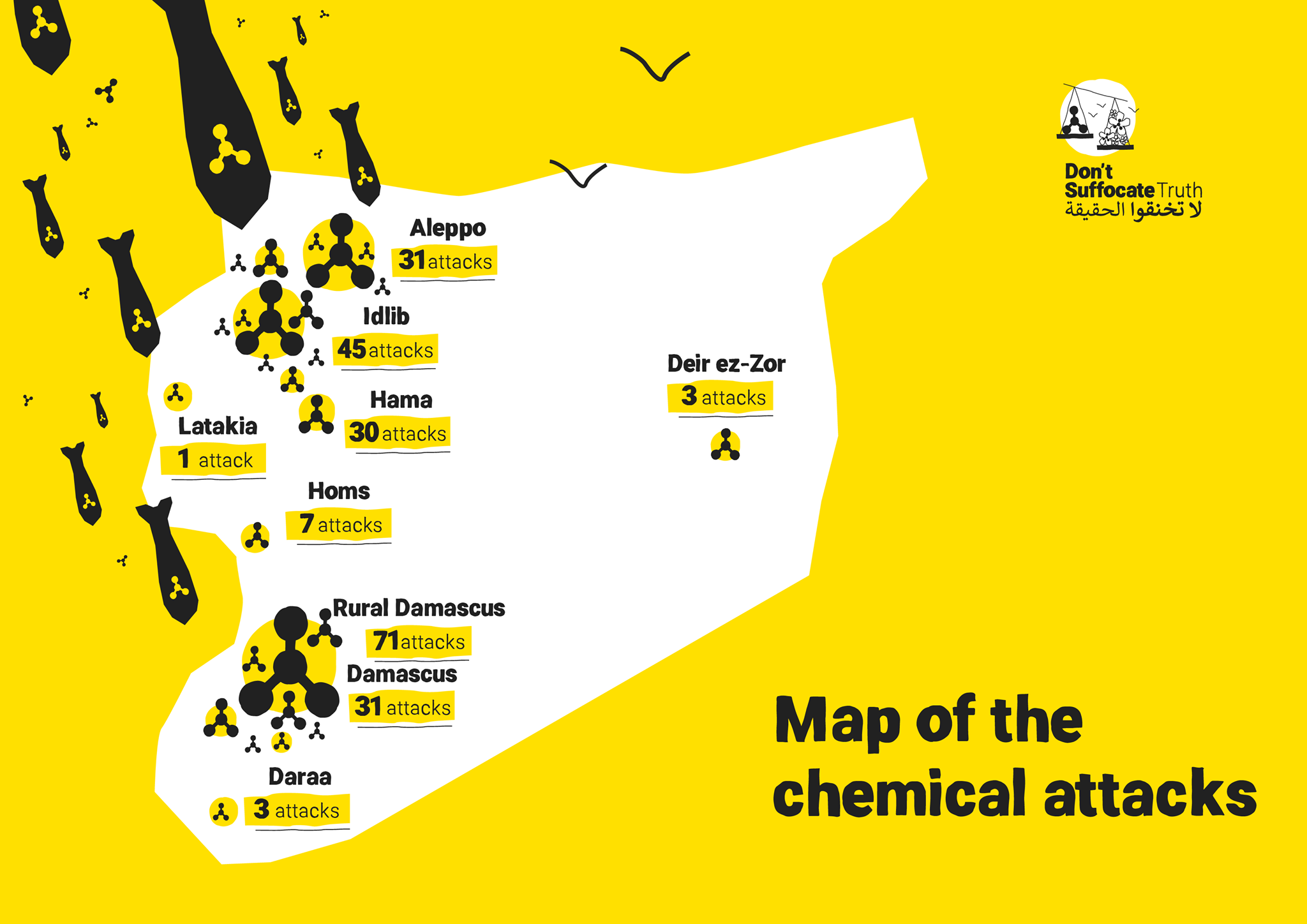
Mohamad Katoub recently wrote in Syria Direct that, “Sunday marked the ninth anniversary of the Ghouta chemical massacre on August 21, 2013. The attack claimed the lives of at least 1,347 people in the East and West Ghouta suburbs of Damascus, and injured more than 10,626 others, more than two-thirds of whom were children and women. Every year, Syrians keep its memory alive, bringing the events and pain of that day back to the forefront.” In recognition of this anniversary, the Syrian Network for Human Rights recently released its report (“The Ninth Anniversary of the Largest Chemical Weapons Attack by the Syrian Regime against Syrian Citizens in the Two Ghoutas of Damascus”) discussing the chemical weapons attack on the Two Ghoutas, al-Assad and others’ responsibility for the attack, and current efforts to bring the regime back into the Arab League. This and other attacks are further documented on Don’t Suffocate Truth’s website, which features an interactive page on the attacks and translations of witnesses’ testimonies.

Infographic source: https://donotsuffocatetruth.com/en/infographics/17#infographic

Zaporizhzhia Nuclear Power Station

This week, Russian shelling near the Zaporizhzhia NPP sparked fires in ash pits of a coal power station nearby, disconnecting the nuclear facility from the power grid, sparking concerns about the facility. As of this morning, the Zaporizhzhia NPP is still reported to be disconnected from the country’s power grid, having previously been disconnected for the first time just one day prior. “The station’s own needs for power supply are currently provided through a repaired line from the energy system of Ukraine,” Energoatom, the National Nuclear Energy Generating Company of Ukraine, said today. Ukrainian President Volodymyr Zelensky reported that the plant’s backup diesel generators were “immediately activated” avoiding “the consequences of a radiation accident.” He also stated, “The world must understand what a threat this is: If the diesel generators hadn’t turned on, if the automation and our staff of the plant had not reacted after the blackout, then we would already be forced to overcome the consequences of the radiation accident,” during his nightly address.

“Almost every day there is a new incident at or near the Zaporizhzhya nuclear power plant. We can’t afford to lose any more time. I’m determined to personally lead an IAEA mission to the plant in the next few days to help stabilize the nuclear safety and security situation there,” IAEA Director General Rafael Grossi said in a statement.

In response to this situation, a bipartisan group of nonproliferation experts signed a letter to President Biden urging the administration to “prioritize responding to Russia’s illegal seizure and mistreatment of Ukraine’s Zaporizhzhya Nuclear Power Plant (ZNPP) and its staff.” The letter reads in part, “We urge you to work closely with Ukrainian President Volodymyr Zelenskyy, UN Secretary-General Guterres, and IAEA Director General Grossi to secure an IAEA visit based on the agency’s long record of impartiality and neutrality. We agree with your ambassador to the IAEA, Laura S.H. Holgate, that such a visit should “occur in a manner that fully respects Ukrainian sovereignty and legitimate Ukrainian authorities, and the IAEA must not lend any legitimacy to Russia’s actions or control of the site.” The experts who signed the letter include GMU Biodefense Program Director Dr. Gregory Koblentz and several others across government, academia, NGOs and IGOs, and the private sector.

“Her Discovery Changed the World. How Does She Think We Should Use It?”

Jennifer Doudna, an American biochemist, won the 2020 Nobel Prize in Chemistry alongside Emmanuelle Charpentier for their work on CRISPR gene editing technology. But, as David Marchese explains in The New York Times Magazine, “Since 2012, when Doudna and her colleagues shared the findings of work they did on editing bacterial genes, the 58-year-old has become a leading voice in the conversation about how we might use CRISPR — uses that could, and probably will, include tweaking crops to become more drought resistant, curing genetically inheritable medical disorders and, most controversial, editing human embryos. “It’s a little scary, quite honestly,” Doudna says about the possibilities of our CRISPR future. “But it’s also quite exciting.” Marchese’s article includes the text of an interview with Dr. Doudna discussing ethical concerns about this technology and what it means for the future.

For more on security concerns surrounding CRISPR, check out GMU’s own Dr. Sonia Ben Ouagrham-Gormley‘s award-winning paper, “From CRISPR babies to super soldiers: challenges and security threats posed by CRISPR“.

“Is Your Government Ready for Another Pandemic?”

Statista’s Anna Fleck recently covered a 2021 OECD survey that found just how greatly perceptions of government preparedness for health crises vary globally. She writes, “According to the report, public trust in government rise and fell throughout the pandemic, with a show of support for governments at the start, versus later when the death count started to rise. The authors note that the survey’s results likely correspond to the intensity of the pandemic at the time, in November 2021. They add: “It is also worth noting that – in spite of the many challenges governments faced in effectively responding to the economic and health exigencies of the pandemic – this finding suggests that people see governments as having learned from the information gained during this experience.””

“FDA’s Work to Combat the COVID-19 Pandemic”

The FDA released this report last month discussing its work during the COVID-19 pandemic, covering vaccines, pharmaceutical, devices (including tests and PPE), resilient supply chains, advanced manufacturing and innovation, inspections, investigations, import, and fraud, and crosscutting research. The report includes details of the massive undertakings of the administration during this crisis while also paying attention to how it is preparing for future health emergencies.

“A “Knife Fight” with the FDA: The Trump White House’s Relentless Attacks on FDA’s Coronavirus Response”

Speaking of the FDA, the Select Committee on the Coronavirus Crisis recently published this staff report discussing key findings of their investigation into the federal government’s response to the COVID-19 pandemic. This report is divided into three sections-“Trump White House officials orchestrated coordinated pressure campaigns to reauthorize hydroxychloroquine and expand its use after it was shown to be ineffective and potentially dangerous,” “The Trump administration’s push to authorize convalescent plasma on the eve of the Republican National Convection,” and “The Trump White House attempted to derail FDA’s vaccine guidance ahead of the presidential election and pressed Commissioner Hahn on vaccine authorization.” Major findings include:

  1. “Senior Trump White House Adviser Peter Navarro Exerted Inappropriate Pressure on FDA to Reauthorize Hydroxychloroquine as a Coronavirus Treatment After It Was Shown to Be Ineffective and Potentially Dangerous”
  2. “Trump White House Officials Covertly Worked with Outside Groups to Attempt to Reauthorize Hydroxychloroquine and to Fund Clinical Trials to Justify Its Use”
  3. “Mr. Navarro and Dr. Hatfill Forged Close Alliances and Coordinated Secretively with Outside Allies—Including Known Conspiracy Theorists—to Amplify External Pressure on FDA to Reauthorize Hydroxychloroquine”
  4. “Mr. Navarro and Dr. Hatfill Took Steps to Conceal the White House’s Involvement in Mobilizing External Support for Hydroxychloroquine––Including Conducting Official Business with Private Email Accounts”
  5. “Mr. Navarro and Dr. Hatfill Aggressively Attacked Dr. Fauci, Dr. Hahn, and Other Public Health Officials Who Refused to Support Hydroxychloroquine—and Pushed for Them to Be Federally Investigated”
  6. “In the Days Leading Up to the Republican National Convention, President Trump Expressed “Dismay” About Perceived Delays in an EUA for Convalescent Plasma, While the White House Hastily Convened a Press Conference that Grossly Misstated the Data,” and
  7. “Trump Administration Political Appointees Blocked FDA Coronavirus Vaccine EUA Guidance Due to “Objections” Over How It Would Impact the Authorization Timeline Ahead of the Presidential Election”

“Public Health Preparedness: COIVD-19 Medical Surge Experiences and Related HHS Efforts”

The Government Accountability Office recently released this report on the Department of Health and Human Services’ support to health care coalitions designed to help manage medical surges. The report finds that: “The COVID-19 pandemic has highlighted the importance of hospitals’ abilities to evaluate and care for an increased volume of patients exceeding normal operating capacity, known as medical surge. All eight hospitals in GAO’s review reported multiple challenges related to staff, supplies, space, or information. These are critical components for an effective medical surge response, according to the Department of Health and Human Services (HHS). All eight hospitals reported staffing challenges, such as a lack of staff to care for the increase in sick patients or staff becoming ill and unable to work, affecting hospital services. Hospitals took steps to address these challenges, such as supplementing staffing levels where possible or training staff on proper personal protective equipment use to prevent infection. Health care coalitions—groups of health care and response organizations in a defined geographic location supported by HHS funding—aided hospitals. For example, they helped coordinate patient transfers to balance hospital loads, obtain and distribute needed medical supplies, and communicate hospital needs to their states.”

The findings continued, explaining that “HHS has programs and activities underway intended to support medical surge readiness for hospitals and other health care organizations, but it is too soon to know the effectiveness of these efforts. For example, HHS implemented a new medical surge exercise for coalitions in 2021 to test readiness, and plans to establish targets to measure performance. It is also considering how to use the findings and lessons learned from its 2021 assessment of coalitions during the pandemic to improve its support of coalitions and their communities. HHS is also funding the development of a regional disaster health response system, which aims to develop effective approaches to medical surge response across multiple states. This includes improving data sharing on resource and capacity issues, and developing specialized teams that can respond to a range of hazards. HHS is considering its next steps regarding the expansion of this regional system. Further, HHS is developing regional guidelines for hospitals and other facilities related to treating patients and increasing medical surge capacity during public health emergencies as required by statute. Officials did not provide a date for when the guidelines would be made publicly available.”

“Mapping Biosafety Level-3 Laboratories by Publications”

Researchers at Georgetown University’s Center for Security and Emerging Technology recently published this report, explaining “Biosafety Level-3 laboratories (BSL-3) are an essential part of research infrastructure and are used to develop vaccines and therapies. The research conducted in them provides insights into host-pathogen interactions that may help prevent future pandemics. However, these facilities also potentially pose a risk to society through lab accidents or misuse. Despite their importance, there is no comprehensive list of BSL-3 facilities, or the institutions in which they are housed. By systematically assessing PubMed articles published in English from 2006-2021, this paper maps institutions that host BSL-3 labs by their locations, augmenting current knowledge of where high-containment research is conducted globally.”

“Prototype Pathogen Approach for Vaccine and Monoclonal Antibody Development: A Critical Component of the NIAID Plan for Pandemic Preparedness”

The Journal of Infectious Diseases recently published this article from Cassetti et al. discussing the National Institute of Allergy and Infectious Diseases’ emphasis on priority pathogens, technology platforms, and prototype pathogens in its pandemic preparedness plan. Their abstract reads: “Severe acute respiratory syndrome coronavirus 1 (SARS-CoV-1) emerged 20 years ago, presaging a series of subsequent infectious disease epidemics of international concern. The recent emergence of SARS-CoV-2 has underscored the importance of targeted preparedness research to enable rapid countermeasure development during a crisis. In December 2021 the National Institute of Allergy and Infectious Diseases (NIAID), building upon the successful strategies developed during the SARS-CoV-2 response and to prepare for future pandemics, published a pandemic preparedness plan that outlined a research strategy focused on priority pathogens, technology platforms, and prototype pathogens. To accelerate the discovery, development, and evaluation of medical countermeasures against new or previously unknown pathogens of pandemic potential, we present here a strategy of research directed at select prototype pathogens. In this manner, leveraging a prototype pathogen approach may serve as a powerful cornerstone in biomedical research preparedness to protect public health from newly emerging and reemerging infectious diseases.”

What We’re Listening To 🎧

The Retort Episode 1: A History of Chemical and Biological Disarmament

Brett Edwards has done it again! When he’s not cranking out new episodes of the Poisons and Pestilence Podcast, he’s doing other fascinating work, including this first episode of the Retort focused on the BWC and CWC. In anticipation of BWC RevCon later this year, this episode covers the history of these two disarmament treaties. This work is done in conjunction with the Biological Security Research Centre at London Metropolitan University as well.

Public Health on Call 509 – The Threat of Polio

Following the first case of paralytic polio in New York in decades, Johns Hopkins Bloomberg School of Public Health’s “Olakunle Alonge, an associate professor of international health at Johns Hopkins, who’s worked on polio eradication efforts around the world, speaks to John Sharfstein about what’s behind the rise in cases and how the world can defeat polio–forever,” in this latest podcast episode.

2022 BSL4ZNet International Conference

The Biosafety Level 4 Zoonotic Laboratory Network is hosting its international conference virtually this year from September 8 through October 13. The conference will convene under the overarching theme of Forging ahead stronger: Strengthening zoonotic disease preparedness. The conference aims to enhance knowledge and best practices, and promote collaboration and cooperation with participants from around the world. Session 4 on October 13 will feature a panel on “The Future of Global Biorisk Management” featuring our own Dr. Greg Koblentz alongside King’s College London’s Dr. Filippa Lentzos and Mayra Ameneiros, Dr. Rocco Casagrande of Gryphon Scientific, and Dr. Loren Matheson of Defence Research and Development Canada. Learn more and register for the conference here.

Accelerating the Development & Uptake of Rapid Diagnostics to Address Antibiotic Resistance

This upcoming workshop, convened by the National Academies’ Forum on Drug Discovery, Development, and Translation; the Forum on Medical and Public Health Preparedness for Disasters and Emergencies; and the Forum on Microbial Threats will provide a venue for stakeholders to discuss the current landscape of rapid diagnostics to address antibiotic resistance, consider challenges and opportunities for spurring innovation, and discuss practical next steps for accelerating the development of new diagnostic tools. The workshop will be held October 13-14. Learn more and register here.

A Fireside Chat with Dr. Rochelle Walensky, Director of the Centers for Disease Control and Prevention

Join the CSIS Commission on Strengthening America’s Health Security on Tuesday, August 30, at 4 pm ET, for a fireside chat with Rochelle Walensky, Director of the U.S. Centers for Disease Control and Prevention. Tom Inglesby, Director of the Johns Hopkins Center for Health Security and Julie Gerberding, CEO of the Foundation for the National Institutes of Health (FNIH) and co-chair of the CSIS Commission on Strengthening America’s Health Security, will host and moderate a discussion reflecting on the CDC’s critical role in pandemic preparedness and response, at home and abroad. As part of that, Dr. Walensky will offer details on recently announced plans for major internal reforms to strengthen CDC’s future performance. Watch and register here.

Event Recording-Monkeypox: The State of the Science

Get insights into the state of the science of monkeypox, the disease’s epidemiology, prevention options and more in this August 18 webinar recording from the American Public Health Association and the National Academy of Medicine. Available here.

The Bulletin of the Atomic Scientists Editorial Fellowships Application Now Open

The Bulletin is now accepting application for its editorial fellows through September 15. “The Bulletin of the Atomic Scientists will appoint editorial fellows this fall in two coverage areas: climate change and biosecurity. Editorial fellows will have one-year terms, during which time they will be expected to write four (4) articles or columns (i.e., about one article or column per quarter). The fellows will be paid a $750 honorarium per article or column, for a potential total of $3,000. These will be non-resident appointments, i.e. fellows can write for the Bulletin from anywhere. Fellows will not be employees of the Bulletin. These one-year fellowships are renewable, upon excellent performance. Because the Bulletin is an international publication, fellows need not live in the United States.” Learn more and apply here.

Russian WMD Disinformation Resources

We are currently working on creating a searchable collection of resources on Russian WMD disinformation on the Pandora Report site. The page is a work in progress, and currently just lists resources we have highlighted in the past. In the meantime, here are some recent updates and works on the topic:

Polygraph.info- “Putin’s Patently Bogus Claim About the Zaporizhzhia Nuclear Plant”

Leonid Martynyuk discusses the misleading nature of Putin’s statement that “The regular strikes on the Zaporizhzhia Nuclear Power Plant by the Ukrainian military create the danger of a major nuclear disaster that could lead to radiation contamination of vast territories,” in this latest work on Polygraph.info.

Foreign Policy– “Kremlin Claims Monkeypox Could Be a Secret U.S. Bioweapon”

Ivana Stradner discusses Russia’s latest claims in its disinfo-war, writing “The Kremlin has been spinning this coincidence to build an elaborate monkeypox disinformation campaign. The head of the Russian defense ministry’s radiation, chemical, and biological defense troops, Igor Kirillov, implied that monkeypox could have originated in a U.S.-funded Nigerian biolab. Russian media also reported that, according to Kirillov, “Ukraine’s biological laboratories were connected to the Pentagon’s infection system”—whatever that means. Russian media have claimed that a “hasty withdrawal” of U.S. personnel from Ukrainian labs could have led to workers contracting the disease. There is no causal evidence for any of this, but the combination of these bits and pieces on a timeline, then widely disseminated by various media, has the effect of burying the truth under a heap of disinformation.”

Pandora Report: 8.12.2022

Happy Friday! In yet another interesting week, Kim Jong Un declared victory over COVID-19 while Bavarian Nordic’s CEO expressed concerns over the United States’ plans to split JYNNEOS doses into fifths. We also have new publications to discuss, including a new GAO report that found the Nuclear Regulatory Commission’s ability to regulate the sale and procurement of dangerous materials is sub-par and new work on biological threat mis- and disinformation.

North Korea Declares “Brilliant Victory” Over COVID-19

Kim Jong Un spoke at the DPRK’s National Meeting of Reviewing Emergency Anti-Epidemic Work this week, declaring victory in the “maximum emergency anti-epidemic campaign to exterminate the novel coronavirus that had made in-roads into our territory and in protecting the lives and health of the people.” He also announced that public health efforts would return to “ordinary levels,” though he stressed avoiding complacency.

However, as the country lacks vaccine access, this claim is viewed with heavy skepticism. The New York Times writes, “​Outside experts have cast doubt on the North’s ​Covid-related claims, including its past assertions that it had no cases. The figures it has released since May have also been viewed with skepticism, in part because the isolated, impoverished country does not have enough testing kits or laboratories to accurately track a major outbreak.​” NYT also highlights that, “According to the Thursday report, Mr. Kim said all the Covid patients identified by his government had been diagnosed with ​the Omicron subvariant BA.2. Though North Korea has reported 4.7 million cases of people developing a high fever during the outbreak,​ it has never said how many were confirmed Covid-19 infections.”

Source: Rodong Sinmun; Kim Jong Un speaking at the National Meeting of Reviewing Emergency Anti-Epidemic Work this week

Furthermore, in another odd attempt to present Kim Jong Un as having suffered alongside his people, his sister, Kim Yo Jong, gave a speech in which she said her brother had a “high fever” over the course of the outbreak, implying he caught COVID-19. She also claimed that even though her brother was supposedly seriously ill, he “could not lie down for a moment because of the people he had to take care of,” as those in the audience cried politely.

She also blamed South Korea for the virus’s arrival in the North, building upon prior DPRK claims that the South is using “alien things” and leaflets to bring COVID-19 to the North. She also stated that this represents a human rights violation on the part of the ROK. Rodong Sinmun summarized her speech, which reads in part, “It is an undeniable fact that a single person or a single object infected with the highly contagious virus may infect many other people in a moment and cause a grave health crisis. From this scientific view, we come to draw a conclusion that we can no longer overlook the uninterrupted influx of rubbish from south Korea,” “What matters is the fact that the south Korean puppets are still thrusting leaflets and dirty objects into our territory. We must counter it toughly,” and “The south Korean puppets are, indeed, the invariable principal enemy of us and the fundamental factor that determines victory and failure of the revolutionary struggle is class consciousness.”

United States Announces Plan to Split JYNNEOS Doses

On Tuesday, the Department of Health and Human Services announced its plan to allow intradermal injections of the JYNNEOS vaccine, allowing clinicians to use one-fifth of the normal amount of vaccine per patient to help conserve national supply. “This is a game changer in our response and our ability to get ahead of the virus, we encourage jurisdictions to use the dosing as soon as possible,” said Bob Fenton, head of the national monkeypox response team. Fenton explained that the Centers for Disease Control and Prevention (CDC) will begin sending educational materials to clinicians today explaining how to administer intradermal vaccines. The administration is similar to that of a tuberculosis test,” writes CIDRAP. This plan will allow the remaining 441,000 doses the US has to become nearly 2 million doses.

However, Paul Chaplin, the CEO of Bavarian Nordic, voiced concerns about the United States’ plan to split his company’s vaccine. The Washington Post reported shortly after the HHS announcement that, “The manufacturer of the only vaccine approved by the Food and Drug Administration to protect against monkeypox privately warned senior Biden health officials about their plan to split doses and change how the shots are delivered. “We do have some reservations … due to the very limited safety data available,” Bavarian Nordic CEO Paul Chaplin wrote to Health and Human Services Secretary Xavier Becerra, and Food and Drug Administration Commissioner Robert M. Califf in a letter sent Tuesday and obtained by The Washington Post.”

“Addressing Inaccurate and Misleading Information About Biological Threats Through Scientific Collaboration and Communication in Southeast Asia”

This new report, co-authored by Biodefense Program faculty member Dr. Sonia Ben Ouagrham-Gormley, was recently released by the National Academies. The authors write, “Misinformation about outbreaks, epidemics, and pandemics is a decades-old problem that has been exacerbated by the rise of the internet and the widespread use of social media. Some false claims may be addressed through sound scientific analysis, suggesting that scientists can help counter misinformation by providing evidence-based, scientifically defensible information that may discredit or refute these claims. This report explains how scientists can work collaboratively across scientific disciplines and sectors to identify and address inaccuracies that could fuel mis- and disinformation. Although the study focused on a scientific network primarily in Southeast Asia, it is relevant to scientists in other parts of the world. A companion “how-to-guide”, available in print and in digital form, outlines practical steps that scientists can take to assess mis- or disinformation, determine whether and how they should address it, and effectively communicate the corrective information they develop.”

“Molecular, Ecological and Behavioral Drivers of the Bat-Virus Relationship”

iScience recently published this in-depth review of what is known currently about the relationship between bats and viruses. Gonzalez and Banerjee write, “Bats perform important ecological roles in our ecosystem. However, recent studies have demonstrated that bats are reservoirs of emerging viruses that have spilled over into humans and agricultural animals to cause severe diseases. These viruses include Hendra and Nipah paramyxoviruses, Ebola and Marburg filoviruses, and coronaviruses that are closely related to severe acute respiratory syndrome coronavirus (SARS-CoV), Middle East respiratory syndrome coronavirus (MERS-CoV), and the recently emerged SARS-CoV-2. Intriguingly, bats that are naturally or experimentally infected with these viruses do not show clinical signs of disease. Here we have reviewed ecological, behavioral, and molecular factors that may influence the ability of bats to harbor viruses. We have summarized known zoonotic potential of bat-borne viruses and stress on the need for further studies to better understand the evolutionary relationship between bats and their viruses, along with discovering the intrinsic and external factors that facilitate the successful spillover of viruses from bats.”

“Preventing a Dirty Bomb: Vulnerabilities Persist in NRC’s Controls for Purchases of High-Risk Radioactive Materials”

Bryant Harris writes in DefenseNews, “Late last year, government employees forged a copy of a license to buy hazardous, radioactive material. They created shell companies, then placed orders, generated invoices and paid two U.S.-based vendors. The scheme worked. The employees successfully had the material shipped, complete with radioactive stickers on the side, then confirmed delivery. But the workers were actually investigators from the Government Accountability Office, the congressional watchdog, and they were testing the Nuclear Regulatory Commission’s ability to regulate the sale and procurement of dangerous materials.”

That GAO report, “Preventing a Dirty Bomb: Vulnerabilities Persist in NRC’s Controls for Purchases of High-Risk Radioactive Materials”, is attracting congressional attention and calls for overhauls at NRC. GAO’s report finds that: “The Nuclear Regulatory Commission’s (NRC) current system for verifying licenses does not adequately protect against the purchase of high-risk radioactive materials using a fraudulent license. Licenses control the type and quantity of radioactive material allowed to be possessed. Quantities of radioactive materials are defined as category 1 through 5, with 1 being the most dangerous. Using shell companies with fraudulent licenses, GAO successfully purchased a category 3 quantity of radioactive material of concern from two different vendors in the U.S. Specifically, GAO provided a copy of a license that GAO forged to two vendors, subsequently obtained invoices, and paid the vendors. GAO refused to accept shipment at the point of delivery, ensuring that the material was safely and securely returned to the sender.


As GAO has previously reported, a category 3 quantity of radioactive material can, on its own, result in billions of dollars of socioeconomic costs if dispersed using a dirty bomb. By purchasing more than one shipment of a category 3 quantity of radioactive material, GAO also demonstrated that a bad actor might be able to obtain a category 2 quantity by purchasing and aggregating more than one category 3 quantity from multiple vendors. NRC officials told GAO that NRC plans to proceed with existing initiatives to implement new verification regulations by late 2023 but does not plan to take immediate corrective actions to address the issues that GAO found.”

Regional Perspectives on Strengthening the Nuclear Non-Proliferation Treaty: Lessons from the Nuclear Threat Initiative’s Global Enterprise Project

The Nuclear Threat Initiative (NTI), with the support of the Norwegian Ministry of Foreign Affairs, is pleased to present a side event at the 10th Nuclear Non-Proliferation Treaty (NPT) Review Conference (RevCon) focused on sharing regional perspectives on strengthening the NPT. The session will present insights from NTI’s Global Enterprise project, which has convened officials and experts for a series of discussions in recent years aimed at developing concrete measures to advance the goals of the NPT. The project has also held three meetings – one in Brazil in 2019, one in Ghana in 2020, and one in Indonesia in 2022 – dedicated to understanding how different regions view the NPT and considering regional challenges and priorities for nonproliferation, nuclear risk reduction, and disarmament, as well as opportunities for cooperation. The side event will feature an overview of the Global Enterprise project and a  moderated discussion with a panel comprised of one participant from each of the three regional meetings.

The event will take place on August 15, 2022 from 1:15 p.m. to 2:30 PM in CR-4 and will also be available via livestream on UN Web TV. Sign up to receive the livestream link here.

RSS Feed

For those of you who have asked, the Pandora Report does have an RSS feed: https://pandorareport.org/feed. This should work in any RSS feed reader!

Pandora Report: 8.5.2022

This week we cover monkeypox updates, the WHO’s reporting on healthcare in Ukraine, and the planned BWC consultative meeting following Russia’s invocation of Article V of the convention. We also cover new publications, upcoming events, monkeypox debunkings, and our RSS feed. Have a safe weekend!

Monkeypox- US Declares Public Health Emergency Amid Lagging Response

This week, US Department of Health and Human Services Secretary Xavier Becerra declared monkeypox a public health emergency, seeking to improve response efforts as the outbreak passes 7,100 cases in the US alone. President Biden also selected a White House monkeypox coordinator-Robert Fenton, who is currently a regional administrator with FEMA and has twice served as the acting FEMA administrator. However, many view this as too little too late as concerns about vaccine access continue to rage.

The New York Times writes this week, “The shortage of vaccines to combat a fast-growing monkeypox outbreak was caused in part because the Department of Health and Human Services failed early on to ask that bulk stocks of the vaccine it already owned be bottled for distribution, according to multiple administration officials familiar with the matter. By the time the federal government placed its orders, the vaccine’s Denmark-based manufacturer, Bavarian Nordic, had booked other clients and was unable to do the work for months, officials said — even though the federal government had invested well over $1 billion in the vaccine’s development.”

The same article goes on to explain that the US government is now distributing about 1.1 million doses, despite estimates that 3.5 million are needed to contain the outbreak. It also does not expect the next delivery of 500,000 doses until October, and the other 5.5 million the US has ordered will not be delivered until next year as Bavarian Nordic nears the planned closure of its European production plant for part of this year. As the US has invested nearly $2 billion in this vaccine, this is a major point of concern for critics. The US also has ACAM2000 in its stockpile, a vaccine licensed for smallpox that, like JYNNEOS, can also be used for monkeypox, however additional paperwork and criteria are required, and its side effects can be severe for those who are immunocompromised or have certain conditions.

Worse yet, particularly with this manufacturing plant closure, many countries will be dependent on high-income countries donating vaccines to help them contain the spread of monkeypox. However, the surprise of this outbreak has in large part been defined by the silencing of those who have experience with monkeypox from working in places where it is endemic, helping cast serious doubt that any serious improvements in vaccine equity will have been made in the last few years. For example, NPR recently published an article on Dr. Dimie Ogoina’s experience with the disease in late 2017 in Nigeria, and that outbreak’s role in the current crisis.

Source: CDC Public Health Image Library. This digitally-colorized electron microscopic (EM) image depicted monkeypox virus particles, obtained from a clinical sample associated with the 2003 prairie dog outbreak. It was a thin section image from of a human skin sample. On the left were mature, oval-shaped virus particles, and on the right were the crescents, and spherical particles of immature virions.

WHO’s Response to Russia’s War in Ukraine

The WHO recently released an interim report on the organization’s response to Russia’s offensive in Ukraine, discussing core objectives, refugee management, planning, and funding and partnerships. This comes as the WHO’s Ukraine emergency coordinator, Heather Papowitz, was quoted earlier this week explaining that healthcare teams in Ukraine are likely used to working with shellings going on outside their facilities, offering a stark reminder that this horror is far from over. In fact, of the 615 attacks on healthcare facilities tracked by the Surveillance System for Attacks on Health Care this year, 434 of those have occurred in Ukraine. WHO’s most recent situation report on the matter also confirms there have been 9.9 million border crossings, 6.1 million refugees recorded across Europe, 6.3 million internally displaced, 12,272 civilian casualties, and 5,237 civilian deaths since Russia’s invasion earlier this year.

WHO also reports that, “WHO has supported the health response in Ukraine by providing, among other things: training on COVID-19, chemical preparedness and response and mass casualty management; technical expertise on the national immunization strategy; trauma and burn kits, and support for medical evacuation (medevac) after the attacks on Vinnytsya; technical expertise on environmental health issues, including water-related preparedness and response measures, in view of a potential cholera outbreak”

Russia Requests BWC Consultative Meeting, SCO Issues Joint Statement on the BWC

In related UN news, the UN Office for Disarmament Affairs released a statement and document regarding Russia’s June 29 request for the convening of a formal consultative meeting under Article V of the BWC and the Final Declarations of the Convention’s Second and Third Review Conferences. In a July 28 letter from Ambassador Aidan Liddle of the United Kingdom of Great Britain and Northern Ireland, it is determined that the meeting will be opened on August 26 for a brief procedural meeting before resuming on September 5 for four days. Ambassador Gyorgy Molnar of Hungary will chair the consultative meeting. Russia’s invocation of Article V is the first time this has been done since the Cubans accused the US of spraying Thrips palmi on its crops in 1997, a fact that is discussed alongside analysis of Russia’s lead-up to using this rare diplomatic procedure by Filippa Lentzos and Jez Littlewood in The Bulletin of the Atomic Scientists.

On July 29, the PRC Ministry of Foreign Affairs (MFA) announced that the Shanghai Cooperation Organization (SCO) issued a joint statement on the BWC. The SCO is comprised of China, India, Kazakhstan, Kyrgyzstan, Pakistan, Russia, Tajikistan, and Uzbekistan, in addition to several observers and dialog partners. However, India was not part of the joint statement. Zhao Lijian, a spokesperson for the PRC MFA stated the PRC’s position on the SCO’s statement, saying “The joint statement affirms the significance of the BWC for international security, emphasizes the need to comply with and strengthen the Convention, calls for resuming negotiations on a verification protocol, and expresses concern over the absence of a verification mechanism under the BWC framework. The statement expresses support for a balance between security and development and upholding all countries’ lawful rights to the peaceful use of biotechnology. It also notes the initiatives proposed by various parties to enhance global biosecurity governance, including the call by Russia and China to include information on the overseas military biological activities by the BWC States Parties in the reporting form, the Tianjin Biosecurity Guidelines for Codes of Conduct for Scientists put forward by China, and the creation of an International Agency for Biological Safety proposed by Kazakhstan. This joint statement fully demonstrates the parties’ sense of responsibility and firm resolve to practice true multilateralism and strengthen global biosecurity governance.

Biosecurity bears on the security and development interests of all countries. When putting forward the Global Security Initiative, President Xi Jinping stressed that we need to jointly maintain world peace and security and work together on global challenges such as biosecurity. The BWC Ninth Review Conference will be held at the end of this year. The international community should work in concert for a substantive conference to strengthen the BWC mechanisms and ensure universal compliance. We stand ready to work together with all parties to further advance dialogue and cooperation on biosecurity under the SCO framework, strengthen the BWC mechanisms, and improve the global biosecurity governance system.”

“As Bioweapons Negotiators Prepare to Meet Amid a Pandemic and Torrents of Disinformation, Can They Accomplish Anything?”

Biodefense PhD Program alumnus Yong-Bee Lim recently authored this piece for The Bulletin of the Atomic Scientists discussing the current state of the BWC, main challenges, and potential outcomes at the BWC Review Conference later this year. He writes in part, “On the other hand, the meeting could end with tangible progress on major priorities. Treaty members could agree to form working groups to discuss thorny issues like assuring compliance with the treaty or even sanction negotiations around these issues. The United States, Russia, and China have each suggested interest in strengthening compliance mechanisms within the treaty, after negotiations around a verification protocol fell apart in 2001. “The three countries have different visions, but share the idea of having specialized working groups explore how to strengthen and revitalize the treaty.” Littlewood and biosecurity expert Filippa Lentzos wrote in the Bulletin in March.”

“Adrienne Mayor on Greek Fire, Poison Arrows, and Scorpion Bombs”

Check out this work form Princeton University Press with Adrienne Mayor answering questions about her book, Greek Fire, Poison Arrows, and Scorpion Bombs, including her motivations for writing about CBW in the ancient world and what to expect from the new revised edition.

“A Better Way to Detect the Origins of a Pandemic”

Angela Kane and Jaime Yassif tackle pandemic origin debates during times of international conflict and uncertainty in their new piece for Arms Control Today. They write, “To meet this need, it will be important to bolster the capabilities of the United Nations to investigate the origins of high-consequence biological events. This includes strengthening and investing significantly more resources in existing capabilities such as the UN Secretary-General’s Mechanism for Investigation of Alleged Use of Chemical and Biological Weapons, which has the authority to investigate allegations of deliberate biological weapons use.”

Regional Perspectives on Strengthening the Nuclear Non-Proliferation Treaty: Lessons from the Nuclear Threat Initiative’s Global Enterprise Project

The Nuclear Threat Initiative (NTI), with the support of the Norwegian Ministry of Foreign Affairs, is pleased to present a side event at the 10th Nuclear Non-Proliferation Treaty (NPT) Review Conference (RevCon) focused on sharing regional perspectives on strengthening the NPT. The session will present insights from NTI’s Global Enterprise project, which has convened officials and experts for a series of discussions in recent years aimed at developing concrete measures to advance the goals of the NPT. The project has also held three meetings – one in Brazil in 2019, one in Ghana in 2020, and one in Indonesia in 2022 – dedicated to understanding how different regions view the NPT and considering regional challenges and priorities for nonproliferation, nuclear risk reduction, and disarmament, as well as opportunities for cooperation. The side event will feature an overview of the Global Enterprise project and a  moderated discussion with a panel comprised of one participant from each of the three regional meetings.

The event will take place on August 15, 2022 from 1:15 p.m. to 2:30 PM in CR-4 and will also be available via livestream on UN Web TV. Sign up to receive the livestream link here.

RSS Feed

For those of you who have asked, the Pandora Report does have an RSS feed: https://pandorareport.org/feed. This should work in any RSS feed reader!

Disinformation Resources-Monkeypox Edition!

It’s the gift that keeps on giving, even when you desperately wish it would stop! We have now added a monkeypox section to our running list of disinformation resources, so you can find updates here on the site or at the end of the weekly issue.

Polygraph.info- “There is No Evidence Monkeypox is a Bioweapon”

William Echols tackles online claims, including those of Dr. Meryl Nass and Children’s Health Defense, that the current monkeypox outbreak is the result of a biological weapon in this piece. Echols also discusses USG’s approving of JYNNEOS in 2019 and current claims that this is evidence the current outbreak is the result of an intentional release.