Are you registered for the Read-Out on the GHSA Summit in Kampala? Just a friendly reminder – we’ll be on hiatus next week as we attend the Biological Weapons Convention Meeting of States Parties. Make sure to look out for a packed newsletter on 12.15 as we’ll be covering both the Read-Out on the GHSA Summit and the BWC meeting! If you’d like real-time updates, check out our Twitter account @PandoraReport.
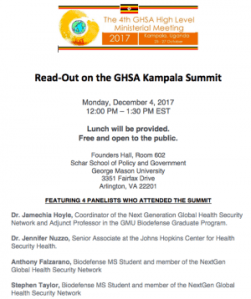 Read-Out on the GHSA Summit in Kampala
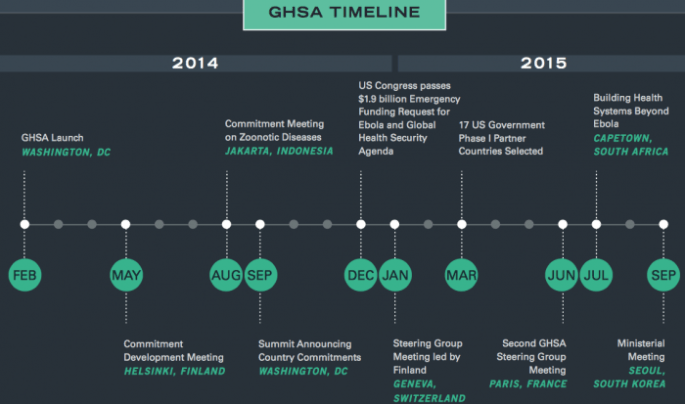
Global health security on your lunch break? Only at the Read-Out on the GHSA Summit will you get lunch and an in-depth recap of this international health security event. Don’t miss this exciting opportunity to hear from global health practioners and young professionals who attended the 4th annual Global Health Security Agenda (GHSA) Ministerial Meeting in Kampala, Uganda in October. You’ll want to register ASAP for this exciting opportunity on December 4th, from 12-1:30pm at the George Mason University Founders Halls in Arlington. The GHSA meeting, Health Security for All: Engaging Communities, Non-governmental Organizations, and the Private Sector, was a multi-sectoral collaboration between governments, civil society, and industry dedicated to the strengthening of globaly capacity to prevent, detect, and respond to infectious disease threats. Attended by the ministers of health, finance, and agriculture and other senior officialfs from more than 50 nations, this was the first Ministerial GHSA Meeting held on the African continent. The meeting was held in late October at the same time as an unprecedented outbreak of pneumonnic plague in Madagascar and a rare outbreak of Marburg in Uganda itself. These outbreaks were timely, but unfortunate reminders, that global health security is still very much a work in progress. Our panel will include four participants who were on the ground in Kampala and actively engaged in this historical step forward for global health security. Attendees will have the opportunity to engage and hear the perspectives of esteemed public health practitioners and rising health security professionals. Lunch will also be provided. This event is free and open to the public.
Mason, Stanford Researchers Join Forces To Study The Science, Benefits And Dangers Of Genome Editing
GMU Biodefense researchers are teaming up with Stanford University to better address the complexities of genome editing and what it means for science, security, and governance. “The study is the only unclassified, independent academic project of its kind, said Gregory Koblentz, director of George Mason’s Schar School of Policy and Government biodefense graduate program and co-principal investigator. The Mason and Stanford researchers will examine scientific advances in the field of genome editing that can have benefits for human health and the bioeconomy, as well as the security aspects of preventing the misuse of this technology. They expect to deliver a suite of policy recommendations based on their research in summer 2018.” Genome editing has not been without controversy, as the technology allows the deletion and replacement of DNA within living organisms and many are concerned about the dual-use nature of such work. While there is potential to eradicate disease and strengthen agriculture, there is also worry that such technology will be misused for nefarious purposes or even poorly handled and result in negative outcomes. This collaborative effort is a huge step to ensuring we’re aware of the risks, benefits, and oversight needed for this exciting new technology.
Maintaining U.S. Investment in Global Health Security
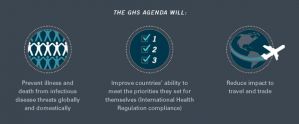
Progress must continue on the global health security front and industrialized countries like the United States have a critical role in sustaining forward movement. “However, the work of the GHSA, including motivating and assisting countries to improve their capacities to prevent epidemics like Ebola from reoccurring, is now at a crossroad. Even though senior officials in the Trump administration have voiced support for the GHSA, and at a recent GHSA ministerial meeting in Uganda signed onto the Kampala Declaration to extend the GHSA for at least another 5 years, US funding for the initiative is ending and no commitment for future financial support has been made. Without additional funding, prospects for the next phase of the GHSA will be endangered. It is important for the United States to commit to support the GHSA to help protect the nation and the rest of the world from epidemic disease.” U.S. financial support encourages other countries to pledge funds but if our efforts waver, it may cause a domino effect. Not only does U.S. engagement encourage others to support the GHSA, but it also supports our own national security. “If vulnerable countries do not have the capacity to quickly cope with disease outbreaks, those outbreaks are more likely to spread internationally, including to the United States.” You can hear more about the importance of the GHSA from Jennifer Nuzzo (one of the authors of this paper) at the Read-Out on the GHSA Summit in Kampala event on December 4th!
Failure to Diagnose Monkeypox Highlights Nigeria’s Poor Health Infrastructure
Like most outbreaks, Nigeria’s monkeypox cases have exposed weaknesses in the country’s ability to rapidly identify and test potential patients. These inadequacies highlight gaps within their International Health Regulations compliance as there were no national labs that could test patients for the disease. “Consequently, for more than two weeks after the outbreak (from the September 22 to October 13), there was no conclusive confirmation that the suspected case was actually that of monkeypox. According to experts, the implication of this is that the country may be dealing with a dangerous outbreak, but unsure of what it is dealing with on time, thereby giving room for a lot of things to go wrong during the waiting period. For instance, during the waiting period for the monkeypox confirmation, different statistics on the actual number of cases were being bandied, even as the large number of suspected cases (94 cases) and the manifestation of the disease had already caused fright and panic.” Laboratory delays can be devastating to outbreak control as it can delay treatment, isolation, quarantine, and data collection. Public health laboratories are the early warning system in many ways. Many are drawing attention to these gaps as a way to reinforce the need to strengthen country-level laboratory infrastructure and capacity. The National Centre for Disease Control (NCDC) was established in 2011, but still is struggling to find the capacity to respond to health threats due to funding and personnel issues. As 14 more cases of monkeypox were reported in Nigeria, this services as a reminder of why the GHSA is so vital!
 The WHO Reports on Fake Drugs
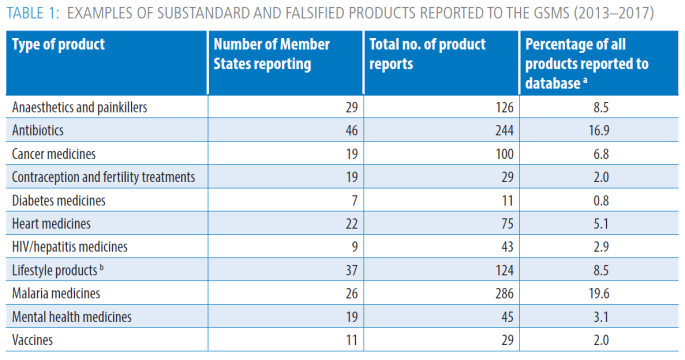
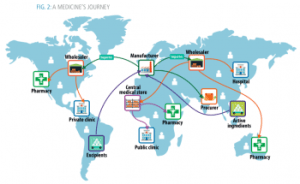
This week the WHO released a report on medical products that shed light upon the startling realities of patient safety and public health in low and middle income countries. The report, “Global Surveillance and Monitoring System for Substandard and Falsified Medical Products”, found that 1 in 10 products circulating in such countries are either substandard or fake. The findings of this report are extremely worrying as it means that people are taking medications intended to treat life-threatening ailments and they are either fake or not effective. In many cases, the individual is paying a considerable amount of money for such medications and can have severe medical complications from contaminated or expired products. “Substandard and falsified medicines particularly affect the most vulnerable communities,” says Dr Tedros Adhanom Ghebreyesus, WHO Director-General. “Imagine a mother who gives up food or other basic needs to pay for her child’s treatment, unaware that the medicines are substandard or falsified, and then that treatment causes her child to die. This is unacceptable. Countries have agreed on measures at the global level – it is time to translate them into tangible action.” You can read the report here. The report also cites some of the work being done around this endemic issue – 17 WHO training workshops, 126 Member States and more than 400 regulatory personnel trained, 1500 product reports, etc.
How Will We Handle Contamination On An Airplane?
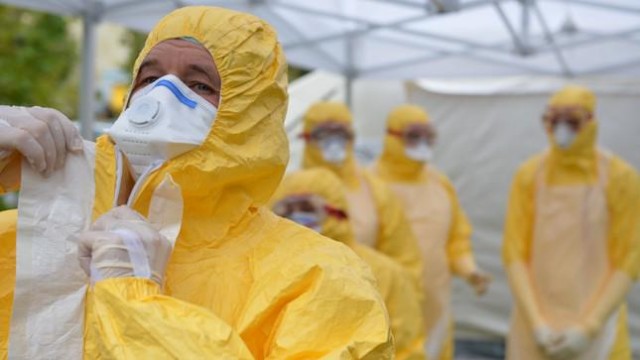
What would happen if you were on a plane with a patient who had a highly infectious disease like SARS or Ebola? What’s our national plan to deal with such issues? Hint: we don’t have a plan. How do flight attendants or pilots relay to ground control that a patient or entire plane needs to be quarantined? These are all the sorts of questions that need to be considered when planning and responding to such events. How would we quarantine an entire plane? On February 7, 2011, such an event occurred – a pilot issued a public health emergency to the air traffic control tower in Milwaukee, WI, for 3 (of 115) passengers with flu-like symptoms. “Airport officials soon learned something interesting about Flight 703 that could point to the presence of a communicable disease. The plane included at least 12 people who had returned from Cozumel, Mexico, on a cruise in which many of the passengers had fallen ill with flu-like symptoms. The incident revealed gaps in America’s emergency planning for communicable diseases aboard planes — gaps that were still present four years later when the U.S. Government Accountability Office investigated. ‘The United States lacks a comprehensive national aviation-preparedness plan aimed at preventing and containing the spread of diseases through air travel,’ the GAO found.” Sadly, it seems as if there’s still no plan. The creation of such a plan would require collaboration between the CDC and U.S. Department of Transportation, and while meetings have occurred, it is reported that no one has taken the lead. So, how are airports currently handling infectious disease incidents? “The lack of uniformity in dealing with communicable diseases during air travel was evident when the National Academy of Sciences asked 50 different airports in the U.S. and Canada how they expect to learn of an incident aboard a plane. They found 15 different notification procedures.” Report after report has found a gap within these response efforts and with the holiday season upon us and airline travel to be busy, it seems that should a public health emergency arise, we may be flying by the seat of our pants.
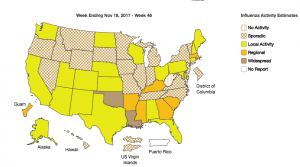 Flu Season is Upon Us!
Flu season is starting to hit the United States as the CDC reports an up-tick is influenza positive tests. A majority of the positive specimens have been Influenza A (78% are H3, 13% have been H1N1). “Three southeastern states are reporting high or widespread flu activity, and the CDC said it received reports of five more pediatric flu deaths. In its report, which covers the week ending Nov 18, the CDC also reported one more novel flu infection, an H1N1 variant (H1N1v).Globally, flu activity in the Northern Hemisphere is rising, with H3N2 and influenza B the most frequently detected strains, the World Health Organization (WHO) said yesterday in an update.” Flu season and vaccination compliance is increasingly becoming an issue even in healthcare – in fact, many hospitals are terminating employees who don’t get their flu shot. Remember – get your flu vaccine, stay home when sick, wash your hands, and cover your cough!
Stories You May Have Missed:
- Exclusive Interviews: Tackling Regulatory and Economic Challenges of Antimicrobial Resistance – “It is imperative for medical experts and drug discovery specialists to stay on top of the latest clinical advancements, developments and industry initiatives related to antimicrobial resistance. SMi Group will gather industry experts and government bodies to share their insights at the 20th annual conference on Superbugs and Superdrugs taking place on 19-20 March 2018 in London, UK. SMi Group recently had the opportunity to sit down with three of the event’s featured speakers to discuss some of the challenges they face in the industry and their strategies for overcoming them.”
- Raw Flour and E. coli – this whole time we thought it was the eggs in the cookie dough that were doing it, but it seems that flour may also be a culprit for foodborne illness! “Research published today in the New England Journal of Medicine describes how raw flour, an unlikely suspect, caused an Escherichia coli outbreak in 2016. Because of its low-moisture properties, flour was not thought to be a conduit of E coli bacteria, but a multistate team of investigators discovered that flour processed in one facility was linked to the outbreak.”
Thank you for reading the Pandora Report. If you would like to share any biodefense news, events, or stories, please contact our Editor Saskia Popescu (biodefense@gmu.edu) or via Twitter: @PandoraReport
 The Good, The Bad, and The Ugly of Pandemic Prediction