Pandora Report 11.15.2024

This week’s Pandora Report includes program news, updates on H5N1 and the pandemic agreement negotiations, and coverage of Africa CDC’s new mpox clinical trial and Ukrainian reporting on alleged Russian chemical weapons use.

All-BIOD Panel at the Tucker Symposium on Chemical and Biological Weapons

On November 13-14, the Center for Nonproliferation Studies (CNS) at the Middlebury Institute for International Studies hosted the 13th Annual Jonathan B. Tucker Symposium. The symposium is held in honor of Jonathan Tucker who dedicated his career to fighting the scourge of chemical and biological weapons. The first panel of the symposium was composed of two alumni of the Biodefense Graduate Program at the Schar School of Policy and Government: Yong-Bee Lim, Biodefense PhD ’21, and Minh Ly, MS Biodefense ’21. Dr. Lim, who is the Deputy Director of the Converging Risks Lab at the Council for Strategic Risks, gave a presentation on “Technology Democratization and its Implications for CBW Safety and Security: Lessons Learned from Engagement with Non-Traditional Communities.” Ly, who is a Research Fellow at CNS, served as the moderator. In his talk, Dr. Lim discussed his research on the Do-It-Yourself Biology community: a grassroots, decentralized community drawn together by a shared passion for biological experimentation, fostering innovation, and a desire to democratize access and use of life sciences materials, equipment, knowledge, and tools. While often discussed as a potential biosecurity threat in policy circles, Dr. Lim’s research found that much of the conventional wisdom on this community is oversimplified or incorrect. Dr. Lim’s talk concluded with three key lessons learned from his engagement with the community: 1) there is often a gap between perception and reality about biorisks that can lead to improper metrics and incorrect assessments that complicate policy formulation and implementation; 2) as the life sciences are practiced by more people, it is imperative to positively engage and receive buy-in from these communities on addressing biorisk issues; and 3) preventing and countering CBW will be increasingly difficult in a world where definitions for key terms such as biosecurity, democratization, and terrorism are either changing or have no global consensus.

Minh Ly (left) and Yong-Bee Lim (right)

Biodefense Program Bowling Party at the White House

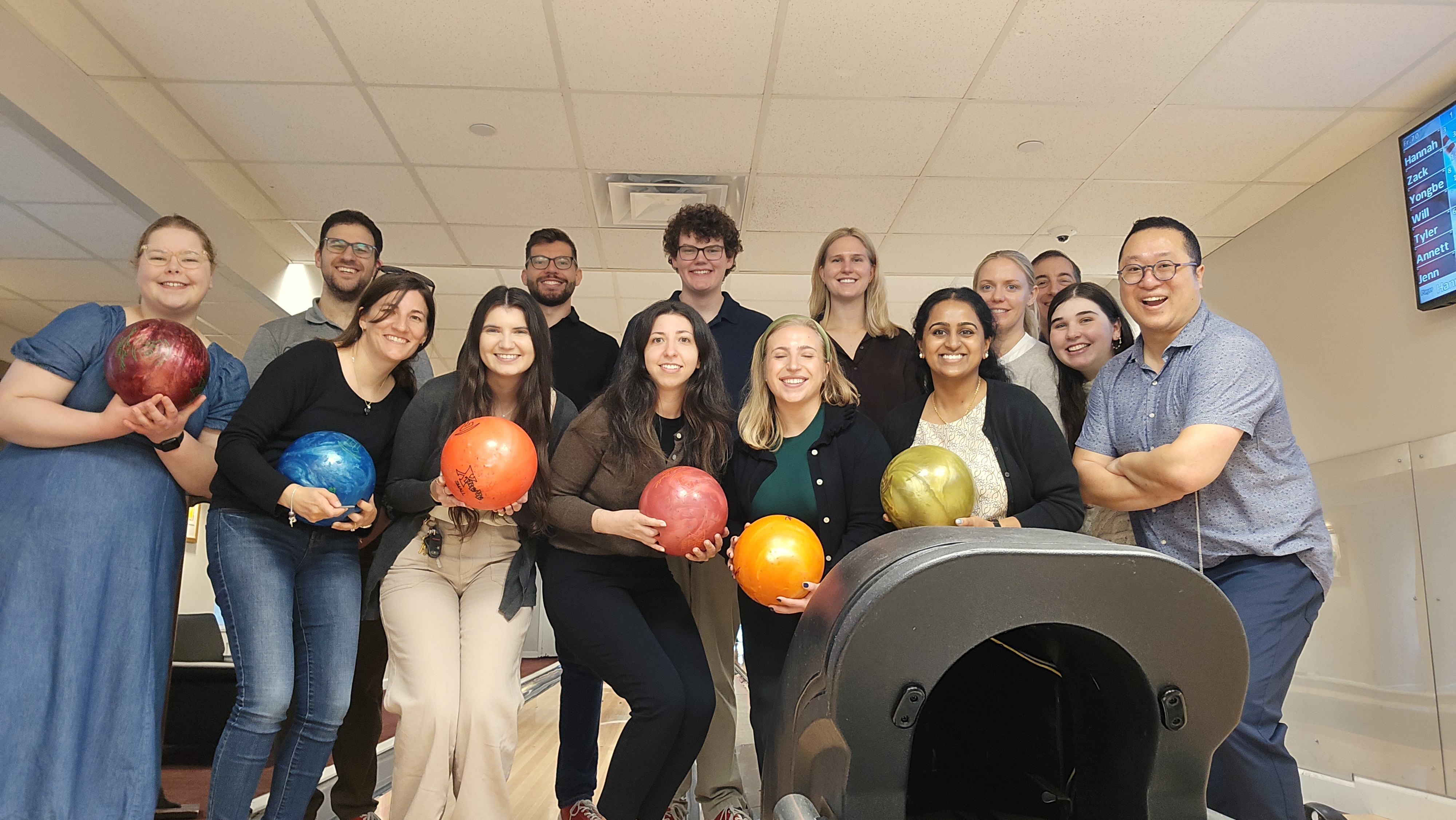
On November 7, a group of students, faculty, and alumni from the Biodefense Graduate Program at the Schar School of Policy and Government went bowling at the Harry S. Truman Bowling Alley in the Eisenhower Executive Office Building. Competition was fierce, but friendly, between Team Smallpox, Team Anthrax, Team Plague, and Team Ebola. In between strikes, spares, and gutter balls, the group enjoyed coffee, pastries, and lively conversations. Biodefense master’s student Tyler Smith won a fall-themed White House challenge coin for achieving the highest score. Team Smallpox, composed of MS Biodefense students Will MacDonald and Tyler Smith, Biodefense PhD student Annette Prieto, and Biodefense PhD alum Jen Osetek, emerged victorious and walked away with more White House merch. “This was an amazing experience,” said Annette, who works as a Technical Analyst at RAND, “The fun and friendly competition we shared in such an iconic setting made for an unforgettable day and helped build bonds that will extend beyond the lanes.” Program director Gregory Koblentz was rusty but managed to throw one strike and two spares after a healthy infusion of caffeine. The bowling party was graciously hosted by Biodefense PhD student Katherine Dammer who is Special Assistant for Global Health Security and Biodefense at the National Security Council.


Avian Influenza Updates

Canada Reports First Domestically Acquired Human H5N1 Case

The Public Health Agency of Canada (PHAC) confirmed the country’s first domestically acquired human case of avian influenza (caused by H5N1) earlier this week. On November 9, the Office of the Provincial Health Officer for British Columbia reported that a BC teenager was hospitalized and tested presumptive positive for H5N1. On November 13, PHAC’s National Microbiology Laboratory in Winnipeg confirmed the test result and that genomic sequencing indicated that the virus is related to the H5N1 viruses circulating in poultry in British Columbia. Provincial officials are conducting an investigation and are taking actions like contact tracing, testing, and offering antiviral medication to contacts. No further cases have been identified at this time, and it is not clear how the teenager was infected.

PHAC says that the risk to the general public remains low at this time, but the risk is higher for those with unprotected exposure to infected animals. Importantly, the genotype of H5N1 avian influenza in US dairy cattle is not the same as the one confirmed in the domestically acquired human case in BC. No cases of avian influenza have been reported in Canadian dairy cattle, and there is no evidence of its presence in Canadian milk samples.

CDC Calls for Expanding Testing

Federal health officials called for more testing of farmworkers after a CDC study showed that 7% of those tested in Michigan and Colorado had antibodies indicative of a previous H5N1 infection. Only one of the eight workers reported working with infected cows, despite all eight of them doing so. CDC explained in a statement that “…there are two primary ways that workers in the United States have been infected with H5N1 virus: via exposure to infected poultry during culling activities, and through exposure to infected dairy cows, including while caring for sick cows, or when working in a milking parlor, the area on the farm where cows are milked.”

Based on this, the agency has updated its existing recommendation on actions to prevent exposures to H5N1 infected animals, including:

  • “Decreasing human exposure through One Health control strategies and biosecurity to limit H5N1 virus infections in animals.”
  • “Enhancing personal protective equipment (PPE) guidance to more clearly detail what PPE is appropriate for exposure risk levels (high, medium, and low) in farming and poultry culling operations, alongside more robust worker training on proper use of PPE.”
  • “Identifying exposed workers and providing appropriate testing as well as post-exposure prophylaxis (i.e., efforts to limit spread of disease), and treatment (e.g., antivirals).”
  • “Offering testing to asymptomatic workers with a high-risk exposure who reported not wearing relevant PPE or who experienced a PPE breach or failure.”
  • “Increasing outreach and education with farm workers, employers, and advocacy groups to stress and ensure understanding of these messages and strategies.”

The CDC has also updated recommendations for testing and offering oral antiviral medications. This includes the recommendation that asymptomatic workers with a PPE-unprotected, high-risk exposure to sick animals be offered oseltamivir. The statement explains that a high-risk exposure “could include an unprotected splash in the face with raw cow milk from an infected or potentially infected cow, or not using recommended PPE during activities to depopulate poultry at a poultry farm with known H5N1.” The recommendations also include offering influenza A(H5) testing to asymptomatic workers who have had a high-risk exposure to animals infected with H5N1, whether or not that worker chooses to begin PEP.

The Pandemic Agreement Will Not Be Ready by December

Co-chairs of the World Health Organization’s (WHO) Intergovernmental Negotiating Body (INB), Ambassador Anne-Claire Amprou and Precious Matsoso, explained at a media briefing earlier this week that the pandemic agreement will not be adopted at a special World Health Assembly next month as initially thought. They indicated that this was because countries need “more time,” though the INB is already in its 12th meeting following 32 months of negotiations. Ambassador Amprou said at the briefing, “Today, member states agreed we need to conclude the agreement as soon as possible and continue negotiations into 2025 with the goal of concluding the agreement by the next WHA scheduled in May 2025, so we are moving in the right direction with a strong political commitment by member states.”’

Africa CDC Launches Mpox Drug Trial

The Africa CDC recently announced the launch of a trial of the antiviral drug brincidofovir as a treatment for mpox. Brincidofovir, sold under the brand name Tembexa, is a prodrug of cidofovir and is currently approved in the United States to treat smallpox. The trial, “The MpOx Study in Africa (MOSA),” will evaluate the safety and efficacy of brincidofovir with the drug’s developer, Emergent BioSolutions, announcing that it will be conducted and sponsored by PANTHER-the pandemic preparedness platform for health and emerging infectious response.

The trial was announced shortly after the total number of cases of mpox in this outbreak surpassed 50,000. Jean Kaseya, MD, Director General of Africa CDC, said in a statement “Africa is not just responding to the Mpox outbreak; we are leading the charge by spearheading research and development for Mpox therapeutics…The MpOx Study in Africa is a groundbreaking step toward developing an effective treatment that will save lives. This goes beyond research—it’s about African ownership and leadership in tackling our continent’s health challenges through essential research.”

Ukrainian General Staff Reports 323 Uses of Russian CW Use in October

Ukraine’s General Staff reported on November 8 that it had detected 323 Russian uses of CW on the battlefield in October. This brings the total to 4,613 uses reported by Ukraine since Russia’s full-scale invasion in 2022. An August investigation from the Kyiv Independent showed that Russia’s use of CW is growing, with some Ukrainian soldiers reporting dealing with up to six attacks daily. The United Kingdom announced sanctions against relevant Russian units last month, and the US Department of State cited Russian use of chloropicrin against Ukrainian troops in its announcement of more than 280 sanctions against individuals and entities tied to Russia earlier this year.
Emerging Infectious Diseases-“Vol 30, No. 14 Supplement – Reports from the US Department of Defense Global Emerging Infections Surveillance Program”

David M. Brett-Major writes in this issue of CDC’s Emerging Infectious Diseases‘ introduction, “This supplement contains new technical outputs and perspectives from the Global Emerging Infections Surveillance (GEIS) program within the Department of Defense (DoD). GEIS develops, invests in, disseminates, and integrates information from health surveillance activities conducted by military, academic, public health, and other partners. GEIS-funded researchers from around the world provide novel surveillance data that are used to update the military and civilian outputs from this long-standing initiative.”

“Trump Administration’s Chance to Lead on Pandemic Preparedness”

Syra Madad discusses the incoming administration’s opportunity to leverage lessons learned from the COVID-19 pandemic in this piece from the Belfer Center, writing in part “As the Trump administration prepares to take office, it faces a pivotal moment to leverage hard-earned lessons from the COVID-19 pandemic and build a more resilient, pandemic-prepared nation. The challenges of managing the first year of COVID-19 exposed critical vulnerabilities in our fragmented public health infrastructure and decentralized healthcare system. The administration is now uniquely positioned to prioritize pandemic preparedness as a matter of national security. This proactive approach is more important than ever, particularly given the current threat posed by H5N1 avian influenza, which is spreading rapidly among wild birds – among other species and causing outbreaks in U.S. poultry and dairy herds. Recent human cases among farmworkers exposed to infected livestock further underscore the urgency of this threat.”

“Cyberattacks on Healthcare: A Global Threat That Can’t Be Ignored”

Vibhu Mishra wrote this piece discussing UNSC’s interest in protecting healthcare infrastructure against cyberattacks for UN News: “An alarming surge in ransomware attacks is putting the world’s healthcare infrastructure at critical risk, endangering patient safety and destabilising health systems, the head of the UN World Health Organization (WHO) warned on Friday, as the Security Council convened to discuss strategies to counter the growing threat.”

Read more here and read the WHO Director-General’s remarks from the meeting here.

“Robust Biosecurity Measures Should Be Standardized at Scientific Cloud Labs”

Jeffrey Lee and Barbara Del Castello recently authored this commentary piece for the RAND Corporation. In it, they discuss clous labs and argue that “By adopting comprehensive security measures, including routine evaluations and monitoring via artificial intelligence (AI), the scientific community, ideally through a consortium, can harness the full potential of cloud labs while ensuring safe and secure research environments.”

“The U.S. Could Soon Face a Threat ‘More Powerful’ Than Nuclear Weapons”

Ashish K. Jha, Matt Pottinger and Matthew McKnight discuss the implications of rapid advancement in synthetic biology and how to achieve bioweapons deterrence in this Washington Post opinion piece. They point to the importance of superior intelligence gathering and analysis, writing that “For deterrence to work, Washington and its allies must have a robust, pervasive system for tracking and, where possible, eliminating highly dangerous research around the world.” However, they explain that the primary challenge to expanding and improving US BIOINT efforts is not technology, but resolve, with Congress having recently watered down the Biden administration’s budget request for pandemic prevention and biosurveillance efforts outlined in the 2023 Biodefense Posture Review remaining underfunded. They conclude that BIOINT alone won’t deter adversaries, but that all necessary elements of bioweapons deterrence depend on world-class BIOINT.

“Developing Guardrails for AI Biodesign Tools”

From NTI: “The integration of artificial intelligence (AI) with the life sciences offers tremendous potential benefits to society, but advances in AI biodesign tools also pose significant risks of misuse, with the potential for global consequences.”

“AI biodesign tools (BDTs) are technologies that enable the engineering of biological systems. These tools are trained on biological data and are developed to provide insights, predictions, and designs related to biological systems. BDTs have the potential to drive progress in the development of new therapeutics and are likely to have a significant impact across the broader bioeconomy, including in agriculture, health, and materials science. However, there are risks BDTs could be misused to design dangerous pathogens, and few safeguards exist to ensure that the benefits of these technologies can be realized safely and securely.”

“Innovative strategies are needed to reduce the risks associated with potential misuse of biological design tools without significantly hindering beneficial uses. This report identifies a number of strategies, referred to as guardrails, that could be developed to safeguard BDTs against misuse.”

Read the report here.

What We’re Listening To🎧

Build the Base Podcast-Tracy Frost and Dr. Kate Sixt, DoD Research and Engineering OUSD
“In this episode of Building the Base, Lauren Bedula and Hondo Geurts sit down with Tracy Frost, Director of Technology Industrial Innovation Base, and Dr. Kate Sixt, Principal Director for Biotechnology at the Department of Defense. The conversation explores the revolutionary intersection of biotechnology and national security, diving into how the DoD is leveraging bio-manufacturing to strengthen domestic supply chains and innovate defense capabilities. From converting waste products into valuable materials to creating new pathways for manufacturing critical components, the discussion reveals how public-private partnerships are reshaping America’s industrial base.”
One Health and the Politics of COVID-19 Book Launch

The Writer’s Center is hosting a book launch for Dr. Laura Kahn’s new book, One Health and the Politics of COVID-19 (blurb below) on November 23 at 2 pm EST in Bethesda, MD. Learn more and RSVP here.

One Health and the Politics of COVID-19 unpacks the mysteries of COVID-19’s origins to impart important lessons for future outbreaks. The One Health concept recognizes the interconnected links among the health of humans, animals, plants, and the environment. By comparing the history, science, and clinical presentations of three different coronaviruses—SARS-CoV-1, MERS, and SARS-CoV-2 (COVID-19)—Kahn uncovers insights with important repercussions for how to prepare and avoid future pandemics. The One Health approach provides a useful framework for examining the COVID-19 pandemic. Understanding the origins of this zoonotic disease requires investigating the environmental and molecular biological factors that allowed the virus to spread to humans. The book explores the many ways in which the wild animal trade, wet markets, and the camel industry contributed to the spread of the earlier SARS-CoV-1 and MERS coronaviruses. For SARS-CoV-2 (COVID-19), Kahn examines the biosafety, biosecurity, and bioethics implications of gain-of-function research on pandemic potential pathogens. This book is a must read to understand the geopolitics of the COVID-19 pandemic.”

Enhancing the Resilience of Healthcare and Public Health Critical Infrastructure

From NASEM: “Healthcare and public health infrastructure, technology, and operations are rapidly changing and are increasingly interdependent and interconnected. Threats to the nation’s critical social and physical infrastructure systems are also rapidly evolving and highly complex—posing potentially new or growing risks of disruption and challenging the assumptions used to design and protect these systems.”

“The National Academies Forum on Medical and Public Health Preparedness for Disasters and Emergencies will host a hybrid public workshop to explore strategies, policies, and innovative actions to improve the resilience of healthcare and public health (HPH) critical infrastructure to impacts from disasters and other emergencies.”

This event will take place in DC on December 9 and 10. Register here.

Resilience in the Face of Global Risks

From CSR: “The Council on Strategic Risks (CSR) cordially invites you to our first annual CSR symposium, Resilience in the Face of Global Risks, scheduled for Tuesday, December 10, 2024. This is the first event bringing together all three of CSR’s institutions—the Center for Climate & Security, the Converging Risks Lab, and the Janne E. Nolan Center on Strategic Weapons—to engage with leaders across our mission sets.”

“The United States and its allies face a complex global security landscape where systemic risks like climate and ecological crisis, nuclear proliferation, and biological threats are blending with war, geopolitical competition, and human insecurity in new and profound ways. While there has been tremendous leadership—and meaningful progress—across these overlapping risk areas, they require persistent innovation in community building to meet the modern risk landscape.”

“The symposium will dive into the progress our communities have made—and how our passionate communities can better work together to help shape the future.”

“In addition to a keynote address, guests will hear from panels, take part in breakout sessions showcasing important issues and new ideas, plus engage with thought leaders between sessions. It will be a widely attended gathering, free to attendees.”

“As we enter a new year with an exceptionally dynamic security environment, we hope CSR’s December event will inspire and build a stronger community across professionals dedicated to anticipating and addressing the world’s greatest risks. We appreciate your consideration and hope you will be able to join us on the 10th of December.”

RSVP here.

2024 CBD S&T Conference

From DTRA: “The CBD S&T Conference brings together the most innovative and influential chemical and biological defense community members from around the globe to share insights and collaborate on the emerging chem-bio threats of tomorrow.”

“Join the Defense Threat Reduction Agency’s (DTRA) Chemical and Biological Technologies Department in its role as the Joint Science and Technology Office (JSTO) for Chemical and Biological Defense, an integral component of the Chemical and Biological Defense Program, as we Focus Forward to uncover novel concepts and examine groundbreaking discoveries within the chem-bio defense landscape.”

“The 2024 CBD S&T Conference will be held at the Broward County Convention Center, December 2–5, 2024.”

Learn more and register here.

Health Security Intelligence: Managing Threats Risks and Hazards Post-Covid 19
“As  the acute impact of the COVID-19 pandemic recedes, many unaddressed questions remain for Australia about how to better prepare for the next likely health threat, risk or hazard.”

“In addition to how we enhance national public health capacity, what are the important lessons we can learn from the pandemic from national security and biosecurity perspectives?”

“Given the likelihood of another pandemic at some point, an increasingly uncertain geo-political order and the potential exploitation of biotechnology by bad actors how does Australia and its allies better prepare for a future of increasingly complex health security and biological security threats, risks and hazards?”

“This event is for all health security intelligence stakeholders (policy-makers, national security staff, scientists, researchers and clinicians) who work across the one health continuum and national security agencies.”

“It will introduce participants to Charles Sturt’s extensive research agenda across the one health biosecurity, health and biological security and discuss both their national security and scientific implications.  You will hear briefings from key researchers across both STEM and social sciences disciplines working on assessing key health security threats, risks and hazards relevant to your work.”

This event will take place in-person and over livestream on December 4 from 2-4 pm AEDT. Learn more and register here.
NEW: “New Public Health Cybersecurity Readiness Survey Set to Boost Preparedness Against Cyber Threats”

“The co-chairs of the Joint Public Health Cybersecurity Task Group of the Healthcare and Public Health Sector Coordinating Council (HSCC) published a special announcement letter announcing the launch of the Public Health Cybersecurity Readiness Survey. The move aims to enhance the cybersecurity preparedness of state, local, tribal, and territorial (SLTT) public health agencies. Participants can expect the anonymous survey to take about 15 minutes to complete, and it will be open until Monday, Dec. 2, 2024.”

Read more and access the survey here.

The Schar School is Hiring!

The Schar School of Policy and Government at George Mason University is hiring a tenure-track assistant professor. Expertise in international security, national security, homeland security, emergency management, artificial intelligence, cybersecurity, the defense industrial base, or transnational crime and corruption will be regarded positively. Candidates whose work focuses on climate security, technological change, and the future of warfare, or domestic extremism are also encouraged to apply, as are candidates with regional expertise. Details can be found here: https://listings.jobs.gmu.edu/jobs/assistant-professor-fairfax-va-virginia-united-states-other.

US AI Safety Institute Issues RFI on Responsible Development of Chem-Bio Models

From AISI: “The U.S. Artificial Intelligence Safety Institute (U.S. AISI), housed within the U.S. Department of Commerce’s National Institute of Standards and Technology (NIST), released a Request for Information seeking insight from stakeholders regarding the responsible development and use of chemical and biological (chem-bio) AI models.”

“Input from a broad range of experts in this field will help the U.S. AISI to develop well-informed approaches to assess and mitigate the potential risks of chem-bio AI models, while enabling safe and responsible innovation.”

“Respondents are encouraged to provide concrete examples, best practices, case studies, and actionable recommendations where possible. The full RFI can be found here.”

“The comment period is now open and will close on December 3, 2024, at 11:59PM Eastern Time. Comments can be submitted online at www.regulations.gov, under docket no. 240920-0247.”

Pandora Report 8.16.2024

This week’s Pandora Report discusses the recent mpox PHEIC declaration, updates on H5N1, and more.

World Health Organization Declares Mpox PHEIC

Mpox (formerly known as monkeypox) is a viral illness caused by the monkeypox virus, which is part of the genus Orthopoxvirus. Two clades exist (clade I and clade II). Clade IIb caused a global outbreak of mpox in 2022-23 that also resulted in a PHEIC (public health emergency of international concern) declaration. Now, the WHO has declared an outbreak of clade I mpox a PHEIC as case counts in the Democratic Republic of the Congo (DRC) and neighboring countries swell. 548 people have been killed by the disease in 2024, according to the DRC government.

WHO Director-General Tedros Adhanom Ghebreyesus made the declaration “on the advice of an IHR Emergency Committee of independent experts who met earlier in the day to review data presented by experts from WHO and affected countries. The Committee informed the Director-General that it considers the upsurge of mpox to be a PHEIC, with potential to spread further across countries in Africa and possibly outside the continent.”

Tedros said in a statement, “The emergence of a new clade of mpox, its rapid spread in eastern DRC, and the reporting of cases in several neighbouring countries are very worrying. On top of outbreaks of other mpox clades in DRC and other countries in Africa, it’s clear that a coordinated international response is needed to stop these outbreaks and save lives.”

According to WHO “The monkeypox virus was discovered in Denmark (1958) in monkeys kept for research and the first reported human case of mpox was a nine-month-old boy in the Democratic Republic of the Congo (DRC, 1970). Mpox can spread from person to person or occasionally from animals to people. Following eradication of smallpox in 1980 and the end of smallpox vaccination worldwide, mpox steadily emerged in central, east and west Africa.”

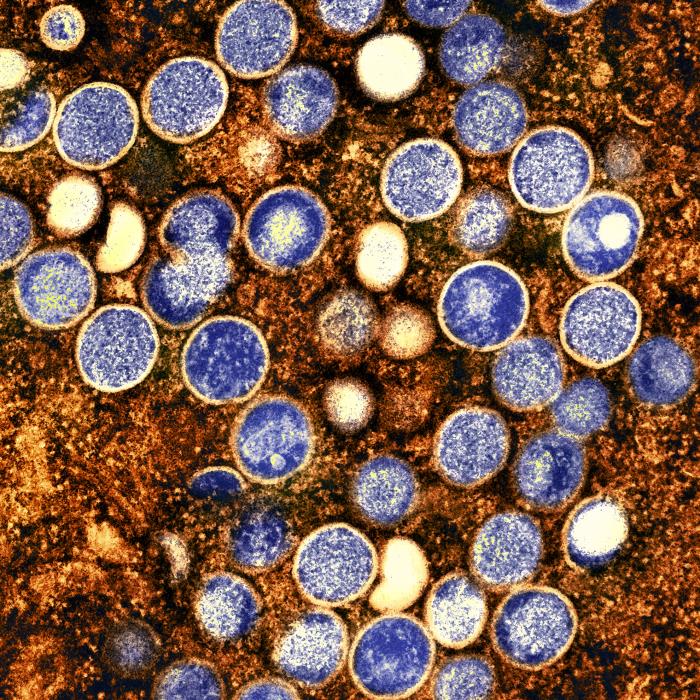
Image Credit: CDC PHIL| “This is a colorized transmission electron microscopic image of mpox virus particles (purple), which were found within an infected cell (brown), having been cultured in the laboratory. The image was captured and color-enhanced at the National Institute of Allergy and Infectious Diseases (NIAID), Integrated Research Facility (IRF), located in Fort Detrick, Maryland.”

Sweden Reports First Clade I Case Outside Africa, ECDC Raises Risk Alert Level

The Public Health Agency of Sweden reported on Thursday that the country has recorded the first case of mpox caused by clade I outside of Africa. Health and Social Affairs Minister Jakob Forssmed said in a news conference, “We have now also during the afternoon had confirmation that we have one case in Sweden of the more grave type of mpox, the one called clade 1.” State Epidemiologist Masnus Gisslen said in an official statement that the patient was infected while visiting “the part of Africa where there is a major outbreak of mpox clade 1.”

Following Sweden’s announcement, the European Centre for Disease Prevention and Control (ECDC) raised its risk level for mpox from ‘low’ to ‘moderate,’ for sporadic cases appearing in the EU. The agency also asked countries to maintain high levels of awareness regarding those traveling from affected areas. The ECDC says the overall risk to the EU population has gone up from “very low” to “low” and that it expects there will be more imported cases in the coming weeks.

United States Announces Further $424 Million in Assistance for the DRC

This week the US, through the United States Agency for International Development, announced “…nearly $424 million in humanitarian and health assistance to address the ongoing catastrophe in the Democratic Republic of the Congo (DRC). This includes $414 million in humanitarian assistance to support people experiencing persistent humanitarian needs resulting from conflict and displacement. This announcement, made in Kinshasa by the U.S. Ambassador to the DRC Lucy Tamlyn and U.S. Representative to the United Nations Agencies for Food and Agriculture Jeffrey Prescott, also includes an additional $10 million in health assistance to respond to the current mpox outbreak in the DRC and in other affected countries in the region. USAID is also donating 50,000 mpox vaccines to the DRC, which is the country most impacted by this outbreak.”

The statement later explained that “The United States is the largest provider of humanitarian assistance to the DRC and the largest bilateral donor to DRC’s health sector. This Fiscal Year, the U.S. provided more than $256 million in health assistance through bilateral programs including the President’s Emergency Plan for AIDS Relief (PEPFAR), the President’s Malaria Initiative (PMI), and the Global Health Security program, which enabled more than seven million people to receive lifesaving treatment for diseases including TB, HIV, and malaria.”

European Commission Coordinates Procurement and Donation of 215,000 Bavarian Nordic Doses to Africa CDC

The European Commission’s Health Emergency Preparedness and Respons Authority (HERA) announced on Wednesday that it “will procure and donate 175,420 doses of the MVA-BN® vaccine, the only FDA and EMA-approved mpox vaccine, as an immediate response to the mpox outbreak in Africa. In addition, the pharmaceutical company Bavarian Nordic will donate 40,000 doses to HERA. The Africa CDC will distribute the vaccines according to regional needs.”

The announcement came in response to Africa CDC’s call for the international community to assist in mobilizing two million vaccines to stop this outbreak. The Commission said in its statement that “Through the Africa CDC, these vaccines will be distributed to affected countries. Furthermore, HERA is in collaboration with the Africa CDC with the aim to expand access to mpox diagnostics and sequencing in the region, with a €3.5 million grant foreseen for early autumn.”

Bavarian Nordic Wins $157 Million Contract to Replenish US JYNNEOS Vaccine Supply

The Biomedical Advanced Research and Development Authority (BARDA) has reached an agreement with the Danish company Bavarian Nordic to “partly replenish” its stockpile of JYNNEOS vaccine following the 2022 mpox outbreak. This $156.8 million deal follows a similar one made last year by the US government totaling $120 million.

Further Reading

H5N1 Threat Persists but Remains Low

Despite the renewed focus on mpox, concern still remains about the spread of avian influenza globally, particularly H5N1, which has infected thirteen farmworkers in the United States so far this year. Despite the relatively low risk, Seqirus has begun producing and storing doses of its new vaccine targeting H5N1 in its facility outside of Raleigh, NC. In total, the company has agreed to produce 4.8 million doses in exchange for $22 million from the federal government. The government has also given Moderna $176 million to develop mRNA vaccines for influenza, including H5N1.

The CDC explained in a recent summary about its Influenza Risk Assessment Tool that “The current overall individual and population health risk to the general public posed by the avian influenza A(H5N1) virus presently spreading in cows, poultry, and other mammals remains low. Systematic comparisons of data related to this avian influenza A(H5N1) virus using the Influenza Risk Assessment Tool (IRAT) to data from other influenza A viruses has scored this virus’s future pandemic potential as “moderate risk” based on information through June 26, 2024. This is similar to previous assessments of earlier avian influenza A(H5N1) viruses.”

Furthermore, the WHO released an updated assessment on recent H5N1 events in collaboration with the Food and Agriculture Organization of the United Nations and the World Organisation for Animal Health. The assessment found that “At the present time, based on available information, FAO-WHO-WOAH assess the global public health risk of influenza A(H5N1) viruses to be low, while the risk of infection for occupationally exposed persons is low to moderate depending on the risk mitigation measures in place. Transmission between animals continues to occur and, to date, a limited number of human infections have been reported. Although additional human infections associated with exposure to infected animals or contaminated environments are likely to continue to occur, the overall public health impact of such infections at a global level is minor.”

DOD, NNSA Inaugurate New Supercomputing System Dedicated to Biological Defense

Earlier this month, the Department of Defense (DOD) and the National Nuclear Security Administration (NNSA) announced a new supercomputing system that is dedicated to biological defense at Lawrence Livermore National Laboratory. According to DOD, the Department “…is working with NNSA to significantly increase the computing capability available to our national biodefense programs. The collaboration has enabled expanding systems of the same system architecture as LLNL’s upcoming exascale supercomputer, El Capitan, which is projected to be the world’s most powerful supercomputer when it becomes operational later this year.”

“The biodefense-focused system will provide unique capabilities for large-scale simulation and AI-based modeling for a variety of defensive activities, including bio surveillance, threat characterization, advanced materials development, and accelerated medical countermeasures. DoD and NNSA intend to allow the U.S. Government interagency, International Allies and partners, and academia and industry to access the supercomputing capability.”

Learn more here.

Schumer Pledges to Block Any Senate Effort to Significantly Cut CDC Budget

Senate Majority Leader Chuck Schumer (D-NY) told The Associated Press this week that he would block any legislation from passing the Senate that proposes significant cuts to the budget of the Centers for Disease Control and Prevention (CDC). Schumer further said that such cuts “would wreak havoc and chaos on food safety funding mechanisms and tracking operations at a core level.” As the AP explains, “Democrats said the proposal in a House bill includes a reduction of the CDC’s proposed budget by $1.8 billion, or about 22%, that would harm public health. The Republican-led effort also would mean a major cut in programs designed to address firearm injuries and opioid overdose prevention.”

The House Appropriations Committee passed the measure on a party-line vote last month.

“AIxBio: Opportunities to Strengthen Health Security”

Aurelia Attal-Juncqua, Anita Cicero, Alex Zhu, and Thomas Inglesby recently authored this published this preprint on SSRN: “Artificial Intelligence (AI) has the potential to revolutionize biosecurity, health security, biodefense, and pandemic preparedness by offering groundbreaking solutions for managing biological threats. This landscape review explores recent advancements in AI across these fields, drawing from both grey literature and peer-reviewed studies published between January 2019 and February 2024. AI has demonstrated potential in predicting viral mutations, which could enable earlier detection of outbreaks, and streamlining resource allocation by analyzing diverse data sources. It could also play a crucial role in accelerating the development and deployment of medical countermeasures, such as vaccines and therapeutics. Additionally, use of AI may enhance laboratory automation, reducing human error and increasing biosafety. Despite these promising advancements, significant challenges and risks related to the potential misuse of AI, data security, and privacy concerns necessitate careful implementation and robust governance. This paper highlights the rapid progress and vast potential of AI in biosecurity, and provides key recommendations for U.S. policymakers to effectively harness AI’s capabilities while ensuring safety and security. These recommendations include expanding access to advanced computing resources, fostering collaboration across sectors, and establishing clear regulatory frameworks to support the safe and ethical deployment of AI technologies.”

“Emerging Biosecurity Threats in the Age of AI”

Suryesh K Namdeo and Pawan Dhar recently published this piece with IndiaBioscience: “As artificial intelligence (AI) enables the transformation of biology into an engineering discipline, an effective governance model that uses threat forecasting, real-time evaluation, and response strategies is urgently needed to address accidental or deliberate misuse. This article talks about the risks at the interface of AI and biosecurity and what could India do to better prepare for potential AI-biorisks.”

“2023 Biorisks, Biosecurity and Biological Disarmament Conference Report”

From UNIDIR: “To facilitate multi-stakeholder engagement around biological risks, biological security and biological disarmament, the United Nations Institute for Disarmament Research (UNIDIR), the United Nations Office for Disarmament Affairs (UNODA) and the World Health Organization (WHO) co-organized a stakeholder conference designed to bring together actors from civil society, academia and industry, as well as diplomats, to stimulate the exchange of ideas and thinking around how to build biosecurity and bolster biological disarmament.”

“The Biorisks, Biosecurity and Biological Disarmament Conference took place in Geneva, Switzerland, on 4–5 July 2023. The event provided an opportunity to discuss ongoing diplomatic processes and current and upcoming issues in the areas of biorisk, biosecurity and biological disarmament.”

“More than 80 individuals from 30 countries, representing 60 institutions, participated in the discussion in person, and a further 334 individuals joined the discussion virtually from around the world. The participants included diplomats, public health professionals, security experts and scientists from a wide range of organizations.”

“The Conference consisted of seven substantive panels, which explored a range of topics, centred on advances in science and technology and their related risks and benefits, biosecurity implementation, dual-use governance, disease response, international cooperation, and verification technologies. The discussions that took place during all seven panels are summarized in this conference report.”

“Launching the Global Biosecurity Accelerator at the Helsinki Biosecurity Dialogue”

Christopher East covers the launch of the Global Biosecurity Accelerator in this post from the Council on Strategic Risks, writing in part “This is a core driver of why CSR launched the Global Biosecurity Accelerator, of which the Helsinki Biosecurity Dialogue was the first multinational convening. The Global Biosecurity Accelerator’s mission is to accelerate global resilience to the full spectrum of biological threats— natural, accidental, or deliberate. In addition to promoting strong biosecurity strategies across nations, Accelerator events will raise insights from the range of actions that nations take—from enhancing biodefense, to embedding biosecurity in a whole-of-society approach, to One Health initiatives. Designed with interoperability and depth of defense in mind, CSR aims for the Global Biosecurity Accelerator to help jumpstart a ‘whole-of-globe’ approach to resilience against biological threats.”

“Russian Influence in Eastern Europe is Aggravating HIV Epidemic, Say Experts”

The Guardian‘s Kat Lay discusses the role of Russian propaganda in deterring people in eastern Europe from accessing necessary healthcare as AIDS deaths are up 34% compared to 2010. Lay writes in part, “Efforts to improve treatment and prevent infections are being hampered by Russian-linked propaganda against targets including opioid replacement therapy services, which reduce the risk of HIV infection among people using drugs, and the LGBTQ+ community…Meanwhile, “foreign agent” laws in a number of countries, following a pattern established in Russia, require charities and organisations receiving overseas funding to register and impose onerous reporting requirements. This has forced some charities to withdraw, a media briefing at the 25th international Aids conference was told.”

“Ebola: Ten Years Later – Lessons Learned and Future Pandemic Preparedness”

Krutika Kuppalli recently authored this post for PLOS Global Public Health‘s Speaking of Medicine and Health blog, writing in part “In early December 2013, a 2-year-old boy in the remote village of Meliandou, Guinea fell ill with a mysterious disease and succumbed to the illness a few days later.1 The disease spread rapidly, resulting in 49 cases and 29 deaths before being identified as the Zaire strain of the Ebola virus and officially declared an outbreak on March 23, 2014.2 Over the ensuing months, the outbreak spread to neighboring Liberia and Sierra Leone, with cases also emerging in Senegal, Nigeria, Mali, the United States and Europe.3 On August 8, 2014, the World Health Organization (WHO) Director-General declared the outbreak a Public Health Emergency of International Concern (PHEIC), the highest global health alert, signifying the outbreak posed a public health risk to other Member States and necessitated a coordinated international response.4 Despite global efforts to control the outbreak, it lasted for over two years, resulting in over 28,000 cases and more than 11,000 deaths by the time it was declared over on June 9, 2016.3 This crisis exposed significant weaknesses in global health systems, prompting a re-evaluation of pandemic preparedness and response strategies. A decade later, it is essential to reflect on the lessons learned from the West Africa Ebola crisis and their impact on current and future pandemic preparedness efforts. These lessons are outlined using the Health Emergency Preparedness and Response (HEPR) architecture developed by WHO, focusing on strengthening five core health emergency components: collaborative surveillance, safe and scalable care, community protection, access to countermeasures, and emergency coordination.”

“Déjà Vu All Over Again — Refusing to Learn the Lessons of Covid-19”

Michael S. Sinha, Wendy E. Parmet, and Gregg S. Gonsalves recently published this perspective piece in the New England Journal of Medicine, in which they explain “The spread of H5N1 avian influenza among cattle and other farm animals as well as to agricultural workers in the United States has raised concerns about the potential for an influenza pandemic. Although the threat of pandemic H5N1 doesn’t appear to be imminent — this variant has yet to show the potential to be transmitted from human to human — the federal government’s initial response suggests that, rather than heeding the lessons from Covid-19, elected officials and other key decision makers may be relying on a dangerous type of revisionism that could lead to more deaths, should H5N1 cause a pandemic.”

“The World Is Not Ready for the Next Pandemic”

Michael Osterholm and Mark Olshaker call for greater government investment in new and better vaccines in this Foreign Affairs article: “It is impossible to know when a new pandemic will arise, or which specific pathogen will be its cause. H5N1 is just one of the viruses that could mutate into something that will start a pandemic. But eventually, one will happen. It is therefore time to move away from vague recommendations and best practices to a far larger-scale program aimed at producing new and better vaccines, antiviral drugs and other countermeasures, and building the infrastructure at the scale needed to protect entire populations. Although such efforts will be costly, failing to take these steps could be catastrophic.”

NEW: AI and the Evolution of Biological National Security Risks

“In the wake of a global pandemic and rapidly advancing AI technologies, scientists and government leaders from around the world have sounded alarms about a changing biothreat landscape. Between dire warnings of more widely accessible bioterrorism capabilities, novel superviruses, and next generation bioweapons, how should policymakers and weigh the impacts of AI on biosecurity? Where are risks really changing, and where have they been overblown? What actions need to be taken now, and what emerging capabilities need to be monitored for future threats?”

“Please join the Center for a New American Security on Wednesday, August 21, from 10:30–11:30 a.m. ET for a panel discussion on these questions and more. Bill Drexel, Fellow in CNAS’s Technology and National Security Team, will be joined by leading biosecurity experts inside and outside government grappling with the nexus of AI and emerging biotechnologies.”

“This panel is part of CNAS’s AI Safety and Stability project, which aims to better understand AI risks and identify specific steps to improve AI safety and stability in national security applications. The event will build upon the project’s new report, AI and the Evolution of Biological National Security Risks: Capabilities, Thresholds, and Interventions in which Bill Drexel and Caleb Withers provide a clear-eyed overview of the emerging effects of AI on the biothreat landscape and propose actionable solutions to avoid the worst outcomes.”

This panel will feature Sonia Ben Ouagrham-Gormley, Associate Professor and Deputy Director of George Mason’s Biodefense Graduate Program, who reviewed and provided interviews to the report’s authors.

NEW-Safeguarding the Food Supply: Integrating Diverse Risks, Connecting with Consumers, and Protecting Vulnerable Populations – A Workshop

From the National Academies: “On September 4-5, the Food Forum will host a workshop that explores the state of the science around hazard- and risk-based approaches to safeguarding both domestic and global food systems. Workshop presenters will examine nutrition, economic, and equity implications in food safety decision-making, and considerations and strategies for communicating hazard and risk across sectors. The workshop will also include national and international perspectives on risk assessment and tools to mitigate risk, as well as opportunities for the future of risk management and assessment, food safety, and public health.”

Learn more and register for this virtual event here.

Assessing and Navigating Biosecurity Concerns and Benefits of Artificial Intelligence Use in the Life Sciences – August Information Gathering Meeting
From the National Academies: “This is the first in-person meeting of the consensus study, Assessing and Navigating Biosecurity Concerns and Benefits of Artificial Intelligence Use in the Life Sciences. The open session of this information gathering meeting will include initial briefings containing information relevant to study issues. The committee will also meet in closed session for project planning and review of topics and speakers for remaining meetings.”

This event will take place on August 13 and 14. Learn more and register here.

Call for Experts-Enhancing the Resilience of Healthcare and Public Health Critical Infrastructure

From the National Academies: The National Academies Forum on Medical and Public Health Preparedness for Disasters and Emergencies is seeking experts to participate in an upcoming workshop that will examine strategies, policies, and innovative actions to improve the resilience of health care and public health critical infrastructure to impacts from disasters and other emergencies.

Approximately 8-10 volunteer experts are needed to serve on the workshop planning committee. Expertise in the following areas is desired:

  • Healthcare operations and management
  • Public health, emergency management, and environmental health
  • IT, data science, and cybersecurity
  • Infrastructure systems, engineering, and supply chain
  • Risk assessment and mitigation
  • Insurances, cost management, and health economics
  • Community resilience and lived experience
  • Public policy

We are also collecting information for potential speakers, participants, and peer reviewers for any publications resulting from the activity.

Please submit nominations by August 23, 2024. For any additional questions regarding the workshop, please view the project page or email Shalini Singaravelu at SSingaravelu@nas.edu.

Learn more and submit nominations here.

Call for Experts-Potential Research Priorities to Inform Readiness and Response to Highly Pathogenic Avian Influenza A (H5N1): A Workshop

From the National Academies: The National Academies is seeking suggestions for experts to participate in a new workshop exploring research priorities to inform readiness and response to the ongoing Highly Pathogenic Avian Influenza (HPAI) A (H5N1) outbreak in the United States. Recognizing the interconnection between people, animals, and their shared environment, the workshop will take a One Health approach to bring together federal government agencies, the academic community, and the private sector, as well as other relevant stakeholders across the health, agriculture, and food safety sectors and will focus primarily on basic science and research questions of specific concern. 

Approximately 8-10 volunteer experts are needed to build a committee for a future workshop and any publications resulting from this activity. Expertise in the following areas is desired:

  • One Health and emerging infectious diseases
  • National, state, and/or local public health and medical readiness and response
  • Epidemiology and surveillance
  • Medical countermeasures (diagnostics, vaccines, therapeutics)
  • Agricultural and veterinary health and sciences
  • Food safety
  • Social sciences, risk communication, and community engagement
  • Modeling, risk assessment, and strategic foresight
  • Regulatory issues

Please submit nominations by August 30, 2024. For any additional questions regarding the forum, please view the project page or email Shalini Singaravelu at SSingaravelu@nas.edu.

Learn more and submit nominations here.

Pandora Report 8.9.2024

This week’s Pandora Report covers the recently updated priority pathogens list from the World Health Organization (WHO) and insights from the process of its development, the WHO’s plan to distribute polio vaccines in Gaza, recent research that suggests H5N1 is more widespread than previously thought, and more.

WHO Updates List of Most Dangerous Viruses and Bacteria

The WHO recently published a report outlining the findings of its global pathogen prioritization process that involved more than 200 scientists who evaluated evidence related to 28 viral families and one core group of bacteria, covering 1,652 pathogens. This updated priority pathogens list has grown to more than 30 pathogens, now including influenza A virus, monkeypox virus, and dengue virus. The pathogens were selected due to their potential to cause a global public health emergency in humans. According to the WHO report, the process emphasized “the imperative nature of collaborative efforts to attain global resilience against epidemics and pandemics.”

Furthermore, “…the approach used advocates for a scientific framework to enhance preparedness for forthcoming outbreaks, Public Health Emergencies of International Concern (PHEICs), and pandemics by focusing on research of Viral and Bacterial Families, rather than isolated pathogens deemed to present global risks.”

Previous efforts by WHO in 2017 and 2018 identified about a dozen priority pathogens, but it is important to frequently revisit and revise these lists to account for “major global changes in climate change, deforestation, urbanization, international travel, and more,” Neelika Malavige, an immunologist at the University of Sri Jayewardenepura in Colombo, Sri Lanka told Nature.

Furthermore, as Smriti Mallapaty explains in the same Nature news article, the researchers involved with this process also created a list of “prototype pathogens,” “which could act as model species for basic-science studies and the development of therapies and vaccines.” The goal of these is to help encourage more research into under- and less-studied pathogens. Mallapaty writes, “For example, before the COVID-19 pandemic, there were no available human vaccines for any of the coronaviruses, says Malik Peiris, a virologist at the University of Hong Kong, who was part of the Coronaviridae research group. Developing vaccines for one member of the family will bring confidence to the scientific community that it is better placed to address a major public-health emergency for those viruses, he says. This applies to treatments, too, he says, because “many antivirals work across a whole group of viruses”.’

WHO Plans to Send 1.2 Million Polio Vaccines to Gaza

The WHO recently announced it plans to send more than one million polio vaccines to Gaza following the detection of poliovirus in wastewater samples. WHO Director-General Tedros Adhanom Ghebreyesus explained the situation and his agency’s plan in a piece published by The Guardian, writing in part “Across Gaza, more than 39 000 people have been killed, 89 000 wounded, and more than 10 000 are estimated to be missing. Most hospitals are no longer able to function. Already, diarrhoeal diseases, respiratory infections and hepatitis A, among others, are raging through Gaza. Nearly everyone in Gaza is facing acute food insecurity and catastrophic hunger. Thousands of children are malnourished, making them even more susceptible to disease.”

“About 2.3 million people live in the 365 sq km (141 sq mile) Gaza Strip, which has become even more concentrated amid limited access to clean and safe water, and deteriorating sanitary conditions.”

He continued later, writing “While no cases of polio have been recorded yet, without immediate action, it is just a matter of time before it reaches the thousands of children who have been left unprotected. Children under five years are at risk, and especially infants under two because many have not been vaccinated over the nine months of conflict.”

“The World Health Organization (WHO) is sending more than 1m polio vaccines to Gaza, which will be administered in the coming weeks to prevent children being struck down by the disease. However, without an immediate ceasefire and a vast acceleration of humanitarian aid, including a targeted vaccination campaign focused on young children, people will continue to die from preventable diseases and injuries that are treatable.”

The Director-General later discussed other recent examples of polio thriving in places ravaged by conflict and instability: “In 2017, in wartorn Syria,  an outbreak of variant poliovirus – a mutated form of the wild virus that can spread in under-immunised populations – left 74 children paralysed. In Somalia today, a decade-long civil war has resulted in the longest unbroken chain of variant poliovirus transmission globally, circulating since 2017. In Afghanistan and Pakistan, the last two countries  where children are paralysed by wild polio, humanitarian crises and insecurity have prevented the world from stomping out the virus for good.”

Notably, an outbreak of polio in Ukraine that was detected in October 2021 was declared over in September 2023, again highlighting both the dangerous relationship between conflict and infectious disease as well as the global threat diseases like polio continue to pose.

New Study Suggests H5N1 Cases Are Going Undetected in Humans

A team at the University of Texas Medical Branch (UTMB) recently published research that “…revealed evidence of highly pathogenic H5N1 avian flu infections in two Texas farmworkers not previously confirmed to have the disease, and the investigators also cultured infectious H5N1 virus from milk and cattle samples taken from two Texas dairy farms that previously had H5N1 outbreaks.” Their article-“A One Health Investigation into H5N1 Avian Influenza Virus Epizootics on Two Dairy Farms”-is currently available as a preprint.

The team “detected signs of prior bird flu infections in workers from two dairy farms that had outbreaks in Texas earlier this year. They analyzed blood samples from 14 farmworkers who had not been tested for the virus and found antibodies against it in two. This is a nearly 15% hit rate from only two dairy farms out of more than 170 with bird flu outbreaks in 13 states this year,” explains KFF Health News’ Amy Maxmen.

Maxmen further explains, “As bird flu cases go underreported, health officials risk being slow to notice if the virus were to become more contagious. A large surge of infections outside of farmworker communities would trigger the government’s flu surveillance system, but by then it might be too late to contain.”

In a statement to NPR, Gregory Gray (senior author on the paper) said “I am very confident there are more people being infected than we know about…Largely, that’s because our surveillance has been so poor.”

“COVID-19: Lessons Can Help Agencies Better Prepare for Future Emergencies”

This recent report from the Government Accountability Office draws several important lessons learned from the US government’s response to the COVID-19 pandemic: “The nation continues to recover from the public health and economic effects of the COVID-19 pandemic. For example, COVID-19 was the tenth leading cause of death in 2023, as compared to being the third leading cause of death in 2020 and 2021. Available data also show that inflation declined between March 2023 and March 2024, but remained higher than pre-pandemic levels.”

“GAO identified lessons from the COVID-19 pandemic that could help federal agencies better prepare for, respond to, and recover from future emergencies. These lessons draw on GAO’s COVID-19 oversight work, which includes 428 recommendations to federal agencies and 24 matters for congressional consideration as of April 2024. Of these recommendations, 220 remain open. Moreover, these recommendations include those related to the three areas GAO added to its High Risk List during the COVID-19 public health emergency:

  1. the Department of Health and Human Services’ leadership and coordination of public health emergencies,
  2. the Department of Labor’s Unemployment Insurance system, and
  3. the Small Business Administration’s emergency loans to small businesses.”

“Agencies across the government could improve their preparedness for future emergencies by fully implementing GAO’s recommendations.”

“Lessons that could help federal agencies better prepare for future emergencies fall into seven topic areas. These lessons highlight instances where government agencies did well in responding to the pandemic, as well as instances where the government response could have been much better.”

“Yemen: Houthis Obstructing Aid, Exacerbating Cholera”

This piece from Human Rights Watch reports on Houthi obstruction of aid work and information access in Yemen amid a widespread cholera outbreak in the country. It explains that “Yemen’s authorities are obstructing aid work and exacerbating a deadly cholera outbreak that is spreading across the country, Human Rights Watch said today. Parties to the conflict, including the Houthis, the Yemeni government, and the Southern Transitional Council (STC), have obstructed aid and access to information and have failed to take adequate preventative measures to mitigate the spread of cholera. Houthi security forces also have detained and threatened civil society staff, including humanitarian aid workers, in their recent arrest campaign.”

“Data collected by aid agencies indicate that between January 1 and July 19 there have been about 95,000 suspected cholera cases, resulting in at least 258 deaths, according to an individual working with the Yemen Health Cluster, a group of aid organizations, authorities, and donors led by the World Health Organization (WHO). All parties to the conflict should end their violations and abuses of Yemenis’ right to health, and the Houthis should end their arbitrary detentions of civil society and humanitarian aid workers.”

“The Influence of Synthetic Biology on National Bioeconomy Strategies”

Konstantinos Vavitsas discusses policymakers’ perceptions of synthetic biology and the intersection of this with national bioeconomy strategies, writing in part “Perhaps the most highlighted policy actions around synthetic biology revolve around biosecurity. The US Congress appointed the National Security Commission on Emerging Biotechnology (NSCEB), chaired by Ginkgo’s CEO Jason Kelly, with the mission to examine the national security implications of emerging biotechnology. “When people think “biotech” plus “national security,” they usually think “biosecurity.” That’s a deeply important topic, but it’s not the core of our mission,” Caitlin Frazer, Executive Director of NSCEB, told me. “We’re looking at issues like how the military could use emerging biotechnology to fuel, feed, and heal our servicemembers, how we can use biotech to shore up vulnerable supply chains. How can we create economic opportunity in the U.S. through biomanufacturing? And, of course, how we protect against misuse of these powerful technologies by countries that don’t share our values.”’

“Software Tools for Strategic Chemical Trade Control Enforcement: Workshops Spotlight Challenges and Tools”

Christina McAllister and Braden Holt discuss a series of workshops hosted by the Stimson Center’s Partnerships in Proliferation Prevention Program in this piece, explaining in part “Several themes emerged across discussions in both workshops that provided important feedback for the development of tools to support strategic trade controls for chemical weapons nonproliferation. Cost was one – many agreed that national customs offices would benefit from tools, but said they needed to be affordable and accessible. Short timelines available to border and customs officials when performing checks on chemical imports and exports also reinforced the need to utilize systems when shippers submit documents, allowing for early detection of controlled chemicals. Emphasis was also placed on the need for tools to work in a variety of environments, including instances where internet or Wi-Fi is unavailable. There was broad agreement that, taking these concerns under consideration, better access to these tools would strengthen strategic chemical trade control enforcement.”

ICYMI: The Global Pandemic Preparedness Summit 2024

The 2024 Global Pandemic Preparedness Summit was held July 29-30 in Rio de Janeiro. Watch recordings of the proceedings (available in both English and Portuguese) here.

Assessing and Navigating Biosecurity Concerns and Benefits of Artificial Intelligence Use in the Life Sciences – August Information Gathering Meeting
From the National Academies: “This is the first in-person meeting of the consensus study, Assessing and Navigating Biosecurity Concerns and Benefits of Artificial Intelligence Use in the Life Sciences. The open session of this information gathering meeting will include initial briefings containing information relevant to study issues. The committee will also meet in closed session for project planning and review of topics and speakers for remaining meetings.”

This event will take place on August 13 and 14. Learn more and register here.

H5N1: Protecting High Risk Communities

From the Pandemic Center at Brown: “On August 16th at 12:00PM ET the Pandemic Center will host a webinar titled H5N1: Protecting High Risk Communities.”

“As H5N1 has spread among livestock, farm workers have been at increased risk of infection. Though H5N1 cases in the US have so far largely been mild, severe illness is still a possibility. There is an urgent need to protect farm workers from the worst this virus has to offer, but there has been little discussion about how to increase farm workers’ access to lifesaving tools, such as vaccines, tests and treatments. This webinar will discuss H5N1 severity and what strategies we should be using to protect the health and safety of high-risk groups.”

“This event will convene a panel of experts to discuss the current H5N1 vaccine landscape. It will be hosted by Jennifer Nuzzo, Director of the Pandemic Center and Professor of Epidemiology at the Brown University School of Public Health. The panel will include:

Nahid Bhadelia, Founding Director, Boston University Center on Emerging Infectious Diseases (CEID)

Rick Bright, CEO & Founder of Bright Global Health and Former Director of BARDA”

“This webinar is part of the Pandemics & Society series, which focuses on current pandemic threats and response systems as well as how to build preparedness for the future.”

“Please contact pandemic_center@brown.edu with any questions.”

Register here.

The Pandora Report 10.25.13

Highlights include a new dengue serotype, bird flu in Australia, Peruvian bats and influenza A, mutating viruses, and HHS bolstering international pandemic preparedness. Happy Friday, and Happy Halloween!

First New Dengue Virus Type in 50 Years

For the first time in half a century, a new serotype of dengue has been discovered. The strain, found in Malaysia, is phylogenetically distinct from the existing four serotypes. The discovery will complicate existing vaccine efforts, which are already quite complex – prior to this discovery, dengue possessed four distinct serotypes. To date, this newest serotype has only been identified in one outbreak.

Science – “Scientists have discovered a new type of the virus that causes a centuries-old pestilence, dengue. The surprising find, announced at a major dengue conference here today, is bound to complicate efforts to develop a vaccine against a tropical disease that is becoming a more pervasive global menace. But it could shed light on where the pathogen came from and whether it is evolving into a greater threat. The finding “may change the way we think about dengue virus evolution and emergence,” says Duane Gubler, a dengue expert at the Duke-NUS Graduate Medical School in Singapore.”

Second bird flu outbreak in Australia

New South Wales has experienced its second outbreak of avian influenza. For some reason, none of the press is including the nueraminidase type, refering to the virus simply as “H7” or as HPAI (highly pathogenic avian influenza). This is misleading – the strain is actually H7N2, which has a low pathogenicity. While a serious threat to poultry farmers – 18,000 birds have died from the virus already and a further 400,000 have been culled – it isn’t a serious threat to humans at this point.

ABC Australia – “Initial testing at the Elizabeth Macarthur Agricultural Institute confirmed the virus earlier today and the infected property has been placed under strict quarantine. The department says tests are being carried out to try to confirm the origin of the latest incidence, but it’s the H7 strain, not the H5N1 strain that’s dangerous to humans. It says all eggs and poultry in NSW remain safe to eat. NSW DPI chief vet, Ian Roth, says he can’t yet confirm how the virus spread.”

New flu virus found in Peruvian bats

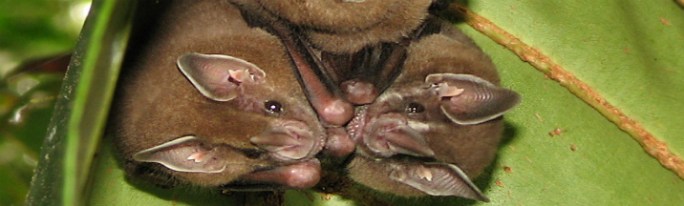
If there’s one thing we’ve learned here at the Pandora Report it’s never touch a bat. Just don’t do it. Halloween is great, bats can be cute, but as carriers of everything from rabies (scary) to Ebola (very scary), we’re keeping our distance.  In further confirmation of this truism, a new influenza virus has been discovered in Peruvian bats. The Influenza A virus, appropriately named A/bat/Peru/10, and contains hemagglutinin (H) and neuraminidase (N) surface proteins entirely distinct from any seen before, prompting researchers to classify them as novel – H18N11. While the virus is thought to be capable of infecting humans.  thus far researchers have been unable to culture it in human cells. Hopefully, it will stick to bats – H18N11 is just too hard to say.

LiveScience – “The researchers found the new virus after testing samples from 114 bats in Peru. One sample, from a flat-faced fruit bat known as Artibeus planirostris, was found to have H18N11. Blood testing of other bats suggested that they may have been infected with H18N11 in the past. The researchers still do not know how H18N11 attaches to cells to enter them…So far, flu viruses from bats are not known to infect people. But bats are known reservoirs for other types of pathogens that have found their way to humans, such as Severe Acute Respiratory Syndrome. Bats are also are suspected to be the original source of the virus causing the current outbreak of MERS.”

Single mutation gives virus new target

By changing a single amino acid in the BK polyomavirus, researchers were able to completely alter its preferential binding site. Understanding this mechanism is a small step towards understanding things like why a virus switches to infect different cells (potentially increasing pathogenicity) or, in the case of viruses like MERS and H7N9, different hosts. Understanding this mechanism can help us predict which viruses may switch hosts  to eventually infect us.

R&D Mag – “Different cells have different bindings targets on their surfaces. A change in a virus’s binding target preference can be a key step in changing how that virus would affect different cells in a victim—or move on to a different species…Brown postdoctoral researcher Stacy-ann Allen, one of two lead authors on the paper, said the team learned of the single amino acid difference by comparing high-resolution structural models of the two polyomaviruses bound to their favorite sugars. Collaborators, including co-lead author Ursula Neu and co-corresponding author Thilo Stehle at the Univ. of Tübingen in Germany, produced those models using nuclear magnetic resonance spectroscopy.”

HHS Boosts Global Ability to Respond to Pandemics

HHS through BARDA has awarded four interrelated grants, to the WHO, PATH, Utah and North Carolina States universities respectively to boost funding for pandemic preparedness in developing countries. The WHO is receiving approximately $10 million in grants to support H7N9 preparedness in developing countries, while the university grants are each supporting onsite training programs in the same countries. This makes a lot of sense – helping other states by providing them the tools to develop their own pandemic preparedness efforts makes us all  healthier.

PharmPro – “The program provides cost-sharing to build vaccine manufacturing facilities that can produce influenza and other vaccines in developing countries and trains personnel from developing countries at U.S.-based universities in advanced vaccine production. The program also supports technical assistance for foreign countries to operate and regulate their facilities and to conduct clinical trials with influenza vaccines produced in the facilities.”

And because everyone needs a little good news occasionally: Baby born with HIV is still showing no sign of the infection after treatment stopped 18 months ago

(image via Leyo/Wikimedia)

The Pandora Report 9.13.13

Highlights this week include further evidence linking camels to MERS, a big innovator turning his eye to biodefense, tracking influenza A in Norwegian birds, the “eradicated” measles in the US,  tripling Tamiflu to help us all survive a serious H1N1 pandemic, and this week’s weird piece. Happy Friday!

Blame the Camel

It looks like dromedary camels are indeed the vector transmitting MERS from its proposed bat reservoir to humans. Antibodies against the deadly respiratory virus have been found in blood samples collected from camels across the Middle East, including Egypt, Sudan, Oman, and the Canary Island. However, before everyone starts shunning the desert beast of burden, it should be noted that the vast majority or MERS cases have had no contact with the animals, further suggesting person-to-person spread. Officials are calling for greater surveillance, which to date has been spotty in most states.

New York Times – “…it appears that the first confirmed or suspected cases in three separate clusters may have [had contact with camels], and in two cases, the camels were observed to be ill. According to the Saudi newspaper Asharq, a 38-year-old man from Batin, Saudi Arabia, who died of what was diagnosed as bacterial pneumonia was a camel dealer with at least one obviously sick camel. Later, other members of his family, including a mother, daughter and cousin, fell ill with what was diagnosed as MERS, and two died. They were part of a cluster of cases reported Sept. 7 by the World Health Organization.”

Tech Visionary Focuses Now On Biological Weapons Threat

An interesting interview with a tech mogul formerly associated with Microsoft. Like so many of us in the biodefense field, he’s worried about a domestic terror threat operating out of a small lab. It’s refreshing to see someone outside of the industry, with potential means, getting involved with biodefense in a way that doesn’t just involve anthrax.

NPR – “Biological terror is interesting because it is so damn cheap and yet can be even more lethal than nuclear…In this case, the adversary is going to be hidden. It’s going to be a small lab of people who could be cooking up a bio-terror weapon. They’re very unlikely to announce themselves until after the attack.”

Influenza virus in wild birds in Norway

A group of researchers in Norway have determined that ducks and gulls are a natural host of influenza A. Dabbling ducks in particular are the most prevalent host of the virus. Researchers were interested in determining the primary host in order to better understand patterns of seasonal infection.

Phys.org – “The complete genetic material from a total of five influenza viruses from mallard and common gull were sequenced and characterized. The results showed that the genes of the Norwegian viruses resembled the genes found in influenza viruses from other wild birds in Europe…Due to limited overlap between the routes used by migratory birds in Eurasia and America, influenza viruses with different genetic material have developed between these two continents. However, in some areas, it has been observed that genes can be exchanged between influenza viruses from Eurasia and America.”

Measles still poses threat to US, health officials warn

Measles is making a comeback in the US, thanks to the groups of people who think that vaccinating for measles is a bad idea. Of the 159 cases last year, 82 percent involved those who had not been vaccinated. Technically the disease has been eradicated in the US.

FOX – “Of the patients who had not received measles immunizations, 79 percent had philosophical objections to vaccination, federal health officials said. Results of a National Immunization Survey released today show that 90.8 percent of U.S. toddlers between the ages of 19 and 35 months have received at least one dose of the measles, mumps and rubella vaccine (MMR) – just above the federal government’s target of 90 percent. However, federal health officials warned that measles imported from other countries can still cause large outbreaks in the U.S., especially if introduced into areas with clusters of unvaccinated persons.”

Triple Dose Tamiflu Beats Back H1N1

If at first you don’t succeed, try, try again. A study from the University of Manitoba in Winnipeg revealed that patients critically ill with H1N1 were able to clear the virus within five days if given triple the normal dose of Tamiflu. According to study researcher Dr. Anand Kumar, amongst those patients administered the triple dose of the flu drug, 79%  cleared the virus within the 5-day timeframe, compared with just 11% of patients given the normal dose. It should be noted that past studies involving the doubling  of Tamiflu doses did not yield significant clearance times.

MedPage Today – “‘What we found was that the treatment was well-tolerated, and there were many more patients achieving viral clearance at day 5, which was our study endpoint,’ Kumar said during a session at the Interscience Conference on Antimicrobial Agents and Chemotherapy. Kumar noted that the 5-day endpoint was important because of increased survival benefits from the shortened clearance time and the reduced amount of time a patient has to endure in continued isolation, “which is a source of significant manpower demand for an intensive care unit.”

This week’s weird piece: ‘US provided chemical and biological weapons to Saddam Hussein’ – retired military officer

Disclaimer: This is from Voice of Russia, which is  the Russian government’s broadcast network and therefore not exactly a pillar of journalistic integrity.

(image Adam Foster/Flickr)