The Pandora Report 7.19.13

Highlights this week include MERS in the UAE, H5N1 and dual-use research, giant Pandoravirus, implications of giant Pandoravirus, and pandemics and national security. Happy Friday!

United Arab Emirates identifies 4 new cases of SARS-like respiratory virus

The Middle Eastern Respiratory Syndrome (MERS) virus, first appearing in Saudi Araia has spread to the neighboring United Arab Emirates, with four new cases identified in Abu Dhabi. It is thought that one patient contracted the virus earlier subsequently infected these four new cases.

Washington Post –  “The new cases also could offer investigators fresh leads on the transmission of the virus, which has claimed more than 40 lives since September. Most of the deaths have been in Saudi Arabia…The virus is related to SARS, which killed some 800 people in a global outbreak in 2003. It belongs to a family of viruses that most often cause the common cold.”

H5N1: A Case Study for Dual-Use Research

The Council on Foreign Relations has a new working paper out, by Dr. Gigi Kwik Gronvall, examining the furious debate around gain-of-function, potentially dual-use H5N1 research.

CFR – “Biological research is inherently dual-use, in that a great deal of the scientific knowledge, materials, and techniques required for legitimate research could also be used for harm. The potential for a bioterrorist to misuse legitimate research is particularly acute for scientific studies of contagious pathogens. In order to find out how pathogens function—how they are able to get around the human body’s immunological defenses, replicate in great numbers, and go on to infect other people in a continuous chain of infection—scientists necessarily learn what conditions make pathogens more deadly or difficult to treat. This research is widely shared. But the fear that this openness could be exploited has sparked concerns about specific scientific publications, prompting media storms and even congressional disapproval, as in the 2002 case when poliovirus was synthesized from scratch in a laboratory.”

World’s Biggest Virus May Have Ancient Roots

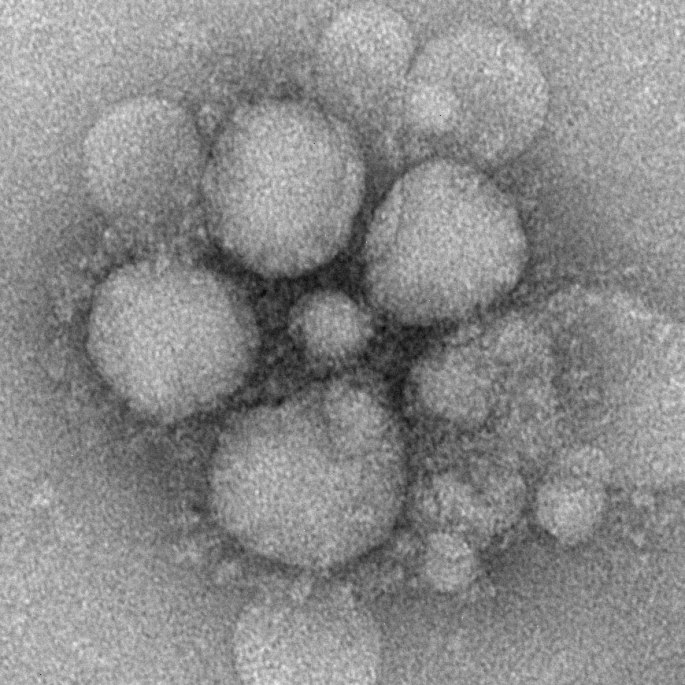
Breaking news everyone, the world’s largest virus has the world’s coolest name – the Pandoravirus. However, unless you live primarily underwater, it shouldn’t pose a big threat to you. The virus is, however, raising big questions about the origins of viruses – the Pandoravirus‘ are thought to originate in a prehistoric cell type now extinct. For an interesting examination of what larger viruses may mean for virology, check out the New York Times piece “Changing View on Viruses: Not So Small After All“.

NPR – ” ‘We believe that those new Pandoraviruses have emerged from a new ancestral cellular type that no longer exists,’ [discoverer, Jean-Michel Claverie] says. That life could have even come from another planet, like Mars. ‘At this point we cannot actually disprove or disregard this type of extreme scenario,’ he says. But how did this odd cellular form turn into a virus? Abergel says it may have evolved as a survival strategy as modern cells took over. ‘On Earth it was winners and it was losers, and the losers could have escaped death by going through parasitism and then infect the winner,’ she says.”

National Security and Pandemics

An interesting argument for the correlation between national security and pandemics. Whether international health events should be classified as issues of national security is a very interesting and nuanced question, and this piece presents one side (“yes, they should”) well.

UN Chronicle – “”Pandemics are for the most part disease outbreaks that become widespread as a result of the spread of human-to-human infection. Beyond the debilitating, sometimes fatal, consequences for those directly affected, pandemics have a range of negative social, economic and political consequences. These tend to be greater where the pandemic is a novel pathogen, has a high mortality and/or hospitalization rate and is easily spread. According to Lee Jong-wook, former Director-General of the World Health Organization (WHO), pandemics do not respect international borders.2 Therefore, they have the potential to weaken many societies, political systems and economies simultaneously.”

(image courtesy of Jeff Black)

The Pandora Report 7.12.13

Highlights: the Science, Safety, and Security newsletter, wild polio in Israel, proliferation concerns in Syria, H7N9 – the pandemic?, and H1N1 in Chile. Happy Friday!

S3 Newsletter June 2013

For those of you who may have missed it, the Science, Safety, and Security Quarterly June newsletter is out, and features articles on dual use research of concern, HHS’ recent international participation in BWC activities, and the International Biological Threat Reduction program. It’s an excellent resource for anyone working in fields related to biodefense, biosecurity, or non-proliferation.

WHO Sends Mission to Israel Following Detection of Wild Poliovirus in Sewage

The World Health Organization last week completed a five-day mission in Israel, following detection of wild polio virus in the sewage of the country’s Southern District. Despite detection of the virus, no new polio cases have emerged. In response to the virus’ detection, Israel is starting a supplemental oral vaccination campaign, in addition to existing vaccination matters.  This isn’t an overreaction. For those of you who may not know, polio eradication remains a top priority of the international health community, with the eradication efforts rendering the virus’ endemic in just 3 countries. Therefore any time it pops up naturally, people get understandably nervous.

WHO – “Israel has systematically conducted environmental sampling for many years, and the poliovirus was detected thanks to this vigilance. Public health authorities continue to monitor the situation carefully, and measures have been taken to increase surveillance and reporting for possible human cases, regardless of age. The aim of the supplementary immunization campaign is to protect any children in the country who may have missed routine vaccinations for any reason. In southern areas, adults are also being assessed and those thought to be susceptible are being immunized.”

Proliferation concerns mount in Syria

As the civil war in Syria continues, the United Kingdom is considering supplying the rebels with protective equipment against  biological and chemical agents. UK intelligence reports have listed ricin, VX, mustard gas, and sarin as all possible chemical and biological agents in Assad’s armory. Concerns over proliferation of the agents and weapons to terrorist organizations were fueled by last month’s report that al Qaeda had attempted to access chemical weapons stockpiles in support of the Syrian rebels. Does anyone else feel like that “red line” is looking pretty darn thin?

Irish Times – “The danger was underlined by MI6 chief Sir John Sawers who told the committee there was the risk of ‘a highly worrying proliferation around the time of the regime fall’. The committee said: ‘There has to be a significant risk that some of the country’s chemical weapons stockpile could fall into the hands of those with links to terrorism, in Syria or elsewhere in the region – if this happens, the consequences could be catastrophic.’ British prime minister David Cameron disclosed last month that al-Qaeda-linked elements fighting the regime had already attempted to acquire chemical weapons for probable use in Syria.”

Scientists: H7N9 Avian Flu Has Pandemic Potential

Just when you thought it was gone! In a piece published in Nature on Wednesday,  an international team of scientists determined that H7N9 could be just a couple amino acid mutations away from effective person-to-person transmission pandemic potential. The two teams, from  the University of Wisconsin-Madison and the University of Tokyo, determined that H7N9 replicates effectively in several mammamlian hosts with immune systems similar to humans, among them monkeys and ferrets. The good news? Most of the strains tested are susceptible to standard antivirals.

Rianovosti – “They also established that approximately one third of ferrets became infected by droplet spread.’H7N9 viruses combine several features of pandemic influenza viruses, that is their ability to bind to and replicate in human cells and the ability to transmit via respiratory droplets,’ [flu expert Yoshihiro Kawaoka] said. These two features are necessary, although not sufficient, to cause a pandemic.’ In monkeys, the virus could efficiently infect cells in both the upper and lower respiratory tract. Conventional human flu viruses are typically restricted to the upper airway of infected nonhuman primates.”

Chile confirms 33 deaths from H1N1

The Chilean health ministry confirmed Wednesday that of the 33 H1N1 deaths this year, nearly half had occurred in the last few weeks. The South American nation is currently experiencing a small  outbreak, with a large and effective vaccination campaign halting the virus’ spread.

APA – “‘Today it appears to be under control, I say this with extreme caution. In epidemiologic week number 27, we do not have serious new cases,’  [Health Minister] Manalich said at a press conference. ‘We just have three patients with the flu in the intensive care unit of the hospital of the town of Iquique,’ said Manalich, adding ‘walk-in consultations due to the flu have fallen 25 percent from what we had before.'”

(image courtesy of the Polio Eradication Initiative)

LA Times Piece on Battling MERS

The LA Times piece on the Middle Eastern Respiratory Virus gives a good behind-the-scenes look at how the CDC prepares for potential pandemics.

Excerpt: “In a war room of sorts in a neatly appointed government building, U.S. officers dressed in crisp uniforms arranged themselves around a U-shaped table and kept their eyes trained on a giant screen. PowerPoint slides ticked through the latest movements of an enemy that recently emerged in Saudi Arabia — a mysterious virus that has killed more than half of the people known to have been infected.Here at the Centers for Disease Control and Prevention, experts from the U.S. Public Health Service and their civilian counterparts have been meeting twice a week since the beginning of June to keep tabs on the Middle East respiratory syndrome coronavirus. MERS-CoV, as the pathogen is known, attacks the lungs and causes fevers, severe coughs and rapid renal failure.”

Read the full piece here.

Predicting, preventing, and controlling pandemics

(Thanks to GMU Biodefense MS student Deborah Harden for passing this along)

“About 60 percent of infectious diseases are caused by viruses, bacteria, and other pathogens that make the jump to humans from other species; this includes some of the most devastating disease outbreaks of the past thirty years, including HIV/AIDS, Ebola, and SARS; despite the huge and rising toll of such diseases, many gaps remain in our understanding of how these “zoonoses” evolve, develop, and spread — gaps that must be filled if we are to succeed in preventing or at least reducing the impact of a next pandemic

About 60 percent of infectious diseases are caused by viruses, bacteria, and other pathogens that make the jump to humans from other species. This includes some of the most devastating disease outbreaks of the past thirty years, including HIV/AIDS, Ebola, and SARS. Despite the huge and rising toll of such diseases, many gaps remain in our understanding of how these “zoonoses” evolve, develop, and spread — gaps that must be filled if we are to succeed in preventing or at least reducing the impact of a next pandemic.

A new paper published in the Lancet by Stephen S. Morse, Ph.D., professor of Epidemiology at Columbia University’s Mailman School of Public Health, and colleagues, lays out a series of research and surveillance opportunities that could help bridge these gaps and move the global pandemic strategy from response to pre-emption and prediction. The paper, ‘Predicting and Preventing the Next Pandemic Zoonosis’, is part of a special Lancet series that explores the ecology, drivers, and dynamics of zoonoses with a view toward improving prediction of the next pandemic and reducing the human and economic costs.”

Read more here.

British Medical Journal Slams Roche on Tamiflu

Via the Boston Globe

LONDON — A leading British medical journal is asking the drug maker Roche to release all its data on Tamiflu, claiming there is no evidence the drug can stop the flu.

The drug has been stockpiled by dozens of governments worldwide in case of a global flu outbreak and was widely used during the 2009 swine flu pandemic.

On Monday, one of the researchers linked to the BMJ journal called for European governments to sue Roche.

‘‘I suggest we boycott Roche’s products until they publish missing Tamiflu data,’’ wrote Peter Gotzsche, leader of the Nordic Cochrane Centre in Copenhagen. He said governments should take legal action against Roche to get the money back that was ‘‘needlessly’’ spent on stockpiling Tamiflu.

World Health organization spokesman Gregory Hartl said the agency had enough proof to warrant its use for unusual influenza viruses, like bird flu.

In a statement, Roche said it had complied with all legal requirements on publishing data and provided Gotzsche and his colleagues with 3,200 pages of information.