Image of the Week: Protists!

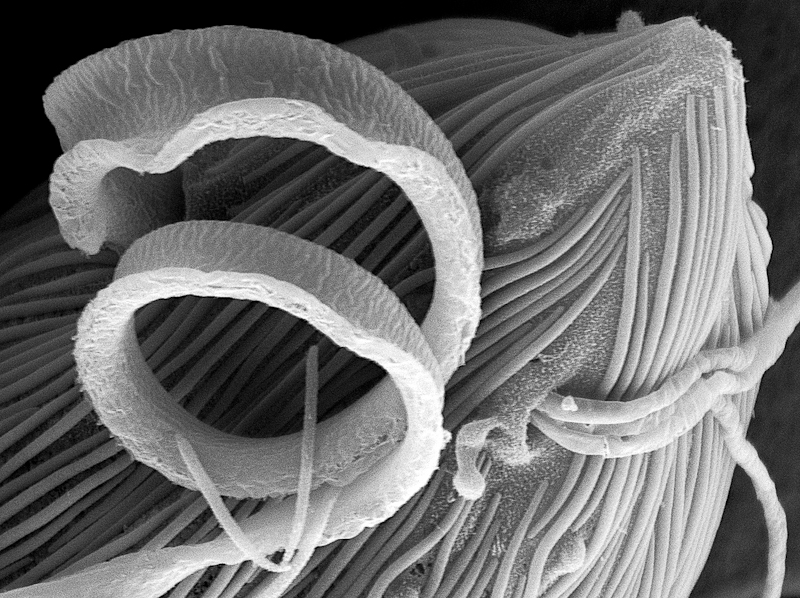
Our image this week is by photographer and microbiologist, Kevin J. Carpenter. The image below, taken through a scanning electron microscope, features an “anterior view of the protist Foaina sp.” For those of you in the San Francisco Bay Area, Dr. Carpenter’s work is on display at the Exploratorium  Museum (basically the coolest science museum around). A second gallery is also opening in late September at the Beaty Biodiversity Museum in Vancouver, Canada. Check out his website for more information and more great images.

kevinjcarpenter

US and South Korea Engage in Annual Anti-bioterrorism Exercise

Starting tomorrow, the United States and South Korea will engage in their third annual, three-day anti-bioterrorism exercise in Seoul.  The approximately 200 officials involved in the “Able Response 13” exercise will study likely scenarios and evaluate the South Korean government’s response system. South Korean officials fear that Seoul’s 10.5 million people, living in relatively close quarters, render it a prime bioterrorist target.

For more information, see here.

This week in DC: Events

All the week’s (free) international security, health, and emergency management events in the DC area.

Monday, July 15th, 2013

Real Politics of Iran: Views from Within
U.S. Institute of Peace
2:00PM – 4:00 PM

Members of USIP’s Internal Iran Study Group will be discussing a range of dynamics in the universities, opposition, the economy and even the security apparatus that often escape the foreign headlines and highlight what is expected in light of Hassan Rouhani’s election as president.

A Discussion of Health Policy and Returning Veterans
Defense Education Forum
6:00PM

On July 15, the Reserve Officers Association and the Women In Military Service For America Memorial Foundation will host Dr. Mark for a discussion and signing of her latest work. Dr. Saralyn Mark, MD, an endocrinologist, geriatrician and women’s health specialist, was the first Senior Medical Advisor to the Office on Women’s Health within the Department of Health and Human Services for 11 years and to the National Aeronautics and Space Administration (NASA). As Senior Medical Advisor, Mark was responsible for the development and analysis of initiatives and programs on emerging technologies, public health preparedness, physician workforce issues, sex and gender-based medicine and women’s health on Earth and in space.

Tuesday, July 16th

State of Biomedical Innovation Conference (live webcast available)
Brookings Institution
9:00AM – 12:30PM

On July 16, the Engelberg Center for Health Care Reform at Brookings will host the second annual State of Biomedical Innovation conference. The goal of this conference is to assess U.S. biomedical innovation and discuss policy solutions that ensure the nation remains a world leader. This year, the conference will feature an update to last year’s discussion of the drivers of innovation and how best to track them through use of comprehensive metrics. In addition, the conference will specifically focus on novel sources and applications of big data in innovation, with senior-level thought leaders from government, academia, industry, patient advocacy, and clinical care present to share their views and recommendations. After each panel, the participants will take audience questions. This event will be live webcast.

The Crisis in Syria: What are the Stakes for Syria’s Neighbors?
Middle East Policy Council
9:00AM – 11:30AM

The Middle East Policy Council invites you and your colleagues to our 73rd Capitol Hill Conference. Live streaming of this event will begin at approximately 9:00am EDT on Tuesday, July 16th and conclude at 11:30am. A questions and answers session will be held at the end of the proceedings. Refreshments will be served.

Mobile Technology’s Role in Natural Disasters and Public Safety Preparedness and Response (live webcast available)
Brookings Institution
2:00PM – 3:30PM

From Hurricane Sandy to international catastrophes such as the tsunami in Japan, governments are increasingly using mobile technology in natural disaster preparedness and public safety response. With an estimated 6 billion mobile phone users worldwide, mobile communications is fast proving to be the most effective and efficient means of reaching and informing the public when disaster strikes. How is mobile technology being used before, during, and after a crisis situation in the United States and around the world? How has mobile communications’ role in catastrophic situations changed, and how are public safety organizations utilizing this technology to make citizens safer and better prepared? What are the costs and benefits of using mobile technology to ready for and react to a major emergency? On July 16, as part of the Mobile Economy Project, the Center for Technology Innovation at Brookings will host a discussion on mobile technology and its evolving role in disaster and public safety. A panel of experts will discuss how mobile devices aid in planning for and reacting to a crisis, and how do they empower emergency management agencies and officials, first responders, and the public to tackle a variety of natural disasters and security crises.

Wednesday, July 17th

Pharmacy to the world: India and the global prescription drug trade
American Enterprise Institute
10:00AM – 3:00PM

Earlier this summer, the Novartis case pitted advocates of intellectual property rights for global pharmaceutical firms operating in India against those championing for more affordable drugs for patients in the developing world. Moreover, the recent and high-profile Ranbaxy case with the Federal Drug Administration raises questions about the safety and quality of Indian generics, even as some nongovernmental organizations (NGOs) champion generics as the best way to ensure that patients in poor countries get access to life-saving drugs at affordable prices. At this conference, leading business sector, think-tank, and NGO representatives will examine the Indian pharmaceutical issue from the medical, business, and development perspectives.

Thursday, July 18th

The Future of Gene Patents: Making Sense of the Supreme Court’s Decision in the Myriad Case
Duke Institute for Genome Sciences and Policy (hosting event at Capitol Visitor Center)
12:00PM – 1:30PM

This Duke Institute for Genome Sciences and Policy is hosting a brieifing to educate policymakers, advocacy groups, stakeholders and other interested parties about the “Myriad Case”. It will offer attendees an unbiased overview of the Supreme Court’s ruling and its implications, and will outline potential next steps, including Congress’s role.

Contact Brian Beaty at bbeaty@burnesscommunications.com for more information and to register.

US House Committee on Foreign Affairs Subcommittee Hearing: Global al-Qaeda: Affiliates, Objectives, and Future Challenges
Rayburn House Office Building
2:00PM

Witnesses: Dr. Seth Jones, Assc Director of International Security and Defense Policy Center, RAND; Dr. Frederick Kagan, Christopher DeMuth Chair and Director, Critical Threats Project, American Enterprise Institute; Mr. Thomas Joscelyn, Senior Editor, The Long War Journal

A Fierce Domain: Conflict in Cyberspace, 1986 – 2012
Homeland Security Policy Institute
3:30PM – 5:00PM

Please join HSPI for a Policy & Research Forum event on July 18th featuring Jason Healey, Director of the Cyber Statecraft Initiative at the Atlantic Council. Healey is the editor of “A Fierce Domain: Conflict in Cyberspace, 1986 to 2012,” which identifies key lessons for policymakers, and, most importantly, where these lessons greatly differ from popular myths common in military and political circles. The book, published by the Cyber Conflict Studies Association, in partnership with Atlantic Council, pulls these lessons from case studies of previous cyber incidents and other countries’ experiences.

Friday, July 19th

The Way Forward in Egypt
National Council on U.S.-Arab Relations
10:00AM – 12:00PM

On July 19, 2013, the National Council on U.S.-Arab Relations and the U.S.-GCC Corporate Cooperation Committee are hosting a public affairs briefing on “The Way Forward in Egypt” featuring Professor Karim Haggag, Visiting Professor, Near East South Asia Center for Strategic Studies and Former Director, Egyptian Press and Information Office in Washington, DC; Ms. Randa Fahmy Hudome, Board Member, National Council on U.S.-Arab Relations and General Counsel, American Egyptian Strategic Alliance; Mr. Alex Shalaby, Chairman, The Egyptian Company for Mobile Services (Mobinil) and Former President, American Chamber of Commerce in Egypt; Dr. Marina Ottaway, Senior Scholar, Middle East Program, Woodrow Wilson International Center for Scholars; and Dr. Diane Singerman, Associate Professor, School of Public Affairs, American University. Dr. John Duke Anthony, Founding President & CEO, National Council on U.S.-Arab Relations, will serve as moderator.

(image courtesy of Dell)

The Pandora Report 7.12.13

Highlights: the Science, Safety, and Security newsletter, wild polio in Israel, proliferation concerns in Syria, H7N9 – the pandemic?, and H1N1 in Chile. Happy Friday!

S3 Newsletter June 2013

For those of you who may have missed it, the Science, Safety, and Security Quarterly June newsletter is out, and features articles on dual use research of concern, HHS’ recent international participation in BWC activities, and the International Biological Threat Reduction program. It’s an excellent resource for anyone working in fields related to biodefense, biosecurity, or non-proliferation.

WHO Sends Mission to Israel Following Detection of Wild Poliovirus in Sewage

The World Health Organization last week completed a five-day mission in Israel, following detection of wild polio virus in the sewage of the country’s Southern District. Despite detection of the virus, no new polio cases have emerged. In response to the virus’ detection, Israel is starting a supplemental oral vaccination campaign, in addition to existing vaccination matters.  This isn’t an overreaction. For those of you who may not know, polio eradication remains a top priority of the international health community, with the eradication efforts rendering the virus’ endemic in just 3 countries. Therefore any time it pops up naturally, people get understandably nervous.

WHO – “Israel has systematically conducted environmental sampling for many years, and the poliovirus was detected thanks to this vigilance. Public health authorities continue to monitor the situation carefully, and measures have been taken to increase surveillance and reporting for possible human cases, regardless of age. The aim of the supplementary immunization campaign is to protect any children in the country who may have missed routine vaccinations for any reason. In southern areas, adults are also being assessed and those thought to be susceptible are being immunized.”

Proliferation concerns mount in Syria

As the civil war in Syria continues, the United Kingdom is considering supplying the rebels with protective equipment against  biological and chemical agents. UK intelligence reports have listed ricin, VX, mustard gas, and sarin as all possible chemical and biological agents in Assad’s armory. Concerns over proliferation of the agents and weapons to terrorist organizations were fueled by last month’s report that al Qaeda had attempted to access chemical weapons stockpiles in support of the Syrian rebels. Does anyone else feel like that “red line” is looking pretty darn thin?

Irish Times – “The danger was underlined by MI6 chief Sir John Sawers who told the committee there was the risk of ‘a highly worrying proliferation around the time of the regime fall’. The committee said: ‘There has to be a significant risk that some of the country’s chemical weapons stockpile could fall into the hands of those with links to terrorism, in Syria or elsewhere in the region – if this happens, the consequences could be catastrophic.’ British prime minister David Cameron disclosed last month that al-Qaeda-linked elements fighting the regime had already attempted to acquire chemical weapons for probable use in Syria.”

Scientists: H7N9 Avian Flu Has Pandemic Potential

Just when you thought it was gone! In a piece published in Nature on Wednesday,  an international team of scientists determined that H7N9 could be just a couple amino acid mutations away from effective person-to-person transmission pandemic potential. The two teams, from  the University of Wisconsin-Madison and the University of Tokyo, determined that H7N9 replicates effectively in several mammamlian hosts with immune systems similar to humans, among them monkeys and ferrets. The good news? Most of the strains tested are susceptible to standard antivirals.

Rianovosti – “They also established that approximately one third of ferrets became infected by droplet spread.’H7N9 viruses combine several features of pandemic influenza viruses, that is their ability to bind to and replicate in human cells and the ability to transmit via respiratory droplets,’ [flu expert Yoshihiro Kawaoka] said. These two features are necessary, although not sufficient, to cause a pandemic.’ In monkeys, the virus could efficiently infect cells in both the upper and lower respiratory tract. Conventional human flu viruses are typically restricted to the upper airway of infected nonhuman primates.”

Chile confirms 33 deaths from H1N1

The Chilean health ministry confirmed Wednesday that of the 33 H1N1 deaths this year, nearly half had occurred in the last few weeks. The South American nation is currently experiencing a small  outbreak, with a large and effective vaccination campaign halting the virus’ spread.

APA – “‘Today it appears to be under control, I say this with extreme caution. In epidemiologic week number 27, we do not have serious new cases,’  [Health Minister] Manalich said at a press conference. ‘We just have three patients with the flu in the intensive care unit of the hospital of the town of Iquique,’ said Manalich, adding ‘walk-in consultations due to the flu have fallen 25 percent from what we had before.'”

(image courtesy of the Polio Eradication Initiative)

Impact of Piglet Virus on U.S. Pork Industry

The porcine epidemic diarrhea virus (PEDv), now present across in 200 facilities across 14 states has raised concern over impact on US pork prices. The virus affects piglets, with fatality rates occasionally approaching 100%.

Excerpt: “Nick Striegel, assistant state veterinarian for the Colorado Department of Agriculture, said Wednesday the porcine epidemic diarrhea virus, or PED, was thought to exist only in Europe and China, but Colorado and 14 other states began reporting the virus in April, and officials confirmed its presence in May. The virus causes severe diarrhea, vomiting and severe dehydration in pigs. It can be fatal.’It has been devastating for those producers where it has been diagnosed. It affects nursing pigs, and in some places, there has been 100 percent mortality,’ he said.”

Read more here.

(image courtesy of Stephen & Claire Farnsworth)

Antibiotic resistant bacteria and farms

NYT opinion piece on antibiotic resistance bacteria and the potential role of factory farming in propagating them:

Excerpt: “The story of antibiotic-resistant bacteria in farm animals is not a simple one. But here’s the pitch version: Yet another study has reinforced the idea that keeping animals in confinement and feeding them antibiotics prophylactically breeds varieties of bacteria that cause disease in humans, disease that may not readily be treated by antibiotics. Since some of these bacteria can be fatal, that’s a scary combination. Antibiotic-resistant bacteria are bad enough, but now there are more kinds; they’re better at warding off attack by antibiotics; and they can be transferred to humans by increasingly varied methods. The situation is demonstrably dire.”

Read more here.


Image of the Week: Nanoparticles for drug delivery

“Nanoparticles ranging in size from 100nm to 500nm. The nanoparticles are used as a drug delivery carrier providing an inert support that stabilises the drugs and allows them to be released in a sustained manner once inside the body. They are made of polylactic-co-glycolic acid (PLGA) and can be introduced either orally or by injection.”

Scanning electron micrograph 2006

(image courtesy of Wellcome Images)

Dengue’s powers of cross protection

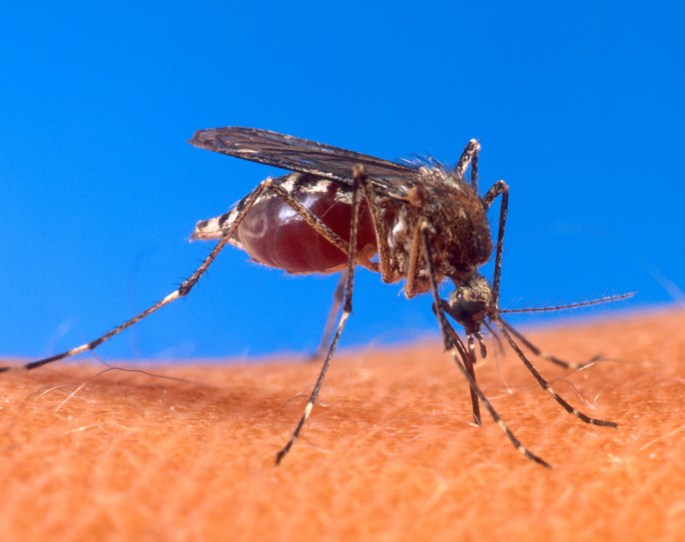
Check out this NY Times piece clarifying dengue’s capacity for cross protection. Dengue is a mostquito-born virus which often causes flu-like symptoms in humans. While it is known that infection with one strain of the virus results in a brief period of protection from the three other strains, the duration of this protective period has remained unclear until now. Researchers have determined that infection provides a two-year window of cross protection. However, a secondary infection with a different strain which occurs after the two year window increases the risk of extremely virulent symptoms, including dengue hemorrhagic fever.

Dengue is considered one of the WHO’s “neglected tropical diseases“, due to its endemic nature in over 100, primarily poorer, countries and its comparative neglect in terms of vaccine and antiviral research.

Excerpt: “Infection with one strain of the dengue virus gives people protection against the other three strains for about two years, a new biostatistics study has found. The study, by Thai and American researchers, was based on 38 years’ worth of laboratory records from one children’s hospital in Bangkok. By measuring how long each strain predominated and then faded in importance, researchers could calculate how long protection lasted against alternate strains.”

Read the full article here.

This Week in DC: Events 7.8.13

Tuesday, July 9th, 2013

U.S.-Russia Plutonium Disposition: Adventures With MOX
Carnegie Endowment for International Peace
2:00PM – 3:30PM

The Carnegie Endowment’s Nuclear Policy Program will convene a special briefing and discussion on this controversial effort to reduce plutonium stockpiles. Panelists will discuss the program’s objectives and its difficulties, as well as options for minimizing plutonium that are now being explored. Speakers include Douglas Birch and R. Jeffrey Smith from the Center for Public Integrity, who have recently published four articles on this topic, and Frank von Hippel of Princeton University.

10th Anniversary of the Proliferation Security Initiative
Center for Strategic and International Studies
3:30PM – 5:00PM

The Bush administration created the Proliferation Security Initiative (PSI) ten years ago to improve global efforts to interdict shipments of weapons of mass destruction (WMD) and their dual-use components. This voluntary arrangement has primarily relied on bilateral shipboarding agreements and exercises to help improve responses to suspect shipments. Beginning with 11 ‘core’ states, PSI now has 102 member states. Despite this, there are still gaps in the system. Recently, the Obama administration has declared its intention to turn PSI into a ‘durable international effort.’ Please join our distinguished panel of speakers as we discuss how PSI has developed, and how it might move forward into the future.

Wednesday, July 10th, 2013

Senator Carl Levin on the Conflict in Syria and America’s Role
Carnegie Endowment for International  Peace
9:00AM – 10:00AM

The conflict in Syria continues unabated and despite President Obama’s recent decision to send small arms and ammunition to the rebels, there remains significant pressure on the United States to do more. Following his return from a visit to Turkey and Jordan, Senate Armed Services Committee Chairman Carl Levin will discuss the impact the situation in Syria is having on the region and the implications for U.S. national security interests. Jessica T. Mathews will moderate.

Joint Subcommittee Hearing: The Terrorist Threat in North Africa: Before and After Benghazi
House Committee on Foreign Affairs
10:00AM

Witnesses: Mr. Daveed Gartenstein-Ross, Director, Center for the Study of Terrorist Radicalization, Foundation for Defense of Democracies; Mr. Aaron Zelin, Richard Borow Fellow, The Washington Institute for Near East Policy; Daniel L. Byman, Ph.D., Professor, Security Studies Program, Georgetown University; Mr. Mike Lovelady, Brother of Algerian gas plant terrorist attack victim, Victor Lovelady

Thursday, July 11th, 2013

AAAS Science and Human Rights Coalition
American Association for the Advancement of Science
8:30am – 5:00PM Thursday, 9:00AM – 5:00PM Friday

This meeting of the AAAS Science and Human Rights Coalition will focus on Article 15 of the International Covenant on Economic, Social and Cultural Rights, which guarantees everyone the right to enjoy the benefits of scientific progress and its applications. Since the launch of the AAAS Science and Human Rights Coalition in 2009, its core activities have focused on engaging scientists and engineers in an international process to define this right and create opportunities to integrate the right into the activities of scientists, engineers and their professional organizations. The aim of this meeting is to enrich the Coalition’s contributions to ongoing discussions about the right to enjoy the benefits of scientific progress in regional human rights bodies and at the United Nations by exploring challenging conceptual questions about the meaning of the right and its application in practice.

(image courtesy of Dell)

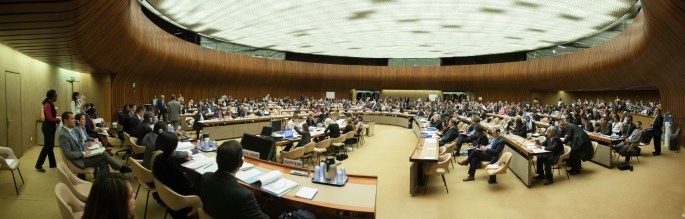
WHO to Convene Emergency MERS Committee

For those of you (like us) caught up in the fourth festivities, the World Health Organization (WHO) laid out plans late last week to convene an emergency committee  to address the growing threat of  Middle Eastern Respiratory Syndrome (MERS). The committee will pull together experts from across the public health fields for a telephone meeting tomorrow. The primary purpose of the committee at this point is as an information exchange. Key details of the virus’ mechanism of action, including the primary host, remain unknown. Once established, the committee would have the power to provide recommended travel restrictions and take other preparatory actions to prevent the virus’ spread.

Although the person-to-person spread of the virus remains limited, it is critical than a strategy for containment is established before Hajj, the annual Islamic pilgrimage which will bring millions to Saudi Arabia this October. Discussing  the WHO’s concerns over the upcoming influx of international travelers, WHO Assistant Director-General for Health Security and Environment Dr. Keiji Fukuda stated,  “we’re always worried in a globalized world that infection can travel quickly from one country to another,” but that given the sporadic pattern of infection, restricting travel is not yet recommended.

For the full transcript of the Friday press conference, see here.

(image courtesy of WHO)