Hong Kong Confirms First Case H9N2 in Four Years

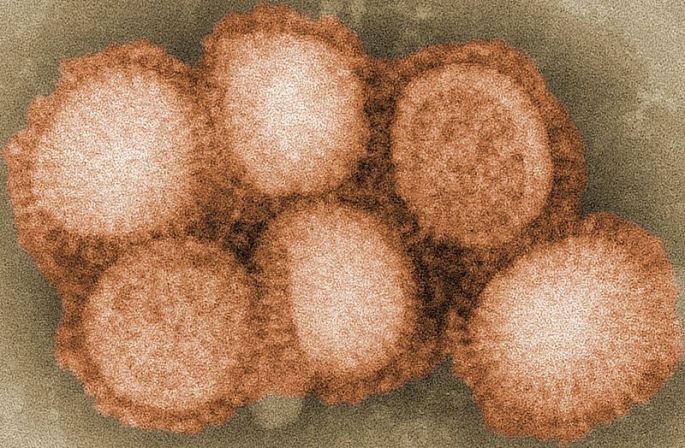
Hong Kong has confirmed its first case of H9N2 in four years, with an 86-yearold man testing positive for the low-pathogenic avian influenza. According to Hong Kong health authorities, the patient has had no recent contact with poultry. He was admitted with a chest infection, and is currently in stable condition.

Read (slightly) more here.

(image credit: James Jin/Flickr)


Flu Season Approaching Peak

The flu is officially here in 10 states, with the dominant strain this season being the H1N1 strain. Alabama, Alaska, Kansas, Louisiana, Massachusetts, New York, Pennsylvania, Texas, Virginia and Wyoming are all reporting widespread activity. The flu season normally peaks in January or early February.

CNN  – “The previous week, only Alabama, Louisiana, New York and Texas reported widespread flu. “Widespread” means that more than 50% of geographic regions in a state — counties, for example — are reporting flu activity. It addresses the spread of the flu, not its severity. However, six states — Alabama, Louisiana, Mississippi, Missouri, Oklahoma and Texas — reported a high proportion of outpatient visits to health care providers for flu-like illnesses. So far, ‘it’s a typical influenza season, if I can use that word,’ said Dr. Michael Jhung, a medical officer in the CDC’s flu division.”

Read more here.

(image via CDC)

The Pandora Report 12.27.13

Highlights include H1N1 in Texas, 59 people with TB, a H7N9 fatality, H5N2 in ostriches, and vaccines coming to a mountain train near you. Happy Friday, and as our last Pandora Report from 2013, Happy New Year!

H1N1 Causes Early Spikes in Flu Cases
The flu season is in full swing, a couple weeks earlier than expected, with five deaths in Texas already. Luckily, the vaccine for this year’s flu contains the H1N1 strain currently predominant. Everyone please get vaccinated!

KUT – “‘[H1N1] is actually in the vaccines this year. So we’re finding that people who have been vaccinated, even if they come down with the illness, have a less severe course of it,’ Hydari said. He added that vaccine shortages that complicated flu season in the past is not an issue this year. Hydari also said that flu vaccines take about two weeks to take affect, and because the flu season typically peaks in January it’s not too late to get a shot this year.”

Dozens Test Positive For Tuberculosis After Exposure at Hospital Neonatal Unit
Fifty-nine people have tested positive for TB following exposure at a hospital in Nevada. A mother and her newborn twins are thought to have brought the bacteria to the hospital over the summer. All three died in the hospital, and were not discovered to have TB until after an autopsy was performed on the mother. Following hospital staff falling ill, and 977 people potentially exposed and subsequently tested, just two had active infections – the 59  mentioned above are latent cases. TB is still very real, and very scary – as this case illustrates, as few as three people can potentially infect dozens.

ABC – “‘Unfortunately, this situation is a hospital epidemiologist’s worst nightmare as neonates are highly susceptible to contracting TB and their infections can progress quite rapidly,’ he said. A mother and her newborn twins died of tuberculosis at Summerlin Hospital over the summer, prompting an investigation by the Southern Nevada Health District. Hospital staff didn’t realize the infected woman had tuberculosis until after she and one of the twins died and they performed an autopsy, according to KTNV, ABC’s Las Vegas affiliate. The other twin was in the NICU being treated without being under quarantine. The second twin also tested positive for tuberculosis and died in August, health department spokeswoman Stephanie Bethel told ABCNews.com.”

 Hong Kong confirms first death from H7N9 bird flu
An eighty-year old male has died from H7N9 in Hong Kong. Still, no confirmed, sustained person-to-person transmission yet.

Reuters – “The man, the second person in Hong Kong to be diagnosed with the virus strain, lived in the southern Chinese city of Shenzhen and had eaten poultry there, media reported. The H7N9 strain was first reported in humans in February in mainland China, and has infected at least 139 people in China, Taiwan and Hong Kong, killing more than 40. Experts say there is no evidence of any easy or sustained human-to-human transmission of H7N9, and so far all people who came into contact with the man had tested negative for the strain, authorities said.”

Low Pathogenic Bird Flu in Western Cape Ostriches
Small outbreaks of H5N2 have been reported in South African ostriches. The low pathogenic influenza strain has been reported in seven farms and roughly 2,000 birds. Authorities remain uncertain as to the source of the outbreaks.

Poultry Site – “The World Organisation for Animal Health (OIE) received follow-up report no. 4 on 23 December. The report states that the affected population comprises commercial ostriches. A total of 10,171 birds were involved, out of which 2,230 tested positive for the virus. None died or been destroyed. According to the OIE’s Animal Health Information Department, H5 and H7 avian influenza in its low pathogenic form in poultry is a notifiable disease as per Chapter 10.4. on avian influenza of the Terrestrial Animal Health Code (2013).”

Keeping Vaccines Fresh
Apparently silicon packets can keep more than your new shoes fresh – scientists at the University of Portland have managed to preserve virus pathogenicity over time by coating the little zombies in a layer of silica. Some viruses subsequently cleansed of the silica coating retained infectivity. While this apparently means viruses may actually be able to survive inside volcanoes (we definitely feel there’s a movie in this somewhere), it also is good news for developing vaccines for use in places lacking widespread refrigeration.

New York Times – “Most vaccines are made of weakened virus or viral bits, and many need refrigeration. Keeping them cold is a major challenge when it comes to protecting children living in villages without electricity.’It’s hard to put a fridge on the back of a donkey,’ said Kenneth M. Stedman, a biologist at Portland State and the lead author of the study. By recreating the chemical-laden hot-spring environment, Dr. Stedman’s team coated four types of virus with silica, stored them, then washed off the silica and tried to infect cells. One heavily studied virus, phage T4, which infects the cells of E. coli bacteria, retained 90 percent of its infectivity for almost a month. The virus used in smallpox vaccines also did well, but it is naturally able to be stored dry.”

(Image: Afrikanischer/Strauss/Wikicommons)

How a Pandemic Would Spread Through Air Routes

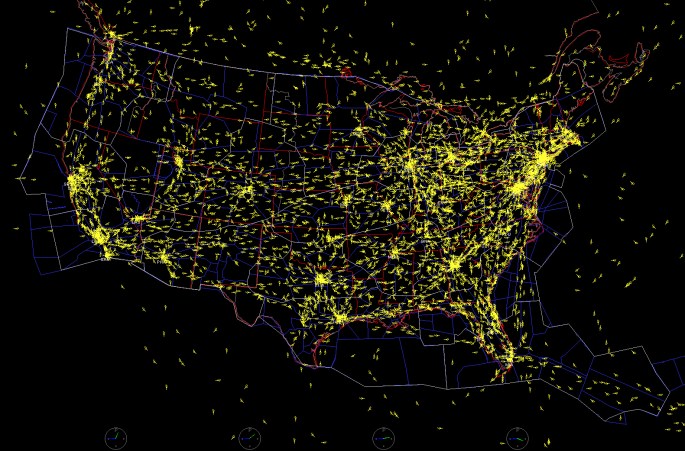
We’ve all heard that pathogens “don’t respect boundaries” and are “international”, both of which are absolutely true. However, if you’ve every wondered how, and how fast, researchers at Humboldt University in Berlin may have some answers. Check out their interesting model simulation below:

From io9 “Dirk Brockmann, a Professor at the Institute for Theoretical Biology at Humboldt University Berlin, and Dirk Helbing, Chair of Sociology, in particular of Modeling and Simulation, at ETH Zürich, published their paper “The Hidden Geometry of Complex, Network-Driven Contagion Phenomena” in the 13 December 2013 issue of Science. Considering the spread of H1N1 in 2009 and SARS in 2003, Brockmann and Helbing modeled how epidemics might spread through highly connected networks, notably air transit networks. Their models rely on a concept they term “effective distance,” which uses how locations are connected rather than their geographic distance to predict the spread of disease. The Brockmann Lab website explains:

‘It turns out that based on this principle we can define an effective distance related to the traffic that connects places for every pair of nodes in the network. This way we extract all nodes from their geographic embedding and represent them based on effective distance.'”

(thanks to GMU Biodefense’s Adjunct Professor Michael Dennis for passing this along)

Three New Cases of MERS, 1 Fatality


A 73-year-old Saudi man is the most recent MERS fatality, bringing the total in Saudi Arabia up to 56. To date, there have been 136 cases of the virus globally. Saudi Arabia also reported three new cases of the virus, including two foreign health workers, and a 53-year-old Saudi man.

Koblentz on Syrian Chemical Weapons Destruction

Dr. Koblentz was quoted in a Voice of America article on the destruction of Syrian chemical weapons.

From Voice of America, OPCW Plan for Destroying Syrian Chemical Weapons Complex, Chancy –  “Gregory Koblentz, Deputy Director of the Biodefense Program at Virginia’s George Mason University, says the initial phase of the plan involves transporting the chemicals overland across Syria. ‘The chemicals are going to be packaged in Syria and then shipped overland to the city of Latakia, which is a major port on the Mediterranean,’ Koblentz said. ‘And then the chemicals will be picked up by Norwegian and Danish ships, which will then transport them to Italy.’ There, the chemicals will be loaded on an American ship which has been outfitted with equipment to neutralize the chemicals. Koblentz says that while the first stage of the plan is risky because it involves transporting chemicals across a country at war, he is optimistic the chemicals will make it to Latakia securely. ‘Up until now, there’ve not been any significant reports that the conflict has interfered with the consolidation of the chemicals and the OPCW’s actions on the ground,’ Koblentz said. ‘So while the route from Damascus to Latakia might be somewhat troublesome, the rebels so far have cooperated with the OPCW, and it’s in their interest to have these chemicals to get out of the country.'”

(image: DoD photo by Navy Photographer’s Mate 3rd Class Kristopher Wilson)

The Pandora Report 12.20.13

Highlights include more pneumonic plague in Madagascar, H1N1  in Texas, Chikungunya in the Caribbean, H7N9 in Hong Kong, and MERS in Saudi Arabia. Happy Friday, and a very happy holiday season to everyone.

Pneumonic Plague Cases Up in Madagascar
The latest numbers in the plague outbreak in Madagascar suggest as many as  17 of 43 cases may be pneumonic plague – the highly virulent, highly infectious, transmissible person-to-person form of the traditional bacteria. As we’ve mentioned before, the case fatality rate for pneumonic plague is 100% unless antibiotics are prescribed in the first 24 hours following infection. However, as the disease’s incubation period can be up to three days, and as it often presents initially with flu-like symptoms, timely detection can be very challenging. We’ll keep you posted.

Madagascar-Tribune (originally in French) – ” 43 suspected cases of pneumonic plague and bubonic plague were detected Mandritsara since 20 November until 5 December 2013. 17 suspected cases of pneumonic plague were detected Analanjirofo. 15 cases of bubonic plague have been recorded in the district of Ikongo. In the district of Tsiroanomandidy, 3 cases of bubonic plague have been suspected.”

Montgomery County, Texas: Mystery Illness Likely H1N1 Virus
A regional hospital in Texas has reported eight cases of an as yet diagnosed illness – of the eight, four patients have subsequently died. One of the remaining four patients has subsequently been diagnosed with H1N1The CDC is working with local health authorities to determine the pathogen in play.

Houston Chronicle – “Recent mystery deaths in Montgomery County could be attributed to the H1N1 virus. Conroe Regional Hospital this month reported eight cases of a mystery illness to the county’s public health department. Two of the patients tested negative for all flu viruses. Nichols-Contella said the 2013 influenza vaccine protects against the H1N1 virus. None of the patients who died had received a flu shot, the release said.”

Chikungunya Outbreak Grows In Caribbean
Chikungunya has struck the sunny Caribbean, with two cases reported to the WHO last week. Since the initial outbreak, a further 10 cases have emerged. Chikungunya is an Alphavirus, and is spread through arthropods, primarily mosquitoes. The outbreak on St. Martin signifies the first time the virus has appeared in the Western hemisphere. There was no international travel in the case histories of the patients involved. Fortunately, very few people understand better than epidemiologists the tendency of infectious diseases to spread with vigor, so surveillance systems are already in place.

NPR – “Except for a small number of imported cases each year, chikungunya has stayed out of the Americas until now. But U.S. health officials have been on the lookout for its arrival. The chikunguyna virus was discovered in 1955 by two scientists in Tanzania. ‘Microbes know no boundaries, and the appearance of chikungunya virus in the Western Hemisphere represents another threat to health security,’ CDC director Dr. Tom Frieden wrote in statement Wednesday. ‘CDC experts have predicted and prepared for its arrival for several years, and there are surveillance systems in place to help us track it.’ With about 9 million Americans traveling to the Caribbean each year, the CDC anticipates chikungunya will be a more frequent visitor to the U.S. in the next few years. One of the mosquitoes that carries the virus — the Asian tiger mosquito — is already a familiar pest in many parts of the U.S. during the summer.”

Two more H7N9 bird flu cases linked to Shenzhen’s Longgang district
Two individuals who lived or worked near the wet markets which tested positive for H7N9 last week have subsequently contracted the virus themselves. The two have been hospitalized and are in critical condition.  Again, the reemergence of the virus is consistent with expected seasonal patterns.

South China Morning Post – “Three patients who have contracted the H7N9 strain of bird flu had visited the Longgang district of Shenzhen, including the latest case announced yesterday, mainland health authorities said. A 38-year-old Shenzhen man was in critical condition after being diagnosed with the deadly strain of the flu, Shenzhen’s centre for disease control and prevention said. The patient is a migrant worker who lives and works in Nanwan Street, in Longgang district, near one of the infected markets where authorities found the H7N9 virus on December 11. A second patient, a 39-year-old man from Dongguan, commuted to the district. The pair follow Tri Mawarti, a domestic helper who was the first person in Hong Kong diagnosed with the virus. She is believed to have handled a live chicken at a flat in Nanwan Street before falling ill.”

WHO: Middle East respiratory syndrome coronavirus (MERS-CoV) – update
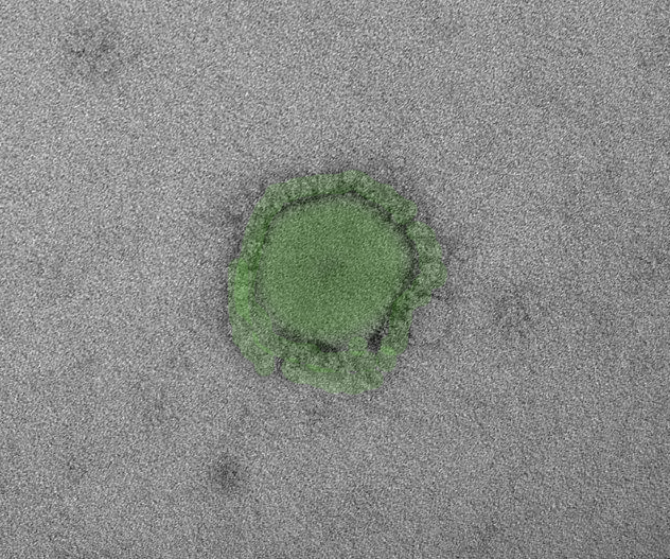
A further two cases of MERS-CoV have been confirmed in Saudi Arabia. The two patients are both female, aged 51 and 26 respectively. The former has no know exposure to the virus, whereas the latter had previously been exposed to an infected patient. Globally, there have been 165 cases to date, with 71 deaths.

WHO – “The first case is a 51 year-old female from Saudi Arabia, living in Jawf province with onset of symptoms on 20 November 2013. She has underlying chronic disease and was transferred to Riyadh for treatment in an intensive care unit. She had no reported contact with animals. The epidemiological investigation is ongoing. The second case is a 26 year-old female who is a non-Saudi healthcare worker in Riyadh. She is asymptomatic. She had reported contact with a 37 year-old male laboratory confirmed case that was reported to WHO on 21 November 2013.”

(image: Clavius66/Wikimedia)

Koblentz on Viral Warfare, Cyber Security, Chem/Bio, and Nuclear Weapons Accidents

GMU Biodefense Deputy Director Dr. Gregory Koblentz has a slew of new publications out of topics ranging from the nexus of bioweapons and cybersecurity to new frameworks for understanding chem/bio threats.

His article, “Regime Security: A New Theory for Understanding the Proliferation of Chemical and Biological Weapons”, is available in this month’s Contemporary Security Policy. Here’s the abstract:

“The literature on the proliferation of chemical and biological weapons (CBW) emphasizes the role of external security threats as the primary motive for states to acquire and use these weapons. As recent events in Syria demonstrate, governments lacking political legitimacy may use these weapons to repress domestic challenges to their rule. The concept of regime security provides a theoretical framework for understanding how the threat of military coups, insurgencies, or domestic rivals influences the acquisition and use of CBW by authoritarian regimes. The cases of South Africa and Iraq illustrate how a government’s concerns about internal security threats can impact its CBW proliferation decision-making. Omitting regime security as a factor in CBW decision-making may lead to the adoption of inappropriate nonproliferation and deterrent strategies. In light of Syrian President Bashar al-Assad’s use of chemical weapons against his own people, developing a deeper understanding of the influence of regime security on the acquisition and use of chemical and biological weapons should be a priority.” (available here)

Dr. Koblentz also co-published an article with GMU Biodefense PhD student Brian Mazanec, “Viral Warfare: Security Implications of Cyber and Biological Weapons” – the article examines the relatively emergent threats of biological and cyber warfare, exposing several commonalities between the two. The article was published in the November issue of Comparative Strategy, available here (access required).

Abstract – “Since the beginning of the twenty-first century, two new threats have received increased attention: biological warfare (BW) and cyber warfare. While it may appear that these two threats have little in common, they share several characteristics that have significant implications for international security. This article examines the two modalities side-by- side to review these common characteristics. In light of these commonalities and due to the extensive experience and rich history of dealing with BW threats, strategies for enhancing cyber security could advance more quickly by drawing meaningful insights from the biological warfare experience, such as the prospect of developing constraining international norms.” (available here)

Finally, Koblentz has a new review out  in Foreign Affairs, on Eric Schlosser’s new book, Command and Control: Nuclear Weapons, the Damascus Accident, and the Illusion of Safety.  The first paragraph is below – read the rest here.

Between 1950 and 1980, the United States experienced a reported 32 “broken arrows,” the military’s term for accidents involving nuclear weapons. The last of these occurred in September 1980, at a U.S. Air Force base in Damascus, Arkansas. It started when a young technician performing routine maintenance on a Titan II missile housed in an underground silo dropped a socket wrench. The wrench punctured the missile’s fuel tank. As the highly toxic and flammable fuel leaked from the missile, officers and airmen scrambled to diagnose the problem and fix it. Their efforts ultimately failed, and eight hours after the fuel tank ruptured, it exploded with tremendous force. The detonation of the missile’s liquid fuel was powerful enough to throw the silo’s 740-ton blast door more than 200 yards and send a fireball hundreds of feet into the night sky. The missile’s nine-megaton thermo­nuclear warhead — the most powerful ever deployed by the United States — was found, relatively intact, in a ditch 200 yards away from the silo.

(image: CDC)

Ben Ouagrham-Gormley on Bioweapons Proliferation

GMU Biodefense’s Dr. Sonia Ben Ouagrham-Gormley evaluates the effect of increased state efforts to deter bioweapons threat in her recent article, ” Dissuading Biological Weapons Proliferation”. Check out the abstract below, and look for the full article in this month’s issue of Contemporary Security Policy.

Abstract – “The terrorist and anthrax attacks of 2001 spurred many countries to raise defences against a possible biological weapon attack, and potentially dissuade state and non-state actors from developing these weapons. Yet these programmes’ dissuasive value – creating strong barriers to entry – has never been analysed. This article argues that current biodefence efforts are counterproductive and more persuasive than dissuasive, because they rest on a biological threat narrative that emphasizes the benefits of bioweapons rather than their problematic development and use, and they fail to impose a high cost of entry in the bioweapons field. The dominant biological weapons narrative perpetuates several misconceptions, including that there are no barriers to biological weapons development, that expertise is easily acquired from scientific documents, and that new technologies are black boxes with de-skilling effects. The net result is popularization of a cost/benefit analysis in favour of bioweapons development. To remedy the situation, I suggest correcting these misconceptions by reshaping the biological threat narrative, and recommend policies to achieve a greater dissuasive impact, stressing the role of the Biological Weapons Convention, preventing access to tacit biological weapons skills, and criminalizing bioweapons proliferation by making the development and use of biological weapons a crime against humanity.”

The full journal article is available here (access required).

(Image: a single Bacillus anthracis colony, credit CDC/J. Todd Parker; PhD and Luis Lowe; MS; MPH)

Image of the Week: GMU Biodefense’s New Mascot

Our image of the week is brought to everyone from GMU Biodefense doctoral candidate, Jennifer Osetek. In today’s competitive environment, one can never start educating children too earlier, and in the niche field of Biodefense, all advantages are necessary. Luckily, Jen has an astute and willing scholar in her son, Alex. He’s clearly already a master of that well known PhD study technique, osmosis.

2012-10-26 23.06.44