This Week in DC: Events

Monday, March 31

Celebrating Women in Cyber Security
Date: March 31, 9:30 – 11:30am
Location: The George Washington University, Marvin Center, 3rd Floor Ampitheater, 800 21st Street NW, Washington DC 20052

On March 31, 2014 join the George Washington University Cybersecurity Initiative and an outstanding panel of women leaders in the cybersecurity field. These panelists will reflect on their experiences, discuss the future of cybersecurity, and address the need for women to join the field in greater numbers.

This discussion will be followed by a networking opportunity for all participants. This event is also sponsored by GWU Global Women’s Institute.

Register here.

International Drug Policy Debate
Date: March 31, 10:00 – 11:30am
Location: Center for Strategic and International Studies, 1616 Rhode Island Ave NW, Washington DC

Ambassador William R. Brownfield, Assistant Secretary of State for International Narcotics and Law Enforcement Affairs, will lead off with remarks on U.S. and international drug policies, drawing from his participation in the recent meeting of the UN Commission on Narcotic Drugs (CND), held on March 13-14 in Vienna, Austria. As the premier drug control policy making body within the UN system, the CND addressed countering illicit drugs and the power of criminal cartels, strengthening public health approaches, and recent legal changes and the challenges of judicial coordination. The CND is also one of several bodies contributing to debates in the lead-up to the 2016 UN Special Session on Drugs. Following Ambassador Brownfield’s address, there will be a roundtable conversation, moderated by J. Stephen Morrison, Senior Vice President and Director of the CSIS Global Health Policy Center, that will feature  Ambassador Brownfield, Kevin Sabet, former Senior Advisor to Director Kerlikowske at the White House Office of National Drug Control Policy and currently Director of the Drug Policy Institute at the University of Florida, Michel Kazaktchine andRuth Dreifuss, two members of the Global Commission on Drug Policy launched in 2011 by 22 international leaders with a special focus on harm reduction and related public health approaches. Michel Kazatchkine is also the former Executive Director of the Global Fund to Fight AIDS, Tuberculosis, and Malaria and currently the UNSG’s Special Envoy on HIV/AIDS for Eastern Europe and Central Asia. Ruth Dreifuss is the former Minister of Health and President of the Swiss Confederation.

RSVP here.

Iran Nuclear Negotiations: Requirements for a Final Deal
Date: March 31, 10:00 – 11:30am
Location: Brookings Institution, Saul/ Zilkha Rooms, 1775 Massachusetts Ave NW, Washington DC 20036

The Joint Plan of Action adopted by Iran and the P5+1 partners in Geneva on November 24 was an important first step in the effort to ensure that Iran does not acquire nuclear weapons. Iran and the P5+1 nations appear to be fulfilling their commitments under the six-month interim agreement – but reaching a final deal will be challenging, as the sides remain far apart on key issues.

In his Brookings Arms Control and Non-Proliferation Series paper, “Preventing a Nuclear-Armed Iran: Requirements for a Comprehensive Nuclear Agreement,” Robert Einhorn explores the difficult issues facing negotiators as they prepare for their next round of talks, scheduled for the week of April 7. In addition to analyzing Iran’s intentions toward nuclear weapons and discussing the principal issues in the negotiations, he outlines the key requirements for an acceptable comprehensive agreement that would prevent Iran from having a rapid nuclear breakout capability and deter a future Iranian decision to build nuclear weapons.

On March 31, the Brookings Institution will host a panel to discuss the Iran nuclear negotiations, especially to consider the elements of a final deal and the policies supplementing it that would be required to prevent a nuclear-armed Iran and serve the security interests of the United States and its security partners in the Middle East. Brookings Senior Fellow Tamara Cofman Wittes, director of the Saban Center for Middle East Policy, will serve as moderator. Panelists include Brookings Senior Fellow Robert Einhorn, former special advisor to Secretary of State Hillary Clinton; Dennis Ross, counselor and William Davidson Distinguished Fellow at The Washington Institute for Near East Policy; and Frank N. von Hippel, professor of public and international affairs, Woodrow Wilson School, Princeton University.

Register here.

Global Health Law: A Book Event
Date: March 31, 5:00 – 8:00pm
Location: Georgetown University Law School, Gweirz 12th, 600 New Jersey Ave NW, Washington DC 20001

A panel discussion celebrating the publication of Global Health Law, by Lawrence O. Gostin, University Professor and Founding Linda D. and Timothy J. O’Neill Professor of Global Health Law at Georgetown University Law Center. Gostin also directs the O’Neill Institute for National and Global Health Law. Discussion topics will range from AIDS, pandemic influenza and MERS to obesity and biosecurity.

Biodefense Policy Seminar
Date: March 31, 5:00pm
Location: George Mason University, Mason Hall D003, 4400 University Drive, Fairfax VA 22030

Our March Biodefense Policy Seminar features Dana Perkins, Senior Science Advisor, DHHS — member of the 1540 Committee Group of Experts. Dr. Perkins earned a Master’s Degree in Biochemistry from the University of Bucharest, Romania. She also earned a PhD in Pharmacology and Experimental Therapeutics in 2002 from the University of Maryland, Baltimore, where she specialized in Microbiology/Neurovirology. In 2012-2013, Dana Perkins served in a US Government-seconded position as a member of the Group of Experts supporting a subsidiary body of the United Nations Security Council, the 1540 Committee. The 1540 Committee was established pursuant to resolution 1540 (2004) to monitor the implementation of this resolution worldwide. In her prior position with the US Department of Health and Human Services (HHS), she led the Biological Weapons Nonproliferation and Counterterrorism Branch in the Office of Policy and Planning, Office of the Assistant Secretary for Preparedness and Response (ASPR). At HHS/ASPR, some of her responsibilities and duties included providing subject matter expertise, inter-agency coordination, and senior level policy advice on the scientific (biodefense and biosecurity) and public health aspects of national and international emergency preparedness and response; directing and coordinating national and international progress on issues related to biodefense and biosecurity; developing and reviewing policies on biosecurity, biological weapons nonproliferation, and health security; and performing expert analysis and preparing implementation plans to support the US Government biodefense and biosecurity policy.

Tuesday, April 1

Big Data, Life Sciences, and National Security
Date: April 1, 8:15am – 6:00pm
Location: Renaissance Washington DC Downtown, 999 9th Street NW, Washington DC 20001

The American Association for the Advancement of Science (AAAS) Center for Science, Technology, and Security Policy (CSTSP) and the Biological Countermeasures Unit of the WMD Directorate of the Federal Bureau of Investigation (FBI) present a public event on the implications of big data and analytics to national and international biological security.

Big data and analytics are increasingly becoming vital components in the pursuit of advanced applications for scientific knowledge development, health care analyses, and global health security. Big data and analytics in the biological sciences might also present risks and unique challenges to national and international security. In preparation for our event, CSTSP have conducted a series of interview investigating the subject with Daniela Witten, Assistant Professor of Biostatistics at the University of Washington, Subha Madhavan, Director of the Innovation Center for Biomedical Informatics at the Georgetown University Medical Center, and Angel Hsu, Director of the Environmental Performance Index, a joint project between the Yale Center for Environmental Law & Policy and the Center for International Earth Science Information Network at Columbia University.

This event will bring together scientists across a range of disciplines, security professionals, and science and security policy experts to explore ways to leverage the beneficial applications and identify potential risks of big data and analytics to biological security.

The event will be broadcast live via an interactive webcast which can be accessed here. RSVP here.

Senator Mark Warner: Budgets and the Future of America’s Defense Industry
Date: April 1, 8:30am
Location: Atlantic Council, 1030 15th Street NW, 12th floor, Washington DC

For the past several years, the Department of Defense has struggled with continuing resolutions and budget uncertainty. With the passage of the 2013 Bipartisan Budget Act and an omnibus fiscal year 2014 spending bill, the Pentagon now has certainty on its budget levels but must adjust to accommodate flat-lining defense spending for the foreseeable future. Some investment and equipment modernization accounts are certain to face cuts this year and in the future, necessitating that the defense industrial base adapt to a “new normal” of reduced spending.

Our featured speaker, Senator Mark Warner, sat on the Budget Conference Committee panel that drafted the Bipartisan Budget Act and is the senior senator of Virginia, a state with a significant concentration of defense industry facilities. His remarks will address what budget reductions may mean for the future of the defense industrial base.

Can’t attend? Watch the event online here. Register here.

Battle on the Final Frontier: A Discussion of National Security and Space
Date: April 1, 12:30 – 1:30pm
Location: 1100 New York Ave NW, 7th Floor, West Tower, Washington DC

The last time that the mass media looked at national security and space, we were in a very different time.  The United States was embroiled in the Cold War and the danger of nuclear annihilation was at the forefront of most people’s minds.  Although we have advanced from that point, technological developments in space beg the question: how is our current space technology tied to our national security needs? How is our reliance on Russian technology made us vulnerable? How can we enhance our national security and support American research and investment?

Join ASP as Lieutenant General Norman Seip, 12th Air Force Commander and Adjunct Fellow, August Cole discuss the relationship between these two important policy areas of the 21st century.  The conversation will be on the record.

RSVP here by March 31.

The Collapse of Russian State Institutions: How the Kremlin’s Energy Dependence Undermines Foreign Policy Decision
Date: April 1, 12:30pm
Location: Center on Global Interests, 1050 Connecticut Ave NW, Washington DC 20035

In the last 15 years, Russia has become increasingly reliant on oil and gas wealth to sustain its economy. As a result, the major players in Russia’s resource industries have acquired a disproportionate influence over Russian politics. This has undermined the authority of Russia’s foreign policy institutions by allowing a small group of decision-makers, who rarely consult with Russia’s professional foreign policy bureaucracy, to set the domestic and foreign policy agenda.

How should Western officials respond to Russia’s insular policy-making, and how might Western sanctions—including energy sanctions—influence key decision-makers in Russia? Using the Second Chechen War and the 2008 Georgian War as case studies, Emma Ashford will examine the extent to which Russian foreign policy institutions function in an informational vacuum and provide recommendations for how U.S. policymakers can mitigate this problem, particularly with regard to the Ukraine crisis.

Register here.

Wednesday, April 2

U.S. – Taiwan Security Relations
Date: April 2, 10:30am – 12:30pm
Location: J.W. Marriott Hotel, Salon G, 1331 Pennsylvania Ave NW, Washington, DC, 20004

The Taiwan Relations Act (TRA), which provides the legal basis for U.S. relations with Taiwan, was enacted 35 years ago. Since then, the U.S.-Taiwan relationship has weathered changes in the security environment, but remains strong today. However, as the United States rebalances to the Asia-Pacific, the time is ripe to examine how the regional environment has evolved since 1979 – particularly with the economic and military rise of China – and how those changes affect the U.S.-Taiwan relationship.

Taiwan’s Deputy Minister of National Defense, Andrew Hsia, will make a keynote speech, followed by a panel discussion with American experts. The Honorable Patrick M. Cronin, Senior Advisor and Senior Director of the CNAS Asia-Pacific Security Program, will moderate the panel with remarks by Alan Romberg, Distinguished Fellow and Director of the East Asia Program at the Stimson Center and Abraham Denmark, Vice President for Political and Security Affairs at the National Bureau of Asian Research.

Space is limited. RSVP here.

Drug Supply Chain Security: US References to China
Date: April 2, 1:30pm
Location: Georgetown University Law Center, McDonough Hall 437, 600 New Jersey Ave NW, Washington DC 20001

Gaotong “Otto” Zhang works in the regulatory department at the China Food and Drug Administration (CFDA) as a deputy consultant. In this capacity, Zhang drafts and revises proposed laws and regulations, as well as CFDA rules and provisions related to drug and medical devices. Zhang holds a Bachelors degree in Law from Lanzhou University and a Masters in Law from China University of Political Science and Law. Currently, he is a Humphrey Fellow at American University Washington College of Law, and is conducting a comparative research on drug supply chain management at O’Neill Institute for National and Global Health Law at Georgetown University Law Center. He hopes to learn from U.S. Food and Drug Law as a reference for China’s ongoing regulatory reform in the food and drug law area.

Thursday, April 3

SAIS Asia Conference: Development and Security in Asia
Date: April 3, 8:45am – 4:15pm
Location: Johns Hopkins School of Advanced International Studies, Rome Auditorium, 1619 Massachusetts Ave NW, Washington DC 20036

Various speakers will participate in the conference. Stephen Bosworth, former U.S. ambassador to South Korea, will deliver morning remarks, and John Negroponte, former U.S. deputy secretary of state and former director of national intelligence, will deliver afternoon remarks. For a complete agenda and RSVP information, visit: http://asiaconference.org/.

Security Policy Forum: Ending the War in Afghanistan
Date: April 3, 6:00pm
Location: Elliott School of International Affairs, Lindner Family Commons, Room 602,  1957 E Street NW, Washington DC

Stephen Biddle, Professor of Political Science and International Affairs, GW in a talk moderated by Michael E. Brown, Dean, Elliott School of International Affairs, GW

Stephen Biddle is a professor of political science and international affairs at the George Washington University. Professor Biddle has presented testimony before congressional committees on the wars in Iraq and Afghanistan, force planning, net assessment, and European arms control. He served on General David Petraeus’ Joint Strategic Assessment Team in Baghdad in 2007, on General Stanley McChrystal’s Initial Strategic Assessment Team in Kabul in 2009, and as a senior advisor to General Petraeus’ Central Command Assessment Team in Washington in 2008-09.

RSVP here.

Friday, April 4

Escaping the Crisis Trap: New Options for Haiti
Date: April 4, 12:00 – 2:00pm
Location: Woodrow Wilson International Center for Scholars

In collaboration with the Institute for State Effectiveness (ISE) and the Legatum Institute, the Wilson Center invites you to join a discussion on Haiti’s potential for growth, development and stable governance on April 4th, 12-2pm.

Looking back at lessons from past efforts to support Haiti’s development and recovery, and forward to Haiti’s great assets and real potential, a new study argues that there’s an opportunity for Haitians and their partners to set a different agenda for the future. What lessons must we learn for future aid responses? What would it take for citizens to build a consensus on an agenda for creating an accountable Haitian state and an inclusive economy? Please join us for a discussion of ‘Escaping the Crisis Trap: New Options for Haiti’, authored by Clare Lockhart, co-founder and director of The Institute for State Effectiveness (ISE) and Johanna Mendelson Forman, non-resident Senior Associate for the Program on Crisis, Conflict, and Cooperation (C3) at the Center for Strategic and International Studies (CSIS).

RSVP here.

Pandora Report 3.28.14

It’s been a busy week between Ebola and Ricin! Friday highlights include a Polio-free India, tuberculosis transmission from cat to human, and mandatory vaccines in Croatia. Have a great weekend!

India is Polio-Free after 3 years of no new cases

On March 27, 2014, India was declared Polio-Free by the World Health Organization after three years of no new cases. The last case of polio in India was Rukhsar Khatoon, a 4 year old girl who became ill as a baby when her parents forgot to vaccinate her.

The Huffington Post—“Being declared polio-free once was considered all but impossible in a nation hobbled by corruption, poor sanitation and profound poverty. Although the disease could return, eradicating it is a landmark public health achievement.

This is “a day that we have dreamt about,” said Poonam Khetrpal Singh, a WHO official at a ceremony in New Delhi to declare the entire Southeast Asian region free of the disease. Singh described it as ‘a day that all countries fought hard for, and a day when all stakeholders come together to celebrate the victory of mankind over a dreaded disease.’”

Pet cats infect two people with TB

Two people in England have contracted tuberculosis from a house cat infected with Mycobacterium bovis—a form of tuberculosis normally found in cattle. Nine cats in the Berkshire and Hampshire areas have tested positive for M.bovis which is extremely uncommon in cats and usually affects livestock.

BBC—“‘These are the first documented cases of cat-to-human transmission, and so although PHE has assessed the risk of people catching this infection from infected cats as being very low, we are recommending that household and close contacts of cats with confirmed M. bovis infection should be assessed and receive public health advice’ said Dr. Dilys Morgan, head of gastrointestinal, emerging and zoonotic diseases department at Public Health England.”

Thank You, Croatia: All Hail Mandatory Vaccinations

This week, the Constitutional Court of Croatia passed a law that mandates all children must receive childhood vaccinations for diphtheria, pertussis, measles, polio and others. This decision comes at a time when lively debate rages, in the U.S. and abroad, about vaccination and its importance or harm. This step by Croatia, in the words of the court, is a victory for children’s health over parents (wrong) choices.

The Daily Beast—“… public health imperatives and individual rights are often at odds: a country like the U.S. that values the rights of the individual always has trouble with laws that remind us that not everything is a choice. Kids must go to school. People must pay taxes. Children must be vaccinated. It is called living in modern society.”


Image Credit: Dwight Sipler/ Wikimedia Commons

Reemergence of smallpox: A greater threat now than ever before

By Chris Healey

In the event of a resurgence of smallpox, treatment and containment would be exacerbated by illnesses and medical practices not present when the virus was eliminated.

Smallpox was one of the most significant diseases in human history. Although it was first distinguished from measles in China around 340 AD, evidence of the disease has been found on the remains of Egyptian mummies entombed over a thousand years earlier.

Smallpox is caused by Variola major, a virus in the Orthopoxvirus genus. The illness is known for causing characteristic pustules, severe symptoms and debilitating morbidity. Mortality rates exceeding 30% have been reported. The disease is almost always fatal in immunocompromised individuals.

Efforts to confer immunity against smallpox have been practiced for centuries. A technique called variolation, which involved inoculation with material from smallpox pustules, was used as far back as 1000 AD.

Due to the conserved nature of Orthopoxvirus, immunity to a wide range of viruses within the genus can be conferred after infection with a virus within the same genus. In 1796, Edward Jenner discovered inoculation with cowpox conferred immunity to smallpox. He called the technique vaccination, from the Latin vacca for cow. Vaccination results in less adverse effects and fatalities than variolation, making it the preferred method of conferring smallpox immunity.

Today, vaccinia virus is used in lieu of cowpox virus to confer immunity. Vaccinia virus creates a localized lesion that disappears over time in most individuals.

Persistent vaccination practices lead to the elimination of smallpox from most industrialized countries by the 1950s. In 1966, the World Health Assembly voted to fund an aggressive worldwide vaccination campaign to whittle away remaining pockets of the illness. After a successful campaign, the World Health Organization declared smallpox eradicated on December 9, 1979. The organization issued a recommendation for the cessation of smallpox vaccination in 1980.

Although smallpox is not a public health threat, it still exists. Stockpiles of the virus are maintained at the headquarters of the Centers for Disease Control in Atlanta and at a biotechnology institute in Novosibirsk, Russia.


Reintroduction of smallpox to the population would be devastating. Several immunologically-naïve generations are present. Other than those who received smallpox vaccines through military or specialized research positions, the entire population is almost completely unprotected.

Immunocompromised individuals who receive a vaccine utilizing a virus capable of self-replication, also known as a replication-competent vaccine, have a risk of developing a condition called progressive vaccinia. It is an extremely debilitating condition with no cure and a 90% fatality rate.

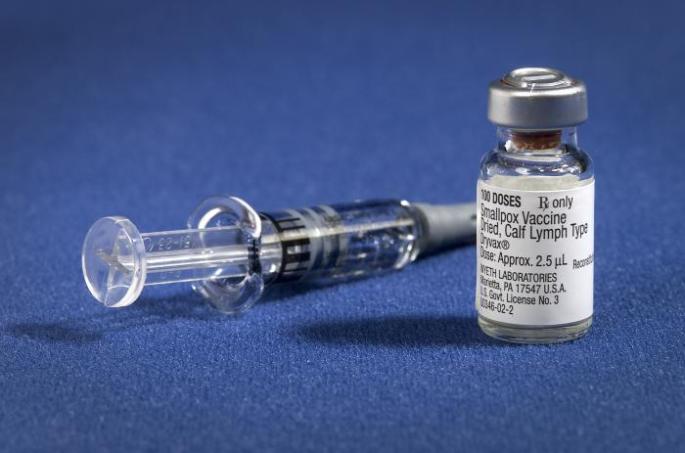
Dryvax, the vaccine used to eliminate smallpox, was replication-competent. Progressive vaccinia was reported as a rare adverse reaction when smallpox vaccines were administered during eradication efforts. Although Dryvax is no longer used, another replication-competent vaccine, ACAM2000, has taken its place. If ACAM2000 is administered to the general population today, far more cases of progressive vaccinia are expected to occur.

HIV and immunosuppression drugs are two modern factors contributing to decreased immune function. The World Health Organization estimates 35.3 million people in the world are living with HIV—1.1 million of those in the United States. Immune suppression associated with the illness would make smallpox vaccination undesirable, and smallpox infection fatal. HIV was not a factor during eradication efforts. Individuals with HIV would be at great risk in the event of smallpox reemergence.

Many modern drugs dampen the immune system to alleviate a range of conditions and symptoms, from hay fever and asthma to anti-rejection drugs for transplant recipients. Immunosuppression drugs have become commonplace. Those drugs did not play a significant role during eradication efforts because they were very expensive and uncommon. In the event of a re-emergence, smallpox would likely exploit those taking immunosuppression drugs. Furthermore, immunosuppression drugs dramatically increase the chance of developing progressive vaccinia following smallpox vaccine administration.

There is, however, a vaccine alternative for immunocompromised individuals. Imvamune is a replication-incompetent vaccine produced by Bavarian Nordic. Replication-incompetent vaccines deliver a virus incapable of replication, meaning it cannot cause progressive vaccinia. Unfortunately, there is no way to test the vaccine’s ability to confer smallpox immunity. Replication-incompetent vaccines are generally considered by health experts to be less effective at conferring immunity than replication-competent alternatives.

It is for these reasons that the re-emergence of smallpox would deal a catastrophic blow to the wellbeing of individuals around the world and therefore every effort must be made to prevent the return of smallpox.

Image of the Week: Salmonella typhimurium!

Salmonella typhimurium


From the CDC: “This photograph depicts the colonial growth pattern displayed by Salmonella typhimurium bacteria cultured on a Hektoen enteric (HE) agar medium; S. typhimurium colonies grown on HE agar are blue-green in color, for this organism is a lactose non-fermenter, but it does produce hydrogen sulfide, (H2S), therefore there can be black-colored deposits present.

HE agar is the medium designed for the isolation and recovery of fecal bacteria belonging to the family, EnterbacteriaceaeS. typhimurium causes 25% of the 1.4 million Salmonellosis infections a year in the United States. Most persons infected with Salmonella sp. develop diarrhea, fever, and abdominal cramps 12 – 72 hours after infection. The illness usually lasts 4 – 7 days, and most people recover without treatment. However, in some cases, the diarrhea may be so severe that the patient needs to be hospitalized.”

Image Credit: CDC

U.S. should move cautiously in isolating nuclear Russia

By Chris Brown

A vote on March 24, 2014, by leaders from the U.S. and six other nations to remove Russia from the G8 may well serve to isolate Vladimir Putin’s administration from a key economic and political forum. But Western allies should be careful in just how far away they aim to push Putin.

With what may be about half of the world’s nuclear weapons under Putin’s control, according to estimates from the Federation of American Scientists[1], it is arguably in the West’s best interest to keep Russia within diplomatic reach. Ties between security initiatives in the U.S. and Russia, particularly the Cooperative Threat Reduction (CTR) program created by the 1992 Nunn-Lugar law, contribute significantly to reducing the likelihood of nuclear mishaps by securing and dismantling weapons of mass destruction.

In addition to securing nuclear warheads through CTR programs, nuclear stability in Russia—like in other nuclear countries—also depends in part on positive control mechanisms operated by rationally behaving states. In best-case scenarios, those controls should be under the purview of civilian authorities. Keeping a watchful eye on Russia is especially important, then, given its increased show of military might. Aggressively annexing Crimea from Ukraine may suggest that the Russian government is growing less risk-averse and more militarily focused. More importantly, it could also be a marker of organizational behavior that could lead to an accidental or deliberate war. All of this echoes theorist Scott Sagan’s important concerns over nuclear weapons proliferation.[2]

If the world hopes to continue moving toward net reduction of nuclear weapons, it is crucial to maintain open dialogue between countries with nuclear capabilities. Four G8 members—the U.S., United Kingdom, France and, until today, Russia—are among the nine nuclear-weapon states and collectively hold more than 95 percent of all nuclear fire power. It is within this group of nations that measures aimed at confidence-building and mutual weapons cache reductions must flourish if they are to succeed at all. Though the international community needs to send a strong message to Putin over illegal land grabbing, any consequences Western powers impose in response must consider the world’s ability to calculate correctly Russian nuclear weapons activities and facilitate continued nuclear stability.


Image Credit: Yahoo.com


[1] “Status of World Nuclear Forces,” Federation of American Scientists (FAS), accessed March 24, 2014, https://www.fas.org/programs/ssp/nukes/nuclearweapons/nukestatus.html/.

[2]Scott D. Sagan and Kenneth N. Waltz, The Spread of Nuclear Weapons: A Debate Renewed (New York: W.W. Norton & Company New York, 2003).


Chris Brown is a PhD candidate in biodefense at George Mason University. He holds a Master of Public Health in biostatistics and epidemiology from the University of Nebraska Medical Center, and received his undergraduate degree in biology with a minor in Spanish from the University of Louisville. Contact him at mcbrown12@gmu.edu or on Twitter @ckbrow07.

Destroying Chemical Weapons: A Highly Political and Technological Process

By Alena M. James

With tensions escalating between the western powers and Russia, the crisis in Ukraine has absorbed much of the international community’s attention these past few weeks. In doing so, the civil war in Syria and its efforts in cleaning up its chemical weapon’s arsenal have been placed on the backburner.  In a report titled, Russia-U.S. Tensions Could Stall Syrian Chemical Weapons Removal, NPR discussed the significance of the joint efforts of the US and Russia to get Bashar Al-Assad on board with committing to the Chemical Weapons Convention and destroying Syria’s chemical weapons stock piles.  Now that the diplomatic relations between the western powers and Russia have soured, many worry about a delay in Syria’s commitment to eradicating its chemical weapons. The possibility of such an event taking place highlights the importance of the political aspect involved in ensuring chemical weapons cleanup.

Recently, the Organization for the Prohibition of Chemical Weapons announced that approximately half of the Syrian chemical weapons stock piles have been removed in the past few months—an accomplishment that has taken the US decades to move towards. The OPCW also announced that it intends to destroy all of Syria’s chemical weapons by June 30, 2014.  Such a goal appears incredibly ambitious and critics remain skeptical of this goal being achieved in the allotted amount of time due to the stressful international relations surrounding Syria and Russia.

Over the weekend, Turkey shot down a Syrian fighter jet after accusing Syria of violating its airspace, an act which is likely to further increase heightened tensions in the region and distract from the weapons cleanup process. Prior to the Ukrainian Crisis and Russia’s annexation of Crimea, the US and Russia had played significant roles in the physical removal of the chemical weapons from the civil war torn state.  Russia provided security measures and the US provided transportation and decontamination equipment to help destroy the stockpiles.  The cleanup process was already a little behind schedule before relations between Russia and the US spiraled downward. Now with sanctions from the US and Europe against Russia, many fear that Russia will no longer provide the political support needed to influence Syria to continue removing the remaining stock of chemical weapons.

Presently, the western powers have already criticized Syria for its inability to meet earlier deadlines of chemical weapons removal.  While the delay can be linked with the current toxic political climate, lessons learned from the US’ chemical cleanup efforts suggest that years and even decades are necessary to safely cleanse a state of its chemical weapons arsenal leaving other factors to be considered as to why the cleanup process may not reach the June 30th deadline.

In a recently published article, “Deadly chemical weapons, buried and lost, lurk under U.S. soil,” The Los Angeles Timesreports on the US’ failure to destroy its own chemical weapons stockpiles dating back to World War II and acknowledges the existence of hundreds of chemical weapons still needing to be processed. According to the report, the US has more than 200 burial sites which include chemical agents such as mustard agents, blister agents, and nerve agents, like tabun produced by Nazi Germany.

Following the end of WWII, the US became the Goodwill Collection Center for the German, Japanese, and British chemical weapons stockpiles.  While some of the stockpiles were burned, the majority of the weapons were buried at the different sites around the country.  Sites located in Alabama and in Washington, DC received hundreds of chemical agents that were to be disposed of without any consideration of the possible environmental impact. Disposal methods also failed to consider the necessity of maintaining complete inventories of site locations, types of agents buried, or the amount of materials buried. In essence, the US does not know where all of the sites are until a civilian reports the presence of an odd looking canister of weapons ammunitions floating up on shore or sticking out of a garden in someone’s backyard in Northwest Washington. The lack of foresight regarding the destruction of chemical weapons at the end of WWII, has left future generations to deal with these issues; which presents a major challenge for cleanup efforts.

Director of Green Cross International’s Environmental Security and Sustainability program, Paul Walker, acknowledges several other challenges involved in the chemical weapons cleanup process.  According to Walker, the technology selected to destroy chemical stockpiles must be politically acceptable by the community where the stockpile is being destroyed. The disposal technologies and strategies employed must ensure minimal impact on public and environmental health. The communities must be a part of the dialogue when planning for the development of decontamination facilities. Alternative methods to incineration must be sought. State investments in poor communities where multibillion dollar chemical cleanup operations are taking place need to continue, and open dialogue to build consensus, address issues, and obtain proper environmental permits also needs to take place.

Dr. Duane Linder, Director of Sandia National Laboratories, also acknowledges the importance of seeking new decontamination strategies due to environmental impacts. The primary methods of chemical disposal used to be “burn it, bury it, or dump it.” Now the approaches used to disengage these weapons and the materials used to fabricate the weapons focus on the use of a process called hydrolysis, a method where hot water is added to alter the molecular arrangement of the agent. While this process helps to neutralize the agent, hazmat chemical waste is still generated but is not as toxic as the original agent. The Field Deployable Hydrolysis System, is a US built chemical destruction system that operates using the hydrolysis process.  The unit has been an incredible instrument involved in destroying Syria’s chemical weapons.

Although still facing numerous challenges, Syria seems to possess the technologies needed to reach OPCW’s June 30th cleanup deadline. However, only time will tell if the international political dichotomy between the West and Russia will impede the process.


Image Credit: Todd Lopez, defenseimagery.mil

This Week in DC: Events

Monday, March 24

World Tuberculosis Day 2014

World TB Day is an opportunity to raise awareness about the burden of tuberculosis (TB) worldwide and the status of TB prevention and control efforts. The Day is also an occasion to mobilize political and social commitment for further progress.

Bioethics TED-style talks
Date: March 19, 7:00pm
Location: Georgetown University, Gaston Hall, 37th and O St. NW, Washington, DC 20007

March 24th focuses on bioethics and justice in the global context, looking beyond the clinic to explore the global disease burden, difficulties in distributing scarce health resources fairly, and the health of our environment itself — as well as how environmental concerns like climate change and GMOs impact human health on a global scale. Each talk will be followed by audience Q&A. Ask a compelling question, and that thought might reach a global audience

Tuesday, March 25

China Defense and Security Conference 2014
Date: March 25, 8:30am – 4:30 pm
Location: Carnegie Endowment for International Peace, Root Room, 1779 Massachusetts Ave NW, Washington DC 20036

On March 25, The Jamestown Foundation will hold its Fourth Annual China Defense and Security Conference in Washington, D.C. The conference will be a unique opportunity to hear about cutting-edge research on Chinese thinking from Jamestown analysts, who will introduce fresh evidence and perspectives to challenge conventional wisdom about the strategic planning of the PRC. Experts, many of whom rarely visit the capital, will be flying in from England, Taiwan, Honolulu and Australia. The agenda, and tickets, are now available online.

While conferences and events covering China have proliferated in recent years, Jamestown’s conference remains unique in its rigorous coverage of developments in Chinese security and foreign policy, deeply grounded in Chinese sources and beginning from examinations of Chinese interests as they are understood and expressed by analysts and policymakers in Beijing.

Radiological and Nuclear Detection Symposium, An Industry Discussion with Government
Date: March 25, 8:30am – 5:30pm, and March 26, 8:30am – 5:00pm
Location: The Mason Inn, 4352 Mason Pond Drive, Fairfax, VA 22030

Attend this two day conference to facilitate discussion and interaction so the industry can better understand the needs of the government and for the government to better understand the capability the industry can deliver.

Hear from government experts and stakeholders regarding the policy, operations, acquisition, and technical challenges associated with nuclear and radiological threats facing the United States. Also hear from Academic and Industry Experts who are fielding solutions that could meet these challenges.

Anticipated Topic Areas Include: Radiological and nuclear detection related briefs for policy, operations, and end-user organizations; Near neighbor mission areas to rad/nuke detection (e.g. explosives and chemical weapons); Technology capabilities, with associated readiness level (related to policy and operational needs); Acquisition, program, and contract opportunities.

Free tickets for University students. Call Jim Traweek, at 703-498-2288 to reserve a space or email jimtraweek@vipglobalnet.com.

Transatlantic Solutions to Government Surveillance
Date: March 25, 12:15pm
Location: New America Foundation, 1899 L Street NW, Suite 400, Washington DC 20036

Last year, revelations about the National Security Agency’s digital surveillance created a breach of trust between the United States and close international allies. European citizens, in Germany in particular, remain concerned about the state and scope of both NSA activity as well as the online spying activity of their own governments. An individual’s right to privacy is now outside the power of a single nation state to protect. As the globalization of communications continues, increased international coordination between governments is needed in order for trust to be restored and individuals to feel secure online. What is the path forward?

Join this event co-sponsored by New America’s Open Technology Institute and the Heinrich Boell Foundation, a German think tank, as we seek to start the discussion, “how do we modernize international privacy policy to account for the power of digital surveillance?” The event will feature European elected officials and political leaders who are working to improve privacy laws, both in Germany and the E.U.  They will provide updates on their work as well as share thoughts on how transatlantic dialogue could be structured and what international solutions to the problem of government surveillance could look like.

Promoting Resilience or Repression: Support for Central Asian Security Forces
Date: March 25, 12:30pm
Location: Open Society Foundations, 1730 Pennsylvania Ave NW, 7th floor, Washington DC 20006

The role of the Central Asian states in support of ISAF military operations in Afghanistan has been crucial, and the regimes have received unprecedented levels of external military assistance over the years. With the end of operations in Afghanistan, what will the long-term impact of this assistance be? Has foreign military assistance left local armed forces more capable of withstanding external threats, or merely provided them with new means to suppress internal dissent?

The Open Society Foundations hosts a discussion of these issues with Dr. Dmitry Gorenburg, author of the working paper “External Support for Central Asian Military and Security Forces,” a joint publication of the Open Society Foundations and the Stockholm International Peace Research Institute.

TB Silent Killer: FRONTLINE Documentary and Panel Discussion
Date: March 25, 2:00pm
Location: Kaiser Family Foundation, 1330 G St NW, Washington, DC 20005

Tuberculosis (TB) remains one of the world’s deadliest diseases, with more than 8 million new cases each year and 1.4 million dying from the disease. The emergence and spread of TB strains that are highly resistant to standard drug treatments has become a major global health challenge. In recognition of World TB Day on Monday, March 24, the Kaiser Family Foundation will convene a public forum on Tuesday, March 25 at 2 p.m. ET to take stock of the global health challenge presented by TB, to examine the limitations and challenges of current treatment options, and to discuss the search for new and better TB drugs and other tools.

The event will begin with a screening of a short segment of a new FRONTLINE television documentary, TB Silent Killer, premiering Tuesday night, March 25, on PBS. The documentary focuses on the Southern African nation of Swaziland, the country with the world’s highest incidence of TB, and delivers a portrait of the people living at the pandemic’s epicenter. The forum will then move to a discussion with a panel of experts: Jezza Neumann,producer, writer and director of TB Silent Killer; Josh Michaud, associate director for global health policy at the Kaiser Family Foundation; Christine F. Sizemore, chief of the Tuberculosis, Leprosy and other Mycobacterial Diseases Section at the National Institute of Allergy and Infectious Diseases, National Institutes of Health; andJonathon Gass, monitoring and evaluation specialist at Ariadne Labs, who worked as an epidemiologist for Médecins Sans Frontières/Doctors Without Borders. Penny Duckham, executive director of the Foundation’s Media Fellowships Program, will make introductory remarks and moderate the panel discussion.

Register here.

Are Health Partnerships the Future of Diplomacy?
Date: March 25, 6:30pm
Location: The Embassy of France, 4101 Reservoir Road NW, Washington DC 20007

Health has become a growing area for international engagement in the 21st century. In the Asia-Pacific, NGOs are sending “floating hospitals,” refitted ships that host hundreds of medical personnel, to treat populations throughout the region, reaching new and unprecedented levels of cooperation with major governments. In the Middle East, and elsewhere, governments are coming together to tackle global health challenges in ways that reinforce national security and may contribute to a nation’s soft power.

In the wake of the launch by the Obama administration of a new Global Health Security Agenda in February 2014, the Next Generation Foreign Policy Network is pleased to invite you to a conference on health partnerships in the 21st century.

Register here.

Wednesday, March 26

Ensuring Security in Health IT
Date: March 26, 7:30am
Location: Ronald Reagan Building, Rotunda, 1300 Pennsylvania Ave NW, Washington, DC 20004

Government agencies dealing with health infrastructure must protect highly sensitive information critical to the well-being of many. But as these same agencies adopt electronic records and move to become more efficient, vulnerabilities in the security of this information have surfaced. The risks, which vary in scope and source, stem from the rapid implementation of the Affordable Care Act, digitization of physicians’ records, and data breaches of both private and public providers.

How can agencies work within existing privacy laws to maximize their security? What can they learn from other actors in cybersecurity to protect some of the most valuable personal data available? On March 26th, we will discuss solutions to current and potential risks with industry analysts and government professionals. Learn about: Making security matter to health records infrastructure, Best practices for preventing breaches, and Scaling and testing for future security architecture.

Register here.

Overcoming Pakistan’s Nuclear Dangers
Date: March 26, 10:00am
Location: International Institute for Strategic Studies, 2121 K Street NW, Suite 801, Washington DC 20037

Pakistan’s nuclear arsenal – the fastest growing in the world – sparks various concerns on many grounds, including the real potential for a nuclear war, possibly triggered by another large-scale terrorist attack in India as in the 2008 Mumbai atrocity, this time followed by an Indian Army reprisal. Mark Fitzpatrick will evaluate the potential nuclear dangers and argue that Pakistan should be offered a formula for nuclear legitimacy, tied to its adopting policies associated with global nuclear norms.

Register here.

Implications on Deterrence Stability and Escalation Control of Tactical Nuclear Weapons in S. Asia
Date: March 26, 12:30pm
Location: Stimson Center, 1111 19th Street NW, 12th Floor, Washington, DC 20036

Moderator: Michael Krepon, Stimson Co-founder and Director, South Asia program. Speaker: Dr. Jeffrey McCausland, Distinguished Visiting Professor of Research and Minerva Chair at the Strategic Studies Institute, U.S. Army War College

Jeffrey McCausland is a retired Army Colonel with more than 30 years of military experience. He has served in a variety of operational and staff positions, including command of a field artillery battalion during Operations Desert Shield and Storm. During the Cold War, he was assigned to numerous units equipped with tactical nuclear weapons and participated in both training as well as planning for their employment. He has also served on the National Security Council Staff during the Kosovo crisis and in the office of the Deputy Chief of Staff for Operations on the Army Staff in the Pentagon. His final Army assignment was as Dean of Academics at the US Army War College. He currently serves as a Visiting Professor at Dickinson College and is also the Distinguished Visiting Professor of Research and Minerva Chair at the Strategic Studies Institute, U.S. Army War College.  

Register here.

Safe and Surveilled: U.S. Attorney General Michael Mukasey on the NSA, Wiretapping and PRISM
Date: March 25, 3:00pm
Location: George Mason University School of Law, 3301 Fairfax Dr., Arlington, VA 22201

The National Security Law Journal at George Mason University School of Law will be hosting a spring symposium featuring a keynote address by former U.S. Attorney General Michael Mukasey, who will speak on the NSA, wiretapping, and the data mining program known as PRISM.

A debate between Professor Robert Turner of the University of Virginia School of Law and ProfessorStephen Vladeck of American University’s Washington College of Law will follow Judge Mukasey’s keynote address. Professor Jeremy Rabkin of George Mason University School of Law will moderate the debate.

Space is limited and advance registration is required.

Breaking News

The news never stops, not even on the weekend.

We’re covering two breaking stories about two extremely serious biological threat agents: ricin and ebola.


Ebola in West Africa

In early February 2014, health agents began tracking a case of viral hemorrhagic fever in Guinea, in Western Africa.  On March 21, Drs. Sylvain Baize and Delphine Pannetier from the National Reference Center for Viral Hemorrhagic Fevers at the Pasteur Institue in Lyon, France were able to identify the Ebola virus, subtype Zaire, in 6 of 7 clinical case samples from the outbreak. Since February 9, there have been 59 deaths from 80 reported cases of Ebola Zaire virus.

Over this weekend there has been growing concern that the virus may have crossed over into neighboring Sierra Leone. “Sierra Leone’s Chief Medical Officer Dr. Brima Kargbo said authorities were investigating the case of a 14-year-old boy who died in the town of Buedu in the eastern Kailahun District. The boy had travelled to Guinea to attend the funeral of one of the outbreak’s earlier victims.”

Ricin in Pennsylvania

A 19 year old Pennsylvania man was arrested last week and charged with attempted murder and risking catastrophe for allegedly sending a scratch-and-sniff birthday card laced with ricin to a man now dating his ex-girlfriend. Bucks County District Attorney David Heckler stressed that the toxin was extremely potent.

When the suspect was initially questioned about the card in early March, he told police he had coated the card with sodium hydroxide because it resembles Anthrax toxin. It was during lab testing that the card tested positive for ricin toxin. The man is being held without bail in Bucks County, PA.

For more on Ricin, check out Dr. Alexander Garza’s backgrounder.

Pandora Report 3.21.14

BREAKING NEWS

Positive Tests for Ricin at Georgetown University

Earlier this week, a white, powdery substance that tested positive for ricin, was found in a dorm room at Georgetown University. The 19 year-old student suspect who lived in the room reported that he made it and the Georgetown Voice spoke with a source who indicated the suspect possibly “intended to use the substance on another student.” Weapons-grade ricin is an extremely lethal toxin that has no available anti-toxin.

The Washington Post– “In an e-mail sent campus-wide, the university said there was no danger to the community. Law enforcement officials said they did not think that the case was connected to terrorism. School officials received no reports of anyone being exposed to the toxin, authorities said. D.C. health officials advised the school that symptoms of ricin exposure typically present themselves within 24 hours. “This window has passed and there are no reports consistent with ricin exposure,” the statement said.”


And now, our regularly scheduled Friday news…

Highlights include Polio-like virus in California, destruction of Syrian chemical weapons, the cost of Anti-Vaxxers, and domestic illness in pigs (or…the end of bacon?!) Happy Friday and have a great weekend!

Doctors continue the hunt for a Polio-like virus in California

Since September 2012, over two-dozen children in California have displayed symptoms of a rare Polio-like illness that has caused sudden paralysis, while doctors and health officials are still hunting for the cause. One possible suspect may be some sort of enterovirus, but more testing is required as the mystery continues.

San Francisco Chronicle—“Viruses can be difficult to detect after patients have been sick for a couple of weeks, and especially if they’ve already undergone treatment that can muddy test results. In the California cases, most children weren’t tested until many weeks or even months after they became sick. Waubant, a UCSF neurologist, said she is hoping to get funding to conduct immunoglobulin testing, which would determine whether the patients with polio-like illness have certain antibodies suggesting that they’d all been infected with the same virus.”

PEDv threatens future of pork industry

Are the days of available bacon coming to an end? A report coming out of the Dakotas paints a scary picture of the effect porcine epidemic diarrhea virus is having on the entire domestic pork industry. PEDv is a relatively new disease afflicting pigs but is has become widespread and with little known about the virus containment has become a top priority of both the pork industry and scientists.

Farm Forum—“‘PEDv has a significant economic impact,” Dr. Oedekoven, South Dakota State veterinarian said. “There is a high death rate in the naïve (newborn) population where 80 to 100 percent death losses are reported. The young piglets have no natural immunity and there is no vaccine. It’s a pretty terrible recipe. Biosecurity and sanitation are the tools being used in the industry to prevent the introduction of the disease into herds.’”

A Medical opinion on the anti-vaccination movement

With celebrities like Jenny McCarthy and Kristin Cavallari appearing in the media on an almost daily basis loudly championing the virtues of being “anti-vaxxer,” a medical doctor weighs in on the cost of that movement.

Forbes—“The result is an erosion in health gains, both individual and collective. And in some parts of the country, we are witnessing a reversal of what many believe is one of the greatest advances in medical science in the last century. And as a society, before we allow misinformation to threaten public health, we must recognize that vaccines today are safe and effective. Anything less is irresponsible. We owe it to our children and our communities to make vaccination universal.”

Will Syria meet the deadline for chemical weapon disarmament?

A deadline of June 30 has been set for Syria to hand over and destroy their chemical weapons arsenal. However, there are concerns that rocket strikes in Syria could delay this process and means the deadline will pass without completion.

Al Bawaba—“The Syrian government has repeatedly blamed security issues for its failure to meet the specified deadlines for removing its chemical weapon stockpile from the country. Damascus said last month that convoys carrying chemical weapons were subject to two attempted attacks while they attempted to transport the materials to Latakia.”

But, the U.S.-Russian brokered deal is not in danger, Russian authorities say.

ITAR/TASS—“‘We are not inclined to dramatize the fact that the milestone for their removal, February 5 this year, was not met, as it was planned by the decision of the Executive Council of the Organization for the Prohibition of Chemical Weapons (OPCW),” the ministry said. “It can be explained by the objective security situation around chemical weapons storage facilities and on the route of convoys’ movement, as well as by problems related to the logistical support of the operation. However, there is no reason at all to call into question the deadline for the liquidation of the Syrian chemical weapons potential – the first half of the current year.’”

(image courtesy of Wikimedia Commons)

Experts Pre-Game before the 2014 Nuclear Security Summit

By Alena M. James

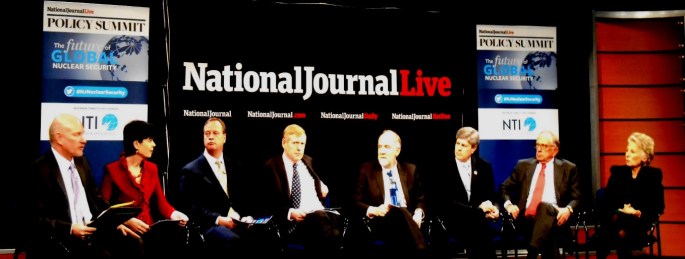
On March 12, 2014, the “Future of Global Nuclear Security Policy Summit” was held at the Knight Broadcast Studio at the Newseum in Washington DC.  The summit was hosted by National Journal in preparation for the 2014 Nuclear Security being held in The Hague, Netherlands.  Participating in the event was White House Coordinator for Defense Policy, Countering Weapons of Mass Destruction, and Arms Control, Dr. Elizabeth Sherwood-Randall.  Contributing editor of the National Journal, James Kittfield, moderated the event posing questions to Dr. Sherwood-Randall and to a 7 member panel of nuclear security experts.

The experts participating in the summit included Norwegian Ambassador to the US, Kåre R. Aas; Renée Jones-Bos Secretary General, Ministry of Foreign Affairs of the Netherlands; Harvard University’s John F. Kennedy School of Government Professor,  Matthew Bunn;  Congressman, Jeff Fortenberry; President and Chief Executive Officer of the Woodrow Wilson International Center for Scholars, Jane Harman; former US Senator, co-chairman and Chief Executive Officer of the Nuclear Threat Initiative, Sam Nunn; and William Tobey, Senior Fellow at Harvard University’s Belfer Center for Science and International Affairs.

The Summit opened with a welcome message from the Senior Vice President of  the National Journal Group Editor, Poppy MacDonald, and was followed by opening remarks from Senator Nunn; who outlined four primary principles that leaders attending the Hague summit should focus on to continue to secure nuclear materials around the globe.

“At the top of my list are four principles.

  1. Nuclear materials security is both a sovereign responsibility and a shared obligation.  Each nation’s security—as well as global security—is only as strong as the weakest link in the chain, and no single nation can present this threat alone.
  2. Accountability and assurances are essential.  It’s not sufficient to just declare, “Trust me.”
  3. Standards and best practices must be implemented by all states, and must cover all weapons-usable nuclear materials, including non-civilian.
  4. Our leaders must get serious about sustaining this focus and this effort, even if the Nuclear Summit process ends after 2016. If the IAEA is given this responsibility, it must be given the clear mandate and the resources to carry it out.”

Dr. Sherwood-Randall kicked off the summit discussion by providing keynote remarks in a moderated interview with Kittfield shortly after. During her interview, Dr. Sherwood-Randall made it clear that the purpose of the upcoming Nuclear Policy Summit would be to focus on the securing of nuclear materials and not on disarmament; where she believes there are other places for that topic to be discussed. Sherwood-Randall also acknowledged that NGOs play a critical role in providing intellectual capital and that there will be a Nuclear Knowledge Summit taking place in Amsterdam as a side event to the Nuclear Security Summit. This particular summit will be used as place to bring NGOs and nuclear security experts together. When asked about her thoughts on the role of Russia in nuclear security talks, Sherwood Randall said that she did not believe that the heightened tensions over the Ukrainian crisis would affect any of the arms control agreements held with Russia. She further noted that the US views Russia as “contributors” to the upcoming summit and is expecting “a constructive summit.”

According to Sherwood-Randall and to the members of the panel, The Nuclear Security Summit will include a variety of events to ensure the summit is constructive. These events include plenary sessions, prerecorded video speeches from leaders outlining their state’s goals, lively policy based discussions, and real-time crisis simulation. Jones-Bos and her fellow panelists believe the implementation of these events will help to actively engage all participants, more so than simply listening to long, boring speeches.

A video recording of the summit can be found here.

Photo by Alena M. James/ Caption: Nuclear Experts Panel (right to left): James Kittfield (moderator), Renée Jones-Bos, William Tobey, Ambassador Kåre R. Aas, Matthew Bunn, Representative Jeff Fortenberry, Sam Nunn, and Jane Harman.