Meet Your 2014 Summer Program Faculty: Charles Blair

In preparation for the GMU Summer Program in International Security, this week we will highlight the course directors. Remember, EARLY BIRD REGISTRATION ENDS MAY 15! Register by May 15 to save $300 on a three-day course and $200 on a two-day course. Use the links below for more details including registration.  Questions? Comment to this post or email spis@gmu.edu.


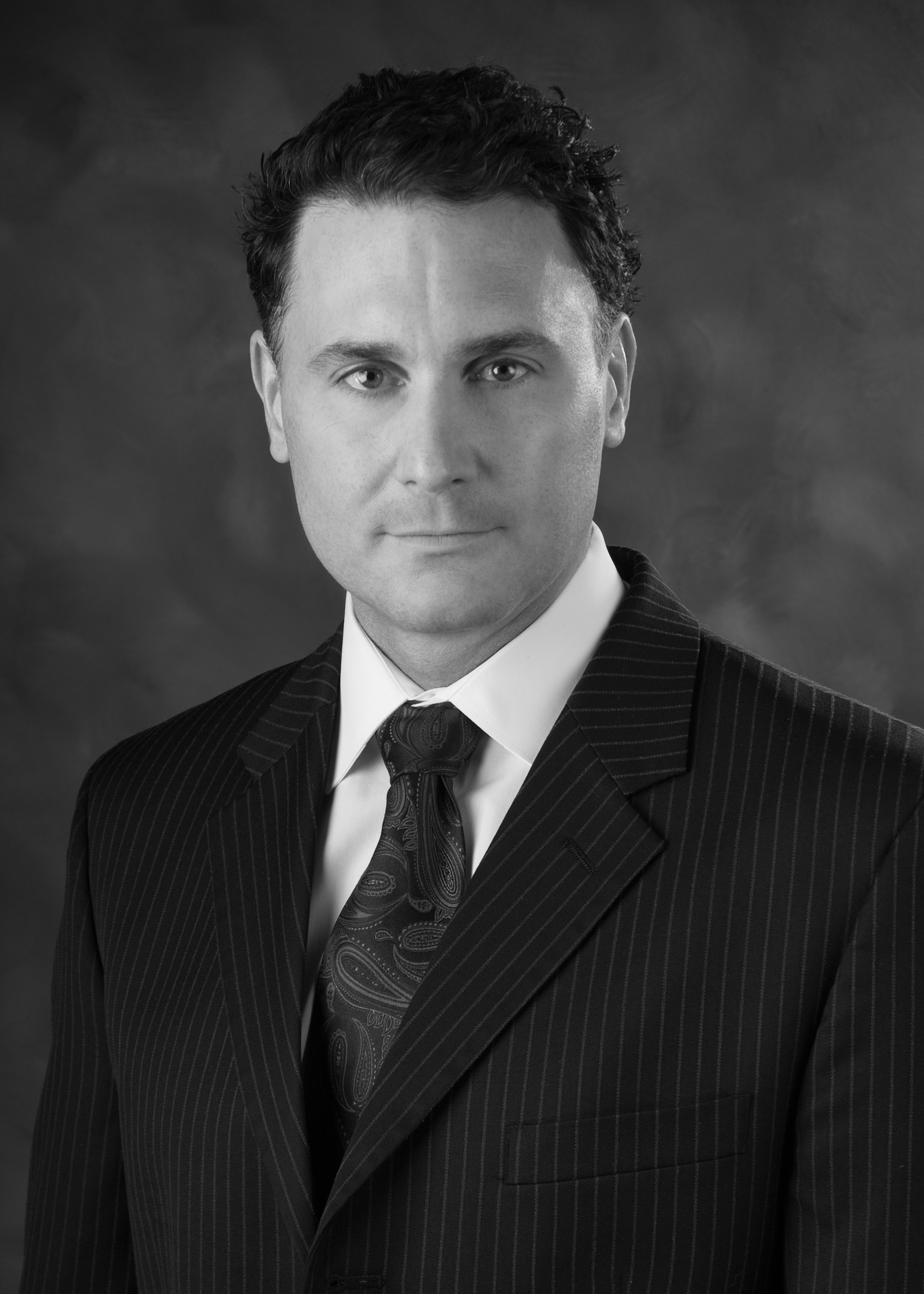
Headshot_BlairCharles P. Blair is a Washington, D.C.-based university instructor, researcher, writer, and thinker specializing in terrorism and the history, technical underpinnings, and potential futures of Weapons of Mass Destruction. He is the director for two courses in the Summer Program in International Security: 21st Century Terrorism: Emerging Trends and Evolving Tactics which runs July 14-16 and Terrorism Analysis: Quantitative and Qualitative Research Methodologies and Tools which runs July 17-18.

Since visiting Moscow as a student in 1985, Blair has worked on issues relating to globalization and the diffusion and diversification of WMD in the context of the rise of mass casualty terrorism incidents. He teaches graduate-level classes on terrorism and the technology of WMD at Johns Hopkins University and George Mason University and is a columnist for the Bulletin of the Atomic Scientists.

Recent works include: “Terrorist Nuclear Command and Control,” which was completed under the auspices of the Department of Homeland Security; a two-year DHS-backed study which investigated the U.S. extreme right-wing and radiological and nuclear terrorism; “Target Sochi: The threat from the Caucasus Emirate,”; and  “Barely Lethal: Terrorists and Ricin.”

Mr. Blair is a Senior Fellow on State and Non-State Threats at the Federation of American Scientists. Before joining FAS, he has worked at the National Consortium for the Study of Terrorism and Responses to Terrorism (START), the James Martin Center for Nonproliferation Studies, the National Nuclear Security Administration, the Anti-Defamation League, and the Center for Terrorism and Intelligence Studies.

Click here to register for 21st Century Terrorism: Emerging Trends and Evolving Tactics.

Click here to register for Terrorism Analysis: Quantitative and Qualitative Research Methodologies and Tools

Meet Your 2014 Summer Program Faculty: Charles Ferguson

In preparation for the GMU Summer Program in International Security, this week we will highlight the course directors. Remember, EARLY BIRD REGISTRATION ENDS MAY 15! Register by May 15 to save $300 on a three-day course and $200 on a two-day course. Use the links below for more details including registration.  Questions? Comment to this post or email spis@gmu.edu.


ferguson

Dr. Charles D. Ferguson, President of the Federation of American Scientists (FAS), is the course director for this summer’s CBRN Weapons: Science & Policy in the Summer Program in International Security. This course will run July 7-9.

With more than twenty years’ experience in policy and national security, Dr. Ferguson has researched and written extensively on energy policy, nuclear nonproliferation, missile defense, and prevention of nuclear and radiological terrorism. His publications include 2011’s Nuclear Energy: What Everyone Needs to Know, The Four Faces of Nuclear Terrorism (with William Potter) in 2005, and the report Commercial Radioactive Sources: Surveying the Security Risks, which was the first in-depth, post-9/11 study of the “dirty bomb” threat. This report won the 2003 Robert S. Landauer Lecture Award from the Health Physics Society.

Dr. Ferguson has worked as the Philip D. Reed senior fellow for science and technology at the Council on Foreign Relations (CFR), consulted with Sandia National Laboratories and the National Nuclear Security Administration on improving the security of radioactive sources, and as a physical scientist in the Office of the Senior Coordinator for Nuclear Safety at the U.S. Department of State. He graduated with distinction from the United States Naval Academy, served in the U.S. Navy as a nuclear engineering officer, and earned a PhD in physics from Boston University. He has previously taught as an adjunct professor at Georgetown University and the Johns Hopkins University.

Click here to register for CBRN Weapons: Science & Policy.

This Week in DC: Events

May 7, 2014

The Future of the Syrian Revolution
Date: May 7, 11:00 am
Location: U.S. Institute of Peace, 2301 Constitution Ave NW, Washington DC 20037

The U.S. Institute of Peace invites you to join us for “The Future of the Syrian Revolution,” a conversation with President Ahmad Jarba, head of the National Coalition for Syrian Revolutionary and Opposition Forces. The event will be President Jarba’s first public address in Washington, DC.

The collapse of the Geneva talks in January has stalled efforts to negotiate a peaceful solution to the conflict. The future of the revolution itself appears increasingly cloudy as the situation on the ground grows more chaotic. The Syrian government’s announcement that it will hold presidential elections in June – elections that President Bashar Assad is widely expected to win – limits chances for a political resolution to the crisis. Many, including the Syrian opposition, have called the elections a democratic charade.

Syrian Opposition Coalition leader Jarba will discuss these dynamics and the role the inte community might play, and assess the delivery of humanitarian assistance as outlined by UN Security Council Resolution 2139. Join the conversation on Twitter with #USIPJarba.

RSVP here.

The Gulf Rising: Defense Industrialization in Saudi Arabia and the UAE
Date: May 7, 12:00 pm
Location: Atlantic Council, 1030 15th Street NW, 12th Floor, Washington DC

Dramatic changes in the world of defense, coupled with increasing political, financial, and fiscal pressures in the transatlantic community, have forced some of the most advanced US industrial allies and partners to make tough choices regarding their national defense programs, leaving them either more dependent on the United States or with capability shortages.

Facing even more stringent circumstances, Saudi Arabia and the United Arab Emirates (UAE)—two modernizing US partners in the Gulf —confront a challenging path to domestic military industrialization. But with carefully articulated goals, modest expectations, smart strategies, effective financial management, and cooperation with Washington, Riyadh and Abu Dhabi can navigate some of the complexities of defense industrialization and overcome some of its key challenges.

This event will launch a report by Bilal Y. Saab entitled The Gulf Rising: Defense Industrialization in Saudi Arabia and the UAE. In it, Saab provides new analysis of and key policy insights on military industrialization in Saudi Arabia and the UAE and adds an important, though often overlooked, dimension to the US policy debate on the US-Gulf partnership.

Register here.

Governing Uranium: Security in the Front-End of the Fuel Cycle
Date: May 7, 1:30 pm
Location: Center for Strategic and International Studies, 1616 Rhode Island Ave NW, Washington DC 20036

The path from ‘ore to bomb’ is long, challenging, and requires sophisticated technologies, but natural uranium is where it starts.  Most attention in nuclear security and nonproliferation has focused on restricting the highest risk material, but recent shifts in the market for natural uranium will introduce new challenges for export controls, transport security, physical protection and tracking of materials.  For example, long-standing uranium consumers such as Japan and Germany are scaling back their reliance on nuclear power, but the ambitious nuclear energy programs of India and China may soon increase global demand for natural uranium.  Meanwhile, new uranium suppliers such as Malawi, Tanzania, and Greenland are entering the global marketplace.  CSIS has partnered with the Danish Institute for International Studies (DIIS) and other international think-tanks in the on-going “Governing Uranium” project to explore the dimensions of security of natural uranium in a changing global market.

Please join us for a discussion with Dr. Cindy Vestergaard, director of the Governing Uranium project and senior researcher at the Danish Institute for International Studies, on the results of the ‘Governing Uranium’ project thus far. Sharon Squassoni, senior fellow and director of the Proliferation Prevention Program at CSIS, will moderate the discussion.

Register here.

Subcommittee Hearing: Assessing the Biological Weapons Threat: Russia and Beyond
Date: May 7, 2:00 pm
Location: U.S. House Committee on Foreign Affairs, 2200 Rayburn House Office Building, Washington DC 20515

Witnesses Amy Smithson, Ph.D, Senior Fellow at the James Martin Center for Nonprolferation Studies, and David R. Franz, Ph.D., Former Commander, U.S. Army Medical Research Institute of Infectious Diseases, discuss this topic on the Subcommittee on Europe, Eurasia, and Emerging Threats.

Watch here.

May 8, 2014

Hearing: Russia’s Destabilization of Ukraine
Date: May 8, 10:00 am
Location: U.S. House Committee on Foreign Affairs, 2172 Rayburn House Office Building, Washington DC 20515

Witnesses Victoria Nuland, Assistant Secretary of the Bureau of European and Eurasian Affairs at the U.S. Department of State, and Daniel Glaser, Assistant Secretary at the Office of Terrorism and Financial Intelligence of the U.S. Department of the Treasury discuss in the Foreign Affairs Committee.

Asymmetric Threats and Space: China, Russia, Non-State Actors, and the Need for Quick Launch Capabilities
Date: May 8, 12:30 pm
Location: American Security Project, 1100 New York Ave NW, 7th Floor-West Tower, Washington DC 20005

In the 21st century, an increasing number of critical national security and intelligence systems are dependent upon technology orbiting our planet.  These technologies may be as covert as imaging systems over enemy territories, or as ubiquitous as the global positioning systems in the average person’s car.  Regardless of the specific type of technology, the threats to it remain consistent.  In order to properly prepare for the attack or destruction of key space infrastructure systems, the United Sates must support domestic suppliers and businesses on the forefront of the sector.

Join ASP Adjunct Fellow, August Cole, along with President of NexGen Space and former NASA advisor, Charles Miller, and Peter Wegner, Director of Advanced Concepts at Space Dynamics Laboratory for a discussion regarding the threats we currently face in space.

Register here.


Pandora Report 5.2.14

Highlights this week include Smallpox Redux, Antibiotic Resistance, and MERS in America. Check us out @PandoraReport for additional stories about the 1918 flu, Obstacle races and their health impact, the deadliest creature on earth, and Stephen Colbert vs. Anti-Vaxxers. Have a great weekend!

A Smallpox like virus found in the Republic of Georgia

This week, doctors from the Centers for Disease Control and Prevention reported that two herdsmen in the Republic of Georgia have been infected with a new virus that is very similar to smallpox. The news comes in addition to a lot of smallpox talk this week. After unearthing a corpse in Queens, NY, the issue of the virus spreading from dead bodies was raised again. Meanwhile, this month The World Health Assembly (WHA) will meet to discuss destruction of remaining smallpox virus being held in Russia and the U.S. Though the smallpox virus has been eradicated, this new virus in the same family raises concerns about protection from bioterrorists using agents we have no immunity or vaccinations for.

NPR—“Last year the U.S. government spent about $460 million on a relatively new smallpox medicine, in case the virus was deliberately released in a bioterrorism attack. That stockpile could treat about 2 million people.”

MERS Arrives in the U.S. 

An American man returning from Saudi Arabia has been diagnosed with MERS CoV. The man was hospitalized in Indiana and authorities say he poses very little risk to the public.  At least 400 people have been diagnosed with Middle East Respiratory Syndrome and it has killed over 100. Though the disease has not transferred human to human at this point, the high lethality is a concern to health officials.

The Associated Press—“Experts said it was just a matter of time before MERS showed up in the U.S., as it has in Europe and Asia. “Given the   interconnectedness of our world, there’s no such thing as ‘it stays over there and it can’t come here,'” said Dr. W. Ian Lipkin, a Columbia University MERS expert.”

Antibiotic Resistance Threatens Everyone, Warns UN

A United Nations report, released on Wednesday, outlined that antibiotic resistance is now prevalent in all parts of the world and that for up to half of patients antibiotics may not be effective. Many doctors in Canada are encouraging their colleagues to be careful about over-prescribing antibiotics as a “cure all.” If doctors around the world cannot do that, we may be looking at a post-antibiotic future.

CBC-“‘What it means, is that all of us, our family members, all of the persons in this room, our friends, when we are most vulnerable and in need of these medicines, there is a chance that they are simply not going to be available and we are not going to be able to have access to effective medical care in a number of instances,’ Dr. Keiji Fukuda, one of the agency’s assistant directors-general, told reporters.”


(image courtesy of Wikimedia Commons/ Arias,F.J)

No Rabies Treatment After All: Failure of the Milwaukee Protocol

By Chris Healey

Doctors are abandoning the only treatment for rabies.

The Milwaukee protocol, a procedure reported to prevent death after the onset of rabies symptoms, has been performed over 26 times since its inception in 2004 but has only saved one life. Overwhelming failure has lead health officials to label the protocol a red herring.

Rabies is caused by the rabies virus, an RNA-based virus in the genus Lyssavirus. Transmission typically occurs when virus-laden saliva from a rabid animal enters a wound or mucous membrane. Infection typically occurs from a rabid animal bite. The virus travels along peripheral nerves until it reaches the brain and salivary glands. A characteristic rabies symptom is aversive behavior toward water or water consumption called hydrophobia. Individuals demonstrating hydrophobia will generally avoid water and resist drinking it. Other symptoms include anxiety, nerve pain, itching, impaired sensation of touch, convulsions, paralysis, and coma. Cases among unvaccinated individuals almost always result in death.


The Milwaukee protocol was conceived in 2004 by a team of medical professionals, led by Dr. Rodney Willoughby, after a 15-year-old girl was admitted to a Milwaukee hospital after a rabies diagnosis.

After consulting with researchers at the Centers for Disease Control and Prevention in Atlanta, the team formulated and implemented a novel procedure. The patient was placed in a drug-induced coma and given an antiviral cocktail composed of ketamine, ribavirin, and amantadine. Considering the theory that rabies pathology stems from central nervous system neurotransmitter dysfunction, doctors hypothesized suppressed brain activity would minimize damage while the patient’s immune system developed an adequate response.

The patient was discharged from the hospital 76 days after admission. She demonstrated speech impediment and difficulty walking during a clinic visit 131 days after discharge. It is unclear how long those conditions persisted. In subsequent years, the patient attended college. She remains the only Milwaukee protocol success.


There has been confusion regarding the efficacy of the Milwaukee protocol. A 2009 report published by Dr. Willoughby in the journal Future Virology described the efficacy and promise of the procedure. In that article, Dr. Willoughby cited two new instances of rabies patient survival following Milwaukee protocol implementation. Those two cases brought the total number of rabies patients saved by Milwaukee protocol procedure to three. However, those survivor reports were rebuked by a 2013 article published in the journal Antiviral Research. That article explicitly states Dr. Willoughby’s claims in Future Virology are misleading because the two patients mentioned actually succumbed to rabies.

Overwhelming Milwaukee protocol failure has been attributed to anomaly in the initial patient. For example, she was bitten by a bat, but that bat was not recovered. Without the bat, it is impossible to test the causative rabies agent to rule out a less virulent variant. A mild version could be fought off more easily and could help explain her survival. Additionally, researchers cannot rule out the possibility the patient possessed extraordinary physiology that somehow impaired the rabies progression.

Health officials claim Milwaukee protocol repetition impedes efforts to find new treatments. Instead of exploring new techniques, doctors fall back on the Milwaukee protocol because it was once successful. Crushing failure has prompted the health community to place a taboo on the protocol, encouraging experimentation that may lead to different treatment options.


Image Credit: CDC