U.S. should move cautiously in isolating nuclear Russia

By Chris Brown

A vote on March 24, 2014, by leaders from the U.S. and six other nations to remove Russia from the G8 may well serve to isolate Vladimir Putin’s administration from a key economic and political forum. But Western allies should be careful in just how far away they aim to push Putin.

With what may be about half of the world’s nuclear weapons under Putin’s control, according to estimates from the Federation of American Scientists[1], it is arguably in the West’s best interest to keep Russia within diplomatic reach. Ties between security initiatives in the U.S. and Russia, particularly the Cooperative Threat Reduction (CTR) program created by the 1992 Nunn-Lugar law, contribute significantly to reducing the likelihood of nuclear mishaps by securing and dismantling weapons of mass destruction.

In addition to securing nuclear warheads through CTR programs, nuclear stability in Russia—like in other nuclear countries—also depends in part on positive control mechanisms operated by rationally behaving states. In best-case scenarios, those controls should be under the purview of civilian authorities. Keeping a watchful eye on Russia is especially important, then, given its increased show of military might. Aggressively annexing Crimea from Ukraine may suggest that the Russian government is growing less risk-averse and more militarily focused. More importantly, it could also be a marker of organizational behavior that could lead to an accidental or deliberate war. All of this echoes theorist Scott Sagan’s important concerns over nuclear weapons proliferation.[2]

If the world hopes to continue moving toward net reduction of nuclear weapons, it is crucial to maintain open dialogue between countries with nuclear capabilities. Four G8 members—the U.S., United Kingdom, France and, until today, Russia—are among the nine nuclear-weapon states and collectively hold more than 95 percent of all nuclear fire power. It is within this group of nations that measures aimed at confidence-building and mutual weapons cache reductions must flourish if they are to succeed at all. Though the international community needs to send a strong message to Putin over illegal land grabbing, any consequences Western powers impose in response must consider the world’s ability to calculate correctly Russian nuclear weapons activities and facilitate continued nuclear stability.


Image Credit: Yahoo.com


[1] “Status of World Nuclear Forces,” Federation of American Scientists (FAS), accessed March 24, 2014, https://www.fas.org/programs/ssp/nukes/nuclearweapons/nukestatus.html/.

[2]Scott D. Sagan and Kenneth N. Waltz, The Spread of Nuclear Weapons: A Debate Renewed (New York: W.W. Norton & Company New York, 2003).


Chris Brown is a PhD candidate in biodefense at George Mason University. He holds a Master of Public Health in biostatistics and epidemiology from the University of Nebraska Medical Center, and received his undergraduate degree in biology with a minor in Spanish from the University of Louisville. Contact him at mcbrown12@gmu.edu or on Twitter @ckbrow07.

Destroying Chemical Weapons: A Highly Political and Technological Process

By Alena M. James

With tensions escalating between the western powers and Russia, the crisis in Ukraine has absorbed much of the international community’s attention these past few weeks. In doing so, the civil war in Syria and its efforts in cleaning up its chemical weapon’s arsenal have been placed on the backburner.  In a report titled, Russia-U.S. Tensions Could Stall Syrian Chemical Weapons Removal, NPR discussed the significance of the joint efforts of the US and Russia to get Bashar Al-Assad on board with committing to the Chemical Weapons Convention and destroying Syria’s chemical weapons stock piles.  Now that the diplomatic relations between the western powers and Russia have soured, many worry about a delay in Syria’s commitment to eradicating its chemical weapons. The possibility of such an event taking place highlights the importance of the political aspect involved in ensuring chemical weapons cleanup.

Recently, the Organization for the Prohibition of Chemical Weapons announced that approximately half of the Syrian chemical weapons stock piles have been removed in the past few months—an accomplishment that has taken the US decades to move towards. The OPCW also announced that it intends to destroy all of Syria’s chemical weapons by June 30, 2014.  Such a goal appears incredibly ambitious and critics remain skeptical of this goal being achieved in the allotted amount of time due to the stressful international relations surrounding Syria and Russia.

Over the weekend, Turkey shot down a Syrian fighter jet after accusing Syria of violating its airspace, an act which is likely to further increase heightened tensions in the region and distract from the weapons cleanup process. Prior to the Ukrainian Crisis and Russia’s annexation of Crimea, the US and Russia had played significant roles in the physical removal of the chemical weapons from the civil war torn state.  Russia provided security measures and the US provided transportation and decontamination equipment to help destroy the stockpiles.  The cleanup process was already a little behind schedule before relations between Russia and the US spiraled downward. Now with sanctions from the US and Europe against Russia, many fear that Russia will no longer provide the political support needed to influence Syria to continue removing the remaining stock of chemical weapons.

Presently, the western powers have already criticized Syria for its inability to meet earlier deadlines of chemical weapons removal.  While the delay can be linked with the current toxic political climate, lessons learned from the US’ chemical cleanup efforts suggest that years and even decades are necessary to safely cleanse a state of its chemical weapons arsenal leaving other factors to be considered as to why the cleanup process may not reach the June 30th deadline.

In a recently published article, “Deadly chemical weapons, buried and lost, lurk under U.S. soil,” The Los Angeles Timesreports on the US’ failure to destroy its own chemical weapons stockpiles dating back to World War II and acknowledges the existence of hundreds of chemical weapons still needing to be processed. According to the report, the US has more than 200 burial sites which include chemical agents such as mustard agents, blister agents, and nerve agents, like tabun produced by Nazi Germany.

Following the end of WWII, the US became the Goodwill Collection Center for the German, Japanese, and British chemical weapons stockpiles.  While some of the stockpiles were burned, the majority of the weapons were buried at the different sites around the country.  Sites located in Alabama and in Washington, DC received hundreds of chemical agents that were to be disposed of without any consideration of the possible environmental impact. Disposal methods also failed to consider the necessity of maintaining complete inventories of site locations, types of agents buried, or the amount of materials buried. In essence, the US does not know where all of the sites are until a civilian reports the presence of an odd looking canister of weapons ammunitions floating up on shore or sticking out of a garden in someone’s backyard in Northwest Washington. The lack of foresight regarding the destruction of chemical weapons at the end of WWII, has left future generations to deal with these issues; which presents a major challenge for cleanup efforts.

Director of Green Cross International’s Environmental Security and Sustainability program, Paul Walker, acknowledges several other challenges involved in the chemical weapons cleanup process.  According to Walker, the technology selected to destroy chemical stockpiles must be politically acceptable by the community where the stockpile is being destroyed. The disposal technologies and strategies employed must ensure minimal impact on public and environmental health. The communities must be a part of the dialogue when planning for the development of decontamination facilities. Alternative methods to incineration must be sought. State investments in poor communities where multibillion dollar chemical cleanup operations are taking place need to continue, and open dialogue to build consensus, address issues, and obtain proper environmental permits also needs to take place.

Dr. Duane Linder, Director of Sandia National Laboratories, also acknowledges the importance of seeking new decontamination strategies due to environmental impacts. The primary methods of chemical disposal used to be “burn it, bury it, or dump it.” Now the approaches used to disengage these weapons and the materials used to fabricate the weapons focus on the use of a process called hydrolysis, a method where hot water is added to alter the molecular arrangement of the agent. While this process helps to neutralize the agent, hazmat chemical waste is still generated but is not as toxic as the original agent. The Field Deployable Hydrolysis System, is a US built chemical destruction system that operates using the hydrolysis process.  The unit has been an incredible instrument involved in destroying Syria’s chemical weapons.

Although still facing numerous challenges, Syria seems to possess the technologies needed to reach OPCW’s June 30th cleanup deadline. However, only time will tell if the international political dichotomy between the West and Russia will impede the process.


Image Credit: Todd Lopez, defenseimagery.mil

This Week in DC: Events

Monday, March 24

World Tuberculosis Day 2014

World TB Day is an opportunity to raise awareness about the burden of tuberculosis (TB) worldwide and the status of TB prevention and control efforts. The Day is also an occasion to mobilize political and social commitment for further progress.

Bioethics TED-style talks
Date: March 19, 7:00pm
Location: Georgetown University, Gaston Hall, 37th and O St. NW, Washington, DC 20007

March 24th focuses on bioethics and justice in the global context, looking beyond the clinic to explore the global disease burden, difficulties in distributing scarce health resources fairly, and the health of our environment itself — as well as how environmental concerns like climate change and GMOs impact human health on a global scale. Each talk will be followed by audience Q&A. Ask a compelling question, and that thought might reach a global audience

Tuesday, March 25

China Defense and Security Conference 2014
Date: March 25, 8:30am – 4:30 pm
Location: Carnegie Endowment for International Peace, Root Room, 1779 Massachusetts Ave NW, Washington DC 20036

On March 25, The Jamestown Foundation will hold its Fourth Annual China Defense and Security Conference in Washington, D.C. The conference will be a unique opportunity to hear about cutting-edge research on Chinese thinking from Jamestown analysts, who will introduce fresh evidence and perspectives to challenge conventional wisdom about the strategic planning of the PRC. Experts, many of whom rarely visit the capital, will be flying in from England, Taiwan, Honolulu and Australia. The agenda, and tickets, are now available online.

While conferences and events covering China have proliferated in recent years, Jamestown’s conference remains unique in its rigorous coverage of developments in Chinese security and foreign policy, deeply grounded in Chinese sources and beginning from examinations of Chinese interests as they are understood and expressed by analysts and policymakers in Beijing.

Radiological and Nuclear Detection Symposium, An Industry Discussion with Government
Date: March 25, 8:30am – 5:30pm, and March 26, 8:30am – 5:00pm
Location: The Mason Inn, 4352 Mason Pond Drive, Fairfax, VA 22030

Attend this two day conference to facilitate discussion and interaction so the industry can better understand the needs of the government and for the government to better understand the capability the industry can deliver.

Hear from government experts and stakeholders regarding the policy, operations, acquisition, and technical challenges associated with nuclear and radiological threats facing the United States. Also hear from Academic and Industry Experts who are fielding solutions that could meet these challenges.

Anticipated Topic Areas Include: Radiological and nuclear detection related briefs for policy, operations, and end-user organizations; Near neighbor mission areas to rad/nuke detection (e.g. explosives and chemical weapons); Technology capabilities, with associated readiness level (related to policy and operational needs); Acquisition, program, and contract opportunities.

Free tickets for University students. Call Jim Traweek, at 703-498-2288 to reserve a space or email jimtraweek@vipglobalnet.com.

Transatlantic Solutions to Government Surveillance
Date: March 25, 12:15pm
Location: New America Foundation, 1899 L Street NW, Suite 400, Washington DC 20036

Last year, revelations about the National Security Agency’s digital surveillance created a breach of trust between the United States and close international allies. European citizens, in Germany in particular, remain concerned about the state and scope of both NSA activity as well as the online spying activity of their own governments. An individual’s right to privacy is now outside the power of a single nation state to protect. As the globalization of communications continues, increased international coordination between governments is needed in order for trust to be restored and individuals to feel secure online. What is the path forward?

Join this event co-sponsored by New America’s Open Technology Institute and the Heinrich Boell Foundation, a German think tank, as we seek to start the discussion, “how do we modernize international privacy policy to account for the power of digital surveillance?” The event will feature European elected officials and political leaders who are working to improve privacy laws, both in Germany and the E.U.  They will provide updates on their work as well as share thoughts on how transatlantic dialogue could be structured and what international solutions to the problem of government surveillance could look like.

Promoting Resilience or Repression: Support for Central Asian Security Forces
Date: March 25, 12:30pm
Location: Open Society Foundations, 1730 Pennsylvania Ave NW, 7th floor, Washington DC 20006

The role of the Central Asian states in support of ISAF military operations in Afghanistan has been crucial, and the regimes have received unprecedented levels of external military assistance over the years. With the end of operations in Afghanistan, what will the long-term impact of this assistance be? Has foreign military assistance left local armed forces more capable of withstanding external threats, or merely provided them with new means to suppress internal dissent?

The Open Society Foundations hosts a discussion of these issues with Dr. Dmitry Gorenburg, author of the working paper “External Support for Central Asian Military and Security Forces,” a joint publication of the Open Society Foundations and the Stockholm International Peace Research Institute.

TB Silent Killer: FRONTLINE Documentary and Panel Discussion
Date: March 25, 2:00pm
Location: Kaiser Family Foundation, 1330 G St NW, Washington, DC 20005

Tuberculosis (TB) remains one of the world’s deadliest diseases, with more than 8 million new cases each year and 1.4 million dying from the disease. The emergence and spread of TB strains that are highly resistant to standard drug treatments has become a major global health challenge. In recognition of World TB Day on Monday, March 24, the Kaiser Family Foundation will convene a public forum on Tuesday, March 25 at 2 p.m. ET to take stock of the global health challenge presented by TB, to examine the limitations and challenges of current treatment options, and to discuss the search for new and better TB drugs and other tools.

The event will begin with a screening of a short segment of a new FRONTLINE television documentary, TB Silent Killer, premiering Tuesday night, March 25, on PBS. The documentary focuses on the Southern African nation of Swaziland, the country with the world’s highest incidence of TB, and delivers a portrait of the people living at the pandemic’s epicenter. The forum will then move to a discussion with a panel of experts: Jezza Neumann,producer, writer and director of TB Silent Killer; Josh Michaud, associate director for global health policy at the Kaiser Family Foundation; Christine F. Sizemore, chief of the Tuberculosis, Leprosy and other Mycobacterial Diseases Section at the National Institute of Allergy and Infectious Diseases, National Institutes of Health; andJonathon Gass, monitoring and evaluation specialist at Ariadne Labs, who worked as an epidemiologist for Médecins Sans Frontières/Doctors Without Borders. Penny Duckham, executive director of the Foundation’s Media Fellowships Program, will make introductory remarks and moderate the panel discussion.

Register here.

Are Health Partnerships the Future of Diplomacy?
Date: March 25, 6:30pm
Location: The Embassy of France, 4101 Reservoir Road NW, Washington DC 20007

Health has become a growing area for international engagement in the 21st century. In the Asia-Pacific, NGOs are sending “floating hospitals,” refitted ships that host hundreds of medical personnel, to treat populations throughout the region, reaching new and unprecedented levels of cooperation with major governments. In the Middle East, and elsewhere, governments are coming together to tackle global health challenges in ways that reinforce national security and may contribute to a nation’s soft power.

In the wake of the launch by the Obama administration of a new Global Health Security Agenda in February 2014, the Next Generation Foreign Policy Network is pleased to invite you to a conference on health partnerships in the 21st century.

Register here.

Wednesday, March 26

Ensuring Security in Health IT
Date: March 26, 7:30am
Location: Ronald Reagan Building, Rotunda, 1300 Pennsylvania Ave NW, Washington, DC 20004

Government agencies dealing with health infrastructure must protect highly sensitive information critical to the well-being of many. But as these same agencies adopt electronic records and move to become more efficient, vulnerabilities in the security of this information have surfaced. The risks, which vary in scope and source, stem from the rapid implementation of the Affordable Care Act, digitization of physicians’ records, and data breaches of both private and public providers.

How can agencies work within existing privacy laws to maximize their security? What can they learn from other actors in cybersecurity to protect some of the most valuable personal data available? On March 26th, we will discuss solutions to current and potential risks with industry analysts and government professionals. Learn about: Making security matter to health records infrastructure, Best practices for preventing breaches, and Scaling and testing for future security architecture.

Register here.

Overcoming Pakistan’s Nuclear Dangers
Date: March 26, 10:00am
Location: International Institute for Strategic Studies, 2121 K Street NW, Suite 801, Washington DC 20037

Pakistan’s nuclear arsenal – the fastest growing in the world – sparks various concerns on many grounds, including the real potential for a nuclear war, possibly triggered by another large-scale terrorist attack in India as in the 2008 Mumbai atrocity, this time followed by an Indian Army reprisal. Mark Fitzpatrick will evaluate the potential nuclear dangers and argue that Pakistan should be offered a formula for nuclear legitimacy, tied to its adopting policies associated with global nuclear norms.

Register here.

Implications on Deterrence Stability and Escalation Control of Tactical Nuclear Weapons in S. Asia
Date: March 26, 12:30pm
Location: Stimson Center, 1111 19th Street NW, 12th Floor, Washington, DC 20036

Moderator: Michael Krepon, Stimson Co-founder and Director, South Asia program. Speaker: Dr. Jeffrey McCausland, Distinguished Visiting Professor of Research and Minerva Chair at the Strategic Studies Institute, U.S. Army War College

Jeffrey McCausland is a retired Army Colonel with more than 30 years of military experience. He has served in a variety of operational and staff positions, including command of a field artillery battalion during Operations Desert Shield and Storm. During the Cold War, he was assigned to numerous units equipped with tactical nuclear weapons and participated in both training as well as planning for their employment. He has also served on the National Security Council Staff during the Kosovo crisis and in the office of the Deputy Chief of Staff for Operations on the Army Staff in the Pentagon. His final Army assignment was as Dean of Academics at the US Army War College. He currently serves as a Visiting Professor at Dickinson College and is also the Distinguished Visiting Professor of Research and Minerva Chair at the Strategic Studies Institute, U.S. Army War College.  

Register here.

Safe and Surveilled: U.S. Attorney General Michael Mukasey on the NSA, Wiretapping and PRISM
Date: March 25, 3:00pm
Location: George Mason University School of Law, 3301 Fairfax Dr., Arlington, VA 22201

The National Security Law Journal at George Mason University School of Law will be hosting a spring symposium featuring a keynote address by former U.S. Attorney General Michael Mukasey, who will speak on the NSA, wiretapping, and the data mining program known as PRISM.

A debate between Professor Robert Turner of the University of Virginia School of Law and ProfessorStephen Vladeck of American University’s Washington College of Law will follow Judge Mukasey’s keynote address. Professor Jeremy Rabkin of George Mason University School of Law will moderate the debate.

Space is limited and advance registration is required.

Breaking News

The news never stops, not even on the weekend.

We’re covering two breaking stories about two extremely serious biological threat agents: ricin and ebola.


Ebola in West Africa

In early February 2014, health agents began tracking a case of viral hemorrhagic fever in Guinea, in Western Africa.  On March 21, Drs. Sylvain Baize and Delphine Pannetier from the National Reference Center for Viral Hemorrhagic Fevers at the Pasteur Institue in Lyon, France were able to identify the Ebola virus, subtype Zaire, in 6 of 7 clinical case samples from the outbreak. Since February 9, there have been 59 deaths from 80 reported cases of Ebola Zaire virus.

Over this weekend there has been growing concern that the virus may have crossed over into neighboring Sierra Leone. “Sierra Leone’s Chief Medical Officer Dr. Brima Kargbo said authorities were investigating the case of a 14-year-old boy who died in the town of Buedu in the eastern Kailahun District. The boy had travelled to Guinea to attend the funeral of one of the outbreak’s earlier victims.”

Ricin in Pennsylvania

A 19 year old Pennsylvania man was arrested last week and charged with attempted murder and risking catastrophe for allegedly sending a scratch-and-sniff birthday card laced with ricin to a man now dating his ex-girlfriend. Bucks County District Attorney David Heckler stressed that the toxin was extremely potent.

When the suspect was initially questioned about the card in early March, he told police he had coated the card with sodium hydroxide because it resembles Anthrax toxin. It was during lab testing that the card tested positive for ricin toxin. The man is being held without bail in Bucks County, PA.

For more on Ricin, check out Dr. Alexander Garza’s backgrounder.

Pandora Report 3.21.14

BREAKING NEWS

Positive Tests for Ricin at Georgetown University

Earlier this week, a white, powdery substance that tested positive for ricin, was found in a dorm room at Georgetown University. The 19 year-old student suspect who lived in the room reported that he made it and the Georgetown Voice spoke with a source who indicated the suspect possibly “intended to use the substance on another student.” Weapons-grade ricin is an extremely lethal toxin that has no available anti-toxin.

The Washington Post– “In an e-mail sent campus-wide, the university said there was no danger to the community. Law enforcement officials said they did not think that the case was connected to terrorism. School officials received no reports of anyone being exposed to the toxin, authorities said. D.C. health officials advised the school that symptoms of ricin exposure typically present themselves within 24 hours. “This window has passed and there are no reports consistent with ricin exposure,” the statement said.”


And now, our regularly scheduled Friday news…

Highlights include Polio-like virus in California, destruction of Syrian chemical weapons, the cost of Anti-Vaxxers, and domestic illness in pigs (or…the end of bacon?!) Happy Friday and have a great weekend!

Doctors continue the hunt for a Polio-like virus in California

Since September 2012, over two-dozen children in California have displayed symptoms of a rare Polio-like illness that has caused sudden paralysis, while doctors and health officials are still hunting for the cause. One possible suspect may be some sort of enterovirus, but more testing is required as the mystery continues.

San Francisco Chronicle—“Viruses can be difficult to detect after patients have been sick for a couple of weeks, and especially if they’ve already undergone treatment that can muddy test results. In the California cases, most children weren’t tested until many weeks or even months after they became sick. Waubant, a UCSF neurologist, said she is hoping to get funding to conduct immunoglobulin testing, which would determine whether the patients with polio-like illness have certain antibodies suggesting that they’d all been infected with the same virus.”

PEDv threatens future of pork industry

Are the days of available bacon coming to an end? A report coming out of the Dakotas paints a scary picture of the effect porcine epidemic diarrhea virus is having on the entire domestic pork industry. PEDv is a relatively new disease afflicting pigs but is has become widespread and with little known about the virus containment has become a top priority of both the pork industry and scientists.

Farm Forum—“‘PEDv has a significant economic impact,” Dr. Oedekoven, South Dakota State veterinarian said. “There is a high death rate in the naïve (newborn) population where 80 to 100 percent death losses are reported. The young piglets have no natural immunity and there is no vaccine. It’s a pretty terrible recipe. Biosecurity and sanitation are the tools being used in the industry to prevent the introduction of the disease into herds.’”

A Medical opinion on the anti-vaccination movement

With celebrities like Jenny McCarthy and Kristin Cavallari appearing in the media on an almost daily basis loudly championing the virtues of being “anti-vaxxer,” a medical doctor weighs in on the cost of that movement.

Forbes—“The result is an erosion in health gains, both individual and collective. And in some parts of the country, we are witnessing a reversal of what many believe is one of the greatest advances in medical science in the last century. And as a society, before we allow misinformation to threaten public health, we must recognize that vaccines today are safe and effective. Anything less is irresponsible. We owe it to our children and our communities to make vaccination universal.”

Will Syria meet the deadline for chemical weapon disarmament?

A deadline of June 30 has been set for Syria to hand over and destroy their chemical weapons arsenal. However, there are concerns that rocket strikes in Syria could delay this process and means the deadline will pass without completion.

Al Bawaba—“The Syrian government has repeatedly blamed security issues for its failure to meet the specified deadlines for removing its chemical weapon stockpile from the country. Damascus said last month that convoys carrying chemical weapons were subject to two attempted attacks while they attempted to transport the materials to Latakia.”

But, the U.S.-Russian brokered deal is not in danger, Russian authorities say.

ITAR/TASS—“‘We are not inclined to dramatize the fact that the milestone for their removal, February 5 this year, was not met, as it was planned by the decision of the Executive Council of the Organization for the Prohibition of Chemical Weapons (OPCW),” the ministry said. “It can be explained by the objective security situation around chemical weapons storage facilities and on the route of convoys’ movement, as well as by problems related to the logistical support of the operation. However, there is no reason at all to call into question the deadline for the liquidation of the Syrian chemical weapons potential – the first half of the current year.’”

(image courtesy of Wikimedia Commons)

Experts Pre-Game before the 2014 Nuclear Security Summit

By Alena M. James

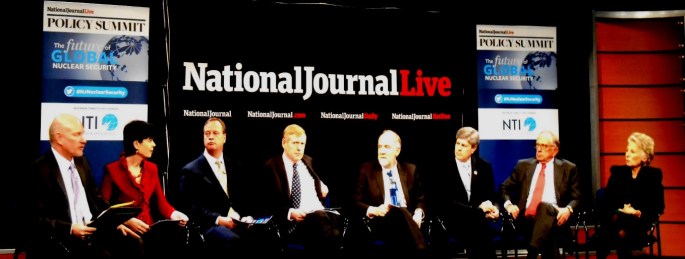
On March 12, 2014, the “Future of Global Nuclear Security Policy Summit” was held at the Knight Broadcast Studio at the Newseum in Washington DC.  The summit was hosted by National Journal in preparation for the 2014 Nuclear Security being held in The Hague, Netherlands.  Participating in the event was White House Coordinator for Defense Policy, Countering Weapons of Mass Destruction, and Arms Control, Dr. Elizabeth Sherwood-Randall.  Contributing editor of the National Journal, James Kittfield, moderated the event posing questions to Dr. Sherwood-Randall and to a 7 member panel of nuclear security experts.

The experts participating in the summit included Norwegian Ambassador to the US, Kåre R. Aas; Renée Jones-Bos Secretary General, Ministry of Foreign Affairs of the Netherlands; Harvard University’s John F. Kennedy School of Government Professor,  Matthew Bunn;  Congressman, Jeff Fortenberry; President and Chief Executive Officer of the Woodrow Wilson International Center for Scholars, Jane Harman; former US Senator, co-chairman and Chief Executive Officer of the Nuclear Threat Initiative, Sam Nunn; and William Tobey, Senior Fellow at Harvard University’s Belfer Center for Science and International Affairs.

The Summit opened with a welcome message from the Senior Vice President of  the National Journal Group Editor, Poppy MacDonald, and was followed by opening remarks from Senator Nunn; who outlined four primary principles that leaders attending the Hague summit should focus on to continue to secure nuclear materials around the globe.

“At the top of my list are four principles.

  1. Nuclear materials security is both a sovereign responsibility and a shared obligation.  Each nation’s security—as well as global security—is only as strong as the weakest link in the chain, and no single nation can present this threat alone.
  2. Accountability and assurances are essential.  It’s not sufficient to just declare, “Trust me.”
  3. Standards and best practices must be implemented by all states, and must cover all weapons-usable nuclear materials, including non-civilian.
  4. Our leaders must get serious about sustaining this focus and this effort, even if the Nuclear Summit process ends after 2016. If the IAEA is given this responsibility, it must be given the clear mandate and the resources to carry it out.”

Dr. Sherwood-Randall kicked off the summit discussion by providing keynote remarks in a moderated interview with Kittfield shortly after. During her interview, Dr. Sherwood-Randall made it clear that the purpose of the upcoming Nuclear Policy Summit would be to focus on the securing of nuclear materials and not on disarmament; where she believes there are other places for that topic to be discussed. Sherwood-Randall also acknowledged that NGOs play a critical role in providing intellectual capital and that there will be a Nuclear Knowledge Summit taking place in Amsterdam as a side event to the Nuclear Security Summit. This particular summit will be used as place to bring NGOs and nuclear security experts together. When asked about her thoughts on the role of Russia in nuclear security talks, Sherwood Randall said that she did not believe that the heightened tensions over the Ukrainian crisis would affect any of the arms control agreements held with Russia. She further noted that the US views Russia as “contributors” to the upcoming summit and is expecting “a constructive summit.”

According to Sherwood-Randall and to the members of the panel, The Nuclear Security Summit will include a variety of events to ensure the summit is constructive. These events include plenary sessions, prerecorded video speeches from leaders outlining their state’s goals, lively policy based discussions, and real-time crisis simulation. Jones-Bos and her fellow panelists believe the implementation of these events will help to actively engage all participants, more so than simply listening to long, boring speeches.

A video recording of the summit can be found here.

Photo by Alena M. James/ Caption: Nuclear Experts Panel (right to left): James Kittfield (moderator), Renée Jones-Bos, William Tobey, Ambassador Kåre R. Aas, Matthew Bunn, Representative Jeff Fortenberry, Sam Nunn, and Jane Harman.

This Week in DC: Events

Monday, March 17

U.S. Global Health Diplomacy and the Role of Ambassadors
Date: March 17, 9:30 – 11:00am
Location: The Kaiser Family Foundation, 1330 G Street NW, Washington DC 20005

In recent years, the U.S. government has increasingly made global health issues a key element of its diplomatic efforts – most notably in the creation of a new Office of Global Health Diplomacy at the State Department in 2013, which includes a goal of supporting U.S. Ambassadors and embassies to enhance the focus on global health as part of their diplomatic engagement. How does diplomacy intersect with global health, and how is the new focus on global health diplomacy reshaping the work of U.S. Ambassadors with partner countries? How does this new office relate to and coordinate with other parts of the U.S. government’s global health architecture and foreign policy?

To provide insight into these questions, the Kaiser Family Foundation is hosting a panel discussion of U.S. Ambassadors, featuring Ambassador to Malawi Jeanine Jackson, Ambassador to Haiti Pamela White, and Ambassador to Papua New Guinea, Solomon Islands, and Vanuatu Walter North at 9:30 a.m. ET on Monday, March 17. The event will also feature remarks from Ambassador Leslie Rowe, acting special representative in the Secretary’s Office of Global Health Diplomacy and former U.S. Ambassador to Mozambique and to Papua New Guinea, on the role of the new office. Jen Kates, Kaiser Family Foundation’s vice president and director of global health and HIV policy, will provide opening remarks and moderate the panel discussion.

RSVP required.

Ground Truth Briefing: Crimea at a Crossroads?
Date: March 17, 11:00am – 12:00pm
Location: Woodrow Wilson International Center for Scholars

Miscommunication, misinterpretation, and misinformation have abounded in the last weeks as Ukraine’s crisis has careened from violence in the capital and mass protests throughout the country, perilously close to the brink of war in Crimea. What are Russia’s intentions? What can Ukraine do to maintain its territorial integrity and prevent further bloodshed? Now more than ever, a clear picture of what is going on in Crimea, Ukraine and the region is vitally important. Join us by phone to discuss the situation with key experts.

RSVP here.

CANCELLED
Beyond the Arab Spring: U.S. Engagement in a Changing Middle East Date: March 17, 11:30am – 1:00pm
Location: Woodrow Wilson International Center for Scholars, 1300 Pennsylvania Ave NW, Washington DC 20004, 5th Floor

The panelists will consider how a range of domestic and regional changes in the Middle East have generated new challenges for U.S. diplomacy. This event is co-sponsored with the United States Institute of Peace and is the 6th and final in a series of presentations on “Reshaping the Strategic Culture of the Middle East.”

RSVP here.

Bioethics TED-style talks
Date: March 17, 7:00 – 8:30pm
Location: Georgetown University, 37th and O Streets NW, Washington DC 20057, Gaston Hall

March 17th focuses on bioethics in the clinic, at the bedside, and beyond, exploring enduring issues in medical ethics like informed consent, physician obligation, and disability ethics, all the way to cutting-edge technologies like genetic and cognitive enhancement that challenge our conception of what it means to be ill, or to be well, or even to be human.

Each talk will be followed by audience Q&A. Ask a compelling question, and that thought might reach a global audience.

CANCELLED
Biodefense Policy Seminar
Date: March 17, 7:20pm
Location: George Mason University, 4400 University Drive, Fairfax VA 22030, Mason Hall D003

Our March Biodefense Policy Seminar features Dana Perkins, Senior Science Advisor, DHHS — member of the 1540 Committee Group of Experts. Dr. Perkins earned a Master’s Degree in Biochemistry from the University of Bucharest, Romania. She also earned a PhD in Pharmacology and Experimental Therapeutics in 2002 from the University of Maryland, Baltimore, where she specialized in Microbiology/Neurovirology. In 2012-2013, Dana Perkins served in a US Government-seconded position as a member of the Group of Experts supporting a subsidiary body of the United Nations Security Council, the 1540 Committee. The 1540 Committee was established pursuant to resolution 1540 (2004) to monitor the implementation of this resolution worldwide. In her prior position with the US Department of Health and Human Services (HHS), she led the Biological Weapons Nonproliferation and Counterterrorism Branch in the Office of Policy and Planning, Office of the Assistant Secretary for Preparedness and Response (ASPR). At HHS/ASPR, some of her responsibilities and duties included providing subject matter expertise, inter-agency coordination, and senior level policy advice on the scientific (biodefense and biosecurity) and public health aspects of national and international emergency preparedness and response; directing and coordinating national and international progress on issues related to biodefense and biosecurity; developing and reviewing policies on biosecurity, biological weapons nonproliferation, and health security; and performing expert analysis and preparing implementation plans to support the US Government biodefense and biosecurity policy.

Tuesday, March 18

 Should the United States Give Up on Arab Democracy?
Date: March 18, 12:00pm
Location: Georgetown University, 37th and O Streets NW, Washington DC 20057, Copley Hall, Formal Lounge

The unhappy results of what was once known optimistically as the “Arab Spring” have led many analysts to suggest that the United States should stop supporting democracy in the Arab world. It doesn’t work, the argument goes, and things end up worse rather than better. In this view, President Obama was right to dump the Bush “Freedom Agenda” because the end of the regimes in Libya, Syria, Egypt, and Tunisia has resulted only in violence and instability. Moreover, our policies have offended many of our friends in the region.

But are these arguments correct? Can the United States be indifferent to the effort to build democracy in the Arab world? Are there ways for the United States to help those struggling for democracy, more effectively and at lower cost? The topic of the lecture is the current condition and future prospects of democracy in the Arab world, and the challenge this presents to American foreign policy.

Wednesday, March 19

Did the Military Intervention in Libya Succeed?
Date: March 19, 11:00am
Location: Cato Institute, 1000 Massachusetts Ave NW, Washington DC 20001,  Hayek Auditorium

On March 19, 2011, the United States and nineteen allied states launched an air assault against the Libyan military. President Obama and other leaders argued that military action would protect Libyan civilians, aid the progress of democracy there and across the region, and buttress the credibility of the U.N. Security Council, which had passed a resolution demanding a cease fire. By October, local rebel militias had killed Libya’s long-time ruler, Muammar el-Qaddafi, and overthrown his government. Three years later, it is time to ask whether the intervention worked. Did it protect Libyans or, by prolonging the civil war and creating political chaos, heighten their suffering? Is Libya becoming a stable democracy, a failed state, or something else? Did the intervention help other revolutions in the region, heighten repression of them, or was it simply irrelevant? Should the United States help overthrow other Middle Eastern dictators?

Registration required.

The Future of the Alliance: Revitalizing NATO for a Changing World
Date: March 19, 2:30 – 3:30pm
Location: Brookings Institution

On March 19, the Center on the United States and Europe (CUSE) will host NATO Secretary-General Anders Fogh Rasmussen for a Statesman’s Forum address on the importance of the transatlantic alliance and how the North Atlantic Treaty Organization (NATO) is evolving to address new common security challenges. As the crisis in Ukraine shows that security in the Euro-Atlantic area cannot be taken for granted, the secretary-general will discuss NATO’s essential role in an unpredictable world. He will outline the agenda for the September NATO summit in Wales as a critical opportunity to ensure that the alliance has the military capabilities necessary to deal with the threats it now faces, to consider how NATO members can better share the collective burden of defense and to engage constructively with partners around the world.

Anders Fogh Rasmussen took office as North Atlantic Treaty Organization’s 12th secretary-general in August 2009. Previously, he served in numerous positions in the Danish government and opposition throughout his political career, including as prime minister of Denmark from November 2001 to April 2009.

Brookings Senior Fellow and CUSE Director Fiona Hill will provide introductory remarks and moderate the discussion. After the program, Secretary-General Rasmussen will take questions from the audience.

This event will be live webcastRegister here.

Russian Missile Modernization: Developments and Implications for U.S. Security
Date: March 19, 3:00 – 4:30pm
Location: Rayburn House Office Building, Capitol Hill

As the Ukrainian crisis intensified, Russia launched an Intercontinental Ballistic Missile (ICBM) as part of a regularly scheduled test.  While Russia’s planned test was known in advance by the U.S., the test was a symbolic demonstration of Russian military prowess during a time of acute international tension.

Russian efforts to improve its ballistic missile arsenal long predate the Ukrainian crisis.  In 2012, Madelyn Creedon, Assistant Secretary of Defense for Global Strategic Affairs, in her statement before the Senate Foreign Relations Committee warned that:

“Like the United States, Russia will have to limit the number of strategic warheads it deploys to comply with the 1,550 limit of the Treaty. This limit will constrain Russia as it modernizes its strategic nuclear delivery systems with the deployments of several substantially MIRVed new strategic missiles, including the MIRVed Yars ICBM, new Borey-class missile submarines carrying 16 MIRVed Bulava SLBMs, and, in the event it is deployed during the life of the Treaty, a planned new ‘heavy’ ICBM to replace the SS-18 that will almost certainly carry several MIRVs.”

On March 19, 2014, the George C. Marshall Institute will host a discussion to review Russian missile modernization efforts, the implications for U.S. security, and responses to this growing threat.

As the principal nuclear threat to the United States, Russia’s activities to improve the quality of its arsenal have significant implications for our own nuclear modernization and missile defense plans, while also raising concerns about treaty violations.

The event will feature presentations from:

  • Dr. Mark Schneider, Senior Analyst at the National Institute for Public Policy; and
  • The Honorable Paula DeSutter, formerly Assistant Secretary of State for Verification, Compliance, and Implementation

Bioethics TED-style talks
Date: March 19, 7:00 – 8:30pm
Location: Georgetown University, 37th and O Streets NW, Washington DC 20057, Gaston Hall

March 19th focuses on bioethics at the beginning and end of life, diving deep into the issues that confront us all: the ethics of creating and destroying early human life, the issues around retaining dignity at the end of life, the morality of physician-assisted suicide, and more.

Each talk will be followed by audience Q&A. Ask a compelling question, and that thought might reach a global audience.

Thursday, March 20

Cybersecurity: The Much Admired Problem
Date: March 20, 9:00am
Location: Elliott School of International Affairs, 1957 E Street NW, City View Room, 7th Floor, Washington DC

Cyberspace, the ubiquitous fusion of information and communication technologies, has transformed the way that Americans work and play and has also markedly changed the U.S. national security landscape. Threats in and to cyberspace are causing anxiety at all levels in this country, encouraged by news of identity theft, intellectual property piracy, the Mandiant report on China’s cyber activities against US institutions, and repeated warnings of an impending “cyber Pearl Harbor.” A key issue is the fact that the cybersecurity problem is not well understood; it is much admired but not resolved. This talk will review the historical technical and policy drivers that created this hydra-headed beast, and their implications for cybersecurity. It will also provide a high-level overview of current cyber threats and attack objectives. The metaphor of public health will be used to posit approaches for significant containment of cybersecurity risk through scientific understanding, public “cyber hygiene,” and their integration with national and international legal and policy frameworks.

RSVP here.

Global Health Insecurity? New Pneumonia Viruses in China and the Middle East
Date: March 20, 1:30 – 2:30pm
Location: Georgetown University Law Center, 600 New Jersey Ave NW, McDonough Hall 205,  Washington DC 20001

Dr. Daniel Lucey is an infectious disease and public health physician who teaches on global emerging infectious disease outbreaks and public health countermeasures in the Department of Microbiology and Immunology at Georgetown University Medical Center (GUMC). His Infectious Disease training and MPH were at Harvard 1985-1988, after medical residency at UCSF, and medical school and college at Dartmouth. After working at the NIH and Washington Hospital Center until 2002, he co-founded a graduate program on emerging infectious diseases and biohazardous threat agents at GUMC. He has traveled widely in Asia, Africa, and the Middle East to exchange information regarding infectious diseases such as SARS, influenza, Nipah, HIV, anthrax, and MERS. He is an author on over 100 papers and book chapters.

The Future of Syria: A Conversation with Robert Ford
Date: March 20, 4:00pm
Location: Woodrow Wilson International Center for Scholars

The crisis in Syria shows no signs of abating. Prospects for an internal political agreement or an external intervention to defuse let alone end the civil war seem improbable at best. Meanwhile the humanitarian, political, and strategic costs for Syria and the region mount daily. Please join us for a conversation with Ambassador Robert Ford on the current situation in Syria and prospects for the future.

RSVP here.

Friday, March 21

Is the Indian Nuclear Tiger Changing Its Stripes? Data, Interpretation, and Fact
Date: March 21, 9:30am
Location: Atlantic Council, 1030 15th Street NW, 12th Floor, West Tower Washington DC

India’s nuclear posture and some of its operational practices are beginning to mimic those of the nuclear P-5. Prominent arms controllers contend that India’s national security managers are poised to repeat the worst mistakes of the superpowers nuclear competition from the Cold War years, with negative consequences for deterrence, crisis, and arms race stability in South Asia and the Asia-Pacific. Gaurav Kampani of the Norwegian Institute of Defense Studies and Toby Dalton of the Carnegie Endowment for International Peace will discuss the existing data to determine if the case for nuclear alarmism is justified.

Register here.

Pan American Health Organization Commemoration of World Tuberculosis Day 2014
Date: March 21, 2:00 – 4:00pm
Location: Pan American Health Organization, 525 23rd Street NW Washington DC 20037

The commemoration of World Tuberculosis Day seeks to raise and/or reactivate awareness on the persistence of the burden of TB in the world, as well as of the efforts made for its prevention and control. Throughout the years, this commemoration has offered the opportunity to mobilize the political, economic and social commitment for prevention and control of TB in PAHO countries.

For the 2014 campaign, PAHO embraces the same concept proposed at a global level by the World Health Organisation and the Stop TB Partnership to adequately search for, diagnose and treat TB patients, using the slogan:

Tuberculosis is still undiagnosed in many places, especially in large cities
Diagnosis and Treatment for All

We hope you can join us for this exciting event which will include; opening remarks from PAHO Director Dr. Carissa Etienne, video presentations on good practices in TB case detection in vulnerable populations in the Americas, patient testimony, two panel discussions with various international speakers and the opportunity for questions and answers.

The event will be followed by a drinks reception in the lobby.

If you are unable to join us there will be a live stream of the event accessible at:www.livestream.com/opsenvivo. Register here.

Make it Count: Evaluating Population, Health, and Environment (PHE) Programming
Date: March 21, 3:00  – 4:30pm
Location: Woodrow Wilson International Center for Scholars, 1300 Pennsylvania Ave, NW Washington DC 20004

Evaluation is a critical part of any development programming. Rigorous evaluations identify the successes, failures, and gaps in a given project, accumulating lessons learned that hopefully lead to more effective programming. Breaking new ground through their small-scale, community-based, and multi-sectoral approach, population, health, and environment (PHE) programs require a rethinking of traditional evaluation methods. Join us in a discussion about the history of PHE program evaluations and the path forward with John Pielemeier, an independent consultant focused on design, evaluation, and management of international development programs and projects, Vik Mohan, medical director of Blue Ventures, and Roger-Mark De Souza, director of population, environmental security, and resilience at the Wilson Center.

Register here.

Pandora Report 3.14.14

Editor’s note: As Managing Editor, I know my job is never done because the news never stops. As a social scientist, I know there is always more than one side to any story. As such, before we get into the news roundup for March 14, here are two follow up articles from our report last week.

Mount Sinai Scientists Discover How Marburg Virus Grows in Cells

Last week we learned about BCX4430, a drug that could possibly treat Marburg virus. This week, news coming out of Mount Sinai in New York outlines further research findings on the virus that can lead to greater understanding or possible development of virus inhibitors. The full findings of this research are available at Cell Reports.

Newswise — “A protein that normally protects cells from environmental stresses has been shown to interact Marburg virus VP24, allowing the deadly Marburg virus to live longer and replicate better, according to a cell culture study led by scientists at the Icahn School of Medicine at Mount Sinai. The investigators say that deciphering the molecular details of how Marburg virus and the host protein interact may help in developing inhibitors of the virus.”

Nazi Scientists May Have Plotted Malaria Mosquito Warfare (Redux)

As was pointed out by our eagle-eyed reader Jean Pascal Zanders, there, of course, is disagreement about the supposed Nazi insect weapons program. Jean writes about it on his blog, and GMU Biodefense’s own, Dr. Gregory Koblentz, is incredulous.

National Geographic – “‘Research to assess the threat posed by different biological agents and vectors, such as May’s research on mosquitoes and malaria, is especially hard to categorize as offensive or defensive,’ Koblentz says. ‘Even if May’s intent was offensive, it was very preliminary-many steps away from actually producing a viable insect-borne biological weapon.’”


And now for our regularly scheduled Friday news…

Highlights include Project BioShield, Destruction of Syrian chemical weapons, and  Clostridium difficile with antibiotics. Happy Friday!

The Only Thing Scarier Than Bio-Warfare is the Antidote

Should we be afraid of bio-terror or bio-error? In this massive, front-page Newsweek story, the author looks at the creation of the Project BioShield Act and its resulting effects including the Public Readiness and Emergency Preparedness Act and increased availability of biological threat agents used for scientific research. The Soviet bioweapons program, BSL-4 labs, and the intersection of science and government are also addressed.

Newsweek – “Though BioShield’s initial goals made sense when the threat of biological warfare seemed imminent, the act may have permanently undermined some of the essential protections against unsafe practices in at least one area of science research: the regulations that keep untested drugs off the market, and labs from leaking deadly biological agents into the environment.”

Greeks protest against Syria chemical weapon destruction at sea

Under the UN Security Council backed deal to deal to destroy Syria’s chemical weapon arsenal, provisions are included for this to happen aboard a U.S. cargo ship in the eastern Mediterranean Sea.  Under the plan, hydrolysis systems aboard the ship are to mix heated water and other chemicals to break down the lethal agents, resulting in a sludge equivalent to industrial toxic waste. This plan has prompted protests in Italy, Malta, and Greece despite assurances there will be no negative impact on the surrounding environments.

Agence France-Presse – “‘If this happens it will obliterate the island’s economy, will pollute the sea and will lead the people of the Mediterranean to a grim future.’ Pavlos Polakis, mayor of the city of Sfakia told AFP.”

Severe diarrheal illness in children linked to antibiotics prescribed in doctor’s offices

According to the CDC, an overwhelming percentage of cases of pediatric Clostridium difficileinfection occur in children who were prescribed antibiotics during the 12 weeks prior to illness for unrelated conditions—such as ear, sinus, or upper respiratory infections.  C. difficile is a bacteria that causes severe diarrhea and is potentially life threatening.

CDC – “Taking antibiotics is the most important risk factor for developing C. difficile infections for both adults and children.  When a person takes antibiotics, beneficial bacteria that protect against infection can be altered or even eliminated for several weeks to months. During this time, patients can get sick from C. difficile picked up from contaminated surfaces or spread from a health care provider’s hands.”


(image courtesy of CDC/James Gathany)

Bacteria that cause Legionnaires’ disease are not uncommon

By Chris Healey

Legionellosis is on the rise in the United States.

A recent study published in Environmental Science & Technology described the presence of Legionella pneumophila in nearly half of the 272 water samples collected across the United States. The presence of L. pneumophila in well water is alarming because it can infect humans if the water becomes aerosolized.

Widespread detection of L. pneumophila in well water coincides with increasing cases of the illness. Health departments across the U.S. have reported rising rates of legionellosis.

L. pneumophila causes Legionellosis—an overarching term given to two clinically and epidemiologically distinct illnesses. Legionnaires’ disease is characterized by fever, myalgia, cough, and clinical or radiographic pneumonia. Pontiac fever is characterized by milder versions of same symptoms of Legionnaires’ disease with no pneumonia. Infection occurs after inhalation of bacteria or bacterial antigen aerosolize in a mist or spray. The disease is noncommunicable; it cannot be spread from person to person.

Symptoms of Legionnaire’s disease begin 2 to 10 days after exposure, but symptoms often appear in 5 to 6 days. Most cases of Legionnaires’ disease can be treated with antibiotics, specifically fluoroquinolones or macrolides. Hospitalization is often required, with a case fatality rate as high as 15%. Most individuals exposed to Legionella will show no symptoms of infection, or only experience a mild illness.

Those at greatest risk of developing symptoms include the elderly, current or former smokers, those with chronic lung disease, immunocompromised individuals, and those taking immunosuppression drugs.

Pontiac fever is a self-limited, non-lethal febrile illness that does not progress to pneumonia. Symptoms of appear 5 to 72, but most often 24 to 48, hours after antigen exposure and usually lasts 2 to 5 days. Antibiotics do nothing to alleviate Pontiac fever. Patients recover spontaneously without treatment.

According to the CDC, L. pneumophila colonizes the lungs and is difficult to diagnose. Bacterial isolation, direct fluorescent antibody testing, urine antigen, and serology can all be used to test for infection.

L. pneumophila gets its name from its manner of discovery. The bacterium was isolated and identified among members of the Pennsylvania American Legion who were attending a conference in Philadelphia in 1976. Of the 182 members who developed acute illness, 29 died.

Although it was discovered and named in 1976, the bacterium was isolated about 25 years earlier. L. pneumophila has been confirmed as the causative agent of outbreaks dating back to 1959.

Since there is no vaccine for legionellosis, prevention stems from maintaining warm water sources. Commercial cooling towers should be drained and scale and sediment removed when not in use. Hot water tanks should be maintained at a temperature greater than 122 degrees Fahrenheit. Hot tub and whirlpool maintenance should follow manufacturer recommendations. Hot tubs, for example, should have bromide levels between 4 and 6 parts per million, while pH should be kept slightly basic – between 7.2 and 7.8.

The natural presence of L. pneumophila also poses a security concern. Soviet scientists working on the Soviet bioweapons program reported they had genetically modified L. pneumophila to be more lethal. The possibility exists that modern state or non-state actors could modify the bacteria in a similar way for malicious purposes.


Image Credit: Wikimedia Commons/ JJ Harrison

Image of the Week: Campylobacter jejuni!

Image of the Week: Campylobacter jejuni!

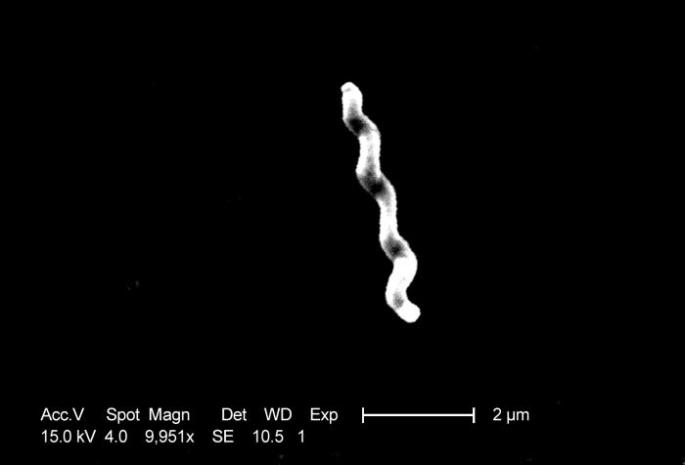
From the CDC: This scanning electron micrograph depicts a number of Gram-negative Campylobacter jejuni bacteria, magnified 9,951x.

Campylobacter is one of the most common bacterial causes of diarrheal illness in the United States. Virtually all cases occur as isolated, sporadic events, not as a part of large outbreaks with about 15 cases diagnosed each year for each 100,000 persons.

Image Credit: Janice Carr