Putin: Spotlight Seeker, Peace Keeper, Russian Defender

By Alena James

For the past several months, Russia, it seems, has been unable to avoid the spotlight.

In June 2013, we watched Russian President Vladimir Putin pass legislation prohibiting the portrayal of homosexuality—or “propaganda”—in the media.  The action sparked a backlash among LGBT Rights protesters.

In August, we witnessed Putin serve as a liaison between Syrian President, Bashar al-Assad, and the rest of the international community by encouraging Assad to concede his country’s chemical weapons stock piles after the use of chemical weapons in Damascus. This action led to increased tensions between the US and Russia.

In February 2014, we saw Russia in all of its glory as they hosted the Winter Olympics in Sochi, even despite rumors that the games would be the target of a Chechen terrorist attack.  Now this March, we see Russia back in the spotlight for its gutsiest move of the year.

Last weekend, Russian troops (bearing no Russian insignia) invaded Ukraine’s Crimean Peninsula.  The invasion came at a time when the ousting of Ukrainian President Viktor Yanukovych, created a leadership vaccum and left pro-Russian and pro-Ukrainian factions to fight against each other to determine the fate of the new Ukrainian government. Until last week, Putin had remained silent on the issue, but has now announced the mobilization of troops into the region to be at the request of PresidentYanukovych; who is wanted by the interim Ukrainian government for the mass murder of at least 75 protesters. Ukrainians protesting the mobilization in Crimea are appealing to western countries for support and a NATO meeting was scheduled for Wednesday to discuss the Crimean Crisis.

In an interview, Putin announced his unwillingness to consider the intermediate leaders controlling the Ukrainian government legitimate, and said Yanukoych is still Ukraine’s president. The Russian President further declared that the mobilization of troops into the peninsula was done at the request of the Yanukoych and within his scope as Russian President in order to protect all Russians residing in Ukraine.

So, what is Putin thinking? Could his negotiations with the ousted president be another display of his own political pageantry and expression of dominance in the region? Or are his intentions genuinely within the interests of the Russian people residing in Ukraine? Is it possible that Putin really just wants to test the US to see hard it can push? Or is Putin dreaming of a newly reconstructed Soviet Union envisioning himself as the supreme leader? Perhaps, he is just tired of western powers engaging in the region?  Let us know what you think by leaving your comments below.

For a transcript of Vladimir Putin’s interview can be found from the Washington Post.

Image Credit: http://www.kremlin.ru.

This Week in DC: Events

Monday, March 10

Ukraine on the Brink: A Conversation with Yevgeny Kiselyev
Date: March 10, 2:15-4:00pm
Location: Carnegie Endowment for International Peace

The situation in Ukraine remains extremely tense. Each day brings dramatic developments from the region and a marked deterioration in Russia’s relations with the United States and other Western governments.

Renowned television journalist and political analyst Yevgeny Kiselyev will discuss the ongoing crisis in Ukraine. Kiselyev has been a preeminent voice in Russian and Ukrainian media and political circles for more than two decades. Carnegie’s Andrew S. Weiss will moderate the discussion.

Registration required.

Tuesday, March 11

Advancing the Kerry Peace Process
Date: March 11, 12:00- 1:30pm
Location: Human Rights Campaign, 1640 Rhode Island Avenue, NW, Washington DC 20036

The Middle East Institute’s George and Rhonda Salem Family Foundation Lecture Series presents a discussion about the current status of the peace process and the challenges faced by Secretary of State John Kerry as he seeks to forge a historic agreement. The talk will feature three veteran peace process experts – Daniel Levy, Aaron David Miller, and Shibley Telhami – who will analyze the obstacles and opportunities and assess the next steps key actors and international players must take to ensure the success of the negotiations.

Registration required.

Toppling Qaddafi: Libya and the Limits of International Intervention
Date: March 11, 5:00-6:00pm
Location: Johns Hopkins School of Advanced International Studies, The Rome Building, Room 806

Christopher Chivvis, adjunct professor in the European and Eurasian Studies Program and senior political scientist at the RAND Corporation, will discuss his new book Toppling Qaddafi: Libya and the Limits of International Intervention. Karim Mezran, adjunct professor of Middle East Studies at SAIS, will join the discussion.

Iran Nuclear Deal: Breakthrough or Failure?
Date: March 11, 5:00pm
Location: Jack Morton Auditorium at GW, 805 21st St NW, Washington DC

The interim nuclear agreement with Iran has been hailed by proponents as a major step forward:  delaying Iran’s progress toward a nuclear weapon capacity, and giving time for further negotiations aimed at ratcheting back the program.  These advocates see a new kind of leader in President Rouhani, and want to show moderates in Iran that cooperation with the rest of the world yields benefits — such as sanctions relief.   However, skeptics argue that the nuclear deal steps back from five UN Security Council Resolutions demanding that Iran stop nuclear enrichment, and starts to unwind sanctions on Iran, without Iran being obliged to unwind its nuclear program.  They see Rouhani buying time for Iran’s program while giving up nothing.  What comes next?   Is the interim agreement a diplomatic success on the road to further progress, or will it serve only to cement Iran’s nuclear program?  Hear leading American experts debate “The Iran Nuclear Deal:  Breakthrough or Failure” — the latest in our debate and decision series at the McCain Institute.

Panelists include: Robert Einhorn, Senior Fellow, The Brookings Institution; Karim Sadjadpour, Senior Associate, Carnegie Endowment for International Peace; Bret Stephens, Deputy Editor, The Wall Street Journal; and Reuel Gerecht, Senior Fellow, Foundation for Defense of Democracies. Award-winning journalist and former CNN Chief White House Correspondent Jessica Yellin will serve as the debate moderator.

To register for the debate, click here.

Wednesday, March 12

The Future of Global Nuclear Security Policy Summit
Date: March 12, 8:00-10:00am
Location: The Knight Broadcast Studio at the Newseum, Third Floor, 555 Pennsylvania Ave NW, Washington DC 20001

Early in his first term in office, President Obama identified nuclear terrorism as “the most immediate and extreme threat to global security” and hosted the first Nuclear Security Summit in Washington, DC, with a goal to secure all vulnerable nuclear materials. Years later, supporters and critics of the Obama administration alike continue to underscore the importance of this task as focus turns now to the third Nuclear Security Summit, this time in The Hague in late March.

The 2014 Summit is being held at a time of both progress and peril in the international effort to secure the materials that could be used to build a nuclear bomb. Since 2012, seven countries have removed all or most of these dangerous materials from their territories, bringing the number of countries now storing weapons-usable materials down to 25, according to a new report out by the Nuclear Threat Initiative. Despite this progress, there is much work to be done. Terrorist organizations continue to seek weapons of mass destruction, materials are still stored at hundreds of sites with varying levels of security, and the International Atomic Energy Agency each year receives reports of more than a hundred incidents of theft and other unauthorized activity involving nuclear and radiological material.

What tangible results should we expect out of The Hague summit in two weeks? What work remains to be tackled by leaders over the next two years on the road to 2016? Is Congress a support or a hindrance? And as we approach the 5th anniversary of President Obama’s Prague speech, laying the foundation for his broad nuclear agenda and addressing nuclear weapons in the 21st century, how is his legacy on nuclear issues taking shape?

RSVP required.

Securing America’s Future in the New “Interwar Years”
Date: March 12, 9:00am-4:00pm
Location: Brookings Institution, Falk Auditorium, 1775 Massachusetts Ave, NW, Washington DC 20036

The fifth annual Military and Federal Fellow Research Symposium, hosted by the Center for 21st Century Security and Intelligence at Brookings, will feature the independent research produced by the members of each military service and federal agencies who have spent the last year serving at think-tanks and universities across the nation. Organized by the fellows themselves, it is intended to provide a platform for building greater awareness of the cutting-edge work that America’s military and governmental leaders are producing on key policy issues.

The theme of this symposium will be “Securing America’s Future in the New Interwar Years,” reflecting post-Afghanistan security priorities, fiscal austerity and burgeoning challenges. Panel discussions will focus on fellows’ independent research findings in the areas of emerging grand strategy, enduring regional issues, opportunities and challenges for unmanned systems and developing the force for the future. Dr. David Kilcullen, author and president of Caerus Associates, a global strategic design consulting firm, will deliver opening remarks, and Lieutenant General Edward C. Cardon, commander U.S. Army Cyber Command, will give a keynote address.

After each panel, participants will take audience questions. Dress is business attire or working uniform. Lunch is provided.

Registration required.

Cold Peace: China-India Rivalry in the Twenty-First Century
Date: March 12, 11:00am-12:00pm
Location: Heritage Foundation, Lehrman Auditorium

The 21st Century is likely to witness Asia’s two largest civilizations – China and India – join the United States in an elite club of global superpowers. By some economic indicators, the two Asian giants are already the second and third largest economies in the world, and they are developing world-class militaries to complement that economic clout. While Beijing and Delhi have spent the past 50 years free from armed conflict, elements of rivalry have shadowed the relationship since the two countries went to war in 1962 over their disputed Himalayan border. In the 21st Century, the rivalry has evolved in unpredictable ways, as India has moved toward a strategic partnership with the U.S. and has expressed growing concerns about Chinese aggression and militarism.

In Cold Peace: China–India Rivalry in the Twenty-First Century, Jeff M. Smith examines the complex layers of the contemporary China–India rivalry. He draws from over 100 interviews with subject-matter experts, government officials, and military officers in India, China, and the United States between November 2011 and July 2013. Additionally, he brings the special benefit of his rare and unique field research at the disputed China–India border in Ladakh and Arunachal Pradesh; at the contested town of Tawang in the Himalayas; at Dharamsala, the seat of the Tibetan Government in Exile; at the Andaman and Nicobar Islands; and on Hainan Island, which administers China’s South China Sea territories.

Registration required for in person attendance or watch online.

Understanding Brazil’s Nuclear Policy
Date: March 12, 12:00-2:00pm
Location: Carnegie Endowment for International Peace, 1779 Massachusetts Ave NW, Washington DC 20036

For a country whose importance in the global nuclear order is of potentially great significance, remarkably little is understood about the domestic drivers behind Brazil’s nuclear policy decision making. Brazil is moving toward industrializing a full nuclear fuel cycle. It operates nuclear power plants and plans to build more. It is the only non-nuclear-weapon state to work on a nuclear-powered submarine. And it does not shy away from being a confident voice on the matters of global nuclear politics.

Based on numerous conversations over two years with Brazilian policy experts, academics, former and current officials, and representatives of the nuclear industry, Togzhan Kassenova will reflect on how Brazilians think about and explain their country’s nuclear policy. The discussion will mark the release of Kassenova’s new report Brazil’s Nuclear Kaleidoscope: An Evolving Identity. Copies of the report will be available. George Perkovich will moderate.

Lunch will be served beginning at 12:00 p.m. The event will begin at 12:30 p.m. Join the conversation on Twitter @carnegienpp with #NuclearBrazil.

Registration required.

Crisis in the Horn: How Can the U.S. Support a More Stable and Secure Somalia?
Date: March 12, 12:30- 2:00pm
Location: Johns Hopkins School of Advanced International Studies, The Bernstein-Offit Building, Room 500

J. Peter Pham, director of the Atlantic Council’s Africa Center; Harun Maruf, senior editor and international broadcaster at Voice of America’s Somalia Service; and Peter Lewis, associate professor and director of the African Studies Program, will discuss this topic.

Thursday, March 13

Do Defense Plans and Budgets Add Up? The Quadrennial Defense Review in Context
Date: March 13, 12:15-1:30pm
Location: Rayburn House Office Building, Room 2226 Washington DC

The Quadrennial Defense Review (QDR) was intended to determine the size and cost of the armed forces America needs to fulfill its strategic obligations. However, since its creation, the effort has largely failed to meet expectations. With the latest strategy just released, did the Pentagon get it right this time?

Please join Represenative Randy Forbes (R-VA), AEI, the Heratige Foundation, and the Foreign Policy Initiative for a timely discussion on the 2014 QDR and the future of American defense strategy in an era of constrained budgets.

RSVP required.

Hearing: Advancing U.S. Interests Abroad: The FY 2015 Foreign Affairs Budget
Date: March 13, 1:30pm
Location: 2172 Rayburn House Office Building, Washington DC 20515

Scheduled Witness, Secretary of State John F. Kerry.

The Future of Energy: North American Energy Security
Date, March 13, 5:30pm
Location: The Embassy of Canada, 501 Pennsylvania Ave NW, Washington DC

Young Professionals in Foreign Policy (YPFP) and Young Professionals in Energy (YPE) are pleased to invite you to the second event in the ongoing seriesThe Future of Energy.  Please join us on Thursday, March 13th from 5:30-7:30 pm at the Canadian Embassy for an in depth discussion of Canadian federal and provincial level energy and climate change policy and the U.S.-Canada relationship that underpins these vital issues.

We will hear from Ms. Sheila Reirdon, Minister of Political Affairs at the Embassy, as well as a panel of provincial representatives from the provincial governments of Alberta, Manitoba, Ontario, and Quebec.

RSVP required.

Friday, March 14

QDR 2014: A Post-War Defense Strategy?
Date, March 14, 10:00-11:30am
Location: Reserve Officer Association Building, 1 Constitution Ave NE, Washington DC

The United States Army War College’s Strategic Studies Institute, in partnership with the Reserve Officers Association Defense Education Forum, is proud to sponsor a 90 minute panel discussion “QDR 2014: A Post-War Defense Strategy?” Panelists will offer an assessment of QDR 2014 and its recommended strategic course from a variety of angles ranging from threats, challenges, and major trends; force shape and size; foreign partnerships; technology and innovation; and budget.

Panel members include Dr. John R. Deni, Strategic Studies Institute; Mr. Ben Fitzgerald, Center for a New American Security; Mr. Nathan Freier, Strategic Studies Institute; Dr. Maren Leed, Center for Strategic and International Studies; and Mr. Russell Rumbaugh, The Stimson Center.

Registration required.

Lebanon’s Neutrality Toward the Syrian Conflict: Hot Air or Realistic Promise?
Date: March 14, 10:30am-12:00pm
Location: Atlantic Council, 1030 15th Street NW, 12th floor-West Tower, Washington DC

To prevent the Syrian conflict from completely destabilizing Lebanon, its government has maintained an official policy of disassociation. Yet even if rival factions can agree to maintain this policy of neutrality in the new cabinet formed on February 15, its relevance to reality on the ground would be unclear. In truth, Hezbollah, its domestic rivals, and Lebanon’s security forces have been involved in the Syrian conflict to varying degrees since it began. It is now increasingly clear that the longer the war goes on, the harder it will be for Lebanon’s political factions to keep up the pretense of neutrality. Without an agreement to limit infighting over and involvement in Syria, Lebanon’s government is unlikely to make progress on reforms, economic development, or addressing the country’s other serious challenges.

Please join us for a discussion on the prospects of Lebanese neutrality towards Syria’s civil war, and the critical implications for security and stability in Lebanon. Bilal Saab is a senior fellow at the Atlantic Council’s Brent Scowcroft Center, specializing in the politics, security, and defense-industrial affairs of the Gulf and the Levant. Dr. Paul Salem is vice president for policy and research at the Middle East Institute. Faysal Itani, who focuses on the Levant at the Atlantic Council will moderate the discussion.

Registration required.

Explaining the Latest Developments in Ukraine
Date: March 14, 12:00-1:00pm
Location: Elliot School of International Affairs, 1957 E Street, NW, Room 505, Washington DC

After three months of protests kicked off by former President Viktor Yanukovych’s refusal to sign an Association Agreement with the European Union, Ukraine’s parliament removed him from office and set new presidential elections for May. Shortly afterwards, Russia invaded Crimea, pouring thousands of troops across the international border to gain decisive control of the region. Please join us for a discussion of these issues and their subsequent developments, as well as the economic situation in Ukraine, and an analysis of the international response.

Sergiy Kudelia is an assistant professor of political science at Baylor University in Texas. Anders Aslund is a senior fellow at the Peterson Institute for International Economics. Matthew Rojansky is the director of the Kennan Institute.

RSVP required.

Nuclear Security and Japan’s Plutonium Path
Date: March 14, 1:30-3:30pm
Location: The Brookings Institution, Falk Auditorium, 1775 Massachusetts Ave, NW Washington DC

At the third Nuclear Security Summit in The Hague, beginning March 24, world leaders will announce new initiatives to secure or eliminate stocks of plutonium and highly-enriched uranium, key building blocks of nuclear weapons that could be stolen by terrorists. But some nations are still producing these materials or plan to begin doing so on an industrial scale.

Japan’s government has just announced a Basic Energy Plan that renews the country’s commitment to plutonium as a fuel for nuclear reactors. The centerpiece of that effort, the Rokkasho Nuclear Fuel Reprocessing Facility, is set to open as early as October 2014 as one of the world’s largest plutonium production installations. The size and suitability of the facility have raised concerns, not only within Japan but in the region and in Washington. What is the status of the policy debate over Japan’s nuclear energy policy, including the Rokkasho plant? Why has Japan’s government chosen to proceed with the plant’s construction and operation? How does the Japanese government plan to deal with the plutonium produced in the plant? And how will Japan’s nuclear energy policy, and especially the operation of Rokkasho, impact efforts to secure and eliminate nuclear materials?

On March 14, the Brookings Institution, the Stanley Foundation and the Center for Public Integrity will host a panel to discuss these issues. Brookings Senior Fellow Robert Einhorn, former special advisor to Secretary of State Hillary Clinton, will serve as moderator. Panelists include Douglas Birch, senior national security reporter for the Center for Public Integrity; R. Jeffrey Smith, managing editor for national security at the Center for Public Integrity; Matthew Bunn, a principal investigator at the Kennedy School’s Project on Managing the Atom, Harvard University; and Ambassador Nobuyasu Abe, director for the Center for the Promotion of Disarmament and Non-Proliferation and former U.N. undersecretary-general for disarmament affairs.

Following the discussion, panelists will take questions from the audience.

Registration required.

UPDATED: Biodefense Policy Seminar: March 31, 2014, 7:20pm

Seminar Title:  ”Biological weapons non-proliferation, biosecurity and counter-terrorism: an international perspective”
Speaker: Dr. Dana Perkins
Date: Monday, March 31st, 2014
Time: 7:20PM
Location: Mason Hall, Room D003

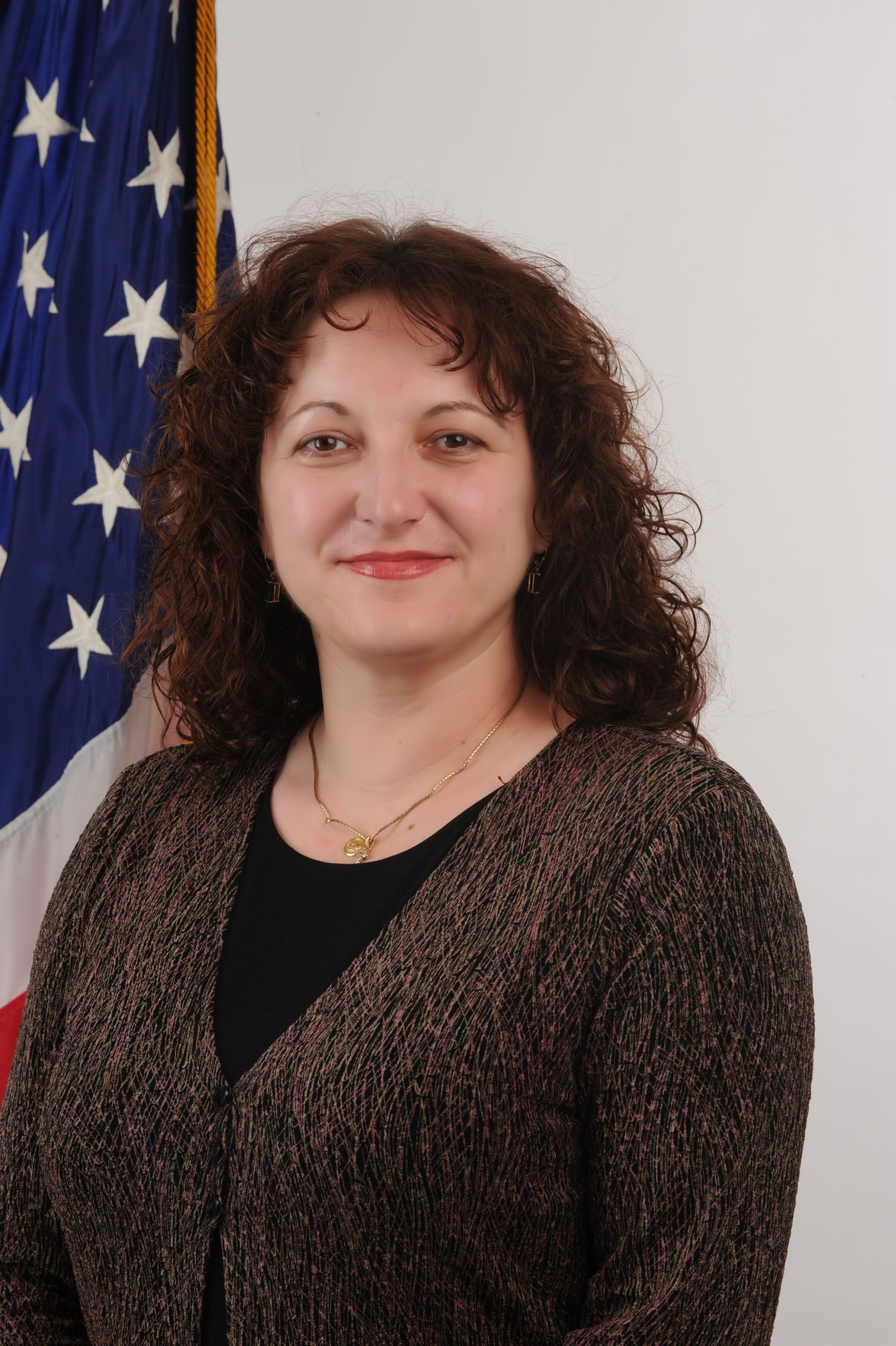
danaOur March Biodefense Policy Seminar features Dana Perkins, Senior Science Advisor, DHHS — member of the 1540 Committee Group of Experts. Dr. Perkins earned a Master’s Degree in Biochemistry from the University of Bucharest, Romania. She also earned a PhD in Pharmacology and Experimental Therapeutics in 2002 from the University of Maryland, Baltimore, where she specialized in Microbiology/Neurovirology. In 2012-2013, Dana Perkins served in a US Government-seconded position as a member of the Group of Experts supporting a subsidiary body of the United Nations Security Council, the 1540 Committee. The 1540 Committee was established pursuant to resolution 1540 (2004) to monitor the implementation of this resolution worldwide. In her prior position with the US Department of Health and Human Services (HHS), she led the Biological Weapons Nonproliferation and Counterterrorism Branch in the Office of Policy and Planning, Office of the Assistant Secretary for Preparedness and Response (ASPR). At HHS/ASPR, some of her responsibilities and duties included providing subject matter expertise, inter-agency coordination, and senior level policy advice on the scientific (biodefense and biosecurity) and public health aspects of national and international emergency preparedness and response; directing and coordinating national and international progress on issues related to biodefense and biosecurity; developing and reviewing policies on biosecurity, biological weapons nonproliferation, and health security; and performing expert analysis and preparing implementation plans to support the US Government biodefense and biosecurity policy.

Charles Duelfer at GMU

From the February 2014 Biodefense Policy Seminar, Charles Duelfer spoke to attendees about his role as Special Advisor for the Director of Central Intelligence for Iraq WMD and as a member of the ISG who investigated Iraq’s WMD program. An insightful conversation on chemical weapons around the world is also included.

Pandora Report 3.7.14

Editor’s note: Greetings Pandora Report subscribers! I hope you enjoyed that goofy video last week. For my first official Pandora Report, I rounded up some great stories (including a look back at history. As a social scientist, I really couldn’t help myself!)

Highlights include Botulism research and development, CDC antibiotic warning, the Nazi insect weapons program, and Marburg. Happy Friday!

Hawaii Biotech awarded $5.5M contract to develop anti-botulism drugs

Hawaii Biotech Inc. received a $5.5 million contract from the Department of Defense to continue development of drugs to treat botulinum toxin—a life threatening disease which currently has no known treatment. This grant was in addition to an existing $7.4 million grant held by Hawaii Biotech to develop anti-anthrax drugs.

Pacific Business News – “Under the contract, Hawaii Biotech will be working to improve its current anti-botulinum toxin inhibitor drug candidates that have demonstrated activity in pre-clinical testing with the goal of enhancing the stability, bioavailability and safety of these drug candidates so they can be used in humans.”

CDC: Antibiotic Overuse Can Be Lethal

The Centers for Disease Control and Prevention released a report Tuesday criticizing the overuse of antibiotics in hospitals and the consequences of these actions. Though prescribing practices vary between hospitals and doctors, the report highlights discrepancies across patients with similar symptoms and illnesses and urges caution in use of powerful antibiotics.

The Wall Street Journal – “Overprescribing antibiotics is making many of these drugs less effective because superbugs resistant to them are developing so fast. The practice also can sicken patients, by making them vulnerable to other types of infections such as Clostridium difficile, a bacterial infection.”

Nazi scientists planned to use mosquitoes as biological weapon

In 1942, Heinrich Himmler, head of the SS, ordered the creation of an entomological institute at the Dachau concentration camp. But why? Supposedly it was to study lice, fleas, and similar pests that were causing problems for German soldiers. However, a recent report offers an additional answer.

The Guardian – “In 1944, scientists examined different types of mosquitoes for their life spans in order to establish whether they could be kept alive long enough to be transported from a breeding lab to a drop-off point. At the end of the trials, the director of the institute recommended a particular type of anopheles mosquito, a genus well-known for its capacity to transmit malaria to humans.

With Germany having signed up to the 1925 Geneva protocol, Adolf Hitler had officially ruled out the use of biological and chemical weapons during the Second World War, as had allied forces. Research into the mosquito project had to be carried out in secret.”

Army one step closer to treatment against deadly Marburg virus

Exciting news, this week, regarding the development of a drug which may be able to prevent Marburg hemorrhagic fever virus from replicating in animals. The drug, BCX4430, was developed in partnership with BioCryst Pharmaceuticals Inc. through a grant from the National Institute of Allergy and Infectious Diseases (NIAID).

The Frederick News-Post – “‘The drug works by using a compound that “tricks” the virus during the RNA replication process by mimicking it,’ said Travis Warren, [a principal researcher at the U.S. Army Medical Research Institute of Infectious Diseases at Fort Detrick.] ‘Once the virus incorporates BCX4430 into its RNA, the virus is forced to end further replication. If the virus can’t effectively replicate its RNA genome, it can’t produce more infectious virus. It has no other options than to end that replication cycle.’”

(image courtesy of CDC/ James Gathany)

Measles making a comeback through unvaccinated individuals

By Chris Healey

Unvaccinated individuals are promoting the spread of measles in the United States.

In a public statement on February 21, health officials said seven of fifteen confirmed measles cases in a 2014 California outbreak were reported in individuals who never received a measles vaccine. Health officials have not determined the vaccination status of 6 cases in the outbreak but it is known that in two cases the patients received the vaccine. Over 39,000 cases of measles were reported in California before the measles vaccine was licensed in 1963. In 2005, a record low of four cases were reported.

This outbreak in California is part of a measles resurgence facilitated by rising numbers of unvaccinated individuals. Similar measles trends have been reported across the U.S. According to the CDC, the average number of U.S. measles cases from 2001 to 2010 was 69.  In 2013, there were 189 cases.

Measles vaccines are delivered in one of two products produced by Merck– M-M-R II and ProQuad. Both are live-attenuated vaccines, which uses viruses incapable of replication as the pharmacologically-active ingredient. Health experts consider live-attenuated vaccines the most effective of all vaccine types. The measles vaccine schedule recommended by the CDC is 99% effective in conferring immunity.

Vaccination of children after measles vaccine licensure was credited with the elimination of measles in the U.S. in 2000. Measles occurs in the U.S. when individuals are exposed abroad and return to the country.  Health officials said three cases in the California outbreak recently traveled to the Philippines. Two traveled to India. Other cases had contact with individuals who traveled abroad.

A growing number of individuals are choosing not to vaccinate their children. Vaccination avoidance has been fueled by unsubstantiated claims of vaccines causing autism in children. The CDC maintains there is no evidence to support a relationship between vaccination and autism. In fact, a recent study published in The Journal of Pediatrics showed no causal link between vaccination and autism.

The CDC’s website states symptoms of measles include fever, cough, inflammation of the mucous membrane, conjunctivitis and a characteristic maculopapular rash. Symptomatic individuals have a chance of developing acute encephalitis and subacute sclerosing panencephalitis, or SSPE, a degenerative disease of the central nervous system. SSPE causes seizures, behavioral problems and intellectual deterioration.

Measles has a fatality rate ranging from one to three deaths for every 1000 cases in the U.S.

Unvaccinated individuals should consult their doctor about receiving a measles vaccine.


Photo Credit: CDC/ Amanda Mills

Arenaviridae

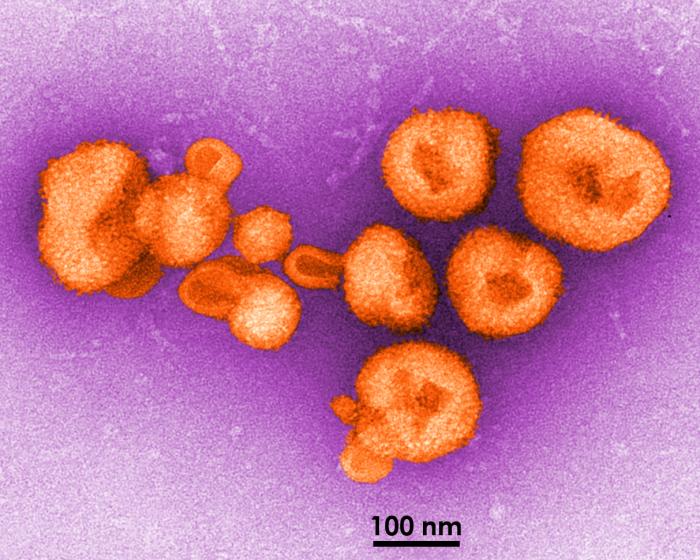
This transmission electron micrograph depicted eight virions (viral particles) of a newly-discovered virus, which was determined to be a member of the genus, Arenavirus. A cause of fatal hemorrhagic fever, it was confirmed that this virus was responsible for causing illness in five South Africans, four of whom died having succumbed to its devastating effects. Ultrastructurally, these round Arenavirus virions displayed the characteristic “sandy”, or granular capsid, i.e., outer skin, an appearance from which the Latin name, "arena", was derived. See PHIL 10838 for a black and white version of this image.  Other members of the genus Arenavirus, include the West African Lassa fever virus, lymphocytic choriomeningitis (LCM), and Bolivian hemorrhagic fever (BHF), also known as Machupo virus, all of which are spead to humans through their inhalation of airborne particulates originating from rodent excrement, which can occur during the simple act of sweeping a floor.

From the CDC: “This transmission electron micrograph depicted eight virions (viral particles) of a newly-discovered virus, which was determined to be a member of the genus, Arenavirus. A cause of fatal hemorrhagic fever, it was confirmed that this virus was responsible for causing illness in five South Africans, four of whom died having succumbed to its devastating effects.

Ultrastructurally, these round Arenavirus virions displayed the characteristic “sandy”, or granular capsid, i.e., outer skin, an appearance from which the Latin name, “arena”, was derived. See PHIL 10838 for a black and white version of this image.

Other members of the genus Arenavirus, include the West African Lassa fever virus, lymphocytic choriomeningitis (LCM), and Bolivian hemorrhagic fever (BHF), also known as Machupo virus, all of which are spread to humans through their inhalation of airborne particulates originating from rodent excrement, which can occur during the simple act of sweeping a floor.”

Image credit: CDC/Charles Humphrey

Nepal Moves To Ratify BWC

by Alena M. James

Last week the Nepalese Government, working with the United Nations Office for Disarmament Affairs, made efforts to develop strategies for the national implementation of the Biological Weapons Convention during the Workshop on National Implementation of the Biological Weapons Convention (BWC). With assistance from the United Nations Regional Centre for Peace and Disarmament in Asia and the Pacific, the BWC Implementation Support Unit, and with financial support from the European Union, the workshop on implementing the BWC was held in Katmandu February 20-21.

During the workshop individuals representing 12 agencies of the Nepalese Government, officials from the UNRCPD, members from the EU, and subject matter experts gathered to discuss topics which must be considered for Nepal to start the ratification process of the BWC.  Several topics discussed during the workshop included methods to enhance confidence-building measures by the state, treaty enforcement measures, the development of codes of conduct, and the establishment of biosafety and biosecurity standards. Dr. Jean Pascal Zanders, an international expert on CBRNs nonproliferation, and Yasmin Balci, a legal officer from VERTIC, a non-profit organization dedicated to advising states on the national implementation of BWC, provided their insight and expertise in helping Nepal’s agency representatives to initiate an effective trajectory towards ratification of the treaty.

Currently, there are 110 Signatory States to the BWC and 168 State Parties. However, ten signatory states have yet to ratify the treaty including Syria; which some allege as possibly having a BW program. Opening for signature in 1972, the BWC was the first treaty to outlaw a specific type of WMD. The treaty was enforced in 1975 and bans the production, stockpiling, and use of biological weapons. Its purpose is to prevent the proliferation and use of such weapons by members of the international community.

Since its inception, the BWC has faced a plethora of challenges especially with regards to its verification process. Unlike the NPT and the CWC, the BWC does not have a verification regime to ensure state compliance.  As a result, the BWC holds review conferences every five years to discuss challenges facing the BWC and mechanisms for improving verification protocol.  So far, the use of confidence building measures have been the primary tools used by the treaty to prohibit these weapons. There are six measures that BWC member states must adhere to which includes the declaration of past offensive and defensive programs, the declaration of vaccine production facilities, and the active exchange of scientific information between states.  The primary goal of the measures is to encourage all states to be both open and transparent regarding state supported scientific research and development operations.

The reliance on states voluntarily complying with the confidence building measures and the work-in-progress verification system of the BWC have been attacked by many critics as the BWC’s most fundamental weakness.  Despite this criticism, one aspect of the BWC that deserves applause is the collaborative efforts of the UN, the BWC Implementation Support Unit, and the EU aiding countries to move towards national implementation of the BWC. In the absence of an authorized verification regime, this collaborative group of intergovernmental organizations has stepped up by taking an active approach in getting countries to uphold their commitments to the BWC. The collaborative group has done so by making workshops such as those held in Kathmandu possible.

The workshop held in Nepal is one of several workshops hosted by the UNODA, the Support Unit, and the EU in the past few months to generate BWC compliance. These workshops are a part of the EU’s BWC Action project which sets out to provide human resources, logistical resources, financial resources, and equipment to states in order to reach universal compliance of the BWC.  On September 3, 2013, the collaborative group orchestrated the Regional Workshop on the National Implementation of the Biological Weapons Convention in South and South-East Asia.  Like the workshop held in Kathmandu, this workshop brought together a number of key individuals to discuss BWC implementation strategies.  In early December 2013, the UNODA  worked with United Nations Regional Centre for Peace and Disarmament in Africa (UNREC) to host two national workshops in the countries of Benin and Burkina Faso facilitating open dialogue regarding the implementation of the BWC.

While critics of the BWC point to the lack of a verification body as a weakness, it seems this appears to be promoting active participation by intergovernmental organizations like the EU to encourage states who have not ratified the BWT to do so.  Such active participation and international collaboration is exactly what the global community needs in order to promote international security against the threats of such WMDs.

In August 2013, the international community witnessed the alleged use of another type of WMD prohibited by the CWC. Syria, a then non-party member of the CWC, was accused of deploying chemical weapons on its own civilians.  The use of chemical weapons by the Syrian government has not yet been confirmed and speculations on the deployment of the chemical weapons by rebel forces continue to circulate. An analytical study executed by MIT professor Theodore Postol and former UN weapons inspector Richard Lloyd, suggests plausibility in the idea that the rebel forces fighting against the Bashar Al Assad regime may be responsible for using chemical weapons against civilians. Such a suggestion, if confirmed true, would exculpate the Syrian government.

As the international community’s investigation of chemical weapons deployment in Syria continues, there is already an important lesson that the Syrian case portrays. This lesson lies in the inability of the UN and the CWC’s verification regime, Organisation for the Prohibition of Chemical Weapons (OPWC), in identifying the perpetrators of the attacks. This ambiguity of the origin of the chemical weapons demonstrates a futuristic challenge that the international community could experience if a state not party to the BWC (or who has not yet ratified the treaty) faced alleged uses of biological weapons.  It is for this reason that the collaborative efforts of intergovernmental organizations like UNODA and the EU, must continue to facilitate open dialogue regarding universal compliance of the BWC. The workshops held by the UNODA in states that have not yet ratified the Biological Weapons Treaty provide an active approach that pushes to make universal compliance of this 42 year old treaty a reality.

The initial coverage on the Workshop on National Implementation of the Biological Weapons Convention (BWC) in Nepal can be found at unrcpd.org.

Photo credit.

This Week in DC: Events

Tuesday, March 4

Joint Subcommittee Hearing: Iran’s Support for Terrorism Worldwide
Date: March 4, 10:00am
Location: 2172 House Rayburn Office Building, Washington, DC 20515

Chairman Ted Poe (R-TX) says, “Iran is the world’s largest state sponsor of terrorism and a threat to peace and security not only in the Middle East, but around the globe. Using its Revolutionary Guard Corp, Iran funds, arms, trains, and commands terrorists worldwide. While it is most known for directing its proxy Hezbollah in Lebanon and Syria, Iran has also sponsored attacks in countries including India, Thailand, Georgia, Kenya, and even here at home in the United States. As the Administration negotiates with Iran over its nuclear program, we must not lose focus and forget Iran’s involvement in terrorism. This hearing will examine how to stop Iran’s proxy warfare.”

Chairman Ileana Ros-Lehtinen (R-FL) says, “The Administration has asked the American people to put a lot of faith in it as it continues to negotiate with Iran over Tehran’s nuclear program, yet it continues to keep the details of the Joint Plan of Action shrouded in secrecy. To make matters worse, the Administration is asking the American public to trust that it can ensure that Iran plays by the rules, but we have 35 years of overwhelming evidence that tells us that Iran is simply untrustworthy.  And while all of the focus of these negotiations has been on Iran’s nuclear program, what has gone largely ignored is just how dangerous the Iranian regime truly is. Iran is the world’s foremost state sponsor of terrorism and it seeks to harm the U.S. and our allies at every turn, yet the Administration carries on as if Iran’s nuclear program exists in a vacuum – as if it is unrelated to Iran’s terror activities. This hearing will serve as an important reminder of the dangers of dealing with the rogue regime in Iran, and why it is absolutely critical that Congress continue to press for increased sanctions against Tehran until it completely dismantles its entire nuclear program.”

Witnesses for this committee hearing include:

  • The Honorable Pete Hoekstra, Shillman Senior Fellow at The Investigative Project on Terrorism (Former Chairman of the U.S. House Permanent Select Committee on Intelligence)
  • Matthew Levitt, Ph.D., Director and Fromer-Wexler Fellow Stein Program on Counterterrorism and Intelligence at The Washington Institute for Near East Policy
  • Mr. J. Matthew McInnims, Resident Fellow at the American Enterprise Institute

Nuclear Abolition and the Catholic Peace Tradition
Date: March 4, 4:30 PM – 6:00 PM
Location: Third Floor Conference Room, Berkeley Center for Religion, Peace & World Affairs at Georgetown University, 3307 M Street, Washington, DC 20007

At this welcome event, Fr. Drew Christiansen, S.J. will explain his work in the Berkley Center’s new Church and the World Program in light of his life as a Jesuit “on the boundary” between the Church and world. In particular, he will discuss Georgetown’s Catholic Nuclear Threat Initiative and its parallel sources in Catholic social teaching and in US policy. He will trace the roots of recent Catholic advocacy for abolition of nuclear weapons in Catholic theology, the Church’s commitment since Pacem in Terris to the promotion of human rights, and the Vatican’s “diplomacy of conscience.” RSVP required

Thursday, March 6

PONI Lunch with Brig. Gen. Jim Dawkins
Date: March 6, 12pm-1:30pm
Location: Room C-115, Center for Strategic and International Studies, 1616 Rhode Island Avenue, NW, Washington, DC 20036

Please join the Project on Nuclear Issues for a lunch talk with Brigadier General Jim Dawkins, Jr. General Dawkins currently serves within the National Nuclear Security Administration’s Defense Programs as the Principal Assistant Deputy Administrator for Military Application (PADAMA). He is responsible for maintaining global nuclear deterrence through effective planning, maintenance, and enforcement of a safe, secure, and reliable nuclear weapons stockpile and its associated materials, capabilities, and technologies. In his role as PADAMA, he serves as a bridge between the National Nuclear Security Administration and the DoD on joint nuclear operational and infrastructural matters, engaging in frequent dialogue with the various military services concerning weapons issues specific to each service and supporting related programming and budget matters pertinent to the NNSA and the DOD.

General Dawkins was commissioned in 1989 from Air Force Officer Training School. He has commanded at the wing, group and squadron level. Prior to his current position, he was the commander, 5th Bomb Wing, Minot AFB, N.D.

General Dawkins will speak about his experiences across the nuclear enterprise and its challenges for the future at this off the record event. To attend, register here or contact Sarah Weiner at (202)741-3878 with questions.

Friday Levity

As you may have noticed, its been a light week here at the Pandora Report. With Siddha’s departure, we have been working hard on getting our new team up and running. It is my pleasure, for my first post as Managing Editor, to introduce myself–Julia Homstad–and two new writers–Alena James and Chris Healey. 

Alena Marie James is a Masters student in the GMU Biodefense program and a Staff Writer for the Pandora Report. Ms. James currently holds a BA in Political Science, a BS in Biology, and an MS in biology from Winthrop University in Rock Hill, South Carolina. She serves as an adjunct instructor at Marymount University where she teaches microbiology and manages several life science laboratories. Ms. James is also currently working on her Masters Project regarding the role of intergovernmental organizations in preventing state actor pursuit of biological weapons programs. She represented George Mason at the 85th Annual Southern Political Science Association Conference this past January presenting preliminary research on the role of intergovernmental organizations in preventing state sponsored BW programs.

Chris Healey is a second-year GMU Biodefense Master’s student and a Staff Writer for the Pandora Report. He graduated magna cum laude from Virginia Tech with a bachelor’s in communication and minors in biology and psychology. In 2013, Chris participated in an internship at the Virginia Department of Health’s Chickahominy Health District office. He was mentored by the district epidemiologist and assisted in foodborne illness investigations. His academic interests include vaccines, medical countermeasures, emerging infectious diseases, and foodborne illnesses. He is currently conducting his master’s project on the causes of success and failure of vaccine production for biodefense.

Julia Homstad is a Master’s student in the GMU Biodefense program and the Managing Editor of the Pandora Report. Julia graduated cum laude with a Bachelor of Arts degree in History and Government and International Politics from George Mason University. Julia also holds a Master of Arts degree in European, Russian, and Eurasian Studies from the University of Toronto where she focused on the development of civil society in post-Communist countries. Since 2009, Julia has worked full-time at American Councils for International Education as a Program Officer for Secondary School Programs. With full funding from the U.S. Department of State, the programs Julia works on bring high school students from over 50 countries around the world to live in the U.S. with a host family for an academic year to help build mutual understanding between their home countries and the United States.

And since its Friday, I will leave you with a quirky video from Aimee Mann, David Wain and Dave Foley.

In her song titled “I’m Cured,” Aimee Mann plays the “common cold” who is forlorn after David Wain, a scientist, discovers a cure for her. The song is available as a digital download both as a single song and as a music video. This July, the song will be available as part of an album, 2776: A Millennium Of American Asskickery. Proceeds from the sale of the track go to OneKid OneWorld, an international organization that uses micro-loans to make a difference in the educational lives of impoverished children. Thank you to Annah Slack for bringing this song to my attention!

I hope everyone has a great weekend and I will see you back here next week for your regularly scheduled programming!