In the News: GMU National Center for Biodefense and Infectious Diseases

GMU Assistant Professor Dr. Kylene Kehn-Hall and others at George Mason University’s Center for Biodefense and Infectious Diseases were in the news yesterday, discussing their cutting-edge research on NanoTrap particles. The NanoTrap particles are capable of capturing and inactivating the virus in question, even when working with very low titers.  Use of the NanoParticles with Rift Valley Fever virus (RVFV), which is considered a potential bioterrorist agent, resulted in a 100-fold increase in sensitivity.

Excerpt of the study’s conclusion (published in PLOS): “This study demonstrates NanoTrap particles are capable of capturing, enriching, and protecting RVFV virions. Furthermore, the use of NanoTrap particles can be extended to a variety of viruses, including VEEV and HIV.”

Read the full article here.

(image credit: CDC/USG)

This week in DC: (Some) Events 8.5.13

With Congress in recess, there’s not a lot happening in the city this week (or much of August generally). Here’s the best of what’s on, for those of who prefer the humidity anyway.

All events:

  1. Monday, August 5
    The Future of Political Islam in Egypt Post-Morsi
    SAIS
    10:00AM – 11:20AMAhmad Atif Ahmad, professor of religious studies at the University of California, Santa Barbara, and Jonathan Brown, associate professor of Islam and Muslim-Christian Understanding at Georgetown University’s Edmund A. Walsh School of Foreign Service, will discuss this topic.
  2. Tuesday, August 6
    Military Strategy Forum with Major General Steven L. Kwast, Director, U.S. Air Force Quadrennial Defense Review
    Center for Strategic and International Studies
    1:30PM – 2:30PMThe past week has brought renewed focus to the QDR. Please join us for a discussion with Major General Kwast, followed by a Q&A.
  3. Wednesday, August 7
    Peace and Stability Operations Colloquium Series: Countering the Lord’s Resistance Army
    GMU School of Public Policy
    1:00PM – 3:30PMSpeakers: Scott Duncan and Charlene Brown (U.S. Department of State). Scott Duncan is a Foreign Affairs Officer in the Bureau of Conflict and Stabilization Operations (CSO) where he supports strategy development for engagements in Africa and leads efforts to integrate new technologies and innovative approaches into conflict prevention efforts…Charlene Brown is a Stabilization Operations Specialist in the Africa Operations team at CSO, where she currently covers Great Lakes and counter-LRA issues.

(image courtesy of Dell)

The Pandora Report 8.2.13

Highlights include H5N1 raging in Nepal, using your phone to detect toxins,  Honduras battling dengue, mutated polio in Pakistan, West Nile rearing its ugly head early, and Ebola, gorillas, and tourism. Happy Friday!

Nepal Avian flu situation “getting out of hand” 

H5N1 is currently raging in Nepal, which is experiencing its 15th outbreak of the poultry-transmitted flu virus in the last couple weeks alone. Local health officials are calling on the government to step in and help stop the virus’ spread, following the death of nearly 25,000 chickens in three districts in the last 20 days. Meanwhile, there are disturbing rumors surrounding the government’s hesitancy to intervene, including lobbying on the part of the Nepali poultry association. With the virus spreading to another two districts in the last week, containment is critical.

eKantipur – “According to the experts, farmers selling the potentially infected chickens in the market in the absence of effective monitoring has worsened the situation. ‘There is total impunity; the authorities know who is at fault, but still they have failed to take immediate action,’ said Dr Shital Kaji Shrestha, General Secretary of the Nepal Veterinary Association. While some farmers have dumped dead birds openly in public places, others have buried them secretly without following the standard procedures. Such practices have increased the chances of the epidemic spreading, experts said. The police on Monday seized 426 chickens that were being transported to Birgunj for sale from a flu-affected farm in Bhaktapur.”

Smartphone cradle, app detect toxins, bacteria

This app/cradle combo turns your average smartphone into a mini biosensor. It was developed for people with food allergies in mind, but we think it could be tweaked for more homeland security/non proliferation purposes (not that allergies are to be taken lightly, peanuts are everywhere these days).

The Sacramento Bee – “The handheld biosensor was developed by researchers at the University of Illinois, Urbana-Champaign. A series of lenses and filters in the cradle mirror those found in larger, more expensive laboratory devices. Together, the cradle and app transform a smartphone into a tool that can detect toxins and bacteria, spot water contamination and identify allergens in food. Kenny Long, a graduate researcher at the university, says the team was able to make the smartphone even smarter with modifications to the cellphone camera.”

Honduras declares state of emergency over dengue fever

Honduras has declared a state of emergency in an effort to bolsters its attempts to contain its dengue outbreak. To date, the outbreak has caused approximately 12,000 cases, of which approximately 1,800 are serious. According the the WHO, 40% of the world’s population, or nearly 2.5 billion people, are at risk for dengue infection.

BBC – “Honduras has declared a state of emergency after an outbreak of dengue fever that has killed 16 people so far this year. The government has promised to step up its fight against the mosquitoes that spread dengue fever. Health Minister Salvador Pineda said more than half of Honduras’ municipalities have registered cases of the viral infection this year.”

Mutated virus heightens polio worries

This is depressing for a couple of reasons. First, Pakistan is one of just three countries in the world where polio is endemic. The last thing they need is a mutated strain. Second, public health officials attempting to halt the virus’ spread do so at tremendous personal risk – tribal leaders earlier this month declared their support for the Taliban’s ban on polio vaccination, as a protest against US drone strikes in the area.  Absurd, yes, but not without possible provocation – keep in mind a 2011 US vaccination campaign in Abbottabad was actually a covert CIA operation, in which the doctors, rather than administering vaccines, were collecting DNA from locals. This resulted in those administering legitimate polio vaccines being labelled as “Western spies”, and refused entry into villages.

DAWN – “Dr Alias Durray, chief of the World Health Organisation’s polio eradication programme in Pakistan, confirmed to Dawn that the strain, which has close genetic similarities with the globally eradicated P2 strain, has paralysed a baby boy in Mastung district of Balochistan…The polio virus has three types of strains termed P1, P2 or P3 strain. Immunity from any one strain does not protect a person from the other strains. The P2 virus had been eradicated globally in 1998, and only the P1 and P3 strains remain. What is sad is that a strain similar to the mutated polio virus had been stopped after it first broke out and struck 15 children in Qila Abdullah area of Balochistan in 2011.”

West Nile Virus Making Early Appearance This Summer

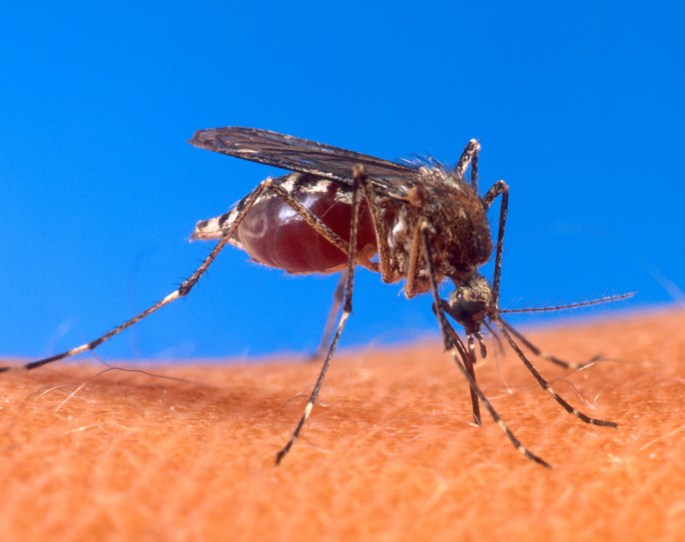
A big part of our job is keeping a close eye on any biodefense-related news (duh), and lately our inbox has been full of West Nile updates. Every day another US county seems to be reporting the virus appearance. With it already active in 29 states, and the worst months in terms of spread to come, it looks like West Nile is fast on the way to a very strong year. If you’re going to be outside at all, now is definitely the time, if you haven’t already, to invest in some mosquito repellent.

The Wall Street Journal –  “West Nile virus is transmitted through bites from infected mosquitoes. Although only one in five people who contract the virus develop symptoms such as fever, headache, body aches or vomiting, the virus can cause serious neurological illnesses that can be fatal, such as encephalitis or meningitis. The 2012 West Nile virus outbreak was the deadliest on record since the illness was first detected in the United States in 1999: 5,674 cases of West Nile virus were reported nationwide, including 286 deaths. Health officials expect the disease to continue to be a formidable public health issue. Because no human vaccine exists, preventing mosquito bites is the most effective way to avoid contracting West Nile virus…”

Saving the Gorillas—and Launching a Nation’s Tourism Economy

There was a very interesting piece in the Atlantic yesterday looking at Ebola in Congolese gorilla populations, and the disease’s impact on preservation efforts. Understanding local populations interaction with potentially infected animals helps create a more complete picture of the virus’ potential spread during an outbreak. Check it out if you have a spare minute and are need to read a news piece with a happy(ish) ending.

The Atlantic – “In November 2002, gorilla trackers outside the village of Mbomo, in the Republic of the Congo, came upon a group of apes that were stressed. One of the trackers described the females as crying. Then the men began finding carcasses in the forest: heaps of matted hair and liquefied organs oozing blood. In a period of four months, 130 of the 143 gorillas the trackers were following died. Later that same year, another 91 of 95 gorillas they were studying were gone. Few words cause a greater chill in any language than ‘Ebola,’ the hemorrhagic fever and lethal virus first detected in equatorial Africa in 1976. Most initial human cases come from contact with infected animals, including consuming them as bush meat–often the most-accessible source of protein in places where there aren’t cattle.”

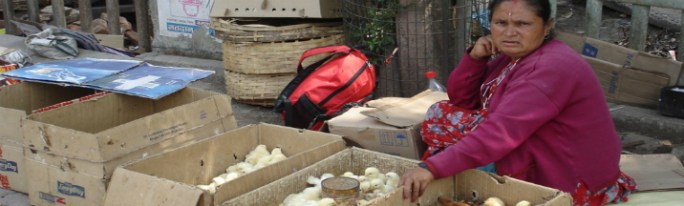
(A Nepali woman sells chickens in Kathmandu – image via Flickr/oliphant)

CDC’s Cyclospora update

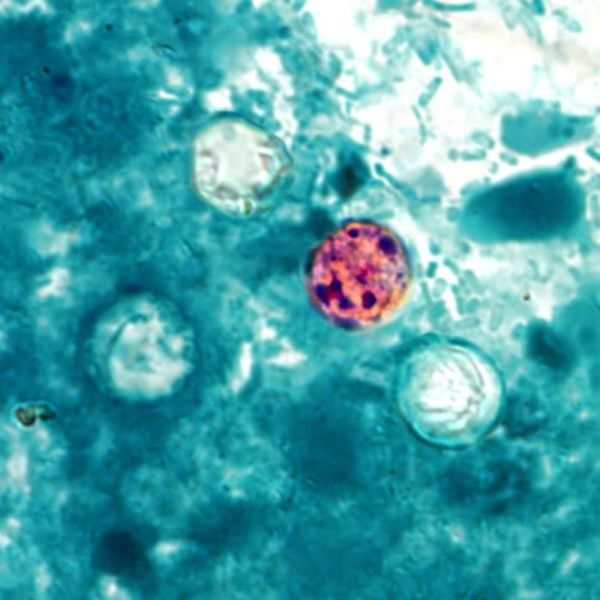
As we’re sure most of you know, the parasite Cyclospora cayetanensis, a protozoan currently causing gastrointestinal symptoms in 397 people in 16 states and New York City. The source of the outbreak is thought to be pre-packaged salad mix in Iowa.

Via the CDC: “Nebraska and Iowa have performed investigations within their states and have shared the results of those investigations with CDC. Based on their analysis, Cyclospora infections in their states are linked to a salad mix. CDC will continue to work with federal, state, and local partners in the investigation to determine whether this conclusion applies to the increase in cases of cyclosporiasis in other states. It is not yet clear whether the cases from all of the states are part of the same outbreak.”

For more information, see here.

Image of the Week

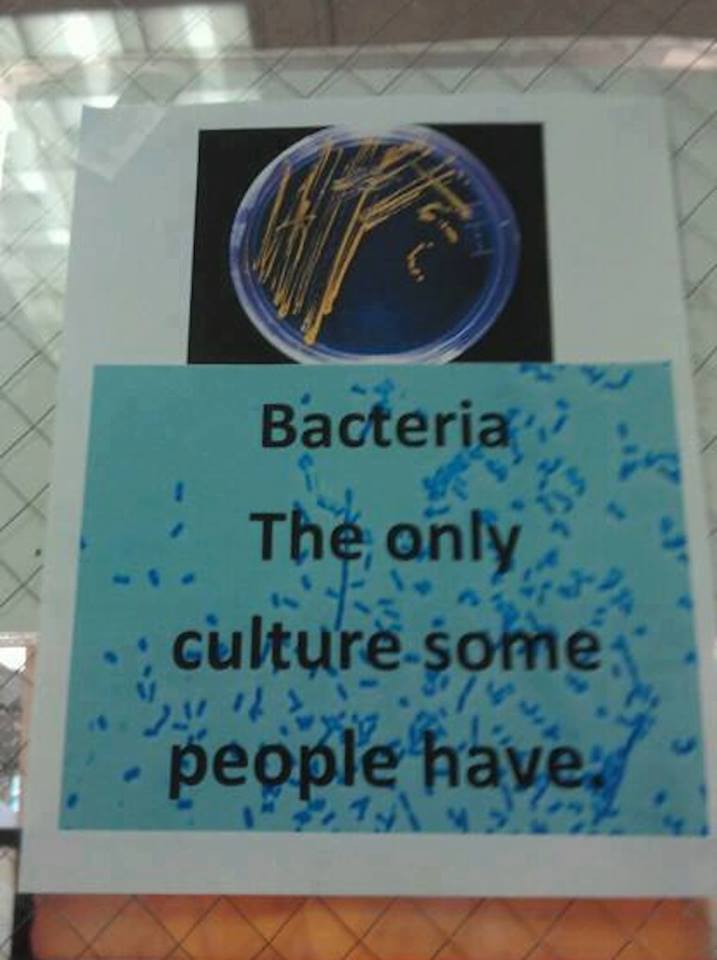
Because most research scientists (and their lab assistants) we know are so busy in the lab, they don’t have time for things like “lives” or “culture”. Luckily bacteria is pretty?

science is awesome

(image via Science is Awesome)


Costa Rica experiencing dual outbreaks of Dengue and H1N1

Public health officials in Costa Rica are scrambling to contain two ongoing outbreaks of dengue and H1N1 respectively. Dengue, one the WHO’s “neglected tropical diseases”, has been making the rounds in Central America, with limited outbreaks of dengue in Nicaragua and Honduras. Costa Rica is currently working on vector control to stop the spread of the mosquito-bourne virus. Meanwhile, Costa Rica is also working to contain a limited H1N1 outbreak, but is struggling with maintaining sufficient numbers of vaccines.

Costa Rica Star – “According to online news daily Costa Rica Hoy, health officials from la Caja estimate that more than $500 million have been spent on treatment and paid sick leave of patients who fall ill from dengue fever. According to actuaries studying figures from La Caja’s hospital and epidemiological expenditures, the costs in 2013 have not only been higher than in the previous year; they are also higher than similar costs during 2008 and 2009 combined. Dengue hemorrhagic fever, which can be fatal, has already claimed a couple of lives in Costa Rica. The Ministry of Health has been actively involved in controlling the vector population of Aedes aegypti, the carrier mosquito that breeds in stagnant pools of water located in the tropics. Efforts in controlling this potentially deadly insect include habitat destruction and fumigation.”

Read more here.


This Week in DC: Events 7.29.13

It’s a slower week in events (end of July lag, everyone wants to be on vacation). We’re especially interested in CSIS’ analysis of US counterterrorism policy on Tuesday morning.

Tuesday, July 30

  • Winding Down the War: What Roles for US and NATO Forces in Afghanistan Post 2014?
    Atlantic Council
    10:00AM – 11:30AM

    The debate on the US and allied role in Afghanistan after 2014 has hit the front pages once again with reporting that the Obama administration is considering a “zero option” that would remove all US troops from the country. Discussions on this topic are taking place at the highest level, including last week at the Senate Foreign Relations Committee, where Senator Robert Menendez (D-NJ), committee chairman, declared that “the United States needs to make clear once again that we are committed to a long-term partnership with Afghanistan. Period.” Meanwhile, even as the United States debates its future presence in Afghanistan, some US allies have already made post-2014 commitments of their own, including Germany and Italy. On July 30, the Atlantic Council’s Brent Scowcroft Center on International Security and South Asia Center will host an event on the strategic imperatives facing the United States and its allies after the 2014 drawdown in Afghanistan.

  • Looking Forward — Challenges Posed by a Nuclear Iran
    The Israel Project (Rayburn House Office Building, Room B-338)
    12:00PM – 2:00PM

    On Tuesday, July 30, The Israel Project (TIP) will host back-to-back panels of experts and policymakers on Capitol Hill to discuss the most recent political, diplomatic, and military developments surrounding Iran’s nuclear program.

    Members of Congress and analysts will discuss the status of Iran’s military nuclear infrastructure, U.S. security considerations, and the implications of Hassan Rouhani’s August 4 inauguration. They will focus on potential policy responses to these developments. Panelists include Congressman Ed Royce, Chairman of the House Foreign Affairs Committee; Congressman Eliot Engel; Ranking Member of the House Foreign Affairs Committee; Congressman Ted Deutch, Ranking Member of the House Subcommittee on the Middle East and North Africa; Ilan Berman, Vice President of the American Foreign Policy Council; and Professor Orde Kittrie, a Senior Fellow at the Foundation for Defense of Democracies and a Professor of Law and Arizona State University. All panelists are confirmed. Lunch will be served.

Wednesday, July 31

  • An Assessment of Counterterrorism Policy
    Center for Strategic and International Studies
    8:30AM – 9:30AM

    Featuring: The Honorable Michael McCaul (R-TX), Chairman, The House Committee on Homeland Security. Introductory remarks by: Dr. John Hamre, President, CEO, and Pritzker Chair, CSIS. Moderated by: Stephanie Sanok Kostro, Acting Director, Homeland Security and Counterterrorism Program and Deputy Director, International Security Program, CSIS.

  • The New Political Order/Disorder in Egypt
    Carnegie Endowment for International Peace
    9:00AM – 10:45AM
    In the wake of the June 30 popular uprising and the ouster of democratically elected President Mohamed Morsi, a new political order has slowly begun to take shape in Egypt. While a transition plan has been announced, serious questions remain about the process, including the role and future of the Muslim Brotherhood, the enduring influence of the “deep state,” and the implications for democratic rights and social justice in Egypt. Hossam Bahgat, Nathan J. Brown, and Carrie R. Wickham will analyze the rapidly developing situation on the ground and the implications for Egypt’s future. Marwan Muasher will moderate.

Thursday, August 1

  • Joint Subcommittee Hearing: Examining the State Department’s Report on Iranian Presence in the Western Hemisphere 19 Years After AMIA Attack
    Subcommittee on the Middle East and North Africa, Subcommittee on the Western Hemisphere
    2:00 PM

    Witnesses: Matthew Levitt, Ph.D.,Director and Senior Fellow, Stein Program on Counterterrorism and Intelligence, The Washington Institute for Near East Policy; Mr. Michael A. Braun,Co-Founder and Managing Partner, Spectre Group International, LLC, (Former Chief of Operations, Drug Enforcement Administration).

  • Subcommittee Hearing: The Impact of U.S. Water Programs on Global Health
    U.S. House Committee on Foreign Affairs
    2:00 PM
    Witnesses: Panel I – The Honorable Christian Holmes, Global Water Coordinator, U.S. Agency for International Development; Aaron A. Salzberg, Ph.D., Special Coordinator for Water Resources, U.S. Department of State; Panel II – Mr. John Oldfield,Chief Executive Officer, WASH Advocates; Mr. Malcolm Morris, Chairman, Millennium Water Alliance.

Read Now: Nature Report on Bioterrorist Attack Scenario

We know we live in a globalized world, which we all know means in one 48-hour period, a person can get from California to Hong Kong to London and back. What we don’t know is what this means for bioterrorism. If a bioterrorist were to release pneumonic plague in Delhi, how long would it take it spread to New York City? How many people would it infect along the way? How many fatalities would have to occur before we noticed? Nature looks at these questions, in metapopulation modelling detail, in its recent Scientific Report, Human mobility and the worldwide impact of intentional localized highly pathogenic virus release. They selected smallpox (which we think is kind of an obvious choice, to each their own) and developed a couple models of spread, with the most likely being bioterrorist “suicide bombers” – terrorists who infect themselves with the pathogen and then intermix with populations in large, metropolitan cities. The results are frightening. 

Abstract: “The threat of bioterrorism and the possibility of accidental release have spawned a growth of interest in modeling the course of the release of a highly pathogenic agent. Studies focused on strategies to contain local outbreaks after their detection show that timely interventions with vaccination and contact tracing are able to halt transmission. However, such studies do not consider the effects of human mobility patterns. Using a large-scale structured metapopulation model to simulate the global spread of smallpox after an intentional release event, we show that index cases and potential outbreaks can occur in different continents even before the detection of the pathogen release. These results have two major implications: i) intentional release of a highly pathogenic agent within a country will have global effects; ii) the release event may trigger outbreaks in countries lacking the health infrastructure necessary for effective containment. The presented study provides data with potential uses in defining contingency plans at the National and International level.”

Read the full report here

The Pandora Report 7.26.13

Highlights include Saudi Arabia’s hajj travel restrictions, zoonotic adenoviruses, PEDv, studying the 1918 pandemic, and plague in people you know. Happy Friday!

Virus fears, Mecca work downsizes hajj pilgrimage

Saudi Arabian officials, responding to fears over hajj contributing to MERS potential spread, have significantly cut the number of pilgrims allowed to perform the annual pilgrimage to Mecca. Numbers of pilgrims from within Saudi Arabia have been cut by half, and those travelling to Mecca from other countries by one fifth. Officials were quick to stress that the decision was based on “exceptional” circumstances, and may be revised as MERS’ spread is tracked. The decision is an interesting one, given that the WHO’s specially convened MERS committee just last week decided against travel restrictions.

Economic Times – “Fears of an outbreak of the deadly MERS virus in Saudi Arabia and construction in the holy city of Mecca have forced cuts in the numbers of pilgrims permitted to perform this year’s hajj. Millions of Muslims during the annual pilgrimage head to Mecca and Medina, Islam’s two holiest sites, providing a possible means for MERS to spread around the globe as pilgrims who may become infected return to their home countries.”

Adenoviruses May Pose Risk for Monkey-to-Human Leap

Most of the world’s deadliest viruses are zoonotic (ebola, anyone?) When a new virus is determined to spread from animals to humans, it’s therefore not surprising, but it’s often troubling, as humans often have little to no immunity to such bugs. The ongoing outbreaks of H7N9 and MERS are both recent examples. Now, researchers at the University of San Francisco have determined that a novel adenovirus – identified just four years ago – may be able to cause disease in humans. In a study involving adenovirus C, the researchers were able to trace the virus’ spread from an enclosed Californian baboon colony to the human staff members caring for them.

UCSF – “‘This study raises more concerns about the potential of unknown viruses to spread from animals to humans,’ said Chiu, who is an assistant professor of medicine at UCSF. ‘We still don’t understand the full extent of viruses that exist in the world and their potential to cause outbreaks in human populations.’ Last year, Chiu and colleagues also identified another new adenovirus, named simian adenovirus C, which sickened four of nine captive baboons and killed two of them at a primate facility in 1997. Several staff members at the facility also complained of upper respiratory symptoms at the time of the outbreak. Re-examining the samples many years later, Chiu and his colleagues found antibodies targeted to simian adenovirus C in the human samples.”

Deadly Pig Virus Slips through U.S. Borders

The porcine epidemic diarrhea virus (PEDv) continues to rage in the United States, having now spread to 14 states, including outliers like North Carolina. With the virus’s fatality rates occasionally approaching 100% in piglets, its spread has USDA and the US pork industry both (understandably) very nervous. The virus’ source in the United States remain unknown, and efforts to sequence it have been hampered by a couple things. First, it is notoriously difficult to culture – unsurprisingly, pig viruses tend to grow best in pigs. Second, the restrictions the US had in place to prevent the virus entering the US in the first place are making acquisition of the right lab materials to culture it difficult. With the virus’ apparent preference for cooler temperatures, and Autumn approaching, scientists are racing to determine the source before the outbreak spreads further.

Scientific American –  “‘How this virus got here, that’s the million-dollar question,’ says James Collins, director of the Veterinary Diagnostic Laboratory at the University of Minnesota in St Paul. The pathogen, a type of coronavirus called porcine epidemic diarrhea virus (PEDV), was first identified in the United Kingdom in 1971, and it caused mass epidemics in Europe in the 1970s and 1980s…The virus can spread quickly by a fecal–oral route and infect entire herds. And although adult pigs typically recover, PEDV can kill 80–100% of the piglets it infects. The virus poses no health threat to humans. The US Department of Agriculture (USDA) had tried to keep PEDV and other diseases out of the country by restricting imports of pigs and pork products from certain nations, such as China. But on 10 May, the Veterinary Diagnostic Laboratory at Iowa State University in Ames confirmed that PEDV had infected pigs in Iowa, the leading producer of US pork.”

New Light Shed On Cause of Pandemic Influenza

After using mathematical models to analyze the 20th century’s worst pandemics, the 1918 Spanish flu pandemic.  Researchers have developed three key factors which exacerbated the pandemic’s impact – school openings and closing, temperature fluctuations, and human behavioral changes.

Science Daily – “Dr He and the researchers further applied this model to the reported influenza mortality during the 1918 pandemic in 334 British administrative units and estimate the epidemiological parameters. They have used information criteria to evaluate how well these three factors explain the observed patterns of mortality. The results indicate that all three factors are important, but behavioural responses had the largest effect.”

My Friends Got the Plague, and This New Test Could Have Helped Them

It’s easy to believe that the bacteria and viruses we write about exist only in distance countries or highly secure labs. As the above blog piece illustrates, sometimes all it takes is a vacation to New Mexico. The piece also discusses the importance of science’s ugly stepchild – basic research.

Motherboard (VICE) – “Despite very low incidence and the availability of treatment with modern antibiotics, the plague is still a very deadly illness whose prognosis becomes worse by the minute when it strikes. This technique is useful because it provides a quick way of, at the very least, ruling out the illness, which is so often overlooked. Importantly, the researchers note that their technique would not have been possible without previous basic research, which many consider a lesser priority than corporate-sponsored applied research.”

(image courtesy of Al-Hijr)

Image of the Week: Pandoravirus!

This week’s image could obviously only be of the two newly discovered, absolutely massive, Pandoravirus. This gorgeous image comes to us via The Scientist magazine. The new viruses are so large, and their DNA so distinct from anything we have seen before, some argue they should be classified as a distinct kingdom.

(image courtesy of the Scientist/Chantal Abergel/Jean-Michel Claverie)