Forbes Piece: “Bioterrorism: A Dirty Little Threat With Huge Potential Consequences”

For those of you who wonder why we do what we do (and think us arguing our own merits may seem a bit biased), check out this excellent Forbes Opinion piece on the potential threat of bioterrorism.

Excerpt:

“Although federal efforts involving numerous agencies to combat the threat of bioterrorism expanded rapidly following the 2011 anthrax letter attacks, which killed five people and infected 17 others, various congressional commissions, nongovernmental organizations, industry representatives and other experts have highlighted flaws in these activities. A 2008 report published by the congressionally-mandated Commission on the Prevention of WMD Proliferation and Terrorism concluded that ‘…unless the world community acts decisively and with great urgency, it is more likely than not that a weapon of mass destruction will be used in a terrorist attack in the world by the end of 2013.’ It went on to say ‘The Commission further believes that terrorists are more likely to be able to obtain and use a biological weapon than a nuclear weapon.’ Making matters worse, unlike most other terrorist attacks, a biological attack could infect victims without their knowledge, and days could pass before victims develop deadly symptoms. To address this problem, the U.S. has been forced to implement air quality monitors throughout the country and stockpile antibiotics for emergency use.”

This Week in DC: Events

All the week’s best (free) security, science, and health events. Special mention to Thursday evening YPFP event on the intersection of science and foreign policy.

Tuesday, July 23

  • American Terrorists Abroad: Options for US Policymakers
    Brookings Institution
    1:00PM – 2:30PM

    On July 23, the Saban Center for Middle East Policy and Governance Studies at Brookings will release “Tools and Tradeoffs: Confronting U.S. Citizen Terrorist Suspects Abroad,” a new report examining the options available to policymakers. Panelists and co-authors of the report will include Senior Fellow Daniel Byman, research director of the Saban Center, and Senior Fellow Benjamin Wittes, editor-in-chief of the Lawfare blog. Brookings Senior Fellow Bruce Riedel will provide introductory remarks and moderate the discussion.

  • U.S. House Committee on Foreign Affairs Subcommittee Hearing: Asia: The Cyber Security Battleground
    Rayburn House Office Building
    2:00PM

    Witnesses: Phyllis Schneck, Ph.D., Vice President and Chief Technology Officer, Global Public Sector, McAfee, Inc; Mr. James Lewis, Director and Senior Fellow, Technology and Public Policy Program, Center for Strategic International Studies; Mr. Karl Frederick Rauscher, Chief Technology Officer and Distinguished Fellow, EastWest Institute.

  • Medical Museum Science Café: Quack Medicine: A History of Combating Health Fraud in 20th Century America
    National Museum of Health and Medicine
    6:00PM – 7:00PM

    Join NMHM’s archives assistant and author Eric Boyle, Ph.D., as he exposes the history of allegedly fraudulent therapies, including pain medications, obesity and asthma cures, gastrointestinal remedies, virility treatments, and panaceas for diseases, such as arthritis, asthma, diabetes, and HIV/AIDS. Alternative medicine and new treatments undoubtedly save lives and ease suffering, but their existence also leaves the public susceptible to false claims and potentially injurious practices. While “quackbusters” crusade to control and shape the medical marketplace, legislators are caught in a persistent battle between preserving individual freedoms and protecting the public from fraud.

Wednesday, July 24

  • The Future of MILSATCOM
    Center for Strategic and Budgetary Assessments
    9:30AM – 11:00AM

    Space is no longer a sanctuary for the United States military. An implicit assumption in the space domain has been that deterrence would hold and space systems would not be attacked in conventional conflicts. One of the consequences of this assumption is that U.S. space systems, and military satellite communications (MILSATCOM) systems in particular, have critical vulnerabilities in conventional warfare to physical, electronic, and cyber attacks. If the U.S. military is committed to a strategy of assured access in the face of anti-access/area denial (A2/AD) capabilities, as the 2012 Defense Strategic Guidance states, then the Department must adapt the next-generation MILSATCOM architecture to operate in a more contested environment.In a constrained budget, however, it is cost prohibitive to increase protected MILSATCOM capacity by starting new programs or continuing to conduct business as usual. What must the military do to bridge the gap between the capabilities needed and the funding available?

  • Iran’’s New President: Implications for the United States
    Heritage Foundation
    12:00PM – 1:00PM

    Iran’s new president, Hassan Rouhani, takes office on August 3. He has raised the hopes of Iranians for a softening of the regime’s repression, domestic political reforms and an end to Iran’s international isolation. Can he deliver? More importantly, what are the foreign policy implications for the United States of Iran’s new government?

Thursday July 25

  • Global Zero and New Paradigms for Nuclear Deterrence
    The Marshall Institute
    12:00PM – 1:30 PM

    You are cordially invited to attend a new luncheon event featuring Dr. Robert Butterworth and Dr. Barry Blechman as part of the 2013 AFA, ROA and NDIA Huessy Congressional Seminar Series on Nuclear Deterrence, Missile Defense, Arms Control and Defense Policy, now in its 31st year. This event is made possible by the support of the Marshall Institute and its President, Jeff Kueter. The date is July 25th, 2013, at the Capitol Hill Club from noon to 1:30 pm.

  • Hezbollah’s Interests in Syria
    Woodrow Wilson Center
    12:00PM – 1:00PM

    Hezbollah seems to be willing to lose its popularity in Lebanon to help Bashar al-Assad. Ghaddar explains why Hezbollah’s involvement seems as if they are helping secure some kind of federalism; however, their main interest is not to protect Assad, but instead, Iran.

  • No Time to Stand Still: Changing the Paradigm of Domestic Counterterrorism
    The Heritage Institute
    12:00PM – 1:00PM

    In the aftermath of the terrorist attacks at the Boston Marathon, it is essential that the United States reinvigorate its domestic counterterrorism efforts. Boston is a tragic reminder that the threat of terrorism is real and that no system of security is perfect. On the other hand, it is important to remember that since 9/11 the U.S. has done a great deal to enhance its counterterrorism efforts and has prevented over 50 terrorist plots. The continued success of these operations, however, is dependent upon preserving and improving existing counterterrorism tools, and enhancing cooperation with state and local law enforcement. While the United States has come a long way since 9/11, this is no time to stand still. Join us as our expert panelists discuss these critical issues, and explore how the U.S. can continue to improve its counterterrorism enterprise to thwart future terrorist attacks.

  • YPFP DC: Common Frontier – At The Crossroads Of Science And Foreign Policy
    Young Professionals in Foreign Policy
    6:30PM

    Join members of the scientific and foreign policy communities for a reception to launch the new program series At the Crossroads of Science and Foreign Policy. Anthony “Bud” Rock, CEO of the Association of Science and Technology Centers, will introduce “science diplomacy” and program organizers will offer a taste of the exciting programs to come. This program is a collaboration between the AAAS Science & Technology Policy Fellowships, AAAS Center for Science Diplomacy, Young Professionals in Foreign Policy, and the Koshland Science Museum. This event is free and open to the public, but space is limited so please RSVP. Light refreshments will be served.

Friday, July 26

  • US-Russia Relations and the Asia-Pacific
    International Institute for Strategic Studies (US)
    10:00AM – 11:00AM

    The Asia-Pacific is of growing importance for the United States and Russia, both of which are seeking to ‘pivot” or “rebalance’ their global commitments toward the region. Yet the vast majority of US-Russia interaction occurs in Europe and post-Soviet Eurasia, and neither country has paid sufficient attention to the implications of their respective renewed interest in the Asia-Pacific for the bilateral relationship. Meanwhile, the region’s economic growth, the rise of China, and the potential for regional conflicts in both northeast and southeast Asia create a landscape fraught with challenges for both Moscow and Washington. Please join us at the IISS-US for the launch of the third paper of the Working Group on the Future of US-Russia Relations, which focuses on the opportunities for and obstacles to US-Russia cooperation in the Asia-Pacific.

Monday, July 29

  • A Greater Mekong Health Security Partnership
    Center for Strategic and International Studies
    12:00PM – 2:00PM

    Please join us for a lunchtime launch of an important new CSIS publication, A Greater Mekong Health Security Partnership, which argues there is a unique, time-sensitive opportunity for a targeted, major U.S. initiative to improve health security in the Greater Mekong Subregion. A U.S. push to strengthen partnerships with Myanmar, Cambodia, Vietnam — to manage pandemic threats, control resistant malaria, and improve maternal and child health — will advance both U.S. strategic interests and bring real health benefits to millions. It can be done if there is high-level U.S. leadership, better leveraging of the substantial civilian and military U.S. health engagement efforts already underway, and focused integration of the skills and expertise of Thailand and China.

The Pandora Report 7.19.13

Highlights this week include MERS in the UAE, H5N1 and dual-use research, giant Pandoravirus, implications of giant Pandoravirus, and pandemics and national security. Happy Friday!

United Arab Emirates identifies 4 new cases of SARS-like respiratory virus

The Middle Eastern Respiratory Syndrome (MERS) virus, first appearing in Saudi Araia has spread to the neighboring United Arab Emirates, with four new cases identified in Abu Dhabi. It is thought that one patient contracted the virus earlier subsequently infected these four new cases.

Washington Post –  “The new cases also could offer investigators fresh leads on the transmission of the virus, which has claimed more than 40 lives since September. Most of the deaths have been in Saudi Arabia…The virus is related to SARS, which killed some 800 people in a global outbreak in 2003. It belongs to a family of viruses that most often cause the common cold.”

H5N1: A Case Study for Dual-Use Research

The Council on Foreign Relations has a new working paper out, by Dr. Gigi Kwik Gronvall, examining the furious debate around gain-of-function, potentially dual-use H5N1 research.

CFR – “Biological research is inherently dual-use, in that a great deal of the scientific knowledge, materials, and techniques required for legitimate research could also be used for harm. The potential for a bioterrorist to misuse legitimate research is particularly acute for scientific studies of contagious pathogens. In order to find out how pathogens function—how they are able to get around the human body’s immunological defenses, replicate in great numbers, and go on to infect other people in a continuous chain of infection—scientists necessarily learn what conditions make pathogens more deadly or difficult to treat. This research is widely shared. But the fear that this openness could be exploited has sparked concerns about specific scientific publications, prompting media storms and even congressional disapproval, as in the 2002 case when poliovirus was synthesized from scratch in a laboratory.”

World’s Biggest Virus May Have Ancient Roots

Breaking news everyone, the world’s largest virus has the world’s coolest name – the Pandoravirus. However, unless you live primarily underwater, it shouldn’t pose a big threat to you. The virus is, however, raising big questions about the origins of viruses – the Pandoravirus‘ are thought to originate in a prehistoric cell type now extinct. For an interesting examination of what larger viruses may mean for virology, check out the New York Times piece “Changing View on Viruses: Not So Small After All“.

NPR – ” ‘We believe that those new Pandoraviruses have emerged from a new ancestral cellular type that no longer exists,’ [discoverer, Jean-Michel Claverie] says. That life could have even come from another planet, like Mars. ‘At this point we cannot actually disprove or disregard this type of extreme scenario,’ he says. But how did this odd cellular form turn into a virus? Abergel says it may have evolved as a survival strategy as modern cells took over. ‘On Earth it was winners and it was losers, and the losers could have escaped death by going through parasitism and then infect the winner,’ she says.”

National Security and Pandemics

An interesting argument for the correlation between national security and pandemics. Whether international health events should be classified as issues of national security is a very interesting and nuanced question, and this piece presents one side (“yes, they should”) well.

UN Chronicle – “”Pandemics are for the most part disease outbreaks that become widespread as a result of the spread of human-to-human infection. Beyond the debilitating, sometimes fatal, consequences for those directly affected, pandemics have a range of negative social, economic and political consequences. These tend to be greater where the pandemic is a novel pathogen, has a high mortality and/or hospitalization rate and is easily spread. According to Lee Jong-wook, former Director-General of the World Health Organization (WHO), pandemics do not respect international borders.2 Therefore, they have the potential to weaken many societies, political systems and economies simultaneously.”

(image courtesy of Jeff Black)

WHO: MERS Not a Public Health Emergency (yet)

Following their second meeting,  the World Health Organization’s (WHO) Emergency Committee on MERS has decided the outbreak in Saudi Arabia does not yet constitute a “Public Health Emergency of International Concern”. As such, the committee is refraining from issuing any travel restrictions at this time.

The committee met via teleconference yesterday, with members from all eight states with cases of MERS participating. While the MERS outbreak is not a PHEIC yet, the Committee nonetheless stressed that the outbreak is “serious and of great concern”. The Committee members will continue to monitor the virus’ spread, and will reconvene formally again in September.

MERS, or the Middle Eastern Respiratory Syndrome, is a recently emerged virus which causes flu like symptoms and in 60% of cases, death. The virus’ vector and reservoir remain unknown.

For the full WHO press release, see here.

(Image depicts an SEM of MERS, courtesy of the CDC & Cynthia Goldsmith/Maureen Metcalfe/Azaibi Tamin)

Image of the Week: Protists!

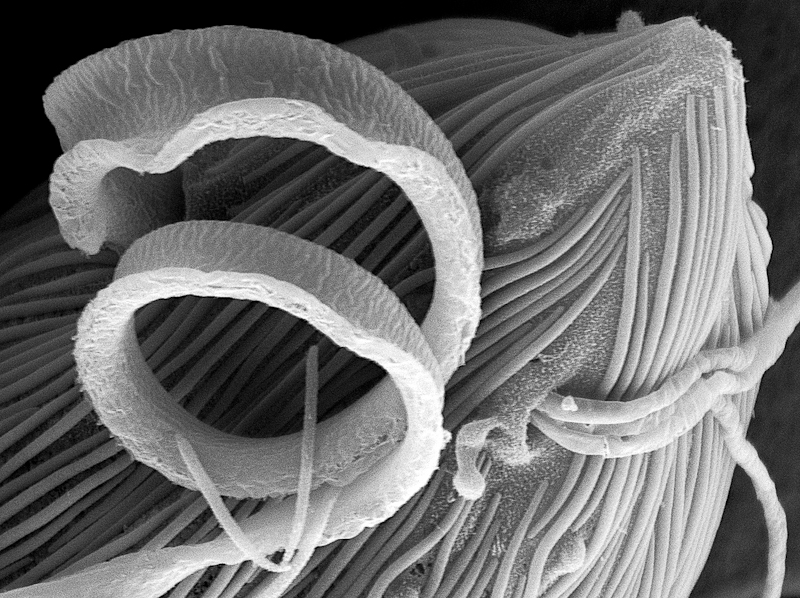
Our image this week is by photographer and microbiologist, Kevin J. Carpenter. The image below, taken through a scanning electron microscope, features an “anterior view of the protist Foaina sp.” For those of you in the San Francisco Bay Area, Dr. Carpenter’s work is on display at the Exploratorium  Museum (basically the coolest science museum around). A second gallery is also opening in late September at the Beaty Biodiversity Museum in Vancouver, Canada. Check out his website for more information and more great images.

kevinjcarpenter

US and South Korea Engage in Annual Anti-bioterrorism Exercise

Starting tomorrow, the United States and South Korea will engage in their third annual, three-day anti-bioterrorism exercise in Seoul.  The approximately 200 officials involved in the “Able Response 13” exercise will study likely scenarios and evaluate the South Korean government’s response system. South Korean officials fear that Seoul’s 10.5 million people, living in relatively close quarters, render it a prime bioterrorist target.

For more information, see here.

This week in DC: Events

All the week’s (free) international security, health, and emergency management events in the DC area.

Monday, July 15th, 2013

Real Politics of Iran: Views from Within
U.S. Institute of Peace
2:00PM – 4:00 PM

Members of USIP’s Internal Iran Study Group will be discussing a range of dynamics in the universities, opposition, the economy and even the security apparatus that often escape the foreign headlines and highlight what is expected in light of Hassan Rouhani’s election as president.

A Discussion of Health Policy and Returning Veterans
Defense Education Forum
6:00PM

On July 15, the Reserve Officers Association and the Women In Military Service For America Memorial Foundation will host Dr. Mark for a discussion and signing of her latest work. Dr. Saralyn Mark, MD, an endocrinologist, geriatrician and women’s health specialist, was the first Senior Medical Advisor to the Office on Women’s Health within the Department of Health and Human Services for 11 years and to the National Aeronautics and Space Administration (NASA). As Senior Medical Advisor, Mark was responsible for the development and analysis of initiatives and programs on emerging technologies, public health preparedness, physician workforce issues, sex and gender-based medicine and women’s health on Earth and in space.

Tuesday, July 16th

State of Biomedical Innovation Conference (live webcast available)
Brookings Institution
9:00AM – 12:30PM

On July 16, the Engelberg Center for Health Care Reform at Brookings will host the second annual State of Biomedical Innovation conference. The goal of this conference is to assess U.S. biomedical innovation and discuss policy solutions that ensure the nation remains a world leader. This year, the conference will feature an update to last year’s discussion of the drivers of innovation and how best to track them through use of comprehensive metrics. In addition, the conference will specifically focus on novel sources and applications of big data in innovation, with senior-level thought leaders from government, academia, industry, patient advocacy, and clinical care present to share their views and recommendations. After each panel, the participants will take audience questions. This event will be live webcast.

The Crisis in Syria: What are the Stakes for Syria’s Neighbors?
Middle East Policy Council
9:00AM – 11:30AM

The Middle East Policy Council invites you and your colleagues to our 73rd Capitol Hill Conference. Live streaming of this event will begin at approximately 9:00am EDT on Tuesday, July 16th and conclude at 11:30am. A questions and answers session will be held at the end of the proceedings. Refreshments will be served.

Mobile Technology’s Role in Natural Disasters and Public Safety Preparedness and Response (live webcast available)
Brookings Institution
2:00PM – 3:30PM

From Hurricane Sandy to international catastrophes such as the tsunami in Japan, governments are increasingly using mobile technology in natural disaster preparedness and public safety response. With an estimated 6 billion mobile phone users worldwide, mobile communications is fast proving to be the most effective and efficient means of reaching and informing the public when disaster strikes. How is mobile technology being used before, during, and after a crisis situation in the United States and around the world? How has mobile communications’ role in catastrophic situations changed, and how are public safety organizations utilizing this technology to make citizens safer and better prepared? What are the costs and benefits of using mobile technology to ready for and react to a major emergency? On July 16, as part of the Mobile Economy Project, the Center for Technology Innovation at Brookings will host a discussion on mobile technology and its evolving role in disaster and public safety. A panel of experts will discuss how mobile devices aid in planning for and reacting to a crisis, and how do they empower emergency management agencies and officials, first responders, and the public to tackle a variety of natural disasters and security crises.

Wednesday, July 17th

Pharmacy to the world: India and the global prescription drug trade
American Enterprise Institute
10:00AM – 3:00PM

Earlier this summer, the Novartis case pitted advocates of intellectual property rights for global pharmaceutical firms operating in India against those championing for more affordable drugs for patients in the developing world. Moreover, the recent and high-profile Ranbaxy case with the Federal Drug Administration raises questions about the safety and quality of Indian generics, even as some nongovernmental organizations (NGOs) champion generics as the best way to ensure that patients in poor countries get access to life-saving drugs at affordable prices. At this conference, leading business sector, think-tank, and NGO representatives will examine the Indian pharmaceutical issue from the medical, business, and development perspectives.

Thursday, July 18th

The Future of Gene Patents: Making Sense of the Supreme Court’s Decision in the Myriad Case
Duke Institute for Genome Sciences and Policy (hosting event at Capitol Visitor Center)
12:00PM – 1:30PM

This Duke Institute for Genome Sciences and Policy is hosting a brieifing to educate policymakers, advocacy groups, stakeholders and other interested parties about the “Myriad Case”. It will offer attendees an unbiased overview of the Supreme Court’s ruling and its implications, and will outline potential next steps, including Congress’s role.

Contact Brian Beaty at bbeaty@burnesscommunications.com for more information and to register.

US House Committee on Foreign Affairs Subcommittee Hearing: Global al-Qaeda: Affiliates, Objectives, and Future Challenges
Rayburn House Office Building
2:00PM

Witnesses: Dr. Seth Jones, Assc Director of International Security and Defense Policy Center, RAND; Dr. Frederick Kagan, Christopher DeMuth Chair and Director, Critical Threats Project, American Enterprise Institute; Mr. Thomas Joscelyn, Senior Editor, The Long War Journal

A Fierce Domain: Conflict in Cyberspace, 1986 – 2012
Homeland Security Policy Institute
3:30PM – 5:00PM

Please join HSPI for a Policy & Research Forum event on July 18th featuring Jason Healey, Director of the Cyber Statecraft Initiative at the Atlantic Council. Healey is the editor of “A Fierce Domain: Conflict in Cyberspace, 1986 to 2012,” which identifies key lessons for policymakers, and, most importantly, where these lessons greatly differ from popular myths common in military and political circles. The book, published by the Cyber Conflict Studies Association, in partnership with Atlantic Council, pulls these lessons from case studies of previous cyber incidents and other countries’ experiences.

Friday, July 19th

The Way Forward in Egypt
National Council on U.S.-Arab Relations
10:00AM – 12:00PM

On July 19, 2013, the National Council on U.S.-Arab Relations and the U.S.-GCC Corporate Cooperation Committee are hosting a public affairs briefing on “The Way Forward in Egypt” featuring Professor Karim Haggag, Visiting Professor, Near East South Asia Center for Strategic Studies and Former Director, Egyptian Press and Information Office in Washington, DC; Ms. Randa Fahmy Hudome, Board Member, National Council on U.S.-Arab Relations and General Counsel, American Egyptian Strategic Alliance; Mr. Alex Shalaby, Chairman, The Egyptian Company for Mobile Services (Mobinil) and Former President, American Chamber of Commerce in Egypt; Dr. Marina Ottaway, Senior Scholar, Middle East Program, Woodrow Wilson International Center for Scholars; and Dr. Diane Singerman, Associate Professor, School of Public Affairs, American University. Dr. John Duke Anthony, Founding President & CEO, National Council on U.S.-Arab Relations, will serve as moderator.

(image courtesy of Dell)

The Pandora Report 7.12.13

Highlights: the Science, Safety, and Security newsletter, wild polio in Israel, proliferation concerns in Syria, H7N9 – the pandemic?, and H1N1 in Chile. Happy Friday!

S3 Newsletter June 2013

For those of you who may have missed it, the Science, Safety, and Security Quarterly June newsletter is out, and features articles on dual use research of concern, HHS’ recent international participation in BWC activities, and the International Biological Threat Reduction program. It’s an excellent resource for anyone working in fields related to biodefense, biosecurity, or non-proliferation.

WHO Sends Mission to Israel Following Detection of Wild Poliovirus in Sewage

The World Health Organization last week completed a five-day mission in Israel, following detection of wild polio virus in the sewage of the country’s Southern District. Despite detection of the virus, no new polio cases have emerged. In response to the virus’ detection, Israel is starting a supplemental oral vaccination campaign, in addition to existing vaccination matters.  This isn’t an overreaction. For those of you who may not know, polio eradication remains a top priority of the international health community, with the eradication efforts rendering the virus’ endemic in just 3 countries. Therefore any time it pops up naturally, people get understandably nervous.

WHO – “Israel has systematically conducted environmental sampling for many years, and the poliovirus was detected thanks to this vigilance. Public health authorities continue to monitor the situation carefully, and measures have been taken to increase surveillance and reporting for possible human cases, regardless of age. The aim of the supplementary immunization campaign is to protect any children in the country who may have missed routine vaccinations for any reason. In southern areas, adults are also being assessed and those thought to be susceptible are being immunized.”

Proliferation concerns mount in Syria

As the civil war in Syria continues, the United Kingdom is considering supplying the rebels with protective equipment against  biological and chemical agents. UK intelligence reports have listed ricin, VX, mustard gas, and sarin as all possible chemical and biological agents in Assad’s armory. Concerns over proliferation of the agents and weapons to terrorist organizations were fueled by last month’s report that al Qaeda had attempted to access chemical weapons stockpiles in support of the Syrian rebels. Does anyone else feel like that “red line” is looking pretty darn thin?

Irish Times – “The danger was underlined by MI6 chief Sir John Sawers who told the committee there was the risk of ‘a highly worrying proliferation around the time of the regime fall’. The committee said: ‘There has to be a significant risk that some of the country’s chemical weapons stockpile could fall into the hands of those with links to terrorism, in Syria or elsewhere in the region – if this happens, the consequences could be catastrophic.’ British prime minister David Cameron disclosed last month that al-Qaeda-linked elements fighting the regime had already attempted to acquire chemical weapons for probable use in Syria.”

Scientists: H7N9 Avian Flu Has Pandemic Potential

Just when you thought it was gone! In a piece published in Nature on Wednesday,  an international team of scientists determined that H7N9 could be just a couple amino acid mutations away from effective person-to-person transmission pandemic potential. The two teams, from  the University of Wisconsin-Madison and the University of Tokyo, determined that H7N9 replicates effectively in several mammamlian hosts with immune systems similar to humans, among them monkeys and ferrets. The good news? Most of the strains tested are susceptible to standard antivirals.

Rianovosti – “They also established that approximately one third of ferrets became infected by droplet spread.’H7N9 viruses combine several features of pandemic influenza viruses, that is their ability to bind to and replicate in human cells and the ability to transmit via respiratory droplets,’ [flu expert Yoshihiro Kawaoka] said. These two features are necessary, although not sufficient, to cause a pandemic.’ In monkeys, the virus could efficiently infect cells in both the upper and lower respiratory tract. Conventional human flu viruses are typically restricted to the upper airway of infected nonhuman primates.”

Chile confirms 33 deaths from H1N1

The Chilean health ministry confirmed Wednesday that of the 33 H1N1 deaths this year, nearly half had occurred in the last few weeks. The South American nation is currently experiencing a small  outbreak, with a large and effective vaccination campaign halting the virus’ spread.

APA – “‘Today it appears to be under control, I say this with extreme caution. In epidemiologic week number 27, we do not have serious new cases,’  [Health Minister] Manalich said at a press conference. ‘We just have three patients with the flu in the intensive care unit of the hospital of the town of Iquique,’ said Manalich, adding ‘walk-in consultations due to the flu have fallen 25 percent from what we had before.'”

(image courtesy of the Polio Eradication Initiative)

Impact of Piglet Virus on U.S. Pork Industry

The porcine epidemic diarrhea virus (PEDv), now present across in 200 facilities across 14 states has raised concern over impact on US pork prices. The virus affects piglets, with fatality rates occasionally approaching 100%.

Excerpt: “Nick Striegel, assistant state veterinarian for the Colorado Department of Agriculture, said Wednesday the porcine epidemic diarrhea virus, or PED, was thought to exist only in Europe and China, but Colorado and 14 other states began reporting the virus in April, and officials confirmed its presence in May. The virus causes severe diarrhea, vomiting and severe dehydration in pigs. It can be fatal.’It has been devastating for those producers where it has been diagnosed. It affects nursing pigs, and in some places, there has been 100 percent mortality,’ he said.”

Read more here.

(image courtesy of Stephen & Claire Farnsworth)

Antibiotic resistant bacteria and farms

NYT opinion piece on antibiotic resistance bacteria and the potential role of factory farming in propagating them:

Excerpt: “The story of antibiotic-resistant bacteria in farm animals is not a simple one. But here’s the pitch version: Yet another study has reinforced the idea that keeping animals in confinement and feeding them antibiotics prophylactically breeds varieties of bacteria that cause disease in humans, disease that may not readily be treated by antibiotics. Since some of these bacteria can be fatal, that’s a scary combination. Antibiotic-resistant bacteria are bad enough, but now there are more kinds; they’re better at warding off attack by antibiotics; and they can be transferred to humans by increasingly varied methods. The situation is demonstrably dire.”

Read more here.