The Pandora Report 7.26.13

Highlights include Saudi Arabia’s hajj travel restrictions, zoonotic adenoviruses, PEDv, studying the 1918 pandemic, and plague in people you know. Happy Friday!

Virus fears, Mecca work downsizes hajj pilgrimage

Saudi Arabian officials, responding to fears over hajj contributing to MERS potential spread, have significantly cut the number of pilgrims allowed to perform the annual pilgrimage to Mecca. Numbers of pilgrims from within Saudi Arabia have been cut by half, and those travelling to Mecca from other countries by one fifth. Officials were quick to stress that the decision was based on “exceptional” circumstances, and may be revised as MERS’ spread is tracked. The decision is an interesting one, given that the WHO’s specially convened MERS committee just last week decided against travel restrictions.

Economic Times – “Fears of an outbreak of the deadly MERS virus in Saudi Arabia and construction in the holy city of Mecca have forced cuts in the numbers of pilgrims permitted to perform this year’s hajj. Millions of Muslims during the annual pilgrimage head to Mecca and Medina, Islam’s two holiest sites, providing a possible means for MERS to spread around the globe as pilgrims who may become infected return to their home countries.”

Adenoviruses May Pose Risk for Monkey-to-Human Leap

Most of the world’s deadliest viruses are zoonotic (ebola, anyone?) When a new virus is determined to spread from animals to humans, it’s therefore not surprising, but it’s often troubling, as humans often have little to no immunity to such bugs. The ongoing outbreaks of H7N9 and MERS are both recent examples. Now, researchers at the University of San Francisco have determined that a novel adenovirus – identified just four years ago – may be able to cause disease in humans. In a study involving adenovirus C, the researchers were able to trace the virus’ spread from an enclosed Californian baboon colony to the human staff members caring for them.

UCSF – “‘This study raises more concerns about the potential of unknown viruses to spread from animals to humans,’ said Chiu, who is an assistant professor of medicine at UCSF. ‘We still don’t understand the full extent of viruses that exist in the world and their potential to cause outbreaks in human populations.’ Last year, Chiu and colleagues also identified another new adenovirus, named simian adenovirus C, which sickened four of nine captive baboons and killed two of them at a primate facility in 1997. Several staff members at the facility also complained of upper respiratory symptoms at the time of the outbreak. Re-examining the samples many years later, Chiu and his colleagues found antibodies targeted to simian adenovirus C in the human samples.”

Deadly Pig Virus Slips through U.S. Borders

The porcine epidemic diarrhea virus (PEDv) continues to rage in the United States, having now spread to 14 states, including outliers like North Carolina. With the virus’s fatality rates occasionally approaching 100% in piglets, its spread has USDA and the US pork industry both (understandably) very nervous. The virus’ source in the United States remain unknown, and efforts to sequence it have been hampered by a couple things. First, it is notoriously difficult to culture – unsurprisingly, pig viruses tend to grow best in pigs. Second, the restrictions the US had in place to prevent the virus entering the US in the first place are making acquisition of the right lab materials to culture it difficult. With the virus’ apparent preference for cooler temperatures, and Autumn approaching, scientists are racing to determine the source before the outbreak spreads further.

Scientific American –  “‘How this virus got here, that’s the million-dollar question,’ says James Collins, director of the Veterinary Diagnostic Laboratory at the University of Minnesota in St Paul. The pathogen, a type of coronavirus called porcine epidemic diarrhea virus (PEDV), was first identified in the United Kingdom in 1971, and it caused mass epidemics in Europe in the 1970s and 1980s…The virus can spread quickly by a fecal–oral route and infect entire herds. And although adult pigs typically recover, PEDV can kill 80–100% of the piglets it infects. The virus poses no health threat to humans. The US Department of Agriculture (USDA) had tried to keep PEDV and other diseases out of the country by restricting imports of pigs and pork products from certain nations, such as China. But on 10 May, the Veterinary Diagnostic Laboratory at Iowa State University in Ames confirmed that PEDV had infected pigs in Iowa, the leading producer of US pork.”

New Light Shed On Cause of Pandemic Influenza

After using mathematical models to analyze the 20th century’s worst pandemics, the 1918 Spanish flu pandemic.  Researchers have developed three key factors which exacerbated the pandemic’s impact – school openings and closing, temperature fluctuations, and human behavioral changes.

Science Daily – “Dr He and the researchers further applied this model to the reported influenza mortality during the 1918 pandemic in 334 British administrative units and estimate the epidemiological parameters. They have used information criteria to evaluate how well these three factors explain the observed patterns of mortality. The results indicate that all three factors are important, but behavioural responses had the largest effect.”

My Friends Got the Plague, and This New Test Could Have Helped Them

It’s easy to believe that the bacteria and viruses we write about exist only in distance countries or highly secure labs. As the above blog piece illustrates, sometimes all it takes is a vacation to New Mexico. The piece also discusses the importance of science’s ugly stepchild – basic research.

Motherboard (VICE) – “Despite very low incidence and the availability of treatment with modern antibiotics, the plague is still a very deadly illness whose prognosis becomes worse by the minute when it strikes. This technique is useful because it provides a quick way of, at the very least, ruling out the illness, which is so often overlooked. Importantly, the researchers note that their technique would not have been possible without previous basic research, which many consider a lesser priority than corporate-sponsored applied research.”

(image courtesy of Al-Hijr)

Forbes Piece: “Bioterrorism: A Dirty Little Threat With Huge Potential Consequences”

For those of you who wonder why we do what we do (and think us arguing our own merits may seem a bit biased), check out this excellent Forbes Opinion piece on the potential threat of bioterrorism.

Excerpt:

“Although federal efforts involving numerous agencies to combat the threat of bioterrorism expanded rapidly following the 2011 anthrax letter attacks, which killed five people and infected 17 others, various congressional commissions, nongovernmental organizations, industry representatives and other experts have highlighted flaws in these activities. A 2008 report published by the congressionally-mandated Commission on the Prevention of WMD Proliferation and Terrorism concluded that ‘…unless the world community acts decisively and with great urgency, it is more likely than not that a weapon of mass destruction will be used in a terrorist attack in the world by the end of 2013.’ It went on to say ‘The Commission further believes that terrorists are more likely to be able to obtain and use a biological weapon than a nuclear weapon.’ Making matters worse, unlike most other terrorist attacks, a biological attack could infect victims without their knowledge, and days could pass before victims develop deadly symptoms. To address this problem, the U.S. has been forced to implement air quality monitors throughout the country and stockpile antibiotics for emergency use.”

The Pandora Report 7.19.13

Highlights this week include MERS in the UAE, H5N1 and dual-use research, giant Pandoravirus, implications of giant Pandoravirus, and pandemics and national security. Happy Friday!

United Arab Emirates identifies 4 new cases of SARS-like respiratory virus

The Middle Eastern Respiratory Syndrome (MERS) virus, first appearing in Saudi Araia has spread to the neighboring United Arab Emirates, with four new cases identified in Abu Dhabi. It is thought that one patient contracted the virus earlier subsequently infected these four new cases.

Washington Post –  “The new cases also could offer investigators fresh leads on the transmission of the virus, which has claimed more than 40 lives since September. Most of the deaths have been in Saudi Arabia…The virus is related to SARS, which killed some 800 people in a global outbreak in 2003. It belongs to a family of viruses that most often cause the common cold.”

H5N1: A Case Study for Dual-Use Research

The Council on Foreign Relations has a new working paper out, by Dr. Gigi Kwik Gronvall, examining the furious debate around gain-of-function, potentially dual-use H5N1 research.

CFR – “Biological research is inherently dual-use, in that a great deal of the scientific knowledge, materials, and techniques required for legitimate research could also be used for harm. The potential for a bioterrorist to misuse legitimate research is particularly acute for scientific studies of contagious pathogens. In order to find out how pathogens function—how they are able to get around the human body’s immunological defenses, replicate in great numbers, and go on to infect other people in a continuous chain of infection—scientists necessarily learn what conditions make pathogens more deadly or difficult to treat. This research is widely shared. But the fear that this openness could be exploited has sparked concerns about specific scientific publications, prompting media storms and even congressional disapproval, as in the 2002 case when poliovirus was synthesized from scratch in a laboratory.”

World’s Biggest Virus May Have Ancient Roots

Breaking news everyone, the world’s largest virus has the world’s coolest name – the Pandoravirus. However, unless you live primarily underwater, it shouldn’t pose a big threat to you. The virus is, however, raising big questions about the origins of viruses – the Pandoravirus‘ are thought to originate in a prehistoric cell type now extinct. For an interesting examination of what larger viruses may mean for virology, check out the New York Times piece “Changing View on Viruses: Not So Small After All“.

NPR – ” ‘We believe that those new Pandoraviruses have emerged from a new ancestral cellular type that no longer exists,’ [discoverer, Jean-Michel Claverie] says. That life could have even come from another planet, like Mars. ‘At this point we cannot actually disprove or disregard this type of extreme scenario,’ he says. But how did this odd cellular form turn into a virus? Abergel says it may have evolved as a survival strategy as modern cells took over. ‘On Earth it was winners and it was losers, and the losers could have escaped death by going through parasitism and then infect the winner,’ she says.”

National Security and Pandemics

An interesting argument for the correlation between national security and pandemics. Whether international health events should be classified as issues of national security is a very interesting and nuanced question, and this piece presents one side (“yes, they should”) well.

UN Chronicle – “”Pandemics are for the most part disease outbreaks that become widespread as a result of the spread of human-to-human infection. Beyond the debilitating, sometimes fatal, consequences for those directly affected, pandemics have a range of negative social, economic and political consequences. These tend to be greater where the pandemic is a novel pathogen, has a high mortality and/or hospitalization rate and is easily spread. According to Lee Jong-wook, former Director-General of the World Health Organization (WHO), pandemics do not respect international borders.2 Therefore, they have the potential to weaken many societies, political systems and economies simultaneously.”

(image courtesy of Jeff Black)

WHO: MERS Not a Public Health Emergency (yet)

Following their second meeting,  the World Health Organization’s (WHO) Emergency Committee on MERS has decided the outbreak in Saudi Arabia does not yet constitute a “Public Health Emergency of International Concern”. As such, the committee is refraining from issuing any travel restrictions at this time.

The committee met via teleconference yesterday, with members from all eight states with cases of MERS participating. While the MERS outbreak is not a PHEIC yet, the Committee nonetheless stressed that the outbreak is “serious and of great concern”. The Committee members will continue to monitor the virus’ spread, and will reconvene formally again in September.

MERS, or the Middle Eastern Respiratory Syndrome, is a recently emerged virus which causes flu like symptoms and in 60% of cases, death. The virus’ vector and reservoir remain unknown.

For the full WHO press release, see here.

(Image depicts an SEM of MERS, courtesy of the CDC & Cynthia Goldsmith/Maureen Metcalfe/Azaibi Tamin)

US and South Korea Engage in Annual Anti-bioterrorism Exercise

Starting tomorrow, the United States and South Korea will engage in their third annual, three-day anti-bioterrorism exercise in Seoul.  The approximately 200 officials involved in the “Able Response 13” exercise will study likely scenarios and evaluate the South Korean government’s response system. South Korean officials fear that Seoul’s 10.5 million people, living in relatively close quarters, render it a prime bioterrorist target.

For more information, see here.

Impact of Piglet Virus on U.S. Pork Industry

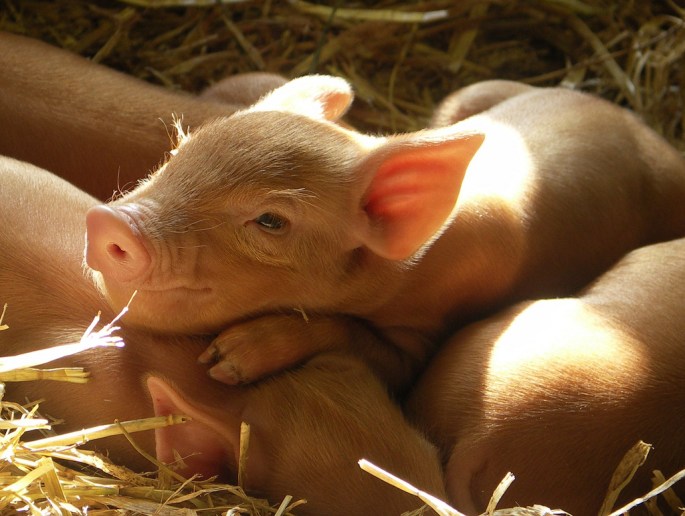
The porcine epidemic diarrhea virus (PEDv), now present across in 200 facilities across 14 states has raised concern over impact on US pork prices. The virus affects piglets, with fatality rates occasionally approaching 100%.

Excerpt: “Nick Striegel, assistant state veterinarian for the Colorado Department of Agriculture, said Wednesday the porcine epidemic diarrhea virus, or PED, was thought to exist only in Europe and China, but Colorado and 14 other states began reporting the virus in April, and officials confirmed its presence in May. The virus causes severe diarrhea, vomiting and severe dehydration in pigs. It can be fatal.’It has been devastating for those producers where it has been diagnosed. It affects nursing pigs, and in some places, there has been 100 percent mortality,’ he said.”

Read more here.

(image courtesy of Stephen & Claire Farnsworth)

Antibiotic resistant bacteria and farms

NYT opinion piece on antibiotic resistance bacteria and the potential role of factory farming in propagating them:

Excerpt: “The story of antibiotic-resistant bacteria in farm animals is not a simple one. But here’s the pitch version: Yet another study has reinforced the idea that keeping animals in confinement and feeding them antibiotics prophylactically breeds varieties of bacteria that cause disease in humans, disease that may not readily be treated by antibiotics. Since some of these bacteria can be fatal, that’s a scary combination. Antibiotic-resistant bacteria are bad enough, but now there are more kinds; they’re better at warding off attack by antibiotics; and they can be transferred to humans by increasingly varied methods. The situation is demonstrably dire.”

Read more here.


Dengue’s powers of cross protection

Check out this NY Times piece clarifying dengue’s capacity for cross protection. Dengue is a mostquito-born virus which often causes flu-like symptoms in humans. While it is known that infection with one strain of the virus results in a brief period of protection from the three other strains, the duration of this protective period has remained unclear until now. Researchers have determined that infection provides a two-year window of cross protection. However, a secondary infection with a different strain which occurs after the two year window increases the risk of extremely virulent symptoms, including dengue hemorrhagic fever.

Dengue is considered one of the WHO’s “neglected tropical diseases“, due to its endemic nature in over 100, primarily poorer, countries and its comparative neglect in terms of vaccine and antiviral research.

Excerpt: “Infection with one strain of the dengue virus gives people protection against the other three strains for about two years, a new biostatistics study has found. The study, by Thai and American researchers, was based on 38 years’ worth of laboratory records from one children’s hospital in Bangkok. By measuring how long each strain predominated and then faded in importance, researchers could calculate how long protection lasted against alternate strains.”

Read the full article here.

WHO to Convene Emergency MERS Committee

For those of you (like us) caught up in the fourth festivities, the World Health Organization (WHO) laid out plans late last week to convene an emergency committee  to address the growing threat of  Middle Eastern Respiratory Syndrome (MERS). The committee will pull together experts from across the public health fields for a telephone meeting tomorrow. The primary purpose of the committee at this point is as an information exchange. Key details of the virus’ mechanism of action, including the primary host, remain unknown. Once established, the committee would have the power to provide recommended travel restrictions and take other preparatory actions to prevent the virus’ spread.

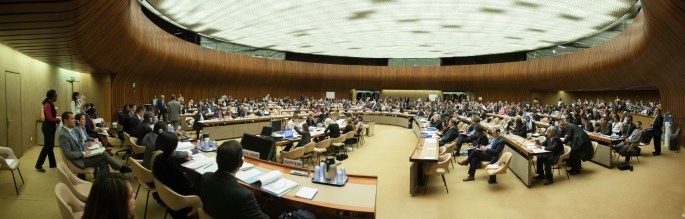
Although the person-to-person spread of the virus remains limited, it is critical than a strategy for containment is established before Hajj, the annual Islamic pilgrimage which will bring millions to Saudi Arabia this October. Discussing  the WHO’s concerns over the upcoming influx of international travelers, WHO Assistant Director-General for Health Security and Environment Dr. Keiji Fukuda stated,  “we’re always worried in a globalized world that infection can travel quickly from one country to another,” but that given the sporadic pattern of infection, restricting travel is not yet recommended.

For the full transcript of the Friday press conference, see here.

(image courtesy of WHO)

The Pandora Report 7.5.2013

Hope everyone’s fourth was happy and safe! Highlights this week include MERS,  lifting BW sanctions against China, H7N9 in the lungs, and personnel security questions at Aberdeen Proving Ground.

Study finds MERS virus has not yet reached pandemic potential

A recent study by France’s Institut Pasteur has found that the likelihood of the recent outbreak of Middle Eastern Respiratory Syndrome (MERS) developing into a pandemic is “low”. The researchers compared MERS to SARS extensively, and determined that a number of factors, including which cell receptors each virus affect, rendered MERS less likely to spread.  Arnaud Fontanet, lead scientist on the study, also pointed out that it took SARS just months to adapt to humans as hosts, whereas MERS still struggles after almost a year in humans. The virus’ high fatality rate and limited person-to-person transmission nonetheless makes it a threat to hospitals caring for  infected patients.

Reuters – “Ian Jones, a professor of virology at Britain’s University of Reading, said the findings confirmed what appeared to be happening on the ground – ‘that the current MERS coronavirus transmits poorly, below the threshold required to become widely spread. Benjamin Neuman of Reading University’s microbiology research group, said it appeared from the research that the MERS virus is ‘slowly dying out’. But he cautioned that other studies into the biology of the virus suggest it is changing. ‘That change makes it difficult to predict the future of MERS,’ he said.”

Lifting of Chemical and Biological Weapons (CBW) Proliferation Sanctions Against Chinese Entities

The State Department has lifted its chemical and biological weapons proliferation sanctions against China first imposed in July of 2002. That’s it really, no press release, just a blurb in the Federal Register.

Federal Register – “Pursuant to Section 81(e) of the Arms Export Control Act (22 U.S.C. 2798(d)) and Section 11C(e) of the Export Administration Act of 1979, as amended (50 U.S.C. app. 2410c(d)), the Under Secretary of State for Arms Control and International Security determined and certified to Congress that lifting sanctions on the following Chinese entities, their sub-units and successors is important to the national security interests of the United States: 1. China Machinery and Equipment Import Export Corporation; 2. China National Machinery and Equipment Import Export Corporation; 3. CMEC Machinery and Electric Equipment Import and Export Company Ltd.; 4. CMEC Machinery and Electrical Import Export Company, Ltd.; 5. China Machinery and Electric Equipment Import and Export Company’

H7N9 flu infiltrates victims’ lungs

Everyone remember H7N9? A new study confirms that H7N9 replicates primarily within the lower respiratory tract, where it often triggers a cytokine storm, damaging tissue and causing inflammation and fluid in the lungs. The virus’ poor adaptation to the trachea is thought to explain in part its lack of effective transmission through coughing and sneezing.

Bangkok Post – “The H7N9 bird flu virus is a peril for humans because it replicates deep in the lungs where it can trigger a dangerous response from the immune system, a study said Wednesday. In addition, no one is likely to have pre-existing immunity to H7N9 and so-called seasonal vaccines cannot protect against it, the study said, confirming suspicions among many virologists. And while lab tests show that leading anti-flu drugs are effective, there are concerns the virus may acquire gene mutations to blunt these weapons, it added.”

Army engineer put on leave for alleged white supremacist ties

News for a couple reasons. First, he has a security clearance. Second, he has a security clearance at Aberdeen Proving Ground’s Edgewood Chemical Biological Center, a BSL-3 lab which works on everything from synthetic biology to synthesis of chemical agents to  toxicology of chem/bio agents. It’s worth noting that the final suspect in the nation’s most deadly biological terrorist attack was a security-cleared USAMRIID scientist. However, while allegations have been made by the Southern Poverty Law Center and the investigation in this case is ongoing, the engineer in question has not yet commented.  The case raises the question, how free is free speech when you work in a security-cleared or very sensitive US government job?

Baltimore Sun – “The Southern Poverty Law Center, a national non-profit organization that tracks hate groups, wrote on May 23 that mechanical engineer John Stortstrom was one of ‘150 white nationalists’ who attended an April conference for the American Renaissance Journal, a magazine focused on studying a biological basis for race. Stortstrom, who is the vice president of the Route 40 Republican Club in Harford County, is also a member of the former Youth for Western Civilization student group, the SPLC wrote.’There’s no question that Stortstrom is very much a part of the racist white nationalist scene, as well as an up-and-coming young GOP operative,’ the SPLC wrote. ‘But it is Stortstrom’s top-security clearance job at the U.S. Army research facility on the Aberdeen Proving Grounds [sic] in Maryland that is really raising eyebrows.’ The allegations against Stortstrom appear to have come to light after he arranged for the Route 40 Republican Club to host Matthew Heimbach, the controversial founder of a White Student Union at Towson University.”