Piglet Virus Spreads to North Carolina

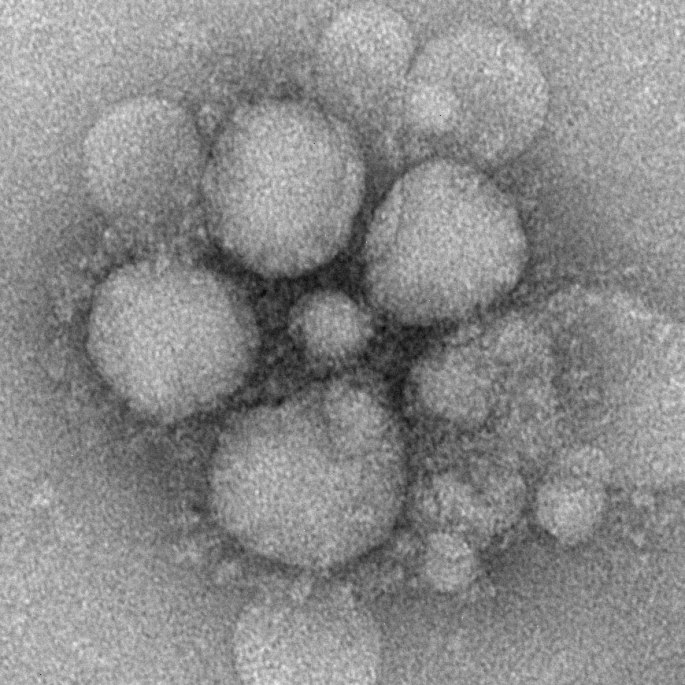
The deadly Porcine Epidemic Diarrhea virus (PEDv) currently making it’s way across the United States has reached North Carolina, which possesses one of the largest hog industries in the country. The virus has a fatality rate of approximately 50% amongst piglets, with susceptibility exacerbated by the immunological naivety of the US hog population.

Read more here.

(image via Stephen & Claire Farnsworth)

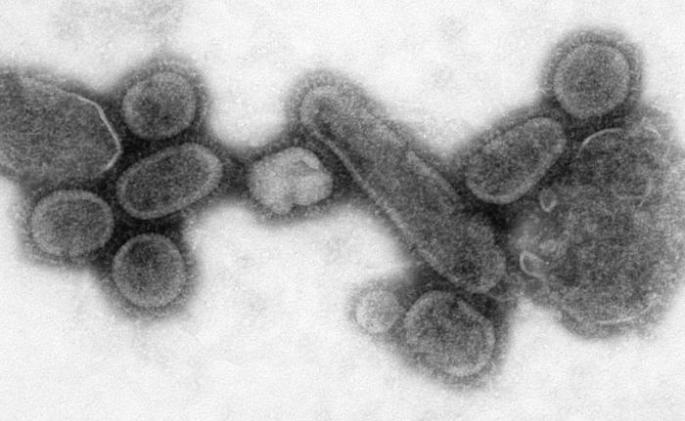
image via CDC/Dr. David Berd (PHIL #2983), 1972.

Fighting Anthrax with the Ocean

Phys.org has a new piece out discussing the hitherto unknown capacity of one species of Streptomyces to effective counter infections caused by Bacillus anthracis, the bacteria which produces anthrax spores. The molecule, appropriately named  anthracimycin, is equally effective in fighting other Gram-positive bacteria. Read more here.

Excerpt: “By using a variety of methods of analysis, the researchers were able to determine the structure of this molecule, which they named anthracimycin. Anthracimycin contains an unusual system of rings, one with fourteen carbon atoms and two with six each. This is a macrolide whose biosynthesis very likely occurs by the polyketide pathway. X-ray crystallographic studies allowed the researchers to determine the absolute configurations of the seven asymmetric carbon centers in this compound, identifying the complete 3-dimensional structure.”

LA Times Piece on Battling MERS

The LA Times piece on the Middle Eastern Respiratory Virus gives a good behind-the-scenes look at how the CDC prepares for potential pandemics.

Excerpt: “In a war room of sorts in a neatly appointed government building, U.S. officers dressed in crisp uniforms arranged themselves around a U-shaped table and kept their eyes trained on a giant screen. PowerPoint slides ticked through the latest movements of an enemy that recently emerged in Saudi Arabia — a mysterious virus that has killed more than half of the people known to have been infected.Here at the Centers for Disease Control and Prevention, experts from the U.S. Public Health Service and their civilian counterparts have been meeting twice a week since the beginning of June to keep tabs on the Middle East respiratory syndrome coronavirus. MERS-CoV, as the pathogen is known, attacks the lungs and causes fevers, severe coughs and rapid renal failure.”

Read the full piece here.

The Pandora Report

Highlights include: patenting viruses pt. II, BioWatch Gen 3 or the lack thereof, West Nile, Dengue detection, and US live hog imports restricted as PEDV rages. Happy Friday!

Why a Saudi Virus Is Spreading Alarm

A less discussed aspect of studying novel microorganisms is the corporate red tape often involved. We talked about this a couple weeks ago, but the most recent case of this is the patenting (or at least, creating of a Material Transfer Agreement) of the MERS virus by Ron Fouchier’s Dutch laboratory. Under the MTA, all labs who request samples of the virus are contractually bound not to develop vaccines or products without first asking for permission from the Dutch lab. As you can imagine, this creates extra hurdles for Saudi scientists trying to stem the virus’ spread across Saudi Arabia. Lest one believe this is simply “the way things are done” in virology, China released samples of its H7N9 virus to open source sites within a month of the first case being identified.

Council on Foreign Relations – “But impeding an effective response is a dispute over rights to develop a treatment for the virus. The case brings to the fore a growing debate over International Health Regulations, interpretations of patent rights, and the free exchange of scientific samples and information. Meanwhile, the epidemic has already caused forty-nine cases in seven countries, killing twenty-seven of them…’The virus was sent out of the country and it was patented, contracts were signed with vaccine companies and anti-viral drug companies, and that’s why they have a MTA [Material Transfer Agreement] to be signed by anybody who can utilize that virus, and that should not happen,’ [Saudi Arabia’s deputy health minister] Memish said.”

Autonomous Detection Sought For BioWatch Surveillance Systems

BioWatch Gen 3 is currently on the back burner, as officials explore alternative options (analysis of alternatives, or AoA). Everyone agrees that some form of detection is necessary, everyone agrees that 24 hours is too long of a lag time, and everyone definitely agrees that local and state health officials need to be involved, but not everyone agrees that the current funding proposals for BioWatch are feasible. Does anyone else feel like this is a disaster waiting to happen?

Homeland Security Newswire – “Options for upgrading the Department of Homeland Security’s (DHS) BioWatch biosurveillance program monitoring systems for biological agents to autonomous detectors is continuing to be explored — and the department plans eventually to do so in collaboration with state and local officials. But DHS currently has no formal program to produce the next generation of BioWatch monitoring technology, said BioWatch Program Manager Michael Walter in remarks at the National Academies of Science (NAS) Tuesday.”

West Nile Virus Logs Deadliest Year After Hotter Summer

Last year was a bad year for West Nile, with 286 deaths and 5,674 cases. The CDC is closely monitoring the number of cases as we enter the peak season (July through September), as reasons for last year’s large case number remains unclear. However, a warmer, wetter summer is thought to be a big part of it.

Bloomberg –  “While there are only six reported cases of the virus this year through June, according to the CDC’s website, more than 90 percent of infections from last year occurred between July and September.’West Nile virus is going to be a factor in the U.S. every year now,’ Marc Fischer, a medical epidemiologist with the CDC’s arboviral diseases branch, said in a telephone interview. ‘People need to take precautions and protect themselves.'”

The ‘Gold’ Standard: A Rapid, Cheap Method of Detecting Dengue Virus

Scientists are using gold nanoparticles to develop cheap, quick diagnostics for detecting dengue. While we understand this is very important in terms of helping reduce the spread of a globally present (50-100 million cases annually) and deadly virus, we also are a little pleased by the “gold” standard pun.

Science Daily – “The development of an easy to use, low cost method of detecting dengue virus in mosquitoes based on gold nanoparticles is reported in BioMed Central’s open access journal Virology Journal. The assay is able to detect lower levels of the virus than current tests, and is easy to transport and use in remote regions…Researchers from the University of Notre Dame, USA, used a DNAzyme linked to gold nanoparticles which recognises a short sequence of the viral RNA genome common to all four types of Dengue. Once bound, adding magnesium and heating to 37C causes the DNAZyme to cut the RNA leaving the gold nanoparticles free to clump together. This aggregation can be easily seen as a red to clear/colourless colour change.”

USDA working for removal of Mexican restrictions on live hog imports

The USDA is scrambling to get restrictions on US live pigs lifted by Mexico, following an outbreak of porcine epidemic diarrhea virus (PEDV). The outbreak of PEDV has spread to 13 states in couple weeks since the virus’ first emergence.

Reuters – “A spokeswoman for the department’s Animal and Plant Health Inspection Service said on Thursday the agency has sent Mexico information requested in connection with the outbreak of Porcine Epidemic Diarrhea Virus, a swine virus deadly to young pigs never before seen in North America. She did not state what information had been requested.”

A virus by any other name?

Naming new viruses is a surprisingly tricky, often hotly-contested process, and choosing a name for emergent viruses often has significant ramifications. For instance, the original misnomer of the 2009 H1N1 pandemic – swine flu – resulted in millions of dollars of losses for the American pork industry.  Other, equally unhelpful names for the virus included “Mexican flu”.

Read more in this interesting piece in Pacific Standard Magazine on the long and often circuitous process of virus naming.

Excerpt: “Human disease is littered with examples of fractious, sometimes furious rows over what emerging pathogens are called. Some 30 years ago, when the human immunodeficiency virus, or HIV, was discovered, it was named “GRID,” or “gay-related immune deficiency,” helping to spread the slur ‘the gay plague’. It was not until it became clear the sexually transmitted virus was also infecting heterosexuals and haemophiliacs, that GRID was replaced with the more accurate HIV. More recently, the scientific ‘H1N1’ was the name that stuck for the pandemic flu strain that swept the world in 2009/2010 after earlier suggestions proved too sensitive. An Israeli health minister objected to ‘swine flu’ on religious grounds and ‘Mexican flu’ caused offense to a nation.”

Ricin: The Very Poor Man’s Toxic Terror Weapon

GMU Biodefense is pleased to announce the launch of its Backgrounder series. The Backgrounder, produced by GMU Biodefense faculty and affiliate research scientists, aims to concisely present fundamental knowledge on critical CBRN issues. Our first Backgrounder, produced by Dr. Alexander Garza, aims to put the true nature of the ricin threat into perspective, while also providing a general overview of US programs of detection and response.

Excerpt:

Within the past three months at least five letters containing the toxin ricin have been mailed to local and Federal government officials and a non-profit gun control organization.  To date no one has become ill from the effects of the toxin in the letters and yet the media tends to conflate the threat posed by these primitive ricin preparations with highly lethal ricin weapons developed by state actors.  There is no debate that ricin is a formidable toxin.  To truly appreciate the risk to individuals and the public at large, however, the threat posed by “ricin letters” must be placed in context with attention to the amount of toxin, its purity, the means of delivery and how it stacks up to other chemical and biological threats.  With this sudden spike in the use of ricin as a weapon of terror, this is an opportune time to review its history, capacity as a terrorist weapon, its toxic properties and countermeasures developed by the United States.  This review will put the threat and risk of ricin into perspective as well as give a broad look at US programs towards combating ricin as a terrorist weapon.”

Read the full brief here.

(image via Freedom House)

Dr. Koblentz interviewed by CFR on Syria

Dr. Gregory Koblentz, GMU Biodefense Deputy Director and Stanton Nuclear Security Fellow  was interviewed by the Council on Foreign Relations regarding the most recent developments in Syria. Last week, US intelligence confirmed Syrian President Bashar al Assad’s use of chemical weapons on the Syrian rebels. Speaking on the differences between prior claims of chemical weapons use and these most recent assessments, Dr. Koblentz stated,

“There are two major differences between this intelligence assessment and the one released back in April. In the earlier assessment, the Obama administration reported that the intelligence community had “varying degrees of confidence” that the Assad regime had used chemical weapons, indicating disagreement within agencies on the reliability of the evidence. In this updated version, the intelligence community now reports that it has a ‘high confidence’ that the Assad regime used chemical weapons.

The second difference is that this report provides more details on the types of evidence underlying this new assessment: ‘multiple, independent streams of information,’ including ‘reporting regarding Syrian officials planning and executing regime chemical weapons attacks; reporting that includes descriptions of the time, location, and means of attack; and descriptions of physiological symptoms that are consistent with exposure to a chemical weapons agent.'”

The detailed and timely interview also discusses the next steps for the UN, as well as implications and possible courses of action available to the United States. Read the full interview on the CFR website here.

As new security advisor, Rice stands to impact biosecurity

by Chris Brown

Former  U.N. Ambassador Susan Rice was yesterday named National Security Adviser (Image courtesy of the White House)

President Barack Obama announced yesterday that Susan Rice, the U.S. ambassador to the United Nations whose consideration for Secretary of State was derailed by the Benghazi investigation, will replace Tom Donilon as National Security Advisor. Political arguments about her candidacy for the job aside, Rice in her new role has the potential to impact biosecurity and biodefense considerably through advice and action on issues involving chemical, biological, radiological and nuclear threats to national and international security.

Rice has often been called a liberal interventionist, particularly after she expressed regret for the Clinton administration’s failure to intervene during the Rwandan genocide in the 1990s.[1] More recently, as U.N. ambassador, she was an outspoken advocate for international intervention against Gadhafi’s regime in Libya in 2011 and more stringent sanctions against suspected nuclear weapons-seeking states, namely Iran and North Korea. Support for the latter evidences her commitment to controlling proliferation of nuclear arms, here by employing coercive diplomacy. Rice’s record on Libya and lessons learned from Rwanda—she had a much stronger position on involvement in what was then Zaire in 1996 than she did on Rwanda—suggest that she is not afraid to call for direct intervention when necessary.

One of Rice’s first marks on biodefense – and biosecurity – related matters may come from how her interventionist approach continues to shape U.S. and international action on Syria, where stocks of chemical (and potentially biological) weapons held by an unstable government pose major global security concerns. As U.N. ambassador, Rice has been a key player in international talks on handling the volatile conflict between the al Asaad regime’s forces and opposition groups. Now, she is particularly poised to help steer movement on Syria both because she has a very direct line of communication with the president—arguably even closer than she would have had as secretary of state—and, despite often tumultuous talks with her Russian counterpart at the U.N., the limited but important cooperation of Russia and China. Rice has helped win support from both countries for finding a political solution to the Syrian problem (particularly when it comes to controlling chemical weapons use by the al Asaad regime) despite their interests in preventing U.S. military intervention in Eurasian affairs. Rice is likely to continue in her new role to be an integral player in determining how the U.S. handles Syria—either with or without multilateral support from other U.N. security council members—and, consequently, what happens to Syrian chemical and biological weapons stockpiles if the al Asaad regime falls.

Rice’s track record suggests she would support continuing, if not expanding, efforts to stop the spread of weapons of mass destruction (WMD) in other countries, as well. One of the U.S.’ primary counter-proliferation strategies has been the implementation of cooperative threat reduction (CTR) programs aimed at bolstering control over knowledge, materials, and other components of WMD, particularly in former Soviet states. Broadening application of CTR programs that productively and peacefully employ former weapons scientists and harden security at facilities where weapons are stored and destroyed offers an opportunity for Rice to manifest her liberal interventionist thinking in a way that meshes with the U.S.’ realist/neorealist foreign policy, in which actions promote security rather than increasing power.

At home, Rice also likely will take on responsibilities with which just four national security advisers before her have had to contend. Only since the September 11 terrorist attacks and anthrax letters in 2001, while Condoleezza Rice (no relation) held the post under President George W. Bush, has the national security adviser also dealt with the threat of WMD attacks on the U.S., outside of the context of war with an enemy state. As national security adviser, the newer Rice can be expected to have a significant say in how the federal government prepares for and responds to terrorist attacks on the homeland. And she will likely be around the table for exercising plans for these types of events, including those that simulate large-scale releases of biological and chemical agents or detonation of improvised nuclear or radiological devices.

Importantly, Rice’s ability to impact biodefense and biosecurity will depend upon her utilization within the administration. Despite traditional duties governing some aspects of the job, the role of the national security adviser is loosely defined at best, and varies widely depending upon the background and experience of the incumbent and the needs and desires of the president he or she serves. A swing in the Obama administration’s stance on any number of foreign or domestic threats either could dampen Rice’s influence or highlight the interventionist approaches she often supports.

Chris Brown is a PhD candidate in biodefense at George Mason University. He holds a Master of Public Health in biostatistics and epidemiology from the University of Nebraska Medical Center, and received his undergraduate degree in biology with a minor in Spanish from the University of Louisville. Contact him at cbrown12@gmu.edu or on Twitter @ckbrow07.

[1] Timothy P. Carney, “Obama aides find moral clarity in Libya’s foggy war,” The Washington Examiner, March 27, 2011, accessed June 5, 2013, http://washingtonexaminer.com/article/112169/.

The Ricin Letter Epidemic

Dr. Trevor Thrall, GMU Biodefense Director, published a thought-provoking and timely piece in The National Interest yesterday exploring the potential motivations behind the sudden uptick in ricin use.

Ricin letters in Seattle (image courtesy of FBI)

“Against the backdrop of so much global suffering and conflict or the deadly attack at the Boston Marathon,” he writes, “the handful of ricin letters sent to U.S. political leaders last week seems insignificant, almost narcissistic. Certainly from a national security perspective there is little need for concern; the letters were clearly not the work of professional terrorists. And yet my sense is that officials are a bit too quick to dismiss the letters as simply the work of disturbed amateurs with no broader meaning. We need to ask two questions: Why ricin? Why now?”

“The ricin letters appear to be the updated and metastasized form of an old American tradition. The United States has long been known for the tendency of its crankier citizens to write letters to public officials. Of course, an equally time-honored tradition is for public officials to ignore letters from citizens. Thus, the new and improved 21st century version of the tradition adds punch by sprinkling the letters with biological agents, one of the most dreaded technologies of our day. Ricin thus serves to help cut through the clutter and get people’s attention.”

Read the full piece here.

GMU Alum Dr. Daniel Gerstein’s New Book

GMU Biodefense PhD Alum Dr. Daniel Gerstein has a new book out! A must read, National Security and Arms Control in the Age of Biotechnology looks at the past, present and future of the Biological Weapons Convention (BWC). The book examines the policies that served to undergird the establishment of the Convention and the impact of changes in biotechnology on this important treaty. The centerpiece of the book are the ten reasons that the author, Dr. Dan Gerstein, posits make the BWC the most important treaty of the 21st Century that most people have never heard of. Find out why the BWC is central to our national security and what can and must be done to ensure its continued relevance.

Order now at Rowman and Littlefied Publishers and receive a 35% discount! Visit their website here and enter the code 4M13NSARC to receive this discount.

About the Author: Dr. Daniel M. Gerstein is a security and defense professional who has served in a variety of positions as a Senior Executive Service (SES) government civilian, in uniform, and in industry. He is currently serving as the Deputy Under Secretary for Science & Technology in the Department of Homeland Security. He is also an Adjunct Professor at American University in Washington, DC at the School of International Service (SIS).