This Week in DC: Events

Want a way to beat the heat and avoid the crowds? Get thee to a think tank event. Here are the week’s best, again in one list because DC is operating at minimal capacity for most of this month.

Tuesday, August 13:
Between War & Peace: Do We Need New Tools For Messy Transitions?
Stimson
9:30 – 11AM

The office of the Special Inspector General for Iraq Reconstruction issued its final lessons learned report earlier this year. Among the recommendations was a call for establishing a new U.S. Office for Contingency Operations, for planning and implementing the diverse activities required in post-conflict deployments, not necessarily of the scale or purpose of the Iraq situation. Our panel will discuss the requirement for such a capability in the U.S. system, consider options to achieve greater planning and execution effectiveness, and also look at what tools and processes reside in the UN system.

Wednesday, August 14:
A Conversation with Amb. Raouf Adly Saad
Middle East Institute
12:00PM – 1:00PM

H.E. Ambassador Raouf Adly Saad served as the special envoy to Africa for Interim Egyptian President Adly Mansour. Prior to that he served as ambassador to both the Russian Federation and the European Union. Amb. Saad has held a number of other prominent positions within the Egyptian government, including as senior assistant to the minister of foreign affairs, assistant foreign minister for International Economic Relations, and member of parliament and chairman of the Foreign Relations Committee in the People’s Assembly. He has led several Egyptian delegations to international events, including the 7th Forum on Democracy, Development, and Free Trade in Doha, and the Meeting of the Economic and Social Council of the League of Arab States. He obtained his B.A. in economics and political science from Cairo University. Kate Seelye is senior vice president of the Middle East Institute, where she oversees MEI’s programs and communications. Prior to joining MEI, Seelye worked as a radio and television journalist covering the Arab world from 2000-2009 from her base in Beirut, Lebanon. She reported on the region for NPR, BBC’s The World, PBS’ Frontline/World and the renowned Channel Four British investigative news series, Unreported World. Prior to that she worked as a producer for the Newshour with Jim Lehrer on PBS.

Thursday, August 15:
Public Health Preparedness: Are We Ready for Disaster?
Alliance for Health Reform
12:15PM – 2:00PM

Following the terrorist attacks of September 11, 2001 and the subsequent anthrax assaults, the federal government began to reevaluate the nation’s preparedness for public health emergencies. Since then, the nation has been hit by massive floods, hurricanes and other disasters, and last year Hurricane Sandy swept up the east coast, crippling several states and nearly exhausting emergency services. Despite the continued need for a strong emergency response infrastructure to combat natural disasters, reemerging diseases, pandemics and food-borne illnesses, state health department budgets have been shrinking. What is the nation’s state of preparedness for public health emergencies? What are the consequences of continued budget cuts to local and state health departments? Is the nation prepared for future disasters at both the federal and local level? What resources do we need to be adequately prepared? What can we learn from past emergencies, such as the recent Hurricane Sandy, to be more prepared in the future? A distinguished panel of experts will address these and related questions.

The Pandora Report 8.9.13

Highlights include camels as MERS’ vectors, anti-bacterial chemicals hiding Salmonella, a new malaria vaccine, BioWatch in DC, H5N1 in Nepal, African Swine Fever in Belarus, and in case you missed it: mutating H7N9. Happy Friday!

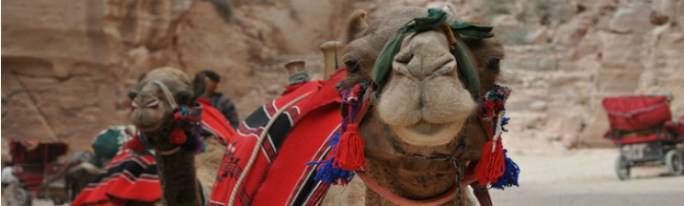
Camels may be source of Middle East’s Sars-like virus

Can we all just take a moment to appreciate the level of epidemiological sleuthing which went in to uncovering this? Researchers attempting to determine the vector of Middle Eastern Respiratory Syndrome (MERS) ended up sampling 50 Omani racing camels, and 105 Canary Islander tourist camels. All camels sampled from Oman, and 15 of those from the Canary Island, possessed antibodies to MERS, indicating prior infection. While the presence of antibodies is compelling, the virus itself was not found in any of the dromedary (vocab word of the day, meaning an Arabian camel with one hump) camels sampled. Also, Oman has reported no human cases of MERS. However, with camels as a possible vector, follow up investigations into whether those people infected had any contact with camels, their meat, or their milk can be conducted.  MERS has infected 94 people to date, killing almost half.

The Guardian – “The scientists said the virus could be slightly different – maybe more transmissible in Oman – or the camels might have been kept in circumstances that made it less likely to spread in the Canaries. But it is also possible that the virus was brought in by one of the three oldest Canary Island camels, who arrived from Morocco more than 18 years ago. ‘We cannot rule out that the population might have once had an outbreak but that by the time of sampling, antibody titres had waned and no new introductions of the virus had occurred,’ they write. ‘The camels have contact with wild rodents, pigeons, and other doves, and possibly also bats. Seven insectivorous bat species, including three pipistrellus [species], are native to the Canary Islands, while Egyptian fruit bats (Rousettus aegyptiacus) have been introduced.'”

USDA reviews whether bacteria-killing chemicals are masking Salmonella

According to recent research, the use of stronger anti-bacterial chemicals at poultry-processing plants may be cloaking the presence of Salmonella and other foodbourne pathogens which remain on the processed meat. Apparently the more stringent chemicals are too strong for current Salmonella tests, potentially resulting in false negatives. The USDA has stepped in to further investigate the research’s claims. For those of you who (like me) didn’t know, apparently the bird is treated with four different chemicals on average.

Washington Post – “To check that most bacteria have been killed, occasional test birds are pulled off the line and tossed into plastic bags filled with a solution that collects any remaining pathogens. That solution is sent to a lab for testing, which takes place about 24 hours later. Meanwhile, the bird is placed back on the line and is ultimately packaged, shipped and sold. Scientists say in order for tests to be accurate, it is critical that the pathogen-killing chemicals are quickly neutralized by the solution — something that routinely occurred with the older, weaker antibacterial chemicals. If the chemicals continue to kill bacteria, the testing indicates that the birds are safer to eat than they actually are.”

Investigational malaria vaccine found safe and protective

A new, live-attenuated malaria vaccine has successfully completed Phase I clinical trials. The vaccine, known as PfSPZ Vaccine, has been shown in a recent NIH to be safe, immunogenic, and  effectively confer immunity. However, a significant drawback of the new vaccine is its intravenous administration – most vaccines are administered subcutaneously, intradermally, or, ideally, orally.  Nonetheless, researchers are optimistic, and a set of follow-up studies are scheduled. According the the WHO, in 2010 (most recent sampling year), malaria caused an estimated 219 million cases globally, with 660,000 deaths, predominantly amongst African children.

Medical Xpress – “The Phase I trial, which took place at the NIH Clinical Center in Bethesda, received informed consent from and enrolled 57 healthy adult volunteers ages 18 to 45 years who never had malaria. Of these, 40 participants received the vaccine and 17 did not. To evaluate the vaccine’s safety, vaccinees were split into groups receiving two to six intravenous doses of PfSPZ Vaccine at increasing dosages. After vaccination, participants were monitored closely for seven days. No severe adverse effects associated with the vaccine occurred, and no malaria infections related to vaccination were observed…Based on blood measurements, researchers found that participants who received a higher total dosage of PfSPZ Vaccine generated more antibodies against malaria and more T cells—a type of immune system cell—specific to the vaccine.”

DHS wants LRS Federal to continue collecting BioWatch air samples for another six months

BioWatch isn’t dead yet, at least if you live in the DC metro region. The Department of Homeland Security has decided to award LRS Federal a six-month contract extension for maintenance of BioWatch in the DC metro area. The $759,000 awarded in the renewal will go towards maintenance of the program, including salaries of those who collect the daily samples and upkeep. No new developments on Gen 3 writ-large.

Government Security News Magazine – “LRS Federal currently manages the teams that perform daily sample collections and routine equipment maintenance on portable air sampling units located throughout the National Capital Region’s ‘BioWatch Jurisdiction,’ in Washington, DC; Baltimore, MD; Richmond, VA; and elsewhere. The notice says that LRS is the only firm that can continue supporting the program’s immediate requirements. ‘Otherwise, the Government will be without support to detect and mitigate the threat of biological air-borne pathogens,’ it added.”

International Recap:

Nepal: H5N1 is still raging in Nepal, with the government considering an extension of the current ban on poultry-product sales. In the weeks following this most recent outbreak, the  Nepali government had come under fire for apparently pandering to poultry groups, resulting in an increase in the virus’ spread. However, it has since began a widespread campaign of restriction of poultry sales and culling. Fears of the virus spreading south to neighboring India remain.  Read more here.

Belarus: It’s not often we get to write about Belarus, Europe’s last dictatorship (no Putin jokes, please). The Eastern European country is currently experiencing an outbreak of African Swine Fever, which only affects pigs. Belarus has admitted difficulty in containing the outbreak. We’ve been unable to track down official numbers (it’s Belarus), but concerns over the disease spreading to Western Europe are mounting. Read more here.

In case you missed it:

– Researchers Mutating H7N9, increasing virulence and able to transmit person-to-person

(image courtesy of Jason Wain/Flickr)

Researchers mutating H7N9, increasing virulence and P2P transmission

Twenty-two researchers from labs across the world submitted a letter to Nature and Science yesterday detailing their proposed “gain-of-function” research on the avian influenza virus H7N9. Their work would genetically engineer H7N9 to make it both more virulent and more readily transmissible person-to-person. The research sounds controversial, not the least because one of the scientists involved is Dr. Ron Fouchier, whose on gain-of-function work on H5N1 ingnited furious debate over what should research should and shouldn’t be published. However, there is a very real possibility that H7N9 will naturally mutate to transmit effectively between people. We already know that the virus is just a single amino acid mutation away from becoming easily transmissible between people. Indeed, news of the first confirmed case of such transmission was published in the British Medical Journal this week. With a 60% fatality rate and a completely naive global population, the results would be catastrophic. The proposed research would give us an idea of potential pandemic scenarios, giving us a head start on potential vaccine and antiviral development.  It may be controversial, but it’s absolutely necessary.

For the full letter, see here.

(image credit: Yoshihiro Kawaoka University of Winsconsin, Madison)

Image of the Week

In the wake of the recent study detailing the first confirmed human to human transmission of H7N9 (Wired article here, for those of you who missed it), we thought we’d share this CDC infographic on the virus’ evolution.

In the News: GMU National Center for Biodefense and Infectious Diseases

GMU Assistant Professor Dr. Kylene Kehn-Hall and others at George Mason University’s Center for Biodefense and Infectious Diseases were in the news yesterday, discussing their cutting-edge research on NanoTrap particles. The NanoTrap particles are capable of capturing and inactivating the virus in question, even when working with very low titers.  Use of the NanoParticles with Rift Valley Fever virus (RVFV), which is considered a potential bioterrorist agent, resulted in a 100-fold increase in sensitivity.

Excerpt of the study’s conclusion (published in PLOS): “This study demonstrates NanoTrap particles are capable of capturing, enriching, and protecting RVFV virions. Furthermore, the use of NanoTrap particles can be extended to a variety of viruses, including VEEV and HIV.”

Read the full article here.

(image credit: CDC/USG)

This week in DC: (Some) Events 8.5.13

With Congress in recess, there’s not a lot happening in the city this week (or much of August generally). Here’s the best of what’s on, for those of who prefer the humidity anyway.

All events:

  1. Monday, August 5
    The Future of Political Islam in Egypt Post-Morsi
    SAIS
    10:00AM – 11:20AMAhmad Atif Ahmad, professor of religious studies at the University of California, Santa Barbara, and Jonathan Brown, associate professor of Islam and Muslim-Christian Understanding at Georgetown University’s Edmund A. Walsh School of Foreign Service, will discuss this topic.
  2. Tuesday, August 6
    Military Strategy Forum with Major General Steven L. Kwast, Director, U.S. Air Force Quadrennial Defense Review
    Center for Strategic and International Studies
    1:30PM – 2:30PMThe past week has brought renewed focus to the QDR. Please join us for a discussion with Major General Kwast, followed by a Q&A.
  3. Wednesday, August 7
    Peace and Stability Operations Colloquium Series: Countering the Lord’s Resistance Army
    GMU School of Public Policy
    1:00PM – 3:30PMSpeakers: Scott Duncan and Charlene Brown (U.S. Department of State). Scott Duncan is a Foreign Affairs Officer in the Bureau of Conflict and Stabilization Operations (CSO) where he supports strategy development for engagements in Africa and leads efforts to integrate new technologies and innovative approaches into conflict prevention efforts…Charlene Brown is a Stabilization Operations Specialist in the Africa Operations team at CSO, where she currently covers Great Lakes and counter-LRA issues.

(image courtesy of Dell)

The Pandora Report 8.2.13

Highlights include H5N1 raging in Nepal, using your phone to detect toxins,  Honduras battling dengue, mutated polio in Pakistan, West Nile rearing its ugly head early, and Ebola, gorillas, and tourism. Happy Friday!

Nepal Avian flu situation “getting out of hand” 

H5N1 is currently raging in Nepal, which is experiencing its 15th outbreak of the poultry-transmitted flu virus in the last couple weeks alone. Local health officials are calling on the government to step in and help stop the virus’ spread, following the death of nearly 25,000 chickens in three districts in the last 20 days. Meanwhile, there are disturbing rumors surrounding the government’s hesitancy to intervene, including lobbying on the part of the Nepali poultry association. With the virus spreading to another two districts in the last week, containment is critical.

eKantipur – “According to the experts, farmers selling the potentially infected chickens in the market in the absence of effective monitoring has worsened the situation. ‘There is total impunity; the authorities know who is at fault, but still they have failed to take immediate action,’ said Dr Shital Kaji Shrestha, General Secretary of the Nepal Veterinary Association. While some farmers have dumped dead birds openly in public places, others have buried them secretly without following the standard procedures. Such practices have increased the chances of the epidemic spreading, experts said. The police on Monday seized 426 chickens that were being transported to Birgunj for sale from a flu-affected farm in Bhaktapur.”

Smartphone cradle, app detect toxins, bacteria

This app/cradle combo turns your average smartphone into a mini biosensor. It was developed for people with food allergies in mind, but we think it could be tweaked for more homeland security/non proliferation purposes (not that allergies are to be taken lightly, peanuts are everywhere these days).

The Sacramento Bee – “The handheld biosensor was developed by researchers at the University of Illinois, Urbana-Champaign. A series of lenses and filters in the cradle mirror those found in larger, more expensive laboratory devices. Together, the cradle and app transform a smartphone into a tool that can detect toxins and bacteria, spot water contamination and identify allergens in food. Kenny Long, a graduate researcher at the university, says the team was able to make the smartphone even smarter with modifications to the cellphone camera.”

Honduras declares state of emergency over dengue fever

Honduras has declared a state of emergency in an effort to bolsters its attempts to contain its dengue outbreak. To date, the outbreak has caused approximately 12,000 cases, of which approximately 1,800 are serious. According the the WHO, 40% of the world’s population, or nearly 2.5 billion people, are at risk for dengue infection.

BBC – “Honduras has declared a state of emergency after an outbreak of dengue fever that has killed 16 people so far this year. The government has promised to step up its fight against the mosquitoes that spread dengue fever. Health Minister Salvador Pineda said more than half of Honduras’ municipalities have registered cases of the viral infection this year.”

Mutated virus heightens polio worries

This is depressing for a couple of reasons. First, Pakistan is one of just three countries in the world where polio is endemic. The last thing they need is a mutated strain. Second, public health officials attempting to halt the virus’ spread do so at tremendous personal risk – tribal leaders earlier this month declared their support for the Taliban’s ban on polio vaccination, as a protest against US drone strikes in the area.  Absurd, yes, but not without possible provocation – keep in mind a 2011 US vaccination campaign in Abbottabad was actually a covert CIA operation, in which the doctors, rather than administering vaccines, were collecting DNA from locals. This resulted in those administering legitimate polio vaccines being labelled as “Western spies”, and refused entry into villages.

DAWN – “Dr Alias Durray, chief of the World Health Organisation’s polio eradication programme in Pakistan, confirmed to Dawn that the strain, which has close genetic similarities with the globally eradicated P2 strain, has paralysed a baby boy in Mastung district of Balochistan…The polio virus has three types of strains termed P1, P2 or P3 strain. Immunity from any one strain does not protect a person from the other strains. The P2 virus had been eradicated globally in 1998, and only the P1 and P3 strains remain. What is sad is that a strain similar to the mutated polio virus had been stopped after it first broke out and struck 15 children in Qila Abdullah area of Balochistan in 2011.”

West Nile Virus Making Early Appearance This Summer

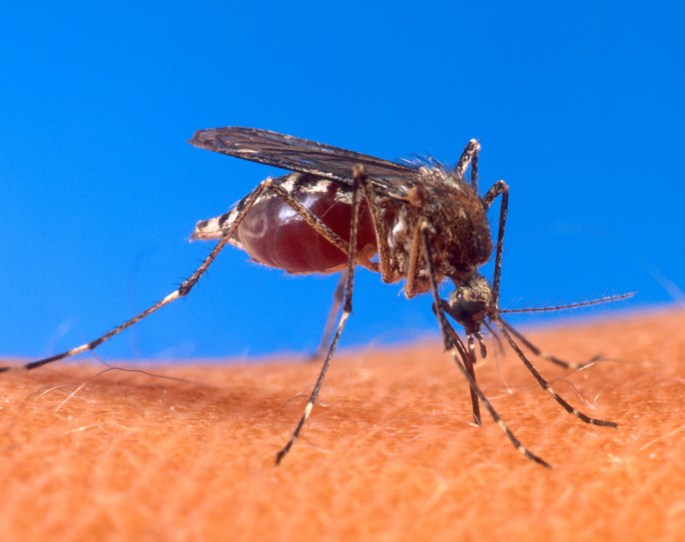
A big part of our job is keeping a close eye on any biodefense-related news (duh), and lately our inbox has been full of West Nile updates. Every day another US county seems to be reporting the virus appearance. With it already active in 29 states, and the worst months in terms of spread to come, it looks like West Nile is fast on the way to a very strong year. If you’re going to be outside at all, now is definitely the time, if you haven’t already, to invest in some mosquito repellent.

The Wall Street Journal –  “West Nile virus is transmitted through bites from infected mosquitoes. Although only one in five people who contract the virus develop symptoms such as fever, headache, body aches or vomiting, the virus can cause serious neurological illnesses that can be fatal, such as encephalitis or meningitis. The 2012 West Nile virus outbreak was the deadliest on record since the illness was first detected in the United States in 1999: 5,674 cases of West Nile virus were reported nationwide, including 286 deaths. Health officials expect the disease to continue to be a formidable public health issue. Because no human vaccine exists, preventing mosquito bites is the most effective way to avoid contracting West Nile virus…”

Saving the Gorillas—and Launching a Nation’s Tourism Economy

There was a very interesting piece in the Atlantic yesterday looking at Ebola in Congolese gorilla populations, and the disease’s impact on preservation efforts. Understanding local populations interaction with potentially infected animals helps create a more complete picture of the virus’ potential spread during an outbreak. Check it out if you have a spare minute and are need to read a news piece with a happy(ish) ending.

The Atlantic – “In November 2002, gorilla trackers outside the village of Mbomo, in the Republic of the Congo, came upon a group of apes that were stressed. One of the trackers described the females as crying. Then the men began finding carcasses in the forest: heaps of matted hair and liquefied organs oozing blood. In a period of four months, 130 of the 143 gorillas the trackers were following died. Later that same year, another 91 of 95 gorillas they were studying were gone. Few words cause a greater chill in any language than ‘Ebola,’ the hemorrhagic fever and lethal virus first detected in equatorial Africa in 1976. Most initial human cases come from contact with infected animals, including consuming them as bush meat–often the most-accessible source of protein in places where there aren’t cattle.”

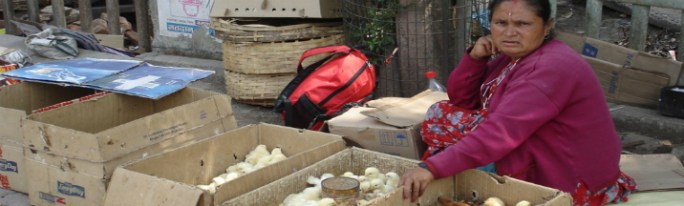
(A Nepali woman sells chickens in Kathmandu – image via Flickr/oliphant)

CDC’s Cyclospora update

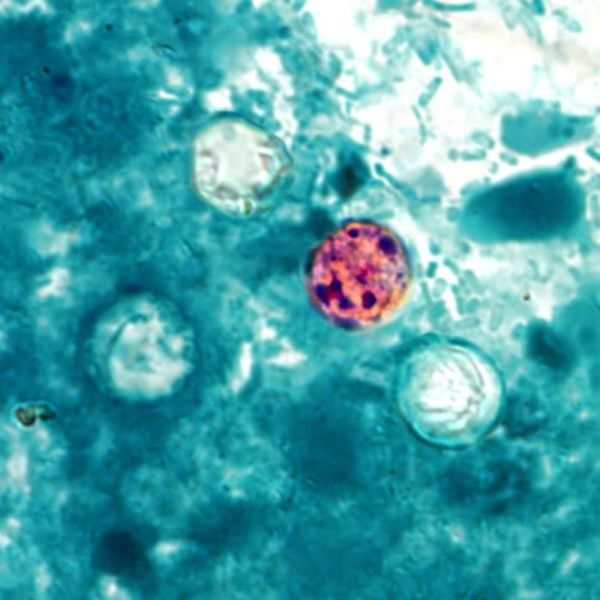
As we’re sure most of you know, the parasite Cyclospora cayetanensis, a protozoan currently causing gastrointestinal symptoms in 397 people in 16 states and New York City. The source of the outbreak is thought to be pre-packaged salad mix in Iowa.

Via the CDC: “Nebraska and Iowa have performed investigations within their states and have shared the results of those investigations with CDC. Based on their analysis, Cyclospora infections in their states are linked to a salad mix. CDC will continue to work with federal, state, and local partners in the investigation to determine whether this conclusion applies to the increase in cases of cyclosporiasis in other states. It is not yet clear whether the cases from all of the states are part of the same outbreak.”

For more information, see here.

Image of the Week

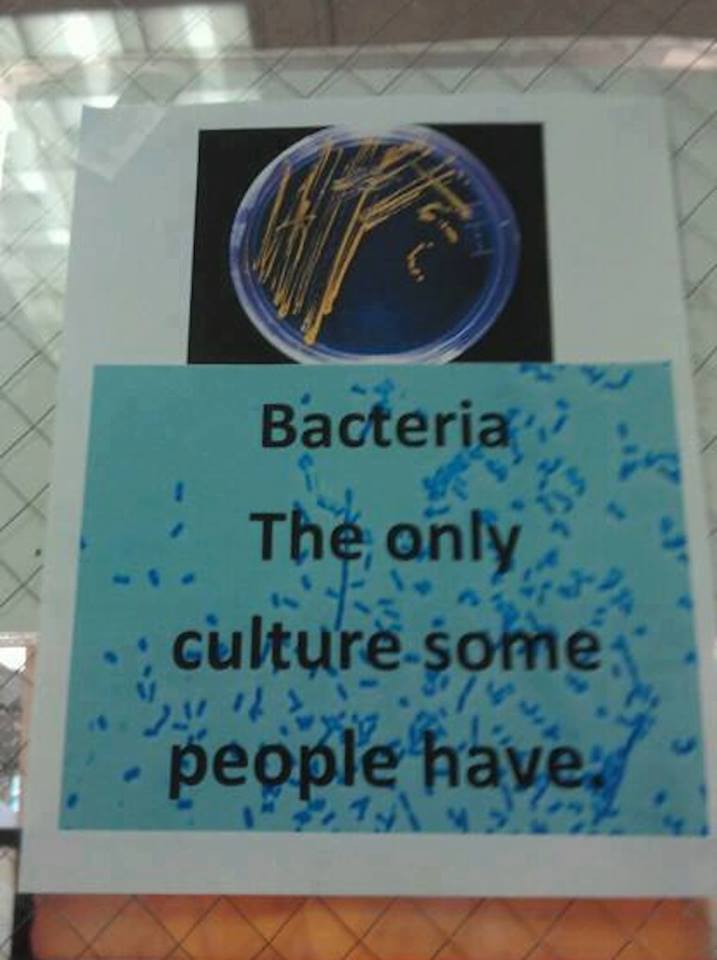
Because most research scientists (and their lab assistants) we know are so busy in the lab, they don’t have time for things like “lives” or “culture”. Luckily bacteria is pretty?

science is awesome

(image via Science is Awesome)


Costa Rica experiencing dual outbreaks of Dengue and H1N1

Public health officials in Costa Rica are scrambling to contain two ongoing outbreaks of dengue and H1N1 respectively. Dengue, one the WHO’s “neglected tropical diseases”, has been making the rounds in Central America, with limited outbreaks of dengue in Nicaragua and Honduras. Costa Rica is currently working on vector control to stop the spread of the mosquito-bourne virus. Meanwhile, Costa Rica is also working to contain a limited H1N1 outbreak, but is struggling with maintaining sufficient numbers of vaccines.

Costa Rica Star – “According to online news daily Costa Rica Hoy, health officials from la Caja estimate that more than $500 million have been spent on treatment and paid sick leave of patients who fall ill from dengue fever. According to actuaries studying figures from La Caja’s hospital and epidemiological expenditures, the costs in 2013 have not only been higher than in the previous year; they are also higher than similar costs during 2008 and 2009 combined. Dengue hemorrhagic fever, which can be fatal, has already claimed a couple of lives in Costa Rica. The Ministry of Health has been actively involved in controlling the vector population of Aedes aegypti, the carrier mosquito that breeds in stagnant pools of water located in the tropics. Efforts in controlling this potentially deadly insect include habitat destruction and fumigation.”

Read more here.