Pandora Report 4.21.2023

This week is another mixed bag highlighting recent alumni achievements and program happenings, discussing the release of annual State Department reports on global compliance with the NPT, CWC, and BWC, and Senate Republicans’ latest report on the origins of SARS-CoV-2. Several new publications and upcoming events are included, as well as open calls for experts and fellowship opportunities.

Fairfax County Health Department Recognizes Mason for Pandemic Response

Recently, “George Mason University was recognized by the Fairfax County Health Department (FCHD) for being an outstanding system partner in managing and operationalizing the university’s pandemic planning, response, and recovery. The partnership, which began long before the COVID-19 pandemic, has been vital in enhancing the health and well-being of the shared communities.”

The same piece announcing this interviewed a Biodefense PhD alumna, Julie Zobel, who is currently associate vice president of Safety, Emergency, and Enterprise Risk Management and Mason’s COVID director-“Julie Zobel…expressed her gratitude for the partnership between Mason and FCHD. “We are honored to have worked alongside the Fairfax County Health Department to serve our community during these challenging times,” said Zobel. “The success of our pandemic response would not have been possible without this partnership. We look forward to continuing our collaboration and commitment to public health”’

Pathogens Project Convenes Meeting in Geneva

The initiative on “Creating the Framework for Tomorrow’s Pathogen Research” hosted a public meeting in Geneva, Switzerland this week. This conference included Pathogens Project taskforce members, policy leaders, journalists, scientists, and civic leaders, among others.

The conference featured both private and public (recorded) workshops. Furthermore, according to the Project’s site, “It will produce a final summary report with recommendations, along with individually prepared papers focused on risk assessment and mitigation of high-risk pathogen research. Conference papers will be published in a special edition of the Bulletin of the Atomic Scientists and made available on the Bulletin’s website.”

Biodefense Graduate Program Director Dr. Gregory Koblentz was on a panel at the event, “Empirical studies tracking risks”, alongside Dr. Rocco Casagrande (Founder and Chair of the Board, Gryphon Scientific), Dr. Weiwen Zhang (Distinguished Professor of Synthetic Biology and Biochemical Engineering, Tianjin University of China), and Dr. Sandra López-Vergès (Senior Health Researcher and Chief, Gorgas Memorial Institute of Health Sciences). Koblentz discussed ongoing work from the Global BioLabs project, which he co-leads with Dr. Filippa Lentzos of King’s College London. Global BioLabs offers an interactive map of BSL-4 and BSL-3+ facilities globally and recently released Global BioLabs Report 2023.
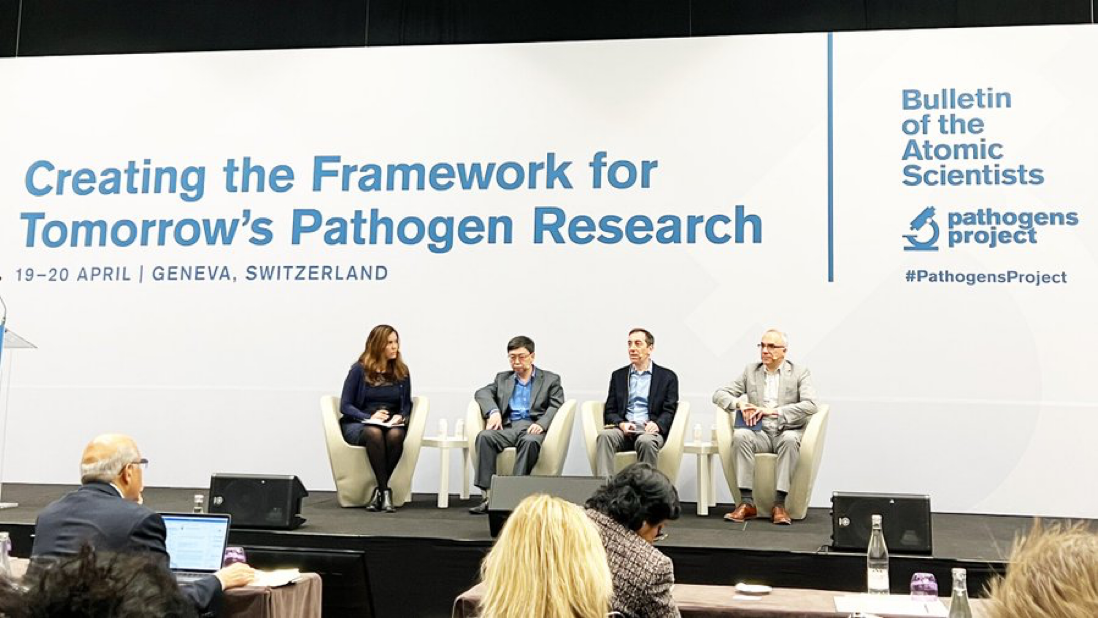
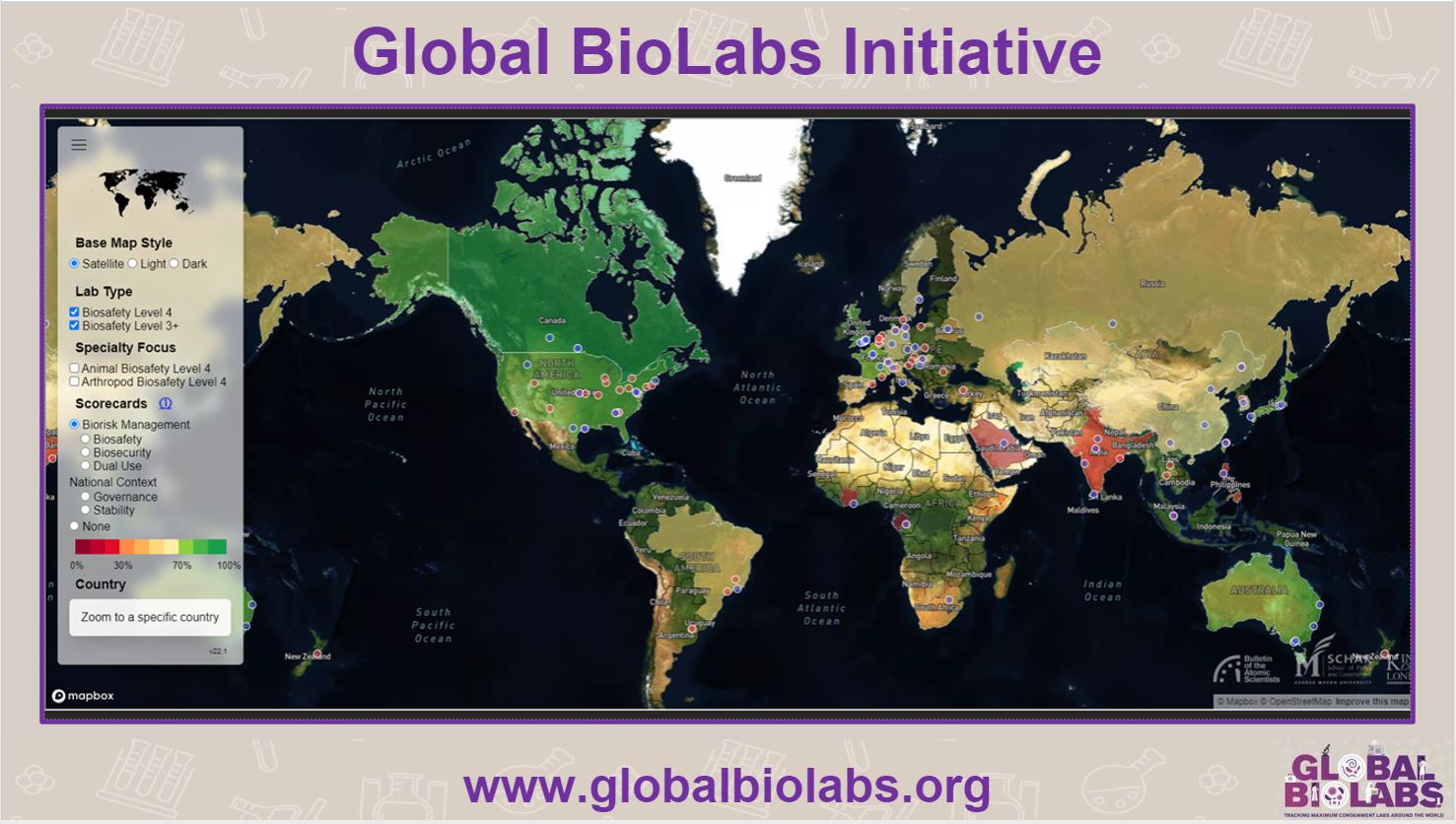
Biodfense Graduate Program Director Dr. Gregory Koblentz on the “Empirical studies tracking risks” panel
Visit https://www.globalbiolabs.org/ to access this interactive map feature

State Department Releases Arms Control, Nonproliferation, and Disarmament Compliance Reports

The State Department’s Bureau of Arms Control, Verification, and Compliance recently released the 2023 Annual Report on Compliance with the Chemical Weapons Convention (CWC) and the 2023 Adherence to and Compliance with Arms Control, Nonproliferation, and Disarmament Agreements and Commitments Report. The latter notes BWC compliance issues in the People’s Republic of China, Islamic Republic of Iran, Democratic People’s Republic of Korea, and the Russian Federation. This includes discussion of the lack of information needed to assess if China has eliminated its BW program, concerns about Iran’s ability to produce lethal BW agents, knowledge of North Korea’s BW program, and Russia’s violations of Articles I and II of the BWC.

The report also notes concerns about lack of transparency in Myanmar’s nuclear work (though evidence does not indicate that the country violated the NPT). The appended report on CWC compliance discusses further concerns with Myanmar and other countries’ compliance with the treaty. The report explains that “Four States Parties – Burma, Iran, Russia, and Syria – are certified in non-compliance with the CWC. Russia and Syria were first certified in non-compliance in April 2018. Iran was first certified in non-compliance in November 2018. Burma was first certified in non-compliance in 2019. Additional information is available in the 2023 classified Condition (10)(C) Reports. The United States also cannot certify the People’s Republic of China’s compliance, which was first reported in 2021.”

Dr. Gregory Koblentz and Madeline Roty (Biodefense MS ’21) authored a piece in the Bulletin of the Atomic Scientists in 2020 discussing Myanmar’s past with CW and US efforts to get the country to reconcile and come into compliance with the CWC. Following the 2021 coup d’état and the ouster of Aung San Suu Kyi, Myanmar is unlikely to meet the requirements needed to be in compliance, despite the progress outlined by Koblentz and Roty.

Senate Republicans Release COVID Origins Report

Senate Republicans have released their report exploring the origins of the COVID-19 pandemic, building on the short interim report released in October 2022. Two documents titled “Muddy Waters: The Origins of COVID-19” were released; one by the Muddy Waters Group and another prepared by Senator Roger Marshall alongside Dr. Bob Kadlec, Bob Foster, and members of the 117th GOP Health, Education, Labor & Pensions (HELP) Committee’s staff. The report was a product of the work of former Senator Richard Burr of North Carolina, who commissioned the report and oversaw the release of the October HELP committee interim report. Readers may recall the controversy that accompanied the release of that interim report, which coincided with the release of articles by Vanity Fair and ProPublica that were widely criticized for poor quality translations and other inaccuracies we discussed in November.

That troubled trend seems to continue in this new report, with admitted circumstantial evidence used to find that “The preponderance of information affirms the plausibility of a research-related incident that was likely unintentional resulting from failures of biosafety containment during vaccine-related research.”

Axios explains that the report “…argues that scientists haven’t found any naturally occurring viruses with the same composition of the coronavirus, and that there’s evidence the virus was circulating in Wuhan before the first known cases connected to the wet market were reported…It also argues that it appears Chinese researchers began development of at least two COVID vaccines in November 2019, including at the WIV, which “means SARS-CoV-2 would have been present at the WIV before the known outbreak of the pandemic,” and “It also documents numerous instances of lab safety concerns throughout 2019, including around the time when the virus may have first appeared.”

Much of this, however, relies on the same previously disputed points made in the interim report and the accompanying ProPublica and Vanity Fair pieces. Furthermore, as Caitlin Owens highlights in another piece for Axios, the reports rely on circumstantial evidence which means “The absence of evidence pointing, for example, to a precise transmission route from animals to humans will lead to very different interpretations of the same information.”

Dr. Angela Rasmussen, a virologist who has worked on high-profile studies supporting the idea of a natural origin of SARS-CoV-2 told Owens that the report “…demonstrates, in my view, a political agenda that’s meant to bolster the idea that the lab leak hypothesis is more supported than it is. But also it is so full of just factual errors.” Rasmussen also counters a number of key assertions made in the new report, including those such as the presence of a furin cleavage site on SARS-CoV-2’s spike protein is in itself suspicious and that the Wuhan Institute of Virology was dealing with substantial biosafety problems that Party leadership was concerned about.

All told, this report seems unlikely to change much or anything in this ongoing public debate.
Understanding Cyber-Warfare: Politics, Policy and Strategy

Chris Whyte and Brian Mazanec (a Biodefense PhD alumnus) are pleased to announce the publication of the second edition of their textbook Understanding Cyber-Warfare: Politics, Policy and Strategy (Routledge, 2023).  This second edition of their popular textbook offers an accessible introduction to the historical, technical, and strategic context of global cyber conflict. The second edition has been revised and updated throughout, with three new chapters, to include coverage of the role of cyber in the war in Ukraine as well as a discussion of the role of emerging information technologies like artificial intelligence and quantum computing in shaping the dynamics of global cyber conflict.  The second edition has recieved positive reviews. For example James R. Clapper, the former Director of National Intelligence, called it “an authoritative tutorial on the arcane complexities of cyber warfare” and said this edition “updates a previous version and makes the book more contemporary. It is a must-read for those who are serious about mastering this unique medium of combat, in all its dimensions.”  More details can be found here.

“Artificial Intelligence and Machine Learning for Bioenergy Research: Opportunities and Challenge”

New from the US Department of Energy’s Genomic Science Program: “The integration of artificial intelligence and machine learning (AI/ML) with automated experimentation, genomics, biosystems design, and bioprocessing represents a new data-driven research paradigm poised to revolutionize scientific investigation and, particularly, bioenergy research. To identify the opportunities and challenges in this emerging research area, the U.S. Department of Energy’s (DOE) Biological and Environmental Research program (BER) and Bioenergy Technologies Office (BETO) held a joint virtual workshop on AI/ML for Bioenergy Research (AMBER) on August 23–25, 2022.”

“Approximately 50 scientists with various expertise from academia, industry, and DOE national laboratories met to assess the current and future potential for AI/ML and laboratory automation to advance biological understanding and engineering. They particularly examined how integrating AI/ML tools with laboratory automation could accelerate biosystems design and optimize biomanufacturing for a variety of DOE mission needs in energy and the environment.”

The report describing the workshop findings is now available here.

“The Making of a Biosafety Officer”

David Gillum discusses the roles of biosafety professionals in this piece for Issues in Science and Technology, writing in part “The question of how the biosafety community generates and transmits knowledge is interesting in itself, but it is also an urgent issue. The need for biosafety workers is growing just as current professionals are skewing older: an estimated 54% are over 50 and one of the few surveys of the field suggests there are six times as many biosafety officers over 70 as there are under 30. Preparing more of us—and keeping the public safe as the complexity of biological research, health, and manufacturing projects burgeons—is made more difficult by the importance of tacit knowledge in our education. Methods for understanding, communicating, and mitigating risk are difficult to transfer to others. To enhance public health and safety, people in my line of work should ease this transfer by considering how the profession might be standardized and formalized.”

“Viral Families and Disease X: A Framework for U.S. Pandemic Preparedness Policy”

In this policy brief for the Center for Security and Emerging Technology, Schuerger et al. explain that “Pandemic threats are increasing as globalization, urbanization, and encroachment on animal habitats cause infectious outbreaks to become more frequent and severe. It is imperative that the United States build a pipeline of medical countermeasure development, beginning with basic scientific research and culminating in approved therapies. This report assesses preparedness for families of viral pathogens of pandemic potential and offers recommendations for steps the U.S. government can take to prepare for future pandemics.”

“Integrating Public and Ecosystem Health to Foster Resilience: Proceedings of a Workshop”

“Ecosystems form the foundation upon which society can survive and thrive, providing food, water, air, materials, and recreation. The connections between people and their environments are under stress from human-driven climate change, pollution, resource exploitation, and other actions that may have implications for public health. Existing intellectual frameworks including One Health, Planetary Health, ecosystem services, and nature-based solutions help to connect different elements related to the resilience of public health and ecological health systems. However, because of the breadth of this issue, many implications regarding public health are not well characterized, leading to gaps in understanding the interconnections between public health and ecosystem health systems and how ecosystem resiliency may affect public health.”

“The National Academies of Sciences, Engineering, and Medicine held a workshop in September 2022 focused on the integration of public and ecosystem health to foster resilience. This workshop was designed to inform the development of a research agenda aimed at bridging the knowledge-to-action gap and spur a move from research to policy and practice. Participants included a broad range of interdisciplinary researchers and practitioners from the public health, natural resource management, and environmental protection communities. The workshop provided a forum for the exchange of knowledge, discussion of critical gaps in understanding and practice, and identification of promising research that could support the development of domestic and international policy and practice.”

“The proceedings summarizing the workshop is now available for free download, and a public webinar exploring the workshop topics will take place virtually in early May. Click below to download the proceedings, register for the webinar, and visit the project page to more about this publication.”

“The Right People and the Right Question: Getting Chemical Weapons Out of Syria”

In this recent video story for the Stanley Center for Peace and Security, Tom Countryman discusses his tenure as the Assistant Secretary of State for Non-Proliferation as the Department navigated concerns about Syria’s chemical weapons. He highlights key lessons learned in doing this, including the need to mind the political context one is operating in, the importance of knowing who the right people are and being able to motivate and mobilize them, appropriately identifying goals and what is needed to achieve them, and, finally, not allowing the difficulties of political relationships to overshadow common interests.

“Reducing the Problem: Eliminating Syria’s Chemical Weapons”

Andy Weber discusses elimination of the Syrian CW stockpile in this video story for the Stanley Center. He covers how he came to be the Assistant Secretary of Defense for Nuclear, Chemical, and Biological Defense Programs and more, saying in part “Sometimes, whether it’s Gaddafi in Libya, or Assad in Syria, it’s unsavory characters, who have these horrific weapons. And you have to work with them sometimes, and it’s hard, and it’s challenging, and you have to keep your eyes open. You need to make sure you’re not indirectly helping them in another area. But that’s where good oversight comes in, and you have to think about the objective of all these programs. The objective is to save lives, to prevent mass casualties in any country, anywhere in the world. These are global programs that improve global security.”

“Armed Conflict and Nuclear Security: Implications for Europe”
Muhammed Ali Alkiş discusses the efficacy of the traditional approach to nuclear security in this recent publication for SIPRI: “The traditional approach to nuclear security is unlikely to be effective against the full spectrum of current threats, including those posed by state actors. The lessons learned from the Russian occupation of Ukrainian nuclear power plants, the potential radiological consequences of armed attacks against nuclear facilities and the potential increase in the number of nuclear power states in the future underscore the need for a strong international framework to address nuclear security challenges.”

“The European Union (EU) is committed to implementing the highest international standards for nuclear security and may therefore be in a position to lead efforts to address threats of armed attacks against nuclear installations. This paper provides a range of potential policy recommendations and actionable steps that the EU and its member states could take at legal, institutional and operational levels to minimize the nuclear security threats posed by armed conflict in the future. While they may appear politically challenging or even unrealistic at present, the conflict in Ukraine highlights the very real need for the types of actions recommended by this paper.”

“Technology Primer: Artificial Intelligence & Machine Learning”

Checkout this new report from the Harvard Belfer Center: “Artificial Intelligence (AI), can be defined as the theory and application of machines—especially computer programs—to perform tasks that typically require human intelligence, such as image captioning and generation, speech recognition and synthesis, natural language understanding and production, tool assembly and utilization, as well as various other perception-action based engagements. AI, in its current technological state, is being applied in various industries and domains, such as online advertising, financial trading, healthcare, pharmaceutical, and robotics. The lucrative market opportunities offered by AI applications have attracted investments from tech giants like Alphabet, Apple, Meta, Amazon, and Microsoft, as well as research universities and startups.”

“Machine Learning (ML), commonly categorized as a subfield of AI, is a field of study concerning the automatic discovery of historical patterns in data using statistical algorithms. ML’s driving principle is that historical patterns are likely to reappear in the future. The discovered historical patterns can therefore be leveraged to make accurate predictions on data that has not been seen before. Once an algorithm is trained, it can be applied to new, larger streams of data. ML is already an integral component of many deployed commercial applications, such as content generation (e.g., text, image, audio, video generation), virtual assistants, social media feed ranking, content recommendation systems, financial market prediction, and healthcare screening and diagnostic tools, as well as administrative applications. In addition, ML is foundational in various other emerging technologies, such as autonomous vehicles and next-generation cybersecurity.”

“Currently, United States policy with regards to AI often derives from interpretations of various pre-existing legislations and legal precedents. However, with the increased awareness of AI-related risks (e.g., bias, accountability, misuse, etc.), and the potential size of their impact, over the last decade, the number of proposed bills containing AI provisions significantly increased at both the state and federal levels (i.e., from two bills in 2012 to 131 in 2021), with 2% of them becoming law at the federal level and 20% of them becoming law at the state level. Similarly, policies and regulatory frameworks are being crafted to guide the development and application of AI in other continents too, with Europe and Asia leading the process. Acknowledging the potential impact of this technology on human life and societal dynamics, there is a pressing need for U.S. legislators and policymakers to remain engaged in the ethical and practical development of artificial intelligence.”

Lessons From the COVID War: An Investigative Report

The independent, nonpartisan Covid Crisis Group has spent two years investigating the causes and consequences of the COVID-19 pandemic. The Schar School of Policy and Government and Biodefense Graduate Program are proud to host two members of the group, Andrew Kilianski and Melissa Harvey, for an in-depth discussion of the group’s long-awaited report on what went wrong—and right—with America’s response to the pandemic: Lessons from the Covid War: An Investigative Report (Public Affairs, 2023).

The Covid Crisis Group is a remarkable group of 34 distinguished practitioners and scholars from a variety of backgrounds who came together determined to learn and share the most valuable lessons from the worst peacetime catastrophe of modern times. Lessons from the Covid War is plain-spoken and clear-sighted. It cuts through the jumble of information to make some sense of it all and answer: What just happened to us, and why? And crucially, how, next time, could we do better? Because there will be a next time.

Register here: https://gmu.universitytickets.com/w/event.aspx?id=1471 

Book Event: Open Source Investigations in the Age of Google 

From the Center for Strategic and International Studies: “How did a journalist find out who was responsible for bombing hospitals in Syria without leaving his desk in New York? How can South Sudanese activists safely track and detail the weapons in their communities, and make sure that global audiences take notice? What are policy makers, lawyers, and intelligence agencies doing to keep up with and make use of these activities? A team of authors tackle these questions in their new book “Open Source Investigations in the Age of Google.”‘ 

“This new interdisciplinary book seeks to answer these questions and more, with contributions by prize-winning practitioners, experts, and rising stars from across the open source investigation community. Painting a comprehensive picture of the digital information space today, it explores the manner and methods in which current open source investigations are conducted, as well as examines the opportunities and challenges they present to salient issues to the information environment such as trust and transparency, accountability, justice, amongst others.”‘

“Please join CSIS virtually on April 24, 1-2 pm EDT for a panel discussion on open-source investigations moderated by Diane Cooke, visiting fellow with the International Security Program. The conversation will include Hans Kristensen, Director of the Nuclear Information Project, Federation of American Scientists; Christiaan Triebert, journalist on the New York Times Visual Investigation Team; and Henrietta Wilson, Senior Analyst for the Strategic Concept for the Removal of Arms and Proliferation, SOAS University of London & King’s College London.”

Register here.

Online Event: Civil Society at the 5th CWC Review Conference

From the CWC Coalition: “The Fifth Five-Year Review Conference (RC-5) for the 1997 Chemical Weapons Convention will be held in the Hague from May 15-19, 2023.”

“At the CWC RevCon, member states and the broader chemical weapons disarmament community will gather to assess past achievements, treaty implementation and compliance, and discuss plans to strengthen the CWC in the years ahead.”

“You are invited to join a virtual discussion on the upcoming Fifth Five-Year CWC Review Conference (RC-5), major issues to be addressed, and the role of civil society and non-governmental organizations.”

“We will be joined by Elisabeth Waechter, Head of Public Affairs at the OPCW. Paul Walker, the Chair of the CWC Coalition, will moderate.”

This event will take place on April 26 at 10 am EST. Register here.

National Biodefense Science Board Public Meeting

The NBSB will meet virtually on May 4 at 2 pm EST to discuss lessons from COVID-19 and will present recommendations on several topics, including collection, analysis, and sharing of operational health data, uses of virtual healthcare during disaster response, and disaster response challenges specific to rural and underserved communities. Register here.

Virtual Workshop: Prioritizing Actions for Epidemic and Pandemic Preparedness

From the National Academies: “Please join us May 4 & 18, 2023 from 8 a.m. to 12 p.m. ET for a virtual symposium examining how to strengthen the evidence-based prioritization of epidemic and pandemic preparedness and response capabilities.

The symposium will convene global health planning stakeholders, including those in government and academia, and across health- and non-health sectors to:

  • Review assessment tools and how, independently and together, they relate to national action planning.
  • Gain insight into how countries and organizations currently select priorities in funding for epidemic prevention, detection, and response.
  • Assess evidence for effective prioritization approaches to building disease surveillance and risk communication capabilities.
  • Identify governance structures that can support robust and reliable systems for epidemic and pandemic preparedness and response investments.

This symposium is in collaboration with the Division on Earth and Life Studies. Learn more about this workshop by visiting the event webpage.”

Nobel Prize Summit-Truth, Trust and Hope

Taking place May 24-26 this year in DC and virtually, this Nobel Prize Summit asks “How can we build trust in truth, facts and scientific evidence so that we can create a hopeful future for all?”

“Misinformation is eroding our trust in science and runs the risk of becoming one of the greatest threats to our society today.”

“Join us at this years’ Nobel Prize Summit which brings together laureates, leading experts and you in a conversation on how we can combat misinformation, restore trust in science and create a hopeful future.”

Learn more and register here.

CSWMD 2023 Annual Symposium: WMD in the Decisive Decade
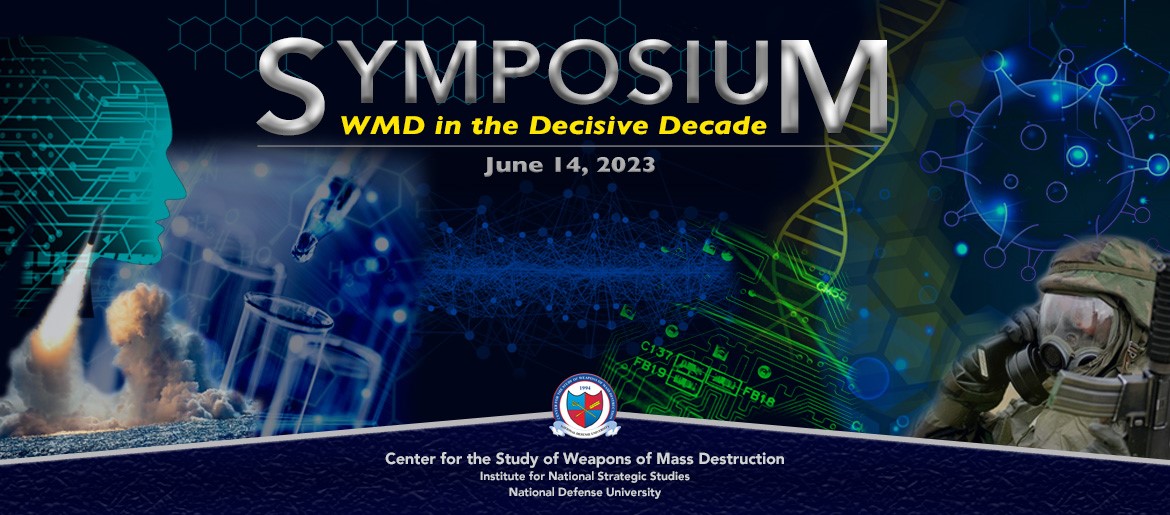
“The National Defense University’s Center for the Study of Weapons of Mass Destruction (CSWMD) invites you to join us on 14 June 2023 for the virtual Annual CSWMD Symposium, titled WMD in the Decisive Decade.”

“This year’s symposium will explore the cognitive impacts WMD has on strategic decision making and the challenges associated with operating in an environment where WMD has been employed. It will be an opportunity for the WMD community to engage with officials and thought leaders on current WMD challenges at the unclassified level, including keynote addresses by Richard Johnson, Deputy Assistant Secretary of Defense for Nuclear and CWMD Policy and Rebecca Hersman, Director of the Defense Threat Reduction Agency.”

“For more information and to register for this event click here. Please RSVP by 9 JUNE 2023.”

“We look forward to hosting you for the event. For more information about the WMD Center and reference our research, please visit our website at https://wmdcenter.ndu.edu/ and follow us on Twitter and on LinkedIn.”

Gordon Research Conference: Cross-Cutting Science Facilitating Collaboration Across the Threat-Science Research Community

“The Nonproliferation, Counterproliferation and Disarmament Science GRC is a premier, international scientific conference focused on advancing the frontiers of science through the presentation of cutting-edge and unpublished research, prioritizing time for discussion after each talk and fostering informal interactions among scientists of all career stages. The conference program includes a diverse range of speakers and discussion leaders from institutions and organizations worldwide, concentrating on the latest developments in the field. The conference is five days long and held in a remote location to increase the sense of camaraderie and create scientific communities, with lasting collaborations and friendships. In addition to premier talks, the conference has designated time for poster sessions from individuals of all career stages, and afternoon free time and communal meals allow for informal networking opportunities with leaders in the field.”

This conference will take place July 9-14 in Ventura, CA. Learn more and register here.

Call for Applications: Early-Career Fellowship for Reducing Nuclear Weapons Risks

The Council on Strategic Risks “is announcing a continuation of its Early-Career Fellowship for Reducing Nuclear Weapons Risks. Through this six-month program, early-career professionals will work with leading experts from CSR’s team and network to develop a better understanding of practical risk reduction concepts and to generate new ideas regarding:

  • Nuclear strategic stability
  • Strengthening norms against nuclear weapons threats and use
  • Avoiding miscalculations and preventing accidents/incidents
  • Preventing and addressing nuclear proliferation
  • Responsibilities of nuclear weapons-capable states”

Learn more and apply here.

Seeking Subject Matter Expert(s) (SMEs) with Experience Educating Global Audiences on the Importance of Securing Emerging Technologies

“CRDF Global is seeking subject matter expert(s) (SMEs) to engage and educate global audiences. The expert(s) will work on deliverables relating to building a culture of security in the private sector. These deliverables will include the development of an online asynchronous course and four hybrid hackathons, which will take place at local incubator hubs in several countries.”

“The expert(s) will design and develop an asynchronous course to counter misuse and raise awareness of emerging technologies with potential weapons of mass destruction (WMD)-related applications by state and non-state actors. The audience for this course will be individuals in the private sector (particularly in start-ups, innovation hubs, and incubator spaces) in various countries globally. This asynchronous course should train key stakeholders on how to develop and foster a culture of security.”

Learn more here.

Weekly Trivia Question

You read the Pandora Report every week and now it’s time for you to show off what you know! The first person to send the correct answer to biodefense@gmu.edu will get a shout out in the following issue (first name last initial). Our question this week is: “In 1984, what group spread Salmonella enterica at restaurants and shops in Dulles, Oregon in an attempt to influence local elections?”

Last week, our question was: “In the 2011 film Contagion, Dr. Erin Mears (played by Kate Winslet) is an officer in which CDC program?” The answer is the Epidemic Intelligence Service.

Pandora Report 9.2.2016

Welcome to September! Let’s start the month off with a yellow fever timeline and the history of this misunderstood disease. If a gin and tonic is your go-to drink, you’ll be pleased to hear it was actually born to combat malaria. Many are questioning if Syria has retained a stockpile of chemical weapons, pointing to continued contradictions and discrepancies regarding inventories and more. While the topic of sanctions is being debated, findings from recent international reports determined that both the Syrian government and ISIS were responsible for chemical attacks in 2014 and 2015.  On Tuesday, the French ambassador to the UN pushed for unified action at the Security Council, emphasizing that within the report, the Assad regime and the Daesh terrorist group have been responsible for several attacks.

Next Gen Global Health Security Agenda (GHSA) Happy Hour
Please join the newly elected Coordinator, Jamechia Hoyle, for a happy hour and networking event. Come engage with a network of talented Global Health Security professionals. Share ideas, connect, and learn how to join the world of global health security! You can RSVP to nextgenghsa@gmail.com by September 5th – the event is Friday, September 9th, from 5-7pm, at District Commons DC, 2200 Pennsylvania Avenue Northwest, Washington, DC 20037.

Is Accessible Synthetic Biology Making DIY Bioweapons More Likely?
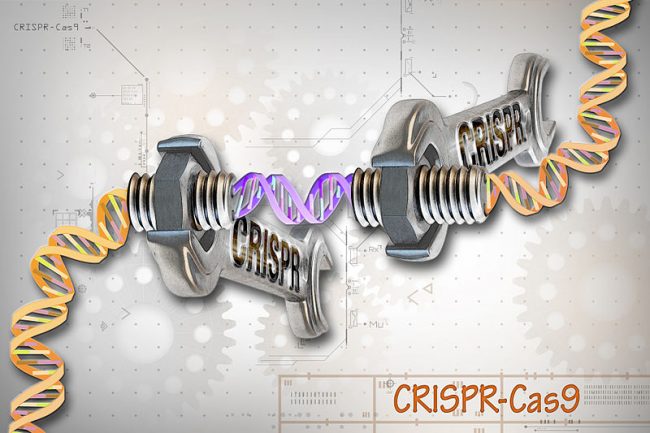
The biotech industrial revolution and advances with CRISPR-Cas9 have raised many red flags about the risk for do-it-yourself (DIY) bioweapons. Dr. Koblentz and several others discussed the role of gene-editing technologies in the UN Security Council meeting last week, with General-Secretary Ban noting that these advances have made the production and application of WMD’s easier. These advances have the potential to move the playing field away from solely state-sponsored or university-level programs, to lower levels of necessary tacit knowledge. The dilemma surrounding dual-use technologies of concern and biosafety failures compound these concerns – are we becoming more and more vulnerable to intentional or accidental events? Antibiotic resistance is also a growing dilemma, and not just what we’re facing now, but also the risk that synthetic biotechnology could make the development of a highly resistant organism possible for malicious persons. The tricky part is combating the risk for mis-use while not stifling innovation – any takers? The growing threat potential of synthetic biology has many commenting that “Zika is just the first front in the 21st century biowar”. We so easily think nuclear or cyber warfare when it comes to large-scale threats, but the truth is that biological threats have been looming in front of us for years. James Stavridis notes that there three key components to preparing for the biological revolution. “First, we need an international approach that seeks to limit the proliferation of highly dangerous technologies (much as we try to accomplish with nuclear weapons) and fosters cooperation in the case of contagion or a transnational biological threat.” Second, U.S. government interagency practices need to strengthen their capacity to address both scientific advances and security threats from the biological research sector. Lastly, there must be private-public cooperation. He points to the need for a stronger marriage between government and academia, but in such a manner that doesn’t deter innovation. In the end, there is a imperative need for more frequent and frank discussions about the impending realities of biological threats.

GMU Biodefense Graduate Program Open Houses! Screen Shot 2016-04-21 at 1.28.57 PM
If you enjoyed reading about Dr. Koblentz and his work in biodefense, consider joining GMU’s Biodefense graduate program as a MS or PhD student! We’ve got some great Open Houses coming up- there is a PhD Information Session next Wednesday, September 7th at 7pm at our Arlington Campus in Founders Hall in room 134. If you’re interested in a MS in Biodefense (we offer both online and in-person!), come to our next Open House on Thursday, September 15th, at 6:30pm in our Arlington Campus Founder’s Hall, Room 126. Dr. Koblentz will be leading the information sessions, which will give you both some insight into the program, but also the range of student research and careers.

Disease Detection and the Outbreak Hunters
Venturing through the caves of South Africa, virus hunting researchers take us through the journey that is zoonotic disease tracking. The CDC has ten global disease detection centers and programs, like PREDICT, are all working to study the early signs of outbreaks and how we can prevent them from happening. “We were tracking almost 300 infectious disease outbreaks of concern in 145 countries,” says Dr. Jordan Tappero, director of the Global Health Protection Center at CDC. This was during a 2-year period. “Only about 30% of countries even self-report [and] are able to prevent, detect, and respond to infectious disease outbreaks,” Tappero says. “We are working around the world to try and improve capacity so that we have partners everywhere to respond quickly.” Bats are one of the primary animals studied, as they tend to be a reservoir for many diseases. Much of the research looks to test animals to identify what diseases are circulating within them, which acts as an early warning system for potential outbreaks. Outbreaks like MERS-CoV and Ebola have taught us the importance of early warning systems within the germ world. Cheers to those brave researchers who are crawling through caves and bat guano – we applaud and thank you!

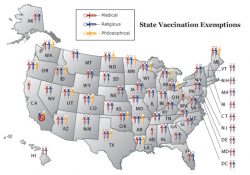
The Growing Vaccine Refusal in Pediatrics Usmap
After the measles outbreak in California and Arizona related to Disneyland in 2015, there was a surge of national attention to pediatric vaccination exemptions. While California is taking strides to reduce non-medically indicated exemptions, many doctors are still reporting that parents are refusing to vaccinate their children. A recent study was published using data from the American Academy of Pediatrics Periodic Surveys from 2006 and 2013, looking at parental noncompliance and the frequency of requests for vaccine delays and refusals. Researchers also looked at the impact on US pediatrician behavior as a result of parental refusal or requests to delay. The study found that the proportion of pediatricians reporting parental vaccine refusal increased from 74.5% in 2006 to 87.0% in 2013. “Pediatricians perceive that parents are increasingly refusing vaccinations because parents believe they are unnecessary (63.4% in 2006 vs 73.1% in 2013; P = .002). A total of 75.0% of pediatricians reported that parents delay vaccines because of concern about discomfort, and 72.5% indicated that they delay because of concern for immune system burden. In 2006, 6.1% of pediatricians reported “always” dismissing patients for continued vaccine refusal, and by 2013 that percentage increased to 11.7% (P = .004).” Sadly, these findings indicate that pediatricians are reporting more vaccine-refusing parents and while they provide vaccine education, they’re dismissing patients at a higher rate.

Get the Scoop on Zika Virus
The FDA has announced that all U.S. blood banks will test blood, regardless of the presence of Zika in the state, for the virus. Here’s a guide to help pregnant women reduce their Zika risk. A new report found that Zika was linked to congenital hearing loss in infants with microcephaly. This week, CDC Director, Dr. Tom Frieden, commented that the agency is almost out of funds for Zika. “Basically, we are out of money and we need Congress to act,” Frieden told reporters. “The cupboard is bare.”  Florida may be the perfect place for Zika transmission, but where else should we consider within the U.S.? Singapore is quickly becoming a Zika hot spot, with it being the only Asian country to have active transmission. The growing volume of cases is signaling that Singapore could easily be a new epicenter for Zika, triggering surrounding countries to ramp up their preparedness efforts. Many are wondering if Zika is a sleeping giant in Haiti. The country has all the ingredients for rapid and sustained transmission but hasn’t seen many cases yet, leaving many to wonder if it’ll hit. The CDC has reported, as of August 31st, 2,722 cases of Zika virus in the U.S. Yesterday, the Florida Department of Agriculture and Consumer Services officially announced that, for the first time, mosquitoes trapped in the continental U.S. were positive for Zika virus.

Event: The Elimination of Weapons of Mass Destruction: Lessons Learned from the Recent Past 
Attend the Nonproliferation Review’s Monday, September 12th event to discuss nonproliferation! The event will be held at the James Martin Center for Nonproliferation Studies CNS Washington office at 1400 K Street, NW, Suite 1225, on Monday, 9/12,  from 1-3 pm. Speakers include Rebecca Hersman, director of the Project on Nuclear Issues at the Center for Strategic and International Studies; Robert Peters, senior research fellow at the Center for the Study of Weapons of Mass Destruction at National Defense University; and Dr. Philipp Bleek, assistant professor at the Middlebury Institute for International Studies at Monterey and a fellow at CNS. Dr. Chen Kane, director of CNS’s Middle East nonproliferation program, will chair the event, with NPR Editor Joshua H. Pollack providing welcoming remarks.

Stories You May Have Missed:

  • ABSA Risk Group Database App! Biosecurity – there’s an app for it! The American Biological Safety Association has created an app for the ABSA Risk Group Database. You can find it in Apple or Android app stores under “Risk Group Database app” and it’ll allow you to access the database on your mobile devise. “The ABSA Risk Group Database consists of international risk group classifications for Bacteria, Viruses, Fungi, and Parasites. In many countries, including the United States, infectious agents are categorized in risk groups based on their relative risk. Depending on the country and/or organization, this classification system might take the following factors into consideration: pathogenicity of the organism; mode of transmission and host range; availability of effective preventive measures (e.g., vaccines); availability of effective treatment (e.g., antibiotics); and other factors.”
  • Possible Transmission of mcr-1–Harboring Escherichia coli between Companion Animals and Human– The growing reports of colistin-resistant E. coli findings have been raising the stakes in the fight against antibiotic resistance. A recent report found mcr-1 (the gene harboring the colistin-resistant mechanism) E. coli isolates in three separate patients admitting to a urology ward in China. One of the patients was found to work in a pet shop, so researchers collected fecal samples from 39 dogs and 14 cats where he worked. Six were positive for the mcr-1 gene by PCR (4 from dogs and 2 from cats). “These findings suggest that mcr-1–producing E. coli can colonize companion animals and be transferred between companion animals and humans. The findings also suggest that, in addition to food animals and humans, companion animals can serve as a reservoir of colistin-resistant E. coli, adding another layer of complexity to the rapidly evolving epidemiology of plasmid-mediated colistin resistance in the community.”
  • Frozen Strawberry & Hepatitis A Outbreak – Virginia is currently experiencing a Hepatitis A outbreak related to frozen strawberries used in Tropical Smoothie Cafe locations. There have been 40 reported cases, of which 55% have been hospitalized. “There are more than 500 of the smoothie franchises across the country, and Virginia is not the only state affected. All the potentially contaminated Egyptian-sourced berries were pulled from the 96 Tropical Smoothie Cafe locations in Virginia no later than Aug. 8 or Aug. 9.”
  • Foreign Policy Classroom – U.S. Efforts to Combat Zika – Catch the series featuring Gwen Tobert, Foreign Affairs Officer, Office of International Health and Biodefense. You must be a student enrolled in a U.S. academic institution or faculty to attend the September 8th (2-3pm) event at the U.S. Department of State.

Pandora Report: 7.22.2016

Those antibiotic-resistant bugs just won’t quit – researchers in Florida found drug-resistant organisms in the water and sediment from a sewer-line spill in 2014.  If you’ve got live poultry in your backyard, make sure to check out the advice from the CDC as there’s been a large outbreak associated with poultry. The recent Salmonella outbreak across 45 states has resulted in 611 cases, 138 hospitalizations, and 1 death. With the news of the first CRISPR human trials starting next month, many are wondering if the pro-CRISPR team has their heads in the sand regarding gene-editing safety.

The Soviet Biological Weapons Program in Today’s Russia
The Center for the Study of Weapons of Mass Destruction (CSWMD) at the National Defense University has published their first WMD case study, focussing on the driving factors for Russia’s offensive program following the termination of the U.S. program in 1969. Raymond Zilinskas discusses President Nixon’s decision to end the U.S. offensive biological weapons program and why the Soviet decision was in such a sharp contrast. Through a review of the generations of Soviet bioweapons programs, “the two authors of an extensive history of the Soviet BW program, one of whom is the author of this paper, were able to collect sufficient information from their interviews with Biopreparat employees, autobiographies written by weapons scientists, and articles written by investigative Russian reporters to describe and discuss important aspects of Soviet decisionmaking concerning BW.” In the second part of the paper, Zilinskas focuses on the driving force behind the massive Soviet push for an offensive program in the 1970s and Vladimir Putin’s historical comments on the development of “high technologies including genetics”. Zilinskas notes that given the secrecy, it’s possible that Putin may be instituting a third generation BW program.

The Rise of HIV Cases
HIV data over the past 10 years has revealed an increased rate of infection in 74 countries. While AIDS deaths have fallen, the rate of new infections is growing. Researchers reported countries like Egypt, Pakistan, Kenya, the Philippines, Cambodia, Mexico, and Russia, have all seen increased HIV infections since 2005. “The new research, released at the International AIDS Conference in Durban, South Africa, also found that while the global number of new cases continues to decline, the pace has greatly slowed. New infections of HIV fell by an average of only 0.7% per year between 2005 and 2015, compared to the 2.7% drop per year between 1997 and 2005.” The data raises concerns about meeting the UN’s Sustainable Development Goal to see the end of AIDS in less than 15 years, not to mention the startling reality that we’re still a ways off from ending the HIV/AIDS epidemic. The study also found that women tend to die at younger ages from HIV/AIDS, which matches the age-disparate relationships that are prevalent. A recent BBC article on cultural practices in Malawi may give some insight as to why younger women may be at risk for HIV infections and subsequent AIDS deaths. 

2016 Presidential Candidates on Nuclear Weapons
You can’t get much more on the agenda than a norovirus among GOP convention staffers, so here’s hoping global health security will make it to the agenda in this year’s presidential election. GMU Biodefense MS student Greg Mercer provides us with a recap of where the candidates stand on nonproliferation. Following the GOP convention, it’ll be interesting to see how the Democratic convention addresses WMD’s. “Working off draft copies of the two parties’ respective platforms, here’s a look at what the two-party system has to say about non-proliferation for the next four years. These are dramatic, confrontational texts, each calling out the opposing party’s leadership and policies.”

Zika Virus Outbreak – Weekly Status Updates
A study published in Science addresses the need for new control strategies with the most recent outbreak. “The rise of Zika after its long persistence as a disease of apparently little importance highlights how little we truly understand about the global spread of mosquito-borne viruses and other lesser known diseases,” says Justin Lessler, an associate professor of epidemiology at the Bloomberg School who led the study along with Lelia Chaisson, a student in the department. “Over the past decades, dengue, chikungunya, West Nile virus and now Zika have emerged or re-emerged across the globe. Yet why these viruses have expanded their range and others have failed to invade areas potentially ripe for their spread remains a mystery.” Within the paper, researchers touch on the two main theories as to why Zika is currently causing so many problems- the virus has mutated and become more infectious or pathogenic, or previous outbreaks were in small populations and produced little understanding of health effects. Senior Fellows with Results for America, Michael Gerson and Raj Shah, are discussing what the U.S. needs to do to fight Zika.  Aside from resources (financial and trained personnel), they’re pointing to the need for the U.S. to take on global leadership to help coordinate a strategy, especially in the wake of the post-Ebola reviews that have been released. Florida health officials are currently investigating two potential cases of local transmission. As of July 20, 2016, the CDC reported 1,404 cases of Zika virus in the U.S. 

E. coli Outbreaks Galore 18160_lores
Summer is the time for picnics and, sadly, food-borne illness. Twenty people have been hospitalized in Chicago as a result of an E. coli outbreak traced to the Carbón Live Fire Mexican Grill. Two customers who became ill have filed civil lawsuits against the company for compensation. There have been a total of 65 sickened from this particular outbreak. England has reported 151 cases of E. coli o157, including the deaths of two people.PHE (Public Health England) has been working to establish the cause of the outbreak and has identified that several of the affected individuals ate mixed salad leaves including rocket leaves prior to becoming unwell. Currently, the source of the outbreak is not confirmed and remains under investigation; we are not ruling out other food items as a potential source.” As you previously read, Salmonella has also been quite present this summer via the 45-state outbreak involving backyard poultry.

Walmart Chemical Weapon?
Video footage was recently released that shows a man, police say, who has been accused of building a chemical weapon inside an Oxnard Walmart. Reports are saying that following his research online, the suspect, Martin Reyes, went into the store and began assembling a weapon from ingredients on the shelves and an electronic appliance. He used a store socket to plug in the appliance, which was designed to set off the weapon. Following his arrest, Reyes admitted the entire thing and told police how he had been planning to build the device. As more information is released regarding the event, we’ll keep you posted.

Stories You May Have Missed:

  • Agent X Concerns– Engineering of botulinum toxin during the height of bioweapon development was a major concern as the toxin is extremely lethal. Known as Agent X, researchers at the Defense Threat Reduction Agency’s Joint Science and Technology Office (JSTO) have been addressing the potential for weaponization. “Using tenants of Better Buying Power 3.0, a DoD initiative to achieve dominant capabilities through innovation, JSTO collaborated with the U.S. Army Medical Research Institute of Chemical Defense (USAMRICD), the Israel Institute for Biological Research (IIBR) and Hawaii Biotech, Inc., to tackle this complex issue. By pooling resources, JSTO incentivizes productivity in industry and government, while creating a consortium aimed to develop the first novel small organic molecules BoNT inhibitors (SMIs) as well as provide proof-of-concept for regenerative medicine using insulin-like growth factor 1 (IGF -1)”
  • Yellow Fever Outbreak Situation Report: The WHO released their sit-rep on the yellow fever outbreak that started in Angola in December 2015. As of July 8th, there have been 3,625 cases in Angola and 1,798 cases in the DRC. Kenya and the People’s Republic of China have confirmed imported cases as a result of travel. There is currently a push for mass vaccination campaigns to help control the spread to the disease.
  • Headway in Ebola Vaccine– Soligenix, Inc. announced their positive preliminary proof-of-concept results in efforts to produce a heat stable subunit Ebola vaccine. “These studies identified a formulation that maintained the physical state of the Ebola subunit protein despite incubation at 40 degrees Celsius (104 degrees Fahrenheit) for 12 weeks.”
  • Silk Road Disease Transmission– Researchers found some of the first solid evidence of disease transmission along the Silk Road. Bamboo sticks used (by travelers) as “bottom wipers” from a 2,000-year-old Chinese latrine pit were analyzed. Fecal matter samples from these bottom wipers were positive for eggs from four species of parasites. The parasites, including the Chinese liver fluke, “needs marshy conditions to complete its life cycle, so could not have come from the desert area around the ancient Xuanquanzhi relay station.”


Pandora Report 11.6.2015

Happy Friday! The world of biodefense and global health security has been busy this week – between a growing outbreak of E. coli associated with Chipotle restaurants, to a review of Select Agent lab practices, and a recap of the Ebola outbreak in West Africa, there’s more than enough to keep you busy! Fun history fact Friday (it’s our version of “flashback Friday”), did you know that on November 6, 1971, the US Atomic Energy Commission tested the largest US underground hydrogen bomb (code name Cannikin) on Amchitka Island?

CDC/Select Agent List- 90 Day Internal Review
We’ve seen a lot of news lately regarding lab safety and biodefense reform/recommendations. With so much scrutiny regarding biosafety practices, it’s not surprising the CDC would do a deep dive into “how the agency inspects select agent labs” with a 90 day review. The review notes that while it didn’t duplicate the recommendations from Presidential Order 13546, it did find several areas for improvement, leading to nine observations and ten actionable recommendations. The categories for recommendations are inspections, incident reporting, and transparency. The findings point to several areas for improvement, ranging from the standardization of risk assessments to identify high risk activities, to the sharing of inspection data to better encourage public understanding of the work practices performed with these agents. The report highlights several areas for improvement that will hopefully lead to more stable biosecurity and public understanding of how we handle select agents. You can also check out the Federal Select Agent Program for a list of the agents and regulations involved.

2016 Presidential Candidates on Nonproliferation
GMU’s Greg Mercer is at it again with round three of his review on 2016 presidential candidates and their comments on nonproliferation. As of now, he’s reviewed the Republican candidates, but now he’s delving into the Democratic candidates. Greg reviews Hillary Clinton, Bernie Sanders, and Martin O’Malley, noting that ” in contrast to Republicans, most Democrats support the Iran deal, and generally tend to favor international arms control regimes.” With the race only heating up, stay tuned  for more of Greg’s candidate-by-candidate reviews on nonproliferation in the 2016 election.

GMU Master’s Open House and Application Deadlines!
Considering a master’s degree? Come check out the GMU School of Policy, Government, and International Affairs (SGPIA) Open House on Wednesday, November 18th, 6:30pm at our Arlington Campus in Founders Hall (Room 126). There’s even a pre-session for veterans and active duty military at 5:45pm! The Open House is a great way to learn about our different Master’s programs (Biodefense, International Security, Political Science, etc.) and ask real-time questions with faculty. Our Biodefense Program Director, Dr. Koblentz, will be there to discuss global health security and tell you about the pretty amazing things we get to do at GMU! If you’ve already attended or are planning to apply, just a friendly reminder that PhD program applications are due December 1st, and Biodefense Master’s Spring applications are due December 1st as well.

Zika Virus Outbreak in Colombia
Nine new cases have been identified in Sincelejo, Colombia, with an additional three being investigated in Barranquilla. Zika virus is a vectorborne disease that is transmitted through Aedes mosquitos. The CDC notes that vertical transmission (from mother to child) can occur if the mother is infected near her delivery and Zika can be spread through blood transfusion (although no cases have occurred this way) and sexual contact (one case of sexually transmitted Zika virus has occurred to date). Common signs and symptoms are fever, rash, joint pain, and red eyes that last several days to a week. In the past, transmission has occurred in tropical Africa, Southeast Asia, and the Pacific Islands, however, there have been cases in 2015 in Brazil and Colombia. We’ll keep you updated if transmission continues in South America!

There have also been cases of Chikungunya springing up throughout the Caribbean and Americas. The Pan American Health Organization (PAHO) initially reported just over 2,400 cases a few weeks ago, however a new report is showing 13,476 new cases. Initially starting in December 2013, this epidemic began with a single locally acquired case on St. Martin island, and is now totaling 1, 760,798 cases.

Chipotle E.coli Outbreak 
Just when you thought it was safe to go back to Chipotle (we reported that Minnesota  Chipotle customers experienced a Salmonella outbreak in August), an E. coli outbreak is making headlines in Washington and Oregon. Public health officials updated the case total to 41 people as of 11/4, with 6 patients requiring hospitalization. The source of the outbreak hasn’t been identified yet but as a precautionary measure, they’ve closed 14 restaurants. So far, the identified cases have been tied to five restaurants across six counties.

10759_lores

Stories you May Have Missed

  • CRISPR-Cas9 Utility Broadens – researchers at Massachusetts General Hospital have improved on the utility of CRISPR-Cas9 through application via bacterial sources. The team “reports evolving a variant of SaCas9 – the Cas9 enzyme from Streptococcus aureus bacteria – that recognizes a broader range of nucleotide sequences, allowing targeting of the genomic sites previously inaccessible to CRISPR-Cas9 technology.” The new application allows a more precise targeting within the genomic sequence, which may translate to therapeutic applications. CRISPR-Cas9 has been a hot topic within the science and biodefense community in relation to its potential labeling as dual use research of concern (DURC) and certain ethical debates.
  • Unvaccinated Babies Refused By Some Physicians– Vaccination status is something I’ve grappled with working in pediatrics and is one of the rare things that can turn a calm physician (or infection preventionist for that matter) red-faced and needing a breather. The Boston Globe reported on a recent survey from the American Academy of Pediatrics that touched on pediatricians dismissing families that refused vaccines. The study found that all pediatricians surveyed had encountered at least one parent refusing vaccination for their child and 20% of pediatricians “often” or “always” dismissed families who refuse one or more vaccine. Interestingly, researchers found that “doctors in private practice, those located in the South, and those in states without philosophical exemption laws were the most likely to dismiss families refusing to vaccinate their infant”.
  • Guinea Ebola Tranmission – Guinea continues to experience new cases. As we mentioned last week, the cluster of four patients from the Kondeyah village is being monitored by public health officials. An infected newborn, whose mother died from Ebola recently, is also under observation and care. The infant’s mother was a confirmed case prior to her delivery and died after giving birth. The WHO is currently monitoring 382 contacts in Guinea during this time.

Enjoying your weekly dose of the Pandora Report? Sign up to receive it every week so the fun never ends! 

The Candidates on Nonproliferation Part III

The Candidates on Nonproliferation – Part 3
By Greg Mercer

I initially set out to write this as a candidate-by-candidate look at what the 2016 crop had to say about an issue near and dear to Biodefense students’ hearts: nonproliferation. As it turns out, though, not many candidates have well-developed stances on highly specific policy issues (or any issues, depending on how serious a candidate we’re talking about) more than a year from the general election. Lucky for us though, there’s been a major nonproliferation news event to drive the foreign policy debate: the Iran nuclear deal. So this is a rundown of what’s been said and is being said about nonproliferation and WMD policy in the 2016 election.

See part 1 here
And part 2 here

I’m spending even more time on campaign sites to see what the 2016 election looks like for nonproliferation.

This time, I’ll take a look at top Democrat contenders. In contrast to the Republicans, most Democrats support the Iran deal, and generally tend to favor international arms control regimes.

Hillary Clinton:
In the Democratic debate, Hillary Clinton named loose nukes among the paramount threats to the US.  This issue is commonly understood to hinge on loose radiological material from the former Soviet Union (which is notoriously poorly controlled) and other states maintaining poor control of their nuclear weapons.  The Associated Press recently released an investigation into the Moldovan nuclear black market and Islamic extremists.  She has also strongly endorsed the Iran deal, and has a unique role in the debate, having helped to implement sanctions and launch negotiations with Iran as former Secretary of State.  The Politico story linked notes that she was more hawkish than Obama on Iran in the past.  (Her support of the Iraq War in Congress has been a recurring talking point for opponents).  Now, though, their views seem to be pretty closely aligned.  Hillary’s national security issues page also leans heavily on her experience at the State Department (in addition to being pretty relentlessly on-brand).  Among the usual issues- ISIS, Russia, Israel, the Iran deal- is a very interesting one: “Highly contagious diseases are a constant threat. Warmer and drier conditions caused by global climate change, along with our increasingly interconnected world, enable germs to spread more quickly across the globe. America must remain vigilant and do more to prevent and contain outbreaks.”   This is an uncommonly specific stance, and is placed alongside cyberattacks and climate change to make up an emerging threats triumvirate.  So far, though, there hasn’t been much elaboration on actual policy options to combat this threat, or what makes it a defense issue versus, say, an international development one.

Bernie Sanders:
In 2009, Bernie Sanders echoed President Obama’s call for “a world without nuclear weapons.”  While this obviously hasn’t happened, Sanders released a statement calling for an end to the production of weapons-grade uranium and stopping the spread of nuclear weapons.  In March of 2015, Sanders cosponsored a bill to reduce American spending on nuclear weapons by $100 billion over 10 years (in grand Congressional naming convention, the Smarter Approach to Nuclear Expenditures Act, aka SANE).  A House and Senate version have been introduced, but are part of a much larger budget fight.  Sanders’ issues page supports the Iran deal, though it interestingly says the “agreement is not perfect,” but ultimately concludes that it is a far superior option to military action. As usual, Sanders officially gives his support to Obama and Secretary of State Kerry’s negotiations.  This page also does the thing where a first-person snippet introduces a long set of third-person position statements, but the personal statement highlights Sanders’ votes against the first and second Gulf Wars.  This casts him pretty clearly as anti-military intervention to prevent proliferation, but with the caveat that it remains an option.  There is also a separate, editorial-style section on just the Iran Deal, which offers more detail about uranium and centrifuge reductions.  Once again, it calls war “the last option.”  Much of Sanders’ campaign so far has hinged on economic and social issues, however, and he even said in the most recent debate that climate change is the most pressing national security threat.  When looking for threats to security, Sanders mostly looks beyond weapons of mass destruction.

Continue reading “The Candidates on Nonproliferation Part III”

Pandora Report 10.16.2015

What a busy week in the world of biodefense! First, let’s give a round of applause for Global Handwashing Day (and now, go wash your hands!). This week we saw a nurse from the UK experience Ebola-associated complications months after her recovery. The CDC released a report stating that 17 states exceeded their recommendations for Ebola screening/monitoring and a recent study discussed vaccination rates and herd immunity. Let’s not forget that we’ve got another segment on 2016 Presidential candidate chatter on nonproliferation, a call for papers, and an open house on GMU’s Master’s program. Grab your morning coffee/tea and let’s explore this week’s biodefense news!

Global Handwashing Day 
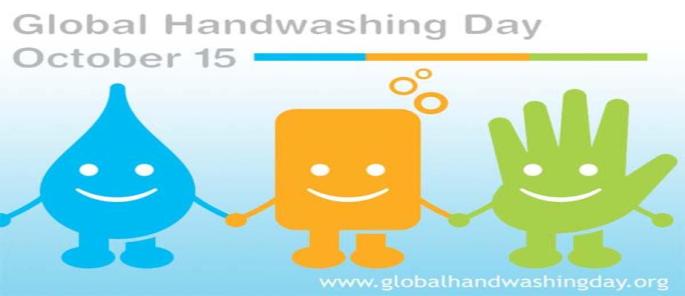
Global Handwashing Day was Thursday, October 15th, but really we should be celebrating it every day! It may seem like a simple thing but the truth is that hand hygiene is one of the most important things you can do to prevent the spread of infection. Whether it’s a hospital-acquired infection or avoiding illness in the workplace, hand hygiene is the first line of defense. The WHO estimates that hand hygiene, just in healthcare, saved millions of lives in the last years. The CDC even calls it the “do-it-yourself” vaccine – five simple steps (wet, lather, scrub, rinse, dry) to help prevent the spread of infections. Many people think it’s a small or “easy” thing, but coming from an infection preventionist, it’s the small things that make the biggest difference. You’d be surprised how many organisms we carry around on our hands and on fomites, so using alcohol-based hand sanitizer or washing with soap and water is the only way to get rid of those. University of Arizona professor, Dr. Gerba, (we lovingly referred to him as Dr. Germ – funny enough, he even gave one of his children the middle name of Escherichia!) has focussed much of his research on the household and public objects we may not realize are covered in germs. Perhaps the most important take-away from Global Handwashing Day isn’t just its importance in healthcare, but its role as an important part of disease prevention everywhere. In the U.S.  we’re fortunate to have access to the resources that allow us to have phenomenal hand hygiene practices however, it’s the behavior we tend to fall short on. From today forward, I encourage you to make a personal decision to be vigilant in hand hygiene.

Last Call for Papers – Women’s Health in Global Perspective!
Papers sought for a special issue and workshop of World Medical & Health Policy on “Women’s Health in Global Perspective,” to contribute to understanding and improve policy related to women’s health and wellbeing.  Forces ranging from the economic to the climactic have human repercussions whose genesis and solutions demand consideration of their global context.  A wealth of recent research and inquiry has considered the particular plight of women, who often suffer disproportionately from lack of education, compromised nutrition, poverty, violence and lack of job opportunities and personal freedom.  The Workshop on Women’s Health in Global Perspective will consider the broad ranging social determinants of health on a global scale that importantly influence health outcomes for women everywhere, which in turn has implications for economic, political and social development.
Abstract submission deadline (250 words): October 16, 2015 Contact: Bonnie Stabile, Deputy Editor, bstabile@gmu.edu
Notification of selected abstracts: November 13, 2015

Presidential Candidates on Nonproliferation Part II
GMU’s Greg Mercer has put together a wonderful second part to his series on one of our favorite topics (nonproliferation) and what the 2016 presidential candidates are saying about it. Check out Greg’s review of these candidates’ stance so we can track how they might change over the course of the election.

west-africa-distribution-map
Source: CDC

Updates and Mapping Ebola
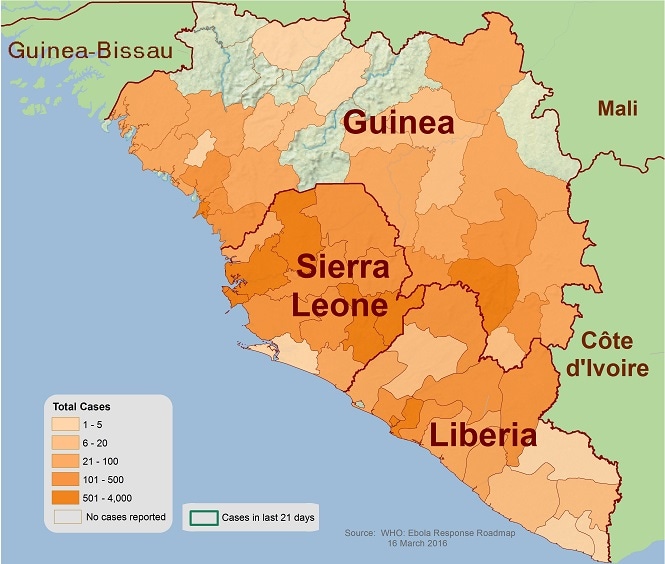
BBC recently published a nice overview of the Ebola outbreak in West Africa. Since the first case 18 months ago, it has been a whirlwind, in more ways than one, for those of us in the public health/global health security world. Cheerfully, the outbreak region has officially gone two weeks without a new case! Unfortunately, Pauline Cafferkey, the Scottish nurse who was treated and recovered from Ebola in December of 2014, is in critical condition due to a late Ebola-related complication. It was just released that her complications are neurological, including severe central nervous system (CNS) disorder and that the virus was detected in her spinal fluid. Scottish public health officials did identify 58 close contacts and offered them the SV-EBOV vaccine.

Master’s Open House
Learn more about the GMU School of Policy, Government, and International Affairs Masters’ programs on Wednesday, October 21, 2015 at 6:30pm at our Arlington Campus, Founders Hall, Room 126. This informational sessional will discuss our Master’s programs ranging from Public Administration, Biodefense, Political Science, Health and Medical Policy, etc.

Imported Measles and Need for Vaccination –This past week at the IDWeek 2015 meeting, scientists reported on a study reviewing measles vaccination rates in the US and susceptible children in relation to the number of measles cases that have occurred. They noted, “this analysis highlights the need for high measles vaccination coverage to support population-level immunity and prevent reestablishment of indigenous measles transmission in the United States.” The Daily Beast also incorporated this into an article on diminishing herd immunity and anti-vaxxers.

Avian Influenza Vaccine Added to National Veterinary Stockpile
APHIS (United States Department of Agriculture’s Animal and Plant Health Inspection Services) awarded contracts to two companies to ensure manufacturing of the vaccine for avian influenza. The goal is to strengthen the Agency National Veterinary Stockpile. “This action is being taken to develop the Agency’s National Veterinary Stockpile., and does not signal a decision to vaccinate for highly pathogenic avian influenza (HPAI). While APHIS has not approved the use of vaccine to respond to HPAI, the Agency is preparing to ensure that vaccine is available should the decision be made to use it during a future outbreak.”

Stories You May Have Missed:

  • International Infection Prevention Week is next week! October 18-24, 2015 will celebrate the importance of infection prevention and control in healthcare. Let’s celebrate by not just washing our hands, but also considering all the small ways we can prevent the spread of germs in our homes and workplaces!
  • Salmonella Cucumber Outbreak – The CDC has released new data on the Salmonella Poona outbreak related to imported Mexican cucumbers. As of October 14th, there have been 757 people infected across 36 states and 4 deaths related to the outbreak.
  • DHS Wants to Revive Terrorism Alert System – In wake of the attacks in Chattanooga, President Obama’s security officials are initiating a review of the nation’s terrorism alert system to support what many consider a growing threat of domestic attacks. DHS wishes to revise and restart the National Terrorism Alert System to better respond to these evolving attacks.

The Candidates on Nonproliferation – Part II

The Candidates on Nonproliferation – Part 2
By Greg Mercer

I initially set out to write this as a candidate-by-candidate look at what the 2016 crop had to say about an issue near and dear to Biodefense students’ hearts: nonproliferation.  As it turns out, though, not many candidates have well-developed stances on highly specific policy issues (or any issues, depending on how serious a candidate we’re talking about) more than a year from the general election.  Lucky for us though, there’s been a major nonproliferation news event to drive the foreign policy debate: the Iran nuclear deal.  So this is a rundown of what’s been said and being said about nonproliferation and WMD policy in the 2016 election.

 See part 1 here.

So I’m continuing to take a look at what the 2016 election looks like for nonproliferation.

As with the previous post, Republicans in general tend to oppose the Iran deal, but let’s take a closer look at some more candidates, and move a little more toward the fringes.

Rand Paul:
Rand Paul opposes the Iran deal (surprise), and the section of his website devoted to Iran echoes Bibi Netanyahu’s “bad deal” language.  Let me tell you though, as far as issues pages go, it doesn’t get much better than this.  Not only does he have the most extensive set of issues pages I’ve seen so far, Rand’s camp has helpfully noted specific quotes, sources, and bill numbers for his voting record.  I don’t even have to go on THOMAS.  Thanks, Rand site devs!  For example, the site notes that he was a co-sponsor of The Iran Nuclear Agreement Review Act, which attempted to challenge the administration’s negotiations.  Rand didn’t always used to be this way, though.  Having gradually (and recently, not-so-gradually) drifted from a libertarian stance into one more in line with mainstream conservative thinking, he’s changed his tune a bit on Iran.  Bloomberg chronicles his shift from cautioning against military action and arguing that Iran didn’t pose a threat, in 2007, to his current position.  Rand doesn’t have much else to say about nonproliferation.   He does say that Republican hawkishness contributed to the rise of ISIS, though, which caused him to get into a fight with Sean Hannity.

Carly Fiorina:
If Rand Paul has a great website, then Carly Fiorina has the worst one yet. Her issues page isn’t accessible from the home page, and when you do find it, it’s all videos.  Carly uses some of these videos to underscore just how anti-Iran deal she is.  During the September debate, she said that if elected president, “I will make two phone calls, the first to my good friend to Bibi Netanyahu to reassure him we will stand with the state of Israel. The second, to the supreme leader, to tell him that unless and until he opens every military and every nuclear facility to real anytime, anywhere inspections by our people, not his, we, the United States of America, will make it as difficult as possible and move money around the global financial system.”  So far, she hasn’t had much to say about nonproliferation or biological weapons beyond the Iran deal.  Like Donald Trump, she’s compared the negotiating diplomatic deals to business deals, citing her experience as CEO of computer giant Hewlett-Packard.  There’s a catch there, though, and it’s one worth reading about in full other than my snarky at-a-glance version:  according to Bloomberg View, while she was CEO, “Hewlett-Packard used a European subsidiary and a Middle East distributor to sell hundreds of millions of dollars of printers and other computer equipment to Iran,” circumventing the sanctions regime.  While likely not illegal, it’s certainly been controversial.

Ben Carson:
Ben Carson’s security platform is centered on countering “Russian transgressions” and supporting Israel.  The Russia issues page features pictures of scary missiles but doesn’t explicitly mention nuclear policies.  Carson argues that Russian aggression has a destabilizing effect on Ukraine and the Middle East, ultimately threatening Europe.  He calls on the US to lead NATO and non-NATO allies “from a position of strength” and that “all options should remain on the table” when dealing with Putin.  No specific mention of nuclear weapons, but “all” is pretty broad.  On Israel, he promises unwavering support, but offers no details to this end.  To most conservative voters though, this can be read as anti-Iran deal, at least.  Carson offered another interesting claim about nonproliferation, though.  In the August debate, Carson said, “You know, Ukraine was a nuclear-armed state. They gave away their nuclear arms with the understanding that we would protect them. We won’t even give them offensive weapons.”  The excellent Politifact evaluated this claim, and concluded that it isn’t really accurate for two reasons: first, Ukraine wasn’t “nuclear-armed” because while Soviet warheads briefly resided there following the collapse of the Soviet Union, Ukraine would never have been able to launch them (according to Harvard nuclear specialist Matthew Bunn), and that while the US agreed to respect the sovereignty of- and not attack- Ukraine, it didn’t formally offer a guarantee of protection.  Implicit in Carson’s statement is the argument that Ukraine, if it had retained (and, hypothetically controlled) the nuclear weapons left after the collapse, wouldn’t have been subject to Russian aggression.  This paints Carson as a strong believer in nuclear deterrence.

Koblentz on Viral Warfare, Cyber Security, Chem/Bio, and Nuclear Weapons Accidents

GMU Biodefense Deputy Director Dr. Gregory Koblentz has a slew of new publications out of topics ranging from the nexus of bioweapons and cybersecurity to new frameworks for understanding chem/bio threats.

His article, “Regime Security: A New Theory for Understanding the Proliferation of Chemical and Biological Weapons”, is available in this month’s Contemporary Security Policy. Here’s the abstract:

“The literature on the proliferation of chemical and biological weapons (CBW) emphasizes the role of external security threats as the primary motive for states to acquire and use these weapons. As recent events in Syria demonstrate, governments lacking political legitimacy may use these weapons to repress domestic challenges to their rule. The concept of regime security provides a theoretical framework for understanding how the threat of military coups, insurgencies, or domestic rivals influences the acquisition and use of CBW by authoritarian regimes. The cases of South Africa and Iraq illustrate how a government’s concerns about internal security threats can impact its CBW proliferation decision-making. Omitting regime security as a factor in CBW decision-making may lead to the adoption of inappropriate nonproliferation and deterrent strategies. In light of Syrian President Bashar al-Assad’s use of chemical weapons against his own people, developing a deeper understanding of the influence of regime security on the acquisition and use of chemical and biological weapons should be a priority.” (available here)

Dr. Koblentz also co-published an article with GMU Biodefense PhD student Brian Mazanec, “Viral Warfare: Security Implications of Cyber and Biological Weapons” – the article examines the relatively emergent threats of biological and cyber warfare, exposing several commonalities between the two. The article was published in the November issue of Comparative Strategy, available here (access required).

Abstract – “Since the beginning of the twenty-first century, two new threats have received increased attention: biological warfare (BW) and cyber warfare. While it may appear that these two threats have little in common, they share several characteristics that have significant implications for international security. This article examines the two modalities side-by- side to review these common characteristics. In light of these commonalities and due to the extensive experience and rich history of dealing with BW threats, strategies for enhancing cyber security could advance more quickly by drawing meaningful insights from the biological warfare experience, such as the prospect of developing constraining international norms.” (available here)

Finally, Koblentz has a new review out  in Foreign Affairs, on Eric Schlosser’s new book, Command and Control: Nuclear Weapons, the Damascus Accident, and the Illusion of Safety.  The first paragraph is below – read the rest here.

Between 1950 and 1980, the United States experienced a reported 32 “broken arrows,” the military’s term for accidents involving nuclear weapons. The last of these occurred in September 1980, at a U.S. Air Force base in Damascus, Arkansas. It started when a young technician performing routine maintenance on a Titan II missile housed in an underground silo dropped a socket wrench. The wrench punctured the missile’s fuel tank. As the highly toxic and flammable fuel leaked from the missile, officers and airmen scrambled to diagnose the problem and fix it. Their efforts ultimately failed, and eight hours after the fuel tank ruptured, it exploded with tremendous force. The detonation of the missile’s liquid fuel was powerful enough to throw the silo’s 740-ton blast door more than 200 yards and send a fireball hundreds of feet into the night sky. The missile’s nine-megaton thermo­nuclear warhead — the most powerful ever deployed by the United States — was found, relatively intact, in a ditch 200 yards away from the silo.

(image: CDC)