The Pandora Report 11.8.13

Highlights include MERS in Spain and Abu Dhabi, a possible H1N1 fatality in Alaska, polio potentially spreading to Europe, and differing containment strategies for H5N1 outbreaks in Cambodia and Vietnam. Be sure to check out this week’s “Delving Deeper”, in which GMU Biodefense’s Yong-Bee Lim explores the threats and challenges of synthetic biology. Happy Friday!

MERS in Spain; Abu Dhabi

Both Spain and Abu Dhabi have identified their first cases of the Middle Eastern Respiratory Virus (MERS). The Spanish case involved a Moroccan citizen who lives in Spain and recently returned from hajj-related travel to Saudi Arabia. Health officials with Spain and the WHO are attempting to determine if the patient was treated in Saudi Arabia, whether she had contact with animals, and whether she flew commercially or by private plane (hopefully the latter). In Abu Dhabi, a 75-year-old Omani man has contracted the virus – it remains unclear where or how he became infected. In both cases, concerns over infection stemming from contact during the Muslim pilgrimage of hajj remain. If the two cases do involve hajj-related transmission, we may start to see similar cases popping up in regions with no prior incidence of the virus (North America, anyone?)

Spain reports its first MERS case; woman travelled to Saudi Arabia for Hajj

Vancouver Sun – “In its press release, the ministry said it is following up with people who were in contact with [the patient] to determine if others have contracted the sickness. That will likely involve tracking people who travelled on the same plane or planes with the ill woman, who journeyed back to Spain shortly before being hospitalized. The woman was already sick before she left the Kingdom of Saudi Arabia, a World Health Organization expert said Wednesday. ‘She became symptomatic while she was in KSA,’ said Dr. Anthony Mounts, the WHO’s point person for the new virus, a cousin of the coronavirus that caused the 2003 SARS outbreak.

Mers coronavirus diagnosed in patient in Abu Dhabi hospital

The National (UAE) – “The victim, who was visiting the UAE, began to suffer from respiratory symptoms last month and is now in intensive care. The diagnosis of Middle East respiratory syndrome was revealed by the Health Authority Abu Dhabi today, reported the state news agency Wam. The health authority is coordinating with the Ministry of Health and other organisations as it treats the patient. The authority said it had taken the necessary precautionary measures in line with international standards and recommendations set out by the World Health Organisation (WHO).”

H1N1 Fatality in Alaska?

A young adult patient in Anchorage has died from what is thought to be the 2009 strain of H1N1. According to Alaskan health officials, it is still too early to tell if H1N1 will be the dominant strain for their flu season – however, the majority of flu cases reported to health officials in the area involved the H1N1 strain. People, even sometimes young, healthy people, die of flu – get vaccinated.

Alaska Dispatch – “The hospital sent out an email Wednesday informing employees of the death of a young adult who had tested positive for what in-depth results could reveal as H1N1. The email also noted that some of the patients admitted to the medical center during the past week who tested positive for flu are ‘seriously ill’…It’s the time of year when flu cases increase, although flu is difficult to predict, said Donna Fearey, a nurse epidemiologist in the infectious disease program with the state of Alaska. There’s no way to know how severe the flu will be or how long it will last, she said.”

Polio emergence in Syria and Israel endangers Europe

In an article published in the Lancet today, two German scientists argue that the outbreak of wildtype poliovirus 1 (WPV1) in Syria, as well as the discovery of the virus in Israeli sewage, may pose a serious threat to nearby Europe. The vast majority of polio infections are asymptomatic – only one in 200 cases results in acute flaccid paralysis. Therefore, the flood of refugees streaming out of Syria and seeking asylum in European countries may serve as a large pool of asymptomatic carriers, resulting in the virus’ silent spread. Following polio’s eradication in Europe in 2002, many states limited their vaccination campaigns, resulting in large, unprotected populations, and a recipe for reintroduction of the crippling disease. This is why we should all care about eliminating polio from Afghanistan, Pakistan, and Nigeria – because the one thing an asymptomatic virus can do well is spread

The Lancet – “It might take more than 30 generations of 10 days (5) —nearly 1 year of silent transmission—before one acute flaccid paralysis case is identified and an outbreak is detected, although hundreds of individuals would carry the infection. Vaccinating only Syrian refugees—as has been recommended by the European Centre for Disease Prevention and Control (6)—must be judged as insufficient; more comprehensive measures should be taken into consideration. Oral polio vaccination provides high protection against acquisition and spreading of the infection, but this vaccine was discontinued in Europe because of rare cases of vaccination-related acute flaccid paralysis. Only some of the European Union member states still allow its use and none has a stockpile of oral polio vaccines.2 Routine screening of sewage for poliovirus has not been done in most European countries, (2) but this intensified surveillance measure should be considered for settlements with large numbers of Syrian refugees.”

H5N1 Epidemics in Cambodia; Vietnam

Both Cambodia and Vietnam are experiencing small outbreaks of H5N1, with the Cambodian outbreak infecting over 23 humans and the Vietnamese outbreak concentrated mainly within farm animals in two regions. To date, twelve of the 23 Cambodian cases have resulted in fatalities, compared with just two cases of human H5N1 in Vietnam. Vietnamese containment of the virus is attributed to the prevalence of larger, commercial farms, in which culling can occur quickly and effectively. This is unfortunately not the case in Cambodia, in which farming is largely sustenance-driven.  The differing methods of spread and containment in two otherwise similar countries help shed light on what practices can be undertaken to limit the virus’ reach.

Cambodia Daily – “But managing [the virus] in backyards, we are dealing with free-range poultry who run around villages and transmit it from one poultry to another,” he said, adding that 80 percent of Cambodian poultry are kept in people’s backyards. In all 23 avian influenza cases reported this year, the victims had contact with dead or sick animals. The Cambodian government also does not provide compensation for farmers whose poultry needs to be killed, which many experts say provides a disincentive to report sick birds.”

Tuoitre News (Vietnam) -“The southern Tien Giang Province People’s Committee on Wednesday declared an epidemic of the H5N1 avian flu in two communes, where the disease spread widely with most of the 557 affected ducks having died. The declaration was issued by deputy chairwoman of the Committee, Tran Thi Kim Mai, who asked the local Veterinary Sub-Department and other concerned agencies to take measures to control and drive back the epidemic in accordance with the Ordinance on Veterinary. All concerned agencies are required to tighten control over poultry-related activities and absolutely ban transporting of poultry into or out of epidemic areas, the authorities said.”

In case you missed it:
Delving Deeper: Synthetic Biology and National Security Policy
Fourth Case of H7N9 in China

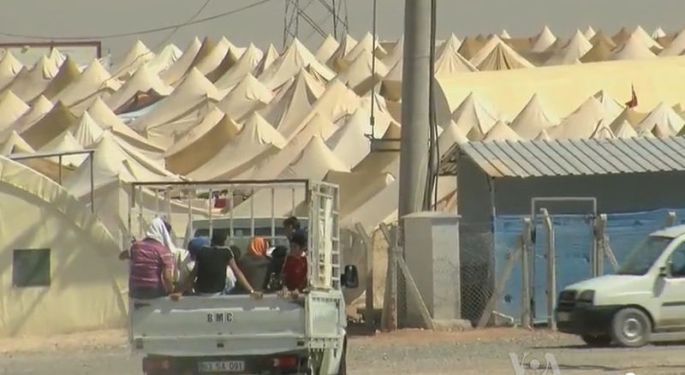
(Image: Syrian refugees on the Turkish border, via Henry Ridgwell/VOA/Wikimedia Commons)

The Pandora Report 11.1.13

Highlights include polio in Syria (really not a highlight), bats and SARS (surprise, bats carry everything!), rabies in a French kitten, MERS in Oman, and cholera in Mexico. Happy Friday!

Polio outbreak in Syria threatens whole region, WHO says
For the first time since 1999, a polio outbreak has occurred in Northern Syria. This is not a spontaneous re-emergence of the otherwise eradicated disease. This is the same strain found in the recent Iraqi outbreak, as well as that found in sewage in Egypt, Israel, the West Bank, and Gaza, a strain which originates in Pakistan. Pakistan is one of just three countries globally in which polio remains endemic. Pakistan is also a country in which the Taliban has banned administration of the vaccine, and routinely kills the poor, often women, workers who administer the vaccine anyway. As a result of this tremendous bit of stupidity, polio is re-emerging in Syria, a country in the middle of a civil war, and therefore a ripe breeding ground for the crippling virus’ spread.

Reuters – “‘This virus has come over land which means the virus is not just in that corner of Syria but in a broad area,’ Bruce Aylward, WHO assistant director-general for polio, emergencies and country collaboration, told Reuters in an interview.’We know a polio virus from Pakistan was found in the sewage of Cairo in December. The same virus was found in Israel in April, also in the West Bank and Gaza. It… is putting the whole Middle East at risk quite frankly,’ he said by telephone from Oman.”

Bat virus clues to origins of SARS
Researchers at the Commonwealth Scientific and Industrial Research Organisation have discovered two viruses closely related to SARS in the Chinese horseshoe bats. The viruses both bind to the same receptor in humans as SARS does, the ACE2 receptor, which is primarily expressed in endothelial cells of the kidney and heart. The use of the same receptor in both species suggests that coronaviruses may be able to jump directly from bats to humans without a vector species. Our first thought here is MERS?

BBC – “According to Gary Crameri, virologist at CSIRO and an author on the paper, this research ‘is the key to resolving the continued speculation around bats as the origin of the Sars outbreaks’. This Sars-like coronavirus is around 95% genetically similar to the Sars virus in humans, the research shows. And they say it could be used to develop new vaccines and drugs to combat the pathogen.

WHO: Middle East respiratory syndrome Coronavirus (MERS-CoV) – update

The WHO has confirmed another four cases of the Middle Eastern Respiratory Virus, including the first case in Oman. The three other cases, including one fatality, were all located in Saudi Arabia. While none of the three had recent contact with animals, one of the Saudi cases had been in recent contact with an infected patient. All three however were immunocompromised. The Omani case had no recent contact with animals or travel to Saudi Arabia.

WHO – “The patient in Oman is a 68-year-old man from Al Dahkliya region who became ill on 26 October 2013 and was hospitalized on 28 October 2013…Globally, from September 2012 to date, WHO has been informed of a total of 149 laboratory-confirmed cases of infection with MERS-CoV, including 63 deaths. Based on the current situation and available information, WHO encourages all Member States to continue their surveillance for severe acute respiratory infections (SARI) and to carefully review any unusual patterns.”

France issues rabies warning after kitten’s death
It is no secret that rabies is scary. We’ve all joked at one point or the other about what a zombie apocalypse would look like, which is all fun and games until someone mentions rabies.  While our vaccine is very good, in order for it to be effective, you have to know you’ve caught rabies. The virus itself usually has an incubation period of a few weeks, although cases have occurred in which the virus lay dormant for years.  At that point it’s of course too late. So we definitely understand Paris health authorities preemptively vaccinating five people, setting up a public hotline, and imploring anyone who may have handled or come near the kitten to contact authorities to be vaccinated.

BBC – “France was first declared a rabies-free zone for non-flying terrestrial mammals 12 years ago following the elimination of fox rabies. The 2008 canine rabies outbreak led to that status being suspended for two years. The BBC’s Christian Fraser in Paris said that the urgent appeal seeking anyone who came into contact with the infected animal is likely to be fuelled by fears of a repeat of the 2008 outbreak. The rabies virus is present in the saliva of an infected animal and is usually transmitted to humans by a bite.”

Haitian Cholera in Mexico
The cholera strain introduced to Haiti three years ago has spread to Mexico, which has seen 171 cases of the disease since September 9th of this year. The Haitian epidemic has infected as many as 600,000 people and caused nearly 8,500 deaths in Haiti, before spreading to the Dominican Republic and causing a further 31,000 cases there.

IBT – “Mexico has reported 171 cases of the disease, which has been identified as the same strain that arrived in Haiti, Dominican Republic and Cuba and one that is different from the strain that circulated in Mexico during a 1991-2001 epidemic. The Pan American Health Organization (PAHO) is warning that the illness could spread worldwide. Mexican health authorities reported the 171 cases in Mexico City and in the states of Mexico, Hidalgo, Veracruz and San Luis Potosí between Sept. 9 and Oct. 18. According to the Mexican Ministry of Health, there has been only one fatality, while 39 other cases have required hospitalization. The recent devastation caused by hurricanes Ingrid and Manuel contributed to the spread of the disease, which had not been reported in Mexico since the previous epidemic.”

(image: CDC Global Health/Flickr)

Two Killed in Polio Vaccination Drive in Pakistan

A bomb killed two and injured 20 others during a polio vaccination drive in Pakistan. Pakistanis one of just three remaining states where polio remains endemic. An anti-Taliban group member and police officer comprised the fatalities. This is just the latest in a long campaign against aid workers, doctors, nurses, and public health officials working to try and eradicate the crippling disease in the region. The vaccinators, often relatively poor women, often work to inoculate local populations at great personal risk, usually travelling door-to-door in an attempt to reach as many children as possible.

Poliomyelitis, or polio, is an often fatal disease spread by the poliovirus. Once contracted, the disease is incurable, and can result in complete paralysis of the legs. The disease is easily preventable through a vaccine administered as oral drops.

The Independent – “When the authorities are unable to provide sufficient security, these women bear the brunt of the Taliban attacks. Last year, gunmen killed four female polio workers in the city of Karachi on the same day, and two women were killed in Peshawar, very close to where Monday morning’s bomb was detonated, apparently by remote control. In Nigeria, Islamist gunmen killed nine health workers in February.”

Read more here.

The Pandora Report 9.6.13

Highlights: The Syrian BW “threat”, MERS vaccine, Nipah, biological weapons in the Philippines, and al Shabaab contributing to polio. Happy Friday!

On Not Falling Prey to Syrian Biological Weapons Alarmism

There have been a lot of articles (starting with the WaPo, and snowballing to the Telegraph, VoR, etc) discussing the “emerging threat” of Syrian biological weapons. Before the rumors grow and plant seeds, we strongly recommend you take a moment to check out Dr. Ben Ouagrham-Gormely’s excellent rebuttal. Here’s an excerpt from her piece:

“A September 5 Washington Post article raises concern that Syria might resort to biological weapons in retaliation for a Western military strike. The article states that intelligence reports indicate that Syria engaged in bioweapons development in the 1970s and 80s and since then has maintained a “dormant capability,” which some experts interviewed by the Post believe can easily be reactivated to produce biological weapons. it is important to inject a little bit of reality in regard to the question of whether or not Syria might be able to successfully reactivate a “dormant program” and effectively develop and use biological weapons.”

Read the full post here.

MERS Vaccine Passes First Test

The confirmation of another two cases of the Middle Eastern Respiratory Virus in the last week, bringing the global total to 110 cases and 52 fatalities, has the scientific community scrambling to develop a viable vaccine. Now researchers at Loyola Marymount University, working in conjunction with the Erasmus lab in Rotterdam (the same lab who refused to play nice in sharing the MERS genome), have developed a candidate vaccine which can be used in case of a pandemic. However, while the candidate has passed the first pre-clinical trials, if proven efficacious in humans  it would still be at least a year before the vaccine would be ready for production.

Medical Xpress – “The starting point for the new vaccine was a related virus known as Modified Vaccinia virus Ankara (MVA). MVA is an attenuated strain of the virus that causes smallpox, and has been used for more than 30 years for the manufacture of smallpox vaccine. Indeed, MVA is at the heart of a worldwide effort to design and generate vaccines not only against viral pathogens but also against cancers. In this context, MVA serves as the carrier for specific antigens that elicit the production of protective antibodies in the immunized host. MERS-CoV is known to bind to human cells via its so-called spike (S) protein, which is exposed on the surface of its membrane envelope. Sutter and his team therefore used molecular biological methods to introduce the gene for the MERS S protein into the MVA genome.”

Bats spreading deadly virus, Stanford scientist warns

If there’s one thing we’ve learned here at GMU Biodefense, it’s stay good and far away from bats. Whether it’s rabies or MERS, the creatures of the night are bastions for all sorts of nasty diseases.  Now it looks like Pteropus bats in Bangladesh are in the “villain of the week” spotlight. A researcher at Stanford University is voicing concerns over the bats, which range across South East Asia, spreading the deadly virus Nipah.

Stanford News – “Among Nipah’s worrisome traits: Many strains are capable of limited person-to-person transmission, and it is a ribonucleic acid (RNA) virus, which has the highest known rate of mutation among biological agents. If a more efficient human-adapted strain developed, it could spread rapidly in highly populous South Asia before spilling into other regions. The global community must do a better job of estimating and managing the risk, Luby said. That will require stepped-up study of how the virus is transmitted, closer observation of infected people and consideration of vaccinations for at-risk communities.”

Military claims NPA has ‘biological weapons’; Reds laugh off claim

Moving away from the existence, or lack thereof, of Syrian BW, a rebel leader in the Philippines has been accused by the government of using biological weapons. According the Filipino government,  the device in question tested positive for both Enterobacter cloacae and Streptococcus agalacteiae. The government claims the rebels smeared the unexploded landmines with feces. The rebels deny the claims outright. We’ll leave it there.

Inquirer Mindanao – “The military insisted Thursday that the New People’s Army now uses ‘biological weapons’ to further its goal of toppling the government. In a press statement, the Eastern Mindanao Command based here said laboratory examination of unexploded land mines seized from NPA camps in Southern Mindanao showed the presence of ‘deadly toxin’ and bacteria ‘not usually found in steel rebars and nails used as shrapnel.’ The NPA unit operating in the region laughed off this claim, calling it ‘malicious and wildly concocted military propaganda.'”

Somalia: Polio Widespread in Regions Under Al-Shabaab Control

Polio eradication is a bit of a soapbox around here, maybe because as a planet we’ve been so close for so long and because it’s often security issues which hamper efforts. For those of you who have managed to miss our various rants, all but three states – Nigeria, Afghanistan, and Pakistan – have eradicated the virus. Somalia, despite its numerous failings, worked extremely hard to become polio-free in 2007. The news that the terrorist organization al-Shabaab, which controls large swathes of Southern Somalia, is refusing to allow supplies into territory it controls, while also telling local populations that the vaccine causes AIDS and sterility, is infuriating.

All Africa – “Al-Shabaab’s refusal to allow the supply of the polio vaccine in areas under its control is causing panic among residents at a time when aid workers are struggling to contain an outbreak of the crippling virus.’The polio outbreak plaguing Somalia has spread despite significant efforts to curb the disease,’ the United Nations Office for the Co-ordination of Humanitarian Affairs (OCHA) said in a statement August 15th, adding that insecurity is hampering efforts to contain the virus. Six years after Somalia was declared free of the virus, at least 105 cases have been confirmed in the country, the ‘worst outbreak in the world in a non-endemic country’, according to OCHA.

(image: Hakan Dahlstrom/Flickr)

The Pandora Report 8.2.13

Highlights include H5N1 raging in Nepal, using your phone to detect toxins,  Honduras battling dengue, mutated polio in Pakistan, West Nile rearing its ugly head early, and Ebola, gorillas, and tourism. Happy Friday!

Nepal Avian flu situation “getting out of hand” 

H5N1 is currently raging in Nepal, which is experiencing its 15th outbreak of the poultry-transmitted flu virus in the last couple weeks alone. Local health officials are calling on the government to step in and help stop the virus’ spread, following the death of nearly 25,000 chickens in three districts in the last 20 days. Meanwhile, there are disturbing rumors surrounding the government’s hesitancy to intervene, including lobbying on the part of the Nepali poultry association. With the virus spreading to another two districts in the last week, containment is critical.

eKantipur – “According to the experts, farmers selling the potentially infected chickens in the market in the absence of effective monitoring has worsened the situation. ‘There is total impunity; the authorities know who is at fault, but still they have failed to take immediate action,’ said Dr Shital Kaji Shrestha, General Secretary of the Nepal Veterinary Association. While some farmers have dumped dead birds openly in public places, others have buried them secretly without following the standard procedures. Such practices have increased the chances of the epidemic spreading, experts said. The police on Monday seized 426 chickens that were being transported to Birgunj for sale from a flu-affected farm in Bhaktapur.”

Smartphone cradle, app detect toxins, bacteria

This app/cradle combo turns your average smartphone into a mini biosensor. It was developed for people with food allergies in mind, but we think it could be tweaked for more homeland security/non proliferation purposes (not that allergies are to be taken lightly, peanuts are everywhere these days).

The Sacramento Bee – “The handheld biosensor was developed by researchers at the University of Illinois, Urbana-Champaign. A series of lenses and filters in the cradle mirror those found in larger, more expensive laboratory devices. Together, the cradle and app transform a smartphone into a tool that can detect toxins and bacteria, spot water contamination and identify allergens in food. Kenny Long, a graduate researcher at the university, says the team was able to make the smartphone even smarter with modifications to the cellphone camera.”

Honduras declares state of emergency over dengue fever

Honduras has declared a state of emergency in an effort to bolsters its attempts to contain its dengue outbreak. To date, the outbreak has caused approximately 12,000 cases, of which approximately 1,800 are serious. According the the WHO, 40% of the world’s population, or nearly 2.5 billion people, are at risk for dengue infection.

BBC – “Honduras has declared a state of emergency after an outbreak of dengue fever that has killed 16 people so far this year. The government has promised to step up its fight against the mosquitoes that spread dengue fever. Health Minister Salvador Pineda said more than half of Honduras’ municipalities have registered cases of the viral infection this year.”

Mutated virus heightens polio worries

This is depressing for a couple of reasons. First, Pakistan is one of just three countries in the world where polio is endemic. The last thing they need is a mutated strain. Second, public health officials attempting to halt the virus’ spread do so at tremendous personal risk – tribal leaders earlier this month declared their support for the Taliban’s ban on polio vaccination, as a protest against US drone strikes in the area.  Absurd, yes, but not without possible provocation – keep in mind a 2011 US vaccination campaign in Abbottabad was actually a covert CIA operation, in which the doctors, rather than administering vaccines, were collecting DNA from locals. This resulted in those administering legitimate polio vaccines being labelled as “Western spies”, and refused entry into villages.

DAWN – “Dr Alias Durray, chief of the World Health Organisation’s polio eradication programme in Pakistan, confirmed to Dawn that the strain, which has close genetic similarities with the globally eradicated P2 strain, has paralysed a baby boy in Mastung district of Balochistan…The polio virus has three types of strains termed P1, P2 or P3 strain. Immunity from any one strain does not protect a person from the other strains. The P2 virus had been eradicated globally in 1998, and only the P1 and P3 strains remain. What is sad is that a strain similar to the mutated polio virus had been stopped after it first broke out and struck 15 children in Qila Abdullah area of Balochistan in 2011.”

West Nile Virus Making Early Appearance This Summer

A big part of our job is keeping a close eye on any biodefense-related news (duh), and lately our inbox has been full of West Nile updates. Every day another US county seems to be reporting the virus appearance. With it already active in 29 states, and the worst months in terms of spread to come, it looks like West Nile is fast on the way to a very strong year. If you’re going to be outside at all, now is definitely the time, if you haven’t already, to invest in some mosquito repellent.

The Wall Street Journal –  “West Nile virus is transmitted through bites from infected mosquitoes. Although only one in five people who contract the virus develop symptoms such as fever, headache, body aches or vomiting, the virus can cause serious neurological illnesses that can be fatal, such as encephalitis or meningitis. The 2012 West Nile virus outbreak was the deadliest on record since the illness was first detected in the United States in 1999: 5,674 cases of West Nile virus were reported nationwide, including 286 deaths. Health officials expect the disease to continue to be a formidable public health issue. Because no human vaccine exists, preventing mosquito bites is the most effective way to avoid contracting West Nile virus…”

Saving the Gorillas—and Launching a Nation’s Tourism Economy

There was a very interesting piece in the Atlantic yesterday looking at Ebola in Congolese gorilla populations, and the disease’s impact on preservation efforts. Understanding local populations interaction with potentially infected animals helps create a more complete picture of the virus’ potential spread during an outbreak. Check it out if you have a spare minute and are need to read a news piece with a happy(ish) ending.

The Atlantic – “In November 2002, gorilla trackers outside the village of Mbomo, in the Republic of the Congo, came upon a group of apes that were stressed. One of the trackers described the females as crying. Then the men began finding carcasses in the forest: heaps of matted hair and liquefied organs oozing blood. In a period of four months, 130 of the 143 gorillas the trackers were following died. Later that same year, another 91 of 95 gorillas they were studying were gone. Few words cause a greater chill in any language than ‘Ebola,’ the hemorrhagic fever and lethal virus first detected in equatorial Africa in 1976. Most initial human cases come from contact with infected animals, including consuming them as bush meat–often the most-accessible source of protein in places where there aren’t cattle.”

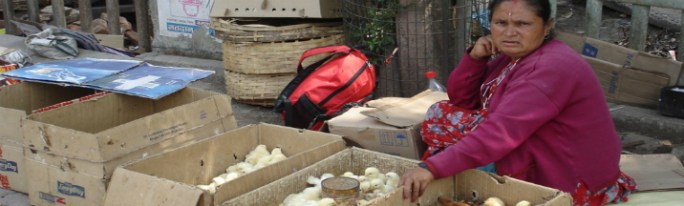
(A Nepali woman sells chickens in Kathmandu – image via Flickr/oliphant)

The Pandora Report 7.12.13

Highlights: the Science, Safety, and Security newsletter, wild polio in Israel, proliferation concerns in Syria, H7N9 – the pandemic?, and H1N1 in Chile. Happy Friday!

S3 Newsletter June 2013

For those of you who may have missed it, the Science, Safety, and Security Quarterly June newsletter is out, and features articles on dual use research of concern, HHS’ recent international participation in BWC activities, and the International Biological Threat Reduction program. It’s an excellent resource for anyone working in fields related to biodefense, biosecurity, or non-proliferation.

WHO Sends Mission to Israel Following Detection of Wild Poliovirus in Sewage

The World Health Organization last week completed a five-day mission in Israel, following detection of wild polio virus in the sewage of the country’s Southern District. Despite detection of the virus, no new polio cases have emerged. In response to the virus’ detection, Israel is starting a supplemental oral vaccination campaign, in addition to existing vaccination matters.  This isn’t an overreaction. For those of you who may not know, polio eradication remains a top priority of the international health community, with the eradication efforts rendering the virus’ endemic in just 3 countries. Therefore any time it pops up naturally, people get understandably nervous.

WHO – “Israel has systematically conducted environmental sampling for many years, and the poliovirus was detected thanks to this vigilance. Public health authorities continue to monitor the situation carefully, and measures have been taken to increase surveillance and reporting for possible human cases, regardless of age. The aim of the supplementary immunization campaign is to protect any children in the country who may have missed routine vaccinations for any reason. In southern areas, adults are also being assessed and those thought to be susceptible are being immunized.”

Proliferation concerns mount in Syria

As the civil war in Syria continues, the United Kingdom is considering supplying the rebels with protective equipment against  biological and chemical agents. UK intelligence reports have listed ricin, VX, mustard gas, and sarin as all possible chemical and biological agents in Assad’s armory. Concerns over proliferation of the agents and weapons to terrorist organizations were fueled by last month’s report that al Qaeda had attempted to access chemical weapons stockpiles in support of the Syrian rebels. Does anyone else feel like that “red line” is looking pretty darn thin?

Irish Times – “The danger was underlined by MI6 chief Sir John Sawers who told the committee there was the risk of ‘a highly worrying proliferation around the time of the regime fall’. The committee said: ‘There has to be a significant risk that some of the country’s chemical weapons stockpile could fall into the hands of those with links to terrorism, in Syria or elsewhere in the region – if this happens, the consequences could be catastrophic.’ British prime minister David Cameron disclosed last month that al-Qaeda-linked elements fighting the regime had already attempted to acquire chemical weapons for probable use in Syria.”

Scientists: H7N9 Avian Flu Has Pandemic Potential

Just when you thought it was gone! In a piece published in Nature on Wednesday,  an international team of scientists determined that H7N9 could be just a couple amino acid mutations away from effective person-to-person transmission pandemic potential. The two teams, from  the University of Wisconsin-Madison and the University of Tokyo, determined that H7N9 replicates effectively in several mammamlian hosts with immune systems similar to humans, among them monkeys and ferrets. The good news? Most of the strains tested are susceptible to standard antivirals.

Rianovosti – “They also established that approximately one third of ferrets became infected by droplet spread.’H7N9 viruses combine several features of pandemic influenza viruses, that is their ability to bind to and replicate in human cells and the ability to transmit via respiratory droplets,’ [flu expert Yoshihiro Kawaoka] said. These two features are necessary, although not sufficient, to cause a pandemic.’ In monkeys, the virus could efficiently infect cells in both the upper and lower respiratory tract. Conventional human flu viruses are typically restricted to the upper airway of infected nonhuman primates.”

Chile confirms 33 deaths from H1N1

The Chilean health ministry confirmed Wednesday that of the 33 H1N1 deaths this year, nearly half had occurred in the last few weeks. The South American nation is currently experiencing a small  outbreak, with a large and effective vaccination campaign halting the virus’ spread.

APA – “‘Today it appears to be under control, I say this with extreme caution. In epidemiologic week number 27, we do not have serious new cases,’  [Health Minister] Manalich said at a press conference. ‘We just have three patients with the flu in the intensive care unit of the hospital of the town of Iquique,’ said Manalich, adding ‘walk-in consultations due to the flu have fallen 25 percent from what we had before.'”

(image courtesy of the Polio Eradication Initiative)