Pandora Report 6.14.2024

This week’s edition of the Pandora Report covers updates on avian influenza, a recent interim Congressional report on the NIH’s handling of mpox research, a recent report alleging the Department of Defense created an anti-vax misinformation campaign aimed at undermining China’s vaccine diplomacy in the Philippines, and more.

Avian Influenza Updates

USDA: Twenty-Four Companies Are Working to Create Avian Flu Vaccine for Cattle

Secretary of Agriculture Tom Vilsack told Reuters this week that twenty-four companies are currently working to develop an avian flu vaccine for cattle among continued spread among US dairy herds. Furthermore, Vilsack explained that the USDA is also conducting its own preliminary vaccine research at its laboratory in Ames, Iowa. In addition to looking for a vaccine candidate to test for efficacy, the Department is also researching potential respiratory spread of the virus between cows and working to provide support to farmers to improve biosecurity in their facilities.

Vilsack also promised that a pilot program for bulk milk testing will be rolled out “in the very near future.” The program will hopefully expand testing for H5N1 while enabling healthy herds to move across state lines without needing negative tests from every animal. Vilsack says Michigan and Idaho are among the states that have expressed interest in the program.

First Fatal Human Case of H5N2 Confirmed in Mexico

The WHO confirmed last week that a 59-year-old Mexican man died in April a week after developing fever, shortness of breath, and diarrhea. The Mexican Ministry of Health reports that the man had several comorbidities, including chronic kidney disease, type 2 diabetes, and long-standing systemic arterial hypertension. While the National Institute of Respiratory Diseases in Ciudad de México initially said they found a non-subtypeable influenza A virus in respiratory samples from the patient, the Mexico National Influenza Centre confirmed on May 22 that its subtype was H5N2. While Mexico did report an H5N2 outbreak on a backyard poultry farm in the state bordering the man’s state (Michoacan), it is not yet clear how he contracted the virus.

While this case is unrelated to the ongoing spread of H5N1 in the United States, this is the first case of H5N2 confirmed in a human. Furthermore, H5N2 was the primary culprit in a wave of US outbreaks on poultry farms in the mid-2010s. This was just one decade after an outbreak in Texas in 2004 in a chicken flock in Texas marked the first time in two decades that a dangerous-to-poultry avian flu appeared in the United States.

“Highly Pathogenic Avian Influenza H5N1 Genotype B3.13 in Dairy Cattle: National Epidemiologic Brief”

The USDA recently published this national epidemiologic brief: “On March 25, 2024, USDA announced unpasteurized, clinical samples of milk from sick cattle collected from two dairy farms in Kansas and one in Texas, as well as an oropharyngeal swab from another dairy in Texas, have tested positive for highly pathogenic avian influenza (HPAI). USDA’s National Veterinary Services Laboratories confirmed the detection as HPAI H5N1 clade 2.3.4.4b, genotype B3.13. Phylogenetic analysis and epidemiology support a single introduction into this novel host followed by onward transmission.”

“This report provides field epidemiologic summaries using data collected from epidemiologic questionnaires for H5N1 affected dairy herds.”

Further Reading

CDC: “CDC Reports A(H5N1) Ferret Study Results”

Amy Maxmen and Arthur Allen: “Bird Flu Tests Are Hard To Get. So How Will We Know When To Sound the Pandemic Alarm?” KFF Health News

Samuel V. Scarpino: “Timeline: H5N1 Bird Flu Outbreak in the U.S.,” Think Global Health

Maggie Fox: “H5N1 Bird Flu Isn’t a Human Pandemic–Yet. American Contrariness Could Turn It into One,” Scientific American

Helen Branswell: “In Dribs and Drabs, USDA Reports Suggest Containing Bird Flu Outbreak in Dairy Cows Will Be Challenging,” STAT

BlueDot: ILI Pulse: A(H5N1) Outbreaks in the USA

Katherine J. Wu: “How Much Worse Would a Bird-Flu Pandemic Be?” The Atlantic

Brenda Goodman: “Bird Flu is Rampant in Animals. Humans Ignore it at Our Own Peril,” CNN

Congressional Republicans Target NIH Mpox Research in New Report

Republicans on the House Energy and Commerce Committee released this week a report titled “Interim Staff Report on Investigation into Risky MPXV Experiment at the National Institute of Allergy and Infectious Diseases.” In it, members accuse the NIH of obstructing the investigation of proposed research on MPXV at the National Institute of Allergy and Infectious Diseases (NIAID), in addition to failing to properly regulate this controversial work. The report explains that, “The primary conclusion drawn at this point in the investigation is that NIAID cannot be trusted to oversee its own research of pathogens responsibly. It cannot be trusted to determine whether an experiment on a potential pandemic pathogen or enhanced potential pandemic pathogen poses unacceptable biosafety risk or a serious public health threat. Lastly, NIAID cannot be trusted to honestly communicate with Congress and the public about controversial GOFROC experiments.”

Science reports that “A spokesperson for the Department of Health and Human Services (HHS), NIH’s parent agency, dismissed the report’s conclusions. “The committee is looking for an issue where there isn’t one. HHS and its divisions, including NIH, follow strict biosafety measures as our scientists work to better understand and protect the public from infectious diseases—like mpox,” the spokesperson said.”

The investigation is one of many Congressional efforts to probe concerns about biosafety in laboratories and other concerns raised by the pandemic. This investigation was launched in late 2022 after Bernard Moss, a well-known poxvirus researcher at NIAID, described research he was planning to conduct in a Science news article.

Science explains that “Moss was trying to understand the difference between the virulent clade I monkeypox virus strain causing outbreaks mostly in the Democratic Republic of the Congo and the milder clade II virus, which spread from West Africa around the world in 2022. In a first effort, Moss said he had inserted genes from milder clade II into a clade I virus, without seeing it become less dangerous in mice. He told Science he was next planning to explore the reverse transfer: whether inserting genes from clade I into clade II viruses made these usually milder viruses more lethal to mice.”

“Some researchers raised the alarm, worried the study qualified as risky GOF research because the resulting virus could be much more dangerous and even touch off a pandemic. Committee members say that when they sought more information from NIH and NIAID on the experiments, they were initially told the transfer of genes from clade I to clade II was never approved…Then in March, NIAID revealed that its biosafety committee had signed off on a project that included such gene transfers in 2015, but that researchers never followed through; they only moved genes from clade II to clade I. The HHS spokesperson says, “The experiment referenced by the committee was never conducted, which the committee knows.”’

“This is a colorized transmission electron microscopic image of mpox virus particles (red), found within an infected cell (blue), that had been cultured in the laboratory. The image was captured and color-enhanced at the National Institute of Allergy and Infectious Diseases (NIAID), Integrated Research Facility (IRF), located in Fort Detrick, Maryland.”| Credit: CDC PHIL

The Committee’s press release explains that “For nearly a year and a half, the Department of Health and Human Services (HHS), the NIH, and NIAID misrepresented and deceived the Committee by repeatedly denying that the potentially dangerous experiment was proposed and approved. However, after being pressed repeatedly by Committee Leaders, HHS ultimately admitted Dr. Moss’s research team had been granted approval to conduct a bidirectional MPVX gene-transfer experiment (i.e., inserting the more lethal strain into the more transmissible strain and vice versa). Documents made available for review to Committee staff confirmed the 2015 approval of the experiment and raised additional concerns.”

It continues with “HHS, the NIH, and NIAID still maintain the riskier research project was never conducted. However, no documentation or any other evidence has been produced to substantiate the claim. NIAID has also failed to offer any explanation of the circumstances and rationale that supposedly led the Moss research team to drop the bidirectional mpox gene-transfer experiment after receiving approval for the project. “

The report also raises concerns about existing federal rules covering gain-of-function research, suggesting that they currently do not do enough because they allow researchers, their institutions, and NIAID to decide which projects fit the definition of GOF work. The report argues this is an “inescapable conflict of interest,” and that screening should be conducted by a panel at HHS or a new “wholly independent” entity.

The Committee also expressed disagreement with how GOF is defined in the new federal rules and made several more conclusions, including “NIAID has a culture of secrecy and obfuscation regarding experiments involving pandemic and potential pandemic pathogens. HHS and the NIH are complicit in enabling NIAID’s culture of secrecy and obfuscation. This is incompatible with accountable, democratic governance and further erodes the public’s trust in government health agencies,” and “: Principal investigators, research institutes, and funding agencies are poorly positioned to, and perhaps incapable of, conducting adequate risk/benefit analysis and oversight of experiments that—by virtue of having proposed them and approved their funding—they want to see conducted. This is an inescapable conflict of interest and misalignment of incentives that results in experiments being approved and conducted without sufficient scrutiny or ongoing oversight.”

Report Alleges US Department of Defense Ran “Secret Anti-Vax Campaign to Undermine China During Pandemic”

A recent report from Reuters claims that, “At the height of the COVID-19 pandemic, the U.S. military launched a secret campaign to counter what it perceived as China’s growing influence in the Philippines, a nation hit especially hard by the deadly virus.”

The report’s authors, Chris Bing and Joel Schectman, continue, writing “The clandestine operation has not been previously reported. It aimed to sow doubt about the safety and efficacy of vaccines and other life-saving aid that was being supplied by China, a Reuters investigation found. Through phony internet accounts meant to impersonate Filipinos, the military’s propaganda efforts morphed into an anti-vax campaign. Social media posts decried the quality of face masks, test kits and the first vaccine that would become available in the Philippines – China’s Sinovac inoculation.”

The report later explains that “The U.S. military’s anti-vax effort began in the spring of 2020 and expanded beyond Southeast Asia before it was terminated in mid-2021, Reuters determined. Tailoring the propaganda campaign to local audiences across Central Asia and the Middle East, the Pentagon used a combination of fake social media accounts on multiple platforms to spread fear of China’s vaccines among Muslims at a time when the virus was killing tens of thousands of people each day. A key part of the strategy: amplify the disputed contention that, because vaccines sometimes contain pork gelatin, China’s shots could be considered forbidden under Islamic law.”

“The military program started under former President Donald Trump and continued months into Joe Biden’s presidency, Reuters found – even after alarmed social media executives warned the new administration that the Pentagon had been trafficking in COVID misinformation. The Biden White House issued an edict in spring 2021 banning the anti-vax effort, which also disparaged vaccines produced by other rivals, and the Pentagon initiated an internal review, Reuters found.”

Read more here.

OPCW Fact-Finding Mission Concludes Latest Investigations into Reports in Syria

The Organisation for the Prohibition of Chemical Weapons recently announced its Fact-Finding Mission (FFM) in Syria concluded “…that the information obtained and analysed is not sufficient to provide reasonable grounds to determine that toxic chemicals were used as a weapon in the reported incidents that occurred on 9 August 2017 in Qalib al-Thawr and 8 November 2017 al-Balil, Hama Governorate, the Syrian Arab Republic.”

Read more about the FFM, these two reports from the Syrian Arab Republic, and the FFM’s conclusions here.
“Russia Spreads Disinformation to Cover Up Its Use of Chemical Weapons in Ukraine”

The Department of State’s Global Engagement Center recently published this report in several languages discussing Russia’s use of chemical weapons and its efforts to conceal that use in Ukraine. It explains in part, “Russia’s use of such chemicals is not an isolated incident, and is probably driven by Russian forces’ desire to dislodge Ukrainian forces from fortified positions and drive them into the line of fire, the exact reason the CWC prohibits the use of RCA as method of warfare, and achieve tactical gains on the battlefield. Russia retains an undeclared chemical weapons program and has used chemical weapons, such as the Novichok nerve agents, at least twice in recent years in assassination attempts.”

“Catalyzing Crisis: A Primer on Artificial Intelligence, Catastrophes, and National Security”

Bill Drexel and Caleb Withers authored this report for CNAS: “The arrival of ChatGPT in November 2022 initiated both great excitement and fear around the world about the potential and risks of artificial intelligence (AI). In response, several AI labs, national governments, and international bodies have launched new research and policy efforts to mitigate large-scale AI risks. However, growing efforts to mitigate these risks have also produced a divisive and often confusing debate about how to define, distinguish, and prioritize severe AI hazards. This categorical confusion could complicate policymakers’ efforts to discern the unique features and national security implications of the threats AI poses—and hinder efforts to address them. Specifically, emerging catastrophic risks with weighty national security implications are often overlooked between the two dominant discussions about AI concern in public discourse: present-day systemic harms from AI related to bias and discrimination on the one hand, and cantankerous, future-oriented debates about existential risks from AI on the other.”

“This report aims to: Demonstrate the growing importance of mitigating AI’s catastrophic risks for national security practitioners, Clarify what AI’s catastrophic risks are (and are not), Introduce the dimensions of AI safety that will most shape catastrophic risks.”

“Driving AIxBio Innovation Through Data and Standardization”

The National Security Commission on Emerging Biotechnology recently published this paper: “If the United States wants to remain a leader in artificial intelligence (AI) and biotechnology (AIxBio), it must treat biological data as a strategic asset to support the next phase of AIxBio models. These models will rely on biological data sets of unprecedented scale, likely generated through high-throughput lab automation and new experimental methods. Biological data enable the use of AIxBio models, but advances in AIxBio are limited by the availability of appropriate and usable data.1 Additionally, data standardization would enable the United States to combine data from across its robust and diverse life science ecosystem to further advance AIxBio and maximize its potential benefits. This white paper describes considerations for generating and standardizing biological data to support continued AIxBio research, development, and application.”

“APP3 Statement on the Importance of Biosafety and Biosecurity in the Age of Artificial Intelligence and Emerging Technologies”

This statement was recently released by the  GHSA Action Package Prevent-3 on Biosafety and Biosecurity, Emerging Biological Risks Working Group: “As advances in AI and emerging technologies continue to increase worldwide quickly, there are growing concerns that AI tools and other emerging technologies could act synergistically with synthetic biotechnologies to cause significant harm. The APP3 believes it is imperative to understand further and mitigate the biological risks of AI and emerging biotechnologies, reduce the risk of technology misuse, and protect economic and global health security. Efforts to raise awareness within the GHSA community, cultivate responsible scientific work, strengthen biosecurity controls, and mitigate biological risks associated with new technologies globally are critical.”

Read more here.

“Why the Global Bioeconomy Urgently Needs Technical Standards and Metrics”

Paul Freemont, India Hook-Barnard, and Matthew Chang published this piece with the World Economic Forum, in which they write “The global bioeconomy is estimated to be worth about $4 trillion, and more than 50 nations now have published bioeconomy strategies or have policies steering towards a sustainable bioeconomy. With the development of new technologies in engineering and synthetic biology, the bioeconomy is growing rapidly…Growth of the sector will bring increased commercialization, scale-up and distributed manufacturing, and promote manufacturing resilience by diversifying production streams beyond traditional chemical manufacturing.”

“However, the current lack of standards and metrics that apply directly to such a large global industry could result in chaos, with failed interoperability and an inability to share data or allow for technology transfer internationally…The International Organization for Standardization (ISO) has published only 35 standards directly related to biotechnology; in comparison, there are 79 published standards relating specifically to dental instruments…As such, there is a call from industry representatives and academics alike to develop technical standards and metrics that can be applied across the innovation pipeline to support the growth of the bioeconomy.”

“The Viral Most Wanted: The Orthomyxoviruses”

Kate Kelland continues CEPI’s “The Viral Most Wanted” with this latest installment: “It’s considered the most deadly single contagious disease event in all of human history and infected 500 million people worldwide—a third of the planet’s population.”

“It struck in three merciless waves—the first, relatively mild, in March 1918; the second, more brutal, in August 1918; and the third and deadliest of all in late 1918, running through the first few months of 1919.”

“It is estimated to have killed almost five times as many people as were killed during World War One.”

“More than half of the people it killed were fit, strong, healthy young adults in the prime of life—including millions of World War One soldiers.”

“Its victims often died within hours or days of developing symptoms. Their skin would turn blue and their lungs would fill with fluid, causing them to suffocate from within.” 

“This was the Spanish Flu—the Great Influenza pandemic of 1918-1919—caused by a virus called influenza type A subtype H1N1. It and its many life-threatening relatives are part of the Orthomyxovirus family—one of The Viral Most Wanted.”

“Countering Disinformation and Misinformation in Animal Health Emergencies”

The World Organisation for Animal Health and INTERPOL recently released this set of guidelines: “To orient Veterinary Services, Aquatic Animal Health Services and Law Enforcement to these issues and introduce some key strategies to manage disinformation and misinformation, these guidelines have been prepared by the World Organisation for Animal Health (WOAH) and the International Criminal Police Organisation (INTERPOL). They draw from a June 2022 virtual workshop convened as part of the WOAH, Food and Agriculture Organization of the United Nations and INTERPOL Project on ‘building resilience against agro-crime and agro-terrorism’, which was funded by Global Affairs Canada’s Weapons Threat Reduction Program [1].”

“The guidelines provide a starting point for these services and agencies, as well as organisations working in animal health emergencies, to prepare for, detect and respond to disinformation and misinformation. Since this is a fast-moving area with much information and guidance already available, this document includes links to further resources that offer more detail on specific strategies and actions.”

“WHO Bacterial Priority Pathogens List, 2024: Bacterial Pathogens of Public Health Importance to Guide Research, Development and Strategies to Prevent and Control Antimicrobial Resistance”

From WHO: “The 2024 WHO Bacterial Priority Pathogens List (WHO BPPL) is an important tool in the global fight against antimicrobial resistance. Building on the 2017 edition, the 2024 WHO BPPL updates and refines the prioritization of antibiotic-resistant bacterial pathogens to address the evolving challenges of antibiotic resistance. The list categorizes these pathogens into critical, high, and medium priority groups to inform research and development (R&D) and public health interventions.”

“The 2024 WHO BPPL covers 24 pathogens, spanning 15 families of antibiotic-resistant bacterial pathogens. Notable among these are Gram-negative bacteria resistant to last-resort antibiotics, drug-resistant mycobacterium tuberculosis, and other high-burden resistant pathogens such as SalmonellaShigellaNeisseria gonorrhoeaePseudomonas aeruginosa, and Staphylococcus aureus. The inclusion of these pathogens in the list underscores their global impact in terms of burden, as well as issues related to transmissibility, treatability, and prevention options. It also reflects the R&D pipeline of new treatments and emerging resistance trends.”

“The WHO BPPL acts as a guide for prioritizing R&D and investments in AMR, emphasizing the need for regionally tailored strategies to effectively combat resistance. It targets developers of antibacterial medicines, academic and public research institutions, research funders, and public–private partnerships investing in AMR R&D, as well as policy-makers responsible for developing and implementing AMR policies and programs.”

“Further details on the rationale behind the list, the methodologies used to develop the list and the key findings, can be found in the accompanying report.”

“A Long COVID Definition: A Chronic, Systemic Disease State with Profound Consequences”

From NASEM: “The lack of a clear and consistent definition for Long COVID presents challenges for policymakers, researchers, public health professionals, clinicians, support services, and patients. As such, the Administration for Strategic Preparedness and Response and the Office of the Assistant Secretary for Health asked the National Academies to assemble a committee of experts to produce a consensus definition for Long COVID. The resulting report, A Long COVID Definition: A Chronic, Systemic Disease State with Profound Consequences, presents the 2024 NASEM Long COVID Definition, developed based on findings reported in existing literature, as well as stakeholder and patient input.”

Read here.

“Pentagon Playing Catch Up After Years Neglecting Nuclear Protection”

Stew Magnuson recently published this piece in National Defense discussing the Army’s recent report, “An Independent Assessment of the Army’s Ability to Fight and Win on a Nuclear Battlefield.” He writes in part, “The Army Science Board in September completed work on a report, “An Independent Assessment of the Army’s Ability to Fight and Win on a Nuclear Battlefield.”

“Its conclusions were not revealed to the public and are available to read only on classified networks. But listening to a handful of government experts at a recent presentation who did have access to the report, its overall conclusions must be alarming.”

What We’re Listening to 🎧

Voices from DARPA Podcast Episode 79: Integrating ELSI
“In this episode, we’ll be taking a deeper dive into ELSI – ethical, legal, and societal implications of new technologies and capabilities – and specific examples of how DARPA programs have incorporated those considerations into their structure.”

“We’re highlighting three examples of how DARPA integrated ELSI throughout the program lifecycle via the counsel of experts from the medical, scientific, legal, and ethics communities to assist program managers and performers in identifying and mitigating any potential issues.”

“The first program, out of our Biological Technologies Office, is Safe Genes, which supported force protection and military health and readiness by developing tools and methodologies to control, counter, and even reverse the effects of genome editing—including gene drives—in biological systems across scales.”

“The second program, Urban Reconnaissance through Supervised Autonomy (URSA) from our Tactical Technology Office (TTO) aimed to enable improved techniques for rapidly discriminating hostile intent and filtering out threats in complex urban environments.”

“And, finally, the current In the Moment program in our Information Innovation Office (I2O) seeks to identify key attributes underlying trusted human decision-making in dynamic settings and computationally representing those attributes, to generate a quantitative alignment framework for a trusted human decision-maker and an algorithm.”

Listen here.

NEW: Upcoming Hearing on COVID-19 Origins

“Biodefense Program Director, Dr. Gregory Koblentz, will be testifying at the upcoming Senate Homeland Security and Government Affairs hearing on “Origins of COVID-19: An Examination of Available Evidence,” which will be held on Tuesday, June 19 at 10 AM. Also testifying will be Dr. Robert Garry from Tulane University, Dr. Stephen C. Quay from Atossa Therapeutics, and Dr. Richard H. Ebright from Rutgers University.”

NEW: Why Isn’t the World Ready for the Next Pandemic? How Can It Be?

From the Independent Panel for Pandemic Preparedness and Response: “The Right Honourable Helen Clark and Her Excellency Ellen Johnson Sirleaf explore these questions and provide answers in their new report: No Time to Gamble: Leaders Must Unite to Prevent Pandemics.”

This virtual event will take place on June 18 at 1 pm CET. Learn more and register here.

NEW: IRF Book Launch: Essentials of Biological Security: A Global Perspective

The Interdisciplinary Research Forum is hosting this book launch for Essentials of Biological Security: A Global Perspective by Lijun Shang, Weiwen Zhang, and Malcolm Dando: “Improving biosecurity education appears to be a key means to address the need for awareness raising and education about the dangers of the dual use research for life scientists within a culture of responsible research under BTWC or CBW. Although it has been advocated for a long time, it still presents a challenging task for all stakeholders, especially for life science communities.”

“In this launching workshop, the leading editor Professor Lijun Shang will explain the background of initiation of this book, including the purpose and strategy plan of using the book to implement biosecurity education. Professor Malcolm Dando will give an overview of the book with brief introduction of each chapter, and Professor Weiwen Zhang will talk about our promotion plan for this book, including translation, workshops, and future publication plans.”

“We will also have chapter authors to briefly introduce their individual chapters either in person or through a video recording. Finally, we will have Iris Magne to talk about our plans of using this book as a first stepping stone in the current project of Building up An International Security Education Network to include the book.”

This event will take place on June 14 at 2 pm BST. Learn more and register here.

NEW: DARPA B-SAFE Industry Day

From DARPA: “The rapidly evolving field of advanced genome editing tools has enabled the ability to modify genetic material in a manner that is precise, rapid, cost-effective, and broadly accessible. Clustered Regularly Interspaced Short Palindromic Repeats (CRISPR) and CRISPR-associated protein (Cas) or CRISPR-Cas technologies represent one of the most widely adopted tools in the genome engineering toolkit, and its advancement has revolutionized the field of biotechnology and genetic engineering. However, concerns regarding the precision, specificity, and control of CRISPR-Cas systems remain. The DARPA Broad-Spectrum Antagonists For Editors, or B-SAFE, program aims to develop platform technologies for highly potent inhibitors for multiple classes, types, and species of editors with enhanced activity, utility, and breadth of coverage. The B-SAFE program will also address the challenge of inhibitor molecules keeping pace with the discovery of novel editing systems by developing a platform for rapid discovery and development of inhibitors of novel, emergent gene editor technologies. The B-SAFE program will produce tools capable of complete inhibition of CRISPR-Cas systems with minimal off-target effects. Platforms must be capable of inhibiting DNA editors (Cas9 and Cas12 species) but approaches that also include RNA editors, other DNA editors, and emerging technologies are encouraged. The ideal solution would be capable of inhibiting all Cas9 and Cas12 species.”

This event will take place virtually and in-person on June 28. Learn more and register here.

The Advancing Threat Agnostic Biodefense Webinar Series-Computational and Systems Biology Advances to Enable Bioagent Agnostic Signatures

From PNNL: “Join us as we welcome Andy Lin, Computational Biologist at Pacific Northwest National Laboratory. His talk, titled “Computational and Systems Biology Advances to Enable Bioagent Agnostic Signatures” will be Tuesday, June 18, at noon PT.”

“Enumerated threat agent lists have long driven biodefense priorities. The global SARS-CoV-2 pandemic demonstrated the limitations of searching for known threat agents as compared to a more agnostic approach. Recent technological advances are enabling agent-agnostic biodefense, especially through the integration of multi-modal observations of host-pathogen interactions directed by a human immunological model.”

“Although well-developed technical assays exist for many aspects of human-pathogen interaction, the analytic methods and pipelines to combine and holistically interpret the results of such assays are immature and require further investments to exploit new technologies.”

“In this talk, we discuss potential immunologically based bioagent-agnostic approaches and the computational tool gaps the community should prioritize filling.”

Register here.

Registration for GHS 2024 Now Open

Registration is now open for the Global Health Security 2024 conference in Sydney, Australia. This iteration will take place 18-21 June, 2024. The call for abstracts is also still open. “The mission of the Global Health Security conference is to provide a forum where leaders, researchers, policy-makers, and representatives from government, international organisations, civil society, and private industry from around the world can engage with each other, review the latest research and policy innovations, and agree solutions for making the world safer and healthier. To that end, our mission is to help foster a genuinely multidisciplinary community of practice that is committed to working collaboratively to enhance global health security and eliminate disease, irrespective of its origin or source.”

SBA.3 International Synthetic Biology, and Biosecurity Conference in Africa

“Join us for the SBA.3 International Synthetic Biology and Biosecurity Conference in Africa, a groundbreaking event that brings together experts, researchers, and enthusiasts in the field of synthetic biology. This in-person conference will take place at the Laico Regency Hotel from Wed, Jul 17, 2024 to Friday, Jul 19, 2024.”

“Get ready to dive into the exciting world of synthetic biology and explore its potential applications in Africa. From cutting-edge research to innovative solutions, this conference offers a unique opportunity to learn, network, and collaborate with like-minded individuals.”

“Discover the latest advancements, trends, and challenges in synthetic biology through engaging keynote speeches, interactive workshops, and thought-provoking panel discussions. Immerse yourself in a vibrant atmosphere where ideas flow freely and new connections are made.”

“Whether you’re a seasoned professional or just starting your journey in synthetic biology, this conference provides a platform to expand your knowledge, exchange ideas, and contribute to the growth of the field in Africa.”

“Don’t miss out on this extraordinary event that promises to shape the future of synthetic biology and biosecurity in Africa. Mark your calendars and join us at the SBA.3 International Synthetic Biology and Biosecurity Conference in Africa!”

Learn more and register here.

Jobs Postings: Detailee (Current Federal Employee), Policy Analyst, Policy Advisor

The National Security Commission on Emerging Biotechnology (NSCEB) currently has multiple job openings for those who are current federal employees or those who already hold a TS clearance with TS/SCI preferred. Learn more and apply here.

Job Posting: Research Associate (Global Health Law & Governance)

The National University of Singapore is currently hiring a research associate focused on global health law and governance: “The Global Health Law and Governance Program at the NUS Centre for international Law is recruiting a one-year Research Associate position. The Program focuses on the international legal, regulatory and governance aspects of pandemic prevention and response, as well as international public health emergencies. Topics of interest include the World Health Organization’s negotiations on a new pandemic accord, the revision of the International Health Regulations, improving fair and equitable access to medicines, access and benefit sharing of pathogen samples/genetic sequencing data, intellectual property and technology transfer, global health innovation and technologies, and more. The program conducts research, offers education and training, and organizes events. The Research Associate will support the work of the Program and will also undertake a personal research project.”

Learn more and apply here.
Pandora Report 5.10.2024

This week’s Pandora Report covers a new interim staff report from the House Select Subcommittee on the Coronavirus Pandemic, the new United States Government Policy for Oversight of Dual Use Research of Concern and Pathogens with Enhanced Pandemic Potential, the OPCW’s statement on Russia’s alleged use of toxic chemicals as weapons in Ukraine, and more.

GMU Biodefense Students Visit National Museum of Health and Medicine

“Late last month a cadre of students from the Schar School of Policy and Government’s biodefense graduate program visited the National Museum of Health and Medicine in Silver Spring, Maryland, not far from the George Mason University campuses.”

“The 150-year-old museum is known for its collections that depict the human anatomy and everything that can befall it, in sometimes stark and gory detail. What else would you expect from a museum with a pathology guide with listings for “bilateral nephrolithiasis (kidney stones),” “liver, hydatid cyst from tape worm,” and an all-time-favorite, “trichobezoar (human hairball from stomach).”’

Read more about this visit here on the Schar School’s website.

GMU Biodefense students at the National Museum of Health and Medicine

Select Subcommittee on the Coronavirus Pandemic Interim Staff Report Calls for Daszak, EcoHealth Alliance Debarment

Earlier this month, the House Select Subcommittee on the Coronavirus Pandemic’s chairman, Rep. Brad Wenstrup (R-OH), released an interim staff report-“An Evaluation of the Evidence Surrounding EcoHealth Alliance, Inc.’s Research Activities”. The press release explains in part, “This report details the Select Subcommittee’s comprehensive investigation into the U.S. government’s funding and lack of oversight of gain-of-function research, EcoHealth Alliance (EcoHealth), and the Wuhan Institute of Virology (WIV). The report reveals serious, systemic weaknesses in the National Institute of Allergy and Infectious Diseases (NIAID) and National Institutes of Health’s (NIH) grant procedures and examines how these failures enabled EcoHealth President Dr. Peter Daszak to fund dangerous gain-of-function research in Wuhan, China without sufficient oversight.”

The select subcommittee’s recommendations include:

  • “The Select Subcommittee on the Coronavirus Pandemic recommends that EcoHealth Alliance and Dr. Peter Daszak are formally debarred and cut off from receiving any future U.S. taxpayer funding.”
  • “The Select Subcommittee also recommends that the U.S. Department of Justice conduct a formal investigation into Dr. Daszak.”
  • “Further, the Select Subcommittee recommends eight improvements to NIAID and NIH procedures that will improve grant compliance, increase biosafety and biosecurity of high-risk research, and advance transparency and accountability in America’s federal health agencies.”

Daszak testified before the select subcommittee on the day the report was released, which was covered by Matt Field in The Bulletin of the Atomic Scientists. Field explains in his coverage that Daszak was grilled by members of both major political parties during the subcommittee’s hearing on May 1, writing “On Wednesday, however, members of both US political parties came armed with blistering criticism for Peter Daszak, the head of the nonprofit EcoHealth Alliance, questioning his honesty in dealing with federal agencies and skewering his alleged conflicts of interests as he attempted to assume the role of a leading scientific voice on the pandemic’s origins. Beginning in 2014, EcoHealth ran a US-funded, multimillion-dollar project to identify hotspots where patterns of interaction between humans and animals could spark disease outbreaks.”

He later writes, “They hammered away on one of the plot points in the origins debate, EcoHealth’s transparency in reporting on its studies to the National Institutes of Health (NIH). Over the course of one five-year grant, EcoHealth was supposed to submit annual reports. One of those, covering 2018-2019, came two years late. Daszak claimed that EcoHealth had tried to submit the report, but the NIH had a problem with its computerized reporting platform. According to a report by the subcommittee’s Democrats, however, a forensic audit found no evidence for this assertion.”

Chairman Wenstrup said in a statement, ““EcoHealth Alliance President Dr. Peter Daszak is not a good steward of U.S. taxpayer dollars and should never again receive funding from the U.S. taxpayer. Dr. Daszak and his organization conducted dangerous gain-of-function research at the WIV, willfully violated the terms of a multi-million-dollar NIH grant, and placed U.S. national security at risk. This blatant contempt for the American people is reprehensible. It is imperative to establish higher standards of oversight at the NIH. The Select Subcommittee’s detailed and comprehensive report today holds Dr. Daszak and EcoHealth Alliance accountable and sheds light on severe shortcomings in our public health systems.”

US Agencies Set to Tighten Gain-of-Function Research Oversight

This White House announced this week the new United States Government Policy for Oversight of Dual Use Research of Concern and Pathogens with Enhanced Pandemic Potential and accompanying implementation guidance, following years of public debate and recommendations made by the National Science Advisory Board for Biosecurity. As the New York Times explains, “The new policy, which applies to research funded by the federal government, strengthens the government’s oversight by replacing a short list of dangerous pathogens with broad categories into which more pathogens might fall. The policy pays attention not only to human pathogens, but also those that could threaten crops and livestock. And it provides more details about the kinds of experiments that would draw the attention of government regulators.”

Read Max Kozlov’s summary and discussion of this new policy in Nature.

Emergent BioSolutions Announces Layoff Plans, Plant Closures

Emergent BioSolutions, the Gaithersburg-based company best known for producing Narcan, has announced it is shuttering its Maryland manufacturing facilities and laying off about 300 employees. This includes its Baltimore-Bayview Drug Substance manufacturing facility and its Rockville Drug Product facility, according to The Baltimore Banner. The company has also said it will eliminate 85 currently vacant positions. This is all on top of the more than 230 Maryland employees Emergent laid off last year.

Emergent drew national attention in the summer of 2021 after the company, which had secured a government contract to produce COVID-19 vaccines on behalf of Johnson & Johnson and AstraZeneca, came under Congressional scrutiny for potentially contaminating at least 75 million vaccine doses. Furthermore, as The New York Times highlighted at the time, “With its stock price cut in half, Emergent faces several shareholder lawsuits accusing it of securities fraud, and a pension fund filed a complaint last Tuesday claiming that some executives and board members — including several former federal officials — had engaged in insider trading by unloading more than $20 million worth of stock over the past 15 months.”

An investigation found that Emergent was forced to destroy or discard up to 400 million doses’ worth of ingredients for COVID-19 vaccines. ABC News explained in a piece about the report that “Congressional investigators probing the Maryland-based biotech company found that Emergent executives had privately raised urgent quality-control concerns even before the company began manufacturing the vaccines’ key ingredient — despite publicly expressing confidence in their ability to deliver on their multimillion-dollar government contract.”

‘”Despite major red flags at its vaccine manufacturing facility, Emergent’s executives swept these problems under the rug and continued to rake in taxpayer dollars,” House Oversight and Reform Committee Chairwoman Carolyn Maloney, D-N.Y., said of the report, which determined that the company’s “manufacturing failures and deceptive tactics” led to the large-scale waste of ingredients that could have helped make millions of vaccine doses.”

Emergent’s stock price did jump following the announcement of the layoffs, finishing yesterday at $4.37 up from $1.93 on May 1, a far cry from the $130 its shares were traded for in August 2020. According to The Baltimore Banner, “The company estimated that the restructuring will cost up to $21 million this year and save the company about $80 million annually. In a filing with the U.S. Securities and Exchange Commission, Emergent said most of those initial costs will be related to severance and benefits.”

OPCW Releases Statement on Ukraine

The OPCW released this week a statement about Russia’s alleged use of toxic chemicals as weapons in Ukraine. It reads in part “The Secretariat of the Organisation for the Prohibition of Chemical Weapons (OPCW) has been monitoring the situation on the territory of Ukraine since the start of the war in February 2022 in relation to allegations of use of toxic chemicals as weapons…The information provided to the Organisation so far by both sides, together with the information available to the Secretariat, is insufficiently substantiated.”

Read more here.

Mason Biodefense Graduate Program Director Discusses AI, Biological Weapons Risks with CNN

Biodefense Graduate Program Director Gregory Koblentz was recently interviewed in this May 5 CNN Newsroom segment covering AI and biological weapons proliferation risks. It was filmed ahead of the release of an episode of CNN’s “How It Really Happened” focused on the 2001 Amerithrax attacks.

“2024 U.S. Department of State Report on North Korea’s ‘Genetic Scissors’ Technology and Capabilities and Its National Security Implications”

This report from the Institute for National Security Strategy was co-authored by Biodefense PhD Program alumnus Hyun Jung Kim: “The recent U.S. State Department’s report, titled “2024 Adherence to and Compliance with Arms Control, Nonproliferation, and Disarmament Agreements and Commitments,” articulates that North Korea has acquired the capability to genetically engineer biological products utilizing CRISPR. This report raises alarms over the potential transformation of this genetic engineering technology into an offensive biological weapons program. CRISPR, often referred to as ‘genetic scissor’ technology, renowned for its ability to precisely cut and replace sections of the genome, holds promise for groundbreaking developments in medicine, agriculture, and energy sectors. However, this technology also faces several challenges, including ethical and institutional issues and safety concerns. The national security threats posed by the advancement of North Korea’s genetic engineering technology include unconventional warfare tactics such as terrorism and targeted assassinations, the potential leakage of genetically modified bioagents due to laboratory accidents, and the proliferation of weapons of mass destruction. Furthermore, the same report notes the development of ‘dual-use marine toxins’ by the Chinese People’s Liberation Army, which may imply possible strategic cooperation and coordination between China and North Korea in the development of biological toxins, posing a significant challenge to the international security landscape.”

“China, Biotechnology, and BGI: How China’s Hybrid Economy Skews Competition”

Anna Puglisi and Chryssa Rask recently published this issue brief with Georgetown’s Center for Security and Emerging Technology: “As the U.S. government considers banning genomics companies from China, it opens a broader question about how the United States and other market economies should deal with China’s “national champions.” This paper provides an overview of one such company—BGI—and how China’s industrial policy impacts technology development in China and around the world.”

“The National Blueprint for Biodefense: Immediate Action Needed to Defend Against Biological Threats”

This latest report from the Bipartisan Commission on Biodefense urges policymakers to adopt several measures to help sustain and grow US biodefense, including establishing a congressional working group focused on biodefense at the start of each Congress, making amendments to the Public Health Service Act in order to “produce a research and development plan for reducing pathogen transmission in built environments,” and replacing BioWatch.

In addition to the report linked above, Axios’ Alison Snyder has summarized the report and provided context to its recommendations here.

“Twenty Years of Preparedness: Reflecting on the Legacy of the Project BioShield Act of 2004”

Adey Pierce-Watkins and Tanima Sinha recently published this report for BDO: “This July 2, 2024, marks the 20th anniversary of The Project BioShield Act of 2004 (P.L. 108-276); legislation enacted in response to the anthrax attacks of September 2001, which revealed the need for development and acquisition of medical countermeasures (vaccines, therapeutics, and diagnostics) to protect the U.S. population from chemical, biological, radiological, and nuclear (CBRN) threats. This Act, and associated Congressional Appropriations, established a Special Reserve Fund (SRF) of $5.593B advanced funding available over a 10-year period for the advanced development and procurement of medical countermeasures with the intent of initiating a new posture of national preparedness.1 Simultaneously, this legislation created new market incentives for pharmaceutical and biotech companies to engage in the development of CBRN medical countermeasures and transformed the partnership between the federal government and industry into a shared responsibility for increasing preparedness against CBRN threats. As a result, this legislation and the SRF created a “guaranteed market” for pharmaceutical companies to produce CBRN medical countermeasures for which there previously was no commercial demand…In recognition of the 20th Anniversary of The Project BioShield Act, it is fitting to highlight the impact and milestones of this legislation based on its intended purpose and outcomes to date.”

“It Shouldn’t Be Easy to Buy Synthetic DNA Fragments to Recreate the 1918 Flu Virus”

Kevin M. Esvelt recently authored this piece for STAT News, writing in part “It should be hard — exceedingly hard — to obtain the synthetic DNA needed to recreate the virus that caused the deadly 1918 influenza pandemic without authorization. But my lab found that it’s surprisingly easy, even when ordering gene fragments from companies that check customers’ orders to detect hazardous sequences…Our experiment demonstrates that the immense potential benefits of biotechnology are profoundly vulnerable to misuse. A pandemic caused by a virus made from synthetic DNA — or even a lesser instance of synthetic bioterrorism — would not only generate a public health crisis but also trigger crippling restrictions on research.”

Applied Biosafety Special Issues on Biosafety and Biosecurity for Synthetic Genomics

Applied Biosafety‘s first and second special issues focused on biosafety and biosecurity for synthetic genomics is now available online. Articles include “Enhancing Gene Synthesis Security: An Updated Framework for Synthetic Nucleic Acid Screening and the Responsible Use of Synthetic Biological Materials,” “Developing a Common Global Baseline for Nucleic Acid Synthesis Screening,” Biosecurity Risk Assessment for the Use of Artificial Intelligence in Synthetic Biology,” “Biosecurity Assessments for Emerging Transdisciplinary Biotechnologies: Revisiting Biodefense in an Age of Synthetic Biology,” and more.

“Supporting Follow-Up Screening for Flagged Nucleic Acid Synthesis Orders”

Tessa Alexanian and Sella Nevo recently published this briefer with CSR’s Nolan Center, writing in part “Medical diagnostics, biomanufacturing, and many other parts of the bioeconomy rely on synthetic DNA and RNA purchases, which are ordered from commercial providers and shipped to laboratories around the globe. In addition to enabling beneficial biotechnology, affordable and accessible nucleic acid synthesis raises biosecurity concerns: some sequences can be used to reconstruct pathogen genomes or engineer dangerous biological agents, and it’s necessary to ensure those sequences are not misused by actors seeking to cause harm.”

“Most commercial synthesis providers screen the orders they receive to identify sequences of concern that could facilitate the construction of dangerous biological agents. When sequences in an order are flagged, follow-up screening determines whether the order is fulfilled. This screening centers on the customer: do they have a legitimate, peaceful purpose for obtaining the flagged sequences of concern?”

“This follow-up screening is the subject of this briefer. Between July and August 2023, we interviewed industry contacts and other policy and biosecurity experts. In the subsequent months, we conducted independent research and solicited expert feedback on report drafts. This process made clear that today, the follow-up screening process is ad-hoc. The customer service representatives, bioinformaticians, and security experts conducting follow-up screening often lack support for handling ambiguous cases, and there is little infrastructure to support information-sharing with other synthesis providers or law enforcement…”

“Developing a Customer Screening Framework for the Life Sciences”

A new report from Blueprint Biosecurity: “Since the 1970’s and the advent of recombinant DNA, biology has consistently become easier to engineer, and the pace of these advances is increasing. Many tools and capabilities for engineering biology are becoming more powerful, more affordable, and more widely available. These capabilities are critical for basic scientific research as well as advances in health, agriculture, and a wide range of applications in the burgeoning bioeconomy. However, access to these tools also raises the possibility that they could be accidentally or deliberately misused to cause harm by enabling development of toxins, pathogens, or other dangerous biological agents, including some not found in nature. Potential biological harms include high-consequence events such as the development and release of an engineered pathogen that causes a global catastrophe as well as a wide range of lower-consequence, higher-likelihood events. To prevent this type of misuse, policy experts have recommended expanding customer screening practices and policy frameworks to include a broad range of life sciences products, services, and infrastructure (Carter and DiEuliis, 2019a). Recent advances in artificial intelligence (AI) have increased this type of risk and have intensified these calls for action (Carter, et al., 2023Helena, 2023).”

“To Combat Cow Flu Outbreak, Scientists Plan to Infect Cattle with Influenza in High-Security Labs”

Science’s Kai Kupferschmidt discusses current efforts to better understand H5N1 in this piece, writing in part “The avian influenza virus that has been infecting dairy cows and spreading alarm in the United States was expected to reach Germany this week. But that’s actually good news. A shipment of samples of the H5N1 virus from Cornell University virologist Diego Diel is destined for the Federal Research Institute for Animal Health in Riems, which has one of the rare high-security labs worldwide that are equipped to handle such dangerous pathogens in cattle and other large animals. There, veterinarian Martin Beer will use the samples to infect dairy cows, in search of a fuller picture of the threat the virus poses, to both cattle and people, than researchers have been able to glean from spotty data collected in the field.”

“Biodiversity Loss is Biggest Driver of Infectious Disease Outbreaks, Says Study”

This piece from The Guardian discusses the findings of a recent Nature meta-analysis: “New infectious diseases are on the rise and they often originate in wildlife. In meta-analysis published in the journal Nature, researchers found that of all the “global change drivers” that are destroying ecosystems, loss of species was the greatest in increasing the risk of outbreaks. Biodiversity loss was followed by climate change and introduction of non-native species.”

“Washington Accuses Russia of Chemical Weapons Attacks in Ukraine”

Andrea Stricker and Anthony Ruggiero recently authored this piece for the Foundation for Defense of Democracies that summarizes the United States’ claim that Russia has used CW in Ukraine, writing in part “The United States last week accused Russia of using chemical weapons against Ukrainian troops and sanctioned 12 Russian entities and individuals associated with Vladimir Putin’s ongoing chemical weapons program. The finding points to yet another instance of Moscow’s violation of international norms and conventions through the continued possession, stockpiling, and use of chemical weapons.”

“The Alleged Use of Chemical Weapons in Ukraine: How the International Community Can Investigate”

Ahmet Üzümcü recently authored this commentary piece for the European Leadership Network, explaining in part “I have summarised above the different mechanisms employed in the recent past to investigate allegations of the use of chemical weapons. I believe that one of them might be activated to investigate reported incidents in Ukraine. Whichever is selected may not enjoy the support of the whole membership; however, if one of the options is chosen, it needs to be practical and produce concrete results despite the challenges associated with the ongoing conflict. One of the strengths of the OPCW’s robust verification and compliance regime has always been its level of expertise and objectivity in the area of chemical weapons. The international community could leverage these strengths to test the veracity of the allegations that have been levelled against Russia about chemical weapons use during the armed conflict in Ukraine. The States Parties to the Chemical Weapons Convention should support such an initiative for two reasons: first, to provide a deterrent effect against further alleged uses of chemical weapons, and second, to uphold the integrity and credibility of the Chemical Weapons Convention, which is one of the pillars of the rules-based international order.”

ICYMI: Biological Weapons Convention Scientific and Technological Advisory Mechanism

From the UN Institute for Disarmament Research: “The Friends of the Chair, together with UNIDIR and @unitednations_disarmament, organized this informal webinar on a BWC scientific and technological advisory mechanism. This webinar was designed to support ongoing activities of the BWC Working Group and to stimulate thinking and discussion around a mechanism during the intersessional period. The event consisted of an expert panel followed by a moderated question-and-answer session with the audience.”

Watch here.

NEW-Slaves to the Bomb: The Role & Fate of N. Korea’s Nuclear Scientists

“The Committee for Human Rights in North Korea (HRNK) is delighted to invite you to the rollout of its latest report, Slaves to the Bomb: The Role & Fate of North Korea’s Nuclear Scientists by Robert Collins. The event will be open to the press and on the record. The report will be published on HRNK’s website on the day of the report rollout.”

This event will take place on May 17, at 3 pm EST. Learn more and RSVP here.

NEW-Getting Ahead of Avian Influenza: Why Organizations Need to Prepare Today

From Bluedot: “Highly Pathogenic Avian Influenza A(H5N1), commonly referred to as bird flu, has been making headlines around the world, as the virus rapidly spreads to new animal species. Already the cause of a panzootic (global animal pandemic), last month a human H5N1 case was reported in the U.S. after likely contracting it from infected dairy cattle. The virus has now been detected in dairy herds across multiple states, with evidence to suggest it has been spreading more widely than previously thought — begging the question: Are we at risk for an avian influenza-instigated pandemic?”

“Join us for a deep dive into avian influenza as we explore why and how organizations should prepare to safeguard against bird flu. Together, through collaborative efforts and informed decision-making, we can mitigate the risk of increased transmission to humans. BlueDot’s experts have been closely monitoring the situation and potential risks, issuing multiple alerts on H5N1 — and other avian influenzas — over the past 15 months.”

This event will take place on May 23, at 11 am ET. Learn more and register here.

Biosafety and the Origin of the COVID-19 Pandemic: Evidence and Policy Implications

From Brookings: “The world just lived through the COVID-19 pandemic, with more than 7 million reported direct deaths globally, more than 775 million reported cases, more than 14 million indirect excess deaths, and likely millions more unreported deaths. Despite the devastating effects on people and economies around the world, we still do not know with certainty how the pandemic originated, with the two most likely hypotheses either a natural spillover from an animal host or a research lab leak. Finding an answer to this question is not just a matter of doing justice to the millions of victims of COVID-19—it will have significant ramifications for policy implementation to help prevent the next pandemic.”

“Importantly, the catastrophic impact of the COVID-19 disease has shown us that preventing the next pandemic and biosafety in general should be top of mind for researchers, regulators, policymakers and public health officials, and it will likely require an array of measures by private, public, and nongovernmental organizations. This includes reconsidering our early warning systems for emergent diseases from the natural world, and taking a closer look at research with dangerous pathogens in biolabs. Identifying the origins of the recent pandemic can help target those efforts.”

“On May 14, the Brookings Center on Regulation and Markets will address these complex questions. First, Alina Chan, scientific advisor at the Broad Institute, and Alison Young, Curtis B. Hurley chair in public affairs reporting at the University of Missouri School of Journalism, will explain why the origin of the SARS-CoV-2 virus matters for public policy. Then, a balanced expert panel will debate the two most likely origins: natural spillover or a leak from a lab. A final panel of biosafety experts will discuss what measures would be best suited to improve biosafety and reduce the risks for research-related lab incidents as well as future pandemics. This event is a part of the CRM series on Reimagining Modern-day Markets and Regulations.”

This online event will take place on May 14 at 1:30 pm EDT. Learn more and access the event here.

Addressing the Challenges Posed by Chemical and Biological Weapons: Intensive Online Introductory Course for Students of Technical Disciplines

“SIPRI and the European Union Non-Proliferation and Disarmament Consortium (EUNPDC) invite graduate and postgraduate students of the technical or natural science disciplines to apply for an intensive online introductory course on chemical and biological weapons—their proliferation, the efforts to eliminate them, the various mechanisms used to control their spread—and endeavours underway to reduce the risk of chemical or biological agents in terrorist attacks. The course will take place online, during four half-days on 2831 May 2024, 14:00 to 18:00 Central European Summer Time (CEST).”

“The course will cover the fundamentals of chemical and biological weapons as well as of missiles and other means of delivery; the history of chemical and biological warfare; the evolution of international norms against these weapons; the threats associated with potential terrorist uses of chemical and biological material; bioweapons and other related scientific advances; the current challenges posed by chemical weapons; arms control treaties; and mechanisms to curb the spread of dangerous substances, including export controls.”

“The course will also discuss the role of the EU institutions and industry to address the challenges mentioned above. The course will be instructed by renowned experts on non-proliferation, arms control, disarmament, export controls, verification and related subjects from SIPRI, other European research centres, think tanks and international organizations.”

Learn more and apply here.

Registration for GHS 2024 Now Open

Registration is now open for the Global Health Security 2024 conference in Sydney, Australia. This iteration will take place 18-21 June, 2024. The call for abstracts is also still open. “The mission of the Global Health Security conference is to provide a forum where leaders, researchers, policy-makers, and representatives from government, international organisations, civil society, and private industry from around the world can engage with each other, review the latest research and policy innovations, and agree solutions for making the world safer and healthier. To that end, our mission is to help foster a genuinely multidisciplinary community of practice that is committed to working collaboratively to enhance global health security and eliminate disease, irrespective of its origin or source.”

SBA.3 International Synthetic Biology, and Biosecurity Conference in Africa

“Join us for the SBA.3 International Synthetic Biology and Biosecurity Conference in Africa, a groundbreaking event that brings together experts, researchers, and enthusiasts in the field of synthetic biology. This in-person conference will take place at the Laico Regency Hotel from Wed, Jul 17, 2024 to Friday, Jul 19, 2024.”

“Get ready to dive into the exciting world of synthetic biology and explore its potential applications in Africa. From cutting-edge research to innovative solutions, this conference offers a unique opportunity to learn, network, and collaborate with like-minded individuals.”

“Discover the latest advancements, trends, and challenges in synthetic biology through engaging keynote speeches, interactive workshops, and thought-provoking panel discussions. Immerse yourself in a vibrant atmosphere where ideas flow freely and new connections are made.”

“Whether you’re a seasoned professional or just starting your journey in synthetic biology, this conference provides a platform to expand your knowledge, exchange ideas, and contribute to the growth of the field in Africa.”

“Don’t miss out on this extraordinary event that promises to shape the future of synthetic biology and biosecurity in Africa. Mark your calendars and join us at the SBA.3 International Synthetic Biology and Biosecurity Conference in Africa!”

Learn more and register here.

IBBIS Announces The Common Mechanism

The International Biosecurity and Biosafety Initiative for Science (IBBIS) recently launched The Common Mechanism, “An open-source, globally available tool for DNA synthesis screening.” The organization explains on its website that “The Common Mechanism helps providers of synthetic DNA and RNA to effectively screen orders to prevent synthesis technology from being exploited. We provide free, distributed, open-source, automated software for screening sequences of nucleic acids (including DNA and RNA) as well as resources to facilitate customer screening.”

Learn more and access the tool here.

Pandora Report 5.26.2023

This week’s edition of the Pandora Report focuses primarily on the recent release of Senator Marco Rubio’s COVID-19 origins report. Updates on the ongoing 76th World Health Assembly, new publications, and upcoming events are also included. Have a safe Memorial Day weekend!

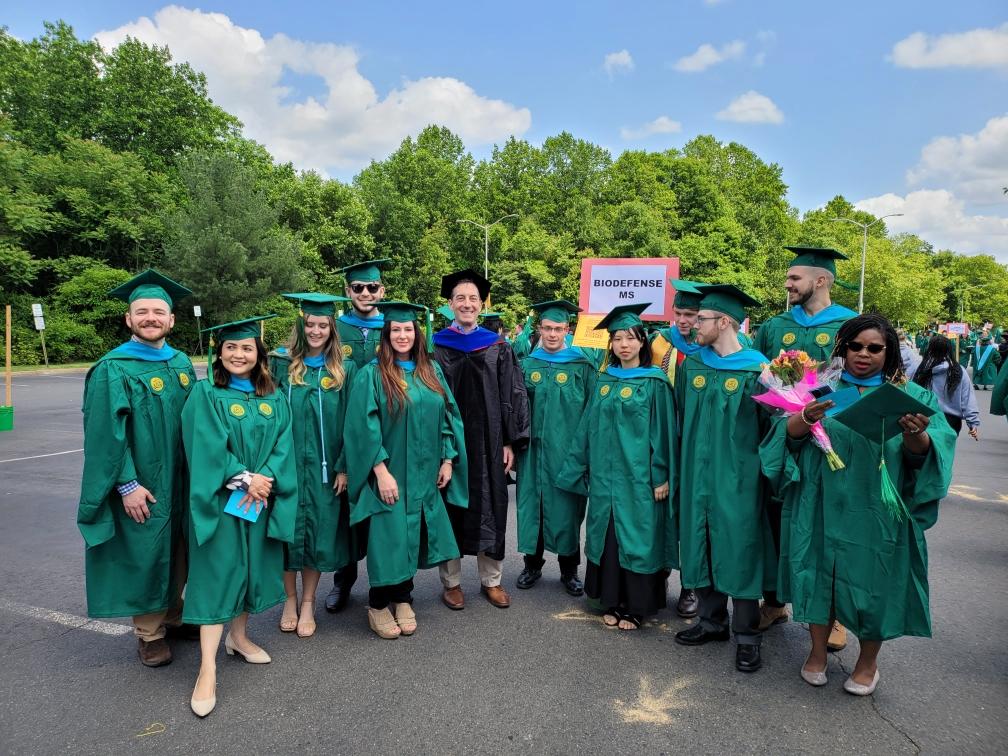
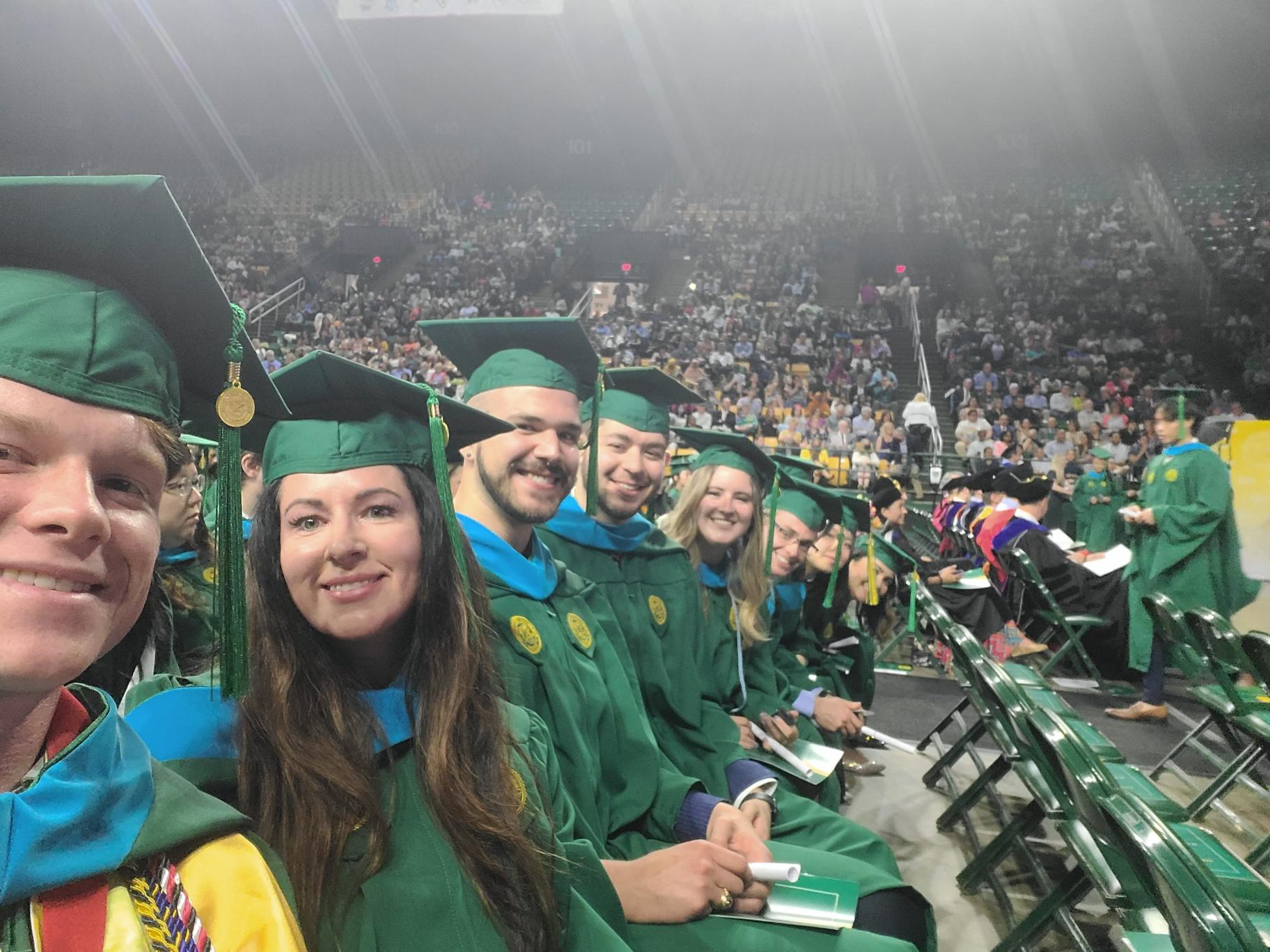
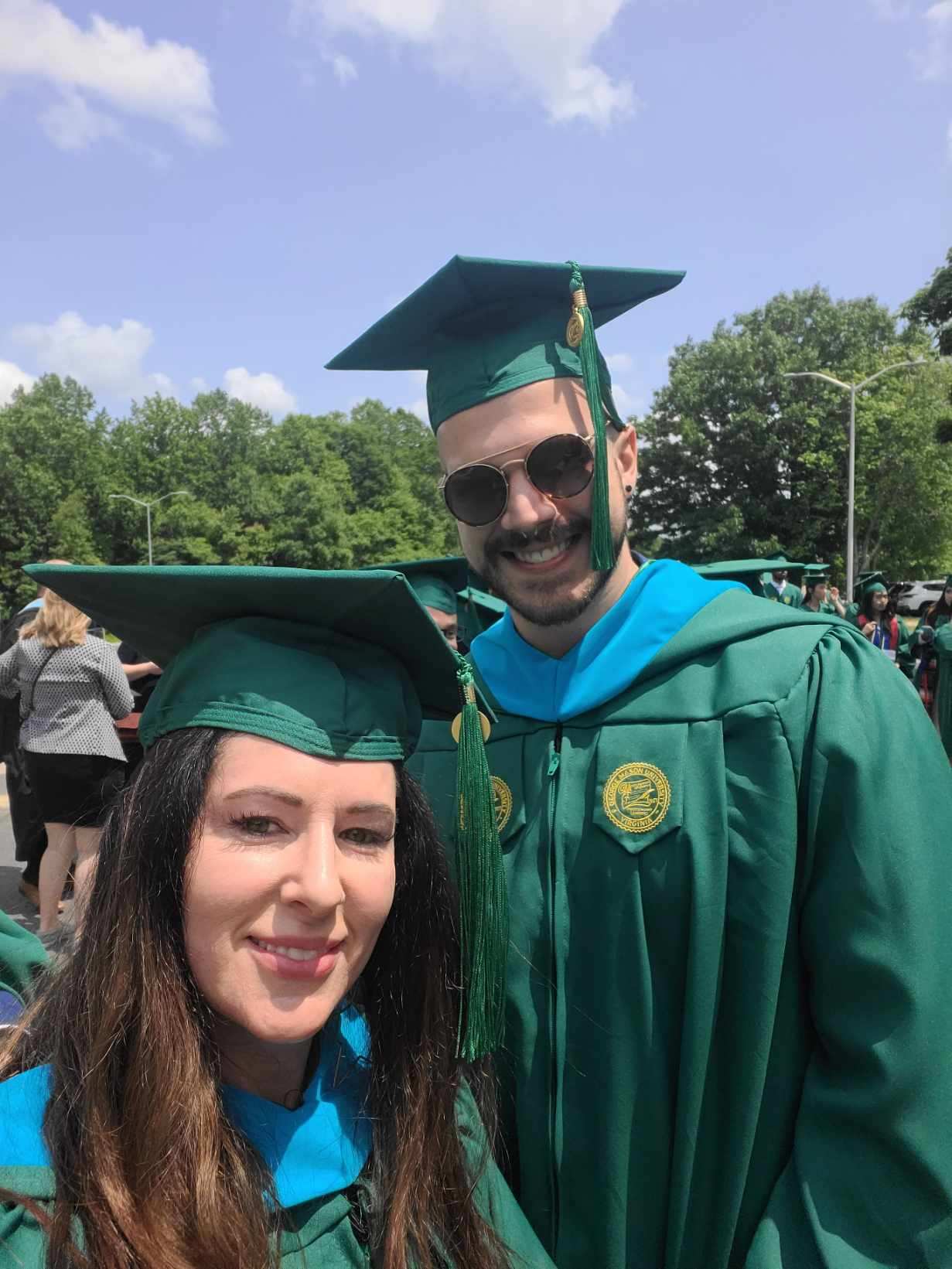
Congratulations Again to Our Biodefense MS Graduates!

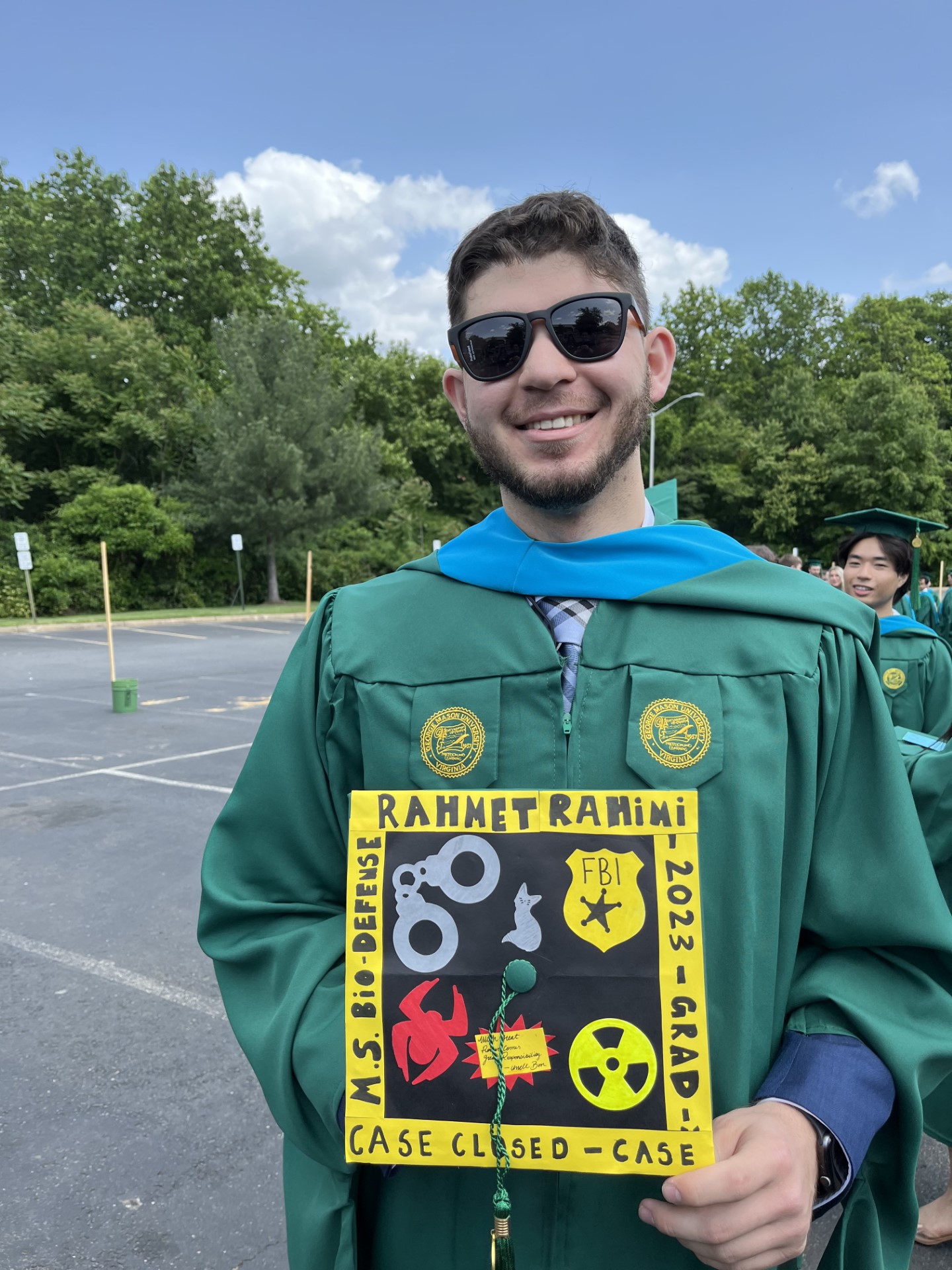
We would like to give one more round of congratulations to our incredible Biodefense MS students, who walked the stage last week. Check out some pictures from graduation below!

Senator Marco Rubio’s COVID-19 Origins Report: Circumstantial Evidence or Just a Lack of Context?

Last week, Senator Marco Rubio’s office released a 328-page report titled “A Complex and Grave Situation: A Political Chronology of the SARS-CoV-2 Outbreak.” This write-up aims to address some reoccurring issues in the report as well as broader implications of these problems. The report, which the office self-describes as “groundbreaking,” claims to present “…a mountain of circumstantial evidence that the Covid-19 pandemic came from a lab accident in Wuhan, China.” Furthermore, according to the report’s executive summary, “This study draws on English and Chinese sources to examine the origins of COVID-19. It indicates that a serious biosafety incident occurred at the state-run Wuhan Institute of Virology (WIV) of the Chinese Academy of Sciences (CAS) during the second half of 2019.”

Video produced by Sen. Marco Rubio’s office covering this report

The report’s summary explains that the authors borrowed the legal standard of the preponderance of the evidence in their analysis. This is a type of evidentiary standard that can be used in burden of proof analysis. Under this standard, the burden of proof is met if the party that is burdened convinces the fact finder that there is a greater than 50% chance the claim is true. In other words, the party that has the burden of proof has to convince the court that it is more probable than not that their argument is correct. The utility of this standard in a report that admits it relies on circumstantial evidence and lacks a “smoking gun” is questionable given that the report focuses on a hotly contested question about a virus’s origin, rather than a known and agreed upon event.

The report also quickly runs into factual trouble, such as in its Summary of Findings where it reads in part:

“The inconsistency between Beijing’s urgent and aggressive reaction to the outbreak itself and its lackluster efforts to ascertain the virus’s origin – alas, its policy has been to actively frustrate international efforts to identify the origin and to punish PRC citizens who try to investigate on their own – suggests that Beijing already knows the origin, and fears that public confirmation of the origin could precipitate an existential crisis for the CCP and therefore must be avoided at all costs. The failure of local authorities to regulate the trade of wildlife at wet markets giving rise to the zoonotic spillover of a novel human pathogen is a crisis that the CCP has weathered before. There is no reason to believe that they could not survive it again.

This last bit appears to reference the 2002-2004 SARS outbreak and outbreaks of H7N9 avian influenza (which were much smaller than those of SARS and COVID-19) in China in the last decade. While China was praised internationally for its response to the latter, its management of the former is a notorious failure that every subsequent Chinese outbreak response has been compared to-including its response to H7N9. Given the Party’s failure to stage good responses to HIV/AIDS in Henan province and SARS in recent decades, this statement implying the Party is good to go on handling something like a zoonotic origin of COVID-19 is nonsensical, let alone the idea that this is good evidence that such an origin is unlikely.

This apparently poor understanding of the gravity of SARS and the impact it had on the field of global health security is demonstrated throughout the piece as the authors appear perplexed at the frequent mention of SARS and SARS-like diseases. However, this is just the start of the report’s problems.

The document also dives into lengthy discussion of China’s background in BW disarmament and increasing strategic interests in biotechnology. This section, which borrows substantially from Elsa B. Kania’s work for the National Defense University and Defense One (in which she does a great job contextualizing what is being said and analyzing what it means in terms of long-term Chinese interests), aims to “…aid the reader in understanding the political, economic, and security backdrop against which the initial outbreak occurred in China.”

While there are sub-sections dedicated to topics like China’s embrace of Military-Civil Fusion, which is relevant in discussing Chinese life sciences research, it also devotes a lot of space to discussing assessments of China’s compliance with international disarmament treaties. To be clear, the State Department has concerns about China engaging in activities with potential BW applications and concerns that China has not eliminated its assessed historical BW program, but what does this have to do with a lab leak at the WIV? This is especially troubling given ongoing problems in the US and globally with BW-related disinformation.

The early portion of the report devotes space to explaining how shengwu anquan (生物安全) is used in Chinese, noting that it is commonly translated to biosecurity and biosafety in English. The authors point to a definition provided to Xinhua by Wu Guizhen of the Chinese Center for Disease Control and Prevention: “Shengwu anquan is classified as non-traditional security. It includes emerging and sudden outbreaks of infectious disease, erroneous use and deliberate misuse of new biotechnology, biosafety in laboratories, and the loss of national important hereditary materials and genetic data, etc.”4

This is worth highlighting now, particularly as the video released by Senator Rubio’s office emphasizes a statement from Gao Hucheng in which he said “…the biosecurity situation in our country is grim.” However, as the report does actually include, this was part of a larger statement that reads:

“At the same time that biotechnology has brought progress and benefits to humanity, it has also brought new biosecurity problems and threats. Currently the biosecurity situation in our country is grim. Bio-warfare and traditional biological threats from major emerging and sudden outbreaks of infectious diseases represented by SARS, Ebola, and African Swine Fever, as well as animal and plant epidemics, are occurring as frequently as ever before. Non-traditional biological threats, [such as] bioterrorist attacks, the erroneous use and deliberate misuse of biotechnology, and laboratories that leak biological agents, are clear and obvious.702

From the start, this report seems to confuse biosecurity and biosafety in its efforts to present “circumstantial evidence” to prove a pre-determined conclusion.

A Big Ball of Wibbly-Wobbly, Timey-Wimey Stuff (Emphasis on Wibbly-Wobbly)

The big promise of this report is its chronicling of events, actions, statements, etc. “…in the PRC that pertain to biosecurity, biosafety, and public health – both as general matters and specifically in response to the outbreak of SARS-CoV-2.” The authors note they likely missed important events. They also seem to have predicted the criticism that several of their entries are irrelevant to the focus of this report, as they explain:

“Not every entry that follows should be seen as somehow directly related to the outbreak of SARS-CoV-2, because no such implication was intended by its inclusion in the chronology. Some entries beginning in 2019 are clearly related to the outbreak. Others could very well be related, but it is hard to draw a clear conclusion based on the information currently available. Some entries are most likely unrelated, or only tangentially related, but they nevertheless captured the prevailing pressures of the day and preexisting concerns about biosafety and biosecurity that may have influenced the authorities’ response. To be clear, many entries appear simply for the purpose of providing broader context to the reader. The result is a report that is far from concise, and some might even call cumbersome, but there is no glide path to clarity on the origin of this virus. We could only plod patiently through the confusing morass that surrounded the initial outbreak in China in the hope that clues would be gathered along the way”

However, as this is a report published by a US Senator promising to give the American people answers about the origins of this pandemic, this is not a helpful explanation. The political back-and-forth over where this virus came from has harmed public discourse on the troubled state of public health in this country, and Senator Rubio has directly involved himself in this, which is highlighted on his official Senate website and is evident in his repeated efforts to downplay the severity of COVID-19. Sen. Rubio said himself of this report, “After years of censorship, there is growing evidence that some type of lab accident is responsible for the Covid-19 pandemic. This report, which took two years to compile, edit, and refine, is a groundbreaking look at what was happening in China during the years and months leading up to the known outbreak of the pandemic.”

As such, inclusion of events on this timeline either implies to the public that the event is considered relevant to the start of the pandemic, or is admittedly inclusion of irrelevant information (which the general public is still likely to interpret as being relevant to the start of the pandemic). The video released in conjunction with the report also does not make this distinction, though it references several seemingly irrelevant events. An example of this is the dramatically presented response exercise hosted in China in late 2019 that focused on a novel coronavirus which, again, makes sense given the severity of the outbreak of SARS in 2002. The report even mentions an exercise hosted by Johns Hopkins in 2019 that also focused on a novel coronavirus, which only further highlights how important SARS and, later, MERS were/are to the field. The fact is there are implied connections throughout this document and its accompanying materials that warrant substantial criticism, particularly given the flawed information provided in this section.

For example, on page 44, the timeline includes a description for January 2018, titled “U.S. Diplomats Visit WIV and Report Safety Issues to Washington.” The description reads:

“After visiting the WIV and speaking with its researchers, U.S. diplomats conveyed concerns about the training of personnel and biosafety conditions at the newly constructed BSL-4 laboratory complex located on the WIV’s Zhengdian Research Industrial Park campus in Jiangxia District283 in an internal cable transmitted to Foggy Bottom on January 19, according to the Washington Post.284 “During interactions with scientists at the WIV laboratory, they noted the new lab has a serious shortage of appropriately trained technicians and investigators needed to safely operate this high containment laboratory,” the January 19 cable stated, relaying comments from WIV researchers. The cable further cautioned that the WIV’s work with bat coronaviruses potentially posed a risk of new SARS-like pandemic.285

The Washington Post opinion piece referenced was widely criticized at the time of its release for its misrepresentation of this cable. The Post itself later acknowledged that the piece “…sparked unproven speculation from senior U.S. officials beginning in April that the outbreak occurred as a result of an accident at the Wuhan Institute of Virology.” In short, the cable is talking about how the state-of-the art WIV facility was limited in its productivity because of a “…shortage of the highly trained technicians and investigators required to safely operate a BSL-4 laboratory and a lack of clarity in related Chinese government policies and guidelines.”

The cable later says “Thus, while the BSL-4 lab is ostensibly fully accredited, its utilization is limited by lack of access to specific organisms and by opaque government review and approval processes. As long as this situation continues, Beijing’s commitment to prioritizing infectious disease control – on the regional and international level, especially in relation to highly pathogenic viruses, remains in doubt.”

It continues with, “REDACTED noted that the new lab has a serious shortage of appropriately trained technicians and investigators needed to safely operate this high-containment laboratory. University of Texas Medical Branch in Galveston (UTMB), which has one of several well-established BSL-4 labs in the United States (supported by the National Institute of Allergy and Infectious Diseases (NIAID of NIH)), has scientific collaborations with WIV, which may help alleviate this talent gap over time. Reportedly, researchers from GTMB are helping train technicians who work in the WIV BSL-4 lab.  Despite this REDACTED they would welcome more help from U.S. and international organizations as they establish “gold standard” operating procedures and training courses for the first time in China. As China is building more BSL-4 labs, including one in Harbin Veterinary Research Institute subordinated to the Chinese Academy of Agricultural Sciences (CAAS) for veterinary research use REDACTED the training for technicians and investigators working on dangerous pathogens will certainly be in demand.”

While the Rubio report indicates this cable “…further cautioned that the WIV’s work with bat coronaviruses potentially posed a risk of new SARS-like pandemic…”, that kind of warning does not appear in the cable. Rather, the cable positively discusses WIV scientists’ efforts to undertake productive research related to the origin of SARS despite the limitations on the new BSL-4 facility which the researchers were frustrated by and working to address. So, to summarize, the cable was about the WIV opening a state-of-the-art BSL-4 laboratory that it could not fully use because of the Chinese government’s concerns about the need for more trained personnel at the WIV.

There are other points of ambiguity and concern throughout the chronology portion, such as poorly contextualized references to “SARS-like” diseases and more quotes seemingly taken out of context. For example, the Rubio report discusses an event in September 2018 on page 54, stating:

“On September 10 and 14, the WIV held political study sessions at which a number of its strategic goals and challenges were discussed.344 Brief reports of the meetings posted on the WIV’s website brought into clear focus the state-run nature of the WIV, including its obligations to meet goals set by the central CCP authorities in Beijing. It further suggested that the WIV leadership was already aware of problems that could later have implications for biosafety and biosecurity – problems that would be discussed with greater frequency and urgency in 2019.”

“Chen Xinwen, director of the WIV from 2008 to late 2018, was described as having brought attention to unspecified “shortcomings and inadequacies in the current work at the CAS,” 345 and having “highlighted the imperative to tightly grasp the critical [technological] fields and the ‘stranglehold’ problem that affects the overall situation of the nation and its long-term development.”346 The “stranglehold problem” is a recurring theme of concern at the WIV and among other state-run research entities charged with meeting the science and technology goals set by Beijing. It refers to the “direct [deleterious] effects created by cutting off the supply of foreign key and core technologies” to China,347 which means technologies that China “must import because it is unable to produce them domestically in sufficient quality or quantity.”348

However, the section of the WIV’s post the authors quoted in English as “shortcoming and inadequacies in the current work at the CAS, (“陈新文从中科院当前工作的短板和不足…”)” is part of a much larger paragraph that provides helpful context to what Chen actually said. Chen’s speech, which the post’s author says conveyed the spirit of Xi Jinping’s previous speeches on the matter, began with discussion and praise of the country’s scientific and technological achievements. He then made a statement about improving the work of CAS (from its shortcoming and deficiencies) so that the organization can better support strategic goals and address the stranglehold issues referenced throughout. He then concluded with some goals the WIV should strive towards meeting, such as clarifying its work priorities, strengthening its party building work, and providing a strong political and organizational guarantee for the scientific and technological advancement of the WIV. So, in context, this is a much more general statement of how the WIV should try to continuously improve, rather than some statement about specific problems at the Institute. This makes sense given the public-facing nature of the website.

Another particularly troublesome section begins on page 197, where the report discusses a COVID-19 patent application made in February 2020. The report says:

“On February 24, Zhou Yusen, a virologist at the PLA AMMS Institute of Microbiology and Epidemiology, led a team of 11 researchers that filed a patent application with the PRC National Intellectual Property Administration for a COVID-19 vaccine, becoming the first in China to do so.1262 The application indicated that the patent rights would belong to two organizations, the PLA AMMS Institute of Microbiology and Epidemiology where Zhou worked and a biopharmaceutical firm in Beijing called JOINN Biologics.1263 The vaccine was developed under the auspices of an “emergency project” authorized by the MOST, according to JOINN Biologics.1264

“Zhou’s filing came only 35 days after the PRC authorities admitted to the public that human-to-human transmission was occurring, only 46 days after they had confirmed that the causative agent of the pneumonia outbreak was a novel coronavirus, and only 55 days since their first public acknowledgment that a pneumonia outbreak had been detected. The genomic sequence used in the patent, which remains unexploited insofar as can be determined through the available literature, may represent the earliest available sequence of SARS-CoV-2.”

“Based on the methodology that Zhou’s team used to develop the vaccine and the three experiments conducted to complete the underlying study, U.S. experts in vaccinology and immunology consulted during this study estimated that a minimum of 12-16 weeks lead time (three to four months) would have been required to conduct the necessary technical and animal experimentation to prepare this patent application for submission by February 24. This estimated timeline places the beginning of Zhou’s research in early November 2019 at the latest, perhaps as early as mid-October.”‘

While the names of the US experts in vaccinology and immunology are not included in the report, the overarching claim in this section is reminiscent of that made in the ProPublica piece last year and the recent report from the Senate HELP Committee. Unfortunately, these arguments about these patent filings’ timelines have still struggled to find acceptance-including among those who are prominent proponents of the lab leak hypothesis.

That Pandora’s Box Line Strikes Again

The myth of Pandora and the theodicy that branched from her story has influenced theologies, stories, and other works for centuries…including a certain global health security newsletter you know and love. The same appears to be true for the WIV, as they referenced Pandora’s mythical box in a November 2019 post on their website. That reference is, again, at the center of the debate over COVID-19’s origin. On pages 115 and 116, the Rubio report references the post dated November 12, 2019, just as ProPublica and Vanity Fair did last year, as evidence that there were significant concerns about the WIV’s day-to-day operations. We discussed the problems with this in our post about the ProPublica piece last year, but we will go over this a bit more now too.

The Rubio report says in this section:

“The second issue of particular significance that featured in this November 12 report was its surprisingly frank description of the routine dangers of the work at the WIV’s BSL-4 lab, including its insinuation that a biosafety incident involving a dangerous pathogen had occurred:”

“Owing to [the fact] that the subject of research at the P4 lab is highly pathogenic microorganisms, inside the laboratory, once you have opened the stored test tubes, it is just as if having opened Pandora’s Box. These viruses come without a shadow and leave without a trace. Although [we have] various preventive and protective measures, it is nevertheless necessary for lab personnel to operate very cautiously to avoid operational errors that give rise to dangers. Every time this has happened, the members of the Zhengdian Lab Party Branch have always run to the frontline, and they have taken real action to mobilize and motivate other research personnel.736

“Third, this WIV report described a high-pressure work environment and other disadvantageous conditions that could create biosafety risk factors. “In the laboratory, they often need to work for four consecutive hours, even extending to six hours,” the report revealed: “During this time, they cannot eat, drink, or relieve themselves. This is an extreme test of a person’s will and physical endurance. This not only demands that research personnel possess proficient operational skills, but they also…possess the ability to respond to various unexpected situations.”737 U.S. biosafety experts who have managed BSL-4 labs told Senator Rubio’s staff that exceeding two consecutive hours of work in a BSL-4 environment is likely to lead to fatigue, and that they would not recommend going beyond three hours. The report noted that the lab’s political leadership, specifically Tong Xiao, was constantly pushing the researchers at the BSL-4 lab to do more: “Don’t look at your work duties as pressure. Every task is an opportunity and a ladder for continuous self-improvement. Our team’s belief is that suffering losses is good fortune….”738

“Fourth, the WIV report referenced problems with the construction of the BSL-4 lab, inadequate standards, and a lack of experience with relevant technologies. The party branch reported:”

“From the outset of construction, the Wuhan P4 Lab had been facing a predicament [caused by] the “three nos”: no equipment and technology standards, no design and construction teams, and no experience operating or maintaining [a lab of this caliber]. Through the party members of the Zhengdian Lab Party Branch taking the lead to attack and conquer these difficulties, [and] bravely pressing forward, in the end, [we] brought into reality the “three haves” of a complete system of standards, a superior team that operates and maintains [the lab], and valuable experience with construction.739

This is also cited in the report’s two-page executive summary, which reads in part:

“In November 2019, the Chinese government documented several cases of COVID-19, but kept the matter hidden. CCP officials at the WIV published a report that said: “Once you have opened the stores test tubes, it is just as if having opened Pandora’s Box. These viruses come without a shadow and leave without a trace.” Seven days later, a Chinese official traveled from Beijing to the WIV to deliver “important oral and written instructions” from Xi Jinping in response to “the complex and grave situation currently facing safety work.”

Viruses slipping out of Pandora’s test tube and vanishing without a trace is pretty scary…until you consider that this was written in a post on the WIV’s general news page as part of a peppy update on the facility’s work. It will likely come as a shock to nobody that it is in fact dangerous to work in a BSL-4 facility. According to the CDC’s very quick and openly accessible Recognizing the Biosafety Levels training, “The microbes in a BSL-4 lab are dangerous and exotic, posing a high risk of aerosol-transmitted infections. Infections caused by these microbes are frequently fatal and without treatment or vaccines. Two examples of microbes worked with in a BSL-4 laboratory include Ebola and Marburg viruses.”

This is helpful context for a news post bragging about the progress the WIV has made and how dedicated its staff is, which is what this “report” actually is. This post talks about how researchers have to wear space suit-like protective gear, work in a physically challenging environment, and go through multiple layers of decontamination, including a chemical shower. The dramatic language of this post makes sense in context. This is the cool kind of cool work that makes for great scenes in Hollywood outbreak movies, so of course a Party-run page would want to brag about it on its public site.

The piece about the “three nos” has also been addressed at length, including by Brendan O’Kane, a career translator, in an interview with James Fallows. O’Kane explained in that interview that his translation of the portion in question would be “At the outset of construction, the Wuhan P4 lab faced the dilemma of the “three ‘nos’”: no equipment or technical standards, no design and construction teams, and no operations or maintenance experience — but with Party members from the Zhengdian Lab [BSL4]’s Party branch leading the charge and bravely pushing forward, [the lab] achieved the ‘Three ‘Yes’es’: a well-developed set of standards, a seasoned operations and maintenance team, and invaluable construction experience.”

More simply, as Fallows explained and O’Kane agreed, “…this would be like a sentence in English saying “we used to be so terrible, but now we’re great.”’ So, rather than discussing an ongoing problem with a lack of equipment, the section about the “three nos” was actually yet another example of Party members bragging about their progress at the facility, something that is, again, expected on a publicly-facing WIV webpage.

As we argued previously, there is a major logical flaw here in relying so heavily on the WIV’s webpage (even if ProPublica, Vanity Fair, and multiple Senate committees want to call them reports, dispatches, etc. or any other cooler sounding term). If the overarching argument is that the CCP is so deeply secretive and worried about the international community knowing the truth about how the pandemic started, why would a state-owned facility (particularly one as high-profile as the WIV) be allowed to post publicly about its supposed biosafety failures? Why would those posts remain up for years after the supposed event at the lab that led to the COVID-19 pandemic?

These are just some of the flaws of this report, which are particularly troubling because the document admittedly relies on circumstantial evidence to lend credence to the lab leak hypothesis. The next sections discuss recent assessments of China’s biosecurity and biosafety, the problems of these kinds of flawed reports on the pandemic’s start, and concluding thoughts.

How Does China Actually Fare in Biosecurity?

Though China, like any country, could stand to improve its regulations and enforcement of biosafety and security rules, the country scores fairly well on measurements of both its biosafety and biosecurity governance. However, this report, in including several examples of concerns and challenges and different Chinese facilities, paints a picture contrary to this.

In this year’s Global BioLabs Report (a report produced by a project led by George Mason’s Dr. Gregory Koblentz, King’s College London’s Dr. Filippa Lentzos, and supported by The Bulletin of the Atomic Scientists), China scored high in both biosafety governance (18/20) and biosecurity governance (15/18), outscoring countries like South Korea and Sweden. When combined with poor use of other materials like the State Department cable obtained by The Washington Post, this report from Sen. Rubio paints a picture of a country completely incompetent in these areas, when it is clear the situation is much more nuanced.

Don’t Throw the Baby Out With the Bathwater

Furthermore, on multiple occasions, this report from Senator Rubio’s office highlights an important issue that is generally agreed upon, but the authors take it in a direction not supported by their sourcing and critical analysis. For example, the report’s summary reads in part:

“Awareness of a laboratory incident seemed to have shaped the CCP leadership’s response to SARS-CoV-2: a response characterized by strict controls of information, obfuscation, misdirection, punishment of whistleblowers, and the destruction of key clinical evidence. A closer look at the early days of the pandemic revealed that even when Beijing shared information with the international community – such as the initial notice of a pneumonia outbreak, the later admission that a novel coronavirus was its causal agent, and the publishing of its genomic sequence – it did so belatedly. In all three cases, Beijing possessed the relevant information for some time before sharing it, and disclosed it only when compelled to do so by circumstances beyond its control.”

The CCP undeniably mounted “…a response characterized by strict controls of information, obfuscation, misdirection, punishment of whistleblowers, and the destruction of key clinical evidence [albeit from unauthorized labs].” However, this doesn’t mean the virus began to spread in Wuhan because of a lab incident, as evidenced by the Party’s historical outbreak response failures that progressed in similar manners following natural origins. Why is more emphasis not placed on doing something about what we do know happened, both in China and at home?

As we explained earlier this year, “…it is important to address the question of to what extent we can know this [how SARS-CoV-2 came to be] and what it would change at this point. China is clearly not going to cooperate on any kind of investigation into COVID-19’s origin. That has been clear since the early days of the pandemic and is part of a pattern of behavior on the part of the CCP. Irrespective of where this virus actually came from, it is clear that China did cover up its initial spread in the population, censoring netizens and healthcare professionals until it was impossible to conceal further. While an in-depth investigation into the start of this pandemic has always been needed, hyper focusing on this runs the risk of diverting attention from other critical issues we have much more information readily available on. China did cover up the initial spread of this virus and has been disingenuous in its reporting and handling of it ever since. The United States failed to adequately respond to this pandemic for a variety of reasons, a fact that does not depend on how the virus initially spread. It is vital to balance desires to find the truth of COVID-19’s origins, something that is indisputably important, with using the information that is available and can reasonably be acquired to address these problems before the next pandemic. This information could inform debates on laboratory safety and oversight, though, as Biodefense Graduate Program Director Dr. Gregory Koblentz demonstrated in his interview with the New York Times…there is a wealth of information available already driving these discussions.”

Concluding Thoughts

Like we said during the publication of the ProPublica piece, Vanity Fair article, and Senate HELP Committee reports, bad faith takes on China, COVID-19, and biosafety hurt us all. This report is correct in that it highlights that scientific analysis alone cannot tell us what all went wrong with China’s response to COVID-19. Political and social analysis is absolutely needed, but that has to be based in linguistic and area expertise in addition to an agnostic approach to the facts. Trying to gather circumstantial evidence, specifically poorly contextualized quotations, to support a pre-determined conclusion is not going to cut it.

The report’s reliance on circumstantial evidence to meet a borrowed legal standard for burden of proof analysis is also flawed. If this were a debate about how an outbreak originated from the WIV, then perhaps that legal standard would be more useful, but this is a debate about how an event with an uncertain timeline began-and one with substantial evidence for a zoonotic origin at that.

This flawed reporting appears to be symptomatic of hawkish attitudes in Washington that employ poor translation and analysis in order to reach a politically convenient conclusion about China. The Chinese Communist Party is not innocent in this matter by any stretch of the imagination, but throwing the same flawed materials at the wall repeatedly in hopes something will stick does nothing but arm the Party with potential propaganda and talking points. At a time where the US-China relationship is on shaky ground and scientific collaborations are suffering as a result, it is vital that US leadership addresses the established issues and helps the nation and world prepare for future global health crises. It is clear that the PRC is not interested in handling outbreaks appropriately, irrespective of where this pandemic started. Acknowledging this and working to address it and prepare for the likelihood it will happen again is a more productive way to move forward than rehashing these same points over and over again.

Seventy-Sixth World Health Assembly Convenes

The 76th World Health Assembly (WHA) is currently being held in Geneva under the theme “WHO at 75: Saving lives, driving health for all.” Livestreams and interpretations are available here in Arabic, Chinese, English, French, Russian, and Spanish. So far, the meeting has seen 80 WHO member states vote to move the Moscow-based European Office for the Prevention and Control of Noncommunicable Diseases to Copenhagen, while also urging Russia to stop attacking hospitals and other healthcare facilities in Ukraine. 52 states abstained while eight, including North Korea, China, and Belarus, voted against the draft decision.

‘“Far from politicising the situation, [the draft decision] focuses specifically on lingering health impacts of the war,” said Ukraine’s delegate, addressing the assembly before Wednesday’s vote.”

‘“The full-scale aggression launched by Russia against Ukraine … has triggered one of the largest health and humanitarian crises,” she said. “More than 1,256 health facilities have been damaged and 177 reduced to rubble leaving about 237 health workers and patients dead or injured.”’

While not part of the WHA meeting, the WHO is also currently working on negotiations for a new pandemic accord. Reuters explains, “A new pact is a priority for WHO chief Tedros Adhanom Ghebreyesus who called it a “generational commitment that we will not go back to the old cycle of panic and neglect” at the U.N. agency’s annual assembly. It seeks to shore up the world’s defences against new pathogens following the COVID-19 pandemic that has killed nearly 7 million people.”

Elaine Ruth Fletcher explains in Health Policy Watch “A new “Zero+” version of a proposed World Health Organization pandemic accord being negotiated by member states has dropped previously strong language that conditioned use of public R&D funds to private sector commitments to price transparency and tech transfer of end products, among other measures.”

“However, the updated draft text, obtained by Health Policy Watch, still contains ‘optional’ language linking developing countries’ sharing of pathogen information to a guaranteed supply of drugs, vaccines and other health tools that they would access a WHO distribution scheme.”

“While not a formal part of this week’s World Health Assembly (WHA) proceedings, the text drafted by the “Bureau” of six member states guiding the talks is being circulated this week as they prepare for another round of  negotiations over the new accord, scheduled by the Intergovernmental Negotiating Body (INB) 12-16 June.

“The latest draft of the “WHO Convention, Agreement or other International Instrument”, dubbed WHO CA+, offers a range of “options” where there are diverging opinions between member states with consensus yet to be reached.”

“Russia Must Stop Its Attacks on Food Security”

This new bulletin from the State Department’s Global Engagement Center covers a wide-range of food security issues stemming from Russia’s invasion of Ukraine, including Kremlin officials’ calls to weaponize hunger. The document explains in part “The Kremlin’s unprovoked and unjustifiable war against Ukraine has severely damaged Ukraine’s economy and exacerbated global food insecurity, especially in developing countries. Ukraine has long been the “breadbasket of Europe,” feeding millions across the globe. It was a top grain supplier to dozens of African and Middle Eastern countries in 2021, but after Russia’s 2022 full-scale invasion, Russia blockaded Ukrainian trade routes through the Black Sea, mined Ukrainian agricultural fields, burned crops, destroyed Ukraine’s food storage supplies, created labor shortages, and attacked merchant shipping vessels and ports. Russia is also stealing Ukraine’s grain for its own profit, according to Ukrainian authoritiesmedia reports, and the Kremlin’s own proxies in the occupied areas of Ukraine. According to the Food and Agricultural Organization of the United Nations (FAO), the Kremlin’s war against Ukraine has “disrupted agricultural production and trade in the Black Sea region, triggering an unprecedented peak in international food prices in the first half of 2022.”’ 

New Digital Report Warns That World Not Prepared for the Next Pandemic

A new interactive, digital report from the Nuclear Threat Initiative and Munich Security Conference finds that the world is underprepared for biological catastrophes. The report relies on a table top exercise of an outbreak of AKMV in cattle in the fictional country of Andoriban. The outbreak quickly spills over into the human population, first causing a local epidemic that soon becomes a global pandemic. The scenario incorporates response challenges and flawed intelligence that fails to attribute the attack to the fictional country’s adversary. The exercise ended in 2.2 billion AKMV cases and 120 million deaths in just 20 months. In the end, “Tabletop exercise participants agreed that, despite some improvements following the global response to COVID-19, the international system of pandemic prevention, detection, and response is woefully inadequate to address current and anticipated future biological threats.”

“Biosafety Needs to Redefine Itself as a Science”

In this piece for Issues in Science and Technology, Antony Schwartz, Andrea Vogel, and Mary Brock discuss the growing demand for biosafety workers and issues with the field being viewed more as a compliance problem than a science. They write in part, “Risk assessment is already at the core of most biosafety professionals’ daily work. Some hazards can indeed be mitigated with standardized practices and procedures. However, most circumstances require careful study of the biohazards, the procedures performed, the equipment used, and the mitigation measures available (facilities, containment devices, or personal protective equipment, for instance). Establishing biosafety as an innovative research discipline will enable the field to keep pace with a sector that is going through momentous changes.”

“A Shot of Resilience: A Critical Analysis of Manufacturing Vulnerabilities in Vaccine Production”

Steph Batalis and Anna Puglisi explain in this policy brief for the Center for Security and Emerging Technology, “Vaccines are a key aspect of national security and underpin U.S. strategies for public health, biosecurity, and pandemic preparedness. Routine vaccinations keep the American public healthy, decrease healthcare spending, and increase workforce productivity. In a public health emergency, vaccines are an important line of defense against new and emerging threats…Despite the importance of a secure vaccine supply, our analysis finds two major vulnerabilities in the biomanufacturing landscape for U.S. vaccines: a reliance on foreign manufacturers and a lack of manufacturing redundancy. Together, these two factors limit the country’s ability to respond to emerging health threats.”

“Deaths From Drug-Resistant Infections Set To Skyrocket”

Statista’s Anna Fleck discusses the growing threat of antimicrobial resistance in this analysis. She explains in part, “Deaths from drug-resistant infections are set to skyrocket by 2050, according to the UN 2023 report ‘Bracing for Superbugs: Strengthening environmental action in the One Health response to antimicrobial resistance.’ Unless drastic action is taken to tackle the problem, it could also lead to a GDP shortfall of $3.4 trillion annually in the next decade and push 24 more people into extreme poverty.”

“Although the risks of AMR will impact people worldwide, Low-Income Countries (LICs) and Lower-Middle-Income Countries (LMICs) are expected to see the highest death tolls. By region, Asia is predicted to see the highest number of AMR-related deaths per 10,000 population in 2050 (4,730,000), followed by Africa (4,150,000), Latin America (392,000), Europe (390,000), North America (317,000) and Oceania (22,000).”

https://www.statista.com/chart/3095/drug-resistant-infections/

“Up To 500,000 Killed by Fake Medicines in Sub-Saharan Africa”

Anna Fleck also recently published this work for Statista covering the challenges of counterfeit medications in sub-Saharan Africa. She explains “Nearly half a million people are estimated to be killed by counterfeit medicines in sub-Saharan Africa every year, according to data from the United Nations Office on Drugs and Crime. Of these, 267,000 deaths are believed to be linked to falsified or substandard antimalarial medicines, while a further 169,271 are linked to falsified or substandard antibiotics for severe pneumonia in children.”

https://www.statista.com/chart/30068/falsified-medicines-in-sub-saharan-africa/

Fast Updates

“The World’s Top Chemical-Weapons Detectives Just Opened a Brand-New Lab”

From Nature News: “The international body that banned chemical weapons is due to celebrate its first major milestone sometime this year — the completed destruction of the world’s declared stockpiles of banned substances. But at the organization’s brand-new facility in the Netherlands, scientists from around the world will continue its work to prevent, spot and respond to chemical warfare.”

“On 12 May, the Organisation for the Prohibition of Chemical Weapons (OPCW) officially inaugurated its new Centre for Chemistry and Technology near The Hague, where the international body will bring together its existing laboratories and add new monitoring and training programmes.”

“IARPA Pursuing Breakthrough Biointelligence and Biosecurity Innovations”

From Homeland Security Today: “The Intelligence Advanced Research Projects Activity (IARPA) — the advanced research and development arm of the Office of the Director of National Intelligence — recently launched a program to develop new innovations for tackling threats and advances inherent within the rapidly changing biointelligence and biosecurity landscapes.”

“The Biointelligence and Biosecurity for the Intelligence Community (B24IC) program represents the Intelligence Community’s (IC) latest investment in research that pushes the boundaries of our biointelligence and biosecurity understanding and technologies. The resulting innovations could have far-reaching impacts, with the potential to develop new ways to collect, detect, analyze, and prevent traditional biothreats, while addressing possibilities and dangers associated with biotechnology. To address these challenges, the IC seeks to advance research across multiple biology sub-disciplines.”

“Plan for UK ‘Genomic Transformation’ Aims to Act on Lessons of COVID”

From The Guardian: “Health officials in the UK have drawn up plans for a “genomics transformation” that aims to detect and deal with outbreaks of infectious diseases faster and more effectively in the light of the Covid pandemic.”

“Information gleaned from the genetics of Covid proved crucial as the virus swept around the globe, revealing how the pathogen spread, evolved, and responded to a succession of vaccines and medicines developed to protect people.”

“The UK Health Security Agency (UKHSA) now aims to build on the lessons of the pandemic by embedding genomics into routine public health practice. The move intends to bolster surveillance for outbreaks, drive down cases of infections such as TB, measles, hepatitis C and HIV/Aids, and predict the course of future threats, such as avian flu and diseases borne by mosquitoes and ticks as they gain ground in a warming climate.”

NEW: Fighting Antimicrobial Resistance with Vaccine Innovation: Obstacles & Insights

“The discovery of antibiotics was one of the biggest medical breakthroughs in the 20th century and has since become a key part of modern medicine. However, with the overuse and misuse of antibiotics, officials have cited the threat of antimicrobial resistance (AMR) as a major public health concern. According to recent studies, resistant bacterial infections cause almost 5 million deaths a year, with over 1.2 million deaths being correlated to AMR”

“To address AMR, the biotech industry needs to put more focus on vaccine innovation. Vaccines have the potential to not only prevent infection, but also to reduce the need for antibiotics; a key driver of AMR. Out of the top bacterial pathogens that are most responsible for AMR related deaths, there is only one – pneumococcal disease – that has vaccines available.”


“What are some of the challenges being faced in vaccine innovation and development? How can the biotech industry come together to bring innovative AMR-relevant vaccines to the market?”

This event will be moderated by Dr. Jomana Musmar, a Biodefense PhD Program alumna and a senior advisor and DFO and the US Department of Health and Human Services. It will take place on June 7 at 1:45 pm. Learn more and register here.

NEW: Biorisks, Biosecurity And Biological Disarmament Conference

“Advances in science and technology are taking place at an unprecedented rate, making vital contributions to addressing major societal challenges. Yet, transformative developments in a wide range of fields can also pose risks to society. As such, it has become more important than ever to monitor opportunities and risks posed by advances in science and technology for the biosecurity regime. This cannot be done by any one actor alone, rather it will require collaborative efforts by states and stakeholders from civil society, academia and industry, along with other actors.”

“In order to facilitate multi-stakeholder engagement around biological security and biological disarmament, the United Nations Institute for Disarmament Research (UNIDIR) with the United Nations Office for Disarmament Affairs (UNODA) and the World Health Organization (WHO) are co-organizing a stakeholder conference designed to bring together actors from civil society, academia and industry, along with diplomats, to stimulate the exchange of ideas and thinking around how to build biosecurity and bolster biological disarmament. The event will provide an opportunity to discuss ongoing diplomatic processes and current and upcoming issues in the areas of biorisk, biosecurity and biological disarmament.”

This hybrid event will take place July 4-5. Learn more and register here.

Building Capacity for Dual-Use Oversight in the Life Sciences through the IEGBBR

Join the International Experts Group of Biosafety and Biosecurity Regulators for this virtual event on May 30 at 7 am EDT. This event will discuss “how to identify, assess, and mitigate dual-use concerns in the life sciences – two examples of oversight measures in a national oversight system”. Register here.

Soft Launch of the Biological Weapons Convention Implementation Measures Database

From UNIDIR: “The Biological Weapons Convention (BWC) National Implementation Measures Database is a searchable, publicly accessible database containing information about the national implementation measures undertaken by BWC States Parties. The database is designed to strengthen the implementation of the BWC, allowing States Parties, Signatories, and other stakeholders to better understand different approaches to national implementation from around the world and identify possible gaps and limitations in BWC implementation.”

“As part of the development of the database, UNIDIR’s Weapons of Mass Destruction Programme and VERTIC’s National Implementation Measures Programme are organising an online event to introduce the tool and showcase its structure and functions.”

This event will take place on May 31, at 1 pm CEST. Learn more and register here.

CSWMD 2023 Annual Symposium: WMD in the Decisive Decade

“The National Defense University’s Center for the Study of Weapons of Mass Destruction (CSWMD) invites you to join us on 14 June 2023 for the virtual Annual CSWMD Symposium, titled WMD in the Decisive Decade.”

“This year’s symposium will explore the cognitive impacts WMD has on strategic decision making and the challenges associated with operating in an environment where WMD has been employed. It will be an opportunity for the WMD community to engage with officials and thought leaders on current WMD challenges at the unclassified level, including keynote addresses by Richard Johnson, Deputy Assistant Secretary of Defense for Nuclear and CWMD Policy and Rebecca Hersman, Director of the Defense Threat Reduction Agency.”

“For more information and to register for this event click here. Please RSVP by 9 JUNE 2023.”

“We look forward to hosting you for the event. For more information about the WMD Center and reference our research, please visit our website at https://wmdcenter.ndu.edu/ and follow us on Twitter and on LinkedIn.”

Gordon Research Conference: Cross-Cutting Science Facilitating Collaboration Across the Threat-Science Research Community

“The Nonproliferation, Counterproliferation and Disarmament Science GRC is a premier, international scientific conference focused on advancing the frontiers of science through the presentation of cutting-edge and unpublished research, prioritizing time for discussion after each talk and fostering informal interactions among scientists of all career stages. The conference program includes a diverse range of speakers and discussion leaders from institutions and organizations worldwide, concentrating on the latest developments in the field. The conference is five days long and held in a remote location to increase the sense of camaraderie and create scientific communities, with lasting collaborations and friendships. In addition to premier talks, the conference has designated time for poster sessions from individuals of all career stages, and afternoon free time and communal meals allow for informal networking opportunities with leaders in the field.”

This conference will take place July 9-14 in Ventura, CA. Learn more and register here.

Weekly Trivia Question

You read the Pandora Report every week and now it’s time for you to show off what you know! The first person to send the correct answer to biodefense@gmu.edu will get a shout out in the following issue (first name last initial). Our question this week is: In 1968, the so-called “Hong Kong flu” killed an estimated one million people globally. What strain of Influenza A caused this pandemic?

Our question last week was: “In late 2019, what two nerve agents were added to the CWC’s Schedule 1?” Many on Twitter recognized it was a trick question and did correctly note that two families of nerve agents-Novichoks and carbamates-were added to Schedule 1. You can read more about this in “Updating the CWC,” an article published in Arms Control Today by Drs. Stefano Costanzi and Greg Koblentz.

Pandora Report 4.7.2023

Happy Friday! This week includes updates from our program, discussion of an upcoming hearing on the death of Dawn Sturgess, ASPR’s new National Health Security Strategy, and more. We also have several recent publications, upcoming events, and professional opportunities as well, including a publication from a Biodefense PhD student and a fellowship opportunity at CDC.

Biodefense PhD Program Alumnus Named Rodel Federal Executive Fellow

Biodefense PhD alumnus and Schar School adjunct faculty member Dr. Brian Mazanec was recently selected as a member of the Class of 2023 cohort of the Rodel Federal Executive Fellowship. Mazanec is currently the Deputy Assistant Secretary and Director, Office of Security, Intelligence, and Information Management, Administration for Strategic Preparedness and Response, US Department of Health and Human Services.

The Rodel Federal Executive Fellowship is an intellectual and leadership professional development fellowship for senior-level career civil servants across the federal government’s executive branch agencies. For each cohort, the program selects 20 to 24 exceptional members of the Senior Executive Service (SES), Senior Foreign Service (SFS), GS-15’s, and equivalent positions from across the federal government to come together for a series of three multi-day seminars. Working with expert moderators, the Fellows study and discuss challenging texts on leadership and innovation in large organizations, the nature of democracies, emerging technologies, the American economy, and the changing geopolitical landscape. They also engage in practical, relevant leadership training focused on promoting innovation within the context of large government bureaucracies.”

Hearing Covering Death of Dawn Sturgess Set for October 14

Dawn Sturgess was a Wiltshire woman who died after her and her partner, Charlie Rowley, found a fake perfume bottle containing a Novichok agent. This incident happened months after the targeted attack against the Skripals in Salisbury in 2018 and, though former Home Secretary Priti Patel announced the hearing in November 2021, Sturgess’s family has pushed for the process to finally move forward. According to the Guardian, “At a preliminary hearing last month, lawyers for the UK government defended delays in disclosing documents, claiming that substantial redactions were needed to protect sensitive information from the “hostile state that is Russia”…The UK government has blamed the Russian state for the novichok attack, and the British police have identified three suspects wanted over the poisonings.”

ASPR Releases National Health Security Strategy

“Every four years, ASPR develops the National Health Security Strategy (NHSS) to establish a strategic approach to enhance the security of the nation’s health in times of crisis. The NHSS provides a roadmap to strengthen and adapt health care, public health, and emergency preparedness and response no matter the threat. This includes emphasis on equitable access to post-disaster health services and meeting the needs of at-risk individuals and underserved communities. The 2023-2026 NHSS includes an enhanced focus on several health care and public health challenges exacerbated during COVID-19 and other public health emergencies, including supply chain resiliency, health care and public health workforce capacity, risk communication, and health equity.”

“The 2023-2026 NHSS Implementation Plan builds on the goals and objectives of the NHSS; guides federal actions for desired outcomes; and recommends implementation activities for state, local, tribal, and territorial partners; the health care industry; public health professionals; pharmaceutical manufacturers; communities; and other stakeholders. The NHSS Evaluation of Progress examines the actions taken by the United States between 2019 and 2022. The 2023-2026 NHSS builds on the progress made between 2019 and 2022 to provide a strategic direction that can be used to better protect people in communities nationwide from health security threats in the years to come.”

This NHSS includes three overarching strategic goals: Strengthen health care and public health systems to prepare for and respond to concurrent health emergencies, including those that arise from unknown threats; Improve capabilities to safeguard and protect against an array of health security threats, including emerging and re-emerging infectious diseases, especially zoonotic diseases; Ensure a resilient and sustainable public health industrial base and supply chain that can rapidly develop and deploy safe medical countermeasures (MCMs).

Read the strategy, implementation plan, evaluations, and FAQs here.

You-Whippee-Ki-Yay, UIPE is Getting a Facelift Already!

JPEO-CBRND made a very important announcement this week:

Other interesting ideas included revamping the 66P legacy system to include mesh panels to improve breathability. 😉 Learn more about UIPE (“you-whip-ee”) here.

“The Analytic Challenges of Shifting to Domestic Terrorism”

Biodefense PhD student Chris Quillen recently published an article in the Journal of Policing, Intelligence, and Counter Terrorism.  After many years of fighting the Global War on Terrorism, the U.S. Intelligence Community is increasingly focusing on the issue of domestic terrorism.  This shift in analytic effort raises intriguing questions about the most appropriate tools needed to combat this growing threat.  This article addresses the historical approach and possible solutions from similar countries and organizations before proposing a broader focus on extremist movements over designated terrorist groups. 

“The Origin of SARS-CoV-2: Animal Transmission or Lab Leak?”

Johns Hopkins’ Dr. Gigi Kwik Gronvall breaks down publicly available evidence of the start of the COVID-19 pandemic in this piece for Lawfare. She writes in part, “While the scientific evidence points to a “natural” emergence, it is decidedly not natural to have the conditions in place that led to this spillover event, or the very similar circumstances that led to the SARS epidemic in 2003. (In that epidemic, the market was not immediately cleared out, and samples could be taken from the civet cats and other animals sold there.) There is plenty of guidance available for how to sell and butcher animals safely, regulate markets, and crack down on the illegal wildlife trade—a global phenomenon that has a great deal of overlap with other criminal activities, including human trafficking, money laundering, and the illegal drug trade. Further research could also help improve these standards and better prepare for other viruses that could emerge in similar settings. There are many scientific knowledge gaps that need to be filled about viral evolution and bats, and more undetermined infections that might turn out to be the next pandemic need to be investigated so that researchers and policymakers can do more, earlier and better.”

“Surveillance of SARS-CoV-2 at the Huanan Seafood Market”

The much anticipated China CDC article was made available by Nature this week. Its abstract reads: “SARS-CoV-2, the causative agent of COVID-19, emerged in December 2019. Its origins remain uncertain. It has been reported that a number of the early human cases had a history of contact with the Huanan Seafood Market. Here we present the results of surveillance for SARS-CoV-2 within the market. From January 1st 2020, after closure of the market, 923 samples were collected from the environment. From 18th January, 457 samples were collected from 18 species of animals, comprising of unsold contents of refrigerators and freezers, swabs from stray animals, and the contents of a fish tank. Using RT-qPCR, SARS-CoV-2 was detected in 73 environmental samples, but none of the animal samples. Three live viruses were successfully isolated. The viruses from the market shared nucleotide identity of 99.99% to 100% with the human isolate HCoV-19/Wuhan/IVDC-HB-01/2019. SARS-CoV-2 lineage A (8782T and 28144C) was found in an environmental sample. RNA-seq analysis of SARS-CoV-2 positive and negative environmental samples showed an abundance of different vertebrate genera at the market. In summary, this study provides information about the distribution and prevalence of SARS-CoV-2 in the Huanan Seafood Market during the early stages of the COVID-19 outbreak.”

Dr. Angela Rasmussen breaks down issues and concerns with this article, including flaws in its metagenomic analysis, in this thread.

“What Happened When WMD Experts Tried to Make the GPT-4 AI Do Bad Things”

In this piece for the Bulletin of the Atomic Scientists, Thomas Gaulkin covers an open letter recently written and signed by hundreds of leaders in industry, policy, and academia calling for “…an immediate moratorium on the development of artificial intelligence “more powerful than GPT-4,” the large language model (LLM) released this month by OpenAI, an AI research and deployment firm. The letter proposes the creation of shared protocols and independent oversight to ensure that AI systems are “safe beyond a reasonable doubt.”’

He explains that “The letter’s call for a temporary halt on AI development may not be entirely at odds with OpenAI’s own recent representations of its outlook on the issue. The company’s CEO, Sam Altman, recently said “we are a little bit scared of this” and has himself called for greater regulation of AI technologies. And even before the world reacted to GPT-4 and ChatGPT’s release, OpenAI’s creators appear to have been sufficiently concerned about the risks of misuse that they organized months of testing dedicated to identifying the worst things that the AI might be used for—including the proliferation of weapons of mass destruction. 

“Ready or Not: Protecting the Public’s Health from Diseases, Disasters, and Bioterrorism”

From Trust for America’s Health: “Ready or Not: Protecting the Public’s Health from Diseases, Disasters, and Bioterrorism, has tracked the nation’s public health emergency preparedness since 2003. This twentieth edition of the report is as critical to policymakers now as it has ever been. The report is designed to give policymakers at all levels of government actionable data and recommendations with which they can target policies and spending to strengthen their jurisdiction’s emergency preparedness. The report’s 10 key public health preparedness indicators give state officials benchmarks for progress, point out gaps within their states’ all-hazards preparedness, and provide data to compare states’ performances against similar jurisdictions.”

Lessons From the COVID War: An Investigative Report

Beyond the Pandemic: Addressing Attacks on Researchers and Health Professionals

From the National Academies: “Last fall, the Committee on Human Rights (CHR) held a webcast series, Silencing Scientists and Health Workers during the Pandemic, which examined threats and attacks against science and health professionals connected to their work to combat the spread of COVID-19, as well as related implications for internationally-protected human rights.”

“On April 11 (3:00-4:15 pm ET), the CHR will host a webcast to mark the launch of the webcast series’ Proceedings-in Brief.  This event will gather experts to explore practical steps that scientists, researchers, and health professionals are taking to protect themselves and their colleagues from targeting—including violence, harassment, and other attacks.”

Learn more and register here.

Brain-Computer Interfaces Webinar Series, Part 2: BCIs in the Context of International Security: Military Uses, Applications and Risks

From UNIDIR: “Brain-computer interfaces (BCIs) are technical means and systems that provide direct links and communication between the brain and external devices. BCIs have been used for decades in the medical field, mainly in rehabilitation, including by the armed forces to support the recovery of injured servicemembers. Increasingly, however, the interest in the uses of BCIs has grown in scope, with novel applications exploring ways to enhance physical and cognitive functions in soldiers and weapon systems operators. Research areas include leveraging BCIs to monitor cognitive workload and performance, to enhance learning, to improve training, sensory and decision-making skills, as well as to enable remote direct control of weapon systems. Other areas of research explore convergences with the field of artificial intelligence, including using information and signal from the brain to train artificial intelligence systems.”

“BCIs can have a highly disruptive impact for the future of warfare, with significant legal and ethical consequences that deserve closer analysis.”

“UNIDIR is organizing a webinar series to unpack emerging questions related to the uses of brain-computer interfaces in the context of warfare and international security.”

This event will take place virtually on April 12 from 2-3 pm CEST. Register here.

Nobel Prize Summit-Truth, Trust and Hope

Taking place May 24-26 this year in DC and virtually, this Nobel Prize Summit asks “How can we build trust in truth, facts and scientific evidence so that we can create a hopeful future for all?”

“Misinformation is eroding our trust in science and runs the risk of becoming one of the greatest threats to our society today.”

“Join us at this years’ Nobel Prize Summit which brings together laureates, leading experts and you in a conversation on how we can combat misinformation, restore trust in science and create a hopeful future.”

Learn more and register here.

Gordon Research Conference: Cross-Cutting Science Facilitating Collaboration Across the Threat-Science Research Community

“The Nonproliferation, Counterproliferation and Disarmament Science GRC is a premier, international scientific conference focused on advancing the frontiers of science through the presentation of cutting-edge and unpublished research, prioritizing time for discussion after each talk and fostering informal interactions among scientists of all career stages. The conference program includes a diverse range of speakers and discussion leaders from institutions and organizations worldwide, concentrating on the latest developments in the field. The conference is five days long and held in a remote location to increase the sense of camaraderie and create scientific communities, with lasting collaborations and friendships. In addition to premier talks, the conference has designated time for poster sessions from individuals of all career stages, and afternoon free time and communal meals allow for informal networking opportunities with leaders in the field.”

This conference will take place July 9-14 in Ventura, CA. Learn more and register here.

CDC Laboratory Leadership Service Application Open

The CDC’s Laboratory Leadership Services (LLS) program is currently accepting applications through June 1. Designed as a companion to the Epidemic Intelligence Service, this service was launched in 2015 and aims to train lab-oriented public health professionals. “The LLS fellowship provides a one-of-a-kind training experience for laboratory scientists who are ready to apply their expertise inside and outside of the lab, ultimately preparing them to be the next generation of public health laboratory leaders who work to protect public health. Fellows conduct cutting-edge research, support rapid response to disasters and disease outbreaks, help investigate emerging health threats, and enhance the laboratory systems and practices that are essential for public health. LLS seeks laboratory scientists looking to take their careers to the next level while doing work that delivers real benefits to communities across the country.” Learn more and apply here.
Call for Papers: “Training Programmes To Counter Current And Emerging Biological And Chemical Proliferation Risks: Themes, Practices, And Lessons Learnt”

From the Journal of Strategic Trade Control: “The purpose of this call for papers is to facilitate inter-disciplinary exchange regarding the implementation of training to counter emerging chemical and biological proliferation challenges. In particular, the call welcomes contributions in the form of JOSTC articles on the processes, mechanisms, and tools for creating awareness of the following topics:

– Cross-border movement (e.g. transport, shipment) of chemical and biological materials and equipment.
– Cross-border movement of genetically modified organisms (GMOs).
– Trade in sensitive and dual-use chemical, biological, radiological, and nuclear (CBRN) materials and equipment.
– Strategic trade control regimes of relevance to disarmament and non-proliferation.
– Information security, data sharing, and cybersecurity challenges to CBRN non-proliferation.
– Due diligence and risk management initiatives to safeguard global supply chains against misuse and diversion.

Information about this call is available on the JoSTC webpage and the full description of the call can be accessed here. The deadline for paper submission is 2 October 2023.”

Weekly Trivia Question

You read the Pandora Report every week and now it’s time for you to show off what you know! The first person to send the correct answer to biodefense@gmu.edu will get a shout out in the following issue (first name last initial). Our question this week is: “The Forced Evolutionary Virus was developed by the the West Tek Corporation’s NBC Division in what popular video game franchise?”

Shout out to Daniel G. for correctly answering last week’s trivia. Our question was: “This well-known Irish-born American cook is thought to have infected as many as 122 people with typhoid fever and was the first person in the US identified as an asymptomatic carrier of the bacteria that cause the disease-Salmonella typhi. What was her legal name?” The answer is Mary Mallon, who became popularly known as Typhoid Mary.