Pandora Report: 7.22.2022

Happy Friday and the end to a sweltering week across the world! This week we discuss monkeypox as the WHO reconsiders a PHEIC declaration, a case of polio in New York, and BA.5’s spread in our third summer dealing with the pandemic. We also feature a Biodefense MS student’s recent work that is available on the Terrorism, Transnational Crime and Corruption Center’s website, the launch of One Health Workforce Academies, and new resources and discussion of how Canada is handling Russian disinformation. Stay cool and safe this weekend and we will see you next week!

Monkeypox Cases Break 15,000, WHO Reconsiders PHEIC Declaration

The growing monkeypox threat has started to hit much closer to home for many of us, as the global case count surpasses 15,000. Cases are still primarily in men who have sex with men, which WHO Director-General Tedros Adhanom Ghebreyesus explains offers both an opportunity and great cause for concern. “There is a very real concern that men who have sex with men could be stigmatised or blamed for the outbreak, making the outbreak much harder to track, and to stop,” said Tedros. “This transmission pattern represents both an opportunity to implement targeted public health interventions, and a challenge because in some countries, the communities affected face life-threatening discrimination.” With cases climbing, the WHO is meeting once again to determine if monkeypox is now a public health emergency of international concern, having opted not to do so last month.

In Europe, the epicenter of the global outbreak, a Dutch child was found to have the disease despite having no known exposure, according to a report in Eurosurveillance. The boy traveled to Turkey for a week in June and, upon returning home, developed facial lesions that later spread across his body. The authors explain that, “Indirect transmission routes have been described, such as respiratory transmission through droplets or contaminated materials such as bedding and towels, ” the authors explained. “Therefore, it is possible that the child was in close contact with an infectious person or contaminated object that was not recognised as such.” CIDRAP also notes, “Upon further investigation, the child was also diagnosed as having an immunoglobulin A (IgA) deficiency, which would make him more vulnerable to respiratory infections.”

US Announces Polio Case in New York

New York State Health Department officials announced this week that an unvaccinated man was diagnosed with polio, the first US case in nearly a decade. The man is reported to have developed paralysis, with his symptoms starting nearly a month ago despite not traveling outside the country. AP reports, “It appears the patient had a vaccine-derived strain of the virus, perhaps from someone who got live vaccine — available in other countries, but not the U.S. — and spread it, officials said. The person is no longer deemed contagious, but investigators are trying to figure out how the infection occurred and whether other people were exposed to the virus.” Polio primarily affects children under the age of five and, while there is not a cure, it is vaccine preventable with the CDC reporting that people who are vaccinated “are most likely protected for many years after a complete series of [vaccines]”.

The Hot(test) COVID Summer Yet?

Amid record-breaking temperatures and swelling case counts, many are turning their attention again to issues in masking and the uneasy “peace” there currently is with COVID-19, even as public fears about frequent reinfection with BA.5 loom. President Biden also tested positive this week, another in a long string of world leaders who have caught the disease over the last couple of years. However, as debates continue to rage about masking, it is important to remember the serious risks the extreme heat poses. Biodefense Program faculty member, Dr. Saskia Popescu, posted this reminder on Twitter:
“Illicit Trade and Biological Risk”

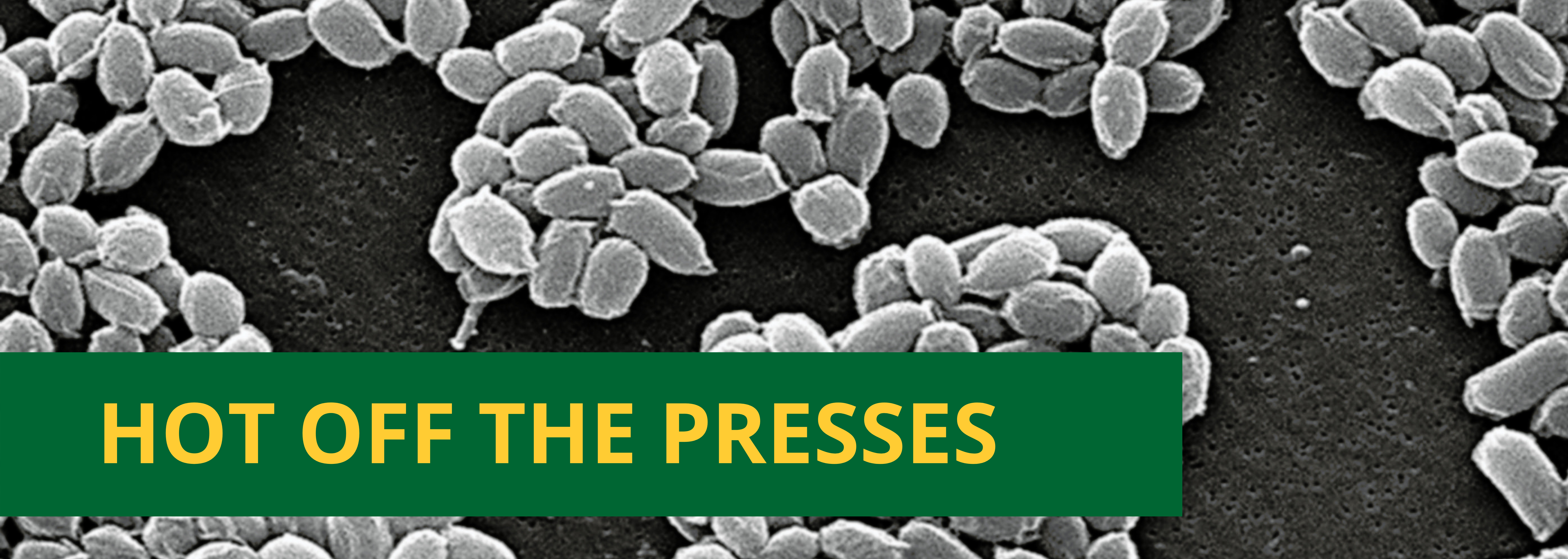
Biodefense MS student, Michelle Grundahl, recently was featured on the Schar School’s Terrorism, Transnational Crime and Corruption Center’s website along with her paper discussing the often overlooked global health and BW proliferation risks illicit trade carries. Her paper covers biosecurity risks, illicit or unregulated animal trade, deliberately-made biological risks, and policy solutions, concluding “Holistic approaches are required for the prevention and control of emerging and resurging diseases. The complex (and sometimes illicit) interconnections among humans, domestic animals, and wildlife can share threats of disease – to individuals, food supplies, economies, and the functioning ecosystems that support all the species on Earth.”

This Podcast Will Kill You: “Episode 100 Monkeypox: Here We Go Again?”

Need a one-stop shop for information and context about monkeypox? The Erins are back, discussing the history, biology, and epidemiology of this disease in their latest episode of This Podcast Will Kill You.

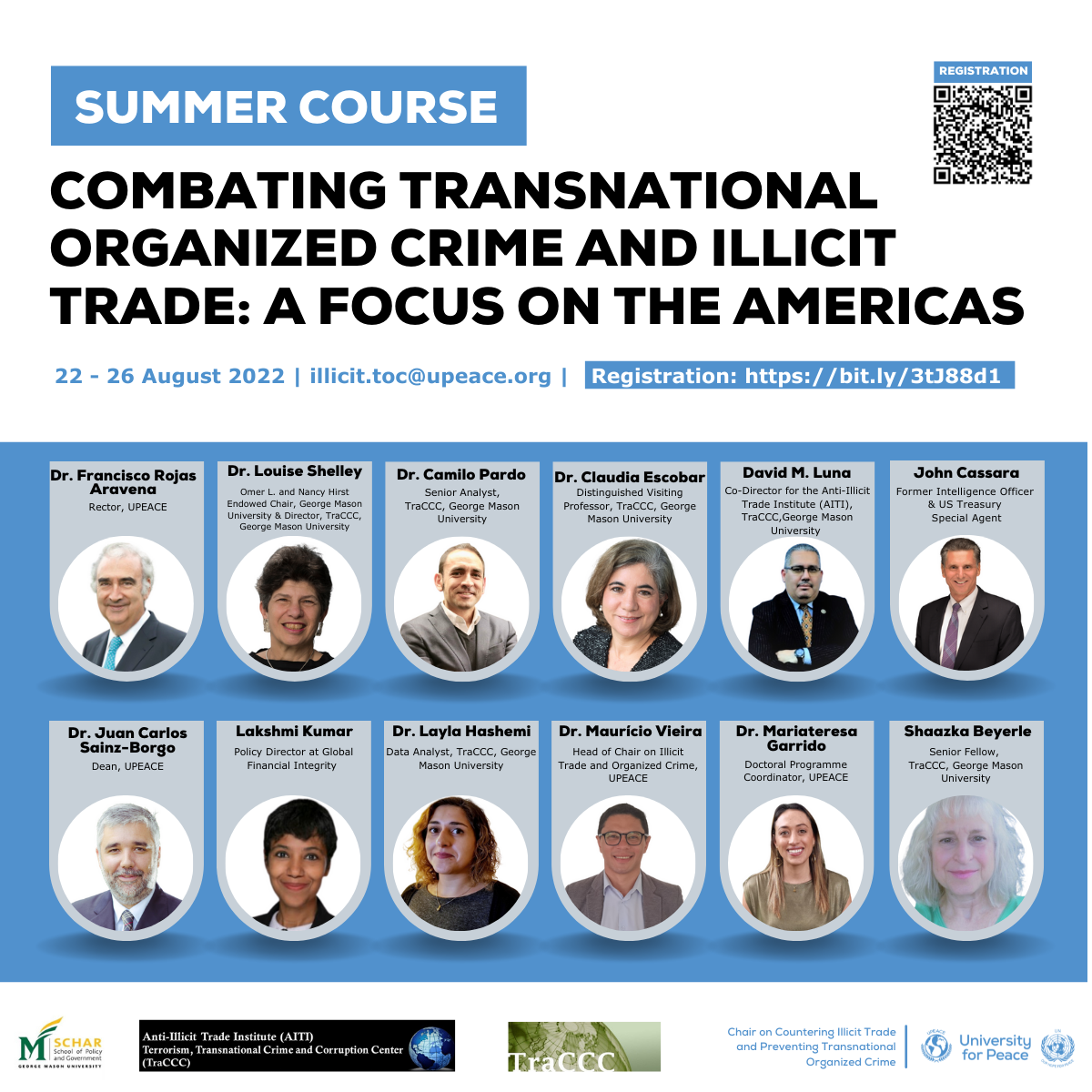
Virtual Course: Combating Transnational Organized Crime and Illicit Trade: A Focus on the Americas

The Schar School’s Terrorism, Transnational Crime and Corruption Center is partnering with UPEACE to offer this week-long course. The course aims to improve students’ comprehension of the dynamics of transnational organized crime, focusing on money laundering, corruption, illicit trade, security, free trade zones, state fragility, and the UN Sustainable Development Goals (Agenda 2030).

The main objective of the course is to identify how different types of crime impact the capacity of the state to manage and mitigate internal and external threats. The course will also push participants to think about organized crime from a more nuanced perspective, specifically as an aspect of social conflict, emphasizing that the challenges for promoting peace are embedded in local, regional, and global contexts.

The 1-week innovative certificate course will take place virtually from the 22nd to the 26th of August 2022 and has a fee of $200 USD. Learn more and register here.
International One Health Conference- A Systemic Approach to Managing Urban and Natural Resources

The University of Catania is hosting this conference on September 27-28, 2022. The conference will be held in hybrid form, with 1/2 days to share and debate on experiences of systemic approaches to One Health and visions for a better systemic approach to managing urban and natural resources. “The conference aims to activate synergic dialogues among disciplinary research fields and action domains among researchers, experts and students. The One Health conceptual framework and the possible contribution from the One Health approach in the urban resilience capacities enhancement will be the core of the congress dialogues.” Learn more and register here.

One Health Workforce Academies Launches

One Health Workforce Academies (OHWA), a program backed by USAID, UC Berkeley, Eco Health Alliance, and more recently launched its website that will soon offer online training in a number of topics and even One Health certification. It will also soon offer a career board and a number of pages for students looking to become involved in the movement.

Biointelligence and Biosecurity for the Intelligence Community Seedling Research Topic – Broad Agency Announcement

ODNI’s Intelligence Advanced Research Projects Activity (IARPA) recently announced Naval Information Warfare Center, Pacific, on behalf of IARPA, is soliciting proposals under a broad agency announcement for the Biointelligence and Biosecurity for the Intelligence Community (B24IC) program’s Seedling Research Topic. The B24IC program “…seeks to develop new capabilities, matching the wider synthetic biology and biotechnology fields, ensuring the Intelligence Community’s (IC’s) capability to meet the biointelligence and biosecurity threats of the 21st century.” Learn more about the solicitation on SAM.gov.

Russian WMD Disinformation Resources

We are currently working on creating a searchable collection of resources on Russian WMD disinformation on the Pandora Report site. The page is a work in progress, and currently just lists resources we have highlighted in the past. In the meantime, here are some recent updates and works on the topic:

“Canada’s Efforts to Counter Disinformation – Russian Invasion of Ukraine”

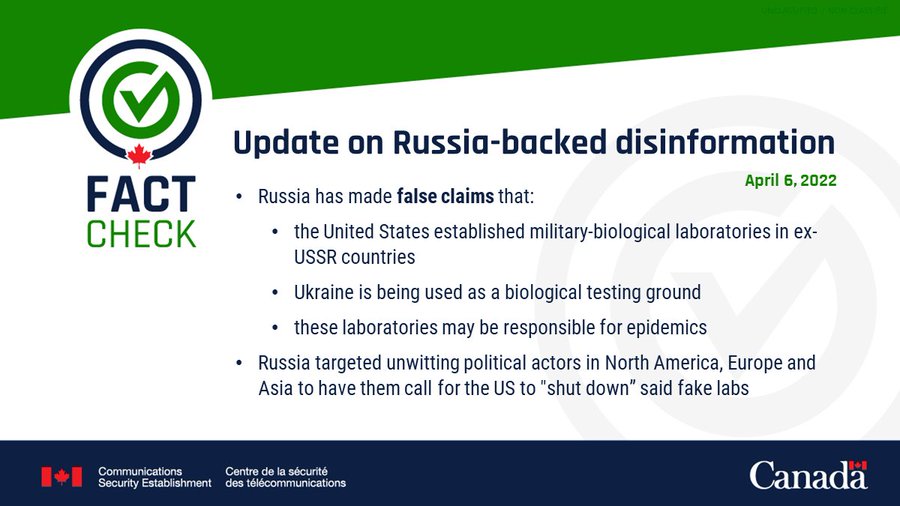
Our neighbor to the north is cracking down on Russian disinformation, having recently launched their own government website debunking and outlining Russian attempts to influence narratives abroad in recent years in the wake of Foreign Affairs Minister Mélanie Joly’s announcement of a new round of sanctions against the Kremlin. It is also increasingly clear that right-wing Canadians are also struggling with Russian disinformation, as discussed by a team of scholars from Toronto Metropolitan University recently in The Conversation. Their article, “Russian Propaganda is Making Inroads with Right-Wing Canadians,” reads in part, “Slightly over half of Canadians (51 per cent) reported encountering at least one persistent, false claim about the Russia-Ukraine war on social media pushed by the Kremlin and pro-Kremlin accounts.”
“Fact Sheet on WMD Threat Reduction Efforts with Ukraine, Russia and Other Former Soviet Union Countries”

The Department of Defense recently released this fact sheet covering the history and accomplishments of US collaboration with the international community to reduce WMD threats in Ukraine, Russia, and other countries who were formerly part of the USSR. It provides a comprehensive yet concise timeline of efforts, including the Nunn-Lugar CTR program, and discusses efforts by Russia and China to undermine these immense accomplishments today to further their agendas.
Pandora Report: 7.15.2022

It’s Friday and we are bringing you updates on new recommendations to improve US Government DURC and ePPPs oversight, a recent GAO report on CDC’s data system’s faults, ISIS plans to use chemical weapons in Europe, and new US legislation that could ban NIH and CDC funds from being used to support Chinese researchers. We also have the usual slate of new publications and upcoming events in addition to announcements and updates to our running list of information on Russia’s WMD disinformation campaign.

Experts Propose Strengthening US Government’s Enhanced Potential Pandemic Pathogen Framework and Dual Use Research of Concern Policies

A group of scientists and experts in public health and policy have submitted recommendations “…intended to strengthen the oversight of research involving enhanced potential pandemic pathogens (ePPPs) and life sciences dual-use research of concern to the White House National Security Council and Office of Science and Technology Policy, the US National Institutes of Health (NIH), and the National Science Advisory Board on Biosecurity (NSABB). The US government is currently reviewing its policies that provide governance and guidance for this realm of research.” Their recommendations include actions like “Modify and expand the scope of pathogens to be governed by the ePPP Framework,” “Clarify and restructure processes of review, communication, biosafety and biosecurity, and transparency,” and “Revise the USG DURC Policy to expand its scope and clarify requirements.” Dr. Gregory Koblentz endorsed the recommendations. Read more about them here.

Audit Finds the CDC is Unprepared to Quickly Respond to Disease Threats Posed by International Travel

A new Report to Congressional Addressees from the Government Accountability Office, “Contact Tracing for Air Travel: CDC’s Data System Needs Substantial Improvement,” found that “…limitations in how CDC collects and manages air passengers’ contact information—including CDC’s use of an outdated data management system— hinder the agency’s ability to monitor public health risks and facilitate contact
tracing.” It continues on to explain that, “The data management system—developed in the mid-2000s—was not designed for rapid assessment or aggregation of public health data across individual cases. For example, CDC is unable to quickly and accurately identify the number of passengers exposed to a specific infected passenger on a flight. Nor does the system contain the necessary data fields to assess the quality of air passenger information CDC receives, such as a field to determine the timeliness of airlines’ responses to CDC’s request. Consequently, CDC is not positioned to efficiently analyze and disseminate data to inform public health policies and respond to disease threats. Nor is it positioned to evaluate its performance in collecting and sharing quality passenger information.”

ISIS Planned Chemical Weapons Attacks in Europe

Joby Warrick, author of Black Flags, writes in The Washington Post about the results of a UN investigation into the terrorist group’s plans to use chemical weapons in Europe, writing “New insights also are emerging from a U.N. investigation that is combing through millions of pages of Islamic State records as it seeks evidence of the group’s war crimes. In addition, several current and former U.S. officials in interviews with The Post spoke for the first time in detail about an urgently planned military operation, conducted in 2015 by U.S. Special Operations forces with assistance from Kurdish Peshmerga operatives, to kill Sabawi and crush the weapons program before it reached maturity.” Salih al-Sabawi, an Iraqi CW expert later known in ISIS as Abu Malik, had the intention to “create a large stockpile consisting of multiple types of chemical and biological agents to be used in military campaigns as well as in terrorist attacks against the major cities of Europe,” according to US officials.

Dr. Gregory Koblentz was quoted in the article as well, saying: “If Abu Malik had survived, his experience working for Saddam’s program would have made the threat of the Islamic State’s chemical weapons much higher,” said Gregory Koblentz, an expert on chemical and biological weapons and director of the Biodefense Graduate Program at the Schar School of Policy and Government at George Mason University. “It is pretty horrifying to think of what could have happened if the Islamic State had used a chemical weapon, instead of guns and bombs, to conduct one of their attacks in a major European city.”

Bill Proposes Ban on NIH and CDC Funding for Chinese Research Laboratories

The debate over US support for Chinese research facilities continues as lawmakers consider a ban that would bar funds from the CDC and NIH from being used to support institutions in certain countries. The ban is part of a 2023 spending bill that passed the House of Representatives Committee on Appropriations in late June that grew out of suspicions about the Wuhan Institute of Virology, according to Science. Jocelyn Kaiser writes, “Specifically, the measure would bar the Department of Health and Human Services (the parent agency of NIH and CDC) from funding WIV or “any other laboratory” in China, Russia, or any country the U.S. government has designated a foreign adversary, a list that currently includes Iran and North Korea.” She continues, explaining “Some scientific organizations are concerned by the proposal’s expansive scope. “It seems a bit extreme,” says Eva Maciejewski, spokesperson for the Foundation for Biomedical Research, which advocates for animal research. “In theory it’s good to have oversight over biosafety and animal welfare, but in practice there may be better ways than blocking all NIH funding to foreign countries.”

There are also concerns for how this could impact patient recruitment and international research teams, Maciejewski explains. “Projects that do not involve laboratory work—such as a long-running NIH-funded survey on health and retirement in China—could be spared. But many others would likely be vulnerable, including three projects headed by Chinese investigators studying influenza and the mosquito-borne diseases dengue and malaria, and dozens of subawards to Chinese groups participating in clinical trials of drugs, studies of the health effects of heavy metals, and neuroscience research. The U.S. leader of one clinical trial in Shanghai—who asked for anonymity—said his Chinese partner is a former trainee and “close collaborator,” and it would not be possible to recruit enough patients at a single site in the United States.”

CDC Special Report-“COVID-19 U.S. Impact on Antimicrobial Resistance”

CDC’s new report discusses changes in healthcare settings and other consequences of the pandemic that have worsened antimicrobial resistance in the US. The report focuses on COVID-19’s impacts on tracking and data, preventing infections, antibiotic use, environment and sanitation, and vaccines, diagnostics, and therapeutics. It finds that there was an increase of at least 15% from 2019 to 2020 in resistant infections starting during hospitalization, also noting that “Because of pandemic impacts, 2020 data are delayed or unavailable for 9 of the 18 antimicrobial resistance threats.” It also provides an outlook and recommendations for the future of building public health capacity for antimicrobial resistance.

“Germany Prioritizes Biosecurity for Global Partnership”

Kelsey Davenport writes in the latest edition of Arms Control Today that, “Germany plans to prioritize biological security during its year-long presidency of the Global Partnership Against the Proliferation of Weapons of Mass Destruction.” Her article explains recent presidents’ efforts and priorities while leading the Global Partnership and how Rüdiger Bohn, the German deputy commissioner for arms control and disarmament, plans to tackle major challenges moving forward.

CBRNe World June Issue

The latest edition of CBRNe World includes a number of interesting articles, including “Lies, Damned Lies and Russia Statistics: Robert Petersen on the Disinformation Campaign,” “Crimes Against History: Historical CW Crimes in Soviet Russia,” “The Monkeypox Prophecy: Zoe Rutherford on the Current Epidemic,” and “Quality of Life: Dr Faraidoun Moradi on Life After Sarin.” A free basic subscription to the magazine is available on its website.

“Strengthening the Global Bioeconomy to Sidestep the Next Pandemic”

Wilmot James and Lewis Rubin-Thomspon write in BusinessDay about what it will take to overhaul the bioeconomy and improve pandemic preparedness, writing “In a world that feels increasingly post-pandemic, the reality is that another pathogen more deadly and infectious than Sars-CoV-2 could arise at any time. To break a historic cycle of “panic-and-neglect” in health security, the time to bolster our ability to detect and respond to such biological threats is now.” They argue that the results of a poorly functioning global bioeconomy were on display early in the pandemic as countries failed to use or lacked existing laboratory and healthcare infrastructure, and that “…decades of progress in biotechnology and the streamlining of R&D processes helped compensate for early shortcomings of the global response, demonstrating the importance of investment in preventive infrastructure.”

Virtual Course: Combating Transnational Organized Crime and Illicit Trade: A Focus on the Americas

The Schar School’s Terrorism, Transnational Crime and Corruption Center is partnering with UPEACE to offer this week-long course. The course aims to improve students’ comprehension of the dynamics of transnational organized crime, focusing on money laundering, corruption, illicit trade, security, free trade zones, state fragility, and the UN Sustainable Development Goals (Agenda 2030).

The main objective of the course is to identify how different types of crime impact the capacity of the state to manage and mitigate internal and external threats. The course will also push participants to think about organized crime from a more nuanced perspective, specifically as an aspect of social conflict, emphasizing that the challenges for promoting peace are embedded in local, regional, and global contexts.

The 1-week innovative certificate course will take place virtually from the 22nd to the 26th of August 2022 and has a fee of $200 USD. Learn more and register here.

International One Health Conference- A Systemic Approach to Managing Urban and Natural Resources

The University of Catania is hosting this conference on September 27-28, 2022. The conference will be held in hybrid form, with 1/2 days to share and debate on experiences of systemic approaches to One Health and visions for a better systemic approach to managing urban and natural resources. “The conference aims to activate synergic dialogues among disciplinary research fields and action domains among researchers, experts and students. The One Health conceptual framework and the possible contribution from the One Health approach in the urban resilience capacities enhancement will be the core of the congress dialogues.” Learn more and register here.

Strengthening Private Public Partnerships in Pandemic Preparedness for National Security and Economic Competitiveness

Join the Capitol Hill Steering Committee on Pandemic Preparedness and Health Security for a webinar, Strengthening Private Public Partnerships in Pandemic Preparedness for National Security and Economic Competitiveness, on Wednesday, July 20, at 12pm (ET). Register here.

The country’s response to the COVID-19 pandemic led to new public-private partnerships (PPPs) that drove the development of new medical countermeasures and bolstered domestic manufacturing capacity for medical products. This session will highlight the key components of what is necessary to incentivize, facilitate, and sustain effective PPPs for innovation to bolster pandemic prevention, preparedness, and response; what Congress can do to support and leverage such partnerships, the role of the appropriations process; and how the US can be better positioned in the global economy through increased investments in PPPs in the areas of health security and advanced life science.

The Mold That Changed the World– Popular UK Play Comes to the US Fall 2022

The Mould That Changed the World, a UK show that tells the story of the discovery of antibiotics and the risks of antibiotic use, is headed to Washington DC and Atlanta this fall, appropriately re-titled “The Mold That Changed the World” for us Americans. Learn more, buy tickets, and even audition here.

Biointelligence and Biosecurity for the Intelligence Community Seedling Research Topic – Broad Agency Announcement

ODNI’s Intelligence Advanced Research Projects Activity (IARPA) recently announced Naval Information Warfare Center, Pacific, on behalf of IARPA, is soliciting proposals under a broad agency announcement for the Biointelligence and Biosecurity for the Intelligence Community (B24IC) program’s Seedling Research Topic. The B24IC program “…seeks to develop new capabilities, matching the wider synthetic biology and biotechnology fields, ensuring the Intelligence Community’s (IC’s) capability to meet the biointelligence and biosecurity threats of the 21st century.” Learn more about the solicitation on SAM.gov.

Russian WMD Disinformation Resources

We are currently working on creating a searchable collection of resources on Russian WMD disinformation on the Pandora Report site. The page is a work in progress, and currently just lists resources we have highlighted in the past. In the meantime, here are some recent updates and works on the topic:

Russia Finds Another Stage for the Ukraine “Biolabs” Disinformation Show”

Dr. Filippa Lentzos and Jez Littlewood discuss Russia’s triggering of Article V of the BWC, forcing the 184 member states to hold a special summer session to hear Russia’s claims about illegal US “biolabs” and the United States’ response. Read more on the Bulletin of the Atomic Scientists.

“Lies, Damned Lies and Russian Statistics”

Robert Petersen, an analyst at Denmark’s Centre for Biosecurity and Biopreparedness, authored this piece for CBRNe World comparing and discussing Russia’s historical and current disinformation campaigns, arguing that the current effort has utterly failed “to sow discord among US allies, prevent support to Ukraine and legitimise the Russian invasion.” However, he also writes, “On the other hand, the campaign has managed to persuade a quarter of the American public that the US military has been developing biological weapons across Ukraine”

“Fact Sheet on WMD Threat Reduction Efforts with Ukraine, Russia and Other Former Soviet Union Countries”

The Department of Defense recently released this fact sheet covering the history and accomplishments of US collaboration with the international community to reduce WMD threats in Ukraine, Russia, and other countries who were formerly part of the USSR. It provides a comprehensive yet concise timeline of efforts, including the Nunn-Lugar CTR program, and discusses efforts by Russia and China to undermine these immense accomplishments today to further their agendas.
Schar School Applications Open- Deadline July 15

The Biodefense program is accepting Fall 2022 applications for our MS and graduate certificate program through July 15. Learn more about our admissions process and apply here.

Pandora Report: 7.8.2022

This week starts with some exciting updates from our faculty and alumni, including new legislation in the Senate and a faculty award. We also include updates on COVID-19 in North Korea, suspected Marburg cases in Ghana, and NATO’s new CBRN defense policy. As always, there are plenty of new publications and upcoming events included too. Happy Friday and end to what has been a very interesting week globally!

Bipartisan Offices of Countering Weapons of Mass Destruction and Health Security Act Introduced in Senate

US Senators Rob Portman and Gary Peters have introduced the bipartisan Offices of Countering Weapons of Mass Destruction and Health Security Act to “significantly enhance the federal government’s ability to detect, recognize, and evaluate threats from weapons of mass destruction, which include chemical, biological, radiological, and nuclear (CBRN) weapons. The bill would reauthorize the Countering Weapons of Mass Destruction (CWMD) office, which leads the Department of Homeland Security’s (DHS) effort to safeguard the country from CBRN threats. The legislation would also authorize the new Office of Health Security (OHS) that ensures DHS can better address public health and medical related security threats across the Department – including assisting with medical care in the event of potential attacks from CBRN weapons.” 

Biodefense Program faculty member Dr. Ashley Grant, a lead biotechnologist at the MITRE Corporation and Brooking LEGIS Congressional Fellow, helped produce this bill.

Biodefense Program Alumnus Wins Faculty Award

Dr. Keith Ludwick (Biodefense PhD, 2016) recently received American Military University’s 2022 Graduate Excellence in Teaching Award. Dr. Ludwick currently serves as an Associate professor at American Military University teaching a variety of courses surrounding technology, intelligence, and national security in their Doctorate of Strategic Studies Program.  In addition, he serves on several dissertation committees.

USCG Academy Offers Soon-to-Be Ensigns CBRN Training

The US Coast Guard Academy recently offered senior cadets “Chemical, Biological, Radiological and Nuclear (CBRN) training as part of a pilot program organized by the Coast Guard Countering Weapons of Mass Destruction (CWMD) Program in the Office of Specialized Capabilities (CG-721). This training was the inaugural offering to senior class cadets before they enter the fleet to their first assignments as commissioned officers. The cadets participated in online training and then underwent a practical training scenario offered by the Special Missions Training Center (SMTC). As the threat of CBRN incidents increase, it is critical to train and raise awareness for our future leaders.”  

Dr. Jennifer Osetek, a Biodefense PhD alumna working as the Office of Specialized Capabilities CWMD Program’s biological and chemical weapons SME, wrote this blog post on the training.

North Korea Blames “Alien Things” and Balloons for Introducing COVID-19 in the Country

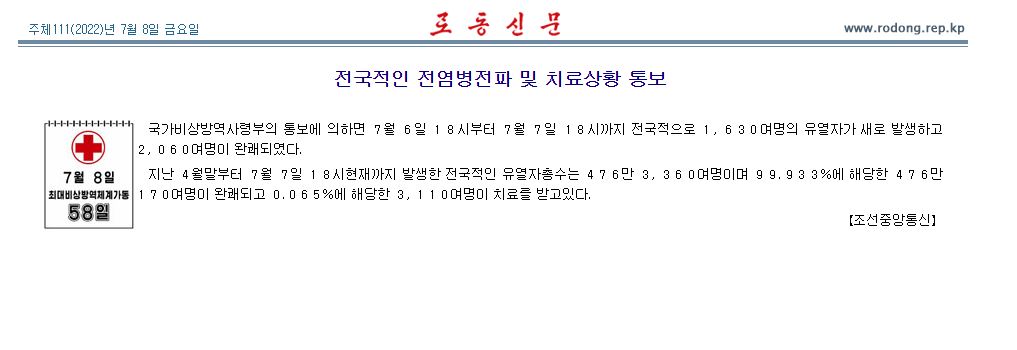
Rodong Sinmun, the official paper of the Central Committee of the Workers’ Party of Korea, recently claimed that COVID-19 spread into North Korea via “alien things coming by wind” and “other climate phenomena and balloons,” first infecting a soldier and young student near the border with South Korea. KCNA and other outlets referenced these balloons and, though they did not explicitly name North Korean defectors and other activist groups in the South in doing so, these are the groups that normally send balloons over the border into North Korea. The first time they did so this year was in April, well before the North admitted it was in the midst of an outbreak in mid-May. NK News writes, “The country’s epidemic headquarters called for officials to “strengthen the all-people supervision and report system in which anyone notifies of alien things instantly after seeing them, and tighten such anti-epidemic measures as making the emergency anti-epidemic teams strictly remove those things.” North Korea is currently reporting nearly 5 million cases with just 74 deaths. South Korea’s Ministry of Unification rejected this claim entirely.

Rodong Sinmun reports 1,630 “fever” cases and 2,060 recoveries today. It says the country’s total sits at 4,763,360 cases with 4,760,170 (99.933%) recoveries and 3,110 (0.065%) receiving medical treatment.

On a related note – In early June, officials in Dandong, a Chinese city near the border with North Korea that was locked down at the time, were unable to determine where an outbreak came from and announced they believed COVID-19 blew over the border into the city. China also claimed that the Omicron variant entered the country via a piece of Canadian mail early this year, so there is no shortage of far-fetched claims in this region either.

NATO Updates CBRN Defense Policy

The North Atlantic Treaty Organization recently updated its CBRN defense policy, replacing the Comprehensive, Strategic-Level Policy for Preventing the Proliferation of Weapons of Mass Destruction (WMD) and Defending against Chemical, Biological, Radiological and Nuclear (CBRN) Threats with its Chemical, Biological, Radiological and Nuclear (CBRN) Defence Policy. The latter now supersedes the former and reads in part, “NATO’s security environment has grown more complex and challenging since 2009, when Allies agreed NATO’s Comprehensive, Strategic-Level Policy for Preventing the Proliferation of Weapons of Mass Destruction (WMD) and Defending against Chemical, Biological, Radiological and Nuclear (CBRN) Threats. That Policy has served as a cornerstone of Allied security and stability for thirteen years. Today, we face a world in which the potential use of CBRN materials or WMD by state and non-state actors remains a central and evolving threat to Allied security. It is a world in which NATO increasingly cannot assume that the international norms and institutions related to the proliferation or use of Weapons of Mass Destruction (WMD) will ensure our security, and in which scientific and technological innovation and other emerging trends have accentuated CBRN risks to the Alliance.”

Suspected Marburg Cases Reported in Ghana

Ghana has reported its first ever cases of Marburg virus disease, according to the WHO, in two patients in the Ashanti region. The patients are now deceased and were unrelated. Their samples were taken by Noguchi Memorial Institute for Medical Research and were provided to the Institut Pasteur in Senegal, a World Health Organization (WHO) Collaborating Centre for confirmation. According to WHO, “WHO is deploying experts to support Ghana’s health authorities by bolstering disease surveillance, testing, tracing contacts, preparing to treat patients and working with communities to alert and educate them about the risks and dangers of the disease and to collaborate with the emergency response teams.”

World Bank Board Approves New Fund for Pandemic Prevention, Preparedness and Response (PPR)

The World Bank’s Board of Executive Directors announced recently the “…establishment of a financial intermediary fund (FIF) that will finance critical investments to strengthen pandemic PPR capacities at national, regional, and global levels, with a focus on low- and middle-income countries. The fund will bring additional, dedicated resources for PPR, incentivize countries to increase investments, enhance coordination among partners, and serve as a platform for advocacy. The FIF will complement the financing and technical support provided by the World Bank, leverage the strong technical expertise of WHO, and engage other key organizations.” Read more about this FIF on the World Bank’s fact sheet for it, including the potential for use to support One Health activities.

Countering WMD Journal Spring/Summer 2022 Edition Out

The US Army Nuclear and Countering WMD Agency’s newest edition of the Countering WMD Journal is available online now. This issue includes articles ranging from “The Army’s Place on the Nuclear Battlefield” to “Targeting Al Shifa: Explaining an Intelligence Failure” and “The Unknown Unknowns of Paleovirus Hunting”.

“A World Emerging from Pandemic: Implications for Intelligence and National Security”

This paper from the US National Intelligence University and DoD’s Strategic Multilayer Assessment program was recently released and is available here.

“This edited volume explores how the COVID pandemic has impacted—and will continue to impact—the US Intelligence Community. Authors from multiple disciplines probe the ways in which pandemic-associated conditions interact with national security problem sets. This work presents evidence-based, qualitative, quantitative, and mixed-methods analyses so their projections can be tested against future conditions. This project is the result of a cooperative effort between National Intelligence University and the Pentagon’s Joint Staff Strategic Multilayer Assessment office.”

“The G7 Summit’s Geopolitical Pivot Signals a Difficult Future for Global Health”

David P. Fidler’s article in Think Global Health discusses how war in Europe and shifts in the global power balance overshadowed global health at this year’s G7, despite pre-summit meetings and the leaders’ communique identifying numerous global health threats. Fidler also discusses issues like G7 countries’ being “…unlikely to generate ideological benefits by providing climate adaptation assistance because they bear great responsibility for causing climate change.” He writes, “China and Russia turned the geopolitical tables on democracies despite decades of global health leadership by G7 countries. That reality sends a warning that such leadership does not produce balance-of-power or ideological benefits for democracies. Nor did those decades of global health leadership make the G7 democracies reliable partners concerning the two greatest transnational threats to global health—pandemics and climate change.”

“NTI-WEF Technical Consortium for DNA Synthesis Screening Comments on Revised U.S. Government Guidance”

The Technical Consortium for DNA Synthesis Screening, convened by the Nuclear Threat Initiative and the World Economic Forum, recently responded to the US government’s request for comment on its Revised Screening Framework Guidance for Providers and Users of Synthetic Oligonucleotides—fragments of DNA or RNA. The government’s Revised Guidance was published in April 2022 as an update to the influential guidance initially established in 2010 that set standards for screening customers and DNA sequences for synthetic DNA orders. NTI explains, “The Technical Consortium’s comment—signed by leading technical and policy experts from biotechnology industry, the academic research community, and the biosecurity community—expresses support for many aspects of the Revised Guidance, noting “[we] applaud the U.S. government for releasing this Revised Guidance and opening an important, valuable discussion on these challenging topics.” The comment recommends a dual-track strategy to expand biosecurity screening practices to providers who don’t currently screen and improve such practices among responsible providers.”

“Healthier Ecosystem and Food Systems in East Asia and Pacific Can Reduce Global Pandemic Risks”

Benoît Bosquet, Sitaramachandra Machiraju, and Daniel Mira-salama recently authored this World Bank blog post discussing One Health and how improvements in food system practices can help prevent future pandemics. They write, “East Asia and Southeast Asia have large and densely concentrated human settlements, high livestock populations, and abundant wildlife. Rapid urbanization and agricultural expansion are leading to encroachment into wilderness areas, increasing the likelihood of pathogen spillover between humans and wild animals. These factors along with climate change are increasing the possibility of transmission of both zoonotic and vector-borne diseases. Consequently, many EAP countries are at a high risk of zoonotic outbreaks. Increasing domestic and wildlife trade in the region, deforestation and ecosystem degradation, together with inadequate livestock biosecurity and food hygiene practices, represent additional risk factors.”

The blog post accompanies two report, “From Reacting to Preventing Pandemics: Building Animal Health and Wildlife Systems in East Asia and Pacific” and “Reducing pandemic risks at source: Wildlife, Environment and One Health Foundations in East and South Asia“.

“How Pfizer Won the Pandemic, Reaping Outsize Profit and Influence”

Arthur Allen discusses how Pfizer came to gain substantial weigh in determining US health policy in developing COVID-19 vaccines and antivirals in this new article in Kaiser Health News. He writes in part, “Pfizer’s terms in the contracts exclude many taxpayer protections. They deny the government any intellectual property rights and say that federal spending played no role in the vaccine’s development — even though National Institutes of Health scientists invented a key feature of Pfizer’s vaccine, said Robin Feldman, a patent law expert at the University of California.” He also explains that, “Pfizer’s 2021 revenue was $81.3 billion, roughly double its revenue in 2020, when its top sellers were a pneumonia vaccine, the cancer drug Ibrance, and the fibromyalgia treatment Lyrica, which had gone off-patent. Now its mRNA vaccine holds 70% of the U.S. and European markets. And its antiviral Paxlovid is the pill of choice to treat early symptoms of covid. This year, the company expects to rake in more than $50 billion in global revenue from the two medications alone.”

TEXGHS: Monkeypox and the Western Media’s Portrayal of Infectious Disease

Join TEXGHS for their free monthly lecture series, featuring public health physician & global health thought leader Dr. Ifeanyi Nsofor on July 12 at 12 pm CDT. Global health is colonial in its origin. This colonial nature is reflected in skewed leadership of global health organizations favoring the global north. It is also reflected in the way some western media outlets paint the African continent: as a disease-ridden continent (or country) incapable of helping itself. This bias reporting must stop in the interest of both global north and global south.

Strengthening Private Public Partnerships in Pandemic Preparedness for National Security and Economic Competitiveness

Join the Capitol Hill Steering Committee on Pandemic Preparedness and Health Security for a webinar, Strengthening Private Public Partnerships in Pandemic Preparedness for National Security and Economic Competitiveness, on Wednesday, July 20, at 12pm (ET). Register here.

The country’s response to the COVID-19 pandemic led to new public-private partnerships (PPPs) that drove the development of new medical countermeasures and bolstered domestic manufacturing capacity for medical products. This session will highlight the key components of what is necessary to incentivize, facilitate, and sustain effective PPPs for innovation to bolster pandemic prevention, preparedness, and response; what Congress can do to support and leverage such partnerships, the role of the appropriations process; and how the US can be better positioned in the global economy through increased investments in PPPs in the areas of health security and advanced life science.

Russian WMD Disinformation Resources

We are currently working on creating a searchable collection of resources on Russian WMD disinformation on the Pandora Report site. The page is a work in progress, and currently just lists resources we have highlighted in the past. In the meantime, here are some recent updates and works on the topic:

“Russian Disinformation Finds Fertile Ground in the West”

Ilya Yablokov’s June article in Nature Human Behaviour discusses potential methods for tackling Russian disinformation in the West. 

Recording- The History and Future of Planetary Threats | Biological Risks and Hazards in the World Today- with Special Focus on Russia and Ukraine

A panel of experts, including our own Dr. Gregory Koblentz, discussed evolving biological risks, the health security environment in post-Soviet states, and the biological risks posed by Russia’s invasion of Ukraine- including those associated with Russia’s disinformation campaign at this event in May! Access the event recording here.

“A Perspective on Russian Cyberattacks and Disinformation”

Glenn Gerstell, a senior advisor at the Center for Strategic and International Studies and former general counsel of the National Security Agency, was interviewed at a Wall Street Journal event in San Francisco in front of a live audience. The discussion focused on Russian cyberattacks against Ukraine and Russia’s use of disinformation. Highlights of the discussion are available here.

“Fact Sheet on WMD Threat Reduction Efforts with Ukraine, Russia and Other Former Soviet Union Countries”

The Department of Defense recently released this fact sheet covering the history and accomplishments of US collaboration with the international community to reduce WMD threats in Ukraine, Russia, and other countries who were formerly part of the USSR. It provides a comprehensive yet concise timeline of efforts, including the Nunn-Lugar CTR program, and discusses efforts by Russia and China to undermine these immense accomplishments today to further their agendas.
Schar School Applications Open- Deadline July 15

The Biodefense program is accepting Fall 2022 applications for our MS and graduate certificate program through July 15. Learn more about our admissions process and apply here.

Pandora Report: 7.1.2022

Happy July 4th weekend to our US readers! This week, we cover the US release of smallpox vaccines to combat the spread of monkeypox, the first decade with CRISPR, and plenty of great publications and an exciting upcoming TEXGHS event. Also, the Global Partnership just turned 20, making it of legal drinking age in all G7 countries except for the US!

Happy Birthday to the Global Partnership Against the Spread of Weapons and Materials of Mass Destruction!

The G7-led Global Partnership Against the Spread of Weapons and Materials of Mass Destruction (Global Partnership) turned 20 this week! Launched on June 27, 2002, at the Kananaskis G8 summit, the Global Partnership is an international initiative aimed at preventing the proliferation of chemical, biological, radiological, and nuclear weapons and related materials. You can find the partnership’s latest newsletter and subscribe here to wish it a happy birthday.

Monkeypox Not Declared PHEIC, US Expands Vaccine Access

WHO Director-General Dr. Tedros Adhanom Ghebreyesus released a statement on the report on the Meeting of the IHR Emergency Committee regarding the multi-country monkeypox outbreak this week, writing:

I am deeply concerned by the spread of monkeypox, which has now been identified in more than 50 countries, across five WHO regions, with 3000 cases since early May. The Emergency Committee shared serious concerns about the scale and speed of the current outbreak, noted many unknowns, gaps in current data and prepared a consensus report that reflects differing views amongst the Committee. Overall, in the report, they advised me that at this moment the event does not constitute a Public Health Emergency of International Concern, which is the highest level of alert WHO can issue, but recognized that the convening of the committee itself reflects the increasing concern about the international spread of monkeypox. They expressed their availability to be reconvened as appropriate.

The Director-General also expressed concern about current monkeypox outbreaks spreading into children and pregnant women, stating “We are starting to see this with several children already infected.”

Days later, the US announced a new vaccine strategy for monkeypox in the US, with phase one focusing on “rapidly scaling up the delivery of monkeypox vaccines and targeting at-risk groups with vaccination.” According to CIDRAP, this plan will see 296,000 doses of the Jynneos vaccine made available this month, with 56,000 being allocated immediately. In the coming months, 1.6 million additional doses will be made available, according to the Biden administration, being distributed equally among states.

Select Subcommittee On the Coronavirus Crisis Meets

The US Select Subcommittee on the Coronavirus, chaired by Rep. James E. Clyburn, met last week to discuss the Trump administration’s response to COVID-19. This was following the release of the subcommittee’s first report investigating the administration’s political interference with the federal COVID-19 response. Dr. Deborah Birx, former White House Coronavirus Response Coordinator, testified before the committee during a hearing, in which she stated that “dangerous ideas” undermined the administration’s response while also discussing failures in communication, ignoring of guidance, and more. Dr. Birx’s full transcribed interview and emails uncovered over the course of the investigation, including those indicating that senior White House officials believed case identification would damage the president’s reputation, can also be found on the subcommittee’s website.

A Decade of CRISPR

A decade ago this week, Jinek et al. published “A Programmable Dual-RNA–Guided DNA Endonuclease in Adaptive Bacterial Immunity” in Science and, while the paper initially received lackluster attention, it soon opened numerous doors for scientific advancement and won Doudna and Charpentier the 2020 Nobel Prize for chemistry. However, it is not without serious ethical and biodefense questions and concerns that, as The New York Times explained this week, are becoming more important than ever. One of these questions is how this technology can be used to alter human embryos, which became much more pressing when following He Jiankui’s 2018 experiment in which he edited a gene in three embryos to make them HIV-resistant. The embryos were later implanted in three women in Shenzhen and it was announced in 2019 that He and two of his collaborators were found guilty of “illegal medical practices”.

For more on the security risks of CRISPR and He’s experiment, check out Dr. Sonia Ben Ouagrham-Gormley’s award winning article, “From CRISPR Babies to Super Soldiers: Challenges and Security Threats Posed by CRISPR,” in The Nonproliferation Review.

“Examining North Korea’s COVID-19 Data: A Curious Case Study”

Martyn Williams, writing for the Stimson Center’s 38 North, does a deep dive on COVID-19 in North Korea in this piece, helping shine some light on several burning questions, including the almost impossible official death count. He discusses a number of potential reasons for this, including deliberate misinformation, and discusses how it appears even North Koreans themselves are suspicious of these numbers, writing “Just as foreign analysts have questioned the figures and unusually low fatality rate, so it appears are North Koreans. On June 9, state media reported work was underway to “enhance the scientific accuracy, promptness and credibility of medical checkups, tests and treatment,” suggesting internal questioning of the numbers as well.”

Trust and Verify No. 170, Summer 2022 Released

VERTIC’s summer 2022 edition of Trust and Verify was recently released, featuring articles ranging from several discussing issues arising from the Russo-Ukraine war to others like the first meeting of states parties for the TPNW to a prosecution in Germany for a CW-related offense. An article on the role of women in the BWC and its enforcement is also featured.

“Roundtable – The Biological Weapons Convention at 50: Still Seeking Verification AFter 50 Years…”

In this piece featured by the American Political Science Association, Dr. Jean Pascal Zanders discusses historical challenges that prevented establishment of verification tools under the BWTC, taking readers through different periods of the treaty’s history and discussing the power of norms embedded in the treaty.

“One Health: A New Definition for a Sustainable and Healthy Future”

This PLOS Pathogens article features the One Health High-Level Expert Panel discussing how COVID-19 has highlighted the need for a One Health approach to outbreak response. They explain:

The Severe Acute Respiratory Syndrome Coronavirus 2 (SARS-CoV-2) pandemic once more demonstrated the close connection between humans, animals, and the shared environment. Although still under investigation, the closest relatives of this virus exist in animals, and the factors leading to spillover remain to be fully understood. This interconnectedness again highlighted the need for a One Health approach. Although the One Health concept is not new and has been at the forefront of interdisciplinary and multisectoral discussions for years, there is now an increased interest for this approach to be applied and translated into action. Following a proposal made by the French and German Ministers for Foreign Affairs at the November 2020 Paris Peace Forum, 4 global partners, the Food and Agriculture Organization (FAO), the World Organization for Animal Health (OIE), the United Nations Environment Programme (UNEP), and the World Health Organization (WHO), in May 2021 established the interdisciplinary One Health High-Level Expert Panel (OHHLEP) (https://www.who.int/groups/one-health-high-level-expert-panel) to enhance their cross-sectoral collaboration. The creation of OHHLEP represents a recognition at the highest level of the urgency and complexities surrounding One Health and the intent to take this concept forward into policies and concrete actions.

New NCT Magazine Edition Issue on Biological Threats

June’s edition of NCT Magazine features “pieces by renowned professionals from the US and Europe that wish to share their views on the likelihood of biological threats as a result of modern synthetic biology tools. As in all disciplines, these members from the academia and first responders are a diverse group and they hold different views on SynBio,” in an effort to enrich discourse on the topic.

“Adding Novichok Nerve Agents to the CWC Annex on Chemicals: a Technical Fix and Its Implications for the Chemical Weapons Prohibition Regime”

Alexander Kelle’s recent work published by UNIDIR “discusses and analyses the use of a novichok nerve agent in the United Kingdom in March 2018. This triggered a political process at the Organisation for the Prohibition of Chemical Weapons (OPCW) that led to the amendment of the CWC schedules. It provides a factual overview of the scientific discussion around the novichok class of chemical agents, and how this has changed since the amendment of the CWC schedules was adopted. Against the background of the cases where nerve agents have been used for political assassination, the report concludes with a discussion of implications of the schedule amendments for compliance with, and implementation of, the chemical weapons prohibition regime.”

This report features our own Dr. Koblentz’s work with Dr. Stefano Costanzi on Novichok agents, “Novichok Agents: Further Amending the Chemical Weapons Convention Schedules and the Australia Group Precursors List after the Navalny Incident”.

“Public Comment on Oligo Synthesis Screening”

The Engineering Biology Research Consortium has published its comments in response to a request by HHS ASPR for comments on the Screening Framework Guidance for Providers and Users of Synthetic Oligonucleotides. EBRC convened a two-day workshop with stakeholders from academia, industry, and government to consider the Guidance, and the discussions that ensued formed the basis for this response.

TEXGHS: Monkeypox and the Western Media’s Portrayal of Infectious Disease

Join TEXGHS for their free monthly lecture series, featuring public health physician & global health thought leader Dr. Ifeanyi Nsofor on July 12 at 12 pm CDT. Global health is colonial in its origin. This colonial nature is reflected in skewed leadership of global health organizations favoring the global north. It is also reflected in the way some western media outlets paint the African continent: as a disease-ridden continent (or country) incapable of helping itself. This bias reporting must stop in the interest of both global north and global south.

Russian WMD Disinformation Resources

We are currently working on creating a searchable collection of resources on Russian WMD disinformation on the Pandora Report site. The page is a work in progress, and currently just lists resources we have highlighted in the past. In the meantime, here are some recent updates and works on the topic:

“Russian Disinformation Finds Fertile Ground in the West”

Ilya Yablokov’s June article in Nature Human Behaviour discusses potential methods for tackling Russian disinformation in the West. 

Recording- The History and Future of Planetary Threats | Biological Risks and Hazards in the World Today- with Special Focus on Russia and Ukraine

A panel of experts, including our own Dr. Gregory Koblentz, discussed evolving biological risks, the health security environment in post-Soviet states, and the biological risks posed by Russia’s invasion of Ukraine- including those associated with Russia’s disinformation campaign at this event in May! Access the event recording here.

“A Perspective on Russian Cyberattacks and Disinformation”

Glenn Gerstell, a senior advisor at the Center for Strategic and International Studies and former general counsel of the National Security Agency, was interviewed at a Wall Street Journal event in San Francisco in front of a live audience. The discussion focused on Russian cyberattacks against Ukraine and Russia’s use of disinformation. Highlights of the discussion are available here.

“Fact Sheet on WMD Threat Reduction Efforts with Ukraine, Russia and Other Former Soviet Union Countries”

The Department of Defense recently released this fact sheet covering the history and accomplishments of US collaboration with the international community to reduce WMD threats in Ukraine, Russia, and other countries who were formerly part of the USSR. It provides a comprehensive yet concise timeline of efforts, including the Nunn-Lugar CTR program, and discusses efforts by Russia and China to undermine these immense accomplishments today to further their agendas.
Schar School Applications Open- Deadline July 15

The Biodefense program is accepting Fall 2022 applications for our MS and graduate certificate program through July 15. Learn more about our admissions process and apply here.

Pandora Report: 6.24.2022

Happy Friday! This week we cover new reporting on Russian disinformation campaigns, including those it backs in Syria and a new Microsoft report discussing Russia’s cyber strategy. We also discuss the WHO’s emergency meeting to discuss declaring monkepox a public health emergency of international concern, the winners of NTI’s next gen biosecurity competition, and a new resource from the One Health Commission.

WHO Considering Declaring Monkeypox a PHEIC, Vaccination and Testing Expands

WHO Director General Dr. Tedros Adhanom Ghebreyesus convened an Emergency Committee under Article 48 of the International Health Regulations in relation to the current outbreak of monkeypox virus yesterday (June 23). The goals of this meeting were to provide opinions to the Director General on whether the event constitutes a public health emergency of international concern (PHEIC) and also on proposed potential Temporary Recommendations. While we have not heard their findings and decision yet, some critics argue that the WHO’s choice to wait and act only after the disease spread in the West “could entrench the grotesque inequities that arose between rich and poor countries during the coronavirus pandemic.” Furthermore, some have cast doubt that a PHEIC declaration would matter much since developed countries seeing outbreaks are moving quickly to contain them.

This comes as the US CDC is reporting they have evidence of local transmission of monkeypox, including through family members sharing things like bedding and towels. The Biden administration announced this week that it is authorizing commercial laboratories to conduct monkeypox tests in an effort to quickly grow testing capacity. The US is currently reporting 172 cases, with 48 of those in California, while the UK’s count continues to climb, currently sitting at 793. Globally as of Wednesday, 42 countries reported cases totaling 3,308, with the UK, Germany, and Spain having the most confirmed cases currently.

Orders for smallpox vaccines have skyrocketed as a result, with the European Health Emergency Preparedness and Response Authority having purchased 110,000 doses for 27 EU countries and the US ordering half a million doses just this month. Bavarian Nordic’s Vice President Rolf Sass Sorensen has said he is confident his company can keep up with global command even though they were caught by surprise with the sudden outbreak. The US stockpile has 36,000 doses of the Jynneos vaccine, more than 100 million of ACAM2000, and Bavarian Nordic holds 1 million US-owned doses. New York City became the first major US city to begin offering smallpox vaccines to people at-risk of contracting monkeypox this week with the city representing about 14% of the national case count.

However, not all are confident in the United States’ ability to handle this or other future health crises. This week, the Commonwealth Fund Commission on a National Public Health System released a report in which experts described the various inadequacies and inequities of the United States’ response to COVID-19. Among other things, the panel recommends the “creation of a new national public health system” to better help address crises. The New York Times explains that “While other countries have centralized public health authorities, public health in the United States is largely managed at the state and local level. The Centers for Disease Control and Prevention, the federal public health agency, does not have the authority to compel states to act — it cannot, for example, investigate outbreaks of infectious disease in a particular state unless it has an invitation from state officials to do so.” Their proposed system would be overseen by an Undersecretary for Public Health in the US Department of Health and Human Services, who would be responsible for coordinating the work of over a dozen federal agencies who have some role in public health.

In related news, the Senate Committee on Health, Education, Labor, and Pensions passed the bipartisan Murray-Burr PREVENT Pandemics Act with a 20-2 vote. The Murray-Burr bill combines numerous prior efforts to, among several other things, “Ensure the CDC’s Accountability and Leadership by Requiring a Senate-confirmed CDC Director and an Agency-wide Strategic Plan.” This is a move some caution will only further harm the CDC, with GOP-backed efforts to make the CDC Director position a senate-confirmed one late last year sparking controversy. The CDC and its current director, Dr. Rochelle Walensky, have caught much flack in recent years, with a recent internal probe at the agency finding serious deficiencies in the organization’s culture and responsiveness to public health threats.

Winners of 2022 Next Generation for Biosecurity Competition Announced

In better news, the Nuclear Threat Initiative and its partners recently announced the winners of their annual biosecurity competition – Nicholas Cropper, Shrestha Rath, and Ryan Teo – and their paper, “Creating a Verification Protocol for the Biological Weapons Convention: A Modular-Incremental Approach.” The second place team’s paper, “Leveraging Advances in Biotechnology to Strengthen Biological Weapons Convention Verification Protocols,” was also announced. Biodefense program alumnus Dr. Yong-Bee Lim and program director Dr. Gregory Koblentz were on the international panel of judges as well.

“Defending Ukraine: Early Lessons from the Cyber War”

Microsoft’s new report discussing Russia’s cyber strategy and how it has played out during the invasion of Ukraine was released this week. It devotes much attention to how effective Russia’s disinformation campaign has been, including the spread of disinformation regarding US-supported biological research facilities in Ukraine. It reads in part, “The Russian invasion relies in part on a cyber strategy that includes at least three distinct and sometimes coordinated efforts—destructive cyberattacks within Ukraine, network penetration and espionage outside Ukraine, and cyber influence operations targeting people around the world. This report provides an update and analysis on each of these areas and the coordination among them. It also offers ideas about how to better counter these threats in this war and beyond, with new opportunities for governments and the private sector to work better together.” It offers five conclusions, including that “…defense against a military invasion now requires for most countries the ability to disburse and distribute digital operations and data assets across borders and into other countries,” and “…the lessons from Ukraine call for a coordinated and comprehensive strategy to strengthen defenses against the full range of cyber destructive, espionage, and influence operations.”

“Deadly Disinformation: How Online Conspiracies About Syria Cause Real-World Harm”

The Syria Campaign, supported by Friedrich-Ebert-Stiftung and using ISD research, recently released this report on a disinformation network coordinated by a Russian campaign targeting the White Helmets and spreading disinformation about the Syrian conflict – including “the denial or distortion of facts about the Syrian regime’s use of chemical weapons and on attacking the findings of the world’s foremost chemical weapons watchdog.” The Guardian explains that “The White Helmets became a target of Russian ire after documenting incidents such as the chemical attack on Khan Sheikhoun in 2017, which killed 92 people, a third of them children. A UN unit later concluded there were “reasonable grounds to believe that Syrian forces dropped a bomb dispersing sarin” on the town in Idlib province.” The report also finds that Russian official government accounts, including those of the Russian embassies to the UK and Syria, played a central role in creating and spreading false content. The report finds that “Of the 47,000 disinformation tweets sent by the core of 28 conspiracy theorists over seven years from 2015 to 2021, 19,000 were original posts, which were retweeted more than 671,000 times.”

What We’re Listening To- Poisons and Pestilence Podcast

The University of Bath’s Dr. Brett Edwards’ podcast, Poisons and Pestilence, recently released a bonus episode episode focused on the Polish resistance movement’s use of CBW during World War II. After a great first season that included “Episode 2: Hittite me Plaguey one more time”, Dr. Edwards announced a second season “looking at poison arrows, toxic smoke, water poisoning and the laws of war from the 13th to the 18th century.” Be sure to give this podcast a listen and follow!

Virtual Stakeholder Engagement Meeting on USG Policies for the Oversight of Life Sciences Dual Use Research of Concern

The purpose of this meeting is to gather feedback from stakeholders about their experiences implementing these policies, the effect of these policies in terms of achieving their stated goals, the overarching definition of DURC, and possible alternative approaches for the oversight and responsible conduct of DURC. This feedback will also be used to inform the discussions of the National Science Advisory Board for Biosecurity (NSABB) in fulfillment their current charge to evaluate and analyze the DURC policies. It will be held on June 29, 2022 at 12 pm ET. Registration is not required to attend. Find the webcast link and more information here.

Recording- The History and Future of Planetary Threats | Biological Risks and Hazards in the World Today- with Special Focus on Russia and Ukraine

A panel of experts, including our own Dr. Gregory Koblentz, discussed evolving biological risks, the health security environment in post-Soviet states, and the biological risks posed by Russia’s invasion of Ukraine- including those associated with Russia’s disinformation campaign at this event in May! Access the event recording here.

One Health Commission Launches One Health Tools and Toolkits Compilation Page

“Many governmental agencies, NGOs, academic institutions, and other organizations have created a diverse array of One Health (OH) tools and toolkits to help OH practitioners and lifelong learners integrate health operations & monitoring across societal sectors and geographic boundaries. They aid in health systems management, disease surveillance, research, learning, and much more.

Since 2019, the One Health Commission has been compiling these toolkits to characterize the increasing operationalization of OH worldwide. The webpage listing of these resources is now available to the world: https://tinyurl.com/OHC-OH-Toolkits

Russian WMD Disinformation Resources

We are currently working on creating a searchable collection of resources on Russian WMD disinformation on the Pandora Report site. The page is a work in progress, and currently just lists resources we have highlighted in the past. In the meantime, here are some recent updates and works on the topic:

“A Perspective on Russian Cyberattacks and Disinformation”

Glenn Gerstell, a senior advisor at the Center for Strategic and International Studies and former general counsel of the National Security Agency, was interviewed at a Wall Street Journal event in San Francisco in front of a live audience. The discussion focused on Russian cyberattacks against Ukraine and Russia’s use of disinformation. Highlights of the discussion are available here.

“Fact Sheet on WMD Threat Reduction Efforts with Ukraine, Russia and Other Former Soviet Union Countries”

The Department of Defense recently released this fact sheet covering the history and accomplishments of US collaboration with the international community to reduce WMD threats in Ukraine, Russia, and other countries who were formerly part of the USSR. It provides a comprehensive yet concise timeline of efforts, including the Nunn-Lugar CTR program, and discusses efforts by Russia and China to undermine these immense accomplishments today to further their agendas.
Schar School Applications Open- Deadline July 15

The Biodefense program is accepting Fall 2022 applications for our MS and graduate certificate program through July 15. Learn more about our admissions process and apply here.

Pandora Report: 8.2.2019

Greetings fellow biodefense friends! We hope your summer is winding down nicely and you’re ready for your weekly dose of all things health security. You might want to avoid pig ear dog treats as there’s currently an outbreak of multi-drug resistant Salmonella infections.

 Bioweapons Convention – Meeting of Experts
The BWC Meeting of Experts (MX) is currently under way and you can get detailed, daily reports via Richard Guthrie’s BioWeapons Prevention Project, which has been covering the BWC since 2006. Guthrie notes “The first Meeting of Experts (MX1) in the 2019 series opened on Monday morning with Ambassador Victor Dolidze (Georgia) in the Chair. Owing to refurbishment work in the Palais des Nations, MX1 opened in Room XX [renowned for its elaborately decorated ceiling] instead of the usual location for BWC meetings two floors below. One advantage of using Room XX is that the proceedings can be webcast via <<http://webtv.un.org/>&gt; After brief opening formalities, six sub-topics were covered during Monday, the full titles of which can be found in the agenda for MX1. There was a full day of activities which means that this report can only be a selective snapshot of proceedings. The background information document produced by the Implementation Support Unit (ISU) for the MX1 held in 2018 contains much information relevant to the discussions this year.” You can also find the Joint NGO Statements that were given here. “In her reflections on last year’s MX1, the Chair, Ambassador Almojuela of the Philippines, suggested several concrete proposals for further consideration at today’s meeting. These included: An action plan for Article X implementation; Guidelines on Article X reports; The creation of a BWC Cooperation and Assistance Officer position within the ISU; and An open-ended working group to monitor, coordinate and review activities of cooperation and assistance. These are all proposals that the NGO community strongly endorses, and which were also set out in our Position Paper last year. Ambassador Almojuela also proposed to further collaboration with INTERPOL, OIE and WHO; we would also wish to draw attention to the importance of further collaboration with non-governmental entities. We would also urge States Parties to facilitate regional S&T dialogues that are focused on regional BWC-related interests and problems, and that draw in regional and international expertise to share information and stimulate collaboration and cooperation.”

DRC Ebola Outbreak 
The outbreak has now hit the one year mark and it continues to worsen – with 41 new cases reported since the end of last week. “According to the World Health Organization’s (WHO’s) online Ebola dashboard, the outbreak total now stands at 2,671 cases. The dashboard also recorded a total of 1,782 deaths, an increase in 20 fatalities over the weekend. So far the DRC president’s office, which last week shifted outbreak response activities to its technical group, has not issued any detailed daily updates following the resignation of the country’s health minister.” A day later, the second case of Ebola was identified in the city of Goma. “Reports from DRC journalists and international media outlets said the case was announced at a media briefing where the head of a presidential expert committee, Jean Jacques Muyembe Tamfum, PhD, shared details about the development. The country’s president put the committee in charge of outbreak management on Jul 20, prompting the DRC’s health minister to resign. The infected man, a father of 10 children, is from Mongbwalu, about 43 miles from Bunia, the capital of Ituri province, according to a Tweet from DRC journalist Cedric Ebondo Mulumb. Goma and Bunia are about 347 miles apart, with road travel taking about 13 hours.” The WHO has recently noted how “relentless” this outbreak has been since it began one year ago.

 GMU Biodefense MS and PhD Open Houses
Have you been considering adding to your education and career through a graduate degree in biodefense? Check out one of our Schar School Open Houses to get a feel for what the MS and PhD programs are like – you can chat with faculty, students, and learn more about the coursework and application process. The Master’s Open House will be at 6:30pm on Thursday, September 12th, and the PhD Open House will be at 7pm on Thursday, September 19th – both will be held at our Arlington campus in Van Metre Hall.

MERS-CoV: Novel Zoonotic Disease Outbreak a Hard Lesson for Healthcare
“Middle East respiratory syndrome coronavirus (MERS-CoV) was first identified in 2012 and since then, sporadic but continued outbreaks have been occurring within the Arabian Peninsula. There have been 2,428 cases of the coronavirus since 2012, and 838 associated deaths. Reported across 27 countries, this has been a disease that seems to have found a stronghold and established itself as endemic. MERS-CoV challenges response in that while we have diagnostic testing now, there truly is not treatment outside of supportive measures. Spread through the respiratory secretions of infected individuals, there has also been transmission via close contact (i.e. caring or living with an infected person), and ongoing investigation into the role of camels in zoonotic transmission. The disease does circulate in dromedary camels in Africa, the Middle East, and southern Asia, but cases have tended to be related to healthcare exposures and household contacts, with some camel-to-human transmission occurring. Hospitals are encouraged to ensure adherence to Standard, Contact, and Airborne isolation precautions, meaning that the patient should be placed in a negative pressure isolation room and healthcare workers should wear a gown, gloves, eye protection, and N95 respirator. Given the need for these isolation precautions, it’s not surprising that exposures often come from delays in isolation and crowded emergency rooms.”

WHO Statement on Governance and Oversight of Human Genome Editing
The World Health Organization has released the statement from this expert advisory committee held in March of this year. “At this meeting the Committee in an interim recommendation to the WHO Director-general stated that ‘it would be irresponsible at this time for anyone to proceed with clinical applications of human germline genome editing.’ WHO supports this interim recommendation and advises regulatory or ethics authorities to refrain from issuing approvals concerning requests for clinical applications for work that involves human germline genome editing. ‘Human germline genome editing poses unique and unprecedented ethical and technical challenges,’ said WHO Director-General Dr Tedros Adhanom Ghebreyesus. ‘I have accepted the interim recommendations of WHO’s Expert Advisory Committee that regulatory authorities in all countries should not allow any further work in this area until its implications have been properly considered.’ WHO’s Expert Advisory Committee continues its consideration of this matter, and will, at its forthcoming meeting in Geneva on 26-28 August 2019. evaluate, inter alia, effective governance instruments to deter and prevent irresponsible and unacceptable uses of genome edited embryos to initiate human pregnancies.”

Breaking Down Resistant Rumors and C diff Disinfectants
GMU biodefense doctoral student and infection preventionist Saskia Popescu discusses how poor communication regarding resistant organisms can cause confusion and misleading headlines. A recent study noted resistance of Clostridioides difficile to disinfectants however, “The investigators sought to treat the gowns with disinfectant to test its efficacy and whether it would help with the bioburden. The research team found that after being treated with the 1000 ppm chlorine-based disinfectant for 10 minutes, the gowns still were able to pick up and hold the C diff spores. This concern over resistance sent shockwaves and many news outlets picked up on this as an indicator of what’s on the horizon. But an issue with the study was the disinfectant that was used. First and foremost, as an infection preventionist and the first to stand on my soapbox to shout about the perils of antimicrobial resistance, I know that the efficacy of our disinfectants will eventually fail. The issue with this study is that much of the media coverage speaks broadly of a chlorine-based disinfectant and goes into little detail about what exactly what used. For my infection prevention peers, you know that not all disinfectants are alike and, well, some just weren’t designed for combatting hardier bugs like C diff. This is the playbook we live by in health care.”

 Rinderpest, Smallpox, and the Imperative of Destruction
To destroy or not to destroy…that is indeed the question. “In June, The Pirbright Institute (UK) announced that it had destroyed its final archived stocks of rinderpest, the devastating viral disease of cattle that was declared eradicated in 2011. Rinderpest is only the second infection to be eradicated from the wild. The decision raises the question once again of what to do with the remaining stocks of the first eradicated virus—smallpox. The Pirbright Institute did not hold the final stocks of rinderpest in existence; samples are also known to be stored in a handful of facilities in China, Ethiopia, France, Japan, and the USA. Still, The Pirbright Institute is the World Reference Laboratory for rinderpest, previously storing more than 3000 viral samples. That it has taken the decision to destroy them represents a bold commitment to permanently ridding the world of the disease and should encourage others to do the same. France plans to destroy its remaining stocks, and discussions continue at other facilities.” The debate surrounding the survival and destruction of smallpox stocks has been ongoing for decades – some argue the risk of accidental or intentional release is too great, while others argue that destruction would remove the potential for research…however the Pirbright Institute’s practice countered this with their “sequence and destroy” policy, which is encouraging others to push for this policy regarding smallpox. “Smallpox stocks have been earmarked for destruction since eradication of the disease in 1980. Yet, successive meetings of the World Health Assembly have postponed making a final recommendation while the threat of re-emergence from elsewhere remains. At its last meeting in September, 2018, the Advisory Committee on Variola Virus Research told WHO that live virus is still needed for the development of new antivirals, with split opinion on whether it is needed for diagnostics. Huge strides have been made in these areas in recent years. New more advanced and safer vaccines have been developed; new diagnostic tests are in development; and the first specific antiviral for smallpox—tecovirimat—was approvedby the US Food and Drug Administration in June last year, after some innovative regulatory manoeuvres. The deliberations over smallpox stocks happen regularly, but the decisions are ad-hoc. For rinderpest, destruction seems only a matter of time. Smallpox stocks will also likely be destroyed once diagnostics are finalised and a second antiviral, with a different mode of action in case of resistance, is approved (many are in development).”

Stories You May Have Missed:

  • Surge in Drug-Resistant HIV Across Africa, Asia, and the Americas – “Surveys by the World Health Organization (WHO) reveal that, in the past 4 years, 12 countries in Africa, Asia and the Americas have surpassed acceptable levels of drug resistance against two drugs that constitute the backbone of HIV treatment: efavirenz and nevirapine. People living with HIV are routinely treated with a cocktail of drugs, known as antiretroviral therapy, but the virus can mutate into a resistant form. The WHO conducted surveys from 2014 to 2018 in randomly selected clinics in 18 countries, and examined the levels of resistance in people who had started HIV treatment during that period. More than 10% of adults with the virus have developed resistance to these drugs in 12 nations (see ‘Resistance rises’). Above this threshold, it’s not considered safe to prescribe the same HIV medicines to the rest of the population, because resistance could increase. Researchers published the findings this month in WHO report.”

Pandora Report 1.26.2018

In this week’s Pandora Report we’re taking a trip down the horsepox synthesis rabbit hole, looking at influenza transmission, and so much more. But first..the Bulletin of the Atomic Scientists just announced that the Doomsday Clock has been moved and is now two minutes to midnight. You can also read the full testimony from Dr. Tom Inglesby, director of the Johns Hopkins Center for Health Security, during the US Senate Committee hearing on the reauthorization of the Pandemic and All-Hazards Preparedness Act. The Senate has also just confirmed Alex Azar as the new head of Health and Human Services.

The Perilous Road of Horsepox Synthesis 
Unless you were in a state of flu-induced delirium, last Friday was a rather big day in with world of dual-use research of concern (DURC) news. The controversial publication of Dr. Evans’ synthesis of horsepox has brought about a flurry of discussion and debate regarding the implications of not only such research, but also the publication of it. Kai Kupferschmidt provided an overview of the history of this paper and what its publication means, so if you’re needing a refresher, I’d start there. As many within the biodefense and biosecurity industry read the paper, it sparked a renewed concern for how such research has exhumed a gap within DURC oversight and publication review. GMU’s biodefense guru and graduate program director Gregory Koblentz expanded upon his thoughts regarding these oversight failures. Pointing to not only the utter disaster that a smallpox re-emergence would be, he also evaluates the PLOS editorial statement and review of DURC work. “Given the serious potential risks that this research could be used to recreate variola virus, the blanket assertion by the PLOS Dual-Use Research Committee that the benefits of this research outweighs the risks is woefully insufficient. The committee dramatically understates the risks and overestimates the benefits this research presents. The U.S. government has outlined a number of factors to consider and questions to ask about dual-use research when weighing the risks and benefits of conducting and publishing such research. Although this research did not fall under current U.S. regulations on dual-use research of concern, the authors and publisher were well aware of the risks that I and others had raised and they had an ethical responsibility to carefully consider those risks before publishing the article.” NTI’s Dr. Elizabeth Cameron, VP of Global Biological Policy and Programs, weighed in on the publication and how it underlines the need for dialogue at a global level to reduce biological risks. Cameron notes that these hurdles aren’t getting smaller and the incremental approach just isn’t getting us where we need to be. “Moving forward, it’s clear that the capability to create and modify biological agents is outpacing governmental oversight and public debate. Now more than ever, scientific stakeholders, private sector actors, and biotechnology leaders should develop and take specific actions to mitigate risk and accelerate biosecurity innovation.” Dr. Tom Inglesby, director of the Johns Hopkins Center for Health Security, has also put forth commentary on the horsepox synthesis, pointing to the lack of clear-cut benefits and and that ultimately, it created a new risk. Inglesby notes that “The most important locus of control should be whether specific research is approved and funded in the first place. When scientists are considering the pursuit of research that has the potential to increase highly consequential national population-level risks, national authorities and leading technical experts on those issues should be part of the approval process. When there are highly consequential international population-level implications, international public health leaders should also be involved. When researchers put forth claims about potential benefits of this work to justify extraordinary risks, those claims ought not be accepted without discussion; those claims should instead be examined by disinterested experts with the expertise to validate or refute them.” GMU biodefense PhD student and infection preventionist Saskia Popescu also discussed the importance of this publication and why medical providers and researchers should be paying attention to the DURC debate.

ASM Biothreats
The American Society for Microbiology will be hosting their annual conference on biological threats from February 12-14 in Baltimore, MD. If you’re not able to attend, we’ve got you covered with in-depth reporting and analysis by some of GMU’s finest biodefense graduate students. Following the conference, we’ll be providing this report-out as we did with the 2017 conference, so make sure to check back for the scoop on all things ASM Biothreats.

Chemical Weapons – No Impunity
The International Partnership Against the Impunity for the Use of Chemical Weapons has just been launched! “Ringing together around 30 countries and international organizations, its purpose is to supplement the international mechanisms to combat the proliferation of chemical weapons. This intergovernmental initiative deals exclusively with the issue of impunity for the perpetrators of chemical attacks worldwide, and is a forum for cooperation in which the participating States have made several commitments that include gathering, compiling, and retaining all available information on those who use chemical weapons, etc.” Efforts like this are increasingly needed as the use of chemical weapons in Syria has been met with little adverse outcome for those at fault. GMU’s Dr. Gregory Koblentz highlighted Syria’s CW killchain, noting that “Bringing these criminals to justice, however, will be a long, slow, and difficult process. Many individuals who comprise Syria’s chemical weapons kill chain were listed in a U.N. Security Council resolution that was vetoed by Russia and China on Feb. 28.” Koblentz also points out that “So far, the only concrete steps to hold these individuals accountable for their actions are financial sanctions and travel bans imposed by the U.S. and European governments. Although the sanctions themselves are largely symbolic, by identifying these individuals and specifying their role in the chemical attacks, the United States and its European allies are laying the groundwork for future prosecutions once Assad is no longer in power.”

Germ Transmission While Flying
Dr. Nereyda Sevilla, George Mason Biodefense PhD 2017 alum, presented the results of her dissertation at the Transportation Research Board (TRB) 97th Annual Meeting held January 7–11, 2018, at the Walter E. Washington Convention Center, Washington, D.C. The information-packed program attracted more than 13,000 transportation professionals from around the world. Nereyda’s poster entitled “Germs on a Plane:  The Transmission and Risks of Airplane-Borne Diseases” was part of the Young Professional’s Research in Aviation Session.  Her research explored the role of air travel in the spread of infectious diseases, specifically Severe Acute Respiratory Syndrome (SARS), H1N1, Ebola, and pneumonic plague. She concluded that modeling showed that the spread of Ebola and pneumonic plague is minimal and should not be a major air travel concern if an individual becomes infected. On the other hand, H1N1 and SARS have higher infectious rates and air travel will facilitate disease spread across the country.

Schar School Career Fair
Schar School students and employers looking for talented graduate students – on Wednesday, February 14th from 2-5pm, GMU’s Schar School will be hosting a Career Fair at the Arlington campus. “The Schar School of Policy and Government at George Mason University, in conjunction with the School for Conflict Analysis and Resolution, will host our annual career and internship fair that attracts more than one hundred employers from federal, business, and non-profit organizations who are eager to meet our outstanding students.” For our readership – this is also a great place to recruit biodefense students who are passionate about health security!

Nonproliferation Review Call For Papers
Calling all writers of the nuclear, chemical, and biological weapons persuasion – the Nonproliferation Review is accepting manuscripts for publication in 2018! “All submitted manuscripts that are accepted for publication in Volume 25 are eligible to win the Doreen and Jim McElvany prize of $5,000, a $3,000 runner’s-up prize, or a $1,000 honorable mention prize. The deadline to submit is July 6, 2018; however, due to the limited number of pages that we can publish in a single volume, eligible articles will be accepted for publication on a rolling basis. It is therefore in authors’ interest to submit early to ensure consideration for the prize. Submissions must contribute new ideas and insights to the nonproliferation field. The Review’s editors welcome submissions on any topic related to weapons proliferation, including but not limited to chemical, biological, radiological, nuclear, and conventional weapons. Example topics include: activities and developments in international nonproliferation regimes; social, political, and economic dynamics of specific countries and regions with regard to weapons development and/or proliferation; new information on policies or weapons programs of specific countries; the spread of knowledge, materials, or technologies with potential destructive applications; the proliferation of new technologies impinging on international security; measures, either existing or proposed, to control proliferation; the causes of proliferation or nonproliferation; the consequences of proliferation, including its influence on strategic stability and its economic or environmental effects; and the relevant activities of non-state actors, such as nongovernmental organizations or terrorists.”

 Influenza Aerosols
A new study has found that influenza aerosol-spread is more common than previously thought, especially in relation to coughing and sneezing. “To measure transmission, each participant sat in a chamber for 30 minutes with his or her face in a large metal cone, part of a ‘Gesundheit machine’ that captures and measures influenza virus in exhaled breath. Patients were also asked to cough, sneeze, and say the alphabet three times. Altogether, researchers collected 218 nasopharyngeal samples and 218 breathing sample sessions. When the team analyzed the samples, they found that a significant number of patients routinely shed infectious virus—not just RNA particles—into particles small enough for airborne transmission. They were surprised to find that 11 (48%) of the 23 fine aerosol samples acquired when patients weren’t coughing had detectable viral RNA, and of those 8 contained infectious virus, suggesting that coughing isn’t a prerequisite for generating fine aerosol droplets.” The latest news points to not only the importance of staying home when sick, but also the ease of transmission of influenza viruses. While many thought transmission was limited to droplets (i.e. heavier particles that were sneezed/coughed out about three feet), this latest analysis may change the dynamics of isolation.

Stories You May Have Missed:

  • Addressing AMR in Lower-Income Countries – Fighting antimicrobial resistance (AMR) is a global challenge, but we need to ensure that our strategies account for a range of countries and the unique barriers they face. “Although traditional efforts to reduce the spread of antibiotic resistance in these countries have focused on antibiotic use in individuals, LMICs must also address the increasing roles of animal and environmental exposures in this public health crisis, write Maya Nadimpalli, PhD, University of Versailles Saint-Quentin-en-Yvelines, France, and colleagues. ‘In particular, current strategies do not prioritize the impacts of increased antibiotic use for terrestrial food-animal and aquaculture production, inadequate food safety, and widespread environmental pollution,’ the authors stress.”

Thank you for reading the Pandora Report. If you would like to share any biodefense news, events, or stories, please contact our Editor Saskia Popescu (biodefense@gmu.edu) or via Twitter: @PandoraReport

Pandora Report 11.3.2017

Welcome to your weekly dose of all things biodefense. Today we get to celebrate Global One Health Day, in which the goal “is to build the cultural will necessary for a sea change in how planetary health challenges are assessed and addressed.”

High-Containment Laboratories: Coordinated Actions Needed to Enhance the Select Agent Program’s Oversight of Hazardous Pathogens
The latest U.S. Government Accountability Office (GAO) report is focusing on high-containment labs and how we can enhance the Select Agent Program’s oversight of hazardous pathogens. “Safety lapses continue to occur at some of the 276 laboratories in the United States that conduct research on select agents—such as Ebola virus or anthrax bacteria—that may cause serious or lethal infection in humans, animals, or plants, raising concerns about whether oversight is effective. GAO was asked to review the federal oversight approach for select agents and approaches from other countries or regulatory sectors. This report (1) evaluates the extent to which the Select Agent Program has elements of effective oversight and strategic planning documents to guide it, and (2) identifies approaches selected countries and regulatory sectors have used to promote effective oversight.” The Select Agent Program is managed through a partnership between DHHS and USDA, which oversees how labs handle these deadly pathogens. The biosecurity and biosafety failures that have occurred in recent years highlights the challenges of not only performing such work, but also oversight. The GAO report found that the Select Agent Program hasn’t assessed the risks of its current structure, has reviews that may not target the highest-risk activities, continues to have significant workforce and training gaps, etc. Eleven recommendations were made, which range from “To improve transparency, the CDC director of the Select Agent Program should work with APHIS to determine what additional information about laboratories’ use of select agents, incidents, and violations of the select agent regulations is appropriate for the program to share with registered laboratories” to “improve independence, the Administrator of APHIS should formally document the reporting structure for the APHIS component of the Select Agent Program from the APHIS director of the program to the Administrator of APHIS”. You can read the full report here or get the highlights here.

GHSA Ministerial Meeting
Last week’s Ministerial Meeting at Kampala was a success and a great time to reflect on GHSA accomplishments from member countries. You can get all the information here regarding the success stories across GHSA members. We will also be reporting on stories from those attendees who were able to join NextGeneration GHSA for the meeting, so don’t miss out on some great deep-dives from GMU biodefense students and their stories from Kampala!

COMMENTARY: Pandemic preparedness and missed opportunities             CIDRAP Director Dr. Michael T. Osterholm is honing in on a dogma for so many within public health – we need pandemic preparedness and we’re just not prepared. Unfortunately, sometimes our efforts to change this can result in a backfire. “Last week PATH issued a report titled, Healthier World, Safer America: A US Government Roadmap for International Action to Prevent the Next Pandemic. PATH, a leading international nonprofit organization, is widely recognized for its work to save lives and improve health, especially among women and children.” “The PATH report, if it commented only on epidemic preparedness, would be a home run. But by stating that the recommendations in the report will stem the risk of the next pandemic, the report ends up contributing to the ongoing mischaracterization about what pandemic preparedness truly means and what is needed to reduce any impact of a future pandemic. Understanding the difference between a pandemic and epidemic is absolutely necessary for consequential preparedness and response planning and action to be accomplished.  Let me illustrate the difference between the two and why it matters.” Osterholm points to this very vital misstep that can easily add confusion when working towards preparedness. He highlights the substantial difference between pandemics and epidemics and that ultimately, before we can truly address preparedness and response, we need to sincerely understand the discrepancies. Osterholm also highlights the biothreats we should be worried about for potential pandemics – influenza and antimicrobial resistance. Osterholm points to these two pandemic concerns while highlighting the importance of the GHSA, the vital role of early and effective detection to epidemic diseases, and that pandemic clocks are ticking. “The influenza and antimicrobial pandemic clocks are ticking; we just don’t know what time it is. Misunderstanding and misrepresenting what we need to do to be better prepared takes an understanding of what a pandemic is and what it isn’t. To date we are not doing a very good job of understanding that point and responding accordingly. The PATH report is a clear reminder.”

Early Insights from Madagascar’s Plague Outbreak: Lessons Learned from Ebola?
Have we really learned some of those difficult lessons from Ebola? Joshua Hutton, Doctoral Candidate at the University of Sussex is evaluating the current plague outbreak in Madagascar under the lens of Ebola. Hutton looks at the epidemiology and cultural impact of these diseases, their similarities and differences, and what lessons can be learned. Hutton looks at the health systems within Madagscar and the Ebola-affected West African countries, noting that Madagascar has 1 doctor per 100,000, while Liberia has 0.1 and Sierra Leone has 0.2 per 100,000. “Furthermore, both Ebola and plague elicit very strong emotional reactions. Ebola has been sensationalized by popular books and major motion pictures (such as Outbreak). Its haemorrhagic symptoms, exaggerated in popular culture, instil fear and remain memorable as an object of cultural anxiety.” “Despite these similarities, there are some obvious differences that affect the public health responses to these outbreaks. The first is that plague is a very different pathogen from Ebola. While Ebola is a virus, Y. pestis is a well-characterised bacterium. One important implication of this difference is that while treatments for Ebola remain elusive, antimicrobials to combat plague do exist. Plague is curable when caught early enough. This not only helps the response, but also reduces the heavy emotional burden placed on healthcare workers who felt helpless caring for Ebola patients without a treatment.” Hutton also notes the differences between public health responses, especially by the WHO – highlighting the lessons learned from the Ebola outbreak. “The early response to this anomalous outbreak of pneumonic plague in Madagascar seems to suggest that lessons are being learned from the Ebola outbreak. While there are distinct differences between the two outbreaks – not the least the availability of rapid diagnostics to identify infected individuals and the availability of antibiotics to treat them – the broader context, the rapid response, and the engaging of local communities produce a cautious optimism for the future.

US-Malaysia Workshop on BWC
The November 30-December 1st workshop at the Council Chamber, Palais des Nations, will focus on BWC-relevant developments by international experts. This workshop will feature expert presentations about global activities during the past year that strengthen the BWC. The purpose of the workshop is to inform States Parties about recent developments relating to national implementation, cooperation and assistance, preparedness and response, and science and technology; and to exchange ideas about their relevance to the Convention.

 My Time As An Emerging Leader in Biosecurity Initiative Fellow                         Take a journey down the biosecurity rabbit hole with GMU biodefense PhD student Saskia Popescu and her experience as a fellow at the Johns Hopkins Center for Health Security. “The Johns Hopkins Center for Health Security has maintained a fellowship since 2012 that seeks to provide opportunities for biosecurity professionals and helps to broaden their careers through contacts and experiences. The Emerging Leader in Biosecurity Initiative (ELBI) program is something I’ve been striving to join for years. I’ll admit it – it wasn’t my first time applying and while this is a highly competitive group, I was definitely disappointed when I didn’t get that acceptance email. Fortunately, 2017 was my year and I was selected as an ELBI fellow and that’s where this adventure begins.” Popescu describes her experiences at the three workshops, the engagement with some of the top minds in the field, and just how much fun it can be to geek out with fellow biosecurity nerds.

Fourth Annual Summit on Global Food Security and Health
Don’t miss this great opportunity to focus on the interrelationship between Food Security and National Security! Held at GMU’s Schar School of Policy and Government on Wednesday, November 15th, you’ll want to make sure you register for this full-day summit! “The conference is co-sponsored by the Stimson Center, RTI International, and The Policy Studies Organization. Our focus this year is on the interrelationship between food security and national security, progress and challenges under Feed The Future (FTF) and the Global Food Security Act, and the growing importance of food security private-public partnerships, resilience, critical indigenous food security challenges, nutrition and health issues. Summit speakers will represent a wide array of government, international organization, NGO, private sector, and academic experts. Our Summit follows the issuance of a recent USAID Feed The Future 2017 Progress Report, the enactment of the July 2016 Global Food Security Act, the related completion of new USAID global food security and food aid strategies, and the issuance of USAID’s December 2016 Feed The Future Global Performance Evaluation. The Summit will follow the World Food Prize Conference in Des Moines, Iowa , October 18 – 20 which addresses opportunities for innovative agriculture to eliminate the scourge of global hunger and poverty. Our GMU Summit takes place during a particularly important period marked by protracted uncertainty about U.S. support for International food aid, global food security, and foreign aid.”

Preppers: On the Frontline of U.S. Preparedness
Are you prepared for an apocalyptic event? GMU Biodefense PhD student and VP of marketing at Emergent BioSolutions student Rebecca Fish is taking us on a deep-dive into the world of preppers. “In 2015, Emergent BioSolutions undertook a multi-phase research project to better understand the prepper movement.  A random sample of 1,022 people aged 18-65 was surveyed to explore prepping behavior.  Findings suggested that the average prepper is not as extreme as many television programs would have you believe.  Rather, your average prepper is an ordinary person trying to do his/ her best for his/her family by preparing for emergency events.  The defining characteristic of a prepper is a belief in self-sufficiency and a desire to be prepared for whatever life throws at you.” This study found some interesting data on preppers – 67% are married and 43% earn over $100,000 per year, while 45% hold a college or advanced graduate degree. The volume and commitment of preppers is also indicative of a market for MCM product and other CBRNe products. “After the 2011 Fukushima Daiiche nuclear disaster in Japan, potassium iodide tablets stocked out everywhere due to overwhelming demand. Similarly, during the Ebola crisis, CBNBC reported that sales of one type of full-body protective suit increased 131,000 percent on Amazon. Gas masks and Ebola survival guides shot up the rankings as well.” As a further example, twenty four percent of preppers in our research own a gas mask.  These data suggest that preppers have demonstrated interest in CBRNe supplies and represent a market for some preparedness supplies.” Fish not only provides new insight into the Prepper community, but also encourages us to start learning more about this group and their interests in preparedness.

BARDA Industry Day
Don’t miss out on BARDA Industry Day next week, from November 7-8th, at the Ronald Reagan Building. “BARDA remains committed to engaging with our industry and government partners to fulfill our mission, saving lives and protecting America through the research and development of medical countermeasures against serious threats. The theme of BARDA Industry Day 2017 is: Innovation in products and partnerships for flexible, dynamic response capabilities.” The keynote speakers will be Robert Kadlec, Assistant Secretary for Preparedness and Response, U.S. Department of Health and Human Services, and Senator Tom Daschle, Founder and CEO of the Daschle Group.

 New Biosecurity Threats Appear in Less Familiar Forms                                    Following the anthrax attacks in 2001, focus within biodefense and biosecurity fell upon bioterrorism and the potential attack that could impact millions of Americans. Since then, health security has evolved to include a wider range of potential issues and threats – natural, manmade, and accidental. GMU biodefense PhD student Saskia Popescu highlights some of these newer threats and that while they may be less familiar to health professionals, it is vital we involve them in the narrative of hospital preparedness. Discussing the gaps within U.S. biodefense efforts, genetic engineering, and how dual-use research impacts bio-vulnerability, Popescu implores infectious disease practitioners to soak in this knowledge. “How can we, as infectious disease practitioners, prepare or respond? First, knowledge is key. It is crucial to understand the threats, whether they are a natural outbreak, a lab breach you read about, or even just a review of the signs and symptoms of organisms we tend to worry about but may not see in the United States (such as severe acute respiratory syndrome, Middle East respiratory syndrome, anthrax, etc). Researchers should also consider the implications of their work and take the necessary review processes to ensure the proper biosecurity measures are taken.”

Should FEMA Be a Stand Alone Agency?                                                                            GMU Biodefense PhD alum Daniel M. Gerstein is at it again – evaluating DHS and the potential for major realignments in the Department. “As Congress considers reauthorizing the Department of Homeland Security, principles guiding any major realignments could include assessing whether the organization would be performing operational or staff management functions. Additionally, those principles could examine whether mission effectiveness would be improved through those major realignments and whether implemented changes would introduce new points of friction or inefficiency.” Gertstein notes several major realignments under consideration – replace the National Protection and Programs Directorate at DHS with a new Cybersecurity and Infrastructure Security Agency, remove FEMA from the DHS and make it a stand-alone department, and standing up a counter WMD organization. “As part of comprehensive department legislation, these realignments should be considered with an eye towards increasing operational effectiveness and efficiency while minimizing organizational friction in the transformed organizations and avoiding loss of key support relationships.”

Stories You May Have Missed:

  • The Unforgiving Math That Stops Pandemics– Another prime example of herd immunity and the importance of vaccination – “When talking about vaccination and disease control, health authorities often invoke “herd immunity.” This term refers to the level of immunity in a population that’s needed to prevent an outbreak from happening. Low levels of herd immunity are often associated with epidemics, such as the measles outbreak in 2014-2015 that was traced to exposures at Disneyland in California. A study investigating cases from that outbreak demonstrated that measles vaccination rates in the exposed population may have been as low as 50 percent. This number was far below the threshold needed for herd immunity to measles, and it put the population at risk of disease.”
  • Biosecurity Implications for the Synthesis of Horsepox, an Orthopoxvirus– Gigi Gronvall evaluates the biosecurity and biodefense implications of the recent horsepox synthesis. “The ability to recreate horsepox, or smallpox, will remain no matter what policy controls are put into place. It will be impossible to close off all avenues for nefarious misuse of gene synthesis, or misuse of biological materials more broadly. As a result, we advocate for the implementation of policy, regulations, and guidance that will make illicit recreation harder, more burdensome, more detectable, and, thus, more preventable without having sweeping negative consequences for the research enterprise. As part of our biosecurity efforts, we must also encourage and enable scientists to participate actively and to do all they can to safeguard their technical fields from irresponsible or illicit actions.”

Thank you for reading the Pandora Report. If you would like to share any biodefense news, events, or stories, please contact our Editor Saskia Popescu (biodefense@gmu.edu) or via Twitter: @PandoraReport

Pandora Report 10.27.2017

TGIF and Pandora Report day! Buckle up because we’ve got an abundance of biodefense news that covers GHSA, chemical weapons, synbio, and more.

 Global Health Security – WHO & PATH Reports and GHSA Ministerial Meeting
As the Global Health Security Agenda Ministerial meeting in Kampala, Uganda takes place this week, several reports were released highlighting the deficiencies in global biosecurity and biosafety efforts, as well as the importance of investing in global health security. Fortunately, on the eve of the GHSA Kampala summit, the Trump administration endorsed the future of the GHSA. Don’t forget to stay tuned to our weekly reports as two GMU Biodefense graduate students are participating (as recipients of the George Mason Global Health Security Ambassador Fellowship) in the Ministerial meeting alongside NextGen GHSA and they’ll be reporting on their experiences in the coming weeks. The first report this week is from NTI, which called on countries to improve biosecurity after WHO demonstrated that there are substantial biosecurity/biosafety gaps worldwide. NTI analyzed 39 Joint External Evaluation (JEE) peer reviews and mapped the related biosecurity and biosafety related scores. Here are their findings: “74% of the assessed countries demonstrated limited or no capacity for a whole-of-government national biosafety and biosecurity system. 64% of the assessed countries demonstrated limited or no capacity for biosafety and biosecurity training and practices. 41% of the assessed countries demonstrated limited or no capacity for linking their public health and security authorities during a suspected or confirmed biological event.” The map they’ve created is also a great visualization for how truly weak biosecurity and biosafety efforts are on a global scale. NTI also used this information to track commitments and biosecurity assistance and partners. The next report comes from PATH, which just released their work: Healthier World, Safer America: A US government Roadmap for International Action to Prevent the Next Pandemic The latest PATH analysis focuses on global health security and global efforts to respond to threats. “This paper aims to examine the benefits of investments in pandemic preparedness, as well as recommends the US Administration and Congress come together behind a comprehensive US strategy, robust investments, and continued vigilance both at home and abroad. The recommendations focus on global leadership, a US plan for international action, and research and development; underpinned by the risks of unsustainable funding, with special focus given to the Ebola supplemental funding sunset set to occur in FY2019.”

Reauthorizing & Improving The Department of Homeland Security
Don’t miss the recent National Interest series by GMU Biodefense PhD alum Daniel Gerstein  on the DHS reauthorization bill. This three-part series starts with a focus on why it’s time to improve the Department of Homeland Security. Gerstein notes that “reauthorization of the Department of Homeland Security is vital to clarifying responsibilities and setting expectations for the continued evolution of the department.” The second part in the series highlights methods for fixing the fractured department. “The question is not whether reauthorization of DHS is necessary. It  most definitely is. However, we should also ask whether the bill goes far enough and what other issues should a comprehensive DHS bill encompass? This second commentary considers whether the DHS structure with  relatively weak central authorities should be reevaluated. Interestingly, each successive secretary has sought to consolidate power and authorities at the department level. Is it time to legislate this outcome? ” Lastly, Gerstein addresses why updating the DHS Acquisition System matters. “This third commentary considers how to better align the department’s requirements, research, development and acquisition processes. Currently, the processes are not synchronized and should be harmonized to better align these critical departmental systems.”

Global Health Security Forum 2017 
Don’t miss out on this November 7th event hosted by the Center for Strategic & International Studies. The all-day event will be held at the CSIS headquarters and will even include an entire session on “Hurtling Toward a Genomic 9/11”! Don’t miss out on the “CSIS’s annual flagship conference on the top challenges facing U.S. and global security. This year’s Forum will focus on national security priorities ten months into the Trump Administration and one year prior to U.S. midterm elections.”

 The Collision Of Civil War And Threat Of Global Pandemics
Infectious disease outbreaks can be challenging for even the most stable country and those experiencing civil war are even more impacted by such biological events. Currently, there are 30 civil wars going on around the world – between cholera in Yemen, polio in Syria, and yellow fever in the DRC, countries that have experienced civil war also tend to experience infectious disease outbreaks. “The Daedalus issue, “Civil War & Global Disorder: Threats and Opportunity,” explores the factors and influences of contemporary civil wars. The 12 essays look at the connection of intrastate strife and transnational terrorism, the limited ambitions of intervening powers, and the many direct and indirect consequences associated with weak states and civil wars. Barry and Wise believe there is significant technical capacity to ensure that local infectious outbreaks are not transformed into global pandemics. But those outbreaks require some level of organized and effective governance—and political will. Prevention, detection, and response are the keys to controlling the risk of a pandemic. Yet it’s almost impossible for these to coincide in areas of conflict.” Civil war impacts not only communication, but access to health resources and can challenge early detection and response of outbreaks. Moreover, the traditional hotspots for emerging infectious diseases (tropical and subtropical areas where spillover is likely) are also areas continually “plagued by civil conflict and political instability.”

Chemical Weapons and Syria
On Tuesday, Russia vetoed a vote at the United Nations Security Council that would “renew a mandate to continue an investigation into who was responsible for the use of chemical weapons during Syria’s civil war.” The Joint Investigative Mechanism (JIM) was initially set up in 2015 to help identify those responsible for chemical attacks and is currently reviewing the April nerve agent attack in Khan Sheikhoun. “But Russia could not get enough support and instead used its veto to block adoption. Russia, along with the UK, China, France and the US, have veto powers at the Security Council. It is the ninth time Russia has blocked action against its ally Syria, something rights group Amnesty called ‘a green light for war crimes’.” The United States has already released a statement through the State Department – “We are disappointed, we are very disappointed that Russia put what it considered to be political considerations over the Syrian people who were so brutally murdered,”.

The Good, The Bad, and The Ugly of Pandemic PredictionPreparation, and Medical Countermeasure Communication 
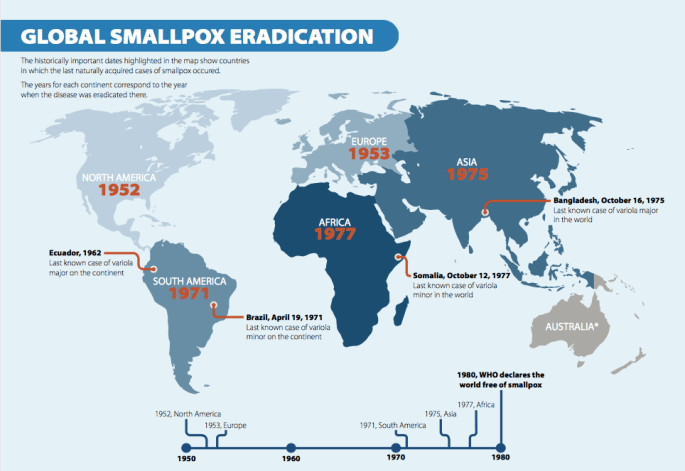
Pandemic preparedness often feels like a teetering game of picking your poison. Will we see an avian influenza like H7N9 or will it be a novel disease? The CDC “evaluates every potentially dangerous strain, and gives them two scores out of 10—one reflecting how likely they are to trigger a pandemic, and another that measures how bad that pandemic would be. At the top of the list, with scores of 6.5 for emergence and 7.5 for impact, is H7N9.” While there isn’t strong transmission capacity between humans with the H5 and H7 viruses, the H7 strains are more worrisome in that they require fewer mutations to get to that point. Our efforts against avian influenza pandemics go beyond surveillance, and also focus on vaccine responses. “In the meantime, vaccines are being developed to match the viruses seen in the fifth and current epidemic. Other control measures have waxed and waned. When the first of the epidemics struck, Chinese health ministries closed markets and slaughtered birds. But as Helen Branswell reports in STAT, some of those containment efforts became more lax in 2015 and 2016.” Preparedness and response exercises can also gives great insight into problems that may arise when dealing with a pandemic. A recent pandemic simulation was held during the World Bank’s annual meeting in Washington D.C., in which participants addressed everything from hospital closures to mass quarantine. “For the World Bank simulation, organizers looked at the impact on travel and tourism of an outbreak of a mysterious respiratory virus in a hypothetical country. Discussions during the 90-minute session were off the record. But in interviews after the event, organizers said the step-by-step scenario made the theoretical possibility seem very real for participants. In particular, it drove home the need for speedy, accurate information-sharing and strong coordination within and across governments and institutions.” These kinds of exercises are crucial to not only address gaps, but bring together a variety of people that will be critical to pandemic response and recovery. The Johns Hopkins Center for Health Security also just released their self-guided exercise scenario that focuses on communication dilemmas that occur during development of medical countermeasures. The exercise is aimed at public health communicator and risk communications researchers, and revolves around a novel coronavirus outbreak in 2025. “Over a 3-year period, the virus spreads to every US state and more than 40 countries, where case fatality rates vary depending on the capabilities of local health systems. In the United States, an existing drug is repurposed to treat SPARS symptoms while federal regulators work with a pharmaceutical company to fast-track the production of a SPARS vaccine. The response differs in other nations. What follows is a nationwide vaccination effort and lingering strains on the US healthcare sector from a steady stream of patients seeking treatment for serious post-SPARS complications.”

Security Implications of Genome Editing – Meeting of Experts in Hanover
Earlier this month, a meeting of scientists and experts on policy and security gathered to discuss the potential implications of genome editing technologies like CRISPR. GMU Biodefense professor Dr. Sonia Ben Ouagrham-Gormley attended, noting that “Over 100 CRISPR scientists form all over the world (China, India, U.S., Europe, Africa), and policy and security experts gathered in Hannover, Germany,  to discuss the security implication of the new gene-editing technique CRISPR.The group reviewed various threat scenarios and discussed potential policy responses. The meeting was particularly successful as both the scientists and security experts engaged in a productive dialogue about the importance of ensuring security without hampering the use of this new technology to promote progress in medicine and agriculture among other things.” The conference focused on establishing proactive international dialogue about genome editing and incorporating experts that range from ethics and philosophy to economics and political science. “Many workshop participants emphasised that it is vital to support and sustain a culture of responsibility and integrity in research and innovation and to engage with stakeholders. Moreover, researchers and policy makers must commit to continuing an open and inclusive dialogue that builds trust. As with other new and emerging technologies, a lack of communication about any uncertainties may undermine public confidence in science. Scientists and security experts should listen to concerns or fears regarding the misuse of genome editing, and provide their expertise on what is and is not likely.”

Synthesizing Biological Threats—A Small Leap From Horsepox to Smallpox
GMU biodefense PhD student Saskia Popescu discussed dual-use research concerns with GMU professor and graduate program director Dr. Gregory Koblentz and how these relate to healthcare and infectious disease professionals. Drawing on the recent horsepox synthesis, Dr. Koblentz emphasized how this opens Pandora’s box even wider for potential smallpox synthesis and misuse of synbio. Popescu highlighted these concerns and how important it is for healthcare workers to be aware of such events and vulnerabilities. “From the healthcare perspective, it may not seem like something we should worry about, but the direction of gene editing and dual-use research of concern is something that is intrinsically linked to public health. Nefarious outcomes of such experiments, regardless of the origin or intent, will inevitably make their way into an emergency department, urgent care, or worse, the community. Although we may not be seeing the implications today, as medical providers and healthcare workers, we must keep our ears to the ground, listening for these biotech advancements, and then thinking through what they mean for us tomorrow.”

Step Away From The Backyard Poultry
Do you keep poultry in your backyard? If so, you may want to rethink it as the number of Salmonella infections related to contact with backyard poultry has quadrupled since 2015. “This year, nearly every state has been pecked by outbreak strains; only Alaska and Delaware can crow about dodging them. The Centers for Disease Control and Prevention has confirmed 1,120 cases. Nearly 250 of those involved hospitalization, and one person died.But that is likely just scratching the surface of the real numbers, according to CDC veterinarian Megin Nichols. ‘For one Salmonella case we know of in an outbreak, there are up to 30 others that we don’t know about,’ she told the AP.” The issue is that chickens and other fowl can carry organisms without having symptoms and shed them in their feces. While some hatcheries will test prior to selling their birds, it’s important that owners be aware of the risks for such infections.

The Schar School of Policy & Government Presents: Strategic Trade and International Security: Policy and Practice
This Brown Bag Seminar Presentation by Dr. Andrea Viski is the place to be on Thursday, November 2nd, from noon to 1:30pm. “Dr. Andrea Viski is the founder and director of the Strategic Trade Research Institute, an independent organization dedicated to providing authoritative research on issues at the nexus of global security and economic trade. She is also the editor-in-chief of the Strategic Trade Review, a peer reviewed journal dedicated to sanctions, export controls, and compliance. She previously worked for Project Alpha at King’s College London and for the Stockholm International Peace Research Institute (SIPRI). She has published numerous articles and book chapters in the areas of strategic trade controls, nuclear non-proliferation, and international law. Dr. Viski received her Ph.D. from the European University Institute, her M.A from Georgetown University’s Institute for Law, Science and Global Security, and her B.A in International Politics from Georgetown University’s School of Foreign Service.” The seminar will be at Founders Hall 602, 3351 Fairfax Drive, Arlington, VA 22201.

Stories You May Have Missed:

  • Uganda’s Marburg Outbreak – Uganda has just confirmed the death of a 50-year-old woman as a result of the hemorrhagic fever, Marburg. “The victim, a 50-year old woman, died on October 11 at a hospital in eastern Uganda after “she presented with signs and symptoms suggestive of viral hemorrhagic fevers”, the minister said. The woman had nursed her 42-year old brother who died on September 25 with similar signs and symptoms and also participated in cultural preparation of the body for burial, she added.”
  • Big Chicken – Are you reading the latest book by Mary McKenna on antibiotic misuse in the poultry industry? “In Big Chicken, McKenna lays out in extensive detail the unintended consequences that resulted from experiments performed at Lederle Laboratories in December 1948 when scientist Thomas Jukes began adding trace amounts of the antibiotic aureomycin (later to be known as chlortetracycline) to chicken feed. The discovery that the drug could quickly fuel growth in chicks raised in confinement revolutionized the poultry industry, turning chicken into America’s favorite protein.”

Thank you for reading the Pandora Report. If you would like to share any biodefense news, events, or stories, please contact our Editor Saskia Popescu (biodefense@gmu.edu) or via Twitter: @PandoraReport

Pandora Report 9.1.2017

Craving some satyrical genome editing? Check out the Onion’s pros and cons list on this biotechnology.

The De Novo Synthesis of Horsepox Virus: Implications for Biosecurity and Recommendations for Preventing the Reemergence of Smallpox 

The recent de novo synthesis of horsepox by Canadian researchers has raised concern and spurred serious conversations about the future of orthopoxviruses, like smallpox, and the dual-use research that could bring them back. GMU biodefense associate professor and graduate program director Dr. Gregory Koblentz evaluates this horsepox experiment and what it means for biosecurity and efforts to prevent the reemergence of smallpox. Koblentz notes that this experiment represents a significant crossroads within the field of biosecurity and that the techniques for synthesis of such viruses are increasingly reducing barriers to potential misuse. Unleashing smallpox back into the world would be a global disaster as most of the world is no longer immune. Koblentz points out that “The threat of smallpox has been held at bay for the past 40 years by 2 conditions: the extreme difficulty of acquiring the virus and the availability of effective medical countermeasures. Synthetic biology is on the brink of erasing both of these formidable barriers to the reemergence of smallpox as a global health threat.” He highlights the limited and rather lackluster legal and technical safeguards against smallpox synthesis and that the increasing normalization and globalization of it will likely create a boom of researchers performing such experiments. Think of the gold rush, but rather the orthopoxvirus syntehesis rush. As orthopoxviruses, are being used to develop new vaccines and oncolytic medical treatments, its popularity and wider range of applications carries with it inherent risks that should be considered. “The combination of rising demand and increasing supply could lead to the global diffusion of the capability and expertise to create orthopoxviruses de novo as well as modify these synthetic viruses. With this diffusion will come an increased risk that scientists, acting on their own volition or on behalf of a terrorist group, might misuse their know-how to create variola virus, or that governments could use civilian biomedical research with synthetic orthopoxviruses as a cover for offensive applications. The release of the smallpox virus— whether due to a biosafety failure, a breach in biosecurity, or an act of biological warfare—would be a global health disaster.” Koblentz draws attention to the challenges that the normalization and globalization of orthopoxvirus synthesis poses to national and international systems working to ensure life sciences research is safely conducted. He points out that there is no clear international legal framework to prevent the synthesis of the variola virus, few comphresensive legal safeguards, and that the private DNA industry (the main supplier of large synthetic DNA fragments) has inconsistent regulatory interventions. With these concerns, Koblentz suggests several recommendations to prevent the return of smallpox, ranging from the WHO’s World Health Assembly (WHA) passing a resolution to enshrine the WHO’s Advisory Committee on Variola Research (ACVVR) recommendations on the handling and synthesis of variola virus DNA into international law, to efforts within the DNA synthesis industry to declare a temporary moratorium on the synthesis of orthopoxvirus DNA fragments until effective WHO oversight can be established. Overall, Koblentz points to the importance of this experiment in terms of how such work is performed and the lack of informed debate surrounding the dual-use nature prior to the start of research. He emphasizes  “the risks posed by the routine and widespread synthesis of orthopoxviruses that could lead to the creation of a widely distributed network of laboratories and scientists capable of producing infectious variola virus from synthetic DNA.”

GMU Biodefense Master’s Open House – September 14th
We’re two weeks away from the first Master’s Open House and you won’t want to miss the chance to learn about GMU’s biodefense MS program. From 6:30-8:30pm on Thursday, September 14th, at the GMU Arlington campus, you can speak to faculty, learn about admissions, and why biodefense students have a blast while getting their graduate degrees. From Anthrax to Zika, we’ve got the place for all things biodefense.

Stanford’s New Biosecurity Initiative  

Stanford University’s Freeman Spogli Institute for International Studies (FSI) just announced their new biosecurity initiative, the Stanford Biosecurity Initiative, which will be led by David Relman and Megan Palmer. “Relman said the biosecurity initiative will seek to advance the beneficial applications of the life sciences while reducing the risks of misuse by promoting research, education and policy outreach in biological security. His CISAC leadership gives him the know-how to lead such a wide-ranging effort across diverse disciplines and communities,”. Palmer is a senior research scholar at Center for International Security and Cooperation (CISAC) and leads research on risk governance in emerging technology development and is an all around biotechnology guru. The biosecurity initiative also includes key Stanford partnerships and expertise within the fields of life sciences, engineering, law, and policy. Palmer noted that, “Stanford has an opportunity and imperative to advance security strategies for biological science and technology in a global age. Our faculty bring together expertise in areas including technology, policy, and ethics, and are deeply engaged in shaping future of biotechnology policy and practices.” We look forward to seeing the amazing work this new initiative will accomplish!                                                                                         

NAS Symposium on Cooperative Threat Reduction (CTR) for the Next Ten Years and Beyond
Don’t miss out on this September 18-19 event at the Keck Center. “In 2009 the National Academy of Sciences (NAS) report Global Security Engagement: A New Model for Cooperative Threat Reduction concluded that expanding and updating U.S. Government Cooperative Threat Reduction (CTR) programs in both form and function would enhance U.S. national security and global stability. The NAS Committee on International Security and Arms Control (CISAC) is convening a symposium to examine how CTR has evolved since that time and to consider new approaches for CTR programs and related WMD elimination efforts to increase their ability to enhance U.S. security. Speakers will include Amb. Laura Holgate, former U.S. Representative to the Vienna Office of the UN and IAEA, Amb. Ronald Lehman, Counselor to the Director of LLNL, William Tobey, former Deputy Administrator for Defense Nuclear Nonproliferation at NNSA, Andrew Weber, former Assistant Secretary of Defense for Nuclear, Chemical, and Biological Defense Programs, and other key thinkers and practitioners from CTR programs as well as experts from outside of CTR implementing agencies who have experience addressing complex international security problems. The symposium is sponsored by the Project on Advanced Systems and Concepts for Countering Weapons of Mass Destruction (PASCC) in the Naval Postgraduate School and will be open to the public. A ‘meeting in brief’ document will be issued by NAS after the symposium.”

International Biosecurity Fellows Reflect on SB7.0
The Johns Hopkins Center for Health Security recently partnered with Stanford’s Drew Endy to bring 32 emerging biosecurity leaders together for a fellowship program to attend the 7th International Meeting on Synthetic Biology (SB7.0) in Singapore. “In addition to attending the conference, fellows had the opportunity to engage with practicing experts and to discuss—with peers and senior scientists and government officials—biosecurity as it relates to synthetic biology. The fellows represented 19 countries on 6 continents and professions in the public and private sectors, the nonprofit space, and academia. The fellowship program was sponsored by the Open Philanthropy Project, hosted by Endy, and coordinated by the Center, BioBricks Foundation, and SynBioBeta. Center staffers Crystal Watson, DrPH, MPH, senior associate, and Matt Watson, senior analyst, organized the fellowship discussions and events and joined the fellows in Singapore for the 4-day experience. Gigi Kwik Gronvall, PhD, a senior associate at the Center and author of Synthetic Biology: Safety, Security, and Promise, spoke at SB7.0 and helped lead the fellowship’s panel discussions along with Watson and Watson.” Don’t miss out on GMU Biodefense PhD student Yong-Bee Lim’s reflection on page 39. Lim comments on the unique insight that comes from researchers with a non-technical background who still focus on the biosecurity, biosafety, and governance of emerging biotechnologies. “However, the enthusiasm of the technical conference attendees and fellows that I met about the advancements in synthetic biology was infectious. Whether Christina Smolke was talking about leveraging yeast to produce opioids to address medical access inequities, Kate Adamala was discussing synthetic cells as an alternative for research purposes, or Dorothee Krafft explained how her lab was seeking to synthesize a simple cell with alternate building blocks, their passion for their work came through. This allowed me the rare opportunity to enjoy the possibilities of these new avenues of innovation.” Don’t miss out on his tales of confiscated beef jerky and how there’s often a disparage between the science and security communities.

Building Airborne Isolation Units During Emergent Times  & Why the CDC Quarantined Potentially Defective Equipment
GMU biodefense PhD student Saskia Popescu is taking a deep-dive into faulty PPE and hospital preparedness efforts that might just save us during an airborne outbreak. Popescu first looks at the recent CDC actions to pull defective PPE from the SNS. “The special focused on personal protective equipment (PPE) that was being stockpiled by the CDC for use against future outbreaks or public health emergencies, such as treating an influx of Ebola patients during an outbreak. The 60 Minutes investigative team filed a Freedom of Information Act request to obtain documents regarding MicroCool gowns that are part of the US Strategic National Stockpile (SNS). The filing of the Freedom of Information Act request is especially prudent as a group of hospitals were recently awarded $454 million in damages from PPE manufacturers Kimberly-Clark and Halyard Health (formerly a division of Kimberly-Clark) after a jury found they were liable for fraud and defects within the MicroCool gowns.” While these gowns were advertised as meeting standards for the highest level of impermeability, their efficacy is clearly in question. Many are concerned about the existing stockpiles hospitals have been holding onto since the Ebola outbreak in 2014 and if such PPE is still effective. Popescu also takes a look into a recent study that evaluated the potential for hospitals to readily and cheaply convert entire wings into negative-pressure, airborne isolation units. Such a measure would be necessary if there was an influx of infectious patients with SARS, MERS, or another disease that requires airborne isolation, as most hospitals have limited amounts of negative-pressure rooms. “Following their analysis, the team found that they were able to maintain negative pressure that was actually higher than the CDC recommendations for airborne isolation and there was no pressure reversal during the entering and exiting of the ward by medical staff. They did find that ‘pressures within the ward changed, with some rooms becoming neutrally or slightly positively pressured’, which means that healthcare staff would need to wear proper personal protective equipment (PPE) at all times in the unit and not just while in the patient rooms.” While this isn’t a permanent response measure, it does show proof of concept that would allow safer hospitalization for infectious patients during an airborne outbreak.

Stem Cells, Smallpox Vaccines, and FDA Crackdowns 
Earlier this week, the FDA announced it was taking action to shut down clinics that were advertising and performing unproven stem cell therapies. Clinics in California and Florida have received warning letters and the StemImmune Inc, clinic in San Diego, CA, received a visit from U.S. Marshals, who seized five vials of smallpox vaccine. “The FDA says it learned that StemImmune was using the vaccines as well as stem cells from body fat to create an unapproved stem cell therapy. On its website, StemImmune says ‘The patient’s own (autologous, adult) stem cells, armed with potent anti-cancer payloads, function like a ‘Trojan Horse,’ homing to tumors and cancer cells, undetected by the immune system’.” These clinics have been using stem cell treatments for patients suffering from Parkinson’s, ALS, COPD, heart disease, and pulmonary fibrosis. “Action by the FDA on clinics promoting unproven stem cell therapies is ‘a long time coming,’ says Sean Morrison, former president of the International Society for Stem Cell Research (ISSCR) and d irector of the Children’s Research Institute at UT Southwestern.”

Hurricane Harvey – Harbinger of Infectious Disease?
As hospitals are forced to evacuate patients and medical centers become overwhelmed, the George R. Brown Convention Center has become the city’s largest emergency shelter. It’s always challenging though, meeting the medical demands of so many people in an emergent environment. As providers work to meet basic medical needs there is another concern that bubbles up with an influx of people into a small environment…disease. Floodwater injuries are of course a concern, but we also worry about infectious diseases associated with overrun sewage systems, lack of potable water and safe food, and the existence of mega-shelters that are ripe for transmission of respiratory and diarrheal illness. That’s not even considering the potential for nasty resistant infections like MRSA, VRE, etc. Did I mention mosquitoes? “Based on experience following Hurricane Katrina, there will be several competing effects on the population of mosquitoes and the prevalence of arboviruses, such as Zika, dengue and West Nile, that they transmit. Mosquitoes need stagnant water to lay eggs. Winds and floods will wash away containers that would have been breeding pools, said Hayden, who studies weather and vector-borne disease. In the immediate future, both Hayden and Hotez anticipate that local mosquito populations will decline. But once the floodwaters recede, mosquitoes will recover. In 2006, a year after Katrina, Tulane University public-health experts reported that cases of West Nile infection increased more than twofold in communities that had been in that hurricane’s path. The study authors suggested that increased exposure was the culprit. Fleeing partially submerged buildings, people spent days outside waiting for rescue.” Sadly, it will take years to recover and rebuilding Houston after Harvey, and there are lessons we can apply from not only Harvey, but also Hurricane Sandy, towards future preparedness and response efforts. Matt Watson and Eric Toner from the Center for Health Security are drawing attention to the need for Congress to start gearing up for the health impacts following Harvey.  “Stepping back from the operational response, it’s important to recognize that Congress has a vital role to play in both preparing for and enabling recovery following large scale disasters. On the recovery front, it will be important for lawmakers to pass an emergency appropriation that provides emergency funding. It is critical that Congress reverse that trend and continue to support annual appropriations for hospital and public health preparedness so that the nation is able to respond to increasingly frequent natural disasters and other large-scale emergencies.”

Stories You May Have Missed:

  • Distinguishing Virulent from Harmless Bacteria to Improve Biosurveillance- “Researchers at Los Alamos National Laboratory are working to eliminate false positives in detection of Francisella bacteria, a few species of which include highly virulent human and animal pathogens. The effort contributes to more efficient and effective biological surveillance, such as that conducted by the US Department of Homeland Security and the Department of Defense, which provides early warning of infectious disease outbreaks, hazardous environmental exposures, or possible bioterrorist attacks by spotting trends of public health importance.”
  • Deadly Strain of Klebsiella pneumoniae Found In China– Chinese researchers are reporting a highly virulent, resistant, and deadly strain of the bacteria in five patients at a hospital in Hangzhou, China. “All five patients—who were admitted to the ICU between late February and April of 2016—had undergone surgery for multiple trauma followed by ventilation and subsequently developed carbapenem-resistant K pneumoniae infections and severe pneumonia that responded poorly to all available antibiotics. All five patients died of severe lung infection, multi-organ failure, or septic shock.”