Video: Dr. Paul Walker’s talk on Chemical Weapons Destruction

For those of you unable to attend our October Biodefense Policy Seminar last week, Dr. Paul Walker gave a very interesting and timely presentation on the challenges of chemical weapons destruction, both in Syria and globally. See the first part of his presentation below, and then head over to our YouTube channel to watch the rest. His slides are also included below.

Dr. Walker’s Slides: October Biodefense Policy Seminar_Dr. Paul Walker

Walker, October Seminar Speaker, on Destroying Chemical Weapons

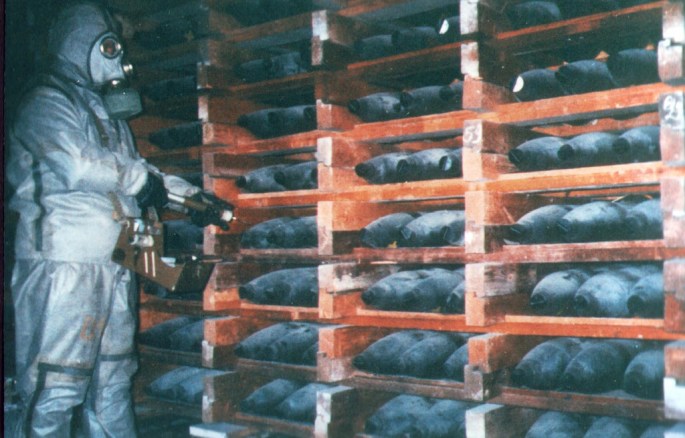
As destruction efforts in Syria seem to be continuing apace, the question many of us have asked ourselves is how does one destroy a chemical weapon? Dr. Paul Walker concisely addresses this in his recent Bulletin of Atomic Scientists piece, “How to destroy chemical weapons?”. To hear more, be sure to join us next Wednesday evening for our October Biodefense Policy Seminar featuring Dr. Walker, who will discuss efforts to destroy Syrian CW at length. For more information, please visit our events page.

Bulletin of Atomic Scientists – “The recent news that Syrian President Bashar al-Assad is willing to accede to the international Chemical Weapons Convention (CWC) has raised the question: How might one actually go about eliminating Syria’s chemical munitions?

The CWC entered into force in 1997. Seven CWC member countries have declared existing chemical weapons stockpiles—Albania, India, Iraq, Libya, Russia, South Korea, and the United States. Three of these—Albania, India, and South Korea—completed stockpile destruction in the last few years. Three more—Libya, Russia, and the US—expect to complete their destruction programs over the next decade. And Iraq, which joined the convention in 2009, is planning the destruction of its chemical weapons equipment and agents left from the 1991 Gulf War.

There are essentially three broad categories of destruction approaches, all used successfully in the above programs. These approaches can be mixed and matched, depending on the type, size, quantity, and condition of the agents, munitions, and containers…”

Read more here.

(image: Jen Spie/Flickr)

Bioweapons Alarmism in Syria

by Dr. Sonia Ben Ouagrham-Gormley, originally published in the Bulletin of Atomic Scientists

As Secretary of State John Kerry challenged Syrian President Bashar al-Assad to hand over Syria’s chemical weapons in early September, articles published in the Washington Post and National Interest argued that the current focus on Syria’s chemical weapons is distracting the international community from a much deadlier threat: Syria’s biological weapons. The sources for the Washington Post article (one of whom also happens to be a co-author of the National Interest piece) warn that Assad’s regime could use its biological weapons in retaliation against Western forces or its own population. Both articles assert that Syria has maintained a dormant program since the country last engaged in biological weapons developments in the 1970s and 1980s and could easily reactivate its program to produce, on short notice, the stockpile of agents required to retaliate against its enemies. This threat is real, the argument goes, because Syria could tap into its pharmaceutical and agricultural industries to support the effort. Finally, the articles warn that Syria might have retained a strain of smallpox from a 1972 outbreak, which could be used to develop a devastating biological weapon.

These two articles provide no tangible evidence to support their claims. More important, their speculations contradict extant empirical evidence on the difficulty of achieving the level of biological weapons capability that the articles claim Syria maintains or could reestablish. To avoid falling prey to the same biological weapons hysteria that led to the invasion of Iraq in 2003, it is important to look carefully at such claims. Close examination shows them to be exaggerated, at best.

To evaluate Syria’s ability to revive a dormant program, one would need to know what kind of research and production infrastructure the Syrian government currently possesses. There is, however, very little publicly available information on the scope of Syria’s bioweapons program, if any.

If Syria retains only a small research capability developed in its bioweapons program of the 1970s and ‘80s, the likelihood that it would be able to quickly produce sufficient amounts of bioweapons for retaliation is very slim. The country would first need to create the research, development, production, and weaponization infrastructure needed for a crash program, a process that may take several months to even years, particularly in a war zone. Assuming that the Syrians already have stocks of agents—and it is pure speculation to say they do— they will need to conduct exploratory research to determine which agent is the most promising as a bioweapon and develop a production process that will maintain the agent’s lethal characteristics during scale-up and storage. Creating this production capability is also neither easily or quickly achieved.

In the early 1980s, Iraq attempted to reactivate a biological weapons program that had been largely abandoned in the preceding decade; it took the Saddam Hussein regime three years—from 1983 to 1986—to conduct the needed exploratory research and identify the agents most desirable for bioweapons work. Even then, the Iraqis were able to develop only crude liquid agents that lost toxicity within six to eight months. They were also unable to develop a bioweapons-specific dissemination capability, relying instead on personnel from their chemical weapons program to adapt chemical bomb casings and warheads for bioweapons use. This strategy resulted in ineffective weapons that would have released agents upon impact, destroying most of the bio-agent in the process.

Even if Syria already has significant bioweapons infrastructure in place, reactivating it would not necessarily be a quick or simple process. When in the early 1980s Soviet-era authorities decided to activate the mobilization facility in Stepnogorsk, Kazakhstan in order to produce anthrax, it took about two years to launch production, even though the facility had been established for several years and had the equipment and minimum staff needed for its operation. The suggestion that Syria could swiftly launch a crash program from a long-dormant infrastructure and produce effectively weaponized agents in amounts sufficient for a retaliatory military attack seems a considerable stretch from likely reality.

Read the rest of the piece here.

(Image credit: Scott Montreal/Flickr)

Video of the Week: OPCW Weapons Inspectors Leaving for Syria

What does a chemical weapons inspector leaving to investigate chemical arsenals at a country in the middle of a raging civil war pack? Markers, apparently. The last thing they do before getting on said plane? You guessed it, fill out paperwork.  Meet some of the men and women helping keep us out of Syria below.

(credit: OPCW)

Chemical weapons team arrives in Syria; Blair on our options

In the last 48 hours, chemical weapons inspectors have crossed the border into Syria, reaching Damascus last night. The 19-member inspection team, sent from the Organization for the Prohibition of Chemical Weapons in the Hague, will be responsible for verifying and dismantling the 1,000 tonne Syrian chemical weapons arsenal. The team will have approximately nine months to conduct their investigation and help the Syrian government destroy their arsenal by the middle of next year.

Charles Blair, GMU adjunct professor and columnist at the Bulletin of Atomic Scientists, recently published a piece on the fundamental issue at stake here – will it make any difference?

“Regardless of how Lavrov-Kerry fares, the Obama administration faces a high-stakes dilemma. If the agreement is successful, the Syrian civil war still threatens to metastasize—further destabilizing the entire region and, due to the West’s dependence on oil from the Middle East, threatening the world economy. In short, even without a Syrian chemical arsenal, and apart from the normal winter ebb in fighting, the civil war shows no signs of slowing down.

“But failure to rid Syria of the stockpile could result in additional chemical weapons use by the Assad regime and hastens the day when extremists acquire these arms, too. If Syria does not abide by the agreement, the United States would likely resort to air strikes, amid strong calls for a redoubling of efforts to quickly arm opposition forces with more weaponry. Both actions are inherently risky. Indeed, significant sections of Syria could fall under the rule of violent Islamists armed with chemical weapons. As an authority on terrorism at the RAND Corporation, Michael Jenkins, recently wrote me, ‘the Syrian civil war has significantly raised the risk that its chemical weapons will fall into the hands of terrorists, creating a greater international crisis than the one we think we have just solved.’”

Read more at the Bulletin.

(image: Steven Damron/Flickr)

Koblentz on Syria

Dr. Gregory Koblentz, Deputy Director of the Biodefense Graduate Program, was featured in three pieces on Syria last week. Dr. Koblentz was quoted in an USA Today article, “Syria chemical weapons plan poses unprecedented challenge“. Speaking to the specific challenges the Syrian case presents, Koblentz explained that “[t]here has never been an effort to disarm an entire country of its chemical weapons during a civil war.” Dr. Koblentz was also featured in an interview with CTV Canada and CCTV (China).

Koblentz on the Difficulties of Destroying Syria’s Stockpile

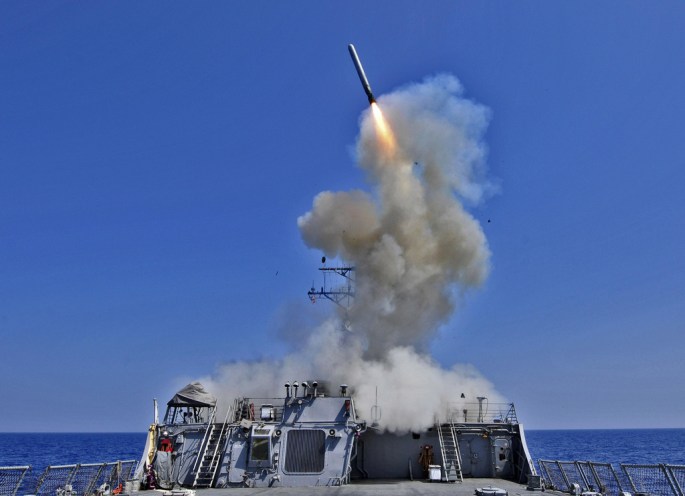
Dr. Gregory Koblentz was quoted in two articles on Syria yesterday. In the first piece in the New Republic, Dr. Koblentz discusses the potential use of Tomahawk missiles (pictured above) should the US decide to pursue military action in Syria.

“The advantage to Tomahawks, according to Gregory Koblentz, a George Mason University political scientist who specializes in weapons of mass destruction, is they are highly accurate, fly low to the ground (and can therefore typically evade air defenses), and can be fired from ships hundreds of miles away (hence the frequently used term “lobbed”)—thereby putting American soldiers at very little risk. The downside to Tomahawks is they pack a comparatively small explosive punch and, particularly because they cannot be reprogrammed in-flight, are best used on stationary targets—an especially problematic proposition given that the regime will likely have had several weeks to move whatever they want to move to different locations.”

In the second piece in Voice of America, Koblentz is quoted on the likelihood of Syria eliminating its chemical weapons stockpile.

“‘I don’t think the Syrian regime is serious about actually turning over all of their chemical weapons, and even if they were to do so in the middle of a civil war would make it virtually impossible for any kind of international group to conduct their work safely and securely. So I don’t see this happening anytime soon, if ever,’ said Koblentz.”

Read the New Republic piece here, and the Voice of America piece here.

(image: U.S. Navy photo by Petty Officer 3rd Class Jonathan Sunderman)

Thrall on the Syrian Compromise – “Let’s Make a Deal!”

Dr. Trevor Thrall, GMU Biodefense Director, reviewed the latest developments in the ongoing Syrian saga yesterday in a piece in the National Interest. In it, he discusses the implications of the recent compromise proposal and potential US responses. Here’s an excerpt:

“The apparently accidental diplomatic overture from Secretary of State John Kerry, suggesting that Syria transfer its chemical weapons to international control to avoid U.S. airstrikes, has immediately received traction. How seriously either the U.S. or Syria will consider this proposal remains unknown. On the one hand, it is easy to argue that Syria will simply latch on to the proposal as a tactic to forestall U.S. action but has no intention of agreeing to give up its weapons. On the other hand, Syria needs Russian support more than it needs chemical weapons, and Assad may calculate that his chances against the rebels are better if the U.S. does not get directly involved militarily.

From the U.S. perspective the proposal has immediate political impact. Obama cannot strike Syria when his primary justification is in such serious question. There may be other reasons for the U.S. to engage in Syria directly, but the White House’s own PR campaign has emphasized the danger of Syria’s chemical weapons and the potential for them to wind up in the wrong hands. If Syria tells the world they are willing to consider giving them up, Obama’s argument crumbles and he cannot take action until the issue is resolved one way or another.

Ironically, for the U.S. this would be a far better outcome than Obama had any right to imagine just days ago. Having foolishly drawn the red line in the first place, and then having made a complete mess of the campaign to build both public and Congressional support, Obama may now have found a path that both gives him a big win while avoiding either an ugly defeat in Congress or having to launch airstrikes of wildly uncertain consequence…”

Read the rest of the piece here.

(image: Freedom House)

Koblentz on NPR discussing Syria

Dr. Koblentz was featured in two radio interviews last Friday. The first interview, “Why Do Chemical Weapons Evoke Such A Strong Reaction?” appeared as a part of NPR’s All Things Considered.  In the interview, Dr. Koblentz discusses the implications of chemical weapons as “dreaded risks”. Listen to the timely piece here. The second piece, “Syria’s Chemical Arsenal” was featured during the Background Briefing with Ian Masters, and is available here.

On Not Falling Prey to Biological Weapons Alarmism in Syria

by Dr. Sonia Ben Ouagrham-Gormley

A September 5 Washington Post article raises concern that Syria might resort to biological weapons in retaliation for a Western military strike. The article states that intelligence reports indicate that Syria engaged in bioweapons development in the 1970s and 80s and since then has maintained a “dormant capability,” which some experts interviewed by the Post believe can easily be reactivated to produce biological weapons. it is important to inject a little bit of reality in regard to the question of whether or not  Syria might be able to successfully reactivate a “dormant program” and effectively develop and use biological weapons.

First, we need to define more clearly what capabilities are actually available to Syria. If a “dormant capability” means that Syria has maintained from its 1980s program only a handful of research activities, the country will face tremendous difficulties in launching a crash program capable of producing the quantities of agent required for use as a weapon. If we assume — and this is entirely speculation — that Syria already has stocks of pathogens, its first task will be to produce a sufficient amount of liquid agent for weaponization. Scaling-up, however, has been a stiff challenge for both past terrorist and state bioweapons programs. The passage from a laboratory sample to larger quantities of bioagent is not a straightforward linear process. Because microorganisms are sensitive to their environmental and processing conditions, scaling-up has to be incremental, and each stage requires a revision of the production parameters. For example, when the Soviets launched the large-scale production of their anthrax weapon at the Stepnogorsk production plant in Kazakhstan, their scientists could not maintain the lethal qualities of the agent throughout the production process. They were therefore compelled to review and test each parameter of the production protocol at each stage of the scale-up, a process that lasted about two years. Scale-up also exposes the agent to contamination, which further delays production, as was the case in both the U.S and Soviet programs.  Current biodefense and pharmaceutical companies also routinely face such contamination and scale-up challenges.

Second, it is important to determine what type of expertise is currently available to Syria. If Syria maintained minimal research activities over the past 20 years, it is likely that they will face a shortage of expertise at key points of a weapons development. This includes process development, pilot-scale production, large-scale production, testing, dissemination, and weaponization. For example, the Iraqi program had very few experts with knowledge directly applicable to the agents they selected for use as a weapon. They also had only one fermentation expert, and before his involvement in the program, the fermenters purchased for the program remained in their crates for lack of personnel with knowledge on how to use them. The Iraqis also did not have weaponization experts within the bioweapons program. Weaponization work was conducted by individuals involved in the chemical weapons program, and consisted of adapting existing chemical bombs and warheads for bioweapon use. This resulted in very inefficient weapons, designed to disseminate the agent upon impact, which would have destroyed most of the bioagent. It is worth reiterating also that the Iraqis were only able to produce liquid agents, even though they had access to drying equipment. If active bioweapons programs faced such challenges, one can only imagine what problems a “dormant program” might face.

Were the Syrians able to shepherd enough expertise from the civilian sector, it is not clear whether their skills could be directly relevant to support bioweapons work.  The Japanese terrorist group Aum Shinrikyo had among its members individuals with scientific education, but their lack of practical experience in bioweapons development imposed a steep learning curve, which after six years of effort and about $10 million dollars of investment, resulted in failures at every step of a bioweapon’s development.  The Iraqi program faced similar issues: most of its scientists had no prior bioweapons expertise and required several years of learning and exploratory work before they could start making some headway.

Access to expertise is not the only challenge facing Syria. Making sure that the teams of scientists, technicians, and engineers work together, coordinate their efforts, and work towards the same goal is as, if not more, important. The lack of coordination and cooperation was a major source of delay and failure in the Soviet program, which was arguably the most successful of all state programs. Yet, if creating the conditions required for such cooperation is difficult under normal conditions, it is even more complicated under the stress of maintaining covertness in times of war, particularly under an authoritarian regime.

In sum, it is important to avoid falling prey to alarmist claims similar to those that led to the invasion of Iraq in 2003. The threat of Syrian bioweapons use merits a careful and systematic analysis of the capabilities currently available to Syria and a more nuanced and holistic  appreciation of the challenges they might face.

———————————————————————————–
Sonia Ben Ouagrham-Gormley is an Assistant Professor in the Department of Public and International Affairs at George Mason University and is primarily affiliated the GMU Biodefense graduate program. Professor Ben Ouagrham-Gormley has conducted research and written on such topics as biological weapons proliferation, weapons of mass destruction (WMD) trafficking in states of the former Soviet Union, biosecurity and bioterrorism, export controls, transfer mechanisms of WMD expertise, defense industry conversion, and redirection of WMD experts. She has received several grants from the Departments of Defense, State, and Energy, as well as from the Nuclear Threat Initiative and the Carnegie Corporation of New York to conduct research on WMD proliferation and contribute to remediation programs such as the DOD-funded Cooperative Threat Reduction Program.

(image: CIAT International/Flickr)