Pandora Report 6.14.2024

This week’s edition of the Pandora Report covers updates on avian influenza, a recent interim Congressional report on the NIH’s handling of mpox research, a recent report alleging the Department of Defense created an anti-vax misinformation campaign aimed at undermining China’s vaccine diplomacy in the Philippines, and more.

Avian Influenza Updates

USDA: Twenty-Four Companies Are Working to Create Avian Flu Vaccine for Cattle

Secretary of Agriculture Tom Vilsack told Reuters this week that twenty-four companies are currently working to develop an avian flu vaccine for cattle among continued spread among US dairy herds. Furthermore, Vilsack explained that the USDA is also conducting its own preliminary vaccine research at its laboratory in Ames, Iowa. In addition to looking for a vaccine candidate to test for efficacy, the Department is also researching potential respiratory spread of the virus between cows and working to provide support to farmers to improve biosecurity in their facilities.

Vilsack also promised that a pilot program for bulk milk testing will be rolled out “in the very near future.” The program will hopefully expand testing for H5N1 while enabling healthy herds to move across state lines without needing negative tests from every animal. Vilsack says Michigan and Idaho are among the states that have expressed interest in the program.

First Fatal Human Case of H5N2 Confirmed in Mexico

The WHO confirmed last week that a 59-year-old Mexican man died in April a week after developing fever, shortness of breath, and diarrhea. The Mexican Ministry of Health reports that the man had several comorbidities, including chronic kidney disease, type 2 diabetes, and long-standing systemic arterial hypertension. While the National Institute of Respiratory Diseases in Ciudad de México initially said they found a non-subtypeable influenza A virus in respiratory samples from the patient, the Mexico National Influenza Centre confirmed on May 22 that its subtype was H5N2. While Mexico did report an H5N2 outbreak on a backyard poultry farm in the state bordering the man’s state (Michoacan), it is not yet clear how he contracted the virus.

While this case is unrelated to the ongoing spread of H5N1 in the United States, this is the first case of H5N2 confirmed in a human. Furthermore, H5N2 was the primary culprit in a wave of US outbreaks on poultry farms in the mid-2010s. This was just one decade after an outbreak in Texas in 2004 in a chicken flock in Texas marked the first time in two decades that a dangerous-to-poultry avian flu appeared in the United States.

“Highly Pathogenic Avian Influenza H5N1 Genotype B3.13 in Dairy Cattle: National Epidemiologic Brief”

The USDA recently published this national epidemiologic brief: “On March 25, 2024, USDA announced unpasteurized, clinical samples of milk from sick cattle collected from two dairy farms in Kansas and one in Texas, as well as an oropharyngeal swab from another dairy in Texas, have tested positive for highly pathogenic avian influenza (HPAI). USDA’s National Veterinary Services Laboratories confirmed the detection as HPAI H5N1 clade 2.3.4.4b, genotype B3.13. Phylogenetic analysis and epidemiology support a single introduction into this novel host followed by onward transmission.”

“This report provides field epidemiologic summaries using data collected from epidemiologic questionnaires for H5N1 affected dairy herds.”

Further Reading

CDC: “CDC Reports A(H5N1) Ferret Study Results”

Amy Maxmen and Arthur Allen: “Bird Flu Tests Are Hard To Get. So How Will We Know When To Sound the Pandemic Alarm?” KFF Health News

Samuel V. Scarpino: “Timeline: H5N1 Bird Flu Outbreak in the U.S.,” Think Global Health

Maggie Fox: “H5N1 Bird Flu Isn’t a Human Pandemic–Yet. American Contrariness Could Turn It into One,” Scientific American

Helen Branswell: “In Dribs and Drabs, USDA Reports Suggest Containing Bird Flu Outbreak in Dairy Cows Will Be Challenging,” STAT

BlueDot: ILI Pulse: A(H5N1) Outbreaks in the USA

Katherine J. Wu: “How Much Worse Would a Bird-Flu Pandemic Be?” The Atlantic

Brenda Goodman: “Bird Flu is Rampant in Animals. Humans Ignore it at Our Own Peril,” CNN

Congressional Republicans Target NIH Mpox Research in New Report

Republicans on the House Energy and Commerce Committee released this week a report titled “Interim Staff Report on Investigation into Risky MPXV Experiment at the National Institute of Allergy and Infectious Diseases.” In it, members accuse the NIH of obstructing the investigation of proposed research on MPXV at the National Institute of Allergy and Infectious Diseases (NIAID), in addition to failing to properly regulate this controversial work. The report explains that, “The primary conclusion drawn at this point in the investigation is that NIAID cannot be trusted to oversee its own research of pathogens responsibly. It cannot be trusted to determine whether an experiment on a potential pandemic pathogen or enhanced potential pandemic pathogen poses unacceptable biosafety risk or a serious public health threat. Lastly, NIAID cannot be trusted to honestly communicate with Congress and the public about controversial GOFROC experiments.”

Science reports that “A spokesperson for the Department of Health and Human Services (HHS), NIH’s parent agency, dismissed the report’s conclusions. “The committee is looking for an issue where there isn’t one. HHS and its divisions, including NIH, follow strict biosafety measures as our scientists work to better understand and protect the public from infectious diseases—like mpox,” the spokesperson said.”

The investigation is one of many Congressional efforts to probe concerns about biosafety in laboratories and other concerns raised by the pandemic. This investigation was launched in late 2022 after Bernard Moss, a well-known poxvirus researcher at NIAID, described research he was planning to conduct in a Science news article.

Science explains that “Moss was trying to understand the difference between the virulent clade I monkeypox virus strain causing outbreaks mostly in the Democratic Republic of the Congo and the milder clade II virus, which spread from West Africa around the world in 2022. In a first effort, Moss said he had inserted genes from milder clade II into a clade I virus, without seeing it become less dangerous in mice. He told Science he was next planning to explore the reverse transfer: whether inserting genes from clade I into clade II viruses made these usually milder viruses more lethal to mice.”

“Some researchers raised the alarm, worried the study qualified as risky GOF research because the resulting virus could be much more dangerous and even touch off a pandemic. Committee members say that when they sought more information from NIH and NIAID on the experiments, they were initially told the transfer of genes from clade I to clade II was never approved…Then in March, NIAID revealed that its biosafety committee had signed off on a project that included such gene transfers in 2015, but that researchers never followed through; they only moved genes from clade II to clade I. The HHS spokesperson says, “The experiment referenced by the committee was never conducted, which the committee knows.”’

“This is a colorized transmission electron microscopic image of mpox virus particles (red), found within an infected cell (blue), that had been cultured in the laboratory. The image was captured and color-enhanced at the National Institute of Allergy and Infectious Diseases (NIAID), Integrated Research Facility (IRF), located in Fort Detrick, Maryland.”| Credit: CDC PHIL

The Committee’s press release explains that “For nearly a year and a half, the Department of Health and Human Services (HHS), the NIH, and NIAID misrepresented and deceived the Committee by repeatedly denying that the potentially dangerous experiment was proposed and approved. However, after being pressed repeatedly by Committee Leaders, HHS ultimately admitted Dr. Moss’s research team had been granted approval to conduct a bidirectional MPVX gene-transfer experiment (i.e., inserting the more lethal strain into the more transmissible strain and vice versa). Documents made available for review to Committee staff confirmed the 2015 approval of the experiment and raised additional concerns.”

It continues with “HHS, the NIH, and NIAID still maintain the riskier research project was never conducted. However, no documentation or any other evidence has been produced to substantiate the claim. NIAID has also failed to offer any explanation of the circumstances and rationale that supposedly led the Moss research team to drop the bidirectional mpox gene-transfer experiment after receiving approval for the project. “

The report also raises concerns about existing federal rules covering gain-of-function research, suggesting that they currently do not do enough because they allow researchers, their institutions, and NIAID to decide which projects fit the definition of GOF work. The report argues this is an “inescapable conflict of interest,” and that screening should be conducted by a panel at HHS or a new “wholly independent” entity.

The Committee also expressed disagreement with how GOF is defined in the new federal rules and made several more conclusions, including “NIAID has a culture of secrecy and obfuscation regarding experiments involving pandemic and potential pandemic pathogens. HHS and the NIH are complicit in enabling NIAID’s culture of secrecy and obfuscation. This is incompatible with accountable, democratic governance and further erodes the public’s trust in government health agencies,” and “: Principal investigators, research institutes, and funding agencies are poorly positioned to, and perhaps incapable of, conducting adequate risk/benefit analysis and oversight of experiments that—by virtue of having proposed them and approved their funding—they want to see conducted. This is an inescapable conflict of interest and misalignment of incentives that results in experiments being approved and conducted without sufficient scrutiny or ongoing oversight.”

Report Alleges US Department of Defense Ran “Secret Anti-Vax Campaign to Undermine China During Pandemic”

A recent report from Reuters claims that, “At the height of the COVID-19 pandemic, the U.S. military launched a secret campaign to counter what it perceived as China’s growing influence in the Philippines, a nation hit especially hard by the deadly virus.”

The report’s authors, Chris Bing and Joel Schectman, continue, writing “The clandestine operation has not been previously reported. It aimed to sow doubt about the safety and efficacy of vaccines and other life-saving aid that was being supplied by China, a Reuters investigation found. Through phony internet accounts meant to impersonate Filipinos, the military’s propaganda efforts morphed into an anti-vax campaign. Social media posts decried the quality of face masks, test kits and the first vaccine that would become available in the Philippines – China’s Sinovac inoculation.”

The report later explains that “The U.S. military’s anti-vax effort began in the spring of 2020 and expanded beyond Southeast Asia before it was terminated in mid-2021, Reuters determined. Tailoring the propaganda campaign to local audiences across Central Asia and the Middle East, the Pentagon used a combination of fake social media accounts on multiple platforms to spread fear of China’s vaccines among Muslims at a time when the virus was killing tens of thousands of people each day. A key part of the strategy: amplify the disputed contention that, because vaccines sometimes contain pork gelatin, China’s shots could be considered forbidden under Islamic law.”

“The military program started under former President Donald Trump and continued months into Joe Biden’s presidency, Reuters found – even after alarmed social media executives warned the new administration that the Pentagon had been trafficking in COVID misinformation. The Biden White House issued an edict in spring 2021 banning the anti-vax effort, which also disparaged vaccines produced by other rivals, and the Pentagon initiated an internal review, Reuters found.”

Read more here.

OPCW Fact-Finding Mission Concludes Latest Investigations into Reports in Syria

The Organisation for the Prohibition of Chemical Weapons recently announced its Fact-Finding Mission (FFM) in Syria concluded “…that the information obtained and analysed is not sufficient to provide reasonable grounds to determine that toxic chemicals were used as a weapon in the reported incidents that occurred on 9 August 2017 in Qalib al-Thawr and 8 November 2017 al-Balil, Hama Governorate, the Syrian Arab Republic.”

Read more about the FFM, these two reports from the Syrian Arab Republic, and the FFM’s conclusions here.
“Russia Spreads Disinformation to Cover Up Its Use of Chemical Weapons in Ukraine”

The Department of State’s Global Engagement Center recently published this report in several languages discussing Russia’s use of chemical weapons and its efforts to conceal that use in Ukraine. It explains in part, “Russia’s use of such chemicals is not an isolated incident, and is probably driven by Russian forces’ desire to dislodge Ukrainian forces from fortified positions and drive them into the line of fire, the exact reason the CWC prohibits the use of RCA as method of warfare, and achieve tactical gains on the battlefield. Russia retains an undeclared chemical weapons program and has used chemical weapons, such as the Novichok nerve agents, at least twice in recent years in assassination attempts.”

“Catalyzing Crisis: A Primer on Artificial Intelligence, Catastrophes, and National Security”

Bill Drexel and Caleb Withers authored this report for CNAS: “The arrival of ChatGPT in November 2022 initiated both great excitement and fear around the world about the potential and risks of artificial intelligence (AI). In response, several AI labs, national governments, and international bodies have launched new research and policy efforts to mitigate large-scale AI risks. However, growing efforts to mitigate these risks have also produced a divisive and often confusing debate about how to define, distinguish, and prioritize severe AI hazards. This categorical confusion could complicate policymakers’ efforts to discern the unique features and national security implications of the threats AI poses—and hinder efforts to address them. Specifically, emerging catastrophic risks with weighty national security implications are often overlooked between the two dominant discussions about AI concern in public discourse: present-day systemic harms from AI related to bias and discrimination on the one hand, and cantankerous, future-oriented debates about existential risks from AI on the other.”

“This report aims to: Demonstrate the growing importance of mitigating AI’s catastrophic risks for national security practitioners, Clarify what AI’s catastrophic risks are (and are not), Introduce the dimensions of AI safety that will most shape catastrophic risks.”

“Driving AIxBio Innovation Through Data and Standardization”

The National Security Commission on Emerging Biotechnology recently published this paper: “If the United States wants to remain a leader in artificial intelligence (AI) and biotechnology (AIxBio), it must treat biological data as a strategic asset to support the next phase of AIxBio models. These models will rely on biological data sets of unprecedented scale, likely generated through high-throughput lab automation and new experimental methods. Biological data enable the use of AIxBio models, but advances in AIxBio are limited by the availability of appropriate and usable data.1 Additionally, data standardization would enable the United States to combine data from across its robust and diverse life science ecosystem to further advance AIxBio and maximize its potential benefits. This white paper describes considerations for generating and standardizing biological data to support continued AIxBio research, development, and application.”

“APP3 Statement on the Importance of Biosafety and Biosecurity in the Age of Artificial Intelligence and Emerging Technologies”

This statement was recently released by the  GHSA Action Package Prevent-3 on Biosafety and Biosecurity, Emerging Biological Risks Working Group: “As advances in AI and emerging technologies continue to increase worldwide quickly, there are growing concerns that AI tools and other emerging technologies could act synergistically with synthetic biotechnologies to cause significant harm. The APP3 believes it is imperative to understand further and mitigate the biological risks of AI and emerging biotechnologies, reduce the risk of technology misuse, and protect economic and global health security. Efforts to raise awareness within the GHSA community, cultivate responsible scientific work, strengthen biosecurity controls, and mitigate biological risks associated with new technologies globally are critical.”

Read more here.

“Why the Global Bioeconomy Urgently Needs Technical Standards and Metrics”

Paul Freemont, India Hook-Barnard, and Matthew Chang published this piece with the World Economic Forum, in which they write “The global bioeconomy is estimated to be worth about $4 trillion, and more than 50 nations now have published bioeconomy strategies or have policies steering towards a sustainable bioeconomy. With the development of new technologies in engineering and synthetic biology, the bioeconomy is growing rapidly…Growth of the sector will bring increased commercialization, scale-up and distributed manufacturing, and promote manufacturing resilience by diversifying production streams beyond traditional chemical manufacturing.”

“However, the current lack of standards and metrics that apply directly to such a large global industry could result in chaos, with failed interoperability and an inability to share data or allow for technology transfer internationally…The International Organization for Standardization (ISO) has published only 35 standards directly related to biotechnology; in comparison, there are 79 published standards relating specifically to dental instruments…As such, there is a call from industry representatives and academics alike to develop technical standards and metrics that can be applied across the innovation pipeline to support the growth of the bioeconomy.”

“The Viral Most Wanted: The Orthomyxoviruses”

Kate Kelland continues CEPI’s “The Viral Most Wanted” with this latest installment: “It’s considered the most deadly single contagious disease event in all of human history and infected 500 million people worldwide—a third of the planet’s population.”

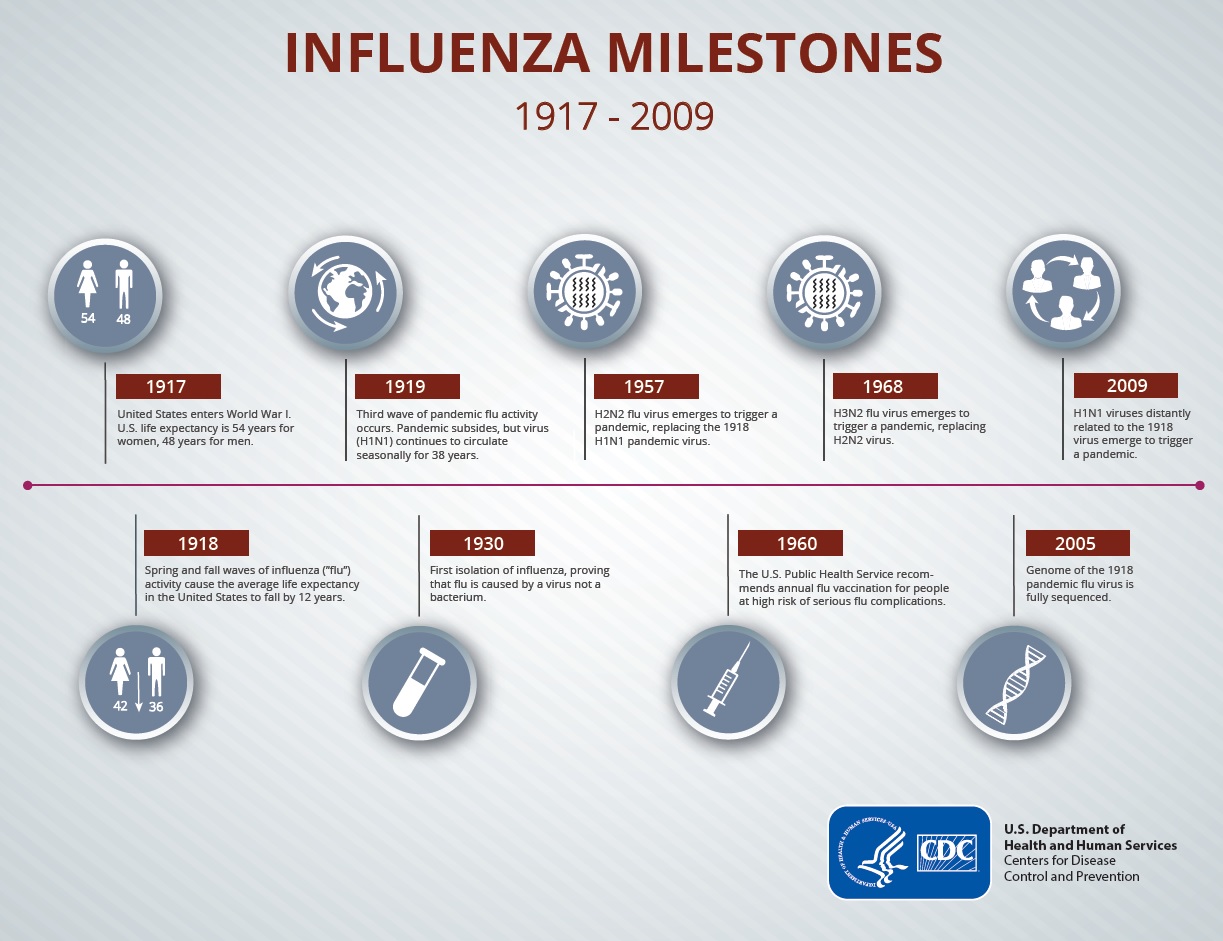
“It struck in three merciless waves—the first, relatively mild, in March 1918; the second, more brutal, in August 1918; and the third and deadliest of all in late 1918, running through the first few months of 1919.”

“It is estimated to have killed almost five times as many people as were killed during World War One.”

“More than half of the people it killed were fit, strong, healthy young adults in the prime of life—including millions of World War One soldiers.”

“Its victims often died within hours or days of developing symptoms. Their skin would turn blue and their lungs would fill with fluid, causing them to suffocate from within.” 

“This was the Spanish Flu—the Great Influenza pandemic of 1918-1919—caused by a virus called influenza type A subtype H1N1. It and its many life-threatening relatives are part of the Orthomyxovirus family—one of The Viral Most Wanted.”

“Countering Disinformation and Misinformation in Animal Health Emergencies”

The World Organisation for Animal Health and INTERPOL recently released this set of guidelines: “To orient Veterinary Services, Aquatic Animal Health Services and Law Enforcement to these issues and introduce some key strategies to manage disinformation and misinformation, these guidelines have been prepared by the World Organisation for Animal Health (WOAH) and the International Criminal Police Organisation (INTERPOL). They draw from a June 2022 virtual workshop convened as part of the WOAH, Food and Agriculture Organization of the United Nations and INTERPOL Project on ‘building resilience against agro-crime and agro-terrorism’, which was funded by Global Affairs Canada’s Weapons Threat Reduction Program [1].”

“The guidelines provide a starting point for these services and agencies, as well as organisations working in animal health emergencies, to prepare for, detect and respond to disinformation and misinformation. Since this is a fast-moving area with much information and guidance already available, this document includes links to further resources that offer more detail on specific strategies and actions.”

“WHO Bacterial Priority Pathogens List, 2024: Bacterial Pathogens of Public Health Importance to Guide Research, Development and Strategies to Prevent and Control Antimicrobial Resistance”

From WHO: “The 2024 WHO Bacterial Priority Pathogens List (WHO BPPL) is an important tool in the global fight against antimicrobial resistance. Building on the 2017 edition, the 2024 WHO BPPL updates and refines the prioritization of antibiotic-resistant bacterial pathogens to address the evolving challenges of antibiotic resistance. The list categorizes these pathogens into critical, high, and medium priority groups to inform research and development (R&D) and public health interventions.”

“The 2024 WHO BPPL covers 24 pathogens, spanning 15 families of antibiotic-resistant bacterial pathogens. Notable among these are Gram-negative bacteria resistant to last-resort antibiotics, drug-resistant mycobacterium tuberculosis, and other high-burden resistant pathogens such as SalmonellaShigellaNeisseria gonorrhoeaePseudomonas aeruginosa, and Staphylococcus aureus. The inclusion of these pathogens in the list underscores their global impact in terms of burden, as well as issues related to transmissibility, treatability, and prevention options. It also reflects the R&D pipeline of new treatments and emerging resistance trends.”

“The WHO BPPL acts as a guide for prioritizing R&D and investments in AMR, emphasizing the need for regionally tailored strategies to effectively combat resistance. It targets developers of antibacterial medicines, academic and public research institutions, research funders, and public–private partnerships investing in AMR R&D, as well as policy-makers responsible for developing and implementing AMR policies and programs.”

“Further details on the rationale behind the list, the methodologies used to develop the list and the key findings, can be found in the accompanying report.”

“A Long COVID Definition: A Chronic, Systemic Disease State with Profound Consequences”

From NASEM: “The lack of a clear and consistent definition for Long COVID presents challenges for policymakers, researchers, public health professionals, clinicians, support services, and patients. As such, the Administration for Strategic Preparedness and Response and the Office of the Assistant Secretary for Health asked the National Academies to assemble a committee of experts to produce a consensus definition for Long COVID. The resulting report, A Long COVID Definition: A Chronic, Systemic Disease State with Profound Consequences, presents the 2024 NASEM Long COVID Definition, developed based on findings reported in existing literature, as well as stakeholder and patient input.”

Read here.

“Pentagon Playing Catch Up After Years Neglecting Nuclear Protection”

Stew Magnuson recently published this piece in National Defense discussing the Army’s recent report, “An Independent Assessment of the Army’s Ability to Fight and Win on a Nuclear Battlefield.” He writes in part, “The Army Science Board in September completed work on a report, “An Independent Assessment of the Army’s Ability to Fight and Win on a Nuclear Battlefield.”

“Its conclusions were not revealed to the public and are available to read only on classified networks. But listening to a handful of government experts at a recent presentation who did have access to the report, its overall conclusions must be alarming.”

What We’re Listening to 🎧

Voices from DARPA Podcast Episode 79: Integrating ELSI
“In this episode, we’ll be taking a deeper dive into ELSI – ethical, legal, and societal implications of new technologies and capabilities – and specific examples of how DARPA programs have incorporated those considerations into their structure.”

“We’re highlighting three examples of how DARPA integrated ELSI throughout the program lifecycle via the counsel of experts from the medical, scientific, legal, and ethics communities to assist program managers and performers in identifying and mitigating any potential issues.”

“The first program, out of our Biological Technologies Office, is Safe Genes, which supported force protection and military health and readiness by developing tools and methodologies to control, counter, and even reverse the effects of genome editing—including gene drives—in biological systems across scales.”

“The second program, Urban Reconnaissance through Supervised Autonomy (URSA) from our Tactical Technology Office (TTO) aimed to enable improved techniques for rapidly discriminating hostile intent and filtering out threats in complex urban environments.”

“And, finally, the current In the Moment program in our Information Innovation Office (I2O) seeks to identify key attributes underlying trusted human decision-making in dynamic settings and computationally representing those attributes, to generate a quantitative alignment framework for a trusted human decision-maker and an algorithm.”

Listen here.

NEW: Upcoming Hearing on COVID-19 Origins

“Biodefense Program Director, Dr. Gregory Koblentz, will be testifying at the upcoming Senate Homeland Security and Government Affairs hearing on “Origins of COVID-19: An Examination of Available Evidence,” which will be held on Tuesday, June 19 at 10 AM. Also testifying will be Dr. Robert Garry from Tulane University, Dr. Stephen C. Quay from Atossa Therapeutics, and Dr. Richard H. Ebright from Rutgers University.”

NEW: Why Isn’t the World Ready for the Next Pandemic? How Can It Be?

From the Independent Panel for Pandemic Preparedness and Response: “The Right Honourable Helen Clark and Her Excellency Ellen Johnson Sirleaf explore these questions and provide answers in their new report: No Time to Gamble: Leaders Must Unite to Prevent Pandemics.”

This virtual event will take place on June 18 at 1 pm CET. Learn more and register here.

NEW: IRF Book Launch: Essentials of Biological Security: A Global Perspective

The Interdisciplinary Research Forum is hosting this book launch for Essentials of Biological Security: A Global Perspective by Lijun Shang, Weiwen Zhang, and Malcolm Dando: “Improving biosecurity education appears to be a key means to address the need for awareness raising and education about the dangers of the dual use research for life scientists within a culture of responsible research under BTWC or CBW. Although it has been advocated for a long time, it still presents a challenging task for all stakeholders, especially for life science communities.”

“In this launching workshop, the leading editor Professor Lijun Shang will explain the background of initiation of this book, including the purpose and strategy plan of using the book to implement biosecurity education. Professor Malcolm Dando will give an overview of the book with brief introduction of each chapter, and Professor Weiwen Zhang will talk about our promotion plan for this book, including translation, workshops, and future publication plans.”

“We will also have chapter authors to briefly introduce their individual chapters either in person or through a video recording. Finally, we will have Iris Magne to talk about our plans of using this book as a first stepping stone in the current project of Building up An International Security Education Network to include the book.”

This event will take place on June 14 at 2 pm BST. Learn more and register here.

NEW: DARPA B-SAFE Industry Day

From DARPA: “The rapidly evolving field of advanced genome editing tools has enabled the ability to modify genetic material in a manner that is precise, rapid, cost-effective, and broadly accessible. Clustered Regularly Interspaced Short Palindromic Repeats (CRISPR) and CRISPR-associated protein (Cas) or CRISPR-Cas technologies represent one of the most widely adopted tools in the genome engineering toolkit, and its advancement has revolutionized the field of biotechnology and genetic engineering. However, concerns regarding the precision, specificity, and control of CRISPR-Cas systems remain. The DARPA Broad-Spectrum Antagonists For Editors, or B-SAFE, program aims to develop platform technologies for highly potent inhibitors for multiple classes, types, and species of editors with enhanced activity, utility, and breadth of coverage. The B-SAFE program will also address the challenge of inhibitor molecules keeping pace with the discovery of novel editing systems by developing a platform for rapid discovery and development of inhibitors of novel, emergent gene editor technologies. The B-SAFE program will produce tools capable of complete inhibition of CRISPR-Cas systems with minimal off-target effects. Platforms must be capable of inhibiting DNA editors (Cas9 and Cas12 species) but approaches that also include RNA editors, other DNA editors, and emerging technologies are encouraged. The ideal solution would be capable of inhibiting all Cas9 and Cas12 species.”

This event will take place virtually and in-person on June 28. Learn more and register here.

The Advancing Threat Agnostic Biodefense Webinar Series-Computational and Systems Biology Advances to Enable Bioagent Agnostic Signatures

From PNNL: “Join us as we welcome Andy Lin, Computational Biologist at Pacific Northwest National Laboratory. His talk, titled “Computational and Systems Biology Advances to Enable Bioagent Agnostic Signatures” will be Tuesday, June 18, at noon PT.”

“Enumerated threat agent lists have long driven biodefense priorities. The global SARS-CoV-2 pandemic demonstrated the limitations of searching for known threat agents as compared to a more agnostic approach. Recent technological advances are enabling agent-agnostic biodefense, especially through the integration of multi-modal observations of host-pathogen interactions directed by a human immunological model.”

“Although well-developed technical assays exist for many aspects of human-pathogen interaction, the analytic methods and pipelines to combine and holistically interpret the results of such assays are immature and require further investments to exploit new technologies.”

“In this talk, we discuss potential immunologically based bioagent-agnostic approaches and the computational tool gaps the community should prioritize filling.”

Register here.

Registration for GHS 2024 Now Open

Registration is now open for the Global Health Security 2024 conference in Sydney, Australia. This iteration will take place 18-21 June, 2024. The call for abstracts is also still open. “The mission of the Global Health Security conference is to provide a forum where leaders, researchers, policy-makers, and representatives from government, international organisations, civil society, and private industry from around the world can engage with each other, review the latest research and policy innovations, and agree solutions for making the world safer and healthier. To that end, our mission is to help foster a genuinely multidisciplinary community of practice that is committed to working collaboratively to enhance global health security and eliminate disease, irrespective of its origin or source.”

SBA.3 International Synthetic Biology, and Biosecurity Conference in Africa

“Join us for the SBA.3 International Synthetic Biology and Biosecurity Conference in Africa, a groundbreaking event that brings together experts, researchers, and enthusiasts in the field of synthetic biology. This in-person conference will take place at the Laico Regency Hotel from Wed, Jul 17, 2024 to Friday, Jul 19, 2024.”

“Get ready to dive into the exciting world of synthetic biology and explore its potential applications in Africa. From cutting-edge research to innovative solutions, this conference offers a unique opportunity to learn, network, and collaborate with like-minded individuals.”

“Discover the latest advancements, trends, and challenges in synthetic biology through engaging keynote speeches, interactive workshops, and thought-provoking panel discussions. Immerse yourself in a vibrant atmosphere where ideas flow freely and new connections are made.”

“Whether you’re a seasoned professional or just starting your journey in synthetic biology, this conference provides a platform to expand your knowledge, exchange ideas, and contribute to the growth of the field in Africa.”

“Don’t miss out on this extraordinary event that promises to shape the future of synthetic biology and biosecurity in Africa. Mark your calendars and join us at the SBA.3 International Synthetic Biology and Biosecurity Conference in Africa!”

Learn more and register here.

Jobs Postings: Detailee (Current Federal Employee), Policy Analyst, Policy Advisor

The National Security Commission on Emerging Biotechnology (NSCEB) currently has multiple job openings for those who are current federal employees or those who already hold a TS clearance with TS/SCI preferred. Learn more and apply here.

Job Posting: Research Associate (Global Health Law & Governance)

The National University of Singapore is currently hiring a research associate focused on global health law and governance: “The Global Health Law and Governance Program at the NUS Centre for international Law is recruiting a one-year Research Associate position. The Program focuses on the international legal, regulatory and governance aspects of pandemic prevention and response, as well as international public health emergencies. Topics of interest include the World Health Organization’s negotiations on a new pandemic accord, the revision of the International Health Regulations, improving fair and equitable access to medicines, access and benefit sharing of pathogen samples/genetic sequencing data, intellectual property and technology transfer, global health innovation and technologies, and more. The program conducts research, offers education and training, and organizes events. The Research Associate will support the work of the Program and will also undertake a personal research project.”

Learn more and apply here.

Pandora Report 5.31.2024

This week’s edition of the Pandora Report focuses on stalled negotiations on amendments to the 2005 International Health Regulations and a new pandemic accord ahead of this week’s World Health Assembly, ARPA-H’s new investments in automated healthcare cybersecurity, BioNTech’s new $145 million in funding from CEPI, and updates on the scheme at the University of Florida to illegally purchase biochemical samples and certain drugs and then ship them illicitly to China.

Pandemic Accord Negotiations Stall Ahead of World Health Assembly

Negotiations on amendments to the 2005 International Health Regulations (IHR) and a pandemic accord set to be adopted at the World Health Assembly stalled earlier this week as member states struggled to reach consensus in both processes. This was despite member states’ agreements on much of the amendment and treaty draft texts. WHO Director-General Tedros Adhanom Ghebreyesus said in a statement that negotiators simply ran out of time and that “My wish is that we will come out of the Health Assembly re-energized and inspired, because the world still needs a pandemic treaty and the world needs to be prepared…This is not a failure.”

However, some disagree as negotiators may not come to an agreement on the pandemic accord for another year or more as delegates have indicated extensive further negotiations will be necessary. Key disagreements center on financing, how much of their products pharmaceutical companies ought to be required to specifically set aside for the countries most in need, and intellectual property rights and sanctions. In particular, as noted by The Guardian, is the question of what level of access to things like vaccines and therapeutics developing countries can expect in return for their efforts in things like monitoring and sharing information about pathogens spreading in their countries.

The pandemic accord has also become the subject of mis- and disinformation, with some claiming falsely that the treaty is actually a WHO power grab that will allow the organization to impose lockdowns on countries. A large blue bus was even spotted driving around near the Palais des Nations in Geneva where negotiations and the WHA are taking place, urging people to say “NO to the Pandemic Treaty” and to “STOP the UN Power Grab”.

Ultimately, member states agreed to end the negotiations and submit their outcomes for consideration at the WHA. The outcomes of the pandemic accord negotiations and the findings from the Working Group on the IHR are being presented at the World Health Assembly this week.

ARPA-H Announces Cybersecurity Automation Program for Healthcare Facilities

Recently, the Advanced Health Research Projects Agency for Health (ARPA-H) announced the launch of the Universal PatchinG and Remediation for Autonomous DEfense (UPGRADE) program, “a cybersecurity effort that will invest more than $50 million to create tools for information technology (IT) teams to better defend the hospital environments they are tasked with securing.”

In its statement, the agency explained “Cyberattacks that hamper hospital operations can impact patient care while critical systems are down and can even lead to facility closure. A major hurdle in advancing cybersecurity tools in the health sector is the number and variety of internet-connected devices unique to each facility. While consumer products are patched regularly and rapidly, taking a critical piece of hospital infrastructure offline for updates can be very disruptive. Delayed development and deployment of software fixes can leave actively supported devices vulnerable for over a year and unsupported legacy devices vulnerable far longer.”

“Filling this gap in digital health security will take expertise from IT staff, medical device manufacturers and vendors, health care providers, human factors engineers, and cybersecurity experts to create a tailored and scalable software suite for hospital cyber-resilience. The UPGRADE platform will enable proactive evaluation of potential vulnerabilities by probing models of digital hospital environments for weaknesses in software. Once a threat is detected, a remediation (e.g., patch) can be automatically procured or developed, tested in the model environment, and deployed with minimum interruption to the devices in use in a hospital.”

“Addressing vulnerabilities in health care and data security is a challenge that ARPA-H is uniquely positioned to address. ARPA-H’s Digital Health Security Initiative, DIGIHEALS, launched last summer and is focused on securing individual applications and devices. The agency has also recently partnered with Defense Advanced Research Projects Agency for the Artificial Intelligence Cyber Challenge, or AIxCC, a prize competition to secure open-source software used in critical infrastructure. UPGRADE aims to secure whole systems and networks of medical devices to ensure solutions can be employed at scale.”

“Through a forthcoming solicitation, UPGRADE seeks performer teams to submit proposals on four technical areas: creating a vulnerability mitigation software platform, developing high-fidelity digital twins of hospital equipment, auto-detecting vulnerabilities, and auto-developing custom defenses.”

“Multiple awards under this solicitation are anticipated. To learn more about UPGRADE, including information about the draft solicitation, virtual Proposers’ Day registration, and how to state interest in forming an applicant team, visit the UPGRADE program page.”

“For more information on HHS’ Cybersecurity Performance Goals and HHS’ cybersecurity work, visit HHS Cybersecurity Gateway.”

BioNTech Secures $145 Million in Funding from CEPI for Vaccine Plants in Africa

In a joint statement this week, BioNTech and the Coalition for Epidemic Preparedness Innovations (CEPI) announced that CEPI will provide BioNTech with an additional $145 million to help the company “enhance local R&D, clinical and commercial-scale manufacturing capacities to develop potential mRNA vaccines in Africa, for Africa,” at the company’s facility in Kigali, Rwanda. According to the company, “BioNTech’s commercial-scale manufacturing facility in Kigali was first announced in 2021 and inaugurated in December 2023. The facility is based on the Company’s high-tech, digitally enabled modular manufacturing units called BioNTainers, designed to manufacture a range of mRNA-based vaccines. BioNTech’s Kigali manufacturing facility could become the first commercial mRNA facility in Africa, intended to support the African Union’s and Africa CDC’s goal of producing 60 percent of total vaccine doses required on the continent by 2040.”

This funding is in addition to the $90 million CEPI provided the company with in September to support the development of vaccine candidates targeting mpox. Reuters reports that “CEPI CEO Richard Hatchett told Reuters that in a health emergency up to half of the Kigali plant’s annual capacity of around 50 million vaccines could be dedicated to making vaccines to respond to the emergency, as part of the funding deal…He said the money was for speeding up the development of the factory and to add on the capacity to produce material for research and clinical trials for third parties, not for specific vaccine development.”

University of Florida Employee and Students Implicated in Plot to Ship Biochemical Samples, Drugs to China

A research employee and several students from the University of Florida have been implicated in a scheme to illegally purchase thousands of drugs and biochemical samples and then illicitly ship the samples to China over the next seven years, according to reporting from NPR. It is not clear yet if the researcher and students (who were identified as co-conspirators) have been charged and arrested.

According to NPR, “The materials smuggled to China included what the government described as purified, non-contagious proteins of the cholera toxin and pertussis toxin, which causes whooping cough. Cholera is a generally non-fatal intestinal infection that can cause severe dehydration. Whooping cough is a highly contagious bacterial infection that can lead to violent coughing, vomiting and even respiratory distress – but is preventable with a vaccine…Other materials smuggled to China in the scheme included small amounts of highly purified drugs – known as analytical samples – of fentanyl, morphine, MDMA, cocaine, ketamine, codeine, methamphetamine, amphetamine, acetylmorphine and methadone, court records showed. Such small samples would generally be used for calibrating scientific or medical devices.”

Adding further intrigue to the matter, one of the students listed in the court document is Nongnong “Leticia” Zheng, who was also president of UF’s Chinese Students and Scholars Association-a PRC embassy-approved student organization that was allegedly targeted by the scheme’s organizers for recruitment of Chinese students. The organization protested last year the enactment of a law in Florida that “limits universities from recruiting students and faculty from China – and bans employing such students from working in academic labs without special permission.”

Prosecutors allege that Zheng, a marketing major, agreed to change her UF email signature to falsely claim that she was a biomedical engineering student in order to purchase the samples without raising suspicions. According to NPR, “Zheng, who said she lived most of her life in China, said in a tearful interview Friday at her apartment complex she was deceived and victimized by the scheme’s organizers, who she said solicited help finding paid interns from the Chinese student organization. Foreign students on educational visas are limited in how or whether they can work for pay.”

Furthermore, “The scheme’s organizers also paid UF students other than Zheng to allow use of their UF email addresses to order the substances, prosecutors said. Organizers paid the UF research employee with Home Depot gift cards worth hundreds of dollars and paid for trips and loans, court records showed. Prosecutors said organizers also used the email addresses of two UF researchers who had already left the university by 2015. They were not described as co-conspirators.”

The scheme, which lasted from 2016 to 2023, finally came undone when the company the UF researcher was ordering from, MilliporeSigma, became suspicious and reported the issue to the US government. The company, a subsidiary of Merck KGaA in Darmstadt, said in a recent statement that it has fired the employee involved with the scheme and is cooperating with investigators to avoid prosecution. According to the Department of Justice, this is the first time new rules allowing companies who self-report export violations and cooperate with investigators to avoid prosecution are being applied.

Deputy Attorney General Lisa Monaco said in a statement about the case, “Because of MilliporeSigma’s timely disclosure and exceptional cooperation, a rogue company insider and his accomplice pled guilty to fraudulently diverting millions of dollars worth of biochemicals to China, and the company will not be prosecuted…As national security and corporate crime increasingly intersect, companies that step up and own up under the department’s voluntary self-disclosure programs can help themselves and our nation.”

“Revisiting Health Security Governance: The Korean Biosurveillance Regime from Biopolitics to Biocitizenship”

HyunJung “Henry” Kim, Biodefense PhD alum, Research Fellow at the Institute for National Security Strategy (INSS), and Arms Control Negotiation Academy (ACONA) Fellow, recently published “Revisiting Health Security Governance: The Korean Biosurveillance Regime from Biopolitics to Biocitizenship,” in Asian Perspective. In the article, Kim assesses South Korea’s response to the COVID-19 pandemic using the biopolitics framework developed by the French philosopher Michael Foucault. According to the article’s abstract, “The South Korean COVID-19 pandemic response implemented a new biosurveillance regime actively utilizing new information and communication technology (ICT) and digital tools, centered on the testing, tracing, and treating (3T) strategy. Critics argue that Korea’s 3T strategy may violate individuals’ privacy and human rights. According to Foucauldian perspectives, implementing a strict regime of this nature would bolster the government’s social surveillance capabilities and enable population control, effectively establishing a “digital big brother” in the age of cyberspace. However, Western media highlights the citizen’s voluntary participation in biosurveillance practices as well as the successful national election during the pandemic, praising it as a new pandemic response model for democratic countries. Closer scrutiny reveals that Korea’s digital-based biosurveillance system for pandemic response has evolved since the experience with the 2015 Middle East Respiratory Syndrome (MERS) outbreak, by citizens’ requests and self-help behaviors. The biocitizenship framework’s bottom-up approach offers a more robust explanation for the emergence of new biosurveillance in Korea in the context of health security, as opposed to the top-down approach of biopolitics. This article’s case study illustrates how the post-MERS digital biosurveillance in Korea serves as a new model of biocitizenship establishing governmental discipline by social compromise.

“False Russian Claims Hijacked the Biological Weapons Treaty. Here’s How to Reclaim It”

Eva Siegmann discusses Russia’s false information regarding the United States’ Cooperative Threat Reduction program and its work in Ukraine in this piece for The Bulletin of the Atomic Scientists in addition to how to prevent future efforts to misuse the processes outlined under the BWC. She writes in part, “Russia misused the consultation procedure to spread its unfounded allegations and continued to do so after the procedure’s conclusion, which undermined the consultation mechanism and hampered progress on other issues. This misuse highlighted a need to reassess the Article V procedure and its capacity to safeguard the functioning of the treaty, which is crucial in today’s evolving biothreat landscape. To prevent future misuse from happening and hampering treaty proceedings, treaty members need to agree on a pragmatic redefinition of the consultative process.”

“Regulation of Toxins and Bioregulators Under the Chemical Weapons Convention and the Biological and Toxins Weapons Convention”

Michael Crowley and Malcolm Dando recently published this article in the Journal of Biosafety and Biosecurity: “In this paper we highlight how the apparent double coverage of toxins and bioregulators by both the Biological and Toxin Weapons Convention (BTWC) and the Chemical Weapons Convention (CWC) in fact masks a regulatory gap that has left such potentially dangerous agents neglected by both the control regimes during a period of rapid advances in relevant chemical, life and associated sciences and technologies. We first review what toxins, bioregulators and other mid-spectrum agents are and why they are of such concern and then examine how they are regulated under the BTWC and CWC. This paper then examines an illustrative range of contemporary chemical and life science research and associated activities of concern drawn from case study research on China, India, Iran, Russia, Syria and the United States, and assesses how the CWC and BTWC States Parties have inadequately addressed these threats. We then examine how both the CWC and BTWC Review Conferences failed to address these long-term challenges, and we end by providing a series of recommendations for how both regimes can be strengthened in this area.”

“Chloropicrin and Its Alleged Use in the Ukrainian War (Part 2)”

JP Zanders continues his discussion of Russia’s alleged use of chloropicrin against Ukrainian forces in this post on The Trench: “The first of three parts in this blog series reviewed the allegations of Russian chemical weapon (CW) use in the Ukrainian war from its start in 2014 until today. The Ukrainian delegate reported 1,060 incidents since the Russian invasion in February 2022 at the meeting of the Executive Council of the Organisation for the Prohibition of Chemical Weapons (OPCW) in March 2024…This second instalment looks into the specific allegation of chloropicrin use. Despite the US assertion, only three such claims from Ukrainian sources are public, but concrete evidence of when, where and how the chloropicrin was used is lacking. Notwithstanding, the allegation cannot be entirely dismissed. In April 1989, Soviet troops violently broke up demonstrations in the Georgian capital Tbilisi. The three RCAs they used? CS, CN and chloropicrin.”

“Scientists Weigh in on the Challenges and Opportunities of High-Risk Pathogens Research Around the World”

The Bulletin of the Atomic Scientists recently published this commentary package that focuses on gain of function research and countries’ recent changes and debates regarding policies governing such research. This series includes three commentaries: “The Risks of Underdeveloped Biorisk Management Policies in Pandemic Hotspots,” by Shahid Jameel, “TB Studies Illustrate the Importance of Properly Assessing the Risks of Pathogen Research,” by Anurag Agrawal, and “To Protect Global Health Security, Africa Needs More Pathogen Research Labs,” by Tom Kariuki and Denis Chopera.

“Canadian Laboratory Incidents with Human Pathogens and Toxins: An Overview of Reports, 2016-2022”

Balbontion et al. recently published this article in the Canada Communicable Disease Report: “Background: When the Public Health Agency of Canada’s Human Pathogens and Toxins Act and Human Pathogens and Toxins Regulations came into force, the reporting of laboratory incidents to the Laboratory Incident Notification Canada (LINC) surveillance system became mandatory. This report summarizes the laboratory exposure and non-exposure data reported from 2016 to 2022, with a particular focus on factors that are not typically presented in LINC’s annual report.”

“Methods: Reported laboratory incidents from 2016 to 2022 were analyzed. Exposures were analyzed by severity, occurrence and root cause, and affected individuals were analyzed by disease outcome, role and applied interventions. Non-exposures were analyzed by incident type. Exposure and non-exposure incident rates were calculated.”

“Results: Events reported to LINC totalled 928. Of those, 355 were confirmed non-exposures, 361 were confirmed exposures, and 111 were other events. Both exposure and non-exposure incident rates per 100 active licences peaked in 2018 (9.44 and 7.11, respectively). Most exposures were rated as minor or negligible severity. The most cited exposure occurrence types were sharps-related and procedure-related (23% each), and standard operating procedure-related root causes were most cited (24%). While 781 individuals were affected in the exposure incidents, most did not develop a laboratory-acquired infection (n=753; 96%) and received at least one form of treatment post-exposure (n=717; 92%). Inadvertent possession/production cases were the most common non-exposure incidents reported.”

“Conclusion: Exposure and non-exposure incident rates have decreased since 2018. Among exposure incidents, sharps-related and procedure-related occurrences were the most common, and the root cause was usually a standard operating procedure. Non-exposure incidents were mostly inadvertent possession/production cases. Exposure and illness outcome severity was mostly minor.”

“Cities Are the Canaries in the Public Health Coal Mines”

Ashwin Vasan, the 44th Health Commissioner of New York City, recently authored this piece for Foreign Policy, in which he explains “That’s because the sentinel cases for brooding public health threats, whether infectious or not, are often in cities. Cities are the canaries in the public health coal mine, for everything from mental health and homelessness, climate change to forced migration, substance use to sex trafficking. The way these challenges play out across our cities should not only drive national policy, but also serve as an important corollary for how to respond in less dense, less diverse, more rural areas. Yet when we consider the multilateral institutions where decisions are made and policymaking happens, cities rarely have any role in governance.”

“High H5N1 Influenza Levels Found in Mice Given Raw Milk from Infected Dairy Cows”

From NIH: “Mice administered raw milk samples from dairy cows infected with H5N1 influenza experienced high virus levels in their respiratory organs and lower virus levels in other vital organs, according to findings published in the New England Journal of Medicine. The results suggest that consumption of raw milk by animals poses a risk for H5N1 infection and raises questions about its potential risk in humans.”

Read more in this NIH media advisory.

“How Foes Can Defeat a Common Enemy: U.S.-China Collaboration to Combat Ebola”

Gayle Smith tackles questions of how the US and China can overcome their differences to address a common global health threat in this CSIS Brief: “As intense geostrategic rivalry becomes an enduring feature of the U.S.-China relationship, CSIS and the Brookings Institution have launched a joint project, Advancing Collaboration in an Era of Strategic Competition, to explore and expand the space for U.S.-China collaboration on matters of shared concern. In this essay, Gayle Smith, CEO of the ONE Campaign and former administrator of the U.S. Agency for International Development (USAID), discusses the threatening appearance of the Ebola virus in the mid-2010s and how the United States and China came together to address the crisis. Drawing on her first-hand experience, she identifies key lessons that should inform future collaborative efforts, including separating the key problem area and bilateral relations into two separate tracks, keeping focus on the right adversary, rooting discourse and communication in facts, and leaving the talking points on the table.”

NEW: Long-Term Health Effects of COVID-19: Disability and Function Following SARS-CoV-2 Infection

From NASEM: “Since the onset of the coronavirus disease 2019 (COVID-19) pandemic in early 2020, many individuals infected with the virus that causes COVID-19, severe acute respiratory syndrome coronavirus 2 (SARS-CoV-2), have continued to experience lingering symptoms for months or even years following infection. Some symptoms can affect a person’s ability to work or attend school for an extended period of time.”

“An ad hoc committee of the National Academies of Sciences, Engineering, and Medicine drafted a detailed report on the current status of diagnosis, treatment, and prognosis of long-term health effects related to Long COVID. In a public release webinar, members of the committee will provide an overview of key conclusions and answer audience questions.”

This webinar will take place on June 5 at 11 am ET. Learn more and register here.

NEW: The Advancing Threat Agnostic Biodefense Webinar Series-Computational and Systems Biology Advances to Enable Bioagent Agnostic Signatures

From PNNL: “Join us as we welcome Andy Lin, Computational Biologist at Pacific Northwest National Laboratory. His talk, titled “Computational and Systems Biology Advances to Enable Bioagent Agnostic Signatures” will be Tuesday, June 18, at noon PT.”

“Enumerated threat agent lists have long driven biodefense priorities. The global SARS-CoV-2 pandemic demonstrated the limitations of searching for known threat agents as compared to a more agnostic approach. Recent technological advances are enabling agent-agnostic biodefense, especially through the integration of multi-modal observations of host-pathogen interactions directed by a human immunological model.”

“Although well-developed technical assays exist for many aspects of human-pathogen interaction, the analytic methods and pipelines to combine and holistically interpret the results of such assays are immature and require further investments to exploit new technologies.”

“In this talk, we discuss potential immunologically based bioagent-agnostic approaches and the computational tool gaps the community should prioritize filling.”

Register here.

2024 ChABSA Annual Scientific Symposium

The Chesapeake Area Biological Safety Association (ChABSA) is hosting its 2024 Annual Scientific Symposium in-person in Rockville, MD, and virtually on June 5. This year’s keynote presentation will be delivered by Lisa Hensley, Zoonotic and Emerging Disease Research Unit USDA, National Bio and Agro-Defense Facility. Learn more and register here.

American Democracy and Health Security Initiative: Lighting a Path Amid Pandemic Polarization

“Please join the Brown University School of Public Health Pandemic Center, the COVID Collaborative, and the CSIS Bipartisan Alliance for Global Health Security for the launch of the American Democracy and Health Security Initiative.”

“The story of how America fared under the Covid-19 pandemic is actually two stories. While the more well-known story is one of failure, confusion, and polarization, the other story is one of American ingenuity amidst profound uncertainty. State and local leaders were at the center of this untold story—in serving their communities they innovated, bridged divides, and illuminated America’s path during the Covid-19 pandemic’s darkest days. The American Democracy and Health Security Initiative spotlights these lamplighters and harvests their hard-won lessons, to ensure the most successful strategies can be sustained or replicated in future crises.”

“On June 5, the American Democracy and Health Security Initiative will publish its findings on what actionable steps are needed to advance our health security for the future. The event will feature leaders from across the country from Governors, advisors, and health leaders to community organizations, educators, businesses, and crisis managers. We will discuss urgent opportunities to make the country more resilient against future threats to our health security and to our democracy and identify national and local innovations that must be retained and playbooks that are needed to reinvigorate leadership, bipartisanship, and equitable access in the face of the next health emergency in America.”

This event will take place on June 5 at 2 pm ET. Register here.

Security and Emerging Technology Series: Assessing the AIxBio Policy Landscapes

From CSET: “We are pleased to invite you to the next session of our Security and Emerging Technology Seminar Series on June 6 at 12PM ET, which will feature a discussion of the policy challenges at the intersection of AI and biotechnology.”

“The Biden Administration’s Executive Order on AI included several provisions relevant to AI, biology, and the intersection of the two. For example, the EO calls for a study on the biosecurity risks presented by novel AI tools and directs the creation of a DNA synthesis screening mechanism.”

“Now that we’ve passed the 180 day milestone since the EO’s signing, where do things stand? Join us on June 6 for a discussion on what’s been accomplished, what we have learned, and what challenges remain. CSET Research Analyst Vikram Venkatram will moderate a discussion with CSET Research Fellow Dr. Steph Batalis, National Security Commission on Emerging Biotechnology Fellow Matthew E. Walsh, and Science Policy Consulting Principal Dr. Sarah Carter. Their discussion will be followed by audience Q&A.”

Learn more and register here.

Advancing Data Sharing to Strengthen One Health Effectiveness: A Webinar Series

From the National Academies: “Data sharing is critical for evidence-based decision making for health security and resilience. The One Health approach, which is founded on the interconnectedness of human, plant, animal, and environmental health, demonstrates the need for cross-disciplinary data sharing and interoperability. The National Academies Forum on Microbial Threats will host the first event in a quarterly webinar series that explores how a One Health approach can inform more robust data sharing.”

“The series will present a call to action, identify barriers and success stories, and highlight potential future actions to advance data sharing through a One Health lens. The five webinars will provide an overview of data sharing and One Health and will demonstrate how data sharing is critical for addressing climate change, building resilient data systems, and developing trust among diverse stakeholders in order to address pressing global health issues.”

This event will take place on June 11 at 12 pm ET. Learn more and RSVP here.

Registration for GHS 2024 Now Open

Registration is now open for the Global Health Security 2024 conference in Sydney, Australia. This iteration will take place 18-21 June, 2024. The call for abstracts is also still open. “The mission of the Global Health Security conference is to provide a forum where leaders, researchers, policy-makers, and representatives from government, international organisations, civil society, and private industry from around the world can engage with each other, review the latest research and policy innovations, and agree solutions for making the world safer and healthier. To that end, our mission is to help foster a genuinely multidisciplinary community of practice that is committed to working collaboratively to enhance global health security and eliminate disease, irrespective of its origin or source.”

SBA.3 International Synthetic Biology, and Biosecurity Conference in Africa

“Join us for the SBA.3 International Synthetic Biology and Biosecurity Conference in Africa, a groundbreaking event that brings together experts, researchers, and enthusiasts in the field of synthetic biology. This in-person conference will take place at the Laico Regency Hotel from Wed, Jul 17, 2024 to Friday, Jul 19, 2024.”

“Get ready to dive into the exciting world of synthetic biology and explore its potential applications in Africa. From cutting-edge research to innovative solutions, this conference offers a unique opportunity to learn, network, and collaborate with like-minded individuals.”

“Discover the latest advancements, trends, and challenges in synthetic biology through engaging keynote speeches, interactive workshops, and thought-provoking panel discussions. Immerse yourself in a vibrant atmosphere where ideas flow freely and new connections are made.”

“Whether you’re a seasoned professional or just starting your journey in synthetic biology, this conference provides a platform to expand your knowledge, exchange ideas, and contribute to the growth of the field in Africa.”

“Don’t miss out on this extraordinary event that promises to shape the future of synthetic biology and biosecurity in Africa. Mark your calendars and join us at the SBA.3 International Synthetic Biology and Biosecurity Conference in Africa!”

Learn more and register here.

“Safely Inhibiting Gene Editors”

From DARPA: “The rapidly evolving field of advanced genome editing tools has enabled the ability to modify genetic material in a manner that is precise, rapid, cost-effective, and broadly accessible. Clustered Regularly Interspaced Short Palindromic Repeats (CRISPR) and CRISPR-associated protein (Cas) or CRISPR-Cas technologies represent one of the most widely adopted tools in the genome engineering toolkit, and its advancement has revolutionized the field of biotechnology and genetic engineering. However, concerns regarding the precision, specificity, and control of CRISPR-Cas systems remain.”

“One promising avenue to enhance safety, efficacy, and utility is the discovery or design of novel inhibitors which have the potential to obstruct and tune regulation of CRISPR-mediated and other genome editing tools by limiting unintended, off-target effects and enabling control of activity in time and space. The DARPA Broad-Spectrum Antagonists For Editors, or B-SAFE, program aims to develop platform technologies for highly potent inhibitors for multiple classes, types, and species of editors with enhanced activity, utility, and breadth of coverage. By harnessing advanced computational discovery capabilities such as deep learning, the program also seeks to develop a platform for rapid discovery and development of inhibitors of novel, emergent gene editor technologies.”

‘“Previous DARPA investments in the Safe Genes program demonstrated discovery of potent inhibitors for a wide array1 of CRISPR-Cas technologies, and developed platforms for discovery of inhibitors of these systems2,3,” said Dr. Shannon Greene, B-SAFE program manager. “The B-SAFE program seeks to leverage these and other efforts to develop tools for discovery, optimization, and validation of broad-spectrum inhibitors for gene editing technologies.”’

“If the 30-month B-SAFE program is successful, performers will demonstrate broad-spectrum, potent and durable solutions as outlined in the broad agency announcement. Speed – both from novel editor to candidate inhibitor discovery, and from novel editor to in vitro model – is also critical, as is inhibitor functionality for novel editors.”

“DARPA will assess novel inhibitor activity in vitro over the course of the program and a subset of top performing molecules will be selected for scale up at quantities sufficient for testing and evaluation by Department of Defense stakeholders. Performers will also engage with appropriate regulatory authorities to meet or exceed safety regulations. Teams may be required to meet with ethical, legal, and societal implications experts and ensure the research addresses any related concerns.”

‘“In concert, DARPA is interested in exploring methods to rapidly discover inhibitor molecules for novel gene editing technologies beyond CRISPR-Cas systems to keep pace with the rapidly advancing field while promoting safe use and minimizing off-target effects.” added Greene.”

“A special notice is now available on SAM.gov.”

Pandora Report: 5.27.2022

Happy Friday! This week starts with a trip around the Korean Peninsula as we cover what some Biodefense Program students are doing in South Korea right now before discussing updates on COVID-19 in North Korea. Brief updates and sources for more information on monkeypox are also included, in addition to a number of new publications and upcoming events.

Biodefense Students Study Northeast Asian Security Issues in South Korea

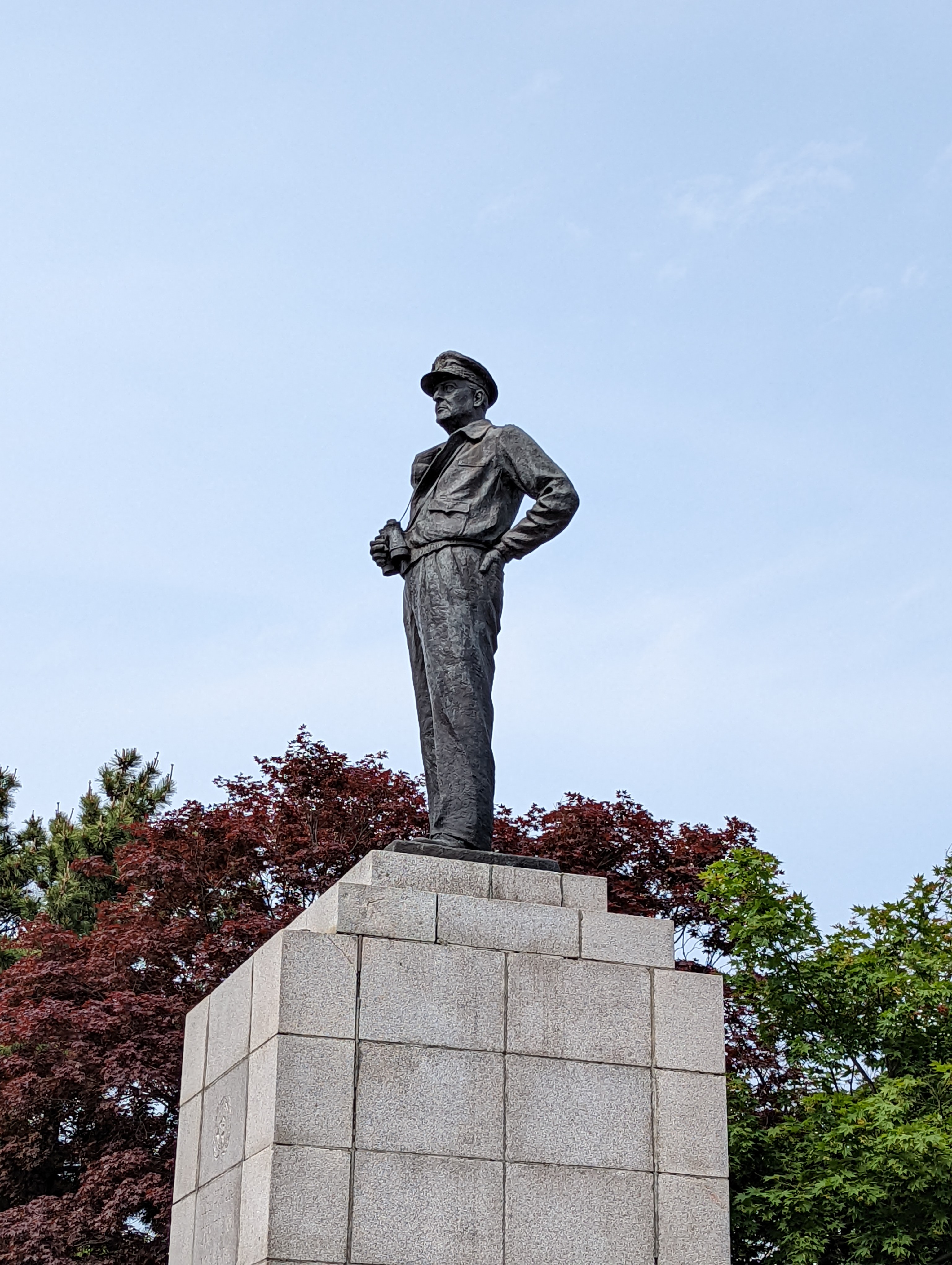
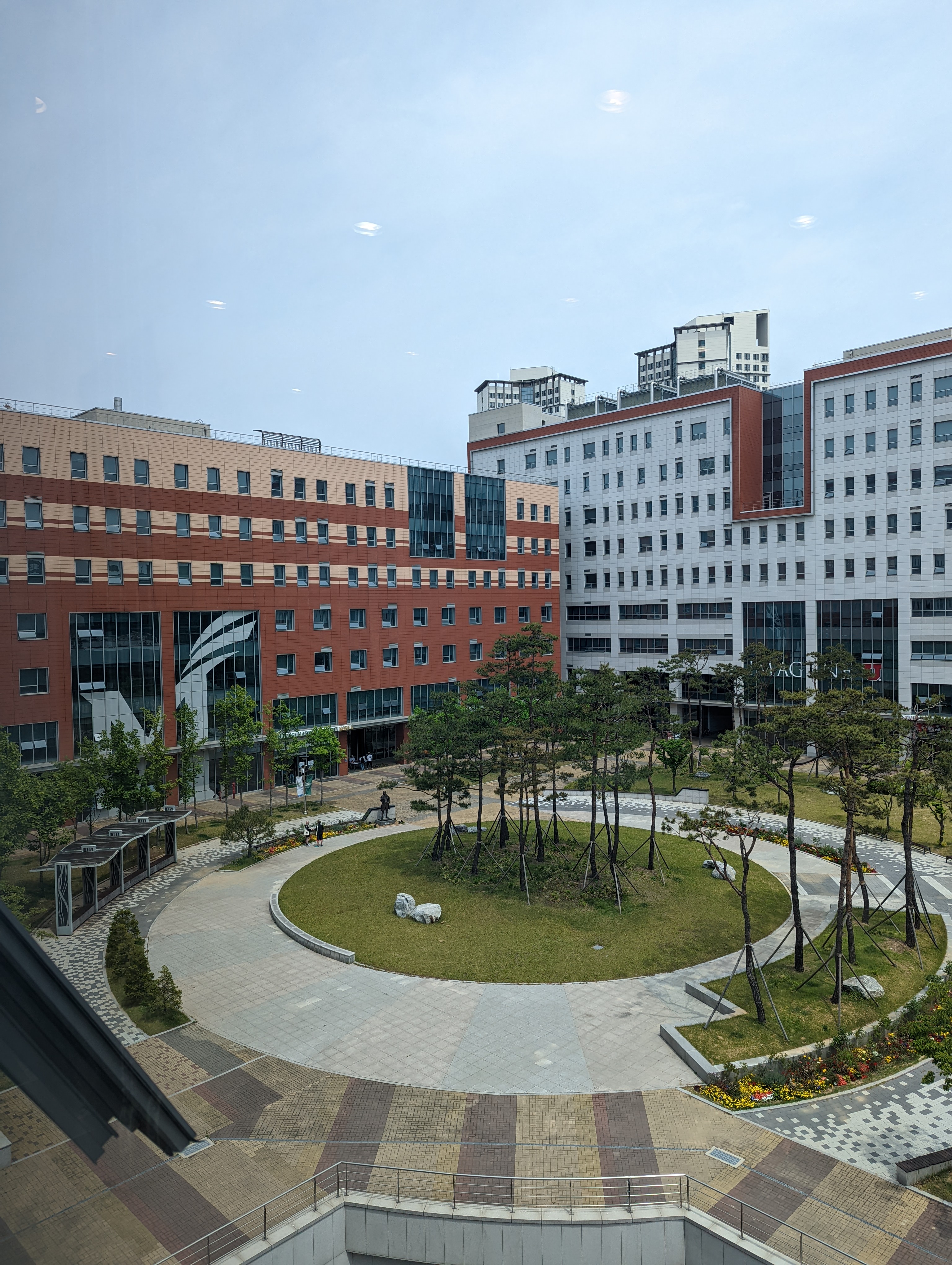
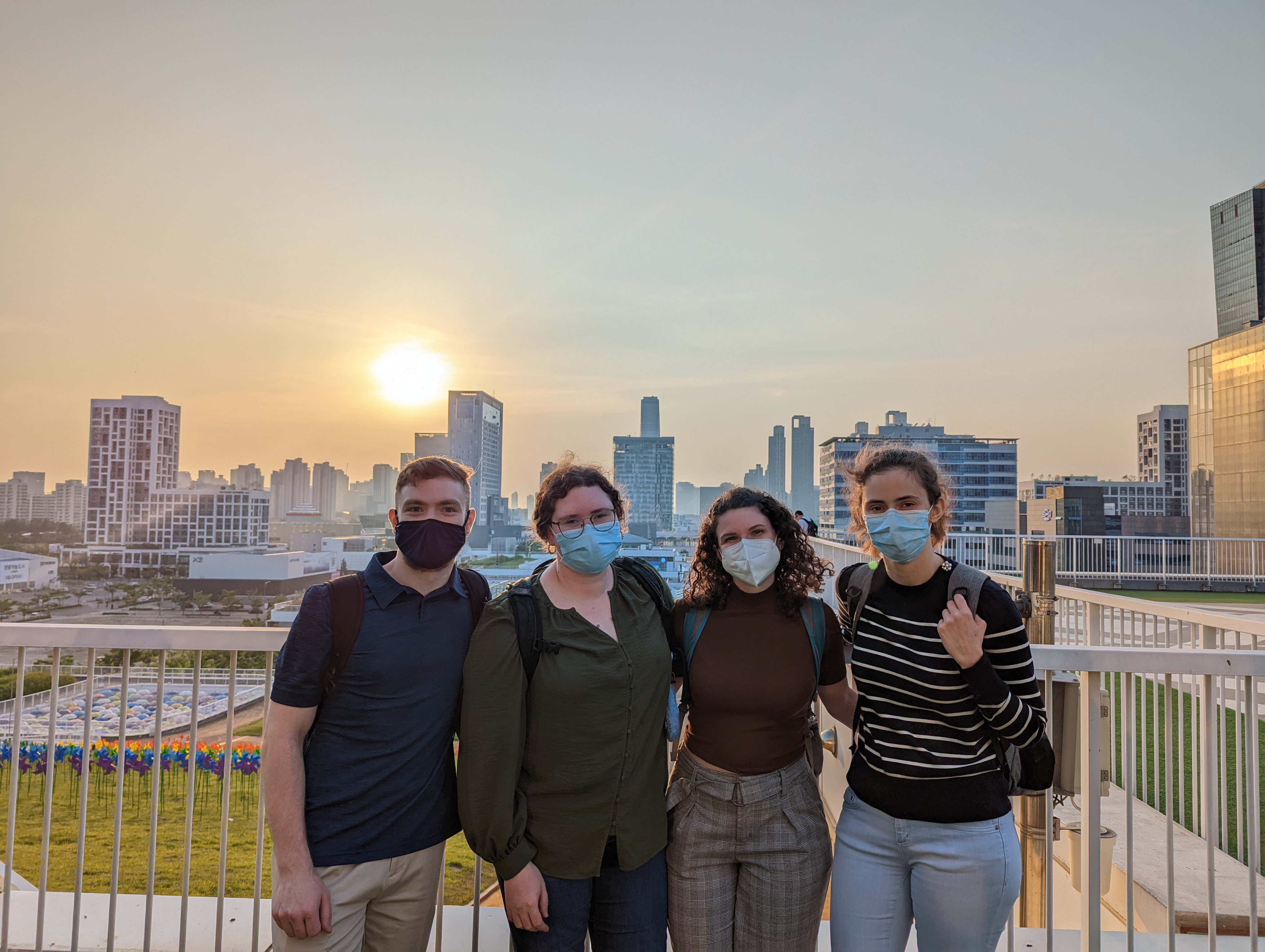
Four students from George Mason’s Biodefense Program are studying international security issues in South Korea for two weeks with the Schar School’s Center for Security Policy Studies (CSPS). The program is headed up by the Schar School’s Professor Ellen Laipson, current Director of CSPS and President Emerita of the Stimson Center, and is sponsored by the UniKorea Foundation. Their time in Korea began at George Mason’s Korea campus, located on the Incheon Global Campus. They are currently in Seoul and will soon finish their trip in Busan. Among other things, they have completed a Korean War crisis simulation and attended the CSPS-Korea branch’s annual symposium, “Prospects for Peace on the Korean Peninsula in Northeast Asia’s Changing Security Landscape,” which has been featured in multiple Korean media outlets.

COVID-19 in North Korea

The Democratic People’s Republic of Korea’s (DPRK, North Korea) outbreak of “fevers” continues as cases surge towards 3 million and the official death count reaches 86. The country claims it has the situation under control and that it is currently seeing a downward trend in cases, though this is the subject of much skepticism. “In a few days after the maximum emergency epidemic prevention system was activated, the nation-wide morbidity and mortality rates have drastically decreased and the number of recovered persons increased, resulting in effectively curbing and controlling the spread of the pandemic disease and maintaining the clearly stable situation,” Korean Central News Agency said this week.

However, North Korea is apparently unable to maintain sufficient testing capacity, so their numbers actually reflect those confirmed to have a fever, rather than confirmed cases of COVID-19. The term “fevers” seems to have become both a euphemism for COVID-19 and an actual metric for determining who is sick in the absence of strong testing capacity. Furthermore, given the realities of the regime’s rule and party politics in the country, lower-level leaders are not incentivized to tell the truth about outbreaks in localities and provinces. Therefore, while state media is likely not telling the truth about the situation, the central government also likely does not have a great understanding of national case counts either.

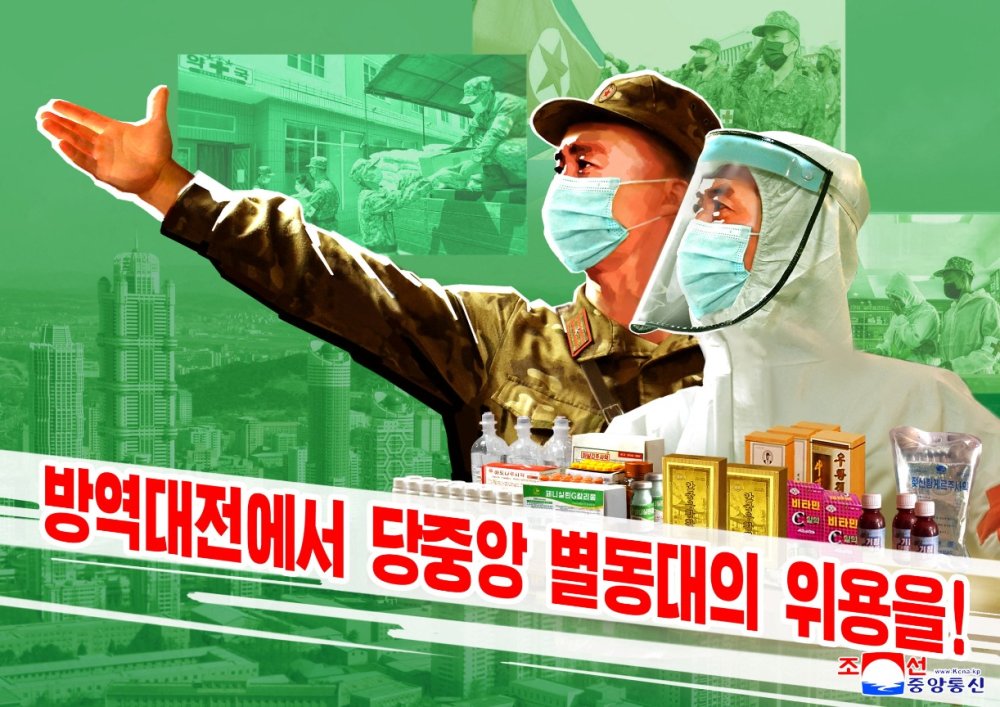
North Korean poster praising the Party’s “quarantine battle” featured by Korean Central News Agency (Source: 조선중앙통신)

Furthermore, while it is doubtful that the country has been truthful in reporting cases over the last couple of years, this does pose an important question- Why did the DPRK announce it has an outbreak now? Kim Jong-un has even described this as the worst crisis since the country’s founding in the mid-20th century. For context, North Korea survived a horrific famine in the 1990s wherein 240,000 to 3.5 million died of starvation or hunger-related illnesses in a country of 22 million. The DPRK is currently struggling with food shortages driven by low crop yields and reduced trade with the PRC due to COVID-19 border restrictions. Kim has also formally acknowledged this crisis, but the admission that this outbreak is so dangerous is especially interesting. National lockdowns have also likely further exacerbated hunger issues in the chronically malnourished country, as North Koreans lose access to private markets where many acquire most of their food, instead of through the national distribution system. There are a myriad of answers swirling around right now about why Kim announced this now, ranging from the idea that he really did not know how bad it was (because, again, lower-level leaders are not likely to be entirely truthful in their reporting) to the potential for this announcement to give the regime more control during this crisis.

However, the rapid spread of fevers throughout the capital has not dampened the DPRK’s missile tests. It launched three ballistic missiles within hours of announcing there was an outbreak in Pyongyang. Furthermore, this week, as President Biden’s trip to South Korea and Japan wrapped up, the North launched an ICBM and two other ballistic missiles. Multiple high-explosive tests have been conducted in the North in recent weeks, prompting officials to warn that nuclear and ICBM tests were likely scheduled to occur within the next several weeks. President Biden promised his counterparts that he would work to deter the North’s nuclear threat, which has been a cornerstone of newly-inaugurated South Korean President Yoon’s campaign. Biden and Yoon also publicly discussed resuming military exercises between the two countries, which were paused or scaled-down under the Trump and Moon administrations in an effort to increase engagement with the DPRK. While all of this is something the North would unsurprisingly conduct tests in response to, some did express doubt that this would happen with the formal announcement that there is a major COVID-19 outbreak in the capital. This week, the UN Security Council rejected a US-led resolution to sanction the DPRK in response to these launches, due to Russian and Chinese vetoes. The Chinese Permanent Representative to the UN, Zhang Jun, gave a speech during the vote in which he argued that sanctioning the North would be inhumane given the current situation, even though countries like South Korea and the US have offered aid to the DPRK even while remaining firm on issues like the North’s nuclear program.

The North has also continued to reject other international COVID-19 aid, further signaling that this outbreak has not changed much in the DPRK’s foreign policy so far. There are no known COVID-19 vaccines or antivirals in the country either. With concerns about access to things like oxygen and other medical supplies in the country, this fact is especially concerning. State TV has advised citizens to do things like make salt gargles, drink herbal teas, take pain killers, and disinfect their homes with mugwort solutions, further indicating the regime is presently relying on these at-home “cures” even though it has been offered aid by several countries and the WHO. Kim Jong-un has personally toured several pharmacies, sporting two masks while doing so in a departure from the last two years. It has also been reported that North Koreans near the Chinese border have been observed not wearing masks, meaning masking may only be in effect in Pyongyang or there is a mask shortage. This all does not bode well as the country’s healthcare system has remained hardly functional since the 1990s and more than 42% of the population are considered malnourished.

Monkeypox Cases On the Rise

Monkeypox updates are coming in constantly so, in an effort to not provide outdated or incomplete information, this section will focus more on providing good options for more information. As of May 25, there were 219 confirmed cases globally, primarily in young men who have sex with men, according to the European Centre for Disease Prevention and Control. These have been reported in 12 WHO member states where the disease is not endemic, a fact that the WHO says is abnormal, but containable.

The CDC’s Health Alert Network recently published this report on the disease in the US and other non-endemic countries that urges clinicians to be vigilant given the rise of cases not associated with travel to endemic countries. It provides good background and descriptions of clinical presentation, in addition to advice for health departments and the general public.

This situation has also required countries to assess the preparedness of their vaccine stockpiles. The US has two vaccines in its Strategic National Stockpile for smallpox that will also work against monkeypox, for example. As there is no specific vaccine for monkeypox, demand for smallpox vaccines has skyrocketed. Bavarian Nordic‘s smallpox vaccine has proven to be 85% effective against monkeypox and the company is seeing unprecedented demand for a product it normally produces for biodefense stockpiling purposes.

“Unrelenting Violence: Violence Against Health Care in Conflict”

The newest report from Safeguarding Health in Conflict Coalition was recently released, analyzing attacks on healthcare systems in conflict zones throughout 2021. With more than 200 WHO-confirmed attacks on health care in Ukraine, “…the world’s attention has understandably focused on Russia’s invasion and its apparent strategy of targeting hospitals and ambulances,”—but the crisis is global, the Coalition’s chair, Leonard Rubenstein, said in a Physicians for Human Rights news release. While the report does acknowledge there have been some improvements in accountability for these attacks, Rubenstein also stated, “Perhaps 2022 will be an inflection point, as images and reports of attacks on health care and their consequences in Ukraine continue to go viral, accompanied by frequent and loud demands for accountability – but it won’t be if the lassitude of the international community continues.”

Combatting Terrorism Center Sentinel New Edition

West Point’s Combatting Terrorism Center (CTC) recently released a new edition of its Sentinel, “The Biological Threat- Part Two,” as a follow up to the previous part one. In it, Gary Ackerman, Zachary Kallenborn, and Philipp Bleek present a bioterrorism
classification schema to evaluate the pandemic’s impact on bioterrorism, concluding that “…when it comes to bioterrorism, the pandemic probably has not moved the needle much. Although COVID-19 might encourage apocalyptic cults, some radical environmentalists, some extreme right-wing groups, and some Islamist extremist groups toward biological weapons, most other terrorist groups are more likely to be discouraged. The pandemic has bolstered some terrorists’ bio-related capabilities but in at most modest ways. At the same time, lessons from the COVID-19 experience may both help reduce the consequences of a future attack and heighten perceptions of bioterrorism risk.” Drs. Audrey Kurth Cronin of American University and Jaime Yassif of NTI also provided articles for this edition.

“When All Research Is Dual Use”

Issues in Science and Technology recently published this article by Dr. Sam Weiss Evans. In it, Weiss discusses issues with how policymakers view science and scientists, writing “The problems with the myth of asocial science, and its accompanying pantheon of lone hero scientists, are widespread and well known—but not, it seems, to policymakers, who continually reinscribe it. The myth can be found throughout US research, innovation, and governance systems, all of which fail to incentivize scientists to engage with society—or, often, even with those from other fields of study who might bring a different perspective.” He argues that science should instead be understood as a social system wherein science and scientists are questioned on the security implications of their work. He also criticizes “research security” and “research integrity”, arguing that these are part of a “fortress America” understanding of the world and that “Guards, gates, and guns only help when it’s clear what the threats are and what is to be protected. In the world of emerging biotechnology, neither is clear.” He ultimately concludes that social science approaches to understanding these threats need to be at the heart of the National Security Commission for Emerging Biotechnology’s work, writing that it will “…not be easy, as it questions some of the underlying assumptions of science—and of national security—for the last century. But the world in which those foundations were laid down no longer exists.”

“Charting a New Course for Biosafety in a Changing World”

David Gillum, Rebecca Moritz, Dr. Yong-bee Lim (Biodefense Program alumni), and Dr. Kathleen Vogel also recently released a piece in Issues in Science and Technology. They explain that “… recent events—such as the discovery of smallpox vials outside of high containment labs, the transport of inactivated anthrax around the world, and safety concerns around gene drives and a future with do-it-yourself genome editing—highlight gaps in how biosafety governance currently operates.” They argue that now is the time to amend issues in biosafety governance, but also that current proposals to do so “…largely mirror historical precedents and are reactive, overly broad, and inconsistent.” Their work provides good background information on this debate and offers an intriguing perspective on how to best balance allowing science to advance while also being realistic about the risks certain work poses.

Summary Report- “The Ethics of Protecting ‘CRISPR’ Babies: An International Roundtable”

The University of Kent recently hosted a roundtable event focused on the ethical issues posed by “CRISPR babies,” which featured Biodefense Program faculty member Dr. Sonia Ben-Ouagrham Gormley. The event’s summary report was recently published and provides background on this issue, including the recommendations of Ruipeng Lei and Renzong Qiu in China to protect the world’s first three genome-edited children, in addition to panelist comments. Dr. Ben-Ouagrham Gormley was also recently named a runner-up winner of the James Martin Center for Nonproliferation Studies’ McElvany Award for her work, “From CRISPR babies to super soldiers: challenges and security threats posed by CRISPR.”

Launching the Competence Network CBWNet: Achievements of the Chemical Weapons Convention and Future Challenges

The CBWNet recently released this working paper discussing the CWC at 25 years and the recent launch of the CBWNet project itself. The project is “a new, joint endeavour aimed at strengthening the norms against chemical and biological weapons. The four-year project is carried out jointly by the Berlin office of the Institute for Peace Research and Security Policy at the University of Hamburg (IFSH), the Chair for Public Law and International Law at the University of Gießen, the Peace Research Institute Frankfurt (PRIF) and the Carl Friedrich von Weizsäcker-Centre for Science and Peace Research (ZNF) at the University of Hamburg.” This paper identifies key gaps in international norms against chemical weapons use and how these might be bridged.

Discussions with DTRA Podcast, “Episode 1: DTRA Cleans Up Vozrozhdeniya Island’s 12 Tons of Anthrax”

This episode covers the Cooperative Threat Reduction Program’s Biological Threat Reduction Program’s heavy involvement in Vozrezhdeniye Island, Uzbekistan, commonly referred to as Voz Island, where the CTR Program eliminated more than 12 tons of weaponized anthrax that was abandoned on site. It includes the personal stories and experiences of DTRA people who were on the ground as part of the clean-up crew.

Global Public Policy Institute Podcast- “Nowhere to Hide”

This new episode from GPPI, “Nowhere to Hide”, discusses use of chemical weapons in Syria using first-person perspectives to do so. GPPI writes:

The systematic use of chemical weapons in Syria is one of the most heinous crimes in modern history. These toxic attacks have claimed the lives of almost two thousand people and left thousands more profoundly scarred. Not only did the Syrian regime poison its own people – it also defied the norms that underpin our international community. Assad’s flagrant crimes in Damascus, Aleppo and elsewhere have raised weighty questions about the future of war. And they have left Syrians with a momentous mission for justice. Nowhere to Hide tells the stories of those who came closest to these events.

Investigating High-Consequence Biological Events of Unknown Origin

The Vienna Center for Disarmament and Nonproliferation and the Nuclear Threat Initiative are offering an event exploring the possibility of establishing a new “Joint Assessment Mechanism” — a concept that NTI has been developing in consultation with international experts — to strengthen UN-system capabilities to investigate high-consequence biological events of unknown origin. The event will take place on Tuesday, 7 June 2022 from 13:00 to 14:30 CEST (Central European Summer Time) in person and online. The event will feature NTI’s Dr. Jaime Yassif and Angela Kane and UNIDIR’s James Revill. RSVP here.

Stakeholder Engagement Meeting on USG Policies for the Oversight of Life Sciences Dual Use Research of Concern

NIH will hold a stakeholder engagement meeting on the U.S. Government policies for the oversight of Dual Use Research of Concern (DURC). The meeting will be held in person at Arizona State University in Tempe, AZ and it will be webcast. It is scheduled for June 29, 2022, tentatively 12:00 PM to 6:15 PM ET (9:00 AM to 3:15 PM MT). Additional information will be available soon. Please monitor this site for updates.

Russian WMD Disinformation Resources

The mountain of debunkings and academic commentary on the Russian disinformation campaign targeting DTRA’s Biological Threat Reduction Program-supported labs in Ukraine continues to grow. While a more comprehensive list and tool on the Pandora Report’s website is currently under construction, here are a couple of recent works on the matter:

Dr. Gregory Koblentz on The Danger of Disinformation

Dr. Koblentz recently gave this talk, “The Danger of Disinformation,” with the Nuclear Threat Initiative discussing Russia’s false claims about Ukrainian biological research facilities.

GMU’s Access to Excellence Podcast- “EP 39: Russia’s War in Ukraine is Tied to Corruption, Organized Crime”

Dr. Louise Shelley, a University Professor and director of Mason’s Terrorism, Transnational Crime and Corruption Center explains to George Mason President Gregory Washington the connections between the war in Ukraine and Russian corruption and organized crime, and how criminals and terrorists take advantage in diverse ways of the globalized world in which we live. Shelley’s center exposes that criminality and recently helped take 55 million counterfeit and sub-standard medical masks out of circulation worldwide with the takedown of more than 50,000 online marketplaces and social media posts.

Pandora Report: 5.13.2022

Happy Top Gun Day to all those that feel the need for speed! Continuing the theme of “things you thought you left in the Cold War,” we’re covering news from Pyongyang, Beijing, and Moscow in this edition. This week we discuss the official emergence of COVID-19 in North Korea, China’s new 14th Five-Year Plan for the Development of the Bioeconomy, and a WHO European Region proposal to condemn Russia’s attacks on Ukrainian healthcare facilities and even shutter the WHO European Office for the Prevention and Control of NCDs in Moscow. The new Statement of the G7 Non-Proliferation Directors Group and updates on avian influenza in the United States are also discussed. We have included a number of great new publications, including a report from the Bipartisan Commission on Biodefense discussing the resources land-grant universities can offer US biodefense and the WHO’s first global report on infection prevention and control. Upcoming events, including one offered by Issues in Science and Technology featuring Biodefense Graduate Program alumnus Dr. Yong-Bee Lim as a panelist, are included. Finally, check out the announcements section for a special One Health funding opportunity and more new works combatting Russian WMD disinformation.

“Maximum National Emergency” in the Impossible State- First COVID-19 Outbreak Announced in Pyongyang

The Democratic People’s Republic of Korea (DPRK, or North Korea) announced via the Korean Central News Agency that it is in the midst of a COVID-19 outbreak this week with multiple people testing positive for the BA.2 subvariant in Pyongyang. At least 187,000 were quarantined due to a “fever” of unknown origin and Kim Jong-un declared a “maximum national emergency” in response. According to the New York Times, “North Korea said 350,000 people had been found to have a fever since late April, including 18,000 on Thursday. It added that 162,200 people had completely recovered.” Six are reported dead (one specifically from Omicron) and Kim has ordered all cities and counties in the country of 25 million to lock down. This is the first admission to having any cases from the regime and, in typical fashion, Kim took the opportunity to admonish his health officials, claiming that the outbreak in the capital “shows there is a vulnerable point in the epidemic prevention system.” As of late February this year, the DPRK had reported 54,187 COVID-19 tests to the WHO since the pandemic began, all of which it claimed were negative.

The announcement was made the same week the South inaugurated its new president, Yoon Suk-yeol on May 10. Yoon is a conservative who brings a harsher stance on the North than his predecessor, Moon Jae-in, which many think will heighten tensions over the North’s nuclear weapons. While major political events in the South often bring provocations from the North, including nuclear tests, some wonder if this new revelation might temper this tendency. However, former UK Ambassador to the DPRK, John Everard, believes this is unlikely to stop the North’s weapons testing for now. However, it may impact Kim’s promise to rapidly expand his nuclear arsenal, according to some analysts, a promise which he made at last month’s military parade featuring new ICBMs.

Irrespective of what happens in terms of nuclear testing, the public health situation is critical in the DPRK. Like China, it has implemented a Zero COVID-19 policy, which includes lockdowns at the border and strict quarantines. However, it has not yet started a COVID-19 vaccination campaign, making it the only other country to have not done so apart form Eritrea. This is despite multiple offers and refused deliveries from COVAX, including an offer that would have covered 20% of the population. As of February this year, COVAX had just 1.29 million doses allocated to North Korea, a number many organizations are calling for increases in amid the outbreak. The country previously expressed concerns about the safety and efficacy of the AstraZeneca vaccine COVAX had allocated for the country (citing concerns about rare blood clotting following vaccination), though it also rejected over 3 million doses of China’s Sinovac in September of last year, saying they should be sent to severely impacted countries. The DPRK also rejected multiple offers from South Korea and Russia to provide vaccines to the country in 2021. As a result, this is an unvaccinated population in a country plagued by malnutrition and other health crises facing a highly transmissible and contagious subvariant, all while lockdowns make accessing what healthcare is available difficult if not impossible.

Korea experts at CSIS think that the North is probably interested in receiving vaccines, though they specifically want mRNA ones. AstraZeneca’s vaccine is, like Johnson and Johnson’s offering, a viral vector vaccine. Sinovac’s CoronaVac is an inactivated vaccine found to be less effective than mRNA vaccines, like those offered by Pfizer and Moderna. Remember, the PRC has not produced nor authorized any mRNA vaccines, despite its initial claims that it had one domestic mRNA vaccine offering at its reach. The PRC does have some mRNA candidates in phase three clinical trials and review and approval processes, including the vaccine developed by Abogen Biosciences, Walvax Biotechnology, and the PLA Academy of Military Science that is currently in extensive trials in China, Mexico, and Indonesia. However, as China struggles with case counts in places like Shanghai, this is unlikely to be of much help to the DPRK any time soon.

The North has likely been concerned about the monitoring requirements that come with accepting COVAX shipments, which might be mitigated by reframing this as technical support while highlighting the differences between vaccines and other fungible forms of aid. De-linking COVID-19 aid from progress on other strategic goals is another potentially useful tool if the North remains committed to its current approach. Again, however, this is an incredibly serious situation, so the DPRK may be more open to less desirable terms than it normally would be.

Furthermore, the Zero COVID approach has contributed to secondary health and food crises as supplies of medication and access to care evaporate and the food shortage drags on. In fact, “The Great Year of Victory 2021”, the most recent version of the annual, near-two-hours-long documentary praising Kim and recapping the regime’s achievements for that year, even admitted there is a food crisis. According to the Washington Post, “The narrator described a meeting where Kim expressed his concern that “what is urgently needed in stabilizing the people’s livelihood is to relieve the tension created by the food supply,” and he called on emergency measures for the “food crisis,” noting that the country had dipped into its emergency grain supply. In June, Kim called the country’s food situation “tense.”” Border closures blocked shipments of grains, fertilizers, and farming equipment, adding to the pain of a population wherein the UN estimates at least 43% are food insecure. This was all even further exacerbated by severe flooding followed by 2020’s typhoons, contributing to continued low crop yields. Kim Jong-un even remarked at a 2021 Worker’s Party meeting that the “people’s food situation is now getting tense.” Finally, an October 2021 report from South Korea’s National Intelligence Service revealed that Kim ordered an all-out farming campaign, calling for all citizens to “devote every effort to farming, and to secure “every grain” of rice.”

China has indicated it is “ready to go all out” in its support for the DPRK during the outbreak. Zhao Lijian, Deputy Director of China’s Ministry of Foreign Affairs Information Department, told South Korea’s Yonhap News Agency this week, “China and the DPRK are friendly neighbors linked by mountains and rivers. The two sides enjoy the fine tradition of mutual assistance. Since the onset of COVID-19, the DPRK side has been firmly supporting China in the fight against the coronavirus. China very much appreciates that. We feel deeply for anti-COVID situation in the DPRK. As the DPRK’s comrade, neighbor and friend, China is ready to go all out to provide support and assistance to the DPRK in fighting the virus.”

However, this aid is likely to be slow moving, with the PRC and DPRK having re-suspended overland trade last month. The suspension was previously lifted in January 2022 after the border was closed in 2020 to prevent COVID-19 from spreading into the country. This lack of movement impacted what aid was sent, with a 2020 UNICEF aid bundle sent to North Korea in 2020 sitting idle at a quarantine facility in China until January of this year. Furthermore, trade between the countries dropped over 90% between March 2020 and March 2021, with the DPRK economy contracting 4.5% in 2020, the steepest decline for the country since it endured the massive North Korean Famine of the 1990s. South Korea’s Ministry of Unification announced too this week that the ROK is willing to provide medical assistance and other help North Korea during this crisis.

In February 2021 the CSIS Korea Chair’s podcast, The Impossible State, covered what was then known about lockdowns and the severity of COVID-19 in the North. This is a great source for context on this situation and, in it, Dr. Victor Cha (Senior Vice and Korea Chair at CSIS,  D. S. Song-Korea Foundation Chair in Asian Studies at Georgetown University, and former Director for Asian Affairs at the National Security Council), Dr. Kee Park (Lecturer on Global Health and Social Medicine at Harvard Medical School), and Dr. J. Stephen Morrison (Senior Vice President and Director of the Global Health Policy Center at CSIS) discussed issues like a lack of ventilators in the country and, perhaps most interestingly, greater government control of private markets.

These markets gained momentum during the days of the great famine in the 1990s when the regime’s public distribution system failed. According to some estimates pre-pandemic, up to 72% of North Koreans get all of their daily resources from these markets, not from the government. These are also avenues for media from the rest of the world to enter the country, however they also offer the regime and easy resource for hard currency. This was seen in 2009 when the regime redenominated the won and placed restrictions on how much of the old currency could be converted, helping reconsolidate its power from the growing markets. In an effort to recentralize and recoup some of its losses in 2021, the government “..reclaimed control over all foreign trade and domestic markets.” “During the 8th Party Congress, North Korea announced its new five-year economic plan (2021–25). It stresses centralised management in all sectors and advocates greater political control in day-to-day economic planning and management,” according to East Asia Forum. While this indicates the regime feels threatened by the pandemic, it also means that food insecure people’s access to resources was further limited, which will be even worse now with the entire country in lockdown.

China’s 14th Five-Year Plan Gets Boost to Its Bioeconomy Focus

In March 2021, the PRC’s National People’s Congress passed the country’s 14th Five-Year Plan, covering 2021-2025. China’s five-year plans are collections of social and economic development initiatives that the Party issues to help guide policy making. They help the Party outline what each facet of government should be working towards by doing everything from outlining what Chinese communism looks like in a given era to launching comprehensive reforms. Drafted in October 2020, the 14th Five-Year Plan was written amid economic shrinkage (the first in four decades) and worsening US-China relations during the COVID-19 pandemic. It sets forth a strategy of the “domestic and overseas markets reinforcing each other, with the domestic market as the mainstay,” focusing heavily on the economy, environment, energy, transportation, research and development, and urbanization.

China Daily reported this week that the National Development and Reform Commission released a new document outlining a plan to “spur the bioeconomy during the 14th Five-Year Plan period (2021-25), in a bid to promote high-quality development of the sector,” called “The 14th Five-Year Plan for the Development of the Bioeconomy.” This is similar in nature to the 14th Five-Year Plan for National Informatization released in December 2021, which seeks to further the country’s digitization during the period covered by the 14th-Five Year Plan. The 29-page bioeconomy plan, available here (no English translation was available at the time of writing) outlines steps “to promote innovative development of the bioeconomy, accelerate the development of healthcare, bio-agriculture, bioenergy, biological environmental protection and bioinformatics, improve the biosecurity risk control, prevention and governance system, and create a better environment for the innovative development of the bioeconomy.”

It begins by explaining broad objectives and indicating it was crafted “according to the 14th Five-Year Plan of National Economic and Social Development of the People’s Republic of China and the Outline of Vision 2035.” It then continues to define goals across 28 sub-topics, ranging from development areas to calls for improved epidemic management and biosecurity. The document outlines a number of basic principles including “Adhere to the innovation-driven”, “Adhere to win-win cooperation”, and “Adhere to risk control.”

The promise of win-win cooperation is a key way China promotes its aid and infrastructure deals with other countries, contrasting its supposedly mutually beneficial offerings with those of the United States. In a statement before the UN in 2015, Xi Jinping took this even further, saying “Major countries should follow the principles of no conflict, no confrontation, mutual respect and win-win cooperation in handling their relations. Big countries should treat small countries as equals, and take a right approach to justice and interests by putting justice before interests.” This echoes many claims and promises the PRC makes to differentiate itself from the United States on the global stage. In reality, the PRC is not really interested in win-win situations just as it is only interested in its core principle of non-interference when it is convenient. To achieve this “win-win approach”, the plan calls for, “a higher level of openness to the outside world and greater reform initiatives to gather global bio-innovation resources.” It also calls for China to “Actively participate in global biosafety governance, promote bilateral and multilateral international cooperation in life sciences and biotechnology, and promote the rational flow of innovation factors to achieve mutual benefit and win-win bio-economic benefits.”

Zhou Jian, Deputy Director of the Consumer Goods Industry Department at the Ministry of Industry and Information Technology said, “The ministry will work with relevant departments to implement moves to modernize the biomedicine sector, including building a modern innovative ecosystem deeply integrating the industrial, innovation, value and supply chains, shoring up weak chains, promoting intelligent and green development of the pharmaceutical industry, driving innovative transformation of large enterprises and supporting the development of small and medium-sized enterprises that specialize in niche sectors.”

According to China Daily, “Under the plan, the bioeconomy-a model focusing on protecting and using biological resources and deeply integrating medicine, healthcare, agriculture, forestry, energy, environmental protection, materials and other sectors-will become a key driving force to boost high-quality development by 2025.

By 2025, the proportion of the bioeconomy’s added value in GDP will increase steadily, and China is set to witness a significant increase in the number of enterprises engaged in the bioeconomy with annual revenues of at least 10 billion yuan ($1.5 billion) each. By 2035, China aims to be at the forefront globally in terms of the comprehensive strength of its bioeconomy.”

This is of concern, particularly given the strategy’s interest in things like precision medicine (which uses genomic, physiological and other data to tailor treatments to individuals), as US officials continue to warn of China’s interest in Americans’ health data – including DNA information. In 2020, as US states struggled to build their testing capacity, Chinese biotech firm BGI Group (formerly known as Beijing Genomics Institute) offered at least six states help with building and managing COVID-19 testing labs. This would have given the company access to Americans’ health data, former Director of the National Counterintelligence and Security Center William Evanina said during a January 2021 CBS 60 Minutes report. BGI was also scrutinized for its connection to the PLA as it gave pregnant patients’ genomic data from NIFTY prenatal tests to the Chinese military to conduct research on population traits. The Pentagon warned service members in 2019 not to take at-home DNA test kits, stating they create security risks and could impact service members’ careers, following similar concerns. China’s interest in competing in biopharmaceuticals and medical device manufacturing further indicate the country is in it for personal gain, not improving and saving lives- a dangerous prospect in a world threatened by high chronic disease burdens and threats of emerging infectious diseases.

Europe Pressuring the WHO to Isolate Russia

Many members of WHO’s European region are pushing the organization to remove experts at its office in Moscow. The 53-member region includes Ukraine, Russia and the entirety of the EU. It will meet on Tuesday and Wednesday to consider passing a resolution condemning Russia’s attacks on healthcare facilities in Ukraine, which could set into motion the removal of WHO experts in Moscow. Politico explains, “If agreed, the resolution would force the WHO’s hand on taking a more political stance on the war. The health organization has in the past been criticized for taking overtly apolitical positions, including for its caution at publicly calling out China in the early days of the pandemic.” The WHO did announce, however, this week that it has begun gathering evidence for a potential war crimes investigation into the more than 200 attacks it has documented by Russia on Ukrainian healthcare facilities on its Surveillance System for Attacks on Health Care platform.

WHO Director-General Dr. Tedros Adhanom Ghebreyesus visiting Ukraine last week

The draft resolution is sharply worded and demands that the Russian Federation “ensure respect for international humanitarian law, including protection of all medical personnel and humanitarian personnel exclusively engaged in medical duties, their means of transport and equipment, as well as hospitals and other medical facilities.” It also asks WHO Regional Director for Europe Hang Kluge “to safeguard the technical cooperation and assistance provided by the WHO European Office for the Prevention and Control of Noncommunicable Diseases, including the possible relocation of the aforementioned office to an area outside of the Russian Federation.” It also asks Kluge to “consider temporarily suspending all regional meetings in the Russian Federation.” The suspension in the region would be in place until there is a peaceful resolution in Ukraine, according to Politico

However, some argue it will do very little in practice. Lawrence Gostin at the O’Neill Institute for National and Global Health Law called it a “weak rebuke that won’t bother Putin,” continuing on to say that the WHO could remove Russia’s voting rights at the World Health Assembly and that the assembly should pass a resolution condemning attacks on healthcare facilities. He also argued that the WHO should take make multiple steps regarding this at the World Health Assembly, including 1) suspending Russia’s WHA voting privileges, 2) passing resolutions condemning Russian attacks on healthcare and blocking humanitarian aid, 3) inviting Ukrainian doctors and human rights NGOs to speak at WHO, and 4) reforming surveillance system for attacks targeting healthcare facilities.

Ukraine’s Ministry of Health has been even less subtle about its view of the matter, tweeting “Due to #Russianinvasion, Ukraine insists on the closure of WHO’s European Office for the Prevention and Control of Noncommunicable Diseases, located in Moscow. We are talking about moving the office outside of russia. Ukraine has already submitted a request to the @WHO_Europe.”

Statement of the G7 Non-Proliferation Directors Group

The G7 Non-Proliferation Directors Group recently released this statement outlining directions for strengthening the G7’s desires to improve non-proliferation, regulate conventional weapons and ammunition, and secure the sustainable use of outer space. It begins by reiterating “the G7´s profound condemnation of Russia’s premeditated, unprovoked, and unjustifiable war of choice against Ukraine, enabled by the Belarusian government.” It covers topics like strengthening the NPT ahead of the 10th Review Conference in August 2022, support for the restoration and full implementation of the JCPOA, upholding the global norm against the development and use of biological weapons, honoring the 20th anniversary of the Global Partnership against the Spread of Weapons and Materials of Mass Destruction, defending the norm against the use of chemical weapons and countering impunity, countering the proliferation of missiles and other critical technology, saving lives by preventing illicit transfers and destabilizing accumulation of conventional weapons and ammunition, and addressing state threats to the secure, safe, sustainable, and peaceful uses of outer space.

Bird Flu Updates- US States Confirm Cases in Wild Mammals

Building on last week’s update on Highly Pathogenic Avian Influenza (HPAI) cases in the US, H5N1 HPAI is now impacting more than 2/3 of US states, and multiple states in the Midwest have reported cases in fox kits. 37.55 million poultry in the US have died as a result of the virus’s spread. In Michigan, three fox kits have died in Macomb, St. Clair, and Lapeer counties, with the Michigan State Veterinary Diagnostic Lab finding them “non-negative” for HPAI. Minnesota’s Department of Natural Resources (DNR) reported on Wednesday that a wild fox had tested positive. Two kits were also confirmed to have died from H5N1 in Ontario, Canada earlier this month, with one displaying “severe neurologic signs before dying at a rehabilitation center, according to the DNR.” An estimated 1.7 million farmed birds in Canada have been killed by H5N1 this year. A turkey vulture in Dundas was recently found to be infected, indicating it is spreading even further in Canadian wild bird populations. Wild red foxes in the Netherlands tested positive in 2021 during outbreaks of avian influenza in multiple European countries as well. These cases in the US and Canada represent the first cases reported in wild mammals in North America.

“Testing in Minnesota has confirmed HPAI in nearly 200 wild birds, including 19 species of birds, primarily waterfowl and raptors,” said Michelle Carstensen, the Minnesota DNR’s wildlife health program supervisor. Washington state confirmed Thursday that it has seen six outbreaks in just one week, adding two to that count yesterday. “With so many suspicious cases in domestic flocks and wild birds pending investigation, I can’t emphasize enough how important it is to avoid exposing your flock to wild waterfowl, shorebirds, and other domestic flocks,” Washington state veterinarian Dr. Amber Itle said. The CDC still says the risk of H5N1 to humans remains low, but it advises the public to avoid handling sick or dead birds, cautioning them to use a plastic bag or shovel to do so if necessary.

In related news, China recently detected the first human case of H3N8 in a young boy who had close contact with chickens and crows raised at his home. While a single case is not particularly concerning, increases in transmission in birds increases the opportunities for these viruses to mutate, potentially gaining the ability to spread easily from person-to-person eventually. The WHO said of the case, “Currently, limited available epidemiologic and virologic information suggests that this avian influenza A(H3N8) virus has not acquired the ability of sustained transmission among humans. Therefore, the risk at the national, regional and international level of disease spread is assessed as low.”

“Boots on the Ground: Land-Grant Universities in the Fight Against Threats to Food and Agriculture”

The Bipartisan Commission on Biodefense recently released this report discussing how universities receiving benefits through Morrill Acts of 1862, 1890, and 1994 and Equity in Education Land-Grant Status Act funds offer unique resources to identifying and rectifying critical biodefense gaps. The Commission writes:

The food- and agro-biodefense challenge is different from, but as daunting as, biodefense of human public health due to the diversity of targets (e.g., livestock, crops, soil); spectrum of potential pathogens and pests; and different geographies, ecosystems, and infrastructures at risk. Land-grant universities are uniquely positioned to help defend the United States against biological threats to food, livestock, crops, wildlife, biofuels, pharmaceuticals, textiles, the environment, the bioeconomy, and the food and agro-economy, valued at more than $1 trillion annually. In serving the states, localities, tribes, and territories in which they reside, the land-grant universities have their boots on the ground in the fight against threats to food and agriculture.

The Commission makes a number of recommendations across the subjects of coordination, early warning, research and development, and preparedness, response, and mitigation. These include “Incorporate all land-grant universities in national food and
agro-biodefense activities,” “Expand the role of land-grant universities in international
surveillance and interdiction for food and agriculture defense,” “Establish land-grant university biodefense research coalitions,” and “Establish a cooperative extension preparedness and response framework that extends the capabilities of the Extension
Disaster Education Network,” among others.

Today, the US has 112 Land-Grant Colleges and Universities, ranging from Ivy League Cornell to major state agriculture universities like Kansas State and Texas A&M, both of which have strong backgrounds in biodefense work. “The original mission of these institutions, as set forth in the first Morrill Act, was to teach agriculture, military tactics, and the mechanic arts as well as classical studies so members of the working classes could obtain a liberal, practical education,” according to the Association of Public and Land-Grant Universities. The Association also explains, “A key component of the land-grant system is the agricultural experiment station program created by the Hatch Act of 1887. The Hatch Act authorized direct payment of federal grant funds to each state to establish an agricultural experiment station in connection with the land-grant institution there. The amount of this appropriation varies from year to year and is determined for each state through a formula based on the number of small farmers there. A major portion of the federal funds must be matched by the state.”

Map depicting land-grant universities across the nation. Source: USDA

“Want to Prevent Pandemics? Stop Spillovers”

Vora et al. discuss how just $20 billion per year in investments could greatly reduce the likelihood of future spillovers in their recent Nature Comment. They write that, “Spillover events, in which a pathogen that originates in animals jumps into people, have probably triggered every viral pandemic that’s occurred since the start of the twentieth century.” They continue, explaining “What’s more, an August 2021 analysis of disease outbreaks over the past four centuries indicates that the yearly probability of pandemics could increase several-fold in the coming decades, largely because of human-induced environmental changes.” They identify four specific actions based on “decades of research from epidemiology, ecology and genetics,” including protecting tropical and subtropical forests, banning or strictly regulating (both domestically and internationally) “commercial markets and trade of live wild animals that pose a public-health risk,” improving biosecurity where dealing with farmed animals is concerned, and improving people’s health and economic security, particularly in “hotspots for the emergence of infectious diseases.” They go on to discuss other measures, like incorporating these actions into the WHA pandemic agreement currently under negotiation and improvements in preventative health care.

“Zero Draft Report of the Working Group on Strengthening WHO Preparedness and Response to Health Emergencies to the Seventy-Fifth World Health Assembly”

Speaking of the WHA, a working group tasked with finding ways to strengthen WHO’s preparedness and response to health emergencies just released this draft report for the Assembly. In their 56-page report, they provide insight and recommendations for boosting the implementation and compliance of parties to the International Health Regulations and a potential timeline for amending them. According to Devex, “To strengthen equity, the report says member states should establish and scale up national and regional manufacturing capacities for the development and delivery of vaccines, therapeutics, diagnostics, and other essential supplies during emergencies. It also asks them “to consider processes for transfer of technology and know-how, including to and among larger manufacturing hubs in each region.””

Much of the report’s proposals are not new, owing to the fact that the working group was tasked with reviewing existing recommendations for pandemic preparedness. Other recommendations, as Devex explains, include “…for the WHO Secretariat to consider a different acronym when referring to so-called public health emergencies of international concern, as the abbreviation “PHEIC” is sometimes pronounced like the word “fake” in English. The report also suggests that WHO publish information on disease outbreaks with pandemic potential “on an immediate basis” and that member states discuss the feasibility of developing an intermediate and/or regional alert systems for health emergencies.” It also recommends the 75th WHA adopts any amendments to the IHR that are ready, while also suggesting the director-general convenes a review committee to “make technical recommendations for proposed amendments submitted to the WHO Secretariat by June 30 of this year.” The group also recommends that the IHR review committee provides a report to the director-general by October. Meanwhile, a member state-led process should finalize their proposed amendments and then submit them to the director-general by January of 2023. If necessary, the report indicates this process can continue until the 76th World Health Assembly, expected to take place in May 2023.

The United States has already submitted proposals for IHR amendments for consideration by the 75th WHA. They are primarily focused on requiring states parties to provide early notification to WHO regarding any events that might become PHEICs. The WHO would also have a 24-hour window to work with states parties to verify reports and determine a disease’s potential to spread abroad. Another US-proposed amendment includes a provision on deliberations of the IHR emergency committee, specifying that if the group “is not unanimous in its findings, any member shall be entitled to express his or her dissenting professional views in an individual or group report, which shall state the reasons why a divergent opinion is held and shall form part of the Emergency Committee’s report.” The US has also proposed creation of a compliance committee for implementation of the IHR.

“The Department of Defense Contributions to Pandemic Response”

CSIS Global Health Policy Center’s Drs. Thomas Cullison and J. Stephen Morrison recently authored this report discussing the Department of Defense’s (DOD) future in the US government’s work on international health security. They write, “A process of strategic planning that encompasses a spectrum of valuable DOD contributions to contain the global Covid-19 pandemic should begin right away. DOD has broad capabilities that have consistently proven their high value in addressing the current Covid-19 pandemic and other historical disease outbreaks, in support of the U.S. civilian-led response. The knowledge and experience gained in crisis response at home and overseas contribute to military readiness and improved coordination of all actors involved in preventing, detecting, and responding to infectious disease events.”

They also provide four recommendations to strengthen DOD’s contributions overseas that advance US global health security interests:

  • Identify a lead federal agency for U.S. international Covid-19 response and future health security crises. DOD should have permanent, sustained involvement in integrating and planning from the beginning.  
  • More closely coordinate and synchronize DOD capabilities dealing with biological threats within DOD and with external partners. 
  • Align funding authorities with desired outcomes. 
  • Maintain military, medical, and scientific expertise. 

“Towards a Post-Pandemic World: Lessons from COVID-19 for Now and the Future”

The National Academies recently published this proceedings of a workshop summarizing discussions and findings from the Forum on Microbial Threats’ two virtual 2021 workshops. The first workshop focused on what it means to frame the response to COVID-19 through a “syndemic” approach, and what the implications would be for global recovery. The second workshop focused more broadly on key lessons and emerging data from ongoing pandemic response efforts that can be incorporated into current health systems to improve resilience and preparedness for future outbreaks.

This workshop explored the long-term effects of COVID-19 on health equity, including considerations for mental health and social determinants of health. It also addressed uncertainties during a pandemic, such as trust, communication, and engagement and explored approaches to systematize recovery efforts to improve the ongoing responses and prepare for the next pandemic. Experts discussed possibilities for a post-pandemic world and a response strategy for stakeholders that ensures sustained community partnerships and prioritization of health equity. This Proceedings of a Workshop summarizes the presentations and discussions from the second workshop.

“The Coronavirus Vaccine Manufacturing Failures of Emergent Biosolutions”

This week, Rep. Carolyn B. Maloney, Chairwoman of the Committee on Oversight and Reform, and Rep. James E. Clyburn, Chairman of the Select Subcommittee on the Coronavirus Crisis, released a staff report on their joint investigation into coronavirus vaccine manufacturing failures of Emergent BioSolutions, Inc. (Emergent). These failures occurred under a contract awarded by the Trump administration despite warnings about the company’s history of serious deficiencies.

According to the Committee on Oversight and Reform, “New evidence shows that nearly 400 million doses of coronavirus vaccines—significantly more than previously known—were destroyed because of Emergent’s failure to meet or maintain quality standards at its Bayview manufacturing facility. Internal communications reveal efforts by Emergent executives to hide evidence of contamination in an attempt to evade oversight from government regulators.” The report also found that Emergent executives promoted their manufacturing capability despite being warned for years by their then Executive Vice President of Manufacturing and Technical Operations that the company’s quality systems were deficient. Furthermore “FDA, Johnson & Johnson, and AstraZeneca identified multiple deficiencies at Bayview, which Emergent failed to remediate despite urgent warnings.” The report also determined that inexperienced staff and high rates of staff turnover at Emergent contributed to the vaccine contamination. HHS, under the Biden administration, terminated its contract with Emergent because the company failed to follow federal manufacturing standards. The report notes, “According to HHS, Emergent received $330 million in taxpayer dollars before the Biden Administration terminated the company’s contract in November 2021.  This action saved taxpayers $320 million that remained on the contract and came after the Committees launched an investigation and released preliminary findings about Emergent’s troubling conduct.”

“Global Report on Infection Prevention and Control”

The WHO has launched the first ever global report on infection prevention and control (IPC), revealing that “good IPC programmes can reduce health care infections by 70%.” The WHO explains, “Today, out of every 100 patients in acute-care hospitals, seven patients in high-income countries and 15 patients in low- and middle-income countries will acquire at least one health care-associated infection (HAI) during their hospital stay. On average, 1 in every 10 affected patients will die from their HAI.” This report finds that high-income countries are more likely to be further progressing in improving their IPC, and “are eight times more likely to have a more advanced IPC implementation status than low-income countries.” The report also notes that “…little improvement was seen between 2018 and 2021 in the implementation of IPC national programmes in low-income countries, despite increased attention being paid generally to IPC due to the COVID-19 pandemic.” WHO calls on all countries to increase their IPC investments to help improve quality of care and patient and worker safety.

“Archival Influenza Virus Genomes from Europe Reveal Genomic Variability During the 1918 Pandemic”

In the decades since the 1918 flu pandemic, improvements in technology have allowed researchers to learn more about the H1N1 virus that killed an estimated 50 million globally. However, questions have still remained regarding how and why the virus changed as time progressed, especially since its first wave was relatively tame compared to later waves. However, Patrono et al. recently published their research helping answer some of these questions. Dan Robitzski with The Scientist explains, the “researchers managed to extract viral genomes from tissue samples of people who caught the 1918 pandemic flu in different years to show how the virus mutated over time to adapt to the human immune system. They conclude that the virus may have evolved into the pathogen that circulated as a seasonal flu after the pandemic ended.”

Patrono et al. write in Nature Communications,

The 1918 influenza pandemic was the deadliest respiratory pandemic of the 20th century and determined the genomic make-up of subsequent human influenza A viruses (IAV). Here, we analyze both the first 1918 IAV genomes from Europe and the first from samples prior to the autumn peak. 1918 IAV genomic diversity is consistent with a combination of local transmission and long-distance dispersal events. Comparison of genomes before and during the pandemic peak shows variation at two sites in the nucleoprotein gene associated with resistance to host antiviral response, pointing at a possible adaptation of 1918 IAV to humans. Finally, local molecular clock modeling suggests a pure pandemic descent of seasonal H1N1 IAV as an alternative to the hypothesis of origination through an intrasubtype reassortment.

Influenza Milestones, Source: CDC

New York Times- The Daily: “One Million”

Today’s episode of The Daily podcast discusses the impending one millionth confirmed COVID-19 death in the United States, providing stories of some of the lives lost and the impact this has had on the living. “One million empty chairs around the dinner table. Each an irreplaceable loss,” President Biden said in a statement Thursday. “Each leaving behind a family, a community, and a nation forever changed because of this pandemic.” The podcast producers write, “We asked listeners to share memories about loved ones they have lost — and about what it’s like to grieve when it seems like the rest of the world is trying to move on. “Time keeps moving forward, and the world desperately wants to move past this pandemic,” one told us. “But my mother — she’s still gone.”” One million people is a number difficult to comprehend, but humanizing this massive number can help one process the gravity of the loss the country has suffered during this pandemic.

What Is Biosecurity for the Twenty-First Century?

After September 11 and the anthrax attacks in 2001, the United States adopted a top-down governance structure for bioterrorism that famously employed “guns, gates, and guards” to prevent attacks, while keeping track of suspicious “insiders” who might cause harm. But today, after the emergence of the novel coronavirus and its variants, society’s idea of what constitutes biological security and safety is changing. Looking toward a future in which gene editing can be done by do-it-yourselfers, biological engineering is common, and environmental changes shape new biorealities, the old top-down model of biosecurity will not be up to the task.

On May 23 at 3:00 PM ET, join Melissa Haendel (University of Colorado Anschutz Medical Campus), David Gillum (Arizona State University), Sam Weiss Evans (Harvard Kennedy School), and Yong-Bee Lim (Council on Strategic Risks) for a discussion moderated by Bryan Walsh (Vox Future Perfect) on how to reimagine biosecurity and biosafety—and even the relationship between biological research and society—for a new era. Register for the event here.

The Danger of Disinformation: Understanding Russia’s Propaganda Campaign Against Ukrainian Biological Facilities

Join NTI for a conversation with Dr. Gregory Koblentz, one of the world’s foremost biodefense scholars working at the nexus of health, science, and security, to discuss the ongoing Russian disinformation campaign against biological research facilities in Ukraine.

As part of an effort to justify its invasion of Ukraine, Russia has sought to sow doubt and confusion around the purpose of public health and research labs in the country, spreading disinformation that these facilities are conducting covert, offensive bioweapon development operations. This tactic is a longstanding favorite of the Russian government, going back decades. Koblentz will explore the true aims of Russia’s disinformation campaign in Ukraine and what the international community should do to counter it. This seminar will be held on May 17 at 11 am EST. Register here.

Lessons from COVID-19 for the Public Health Emergency Enterprise: What Happened to the Plans? – A Workshop

The National Academies of Sciences, Engineering, and Medicine Forum on Medical and Public Health Preparedness for Disasters and Emergencies is hosting a workshop exploring the nation’s Public Health Emergency (PHE) preparedness enterprise, through the lens of COVID-19 in the US. The workshop will be hosted on May 17 and 18, and will explore key components, success stories, and failure points throughout the entire PHE preparedness and response enterprise. Participants will also identify opportunities for more effective catastrophic disaster, pandemic, and other large scale PHEs planning at the federal, state, local, tribal, and territorial levels. Speakers include Dr. Deborah Birx (former Coronavirus Response Coordinator at the Office of the Vice President) and Dr. Gigi Gronvall (Senior Scholar at Johns Hopkins Center for Health Security). Register here.

Dr. Gregory D. Bossart Memorial One Health Scholarship Call for Applicants

A $5,000 USD Dr. Greg Bossart Memorial Scholarship is available to a graduate student in wildlife biology, epidemiology, veterinary, medical, public health, basic or social sciences or other post-graduate program focusing on the interconnection between people, animals, plants, and their shared environment using a One Health framework. The application deadline is July 1, 20022, at 11:59 pm EDT. Learn more about Dr. Bossart and the scholarship here.

Russian WMD Disinformation Resources

The mountain of debunkings and academic commentary on the Russian disinformation campaign targeting DTRA’s Biological Threat Reduction Program-supported labs in Ukraine continues to grow. While a more comprehensive list and tool on the Pandora Report’s website is currently under construction, here are a couple of recent works on the matter:

“Russia Targets Azerbaijan, Others With Fake Bioweapons Claims”

Voice of America’s Polygraph.info fact-checking site published this fact-check discussing Secretary of the Russian Security Council Nikolai Patrushev’s April 27 claim that, “After the collapse of the Soviet Union, the United States and its satellites deployed a network of bio-laboratories in the space of the former Soviet republics – in Georgia, Ukraine, Azerbaijan, Uzbekistan, Kazakhstan, and Armenia, where, under the guise of scientific research, they conduct military-biological activities.” Following Russia’s claim that it “could face biological threats from lab leaks in countries on its southern borders,” Azerbaijan’s State Security Service rejected the claims such labs have never operated in the country on May 7.

“Americans Love Conspiracy Theories, and That’s Dangerous for Everyone”

Matthew A. Baum and Katherine Ognyanova with the Bulletin of the Atomic Scientists discuss some of their findings from the COVID States Project in this piece. They explain their recent national survey asking respondents to assess the accuracy of eight popular false claims, four of which were about the COVID-19 vaccine. The other four pertained to Russia’s war in Ukraine. They also asked respondents about their attitudes and behaviors regarding both crises. They write, “The results contain both good and bad news. The good news is that in both cases, most Americans did not believe false claims about either crisis…The bad news is that relatively large percentages of respondents were unsure about the accuracy of the false claims.”

Something a Little Less Serious If You Made It This Far… “Utah Plant Pest Diagnostic Lab Wins NPDN’s Rotten Tuber Award for ‘Hazmat Team Called for Bee Excrement!’”

USDA’s National Institute of Food and Agriculture announced Wednesday that the Utah Plant Pest Diagnostic Lab at Utah State University was awarded first place in the National Plant Diagnostic Network (NPDN)’s Rotten Tuber Awards for its submission – “Hazmat Team Called for Bee Excrement!” The Rotten Tuber Awards recognize unique samples that leave plant diagnosticians asking themselves, “What was this person thinking when they sent this sample?” From USDA NIFA:

“Enjoy “Hazmat Team Called for Bee Excrement!” submitted by Zach Schumm, arthropod diagnostician and urban IPM associate, and Claudia Nischwitz, plant pathologist specialist:

“In mid-August 2021, the Utah Plant Pest Diagnostic Lab received a frantic call from an individual at a local Department of Health regarding a substance that was found on school buses that were about to be sent out to pick up children. They weren’t sure what the substance was and due to safety concerns, they delayed the use of the buses. Thinking the substance could be from a plant or plant derived, they contacted us in the diagnostic lab to see if we could offer any immediate advice. But they made it abundantly clear that they had no idea what the substance could have been. And tensions were clearly high! 

“When we were contacted by the individual, Zach Schumm had them send photographs of the substance and told them we would call back immediately once we got a look. Zach identified the substance immediately as bee excrement and nothing of concern. Within a few minutes, we called the individual back and she immediately put me on speakerphone. 

“Schumm vividly remembers telling them I knew what the substance was, and they replied “Oh my god! Okay wait! I am putting you on speaker phone with others from the department of health, the local sheriff’s department and the hazmat team. We are all stationed on-site under a tent!” This was no ordinary response; it was being treated as a potential threat and public health crisis. So there Zach is, one minute just eating a bland lunch and thinking his job is to identify insects, and the next minute he’s talking to high-level officials with much more authority than himself about the simple fact that bees decided to poop on their school buses.

“To help confirm the substance identification, Zach asked them if there were any agricultural fields nearby that would result in a high abundance of bees. Sure enough, the place where the buses were parked was adjacent to agricultural fields. 

“When Zach applied to his position — arthropod diagnostician — he wasn’t aware that he was going to have to save the day by saying the word “poop” to a hazmat team and the Department of Health. We are eternally grateful about the quick response by Utah officials to keep Utah’s children safe when there was a concern, but you can’t help but laugh at the situation.”

The culprit, pictured moments after terrorizing school buses in Utah. Source: KONICA MINOLTA DIGITAL CAMERA