Because most research scientists (and their lab assistants) we know are so busy in the lab, they don’t have time for things like “lives” or “culture”. Luckily bacteria is pretty?
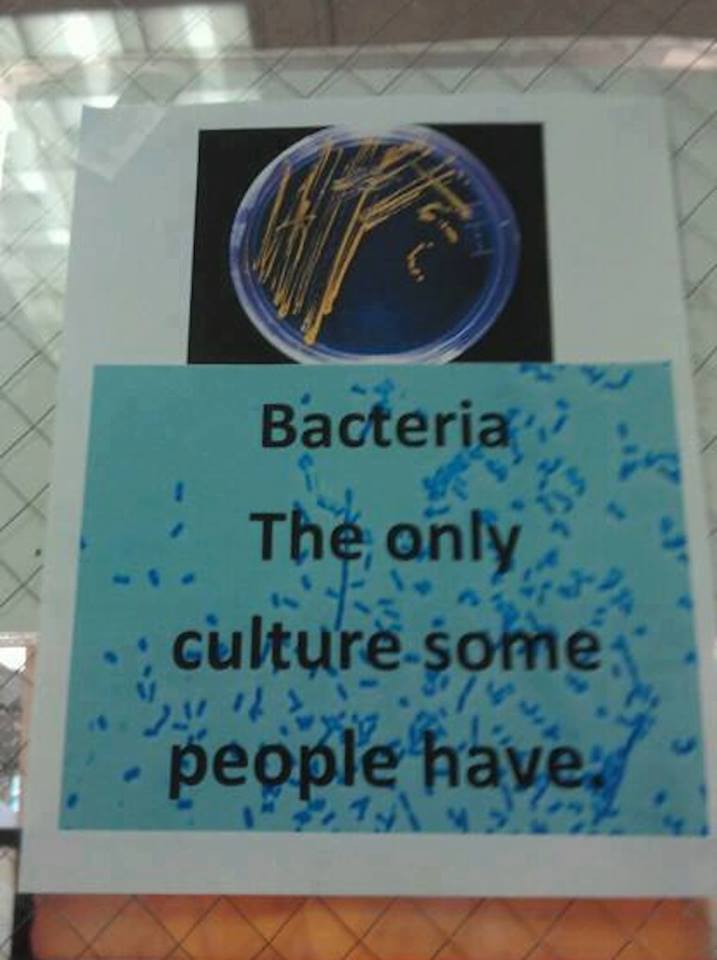
(image via Science is Awesome)

Because most research scientists (and their lab assistants) we know are so busy in the lab, they don’t have time for things like “lives” or “culture”. Luckily bacteria is pretty?
(image via Science is Awesome)
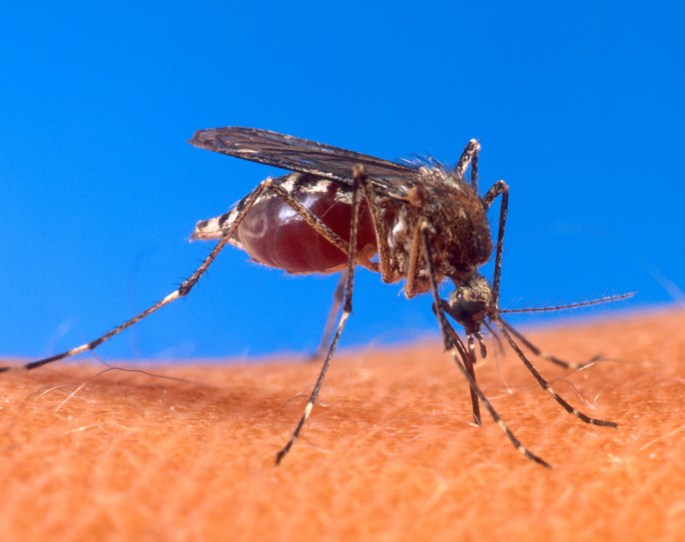
Public health officials in Costa Rica are scrambling to contain two ongoing outbreaks of dengue and H1N1 respectively. Dengue, one the WHO’s “neglected tropical diseases”, has been making the rounds in Central America, with limited outbreaks of dengue in Nicaragua and Honduras. Costa Rica is currently working on vector control to stop the spread of the mosquito-bourne virus. Meanwhile, Costa Rica is also working to contain a limited H1N1 outbreak, but is struggling with maintaining sufficient numbers of vaccines.
Costa Rica Star – “According to online news daily Costa Rica Hoy, health officials from la Caja estimate that more than $500 million have been spent on treatment and paid sick leave of patients who fall ill from dengue fever. According to actuaries studying figures from La Caja’s hospital and epidemiological expenditures, the costs in 2013 have not only been higher than in the previous year; they are also higher than similar costs during 2008 and 2009 combined. Dengue hemorrhagic fever, which can be fatal, has already claimed a couple of lives in Costa Rica. The Ministry of Health has been actively involved in controlling the vector population of Aedes aegypti, the carrier mosquito that breeds in stagnant pools of water located in the tropics. Efforts in controlling this potentially deadly insect include habitat destruction and fumigation.”
Read more here.

It’s a slower week in events (end of July lag, everyone wants to be on vacation). We’re especially interested in CSIS’ analysis of US counterterrorism policy on Tuesday morning.
Tuesday, July 30
The debate on the US and allied role in Afghanistan after 2014 has hit the front pages once again with reporting that the Obama administration is considering a “zero option” that would remove all US troops from the country. Discussions on this topic are taking place at the highest level, including last week at the Senate Foreign Relations Committee, where Senator Robert Menendez (D-NJ), committee chairman, declared that “the United States needs to make clear once again that we are committed to a long-term partnership with Afghanistan. Period.” Meanwhile, even as the United States debates its future presence in Afghanistan, some US allies have already made post-2014 commitments of their own, including Germany and Italy. On July 30, the Atlantic Council’s Brent Scowcroft Center on International Security and South Asia Center will host an event on the strategic imperatives facing the United States and its allies after the 2014 drawdown in Afghanistan.
On Tuesday, July 30, The Israel Project (TIP) will host back-to-back panels of experts and policymakers on Capitol Hill to discuss the most recent political, diplomatic, and military developments surrounding Iran’s nuclear program.
Members of Congress and analysts will discuss the status of Iran’s military nuclear infrastructure, U.S. security considerations, and the implications of Hassan Rouhani’s August 4 inauguration. They will focus on potential policy responses to these developments. Panelists include Congressman Ed Royce, Chairman of the House Foreign Affairs Committee; Congressman Eliot Engel; Ranking Member of the House Foreign Affairs Committee; Congressman Ted Deutch, Ranking Member of the House Subcommittee on the Middle East and North Africa; Ilan Berman, Vice President of the American Foreign Policy Council; and Professor Orde Kittrie, a Senior Fellow at the Foundation for Defense of Democracies and a Professor of Law and Arizona State University. All panelists are confirmed. Lunch will be served.
Wednesday, July 31
Featuring: The Honorable Michael McCaul (R-TX), Chairman, The House Committee on Homeland Security. Introductory remarks by: Dr. John Hamre, President, CEO, and Pritzker Chair, CSIS. Moderated by: Stephanie Sanok Kostro, Acting Director, Homeland Security and Counterterrorism Program and Deputy Director, International Security Program, CSIS.
Witnesses: The Honorable John Bolton, Senior Fellow, American Enterprise Institute,(Former United States Permanent Representative to the United Nations); Mr. Mark Dubowitz, Executive Director, Foundation for Defense of Democracies.
Thursday, August 1
Witnesses: Matthew Levitt, Ph.D.,Director and Senior Fellow, Stein Program on Counterterrorism and Intelligence, The Washington Institute for Near East Policy; Mr. Michael A. Braun,Co-Founder and Managing Partner, Spectre Group International, LLC, (Former Chief of Operations, Drug Enforcement Administration).

We know we live in a globalized world, which we all know means in one 48-hour period, a person can get from California to Hong Kong to London and back. What we don’t know is what this means for bioterrorism. If a bioterrorist were to release pneumonic plague in Delhi, how long would it take it spread to New York City? How many people would it infect along the way? How many fatalities would have to occur before we noticed? Nature looks at these questions, in metapopulation modelling detail, in its recent Scientific Report, Human mobility and the worldwide impact of intentional localized highly pathogenic virus release. They selected smallpox (which we think is kind of an obvious choice, to each their own) and developed a couple models of spread, with the most likely being bioterrorist “suicide bombers” – terrorists who infect themselves with the pathogen and then intermix with populations in large, metropolitan cities. The results are frightening.
Abstract: “The threat of bioterrorism and the possibility of accidental release have spawned a growth of interest in modeling the course of the release of a highly pathogenic agent. Studies focused on strategies to contain local outbreaks after their detection show that timely interventions with vaccination and contact tracing are able to halt transmission. However, such studies do not consider the effects of human mobility patterns. Using a large-scale structured metapopulation model to simulate the global spread of smallpox after an intentional release event, we show that index cases and potential outbreaks can occur in different continents even before the detection of the pathogen release. These results have two major implications: i) intentional release of a highly pathogenic agent within a country will have global effects; ii) the release event may trigger outbreaks in countries lacking the health infrastructure necessary for effective containment. The presented study provides data with potential uses in defining contingency plans at the National and International level.”
Read the full report here.

Highlights include Saudi Arabia’s hajj travel restrictions, zoonotic adenoviruses, PEDv, studying the 1918 pandemic, and plague in people you know. Happy Friday!
Virus fears, Mecca work downsizes hajj pilgrimage
Saudi Arabian officials, responding to fears over hajj contributing to MERS potential spread, have significantly cut the number of pilgrims allowed to perform the annual pilgrimage to Mecca. Numbers of pilgrims from within Saudi Arabia have been cut by half, and those travelling to Mecca from other countries by one fifth. Officials were quick to stress that the decision was based on “exceptional” circumstances, and may be revised as MERS’ spread is tracked. The decision is an interesting one, given that the WHO’s specially convened MERS committee just last week decided against travel restrictions.
Economic Times – “Fears of an outbreak of the deadly MERS virus in Saudi Arabia and construction in the holy city of Mecca have forced cuts in the numbers of pilgrims permitted to perform this year’s hajj. Millions of Muslims during the annual pilgrimage head to Mecca and Medina, Islam’s two holiest sites, providing a possible means for MERS to spread around the globe as pilgrims who may become infected return to their home countries.”
Adenoviruses May Pose Risk for Monkey-to-Human Leap
Most of the world’s deadliest viruses are zoonotic (ebola, anyone?) When a new virus is determined to spread from animals to humans, it’s therefore not surprising, but it’s often troubling, as humans often have little to no immunity to such bugs. The ongoing outbreaks of H7N9 and MERS are both recent examples. Now, researchers at the University of San Francisco have determined that a novel adenovirus – identified just four years ago – may be able to cause disease in humans. In a study involving adenovirus C, the researchers were able to trace the virus’ spread from an enclosed Californian baboon colony to the human staff members caring for them.
UCSF – “‘This study raises more concerns about the potential of unknown viruses to spread from animals to humans,’ said Chiu, who is an assistant professor of medicine at UCSF. ‘We still don’t understand the full extent of viruses that exist in the world and their potential to cause outbreaks in human populations.’ Last year, Chiu and colleagues also identified another new adenovirus, named simian adenovirus C, which sickened four of nine captive baboons and killed two of them at a primate facility in 1997. Several staff members at the facility also complained of upper respiratory symptoms at the time of the outbreak. Re-examining the samples many years later, Chiu and his colleagues found antibodies targeted to simian adenovirus C in the human samples.”
Deadly Pig Virus Slips through U.S. Borders
The porcine epidemic diarrhea virus (PEDv) continues to rage in the United States, having now spread to 14 states, including outliers like North Carolina. With the virus’s fatality rates occasionally approaching 100% in piglets, its spread has USDA and the US pork industry both (understandably) very nervous. The virus’ source in the United States remain unknown, and efforts to sequence it have been hampered by a couple things. First, it is notoriously difficult to culture – unsurprisingly, pig viruses tend to grow best in pigs. Second, the restrictions the US had in place to prevent the virus entering the US in the first place are making acquisition of the right lab materials to culture it difficult. With the virus’ apparent preference for cooler temperatures, and Autumn approaching, scientists are racing to determine the source before the outbreak spreads further.
Scientific American – “‘How this virus got here, that’s the million-dollar question,’ says James Collins, director of the Veterinary Diagnostic Laboratory at the University of Minnesota in St Paul. The pathogen, a type of coronavirus called porcine epidemic diarrhea virus (PEDV), was first identified in the United Kingdom in 1971, and it caused mass epidemics in Europe in the 1970s and 1980s…The virus can spread quickly by a fecal–oral route and infect entire herds. And although adult pigs typically recover, PEDV can kill 80–100% of the piglets it infects. The virus poses no health threat to humans. The US Department of Agriculture (USDA) had tried to keep PEDV and other diseases out of the country by restricting imports of pigs and pork products from certain nations, such as China. But on 10 May, the Veterinary Diagnostic Laboratory at Iowa State University in Ames confirmed that PEDV had infected pigs in Iowa, the leading producer of US pork.”
New Light Shed On Cause of Pandemic Influenza
After using mathematical models to analyze the 20th century’s worst pandemics, the 1918 Spanish flu pandemic. Researchers have developed three key factors which exacerbated the pandemic’s impact – school openings and closing, temperature fluctuations, and human behavioral changes.
Science Daily – “Dr He and the researchers further applied this model to the reported influenza mortality during the 1918 pandemic in 334 British administrative units and estimate the epidemiological parameters. They have used information criteria to evaluate how well these three factors explain the observed patterns of mortality. The results indicate that all three factors are important, but behavioural responses had the largest effect.”
My Friends Got the Plague, and This New Test Could Have Helped Them
It’s easy to believe that the bacteria and viruses we write about exist only in distance countries or highly secure labs. As the above blog piece illustrates, sometimes all it takes is a vacation to New Mexico. The piece also discusses the importance of science’s ugly stepchild – basic research.
Motherboard (VICE) – “Despite very low incidence and the availability of treatment with modern antibiotics, the plague is still a very deadly illness whose prognosis becomes worse by the minute when it strikes. This technique is useful because it provides a quick way of, at the very least, ruling out the illness, which is so often overlooked. Importantly, the researchers note that their technique would not have been possible without previous basic research, which many consider a lesser priority than corporate-sponsored applied research.”
(image courtesy of Al-Hijr)
This week’s image could obviously only be of the two newly discovered, absolutely massive, Pandoravirus. This gorgeous image comes to us via The Scientist magazine. The new viruses are so large, and their DNA so distinct from anything we have seen before, some argue they should be classified as a distinct kingdom.

(image courtesy of the Scientist/Chantal Abergel/Jean-Michel Claverie)
For those of you who wonder why we do what we do (and think us arguing our own merits may seem a bit biased), check out this excellent Forbes Opinion piece on the potential threat of bioterrorism.
Excerpt:
“Although federal efforts involving numerous agencies to combat the threat of bioterrorism expanded rapidly following the 2011 anthrax letter attacks, which killed five people and infected 17 others, various congressional commissions, nongovernmental organizations, industry representatives and other experts have highlighted flaws in these activities. A 2008 report published by the congressionally-mandated Commission on the Prevention of WMD Proliferation and Terrorism concluded that ‘…unless the world community acts decisively and with great urgency, it is more likely than not that a weapon of mass destruction will be used in a terrorist attack in the world by the end of 2013.’ It went on to say ‘The Commission further believes that terrorists are more likely to be able to obtain and use a biological weapon than a nuclear weapon.’ Making matters worse, unlike most other terrorist attacks, a biological attack could infect victims without their knowledge, and days could pass before victims develop deadly symptoms. To address this problem, the U.S. has been forced to implement air quality monitors throughout the country and stockpile antibiotics for emergency use.”
All the week’s best (free) security, science, and health events. Special mention to Thursday evening YPFP event on the intersection of science and foreign policy.
Tuesday, July 23
On July 23, the Saban Center for Middle East Policy and Governance Studies at Brookings will release “Tools and Tradeoffs: Confronting U.S. Citizen Terrorist Suspects Abroad,” a new report examining the options available to policymakers. Panelists and co-authors of the report will include Senior Fellow Daniel Byman, research director of the Saban Center, and Senior Fellow Benjamin Wittes, editor-in-chief of the Lawfare blog. Brookings Senior Fellow Bruce Riedel will provide introductory remarks and moderate the discussion.
Witnesses: Phyllis Schneck, Ph.D., Vice President and Chief Technology Officer, Global Public Sector, McAfee, Inc; Mr. James Lewis, Director and Senior Fellow, Technology and Public Policy Program, Center for Strategic International Studies; Mr. Karl Frederick Rauscher, Chief Technology Officer and Distinguished Fellow, EastWest Institute.
Join NMHM’s archives assistant and author Eric Boyle, Ph.D., as he exposes the history of allegedly fraudulent therapies, including pain medications, obesity and asthma cures, gastrointestinal remedies, virility treatments, and panaceas for diseases, such as arthritis, asthma, diabetes, and HIV/AIDS. Alternative medicine and new treatments undoubtedly save lives and ease suffering, but their existence also leaves the public susceptible to false claims and potentially injurious practices. While “quackbusters” crusade to control and shape the medical marketplace, legislators are caught in a persistent battle between preserving individual freedoms and protecting the public from fraud.
Wednesday, July 24
Space is no longer a sanctuary for the United States military. An implicit assumption in the space domain has been that deterrence would hold and space systems would not be attacked in conventional conflicts. One of the consequences of this assumption is that U.S. space systems, and military satellite communications (MILSATCOM) systems in particular, have critical vulnerabilities in conventional warfare to physical, electronic, and cyber attacks. If the U.S. military is committed to a strategy of assured access in the face of anti-access/area denial (A2/AD) capabilities, as the 2012 Defense Strategic Guidance states, then the Department must adapt the next-generation MILSATCOM architecture to operate in a more contested environment.In a constrained budget, however, it is cost prohibitive to increase protected MILSATCOM capacity by starting new programs or continuing to conduct business as usual. What must the military do to bridge the gap between the capabilities needed and the funding available?
Iran’s new president, Hassan Rouhani, takes office on August 3. He has raised the hopes of Iranians for a softening of the regime’s repression, domestic political reforms and an end to Iran’s international isolation. Can he deliver? More importantly, what are the foreign policy implications for the United States of Iran’s new government?
Thursday July 25
You are cordially invited to attend a new luncheon event featuring Dr. Robert Butterworth and Dr. Barry Blechman as part of the 2013 AFA, ROA and NDIA Huessy Congressional Seminar Series on Nuclear Deterrence, Missile Defense, Arms Control and Defense Policy, now in its 31st year. This event is made possible by the support of the Marshall Institute and its President, Jeff Kueter. The date is July 25th, 2013, at the Capitol Hill Club from noon to 1:30 pm.
Hezbollah seems to be willing to lose its popularity in Lebanon to help Bashar al-Assad. Ghaddar explains why Hezbollah’s involvement seems as if they are helping secure some kind of federalism; however, their main interest is not to protect Assad, but instead, Iran.
In the aftermath of the terrorist attacks at the Boston Marathon, it is essential that the United States reinvigorate its domestic counterterrorism efforts. Boston is a tragic reminder that the threat of terrorism is real and that no system of security is perfect. On the other hand, it is important to remember that since 9/11 the U.S. has done a great deal to enhance its counterterrorism efforts and has prevented over 50 terrorist plots. The continued success of these operations, however, is dependent upon preserving and improving existing counterterrorism tools, and enhancing cooperation with state and local law enforcement. While the United States has come a long way since 9/11, this is no time to stand still. Join us as our expert panelists discuss these critical issues, and explore how the U.S. can continue to improve its counterterrorism enterprise to thwart future terrorist attacks.
Join members of the scientific and foreign policy communities for a reception to launch the new program series At the Crossroads of Science and Foreign Policy. Anthony “Bud” Rock, CEO of the Association of Science and Technology Centers, will introduce “science diplomacy” and program organizers will offer a taste of the exciting programs to come. This program is a collaboration between the AAAS Science & Technology Policy Fellowships, AAAS Center for Science Diplomacy, Young Professionals in Foreign Policy, and the Koshland Science Museum. This event is free and open to the public, but space is limited so please RSVP. Light refreshments will be served.
Friday, July 26
The Asia-Pacific is of growing importance for the United States and Russia, both of which are seeking to ‘pivot” or “rebalance’ their global commitments toward the region. Yet the vast majority of US-Russia interaction occurs in Europe and post-Soviet Eurasia, and neither country has paid sufficient attention to the implications of their respective renewed interest in the Asia-Pacific for the bilateral relationship. Meanwhile, the region’s economic growth, the rise of China, and the potential for regional conflicts in both northeast and southeast Asia create a landscape fraught with challenges for both Moscow and Washington. Please join us at the IISS-US for the launch of the third paper of the Working Group on the Future of US-Russia Relations, which focuses on the opportunities for and obstacles to US-Russia cooperation in the Asia-Pacific.
Monday, July 29
Please join us for a lunchtime launch of an important new CSIS publication, A Greater Mekong Health Security Partnership, which argues there is a unique, time-sensitive opportunity for a targeted, major U.S. initiative to improve health security in the Greater Mekong Subregion. A U.S. push to strengthen partnerships with Myanmar, Cambodia, Vietnam — to manage pandemic threats, control resistant malaria, and improve maternal and child health — will advance both U.S. strategic interests and bring real health benefits to millions. It can be done if there is high-level U.S. leadership, better leveraging of the substantial civilian and military U.S. health engagement efforts already underway, and focused integration of the skills and expertise of Thailand and China.

Highlights this week include MERS in the UAE, H5N1 and dual-use research, giant Pandoravirus, implications of giant Pandoravirus, and pandemics and national security. Happy Friday!
United Arab Emirates identifies 4 new cases of SARS-like respiratory virus
The Middle Eastern Respiratory Syndrome (MERS) virus, first appearing in Saudi Araia has spread to the neighboring United Arab Emirates, with four new cases identified in Abu Dhabi. It is thought that one patient contracted the virus earlier subsequently infected these four new cases.
Washington Post – “The new cases also could offer investigators fresh leads on the transmission of the virus, which has claimed more than 40 lives since September. Most of the deaths have been in Saudi Arabia…The virus is related to SARS, which killed some 800 people in a global outbreak in 2003. It belongs to a family of viruses that most often cause the common cold.”
H5N1: A Case Study for Dual-Use Research
The Council on Foreign Relations has a new working paper out, by Dr. Gigi Kwik Gronvall, examining the furious debate around gain-of-function, potentially dual-use H5N1 research.
CFR – “Biological research is inherently dual-use, in that a great deal of the scientific knowledge, materials, and techniques required for legitimate research could also be used for harm. The potential for a bioterrorist to misuse legitimate research is particularly acute for scientific studies of contagious pathogens. In order to find out how pathogens function—how they are able to get around the human body’s immunological defenses, replicate in great numbers, and go on to infect other people in a continuous chain of infection—scientists necessarily learn what conditions make pathogens more deadly or difficult to treat. This research is widely shared. But the fear that this openness could be exploited has sparked concerns about specific scientific publications, prompting media storms and even congressional disapproval, as in the 2002 case when poliovirus was synthesized from scratch in a laboratory.”
World’s Biggest Virus May Have Ancient Roots
Breaking news everyone, the world’s largest virus has the world’s coolest name – the Pandoravirus. However, unless you live primarily underwater, it shouldn’t pose a big threat to you. The virus is, however, raising big questions about the origins of viruses – the Pandoravirus‘ are thought to originate in a prehistoric cell type now extinct. For an interesting examination of what larger viruses may mean for virology, check out the New York Times piece “Changing View on Viruses: Not So Small After All“.
NPR – ” ‘We believe that those new Pandoraviruses have emerged from a new ancestral cellular type that no longer exists,’ [discoverer, Jean-Michel Claverie] says. That life could have even come from another planet, like Mars. ‘At this point we cannot actually disprove or disregard this type of extreme scenario,’ he says. But how did this odd cellular form turn into a virus? Abergel says it may have evolved as a survival strategy as modern cells took over. ‘On Earth it was winners and it was losers, and the losers could have escaped death by going through parasitism and then infect the winner,’ she says.”
National Security and Pandemics
An interesting argument for the correlation between national security and pandemics. Whether international health events should be classified as issues of national security is a very interesting and nuanced question, and this piece presents one side (“yes, they should”) well.
UN Chronicle – “”Pandemics are for the most part disease outbreaks that become widespread as a result of the spread of human-to-human infection. Beyond the debilitating, sometimes fatal, consequences for those directly affected, pandemics have a range of negative social, economic and political consequences. These tend to be greater where the pandemic is a novel pathogen, has a high mortality and/or hospitalization rate and is easily spread. According to Lee Jong-wook, former Director-General of the World Health Organization (WHO), pandemics do not respect international borders.2 Therefore, they have the potential to weaken many societies, political systems and economies simultaneously.”
(image courtesy of Jeff Black)
Following their second meeting, the World Health Organization’s (WHO) Emergency Committee on MERS has decided the outbreak in Saudi Arabia does not yet constitute a “Public Health Emergency of International Concern”. As such, the committee is refraining from issuing any travel restrictions at this time.
The committee met via teleconference yesterday, with members from all eight states with cases of MERS participating. While the MERS outbreak is not a PHEIC yet, the Committee nonetheless stressed that the outbreak is “serious and of great concern”. The Committee members will continue to monitor the virus’ spread, and will reconvene formally again in September.
MERS, or the Middle Eastern Respiratory Syndrome, is a recently emerged virus which causes flu like symptoms and in 60% of cases, death. The virus’ vector and reservoir remain unknown.
For the full WHO press release, see here.
(Image depicts an SEM of MERS, courtesy of the CDC & Cynthia Goldsmith/Maureen Metcalfe/Azaibi Tamin)
 The Pandora Report