July 7, 2014
National Insecurity Agency: How the NSA’s Surveillance Programs Undermine Internet Security
Date: July 7, 4:00pm
Location: New American Foundation, 1899 L Street NW, Suite 400, Washington DC 20036
Join us for a wide-ranging afternoon panel discussion between technologists, policy experts and Internet industry representatives, to discuss how the NSA’s actions threaten Internet security and the Internet economy that relies on it, and how we can address that threat on both a personal and a policy level. With introductory comments by Representatives Lofgren and Grayson and appearances by experts such as Internet security luminary Bruce Schneier and Google’s top privacy lawyer in DC, we’ll dig deep into the policy and the technology of the NSA programs that have been most overlooked. We’ll also preview the upcoming new research paper from New America’s Open Technology Institute, “Surveillance Costs: How NSA Spying Undermines the Economy, Cybersecurity, and Internet Freedom.”
Sign up here.
July 8, 2014
Facing a Revisionist Russia: Discussion with Carl Bildt
Date: July 8, 9:00am
Location: Atlantic Council, 1030 15th Street NW, 12th Floor, West Tower, Washington DC
Europe must find a way of dealing with this new, revisionist Russia, even as it faces the growth of political forces with ties to Moscow and seeks to lessen its own energy dependence. Europe will inevitably continue to have strong economic interests in Russia, as well as a need to cooperate on key strategic issues, such as Iran. The United States, too, must figure out how to deal with Russia while remaining engaged on strategic matters. Sweden’s Foreign Minister Carl Bildt has long been at the center of European efforts to develop a coherent EU foreign policy, including towards Russia. One of the initiators of the EU’s Eastern Partnership, he has been keenly involved in EU relations with Ukraine, Georgia, and Moldova. At the Atlantic Council, he will discuss his views on European Union and transatlantic relations with Russia, as well as recent developments within the EU and the impact on EU foreign policy.
Carl Bildt has been foreign minister of Sweden since 2006. He previously served as Sweden’s prime minister from 1991 to 1994. Bildt was one of the original architects of the European Union’s Eastern Partnership, and is also noted for his prominent role as co-chairman of the Dayton Peace Conference in 1995. He was High Representative for Bosnia and Herzegovina from December 1995 to June 1997, and from 1999 to 2001 served as the United Nation Secretary-General’s special envoy for the Balkans.
Register here.
Iran Sanctions: What the U.S. Cedes in a Nuclear Deal
Date: July 8, 9:30am
Location: U.S. Institute of Peace, 2301 Constitution Ave NW, Washington DC
Since 2006, the United States has imposed more sanctions on Iran than any other country, so it may have to cede the most ground to get a nuclear deal in 2014. Over the years, Republican and Democratic administrations have issued 16 executive orders, and Congress has passed nine acts imposing punitive sanctions. What does Tehran want? What are the six major powers considering as incentives to cooperate? What isn’t on the table? The White House and Congress have imposed their own types of sanctions. What would either need to do to lift them? What difference would the various sanctions relief packages make to Iran?
On July 8, four panelists will address the complex questions and challenges of sanctions in the Iran nuclear talks. It’s the last of three discussions hosted by an unprecedented coalition of eight Washington think tanks and organizations to coincide with the last three rounds of negotiations. A rundown of the second event is available on USIP’s The Iran Primer with a video, and on USIP’s blog The Olive Branch. The coalition includes the U.S. Institute of Peace, RAND, the Woodrow Wilson International Center for Scholars, the Arms Control Association, the Center for a New American Security, the Stimson Center, Partnership for a Secure America, and the Ploughshares Fund.
RSVP here.
Countering Violent Extremism: A Peacebuilding Lens
Date: July 8, 9:30am
Location: John Hopkins University—SAIS, 1740 Massachusetts Ave NW, Washington DC
Violent extremism is one of the leading threats of the twenty-first century, threatening world stability, and prompting state and international-level interventions. Faced with this growing threat, many governments and international organizations have created strategies based on the immediate priority of maintaining state security and the long-term goal of addressing the core causes that contribute to violent extremism, which involve an array of socio-economic and structural factors, individual experiences, as well as emotional and psychological drivers.
Over the past decade, the understanding of how and why individuals engage in violent extremism and terrorism has evolved and become more nuanced, as have the tools to prevent these threats. Countering violent extremism (CVE) refers to the policies, programs, and interventions designed to prevent individuals from engaging in violence associated with radical political, social, cultural, and religious ideologies and groups. Peacebuilders, through their broader agenda of conflict prevention, also focus on countering extremist violence. Violent extremism is a driver of conflict, and violent extremists are often spoilers in peacebuilding efforts. Peacebuilding and CVE work increasingly intersect, though approaches and practice in the two domains often differ.
Register here.
The Globalization of the Defense Industry
Date: July 8, 11:30am
Location: Atlantic Council, 1030 15th Street NW, 12th Floor, West Tower, Washington DC
Autonomous vehicles, renewable energy, nanotechnology, and 3-D printing comprise some of the astounding advances in technology. These and other marvels of the twenty-first century are refreshing the technology base of defense and security, providing new opportunities for and capabilities to our military. At the same time, independent research and development spending among US defense contractors is declining compared to these investments at leading global commercial firms. Reflecting these trends is the fact that more than one-third of all procurement dollars the United States recently has spent to buy platforms are flowing to commercial and international companies.
How will the US military maintain technology leadership on the battlefield in an era when the locus of game-changing technology now lies outside the defense sector? William J. Lynn III, the CEO of Finmeccanica North America and DRS Technologies, will share his perspective on how next-generation technologies from the commercial sphere and international markets can drive change in a restructured defense-industrial base and in the Pentagon’s defense-industrial strategies.
The Atlantic Council Captains of Industry Series is a platform for senior defense industry executives to address the public interests their companies serve and the public policies that shape their markets. By engaging the perspective of business leaders about issues at the interface of defense ministries and industries, the series will cultivate a constituency for practical solutions to these problems.
Register here.
Beyond the Afghan Elections: The Immediate Challenges
Date: July 8, 1:30pm
Location: Atlantic Council, 1030 15ht Street NW, 12th Floor, West Tower, Washington DC
As the Afghan people and the international community await final results of the 2014 Afghanistan elections, there are renewed concerns about the future stability of the country. Major fraud allegations surfacing immediately after the June 14th run-off challenge the legitimacy of the entire process, and threaten the next government’s ability to unite the country against mounting concerns. The next president faces the daunting task of simultaneously coalescing ethnic and political groups, reducing security threats, and reviving Afghanistan’s weak economy. Given the current stalemate, will Afghans see a peaceful transfer of power and a government ready to face these challenges? How will the US and coalition partners assist in easing Afghanistan’s difficult transition given President Obama’s withdrawal timetable? Zalmay Khalilzad and David Sedney will provide firsthand insight into the current electoral imbroglio and the shape of the Afghan political scene.
Register here.
You’re Gonna Need a Warrant for That: The Path to Digital Privacy Reform
Date: July 8, 4:00pm
Location: Cato Institute, 1000 Massachusetts Ave NW, Washington DC
A unanimous Supreme Court recently declared that that our networked mobile devices merit the highest level of Fourth Amendment protection against government searches, since these devices often contain more sensitive information than even “the most exhaustive search of a house” would reveal. Yet increasingly, the vast troves of personal data they contain are synched to “the cloud,” where the outdated Electronic Communications Privacy Act of 1986 allows many types of information to be accessed without a warrant. The need to bring the law up to date has been recognized not only by privacy advocates, but major technology companies, more than half of the House of Representatives, and even federal law enforcement officials. Join us for a lively discussion of how and why to drag federal privacy law into the 21st century, with keynote remarks by Rep. Ted Poe (R-TX) and a panel discussion featuring both policy experts and representatives of the tech firms we increasingly entrust with our most private data.
Register here.
July 9, 2014
Afghanistan’s Future: Politics, Prosperity, and Security Under New Leadership
Date: July 9, 2:00pm
Location: Asia Society, 1526 New Hampshire Ave, NW, Washington DC 20036
Across the country, millions of Afghans have cast their ballots to select the next President of Afghanistan. The second round of elections was held on Saturday, June 14, 2014, with two candidates, Abdullah Abdullah and Ashraf Ghani, seeking to succeed President Hamid Karzai.
While Afghans await the results of the election, the Asia Society Policy Institute (ASPI) is pleased to invite you to an exciting discussion of the next era in Afghan politics, economics and security. Our panel of distinguished experts will explore from different perspectives what Afghans and Americans can expect in each of these areas in the new Afghan administration and with the U.S. military drawdown.
Register for this event by emailing AsiaDC@asiasociety.org.
July 10, 2014
China-Iran Relations and the Implications for U.S. Foreign Policy
Date: July 10, 2:00pm
Location: Partnership for a Secure America, 1775 K Street NW, Suite 400, Washington DC
CRS Analysts Shirley Kan (Asia-Pacific expert) and Kenneth Katzman (Middle East expert) will speak at a briefing on China-Iran relations. These two important nations pose significant challenges to U.S. interests in a variety of ways, and yet their bilateral relationship is one that is not given significant attention. This panel will explore the China-Iran relationship, where their interests converge and diverge, and the implications of this relationship for U.S. foreign policy.
Building a “New Model of Major Country Relations”
Date: July 10, 4:00pm
Location: Center for Strategic and International Studies, First Floor Conference Room, 1616 Rhode Island Ave, NW, Washington DC 20036
In an era when U.S.-China relations have become increasingly strained but harbor greater implications for regional and global security, the Xi and Obama administrations seek to build a framework that encourages win-win cooperation in order to avoid conflict and confrontation. Please join the Freeman Chair in China Studies for a discussion with a distinguished panel from China’s Ministry of Foreign Affairs on the challenges and expectations associated with building a “new type of major country relations” between a rising China and the United States. The panel will also place the “new type of major country relations” in the context of China’s emerging foreign policy at large and explore the implications of this framework on China’s relations with major powers and with the developing world as well.
July 11, 2014
Keeping our Friends Close and our Frenemies Closer?
Date: July 11, 9:30am
Location: Foundation for Defense of Democracies
A growing number of countries have adopted policies that make them allies, adversaries and enemies of the United States– simultaneously. Complex alliances are nothing new, but American alliances in the Muslim world have recently become far more complex than in years past. Why has the “AAE phenomenon” arisen, and what should be the implications for U.S. foreign and national security policy?
Please join FDD for a conversation to discuss these questions with Jonathan Schanzer, Daveed Gartenstein-Ross, and Brian Katulis. RSVP here.
The Many Faces of Tyranny: Why Democracy isn’t Always Possible
Date: July 11, 12:00pm
Location: Heritage Foundation, Lehrman Auditorium, 214 Massachusetts Ave NE, Washington DC
History has not ended. Across the world today, we are witnessing both a heroic struggle for democracy and reform and the disturbing strength of tyrannical regimes and movements. Whether it be the Arab Spring, the Syrian civil war, the aggressiveness of Putin’s Russia or the increasing bellicosity of China, the forces of democracy and the forces of tyranny are in a dead heat.
How should the West respond? How should we make the difficult choice between better and worse kinds of non-democratic authority when overthrowing today’s dictatorship may only bring about a much worse totalitarian alternative tomorrow?
Waller R. Newell is Professor of Political Science and Philosophy at Carleton University in Ottawa, Canada. As a scholar and commentator he has written on a wide range of topics, ranging from classical political philosophy and modern European literature to manliness. He is the author of several books, including his latest, Tyranny: A New Interpretation and The Code of Man: Love, Courage, Pride, Family, Country. In the words of Harvard’s Harvey Mansfield: “Anyone who wants to understand modern politics will profit from Waller Newell’s eye-opening analysis.”
Register here.
Mark Your Calendars for July 22, 2014!
NPC Luncheon with Dr. Tom Frieden, Director, Centers for Disease Control
Date: July 22, 12:30pm
Location: National Press Club, 529 14th Street NW, Washington DC 20045
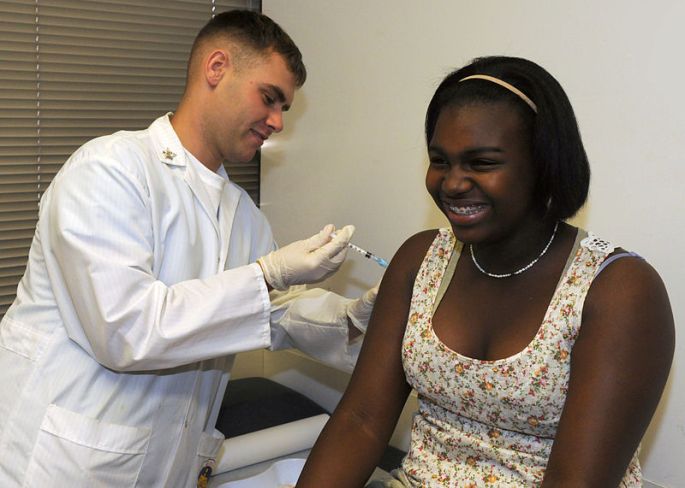
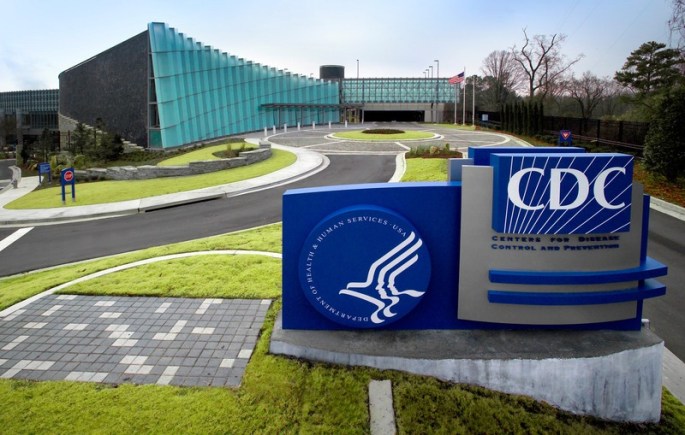
Dr. Tom Frieden, director of the Centers for Disease Control, will address concerns about the MERS (Middle East Respiratory Syndrome) virus and other key health issues at a National Press Club luncheon on Tuesday, July 22.
Dr. Frieden will also discuss the sharp rise in U.S. measles cases and the growing number of antibiotic-resistant diseases, at the luncheon. Dr. Frieden, who has led the CDC since 2009, is a physician trained in internal medicine, infectious diseases, public health and epidemiology.
Lunch will be served at 12:30 pm, with remarks beginning at 1 p.m., followed by a question-and-answer session ending at 2 p.m. Tickets cost $22 for Press Club members. NPC members may purchase two tickets at the member rate. The price for all other non-member tickets is $36 each. Price for students is $21.
For questions, please email reservations@press.org or call (202) 662-7501. Tickets must be paid for at the time of purchase. Tickets are available for purchase here.

 The Pandora Report