Pandora Report 9.13.14

This week we look at a report that claims DHS is not prepared for a pandemic and information about Chemical Weapons in Syria, still. We also have an Ebola update, and if you’re interested in learning more about the West African outbreak, join us Wednesday for our September Biodefense Policy Seminar!

Have a great weekend!

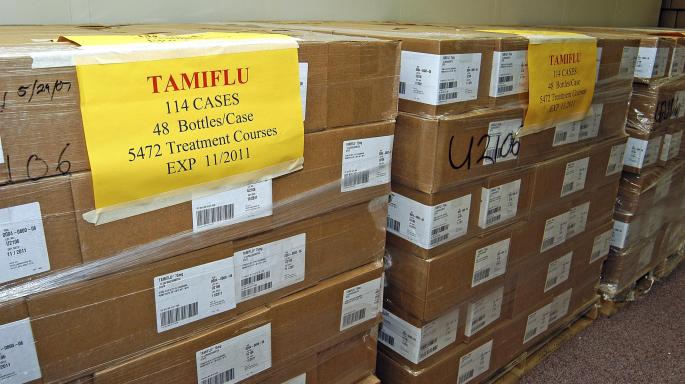
Homeland ill-prepared for Pandemic, Doesn’t Even Have Enough Drugs to Protect Secret Service

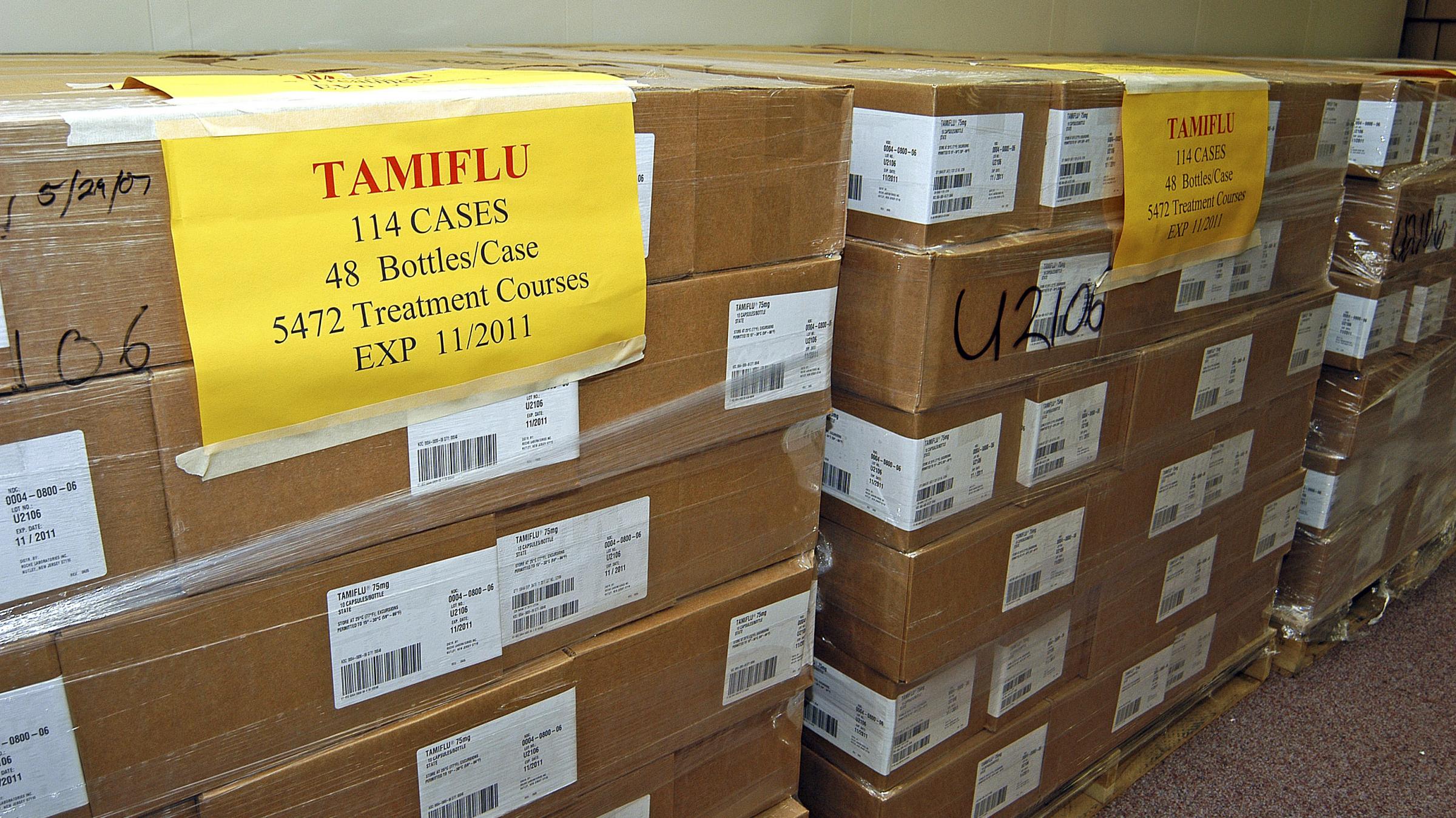
In a recently released report, the Office of the Inspector General claims that “the Department of Homeland Security may not be able to provide sufficient pandemic preparedness supplies to its employees to continue operations during a pandemic.” DHS, however, has disagreed with much of the report claiming it misrepresents the agency’s preparedness for an outbreak.

The Washington Times—“One of the biggest problems, investigators said, is that most of the stockpiles are of antiviral drugs that are expiring. By the end of 2015, the IG said that 81 percent of Homeland Security’s stockpiled antiviral medication will be past its shelf life. In addition, 84 percent of the agency’s stock of hand sanitizer has already expired, some batches by as long as four years, inspectors said.”

Watchdog Says Chlorine Gas Used as a Chemical Weapon in Syria

The Organization for the Prohibition of Chemical Weapons reports that chlorine gas was used “systematically and repeatedly” as a weapon in northern Syria earlier this year. U.S. officials say that the Assad regime is the only force capable of launching such an attack. Even after the destruction of Syria’s chemical weapons stockpiles, chlorine is not a forbidden substance under the CWC. However, the use of any chemical as a weapon is prohibited by the CWC. This news comes among concerns that any hidden weapons stockpiles may fall into the hands of terrorist or extremist groups, like ISIS

The Wall Street Journal—“The OPCW team traveled to the sites of attacks and interviewed victims, doctors and witnesses. According to the report, victims’ symptoms and the effect of the gas led the mission ‘to conclude with a high degree of confidence that chlorine, either pure or in mixture, is the toxic chemical in question.’”

This Week in Ebola

Another American Ebola patient was sent to Emory University in Atlanta for treatment and American Ebola survivor Dr. Kent Brantly donated blood to the American patient, Dr. Rick Sacra, who is being treated in Nebraska. The thought is that Dr. Brantly’s blood will help confer passive immunity to Dr. Sacra. On last Sunday’s Meet the Press, President Obama pledged U.S. military assistance in setting up isolation units and providing security for health workers in West Africa but House Republicans indicated they would provide less than half of the White House’s requested funding for fighting Ebola. The Bill and Melinda Gates Foundations has pledged to contribute $50 million to support emergency efforts to contain the outbreak in West Africa. There were reports this week of a U.S. air marshal who was injected with a syringe at the Lagos Airport in Nigeria. Though it appears that the syringe was not infected with Ebola, it has caused fears that Ebola could be used as a weapon. All of this comes at a time when disease modelers at Northeastern University predict that as many as 10,000 cases of Ebola could be detected by the end of the month and there have been 60 cases resulting in 35 deaths from the Ebola outbreak in Congo.

Image Credit: WGBH News

September 2014 Biodefense Policy Seminar

Title: Biosurveillance and the Atypical Epidemic: The 2014 West African Ebola Epidemic
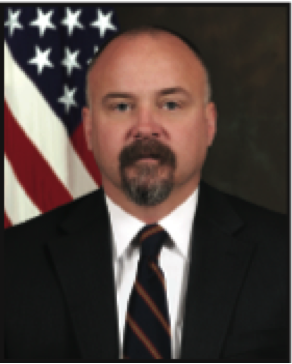
Speaker: Dr. Michael Smith, Director of the Critical Reagents Program (CRP) within the Medical Countermeasure Systems Joint Project Management Office, Department of Defense
Date: Wednesday, September 17, 2014
Time: 7:30 – 9:00pm; food will be served at 7:00pm
Location: George Mason University, Fairfax Campus, Research Hall 163

September BPSDr. Michael Smith is the Director of the Critical Reagents Program (CRP) within the Medical Countermeasure Systems Joint Project Management Office (MCS JPMO) headquartered at Fort Detrick, Maryland. In this role, he manages the characterization, production, and distribution of reagents and consumables employed on deployed platforms and those under development by other programs.

Previously, he served in the United States Army’s 75th Ranger Regiment. He has also held several positions at the Defense Threat Reduction Agency (DTRA), including senior science and technology manager and most recently, acting division chief, Diagnostic and Disease Surveillance Division of the Joint Science and Technology Office. In December 2011, Dr. Smith became the director of the CRP within the Chemical Biological Medical Systems (CBMS) JPMO where he continued to serve through the transition of CBMS into the MCS JPMO. Mr. Smith assumed his current role as Director of the CRP in June 2013.

Dr. Smith earned a bachelor’s degree in Microbiology from the Pennsylvania State University. He continued his education and attained both a master’s degree and a doctor of philosophy degree in Molecular Microbiology from Yale University.

Week in DC: Events

September 8, 2014 

Countering Terrorism in Pakistan’s Megacities: Exploring the Role of the Pakistan Police
Date: September 8, 10:00am
Location: U.S. Institute of Peace, 2301 Constitution Ave NW, Washington DC

Violence from terrorism, secessionist insurgency, sectarian conflict and ethnic turf wars is escalating in Pakistan’s megacities. Yet while the police force and its personnel remain ill-prepared and poorly equipped to meet the challenge, even skeptics recognize that police and law enforcement are the single most important institution in facing Pakistan’s counterterrorism challenge.

On September 8th, the U.S. Institute of Peace will convene a panel to explore ways to increase the capacity of Pakistan’s local police to counter terrorism in the nation’s urban centers. Reflecting findings from the USIP Special Report, “A Counter Terrorism Role for Pakistan’s Police Stations,” this panel will discuss the role of Pakistan’s local police in combating the country’s endemic violence and provide recommendations for ways in which Pakistan’s government and the international community can assist the police going forward.

RSVP here.

Ethics and Ebola: Challenges for Care Givers and for Public Health
Date: September 8, 12:15pm
Location: Johns Hopkins Hospital, 2117 Chevy Chase Conference Center, Sheik Sayed Tower, Baltimore, MD

Has the response to the Ebola outbreak thus far met ethical standards? As the crisis deepens, what is an ethically appropriate plan for addressing the needs of patients, caregivers, and those at risk if the virus spreads?

As the Ebola epidemic continues to worsen, the Johns Hopkins Berman Institute of Bioethics is dedicating its first bioethics seminar of the 2014-2015 academic year to the complex issues with a panel of experts on bioethics, epidemiology, and health systems.

Panelists: Nancy Kass, professor of bioethics and public health; Trish Perl, epidemiologist and professor of medicine; and Tim Roberton, a doctoral student at the Bloomberg School of Public Health who worked at the Ebola outbreak epicenter in Guinea in July.

This event is open to all; lunch will be provided for those in attendance. It will also be broadcast on the Johns Hopkins UStream channel.

U.S. Policy on Asia: Where Do We Go From Here?
Date: September 8, 5:00pm
Location: The George Washington University’s Elliot School of International Affairs, 1957 E Street NW, Washington DC

The George Washington University’s Sigur Center for Asian Studies and The Institute for Communitarian Policy Studies invite you to “US Policy on Asia: Where do we go from here,” with Dr. Kurt Campbell, Former Assistant Secretary of State for East Asian and Pacific Affairs and current Chairman/CEO of The Asia Group. The lecture will be followed by a discussion with Amitai Etzioni and then with the audience. The event is free and open to the public, but registration is required. To register, send an e-mail with your name and affiliation to icps.gwu.events@gmail.com.

The Turbulent Middle East: A Dialogue with Amb. Dennis Ross and Former Deputy National Security Advisor Elliott Abrams
Date: September 8, 7:00pm
Location: Georgetown University, Copley Hall, Copley Formal Lounge, 37th and O Street NW, Washington DC

Ambassador Dennis Ross is Distinguished Professor in the Practice of Diplomacy at Georgetown University and is the William Davidson Distinguished Fellow, Counselor at the Washington Institute for Near East Policy.

Elliott Abrams is an Adjunct for the Program for Jewish Civilization and is Senior Fellow for Middle Eastern Studies at the Council on Foreign Relations.

Ambassador Robert Gallucci, Distinguished Professor in the Practice of Diplomacy and former Dean of the SFS, will conduct the interview.

Register here.

September 9, 2014 

Iran Negotiations Update: Verification vs. Breakout Capacity
Date: September 9, 9:30am
Location: Atlantic Council, 103o 15th Street NW, 12th Floor, West Tower, Washington DC

Does a trade-off exist between more intensive verification measures placed on Iran’s nuclear program and the size of Iran’s enrichment capacity? With a new November 24 deadline for agreement, the Iranians have argued that more transparency should resolve concerns about breakout capacity – the ability to make enough fissile material for a nuclear weapon without rapid outside detection. The five permanent members of the UN Security Council plus Germany (P5+1) want limitations on the number and quality of Iran’s centrifuges to lengthen any potential breakout period. Iran may balk at these limits. Please join the Atlantic Council’s South Asia Center for a briefing on the ongoing negotiations with Iran and how some of these outstanding issues could be resolved.

The Iran Task Force, chaired by Ambassador Stuart E. Eizenstat, seeks to perform a comprehensive analysis of Iran’s internal political landscape, its role in the region and globally, and any basis for an improved relationship with the West. ITF is supported generously by the Ploughshares Fund.

Register here.

Putinism: The World According to Vladimir Putin
Date: September 9, 12:00pm
Location: Women’s Foreign Policy Group, 1615 M Street NW, Washington DC

Jill Dougherty is a Public Policy Scholar at the Woodrow Wilson International Center for Scholars. In January 2014, she was selected as a fellow at the Shorenstein Center on Media, Politics and Public Policy at Harvard University’s John F. Kennedy School of Government. She previously served as a CNN Correspondent and reported from more than 50 countries, including Russia, Iraq, Afghanistan, China and North Korea. Dougherty joined CNN when it was just beginning three decades ago. In her career at the network she served as Moscow Bureau Chief and Correspondent, White House Correspondent, Managing Editor Asia/Pacific based in Hong Kong, Foreign Affairs Correspondent and US Affairs Editor based in Washington, DC. Her strongest interest and area of expertise is Russia. From the moment she began learning the Russian language at age 13, Russia has been Dougherty’s passion. From her bachelor’s study in Slavic Languages and Literature at the University of Michigan—and subsequent study at Leningrad State University (Vladimir Putin’s alma mater)—to her graduate studies at Georgetown University where she wrote her thesis on Putin’s Soft Power Diplomacy, she has studied, worked and lived in Russia, in pursuit of understanding what Churchill called “a riddle wrapped in a mystery inside an enigma.” As an expert on Russia she appears frequently on CNN, has been featured in a TedX program, and her articles have appeared in Politico and the Huffington Post, among other publications.

Space is limited. Advance registration is required and tickets are $25 for WFPG Members, $35 for Non-Members. Click here to register. 

September 10, 2014

9/11 and the Future of U.S. Foreign Policy: A Speech by Vice President Richard B. Cheney
Date: September 10, 10:00am
Location: American Enterprise Institute, 1150 17th Street NW, 12th Floor, Washington DC

This September 11 marks 13 years since the terrorist attacks in New York City; Washington, DC; and Pennsylvania. Although a daring special operations mission has since taken out Osama bin Laden, the world is a much more dangerous place now than it was then. A staggering unfolding of foreign crises has left Iraq on the verge of state failure, enabled al Qaeda and the Islamic State of Iraq and Syria to metastasize across the Middle East and North Africa, and ignited fierce battles between Gaza and Israel.

Three years ago, former Vice President Richard B. Cheney sat down at AEI for a conversation about the 9/11 attacks, lessons learned and not learned, and the way forward. Ahead of the anniversary of 9/11, AEI welcomes Vice President Cheney back to deliver remarks on the current state and future of American foreign policy.

RSVP here.

World War One: What Were They Thinking? Lessons From the Catastrophe
Date: September 10, 12:30pm
Location: Woodrow Wilson International Center for Scholars, 1300 Pennsylvania Ave NW, 6th Floor, Washington DC

Why did a small number of European statesmen take the world into the seminal catastrophe of the Great War? The German Chancellor Otto Bismarck had warned in 1880 that “some damned foolish thing in the Balkans” might lead to a terrible war. The shots at Sarajevo did just that a hundred years ago. What have we learned?

RSVP here.

Ukraine: Summer’s Over
Date: September 10, 2:00pm
Location: Institute of World Politics, 1521 16th Street NW, Washington DC

As the fall semester begins at IWP, the Kościuszko Chair of Polish Studies will resume its Intermarium Lecture Series with Dr. Marek Jan Chodakiewicz’s presentation on Ukraine. Having explored the crisis-riven Central and Eastern European country in July, Dr. Chodakiewicz will share his observations on the situation in post-Maidan Ukraine, including the eastern Donetsk region plagued by a Russian-supported irredentist insurgency and the area of the MH17 crash site.

Register here.

Destroying Syria’s Chemical Weapons: One Year Later
Date: September 10, 3:00pm
Location: Center for Strategic and International Studies, 1616 Rhode Island Ave NW, 212 B Conference Room, Washington DC

Among the many atrocities of the Syrian civil war, the use of chemical weapons stands out as particularly brutal. The Assad regime’s accession to the Chemical Weapons Convention last year and the subsequent destruction of its declared chemical arsenal has helped reduce the risk of chemical weapons use again in that region. Destroying that arsenal quickly, securely and safely in a war-torn country, however, presented huge challenges. The U.S. role in mobilizing and coordinating the international response, as well as in the operational destruction of hundreds of tons of dangerous chemicals aboard the U.S. M/V Cape Ray, was a key factor in the success of the operation.

Please join us on September 10th as we look at how the United States helped rid Syria of chemical weapons and the lessons learned.

Register here.

The Militarization of Policing in Comparative Perspective
Date: September 10, 3:00pm
Location: AU School of International Service, 4400 Massachusetts Ave NW, Abramson Family Founders Room, Washington DC

GGPS will be hosting a panel discussion on “The Militarization of Policing in Comparative Perspective” with panelists Professor Jessica Trisko Darden and Professor Cathy Schneider. Discussion topics will include Indonesia, the US and France and a country from MENA or Africa.

Register here. 

September 11, 2014

TBD

September 12, 2014

TBD
Pandora Report 9.6.14

This week we cover dengue in Japan, dog flu in NYC, more forgotten lethal specimens in government labs, and of course, an Ebola update.

Canine Influenza Cases Spreading in Manhattan

Flu season is rapidly approaching, and evidently, it doesn’t only affect humans. Veterinarians in Manhattan have reported cases throughout the borough. The cases are likely due to dogs playing with other infected dogs at parks and dog runs. Vets warn owners to watch for coughing dogs and if they are present to take their dog to another area. The good news is, just like their human counterparts, dogs, too, can receive a flu vaccine.

The Gothamist—“According to the ASPCA, symptoms include coughing, sneezing, difficulty breathing, fever, lethargy and loss of appetite; most dogs will recover within a month, but secondary infections like pneumonia can be problematic.”


New Cases of Dengue Fever Should be a Wake-Up Call for Japan

As many as 70 people in Japan have been infected with Dengue fever—traditionally, a disease found in tropical climates—the country’s first outbreak since 1945. The diagnoses prompted authorities to fumigate an area of Yoyogi Park in Tokyo’s Shibuya Ward, which was the apparent source of the infections. Dengue fever is transmitted by mosquitos and produces an extremely high fever and pain in the joints. The disease is not transmitted person to person.

The Asahi Shimbun—“The most effective way to deal with a global dengue epidemic is to step up the efforts to exterminate mosquitoes in countries with a large number of patients, especially in urban areas.”


Forgotten Vials of Ricin, Plague, and Botulism found in U.S. Government Lab 

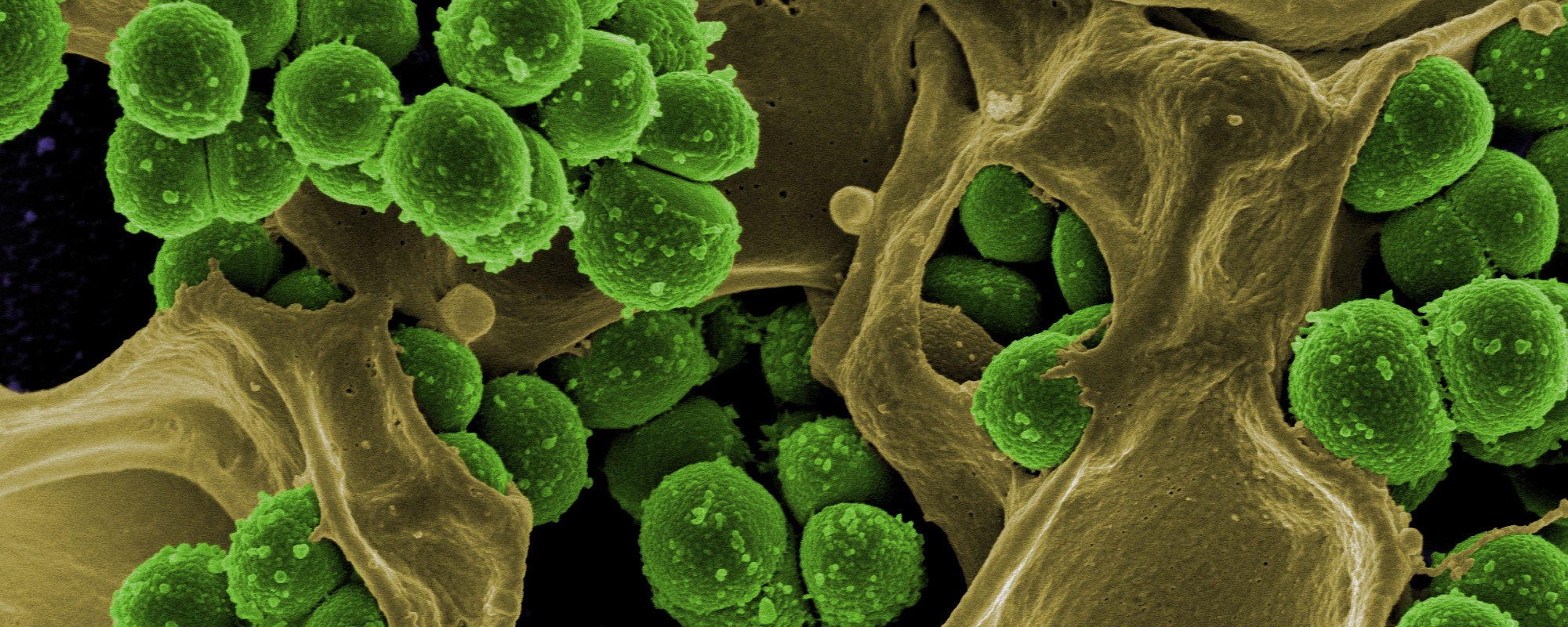
A strong feeling of deja vu hit this week when we learned about yet another case of forgotten vials of dangerous pathogens at U.S. labs. In this case, the containers were discovered during an investigation of NIH facilities after scientists found vials of smallpox earlier this summer. This search discovered a century (!!) old bottle of ricin, as well as samples of tularemia and meliodosis. The FDA also reported they found an improperly stored sample of staphylococcus enterotoxin.

The Independent—“The NIH does have laboratories that are cleared to use select agents, and those pathogens are regularly inventoried, the director of research services Dr. Alfred Johnson said. However, these samples were allowed to be stored without regulation.”


This Week in Ebola

We learned that new cases of Ebola in Democratic Republic of Congo are genetically unrelated to the West African strain and that researchers from the Broad Institute and Harvard are working to sequence and analyze virus genomes from the West African outbreak. Senegal is working hard to manage contacts with the Guinean student who tested positive for the virus in the capital, Dakar. Human trials of an Ebola vaccine continued in the U.S. and are planned to take place in Mali, the U.K., and Gambia. A third American infected with Ebola will return to the U.S. and will be treated at a Nebraska medical containment unit which was built for the SARS outbreak. I read an article that hypothesized that Ebola may be able to be transmitted sexually which could account for a high number of cases, while the Washington Post pointed to the fact that the West Africa outbreak is drawing attention from diseases which are more widespread and kill more people—it’s the Kardashian of diseases. Lastly, CDC Director Dr. Thomas Frieden said that this outbreak of Ebola is “threatening the stability” of affected and neighboring countries, and Dr. Daniel Lucey, of the Georgetown University Medical Center, predicts that the current outbreak “will go on for more than a year, and will continue to spread unless a vaccine or other drugs that prevent or treat the disease are developed.”


Image Credit: Wikimedia Commons

Reston Ebola: NOVA’s Namesake Emerging Infectious Disease

By Chris Healey

Almost 25 years before the 2014 Ebola epidemic began spreading through West Africa – and the resulting treatment of two American Ebola patients on U.S. soil – public health officials responded to an Ebola outbreak inside the U.S.

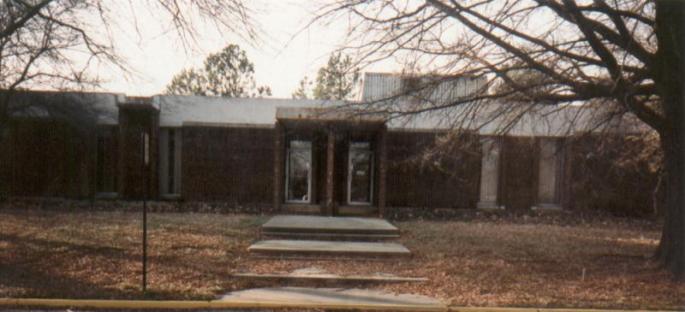
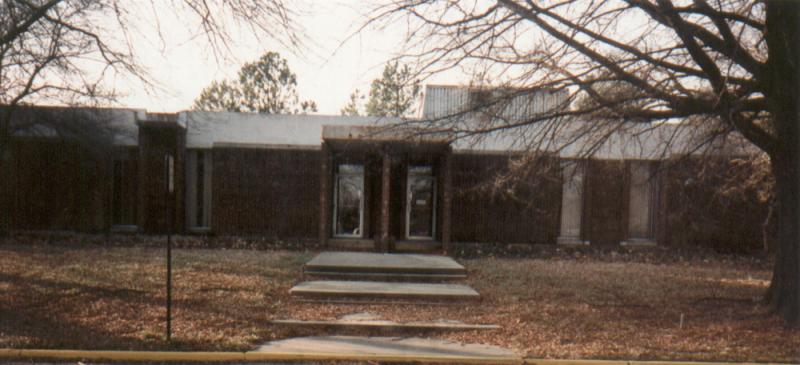
Reston Ebola is the name given to an Ebola species discovered among macaque monkeys in a pharmaceutical research company’s primate quarantine unit in Reston, VA.

In 1989, a veterinarian at Hazelton Research Products, a pharmaceutical research company, contacted the United States Army Institute of Infectious Diseases at Fort Detrick, MD, concerning an unusually high mortality rate among macaques in a shipment from the Philippines. The veterinarian wanted USAMRIID to confirm suspected simian hemorrhagic fever, a viral illness lethal to primates but innocuous to humans. Tests on macaque carcasses unexpectedly showed signs of a deadly filovirus infection – Ebola hemorrhagic fever virus.

Initially, Ebola species Zaire – with mortality rates as high as 90%, and the cause of the 2014 African Ebola epidemic – was implicated as the agent at work. Faced with an unprecedented public health threat, state and federal health agencies converged on the primate quarantine facility in Reston. The Centers for Disease Control and Prevention monitored quarantine facility employees for Ebola symptoms. USAMRIID euthanized primates and sterilized the quarantine facility.

Comprehensive tests later identified the Zaire species identification as an error – Reston Ebola was a new species incapable of infecting humans. However, the enormous public health response was not unwarranted.

Unlike other Ebola species, researchers suspected Reston Ebola demonstrated airborne transmission at the quarantine facility. The longer the virus remained in human presence, the longer it was given opportunities to adapt. If Reston Ebola were to adapt to humans with airborne communicability it would pose a catastrophic public health risk.

Although no quarantine facility employees demonstrated Ebola-like symptoms during the 1989 outbreak, six workers produced Reston Ebola antibodies, meaning the virus elicited an immune response. Reston Ebola’s quick eradication was paramount to ensure that the virus—with its suspected airborne communicability—did not adapt to humans.

Restriction of the 2014 African Ebola epidemic to only a few countries has been attributed to the limited means of Ebola virus transmission. All Ebola species which affect humans are communicable only through direct contact with an infected person or their bodily fluids. Airborne transmission would increase viral spread and undermine containment efforts.


Image Credit

Week In DC: Events

September 2, 2014

War or Words: The Impact of Russian State Television Propoganda on the Russian Internet

Date: September 2, 4:00pm
Location: Elliot School of International Affairs, George Washington University, 1957 E Street NW, Suite 412, Voesar Conference Room, Washington DC

Following Russia’s annexation of Crimea and support for separatists in eastern Ukraine, Russian state television has portrayed the government in Kyiv as a “fascist junta” while stoking popular support for President Vladimir Putin among its domestic audience. This presentation will examine the central components of this Kremlin effort, developing a case study of Dmitry Kiselev’s Sunday evening broadcast “News of the Week,” the WWII and Cold War frames he employs, the reaction of the Russian internet audience to the frames, and what this data tells us about the relationship between television and the internet in Russia. It will assess whether Putin is a prisoner of his own propaganda, and how such Kremlin propaganda may be influencing Russian society.

RSVP here.

September 3, 2014

Challenges to India’s Nuclear Doctrine
Date: September 3, 9:30am
Location: Atlantic Council, 1030 15th Street NW, 12th Floor, West Tower, Washington DC

India’s nuclear policy faces significant challenges from the opacity of Pakistan’s strategic nuclear thinking and its development of tactical nuclear weapons. The combustible mixture of these factors has not only made it prickly for India to find coherence in its long-term policies, but it has also increased the threat of a nuclear standoff between the two countries. The status-quo is unacceptable for India because Pakistan upholds an ambiguous nuclear doctrine that could have perilous effects if India were to retaliate against an attack on Indian soil. Critics of India’s No First Use policy argue that it abrogates the duty of the state to protect its citizens by leaving them vulnerable to a first strike. Can India find a way to strengthen its long-term security without risking nuclear escalation? Please join the Atlantic Council’s South Asia Center for a discussion with Vice Admiral Vijay Shankar PVSM on India’s nuclear doctrine and the challenges that it will face in the future.

Register here.

September 4, 2014

Where Defense Dollars Go: Understanding the FY2015 Defense Budget
Date: September 4, 10:00am
Location: Center for Strategic and Budgetary Assessments

The U.S. Department of Defense is one of the largest organizations in the world, managing global security responsibilities with numerous international allies and partners. What does it take to fund DoD? Where does that money go? How is DoD coping in the current fiscal environment? What gaps exist between the strategy outlined in the Quadrennial Defense Review and the capabilities funded by the latest budget request?

CSBA Senior Fellow Todd Harrison will present the report’s findings and take questions from the audience.

The report examines the Pentagon’s most recent budget proposal, including military compensation costs, readiness funding, cost projections for major acquisition programs, and the request for Overseas Contingencies Operations.

The report estimates the gap between the strategy and defense program called for in the QDR and the budget caps currently in effect—a gap that totals into the hundreds of billions over the FYDP.  The report concludes that the Pentagon has not budgeted enough to fully resource its strategy nor has it revised its strategy to fit within the budget constraints set by Congress.  If this strategy-resource gap is not resolved, it will inevitably lead to greater risk in executing an already under-resourced strategy and defense program.

Watch the Live Webcast here.

The European Union at the Crossroads: Completing Integration or Hastening Disintegration
Date: September 4, 12:00pm
Location: Georgetown University, 37th and O Street NW, Edward B Bunn, S.J. Intercultural Center, ECR, ICC 701, Washington DC

Join us on Thursday, September 4 at noon for a lecture with Stephan Leibfried, University of Bremen, on ‘The European Union at the Crossroads: Completing Integration or Hastening Disintegration’.

During the latter half of the twentieth century, national welfare states in Europe served effectively as a safety net for market integration after 1957 and for global markets after the 1970s. Today, Europe is at a crossroads: Can the national welfare state and national varieties of capitalism remain broadly compatible as the EU system comes under national and transnational stress? Europe has a choice between an American-style exclusive safety net and a European-style inclusive and systematic safety net. When considering the question, it may be helpful to consider what Europe does and what it hopes to do in the future to determine ultimately what form of statehood the EU may take.

Register here.

Ensuring a Strong U.S. Defense for the Future
Date: September 4, 2:00pm
Location: U.S. Institute of Peace, 2301 Constitution Ave NW, Washington DC

The U.S. Institute of Peace is pleased to host a discussion of the report by the National Defense Panel, “Ensuring a Strong U.S. Defense for the Future,” with the Hon. Michèle Flournoy and LTG (Ret.) Michael Maples.

After more than a decade of active combat, the United States faces an evolving security environment characterized by challenges in Asia, turmoil in the Middle East, and an emboldened Russia that has destabilized Europe. With sequestration budget cuts ahead, the U.S. government also faces new fiscal constraints. Amid these regional and economic dynamics, the rapid global proliferation of technology provides both opportunity for and threats to American security and values. Against this backdrop the Department of Defense released its Quadrennial Defense Review (QDR) in March. The report, which provides policy planning guidance for the next two decades, was controversially received by Congress.

Following the QDR’s release, the congressionally-mandated National Defense Panel (NDP), co-chaired by Dr. Bill Perry and General John P. Abizaid, was tasked to evaluate the 2014 QDR. The expert panel, per its mandate, assessed the QDR’s findings related to force size, structure, and posture against a rapidly evolving security environment.

The U.S. Institute of Peace, which was tasked by Congress to facilitate the review of the QDR in both 2014 and2010, is pleased to a detailed discussion of the panel’s report, “Ensuring a Strong U.S. Defense for the Future.” The report presents the panel’s findings and recommendations on the QDR and on reforms to planning and policy for both the Department of Defense and Congress. It also comments on the current funding trends and the impact of a return to sequestration in 2016.

RSVP here.

The Global War on Terrorism: Is It Time to Double Down?
Date: September 4, 5:30pm
Location: The Burke Theatre, 701 Pennsylvania Ave NW, Washington DC 20004

Recent gains by extremist groups in Iraq, Syria, and across Africa raise the question of whether extreme Islamist terrorism is making a comeback — and whether the United States should do more to fight back.  But is terrorism indeed worse now than when al Qaeda was at its peak, or has the decimation of al Qaeda leadership left disparate, more localized, and less effective terrorist groups?  Would a renewed, strong effort by the United States to go after global jihadists make us safer from these terrorists — or would this only help stimulate further terrorist recruits and violent acts against U.S. interests?   Hear leading experts debate these questions and more in our next McCain Institute Debate: “The Global War on Terrorism:  Is it Time to Double Down?”

Confirmed panelists include: Fran Townsend, Former Assistant to President George W. Bush for Homeland Security & Counterterrorism; Mike Morrell, Former Acting Director, CIA; Daniel Benjamin, Former Ambassador-at-Large, U.S. State Department; and Philip Mudd, Former Deputy Director, CIA Counterterrorist Center. Juan C. Zarate, Former Deputy National Security Advisor for Combating Terrorism, will serve as the panel moderator.

Register here.