Our images of the week is a gallery of H7N9 work at the CDC, tailored for those of you who are nerdy like us and therefore wonder how an emergent agent is dealt with in the lab. Cases of H7N9 in China are currently comparable to peak numbers following the agent’s emergence last Spring. Click on any image below to launch the gallery (all images credited to the CDC, including the one above).
Category: Images
Image of the Week
Image of the Week: Virus Art
We shared this a couple years ago, but it’s making the internet rounds again, so we don’t feel bad re-posting it. Our image is:
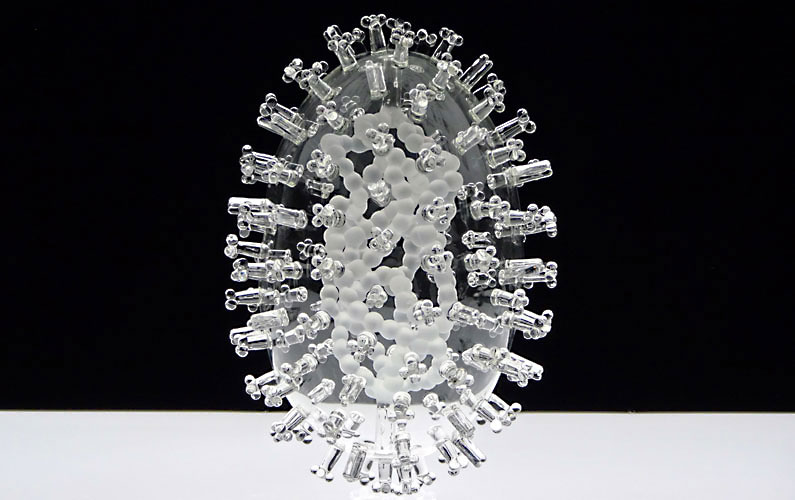
Glass sculptures of pathogens!
Pictured below is H5N1, the strain of HPAI currently appearing in birds across China’s Guizhou province. The sculpture is done by artist Luc Jerram. Check out the rest of his gallery here.
Image of the Week: GMU Biodefense’s New Mascot
Our image of the week is brought to everyone from GMU Biodefense doctoral candidate, Jennifer Osetek. In today’s competitive environment, one can never start educating children too earlier, and in the niche field of Biodefense, all advantages are necessary. Luckily, Jen has an astute and willing scholar in her son, Alex. He’s clearly already a master of that well known PhD study technique, osmosis.
Image of the Week: Cholera
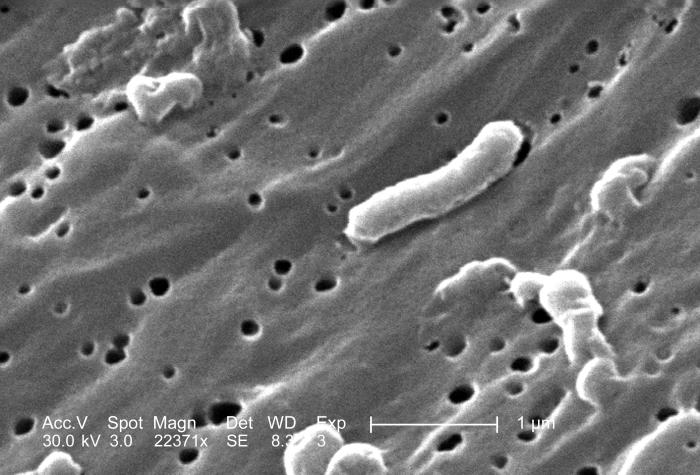
This week’s image is of Vibrio cholerae, the gram-negative bacteria which causes the disease cholera. Cholera affects up to five million people globally each year, and causes as many as 120,000 deaths. The disease is not contagious, but is spread through ingestion of contaminated food or water, the latter often due to poor sanitation. Haiti is currently experiencing an unrelenting cholera outbreak; between October of 2010 and October of 2013, there have been over 680,000 cases.
Image of the Week: Evolution of Zombies
This week’s image is this very cool infographic depicting the evolution of the zombie in film and video games.
Image of the week: Salmonella!
In honor of Thanksgiving and our slightly perverse senses of humor, this week’s image is of everyone’e least favorite holiday bacteria – Salmonella! Pictured below is Salmonella typhimurium, the causative agent behind your run of the mill gastroenteritis. In order to avoid encountering this particularly unfortunate pathogen, we recommend you check out the CDC’s guidelines for a pathogen-free Thanksgiving. Which, incidentally, is what we wish you all!
Pictured in this lovely SEM, we have Salmonella typhimurium in red, invading human cells.
(image credit: Rocky Mountain Laboratories, NIAID, NIH)
Slideshow: MERS
In light of the recent discovery of live MERS in a Saudi Arabian camel, we thought we’d revisit the emergent pathogen. For this week’s image gallery then, the Middle Eastern Respiratory Syndrome virus, in false color.
Image of the Week: Y. Pestis
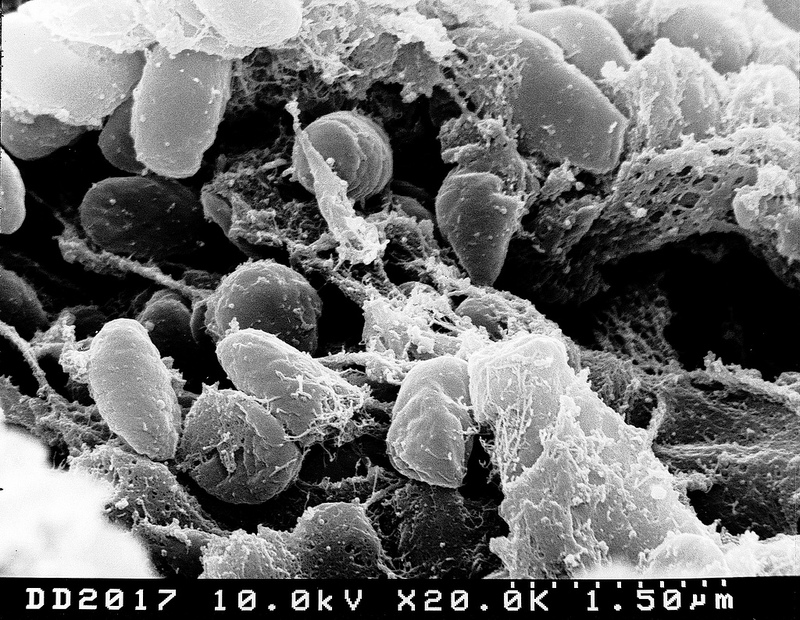
We know we featured a gallery of plague pictures last week, but the one picture we failed to include was of the bacteria itself. Pictured below is the Yersinia pestis, the bacteria which killed millions by causing plague. While today plague in its bubonic form is easily treated, pneumonic plague has a 100% fatality rate unless antibiotics are administered within 24 hours.

(Image credit: NIAID)
Image of the Week: Coxiella burnetti
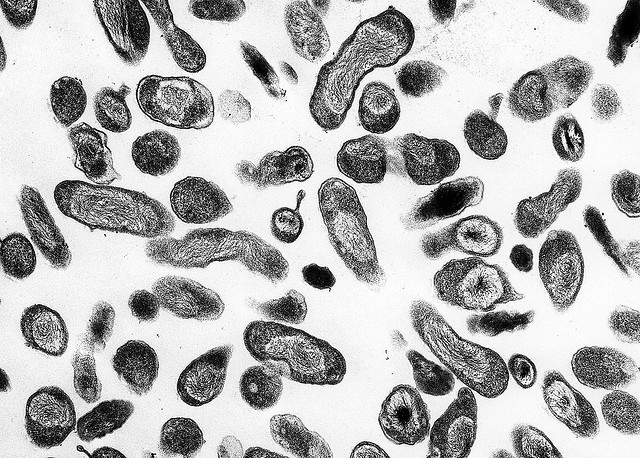
This week’s image is of Coxiella burnetti, a HHS select agent and the causative bacteria of Q fever. The bacteria is primarily found in farm animals, and can be passed along through infected milk and in waste products, although the greatest number of bacteria are shed during birthing. Q fever has an incubation period of 2-3 weeks, with 50% of cases remaining asymptomatic. The disease presents with fever, myalgia, as well as broad GI symptoms. Acute forms of the disease can be much more severe, including symptoms affecting the central nervous system.