Virus or Bacteria?

If you thought quickly determining whether a patient is suffering from a viral or a bacterial infection should be straightforward and easy, you would be wrong. The difficulty in answering this seemingly simple question is what has contributed so heavily to our current war against antibiotic-resistant bacteria. Luckily for all of us, researchers at Duke University are on it. According to a new study, taking a molecular snapshot of gene activity – when infected with a virus, your body activates a specific set of genes, which are entirely different from the set activated to fight a bacterial infection. The entire process currently takes 12 hours, a number which the researchers are hoping to slash to near-instant. The value in immediately determining something as simple as what kingdom the infectious agent belongs to would be a boon in fighting everything from over prescription of antibiotics to emergent pandemics.

Read more on viral signatures here.

(image: Thomas Splettstoesser)

Synthetic bio and dual-use anti-microbials

By Daniel McGown

Two articles were published in ACS Synthetic Biology this week, one from an MIT team and another from a team at Nanyang Technological University, iteratively outlining an approach for the custom design of a microbial hunter-killer against a pathogenic species.

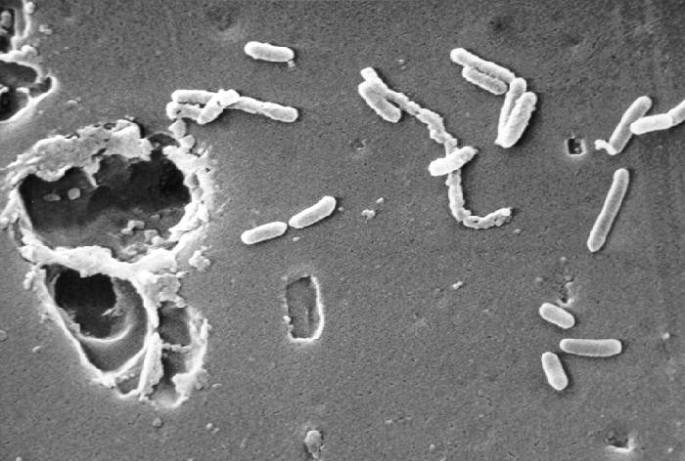
In the first paper, Saurabh Gupta, Eran Bram, and Ron Weiss outlined proof of concept construction of an E. coli strain modified to do two novel things: 1) detect a quorum sensing signal emitted by Pseudomonas aeruginosa and 2) upon detection secrete a chimeric exotoxin designed to specifically destroy P. aeruginosa cells and nothing else. This use of passive detection to trigger an active and specific offense effectively converts the E. coli strain into a trap waiting for just P. aeruginosa – and because the toxin is secreted rather than requiring destruction of the cell, the trap can keep on trapping.

Matthew Wook Chang and company take a similar design and extend it two steps farther.   Firstly, they added a method to defeat one of P. aeruginosa’s best defenses, the biofilm.  Because P. aeruginosa biofilms include DNA into the extracellular matrix, they added a secreted DNAse to eliminate the DNA and disrupt the biofilm.  Secondly and perhaps more interestingly, the team retargeted the cell’s chemotaxis system by tying E. coli expression of a chemotaxis regulation protein to the presence of P. aeruginosa’s quorum sensing signal.  This caused the E. coli to gravitate toward P. aeruginosa and release their enzymatic arsenal where it would do the most P. aeruginosa damage.  With this latter addition, then, the waiting trap instead switched over to search and destroy.

This is a really cool idea – an appealing concept in a world that is running out of anti-microbials.  It brought to mind immediately the way the Russians used to use bacteriophages to attack bacterial infections, except these can be designed modularly to strike the right target instead of hoping nature is kind enough to deliver.  One has to wonder how easily it could be used in an infection inside a living system, but a proof of concept can’t be expected to jump that chasm – it’s cool enough that it works at all.  It will be nice, though, to see how readily the approach could actually be adapted to other pathogens and how well it will work clearing infections in vivo.

One also has to wonder, though, if the same idea couldn’t be turned in a different and less pleasant direction.  Could you use it to make a pathogen worse?  Say, could you build a pathogen that used the body’s chemokine and cytokine signals to specifically detect and defeat cells regulating immune responses with chimeric leukocidins or hemolysins or some such?  Beats me, but it feels like something of a goose and gander situation.

(image: Janice Haney Carr/CDC)
————————————————————————————————————————
Daniel McGown is a first year PhD student in the Biodefense program with a background in molecular microbiology.

Koblentz on the Difficulties of Destroying Syria’s Stockpile

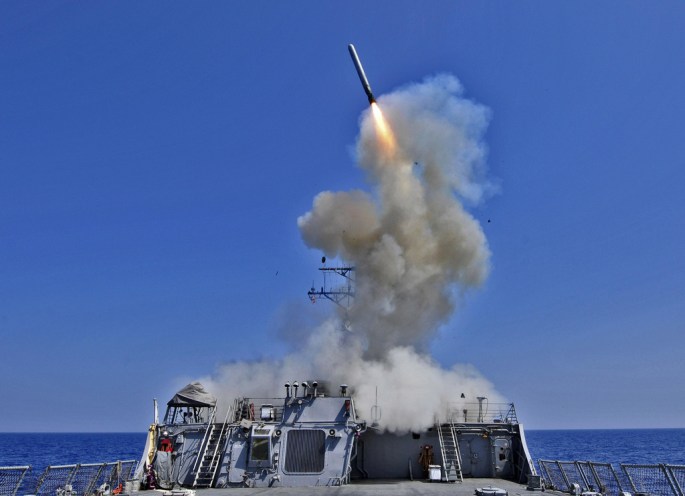
Dr. Gregory Koblentz was quoted in two articles on Syria yesterday. In the first piece in the New Republic, Dr. Koblentz discusses the potential use of Tomahawk missiles (pictured above) should the US decide to pursue military action in Syria.

“The advantage to Tomahawks, according to Gregory Koblentz, a George Mason University political scientist who specializes in weapons of mass destruction, is they are highly accurate, fly low to the ground (and can therefore typically evade air defenses), and can be fired from ships hundreds of miles away (hence the frequently used term “lobbed”)—thereby putting American soldiers at very little risk. The downside to Tomahawks is they pack a comparatively small explosive punch and, particularly because they cannot be reprogrammed in-flight, are best used on stationary targets—an especially problematic proposition given that the regime will likely have had several weeks to move whatever they want to move to different locations.”

In the second piece in Voice of America, Koblentz is quoted on the likelihood of Syria eliminating its chemical weapons stockpile.

“‘I don’t think the Syrian regime is serious about actually turning over all of their chemical weapons, and even if they were to do so in the middle of a civil war would make it virtually impossible for any kind of international group to conduct their work safely and securely. So I don’t see this happening anytime soon, if ever,’ said Koblentz.”

Read the New Republic piece here, and the Voice of America piece here.

(image: U.S. Navy photo by Petty Officer 3rd Class Jonathan Sunderman)

Thrall on the Syrian Compromise – “Let’s Make a Deal!”

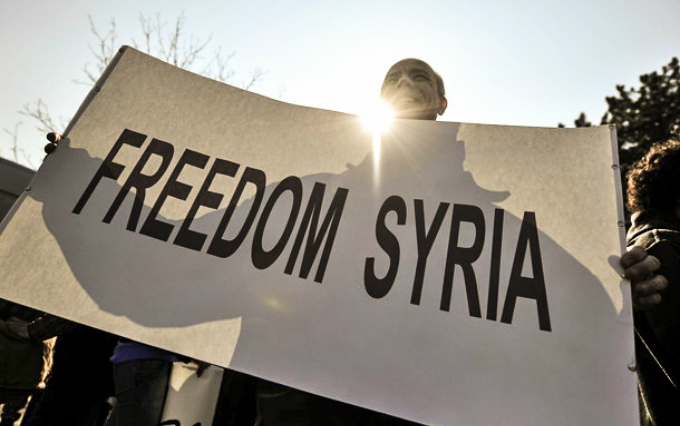
Dr. Trevor Thrall, GMU Biodefense Director, reviewed the latest developments in the ongoing Syrian saga yesterday in a piece in the National Interest. In it, he discusses the implications of the recent compromise proposal and potential US responses. Here’s an excerpt:

“The apparently accidental diplomatic overture from Secretary of State John Kerry, suggesting that Syria transfer its chemical weapons to international control to avoid U.S. airstrikes, has immediately received traction. How seriously either the U.S. or Syria will consider this proposal remains unknown. On the one hand, it is easy to argue that Syria will simply latch on to the proposal as a tactic to forestall U.S. action but has no intention of agreeing to give up its weapons. On the other hand, Syria needs Russian support more than it needs chemical weapons, and Assad may calculate that his chances against the rebels are better if the U.S. does not get directly involved militarily.

From the U.S. perspective the proposal has immediate political impact. Obama cannot strike Syria when his primary justification is in such serious question. There may be other reasons for the U.S. to engage in Syria directly, but the White House’s own PR campaign has emphasized the danger of Syria’s chemical weapons and the potential for them to wind up in the wrong hands. If Syria tells the world they are willing to consider giving them up, Obama’s argument crumbles and he cannot take action until the issue is resolved one way or another.

Ironically, for the U.S. this would be a far better outcome than Obama had any right to imagine just days ago. Having foolishly drawn the red line in the first place, and then having made a complete mess of the campaign to build both public and Congressional support, Obama may now have found a path that both gives him a big win while avoiding either an ugly defeat in Congress or having to launch airstrikes of wildly uncertain consequence…”

Read the rest of the piece here.

(image: Freedom House)

Cowpox Case in the Netherlands

A teenage girl in the Netherlands recently developed cowpox, the viral cousin of smallpox, after trying to save a drowning kitten. Within a week of her contact with the kitten, the girl had developed a large necrotic ulcer on her wrist. Cowpox being as rare as it is, by the time doctors correctly diagnosed her, the infection had begun to clear up on its own (it’s naturally self-limiting). Cowpox is famous for being used by Edward Jenner in the first effective vaccine, against the now eradicated smallpox virus. As the above image shows, there was significant resistance on the part of the local population to intentionally infecting themselves with the harmless cowpox virus. To prove the vaccine’s safety and efficacy,  in 1796 Jenner rather dubiously inoculated an eight year old boy with the cowpox virus before infecting him with smallpox. When the boy was shown to be immune to the deadly virus, the concept of vaccination was born.

As for the teenager in the Netherlands, while we’re sure having a giant black ulcer containing dead tissue open up on your wrist is pretty scary, at least she’s protected from smallpox!

Read the full story and look at the very big picture of her ulcer here.

(image courtesy of the Library of Congress)

The Pandora Report 9.6.13

Highlights: The Syrian BW “threat”, MERS vaccine, Nipah, biological weapons in the Philippines, and al Shabaab contributing to polio. Happy Friday!

On Not Falling Prey to Syrian Biological Weapons Alarmism

There have been a lot of articles (starting with the WaPo, and snowballing to the Telegraph, VoR, etc) discussing the “emerging threat” of Syrian biological weapons. Before the rumors grow and plant seeds, we strongly recommend you take a moment to check out Dr. Ben Ouagrham-Gormely’s excellent rebuttal. Here’s an excerpt from her piece:

“A September 5 Washington Post article raises concern that Syria might resort to biological weapons in retaliation for a Western military strike. The article states that intelligence reports indicate that Syria engaged in bioweapons development in the 1970s and 80s and since then has maintained a “dormant capability,” which some experts interviewed by the Post believe can easily be reactivated to produce biological weapons. it is important to inject a little bit of reality in regard to the question of whether or not Syria might be able to successfully reactivate a “dormant program” and effectively develop and use biological weapons.”

Read the full post here.

MERS Vaccine Passes First Test

The confirmation of another two cases of the Middle Eastern Respiratory Virus in the last week, bringing the global total to 110 cases and 52 fatalities, has the scientific community scrambling to develop a viable vaccine. Now researchers at Loyola Marymount University, working in conjunction with the Erasmus lab in Rotterdam (the same lab who refused to play nice in sharing the MERS genome), have developed a candidate vaccine which can be used in case of a pandemic. However, while the candidate has passed the first pre-clinical trials, if proven efficacious in humans  it would still be at least a year before the vaccine would be ready for production.

Medical Xpress – “The starting point for the new vaccine was a related virus known as Modified Vaccinia virus Ankara (MVA). MVA is an attenuated strain of the virus that causes smallpox, and has been used for more than 30 years for the manufacture of smallpox vaccine. Indeed, MVA is at the heart of a worldwide effort to design and generate vaccines not only against viral pathogens but also against cancers. In this context, MVA serves as the carrier for specific antigens that elicit the production of protective antibodies in the immunized host. MERS-CoV is known to bind to human cells via its so-called spike (S) protein, which is exposed on the surface of its membrane envelope. Sutter and his team therefore used molecular biological methods to introduce the gene for the MERS S protein into the MVA genome.”

Bats spreading deadly virus, Stanford scientist warns

If there’s one thing we’ve learned here at GMU Biodefense, it’s stay good and far away from bats. Whether it’s rabies or MERS, the creatures of the night are bastions for all sorts of nasty diseases.  Now it looks like Pteropus bats in Bangladesh are in the “villain of the week” spotlight. A researcher at Stanford University is voicing concerns over the bats, which range across South East Asia, spreading the deadly virus Nipah.

Stanford News – “Among Nipah’s worrisome traits: Many strains are capable of limited person-to-person transmission, and it is a ribonucleic acid (RNA) virus, which has the highest known rate of mutation among biological agents. If a more efficient human-adapted strain developed, it could spread rapidly in highly populous South Asia before spilling into other regions. The global community must do a better job of estimating and managing the risk, Luby said. That will require stepped-up study of how the virus is transmitted, closer observation of infected people and consideration of vaccinations for at-risk communities.”

Military claims NPA has ‘biological weapons’; Reds laugh off claim

Moving away from the existence, or lack thereof, of Syrian BW, a rebel leader in the Philippines has been accused by the government of using biological weapons. According the Filipino government,  the device in question tested positive for both Enterobacter cloacae and Streptococcus agalacteiae. The government claims the rebels smeared the unexploded landmines with feces. The rebels deny the claims outright. We’ll leave it there.

Inquirer Mindanao – “The military insisted Thursday that the New People’s Army now uses ‘biological weapons’ to further its goal of toppling the government. In a press statement, the Eastern Mindanao Command based here said laboratory examination of unexploded land mines seized from NPA camps in Southern Mindanao showed the presence of ‘deadly toxin’ and bacteria ‘not usually found in steel rebars and nails used as shrapnel.’ The NPA unit operating in the region laughed off this claim, calling it ‘malicious and wildly concocted military propaganda.'”

Somalia: Polio Widespread in Regions Under Al-Shabaab Control

Polio eradication is a bit of a soapbox around here, maybe because as a planet we’ve been so close for so long and because it’s often security issues which hamper efforts. For those of you who have managed to miss our various rants, all but three states – Nigeria, Afghanistan, and Pakistan – have eradicated the virus. Somalia, despite its numerous failings, worked extremely hard to become polio-free in 2007. The news that the terrorist organization al-Shabaab, which controls large swathes of Southern Somalia, is refusing to allow supplies into territory it controls, while also telling local populations that the vaccine causes AIDS and sterility, is infuriating.

All Africa – “Al-Shabaab’s refusal to allow the supply of the polio vaccine in areas under its control is causing panic among residents at a time when aid workers are struggling to contain an outbreak of the crippling virus.’The polio outbreak plaguing Somalia has spread despite significant efforts to curb the disease,’ the United Nations Office for the Co-ordination of Humanitarian Affairs (OCHA) said in a statement August 15th, adding that insecurity is hampering efforts to contain the virus. Six years after Somalia was declared free of the virus, at least 105 cases have been confirmed in the country, the ‘worst outbreak in the world in a non-endemic country’, according to OCHA.

(image: Hakan Dahlstrom/Flickr)

On Not Falling Prey to Biological Weapons Alarmism in Syria

by Dr. Sonia Ben Ouagrham-Gormley

A September 5 Washington Post article raises concern that Syria might resort to biological weapons in retaliation for a Western military strike. The article states that intelligence reports indicate that Syria engaged in bioweapons development in the 1970s and 80s and since then has maintained a “dormant capability,” which some experts interviewed by the Post believe can easily be reactivated to produce biological weapons. it is important to inject a little bit of reality in regard to the question of whether or not  Syria might be able to successfully reactivate a “dormant program” and effectively develop and use biological weapons.

First, we need to define more clearly what capabilities are actually available to Syria. If a “dormant capability” means that Syria has maintained from its 1980s program only a handful of research activities, the country will face tremendous difficulties in launching a crash program capable of producing the quantities of agent required for use as a weapon. If we assume — and this is entirely speculation — that Syria already has stocks of pathogens, its first task will be to produce a sufficient amount of liquid agent for weaponization. Scaling-up, however, has been a stiff challenge for both past terrorist and state bioweapons programs. The passage from a laboratory sample to larger quantities of bioagent is not a straightforward linear process. Because microorganisms are sensitive to their environmental and processing conditions, scaling-up has to be incremental, and each stage requires a revision of the production parameters. For example, when the Soviets launched the large-scale production of their anthrax weapon at the Stepnogorsk production plant in Kazakhstan, their scientists could not maintain the lethal qualities of the agent throughout the production process. They were therefore compelled to review and test each parameter of the production protocol at each stage of the scale-up, a process that lasted about two years. Scale-up also exposes the agent to contamination, which further delays production, as was the case in both the U.S and Soviet programs.  Current biodefense and pharmaceutical companies also routinely face such contamination and scale-up challenges.

Second, it is important to determine what type of expertise is currently available to Syria. If Syria maintained minimal research activities over the past 20 years, it is likely that they will face a shortage of expertise at key points of a weapons development. This includes process development, pilot-scale production, large-scale production, testing, dissemination, and weaponization. For example, the Iraqi program had very few experts with knowledge directly applicable to the agents they selected for use as a weapon. They also had only one fermentation expert, and before his involvement in the program, the fermenters purchased for the program remained in their crates for lack of personnel with knowledge on how to use them. The Iraqis also did not have weaponization experts within the bioweapons program. Weaponization work was conducted by individuals involved in the chemical weapons program, and consisted of adapting existing chemical bombs and warheads for bioweapon use. This resulted in very inefficient weapons, designed to disseminate the agent upon impact, which would have destroyed most of the bioagent. It is worth reiterating also that the Iraqis were only able to produce liquid agents, even though they had access to drying equipment. If active bioweapons programs faced such challenges, one can only imagine what problems a “dormant program” might face.

Were the Syrians able to shepherd enough expertise from the civilian sector, it is not clear whether their skills could be directly relevant to support bioweapons work.  The Japanese terrorist group Aum Shinrikyo had among its members individuals with scientific education, but their lack of practical experience in bioweapons development imposed a steep learning curve, which after six years of effort and about $10 million dollars of investment, resulted in failures at every step of a bioweapon’s development.  The Iraqi program faced similar issues: most of its scientists had no prior bioweapons expertise and required several years of learning and exploratory work before they could start making some headway.

Access to expertise is not the only challenge facing Syria. Making sure that the teams of scientists, technicians, and engineers work together, coordinate their efforts, and work towards the same goal is as, if not more, important. The lack of coordination and cooperation was a major source of delay and failure in the Soviet program, which was arguably the most successful of all state programs. Yet, if creating the conditions required for such cooperation is difficult under normal conditions, it is even more complicated under the stress of maintaining covertness in times of war, particularly under an authoritarian regime.

In sum, it is important to avoid falling prey to alarmist claims similar to those that led to the invasion of Iraq in 2003. The threat of Syrian bioweapons use merits a careful and systematic analysis of the capabilities currently available to Syria and a more nuanced and holistic  appreciation of the challenges they might face.

———————————————————————————–
Sonia Ben Ouagrham-Gormley is an Assistant Professor in the Department of Public and International Affairs at George Mason University and is primarily affiliated the GMU Biodefense graduate program. Professor Ben Ouagrham-Gormley has conducted research and written on such topics as biological weapons proliferation, weapons of mass destruction (WMD) trafficking in states of the former Soviet Union, biosecurity and bioterrorism, export controls, transfer mechanisms of WMD expertise, defense industry conversion, and redirection of WMD experts. She has received several grants from the Departments of Defense, State, and Energy, as well as from the Nuclear Threat Initiative and the Carnegie Corporation of New York to conduct research on WMD proliferation and contribute to remediation programs such as the DOD-funded Cooperative Threat Reduction Program.

(image: CIAT International/Flickr)

What virologists’ dreams are made of: A total viral catalog

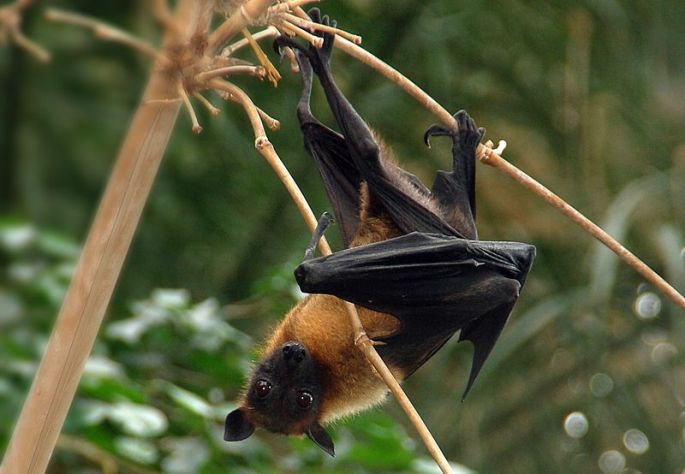
Believe it or not, we have a tremendous deal to learn about viruses. A lot of huge, fundamental questions about viruses remain unanswered –  are they alive or dead? Where did they originate? How many are there? This last question is in some ways the most feasible to answer, and scientists have begun to do so by examining Indian Flying Fox bats. In a new study, scientists at Columbia university took over a thousand samples from the bat species and scoured them for viruses. They turned up 55 viruses, of which a staggering 50 were hitherto undiscovered. Ten of them are in the same family as Nipah. The scientists now hope to take the viruses found from the Indian Flying Foxes and begin a catalog of viruses which infect the remaining 5,484 known species of mammals. Such a resource, while expensive to produce, would be a huge aid in preparing us for future zoonotic outbreaks.

New York Times – “We might be able to take away this element of surprise if we had a catalog of all the viruses lurking in mammals. As soon as a mysterious epidemic broke out, scientists could turn to the catalog to figure out where the virus came from, potentially gaining some crucial clues to the virus’s biology. But few scientists have ventured to build such a catalog, perhaps because there seemed to be such a vast number of viruses to contend with.’No one’s really been addressing this question, even though it seems like such a fundamental one,’ said Simon J. Anthony, an associate research scientist at Columbia University and a researcher at EcoHealth Alliance, a New York-based scientific research organization.”

Read the full article here.

(image: Fritz Geller-Grimm)

Koblentz on Syria

Dr. Gregory Koblentz, GMU Biodefense Deputy Director and Stanton Nuclear Security Fellow at CFR,  has made a slew of media appearances recently discussing all aspects of the developments in Syria, including interview with Al Jazeera, two with CTV, and SunTV. His interview last Satruday with CCTV America on the options available to UN inspectors in the embattled state is particularly incisive – watch it below.


Using AI to Predict a Pandemic

Researchers are using “machine learning”, a process by which computers use compiled data to develop algorithms, to try and determine distinctive characteristics of viruses with pandemic potential, like H7N9. It’s hoped that being able to identify these properties will help alert virologists when new strains emerge containing them. Machine learning enables researchers to cross-reference tremendous amounts of data – “hundreds of thousands of flu strains” – to look for similar markers of pathogenicity.

Wired – “‘It’s changing the field radically,’ said Nir Ben-Tal, a computational biologist at Tel Aviv University in Israel. Researchers are also using these approaches to investigate a broad range of viral mysteries, including what makes some viruses more harmful than others and the factors that influence a virus’s ability to trigger an immune response. The latter could ultimately aid the development of flu vaccines. A study published in July analyzed differences in the human immune system’s response to flu, identifying for the first time genetic variants that seem to influence an individual’s ability to fight off H1N1. Machine learning techniques might even accelerate future efforts to identify the animal source of mystery viruses.”

Read more here.

(image: Axs Deny/Flickr)