The Pandora Report

Highlights include lyssavirus, a treatment for Ebola, predicting the next pandemic, stressing out bacteria, weapons inspection in Syria, and Flu’s grappling hooks. Happy Friday!

Experts Sound Global Alert Over Deadly Bat Virus

Lyssavirus is a close cousin of rabies, both in terms of presentation and its potentially years-long incubation period. The virus does not transmit well person-to-person, though the possibility of such was enough to prompt a terse warning from the doctors involved is this case – “In short, people should stay away from bats.”

The Jakarta Globe – “Experts on infectious diseases on Thursday warned people to stay away from bats worldwide after the recent death of an eight-year-old boy bitten in Australia. The boy last month became the third person in the country to die of Australian bat lyssavirus (ABLV), for which there is no effective treatment…Other lyssavirus strains circulate in bats in the United States and Europe and the experts said their warning applies to wherever bat or flying fox populations exist.”

Chemical Compounds That Halt Virus Replication Identified

It has been literal months since we’ve mentioned Ebola, which is actually pretty good news. What better way to break the radio silence than with news of a potential treatment?

Science Daily – “In this study, researchers identified a new chemical class of compounds that effectively blocked genetically diverse viruses from replicating by limiting RNA production by the virus in cell culture. These indoline alkaloid-type compounds inhibited a number of viruses from replicating, including Ebola…’Because the production of viral RNA is the first step in successful replication, it appears that we have uncovered an Achilles heel to halt virus replication,’ said [lead author] Filone. ‘These compounds represent probes of a central virus function and a potential drug target for the development of effective broad-spectrum antivirals for a range of human pathogens.'”

UCLA-led team predicts China, Egypt could be new-flu hot spots

The team cross-referenced areas with high incidences of  H3N2 (in humans) and H5N1 (in birds) respectively, while also looking for large numbers of swine (which can be infected with both strains from both hosts, and can therefore reassort the virus before passing it along). The results? China and Egypt.

Los Angeles Times – “UCLA postdoctoral researcher Trevon Fuller and colleagues published their work online on March 13 in the U.S. Centers for Disease Control and Prevention journal Emerging Infectious Diseases…Fuller and his colleagues used new techniques to assess conditions in a number of places to see how likely a reassortment event might be. While a new pandemic could possibly emerge from a number of combinations of flu strains, the team focused on reassortment between human H3N2, a version of which was prevalent in the U.S. this flu season; and avian H5N1, a widespread bird fluthat has been rare in humans so far but has proven deadly among the hundreds of people it has infected.”

Bacterial byproduct offers route to avoiding antibiotic resistance

Researchers at Princeton are using bacteria’s natural susceptibility to oxidative stress to develop safer antibiotics. Contrary to popular  belief, “oxidative stress” does not refer to one’s state of being upon entering the Metro, but rather is a bacterial state induced as a result of increasing bacterial production of reactive oxygen species [ROS].

Princeton News – “In a recent paper in the journal Nature Biotechnology, first author Mark Brynildsen, a Princeton assistant professor of chemical and biological engineering, reported that scientists can force bacteria to increase their production of a class of molecules called reactive oxygen species, which can either kill the bacteria outright or make them far more vulnerable to antibiotics. Bacteria normally produce reactive oxygen species during growth. Small amounts don’t hurt them because of certain protective enzymes within the bacteria, but too much of the substances can lead to “oxidative stress.” The researchers decided this weakness could be exploited.”

Syria’s chaos complicates task for chemical weapons investigators

Syria continues apace, with rebels and the Assad regime swapping allegations regarding chemical weapons use. Now it’s just the simple matter of getting an inspections team into the middle of a civil war to attempt to collect biological samples. Weapons inspecting – not for the weak.

NBC News – “Secretary-General Ban Ki-moon said Thursday that he had agreed to conduct an investigation of allegations of an attack in the northern city of Aleppo. The government and the opposition have accused each other of carrying out that attack on Tuesday…Ralf Trapp, a German who works on disarmament and non-proliferation issues, specializing on chemical and biological weapons, said…a big question will be how soon the UN and the Organization for the Prohibition of Chemical Weapons – of which Trapp is a former official — can get a team into Aleppo. He said the team would have to be large and varied, with security officers and medical officers as well as inspectors. But each day lost will influence the speed with which the investigation can be concluded, he said, because as more time elapses before biological sampling occurs, more sophisticated DNA and other toxicological testing is required.”

A viral grappling hook: Flu virus attacks like a pirate boarding party

Included in part because there was a pirate simile in the title. Leave me alone, it’s Friday. But also, read the article, because it’s an interesting presentation of flu’s mechanism,  and because it used a pirate simile in the title.

Phys.org – “When the virus encounters a cell—in your lung, for example—that cell may engulf the virus inside an internal membrane called an endosome. To escape that bubble, the virus fuses its membrane with the endosome’s, opening a window into the cell’s interior…To fuse the two membranes, the virus carries a protein called hemagglutinin (the “H” in H1N1). Triggered by the acidic environment of an endosome, that protein will extend from the viral membrane and attach, like a grappling hook, to the endosome’s membrane. When enough hooks are set, they draw the membranes together until they fuse.”


The Pandora Report

Highlights include NCov’s mechanism of action, Dengue in Key West (Spring Breakbone?)(sorry, very sorry), the ongoing debate around stocking up on vaccines we may never use, will Assad use biological weapons?, Zithromax and irregular heartbeats, and using bacteria to deliver vaccines for us. Happy Friday!
Novel Virus Entry Portal Found

On the heels of the WHO confirming the 15th case of NCov, it’s now known that the virus utilizes the DPP4 host cell protein for entry.

The Scientist – “Dutch researchers have identified the host cell protein that allows a recently discovered coronavirus to enter its target cells, according to a study published today (March 13) in Nature. The structure of the protein, called DPP4, appears to be conserved between bats and humans, suggesting that the new findings will help shed light on zoonotic transmission of the virus, as well as provide a target for potential vaccines.”

Mosquito-borne dengue virus lands in Key West

Dengue, also known as “breakbone fever”, continues to be one of the most significant “neglected” tropical diseases, with its occurence  seeing a 30-fold increase over the last five decades. It’s re-emergence in the US, therefore, is disturbing but unfortunately not especially surprising.

LA Times – Although the mosquito-borne dengue virus was thought to be fully eradicated in the continental United States, the Centers for Disease Control and Prevention confirmed Wednesday that the tropical disease had indeed returned…after reviewing 93 dengue cases diagnosed in Florida in 2009 and 2010, study authors identified a specific strain of the virus in patients who had not recently traveled outside the country. The strain differed from those cases in which the patient had recently traveled.”

Wary of Attack With Smallpox, U.S. Buys Up a Costly Drug

This debate strikes at the heart of preparedness – do we invest in the smallpox vaccine now, in the off chance a bioterrorist attack with the pathogen occurs, or spend the money elsewhere and risk catastrophic casualties? While those of you born before 1980 (the year we stopped vaccinating) may be shrugging internally, there is some debate about the potency of the vaccine 20 years on. There’s not an easy answer.

New York Times -“The United States government is buying enough of a new smallpox medicine to treat two million people in the event of a bioterrorism attack, and took delivery of the first shipment of it last week. But the purchase has set off a debate about the lucrative contract, with some experts saying the government is buying too much of the drug at too high a price.”

Syria might be prepared to use chemical and biological weapons – US national intelligence director

Meanwhile, in Syria, (unverfiable) reports continue that Assad has already begun using chemical weapons on the rebels. Once again, it’s a poorly-kept secret that Syria had (has?) a clandestine BW program.

Radio Free Russia – “The erosion of the Syrian regime’s authority is accelerating and the ‘increasingly beleaguered’ government, which has been unable to defeat insurgents with conventional weapons, might be prepared to use chemical weapons, according to James R. Clapper, the director of national intelligence.”

FDA says Zithromax can cause fatal irregular heart rhythm

Zithromax, an anti-biotic used to treat everything from respiratory infections to STDs, is now known to cause “potentially fatal” tachycardia.

Reuters – “Last May, a study in the New England Journal of Medicine compared the risk of cardiovascular death in patients who took Zithromax with those who took several other antibiotics, including amoxicillin. It found that patients who took Zithromax, made by Pfizer Inc, had higher rates of fatal heart rhythms.”

Researchers trick bacteria to deliver a safer vaccine

Ha! Stupid bacteria. No, we’re kidding – any step towards development of elderly-, child-, and immunocompromised-friendly vaccines is good news.

R&D Magazine – “Vaccines that employ weakened but live pathogens to trigger immune responses have inherent safety issues, but Yale University researchers have developed a new trick to circumvent the problem—using bacteria’s own cellular mistakes to deliver a safe vaccine. The findings, published online in Nature Communications, suggest new ways to create novel vaccines that effectively combat disease but can be tolerated by children, the elderly, and the immune-compromised who might be harmed by live vaccines.”

The Pandora Report

Highlights include our CRE soapbox (it’s only 4%!), NCov updates, the surprising news about flu droplets (oh it’s surprising), Hong Kong  and the risks of high population density, the resilience of viruses, and an overview of pandemics. Happy Friday!

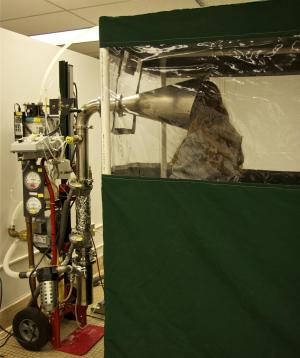
The Gesundheit II machine collects the breath exhaled from flu sufferers.   (Credit: Donald Milton)
The Gesundheit II machine collects the breath exhaled from flu sufferers.
(Credit: Donald Milton)

CDC- Making Health Care Safer

Drug-resistant CRE (carbapenem-resistant Enterobacteriaceae) has been in the news often this week, following the CDC’s warning about the bacteria. Now, clearly this is a concern, but before we freak out let’s look at some of the figures behind this story. First, the statistic regarding CRE’s case fatality- almost every news source we’ve seen has indicated it’s 50% – aren’t what they seem. What the sources don’t say is that it’s 50% if, and only if, the infection becomes septicemic. Septicemia as a result of almost any bacterial infection is very dangerous. Second, CRE is really only of concern amongst the immunocompromised and those in long-term treatment for prior conditions. If you’re a healthy adult in possession of an active immune system, you’re chances of becoming infected are minuscule. Third, yes the rate of infection from CRE has increased in the last decade, but again let’s keep the actual number in mind – four percent.

Antibiotic-resistant pathogenic bacteria are a real concern, and steps should absolutely be taken to mitigate their growth and prevent their spread. However, disproportionately scaring the public is not the way to do that, and can be detrimental in the long run – the “boy who cried wolf” anyone? But our soapbox aside, check out the CDC’s review if you haven’t already.

CDC – “Untreatable and hard-to-treat infections from CRE germs are on the rise among patients in medical facilities. CRE germs have become resistant to all or nearly all the antibiotics we have today. Types of CRE include KPC and NDM. By following CDC guidelines, we can halt CRE infections before they become widespread in hospitals and other medical facilities and potentially spread to otherwise healthy people outside of medical facilities.”

Novel coronavirus infection – update

Yesterday the WHO reported another fatality from the novel coronavirus, bringing the total number of cases up to 14 and the fatalities to eight. This case is of special concern because it remains unclear how the man became infected.

WHO – “The Ministry of Health in Saudi Arabia has informed WHO of a new confirmed case of infection with the novel coronavirus (NCoV). The patient, a 69-year-old male, was hospitalized on 10 February 2013 and died on 19 February 2013. Preliminary investigation indicated that the patient had no contact with previously reported cases of NCoV infection and did not have recent history of travel.”

Study provides new clues to how flu virus spreads

According to this study, the tiny aerosol droplets of flu we exhale when sick contain nine-times the amount of virus than the larger cough/sneeze generated droplets. So the next time an infected colleague/friend/loved one walks toward you, make them stop four feet away and calmly explain that their breath is infectious. (GMU Biodefense is not responsible for the implications of you calling the breath of a colleague/friend/loved one infectious).

Medical Express – “People may more likely be exposed to the flu through airborne virus than previously thought, according to new research from the University of Maryland School of Public Health. The study also found that when flu patients wear a surgical mask, the release of virus in even the smallest airborne droplets can be significantly reduced. ‘People are generally surprised to learn that scientists don’t know for sure how flu spreads,’ says Donald Milton, M.D., Dr.P.H., who directs the Maryland Institute for Applied Environmental Health and led the study of influenza virus aerosols published in the journal PLoS Pathogens…”

Hong Kong Prison Homes Spur Virus Risk Decade After SARS

Population density remains an important factor in understanding pandemic potential, and Hong Kong is close to the top of the list in terms of people-per-square-mile. As housing prices continue to increase, many of the city’s 7.2 million residents are settling for smaller and more cramped living quarters.

Bloomberg – “Hong Kong electrician Chan, who shares a mold-stained toilet with his neighbors, says he’d move out if it weren’t for the rising cost of accommodation. Last year, residents were forced to bathe using a shared kitchen sink for six months when a plastic shower hose in the communal bathroom broke, Chan said…Chan Sung-ming says the coughs and sneezes echoing through the plywood walls of his windowless, 60- square foot Hong Kong apartment get him thinking: is there a bug going around and could it be deadly?”

Virus overcomes ‘enormous hurdle’ to survive

Wonderful. As if viruses aren’t good enough at surviving against all possible odds in the first place. For things that technically aren’t alive (I know, I know, I read the piece about viral immune systems as well – they’re still undead in my book), they are disturbingly resilient.

Futurity – “Researchers have uncovered a virus inside a host with a non-standard nuclear genetic code—one that differs from the standard genetic code that almost all living things use to produce proteins.’The finding is significant because it shows that these viruses can overcome what appears to be an insurmountable change in the host genome,’ says researcher Derek J. Taylor, professor of biological sciences at the University at Buffalo.’So the fact that we haven’t previously seen any viruses in these species with a modified genetic code may not be because the viruses can’t adapt to that shift. It may be that we haven’t looked hard enough.'”

Bioterrorism and the Pandemic Potential

A good overview of the basics of pandemics (I tend to disagree with their bioterror assessment, but to each their own!)

STRATFOR – “”The potential for a disease to spread is measured by its effective reproduction number, or R-value, a numerical score that indicates whether a disease will propagate or die out. When the disease first occurs and no preventive measures are in place, the reproductive potential of the disease is referred to as R0, the basic reproduction rate. The numerical value is the number of cases a single case can cause on average during its infectious period. An R0 above 1 means the disease will likely spread (many influenza viruses have an R0 between 2 and 3, while measles had an R0 value of between 12 and 18), while an R-value of less than 1 indicates a disease will likely die out. Factors contributing to the spread of the disease include the length of time people are contagious, how mobile they are when they are contagious, how the disease spreads (through the air or bodily fluids) and how susceptible the population is. The initial R0, which assumes no inherent immunity, can be decreased through control measures that bring the value either near or below 1, stopping the further spread of the disease.”

The Pandora Report

(Image Credit: Cody Hough).

Highlights include secondary transmission of vaccinia through sex, humidity – good for something?!, two new cases of H1N1 in Taiwan, another H5N1 fatality in Cambodia, viruses with immune systems, and avian influenza (no, not that one- it’s H7N3) in Mexico. Happy Friday!

Vaccinia as an…STD?

This is one of the ongoing problems with the ACAM2000 vaccine – it sheds. More specifically, you shed for a couple days after receiving the vaccine. Which means you can pass it on, in a number of different ways.

MMWR – “On June 24, 2012, CDC notified Public Health Services, County of San Diego Health and Human Services Agency, of a suspected case of vaccinia virus infection transmitted by sexual contact. The case had been reported to CDC by an infectious disease specialist who had requested vaccinia immune globulin intravenous (VIGIV) (Cangene Corporation, Berwyn, Pennsylvania) for a patient with lesions suspicious for vaccinia. The patient reported two recent sexual contacts: one with a partner who recently had been vaccinated against smallpox and a later encounter with an unvaccinated partner. Infections resulting from secondary transmission of vaccinia virus from the smallpox vaccinee to the patient and subsequent tertiary transmission of the virus from the patient to the unvaccinated partner were confirmed by the County of San Diego Public Health Laboratory.”

Higher Indoor Humidity Inactivates Flu Virus Particles

High levels of humidity – the bane of DC metro riders, women who straighten their hair, and people who don’t like being able to drink their air – are apparently very good for keeping the flu at bay:

Science Daily – “Higher humidity levels indoors can significantly reduce the infectivity of influenza virus particles released by coughing, according to research published February 27 in the open access journal PLOS ONE by John Noti and colleagues from the National Institute for Occupational Safety and Health, Centers for Disease Control and Prevention. The researchers tested the effect of relative humidity on the capacity of flu virus released in a simulated ‘cough’ to re-infect cells. They found that an hour after being released in a room at a relative humidity of 23% or less, 70-77% of viral particles retained their infectious capacity, but when humidity was increased to about 43%, only 14% of the virus particles were capable of infecting cells.”

 Two New H1N1 Deaths in Taiwan

Full credit to Taiwan and China: during the Chinese New Year a huge swath of the population travels, creating a really tremendous logistical challenge in terms of disease surveillance. Both states have nonetheless managed to keep a sharp eye on new cases of influenza:

The China Post – “The H1N1 flu strain claimed two lives this month, as the number of diagnosed influenza cases surged due to increased travel over Chinese New Year, the Centers for Disease Control (CDC, 疾病管制局) said yesterday. During the recent flu season, 365 cases of influenza were reported, resulting in 29 deaths, according to the CDC, which has attributed 26 of the deaths to the H3N2 virus strain and three deaths to H1N1. The first victim to be claimed by H1N1 earlier this month, a 48-year-old man, had reported flu-like symptoms of fever, soreness and pain on Jan. 19, but did not seek medical attention until Jan. 24. The man died on Feb. 5 despite the efforts of doctors. The second victim, a 38-year-old woman, became feverish and felt discomfort on Feb. 14, but did not receive medical attention until Feb. 18 when she was rushed to the ER. She was resuscitated but died on Feb. 21.”

Ninth New Human Case of Avian Influenza H5N1 in Cambodia in 2013

The man was known to have come in contact with infected poultry in his village. Cambodia is having difficulty halting the disease incidence due to the ongoing practice of slaughtering poultry within residences. This practice is also thought to explain the disproportionately high incidence of the disease amongst children – approximately 20 of the 30 cases of H5N1 in Cambodia have occurred in children under the age of 14.

WHO – “The ninth case, a 35-year-old man from Kbal Ou village, Me Sar Chrey commune, Stueng Trang district in Kampong Cham province, was confirmed positive for influenza H5N1 on 23 February 2013 by Institut Pasteur du Cambodge. He developed fever on 8 February 2013 and his condition worsened on 10 February 2013 with fever, frequent cough, and dyspnea….The man is the ninth person this year and the 30th person to become infected with the H5N1 virus, and the 27th person to die from complications of the disease in Cambodia.”

Viruses pass major test to enter ranks of living

What do you think? Should viruses be classified as “living”?

Discovery News – “Viruses can acquire fully functional immune systems, according to new research that bolsters the controversial theory that viruses are living creatures. Until now, scientists thought that viruses existed only as primitive particles of DNA or RNA, and therefore lacked the sophistication of an immune system. The study, published in the journal Nature, is the first to show that a virus can indeed possess an immune system, not to mention other qualities commonly associated with complex life forms.”

Avian Influenza Outbreak in Mexico Raises Concerns about Price Speculation

Just as a FYI – stick it in the back of your mind for the time being.

The Poultry Site – “The dreaded avian influenza has returned to central Mexico again this year, this time causing significant poultry deaths in Guanajuato state, writes Carlos Navarro, Editor of SourceMex. The outbreak of the H7N3 virus—which had forced poultry farmers in the state of Guanajuato to destroy more than 2 million birds as of the end of February — affects municipalities in northern Guanajuato as well as in Jalisco state.”

In Case You Missed it (you wouldn’t have if you followed us on Twitter!)

– Analysis: Emerging deadly virus demands swift sleuth work
– New Bioterrorism Vaccine Gets First Test In Humans
– Brazil dengue cases almost triple as new strain spreads
– DHS awards contract for utilities plant at NBAF

The Pandora Report

credit: Alex Alishevskikh
The Russian Meteor (image credit: Alex Alishevskikh)

Highlights include person-to-person transmission of the NCov, new drug to stop drug-resistant flu, plant viruses: yes they exist, sweat more to prevent TB, blacklegged ticks are spreading an unnamed disease (blackleggedia?), and did the meteor bring a virus which will kill us all? More news to come. Happy Friday!

Note: No updates on the deaths of two people in China from H5N1 – the cases were of particular concern due to the inability of health investigators to establish connections between either case and infected poultry. Person-to-person? We’ll keep you posted. 

Human-to-Human Spread of New Virus Lifts Threat to EU

The UK patient infected with the novel coronavirus (NCov) after travelling in the Middle East has died, raising the number of deaths to seven (out of thirteen known infections). The virus was not thought to be contagious until two family members of the sickened UK patient also became infected.

Bloomberg – “Two probable cases of human-to-human transmission of the new coronavirus that’s killed six people increase the pathogen’s threat to the European Union, according to the bloc’s disease-tracking agency. The appearance of a mild case of the disease caused by the virus also raises concern because it suggests more people may be infected than are known, have few or no symptoms, and are spreading the bug to others, the European Centre for Disease Prevention and Control said in a report late yesterday.”

New Flu Drug Stops Drug-Resistant Strains of Virus in Its Tracks

One of the reasons why the Influenza viruses are so difficult to handle is their phenomenal ability to mutate. Due the prevalence and high infectivity of the viruses, drug resistance is understandably a  cause for serious concern. A group of University of British Columbia researchers are seeking to mitigate this concern by developing drugs which inhibit neuraminidase binding in drug-resistant strains.

Science Daily – “Published online February 21 in the journal Science Express, the study details the development of a new drug candidate that prevents the flu virus from spreading from one cell to the next. The drug is shown to successfully treat mice with lethal strains of the flu virus. In order to spread in the body, the flu virus first uses a protein, called hemagglutinin, to bind to the healthy cell’s receptors. Once it has inserted its RNA and replicated, the virus uses an enzyme, called neuraminidase, to sever the connection and move on to the next healthy cell.”

Enemies no longer

Plants don’t get a lot of attention here at GMU Biodefense, which is unfair because they’re so prevalent. Plants have feelings too, right? Well no, but they can still catch viruses.

The Economist – “History casts a long shadow. Many of the first bacteria to be discovered were agents of disease, and that is how most people perceive bacteria to this day, even though less than 1% of them are pathogens. Something similar is turning out to be true of viruses, as Marilyn Roossinck of Pennsylvania State University told the AAAS meeting in Boston. Dr Roossinck works on plant viruses and she has assembled evidence suggesting a lot of such viruses are harmless to their hosts, and in some cases may actually be beneficial. That has implications for biology. It also has implications for agriculture.”

Scientists Unveil Secrets of Important Natural Antibiotic

So I have some bad news everyone. Apparently in addition to making you happier and prolonging your life, exercise may also save you from TB. Or, to be explicit, the secretion of the natural antibiotic dermcidin in sweat effectively kills bacteria which may enter at open cuts or wounds. The bad news? This makes avoiding exercise that much harder.

Science Daily – “These natural substances, known as antimicrobial peptides (AMPs), are more effective in the long term than traditional antibiotics, because germs are not capable of quickly developing resistance against them. The antimicrobials can attack the bugs’ Achilles’ heel — their cell wall, which cannot be modified quickly to resist attack. Because of this, AMPs have great potential to form a new generation of antibiotics.”

New tick-borne bacteria found in Shasta County

Blacklegged ticks are well established vectors for Lyme disease. However, the arthropods are now apparently carrying a recently discovered bacteria, Borrelia miyamotoi, which causes an as-yet-unnamed disease. The bacterium was first found to be pathogenic to humans in 2011, with the first US cases occurring in New England in January of this year. It’s now been found on the West Coast.

The Record Searchlight – “The bacteria have been found in ticks in 19 of California’s counties, including Shasta, Siskiyou and Trinity counties, according to the state Department of Public Health. Symptoms of the disease are similar to Lyme disease, which is caused by a bacteria called Borrelia burgdorferi, according to the state…It could be that the disease hasn’t been found in Shasta County, or anywhere else in California, because no one has been looking for the bacteria in sick people, district Vector Ecologist John Albright told the trustees during a board meeting Tuesday.”

Oddball Piece: Chelyabinsk meteor brought a dangerous virus to Earth?

OK, technically this shouldn’t be an oddball piece. There are whole scientific theories dedicated to the possibility of life on our planet being starting with alien bacteria, right? It’s just, we saw this and immediately thought, “Killer Viruses from Outer Space!!” Which made us laugh. So we included it. Happy Friday? [extra points if you can tell us what a “canny bolide” is]

The Voice of Russia – “This space guest which paid us a visit could actually be a Trojan Horse and physical damage from its explosion could be nothing compared to other potential dangers. This canny bolide that managed to sneak away from telescopes might have brought new viruses or bacteria to Earth.”

The Pandora Report

Highlights include H5N1 is making health investigators in China very nervous, the reasons why we are still leery of mutating it in the lab, bureaucratese strikes PAHPA, polymer sheets in bandages = less infection, the US fighting Ebola, and human life! now featuring bacteria. Happy Friday!

Bird Flu Death In China Sparks Fear Of Human-Transmitted H5N1 Strain

OK, now before you start making plans for that bird-flu apocalypse bunker, just put down the canned beets and listen for a sec.  It’s too early to tell. It’s entirely possible the health investigators missed a link. But also, and forgive the soapbox, this is exactly why things like a scientific moratorium on the potential aerosolization of H5N1 is so potentially dangerous.

International Business Times – “Health authorities in Guiyang, Guizhou province, announced that the 21-year-old woman, Shuai Pengyue, died on Wednesday due to multiple organ failure as a result of the flu. Shuai was one of two women reported in the area to have contracted the new strain of the avian influenza. Health officials have investigated the two of them and concluded that neither patient was in contact with poultry before showing symptoms of the illness. Victim proximity is important to note because typically, the bird flu is contracted by being in contact with poultry. In this case, health officials worry this could be signs that the H5N1 strain can now be transmitted between humans.”

The Deadliest Virus

This clearly isn’t a black and white issue, and both sides of the debate raise valid points. Here’s a good presentation of why we aren’t all gung-ho H5N1.

Harvard Magazine – “BIRD FLU (H5N1) has receded from international headlines for the moment, as few human cases of the deadly virus have been reported this year. But when Dutch researchers recently created an even more deadly strain of the virus in a laboratory for research purposes, they stirred grave concerns about what would happen if it escaped into the outside world. ‘Part of what makes H5N1 so deadly is that most people lack an immunity to it,’ explains Marc Lipsitch, a professor of epidemiology at Harvard School of Public Health (HSPH) who studies the spread of infectious diseases. ‘If you make a strain that’s highly transmissible between humans, as the Dutch team did, it could be disastrous if it ever escaped the lab.’…Lipsitch, who directs the Center for Communicable Disease Dynamics at HSPH, thinks the risks far outweigh the rewards. Even in labs with the most stringent safety requirements, such as enclosed rubber ‘space suits’ to isolate researchers, accidents do happen. A single unprotected breath could infect a researcher, who might unknowingly spread the virus beyond the confines of the lab.”

Senate Panel Approves Revised Biodefense Proposals

PAHPA reauthorization, new and apparently improved in the Senate. The extent of the improvement? Changing bill language from “redployment” to “reassignment”. Yes, apparently this is a significant difference. No, representative was available to clarify why/how. No, we are not speculating.

NTI – “The Senate Health, Education, Labor and Pensions Committee sent the full chamber its own version of the Pandemic and All-Hazards Preparedness Reauthorization Act in place of a bill approved by the House of Representatives last month. The proposals are nearly identical, but the latest text would still require House endorsement upon receiving Senate approval. Congress failed in its previous session to reconcile separate reauthorization drafts endorsed by each side. ‘This was a reauthorization of this important act, and … we not only reauthorized it, we made it better,’ Senator Richard Burr (R-N.C.) said in a morning session to mark up the legislation.”

Polymer controls bacteria and prevents antibiotic resistance

If viable, the potential implication of such bandages would be significant, especially in areas of higher risk of infection –  triage centers during a disaster or soldiers in theatre, for example.

The Engineer – “Researchers at KTH Royal Institute of Technology in Stockholm have discovered an antibacterial polymer that can be used in products including sportswear and bandages. It is claimed the discovery could be an important breakthrough in the search for environmentally-friendly ways to control bacteria while preventing antibiotic resistance and resistant bacteria.‘We have managed to find an antibacterial polymer that attaches stably to cellulose and therefore cannot be released into the environment,’ said Josefin Illergård, a chemistry researcher at KTH.”

US offers Shs26b to fight Ebola, Marburg

It’s bad form here at Mason Biodefense to go too long without talking about Ebola, but luckily the virus is remaining quiet. So instead, a little blurb about US efforts to keep it that way.

Uganda Daily Monitor – “The $10m (about Shs26b) project dubbed Emerging Pandemic Threat Programme aims at equipping doctors and veterinarians to strengthen their coordination in carrying out joint research and and treatment of zoonotic diseases.”

We are living in a bacterial world, and it’s impacting us more than previously thought

Are humans still human if the majority of our genome is derived from a common ancestor we share with bacteria? Is that a silly question? Maybe. For a thorough and thought-provoking piece on the role of bacterial species in our humanity, read below.

Phys.org – “Throughout her career, the famous biologist Lynn Margulis (1938-2011) argued that the world of microorganisms has a much larger impact on the entire biosphere—the world of all living things—than scientists typically recognize. Now a team of scientists from universities around the world has collected and compiled the results of hundreds of studies, most from within the past decade, on animal-bacterial interactions, and have shown that Margulis was right. The combined results suggest that the evidence supporting Margulis’ view has reached a tipping point, demanding that scientists reexamine some of the fundamental features of life through the lens of the complex, codependent relationships among bacteria and other very different life forms.”

The Pandora Report

This is a Canadian superbug-killing robot. No news yet on whether it also plays hockey.

Highlights include DNA sequencing and privacy, H5N1: yes it does actually have a case fatality of 60%, premature babies with H1N1, your gut releasing hidden mycotoxins, Canadian farmers and biosafety standards, and an awesome robot which kills superbugs. Happy Friday!

DNA sequencing a serious risk to privacy

DNA sequencing is one potenential future of bioterrorism – as it becomes easier and easier, the technical hurdles required to simply make a bioagent oneself (perhaps in a DIY community biolab) continue to diminish.

Homeland Security News wire – “The growing ease of DNA sequencing has led to enormous advancements in the scientific field. Through extensive networked databases, researchers can access genetic information to gain valuable knowledge about causative and preventative factors for disease, and identify new targets for future treatments. The wider availability of such information, however, also has a significant downside — the risk of revealing personal information. New study finds that new policies are needed to safeguard participants’ identity in genetic studies.”

Assessment of Serosurveys for H5N1

Breaking news: H5N1 is as deadly as the WHO says it is. C’mon people, it is the WHO, believe it or not disease surveillance is kind of their thing. The study below tested the argument of  the naysayers who insisted H5N1’s case fatality was lower than 60%, due to the mis – or non diagnosis of asymptomatic patients. The findings? Very few cases were missed.

Clinical Infectious Diseases – “It has been suggested that the true case fatality rate of human H5N1 influenza infection is appreciably less than the figure of approximately 60% that is based on official WHO confirmed case reports because asymptomatic cases may have been missed. A number of sero-epidemiological studies have been conducted in an attempt to identify such missed cases…This review suggests that the frequency of positive H5 serology results is likely to be low; therefore, it is essential that future studies adhere to WHO criteria and include unexposed controls in their laboratory assays to limit the likelihood of false positive results.”

Doctors find three newborns with swine flu virus

It remains unclear how the premature babies, all three of which are asymptomatic, caught the virus.

Times of Israel – “Three premature babies at the Rambam Medical Center in Haifa were found on Thursday to be carrying the swine flu virus. The H1N1 virus has remained dormant in all three infants, who have been isolated from the other newborns while the hospital conducts an investigation to determine the source of the virus. So far this winter, two Israelis have died as a result of swine flu. A 3-year-old boy succumbed in mid-January, marking Israel’s first swine flu death since 2009. Two weeks later, a 28-year-old woman died as well. Health Ministry officials said last month that there were currently no special safeguards prepared against swine flu in Israel, but that the flu vaccine administered this year includes immunization against the life-threatening virus.”

Gut Bacteria Liberate Hidden Toxins Found In Grains

According to a new study, plants can neutralize mycotoxins by adding a sugar or sulfate group. While the mycotoxins are rendered harmless to the plants, when they enter our lower intestine, the added group is broken down, and the toxins again become pathogenic.

Chemical and Engineering News – “Scientists have long known that fungi, such as Fusarium graminearium, deposit toxins on food crops. These so-called mycotoxins can contaminate the food supply, causing a wide range of nasty effects and even death in people and livestock. As a result, many countries set a limit for the amount of mycotoxins in food and animal feed…But in the past decade, scientists have discovered that mycotoxins can hide. The toxins are harmful to the crops themselves, so, as a defense strategy, the plants neutralize the mycotoxins by tacking on a sugar or sulfate group to the chemicals. Because of this chemical modification, these masked mycotoxins slip past current detection methods used by food safety inspectors…’what happens to the compounds during human digestion?'”

National dairy farm biosecurity standard launched

Meanwhile, in Canada, farmers are implementing voluntary biosafety standards to prevent the spread of agricultural pathogens. This may seem superfluous  but after taking Dr. Breeze’s Agroterrorism class, any attempt by the farming industry at biosafety self-regulation is highly appreciated. 

Manitoba Co-Operator – “Canada’s food safety agency has formally introduced its biosecurity standard designed specifically for the Canadian dairy farm. Launched Tuesday, the voluntary biosecurity standard maps out dairy farmers’ ‘control areas’ and target outcomes in the areas of animal health management, animal movement, premises management and conditions for workers, visitors, vehicles and equipment.The standard, designed to help farmers cut and control the risk of disease entering their farms, spreading within the farm or to neighbouring farms, ‘will be a tool for all proactive farmers who want to bring animal health to a superior level,’ Wally Smith, president of Dairy Farmers of Canada, said in the Canadian Food Inspection Agency’s release Tuesday.”

VGH First in Canada to Use Superbug-killing Robot

Canada is clearly out to show us up. Can we please talk about how cool the above headline is? Why don’t we get superbug-killing robots?

BioscienceTechnology.com  – “She’s just 5’5” and quiet, but don’t let her demure looks fool you—she’s a ruthless killer who moves at the speed of light. Meet Tru-D, the newest member of Vancouver General Hospital’s (VGH) Housekeeping and Infection Control teams. Tru-D SmartUVC, or “Trudi” as staff affectionately call her, is a superbug slaying robot being piloted at VGH for the next few months. The machine disinfects surfaces with a measured dose of ultraviolet (UV) light to kill germs and viruses, such as norovirus, influenza, C. difficile, Methicillin-resistant Staphylococcus aureus (MRSA) and Vancomycin-resistant Enterococcus (VRE).”

The Pandora Report

Highlights in this slightly longer report include BioWatch in the (Los Angeles) news, bird flu in Cambodia, nixing Staph’s Nicking enzyme, West Nile at your next wine tasting, blue light is the new red light when stopping bacteria, TB lurking in bone marrow, developing a better antidote to cyanide, and a chandelier made of petri dishes which actually grows bacteria (hang it in the dining room for a truly meta dining experience). Happy Friday!

House investigators seek BioWatch documents

It was only a matter of time before the LA Times was going to weigh in on the new BioWatch contract – $3.1 billion is a lot of money. So in what came as a surprise to absolutely no one,  the LA Times had a piece yesterday discussing stonewalling on the part of BioWatch officials. Transparency and accountability are both critically important…I’m just going to end that sentence there. 

LA Times – “Leaders of a House committee probing BioWatch, the nation’s troubled system for detecting biological attacks, complained Thursday that administration officials had blocked them from seeing documents held by two senior federal scientists known to have been privately skeptical of the nationwide program…In a letter, the House Energy and Commerce Committee urged Health and Human Services Secretary Kathleen Sebelius to produce the requested emails and other documents held by the scientists, who are based at the federal Centers for Disease Control and Prevention in Atlanta…The scientists’ firsthand assessments of BioWatch are known to diverge from those voiced by representatives of the Department of Homeland Security, who have repeatedly denied the existence of any false alarms or other serious deficiencies.”

H5N1 Bird Flu Re-Emerges in Cambodia, 3 New Cases & 2 Deaths
H5N1, which is endemic to the region, has resurfaced in Cambodia. Two of the three cases were in children, and all three cases were thought to have developed following contact with raw poultry.

The Guardian Express
– “The Cambodian Ministry of Health in conjunction with the World Health Organization announced in a joint press release that 3 new human cases of the Avian influenza H5N1 were reported near Phnom Penh, Cambodia. Of the 3 cases, 2 have resulted in the death of the patients.Cambodia 1st reported an outbreak of the H5n1 influenza virus in December 2004, and also reported a major outbreak of the virus in March 2006 that lasted until November 2006.”

Scientists Unveil a Superbug’s Secret to Antibiotic Resistance
Scientists at UNC were able to prevent a specific enzyme (NES) from binding with an equally specific groove on the bacterial plasmid, thereby preventing the enzyme from nicking a specific strand of DNA which confers antibiotic resistance. Science. Easy to understand, impossible to summarize. 

Science Daily– ” Worldwide, many strains of the bacterium Staphyloccocus aureus are already resistant to all antibiotics except vancomycin. But as bacteria are becoming resistant to this once powerful antidote, S. aureus has moved one step closer to becoming an unstoppable killer. Now, researchers at the University of North Carolina at Chapel Hill have not only identified the mechanism by which vancomycin resistance spreads from one bacterium to the next, but also have suggested ways to potentially stop the transfer.”

West Nile Virus Spreading Due to Mosquitoes in Orchards and Vineyards, Experts Warn

If you’ve been enjoying a nice glass of wine on one of Virginia’s beautiful orchards, then a) get back inside you maniac it’s 19 degrees outside and b) make sure you apply mosquito repellent. Apparently agricultural areas, in which diseases in horses and birds tend to be more prevalent, unsurprisingly also have more mosquitoes. More mosquitoes = greater likelihood of diease.

Science Daily – “Washington State University researchers have linked orchards and vineyards with a greater prevalence of West Nile virus in mosquitoes and the insects’ ability to spread the virus to birds, horses and people.The finding, reported in the latest issue of the journal PLOS ONE, is the most finely scaled look at the interplay between land use and the virus’s activity in key hosts. By giving a more detailed description of how the disease moves across the landscape, the study opens the door to management efforts that might bring the disease under control, says David Crowder, a WSU entomologist and the paper’s lead author.”

Bacteria-killing blue light used to stop infections

Blue light to the rescue! We’re going to go ahead and lead the clarion call here and say that all lights should officially be blue. Blue school lights, blue work lights, blue bathroom lights. Think how clean we’d all be. Possibly a little pale, but so clean.

Gizmag – “Over the past few years, blue light has allowed us to understand heart problems, control brain functions, and activate muscle tissue. Now, another biomedical function can be added to its list – because it’s known to have antimicrobial qualities, it’s been used to stop infections of the skin and soft tissues…In a proof-of-concept study, led by Dr. Michael R. Hamblin of Massachusetts General Hospital and Harvard Medical School, an array of blue LEDs was used to treat infected burns on lab mice. More specifically, the blue light was used to selectively eradicate potentially-lethal Pseudomonas aeruginosa bacteria in the animals’ skin and soft tissues.”

Tuberculosis Hiding in Bone Marrow Helps Deadly Bacteria Survive

As if TB, which affects over 2 billion people globally,  wasn’t hard enough to eradicate as it is, scientists have discovered that the bacteria causing the disease has been found in bone marrow.

Bloomberg – “Investigators writing today in Science Translational Medicine said they have uncovered the first evidence of tuberculosis nestled in mesenchymal stem cells in the bone marrow of people treated for the disease. The bacteria’s hideout in the self-renewing cells, where they capitalize on protection from the body’s own immune system, may explain how the germs survive. The next step is to find out how a re-infection is triggered, and then how to stop it, researchers said.”

Promising substance for better cyanide antidote for terrorist attacks

Not technically bio, but chem is a close enough cousin that we thought we’d include this piece. Scientists are developing a more effective antidote for cyanide, that bastion of Cold War spies and disgruntled office employees.

Homeland Security News Wire – “In an advance toward closing a major gap in defenses against terrorist attacks and other mass casualty events, scientists are reporting discovery of a promising substance that could be the basis for development of a better antidote for cyanide poisoning. An ACS release reports that their report, which describes a potential antidote that could be self-administered, much like the medication delivered by allergy injection pens, appears in the American Chemical Society’s (ACS) Journal of Medicinal Chemistry.”

This Weeks Odd Piece: Bacterioptica

"And that one is our son's cheek bacteria, and that one is some dirt we cultured just to see what grew, and that last one was from a swab of my cell phone - I know, ew"
“And that one is our son’s cheek bacteria, and that one is some dirt we cultured just for the heck of it, and that big one is from a swab of my cell phone – would you like to try and culture yours?”

For the microbiologist with expensive taste – why not showcase your work in your dining room with this stylish conversation piece? Regale your guests with tales of culturing your favorite bacteria, while actually pointing at cultures of bacteria. Why should the food on the table steal the limelight (literally)? All kidding aside, the fixture itself is actually quite pretty.

Madlabs – “Bacterioptica breaks from design norms, a light fixture outfitted with petri dishes. Designed to be adaptive, not only in its form and mechanics, but more importantly, in the way it evolves. Bacterioptica is not your typical chandelier, just as no family is a typical unit of interactions. Its on/off switch does not control it. Bacterioptica is alive. It grows. It is itself a household organism. It is living and breathing the same air and bacteria we are.”

The Pandora Report

Highlights include the BioWatch contract, H5N1 research for everyone, antibiotic-resistance and the Brits, IBM destroying biofilm, and bacteria shoes. Happy Friday!

BioWatch - baffling us all
BioWatch – baffling us all

Draft Solicitation For BioWatch Gen-3 Program Released

BioWatch is in the news again, but not for the reasons you might think. DHS has sent out feelers regarding the contract, which is expected to come in around $3.1 billion over five years. We’ll let you know when the industry date is set.

“Perhaps the largest single contract competition at the Department of Homeland Security (DHS) for fiscal year 2013 began Friday with the release of a draft announcement seeking support for the latest version of the BioWatch biological agent detection program. The draft request for quote (RFQ) stated that DHS will soon hold an industry day in Washington, DC, for contractors interested in bidding on the BioWatch Gen-3 Program. Preregistration will not be necessary but DHS has not yet identified a date for the industry day, the DHS Office of Procurement Operations said.”

Scientists lift moratorium on H5N1 research

We’ve spent quite a bit of time discussing the H5N1 controversy here at GMU Biodefense. The end of the moratorium, however, does not mean an immediate resumption of research – many labs are now in the difficult process of re-securing funding.

“International scientists have declared an end to a moratorium on research into mutant forms of the deadly H5N1 bird flu. Since influenza viruses are constantly changing, research is crucial, WHO’s Gregory Härtl told DW.

DW: ‘There has been this open letter in the journal Science and Nature that international scientists are going to lift their voluntary moratorium on certain research. First of all, what’s the reaction from the World Health Organization (WHO)? Is this a good or a bad thing?’

Gregory Härtl: ‘Well, certainly it’s to be expected. We convened a meeting with Dr Fouchier and Dr Kawaoka and others directly involved in this research a year ago, right at the time when this moratorium was announced. And the fact that they have desisted from doing any research on H5N1 for a year now – so twice as long as originally envisaged – has given the influenza and virology world a lot of time to sit back and look at what needs to be done in order to do this research in a surer environment and to do things that can help raise confidence all around.'”

Antibiotic-resistant bacteria are a genuine threat we must all fight

The UK is taking antibiotic-resistant bacteria very seriously, to the extent that they’re considering adding it to their list of civil emergencies. Much of the problem is considered to be the “broken” market model for developing new antibiotics.

“More people died of infections than cancer in 2010. This stark fact highlights the danger from rise in antibiotic resistance in bacteria, a danger the chief medical officer warned MPs about again this week. For billions of years, certain bacteria have produced chemicals that protect them from attack by other microorganisms. Some of these chemicals make up the antibiotics used in medicine today. Unfortunately, bacteria are survival experts and have developed ways of resisting the toxic effect of these drugs. In fact, most of the resistance that is around today developed many years ago, either in the local environment, or in people and animals. Global travel is a major contributor to the increasing spread of such bacteria, exacerbating previously manageable problems of resistance.”

IBM Creates Weapon to Destroy Drug-Resistant Bacteria

IBM – International Biofilm Masher? The tech giant has developed a hydrogel which is capable to destroying biofilms while leaving human cells unharmed.

“Biofilms — groups of microorganisms that adhere to a surface — can be a real problem. When bacteria form a biofilm, it’s difficult to treat since the cells are so densely packed. But now IBM has created a new substance that can break through biofilms such as plaque and drug-resistant bacteria, killing them while not harming humans. IBM Research and the Institute of Bioengineering and Nanotechnology created a antimicrobial hydrogel — a highly absorbent substance made from synthetic polymers — that annihilates bacterial biofilms on contact. IBM claims the hydrogel is 100% efficient in destroying biofilms. The gel forms spontaneously when heated to body temperature. It’s also biodegradable and non-toxic.”

Oddball piece: Suzanne Lee’s BioCouture: Fashion Grown From Bacteria

Designer Suzanne Lee is developing jewelry and clothing made entirely of bacteria. Yes bacteria. No we’re not sure about the market for bacterial scarves, but the idea is interesting.

“I’m not creating organisms myself—I’m thinking about what functionality can we introduce genetically, with a consumer application in mind. I have various scientists I work with. I go to them and say, “How can we get this quality?” You can program the biodegradability of it: “I want this to last three months,” or three years. If you can program that in, it answers sustainability issues around massive consumption.”

In case you missed it:

– Rise of superbugs threatens antibiotic crisis
– Flu Researchers Say: Let Us Get Back To Work Studying Risky Mutations
– Country isn’t prepared for deadly flu pandemic
– Viruses That Make Zombies and Vaccines

The Pandora Report

Highlights include dengue blowing up on the global stage,  mutant superbugs and the scientists who kill them, Ebola in Bangladeshi bats, stopping Influenza dead by messing with its internal clock,  cholera in Cuba, and Syria’s apparent use of chemical weapons (more leaked diplomatic cables). Happy Friday!

(image credit: Microbe World)

WHO: Dengue has ‘Epidemic Potential”

The World Health Organization released a report assessing  and improving upon the world’s current commitments to combating the “neglected” tropical diseases. Ranking pretty high amongst the 17 tropical diseases featured is dengue, which has seen a 30-fold increase in occurrence globally over the last half century.

WHO – “In 2012, dengue ranks as the most important mosquito-borne viral disease with an epidemic potential in the world… its human and economic costs are staggering. The world needs to change its reactive approach and instead implement sustainable preventive measures that are guided by entomological and epidemiological surveillance.”

MUTANTS…or How Scientists Stalked a Lethal Superbug – With the Killers Own DNA

Is this the tagline to a summer blockbuster or a piece about using innovative epidemiology to fight antibiotic resistant bacteria?  “Why not both?  Who’s connected to Spielberg on LinkedIn? (Are you connected to Mason Biodefense on LinkedIn? You really should be)

Wired – “With each passing year, the problem of superbugs—bacteria such as Klebsiella that have evolved resistance to all, or nearly all, antibiotics available—has grown progressively more dire. Gone are the days when pharmaceutical companies could roll out generation after generation of new medications to replace those that bacteria had already surmounted. Such drugs have become much harder to find; and even when they are found, the market for them is far less lucrative than for molecules that combat such high-profile killers as cancer or AIDS. As a result, the flow through the antibiotics pipeline has slowed to a trickle. From 1983 through 1987, the FDA approved 16 new systemic antibiotics; from 2008 through 2011, it approved just two. Rather than administer some new wonder drug, then, the Clinical Center could only quarantine these KPC-positive patients and give them harsh drugs like colistin, an antibiotic so toxic it was all but abandoned in the 1970s. An estimated 90,000 people die every year from infections they acquire in US hospitals—more than the number that die from Alzheimer’s, diabetes, or influenza.”

Bats are Reservoir for Ebola Virus in Bangladesh

This is our first Ebola piece of 2013, for those of you keeping track, and it therefore an interesting one. According to a study in the CDC’s most recent Emerging Infectious Diseases, approximately four percent of a sample of 276 fruit bats in Bangladesh possessed antibodies for Ebola. Filoviruses in Asia? No thanks.

“These results suggest that Rousettus fruit bats are a reservoir for Ebola, or a new Ebola-like virus in South Asia. The study extends the range of this lethal disease further than previously suspected to now include mainland Asia. ‘Research on Filoviruses in Asia is a new frontier of critical importance to human health, and this study has been vital to better understand the wildlife reservoirs and potential transmission of Ebola virus in Bangladesh and the region,’ said Dr. Kevin Olival, lead author and Senior Research Scientist at EcoHealth Alliance.”

Scientists Try To Thwart Flu Virus By Resetting Its Clock

Having had the stupid flu, we here at the Mason Biodefense blog are well and truly read for it to disappear off the face of the planet. Scientists at Mount Sinai School of Medicine are trying to help influenza along the path to oblivion by tricking the virus to prematurely leave the cozy warmth of its host cell. Exposed, our immune system can then gobble it up like any other irrelevant antigen.

NPR – “A study in Cell Reports describes how researchers tapped into the flu’s internal clock as they search for ways to keep the virus from spreading. Flu viruses hijack the machinery inside host cells to replicate. The theft is a complicated process that takes time. A virus enters the nucleus of the cell, copies itself thousands of times and then breaks out before the immune system attacks. Every minute counts. To trick the flu, researchers fiddled with how fast the escape protein accumulates inside cells. Speed up the protein production, and the virus leaves the cell before it has made enough copies to infect someone else.”

Cholera Cases Reported in Cuba

Cholera is an awful disease, not least because it’s forever ruined the phrase “rice water” for many of us (sorry, sorry – if you don’t have a slightly macabre sense of humor coming into  Biodefense, you will going out). It’s still not known how the disease,  which before 2012 had been absent for over a century, was resurfaced in Cuba.

CNN – “A statement from the Cuban Health Ministry said so far there were 51 confirmed cases in the new outbreak. The statement did not say if anyone had died from the disease, a bacterial infection of the small intestine, which causes severe diarrhea and vomiting in infected people…The Health Ministry statement Tuesday said the latest outbreak appeared to be caused by a food vendor who had not followed proper sanitary procedures”

Leaked State Department Cable: Syria Has Used Chemical Weapons

According to Foreign Policy, a leaked State Department cable has indicated that the Syrian government used chemical weapons against the rebels last month.  Out of respect for those of you working or interning with State,  no excerpts from the article will be posted.