Congrats to GMU Biodefense student Craig Wiener!

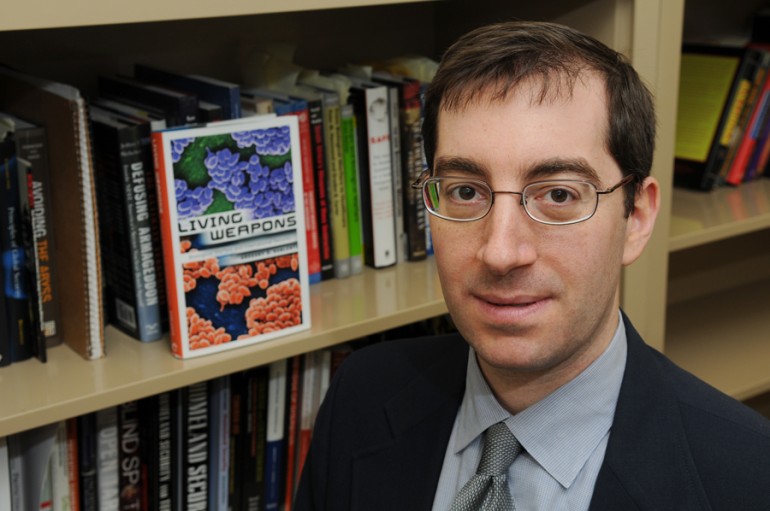
Craig-WienerGeorge Mason Biodefense PhD candidate Craig J. Wiener, Principal Consultant for Strategic Planning and Analysis at the National Nuclear Security Administration (NNSA), was recently honored as the recipient of the Sidney D. Drell Academic Award by the Intelligence and National Security Alliance (INSA).

Washington Exec caught up with Craig and interviewed him about his work, his award, and his favorite books.

An excerpt follows and you can read the entire interview here.

WashingtonExec: What more do you think organizations in the intelligence community should be doing to engage the millennial workforce?

Craig Wiener: This is an important question – I am going to speak about this from my perspective as a TA over the last three years in the most sought after national security courses at GMU SPGIA. I have worked closely with approximately 150 masters and PhD students, many of whom are younger than I am, and many of whom you could describe as “millennials.”  They have specifically enrolled in the courses because of their desire to enter the intelligence community. These students are clearly talented, ambitious and are ready, willing, and able to work in areas of national security and intelligence activities, although for many, there are structural hiring impediments. Many of the students routinely discuss the difficulty of entering direct government service and ask for advice. The predominant issues I run across when speaking with them fall into basic two categories- the lack of an existing security clearance or lack of military service- both impediments are predominantly present in younger students, many of whom went from high school to college to graduate school.

I believe it is absolutely essential to provide an enhanced, simplified hiring authority to bring these types of students, and quite honestly their talent, energy and perspective into the government directly from graduate school. It is my understanding that some previously available pathways were discontinued due to legal challenges to previous parent programs. Therefore, I would specifically recommend a legally sound, phased direct hire process that is merit based regardless of prior military experience for graduate students with national security applicable academic training. This pathway would include the authority for universities who support the government in national security research to sponsor qualifying students for security clearances while they are still in school. I believe this future state program should include accommodations for qualified, actively cleared contract support staff who are concurrently in graduate school at the masters, JD or PhD levels, many of whom also cannot overcome the currently well-intentioned yet predominant hiring authorities. Members of this hybrid hiring track should have their prior work experience taken into account for appropriate grade in service appointments.


Image Credit: Washington Exec
GMU Biodfense faculty in the Washington Post

This week, GMU Biodefense Deputy Director Gregory Koblentz contributed to and Director Trevor Thrall was quoted this week in the Washington Post article titled “If news media had covered Ebola sooner, could latest outbreak have been contained?” Read the whole article here.

“Some of the American media’s indifference to the story may have reflected entrenched attitudes toward Africa, said A. Trevor Thrall, the director of George Mason’s biodefense graduate program. “Thanks to low public interest in Africa and the fact that very few U.S. news organizations have any footprint in Africa, Africa is more or less invisible in the U.S. media most of the time,” he said. “With a few exceptions, Africa shows up only when something happens that directly affects Americans or when the U.S. government takes some kind of action.”’

Why Obama’s War on ISIL Won’t Hold Its Popularity

Biodefense Program Director and Associate Professor Dr. Trevor Thrall, of the George Mason School of Policy, Government and International Affairs, has published an article which appears in The National Interest. An excerpt of the article is available below with a link to the full article.

With the prime-time announcement of his campaign to destroy ISIL, President Obama is staking his presidency in a place he certainly never intended. Obama launches his campaign with what appears to be a reasonable level of public support. A September CNN/ORC poll found that roughly 75 percent of the public supports airstrikes against ISIL, a figure that may climb a bit higher in the wake of Obama’s address to the nation on September 10. This support compares relatively favorably with most U.S. military interventions of the past (see Gallup’s list of public support by major intervention here), closer to initial levels of support for Iraq and Afghanistan, for example, than to the invasion of Panama or the Kosovo air war.

Read the entire article here.

Restricted Science

Biodefense Associate Professor Dr. Sonia Ben Ouagrham-Gormley, of the George Mason School of Policy, Government and International Affairs, has published an article which appears in a special edition of Frontiers in Public Health. An excerpt of the article is available below with a link to the full article.

In 2004, the National Science Advisory Board for Biosecurity (NSABB) was created as an independent federal advisory body. Its role was to advise the U.S. government on strategies to prevent the misuse of dual-use research. Since its inception, the NSABB has ruled on two cases: the 1918 flu-virus synthesis conducted by government scientists in 2005 and the H5N1 experiment conducted in 2011 by two separate university teams in the Netherlands and the United States. While in the first case, without much public debate, the NSABB quickly decided to support publication of the experiment’s findings, in the second case, it initially requested a halt on publication and the removal of methodological details from the proposed articles for fear that they could be used by malevolent actors to create a pandemic among humans. The decision was reversed 6 months later, but it sparked a worldwide firestorm, engaging the scientific and security communities in a heated debate about whether the dissemination of scientific data should be regulated, and what types of research should be conducted. Yet, the key question that triggered the overall controversy remains largely ignored: under what conditions could the H5N1 experiment be reproduced, if at all, by malevolent actors using only published data?

Read the entire article here.

Dr. Gregory Koblentz on Background Briefing with Ian Masters

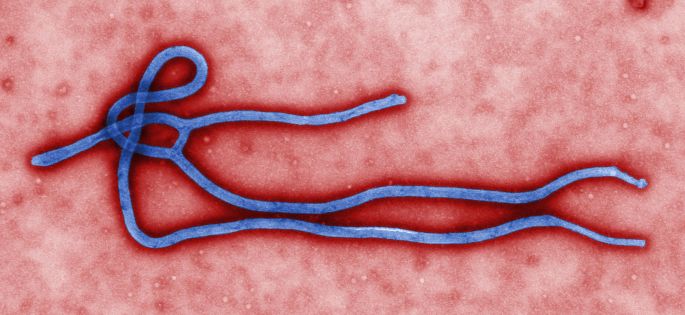
KoblentzLast week, Dr. Gregory Koblentz, Deputy Directory of the GMU Biodefense Program was interviewed on Background Briefing with Ian Masters to discuss the ongoing Ebola outbreak in West Africa. He covers the role of the Pentagon in combating the disease in Liberia and the virulence of Ebola that was weaponized as a biological weapon in the former Soviet Union.

You can listen to the interview here.

Dr. Michael Smith at the September BPS Talk

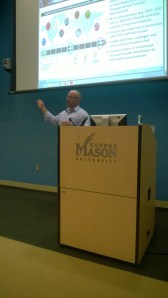
WP_20140917_004On Wednesday, September 17, Dr. Michael Smith, Director of the Department of Defense’s Critical Reagents Program (CRP) was the first speaker in the GMU Biodefense Program’s Biodefense Policy Seminars for Fall 2014. Dr. Smith’s spoke on the “Ebola Virus Epidemic 2014: Where the Rubber Met the Roadmap.”

Dr. Smith discussed the role of the Critical Reagents Program (CRP) in DoD’s biodefense program and its role in the West African Ebola outbreak. CRP is responsible for the characterization, production, and distribution of reagents and consumables employed on deployed diagnostic and detection platforms and those under development by other programs. The CRP provides standardized assays which can detect the presence of certain biological agents such as bacteria or viruses to the U.S. Government, companies with U.S. government contracts, and foreign governments. The CRP also maintains a large collection of microbial cultures, antibodies, and antigens for research and development purposes.

During the 2012 Ebola outbreak in Uganda and Democratic Republic of Congo, Dr. Smith and his team learned that the assay they had developed to test for the Ebola virus did not detect that specific strain of virus effectively. Learning this enabled the CRP to re-work their testing, which has been of great benefit during this 2014 outbreak. When Ebola virus emerged in Guinea—the first time the disease had appeared in West Africa—CRP was able to provide the new tests—free of charge—to neighboring Sierra Leone before the first case emerged in that country.

Given Sierra Leone’s almost complete lack of public health laboratory capacity, diagnosis and treatment had been based solely on clinical judgment. Since the initial stages of Ebola virus disease are similar to the early signs of other diseases such as malaria, basing diagnosis on clinical presentation is unreliable. The pre-positioning of advanced diagnostic systems in Sierra Leone enabled the country to identify patients much more quickly than during previous Ebola outbreaks.

While the use of the new assays has enabled real time confirmation of virus, Dr. Smith discussed other obstacles to getting the outbreak under control. The medical system in Sierra Leone relies on family members providing patients with food and supplies at hospitals that have no electricity or air conditioning. In situations like this, many patients may stay home rather than going to a clinic or isolation unit. Because of this, it is very possible that the numbers of infections and deaths could be significantly higher than estimated. According to reports cited by Dr. Smith, an estimated 1 in 3 individuals infected with Ebola are not seeking medical attention. In densely populated cities in West Africa, this provides an opportunity for the unchecked spread of the disease.

Despite these obstacles, however, the relationships that CRP has forged on the ground in Sierra Leone to improve laboratory capacity and the accuracy and timeliness of diagnostic tests has allowed CRP to expand its fight against Ebola. CRP has been granted access to clinical data and samples from patients who have survived the disease. CRP and its interagency partners hope that the blood and sera of those patients can be used to create new therapeutics or a vaccine for the Ebola virus.


The GMU Biodefense Policy Seminars are monthly talks that are free and open to the public and feature leading figures from the academic, security, industry and policy fields discussing critical issues in biodefense. For more information, please visit https://pandorareport.org/events/biodefense-policy-seminar-series/.

Dr. Gregory Koblentz discusses Ebola on CTV News

In case you haven’t watched the news today (or looked at a newspaper, or been on the internet), yesterday, President Obama pledged he would send 3,000 American military personnel to West Africa in order to help with the Ebola outbreak which is continues to ravage that region.

George Mason University Biodefense Deputy Director, Dr. Gregory Koblentz was on CTV News this morning to discuss the continuing outbreak and reaction to the President’s decision.

Watch Dr. Koblentz’s interview here

If you’re interested in learning more about the West African Ebola outbreak, join us tonight at 7:00 for the September Biodefense Policy Seminar featuring Dr. Michael Smith, of the Department of Defense, who will discuss, “Biosurveillance and the Atypical Epidemic: The 2014 West African Ebola Epidemic”. The talk will be held at the GMU Fairfax Campus in Research Hall room 163.

Dual-use research as a wicked problem

Biodefense Professor Dr. Gregory Koblentz, of the George Mason School of Policy, Government and International Affairs, has published an article which appears in a special edition of Frontiers in Public Health. An excerpt of the article is available below with a link to the full article.

The challenge of dual-use research in the life sciences emerged vividly in 2011 as scientists and policy-makers debated what to do about article manuscripts that described how to modify the H5N1 avian influenza virus so that it could spread between mammals (1, 2). Since H5N1 emerged in Southeast Asia in 2003, it has sickened 667 people and caused 393 human deaths, as well as the deaths of millions of domestic and wild birds (3). The virus has not, however, demonstrated the ability to engage in sustained human-to-human transmission. If a new strain of H5N1 emerged with that capability, and it retained a high level of virulence, it could cause a global pandemic. The experiments by Yoshihiro Kawaoka from the University of Wisconsin-Madison and Ron Fouchier from Erasmus Medical Center in the Netherlands not only demonstrated that mammalian transmission of the virus was possible but also provided information on how to construct such a virus.

Read the entire article here.

Looking Clearly at Right-Wing Terrorism

Charles P. Blair is a Washington, D.C.-based university instructor, researcher, writer, and thinker specializing in terrorism and the history, technical underpinnings, and potential futures of Weapons of Mass Destruction. He is the director for two courses in the Summer Program in International Security: 21st Century Terrorism: Emerging Trends and Evolving Tactics which runs July 14-16 and Terrorism Analysis: Quantitative and Qualitative Research Methodologies and Tools which runs July 17-18.

Register before June 15 and save $200-$300 on course registration for the GMU Summer Program in International Security!


By Charles P. Blair

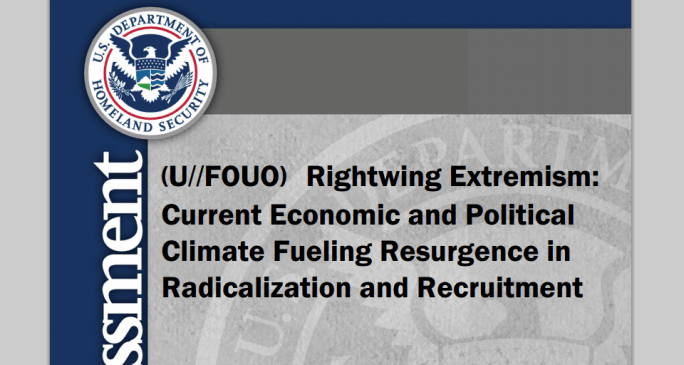
Five years ago the US Department of Homeland Security’s Homeland Environment Threat Analysis Division released an assessment of US far-right extremism. Initially intended for law enforcement and intelligence agencies only, the report—“Rightwing Extremism: Current Economic and Political Climate Fueling Resurgence in Radicalization and Recruitment”—was almost immediately leaked. The report warned that small cells practicing “leaderless resistance” and “white supremacist lone wolves [posed] the most significant domestic terrorist threat.” Significantly, it highlighted the likelihood of expanded attempts by far-right extremists “to recruit and radicalize returning veterans in order to boost their violent capabilities.” Overall, the report warned of trends similar to “the 1990s when rightwing extremism experienced a resurgence.” That far-right extremist rally reached a violent crescendo with the bombing of the Alfred P. Murrah federal building in Oklahoma City on April 19, 1995.

Reflecting on the past five years, a leading far-right extremism expert I recently interviewed described the homeland security report as “prophetic.” Mark Pitcavage, the Anti-Defamation League’s director of investigative research, explained that most of the warnings in the 2009 report have become realities. Yet at the time of its release, the document was derided by many inside and outside of government as “ridiculous [and] deeply offensive,” an “inconceivable” assault on US veterans, and, in general, “a piece of crap.” …

Meet Your 2014 Summer Program Faculty: Charles Blair

In preparation for the GMU Summer Program in International Security, this week we will highlight the course directors. EARLY BIRD REGISTRATION HAS BEEN EXTENDED TO JUNE 15! Register by June 15 to save $300 on a three-day course and $200 on a two-day course. Use the links below for more details including registration.  Questions? Comment to this post or email spis@gmu.edu.


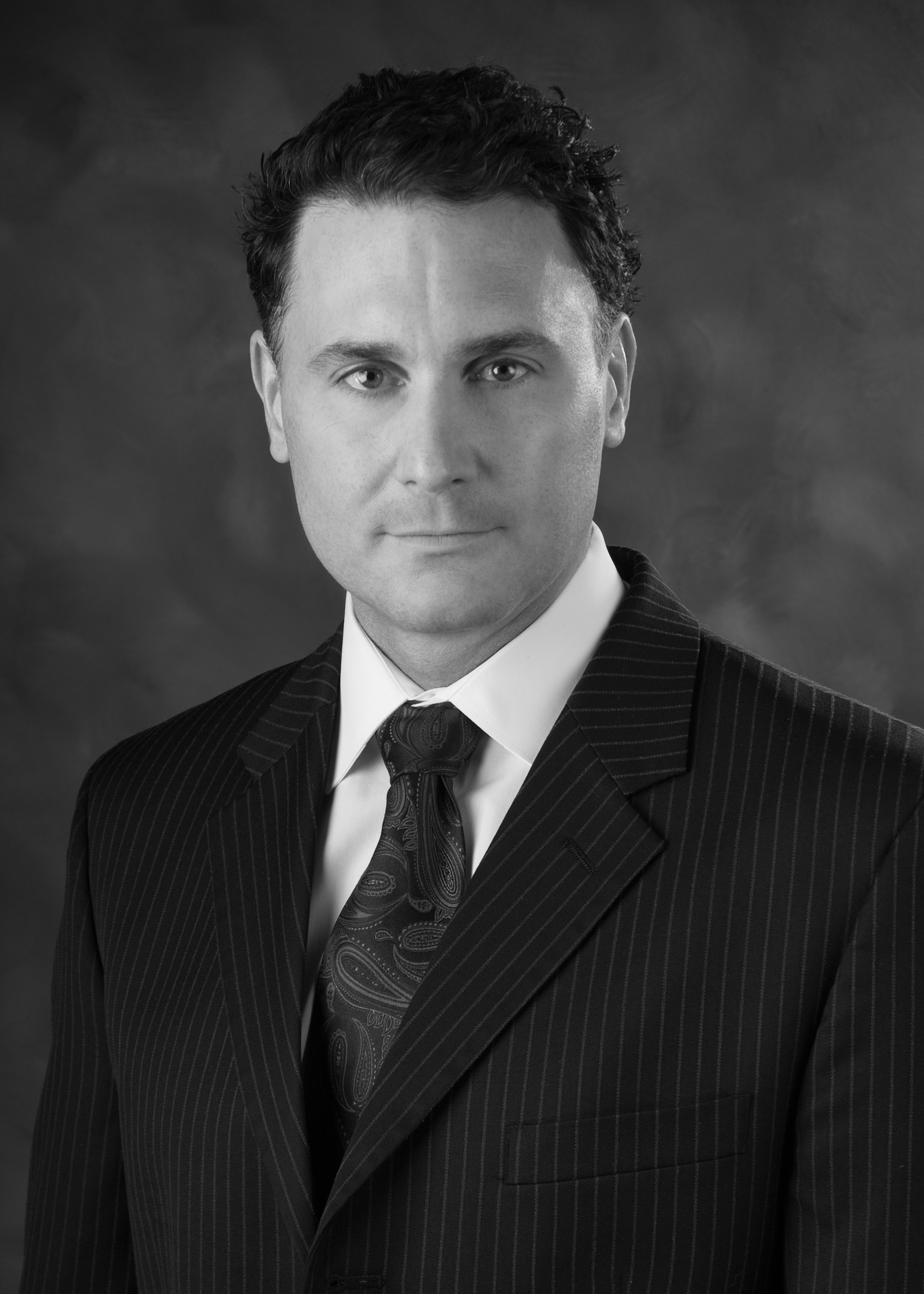
Headshot_BlairCharles P. Blair is a Washington, D.C.-based university instructor, researcher, writer, and thinker specializing in terrorism and the history, technical underpinnings, and potential futures of Weapons of Mass Destruction. He is the director for two courses in the Summer Program in International Security: 21st Century Terrorism: Emerging Trends and Evolving Tactics which runs July 14-16 and Terrorism Analysis: Quantitative and Qualitative Research Methodologies and Tools which runs July 17-18.

Since visiting Moscow as a student in 1985, Blair has worked on issues relating to globalization and the diffusion and diversification of WMD in the context of the rise of mass casualty terrorism incidents. He teaches graduate-level classes on terrorism and the technology of WMD at Johns Hopkins University and George Mason University and is a columnist for the Bulletin of the Atomic Scientists.

Recent works include: “Terrorist Nuclear Command and Control,” which was completed under the auspices of the Department of Homeland Security; a two-year DHS-backed study which investigated the U.S. extreme right-wing and radiological and nuclear terrorism; “Target Sochi: The threat from the Caucasus Emirate,”; and  “Barely Lethal: Terrorists and Ricin.”

Mr. Blair is a Senior Fellow on State and Non-State Threats at the Federation of American Scientists. Before joining FAS, he has worked at the National Consortium for the Study of Terrorism and Responses to Terrorism (START), the James Martin Center for Nonproliferation Studies, the National Nuclear Security Administration, the Anti-Defamation League, and the Center for Terrorism and Intelligence Studies.

Click here to register for 21st Century Terrorism: Emerging Trends and Evolving Tactics.

Click here to register for Terrorism Analysis: Quantitative and Qualitative Research Methodologies and Tools