
The Pandora Report 1.23.14

Highlights include dengue in Texas, H7N9 spiking ahead of the Chinese New Year, renaming the 1918 influenza, and a man selling abrin on the black market. Happy Friday (stay warm)!

Rare Disease Linked to Dengue Virus Caused Texas Woman’s Death
A Texan woman thought to have been infected and died with West Nile Virus has been discovered to have actually succumbed to   dengue. The woman’s case was recently published by the CDC, which warned of the need for effective surveillance. Dengue thankfully remains relatively rare in the US – the woman represented just the third case in nearly a decade.

LiveScience – “The woman died after her dengue infection brought on another condition called hemophagocytic lymphohistiocytosis (HLH), in which white blood cells build up in the skin, spleen and liver, and destroy other blood cells. HLH is most frequently associated with Epstein Barr virus infection, but also has been linked to dengue, according to the researchers, from the Centers for Disease Control and Prevention.”

H7N9: Bird flu cases surge ahead of Chinese New Year
As the Chinese New Year approaches, the number of H7N9 cases has steadily increased, with  73 cases in the last three weeks alone. This is making people very nervous  – Chinese New Year often means millions of people travelling in very close quarters, over long periods of times. However, health officials are careful to point out that influenza case numbers, across strains, increase in the colder months. As long as the virus remains poorly transmitted person-to-person, things are fine.

BBC – “Proffesor John McCauley, the director of a WHO collaborating centre on influenza in London, said: ‘I’ve been worried all the time about H7N9; it’s highly virulent and the case fatality is about one in three, so it poses a threat.’ The range of the virus had also spread, he added, with cases in Guangdong province, further south and east than previously. He said the winter might not be the whole explanation, particularly in southern provinces closer to the equator. ‘It may be seasonal, or an alternative is more poultry exposure in the build-up to Chinese New Year, and more poultry going through the markets. They might need to reconsider closure of the markets’.”

1918 Flu Pandemic That Killed 50 Million Originated in China, Historians Say
The 1918 Spanish influenza, like so many strains of the virus, has apparently suffered for decades under an egregious misnomer. According to a new hypothesis, proposed by historian Mark Humphries, the grandfather of modern H1N1 strains may have originated in China. Humphries published his research in the journal War in History, in it arguing that the importation of almost 100,000 Chinese laborers to support the British and French lines may have introduced the virus to Europe. For those of you wondering, the pandemic strain was dubbed the Spanish flu apparently because Spain was one of the only countries to report on its heavy case numbers during the otherwise heavily censored WWI.

National Geographic – “In the new report, Humphries finds archival evidence that a respiratory illness that struck northern China in November 1917 was identified a year later by Chinese health officials as identical to the Spanish flu. He also found medical records indicating that more than 3,000 of the 25,000 Chinese Labor Corps workers who were transported across Canada en route to Europe starting in 1917 ended up in medical quarantine, many with flu-like symptoms…Writing in the January issue of the journal War in History, Humphries acknowledges that his hypothesis awaits confirmation by viral samples from flu victims. Such evidence would tie the disease’s origin to one location.”

Feds: Fla. man sold deadly toxin to NJ agent
A 19 year old in Florida has been apprehended after selling to toxin abrin to an undercover FBI agent. The deal was agreed upon online, with the FBI agent posing as a buyer on an intermediary cyber black market. The suspect was arrested after directing the FBI agent to two candles filled with the toxin, left in a fast food bag at a rest stop in Florida. A McDonalds bag, for those of you wondering about the culinary preferences of illicit toxin sellers. On a less flippant note, abrin is tremendously potent – while it presents similarly to ricin, it is 75 times more toxic.

The Grand Island Independent – “Prosecutors said Korff negotiated over the Internet with the undercover agent in New Jersey.’He allegedly peddled the poison on a virtual black market of illegal and dangerous good, hidden in the shadow of a secretive computer network favored by cybercriminals,’ said New Jersey U.S. Attorney Paul J. Fishman. Korff received $1,500 over the Internet from the agent and left the toxin hidden in two candles at a rest stop near Fort Myers, Fla., authorities said. Korff was arrested after the candles were found to contain abrin.”

(image:Calvin Teo)

Image of the Week: H7N9 in the Lab

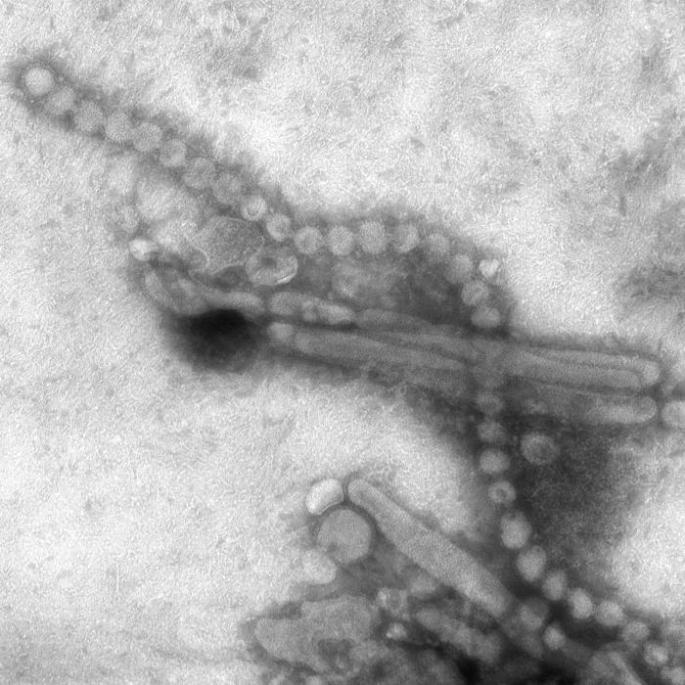
Our images of the week is a gallery of H7N9 work at the CDC, tailored for those of you who are nerdy like us and therefore wonder how an emergent agent is dealt with in the lab. Cases of H7N9 in China are currently comparable to peak numbers following the agent’s emergence last Spring. Click on any image below to launch the gallery (all images credited to the CDC, including the one above).

3 new H7N9 cases in China

The weekend saw another three cases of H7N9 in China, bringing the total since the October re-start to 65. An 86 year-old-man was released following a month of quarantine, having consistently tested negative for the virus.

“Commenting on the three new confirmed cases imported from Guandong a day earlier, Chou said Sunday that there is no evidence to exclude human-to-human transmission. Two of the confirmed cases involved a father, who was selling tofu at a local market, and his five-year-old daughter, according to Chou. Pending investigation, it is uncertain whether the girl contracted the virus from her father or from live poultry at the market, Chou said.”

Read more here.

This Week in DC: Events

Happy Martin Luther King Day, everyone! Congratulations to those of you who have today off – we hope you’re out volunteering! Here’s the week’s best (free) events in DC.

Tuesday, January 21st, 2014

What Will 2014 Bring for North Korea’s Nuclear Program?
Carnegie Endowment for International Peace
9:00AM – 12:00PM

2013 witnessed new levels of threatening behavior from North Korea: a satellite launch that could portend an improved long-range ballistic missile capability; a third nuclear test; and declarations that the Korean peninsula would witness “an all-out war, a nuclear war.” Recent perturbations among the North Korean leadership also raise the possibility of greater instability and unpredictability. What will 2014 bring in terms of North Korean nuclear behavior? The Carnegie Endowment for International Peace and the Asan Institute for Policy Studies invite you to a discussion on what to expect from North Korea on nuclear matters in 2014. Five experts will discuss the status of North Korea’s nuclear activities, what negotiating tactics North Korea might attempt, and whether there are lessons to be drawn in managing North Korea’s nuclear ambitions from the Iranian and South Asian experiences.

Dr. Martin Luther King, Jr Day – Film Screening: More Than A Dream
GMU School for Conflict Analysis & Resolution
2:00PM -4:00PM

Join S-CAR in a film screening followed by a discussion of the life and work of Dr. Martin Luther King, Jr.

Technology, Policy, and National Security Series: Cybersecurity, the Much-Admired Problem
Elliot School of International Relations
3:00PM – 4:30PM

Cyberspace, the ubiquitous fusion of information and communication technologies, has transformed the way that Americans work and play, and has also markedly changed the U.S. national security landscape. Threats in and to cyberspace are causing anxiety at all levels in this country, encouraged by news of identity theft, intellectual property piracy, the Mandiant report on Chinas cyber activities against US institutions, and repeated warnings of an impending cyber Pearl Harbor. A key issue is the fact that the cybersecurity problem is not well understood; it is much admired but not resolved. This talk will review the historical technical and policy drivers that created this hydra-headed beast, and their implications for cybersecurity. It will also provide a high-level overview of current cyber threats and attack objectives. The metaphor of public health will be used to posit approaches for significant containment of cybersecurity risk through scientific understanding, public cyber hygiene, and their integration with national and international legal and policy frameworks.

Wednesday, January 22nd, 2014

Making Sense of Nuclear Negotiations with Iran: A Good Deal or a Bad Deal?
RAND Corporation
10:00AM – 11:00AM

Negotiations between Iran and the P5+1 (US, UK, France, Russia, China, and Germany) have resulted in a first step agreement of a possible comprehensive deal on the Iranian nuclear program. However, aspects of the deal have proved controversial, not only with U.S. allies such as Israel and Saudi Arabia, but with some members of the U.S. Congress as well. Please join us as we hear from a panel of experts examining the negotiations, the potential for a deal that could effectively halt Iran’s ability to develop a nuclear weapons capability, and implications for U.S. national security.

Managing China’s Rise
Carnegie Endowment for International Peace
3:00PM – 5:00PM

The United States must confront the uncomfortable reality that China’s economic and military might may eventually rival or even surpass its own. This prospect is particularly ironic because China has risen as a result of benefiting disproportionately from American investments in sustaining a liberal international economic order. Washington needs a new strategy to meet this challenge—the containment policies that helped defeat the Soviet Union are unlikely to work today given China’s deep integration into the global economy. This event will launch Balancing Without Containment: An American Strategy for Managing China, a new report by Carnegie’s Ashley J. Tellis that explains how the United States can bolster its position at home and abroad to ensure its continued prosperity and global leadership. Eric Edelman, Arvind Subramanian, and Nicholas Eberstadt will join Tellis for the discussion. Carnegie’s Michael D. Swaine will moderate.

Thursday, January 23rd, 2014

Science and Technology to Prevent and Respond to CBRN Disasters: U.S. and South Korean Perspectives
American Association for the Advancement of Science
9:00AM – 10:30AM

The workshop will focus on prevention and remediation of chemical, biological, radiological, and nuclear disasters that could occur either through accidental (caused by, for example, facility problems, personnel issues, a natural disaster, or some combination of events) or intentional means. Discussions will involve various scientific disciplines including the behavioral and environmental sciences.

Rethinking Islamist Politics: A Panel Discussion
Elliot School of International Affairs
12:00PM

Join POMEPS on January 23, 2014 to analyze the state of Islamist politics in the Middle East. The panel will examine the current directions of the Muslim Brotherhood and electoral politics, Salafism, and jihadist movements, as well as trends in the broader Islamic context.

How Osama Bin Laden Escaped Afghanistan: Lessons for Future Counter-Terrorism Missions
Brookings Institute
2:00PM

During the early hours of May 2, 2011, the elite U.S. Navy special operations unit known as SEAL Team Six famously hunted and killed Osama bin Laden at his personal three-story compound in Abbottabad, Pakistan. Less known, however, is that nearly a decade earlier, and just three months after the September 11 attack on the World Trade Center, the United States had found and cornered Osama bin Laden in the eastern mountains of Tora Bora, Afghanistan, only to then watch him and his al Qaeda and Taliban affiliates escape into Pakistan. In his new book, 102 Days of War – How Osama bin Laden, al Qaeda & the Taliban Survived 2001 (Potomac Books, 2014), U.S. Foreign Service Officer Yaniv Barzilai provides a detailed account of the failures in tactics, policy and leadership that enabled such an escape in December 2001. On January 23, the Brookings Intelligence Project will host author Yaniv Barzilai to examine how such an escape was allowed; the strategic, policy and managerial mistakes made; and what lessons can be learned for future counter-terrorism operations. Brookings Senior Fellow Bruce Riedel, director of the Intelligence Project, will provide introductory remarks and moderate the discussion. Following their remarks, Riedel and Barzilai will take questions from the audience.

March Biodefense Policy Seminar feat. Dr. Dana Perkins!

Title:  “Biological weapons non-proliferation, biosecurity and counter-terrorism: an international perspective”
Speaker: Dr. Dana Perkins
Date: Monday, March 17th, 2014
Time: 7:20PM
Location: Mason Hall, Room D003, GMU Fairfax Campus, VA

DanaOur March Biodefense Policy Seminar features Dana Perkins, Senior Science Advisor, DHHS — member of the 1540 Committee Group of Experts. Dr. Perkins earned a Master’s Degree in Biochemistry from the University of Bucharest, Romania. She also earned a PhD in Pharmacology and Experimental Therapeutics in 2002 from the University of Maryland, Baltimore, where she specialized in Microbiology/Neurovirology. In 2012-2013, Dana Perkins served in a US Government-seconded position as a member of the Group of Experts supporting a subsidiary body of the United Nations Security Council, the 1540 Committee. The 1540 Committee was established pursuant to resolution 1540 (2004) to monitor the implementation of this resolution worldwide. In her prior position with the US Department of Health and Human Services (HHS), she led the Biological Weapons Nonproliferation and Counterterrorism Branch in the Office of Policy and Planning, Office of the Assistant Secretary for Preparedness and Response (ASPR). At HHS/ASPR, some of her responsibilities and duties included providing subject matter expertise, inter-agency coordination, and senior level policy advice on the scientific (biodefense and biosecurity) and public health aspects of national and international emergency preparedness and response; directing and coordinating national and international progress on issues related to biodefense and biosecurity; developing and reviewing policies on biosecurity, biological weapons nonproliferation, and health security; and performing expert analysis and preparing implementation plans to support the US Government biodefense and biosecurity policy.

The Pandora Report 1.17.14

Just a quick note that the Biodefense Policy Seminars are back on! Our February speaker is Charles Duelfer, former Special Advisor to the Director of Central Intelligence for Iraq WMD and former Deputy Executive Chairman of the UN Special Commission on Iraq (UNSCOM). Free and open to the public – click here for more information!

Highlights include Salmonella,  H5N1 in Canada, H7N9 picking up in China, and Chikungunya in St. Martin. Happy Friday!

Why Salmonella bacteria is a near perfect killer
Much like an action film protagonist, Salmonella biofilms are notoriously difficult to kill. According to new research from the Journal of Applied and Environmental Microbiology, once Salmonella bacteria are able to form biofilms on a given surface, three different common disinfectants all are rendered ineffective. Salmonella’s ongoing hardiness explains in part the difficulty in effectively containing outbreaks.

ANI – “Mary Corcoran, a researcher on the study, said that they found that it was not possible to kill the Salmonella cells using any of the three disinfectants if the biofilm was allowed to grow for seven days before the disinfectant was applied, asserting that even soaking the biofilms in disinfectant for an hour and a half failed to kill them.”

H5N1 strain from Alberta nurse resembles Chinese strain
The strain of H5N1 which killed a nurse in Canada closely resembles a Chinese strain of the virus. The nurse, in her early 20s, had recently returned from a three-week visit to Beijing. However, as she had no reported contact with poultry, and Beijing has not reported any recent outbreaks of H5N1, the source of infection and method of transmission remain unclear.

CBC – “Virologist Kevin Fonseca of Alberta Health Services and his colleagues said the patient experienced symptoms of malaise, chest pain, and fever during the return flight on Dec. 27 and went to the local emergency department on Dec. 28…After a chest X-ray and CT scan suggested a diagnosis of pneumonia, the woman was prescribed an antibiotic and discharged home. The patient came back to the same emergency department on Jan. 1 with worsening inflammation of the membrane surrounding the lung, chest pain, shortness of breath, a mild headache that felt worse when she moved her head, nausea, vomiting and other symptoms, Fonseca’s team said in their posting on ProMed, an internet-based disease alert system. On Jan. 2, the patient reported visual changes and a continuing headache. As oxygen needs increased, doctors admitted her to the ICU for intubation and ventilation. In the early morning of Jan. 3, she had sudden tachycardia or fast heart rate and severe hypertension, followed by hypotension. Doctors took steps to keep her heart beating. At this point, the patient’s pupils were dilated and there was no response to pain. Further tests and a neurologic exam indicated brain death.”

New cases put H7N9 pace near last year’s peak
The number of H7N9 cases in China are picking up again, with nearly 35 cases reported in the last week. This is just three under peak numbers during the height of the infection at the virus’ initial emergence. Health officials monitoring the situation remain split on the implications of the increased numbers – however, the prevailing opinion seems to be that as long as the virus remains poorly transmitted between people, we don’t panic.

CIDRAP – “The steady stream of new cases could mean that Chinese health officials are better at detecting cases, but he added that it doesn’t look like they missed many cases last year in the early months of the outbreak. ‘There must be a similar widespread circulation in poultry,’ said Osterholm, who is the director of the Center for Infectious Disease Research and Policy, publisher of CIDRAP News, Recent H7N9 developments raise questions about what’s being done to minimize the risks to humans and should be setting off bells, whistles, and sirens warning about the threat, he said. ‘Each one [case] is another throw at the genetic roulette table’.”

Chikungunya virus spreads in Caribbean just weeks after breaking out in tiny St. Martin
In the two weeks since Chikungunya made it to the Caribbean, it has quickly spread to over 200 people. The virus can cause febrility, joint pain, and intense myalgia. Trouble in paradise (it had to be said)?

FOX – “The virus then spread to neighboring Dutch St. Maarten, and the U.S. Centers for Disease Control says new cases have also been confirmed in the French Caribbean islands of Martinique, Guadeloupe and St. Barthelemy. The British Virgin Islands reported three cases Monday. CDC epidemiologist Erin Staples said Tuesday that ‘further spread to other Caribbean islands and to the surrounding mainland areas is possible in the coming months and years’.”

Image of the Week

This week’s image is of negative staining! Here’s the caption from NIAID – “Clockwise from bottom left: ADV capsid particles (3 images); Borrelia burgorferi; Heliobactor pylori; filament elongation of prion protein. ”

negaative


Credit: NIAID

This Week in DC: Events

All the week’s free events in DC

Monday, January 13, 2014
Launch of the National Biomarker Development Alliance (NBDA)
National Press Club
10:00AM

Launch of the National Biomarker Development Alliance (nbda) The first non-profit, trans-sector, network-based organization dedicated to creating an evidence-based end-to-end biomarker development process The NBDA team* partners and special guests cordially invite you to attend the launch of the NBDA Please join us for the inaugural public discussion of the NBDA The NBDA is taking on the formidable challenge of assembling/creating the best practices, guidelines, standards, etc. needed for successful end-to-end biomarker development. NBDA will not “reinvent wheels” – so join us for this launch of NBDA – and become a partner or member– by contributing resources and/or expertise to realize the promise of personalized medicine and ultimately transform healthcare Reception immediately following.

Reassessing U.S. Responses to Terrorist Threats
New America Foundation
12:15PM

In 2001, the U.S. Congress authorized the president to use “all necessary and appropriate force against those nations, organizations, or persons he determines planned, authorized, committed, or aided the terrorist attacks that occurred on September 11, 2001, or harbored such organizations or persons.” This Authorization for Use of Military Force (AUMF) set no limits on time, location, or target. In just the last 12 months, the AUMF was invoked in support of the war in Afghanistan, but also unconventional operations in Pakistan, Yemen, Libya, Somalia and possibly elsewhere — operations such as targeted killings using drones, raids and captures by U.S. Special Forces, and, in all probability, cyber warfare. As Heather Hurlburt writes in “Battlefield Earth” in Democracy: A Journal of Ideas’ Winter 2014 issue, out this month: “public debate over the use of force in Syria and the revelations concerning National Security Agency surveillance suggest that Americans are increasingly uncomfortable with actions being undertaken in their name. President Obama appeared to acknowledge this reality in May [2013] when he said he looked forward ‘to engaging Congress and the American people in efforts to refine, and ultimately repeal, the AUMF’s mandate.’”

Book Lecture: A Citizen’s Guide to Terrorism and Counterterrorism
US Institute of Peace
4:30PM

Dr. Christopher C. Harmon has had over 20 years of teaching security studies, strategy, military theory and history, and courses on terrorism at six graduate schools, including a division of National Defense University, and the Naval War College. He currently teaches Counterterrorism and the Democracies and Terrorism at The Institute of World Politics. He also serves as the MajGen Matthew C. Horner Chair of Military Theory at Marine Corps University. Dr. Harmon is the author of Terrorism Today, co-author of Toward a Grand Strategy Against Terrorism, and co-editor of Statecraft and Power. He holds a B.A. in History and French Language from Seattle University, and an M.A. in Government and a Ph.D. in International Relations and Government from Claremont Graduate School.

Tuesday, January 14th, 2014
The Map and the Territory: Risk, Human Nature, and the Future of Forecasting
American Enterprise Institute
5:30PM

For many years, economists have made authoritative and mathematically complex predictions about where the US economy is headed. Yet as Alan Greenspan, former chairman of the Federal Reserve and head of the Council of Economic Advisers under President Gerald Ford, observes in his new book, “The Map and the Territory” (Penguin, October 2013), no one predicted the timing of the 2008 financial crisis, or its severity. What is wrong with economic forecasting that it could not foresee a cataclysm of this magnitude, even days before it happened? Greenspan’s book may portend a complete revision in the way economists forecast the future. At this AEI event, he will argue that entirely new data capturing “animal spirits” (the elements of human behavior) will be necessary if the economics profession is to improve its forecasting accuracy.

Wednesday, January 15th, 2014
The View of Defense from a Conglomerate
Atlantic Council
10:30 AM

Today’s defense industry is dominated by firms that sell a wide range of products and services with a nearly pure-play focus on military customers. It wasn’t always this way, but one distinctive thread in the post-cold-war restructuring of defense was the exit of conglomerates from the market. Not so Textron, which remains today a multi-industrial company participating in a wide range of markets, including defense. Besides its well-known brand of helicopters (Bell) and general aviation aircraft (Cessna), the company’s Textron Systems business sells unmanned aircraft, armored vehicles, marine landing craft, intelligence and surveillance systems, and precision weapons. Against the backdrop of expectation about a new wave of restructuring, the place of multi-industrial, diversified companies on the defense-industrial landscape is once again a topic of special importance to corporate strategists and public policy-makers, not to mention investors.

Thursday, January 16th, 2014
Assessing Warsaw Pact Military Forces: The Role of CIA Clandestine Reporting
Wilson Center
3:00 PM

“CIA Analysis of Warsaw Pact Military Forces: The Importance of Clandestine Reporting” examines the role of intelligence derived from clandestine human sources in the Central Intelligence Agency’s analyses of Warsaw Pact military capabilities for war in Europe from 1955 to 1985. The intelligence was provided to US policymakers and military planners and used to assess the political and military balance in Central Europe between the Warsaw Pact and NATO during the Cold War. The speakers, who were analysts of Soviet military affairs during much of the period, were selected by the CIA to mine its archives for relevant material, previously highly classified, and to provide the documents in coherent form for their study and for public release. The release features a large collection of internal Warsaw Pact classified documents obtained clandestinely during the period and translated and disseminated to senior policymakers by CIA.

The Pandora Report 1.10.14

Highlights include PEDv thriving in the polar vortex, H5N1 in Canada, archaeological epidemiology,  H7N9 in China, and MERS in Oman. Happy Friday!

Cold, wet weather may help spread deadly pig virus: USDA
Porcine Epidemic Diarrhea virus (PEDv) has officially spread to 22 states, helped in part by the colder weather, and affecting over 2,000 hogs. The virus, which causes diarrhea, vomiting, dehydration, and death in piglets, reaches as far west as California. The cooler weather enables the hardy virus freezes on clothes and on the bottom of shoes, enabling spread.

Baltimore Sun – “‘The virus likes cold, wet and cloudy days,’ said Rodney Baker, a swine veterinarian at Iowa State University at Ames, Iowa, the top pork producing state in the United States.Earlier this week several hog producing states experienced double digit sub zero temperatures, and forecasters now are calling for warmer temperatures as highs climb toward 30 degrees Fahrenheit by the weekend. Baker told Reuters the virus can remain viable after a single, maybe even a couple of freeze-thaw cycles. Cold weather and cloudy conditions protect the virus, but heat and sunlight will deactivate it, Baker said. The spread of the disease has heightened scrutiny of the U.S. trucking industry as livestock transport trailers are seen as a means of transmission.”

H5N1 bird flu death confirmed in Alberta, 1st in North America
The first H5N1 fatality in North America occurred in Canada last week. A Canadian woman returning from China became symptomatic on December 27th, was hospitalized January 1st, and died January 3rd. The woman had not visited any live farms, not had she come in contact with poultry – the method of transmission remains unclear. Remember, while H5N1 has a fatality rate of 60%,  there is currently no indication the virus is readily transmissible person-to-person. It’s just not well adapted to our immune system – for now at least, it prefers the birds.

CBC – “Dr. Gregory Taylor, deputy chief public health officer, said the avian form of influenza has been found in birds, mainly poultry, in Asia, Europe, Africa and the Middle East….The officials added that the woman was otherwise healthy and it’s not yet clear how the person contracted H5N1. Speaking to Evan Solomon, host of CBC News Network’s Power & Politics, Taylor said the patient was relatively young. ‘This was a relatively young — well, a young person compared to me, with no underlying health conditions,’ he said. Taylor is 58 [reports have listed the girl as 20 years old]. Officials emphasized that this is not a disease transmitted between humans.”

Scientists unlock evolution of cholera, identify strain responsible for early pandemics
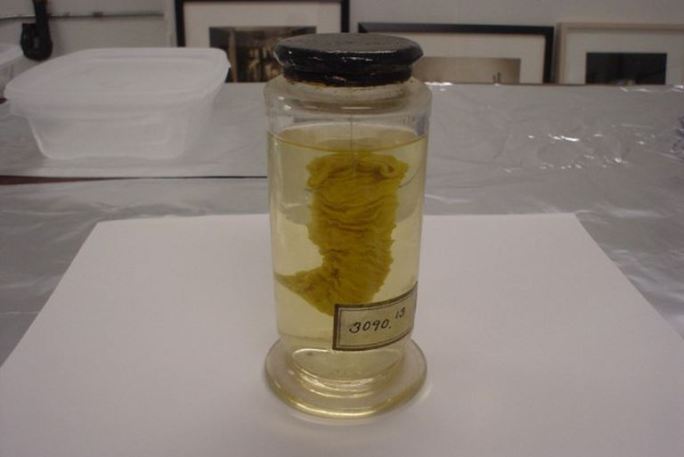
The next time you’re in Philadelphia, instead of visiting the well-trod landmarks, consider visiting the Mütter museum, home to the 200-year old intestinal samples. Those samples, taken during a cholera epidemic at the turn of the 18th century, has helped scientists characterize the classical biotype of cholera, thought to be responsible for seven outbreaks during the 19th century. Scientists had thus far been unable to study the classical biotype, due to its preference for the intestines – unlike bones which can linger for millennia, the transience of intestines makes collecting DNA samples over time challenging.

Medical Express – “Researchers carefully sampled a preserved intestine from a male victim of the 1849 pandemic and extracted information from tiny DNA fragments to reconstruct the Vibrio cholera genome. The results, currently published in The New England Journal of Medicine, could lead to a better understanding of cholera and its modern-day strain known as El Tor, which replaced the classical strain in the 1960s for unknown reasons and is responsible for recent epidemics, including the devastating post-earthquake outbreak in Haiti. ‘Understanding the evolution of an infectious disease has tremendous potential for understanding its epidemiology, how it changes over time, and what events play a role in its jump into humans,’ explains Poinar, associate professor and director of the McMaster Ancient DNA Centre and an investigator with the Michael G. DeGroote Institute of Infectious Disease Research, also at McMaster University.”

WHO: China Reports Eight New Cases of H7N9
China reported eight new cases of H7N9 in the last five days, including three cases in which exposure to live poultry could not be confirmed. Again, a slight increase in case numbers was expected with the cooler weather, and as of yet, there remains no confirmed, ongoing transmission person-to-person.  For a full breakdown of the seven cases (the eighth case was announced by health authorities in Hong Kong), see the GAR above.

WHO – “The National Health and Family Planning Commission of China has notified WHO of seven additional laboratory-confirmed cases of human infection with avian influenza A(H7N9) virus. On 4 January 2014, WHO was notified of an 86-year-old man from Shanghai City became ill on 26 December and was admitted to hospital on 30 December. He is currently in critical condition. He has a history of exposure to live poultry. On 5 January 2014, WHO was notified of 34 year old woman from Shaoxing City, Zhejiang Province became ill on 29 December and was admitted to hospital on 2 January. She is currently in critical condition.”

New Case of MERS in Oman
A 59-year-old man has died of MERS in Oman, bringing the total number of cases globally up to 178. The patient became symptomatic on December 24th, was hospitalized on December 28th, and died on December 30th. The patient had extensive exposure to camels, including participation in camel racing events.  It looks more and more like camels, everyone.

WHO – “Globally, from September 2012 to date, WHO has been informed of a total of 178 laboratory-confirmed cases of infection with MERS-CoV, including 75 deaths. Based on the current situation and available information, WHO encourages all Member States to continue their surveillance for severe acute respiratory infections (SARI) and to carefully review any unusual patterns.”

(Image depicting jar of intestine, credit: McMaster University)

Image of the Week: Virus Art

We shared this a couple years ago, but it’s making the internet rounds again, so we don’t feel bad re-posting it. Our image is:

Glass sculptures of pathogens!

Pictured below is H5N1, the strain of HPAI currently appearing in birds across China’s Guizhou province. The sculpture is done by artist Luc Jerram. Check out the rest of his gallery here.

Avianfluforweb2