Monday, April 18th, 2016 Security In Asia: The UK’s Approach– Center for Strategic and International Studies Time: 2:30-3:15pm Location: Center for Strategic and International Studies1616 Rhode Island Ave NW, Washington, DC 20036(map)
CSIS will host the United Kingdom’s Minister of State the Rt Hon Hugo Swire MP for a speech on strategic security issues and the UK’s all-of-Asia approach. From the Korean peninsula to Southeast Asia, the UK has made significant diplomatic and security investments in the region as part of its all-of-Asia approach. For example, as the only western P5 member with an embassy in Pyongyang, the UK brings unique insight to international security efforts to counter the North Korean nuclear threat. Minister Swire will outline the UK’s role as a security actor in the region and the ways in which transatlantic dialogue and cooperation on Asia can ensure a more secure and prosperous world. Appointed September 2012, Minister Swire is responsible for UK policy toward Asia, the Pacific and the Americas, as well as public and commercial diplomacy. This event is made possible by general support to CSIS.
Tuesday, April 19th, 2016 How To Face Global Security Challenges In A Connected World?—US And Japanese Perspectives- The Stimson Center Time: 2-4pm Location: Stimson Center1211 Connecticut Ave NW, 8th floor, Washington, DC 20036(map) RSVP HEREThe 9-11 terrorist attack in 2001 was a rude awakening to the entire world that the nature of the global security challenges are fundamentally shifting. Now, in a world that has become increasingly interconnected, developments in one region has a rippling effect in other parts of the world. In today’s world, we see security challenges on multiple fronts—quagmire in the Middle East, Russia’s adventurism in Europe, and an emergence of China that may potentially challenge the existing order and norms that have kept peace in the Asia-Pacific region for the last several decades. How should the US and Japan respond to such challenges in an increasingly inter-connected world?
Private Sector Solutions For The Worldwide Refugee Crisis- Niskanen Center Time: 12pm Location: Dirksen Senate BuildingFirst St NE, Washington, DC 20002(map)
Room: 562
The world is facing the largest refugee crisis since World War II. The United States government has promised to increase refugee resettlement but so far has not delivered. One innovative solution would allow private individuals to fund or sponsor refugees for admission. The United States has a long history of private refugee resettlement that should act as inspiration for new private sector-driven refugee admissions. Come join us for a discussion on privately funded refugee resettlement and possible designs for such a program with a panel of refugee scholars. Continue reading “Week in DC: Events 4.18-22.2016”→
GMU Participation in UNSCR 1540 Civil Society Forum This week our GMU Biodefense Professor and Graduate Program Director, Dr. Koblentz, participated in the UN’s 1540 Civil Society Forum – A Dialogue with Academia and Civil Society. Dr. Koblentz presented a paper on the role of academia in implementing and strengthening Resolution 1540, as well as moderating a panel regarding academic outreach. Resolution 1540 (2004) “imposes binding obligations on all States to adopt legislation to prevent the proliferation of nuclear, chemical and biological weapons, and their means of delivery, and establish appropriate domestic controls over related materials to prevent their illicit trafficking. It also encourages enhanced international cooperation on such efforts.” Dr. Koblentz’s work with the UNSCR 1540 Civil Society Forum addresses the evolution of WMD proliferation threats related to non-state actors, 1540 obligations that pertain to the academic community, and the importance of academia in these efforts. The forum also focussed on how to enhance review and analysis of 1540 implementation via communication between civil society, national governments, and the 1540 Committee.
Written Testimony for April 14 Senate Committee on Homeland Security & Governmental Affairs Hearing – “The Federal Perspective on the State of Our Nation’s Biodefense”
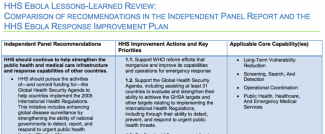
You can now catch up on the written testimony from this hearing on biodefense within the U.S. Pointing to the evolution of threats to include more emerging infectious diseases and the role of DHS in biodefense, this overview gives insight into the current biodefense situation within the U.S. The hearing addressed the National Biosurveillance Integration Center (NBIC), BioWatch Program, Public Health Emergency Medical Countermeasures Enterprise, and state and local responder engagement. “In the wake of these growing threats, the Department of Homeland Security (DHS) remains fully engaged and proactive in attempting to characterize the threat, providing warning of emerging and imminent threats, and coordinating whole of government response. During the most recent Ebola Virus Disease outbreak in West Africa, DHS provided intelligence analysis to the interagency, state and local governments, and first responders, and it directed research to better characterize the threat and fill gaps in public health and operational responses.” You can read the testimony before the Committee on Homeland Security and Governmental Affairs, “The Nation Faces Multiple Challenges Building and Maintaining Biodefense and Biosurveillance” here.
Preparing for the Next Zika
Kendall Hoyt and Richard Hatchett are tackling the struggle of U.S. preparedness efforts for future infectious disease outbreaks. “The development of new biomedical countermeasures—vaccines, therapies and diagnostic—requires the coordination of a wide number of institutional and industry actors to succeed. We argue here that international efforts to develop countermeasures for emerging infectious diseases should build on lessons learned from US programs to develop closely related biodefense products.” While the WHO declaration of Zika virus as a public health emergency has pushed for the rapid development of a vaccine, Hoyt and Hatchett highlight the empirical delay that comes with vaccine development. Overall, they emphasize that lessons from the U.S. biodefense program should inform international efforts to build and strengthen medical countermeasures for emerging infectious diseases. If you enjoyed their article, you can also hear from the experts, in person, at GMU’s Pandemics, Bioterrorism, and Global Health Security summer program. Dr. Hoyt will be one of the instructors for our professional education course this summer (information will be made available shortly), so don’t miss out on getting to chat with experts in the field about all things biodefense.
GMU SPGIA PhD Information Session
Considering a PhD? Check out GMU’S School of Policy, Government, and International Affairs PhD Informational Session on Thursday, April 21, 7-8:30pm at our Arlington Campus, Founders Hall, Room 126. Dr. Koblentz will be discussing the Biodefense program and available to answer questions!
Lab Safety Tracking Website – Improving Select Agent Lab Oversight
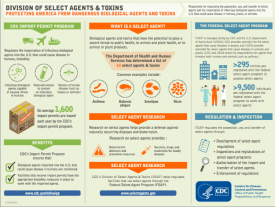
In response to ongoing scrutiny and biosafety failures, federal regulators have launched a new website that will allow them to track their progress “improving oversight of safety and security at facilities working with bioterror pathogens such as anthrax and Ebola.” While still a work in progress, many are pointing to this site being a step in the right direction towards transparency. The CDC released their Federal Select Agent Program (FSAP) report card to look more closely at biosafety and security issues surrounding this work. Unfortunately, some note that the report card still fails to meet the requested details on labs violations and incidents at specific labs. The increased scrutiny and attention to lab safety failures has brought attention from the White House, initiating a push for more transparency regarding the research and incidents in labs working with bioterror agents.
HIV Fights Off CRISPR
Just when you thought CRISPR-Cas9 could do just about anything, HIV brings its A-game. Since its creation, many researchers have attempted to use CRISPR to combat HIV. Unfortunately, the virus has been skilled at fending off these efforts. “The very act of editing—involving snipping at the virus’s genome—may introduce mutations that help it to resist attack.” There are a handful of strategies for using CRISPR gene editing technologies against HIV – editing the T helper cells to avoid the virus from getting in or aiding the T cells with the capabilities to seek out and destroy any HIV that infects them. “When HIV infects a T cell, its genome is inserted into the cell’s DNA and hijacks its DNA-replicating machinery to churn out more copies of the virus. But a T cell equipped with a DNA-shearing enzyme called Cas9, together with customized pieces of RNA that guide the enzyme to a particular sequence in the HIV genome, could find, cut and cripple the invader’s genome.” Sounds like a good plan, right? Unfortunately, a team from McGill University found that the newly equipped T cells were, within two weeks, churning out virus particle copies that had avoided the CRISPR attack. The team performed DNA sequencing to get a closer look at what exactly what going on – they found that the virus had actually “developed mutations near the sequence that the CRISPR-Cas9 enzyme that been programmed to cut.” The team believes that it’s not actually the copying error-caused mutations that helped beat CRISPR, but rather that things went wrong when Cas9 cut the viral DNA. A team at the University of Amsterdam experienced similar results and both groups agree that this problem can be overcome and there is still a possibility for a CRISPR-Cas9-based HIV treatment.
Predicting and Evaluating the Epidemic Trend of Ebola in the 2014/2015 Outbreak and the Effects of Intervention Measures
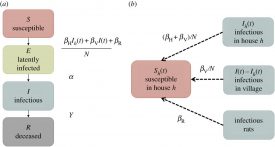
Researchers developed several transmission models for Ebola to predict epidemic trends and evaluate just how efficient and effective the intervention methods were following the 2014 outbreak. Accounting for effective vaccination rates, a basic reproductive number as an intermediate variable, and fluctuations of diseases transmission based on a SIR model, this study evaluates the effects of control and prevention measures. “Measures that reduced the spread of EVD included: early diagnosis, treatment in isolation, isolating/monitoring close contacts, timely corpse removal, post-recovery condom use, and preventing or quarantining imported cases. EVD may re-emerge within two decades without control and prevention measures.”
Stories You May Have Missed:
National Science Advisory Board for Biosecurity (NSAAB) Meeting – Don’t miss out on the NSAAB meeting on May 24, 2016! Agenda items include: (1) Finalization of NSABB findings and recommendations on a conceptual approach to evaluating proposed gain-of-function (GOF) studies; (2) discussion of next steps for U.S. government policy development regarding GOF studies; and (3) other business of the Board. The meeting will also be webcast here at the time of the event!
BMBL Virtual Town Hall and Workshop – The National Academies of Science, Engineering, and Medicine presents an opportunity for stakeholders to provide input for a revision of “Biosafety in Microbiological and Biomedical Laboratories”. This is a virtual town hall that is open for comments from April 4-May 13th. There will also be a workshop on May 12th in Washington, DC that you can register for here.
DARPA INTERCEPT Program for Biodefense Countermeasures – The Defense Advanced Research Project Agency (DARPA)’s Biological Technologies Office (BTO) is hosting a Proposers Day for the INTERfering and Co-Evolving Prevention and Therapy (INTERCEPT) program. “The goal of the INTERCEPT program is to explore and develop a new therapeutic platform to outpace fast-evolving viral pathogens, based upon virus-based therapeutic particles that interfere with viral infection and co-evolve with viral targets.”
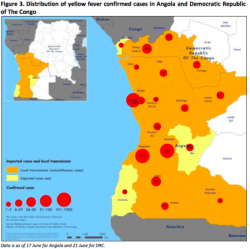
Angola Yellow Fever Outbreak – The WHO has reported that as of April 10th, there have been 1,751 suspected cases and 242 deaths associated with the yellow fever outbreak. 582 of the cases were laboratory confirmed, of which 406 were from the Luanda province.
Enjoying your weekly dose of the Pandora Report? Sign up to receive it every week so the fun never ends!
Monday, April 11th, 2016 Russian Foreign Policy In The Putin Era– Foreign Policy Research Institute Time: 9:30am Location: International House Philadelphia3701 Chestnut St, Philadelphia, PA 19104, United States(map)
This year’s Penn Slavic Symposium is a public event bringing together leading policy scholars on Russian foreign policy for a day-long discussion of key issues and challenges. Please register here for lunch by April 6 or bring your own.
The Future Of Kurdistan In Iraq– Johns Hopkins School of Advanced International Studies Time: 2pm Location: Johns Hopkins SAIS – Bernstein-Offit Building1717 Massachusetts Ave., N.W., Washington, D.C.(map)
A discussion with the Minister of Foreign Relations of the Kurdistan Regional Government Opening remarks and introduction: Sasha Toperich, Senior Fellow and Director of the Mediterranean Basin Initiative at the Center for Transatlantic Relations, SAIS Keynote Address: Falah Mustafa, Minister of Foreign Relations, Kurdistan Regional Government Commentator: Daniel Serwer, Professor and Director, Conflict Management Program, and Senior Fellow, Center for Transatlantic Relations, SAIS Moderator: Rebeen Pasha, WYLN Senior Fellow, Mediterranean Basin Initiative at the Center for Transatlantic Relations SAIS, and co-founder and President, American Friends of Kurdistan For More Information and to RSVP
Tuesday, April 12th, 2016 The US Navy & Cutting Edge Energy Innovation In The Defense Sector– Atlantic Council Time: 9-10:30am Location: Atlantic Council1030 15th Street NW, 12th Floor (West Tower Elevator) Washington, DC (map)
Please join the Atlantic Council and The Fuse on Tuesday, April 12 from 9:00 am – 10:30 am for a panel discussion on energy technology and innovation in the US defense sector. The demand for energy security and evolving geopolitical risks have already impacted the strategic approach of defense institutions, which are actively developing technology and policy alternatives to respond to these challenges. By integrating expertise in both security and energy issues, institutions such as the United States Navy provide a critical perspective in efforts to secure a reliable and sustainable energy supply. Continue reading “Week in DC: Events 4.11-15.2016”→
MSF Ebola Research
Medecins Sans Frontières (MSF) has released their report on the research they undertook throughout the Ebola outbreak in 2014. MSF was perhaps the strongest and most well coordinated response team on the ground during this outbreak. While their work heavily focused on medical care, they also performed a wide variety of research that ranges from public health to anthropology, and much more. “MSF carried out research in a number of areas including epidemiology (describing the disease and its spread), vulnerable patient groups, clinical trials for new treatments, community views of Ebola, operational issues and effects of the outbreak on general healthcare.” Their report ties together their research with the six pillars of Ebola control – isolation of cases and supportive medical and mental health care in dedicated ETC’s, contact tracing, awareness raising in the community, a functioning surveillance and alert system, safe burials and house spraying, and maintaining healthcare for non-Ebola patients. MSF research on vulnerable groups and community response to returned survivors is both fascinating and important for better response in future outbreaks.
GMU Biodefense Student Awarded ASIS Scholarship
Congrats to Biodefense MS student, Rebecca Earnhardt for receiving the ASIS National Capital Chapter Scholarship! The ASIS scholarship helps support and encourage students to follow a career in the security field. We love getting to celebrate the awesome work and achievements of our biodefense students, and between her dedication to the global health security field, scholarship, and work at START, we’re so happy to have her apart of the GMU Biodefense program!
Despite consistent denial regarding their role in the cholera outbreak during the 2010 recovery efforts in Haiti, recent documents have supported the UN’s responsibility. “The report, which was commissioned a month into the cholera crisis in November 2010, found a series of alarming problems in several UN peacekeeping bases including sewage being dumped in the open as well as a lack of toilets and soap.” The authors of the report also alerted UN leadership regarding the ramifications of the sewage disposal failures and “and the poor oversight of contractors carrying out this work has left the mission vulnerable to allegations of disease propagation and environmental contamination.” The recently released report will not only add pressure upon the UN to admit internal failures, but also support the recent lawsuit that was brought forth from 1,500 Haitians. Sadly, the UN has maintained a steadfast refusal to accept liability, despite growing data to support their responsibility for the outbreak. The lawsuit focusses on UN failure to screen the peacekeepers from Nepal for cholera and how a UN-hired contractor neglected to ensure “sanitary conditions and adequate infrastructure” for the UN camps.
Ebola vs. Zika- Why Did the WHO Respond So Differently?
Many have wondered, why was the WHO so quick with Zika, but so slow with Ebola? Interestingly, political science and the workings of international organizations are helping Amy Patterson from The Washington Post, ask these very questions. Firstly, it starts with an outbreak being declared a Public Health Emergency of International Concern (PHEIC). The WHO was slow to call Ebola a PHEIC, especially since it had only used the designation twice before. While the WHO blames the delayed response on budget cuts and poor communication between the ground teams and the WHO headquarters, it has also said that the quick response for Zika was due to a “need for greater scientific knowledge”, not to mention trying to repair their reputation from the slow Ebola response. “Political scientists would argue that the story is still more complicated. In ‘Rules for the World,’ Michael Barnett and Martha Finnemore show that international organizations’ internal workings and technical expertise influence their actions in ways that are sometimes at odds with the goals of the countries that set up these organizations to work on their behalf.” Patterson notes several factors – the WHO has six autonomous regional offices that behave differently, the WHO cares about its reputation among powerful countries, and the message matters. This last point drives home the role of health issue framing and the way messages are conveyed for audiences and policymakers. “What’s more, Ebola aligned with what Priscilla Wald terms the “outbreak narrative.” That’s the conventional view that poor countries have disease outbreaks, and that powerful states only care about those outbreaks when their spread threatens those states. Zika hit far closer to powerful countries — and hit “threat perception” level before Ebola.”
Stories You May Have Missed:
Global Health Impacts of Vector-Borne Diseases – The resurgence of vector-borne diseases in new locations and with new organisms has shown devastating global impacts. “Domestic and international capabilities to detect, identify, and effectively respond to vector-borne diseases are limited. Few vaccines have been developed against vector-borne pathogens.”
Angola Battles Yellow Fever – Over 450 people have been infected in the worst yellow fever outbreak Angola has seen in 30 years. There have been 178 deaths and the global shortage of yellow fever vaccine is alarming many in the world health community. There have also been imported, travel-associated cases in China and Kenya.
FDA Releases Final Rule to Ensure Food Safety During Transport-a new food safety rule was finalized by the FDA under the Food Safety Modernization Act (FSMA). The new rule “will help to prevent food contamination during transportation. The rule will require those involved in transporting human and animal food by motor or rail vehicle to follow recognized best practices for sanitary transportation, such as properly refrigerating food, adequately cleaning vehicles between loads and properly protecting food during transportation.”
Enjoying your weekly dose of the Pandora Report? Sign up to receive it every week so the fun never ends!
Monday, April 4th, 2016 Chasing Ghosts: The Policing Of Terrorism– Cato Institute Time: noon-1pm Location: Cato Institute1000 Massachusetts Avenue, N.W., Washington, D.C. 20001(map)
Since 2001 the United States has created or restructured more than two counterterrorism organizations for every apprehension it has made of Islamists apparently planning to commit terrorism within the country. Central to this massive enterprise are the efforts of police and intelligence agencies to follow up on over ten million tips, the vast majority of which lead nowhere. In their new book, Chasing Ghosts, John Mueller and Mark G. Stewart try to answer a few simple, yet rarely asked questions: Is the chase worth the effort? Or is it excessive given the danger that terrorism actually presents? The authors will present their findings followed by questions and discussion related to the U.S. fight against terrorism. Please join us for what is sure to be a lively event. If you can’t make it to the event, you can watch it live online at www.cato.org/live and join the conversation on Twitter using #CatoEvents. Follow @CatoEvents on Twitter to get future event updates, live streams, and videos from the Cato Institute. Attend in Person-Online registration for this event is now closed. If you are interested in registering for this event, please email events [at] cato.org.
What Is The Appropriate Way To Respond To And Ultimately Defeat Terrorism?– Johns Hopkins School of Advanced International Studies Time: 4-6pm Location: Johns Hopkins SAIS – Bernstein-Offit Building1717 Massachusetts Ave., N.W., Washington, D.C.(map)
Room: 500
The purpose of this panel is to have a discussion between two Conflict Management Professors and Strategic Studies Professors in order to determine what are the best ways to respond to and ultimately defeat terrorism. This panel with compare and contrast hard power approaches with state-building and other “softer” approaches. Given the recent invasions of Afghanistan, Iraq, and the Global War on Terror, such a panel should challenge people’s assumptions and generate new ideas.
Tuesday, April 5th, 2016 The Dark Web And Human Trafficking- Terrorism, Transnational Crime and Corruption Center (TraCCC) Time: noon-1:30pm Location: George Mason University3351 Fairfax Dr, Arlington, VA 22201(map)
Room: Founder’s Hall 111
Mr. Bringle will lead a presentation on the role of the dark web in human trafficking and new technological methods for finding and combatting it. Discussion will be based on his work with the Defense Advanced Research Projects Agency (DARPA). He will discuss the dark web, challenges for conducting research in that space, and cutting edge efforts to make the dark web more transparent to law enforcement working to combat human trafficking. Continue reading “Week in DC: Events 4.4-4.9.2016”→
Happy Friday! We’re excited to give you some great updates on the world of global health security. Firstly, a recent cluster of what some are calling “rabies” has claimed the lives of 12 individuals. Officials are concerned as transmission seems to be spread through biting and the affected individuals do not appear to be experiencing pain or concern over decaying skin. Just kidding – April Fools’ Day! The zombie apocalypse hasn’t started (that I know of….), but the European Centre for Disease Prevention and Control (ECDC) has issued a warning about Yellow Fever in Angola. The ECDC is stressing the role of vaccination in travelers as a means to prevent the disease from traveling to susceptible populations. Researchers from the University of Sydney’s Charles Perkins Centre recently published their analysis regarding the barriers and facilitators for pathogens to jump species. They reviewed 203 human viruses to look at biological factors that may give us predictors as to which viruses are likely to emerge in human populations.
Mapping the Global Health Security Agenda
Raad Fadaak discusses the Global Health Security Agenda (GHSA) and its set of 11 Action Packages, working to better “prevent, detect, and respond to both human and animal infectious diseases threats.” Fighting an uphill war with organizational and political challenges, the GHSA has won some battles in the fight against global health security threats. In the midst of their MERS outbreak last year, South Korea looked to GHSA “to invest both diplomatic commitment as well as approximately $10 billion US dollars—in addition to graciously hosting the annual GHSA Ministerial High-Level Meeting.” Perhaps a challenging component to getting the GHSA and its Action Packages running smoothly is the vast array of partnerships and projects. Raad uses several wonderful spatial graphics to show timelines, participating countries, commitments, and much more in his analysis of GHSA. “Speaking more generally, it is important to not take the ‘global’ in ‘global health security’ for granted. These maps are a first step in helping to identify and isolate the unique scope and reach of US Governmental activity under GHSA programs – and the production of a specific kind of scalar policy through the GHSA.” In the midst of the Zika outbreak, now will be a telling time to see how the US will meet its commitments to the GHSA through the CDC and USAID.
Medical Rant & Response
Medical experiences tend to be low on the totem pole for “things I’d like to do with my day”. No one enjoys sitting in a busy emergency department waiting area, dealing with miscommunications, or waiting on lab results. Dallas, TX experienced first-hand the serious ramifications of medical frustrations when they had an Ebola patient stroll into their ED and then get discharged a few hours later. What happens when your symptoms are stumping physicians or the delivery of care is delayed? Researchers discuss an experience by a U.S. patient and “responses offered by several experts from various perspectives of the healthcare system.” As you read this article, consider your own healthcare experiences. Take it a step further and consider the global health security implications regarding some of these experiences…
How to (Make Chemical Weapons) Disappear Completely
GMU Biodefense MS student, Greg Mercer, is at it again! In this week’s commentary he’s discussing how chemical weapons are actually destroyed. Incineration and neutralization are the two most common practices employed by the US and Greg is breaking each technique down. Unfortunately, these methods aren’t aways perfect and can easily result in human and environmental damage. “Chemical weapons weren’t always disposed of so carefully, though. The James Martin Center for Nonproliferation Studies (CNS) cites at least 74 instances of the U.S. dumping chemical weapons at sea from 1918 to 1970.”
Ebola: We May have Won the Battle, But We Haven’t Won the War
It’s been two years since the first Ebola cases were identified in Guinea. Since then, you’ve surely read articles upon articles about the outbreak, how it spiraled out of control, and how we should’ve seen it coming. Why read more? History. Plain and simple – if we fail to study this outbreak and learn from all our mistakes, we’re doomed to repeat them. Ranging from infection and prevention control measures (music to my ears) to addressing the needs of Ebola survivors and social mobilization, there’s host of things we can learn. “And even when international partners responded, they often arrived too late. It took about three months from the time the United States announced in September 2014 it would send troops to Liberia to build Ebola treatment units (ETUs) to the time those were built. By then, the epidemic was already waning, and nine out of the eleven centers built never saw a patient.” What about fear? Fear became an issue not just on the ground in West Africa, but also in the U.S. after we started treating imported cases and the initial Dallas, TX case. “But I think we did most poorlywhen we let fear dictate thequality of the clinical care we provided to patients. ‘What if,’ Dr. Paul Farmer provokingly asked, ‘the fatality rate isn’t the virulence of the disease but the mediocrity of the medical delivery?’ Of course lack of staff, supplies and space, combined with an overwhelming patient load didn’t help.” Coordination, communication, and engagement. You may see these repeated several times whenever you read an after action report about this outbreak, and yet I’m not quite sure we’ve really let it sink in. Zika? Let’s just hope we can learn from the lessons of public health history before another outbreak sneaks up on us again. Update: two more cases have been identified in the now nine person cluster in Guinea. A young woman has died of Ebola in Liberia today, marking their first case in months.
Ancient Malaria Roots – researchers from Oregon State University are suggesting that the origins of malaria may have actually begun 100 million years ago. The protozoa genus, Plasmodium, has ancestral forms that may have used different insects during its evolution. “Scientists have argued and disagreed for a long time about how malaria evolved and how old it is,” Poinar said. “I think the fossil evidence shows that modern malaria vectored by mosquitoes is at least 20 million years old, and earlier forms of the disease, carried by biting midges, are at least 100 million years old and probably much older.”
Ebola Is No Longer A Public Health Emergency of International Concern – On Tuesday, March 29th, 2016, the WHO Emergency Committee met, noting that since its last meeting, all three countries met criteria for interruption of original transmission chains. The WHO Direct General, Margaret Chan, stated that any trade and travel restrictions initiated during the outbreak should be lifted.
Ethiopia Drought Emergency – Ethiopia is currently experiencing the worst drought it’s had in 50 years, causing water and food security issues. As of March 2016, over 10.2 million people need food assistance. Food security issues and poor access to water are severely impacting the agricultural industry as well as human health.
Enjoying your weekly dose of the Pandora Report? Sign up to receive it every week so the fun never ends!
Chemical weapons became a global security issue in the early 20th century. They were most famously used in World War I, though some early international efforts were made to prevent their use before they were actually developed and used. The horrors of their use in World War I is frequently credited with preventing their use in later conflicts (though hardly comprehensively; the Holocaust saw their pervasive use, and Iraq is no stranger to chemical weapons, to name but two examples). The modern chemical weapons prohibition as we know it, however, came to be with the 1990 Chemical Weapons Accord and 1993 Chemical Weapons Convention. These agreements thoroughly strengthened the chemical weapons control regime, and the latter created the Organization for the Prohibition of Chemical Weapons.
So, when chemical weapons need destroying, there are a few options to turn to. Two methods are commonly employed in the U.S.: incineration and neutralization.
Incineration is the Department of Defense’s (DoD) preferred method. Chemical munitions are drained from their delivery mechanisms and burned, rendering the end products either harmless or controllable. Empty warheads and shells are treated to the same heat to ensure the offending substances are completely destroyed. Incineration takes place at a handful of sites in Utah, Alabama, Oregon, and the Johnston Atoll in the Pacific.
Alternatively, the DoD has neutralized chemical agents via chemical hydrolysis, where water and a caustic agent are mixed with the agent, rendering it inert. VX nerve agent being stored in Newport, Indiana was destroyed this way. Once the process is complete, the end product must be stored.
Chemical weapons weren’t always disposed of so carefully, though. The James Martin Center for Nonproliferation Studies (CNS) cites at least 74 instances of the U.S. dumping chemical weapons at sea from 1918 to 1970. Soviet dumping was prolific but poorly documented. This was banned internationally by a 1972 convention but could still have latent effects. Deaths and injuries from exposure to chemical agents have been recorded among fishermen. When militaries dumped chemical weapons into the oceans, little thought was given to whether they would stay in one place or be distributed by currents. In 2007, the Congressional Research Service prepared a report for Congress on dealing with future ramifications from the dumping. The latent effects remain to be seen.
Monday, March 28th, 2016 Enterprise Risk Management: A Form Of Organizational Self-Defense– Professional Risk Managers’ International Association (PRMIA) Time: 12:30-1:30pm Location: The George Washington University School of Business2201 G St NW, Washington, DC 20052(map)
Room 652
A disturbing pattern has hit too many companies and government agencies: Everything seems to be going well when suddenly news comes about a serious failure from deep in the organization. Depending on the organization, this might involve defective automobile airbags, or a failure of federal health services for veterans, or a massive data breach, for example. Public outrage follows swiftly and senior leaders are sent packing in favor of a new team that promises to conduct a full investigation and clean up the mess. Such incidents come to light with increasing frequency. Chastened by risks that emerge at unexpected times and in unexpected ways, leaders increasingly turn to a form of organizational self-defense known as Enterprise Risk Management (ERM). ERM builds on a simple question: looking at the organization as a whole, what are the risks that could prevent my company or government agency from accomplishing its mission? Thomas H. Stanton will discuss ERM, lessons from the Financial Crisis, and ERM’s applications to government organizations.
Tuesday, March 29th, 2016 Beyond The Nuclear Security Summits: The Role Of Centers Of Nuclear Security Excellence– Center for Strategic and International Studies Time: 9:45am-noon Location: Center for Strategic and International Studies1616 Rhode Island Ave NW, Washington, DC 20036(map)
Please join the CSIS Proliferation Prevention Program as it explores BEYOND THE NUCLEAR SECURITY SUMMITS: THE ROLE OF CENTERS OF NUCLEAR SECURITY EXCELLENCE on March 29, from 9:45am – 12:00pm. In advance of the final Nuclear Security Summit, we will bring together leaders from three Centers of Excellence to share how their centers have helped build nuclear security in East Asia as well as discuss what the future may hold for them in the post-summit environment. Dr. Jongsook Kim, Director General of the Korea Institute of Nuclear Nonproliferation and Control International Nuclear Nonproliferation and Security Academy, Mr. Yosuke Naoi, Deputy Director of the Japan Atomic Energy Agency Integrated Support Center for Nuclear Nonproliferation and Nuclear Safety, and Mr. Zhenhua Xu (invited), Deputy Director General of China State Nuclear Security Technology Center will brief on the current status of their centers.
The Finances of A Pandemic
From SARS to Ebola and now Zika, the growing threat of emerging infectious diseases doesn’t seem to be slowing down. Has this become our new normal? Will we learn from these outbreaks and start putting the resources and support into prevention? “Ebola has infected almost 30,000 people, killed more than 11,000 and cost more than $2 billion in lost output in the three hardest-hit countries. SARS infected 8,000 and killed 800; because it hit richer places, it cost more than $40 billion. Predicting these losses is hard, but a recent report on global health risks puts the expected economic losses from potential pandemics at around $60 billion a year.” So how do we defend against these international security threats? America’s National Academy of Medicine recently made the suggestion that $4.5 billion a year solely dedicated to pandemic preparedness and defense could halt this impending reality. Even more interesting? This estimate accounts to roughly 3% of what “rich countries spend on development aid”, while the world spends about $2 trillion annually on defense.
U.S. Biothreat Defense Inadequate
American response to Ebola and now Zika reveals a startling trend of slow response, inadequate supplies, and poor cooperation and coordination between agencies. Director of National Intelligence, James Clapper states that “Gaps in disease surveillance and reporting, limited health care resources, and other factors contributed to the outpacing of the international community’s response in West Africa,”. The National Biosurveillance Integration Center (NBIC) is one such agency that was developed in 2007 in attempts to “be a hub of information and coordination for federal agencies tracking disease and biological threats”, however it has been frustrated by poor relationships and sharing from other agencies like the CDC. In essence, agencies that are developed for global health security, like NBIC, suffer from poor cooperation that then trickles into their reputation and capabilities in the eyes of their federal partners. “Congress has put forth a potential legislative fix. The CBRNE Defense Act of 2015 would create a new office within DHS, the Chemical, Biological, Radiological, Nuclear, and Explosives Office, which would place both NBIC and BioWatch under integrated new management.” Just as we reported from the Blue Ribbon Study Panel, federal biodefense efforts and resources need to be better organized and developed.
Complex Engineering by Violent Non-State Actors
Check out this special issue on complex engineering by violent non-state actors (VSNAs). “Why and how different VNSAs remain low-level and localized or undertake and achieve complex engineering tasks in pursuit of their objectives are at the heart of understanding the threat environment faced by states.” The authors address several terrorist groups like Aum Shinrikyo (the chapter was actually co-authored by GMU Biodefense Alum Benjamin Ash!), Hamas (also co-authored by GMU Biodefense Alum Alena James!), the Provisional Irish Republican Army (PIRA), etc. “The approach of this collection moves beyond weapons and embraces facilitating or logistical aspects that support the operations and objectives of the various actors”. This special edition, with an introduction by Jez Littlewood, reviews these organizations and their resources and strategies. The authors also consider the attitudes of leadership regarding innovation in detail to assess the role of complex engineering by VSNAs. Through this close look into the VSNA use of complex engineering, further research and preparedness can occur to understand the threats posed by these actors.
All Roads Lead to Zika
Now that Spring has officially begun, the impending summer rains are right around the corner, and with those – mosquitoes. Many worry about the potential for local transmission in countries where imported cases have already been identified. The US isn’t immune to these concerns as the CDC reports 273 travel-related cases. Dr. Nabel mirrors the sentiments of Sanofi’s global R&D head, Dr. Elias Zherouni, who emphasizes the need for changes in global public health outbreak response. He notes that “we just run from one crisis to another. It’s not an optimal way to respond. Not when the stakes are so high and when so many people can either lose their lives or have their whole lives changed because of one five-day infection. That’s no way to protect the world’s population. We have to step back and we have to say, ‘Is there a more systematic way to gather the intelligence that we have about these viruses, recognize where they stand in terms of the threat level, and then develop a systematic program where, when the next Ebola outbreak occurs, it’s not that we haven’t done anything since the last outbreak, that we’ve actually moved things forward?’ That’s all possible. It’s just that we have not had the collective will to do it.” Panama has also announced their first case of microcephaly linked to Zika virus outside of Brazil. Chris Mooney from The Washington Post discusses why Zika virus, among other diseases, could disproportionally impact America’s poorer populations. He notes that scientists have found that more mosquitoes are found in lower-income neighborhoods due to persistent trash and abandoned buildings, which creates a ripe environment for standing water and thus mosquito breeding. Researchers found that when compared to wealthier neighborhoods in New Jersey, “poverty was positively correlated with number of [Asian tiger mosquitoes] captured and accounted for over half the variation”. Many are saying that the “U.S. is botching the Zika fight” due to the problems within the FDA and the Agriculture Department regarding turf. “A genetically tweaked mosquito could stop the illness, but regulators won’t test it. Why would that be?” The combination of worrying reasons, like “budgetary concerns and antagonism to genetic engineering among some senior USDA officials”, leave many feeling that instead of getting ahead of the outbreak, “the U.S. is falling behind, solely because of bureaucratic muddle.” On the other hand, on Friday, the WHO rallied for pilot projects on two projects that would involve genetically modified mosquitoes to help stop the spread of Zika virus. In the meantime, the FDA gave emergency approval for a 3-in-1 test for Zika, Chikungunya, and Dengue.
Brett Edwards and Mattia Cacciatori tackle the responses that the international security community has taken regarding the use of chemical weapons in Syria and the resulting reinforcement of “a long standing prohibition norm.” The authors discuss the characteristics of chemical weapons taboo and and the significance that the international community gives to these weapons. “This alone does not support the claim episode has strengthened the global norm against chemical weapons. In this piece we have highlighted how this is not immediately apparent due to the fact that problem cases tend to be externalized from dominant institutional discourses, often justified in terms of the need to protect the sanctity of the chemical weapon norm, as well as those institution’s which embody the norm – especially the OPCW.” Overall, the more problematic cases, like those of incapacitating chemical agents, will grow to alter the existing foundation of chemical weapons norms if left ignored or unchecked.
New Ebola Flare Up
The west African Ebola outbreak is like a campfire that wasn’t put out properly – everyone thinks the flames are extinguished, but those hidden embers lurking in the ash end up causing a spark that leads to a massive forest fire. A fifth person has died from the recent flare in Guinea. The most recent death occurred in a man 200k from the initial four cases. Prior to this death, a young girl died from the village of Korokpara following her hospitalization in an Ebola treatment facility in Nzerekore. It’s still not clear how this specific surge began, but many worry about the lingering traces of the virus in the eyes, CNS, and bodily fluids. In response to the fifth death, Liberia has partially shut its borders. Emergency meetings are now underway and the WHO is sending specialist teams in to try and stop the outbreak before it grows beyond the 11,300 mortality count. On a positive note, Sierra Leone has gone two incubations periods (42 days) without a case, which means they’re Ebola-free since their last flare up.
GMU SPGIA Gettysburg Trip
GMU students interested in learning more about the battle of Gettysburg- the Center for Security Policy Studies (CSPS) will be hosting an informational session on April 6th from 4:30-6pm in Merten Hall 1203 regarding the April 9th trip! GMU students and staff will walk the battlefield, discussing the factors that caused the battle to unfold as it did. They will also link the battle into larger discussions about the causes of war and grand strategy. The cost for the trip will be $35. Bus transportation will be provided, and will pick up participants from both the Fairfax and Arlington campuses.
Stories You May Have Missed:
U.N. Sued Over Haiti Cholera Outbreak– starting in October of 2014, Haiti was hit with an intense wave of cholera that is believed to have started with U.N. peacekeepers. “Poor sanitation at a U.N. camp for peacekeepers allowed cholera-contaminated sewage to enter a tributary of Haiti’s largest river, the Artibonite. Within days, hundreds of people downstream, like Jean-Clair Desir and his mother, were falling ill. The disease subsequently spread to the entire country.” The case is currently being reviewed in US courts and the lawsuit was brought forth by the Institute for Justice in Democracy, asking that the U.N. “end cholera by installing a national water and sanitation system; pay reparations to cholera victims and their families; and publicly apologize for bringing cholera to Haiti.”
Exploiting the Challenges to Bioweapons Development – Janne E. Nolan discusses GMU Biodefense Professor, Dr. Sonia Ben Ouagrham-Gormley’s book, Barriers to Bioweapons, in regards to the misleading and often exaggerated notion of easy WMD development. Nolan discusses that understanding both the internal and external factors that impact BW program success would allow the international community to “devise better ways to realistically stem BW proliferation”. He notes that “Ben Ouagrham-Gormley’ s book is a fascinating study of the phenomenology of scientific knowledge, providing a compelling analysis of how knowledge is acquired, developed, transmitted, and, at the same time, diluted or lost as a result of organizational, social, economic, political, and ultimately very human factors that vary widely within countries and over time.” You can also access it here: Nolan final
Five Outbreaks That Stump Epidemiologists– As much as I’d love to say that all outbreaks are investigated and solved, the truth is that epidemiologists are often left with the nagging of an unresolved case. Outbreaks are squirrelly at best, often challenging even the best teams with confounders and biases. Here are some that have stumped public health teams over the years.
Lassa Fever Outbreak– Three people are suspected of having the viral infection after coming into contact with an infected American. The initial case was a medical director of a missionary hospital in Togo, who died last month. While there are conflicting reports of disease confirmation, several sources are saying the three contacts of this initial case have been diagnosed and are under observation. The outbreak in Nigeria and Benin has continued to grow, resulting in CDC travel warnings. In Nigeria there have been 254 cases and Benin has seen 71.
Enjoying your weekly dose of the Pandora Report? Sign up to receive it every week so the fun never ends!
Monday, March 21, 2016 Cybersecurity & Innovation: It’s The States, Stupid –Woodrow Wilson International Center for Scholars Time: 11am-noon Location: Woodrow Wilson Center1300 Pennsylvania Ave., NW, Washington, D.C. 20004(map)
Second term Governor John Hickenlooper will give a special talk about efforts in Colorado to address a rise in cyber threats while also driving innovation and creating jobs. As Federal support for cyber incidents begins to focus on the most high-level targets, leaving states and their businesses and non-profits to fend for themselves in the event of a breach, new solutions are necessary. The Governor will describe his state’s initiatives, including a new National Cyber Intelligence Center, which will provide training, incident response and serve as a resource for business, non-government organizations, and Colorado government officials. Why does it matter and what will it do? Speakers: The Honorable John Hickenlooper, Governor of Colorado Jane Harman, Director, President and CEO, Wilson Center
A Global Reality Check On Nuclear Security– Carnegie Endowment for International Peace Time: 12:30-2pm Location: Carnegie Endowment for International Peace1779 Massachusetts Ave. NW, Washington, D.C. 20036(map)
Much progress has been made in recent years to prevent the theft of weapons-useable nuclear material around the world, but some of these materials remain dangerously vulnerable. At a time of rising risk from the self-proclaimed Islamic State and other groups, governments must redouble their efforts to prevent nuclear weapons from getting into the hands of terrorists. Ahead of the upcoming Nuclear Security Summit in Washington, a new report presents a stark choice: will the world recommit to continuous improvement in strengthening nuclear security, or will efforts decline and the danger of nuclear terrorism grow? Matthew Bunn, Martin Malin, Nickolas Roth, and William Tobey of the Harvard Belfer Center’s Project on Managing the Atom will launch the new report, Nuclear Security: A Global Reality Check. Carnegie’s Toby Dalton will moderate.
Tuesday, March 22, 2016 Advanced Analytics To Combat Cyber Threats-Government Executive Time: 2pm Location: Online
As one of the most digitally connected countries in the world, the United States is incredibly vulnerable to a range of cyber attacks. Adversaries use a variety of stealthy techniques, including sophisticated advanced persistent threats or “APT’s.” APT’s are very difficult to detect once inside a network as they employ a high degree of covertness over extended periods of time. Worse yet, they are becoming more common as the socially engineered spear phishing techniques used to initiate these attacks are becoming more personalized to human targets; spoofing even the most savvy users and allowing malware to infiltrate, obfuscate and exfiltrate your most sensitive data. CISO’s wage a 24/7 defense, working to keep potential threats out of their system while listening for those subtle system anomalies indicating they may already have an APT intruder. This Webcast explores the critical issue of how best to equip your agency with powerful cyber and big data analytics to spot even the most inconspicuous network activities and identify and isolate threats, investigate intrusions, and prevent future exploits.
Wednesday, March 23, 2016 GMU SPGIA Master’s Open House Time: 6:30pm, 7pm Biodefense Breakout Session Location: Arlington Campus, Founders Hall, Room 126
We invite you to attend an open house to learn more about the School of Policy, Government, and International Affairs. The session will provide an overview of our master’s degree programs, an introduction to our world-class faculty and research, and highlights of the many ways we position our students for success in the classroom and beyond. Our admissions and student services staff will be on hand to answer your questions. Biodefense information session can also be attended virtually – here! Continue reading “Week in DC: Events 3.21-23.2016”→