Biodefense Graduates: Brian Mazanec

GMU Biodefense Graduate Brian Mazanec’s Deterring Cyber Warfare: Bolstering Strategic Stability in Cyberspace (written with Bradley Thayer) was released on December 5. The book looks at cyber warfare, which is especially relevant after the latest North Korean cyber attack on Sony. The description of the book follows:

Deterrence theory was well developed during the Cold War for the deterrence of kinetic attacks. While the deterrence of cyber attacks is one of the most important issues facing the United States and other nations, the application of deterrence theory to the cyber realm is problematic.
This study offers an introduction to cyber warfare and a review of the challenges associated with deterring cyber attacks. Mazanec and Thayer recommend efforts in three specific areas to aid the deterrence of major cyber attacks: by cultivating beneficial norms for strategic stability; by continuing efforts in the area of improving cyber forensics and defences; and, finally, by developing and communicating a clear declaratory policy and credible options for deterrence-in-kind so as to make escalation unavoidable and costly. This timely study reflects increased international interest in cyber warfare, and is based on the recognition that information networks in cyberspace are becoming operational centres of gravity in armed conflict.
Deterring Cyber Warfare is Prime eligible which means, if you’re a member, you can get it just in time for Christmas! You can order online here.

Pandora Report 12.21.14

The winter holidays are here and with them comes the final 2014 news roundup. This week we look at superspreaders, dengue fever, and, of course, Ebola.

There will be no roundup next week as I will be spending time with family and friends. I hope all of you have the opportunity to do the same and are surrounded by those you love during this time of year. It has been a privilege and a pleasure serving as the Managing Editor of the Pandora Report since March. I hope you have enjoyed reading it as much as I’ve enjoyed writing it.

I hope to see you right back here again in 2015!

The 20% Who Spread Most Disease

How did Typhoid Mary spread the disease to dozens of people but never get sick herself?

Researchers at Stanford University are looking into the science behind “superspreaders”—the idea that some people spread more disease than others. Recent experiments have suggested that the body’s immune response might play a role in helping to spread pathogens to others, however, it isn’t clear if the immune system of the superspreader or their behavior plays a bigger role in the passage of disease.

The Wall Street Journal—“‘It’s telling us that these superspreaders…are tolerant of high levels of the pathogen and any little disturbance and added inflammation that this antibiotic treatment did to them,” said Dr. Monack. “I wouldn’t say they have stronger immune systems. I would say it’s in a state that protected them from this added disturbance in the gut.’”

Dengue Fever Vaccine on the Cards After Novel Antibody Discovery

Over the past 50 years cases of dengue fever have soared—nearly 100 million per year. Normally the infection causes a fever which lasts about a week, but some develop hemorrhagic fever which kills about 22,000 a year. Gavin Screaton at the Imperial College in London warns “it’s likely that without a vaccine this disease is not going to be controlled.” That’s why a discovery of a new antibody brings hope that vaccine development may be closer than we thought.

The Guardian—“The researchers spotted the new group of antibodies while they were studying blood drawn from patients who picked up dengue infections in south-east Asia.

They found that about a third of the immune reaction launched by each patient came from a new class of antibodies. Instead of latching on to a single protein on the virus surface – as usually happens – the new group of antibodies latches on to a molecular bridge that joins two virus proteins together.”

This Week in Ebola

It’s been a hard year in West Africa with the worst Ebola outbreak in history still ongoing. In Sierra Leone, the country with the most cases, treatment centers are overflowing with patients. The President has announced that Christmas has been cancelled as news came that the most senior doctor—Victor Willoughby—died. Dr. Willoughby was the 11th of Sierra Leone’s 120 doctors to die from the virus. For the lucky ones who survive, they must cope with after effects including blindness and joint pain. And don’t forget the stigma—a heart breaking article in the New York Times describes the plight of Ebola orphans who aren’t taken in for fear that they are ticking disease time bombs. Cuban doctors are some of the most active on the front lines, but news this week came that the U.S. embargo has delayed payment of those doctors. There are glimmers of hope though, as the U.N. Economic Commission for Africa urged debt cancellation for Ebola affected West African countries and experimental serum therapy treatment made from the blood of recovered patients arrived in Liberia.

Stateside, a child flying though O’Hare Airport in Chicago was quarantined when a high fever was discovered after screening. Johns Hopkins University was chosen as one of the winners in a global competition to create an improved protection suit for those fighting Ebola on the front lines. Lastly, an American doctor—Richard Sacra—who was infected with Ebola in Liberia and returned to the U.S. for treatment, has said that he will return to Liberia in January to continue fighting the outbreak.

Stories You May Have Missed


Image Credit: Free Images

This Week’s Top 5 Islamic State News Stories

By Erik Goepner

  1. Are negotiations with IS inevitable?

Padraig O’Malley, professor at UMASS and veteran mediator of civil conflict, thinks so. “A way in time must be found to talk to Islamic State,” he says. “You simply will not wipe it out. It’ll just re-emerge in a different form.” He goes on to suggest few in the West understand the “phenomenon of Islamic State” and the “degree of its sophistication in attracting young people from all over the world.” For the full story, see http://www.newsweek.com/we-must-negotiate-islamic-state-says-senior-mediator-291837.

  1. How is IS organized and how does it operate?

Analyzing 144 documents captured between 2005 and 2010, a group of researchers observe that IS (and its predecessor, AQI) takes a “bureaucratic, systematized approach to maintaining power that makes it look in some ways more like a settled government than a fly-by-night band of extremists. Whether under the flag of the Islamic State, or ISIS before that, the group organizes the territory it administers into well-defined geographic units, levies taxes in areas it controls, and manages large numbers of fighters across a sparsely populated territory roughly the size of the United Kingdom.” Read more at

http://www.bostonglobe.com/ideas/2014/12/14/the-terrorist-bureaucracy-inside-files-islamic-state-iraq/QtRMOARRYows0D18faA2FP/story.html

  1. IS training camps spotted in eastern Libya, and they may also have established a new presence near Tripoli. Full story available at

http://www.latimes.com/world/africa/la-fg-libya-isis-20141212-story.html

  1. Kurds retake town north-east of Baghdad, reversing IS’ territorial gains in Jalawla. See http://www.bbc.com/news/world-middle-east-30469011 for more.
  1. For the latest on the incident in Sydney, see the Australian newspapers: The Daily Telegraph (http://www.dailytelegraph.com.au) and The Sydney Morning Herald (http://www.smh.com.au/).


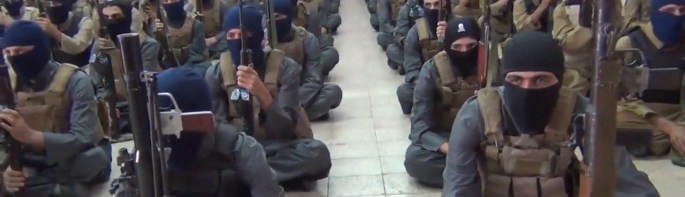
Image Credit: Vice

Week in DC: Events

December 15, 2014

National Reconciliation and Negotiation: The Path Forward in Iraq and Syria
Date: December 15, 9:00am
Location: Johns Hopkins School of Advanced International Studies, Kenney Herter Auditorium, 1740 Massachusetts Ave NW, Washington DC

Please join the Middle East Institute’s Initiative for Track II Dialogues, Johns Hopkins School of Advanced International Studies and New America for a conference examining the prospects for national reconciliations in Iraq and the conditions for reviving political negotiations in Syria.

The event will feature expert panel discussions on past attempts at national reconciliation in Iraq and its future prospects, and the domestic and regional drivers of conflict resolution processes in Syria.

Join the waitlist to attend in person here, or watch live online here.

The Future of Homeland Missile Defense: A Fresh Look at Programs and Policy
Date: December 15, 9:00am
Location: Center for Strategic and International Studies, 1616 Rhode Island Ave NW, Washington DC

The Center for Strategic and International Studies welcomes Missile Defense Agency director Vice Admiral James Syring and other experts to discuss both policy and programmatic aspects of the future of homeland defense.

What is the future of homeland missile defense efforts? Recent tests have confirmed the lethality of the Ground Based Midcourse Defense (GMD) system and hit-to-kill technology. Focus is now turning to how best to evolve existing homeland defense capabilities, including redesigned kill vehicles and improved discrimination capabilities. Other longer term questions arise as well if capabilities are to continue to outpace developing missile threats.

Register here to attend in person or watch live online here.

The Escalating Shi’a-Sunni Conflict: Assessing the Role of ISIS
Date: December 15, 9:30am
Location: The Stimson Center, 1111 19th Street NW, 12th Floor, Washington DC

Today, the Islamic State in Iraq and Syria (ISIS) controls and effectively governs large parts of territory based on a sectarian agenda. By implementing an ideology of religious intolerance, ISIS plays a significant role in deepening the already existing sectarian divide in a region deeply embroiled in conflict. Its appeal namely lies in its ability to offer an alternative to many communities that have felt marginalized and threatened in the past, and more so since the Arab uprisings began.

Given its anti-Shi’a agenda, did ISIS capitalize on the conditions in Iraq and the Levant or did it help create them? Does ISIS have the potential to spread to other countries in the region where there is a sectarian problem, such as Lebanon? What is the potential for the US to push back on the ISIS march? Is Washington throwing money at the problem or are US military efforts actually making a difference on the ground? Our discussants will address these issues, with a particular focus on Iraq, Syria, and Lebanon.

RSVP here.

International Diplomacy and the Ukraine Crisis
Date: December 15, 9:30am
Location: International Institute for Strategic Studies—US, 2121 K Street NW, Suite 801, Washington DC

The Hon. Vladimir Lukin was the special envoy of the Russian president for the February 21st talks in Kiev between then‑President Viktor Yanukovych and opposition leaders. He served as Russia’s ambassador to the US from 1992‑1994, in various positions in the Russian Ministry of Foreign Affairs, and as an MP in the Russian State Duma. From 2004‑2014, he was the Human Rights Commissioner of Russia. He was one of the founders of the Yabloko political party. He received his PhD in History from Moscow State Pedagogical Institute.

The Hon. Richard Burt serves as managing director at McLarty Associates, where he has led the firm’s work in Europe and Eurasia since 2007. He was the chief US negotiator in the Strategic Arms Reduction Talks with the Soviet Union that produced the landmark START agreement. Prior to this, he served as US ambassador to the Federal Republic of Germany; assistant secretary of state for European and Canadian affairs; and director of the political‑military affairs bureau. From 1973 to 1977, he worked for the IISS, first as a research associate, then as editor of Survival, and finally as assistant director of the Institute.

Sir Michael Leigh is a Transatlantic Academy Fellow, consultant and senior advisor to the German Marshall Fund. He joined GMF after more than 30 years in EU institutions. In 2006, he became Director‑General for Enlargement at the European Commission. Prior to that, he served for three years as external relations deputy director‑general with responsibility for European Neighborhood Policy, relations with Eastern Europe, Southern Caucasus, Central Asia, Middle East, and the Mediterranean countries; and as chief negotiator for several EU Accession Negotiations. He holds a bachelor’s degree in philosophy, politics, and economics from Oxford University and a PhD in political science from MIT.

The event will be chaired by Dr Samuel Charap, IISS Senior Fellow for Russia and Eurasia. Register here.

The Future of U.S. Foreign Policy
Date: December 15, 11:00am
Location: Center for American Progress, 1333 H Street NW, 10th Floor, Washington DC

Foreign policy crises seem to be multiplying around the world, including the brutal threat of the Islamic State of Iraq and al-Sham, or ISIS, continued Russian support for separatists in eastern Ukraine, violence in the Central African Republic, and civil conflict in Libya and Yemen. In the face of these challenges, deeply divergent views about American foreign policy interests and the appropriate use of American power have divided both Democrats and Republicans across and within party lines.

Please join the Center for American Progress for a public event on the future direction of U.S. foreign policy and the role of America around the world.

RSVP here or watch online here.

December 16, 2014

The Battle of Ideas 2.0: Combatting ISIS Ideology at Home and Abroad
Date: December 16, 12:00pm
Location: Washington Institute for Near East Policy

In a speech before the Security Council last month, UN human rights chief Prince Zeid Ra’ad al-Hussein called for a Muslim-led campaign to combat the ideology of the “Islamic State”/ISIS, alongside the coalition’s military campaign against the group in Syria and Iraq. Meanwhile, the White House is planning to hold a summit on efforts aimed at countering violent extremism at home. As policymakers debate and shape CVE programs in the United States and abroad, The Washington Institute is pleased to host a Policy Forum featuring a keynote presentation by HRH Prince Zeid (by video conference), followed by remarks from Hedieh Mirahmadi and Matthew Levitt. The webcast will start at 12:30 p.m EST.

Watch live online here.

What Fuels Global Jihadism?
Date: December 16, 12:00pm
Location: Carnegie Endowment for International Peace, 1779 Massachusetts Ave NW, Washington DC

The recent Senate report about the CIA’s use of torture against suspected terrorists renews important questions about the most effective and ethical means to counter the threat of global jihadism. Maajid Nawaz, a former Islamist extremist turned liberal activist, will offer an assessment of how and why young men around the world are recruited into jihadist groups as well as provide policy prescriptions to reverse these trends. Carnegie’s Karim Sadjadpour will moderate.

Register here.

Congressional Options and Their Likely Consequences for a Nuclear Deal with Iran
Date: December 16, 1:00pm
Location: RAND Corporation, B-369 Rayburn House Office Building, Washington DC

With nuclear negotiations between Iran and the P5+1 now extended beyond the original November 24 deadline, some members of Congress might now attempt to intervene legislatively. Congressional action could either help or hinder the implementation of whatever deal may be reached. What options are available to Congress, and what are the likely consequences of each for the United States?

Join RAND analyst Larry Hanauer as he identifies and assesses eight potential courses of action that Congress could take that might either facilitate, hinder, or block implementation of a nuclear deal.

  • To what extent can the president provide Iran with sanctions relief without congressional approval?
  • How can Congress influence the Administration’s implementation of an Iran nuclear deal?
  • How might new sanctions passed by Congress affect the implementation of a deal?
  • What could Congress do if Iran fails to comply with an agreement?

Register here.

A Discussion on National Security with Dr. Harlan Ullman
Date: December 16, 4:00pm
Location: Atlantic Council, 1030 15th Street NW, 12th Floor, West Tower, Washington DC

Please join the Atlantic Council for a discussion of the challenges facing the United States and the strategy required to tackle them with Dr. Harlan Ullman, senior adviser at the Atlantic Council and author of a new book, A Handful of Bullets: How the Murder of Archduke Franz Ferdinand Still Menaces the Peace.

An expert on global security and nontraditional threats, Dr. Ullman advances innovative recommendations for addressing the dangers facing the United States today.  With the rise of the Islamic State in Iraq and Syria, the outbreak of Ebola, and failed governments giving rise to crises ranging from Eurasia to the Middle East and beyond, he argues it is critical for global leaders to respond strategically.  As part of the Atlantic Council’s effort to inject strategic thinking into the dialogue about the challenges the United States and its allies face, Dr. Ullman will outline what the United States should do to address these threats and to remain a global leader.  Drawing lessons from a century of history, he will recommend a new strategic approach to failing governments, economic despair, disparity, and dislocation, ideological extremism, and environmental calamities.

Dr. Ullman is a senior adviser at the Atlantic Council and a member of its Strategic Advisors Group.  He is also a senior advisor at Business Executives for National Security, chairman of the Killowen Group, and director of the Capital Guardian Mutual Fund.  Dr. Ullman sits on the advisory board of Supreme Allied Commander Europe, Commander European Command, and IE/SPS.

Register here.

Ebola: The Culture of Preparing for and Recovering from Pandemics
Date: December 16, 5:30pm
Location: Virginia Tech, School of Public and International Affairs, 900 N. Glebe Road, 2nd Floor, Arlington VA

Dr. Reuben Varghese, director, and Josephine Peters, RN, planning and education chief for Arlington Public Health, will present “Ebola: The Culture of Preparing for and Recovering from Pandemics.”

These two Arlington health officials were on the scene when Arlington endured an Ebola scare on Oct. 17, 2014. They will discuss how the situation unfolded, what important lessons were learned, and how this false alarm may impact policy moving forward.

This is the first lecture in the Living Lab Series sponsored by the School of Public and International Affairs.

Email andrea.morris@vt.edu to register.

December 17, 2014

U.S. Nuclear Arms Control Policy: A Talk with Under Secretary of State Rose Gottemoeller
Date: December 17, 10:00am
Location: Brookings Institution, 1775 Massachusetts Ave NW, Falk Auditorium, Washington DC

The Obama administration took office with high hopes for nuclear arms control and non-proliferation, and can claim definite achievements, such as the New START Treaty and the nuclear security summit process. But progress on arms control has slowed and the Ukraine-Russia crisis has created a political atmosphere far less conducive to further reductions. How is the administration approaching arms control as it prepares for the final two years of the Obama presidency?

On December 17, the Arms Control and Non-Proliferation Initiative at Brookings will host Under Secretary of State for Arms Control and International Security Rose Gottemoeller, who will discuss the Obama administration’s policy on nuclear arms control and the prospects for further progress. Brookings Senior Fellow Steven Pifer will moderate the discussion. Following her remarks, the Under Secretary will take questions from the audience.

Register here.

The End of South Stream and the Future of Russia’s Pipeline Politics
Date: December 17, 11:00am
Location: Johns Hopkins SAIS, Room 500, 1717 Massachusetts Ave NW, Washington DC

On a recent visit to Ankara, Putin announced the scrapping of the multibillion dollar South Stream gas pipeline project and signaled that a new link could be built with Turkey. Join us on December 17 for a discussion on the cancellation of South Stream and the resulting geopolitical and economic implications for the region. CGI is honored to welcome Edward Chow, senior fellow in the Energy and National Security Program at CSIS, and Tim Boersma, fellow and acting director of the Energy Security Initiative at Brookings, to consider what the latest development means for Europe, Russia, Turkey and the United States. CGI Program Director Konstantin Avramov will moderate the discussion.

The Ukrainian Revolution, One Year Later: A Conversation with US Assistant Secretary of State for European and Eurasian Affairs Victoria Nuland
Date: December 17, 11:00am
Location: American Enterprise Institute, 1150 17th Street NW, 12th Floor, Washington DC

On November 21, 2013, protests erupted in Kiev’s Independence Square against then–Ukrainian President Viktor Yanukovych’s decision to effectively block his country’s path toward European integration. One year later, Yanukovych has fled the country, and the Ukrainian people have replaced him with moderate, pro-Europe parties in the October 26 parliamentary elections. What does the future hold for the Ukrainian revolution?

Please join us at AEI for a conversation with Victoria Nuland, US assistant secretary of state for European and Eurasian affairs, on what the United States should do to help consolidate and defend a Europe-bound, democratic Ukraine in the face of a severe economic crisis and the renewed threat of Russian military aggression.

For more information and to register email joe.gates@aei.org.

A Score Card: The First Three Years of Kim Jong Un’s Rule
Date: December 17, 2:00pm
Location: The Washington Times, 3600 New York Ave NE, Washington DC

Three years have passed since Kim Jong Il died on December 17, 2011, and his youngest son, Kim Jong Un, succeeded him as ruler of North Korea. On this anniversary of his assumption to power, the OPSA invites Asian affairs experts to assess the young Kim’s efforts to bring stability and progress to his regime and grapple with the many challenges left by his father.

December 17, 2014 marks the official end of the mourning period for Kim Jong Il. Could the fourth year of Kim Jong Un’s leadership present the possibility of a start of a new era in North Korea — and U.S.-DPRK relations, considering the unilateral release of three American captives and visit to Pyongyang by the Director of National Intelligence — or is “there enough evidence to hold Kim Jong Un accountable for massive human rights atrocities comparable to Nazi-era atrocities,” as charged by UN human rights investigator Marzuki Darusman?

The forum will examine what Kim Jong Un has accomplished in three years, what he has failed to accomplish, and what he will need to do for the future, including assessments of inter-Korean relations, and bilateral relations with China, Russia, Japan and the U.S.

We will also explore possible innovative solutions to break the logjam in North-South relations, including a proposal for a summit between Kim Jong Un and President Park Geun-hye by the 70th anniversary of liberation from Japan next August.

These points will be considered against the backdrop of what senior North Korean officials have repeatedly told outsiders: that Kim Jong Un will be around for the long term and it is incumbent on the U.S. (as well as Japan and South Korea) to find ways to engage him (and, if the Obama administration won’t engage the DPRK, they will wait for the next president).

Email wselig@upf.org to register.

Political Insults: How Offenses Escalate Conflict
Date: December 17, 3:30pm
Location: Woodrow Wilson International Center for Scholars, 1300 Pennsylvania Ave NW, 6th Floor Conference Room, Washington DC

In her new book, Karina V. Korostelina offers a novel framework for analyzing the ways in which seemingly minor insults between ethnic groups, nations, and other types of groups escalate to disproportionately violent behavior and political conflict. The book shows that insult can take many forms and has the power to destablize and redefine social and power hierarchies. Korostelina uses her model to explore recent conflicts in Russia, Ukraine, and elsewhere, and to explain the complicated dynamics associated with them.

RSVP here.

From Empires of Faith to Nationalizations of Islam & the Globalization of Jihad in Central Asia
Date: December 17, 4:00pm
Location: Elliot School of International Affairs, 1957 E Street NW, Suite 412, Voesar Conference Room, Washington DC

This seminar will discuss the versatility, uses and abuses of Islam as religion by the faithful and its various deployments by the political elites for establishing empires of faith, resisting colonialism, attempting to build nation-states and waging global jihad in the late 20th and early 21st centuries in Central Asia. More specifically it will focus on the consequences of nationalization and demonization of Islam by the rulers, an inadequate knowledge of Islam by its practitioners and entitlement demands by the jihadists, especially in Afghanistan.

Nazif Shahrani is Professor of Anthropology, Central Asian and Middle Eastern Studies at Indiana University, Bloomington and has served two terms as Chairman of the Department of Near Eastern Languages and Cultures and Director of the Middle Eastern and Islamic Studies Program at IU. Shahrani is an Afghan American anthropologist with extensive field research in Afghanistan, and has studied Afghan refugee communities in Pakistan & Turkey. Since 1992 he has also conducted field research in post-Soviet Muslim republics of Uzbekistan, Kazakhstan, and Kyrgyzstan. He is interested in the impact of Islam on social life and political culture of Muslims, problems of state failure the role of nationalism in social fragmentation in multi-ethnic nation states, and the political economy of international assistance to postcolonial failing states and its consequences.

RVSP here.

December 18, 2014

The State and Future of Egypt’s Islamists
Date: December 18, 12:00pm
Location: Hudson Institute, 1015 15th Street NW, 6th Floor, Washington DC

Who are Egypt’s Islamists? What are the internal dynamics among Islamism’s various individual and collective constituents? How have the dramatic political developments in Egypt over the past four years affected the country’s Islamists, and what are their future prospects?

Hudson Institute Senior Fellow Samuel Tadros’s two-year long study of Egyptian Islamism has resulted in two landmark reports. The first,Mapping Egyptian Islamism, profiles 128 currents, groups, and individuals that form the complex Egyptian Islamist scene. The second,Islamist vs. Islamist: The Theologico-Political Questions, examines the internal dynamics of Islamism in terms of the relationships among its leading figures and major tendencies, and their disagreements on key theological and political questions.

On December 18th, Hudson Institute will host a panel discussion on the future of Egypt’s Islamists and Tadros’s two new reports featuring Mokhtar Awad of the Center for American Progress, William McCants of the Brookings Institution, and Eric Trager of the Washington Institute. Samuel Tadros will moderate the discussion.

Register here.

December 19, 2014

Bordering on Terrorism: Turkey’s Syria Policy and the Rise of the Islamic State
Date: December 19, 9:30am
Location: Foundation for Defense of Democracies, 1726 M Street NW, Suite 700, Washington DC

Southeastern Turkey has become a hub for terror finance, arms smuggling, illegal oil sales, and the flow of fighters to extremist groups in Syria including the Islamic State and Jabhat al-Nusra. Ankara has made explicit that it supports the arming of Syrian rebels, although whether Ankara is directly assisting jihadist groups remains unclear.

Nevertheless, Turkey’s reluctance to cooperate with the international coalition acting against the Islamic State has undermined domestic stability, threatened the country’s economy and placed it on a collision course with the United States. Should Washington, therefore, seek to persuade Ankara to confront extremism at home and its neighborhood? And if Turkey refuses, should there be implications for its NATO membership?

Please join FDD for a timely conversation with Tony Badran, Jamie Dettmer, and Jonathan Schanzer.

Register here.

Pandora Report 12.13.14

It’s the end of the semester, and I don’t know about all you out there, but I plan to watch a lot of TV during the next five weeks. But, as we know, the news never stops, so this week we’ve got Time’s Person of the Year, ISIS and their potential dirty bomb, the crisis of growing antibiotic resistance and of course, an Ebola update.

Have a great week!

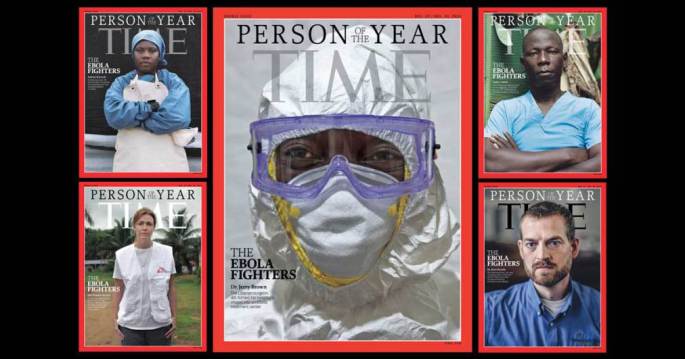
‘Time’ names ‘Ebola Fighters’ as Person of the Year

Normally a story like this would go in the Ebola roundup, but this story is big. Big big.

Every year, Time selects a “man, woman, couple or concept that the magazine’s editors feel had the most influence on the world during the previous 12 months.” With runners up like the Ferguson, MO protestors and Vladimir Putin, this issue features people on the front lines of the outbreak in West Africa including CDC Director Tom Frieden, ambulance supervisor Foday Gallah, the first American doctor to be evacuated for treatment in the U.S. Kent Brantly, and nurse Kaci Hickox.

USA Today—“‘Ebola is a war, and a warning,” Time editor Nancy Gibbs writes in announcing the magazine’s choice for most influential newsmaker of 2014. “The global health system is nowhere close to strong enough to keep us safe from infectious disease, and ‘us’ means everyone, not just those in faraway places where this is one threat among many that claim lives every day. The rest of the world can sleep at night because a group of men and women are willing to stand and fight.’”

ISIS Has the Materials to Build a Dirty Bomb, but It’s Nothing to Worry About

This week, experts said that IS have acquired the materials necessary to make a dirty bomb, but that the weapon is more effective as a means of causing fear than causing damage. According to a twitter account belonging to a British jihadist, the materials were acquired from Mosul University, after IS seized control of the city. However, Dina Esfandiary and Matthew Cottee, research associates at the Non-Proliferation and Disarmament Program at the International Institute for Strategic Studies point out that even if IS has the materials, they likely lack the knowhow to make the bomb.

Newsweek—“‘The materials they have are not radioactive enough to cause a great deal of damage or function as a working device,” says Esfandiary. “Where the weapon is effective is to cause fear.’”

New Antibiotic Resistance Report is the Stuff of Nightmares

A report published by researchers from RAND Europe and KPMG projects that growing antibiotic resistance could lead to 10 million people dying each year by 2050. The report covers not only the mortality statistics but the projected economic effects of growing drug resistance—$100 trillion USD worldwide and a reduction of 2%-3.5% GDP.

Forbes—“Currently, deaths due to antibiotic resistance are estimated at 700,000/yr, less than car accident fatalities (1.2 million), diabetes (1.5 million), [and] cancer (8.2 million). [This] “translates to 1,917 people killed every day, or 80 every hour. Ten million extra deaths per year would mean 23,397 deaths per day, or 1,141 deaths per hour.’”

This Week in Ebola

Despite nearly 7,000 deaths in this Ebola outbreak, stories are, annoyingly, becoming harder to find. As this happens, there is worry that as the disease becomes more invisible that complacency will set in. Even in Liberia, where there are still approximately a dozen new cases per day, officials worry that Liberians aren’t worried enough and Dr. Frieden urges the nation to remain alert. A new outbreak in Sierra Leone’s Kono District has resulted in a two week Ebola ‘lockdown’ and as exponential growth has slowed, it becomes even more important to have accurate data to ensure tracking of the disease.

Stateside, Ebola Czar Ron Klain will return to his private sector job on March 1. Meanwhile, a clinical trial of a potential Ebola vaccine was halted after patients complained of joint pains in their hands and feet, and the U.S. Department of Health and Human Services has offered liability protection to drug makers who are developing Ebola vaccines. Lastly, an ER doctor at Texan Health Presbyterian Hospital admitted to missing key symptoms when first treating Thomas Eric Duncan and not considering Duncan’s travel history.

Stories You May Have Missed


Image Credit: Time.com

New from the Biodefense Faculty

While the GMU Biodefense students have been finishing their semester work, the GMU Biodefense faculty have been busy too! Below is an update of the latest published work from members of the faculty.


Dr. Trevor Thrall, Director of the Graduate Program in Biodefense, wrote a piece on ISIS’ strategies for U.S. News and World Report.

President Barack Obama declared the latest beheading by the Islamic State group – this one of American aid worker and former Army Ranger Peter Kassig – an act of “pure evil.” But as ugly as the act was, it was also an action taken with a strategic end in mind. The question we should be asking is: To what end? Why has the Islamic State group pursued a strategy of beheading Westerners, and specifically Americans?

The entire article is available here.


Dr. Gregory Koblentz, Deputy Director of the Biodefense Graduate Program, has been writing on nuclear issues including Op-Eds for the LA Times–“How to Keep Future Cold Wars Cold: Mind the Missiles“–and The National Interest–“The Silver Lining of an Extension of the P5+1 Nuclear Talks with Iran

Since the end of the Cold War, three challenges to strategic stability have emerged. The first is the increasing complexity of deterrence relations among the nuclear weapon states. Whereas the first nuclear age was shaped by the bipolar global ideological and military competition between the United States and Soviet Union, the second nuclear age has been marked by the emergence of a multipolar nuclear order composed of states linked by varying levels of cooperation and conflict. Rising nuclear powers such as China, India and Pakistan are not party to the web of treaties, regimes and relationships that girded strategic stability between the United States and Soviet Union (and now Russia).

Dr. Koblent’z full articles are linked above.

Fighting Terrorists & Unintended Consequences

By Erik Goepner

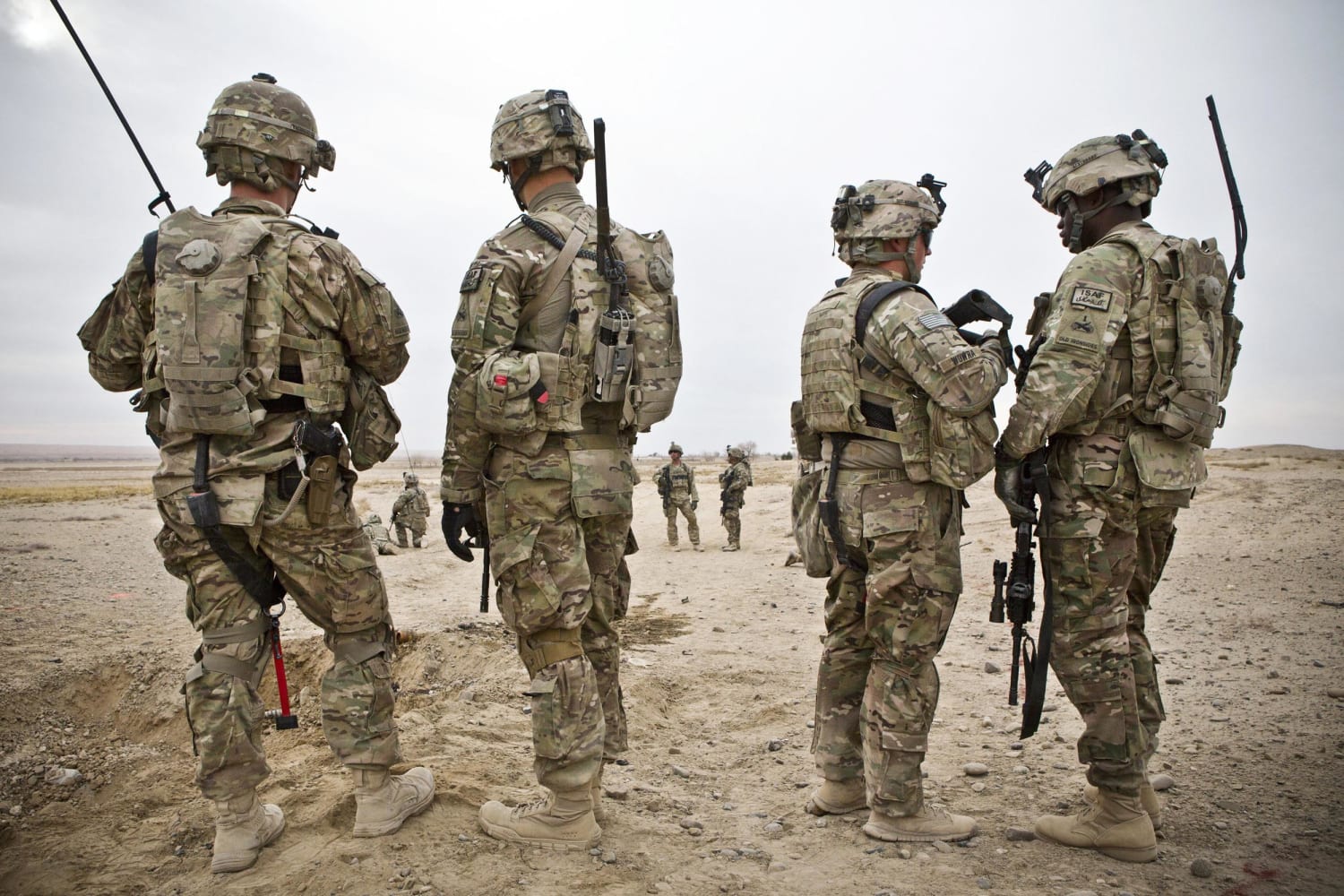
A retired Army general recently suggested that if U.S. military advisers can’t successfully train up nine Iraqi brigades within the next year, then either more U.S. forces must be deployed to Iraq or Americans will have to accept the Islamic State’s caliphate. The implicit assumption –that American effort is critical to stopping the Islamic State (or al Qaeda, or whatever similarly inspired group may follow) – is common. Yet, attempts to quantify the return on America’s investment of “effort” are rare. Typically, the debate seems influenced by either those who view any loss of life as unacceptable or those who say no 9/11 type of event has occurred since, so whatever the cost, keep it up. On the one side: We should never have invaded Iraq, on the other: If we had not left when we did, things there would be better.

A Rudimentary Assessment

One way to look at America’s effort is to tally the amount of money spent fighting terrorism and the number of military members who have been deployed to the fight. That effort could be compared to the number of terrorist events which have occurred. Recognizing efforts typically take time to have an impact, the money and manpower effort for this basic assessment lagged a year, so the impact of the 2001 effort was compared to the number of terrorist attacks in 2002. In 2001, the U.S. deployed approximately 17,500 military members to fight the global war on terror and the Department of Defense spent approximately $16.6 billion[1] to support those efforts. In the intervening 12 years, the number of service members deployed to fight the war on terror peaked above 200,000[2] before settling at nearly 67,000 in 2012. During the same time, spending peaked at $184.8 billion in 2008/9 before decreasing to $125.6 billion in 2012.[3]

Across those 11 years, America’s efforts to fight terror increased dramatically. Funding rose more than 600% and military personnel support rose by nearly 300%.[4] During that time, however, the number of terrorist attacks jumped 345%. Call it unintended consequences. Call it complex and nuanced. Either way, significant research is needed, as America’s efforts, albeit noble, do not appear to be delivering the desired results. Pouring forth money is one thing, but putting America’s sons and daughters in harm’s way is quite another. We need to ensure the efforts achieve the goal.


Image Credit: NBC News


[1] See “The Cost of Iraq, Afghanistan, and Other Global War on Terror Operations Since 9/11” by Amy Belasco (Congressional Research Service), March 29, 2011

[2] See chart on p. 25 in “Troop Levels in the Afghan and Iraq Wars, FY2001-FY2012: Cost and Other Potential Issues” by Amy Belasco (Congressional Research Service), July 2, 2009

[3] See p. 4, “U.S. Costs of Wars Through 2014” by Neta Crawford, 25 June 2014

[4] See Crawford and Belasco’s reports listed above.

Week In DC: Events

December 8, 2014 

A Strategic Approach to Malaria
Date: December 8, 8:45am
Location: Center for Strategic and International Studies, 1616 Rhode Island Ave NW, 2nd Floor Conference Room, Washington DC

On December 8, the CSIS Global Health Policy Center will host a major day-long conference on the future of global malaria efforts.  It will open with a high-level deliberation over the strategic long-term goal of elimination, highlighting the political, financial, and institutional requisites.  It will feature expert roundtables on drug and insecticide resistance, future technologies (vaccines, therapies, diagnostics), and financing. There will be a special focus on civilian-military cooperation in the Mekong Subregion.  On that day, CSIS will release five commissioned policy analyses.

RSVP here to attend in person or watch live online here.

Russia’s Global Self: Five Different Faces
Date: December 8, 10:00am
Location: Johns Hopkins School of Advanced International Studies, 1717 Massachusetts Ave NW, Room 500, Washington DC

Nina Belyaeva, professor and chair of the Public Policy Department at the Higher School of Economics in Moscow, will discuss that although the attention of the international community is preoccupied with the statements and behavior of the official power elites and their representatives, for the West to deal responsibly with Russia it is essential to monitor and understand five different social clusters in Russia, each with a distinct “face”: official power elites, business people, “patriots,” liberals, and the general public.

Register here.

Reflections on Ukraine’s Crisis
Date: December 8, 1:45pm
Location: Atlantic Council, 1030 15th Street NW, 12th Floor, West Tower, Washington DC

Please join the Atlantic Council’s Dinu Patriciu Eurasia Center for a public event featuring United States Ambassador to Ukraine Geoff Pyatt on Monday, December 8, 2014 from 1:45 to 2:45 p.m. at the Atlantic Council.

Ambassador Pyatt, the eighth US ambassador to Ukraine, arrived in Kyiv on August 3, 2013. Three months after his arrival, the Ukrainian capital witnessed eruption of massive civil protests against Yanukovych government’s decision not to enact the Association Agreement with the European Union.

A year and a half later, amidst Ukraine’s economic crisis, Russia’s violation of territorial integrity of Ukraine in the East and militarization of Crimea, the ambassador remains firm in supporting Ukrainian people’s pro-European and pro-democratic choice.

Ambassador Pyatt will share his insights into the ongoing crisis in Ukraine and will delineate future prospects for US-Ukraine relations going forward. This event is part of our Ukraine in Europe Initiative, in which we particularly focus on galvanizing the transatlantic community in order to help ensure Ukraine survives as an independent nation.

Register here to attend in person or watch live online here.

Book Release: Eurojihad by Angel Rabasa and Cheryl Benard
Date: December 8, 2:00pm
Location: Center for Strategic and International Studies, 1616 Rhode Island Ave NW, Concourse Level, Room C-115, Washington DC

Throughout history, factors of radicalization have involved social and economic conditions and issues of identity. Patterns of Islamist radicalization in Europe reflect the historical experience of European Muslim communities, particularly their links to their home countries, the prevalence of militant groups there, and the extent to which factors of radicalization in Muslim countries transfer to European Muslim diasporas.

Eurojihad (Cambridge University Press, 2014) examines the sources of radicalization in Muslim communities in Europe and the responses of European governments and societies. In an effort to understand the scope and dynamics of Islamist extremism and terrorism in Europe, this book takes into account recent developments, in particular the emergence of Syria as a major destination of European jihadists. Angel Rabasa and Cheryl Benard describe the history, methods, and evolution of jihadist networks in Europe with particular nuance, providing a useful primer for the layperson and a sophisticated analysis for the expert.

Register here.

Human Rights in North Korea and U.S. Policy
Date: December 8, 6:00pm
Location: Johns Hopkins School of Advanced International Studies, 1619 Massachusetts Ave NW, Rome Auditorium, Washington DC

Robert King, special envoy for North Korean Human Rights Issues at the US State Department; Greg Scarlatoiu, executive director at the Committee for Human Rights in North Korea (HRNK); and Daniel Aum, Donald Wilson Fellow at the RFK Center for Justice and Human Rights and author of the report, “Crimes Against Humanity in North Korea: The Case for US Leadership and Action,” will discuss the recent UN action on human rights abuses in North Korea and shed light on the United States’ policy options, potential challenges and appropriate response to recent developments.

Register here.

December 9, 2014

The Future of the Middle East: Regional Scenarios Beyond the Obama Years
Date: December 9, 12:30pm
Location: Hudson Institute, 1015 15th Street NW, 6th Floor, Washington DC

The Middle East is undergoing profound transformations. As borders shift, alliances form and dissolve, and Iran pursues its nuclear program, policymakers must look beyond the final two years of the Obama administration.

What happens if the U.S.-led coalition against the Islamic State fails, and IS continues to spread its tentacles across the Levant? How long will the Syrian civil war last? What if the Jordanian regime, a longtime U.S. and Israeli ally, is toppled? When will Israel again find itself at war against Hezbollah, Hamas, or directly with Iran?

On December 9th, Hudson Institute will host a panel featuring Shmuel Bar, Michael Doran, Hillel Fradkin, and Lee Smith to explore U.S. policy in the Middle East with respect to regional strategy for the next two, five, ten, and twenty-five years.

Register here.

Corruption: Security’s Invisible Enemy
Date: December 9, 4:00pm
Location: Carnegie Endowment for International Peace, 1779 Massachusetts Ave NW, Washington DC

Corruption undermines such longstanding U.S. foreign policy priorities as the promotion of economic growth and democratic accountability overseas. There is also a powerful nexus between severe, systemic corruption and international security challenges, including violent extremism, mass atrocities, and state failure.

Corruption is often misconstrued as an intractable problem, but there are multiple opportunities for curbing it. This event will provide a platform to discuss how the U.S. government is working together with civil society and the private sector—both within and outside affected countries—to creatively promote accountability and integrity.

Please join us on International Anti-Corruption Day for an address on these issues by U.S. Under Secretary of State Sarah Sewell. Carnegie’s Sarah Chayes will moderate the program, which will be followed by a light reception.

Register here.

At the Center of the Storm: Turkey between Europe & the Middle East
Date: December 9, 6:00pm
Location: German Marshall Fund, 1744 R Street NW, Washington DC

After eleven years under the leadership of Recep Tayyip Erdogan, Turkey finds itself at a major crossroads. With European Union membership negotiations ongoing and a bid for regional influence rejected by large swaths of the Middle East, Turkey is increasingly isolated. Its latest dispute with the United States over a proper response to the war in Syria has strained Turkey’s relations with NATO. In addition to regional concerns, the domestic situation in Turkey has also significantly deteriorated in the last year. What brought Turkish influence in Europe and the Middle East to its current low point? What is at stake for Turkey in the war in Syria and other parts of the Middle East? Where do we stand on potential Turkish membership in the European Union and what is the future of Turkish domestic politics? To help the Washington chapter of the Young Transatlantic Network decipher the answers to these and other questions about Turkey, GMF welcomes Ambassador Marc Grossman for a candid, off-the-record discussion.

December 10, 2014

How to Thwart the Government Insider Threat
Date: December 10, 8:00am
Location: Government Executive, 1300 Pennsylvania Ave NW, Rotunda, Washington DC

Today’s organizations and federal agencies have to protect their sensitive data from their own – it’s a simple fact of IT life these days. Thorough cybersecurity plans naturally protect an agency’s secret or sensitive information from outsiders, but it’s become all too obvious in recent years that federal cybersecurity efforts must also safeguard that vital data from trusted insiders.

Through malicious action or negligence, insiders with access to critical assets may wreak as much havoc as any outside adversary with as little as a few keystrokes. Modern cybersecurity plans need to include an insider threat protection strategy, but what does that actually look like for government? Our panelists will discuss how to assess and guard against insider threats and how to formulate a protection strategy that will keep your information where it is supposed to be.

Register here.

Ebola and Other Emerging Infectious Disease Threats: Prevention and Preparedness
Date: December 10, 8:30am
Location: Embassy of Italy, 3000 Whitehaven St NW, Washington DC

Infectious diseases such as Ebola travel rapidly across national borders. One out of four deaths annually worldwide are due to infectious illnesses and more than 40 new ones have emerged since 1972 alone. On December 10, 2014, the Embassy of Italy and New America will convene a conference on “Ebola and Other Emerging Infectious Disease Threats: Prevention and Preparedness.”

The conference will explore what is known about these infectious diseases, what must be done to prevent and contain their spread, and how science and technological innovations can play an innovative role in that regard. The goal of this event is to provide an insightful exchange of perspectives and knowledge about the status of current infectious disease outbreaks (Ebola, Marburg, Chikungunya), focusing on global public health preparedness to address these illnesses for humanitarian, economic, and national security purposes.

RSVP here.

Hearing: Countering ISIS: Are We Making Progress?
Date: December 10, 10:00am
Location: U.S. House Committee on Foreign Affairs, 2172 Rayburn House Office Building, Washington DC

Chairman Royce on the hearing: “It has been six months since the fall of Mosul, and ISIS continues to control roughly the same amount of territory in Iraq and Syria.  The countries in this region are being dangerously destabilized as millions of people have been displaced and thousands of others slaughtered by this terrorist army.  Meanwhile, ISIS has recruited thousands of foreign fighters and encourages sympathizers to carry-out attacks across the globe, including against civilians and military personnel here in the U.S. 

“This hearing will provide Committee members an opportunity to question the Obama Administration on the progress of the anti-ISIS effort, including the coalition air campaign, support of U.S. partners on the ground, policies toward hostile regimes, as well as the Administration’s plans to deal with a worsening humanitarian disaster across the region.”

Joint Subcommittee Hearing: After the Withdrawal: The Way Forward in Afghanistan and Pakistan (Part III)
Date: December 10, 2:00pm
Location: U.S. House Committee on Foreign Affairs, 2167 Rayburn House Office Building, Washington DC

Chairman Ros-Lehtinen on the hearing: “The next few months are pivotal for the future of Afghanistan’s stability. The United States cannot afford to make the same mistakes we did in Iraq by not leaving behind a sufficient U.S. presence to maintain the gains we’ve achieved over the past few years. As we’re seeing with the rise of ISIL in Iraq, our hasty withdrawal created a power vacuum that allowed the terror group to grow. The stakes are even higher in Afghanistan with the Taliban eager to reclaim lost territory and establish another safe haven for terrorists to thrive. Many challenges still remain, especially since Pakistan continues to host terrorist groups and remains complicit in their ability to operate. The Obama administration must have an honest conversation about its relationship with Pakistan and make the hard choices necessary to ensure Pakistan’s activities aren’t working against US interests.”

Chairman Chabot on the hearing: “Afghanistan has seen many changes this year—both promising and troubling.  While we now have a better sense of what the post-2014 U.S. presence will look like, many challenges remain, including political and economic instability, and an extensive Taliban threat. This is further exacerbated by its neighbor, Pakistan, which continues to play host to Islamist extremism and militancy groups who are given support inside Pakistan’s borders.  Pakistan’s role in combating these groups and stabilizing Afghanistan, however, is incredibly important, but due to its limited capacity, rampant corruption, and divergent interests, there is serious cause for concern. This hearing is a critical opportunity to evaluate ongoing challenges confronting the U.S.-Pakistan relationship, and how the Administration will address these concerns as we look toward a new post-2014 environment.”

Joint Subcommittee Hearing: Russian Arms Control Cheating and the Administration’s Responses
Date: December 10, 2:00pm
Location: U.S. House Committee on Foreign Affairs, 2172 Rayburn House Office Building, Washington DC

This hearing will be held jointly with the Subcommittee on Strategic Forces of the Armed Services Committee.

Chairman Poe on the hearing: “Russia’s clear violation of the INF Treaty and blatant disregard for international norms is the new status quo. Putin cannot be allowed to continue to violate landmark arms control treaties without severe consequences. I hope that we can move past the finger-wagging stage and finally show the Russians that their actions will have serious repercussions. I look forward to hearing what option this Administration has drawn up to punish Putin.”

Russia’s Break with the West: The Outlook for 2015
Date: December 10, 2:00pm
Location: Center on Global Interests, 1619 Massachusetts Ave NW, Rome Auditorium, Washington DC

In 2014, Putin led Russia in a direction that few would have predicted, most recently culminating in a call for the creation of a new international system and an end to the norms governing the world since the end of the Cold War. Looking ahead to 2015, our panel will explore the Russian leadership’s vision for a new global system, the future of the trans-Atlantic alliance, the relationship between Putin and Russian elites, and the role anti-Americanism plays in the Kremlin’s domestic strategy. Following the discussion the panel will take questions from the audience.

The U.S., Israel, and the Regional Dimensions of an Iran Nuclear Deal
Date: December 10, 3:00pm
Location: New America Foundation, 1899 L Street NW, Suite 400, Washington DC

Reaching an agreement on Iran’s nuclear program that ensures Iran will not obtain a nuclear weapon has been a top priority on President Obama’s foreign policy agenda. Despite deep and regular consultations with the Israeli government on this ongoing diplomatic effort, Israeli Prime Minister Netanyahu has consistently objected to any agreement that leaves any Iranian nuclear program in place.

Join New America as we bring together Shlomo Brom, Suzanne DiMaggio, Matthew Duss, and Ilan Goldenberg for a discussion on regional security dimensions of a nuclear deal, the extent of U.S.-Israel cooperation on the Iran issue, Israel’s concerns with the current negotiations, and whether and how those concerns can be fully addressed in any comprehensive deal between Iran and the U.S. and its partners.

RSVP here.

Forging a Transatlantic Strategy for Europe’s East
Date: December 10, 4:00pm
Location: Atlantic Council, 1030 15th Street NW, 12th Floor, West Tower, Washington DC

The vision of a Europe whole, free, and at peace achieved through a strategy of forging new partnerships with Russia, coupled with NATO and European Union (EU) enlargement, has guided the West through the post-Cold War era.  This strategy is no longer viable, underscored by Russian aggression in Ukraine.  As the leader of a NATO ally and EU member state on Europe’s eastern flank, Prime Minister Rõivas will share his assessment of the current situation in Europe’s East and the need for a renewed, sustainable, transatlantic strategy for the region.

Taavi Rõivas has served as the prime minister of the Republic of Estonia since March 2014. Prior to this, he was the minister of social affairs and served as a member of the Riigikogu, Estonia’s parliament.

Register here.

December 11, 2014

Can We Ultimately Defeat ISIL?
Date: December 11, 10:00am
Location: Woodrow Wilson International Center for Scholars, 1300 Pennsylvania Ave NW, 6th Floor, Washington DC

General John Allen, recently appointed Special Presidential Envoy for the Global Coalition to Counter ISIL, was selected by President Obama to coordinate the international effort against the Islamic State militant group. Allen, who had been serving as a security adviser to Secretary of State John Kerry, and was the former top U.S. commander in Afghanistan, is working with the nearly 60 nations around the world who have agreed to join the fight and respond to the ISIL threat.

Join us for General Allen’s first public discussion of the threat posed by the Islamic State.

RSVP here. 

The Threat of Global Health Emergencies to Food Security
Date: December 11, 3:00pm
Location: Aspen Institute, One Dupont Circle NW, Suite 700, Washington DC

Speakers:

  • Dr. Lynn Black, chair, board of directors, Last Mile Health and attending physician, Mass General Hospital
  • Christopher Kirchhoff, special assistant to the chairman of the Joint Chiefs of Staff
  • Rick Leach, CEO, World Food Program USA

Moderated by Dan Glickman, executive director, Aspen Congressional Program and former US Secretary of Agriculture

Register here.

Pandora Report 12.7.14

I hope all of you had a wonderful Thanksgiving! There were a lot of stories to consider for this extra long (extra late) week in review. We cover the AIDS pandemic, Avian Influenza, Polio in Pakistan, and, of course, Ebola. For those of you in school, I hope your papers and exams aren’t too overwhelming! For everyone else, have a wonderful week, hopefully paper and exam-free week!

AIDS Campaigners Say Pandemic Has Finally Reached Tipping Point

A report released by the ONE campaign to mark World AIDS Day on December 1 said that “the world has finally reached “the beginning of the end” of the AIDS pandemic that has infected and killed millions in the past 30 years.” What is the tipping point? The number of newly infected HIV patients is lower than the number of HIV positive patients who have access to retroviral medications that keep AIDS at bay. However, this doesn’t mean the fight is over.

Reuters—“‘We’ve passed the tipping point in the AIDS fight at the global level, but not all countries are there yet, and the gains made can easily stall or unravel,” said Erin Hohlfelder, ONE’s director of global health policy.”

FAO, OIE Warn of Avian Influenza’s Rapid Spread

The Food and Agriculture Organization of the United Nations and the World Organization for Animal Health have warned that the new avian flu strain detected in Europe is similar to those found in Asia and pose a significant threat to the poultry sector. Evidence of H5N8 has been found in Germany, the Netherlands, and the United Kingdom, as well as China, Japan, and South Korea. So far, it doesn’t appear this strain is infecting people, however, this week there were reported human cases and deaths from H5N1.

The Poultry Site—“The new virus strain provides a stark reminder to the world that avian influenza viruses continue to evolve and emerge with potential threats to public health, food security and nutrition, to the livelihoods of vulnerable poultry farmers, as well as to trade and national economies. Therefore extreme vigilance is strongly recommended while progressive control efforts must be sustained and financed.”

Pakistan Polio Outbreak ‘Will Probably be Fixed Next Year’ says WHO Official

So far this year there have been 262 cases of polio detected in Pakistan, which is the highest number of cases in 14 years. Pakistan is one of only three countries in the world, including Afghanistan and Nigeria, where the virus remains endemic. Despite these numbers, a WHO official in Pakistan says the disease will “most probably be fixed in the first half of 2015.” Military campaigns around the country have not only made vaccination more difficult but have faced tribal militants who banned all vaccinations.

The Guardian—“Persistent public awareness campaigns have not fully quashed popular fears that the drops given to children – a solution of highly weakened polio virus – are part of a western conspiracy to make Muslims infertile.

The Pakistani Taliban have attacked and killed health workers who conduct door-to-door campaigns, forcing the government to mount massive security operations during major vaccination drives.”

This Week in Ebola

We’ve got a lot of news from the last two weeks, so today, let’s start stateside.

The CDC says you can stop worrying because it is very unlikely that Ebola will become airborne, so you can stop cancelling your African safaris. Ebola anxiety has left the U.S. buying up all the PPEs leaving little for workers in West Africa, while the Director of the Harvard School of Public Health Emergency Preparedness has said that U.S. quarantine policy could discourage volunteers from going to help the outbreak. However, recently, no one has been caught in quarantines entering New York and New Jersey airports. 35 American hospitals have been designated as Ebola centers and already the U.S. government is looking past Ebola for the next health disaster. Meanwhile, the first human trial of an experimental vaccine for the virus has produced promising results.

Overseas, the German airline Lufthansa adapted an A340-300 to transport Ebola patients. In Liberia, the President has banned election rallies and mass gatherings under the reasoning that they risk worsening the spread of the virus and Ebola moves out of the cities, it is ‘pingponging’ into rural areas. In Sierra Leone there are approximately 80-100 new cases of Ebola daily, they are running out of beds, and in protest of non-payment, burial workers are dumping bodies in public in the city of Kenema. One piece of good news coming out of this outbreak that has affected more than 16,000 people is that female genital mutilation is on the decline. Also, a new 15-minute test for Ebola is being tested in Guinea, which, if it works, will help medical staff identify and isolate Ebola patients sooner.

The UN warns that the longer the disease is allowed to spread unchecked in West Africa, the more likely it is that Ebola will appear in new places in the world but EcoHealth journal notes that closer study of zoonotic diseases could help prevent Ebola and other diseases from affecting humans. Don’t worry though, according to North Korea Ebola isn’t a zoonotic disease, it is a bioweapon created by the U.S.

Stories You May Have Missed


Image Credit: Free Internet Pictures

Terrorist Attacks in a Democracy

By Erik Goepner

Terrorists executed nearly 690 attacks in India last year. For the second year in a row India ranked fourth in total number of terrorist attacks, behind only Iraq, Afghanistan and Pakistan. In fact, in each of the past six years, over 500 attacks per year have taken place in India.

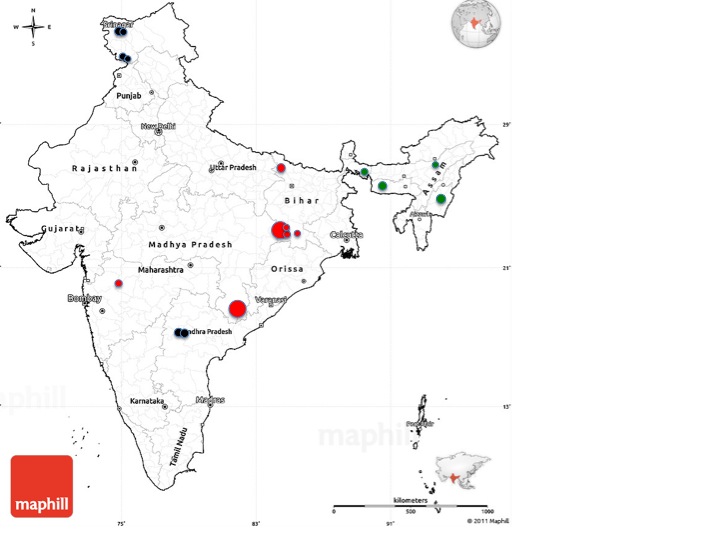
Beyond the high volume of attacks, lies another story—the interesting hodgepodge of terrorist groups within India’s borders. To the north—where the world’s highest altitude conflict continues over Kashmir—Islamic extremist groups such as Lashkar-e-Taiba operate. As noted in the graphic below, these  groups have launched successful attacks in more populous and central areas of India, as well. To the west, Socialist and/or Communist groups like the United A’chik Liberation Army conduct attacks with the goal of seceding from India. Located more in the interior of the country, Communist organizations commit their atrocities in an effort to overthrow the Indian government.

Last year, seventeen of these terrorist events killed six or more people. As the graphic below shows, the Communist terrorists caused the most high-fatality events and also committed the two most destructive attacks, killing 17 and 15 people respectively.

India Picindia index


Perhaps even more disturbing than the terrorism numbers, the Center for Systemic Peace ranks India as the nation with the highest “interstate, societal, and communal warfare magnitude score” in the world. The score reflects the “total summed magnitude” of major episodes of political violence within a country’s borders and consists of civil violence and war, ethnic violence, and international violence and war. Based on the research conducted by the Center, India has had the highest magnitude score since 2002 (see Major Episodes of Political Violence, 1946-2013 dataset and accompanying Codebook at http://www.systemicpeace.org/inscrdata. html).


Map Credit; Image Credit