This Week in DC: Events

August 25, 2014 

Turkey, Iraq, and the Kurdistan Regional Government
Date: August 25, 2:00pm
Location: Woodrow Wilson International Center for Scholars, 1300 Pennsylvania Ave NW, 6th Floor Conference Room, Washington DC

The advances of ISIS have reheated the debate on the future of Iraq. The country is threatened by a new wave of violence and destruction, as a large swath of territory has turned into a conflict zone and an uprising has shaken the political order. The relative stability of Northern Iraq appeared to be strengthened, as the Kurdistan Regional Government (KRG) initially managed to keep the conflict at bay in the territories it controls. However the recent advances of ISIS have also underscored the fragile security environment in the country to which the KRG is also subject. The developments also highlighted the delicate position of many ethnic and religious groups most notably Turkmen, Yazidis and Christians. Turkey has both opportunities and challenges in Iraq, and keeps a close eye on the situation there. In this discussion, experts will address the future of Iraq and the KRG in the context of the current crisis, and will shed light on Turkey’s perspectives on the KRG, energy issues, minorities, and Iraq in general.

This event is co-organized by the Center for Middle Eastern Strategic Studies (ORSAM).

RSVP here.

August 26, 2014

What About Jordan: Does Regional Crisis Threaten the Security of a Longstanding American Ally?
Date: August 26, 12:00pm
Location: Hudson Institute, 1015 15th Street NW, 6th Floor, Washington DC 20005

A U.S. ally for more than half a century, the Hashemite Kingdom of Jordan is one of the pillars of American Middle East policy. But this longtime bulwark of stability in an otherwise dangerous and volatile region is now being buffeted by powerful—and unwelcome—winds of change. Two of its bordering neighbors, Syria and Iraq, are engulfed in civil wars featuring both active Iranian involvement and well-resourced Sunni extremists like the Islamic State. Moreover, the role of Hamas in West Bank politics remains an unsettled question. Domestically, Jordan has been suffering a severe refugee crisis for more than a decade, to which the Syrian conflict alone has recently added another million-plus civilian exiles. Can Jordan continue to manage the various emergencies on its doorstep? What can the American government do to help one of its key Middle East partners?

On August 26th, Hudson Institute will host an expert panel—Senior Fellow and moderator Lee Smith joined by Faysal Itani, Salameh Nematt, and David Schenker—for a discussion about the present state and future prospects of Jordan and its central role in American Middle East policy.

Event will be streamed live online here.

August 27, 2014

The Islamic State of Iraq and Syria: Return of the Caliphate?
Date: August 27, 2:00pm
Location: Washington Times, 3600 New York Ave NE, Washington DC

In June, the Islamic State of Iraq and Syria (ISIS, also called ISIL) — a former al-Qaeda affiliate fighting against the Syrian government of Bashar al-Assad — declared itself simply the “Islamic State” (the IS).  Claiming to have reestablished the Caliphate (in Arabic: Khilafah) that existed from 632 AD until it was abolished in 1924 by Mustafa Kemal Ataturk, founder of the Turkish Republic, the IS controls large parts of Iraq including the city of Mosul and the predominantly Sunni areas abutting Syria, Saudi Arabia, and Jordan.  In addition, the IS has reportedly seized over $400 million looted from Mosul’s central bank, as well as gold bullion, in addition to potential oil revenues from fields in Syria and Iraq.  IS has applied a ruthless set of policies, seemingly designed both to demonstrate its ideological bona fides and to terrify its enemies: crucifixions and beheadings, forced conversion of Christians, and destruction of Islamic shrines.

To register, email William Selig.

August 28, 2014

Public Opinion and War
Date: August 28, 2:00pm
Location: Cato Institute, 1000 Massachusetts Ave NW, Hayek Auditorium, Washington DC

Featuring Adam Berinsky, Professor of Political Science, MIT; John Mueller, Professor of Political Science, Ohio State University, Senior Fellow, Cato Institute; Jason Reifler, Senior Lecturer in Politics, University of Exeter; and Trevor Thrall, Associate Professor of Public and International Affairs, George Mason University; moderated by Justin Logan, Director of Foreign Policy Studies, Cato Institute.

When and why does the American public support war? Washington politicians and pundits often puzzle over these questions as they try to win support for their policies, but there is a large body of academic research on public opinion and war. Do events, such as casualties or the prospect of victory, affect support more, or do partisan identities or other attachments play a larger role? What sorts of arguments should hawks and doves make if they hope to win support for their views? Please join four leading political scientists as they examine the causes of public support for war.

Register here or watch online.

Fatal Assistance
Date: August 28, 5:00pm
Location: Center for Global Development, 2055 L Street NW, 5th Floor, Washington DC 20036

CGD is pleased to announce a screening of Fatal Assistance, part of our film series, Global Development Matters.

Haitian born filmmaker Raoul Peck takes us on a 2-year journey inside the challenging, contradictory and colossal rebuilding efforts in post-earthquake Haiti. Through its provocative and radical point of view, Fatal Assistance offers a devastating indictment of the international community’s post-disaster idealism. The film dives headlong into the complexity of the reconstruction process and the practices and impact of worldwide humanitarian and development aid, revealing the disturbing extent of a general failure. We learn that a major portion of the money pledged to Haiti was never disbursed, nor made it into the actual reconstruction. Fatal Assistance leads us to one clear conclusion: current aid policies and practice in Haiti need to stop immediately.

Following the screening of the film, CGD Senior Fellows Vijaya Ramachandran and Michael Clemens will provide commentary, before opening the floor to questions from the audience.

Register here.

Pandora Report 8.22.14

Did you see that the destruction of Syria’s most lethal chemicals is now complete? Well, it is! Its good news among so many biodefense stories covering Ebola. I have no interest in making the Pandora Report the “All Ebola, All the Time” newsletter. As such, we will look at one Ebola story as well as stories covering new discoveries in tuberculosis and influenza.

Have a fabulous weekend, and students, enjoy your last one before classes start on Monday!

Tuberculosis is Newer Than Thought, Study Says

A recent study published in Nature reports that tuberculosis originated less than 6,000 years ago and was carried to the new world by seals. Seals! This new research contradicts original timeline and species genesis and some scientists think this study provides more questions than answers.

The New York Times—“In the new paper, the team proposes that humans acquired tuberculosis in Africa around 5,000 years ago. The disease spread to people across the Old World along trade routes. Meanwhile, Africans also spread the disease to animals such as cows and goats. Seals that hauled out onto African beaches to raise their pups became infected. The bacteria then spread through seal populations until reaching South America. Ancient hunters there became infected when they handled contaminated meat.”

Enzyme Holds the Door for Influenza

As the fall season and semester approach, the flu season travels with it. I was delighted to read that Walgreens, in addition to CVS, will now offer seasonal flu shots in their stores. More interesting news about flu came out of Vanderbilt University, too. Researches have investigated enzyme phospholipase D (PLD) and it ability to help the influenza virus escape immune response. Blocking PLD could assist in preventing the flu.

Bioscience Technology Online—“Normally the virus slips into its host cell in the epithelial lining of the lungs through internalized membrane compartments called endosomes. By delaying this process, the researchers propose, PLD2 inhibitors may give the cell’s innate immune response more time to destroy it.”

Patient Checked for Ebola Virus in Sacramento

Internationally, the good news is that quarantines have been set up in Liberia, in attempt to contain the spread of Ebola. The bad news is that they have become fairly violent. Stateside, this week Dr. Kent Brantly and Nancy Writebol were released from Emory University Hospital after recovering from Ebola infections acquired in West Africa.

There was news of a possible case in Northern California. With few details provided as to the patient and transmission route, we learned that there is a patient being tested for Ebola in Sacramento. California Department of Health reported that the cases is low risk but that testing is being done out of “abundance of caution.”

San Francisco Chronicle—“‘In order to protect our patients, staff and physicians, even though infection with the virus is unconfirmed, we are taking the actions recommended by the CDC as a precaution, just as we do for other patients with a suspected infectious disease,” said Dr. Stephen Parodi, an infectious disease specialist at Kaiser Permanente North California. “This includes isolation of the patient in a specially equipped negative pressure room and the use of personal protective equipment by trained staff, coordinated with infectious disease specialists.’”


Image Credit

Plants and Their Growing Role in the Pharmaceutical Industry

By Chris Healey

Pharmaceutical production using plants has been in the spotlight after Mapp Pharmaceutical revealed its experimental Ebola serum ZMapp—credited with saving the lives of two Americans—was created using antibodies harvested from genetically-modified tobacco plants.

ZMapp is part of a growing trend of pharmaceuticals created from proteins produced in plants, a practice considered safer, cheaper, and more practical than common production methods.

There has been outcry about claims ZMapp will not be sent to Africa to combat the ongoing Ebola epidemic. Those claims come after the pharmaceutical industry has been slow to adopt plant production methods, despite cost-effectiveness relative to traditional production methods.

Large pharmaceutical powerhouses, such as Pfizer and Merck, have adhered to traditional production methods despite newer and cheaper techniques. However, smaller companies, such as Mapp Pharmaceutical and IBio, have taken advantage of the low cost of plant production to produce their pharmaceutical ingredients.

Transgenic techniques allow scientists to hijack existing cellular processes in plants to produce desired proteins, such as enzymes and antibodies. DNA instructions for a desired protein (also called a gene) can be created in laboratory settings and inserted into a plant cell nucleus. After insertion, the gene instructs the cells how to make the desired proteins.

Once the proteins are produced, scientists can harvest them for use in pharmaceuticals. Transgenic techniques can be repeated and scaled to fit need. There are two methods commonly used to insert genes into plants.

One widely-used transgenic technique involves Agrobacterium tumefaciens bacteria as a gene transportation medium. Scientists introduce a gene into bacteria prior to plant inoculation. Bacteria then release desired DNA into plant cell nuclei and gene expression proceeds normally.

An alternative method, called biolistic transformation, involves the use of a gene gun to launch desired genes at clusters of plant cells. Some of the clusters will land inside cell nuclei, where the introduced DNA will integrate with the plant’s genome for expression.

Regardless of technique, using plants to create proteins eliminates the threat of human pathogen contamination which is possible with animal-derived mediums. Plants and animals do not share common pathogens, so a potential infection present at the time of harvesting will have no effect on protein recipients.


Image Credit: HPR2

Image of the Day: CDC Ebola Infographic!

Ebola Infographic CDCOne thing you may not know about me is that I absolutely LOVE CDC infographics!

After this weekend’s events in Liberia, when people were seen carrying out bloody and fluid filled mattresses and other bedding, let’s take a look at how Ebola is actually transferred.

Please post this through your social media connections so we can work on spreading the correct information about the virus.

This Week in DC: Events

 August 19, 2014

History Impeded Future Progress in Northeast Asia
Date: August 19, 2:00 – 5:30pm
Location: Heritage Foundation, Lehrman Auditorium, 214 Massachusetts Ave NE, Washington DC 20002

The United States and its allies face growing security threats in Asia from North Korea and China. Given these challenges, it is critical that trilateral U.S.-Japan-South Korea relations remain strong. Yet Tokyo-Seoul relations are strained due to a difficult legacy of historical problems. What are the challenges to reconciliation and what steps can Japan and South Korea take? What role should Washington play to redirect attention toward common allied objectives? Join us for an expert discussion on Japan-Korea relations, and what it means from a U.S. perspective.

RSVP here.

August 20, 2014

Preempting Environmental and Human Security Crises in Africa: Science-Based Planning for Climate Variability Threats
Date: August 20, 10:00am
Location: Woodrow Wilson International Center for Scholars, 6th Floor, 1300 Pennsylvania Ave NW, Washington DC

According to the Intergovernmental Panel on Climate Change, devastating impacts of climate variability are already being observed in Africa through increased wildfires, shrinking rivers, reduced crop yields, increased water and vector-borne diseases, and other forms. In coming decades, these climatic changes are predicted to impact human and state security via increased resource conflict, radicalization, economic crises, and humanitarian disasters. These threats all have global implications and require urgent rethinking of African and international security strategy. To this end, the Wilson Center’s Africa Program and Environmental Change and Security Program, in partnership with the Africa Center for Strategic Studies, will host a dialogue aiming to more effectively link science-based analysis of climate variability with security planning.

This dialogue will build on the findings of the Water, Energy and Security in Africa Conference at the Stellenbosch Institute for Advanced Study, which explored innovative and sustainable strategies for minimizing negative impacts of climate variability on human security across Africa, with specific focus on case studies from Lake Chad, Lake Victoria, and the Nile and Congo River basins. The dialogue will entail a moderated discussion with African water security experts and policymakers aiming to identify lessons learned from mitigation and adaptation interventions to date as well as strategies for future collaboration.

RSVP here.

The Ukraine Crisis and Russia’s Place in the International Order
Date: August 20, 2:00pm
Location: Carnegie Endowment for International Peace, 1779 Massachusetts Ave NW, Washington DC

For over two decades, the United States and Europe have been trying to integrate Russia into the international order. This post-Cold War strategy yielded some success, but has now come crashing down over following Russia’s aggressive turn and the ensuing crisis over Ukraine. The United States is seeking to isolate President Putin while Russia is trying to distance itself from what it sees as a Western-dominated order. President Obama says this is not the beginning of a new Cold War, but a new era seems all but inevitable, with potentially severe consequences for the global economy, counter-terrorism, the non-proliferation regime and climate change.

On August 20, 2014, the Foreign Policy program at Brookings will host a discussion on what Russia’s foreign policy turn means for the international order and for U.S. foreign policy. Thomas Wright, fellow with the Project on International Order and Strategy (IOS), will moderate a conversation with Brookings President Strobe Talbott, Senior Fellow Clifford Gaddy of Brookings’ Center on the United States and Europe (CUSE) and Susan Glasser, editor at Politico Magazine.

Following the discussion, the panelists will take questions from the audience. Register here.

Scientific Statecraft: What is it, who does it, and why it’s important
Date: August 20, 4:30pm
Location: Institute of World Politics, 1521 16th Street NW, Washington DC 20036

Prof. Billauer will give an overview of all the areas in which science can impact policy, and discuss the work of several scientists who left their mark on world policy.

Barbara Billauer, Research Professor of Scientific Statecraft at The Institute of World Politics, is also the founder of the Foundation for Law and Science Centers (FLASC Inc.), a non-profit educational organization dedicated to teaching judges and policy-makers the principles of the scientific method, where she designed a patent-pending method of teaching science to lay-decision makers. Formerly an active trial lawyer who handled complex medical malpractice, pharmaceutical, toxic tort, and environmental cases, she currently serves on a UNESCO Bioethics Expert Advisory Committee where she is working on a judicial education project.

Prof. Billauer is a graduate of Cornell University (Hons.) and holds a J.D. degree from Hofstra University, a Master’s Degree in Occupational Health and Safety from New York University, has done advanced work in Bioethics, and holds a certificate in Risk Management Sciences from John Hopkins University where she completed doctoral studies in public health. She has served on numerous Boards, has published extensively and lectured nationally on various science-policy issues including national security. She has also written the entry on Benjamin Franklin for the John Wiley Encyclopedia of Political Thought, forthcoming this October.

Register here.

Pandora Report 8.17.14

Another 12 hours at Dulles Airport on Friday and, fortunately, no new travel alerts. This week we look at TB detecting rats, an experimental Chikungunya vaccine, and the latest from West Africa.

Giant Rats Trained to Sniff Out Tuberculosis in Africa

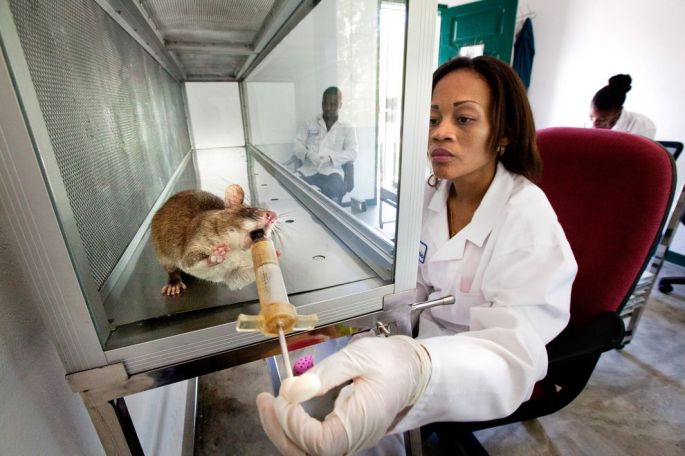
APOPO, the Belgian nonprofit organization known for using rats to sniff out land mines, has been training the African giant pouched rat to detect tuberculosis since 2008 in Tanzania and 2013 in Mozambique. The trained rats are used in medical centers in Dar es Salaam and Maputo to double check potential TB samples. The rats are unable to differentiate between standard and drug-resistant strains of the disease however, the cost of training and maintenance of the rats is significantly cheaper than the new GeneXpert rapid diagnostic tests.

National Geographic—“‘What the rats are trained to do is associate the smell of TB with a reward, so it’s what they call operative conditioning,’ [Emilio] Valverde [manager of the APOPO Mozambique TM Program] said.

It is the same principle applied to detecting land mines, only the rats are trained to recognize the scent of specific molecules that reflect the presence of the tuberculosis germ—not the explosive vapor associated with land mines.”

Experimental Chikungunya Vaccine Shows Promise

Chikungunya, of course, is one of the diseases included in the CDC’s travel alerts, and this week we learned of a promising vaccine for the disease that causes fever and intensely painful and severe arthritis. After the vaccine’s first human trials, the next step is to test in more people and more age groups, including populations where the virus is endemic. The trial leader said that it could be more than five years before a finished vaccine could be offered to the public.

CBS News—“‘This vaccine was safe and well-tolerated, and we believe that this vaccine makes a type of antibody that is effective against chikungunya,’ said trial leader Dr. Julie Ledgerwood, chief of the clinical trials program at the U.S. National Institute of Allergy and Infectious Diseases.”

WHO: Ebola Outbreak Vastly Underestimated

The news from West Africa seems to be getting worse and worse. Earlier in the week there was good news when a new quarantine center opened in Liberia. Then two days later, that same center was destroyed and looted. All of this comes, too, when the World Health Organization has said there is evidence that numbers of cases and deaths are far lower than the actual numbers and MSF has said that the outbreak will take at least six months to get under control.

Al Jazeera—“‘Staff at the outbreak sites see evidence that the numbers of reported cases and deaths vastly underestimate the magnitude of the outbreak,’ the organization said.

‘WHO is coordinating a massive scaling up of the international response, marshaling support from individual countries, disease control agencies, agencies within the United Nations system, and others.’”

Image Credit: James Pursey, APOPO

Mason Researchers Looking for Fresh Answers in a Medieval Disease

George Mason University’s National Center for Biodefense and Infectious Diseases has been researching the causative agent of plague–Yersinia pestis.


George Mason University professor Ramin M. Hakami is searching for new ways to treat modern ailments by studying bacterial and viral biodefense agents, including the medieval disease notoriously known as the Black Death.

Along the way, he’s also coaching the next generation of researchers. The two endeavors are equally critical, says Hakami, who knows firsthand how crucial mentoring can be to young researchers from when he himself was a student earning his doctorate in biochemistry in the laboratory of the Nobel Laureate Professor Har Gobind Khorana at the Massachusetts Institute of Technology (MIT).

Read the full article here.


Image credit: George Mason University

Ebola’s “Top-Secret” Serum: What Is It? Why Would It Be Kept Secret?

By Chris Healey

The deadliest and most pervasive Ebola outbreak in history is underway in Africa. As of August 8, the World Health Organization reported 1134 confirmed cases of Ebola in Guinea, Liberia, Nigeria, and Sierra Leone with 622 confirmed deaths.

Two Americans, Kent Brantly and Nancy Writebol, contracted Ebola while helping contain the epidemic in Africa. Both were flown to isolation units in Atlanta’s Emory University Hospital after receiving an experimental treatment called ZMapp. Brantly and Writebol’s condition is reportedly improving because of the drug.

ZMapp is the experimental brainchild of several pharmaceutical companies and their collaboration with the U.S. and Canadian governments. It is a combination of three antibodies determined to be the best components of two experimental Ebola treatments: MB-003 and ZMAb.

MB-003 is composed of a monoclonal antibody and an immune system stimulant. The monoclonal antibody binds to Ebola virus surface proteins to form a structure easily recognized as a threat by the host’s immune system. Mimicry allows the immune system stimulant to produce an inflammation-like response without causing tissue damage, serving to amplify immune response without damaging the host.

ZMAb, a combination of mouse-derived antibodies, inactivates Ebola virus surface proteins necessary for host cell entry. If Ebola virus cannot enter a host cell, it cannot cause illness. For higher efficacy, ZMAb antibodies target different parts of the surface proteins, making viral adaptation to the antibodies difficult.

ZMapp attracted much attention because it was used without being tested. Mapp Biopharmaceutical was preparing to enter Phase 1 clinical trials prior to the Ebola outbreak. Use of ZMapp in lieu of clinical trials is permitted by FDA regulations allowing drugs currently, or not at all, involved in clinical trials to be used in extenuating circumstances where no other pharmaceutical is appropriate.

ZMapp is not the first untested pharmaceutical to be used against Ebola in humans. In 2009, a researcher in Germany accidently exposed herself to Ebola virus when she pricked herself with an ebola-contaminated needle during a laboratory experiment. Within 48 hours, she was given an experimental Ebola vaccine never before used in humans. After 21 days, physicians prepared to discharge her from a Hamburg, Germany hospital because she had not developed any symptoms.

It is unclear if the vaccine prevented illness, or if the needle stick simply didn’t infect her with Ebola. Regardless, she produced Ebola virus antibodies after vaccine administration, indicating the vaccine produced an immune response.

When use of ZMapp was first reported, it was hailed in stories circulated by CNN as a “secret” and “top-secret” serum. However, current versions of the story now portray the serum as an “experimental drug.” It is unclear if the original reports of the serum’s secrecy were in error.

However, development of secret therapeutics is not farfetched. Classified treatments could conceivably serve national security interests.

State-sponsored bioweapon programs, for example, could use knowledge of existing therapeutics, such as those kept in the strategic national stockpile, to engineer biological agents resistant to available therapeutics. Such a tactic would cripple U.S. public health response to any weaponized agent. If ZMapp truly was classified, the U.S. may have been protecting the drug’s therapeutic mechanisms from those who would seek to overcome them.

Although withholding treatments would benefit the U.S., it raises ethical concerns. Some could argue treatment sequestration provides little benefit outside the U.S. A novel, effective treatment withheld in preparation for an attack –that may never occur– could be used in the present to treat the sick.

The merits of transparency must be weighed against interests of national security. For ZMapp, if it was classified, two American candidates for the drug were enough to bring it into the public domain.


Image Credit: International Business Times

Image of the Week: Influenza!

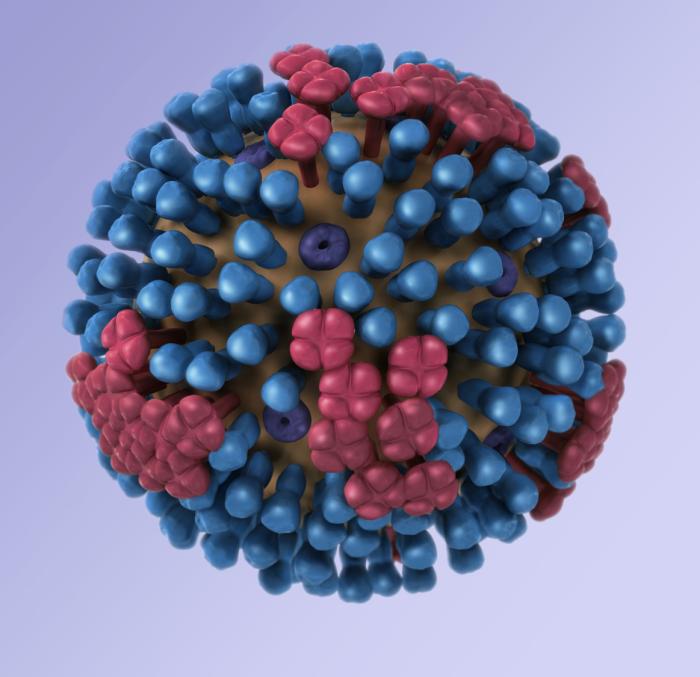
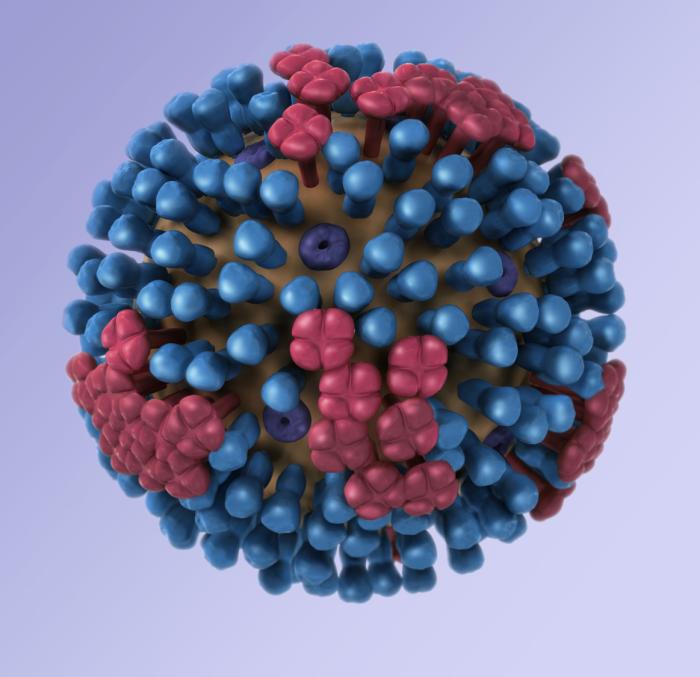
11825_loresThis illustration provides a 3D graphical representation of a generic influenza virion’s ultrastructure, and is not specific to a seasonal, avian or 2009 H1N1 virus. 

There are three types of influenza viruses: A, B and C. Human influenza A and B viruses cause seasonal epidemics of disease almost every winter in the United States. The emergence of a new and very different influenza virus to infect people can cause an influenza pandemic. Influenza type C infections cause a mild respiratory illness and are not thought to cause epidemics.

Influenza A viruses are divided into subtypes based on two proteins on the surface of the virus: the hemagglutinin (H), and the neuraminidase (N). There are 16 different hemagglutinin subtypes and 9 different neuraminidase subtypes. Influenza A viruses can be further broken down into different strains. Current subtypes of influenza A viruses found in people are influenza A (H1N1) and influenza A (H3N2) viruses. In the spring of 2009, a new influenza A (H1N1) virus emerged to cause illness in people. This virus was very different from regular human influenza A (H1N1) viruses and the new virus has caused an influenza pandemic.

Influenza B viruses are not divided into subtypes, however, influenza B viruses also can be further broken down into different strains.


Image and Caption Credit: CDC

Dual-use research as a wicked problem

Biodefense Professor Dr. Gregory Koblentz, of the George Mason School of Policy, Government and International Affairs, has published an article which appears in a special edition of Frontiers in Public Health. An excerpt of the article is available below with a link to the full article.

The challenge of dual-use research in the life sciences emerged vividly in 2011 as scientists and policy-makers debated what to do about article manuscripts that described how to modify the H5N1 avian influenza virus so that it could spread between mammals (1, 2). Since H5N1 emerged in Southeast Asia in 2003, it has sickened 667 people and caused 393 human deaths, as well as the deaths of millions of domestic and wild birds (3). The virus has not, however, demonstrated the ability to engage in sustained human-to-human transmission. If a new strain of H5N1 emerged with that capability, and it retained a high level of virulence, it could cause a global pandemic. The experiments by Yoshihiro Kawaoka from the University of Wisconsin-Madison and Ron Fouchier from Erasmus Medical Center in the Netherlands not only demonstrated that mammalian transmission of the virus was possible but also provided information on how to construct such a virus.

Read the entire article here.