Pandora Report 1.31.2025

This week’s Pandora Report includes discussion of the CIA’s updated stance on COVID-19 origins, how funding and hiring freezes are affecting the international development community, NIH’s purchasing abilities amid HHS’ communications freeze, RFK Jr.’s confirmation hearing, and more. This edition also includes an H5N1 update from the Pandora Report’s new Associate Editor, Meredith Fletcher.

CIA Announces It Favors COVID-19 Lab Leak Theory

Over the weekend, the CIA said in a statement that it now favors the idea that SARS-CoV-2 leaked from a laboratory in Wuhan. CIA joins FBI and DOE in drawing this conclusion. This analysis was ordered by the outgoing Biden administration. John Ratcliffe, Trump’s now confirmed nominee for CIA Director, promised in his first interview after confirmation that he “intends to immediately get to the bottom of what the Agency knows about COVID leaking from a Wuhan lab in China.” Ratcliffe has also ordered the assessment to be declassified and made public.

The assessment from CIA was made with low confidence, as was the earlier DOE assessment. A CIA spokesperson explained that “CIA assesses with low confidence that a research-related origin of the COVID-19 pandemic is more likely than a natural origin based on the available body of reporting.” This analysis does not draw on any new evidence or sources. Allegedly, the change was based on closer scrutiny of the conditions at high security labs in Wuhan.

While the Intelligence Community has not explicitly defined analytic confidence levels, “low confidence” generally suggests the assessment’s information is of questionable credibility or plausibility. In past assessments from the National Intelligence Council, low confidence has been defined as “generally means that the information’s credibility and/or plausibility is questionable, or that the information is too fragmented or poorly corroborated to make solid analytic inferences, or that we have significant concerns or problems with the sources.”

Sen. Paul Subpoenas 14 Agencies RE: COVID-19 Origins and GoF Research

Senator Rand Paul, chair of the Senate Homeland Security and Governmental Affairs Committee, issued subpoenas on January 13 to 14 federal agencies “from the outgoing Biden-Harris administration in connection with the origins of COVID-19 and taxpayer-funded gain-of-function research.” Agencies subpoenaed include the National Institutes of Health, Department of State, United States Agency for International Development, Department of Homeland Security, Department of Health and Human Services, Federal Bureau of Investigation, Department of Defense, Department of Justice, National Security Agency, Central Intelligence Agency, National Security Council, Department of Energy, Department of Agriculture, and Office of Science and Technology Policy. 

In a statement, Senator Paul said “In the wake of Anthony Fauci’s preemptive pardon, there are still questions to be answered. Who at NIH directed funds to the Wuhan Institute of Virology, and why was the proposal not scrutinized by the P3CO safety committee? For four years, I have requested records from the NIH and other agencies on all deliberations regarding the decision to skip oversight by the safety committee only to be stonewalled. Today, I’m announcing subpoenas were sent from the Committee to NIH and 13 other agencies regarding their involvement in risky gain-of-function research. The goal of the investigation will be to critique the process that allowed this dangerous research, that may have led to the pandemic, to occur in a foreign country under unsafe protocols and to ensure that there is sufficient oversight and review going forward, making sure a mistake of this magnitude never happens again.”

Trump Administration Updates

Stop Work Orders, Funding Freezes, and Chaos in the Federal Government Threaten Foreign Aid

An executive order signed by President Trump on his first day in office has thrown much of the federal government into chaos, especially those agencies involved with foreign aid. The order halts disbursements of foreign development aid for 90 days in order to allow the White House to assess whether these programs align with the President’s foreign policy. It was followed by an order from Secretary of State Marco Rubio for his department to cease not just development aid, but virtually all current foreign aid programs in general. The executive order explains in part, “The United States foreign aid industry and bureaucracy are not aligned with American interests and in many cases antithetical to American values.”

This echoes a growing anti-foreign aid sentiment much of the public holds, which has been fanned by President Trump in the last decade. For example, in 2019, Brookings explained that opinion polling consistently reports that many many Americans believe foreign aid accounts for around 25% of the US federal budget. Many of those, when asked, say they believe that number should be around 10%. In fact, foreign aid accounts for around 1% or less of the federal budget annually.

Make no mistake, that 1% does incredible things that make the US and the world safer and more stable. For example, the mission of the United States Agency for International Development (USAID) is “to partner to end extreme poverty and to promote resilient, democratic societies while advancing our security and prosperity.” USAID does this with its relatively small budget, not only by promoting American values abroad, but also by addressing conditions that spawn instability and violence and by strengthening economies globally. This agency strengthens the US by preventing the country from being drawn into conflicts by helping prevent them from developing, helps address threats to global health that can very easily threaten the homeland, and by creating more favorable global economic conditions.

Now, however, USAID and other agencies overseeing foreign aid have been thrown into chaos by the administration. In addition to mass confusion over the funding freeze and stop-work orders, hundreds of employees and contractors at USAID have been laid off or placed on administrative leave. Tens of thousands of people in the United States, many of whom are in the Washington, DC, area, rely on contract work with these agencies and are at risk of losing their jobs.

Part of this chaos includes a now waived pause on the President’s Emergency Plan for AIDS Relief (PEPFAR). PEPFAR was founded by President Bush in 2003 to help reduce the global burden of HIV/AIDS, and it currently has a $6.5 billion budget. It uses this budget to provide HIV/AIDS medications to more than 20.6 million people, not just keeping them alive, but helping prevent them from transmitting HIV to others. State Department estimates indicate the program has likely saved the lives of more than 25 million people in 54 countries since its inception.

The administration moved to stop program funding from reaching clinics, hospitals, and other organizations in low-income countries for 180 days. While the administration issued a waiver for this program on Tuesday, it came after appointments were already cancelled, people were turned away from clinics, and those undergoing HIV treatment had those treatments suddenly interrupted.

The stop-work order has also halted work to address current mpox and Marburg outbreaks. It has also had an impact on ongoing efforts to recover remaining CW stockpiles in Syria by degrading the capacity of the White Helmets to continue their work there. The list of affected programs drags on and on, including programs aimed at combatting the trafficking of fentanyl and narcotics, funding reporting on and combatting Russian and Chinese disinformation, and supporting those resisting oppressive regimes in places like Cuba, Nicaragua, Venezuela, and Burma. Support that is critical to ensuring the defense of Taiwan has also been paused.

This is not “putting America first.” It is handing the United States’ adversaries, especially China, the opportunity to take the influence the US holds in the international community for themselves. Furthermore, to be clear, the $70 billion that is being held up by the administration is part of an annual budget that received Congressional approval and is the product of bipartisan negotiations. While administrations can and should review where the United States is spending its money, this is a dangerous move. Pausing work even just for 90 days ensures that people will be fired, trust and expertise will be lost, and some of these programs will not be able to recover from this.

Foreign aid is not just “handouts” to people in other countries. In addition to saving and improving the lives of people who benefit from foreign aid, it helps keep the United States safer, stronger, and more secure. Whatever comes of this pause, significant damage has been done both to the agencies affected and the people around the world the United States has turned its back on.

Further Reading:

NIH Cleared to Resume Some Purchasing for Research

Scientists at the NIH were told this week they will be allowed to continue working with some current vendors to purchase necessary supplies for their studies after a communication pause issued last week stopped their purchasing. According to a new memo, there are still exceptions on purchasing when vendors issue public documents on behalf of the agency. According to CNN, “Researchers who have clinical trial participants staying at the NIH’s on-campus hospital, the Clinical Trial Center, said last week they weren’t able to order test tubes to draw blood as well as other key study components. One researcher who was affected said his study would run out of key supplies by this week. If that happened, the research results would be compromised, and he would have to recruit new patients, he said.”

Peter Lurie, the President and Executive Director of the Center for Science in the Public Interest, said of the pause “It’s difficult to tell if what’s going on is rank incompetence or a willful attempt to throw sand in the gears, but it really could be either, neither reflects well on them.”

Further Reading:

RFK Jr. Senate Confirmation Hearing

In the days before RFK Jr.’s Senate confirmation hearing, several news articles were published discussing the nominee’s actions over the years and in the run-up to his hearing. One article from The Washington Post explained how he skipped a required transition meeting during which intended members of Trump’s cabinet hashed out their roles in the event of different crises, including a hypothetical avian influenza outbreak in humans. Kennedy, whose role in such a scenario would be pivotal, was two miles away, trying to sway skeptical senators to support his bid to lead HHS.

Furthermore, RFK Jr., who insists he is not anti-vaccine, but demands to see the “data” or “science” showing that vaccines are safe, dismissed such information when it was presented to him by a Republican senator. The senator, Sen. Bill Cassidy of Louisiana, reportedly told RFK Jr. that the science is clear that childhood vaccines are safe and not linked to autism. In response, Kennedy said he would recommend such vaccines if shown the data and that “not only will I do that but I will apologize for any statements that misled people otherwise.” When Cassidy pulled out and read aloud such information, Kennedy dismissed him.

Ahead of the hearing’s start, Caroline Kenney, cousin of RFK Jr. and former US Ambassador to Australia, issued a scathing letter urging lawmakers to vote against her cousin’s confirmation. In it, she discusses her cousin’s drug addiction, how he led family members “down the path of drug addiction,” and recent disclosures indicating how “his crusade against vaccination has benefited him in other ways.”

Her letter includes statements like “It’s no surprise that he keeps birds of prey as pets because he himself is a predator,” “Today, while he may encourage a younger generation to attend AA meetings, Bobby is addicted to attention and power. Bobby preys on the desperation of parents of sick children – vaccinating his own children while building a following by hypocritically discouraging other parents from vaccinating theirs,” and, of all those in the health care system, “They deserve a stable, moral, and ethical person at the helm of this crucial agency. They deserve better than Bobby Kennedy- and so do the rest of us. I urge the Senate to reject his nomination.”

Kerry Kennedy Meltzer, RFK Jr.’s niece and a physician, shared with STAT News a collection of private emails between her and her uncle. They show RFK Jr. making several false claims about COVID-19 vaccines at the height of the pandemic, citing articles by vaccine skeptics, tying childhood vaccinations to autism, and raising doubts about influenza vaccines.

In one email, RFK Jr. responds to his niece, who described to him some of what she had seen working in an ICU during the pandemic, “Kerry. I don’t dismiss your experience but it differs with data we are seeing from Israel, UK and other nations with much more reliable data systems. You might want to ask your hospital to publish this data so that people can take it seriously. That problem is that CDC has been using corrupt metrics to assess who is vaccinated. CDC counts all people as ‘unvaccinated’ until two weeks after their second shot. We have seen dramatically increased cases and mortalities in the two weeks following the first shot and CDC counts these as unvaccinated.”’

Now that the hearing has started, Kennedy has not fared better. In his first day of questioning, Kennedy seemed confused about the difference between Medicare and Medicaid, though he also said he would like to integrate the two programs. When pressed on this, he relented that he did not know how he would do so. He also struggled with questions on his changing stance on reproductive care access.

Senator Michael Bennet of Colorado brought up Kennedy’s assertion that “COVID-19 is targeted to attack Caucasian and Black people. The people who are most immune are Ashkenazi Jews and Chinese.” Bennet also brought up his claim that that Lyme disease “is highly likely to have been a military weapon,” which he said on his podcast in January of last year. RFK Jr. responded “I probably did say that,” in reference to Lyme disease, though he claimed he had not made such statements about COVID-19. Later, he claimed he “never believed” that Lyme disease was created as a biological weapon. He also cited three books suggesting this theory, though he admitted he has not read them thoroughly.

Kennedy struggled to answer for other, even wilder claims, including that Wi-Fi and 5G cause cancer and that AIDS is a different disease in Africa than it is in the US. When questioned on these, RFK Jr. said he stands behind his claims about Wi-Fi and his description of AIDS. Kennedy was also confronted by Senator Tim Kaine of Virginia about a social media post he made during his presidential campaign, in which he said “My take on 9/11: It’s hard to tell what is a conspiracy theory and what isn’t. But conspiracy theories flourish when the government routinely lies to the public. As President I won’t take sides on 9/11 or any of the other debates. But I can promise is that I will open the files and usher in a new era of transparency.”

Senator Kaine asked Kennedy, “As a general matter, do you find it hard to tell what is a conspiracy theory and what isn’t? Is that kind of a general deficit that you find in your own analytical abilities?” In response, Kennedy said that his father taught him that “people in authority lie.”

The second day was not better for Kennedy. Not only has he refused to back off on his anti-vaccine statements, but he continued to spar with Senator Cassidy, refusing to answer the senator’s question on whether or not he would “reassure mothers, unequivocally and without qualification, that the measles and hepatitis B vaccines do not cause autism.”

Kennedy also struggled to answer questions from Maryland Senator Angela Alsobrooks, who asked RFK Jr. about his past statement that “We should not be giving black people the same vaccine schedule that’s given to whites because their immune system is better than ours.” When asked by the senator, a Black woman, what different vaccine schedule he believed she should have received, he answered, “A series of studies, I think most of them by Poland, show that to particular antigens, that Blacks have a much stronger reaction. There’s differences in reaction to different products by different races—”

He was cut off by Senator Alsobrooks, who used her remaining time to admonish Kennedy for what she calls a dangerous stance. It is unclear what studies Kennedy is referring to from Poland, though some research from the Mayo Clinic has studied differences in immune responses to vaccines by people of different races. This Mayo Clinic study has been cited by some media outlets discussing Kennedy’s statement. However, while this data did show that a non-Somali, African American cohort had higher antibody responses to rubella from the MMR vaccine in comparison to white people, it is unclear how Kennedy could draw such a conclusion from that study. As one of the authors on the study explained to NPR, suggesting this indicates Black people should have different vaccine schedules is “twisting the data far beyond what they actually demonstrate.”

Kennedy also faced questions about his past comments expressing skepticism about germ theory, comparing the CDC to “Nazi death camps,” and his refusal to answer a question from Senator Bernie Sanders about whether or not healthcare is a human right. This hearing has further demonstrated not just Kennedy’s lack of qualifications and experience, but also his apparent detachment from reality and inability to answer key questions concerning the role he seeks to take on.

Further Reading on Other Relevant Trump Nominees:

CDC Ordered to Stop Working with WHO, Removes Data Sets from Website

Staff at the CDC were ordered to cease engagements with the WHO immediately on Monday, despite an expected extended withdrawal. In an email to staff, the deputy director for global health wrote, “effective immediately all CDC staff engaging with WHO through technical working groups, coordinating centers, advisory boards, cooperative agreements or other means — in person or virtual — must cease their activity and await further guidance.”

The memo continued with “Please ensure your impacted staff receive this message. CDC detailees to WHO have been instructed to pause engaging in any work on behalf of WHO as part of their respective details, and to no longer go to WHO offices until further notice.”

The WHO currently has 71 collaborating centers based in the US, including 18 at CDC alone. One federal health official who spoke to The Washington Post indicated that one of the biggest effects CDC will feel from this will be in its global immunization division. This division typically has 20-30 staff assigned to WHO regional offices in several countries.

Reports are also emerging of CDC datasets now being unavailable on the agency’s website. This includes the Youth Risk Behavior Surveillance System, which now returns a page error when accessed. STAT News explains in their reporting from today that this appears to be the result of agency efforts to remove “gender ideology” from their websites ahead of a deadline today.

In anticipation of the Trump administration, many organizations have issued warnings about the possibility of datasets becoming unavailable. This includes the Arizona Public Health Association, which said in a statement just two days ago, “If your work depends on federal public health data, now is the time to act. In the two weeks since President Trump took office, multiple federal websites have already removed key reports, datasets, and surveillance tools that public health practitioners and nonprofit organizations rely on. More and more data are being deleted from servers in several agencies daily – even hourly…If you use these resources, don’t assume they’ll still be there next week or that some archive website will have captured and preserved them — download and save them now before it’s too late.”

Further Reading:

Trump Ends Fauci’s Security Detail

President Trump has ended the federal security detail assigned to Anthony Fauci, the former NIAID head who advised the president during the United States’ COVID-19 pandemic response. This makes Fauci another former aid to the president who has had their federal protection ended despite ongoing threats to their lives. Others who have recently had their protection ended by this administration include Mike Pompeo, John Bolton, and Mark Milley. Trump told reporters in North Carolina last week that he would not feel any responsibility if Fauci were harmed. Fauci has reportedly hired private security.

Small Farms and H5N1

By Meredith Fletcher, Pandora Report Associate Editor

H5N1 or “bird flu” cases are on the rise in the United States, with over 147 million birds being reported infected. Apoorva Mandavilli from the New York Times stated that the response to this outbreak echoes the mistakes of the COVID-19 pandemic, and notes that officials need to start taking the bird flu seriously. In the case of Chris, who has a small flock of chickens in Colorado, many flock owners share his concerns of the implications of their family chickens. The USDA sponsors an initiative under the name “Defend the Flock” where they recommend monitoring for signs of the disease in personal chickens, limiting visitors, locking and covering feed and water, and avoiding wild birds. Symptoms include, lack of energy, swelling of eyes, twisting of the head/neck, stumbling and diarrhea. If these symptoms are spotted, call the USDA for lab testing and remove the bird from your flock.

There have currently been 67 reported human cases and one death. Despite these cases, the CDC currently reports the public health risk as low, but states they are monitoring the outbreak.

Ebola Outbreak Reported in DRC, Case Confirmed in Uganda

The DRC has reported 12 suspected cases of Ebola virus disease in Equateur province, which last suffered an Ebola outbreak in 2022. Furthermore, the WHO recently confirmed that 12 cases, eight of which were fatal, were recorded in the Boyenge health area. These deaths occurred between January 10 and 22. WHO officials said samples have been sent to the National Institute of Biomedical Research in Kinshasa.

Ugandan health officials confirmed yesterday a case of Ebola in the country’s capital city of Kampala. The patient was a nurse who sought care at multiple facilities before it was determined he had Ebola. This marks the country’s seventh Ebola outbreak. The nurse died on Wednesday at the Mulago National Referral Hospital in Kampala, the facility he worked in. Nobody else in the facility has shown signs of Ebola yet, according to the Ugandan health ministry.
“How a WHO Staff Member Turned the US Withdrawal into an Act of Solidarity”

This post by Sandra Sorial, Director of Campaigns and Supporter Engagement, WHO Foundation, explains how Tania Cernuschi, a WHO employee, launched a fundraising campaign for WHO in response to the United States’ withdrawal from the organization. Sorial writes in part, “Wow. As someone whose job it is to raise funding for the World Health Organization, the announcement this week that the US would withdraw its membership and funding was a major blow. Yet, out of really difficult circumstances can come solidarity and opportunity. My personal belief has always been that in a time of crisis, we see the best in humanity and the best in us.”

“Yesterday, a WHO staff member approached me saying that she would like to start her own appeal to attract support and funding. I was excited and at the same time, cautious of such an ambitious target. Then I thought to myself, the best ideas come from the people who want to make things happen because they care. Tania Cernuschi, who has worked at WHO for ten years wants to raise US $1 billion by 1 billion people giving a dollar. Just one. More is always welcome!”

“2025 Doomsday Clock Statement”

This statement from The Bulletin of the Atomic Scientists provides background and justification for moving the Doomsday Clock to 89 seconds this year. It explains in part, “In 2024, humanity edged ever closer to catastrophe. Trends that have deeply concerned the Science and Security Board continued, and despite unmistakable signs of danger, national leaders and their societies have failed to do what is needed to change course. Consequently, we now move the Doomsday Clock from 90 seconds to 89 seconds to midnight—the closest it has ever been to catastrophe. Our fervent hope is that leaders will recognize the world’s existential predicament and take bold action to reduce the threats posed by nuclear weapons, climate change, and the potential misuse of biological science and a variety of emerging technologies.”

“Trust, but Verify: A ‘Just Culture’ Model for for Oversight of Potentially High-Risk Life Sciences Research”

In this article in Applied Biosafety, authors from the Biosecurity and Pandemic Policy Center at Texas A&M University and colleagues propose a new approach to overseeing potentially high-risk pathogen research: “A ‘just culture’ balances accountability for misconduct with transparency, collaboration, and proactive engagement to address the root causes of accidents and compliance issues. Fostering a just culture in the oversight of potentially high-risk life sciences research would allow the U.S. government to improve biosafety and biosecurity while promoting beneficial research.” Drawing on examples from the aviation industry and Canadian biosafety regulations, the article goes on to argue for embedding five elements of a “just culture” approach in U.S. government policy.

“The Quest for Universal Flu Vaccines”

Ryan Duncombe and Jasmin Kaur go through the history of influenza vaccine development and its future in this Long Read piece from Asimov Press: “Modern flu vaccines have an average efficacy of just 40 percent, and they must be revamped each year. How can we make vaccines that are “universal” — both broadly-protective and highly potent?”

“Patient Zero: How One Doctor Helped Uncover the Origin of the DRC’s Mpox Outbreak”

Sarah Newey discusses how Leandre Murhula Masirika was able to track down the origin of the DRC’s mpox outbreak using a WhatsApp message sent to him by another physician. The resulting epidemiological investigation demonstrated to Murhula Masirika that something abnormal was unfolding. Newey explains, “This raised alarm bells, as it didn’t fit with descriptions of clade 1. This strain of mpox has been endemic in the DRC since it was first discovered in a child in 1970. Generally, small transmission chains were sparked after the virus jumped from animals to people, but in recent years the pathogen had exploded in the western and central provinces…Yet clade 1 hits children hardest, with lesions mostly on their feet, hands and faces. That’s not what Dr Murhula Masirika and his colleagues were seeing in Kamituga.”

“Statement in Support of The Elders’ Policy Position Paper on Pandemic Prevention, Preparedness and Response”

This statement from The RH Helen Clark and HE Ellen Johnson Sirleaf, the Co-Chairs of The Independent Panel for Pandemic Preparedness and Response expresses support for The Elders’ new Policy Position Paper on Pandemic Prevention, Preparedness and Response. They write in part, “We are proud to be members of The Elders, who collectively have tackled, analysed and fostered diplomacy to strengthen pandemic preparedness and response for more than two decades. We fully support The Elders’ call for urgent focus on the need for leadership and collaboration to stop the next pandemic threat becoming a pandemic.”

“Roots of Resilience: Building Peace in an Era of Food and Climate Shocks”

Siena Cicarelli, Luca Cinciripini, Lukas Eichelter, Philip Novakovic-Wilke, and Lena von Zabern recently published this report with CRS: “In the context of the 2025 Munich Security Conference (MSC), it is critical that leaders, understandably consumed with state-centric geopolitical disruptions, pay close attention to transnational and systemic risks—one of the most significant of which is the food-climate-conflict nexus. This backgrounder unpacks the nexus and its associated risks while presenting near-term solutions, that range from the promotion of sustainable agri-food systems to empowering climate champions in defense institutions.”

“The Continuing Tragedy of Ghouta’s Chemical Attacks”

Nicole Di Ilio discusses how the 2013 CW attacks in Ghouta still affects the survivors, writing in part “Over a decade later, the terror of that night — ambulance sirens wailing, people screaming in agony and anguish, and the sound of babies crying in the still air — is still fresh in the city’s collective memory. “I can’t forget the gasps of the people rasping with distressed breaths, the foam coming out of their mouths, the terrified look in their eyes,” Khalife told me, sitting on a pile of rubble that had once been his neighbors’ house, where one destroyed building is still sliced in half from top to bottom, its empty walls and a small visible kitchen giving the space a strange verticality. “That night, even the narrow streets were packed with bodies. It was impossible not to step over the dead. It felt like the start of the apocalypse.”’

“Syria’s Chemical Weapons After Assad: A CAS Conversation”

This article includes an interview with American University Professor of Chemistry Stefano Costanzi regarding the history of CW in Syria, and what comes now after the fall of the Assad regime.

“International AI Safety Report”

This document from the UK Government is “A report on the state of advanced AI capabilities and risks – written by 100 AI experts including representatives nominated by 33 countries and intergovernmental organisations.” It includes a section on biological and chemical attacks in its portion focused on risks from malicious use of AI.

NEW: Biopower: Securing American Leadership in Biotechnology

“Biopower—a nation’s capacity to harness emerging biotechnologies to enhance national and economic security—is a growing if underappreciated force in geopolitics. Accelerating breakthroughs in biotechnologies could unlock potentially transformative applications in defense, energy, health, and manufacturing, bestowing considerable security and economic benefits.”

“Join the Center for a New American Security (CNAS) on Thursday, February 6, at 12 p.m. ET for a virtual event to highlight the stakes, challenges, and opportunities for securing U.S. biotechnology leadership as we transition to new leadership in the White House and Congress.”

“The event will feature keynote remarks from Senator Todd Young (R-IN), chair of the National Security Commission on Emerging Biotechnology, followed by an expert panel with Doug Friedman, CEO of BioMADE, Jessica Dymond, vice president of technology at In-Q-Tel, and Vivek Chilukuri, senior fellow and director of the Technology and National Security Program at CNAS. The conversation will be moderated by Alison Snyder, managing editor at Axios.”

Register here.

NEW: Gaming Weapons of Mass Destruction Course – From Policy to Practice

From MORS: “Gaming Weapons of Mass Destruction (WMD – defined as Nuclear, Chemical, and Biological agents) will be a three-day course focused on developing and executing games related to WMD in all its forms. While the basics of WMD capabilities and game design will be discussed, this will be a course focused on the intersection of WMD and gaming. It will not be either a WMD or gaming course; for those topics see other offerings.”

“No prior experience is required for this course, though a basic familiarity with various agents and their effects would be helpful, as would a basic understanding of professional gaming and how it is used.  The instructors will adapt in real time to class requirements (e.g., if the class is interested in animal and plant targets, the instructors have extensive experience in designing games on those subjects as well).”

This course will take place March 18-20 on Zoom. Learn more and register here.

Schar School Open House

The Schar School of Policy and Government will be hosting an in-person Arlington Graduate Open House along with the Costello College of Business, Antonin Scalia Law School, and the Carter School for Peace and Conflict Resolution. Explore the different degree programs we offer at the master’s, doctoral, and professional levels, as well as our graduate-level certificates. Representatives will be in attendance to discuss our various graduate programs and how you can further your studies while continuing to work. Gregory Koblentz, Director of the Biodefense Graduate Program, will also be in attendance.

This event will take place on February 4 between 5:30 and 7 pm EST. Register here.

Biodefense MS Information Session

“Prospective students are invited to attend a information session to hear more about the Biodefense M.S. program offered at the Schar School. The online session will provide an overview of the program, as well as the application process, student experience and graduate outcomes. This session admissions will be led by the Graduate Admissions team.”

This sessions will take place at 12 pm EST on February 13. Learn more and register here.

Cyberbiosecurity Summit

From Johns Hopkins APL and Bio-ISAC: “Advancements in biomanufacturing and biotechnology drive the science we need to thrive, everything from apples to vaccines. The Cyberbiosecurity Summit 2025 convenes leading experts in biotechnology, biosecurity, and cybersecurity to explore the intersection of these fields and discuss the strategies to create a safe, secure future for us all.”
This event will take place February 25-26 in Laurel, MD. Register here and review the call for sessions here (closes 12/12).

Sustainable Manufacturing: Building and Preserving a Resilient Medical Industrial Base

“Join industry and government partners for our second annual industry summit! During this event, leaders from IBMSC will share our strategic vision and organizational priorities. Speakers will also share potential opportunities for building and preserving the medical industrial base.  This event will be in-person only and space is limited!”

This event will take place March 11-12 in Washington, DC. Learn more and register here.

Enhancing UK Biosecurity: DASA Launches Microbial Forensics Competition

“On behalf of the Defence Science and Technology Laboratory(Dstl), the Defence and Security Accelerator (DASA) is pleased to launch a new Themed Competition called Future-proofing Biosecurity by Strengthening the UK’s Microbial Forensic Capability. The competition is being run in response to the 2023 UK Biological Security Strategy which aims to implement a UK-wide approach to biosecurity that will strengthen deterrence and resilience to a spectrum of biological threats.”

“Dstl is leading the creation of the United Kingdom Microbial Forensics Consortium (UKMFC) which is being developed in support of the Detect Pillar of the Biological Security Strategy. It will comprise a network of biosurveillance laboratories from all four nations of the UK, operating under a One Health doctrine. This competition seeks novel technology options or technical approaches that can directly support the UKMFC initiative.”

Learn more and submit proposals here.
Pandora Report 1.24.2025

This edition of the Pandora Report focuses on public and global health developments from the first week of the second Trump administration. This includes the executive order to withdraw the US from the WHO, the pause on communications from the Department of Health and Human Services, and more.

HHS Formally Debars Peter Daszak and EcoHealth Alliance

Last week, following eight months of investigation, the Department of Health and Human Services (HHS) severed all funding and formally debarred EcoHealth Alliance Inc. and its former president, Dr. Peter Daszak, for a period of five years. House Committee on Oversight and Government Reform Chairman James Comer said in a statement about the formal announcement that, “Justice for the American people was served today. Bad actor EcoHealth Alliance and its corrupt former President, Dr. Peter Daszak, were formally debarred by HHS for using taxpayer funds to facilitate dangerous gain-of-function research in China. Today’s decision is not only a victory for the U.S. taxpayer, but also for American national security and the safety of citizens worldwide.”

He continued, “In May 2024, Select Subcommittee on the Coronavirus Pandemic Chairman Brad Wenstrup released evidence that EcoHealth repeatedly violated the terms of its NIH grant. EcoHealth routinely ignored government oversight requests, failed to report dangerous gain-of-function experiments conducted at the Wuhan Institute of Virology, and produced a required research report two years late. HHS cited all of these discoveries as key reasons for formally debarring EcoHealth and Dr. Daszak. Given that a lab-related incident involving gain-of-function research is the most likely origin of COVID-19, EcoHealth and its former President should never again receive a single cent from the U.S. taxpayer.”

RFK Jr. Petitioned FDA to Revoke COVID-19 Vaccine EUAs

The New York Times reported last week that Robert F. Kennedy Jr., President Trump’s pick to lead HHS, filed a petition with the FDA in May 2021 that demanded the agency rescind emergency use authorizations for COVID-19 vaccines and refrain from approving any such vaccines in the future. In the petition, Kennedy and Meryl Nass (a physician on the Children’s Health Defense Scientific Advisory Board, an organization founded by Kennedy), claimed, in reference to COVID-19 vaccines in 2021, that “…the current risks of serious adverse events or deaths outweigh the benefits, and because existing, approved drugs provide highly effective prophylaxis and treatment against COVID, mooting the EUAs.”

These “effective prophylaxis and treatment” drugs include ivermectin and hydroxychloroquine, both of which had already been proven ineffective against COVID-19. Furthermore, at the time the petition was filed, some estimates were already showing that the rapid rollout of these vaccines had saved around 140,000 lives in the US alone. While the petition garnered little attention at the time, it is now a demonstration of the profound lack of understanding RFK Jr. has of medicine and public health. His confirmation hearing as the nominee to become the Secretary of HHS is scheduled for January 29.

Trump Issues Executive Order to Withdraw the US from the WHO

On January 20, President Trump issued an executive order stating the intention of the US to withdraw from the World Health Organization. The order explains in part, “The United States noticed its withdrawal from the World Health Organization (WHO) in 2020 due to the organization’s mishandling of the COVID-19 pandemic that arose out of Wuhan, China, and other global health crises, its failure to adopt urgently needed reforms, and its inability to demonstrate independence from the inappropriate political influence of WHO member states.  In addition, the WHO continues to demand unfairly onerous payments from the United States, far out of proportion with other countries’ assessed payments.  China, with a population of 1.4 billion, has 300 percent of the population of the United States, yet contributes nearly 90 percent less to the WHO.”

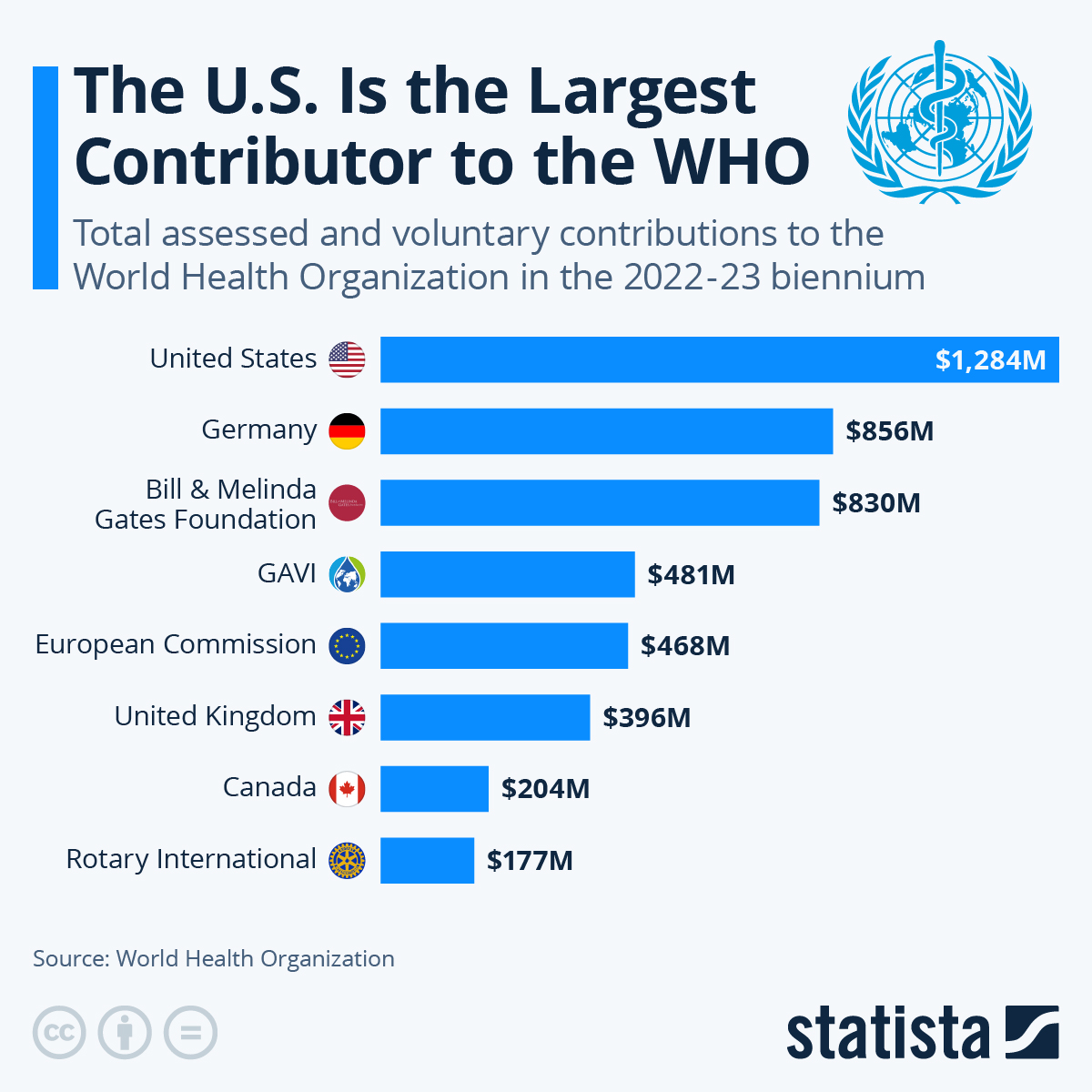
However, these numbers are at odds with those tallied by the WHO itself. While President Trump asserted that the US gives the WHO $500 million in contrast to $39 million from China, the US was set to contribute $706 million while China is at $184 million in the organization’s 2024-25 budget.

Furthermore, WHO funding comes from two pots. The first is based on the UN’s assessment of a country’s “capacity to pay,” which is calculated based on countries’ populations and wealth. For the US and China, these numbers are sat at $264 million and $181 million respectively. This pot makes up less than 20% of WHO’s budget. The other, much larger pot, involved voluntary contributions that come not just from member states, but from philanthropic organizations, corporations, NGOs, and even private citizens. The US is projected to contribute $442 million to this fund, while China is on track to contribute just $2.5 million. While China is not contributing as much as the US, it is meeting its assessed contributions capacity to pay as determined by the UN. (Source: NPR)

Chart showing total assessed and voluntary contributions to WHO from 2022-23| Source: Statista, https://www.statista.com/chart/33800/top-contributors-to-the-world-health-organization/

As the EO alludes to, Trump tried to withdraw the US from the WHO during his first administration, with his administration formally notifying the UN Secretary-General of this intention on July 6, 2020. The United States entered into WHO membership in 1948 following a joint resolution of Congress. This resolution was signed by President Truman, who then used this to sign the Instrument of Acceptance of the Constitution of the World Health Organization. Because of this, there are questions about the legality of this 2020 order.

Some have cited the ruling in Youngstown Sheet & Tube Co. v. Sawyer as a legal precedent that would prevent Trump’s unilateral withdrawal from WHO. In this case, the US Supreme Court found that President Truman lacked statutory authority conferred by Congress (or the Constitution) in seizing control of steel production during the Korean War. Justice Hugo Black wrote in the majority opinion, “When the President takes measures incompatible with the expressed or implied will of Congress, his power is at its lowest ebb…”

This has formed the basis for legal arguments against Donald Trump’s previous efforts to withdraw the US from WHO membership as withdrawing without express approval from Congress would therefore violate US law. This is in addition to requirements for the US to pay its financial obligations to the WHO for the current fiscal year.

Perhaps most importantly, US withdrawal from the WHO would harm global health as a whole and represent yet further decline of US global leadership. Severing this relationship would only be detrimental to global health, which certainly cannot be good for the United States as it will undermine the country’s capacity to respond to health emergencies. Furthermore, this move would weaken US influence and diplomacy. This would also potentially present China with a greater opportunity to take leadership and reshape global norms to suit its interests, something that President Trump should be worried about.

The World Health Organization is not perfect, and it never will be. The way to address problems in the WHO, however, is by working collaboratively with the organization itself and other Member States. This has proven effective over the last several years, during which WHO has implemented the largest set of reforms in its history. The US will lose its leverage in pushing for reform by abandoning its membership, and it will also lose its place in an organization that has helped make the world a safer, healthier place for everyone.

Further Reading: “Memo to Trump: Invest in Global Health Security,” Saskia Popescu, The Bulletin of the Atomic Scientists

Trump Administration Halts Federal Health Agencies’ Communications

The Trump administration has ordered federal health agencies to pause all external communications through February 1, including health advisories, weekly scientific reports, updates to websites, and social media posts. The instructions provided to staff at HHS agencies (including the FDA, CDC, and NIH) cited a review as the reason for this pause, though it is broader in scope than expected.

As The Washington Post explains, “The pause on communications includes scientific reports issued by the CDC, known as the Morbidity and Mortality Weekly Report (MMWR); advisories sent out to clinicians on CDC’s health alert network about public health incidents; data updates to the CDC website; and public health data releases from the National Center for Health Statistics, which tracks myriad health trends, including drug overdose deaths.”

One anonymous official told the Post that CDC was scheduled to publish several MMWR reports this week, three of which are about H5N1 avian influenza. It remains unclear if this guidance exempts urgent communications for things like foodborne disease outbreaks, drug approvals, or new bird flu cases, though the memo explains some exceptions can be made on a case-by-case basis.

Trump Freezes NIH Meetings, Travel, and Hiring

President Trump’s administration has also implemented far-reaching pauses at the NIH. In addition to the overarching pause on HHS communications, the administration has cancelled NIH meetings like grant review panels in addition to placing a freeze on hiring (which is in effect across the federal government) and an indefinite ban on travel. Science Insider describes the confusion and uncertainty this has caused, writing in part “…officials halted midstream a training workshop for junior scientists, called off a workshop on adolescent learning minutes before it was to begin, and canceled meetings of two advisory councils. Panels that were scheduled to review grant proposals also received eleventh-hour word that they wouldn’t be meeting.”

These pauses have reportedly left many at NIH and elsewhere with great uncertainty and unease. Many research meetings with teams of people at numerous institutions were cancelled suddenly, delaying important work. The travel pause can be especially damaging for younger scientists, including graduate students and postdocs, who need conference presentations to get feedback on their work and network in their fields. The travel pause also prevents NIH employees from traveling to other NIH locations, and has required some already traveling to return home prematurely.

Possible Executive Order Pausing Gain of Function Research Funding Ahead

The Trump administration is reportedly drafting an executive order that would pause federal funding for gain of function research. In 2014, the NIH imposed a moratorium on federal funding for certain studies involving GoF research. This stemmed from concerns about two studies involving modified H5N1 viruses and concerns about safety issues at CDC and NIH. Furthermore, the NIH stated at the time that this moratorium would “…be effective until a robust and broad deliberative process is completed that results in the adoption of a new US Government gain-of-function research policy.” By 2017, the National Science Advisory Board for Biosecurity (NSABB) had developed a framework for assessing funding decisions for research that involved enhanced potential pandemic pathogens.

Debate over federal funding for this kind of research grew once again amid the COVID-19 pandemic. This has included multiple congressional hearings, commentary, and the introduction of a bill in the Senate, the Viral Gain-of-Function Research Moratorium Act. The Biden administration released in May 2024 the United States Government Policy for Oversight of Dual Use Research of Concern and Pathogens with Enhanced Pandemic Potential, which the NIH recently released guidance on. However, the executive order is expected to supersede at least a portion of this policy.

New Book on Gain of Function

Nicholas Evans, Associate Professor and Chair of the Department of Philosophy at the University of Massachusetts Lowell, has a new book out that examines the controversial and poorly understood domain of “gain of function” research. Published by MIT Press, Gain of Function describes what this kind of research is, what it isn’t, and why a small number of scientific experiments continue to make headlines. The book explains what gain-of-function research means in science and in the context of government policy, traces the history of the original research that sparked the initial controversy, and describes efforts to assess the risks and benefits of this research and to regulate it. The book concludes with Evans’ assessment of the future of gain of function, including how debates about this type of research will influence politics, science and public health for years to come. Use the promo code MITPCONF for a 30% discount.

New NSABB Working Group on in silico Research and Computational Models

The National Science Advisory Board for Biosecurity (NSABB) has established a new Working Group on in silico Research and Computational Models. The working group, co chaired by Rachel Levinson of Arizona State University (and chair of the NSABB) and Sarah Carter of Science Policy Consulting LLC, is “charged with developing strategies for identifying, and options for mitigating, potential risks associated with in silico research, computational models (including biological design tools), and datasets in life sciences settings. The NSABB is to especially focus on identifying approaches  that could inadvertently or deliberately result in the development of dual-use information or models directly enabling the design of a pathogen with enhanced pandemic potential (PEPP) or a novel biological agent or toxin that could pose significant threat to public health, including datasets that could be used to develop such models and in silico experiments that could meet the definition of dual use research of concern (DURC) outlined in the Policy. In conducting this evaluation, the NSABB should consider how in silico research and computational models could enable the design, development, enhancement, or acquisition of transmissible biological agents with specific attributes, such as increased virulence, transmissibility, environmental survivability, immune evasion, difficulty of detection and attribution, or similar characteristics.”

“Envisioning an Independent Bioresponsibility Authority to Safeguard U.S. Leadership in the Life Sciences”

From the Scowcroft Institute: “This report by the Texas A&M Biosecurity and Pandemic Policy Center proposes an independent federal agency to oversee the safety and security of pathogen research conducted in the United States or funded by the U.S. government. Taking a more comprehensive and collaborative approach, the agency would pair expanded regulatory oversight with technical assistance, non-punitive incident reporting, funding for biosafety and biosecurity research, and education and training efforts. It would consolidate and streamline requirements and remain flexible as technology advances. This approach to the safe, secure, and ethical conduct of life science research merits a new term: bioresponsibility.”

“Global Risks Report 2025”

This edition of the World Economic Forum’s Global Risk Report “…reveals an increasingly fractured global landscape, where escalating geopolitical, environmental, societal and technological challenges threaten stability and progress.” It includes a section on biotech and the challenges posed by the current lack of global ethical boundaries for biotech developments.

“Russia Used Chemical Weapons 434 Times in December, Ukraine’s General Staff Says”

This article from the Kyiv Independent analyzes recent reporting from the General Staff of Ukraine’s Armed Forces. It explains in part, “Russia has been intensifying its use of chemical agents on the battlefield in Ukraine. A Kyiv Independent investigation from August 2024 showed that instances of gas attacks are rising, and the Organization for the Prohibition of Chemical Weapons (OPCW) confirmed on Nov. 18 that a riot control agent known as CS has been used in Ukraine.”

“Fact-Checking Russia’s Claims on Chemical Weapons”

In this piece from Vox Ukraine, John V. Parachini, Khrystyna Holynska, and Kateryna Ionova breakdown Russia’s CW disinformation and attempts to abuse its leadership position within OPCW: “For years, Russia positioned itself as a staunch advocate for the nonproliferation of chemical weapons. By asserting that it had eliminated the largest stockpile of chemical weapons and actively worked to deter other countries from developing and using them, Russia claimed to have a right to a leadership position in the Organization for the Prohibition of Chemical Weapons (OPCW). When accusations arose against Russia or its allies regarding the contrary, Russia vehemently denied all such claims and accused Western nations of orchestrating disinformation campaigns aimed at discrediting it.”

NEW: Advanced Data Sharing to Strengthen One Health Effectiveness: Building Trust for Effective Collaboration

From NASEM: “Applying a One Health approach requires collaboration at multiple levels to address complex challenges. Actors, such as government agencies, non-government and private entities, citizens, and the research community must have reason to believe that they will receive benefits and credit for data shared without threat of retaliation, exploitation, or misapplication. Trust enables the free flow of information and resources between stakeholders and fosters an environment where diverse groups can unite towards a common goal. Without trust, efforts to tackle these challenges become fragmented and inefficient. In this webinar, invited speakers will share how their successful One Health programs establish and maintain trust, thereby supporting innovative solutions that no single discipline could achieve alone.”

This event will take place on January 28 at 4 pm EST. Learn more and register here.

NEW: The Future of Syria’s Chemical Weapons Stockpile

From the Arms Control Association: “The CWC Coalition will host a webinar on Wednesday, January 29 on the future of Syria’s chemical weapons stockpile after the fall of the Assad regime.”

“The collapse of the Assad regime and the resulting political transition in Syria leaves questions about the fate of the country’s remaining chemical weapons stockpile. Since 2022, high level disarmament discussions at the UN have repeatedly remarked on the “gaps, inconsistencies, and discrepancies” remaining in Syria’s declaration of its chemical stockpile, while human rights groups have pressed for justice for victims of the chemical attacks.”

“We will discuss how can the OPCW, CWC member states, and civil society can approach the transitional government as an opportunity to bring Syria into compliance with its obligations under the CWC, have accountability for perpetrators, and justice for victims.”

Gregory Koblentz, Director of the Biodefense Graduate Program, will be one of the speakers. His commentary will be based on his recent article with Natasha Hall, the other speaker, in Foreign Affairs.

This webinar will take place 10-11 am EST. RSVP here.

NEW: Schar School Open House

The Schar School of Policy and Government will be hosting an in-person Arlington Graduate Open House along with the Costello College of Business, Antonin Scalia Law School, and the Carter School for Peace and Conflict Resolution. Explore the different degree programs we offer at the master’s, doctoral, and professional levels, as well as our graduate-level certificates. Representatives will be in attendance to discuss our various graduate programs and how you can further your studies while continuing to work. Gregory Koblentz, Director of the Biodefense Graduate Program, will also be in attendance.

This event will take place on February 4 between 5:30 and 7 pm EST. Register here.

NEW: Biodefense MS Information Session

“Prospective students are invited to attend a information session to hear more about the Biodefense M.S. program offered at the Schar School. The online session will provide an overview of the program, as well as the application process, student experience and graduate outcomes. This session admissions will be led by the Graduate Admissions team.”

This sessions will take place at 12 pm EST on February 13. Learn more and register here.

Upcoming PACCARB Public Meeting

“The Presidential Advisory Council on Combating Antibiotic-Resistant Bacteria (PACCARB) provides advice, information, and recommendations to the U.S. Secretary of Health and Human Services (HHS Secretary). The council supports and evaluates U.S. government activities focused on fighting antimicrobial resistance (AMR) in human health, animal health, and environmental health. Using this One Health approach, members of the PACCARB have a wide range of backgrounds, including academia, industry, public health, advocacy, veterinary, and agricultural production.”

“The PACCARB was established under Executive Order 13676 and is included in the Pandemic and All-Hazards Preparedness and Advancing Innovation Act of 2019 (PAHPAIA). Since 2019, the President of the United States has given authority to the HHS Secretary as the primary recipient of PACCARB recommendations. Additional information on the authority and activities of the PACCARB can be found on the About Us page in the charter.”

“As a federal advisory committee, the PACCARB looks to engage with the public and all AMR stakeholders. The council holds several public meetings every year both in person and live streamed on the HHS.gov website. These meetings are open to anyone with an interest in combating AMR.”

The next PACCARB Public Meeting will take place January 28-29 at the Ritz-Carlton, Pentagon City. Learn more and register to attend here.

Preparedness in Rural Communities: National and State/Local Perspectives and Plans

From Penn State: “The COVID-19 pandemic and recent hurricanes have thrust the preparedness of rural communities into the national spotlight. At the federal level, the Administration for Strategic Preparedness and Response and the Centers for Disease Control and Prevention have recently released national goals and plans for preparedness of rural communities. The overall objective of this virtual, 2-day mini-symposium is to identify opportunities in public health and agricultural preparedness and response in rural communities. The mini-symposium will focus upon national perspectives on Thursday, January 30 and the state/local perspectives on Friday, January 31. Speakers include representatives of the Administration for Strategic Preparedness and Response, the Department of Homeland Security, US Department of Agriculture, the USA Center for Rural Public Health Preparedness, and state/local leaders.”

This event will take place on January 30 and 31, from 11 am to 2 pm ET each day. Learn more and register here.

Rise of the Zombie Bugs: The Surprising Science of Parasitic Mind-Control

Johns Hopkins APL’s colloquium will feature Mindy Weisberger, author of the upcoming book Rise of the Zombie Bugs: The Surprising Science of Parasitic Mind-Control: “Zombies are all around us—insect zombies, that is. In Rise of the Zombie Bugs, Mindy Weisberger explores the eerie yet fascinating phenomenon of real-life zombification in the insect class and among other invertebrates. Zombifying parasites reproduce by rewriting their victims’ neurochemistry, transforming them into the “walking dead”: armies of cicadas, spiders, and other hosts that helplessly follow a zombifier’s commands, living only to serve the parasite’s needs until death’s sweet release (and often beyond).”

Learn more about this January 31 event here.

Cyberbiosecurity Summit

From Johns Hopkins APL and Bio-ISAC: “Advancements in biomanufacturing and biotechnology drive the science we need to thrive, everything from apples to vaccines. The Cyberbiosecurity Summit 2025 convenes leading experts in biotechnology, biosecurity, and cybersecurity to explore the intersection of these fields and discuss the strategies to create a safe, secure future for us all.”
This event will take place February 25-26 in Laurel, MD. Register here and review the call for sessions here (closes 12/12).

Sustainable Manufacturing: Building and Preserving a Resilient Medical Industrial Base

“Join industry and government partners for our second annual industry summit! During this event, leaders from IBMSC will share our strategic vision and organizational priorities. Speakers will also share potential opportunities for building and preserving the medical industrial base.  This event will be in-person only and space is limited!”

This event will take place March 11-12 in Washington, DC. Learn more and register here.

Exciting Update: The BWC NIM Database Is Complete!

UNIDIR is glad to announce that the BWC National Implementation Measures Database, developed in partnership with VERTIC, has reached a significant milestone: profiles for all 187 States Parties to the Biological Weapons Convention are now live! This comprehensive online tool provides detailed insights into each country’s national implementation measures under the BWC, supporting transparency, trust, and international cooperation.

All profiles are available in English, and the team is committed to translating them into all official UN languages throughout 2025. Updates to the profiles will also be made regularly to ensure they remain accurate and relevant.

Explore the database at bwcimplementation.org.

Enhancing UK Biosecurity: DASA Launches Microbial Forensics Competition

“On behalf of the Defence Science and Technology Laboratory(Dstl), the Defence and Security Accelerator (DASA) is pleased to launch a new Themed Competition called Future-proofing Biosecurity by Strengthening the UK’s Microbial Forensic Capability. The competition is being run in response to the 2023 UK Biological Security Strategy which aims to implement a UK-wide approach to biosecurity that will strengthen deterrence and resilience to a spectrum of biological threats.”

“Dstl is leading the creation of the United Kingdom Microbial Forensics Consortium (UKMFC) which is being developed in support of the Detect Pillar of the Biological Security Strategy. It will comprise a network of biosurveillance laboratories from all four nations of the UK, operating under a One Health doctrine. This competition seeks novel technology options or technical approaches that can directly support the UKMFC initiative.”

Learn more and submit proposals here.

Pandora Report 1.17.2025

This week’s Pandora Reports includes news from the Biodefense Graduate Program in addition to discussion of China’s newly-implemented export control regulations, recently-announced US export controls on biotechnology, and the United States’ new National One Health Framework.

Two Biodefense Students Earn Distinguished Fellowship

This portion was written by Meredith Fletcher, a first-year student in the Biodefense MS program with a special interest in terrorism and the use of pathogens as weapons.

The Emerging Leaders in Biosecurity (ELBI) fellowship, offered by the Center for Health Security at the Johns Hopkins Bloomberg School of Public Health, is the most distinguished and prestigious fellowship available to those in the biosecurity profession. Two students in the Schar School of Policy and Government’s Biodefense PhD program, Janet Marroquin and Katie Dammer, were chosen for this honor and will be joining 29 other young professionals in the fellowship’s 2025 cohort. During their fellowship, participants will participate in biosecurity workshops, networking events, and research symposiums, both in Washington DC and abroad. Dr. Gregory Koblentz, director of the Biodefense Graduate Program, congratulated both students on this impressive accomplishment, “Janet and Katie are rising stars in biosecurity so it’s very gratifying to see their potential recognized by the leading think tank in the field.”

Janet graduated in 2019 with her M.S. in Biodefense and is currently pursuing a PhD in Biodefense. Her dissertation examines Russia’s motivation and strategy for using vaccine-related narratives in its disinformation operations. She currently works as a full-time research analyst for a federally funded research and development center. Her work focuses on analyzing national security challenges related to emerging biotechnologies and CBRNE weapons.  Janet says, “I’m most excited to engage with international perspectives on common problems, especially science communication and public trust in state institutions.” Her time at George Mason helped prepare her for both her career and the fellowship because of the nature of the program, the diverse student backgrounds and its comprehensive approach to biosecurity. According to Janet, “The biodefense courses exposed me to the vulnerabilities that we as a global society have to the spread of disease due, in no small part, to inadequate preparedness.” Her favorite classes were Dr. Koblentz’s course on biodefense strategy and Dr. Estela Blaisten’s challenging, but rewarding, course on numerical methods.

Katie is a first-year student in the Biodefense PhD program. The ELBI program and those who speak highly of it have surrounded her since her undergraduate studies, so she jumped at the chance to learn more about this ever-changing field. She says, “I am so grateful to the Center for Health Security for the acceptance and to colleagues and ELBI alumni for all of the kind words I have received since this year’s cohort was announced. Every year brings changes, but it is exciting to know that this will be a key piece of my professional development throughout 2025.” Her focus is on the intersection of national security and science policy, and her current role covers a variety of natural, accidental, and deliberate threats. Katie is most excited to build a biosecurity community and take time away from her career to “nerd out” over the many topics presented during the fellowship. Katie hopes that her time as a fellow will both complement and enhance her research and discussion skills, and she looks forward to engaging with pioneers across the public health and policy fields. Katie feels she owes a special thanks to her dad, who as a career academic has been an inspiration as she started her PhD journey and the fellowship ahead of her.

Janet and Katie join a number of other Biodefense students and alum who have served as ELBI fellows including Siddha Hover MS ’14 (ELBI Class of 2016), Francisco Cruz MS ’15 (ELBI Class of 2016), Saskia Popescu PhD ’19 (ELBI Class of 2017), Yong-Bee Lim MS ‘13 PhD ’21 (ELBI Class of 2018), Justin Hurt PhD ’23 (ELBI Class of 2019), and Matthew Ferreira MS ’22 (ELBI Class of 2023).

Janet Marroquin:

Katie Dammer:

China Implements New Export Control Regulations

The Regulations of the People’s Republic of China on Export Control of Dual-Use Items, which were adopted in September of last year, went into effect on December 1, 2024. These regulations are designed to support the existing Export Control Law, which went into effect in late 2020 and was the country’s first comprehensive framework aimed at controlling exports of military and dual-use items as well as technology for national security purposes. The new regulations provide more specific guidance on jurisdiction, restricted party lists, export licensing systems, and end-user/user-end requirements. Furthermore, they require third parties to report suspected violations of the regulations. They also offer a framework for extraterritorial regulation.

These regulations will repeal and replace existing rules on dual-use exports from the PRC. These previous rules include Regulation on Export Control of Nuclear Dual-Use Items and Related Technologies (2007), Regulations on Export Control of Missiles and Related Items and Technologies (2002), Regulation on Export Control of Biological Dual-Use Items and Related Equipment and Technologies (2002), and Measures for Export Control of Relevant Chemicals and Related Equipment and Technologies (2002). However, the 2011 Controlled Chemicals Regulations and 2002 Military Products Regulation will still apply in two cases: “For the export control of dual-use controlled chemicals, the Controlled Chemicals Regulation shall apply; matters not provided for in the Controlled Chemicals Regulation shall be analogically governed by the Export Control Law and the Regulation.” AND “For the export control of certain missiles and related items and technologies listed on the first part of the “Export Control List of Missiles and Related Items and Technologies”, the Military Products Regulation shall apply.”

These regulations also established a Watch List, similar to the United State’s Unverified List. Using this new system, Chinese authorities will be able to designate parties who are not cooperative with end-user/user-end verification requirements. Exporters who are working with entities on the Watch List are barred from applying for general licenses and obtaining export certificates. Rather, they must submit risk assessment reports and compliance commitments before applying for licenses.

Importantly, these regulations allow China’s Ministry of Commerce to extend its reach extraterritorially. They allow authorities to regulate and investigate the exportation of Chinese dual-use items, including those that originate from, contain, or are manufactured using Chinese dual-use items. This is true even if they are produced or traded outside of China, potentially leaving foreign entities and individuals subject to these regulations.

Shi Xiaoli of China University of Political Science and Law wrote of the new regulations, “Preventing the proliferation of weapons of mass destruction (nuclear weapons, biological weapons, chemical weapons) and their delivery vehicles is important to international peace, security and stability. In order to encourage the international community to strengthen non-proliferation efforts to meet global challenges, the United Nations has adopted a series of resolutions and treaties. China has actively participated in and conscientiously fulfilled its obligations, transformed important international obligations into domestic laws, and established and improved an effective export control legal system to prevent related items from being used for purposes related to weapons of mass destruction after export.”

A machine translation of China’s new regulations is available here.

US Announces New Export Controls on Biotechnology, Citing China Concerns

Last week, a bipartisan group of lawmakers called on the Biden administration to consider restricting the export of US biotechnology to China’s military. In a letter sent last Thursday to Secretary of Commerce Gina Raimondo, lawmakers asked her “to study imposing a licensing restriction on U.S. pharmaceutical companies working with Chinese medical entities under military ownership.”

While it is too late for Raimondo to make much progress on this request, the Department of Commerce did announce this week it is imposing new export controls on biotechnology equipment and related technology due to national security concerns related to AI and data science. These new export controls restrict shipments to China and other countries without a US license. They are for high-parameter flow cytometers and certain mass spectrometry equipment, which the Department says can “generate high-quality, high-content biological data, including that which is suitable for use to facilitate the development of AI and biological design tools.”

This is the latest effort on the part of the Biden administration to restrict China’s access to US technology and part of a broader environment of concern and distrust surrounding US dealings with the PRC. Just this Monday, the Department of Commerce announced new regulations that will cap the number of AI chips that can be exported to most countries and allow unlimited access to US AI technology for the United States’ closest allies. The aim of this is to maintain a firm block on exports to China, Russia, Iran, and North Korea. This also all coincides with steady concerns about China’s access to Americans’ personal health and genetic information. Furthermore, lawmakers renewed calls in August for the FDA to increase scrutiny of US clinical trials conducted in China, citing concerns about intellectual property theft and the possibility of forced Uyghur participation in such trials.

Further Reading:

USG Releases First National One Health Plan

Last week, the Centers for Disease Control and Prevention (CDC), US Department of Agriculture (USDA), and US Department of the Interior (DOI) released the first ever National One Health Framework to Address Zoonotic Diseases and Advance Public Health Preparedness in the United States. The CDC’s press release explains that, “At the direction of Congress in the 2023 Consolidated Appropriations Act, CDC, USDA, and DOI developed this framework to address zoonotic diseases and advance public health preparedness in the United States. CDC, USDA, and DOI are responsible for protecting public health, domestic animal health, and wildlife and environmental health, respectively, and as such are representatives of key One Health sectors for the US government. All three agencies historically address One Health issues and work to help control zoonotic diseases that affect both people and animals. The framework seeks to inform One Health collaboration across the U.S. government for the next five years, describing a common vision, mission, and goals for key federal partners involved in implementing the One Health approach to address zoonotic diseases within the United States.”

Biopower: Securing American Leadership in Biotechnology

Vivek Chilukuri and Hannah Kelley recently authored this report from the Center for New American Security. “The report identifies key strengths and challenges for U.S. biotechnology leadership, surveys biotechnology-leading nations abroad—with a particular focus on China—and outlines an ambitious strategy to help secure U.S. biotechnology leadership for a generation. For the first time, the report introduces the concept of “biopower”—a nation’s capacity to harness emerging biotechnologies to enhance national and economic security—and describes its vast potential applications for defense, health, energy, and food security.”

“Joint External Evaluation of the International Health Regulations (2005) Core Capacities of the United States of America: Mission Report”

The WHO recently released the United States’ most recent Joint External Evaluation (JEE). The report explains in its executive summary that, “During the JEE mission, which took place in Washington, DC and Atlanta, Georgia from 18 to 25 September 2024, the United States’ capacities in 19 technical areas were evaluated through a peer-topeer, consultative process. This process brought together a multisectoral group of national subject matter experts and the multinational, multidisciplinary expert JEE team for a week of discussion, interaction and selected site visits…After a week of collaborative talks this process led to consensus on scores, as well as JEE recommendations for priority actions across the 19 technical areas.”

“The evaluation also generated eight wider, overarching recommendations that, if implemented, will consolidate the United States’ progress and remove bottlenecks that might impede implementation of the agreed priority actions. These recommendations, outlined below, address cross-cutting challenges affecting the capacities of the United States across many of the different technical areas that were explored in greater depth in the JEE process.”

Read the JEE here.

“The Second Trump White House Could Drastically Reshape Infectious Disease Research. Here’s What’s at Stake.”

ProPublica’s Anna Maria Barry-Jester parses out what may lie ahead for infectious disease research under the incoming Trump administration in this article, explaining in part, “Donald Trump’s pick to lead the federal health agency has vowed to replace hundreds of staffers and shift research away from infectious diseases and vaccines. Such an overhaul could imperil the development of life-saving treatments, experts warn.”

“REPORT: The Biden-⁠Harris Administration Roadmap for Pandemic Preparedness and Response”

The White House released this report this week that, “outlines the numerous actions the Biden-Harris Administration took to combat COVID-19 both nationally and globally, and it serves as a roadmap for how the U.S. can effectively respond to pandemics and public health threats in the future. In addition to this public-facing report, this Administration is leaving behind a three-step playbook that future Administrations can use to continue to protect the nation and effectively respond to any future biological threat.”

“Bird Flu Is a National Embarrassment”

Jatherine J. Wu makes the argument that the US should have been taking steps to respond to avian influenza more than a year ago in this piece from The Atlantic.

“The Teeth and Bones That Hold the Key to This Century’s Worst Chemical Weapons Attack”

Henry Bodkin and Heathcliff O’Malley report on how the families of 1,500 victims of a 2013 sarin gas attack in Eastern Ghouta are hunting for justice. Read this article from The Telegraph here.

“Victims of Chemical Weapons Attacks Gather in Damascus to Demand Accountability”

This post from the Middle East Monitor describes a gathering in Damascus on Tuesday during which victims of the Assad regime’s use of CW demanded that those responsible for those “chemical massacres” be held accountable. Read here.

“Sudan’s Military Has Used Chemical Weapons Twice, U.S. Official Say”

Declan Walsh and Julian E. Barnes discuss on recent revelations about CW use in Sudan in this article from The New York Times. They explain that, “Sudan’s military has used chemical weapons on at least two occasions against the paramilitary group it is battling for control of the country, four senior United States officials said on Thursday…The weapons were deployed recently in remote areas of Sudan, and targeted members of the Rapid Support Forces paramilitaries that the army has been fighting since April 2023. But U.S. officials worry the weapons could soon be used in densely populated parts of the capital, Khartoum.”

“The revelations about chemical weapons came as the United States announced sanctions on Thursday against the Sudanese military chief, Gen. Abdel Fattah al-Burhan, for documented atrocities by his troops, including indiscriminate bombing of civilians and the use of starvation as a weapon of war.”

NEW: Upcoming PACCARB Public Meeting

“The Presidential Advisory Council on Combating Antibiotic-Resistant Bacteria (PACCARB) provides advice, information, and recommendations to the U.S. Secretary of Health and Human Services (HHS Secretary). The council supports and evaluates U.S. government activities focused on fighting antimicrobial resistance (AMR) in human health, animal health, and environmental health. Using this One Health approach, members of the PACCARB have a wide range of backgrounds, including academia, industry, public health, advocacy, veterinary, and agricultural production.”

“The PACCARB was established under Executive Order 13676 and is included in the Pandemic and All-Hazards Preparedness and Advancing Innovation Act of 2019 (PAHPAIA). Since 2019, the President of the United States has given authority to the HHS Secretary as the primary recipient of PACCARB recommendations. Additional information on the authority and activities of the PACCARB can be found on the About Us page in the charter.”

“As a federal advisory committee, the PACCARB looks to engage with the public and all AMR stakeholders. The council holds several public meetings every year both in person and live streamed on the HHS.gov website. These meetings are open to anyone with an interest in combating AMR.”

The next PACCARB Public Meeting will take place January 28-29 at the Ritz-Carlton, Pentagon City. Learn more and register to attend here.

How to Avoid Human-Made Pandemics

From the Asia Centre for Health Security: “Studying viruses that could potentially cause outbreaks is one of the most effective ways to reduce the risk of pandemics. However, this type of research—especially when it involves collecting samples from the field and manipulating pathogens—can unintentionally lead to a pandemic if not managed carefully. Dr Lentzos will discuss her findings from the Pathogen Project, which brought together an international taskforce of scientists, biosecurity and public health experts, ethicists, and civil society leaders to seek consensus on this question: Can we agree on ways to manage research that carries pandemic risk as safely, securely and responsibly as possible?”

This event will take place on January 23 at 8 pm (GMT +8:00) via Zoom. RSVP here.

Preparedness in Rural Communities: National and State/Local Perspectives and Plans

From Penn State: “The COVID-19 pandemic and recent hurricanes have thrust the preparedness of rural communities into the national spotlight. At the federal level, the Administration for Strategic Preparedness and Response and the Centers for Disease Control and Prevention have recently released national goals and plans for preparedness of rural communities. The overall objective of this virtual, 2-day mini-symposium is to identify opportunities in public health and agricultural preparedness and response in rural communities. The mini-symposium will focus upon national perspectives on Thursday, January 30 and the state/local perspectives on Friday, January 31. Speakers include representatives of the Administration for Strategic Preparedness and Response, the Department of Homeland Security, US Department of Agriculture, the USA Center for Rural Public Health Preparedness, and state/local leaders.”

This event will take place on January 30 and 31, from 11 am to 2 pm ET each day. Learn more and register here.

Rise of the Zombie Bugs: The Surprising Science of Parasitic Mind-Control

Johns Hopkins APL’s colloquium will feature Mindy Weisberger, author of the upcoming book Rise of the Zombie Bugs: The Surprising Science of Parasitic Mind-Control: “Zombies are all around us—insect zombies, that is. In Rise of the Zombie Bugs, Mindy Weisberger explores the eerie yet fascinating phenomenon of real-life zombification in the insect class and among other invertebrates. Zombifying parasites reproduce by rewriting their victims’ neurochemistry, transforming them into the “walking dead”: armies of cicadas, spiders, and other hosts that helplessly follow a zombifier’s commands, living only to serve the parasite’s needs until death’s sweet release (and often beyond).”

Learn more about this January 31 event here.

Cyberbiosecurity Summit

From Johns Hopkins APL and Bio-ISAC: “Advancements in biomanufacturing and biotechnology drive the science we need to thrive, everything from apples to vaccines. The Cyberbiosecurity Summit 2025 convenes leading experts in biotechnology, biosecurity, and cybersecurity to explore the intersection of these fields and discuss the strategies to create a safe, secure future for us all.”
This event will take place February 25-26 in Laurel, MD. Register here and review the call for sessions here (closes 12/12).

Sustainable Manufacturing: Building and Preserving a Resilient Medical Industrial Base

“Join industry and government partners for our second annual industry summit! During this event, leaders from IBMSC will share our strategic vision and organizational priorities. Speakers will also share potential opportunities for building and preserving the medical industrial base.  This event will be in-person only and space is limited!”

This event will take place March 11-12 in Washington, DC. Learn more and register here.

Exciting Update: The BWC NIM Database Is Complete!

UNIDIR is glad to announce that the BWC National Implementation Measures Database, developed in partnership with VERTIC, has reached a significant milestone: profiles for all 187 States Parties to the Biological Weapons Convention are now live! This comprehensive online tool provides detailed insights into each country’s national implementation measures under the BWC, supporting transparency, trust, and international cooperation.

All profiles are available in English, and the team is committed to translating them into all official UN languages throughout 2025. Updates to the profiles will also be made regularly to ensure they remain accurate and relevant.

Explore the database at bwcimplementation.org.

Enhancing UK Biosecurity: DASA Launches Microbial Forensics Competition

“On behalf of the Defence Science and Technology Laboratory(Dstl), the Defence and Security Accelerator (DASA) is pleased to launch a new Themed Competition called Future-proofing Biosecurity by Strengthening the UK’s Microbial Forensic Capability. The competition is being run in response to the 2023 UK Biological Security Strategy which aims to implement a UK-wide approach to biosecurity that will strengthen deterrence and resilience to a spectrum of biological threats.”

“Dstl is leading the creation of the United Kingdom Microbial Forensics Consortium (UKMFC) which is being developed in support of the Detect Pillar of the Biological Security Strategy. It will comprise a network of biosurveillance laboratories from all four nations of the UK, operating under a One Health doctrine. This competition seeks novel technology options or technical approaches that can directly support the UKMFC initiative.”

Learn more and submit proposals here.

Connecting and Building Collaborations between AI and Synthetic Biology Communities

From AI for SynBio: “Our primary goal for this symposia is to begin to connect and build mutually beneficial collaborations between the AI and the synthetic biology communities.”

“Synthetic biology is the systematic design and engineering of biological systems. Synthetic biology holds the potential for revolutionary advances in medicine, environmental remediation, and many more. For example, some synthetic biologists are trying to develop cellular programs that will identify and kill cancer cells, while others are trying to design plants that will extract harmful pollutants like arsenic from the ground.”

Read more and submit abstracts here.

Biosecurity Game Changers Fellowship

“A new fellowship at the Pandemic Center at the Brown University School of Public Health launches with the announcement of the inaugural class of Biosecurity Game Changers, eight individuals who represent the next generation of leaders responsible for preventing and preparing for the worst case health security challenges.”

“The Brown Pandemic Center is partnering with the Coalition for Epidemic Preparedness Innovations (CEPI), Gavi, the Vaccine Alliance, the International Biosecurity and Biosafety Initiative for Science (IBBIS), Pandemic Action Network (PAN), and the Biological Weapons Convention Implementation Support Unit (BWC ISU) to provide an operational base for the fellows, selected for their potential to impact and lead in biosecurity and pandemic preparedness and response. The program is informed by consultation with international and normative entities, including the Africa Centres for Disease Control and Prevention and the World Health Organization Global Health Emergency Corps.”

“The year-long fellowship kicks off in September with an in-person meeting in Addis Ababa, Ethiopia and a policymaking workshop for early-to-mid-career public health champions, including the fellows. During the year, fellows will collaborate on an operational project with either the Pandemic Center or one of the partner organizations focused on a specific aspect of improving biosecurity, biosafety and/or pandemic preparedness and response. Each fellow will also receive a Brown faculty appointment for the duration of their fellowship.”

Learn more here.

Pandora Report 1.10.2025

Happy New Year! This week’s Pandora Report covers late former President Jimmy Carter’s decades of global health work, updates on H5N1 in the United States, the launch of the Biosafety and Biosecurity Innovation Initiative, and more.

Former President Carter’s Global Health Legacy

The passing of former US President Jimmy Carter marks the end of an incredible life dedicated to serving others. Carter leaves behind a beautiful legacy that stems from much more than his time in the White House. In the decades after his presidency, Carter oversaw many initiatives focused on improving global health through the Carter Center. One example is his work to eradicate Guinea worm disease of which, as the WHO explained in a statement, “Under his championship cases dropped from 3.5 million in the mid-1980s to just 11 so far in 2024.”

Carter also supported WHO’s African Programme for Onchocerciasis Control, trachoma elimination programs across sub-Saharan Africa, mass drug administration campaigns for schistosomiasis, and the International Task Force for Disease Eradication, helping set the global agenda for eliminating multiple NTDs. In addition to this, Carter spent his life post-presidency doing everything from negotiating with the likes of Kim Il-sung to building homes as a Habitat for Humanity volunteer, continuously demonstrating his dedication to helping others.

Further Reading:

H5N1 Updates

First US Bird Flu Death Reported

A person has died in Louisiana after being admitted to the hospital with a severe case of avian influenza. This marks the first death in the US as a result of an H5 infection. The person fell ill after exposure to a backyard flock and wild birds. They were over the age of 65 and had multiple underlying medical conditions. There is no sign yet that the virus is spreading from person-to-person in the United States. As of January 6, 2025, there have been 66 confirmed human cases of H5N1 bird flu in the United States since 2024 and 67 since 2022.

Biden Administration Ramps Up Preparedness Efforts

The Biden administration is making a final effort to improve the country’s pandemic preparedness ahead of President-elect Trump’s inauguration by announcing it will nearly double the amount of money committed to addressing bird flu in humans. The administration announced this week that it is committing $306 million to improving hospital preparedness, early stage research on therapeutics, diagnostics, and vaccines. Furthermore, $103 million of this will be aimed at helping state and local efforts to track cases and test people exposed to infected animals, in addition to worker outreach for those handling livestock and others at higher risk.

Further Reading:

Launch of the Biosafety and Biosecurity Innovation Initiative

In December 2024, the Department of Health and Human Services (HHS) launched the Biosafety and Biosecurity Innovation Initiative (BBII) to reduce biological risks associated with advances in biotechnology and biomanufacturing in accordance with the September 2022 Executive Order on Advancing Biotechnology and Biomanufacturing Innovation for a Sustainable, Safe, and Secure American Bioeconomy.

The BBII is designed to coordinate and prioritize support for biorisk research and incentivize biosafety and biosecurity innovation across all sectors that support the bioeconomy. The BBII Plan for the Bioeconomy serves as a framework for U.S. government coordination of BBII, led by NIH, and recommends investment in strengthening opportunities for biosafety and biosecurity research and innovation; incentivizing development and implementation of evidence-based best biological risk management practices, carried out by a competent workforce; and fostering a culture of biosafety and biosecurity to encourage trust and norms. 

United Nations Human Rights Office Says Israeli Attacks on Gaza Push Healthcare in Enclave “to Brink of Collapse”

The United Nations Human Rights Office (OHCHR) issued a report late last month documenting attacks carried out by Israel in Gaza between October 12, 2023, and June 30, 2024, and their impact on healthcare facilities and personnel. The report raises serious concerns about Israel’s compliance with international law, under which medical personnel and hospitals are specifically protected. In a statement, the UN High Commissioner for Human Rights said, “As if the relentless bombing and the dire humanitarian situation in Gaza were not enough, the one sanctuary where Palestinians should have felt safe in fact became a death trap…The protection of hospitals during warfare is paramount and must be respected by all sides, at all times.”

Read more about the report here.

“Development of Effective Medical Countermeasures Against the Main Biowarfare Agents: The Importance of Antibodies”

Arnaud Avril, Sophie Guillier, and Christine Rasetti-Escargueil  recently published this article in Microorganisms: “The COVID-19 and mpox crisis has reminded the world of the potentially catastrophic consequences of biological agents. Aside from the natural risk, biological agents can also be weaponized or used for bioterrorism. Dissemination in a population or among livestock could be used to destabilize a nation by creating a climate of terror, by negatively impacting the economy and undermining institutions. The Centers for Disease Control and Prevention (CDC) classify biological agents into three categories (A or Tier 1, B and C) according to the risk they pose to the public and national security. Category A or Tier 1 consists of the six pathogens with the highest risk to the population (Bacillus anthracisYersinia pestisFrancisella tularensis, botulinum neurotoxins, smallpox and viral hemorrhagic fevers). Several medical countermeasures, such as vaccines, antibodies and chemical drugs, have been developed to prevent or cure the diseases induced by these pathogens. This review presents an overview of the primary medical countermeasures, and in particular, of the antibodies available against the six pathogens on the CDC’s Tier 1 agents list, as well as against ricin.”

“Research and Development of Medical Countermeasures for Emerging Infectious Diseases, China, 1990–2022”

Jiyan Ma, Yang Yang, and Yangmu Huang published this article in Emerging Infectious Diseases: “Since the severe acute respiratory syndrome outbreak in 2003, China has invested substantial efforts in promoting scientific and technological advances for medical countermeasures against high-threat pathogens. The examination of China’s landscape identifies progress and gaps in research and development (R&D) and also highlights management and regulatory issues that should be of concern to other countries. Our study examined the current state of R&D of medical countermeasures in China during 1990–2022. The findings showed a robust and diversified pipeline responding quickly to disease outbreaks and policy changes. However, proactive and highly innovative candidates are limited, and a large proportion of vaccines and drugs stagnate at the early development stage. A paradigm shift involving a preemptive R&D agenda and persistent investment, innovative technology development, and accelerated research translation is urgently needed to prepare for the next pandemic.”

“Strategic Report on Research and Development in Biotechnology for Defense Innovation”

From NASEM: “At the request of the National Security Commission on Emerging Biotechnology, Strategic Report on Research and Development in Biotechnology for Defense Innovation provides an overview of the current landscape of artificial intelligence and machine learning (AI/ML)-enabled biotechnology, the opportunities it presents, and the challenges it poses. This report offers a strategic vision for connecting scientists and technologists to build on, leverage, and tailor advances at the intersection of AI/ML, automated experimentation, and biotechnology to drive innovation in defense-related biotechnologies. Strategic Report on Research and Development in Biotechnology for Defense Innovation makes recommendations to address long-standing challenges that have limited research, development, prototyping, testing and evaluation, and eventual use of biotechnologies. Addressing these challenges will help to advance U.S. national security and defense by improving the performance of existing capabilities, enabling the creation of domestic supply chains of valuable products, reducing reliance on processes and chemicals that are harmful to the environment, and/or adding new capabilities not currently possible with established technologies.”

“COVID 5 Years Later: Learning from a Pandemic Many Are Forgetting”

Jon Cohen discusses reflections on the COVID-19 pandemic in the scientific community in this piece from Science, writing in part “Yet 5 years after a coronavirus dubbed SARS-CoV-2 first surfaced in Wuhan, China, scientists are still intensively trying to make sense of COVID-19. “We would each have to read over 240 papers every single day to actually keep up with all of the [COVID-19] literature that’s come out” in 2024, Cherilyn Sirois, an editor at Cell, noted…Despite the flood of insights into the behavior of the virus and how to prevent it from causing harm, many at the meeting worried the world has turned a blind eye to the lessons learned from the pandemic. “I feel this massive gravitational pull to go back to what we were doing before,” Van Kerkhove said. “There’s no way we should be going back.”’

“The SARS-CoV-2 Test Scale-Up in the USA: An Analysis of the Number of Tests Produced and Used Over Time and Their Modelled Impact on the COVID-19 Pandemic”

Santos et al. recently published this article in The Lancet Public Health: “Background: Rapid, accessible, and accurate testing was paramount to an effective US COVID-19 response. Federal partners supported SARS-CoV-2 testing scale-up through an interagency-coordinated approach that focused on expanding supply chains, research and development, validation, and improving patient access. We aimed to provide an overview of the federal efforts to scale up the testing response and study the impact of scale-up.”

“Methods: In this descriptive analysis, we mapped federal partner activities and milestones using the US Government Testing and Diagnostics Working Group (TDWG) and participating agency and department data from Jan 1, 2020, to Dec 31, 2022. Tests produced (TDWG), reported test positivity (US Centers for Disease Control and Prevention [CDC]’s COVID-19 Electronic Laboratory Reporting system and the Federal Direct Report testing data), reported COVID-19 case counts (CDC), hospitalisations (Department of Health and Human Services Unified Hospital Data Surveillance System and the CDC’s National Healthcare Safety Network), and deaths (CDC) were analysed over time. We then developed an agent-based model to evaluate the impact testing had on COVID-19 outcomes using different scenarios. The scenarios were (1) if efforts led to substantially fewer tests produced, (2) if scale-up was delayed, affecting test access, and (3) if efforts led to substantially more tests produced.”

“Findings: Approximately 6·7 billion SARS-CoV-2 tests, including over 1·5 billion laboratory-based, 1·9 billion point-of-care (POC), and 3·2 billion over-the-counter (OTC) tests, were produced, and approximately 2·7 billion tests were performed between Jan 1, 2020, and Dec 31, 2022. Testing capacity exhibited various expansion phases, with laboratory-based capacity growing from approximately 6 million tests per month in March, 2020 to approximately 34 million tests per month in July, 2020; POC increased to approximately 126 million tests per month by December, 2020, and OTC increased to approximately 986 million tests per month by February, 2022. Comparison between the baseline (actual) and delay-in-testing scenario suggests the increased testing capacity potentially saved upwards of 1·4 million lives and averted 7 million hospitalisations.”

“Interpretation: Our study suggests that early development, manufacturing, and distribution of tests had a great impact on reducing severe COVID-19 outcomes. These results highlight the importance of robust and rapid test development, production, and distribution when addressing future public health threats.”

“Global Health’s Evolution and Search for Identity”

Kevin M. De Cock recently published this article in Emerging Infectious Diseases: “Despite earlier attempts to define global health, the discipline’s boundaries are unclear, its priorities defined more by funding from high-income countries from the Global North than by global health trends. Governance and resource allocation are challenged by movements such as decolonizing global health. Inherent contradictions within global health derive from its historical evolution from tropical medicine and international health, as well as recent trends in infectious diseases. Demographic, socioeconomic, and epidemiologic transitions, including the rise in noncommunicable diseases, have eroded the concept of a binary world of developed and developing countries. Competitive tension has emerged between aspirations for global health security and health equity. Dominant principles should focus on vulnerable populations, transnational challenges such as migration and climate change, appropriate prevention and care, and epidemic preparedness and response capacity. As the 2030 target date for the United Nations Sustainable Development Goals approaches, reconceptualization of global health is required, or the discipline risks losing identity and relevance.”

“The Elusive Payoff of Gain-of-Function Research”

Charles Schmidt discusses the potential risks of GOF research in this piece for Undark, writing in part “But that’s not necessarily true of studies that alter dangerous pathogens to assess how they might become more virulent or transmissible. Public controversies have erupted over this sort of research, but in fact few such studies have been performed so far. The research might reveal mutations that turn pathogens into bigger human health problems. Armed with that knowledge, scientists could look for those genetic changes during disease surveillance, with an aim to identify and prepare for looming outbreaks.”

“Interview: Overseeing the Research That Might Start a Pandemic”

“Biosecurity expert Gerald Epstein discusses how certain high-risk science should be regulated,” in this Undark piece by Sara Talpos: “The risks of this research “do not disappear merely because no government funds are involved,” wrote Epstein in an article published last year in the Bulletin of the Atomic Scientists. Epstein isn’t sure if this type of work is happening in the private sector, but if it is, it is largely unregulated. Epstein would like to see oversight broadened, possibly through new legislation, expansion of certain government regulations, or increased scrutiny from companies that provide liability insurance.”

“For Science That Comes With Risks, a Key Question: Who Decides?”

Michael Schulson and Peter Andrey Smith discuss research oversight in this piece for Undark, explaining in part “The extent of oversight also varies across disciplines, both domestically and across the globe, with pathogen research being much more regulated than the more emergent fields of AI and geoengineering. For AI and pathogen research, our focus is limited to the United States — reflecting both a need to limit the scope of our reporting, and the degree to which American science currently leads the world in both fields, even as it faces stiff competition on AI from China.”

“With those caveats in mind, we offer a sampling — illustrative but by no means comprehensive — of people who are part of the decision-making chain in each category as of late 2024. Taken as a whole, they appear to be a deeply unrepresentative group — one disproportionately White, male, and drawn from the professional class. In some cases, they occupy the top tiers of business or government. In others, they are members of lesser-known organizational structures — and in still others, the identities of key players remain entirely unknown.”

Pathogenesis: How Germs Made History

In this revelatory book, Dr Jonathan Kennedy argues that germs have shaped humanity at every stage, from the first success of Homo sapiens over the equally intelligent Neanderthals to the fall of Rome and the rise of Islam.

How did an Indonesian volcano help cause the Black Death, setting Europe on the road to capitalism? How could 168 men extract the largest ransom in history from an opposing army of eighty thousand? And why did the Industrial Revolution lead to the birth of the modern welfare state?

The latest science reveals that infectious diseases are not just something that happens to us, but a fundamental part of who we are. Indeed, the only reason humans don’t lay eggs is that a virus long ago inserted itself into our DNA, and there are as many bacteria in your body as there are human cells. We have been thinking about the survival of the fittest all wrong: evolution is not simply about human strength and intelligence, but about how we live and thrive in a world dominated by microbes.

By exploring the startling intimacy of our relationship with infectious diseases, Kennedy shows how they have been responsible for some of the seismic revolutions of the past 50,000 years. Provocative and brimming with insight, Pathogenesis transforms our understanding of the human story.

Learn more about this book here.

“Best Biosecurity Coverage of 2024”

Matt Field highlights last year’s biosecurity coverage in this piece for The Bulletin of the Atomic Scientists, explaining in his intro “A through line in much of the Bulletin’s biosecurity coverage of 2024 was a focus on infectious diseases—the toll they can exact (did one fell the mighty Roman empire?), the role climate change is playing in their spread, and even the non-natural routes by which they may jump into humans.”

“Richard Hatchett Reflects on a “Banner Year for Viruses” and Looks Ahead to 2025″

CEPI’s CEO Dr Richard Hatchett shares his personal reflections on the year and looks ahead to 2025 in this post, writing in part “One can always choose to be discouraged.  The context in which we are working to prevent epidemics and pandemics is shaped by the polarization of our societies and pathologies of our geopolitics. And these are genuinely discouraging.  Some of the governments that have done most to support this work are in transition, with the uncertainty that all democratic change brings. Others are in disarray due to the splintering of governing coalitions or loss of public confidence. Others face elections in the coming year, at a moment when anti-incumbent sentiment is high.  All are grappling with serious fiscal constraints and security challenges that demand attention and resources.  Global health institutions are struggling to secure funding, and major initiatives are in jeopardy.  Just one example are the intractable differences between the negotiating parties on certain key issues that have stymied progress and paralyzed negotiations on the Pandemic Accord for months. The prospects for a successful conclusion to this critical process seem increasingly dim.”

“All these facts acknowledged and notwithstanding, I have arrived at the end of this complicated year feeling upbeat.  Progress, particularly in areas driven by the evolution of science and technology, seldom follows a neat and linear course (think, for example, of the creative destruction that has characterized the growth of the internet and our digital economy over the last several decades).  Progress is organic.  It grows. Its roots extend continuously and often out of sight, even in the cold and bleak times. Progress materializes – emerges – in ways that can be surprising and sudden, like the spring after winter’s dreariness.  In my effort to describe the year that has been, I will point repeatedly at signs and signifiers of this global organic development. It is these, rather than the foam of political processes, that give cause for optimism.”

Written in DNA

“Asimov Press’ latest anthology features nine essays and three works of science fiction. Embracing the book’s technology theme, we did something very special: With the help of three companies — CATALOG, Imagene, and Plasmidsaurus — we’ve encoded a complete copy of the book into DNA, thus merging bits with atoms.”

“This is the first commercially-available book to be written in DNA and sold in both mediums; as physical books and nucleic acids. We are deeply grateful to those who helped make it possible.”

Learn more here.

“Trump Should Get Tough Again on Chemical Weapons States”

FDD’s Andrea Stricker discusses her thoughts on US foreign policy towards CW states in this piece, writing in part of the incoming Trump administration, “The team should announce a new policy to enact targeted financial sanctions against states that develop and use chemical weapons. In practice, this means the U.S. would freeze assets held by financial institutions that transact with foreign chemical weapons-related entities and individuals and would restrict those institutions from accessing the U.S. financial system. Executive Order 13382, already on the books since 2005, authorizes the president to sanction weapons of mass destruction proliferators and supporters and block related property and transactions, but a new executive order specific to chemical weapons could help.”

“Future for Syria and the Chemical Weapons Convention: The Legislative Implications”

From VERTIC: “This article, by Eliza Walsh, Thomas Brown and Larry MacFaul, identifies priorities and actions addressing chemical weapons and Syria, from the perspective of implementing the Chemical Weapons Convention and reviewing national legislation both in Syria itself and other countries.”

“Syrian Medics Say Were Coerced Into False Chemical Attack Testimony”

Layal Abou Rahal reports in this piece from AFP, explaining in part “Two Syrian doctors and a nurse told AFP in a series of interviews over the weekend that Bashar al-Assad’s government coerced them into providing false testimony to international investigators after a deadly 2018 chlorine attack…The three, who treated the wounded at a field hospital in the rebel-held town of Douma near Damascus after the April 7, 2018 attack, said they were summoned to national security headquarters in the capital.”

“‘Nobody Was Spared’: Damascus Suburbs Still Haunted by Assad Regime’s Chemical Attacks”

Johan Bodin’s reporting for FRANCE 24: “The Ghouta area east of Damascus witnessed some of the most vicious and sustained fighting of the Syrian civil war, including deadly chemical weapons attacks launched by ousted strongman Bashar al-Assad’s regime. FRANCE 24 reporters visited Ghouta’s bombed-out ruins and spoke to residents haunted by the horror they endured.”

“If Syrian Chemical Weapons Were Found, the U.S. Army Could Safely Destroy Them”

John Ismay discuss the US’s ability to destroy chemical weapons and how it may apply to Syria’s remaining stock in this piece for The New York Times: “For decades chemical weapons were usually destroyed by incinerating them, but the United States largely abandoned the practice because of safety concerns near disposal sites raised by the public.”

“A process called hydrolysis became the preferred technique. That involves chemically breaking apart the lethal properties of liquid agents by combining them with hot water and a substance akin to commercially available drain cleaner.”

“It is the same method the Pentagon used to destroy the last of its own chemical weapons stockpile last year. But while that process took place in a series of warehouses spread over dozens of acres, a new portable hydrolysis system developed in Aberdeen was packed into just two standard 20-foot shipping containers.”

Compass Issue 3

The third issue of Compass, UN Interregional Crime and Justice Research Institute’s journal dedicated to the objectives of UNSCR 1540, is available now here. This issue includes articles like “Ensuring Compliance with UNSCR 1540 through Kenya’s Nuclear Regulatory Framework,” “Japan’s Practice to Secure Nuclear Facilities: Evolving Implementation of OP 3 (a) and (b),” and “Supporting Resolution 1540 with CISA Chemical Security’s ChemLock Programme.”

NEW: Sustainable Manufacturing: Building and Preserving a Resilient Medical Industrial Base

“Join industry and government partners for our second annual industry summit! During this event, leaders from IBMSC will share our strategic vision and organizational priorities. Speakers will also share potential opportunities for building and preserving the medical industrial base.  This event will be in-person only and space is limited!”

This event will take place March 11-12 in Washington, DC. Learn more and register here.

Understanding the Introduction of Pathogens into Humans- Preventing Patient Zero: A Workshop

“The past few decades have seen the emergence of several diseases with drastic public health and economic consequences. Understanding routes of pathogen emergence and transmission is critical to preventing and mitigating disease spillover and amplification. The National Academies Forum on Microbial Threats will host a hybrid public workshop to address gaps in understanding of disease emergence, with a focus on human-animal interaction and laboratory biosafety. The workshop will explore how applications of existing policy structures, emerging technologies, and actionable research can improve biosecurity measures and prevention of future disease emergence.”

This event will take place on January 15 and 16. Learn more and register here.

How to Avoid Human-Made Pandemics

From the Asia Centre for Health Security: “Studying viruses that could potentially cause outbreaks is one of the most effective ways to reduce the risk of pandemics. However, this type of research—especially when it involves collecting samples from the field and manipulating pathogens—can unintentionally lead to a pandemic if not managed carefully. Dr Lentzos will discuss her findings from the Pathogen Project, which brought together an international taskforce of scientists, biosecurity and public health experts, ethicists, and civil society leaders to seek consensus on this question: Can we agree on ways to manage research that carries pandemic risk as safely, securely and responsibly as possible?”

This event will take place on January 23 at 8 pm (GMT +8:00) via Zoom. RSVP here.

Preparedness in Rural Communities: National and State/Local Perspectives and Plans

From Penn State: “The COVID-19 pandemic and recent hurricanes have thrust the preparedness of rural communities into the national spotlight. At the federal level, the Administration for Strategic Preparedness and Response and the Centers for Disease Control and Prevention have recently released national goals and plans for preparedness of rural communities. The overall objective of this virtual, 2-day mini-symposium is to identify opportunities in public health and agricultural preparedness and response in rural communities. The mini-symposium will focus upon national perspectives on Thursday, January 30 and the state/local perspectives on Friday, January 31. Speakers include representatives of the Administration for Strategic Preparedness and Response, the Department of Homeland Security, US Department of Agriculture, the USA Center for Rural Public Health Preparedness, and state/local leaders.”

This event will take place on January 30 and 31, from 11 am to 2 pm ET each day. Learn more and register here.

Rise of the Zombie Bugs: The Surprising Science of Parasitic Mind-Control

Johns Hopkins APL’s colloquium will feature Mindy Weisberger, author of the upcoming book Rise of the Zombie Bugs: The Surprising Science of Parasitic Mind-Control: “Zombies are all around us—insect zombies, that is. In Rise of the Zombie Bugs, Mindy Weisberger explores the eerie yet fascinating phenomenon of real-life zombification in the insect class and among other invertebrates. Zombifying parasites reproduce by rewriting their victims’ neurochemistry, transforming them into the “walking dead”: armies of cicadas, spiders, and other hosts that helplessly follow a zombifier’s commands, living only to serve the parasite’s needs until death’s sweet release (and often beyond).”

Learn more about this January 31 event here.

Cyberbiosecurity Summit

From Johns Hopkins APL and Bio-ISAC: “Advancements in biomanufacturing and biotechnology drive the science we need to thrive, everything from apples to vaccines. The Cyberbiosecurity Summit 2025 convenes leading experts in biotechnology, biosecurity, and cybersecurity to explore the intersection of these fields and discuss the strategies to create a safe, secure future for us all.”
This event will take place February 25-26 in Laurel, MD. Register here and review the call for sessions here (closes 12/12).

Exciting Update: The BWC NIM Database Is Complete!

UNIDIR is glad to announce that the BWC National Implementation Measures Database, developed in partnership with VERTIC, has reached a significant milestone: profiles for all 187 States Parties to the Biological Weapons Convention are now live! This comprehensive online tool provides detailed insights into each country’s national implementation measures under the BWC, supporting transparency, trust, and international cooperation.

All profiles are available in English, and the team is committed to translating them into all official UN languages throughout 2025. Updates to the profiles will also be made regularly to ensure they remain accurate and relevant.

Explore the database at bwcimplementation.org.

Enhancing UK Biosecurity: DASA Launches Microbial Forensics Competition

“On behalf of the Defence Science and Technology Laboratory(Dstl), the Defence and Security Accelerator (DASA) is pleased to launch a new Themed Competition called Future-proofing Biosecurity by Strengthening the UK’s Microbial Forensic Capability. The competition is being run in response to the 2023 UK Biological Security Strategy which aims to implement a UK-wide approach to biosecurity that will strengthen deterrence and resilience to a spectrum of biological threats.”

“Dstl is leading the creation of the United Kingdom Microbial Forensics Consortium (UKMFC) which is being developed in support of the Detect Pillar of the Biological Security Strategy. It will comprise a network of biosurveillance laboratories from all four nations of the UK, operating under a One Health doctrine. This competition seeks novel technology options or technical approaches that can directly support the UKMFC initiative.”

Learn more and submit proposals here.

Connecting and Building Collaborations between AI and Synthetic Biology Communities

From AI for SynBio: “Our primary goal for this symposia is to begin to connect and build mutually beneficial collaborations between the AI and the synthetic biology communities.”

“Synthetic biology is the systematic design and engineering of biological systems. Synthetic biology holds the potential for revolutionary advances in medicine, environmental remediation, and many more. For example, some synthetic biologists are trying to develop cellular programs that will identify and kill cancer cells, while others are trying to design plants that will extract harmful pollutants like arsenic from the ground.”

Read more and submit abstracts here.

Biosecurity Game Changers Fellowship

“A new fellowship at the Pandemic Center at the Brown University School of Public Health launches with the announcement of the inaugural class of Biosecurity Game Changers, eight individuals who represent the next generation of leaders responsible for preventing and preparing for the worst case health security challenges.”

“The Brown Pandemic Center is partnering with the Coalition for Epidemic Preparedness Innovations (CEPI), Gavi, the Vaccine Alliance, the International Biosecurity and Biosafety Initiative for Science (IBBIS), Pandemic Action Network (PAN), and the Biological Weapons Convention Implementation Support Unit (BWC ISU) to provide an operational base for the fellows, selected for their potential to impact and lead in biosecurity and pandemic preparedness and response. The program is informed by consultation with international and normative entities, including the Africa Centres for Disease Control and Prevention and the World Health Organization Global Health Emergency Corps.”

“The year-long fellowship kicks off in September with an in-person meeting in Addis Ababa, Ethiopia and a policymaking workshop for early-to-mid-career public health champions, including the fellows. During the year, fellows will collaborate on an operational project with either the Pandemic Center or one of the partner organizations focused on a specific aspect of improving biosecurity, biosafety and/or pandemic preparedness and response. Each fellow will also receive a Brown faculty appointment for the duration of their fellowship.”

Learn more here.

Pandora Report 12.13.2024

This week’s Pandora Report covers the rush to find the former Assad regime’s hidden chemical weapons, a recent study on H5N1’s potential to become an efficient human pathogen, Nobel laureates’ call for the Senate to block RFK Jr. from becoming HHS Secretary, and more.

Assad Regime Falls

On Sunday, Syrian rebels continued their advance, taking the capital city of Damascus and forcing the country’s long-time leader, President Bashar al-Assad, to flee to Moscow. This ended the country’s 13-year-long civil war and toppled a brutal dictatorship known to have, among other things, used chemical weapons against its own civilians. Now, the country is strapped for cash and being led by opposition forces with limited experience in governance.

Adding to the chaos is the mad dash to locate the former Assad regime’s chemical weapons it hid from inspectors. Among the list of missing weapons are more than 360 tons of mustard gas that the Assad regime admitted to making, but never fully accounted for. There are also five missing tons of precursors for sarin that the Assad regime claimed were “Lost during transportation, due to traffic accidents.”

The OPCW said it is monitoring the situation, reaffirming its commitment to “clarifying gaps, discrepancies, and inconsistencies in Syrian chemical weapons declaration amidst political transition.” Rebels in the south of the country have reached out to the OPCW for support in safely disposing of a cache of CW they found. One US official told the press the US is working with other countries in the Middle East to prevent these weapons from falling into the wrong hands. Meanwhile, Israel reported that it has destroyed CW and other weapons caches while seizing areas along its shared border with the country it claims are part of a demilitarized buffer zone.

Further Reading and Listening:

New Study Finds Single Mutation in Bovine Influenza H5N1 Hemagglutinin Switches Specificity to Human Receptors

A recent study in Science found that a single glutamine to leucine mutation in clade 2.3.4.4b-an H5N1 virus widespread in US dairy cattle that has caused a few mild human cases-at residue 226 of the virus hemagglutinin “was sufficient to enact the change from avian to human specificity.” This means that this virus that currently cannot infect humans very easily could be just one mutation away from being able to do so much more effectively. This finding alone does not mean that this mutation in nature would be guaranteed to make this virus an efficient human pathogen, but it might mean that this version of the virus has a higher zoonotic potential than other H5N1 viruses.

Further Reading:

Investigation Launched into Queensland Lab Incident

An investigation has been launched by Australian authorities into the “major breach” of biosafety protocols that occurred at a state-run laboratory in Queensland in 2021. It was revealed that 323 virus samples-nearly 100 of which were live samples of Hendra virus-were missing. According to Health Minister Tim Nicholls, the incident was only discovered in August of 2023, and the lab is unable to confirm whether the materials were removed or destroyed, though there is no suggestion that they were taken or stolen from the lab.

Top Wuhan Virologist Says WIV Holds No Close Relatives to SARS-CoV-2

Shi Zhengli, the virologist leading coronavirus research at the Wuhan Institute of Virology (WIV) when the COVID-19 pandemic began, presented data on dozens of new coronaviruses collected from bats in southern China at a conference in Japan last week. Shi has said repeatedly that SARS-CoV-2 was never seen nor studied in her lab, but some have continued to insist that one of the bat coronaviruses collected by her team was closely related to it. As a result, Shi promised to sequence the genomes of the viruses stored in her freezers and release the resulting data.

The analysis presented at the conference has not been peer reviewed and includes data from the whole genomes of 56 new betacoronaviruses in addition to some partial sequences. All of these viruses were collected between 2004 and 2021. Shi explained at the conference that none of the viruses she has sequenced are the most recent ancestors of SARS-CoV-2 and that “We didn’t find any new sequences which are more closely related to SARS-CoV-1 and SARS-CoV-2.”

The known viruses that are closest to SARS-CoV-2 were found in bats in Laos and southern China. However, years (or decades) have passed since these viruses split from their common ancestor with SARS-CoV-2. Shi has long since collaborated with EcoHealth Alliance, which previously received US federal funding that was suspended because of inadequate oversight of research activities at the WIV. This collaboration has produced a larger analysis of more than 230 sequences that EcoHealth Alliance’s Peter Daszak says will be submitted for peer review and publication in the coming weeks.

Further Reading: “PLA Looks into China-US Collaboration in Biosecurity Research,” Stephen Chen, SCMP

75+ Nobel Laureates Urge Senate Not to Confirm RFK Jr.

77 winners of the Nobel Prize in Medicine, Chemistry, Physics, and Economics have signed a letter (below) urging the Senate not to confirm President-Elect Trump’s pick to lead HHS-Robert F. Kennedy Jr.. This is a rare example of Nobel laureates coming together against a US Cabinet choice, according to Sir Richard Roberts, winner of the 1993 Nobel Prize in Medicine and a drafter of the letter. The letter criticizes Kennedy’s lack of experience in public health in addition to his widely criticized opinions on topics like drinking water fluoridation and vaccines for measles and polio. The letter reads in part, “In view of his record, placing Mr. Kennedy in charge of DHHS would put the public’s health in jeopardy and undermine America’s global leadership in the health sciences, in both the public and commercial sectors…We strongly urge you to vote against the confirmation of his appointment as Secretary of the DHHS.”

Further Reading:

“2024 ABSA Conference Summary”

Biodefense MS Student Lena Kropke discusses her experience at the 67th Annual Biosafety and Biosecurity Conference in this Pandora Report event summary, writing in part “Attending this conference not only reaffirmed that biosafety and biosecurity are vital components of international security, but also showcased the incredible dedication of professionals who work tirelessly toward this mission. Moreover, it offered an introduction to an amazing network of biosafety and security professionals.”

Read more about Lena’s time attending the conference in Phoenix here.

“Disincentivizing Bioweapons: Theory and Policy Approaches”

This NTI essay collection is “…designed to encourage the exploration and identification of potential solutions to disincentivize states from developing or using biological weapons,” and aims to “bridge theory and practical policy-relevant approaches to develop new approaches to invigorate international efforts to reduce biological threats.” Its fifth essay, “Two Competing Bioweapons Nonproliferation Policies: Deterrence by Denial and Discussion,” was authored by Sonia Ben Ouagrham-Gormley, Associate Professor at the Schar School.

Mitigating Arboviral Threat and Strengthening Public Health Preparedness: Proceedings of a Workshop

From NASEM: “Arboviruses, or viruses carried by arthropods like mosquitoes or ticks, are responsible for hundreds of thousands of deaths worldwide each year. As the climate changes globally, the geographic distribution of these diseases, including Zika, dengue, chikungunya, West Nile, and yellow fever, are steadily expanding. The National Academies Forum on Microbial Threats hosted a public workshop in December 2023 to explore avenues of threat reduction from known and emerging arboviral diseases in the context of public health preparedness and capacity building. The workshop featured talks from experts in entomology, public health, ecology, virology, immunology, disease modeling, and urban planning.”

Read this Proceedings of a Workshop for free here.

“The Current Pathogenicity and Potential Risk Assessment of Nipah Virus as Potential Cause of “Disease X”: A Narrative Review”

Mehnaz et al. recently published this article in Health Science Reports: “Background and Aims…The World Health Organization (WHO) recognized the potential for a severe international epidemic and introduced the term “Disease X” to classify pathogens that not yet identified. The Nipah virus (NiV) is highly dangerous due to its zoonotic nature, high mortality rate, and ability to cause severe clinical symptoms in humans. In this review, we gather the latest information on the NiV and its potential to become a significant candidate for Disease X.”

“Methods…We performed a thorough review of articles published in PubMed, Scopus, and Google Scholar using appropriate MeSH terms and keywords. Studies reported NiV infection were considered for this review.”

“Results…The NiV exhibits different epidemiological patterns in different countries that calls for customized prevention and control strategies. Genetic analysis highlights NiV’s ability to mutate that alters possible treatment options. Transmission typically involves bats as the primary reservoir, with humans becoming infected either through intermediate hosts or food. This shows NiV’s complex nature, including its ability to reach the central nervous system through the olfactory nerve. Promising treatment options, such as monoclonal antibodies, antivirals, and ongoing vaccine research, provide hope. However, the virus’s adaptability, human-to-human transmission, and the lack of specific antiviral therapy raise concerns about its potential to cause a global pandemic. The interconnection between animals, humans, and the environment stresses the need for a One Health approach to tackle emerging infectious disease by NiV.”

“Conclusion…Global collaboration, surveillance, and research investments are imperative for the preparation of future pandemics. The ongoing COVID-19 challenges underscoring the critical need for sustained scientific endeavors, global leadership, and recognition of the prominence of NiV as a candidate for the potential Disease X.”

“Engineering Biology Public Trust Survey Findings”

From the UK’s Department for Science, Innovation and Technology, these findings are the result of a survey on public perceptions of engineering biology in relation to five application areas: health, agriculture and food, low carbon fuels, chemicals and materials, and waste and environment. Key findings from this survey include “The majority of respondents felt comfortable with using new and emerging technologies on a day-to-day basis, but relatively few could explain what engineering biology is,” “There was a strong belief amongst respondents that applications of engineering biology could be useful. Similarly, the majority were comfortable with each of the specific applications and believe that they will be positive for society,” “There was broad agreement that the government is well placed to make decisions about the use of engineering biology but the public should also be involved in decision making,” and more.

“CSR Biodefense Scorecard: Winter 2024 Update”

From the Council on Strategic Risks: “In the fall of 2023, we kicked off our Biodefense Scorecard series to help inform the public on the progress and implementation status of past CSR recommendations on reducing biological risks. This update captures several areas of sustained positive action across pathogen early warning, diplomacy, and biomanufacturing.”

“Ignoring the Real Biowarfare Threat”

David Heslop and Joel Keep discuss the potential implications of recent renovations at Sergiev Posad-6 in this piece from the Lowy Institute, writing in part “While much attention has been paid to nuclear arms, Washington and Moscow must also address biological weapons, which both nations claimed to renounce many years ago. The fate of such programs is not only a matter for Russia and the United States, but for global health security at large.”

“Instrumentalising Biological Weapons-Related Allegations: Russia’s Compliance Politics and the Norms Against Biological Weapons”

Una Jakob recently published this working paper with CBWNet discussing Russia’s use of BWC compliance procedures and their effect on norms against BW. Jakob explains in part of the paper’s executive summary, “Seen in this light, the Russian activities may counterintuitively have contributed to strengthening the norms against biological weapons at the discursive level, as no actor has called them into question and as their validity has been reaffirmed repeatedly in the process, including by Russia itself. This stands in contrast, however, to Russia’s policy which may contest biological weapons norms at the action level. This discrepancy between the discursive and practical level and its implications for norm strength merit further theoretical attention. On a policy level, it will be important to increase transparency, counter disinformation, and strengthen the means to demonstrate, verify and enhance confidence in compliance with the BWC. This would also strengthen the possibilities to address biological weapons-related allegations, including those made in bad faith, and help sustain the norms against biological weapons comprehensively and in the long term.”

“Workshop on S&T Developments with Relevance for the CWC and BWC”

Anna Krin and Gunnar Jeremias edited this CBWNet working paper detailing a workshop hosted in June at Hamburg University focused on challenges and opportunities facing biological and chemical arms control. Jeremias explains in the introduction, “Throughout the workshop, four panels delved into key topics: the general concept and application of scientific and technological advice in arms control in general and particularly in chemical and biological arms control; current developments in science and technology that may necessitate attention; potential frameworks for organizing verification under the CWC and the prospects for institution building for S&T advice and verification within the BWC; and the technologies and governance methods that could be employed to enhance the efficacy of arms control measures…The insights gathered during these discussions aim to contribute to the ongoing discourse on arms control, ensuring that both the BWC and CWC remain vital in a landscape marked by rapid scientific change. This compendium encapsulates the collaborative efforts and perspectives of workshop participants, reflecting a shared commitment to advancing arms control in an increasingly complex world.”

“High-Impact, Low-Probability: NATO-EUROPOL Cooperation in Countering the CBRN Terrorist Threat to Europe”

This JCBRN Defence COE report by Mathias Katsuya “…draws on secondary-source research and insights provided by JCBRN Defence COE personnel as well as Europol’s CBRN-E Team Leader. An initial threat assessment is followed by a review of Europol’s CBRN capabilities, centring on the role of its European Counter-Terrorism Centre and inhouse CBRN-E Team as key nodes in law enforcement information-sharing, capacity-building, and operational coordination. Having identified key doctrinal and capability overlaps with NATO in addition to a stated commitment by Europol’s CBRN-E Team to enhance its civil-military relations, the report outlines a three-pillar approach to deepening connections between NATO and Europol: short-term measures to foster staff-level contacts in both organisations, a formalised relationship between Europol’s CBRN-E Team and NATO’s JCBRN Defence COE, and deeper institutional linkages to effectively confront current and emerging CBRN threats.”

“Hybrid Threats in the CBRN Environment: Challenges and Implications”

This JCBRN Defence COE paper by Paulina Frederike Gogacz discusses hybrid CBRN threats and their use by actors like Russia. Gogacz explains in the paper’s summary that “An analysis of the six strategic enablers outlined in NATO’s Chemical, Biological, Radiological and Nuclear (CBRN) Defence Policy (2022) indicates important steps to ameliorate current defences and prepare NATO and its member states for future hybrid CBRN threats, thereby increasing overall resilience. They include important aspects: robust intelligence-sharing mechanisms to ensure timely and accurate threat information; comprehensive exercises to simulate and prepare for various CBRN scenarios; strong partnerships both within the alliance and with external entities to foster cooperation and resource sharing; effective strategic communication to manage information and public perception; collaborative scientific research to advance technological capabilities and countermeasures; and the resilience of medical infrastructure to ensure a rapid and effective response to CBRN incidents. These steps collectively aim to bolster NATO’s preparedness and adaptability in the face of evolving hybrid CBRN threats.”

“Securing a Strategic Advantage in Biosecurity for NATO”

Max Breet and Lauren Ross recently authored this commentary for RUSI, writing in their summary “NATO should recognise the importance of biosecurity by understanding it as a new domain. This would allow the Alliance to more effectively leverage existing structures to defend itself against hybrid biological threats.”

“The Rise of Mpox in a Post-Smallpox World”

McQuiston et al. recently published this article in Emerging Infectious Diseases: “Reports of mpox are rising in Africa where the disease is endemic and in new countries where the disease has not been previously seen. The 2022 global outbreak of clade II mpox and an ongoing outbreak of the more lethal clade I mpox highlight the pandemic potential for monkeypox virus. Waning population immunity after the cessation of routine immunization for smallpox plays a key role in the changing epidemiologic patterns of mpox. Sustained human-to-human transmission of mpox is occurring widely in the context of insufficient population immunity, fueling genetic mutations that affect the accuracy of some diagnostic tests and that could lead to changing virulence. Additional research should address complex challenges for control of mpox, including improved diagnostics and medical countermeasures. The availability of vaccines should be expanded not only for outbreak response but also for broader routine use for persons in mpox-endemic countries.”

“Confronting Risks of Mirror Life”

Adamala et al. recently published this Science Policy Forum piece, writing in part, “All known life is homochiral. DNA and RNA are made from “right-handed” nucleotides, and proteins are made from “left-handed” amino acids. Driven by curiosity and plausible applications, some researchers had begun work toward creating lifeforms composed entirely of mirror-image biological molecules. Such mirror organisms would constitute a radical departure from known life, and their creation warrants careful consideration. The capability to create mirror life is likely at least a decade away and would require large investments and major technical advances; we thus have an opportunity to consider and preempt risks before they are realized. Here, we draw on an in-depth analysis of current technical barriers, how they might be eroded by technological progress, and what we deem to be unprecedented and largely overlooked risks (1). We call for broader discussion among the global research community, policy-makers, research funders, industry, civil society, and the public to chart an appropriate path forward.”

Bonus: Read Carl Zimmer’s discussion of this warning in The New York Times here.

NEW: OneLab Network Webinar

“Clinical laboratories must be alert for unusual and potentially infectious agents and immediately notify their Laboratory Response Network (LRN) reference laboratory if routine diagnostic testing results in the potential identification of rare and unusual infectious agents that may be used in a bioterrorist attack or other bio-agent incident. This webinar will describe the LRN and highlight the clinical laboratory’s role and responsibilities in initiating contact with their LRN. Join us as we share an example of a response, new tools, and valuable resources to aid in the clinical laboratory’s response.”

This event will take place on December 17 at 12 pm ET. Register for this event here.

NEW: Understanding the Introduction of Pathogens into Humans- Preventing Patient Zero: A Workshop

“The past few decades have seen the emergence of several diseases with drastic public health and economic consequences. Understanding routes of pathogen emergence and transmission is critical to preventing and mitigating disease spillover and amplification. The National Academies Forum on Microbial Threats will host a hybrid public workshop to address gaps in understanding of disease emergence, with a focus on human-animal interaction and laboratory biosafety. The workshop will explore how applications of existing policy structures, emerging technologies, and actionable research can improve biosecurity measures and prevention of future disease emergence.”

This event will take place on January 15 and 16. Learn more and register here.

NEW: Rise of the Zombie Bugs: The Surprising Science of Parasitic Mind-Control

Johns Hopkins APL’s colloquium will feature Mindy Weisberger, author of the upcoming book Rise of the Zombie Bugs: The Surprising Science of Parasitic Mind-Control: “Zombies are all around us—insect zombies, that is. In Rise of the Zombie Bugs, Mindy Weisberger explores the eerie yet fascinating phenomenon of real-life zombification in the insect class and among other invertebrates. Zombifying parasites reproduce by rewriting their victims’ neurochemistry, transforming them into the “walking dead”: armies of cicadas, spiders, and other hosts that helplessly follow a zombifier’s commands, living only to serve the parasite’s needs until death’s sweet release (and often beyond).”

Learn more about this January 31 event here.

How to Avoid Human-Made Pandemics

From the Asia Centre for Health Security: “Studying viruses that could potentially cause outbreaks is one of the most effective ways to reduce the risk of pandemics. However, this type of research—especially when it involves collecting samples from the field and manipulating pathogens—can unintentionally lead to a pandemic if not managed carefully. Dr Lentzos will discuss her findings from the Pathogen Project, which brought together an international taskforce of scientists, biosecurity and public health experts, ethicists, and civil society leaders to seek consensus on this question: Can we agree on ways to manage research that carries pandemic risk as safely, securely and responsibly as possible?”

This event will take place on January 23 at 8 pm (GMT +8:00) via Zoom. RSVP here.

Preparedness in Rural Communities: National and State/Local Perspectives and Plans

From Penn State: “The COVID-19 pandemic and recent hurricanes have thrust the preparedness of rural communities into the national spotlight. At the federal level, the Administration for Strategic Preparedness and Response and the Centers for Disease Control and Prevention have recently released national goals and plans for preparedness of rural communities. The overall objective of this virtual, 2-day mini-symposium is to identify opportunities in public health and agricultural preparedness and response in rural communities. The mini-symposium will focus upon national perspectives on Thursday, January 30 and the state/local perspectives on Friday, January 31. Speakers include representatives of the Administration for Strategic Preparedness and Response, the Department of Homeland Security, US Department of Agriculture, the USA Center for Rural Public Health Preparedness, and state/local leaders.”

This event will take place on January 30 and 31, from 11 am to 2 pm ET each day. Learn more and register here.

Cyberbiosecurity Summit

From Johns Hopkins APL and Bio-ISAC: “Advancements in biomanufacturing and biotechnology drive the science we need to thrive, everything from apples to vaccines. The Cyberbiosecurity Summit 2025 convenes leading experts in biotechnology, biosecurity, and cybersecurity to explore the intersection of these fields and discuss the strategies to create a safe, secure future for us all.”
This event will take place February 25-26 in Laurel, MD. Register here and review the call for sessions here (closes 12/12).

NEW: The Independent Panel Solicits Views and Insights on Pandemic Prevention, and Response Efforts

The Independent Panel for Pandemic Preparedness and Response, co-chaired by HE Ellen Johnson Sirleaf and RH Helen Clark, welcomes you to share your insights and expertise on the status of international and regional pandemic-related reform processes and initiatives, and how progress can be continued and accelerated in the months and years ahead.”

Learn more about this survey and submit by December 20 here.

Pandora Report 12.15.2023

This week covers the FDA’s ongoing investigation into contaminated applesauce, the passing of Gao Yaojie-an activist responsible for bringing to light the extent of China’s AIDS epidemic-, and more.

Biodefense MS Graduates Riley Flynn and Sophie Hirshfield at GMU’s 2023 Winter Commencement Ceremony

FDA Leadership Says Tainted Applesauce Pouches May Have Been Intentionally Contaminated

Cinnamon applesauce pouches available Weis, WanaBanana, and Schnucks have been pulled from shelves after they were found to be contaminated with lead. Dozens of children in the United States have been sickened by the tainted products. Now, the FDA’s Deputy Commissioner for Human Foods, Jim Jones, says they may have been intentionally contaminated.

In an interview with Politico, Jones said “We’re still in the midst of our investigation. But so far all of the signals we’re getting lead to an intentional act on the part of someone in the supply chain and we’re trying to sort of figure that out.” All of the pouches in question were linked to a manufacturing facility in Ecuador that the FDA is currently inspecting.

‘“My instinct is they didn’t think this product was going to end up in a country with a robust regulatory process,” Jones said. “They thought it was going to end up in places that did not have the ability to detect something like this.”’

Politico further explained that “The FDA continues to investigate a number of theories for how the pouches became contaminated, and has not drawn any conclusions about the way the lead was added, why or by whom. The FDA says it currently believes the adulteration is “economically motivated.” That generally refers to ingredients being altered in order to make products appear higher in value, often so companies can produce a cheaper item and sell it at an elevated price.”

“The agency and the Centers for Disease Control and Prevention have collaborated with state and local health authorities as well as Ecuadorian authorities to trace the origin of the cinnamon in the applesauce pouches, which is believed to be the source of the lead contamination. More than 60 U.S. children under the age of 6 have tested positive for lead poisoning after consuming the pouches — some at levels more than 500 times the acceptable threshold for lead, according to The Washington Post.”

Gao Yaojie, Chinese Physician and Self-Exiled AIDS Activist, Dead at 95

Gao Yaojie, a gynecologist and well-known AIDS activist, died on December 10 in New York City. Gao, formerly based in China’s Henan province, was famous for her work to expose the outbreak of HIV/AIDS in the country in the 1990s and 2000s. The outbreak was large in scale and primarily driven by the country’s Plasma Economy, which arose because of restrictions on foreign imports of blood products in the 1990s. This resulted in blood plasma donation becoming a way for rural populations to make money in government-supported plasma donation centers. However, unsafe practices like repeated use of unsterilized needles and pooling multiple donors’ blood during the plasmapheresis allowed HIV to spread widely.

Because of the Chinese government’s efforts to suppress reporting on this epidemic, poor rural populations were left largely unaware of the dangers of plasma donation and the public in general was unaware of the severity of the crisis. Gao was one of the first to speak publicly about the outbreak, helping draw the attention of media outlets. She later told documentary filmmakers about her motivations for doing this, saying, “My driving thought is: how can I save more people from dying of this disease? We each only live one life.”

It is estimated that at least one million Chinese were infected with HIV during this epidemic, highlighting the importance of Gao’s and others’ bravery. For this, she garnered praise from the United Nations, several Western organizations, and even Hillary Clinton. This rising fame led to her being placed under house arrest in 2007, with about 50 police preventing her from traveling to the United States to accept an award recognizing her work. In response to this, she told NPR “I think they feel I got in the way of their political achievements and their official careers…Otherwise, why would they put me under house arrest? What law did I break to warrant mobilizing all these police?”

NPR further explained her activities later in life in their article on her passing, writing: “Despite pressure from Henan provincial authorities to stop publicizing the AIDS crisis, she continued her work, using all the proceeds from her books and pamphlets to support AIDS families, especially children orphaned by the disease or the many suicides that it caused.”

“Restrictions on her movement began hindering in work in China, however, and in 2009, she abruptly fled to the US, after fearing she would be put under house arrest again. Many admirers continued to visit her apartment in West Harlem, including a group of young Chinese students who kept her company in the loneliness of exile.”

‘”Many Chinese regarded her as a hero, and when they came to New York, if they didn’t know how to contact her , [sic] they would ask me. I would ask them for an email written in Chinese and would forward it to her. So far as I know, she always wrote back to those people and welcomed them to come visit,” remembers Andrew Nathan, a political science professor at Columbia University who handled much of Gao’s affairs in New York.”

“The Biological and Toxin Weapons Convention in 2023: Glimmers of Progress Set Against a Troubled Geopolitical Landscape”

Experts at CSR’s Nolan Center, including Biodefense PhD Program alumna and current faculty member Saskia Popescu, recently authored this blog post focused on the BWC’s potential for success in verification, universalization and effective implementation in Africa, and the creation of an International Agency for Biological Safety. They explain in their introduction: “For nearly two decades, efforts to strengthen the Biological and Toxin Weapons Convention (BWC) were in stasis, with opportunities missed and States Parties unable to agree to definite action. States Parties arrived at the Review Conference last year facing a growing biological weapons threat—augmented by rapidly converging complimentary technologies—coupled with a status quo in the BWC that was insufficient for the task. Yet nations drove a breakthrough: the consensus achieved at last year’s Review Conference proved that action is still possible despite the challenging international security environment.”

“In a world in which biological threats and vulnerabilities are exceedingly complex, there is a critical need to reinforce relationships among global experts, national governments, and civil society. Over the past two weeks, these stakeholders have met to identify, examine, and develop specific and effective measures to strengthen the Convention. An unwavering theme throughout the Meeting of States Parties underscored that preparedness and resilience are investments, rather than costs, reinforcing the deterrence by denial efforts CSR continues to promote. Although the challenging international security environment continues to hinder progress there are glimmers of genuine progress across several fronts…”

“Biosecurity in the Americas: Regional Threat Assessment”

A new from UMD’s START, co-authored by Biodefense MS Program alumna Alexandra Williams: “This publication, currently available in Spanish, provides a breadth and depth of focuses as a high-level assessment of the Central and South America regions and introduction to key topics as:

  1. The needed expansion of understanding of the differences and areas of collaboration between the concepts of biosafety and biosecurity,
  2. Existing international obligations to biosecurity through the BWC and UNSC Resolution 1540,
  3. How biosecurity applies to and may differ in application across a variety of facility types that engage in biological research or production, whether private or public laboratories, agricultural or university-based facilities,
  4. Biosecurity risks that include proliferation, bioterrorism, agroterrorism, and biocrime,
  5. The five pillars and mechanisms of biosecurity,
  6. Lastly, the application of biosecurity in the Central and South American regions.”

“NTI|Bio Convenes Workshop on Disincentivizing State Bioweapons Development and Use”

From NTI: “A week ahead of the Biological Weapons Convention (BWC) Working Group meetings in Geneva, Switzerland, NTI | bio convened a workshop on “Disincentivizing State Bioweapons Development and Use.” This two-day workshop on November 29 and 30 brought together academics, diplomats, biosecurity experts, and government policy makers to begin developing a cross-disciplinary thought and practice community to explore and develop potential disincentivizing solutions. Current thinking and policy on disincentivizing bioweapons acquisition and use is underdeveloped—especially by comparison with the nuclear security field.”

‘“We launched this effort because we see the need for more rigorous thinking on effective approaches to making bioweapons unattractive to nation-states,” said NTI | bio Vice President Jaime Yassif. “NTI’s goal is to bridge theory and practical policy-relevant approaches to develop new ideas that can invigorate international efforts to reduce biological threats.”’

Biodefense Graduate Program Director Gregory Koblentz and Associate Professor Sonia Ben Ouagrham-Gormley both participated in this workshop. Read more about it here.

“Great Powers and the Norms of the BW Prohibition Regime”

A new working paper from CBWNet: “The United States of America and the Soviet Union were instrumental in creating the biological weapons prohibition regime more than 50 years ago. This has left the regime with a big gap in its normative structure related to the verification of treaty compliance. The working paper by Alexander Kelle and Eva Siegmann analyses great power involvement in several areas of regime implementation and concludes that none of the great powers, including China, has supported the addition of declaration and inspection norms. While recent US and Chinese initiatives could still lead to a strengthening of the regime in different areas, Russian policies, most notably false accusations against the US and others, threaten to undermine the regime.”

“AI and Biorisk: An Explainer”

A new explainer from Georgetown’s CSET: “Recent government directives, international conferences, and media headlines reflect growing concern that artificial intelligence could exacerbate biological threats. When it comes to biorisk, AI tools are cited as enablers that lower information barriers, enhance novel biothreat design, or otherwise increase a malicious actor’s capabilities. In this explainer, CSET Biorisk Research Fellow Steph Batalis summarizes the state of the biorisk landscape with and without AI.”

“Bio X AI: Policy Recommendations For A New Frontier”

Jeffrey et al. discuss the work of the Federation of American Scientists’ Bio x AI Policy Development Sprint in this piece, explaining in their introduction: “Artificial intelligence (AI) is likely to yield tremendous advances in our basic understanding of biological systems, as well as significant benefits for health, agriculture, and the broader bioeconomy. However, AI tools, if misused or developed irresponsibly, can also pose risks to biosecurity. The landscape of biosecurity risks related to AI is complex and rapidly changing, and understanding the range of issues requires diverse perspectives and expertise. To better understand and address these challenges, FAS initiated the Bio x AI Policy Development Sprint to solicit creative recommendations from subject matter experts in the life sciences, biosecurity, and governance of emerging technologies. Through a competitive selection process, FAS identified six promising ideas and, over the course of seven weeks, worked closely with the authors to develop them into the recommendations included here. These recommendations cover a diverse range of topics to match the diversity of challenges that AI poses in the life sciences. We believe that these will help inform policy development on these topics, including the work of the National Security Commission on Emerging Biotechnologies.”

“Push to Improve Biosecurity in the Age of Genetic Engineering”

Wilmot James recently authored this opinion piece for Business Day, explaining in part “The possibility of using AI to develop bioweapons raises additional concerns, and remains uncharted territory. While the intersection of AI and biotechnology holds immense potential for positive applications in healthcare, research and diagnostics, it also poses risks if misused. AI algorithms could be employed to analyse vast genetic data sets and identify specific sequences for manipulation. This could accelerate the process of genetic engineering, allowing for the creation of more efficient and potentially harmful pathogens…To safeguard against such threats, multilateral and public-private sector agreements and regulations to govern the ethical use of AI in science, emphasising the prohibition of bioweapon development, should be established, with strong oversight committees responsible for assessing the ethical implications at the intersection of AI and biotechnology. These committees should include experts in AI, virology, bioethics and global health security.”

“Sounding the Alarm on Anti-Science”

Margaret Winchester provides background and overview of Peter Hotez’s latest book-The Deadly Rise of Anti-Science-in this piece for Health Affairs: “In his book, The Deadly Rise of Anti-Science, Hotez, professor and dean of the National School of Tropical Medicine at Baylor College of Medicine, and co-director of the Center for Vaccine Development at Texas Children’s Hospital, paints a bleak picture of public science denial during the pandemic, embedded in historic context. He tells the story of systematic anti-science efforts from his view in the trenches—and as a personal target for anti-science activists. This book, and his commentary in our December issue of Health Affairs on global lessons from COVID-19, highlight the very real effects of this movement, including lives lost, undermined public health efforts, foregone vaccinations, social schisms, and more, that will be felt for generations to come. As he writes, “anti-science now kills more Americans than global terrorism, or other deadly societal forces and social determinants.” Drawing from multiple sources, he estimates that approximately 200,000 people needlessly died in the US after COVID-19 vaccines became widely available.”

EU vs Disinfo Disinformation Review

The most recent edition of EU vs Disinfo’s Disinformation Review is now available and features multiple sections focused on Russia’s continued use of alleged US biological weapons laboratories as a bogeyman. Be sure to check it out for fantastic lines such as “If the only tool that you have is a hammer, everything looks like a biolab,” and “At a staged event, Putin mumbled out an announcement to veterans and the wider public that his regime would continue to rule over Russia after an orchestrated ritual not to be confused with an event known as an ‘election’ in the free world.”

2023 State of the Bioeconomy

From BIOISAC: “We have a lot to celebrate as we close 2023 and just over 12 months since the Executive Order calling for a safe, secure bioeconomy. Join us as we recap the activity, publications, outcomes, and – we will of course share a glimpse of the “behind the scenes” conversations from our 3 regional events and our one-day “Closing the Knowledge Gaps” event, our two-day table top training and the resulting “Going Viral: Bioeconomy Defense TTX” report, and, of course, the industry-demanded outputs from our hardware/software device security workgroup report and supplements, “Fortifying the Bioeconomy” as well as the Bioeconomy Security Questionnaire and Instrument Disposal Guide. We also have a lot left to do! We plan to share a few of our goals for 2024 and our upcoming regional events schedule.”

“Join us December 19th at 2pm Eastern-US for a live discussion.” Register here.

Presidential Advisory Council on Combating Antibiotic-Resistant Bacteria (PACCARB) Virtual Meeting

“The Presidential Advisory Council on Combating Antibiotic-Resistant Bacteria (PACCARB) provides advice, information, and recommendations to the U.S. Secretary of Health and Human Services (HHS Secretary). The council supports and evaluates U.S. government activities focused on fighting antimicrobial resistance (AMR) in human health, animal health, and environmental health. Using this One Health approach, members of the PACCARB have expertise from a range of backgrounds, including academia, industry, public health, advocacy, veterinary, and agricultural production.”

“The PACCARB was established under Executive Order 13676 and included in the Pandemic and All-Hazards Preparedness and Advancing Innovation Act of 2019 (PAHPAIA). Since 2019, the President has given authority to the HHS Secretary as the primary recipient of PACCARB recommendations. Additional information on the authority and activities of the PACCARB can be found on the About Us page in the charter.”

“As a federal advisory committee, the PACCARB looks to engage with the public and all AMR stakeholders. The council holds several public meetings every year both in-person and live streamed on the HHS.gov website. These meetings are open to anyone with an interest in combating AMR. See how to get involved!”

This virtual meeting will take place on December 20 from 9-4 EST. Learn more here.

61st ISODARCO Course: Nuclear Order and International Security after Ukraine

“The war in Ukraine has had an enormous impact on global security, reviving nuclear fears, undermining the prospects for arms control, and shattering many of the norms and constraints that were the foundation of European security.  ISODARCO 2024 will examine the global nuclear order in light of the Ukraine war, focusing on the states, the policies and the technologies that will shape the future in a much more difficult environment.  How will we cope with this more dangerous world?”

This course will take place January 7-14, 2024, at the University of Trento. Learn more and register here.

International Conference, CBRNE Research & Innovation

“The last 40 years have demonstrated that both military and civilian populations could be exposed to highly hazardous CBRNE agents following conflicts, natural outbreaks and disasters, industrial incidents or terrorist attacks.”

“Worldwide, researchers, responders and industrial capacities have been commited to provide adapted response to these challenges.”

“Building on the success of the first 5 International Conferences « CBRNE Research and Innovation » which took place in Antibes (2015), Lyon (2017), Nantes (2019), on line (2021) and Lille (2022), we want to give you a new opportunity to build up or strengthen collaborative networks in Strabourg (March 19th – 21rst 2024).”

“The CBRNE R&I Conference is specifically devoted to scientific updates, responders’ feedbacks and expression of needs. It also includes workshops and demonstrations of innovative materials, technologies and procedures, according to the following themes: DETECTION – IDENTIFICATION, PROTECTION – DECONTAMINATION, MEDICAL COUNTERMEASURES, RISKS & CRISIS MANAGEMENT.”

“Looking forward to your proposals for communication and to welcoming you at Strasbourg in March 2024!”

Learn more here.

Registration for GHS 2024 Now Open

Registration is now open for the Global Health Security 2024 conference in Sydney, Australia. This iteration will take place 18-21 June, 2024. The call for abstracts is also still open. “The mission of the Global Health Security conference is to provide a forum where leaders, researchers, policy-makers, and representatives from government, international organisations, civil society, and private industry from around the world can engage with each other, review the latest research and policy innovations, and agree solutions for making the world safer and healthier. To that end, our mission is to help foster a genuinely multidisciplinary community of practice that is committed to working collaboratively to enhance global health security and eliminate disease, irrespective of its origin or source.”

WHO Announces Proposed Members of Technical Advisory Group on Response Use of the Life Sciences and Dual-Use Research

The WHO recently announced its proposed membership of its Technical Advisory Group on Responsible use of the life sciences and dual-use research (TAG-RULS DUR). According to WHO, “As per WHO processes, there will be now a two-week public consultation period for WHO to receive feedback on the proposed TAG-RULS DUR members and set in place the modalities for the TAG-RULS DUR’s first meeting, which is planned to take place following this consultation period…The final membership to the TAG-RULS DUR is subject to the above-mentioned public consultation period and relevant WHO practices and procedures.”

The proposed membership and instructions for providing commentary on the individuals included are both available here.

Vote: 2023 Arms Control Person(s) of the Year Nominees

“Since 2007, the independent, nongovernmental Arms Control Association has nominated individuals and institutions that have, in the previous 12 months, advanced effective arms control, nonproliferation, and disarmament solutions and raised awareness of the threats posed by mass casualty weapons.”

“In a field that is often focused on grave threats and negative developments, the Arms Control Person(s) of the Year contest aims to highlight several positive initiatives—some at the grassroots level, some on the international scale—designed to advance disarmament, nuclear security, and international peace, security, and justice.”

Voting will take place between Dec. 8, 2023, and Jan. 11, 2024. The results will be announced on Jan. 12, 2024. Follow the discussion on social media using the hashtag #ACPOY2023.”

Learn about the nominees and vote here.

Pandora Report 12.08.2023

This week includes coverage of updates to Japan’s End User List, the Taliban’s newly declared war on polio, Biomemory’s $1k DNA storage cards, new publications, upcoming events, and more.

Japan Revises End User List, Includes 101 Chinese Organizations and Institutions

Japan’s Ministry of Economy, Trade, and Industry has revised the country’s End User List, which provides “…exporters with information on foreign entities for which concern cannot be eliminated regarding involvement in activities such as the development of weapons of mass destruction (WMDs) and other items, for the purpose of enhancing the effectiveness of the catch-all control on cargos and other loads relating to WMDs and other items.”

The updated list, which takes effect on Monday, now includes 706 organizations in 15 countries and regions, according to Nikkei. This is an increase of 36 over last year’s list and, notably, it includes the China Academy of Engineering Physics (CAEP)-the main center for Chinese research on and manufacturing of nuclear weapons. Seven total Chinese entities were added to the list, about 90% of which are thought to be involved in missile development. Nikkei notes that “Many universities, academies and research institutes are also listed, which reveals the extent of Xi Jinping’s Military-Civilian Fusion policy. Machine tools produced by Japanese companies and others are suspected of being used by the CAEP, according to a Nikkei investigation.”

223 Iranian organizations and institutions are on the list, in addition to 153 North Korean ones, and 101 each from China and Pakistan. Nikkei further explains that “Japan aims to prevent the outflow of civilian technology that could be diverted to military use. Exporters are required to get approval from the Minister of Economy, Trade and Industry to export products to the listed organizations unless it is clear that the materials will not be used to develop WMDs such as nuclear weapons or missiles.”

“The economy ministry makes the list to enhance the effectiveness of its “catch-all” control system, which obliges exporters to apply for an export license for goods that may be used for the development of WMDs even if the goods are not subject to export restrictions under international agreements. The list has been issued since catch-all controls were introduced in April 2002 and is revised about once a year. It is not an embargo list.”

Taliban Announces Polio Eradication Campaign

Naturally acquired polio remains endemic in just two countries today- Afghanistan and Pakistan- in part because, as Radio Azadi explains, “Islamic militants often target polio-vaccination teams, falsely claiming the vaccination campaigns are a Western conspiracy to sterilize children.” During its 20-year struggle to regain power, the Taliban often banned door-to-door vaccination efforts. In 2021, nationwide door-to-door polio vaccinations were allowed to resume after the Taliban and the United Nations/World Health Organization reached an agreement.

Now, as explained by a recent article in The Washington Post, the Taliban is “declaring war” on polio in an apparent complete reversal of its previous stance. The article explains “Vaccinators in the country’s northeast, the center of the poliovirus outbreak, search cars for unvaccinated children at roadside checkpoints manned by Taliban soldiers. With no deadly attacks on public health campaigners reported in Afghanistan this year, they also feel increasingly comfortable venturing into remote virus hot spots that were previously far beyond their reach.”

The country’s health ministry announced the continuation of its annual polio vaccination campaign in March of this year, marking the second year the program has continued to operate under the Taliban’s rule. The ministry indicated it aimed to reach approximately 9 million children with the campaign, as Afghanistan and neighboring Pakistan continue to struggle with endemic polio due in large part to accessibility difficulties, displacement, regional instability, and concerns about external interference. Pakistan suspended its anti-polio drive in multiple districts this year after police escorting vaccination teams were repeatedly attacked.

French Start-Up Announces Sales of DNA Storage Cards, BIO-ISAC Joins DNA Data Storage Alliance Amid Growing Interest, Concerns

Multiple news outlets have covered the French start-up Biomemory‘s release of $1,000 pairs of DNA cards that promise a “minimum” 150-year lifespan of data storage. The Verge’s Emma Roth explains “DNA has emerged as a theoretical alternative to hard drives, SSDs, and other forms of digital data storage, namely because of its impressive lifespan. Science estimates the technology could potentially last hundreds of thousands of years if stored in a cool, dry environment. That’s a heck of a lot longer than the lifespan of your average hard drive, which typically tops out at around five years.”

However, Biomemory’s cards currently offer just one kilobyte of storage, or about one email according to Wired. The data stored on the card is retrieved by mailing the cards to Eurofins Genomics, who then return the stored information using strings of DNA’s nucleotide bases-adenine (A), cytosine (C), guanine (G) and thymine (T). Users can then use Biomemory’s DNA translation feature to decode the stored information. The card is not returned afterward. The company expects to begin shipping orders from its waitlist in January.

‘”The launch of our DNA Cards represents a significant milestone in the evolution of data storage technology,” Erfane Arwani, CEO of Biomemory, said about the pioneering development. “After years of talk about the potential of molecular computing, we are incredibly proud to bring the first DNA data storage product to market, that not only pushes the boundaries of innovation but also aligns with our commitment to environmental sustainability and efficiency.”‘

This news has coincided with the announcement that the Bioeconomy Information Sharing and Analysis Center, an international organization that aims to address threats unique to the bioeconomy, has joined the DNA Data Storage Alliance. The organization explained in a statement: “This year BIO-ISAC created the Genomic Data Workgroup, informing the National Cybersecurity Center of Excellence at National Institute of Standards and Technology efforts to launch the Cybersecurity Framework Profile for Genomic Data and the forthcoming text on the Privacy Framework Profile for Genomic Data. Prioritizing workgroup efforts to apply and implement this work, BIO-ISAC pursued membership and presentation opportunities with aligned organizations and audiences.”

“Today, BIO-ISAC joins more than 40 members of the DNA Data Storage Alliance, in hopes of creating a future with safe, secure data storage systems and processes for genetic data at all stages of its lifecycle.”

“Founded in 2020, the DNA Data Storage Alliance was built to create and promote an interoperable storage ecosystem based on DNA as a data storage medium. The organization seeks to educate the public and raise awareness about this emerging technology and its vast power to preserve our digital legacy. As the methods of commercially viable DNA storage become better understood, the Alliance will consider recommending the creation of specifications and standards (e.g., encoding, reliability, retention, file systems) which enable end-users to add interoperable DNA-based storage solutions to their existing storage hierarchies.”

On a more fun note, Biomemory’s homepage does include a DNA Translate feature at the bottom which shows users how lines of text may be converted to strings of As, Cs, Gs, and Ts, so we tested it out: AGAGAGACAGTCTCACAGTCAGAGACTCACACAGAGACACAGTCACAGAGTCTGTCAGTCAGACAGTCTGTGAGTGACTCAGTCACAGACTCACACAGAGACTCAGTCAGAGAGTGACACAGTCTGTGAGTGACTCAGTGAGACACTCACACAGTCTCAGAGTGACTGACTCACACAGTGAGACAGTCTCACAGTCAGAGACTCACACAGTCACTCAGTCAGAGAGTGACTGAGTGAGACACTCACACAGTCTGTCAGTCAGAGAGTGCCGAAGTGACTGAGTCTGACAGTCAGAGAGTGAGACAGTGAGACAGTCAGAGAGTGACTCCCGAACAG

The page lacks a feature allowing users to translate their string of nucleotide bases back to regular text, so take our word for it: The Pandora Report is the best newsletter!

WHO Weekly Epidemiological Record One Health-Focused Issue

“The Weekly Epidemiological Record (WER) serves as an essential instrument for the rapid and accurate dissemination of epidemiological information on cases and outbreaks of diseases under the International Health Regulations and on other communicable diseases of public health importance, including emerging or re-emerging infections.”

The most recent issue is focused on One Health and includes pieces on incorporating One Health into the international political agenda, the Collaboration on One Health between WHO, FAO, WOAH, and UNEP, and more.

“Henry Kissinger Supported Wars and Coups. He Also Played a Little-Known Role in Eliminating Bioweapons”

Matt Field recently authored this piece about the late Henry Kissinger in The Bulletin of the Atomic Scientists, writing in part: “By the late 1960s, incidents with chemical weapons—including an accident with VX nerve agent in Utah that killed some 6,000 sheep—had focused Congress’s attention on the US chemical and biological warfare operation. Internationally, there were efforts to begin arms control negotiations around these weapons of mass destruction. And Kissinger led internal government deliberations over what to do with the US program. At one point, according to Tucker and Mahan, Kissinger, unhappy with a policy paper that contained both arguments in favor and against retaining biological weapons, produced his own paper that cut the points in favor of the offensive program. He included his personal recommendation to restrict the US program to biological defense, which involves the development of countermeasures such as vaccines.”

“Insights from BARDA Industry Day 2023”

Tanima Sinha, Director of Life Science Product Development and Government Contracts at the Biomedical Advanced Research and Development Authority (BARDA), recently authored this post covering BARDA Industry Day 2023 and upcoming insights from the conference that will be made available. She explains in part, “Here we will take a quick glimpse at ASPR (Administration for Strategic Preparedness and Response) and BARDA’s programs to enhance the nation’s biomedical industrial base and supply chain capacity. The COVID-19 pandemic brought to light the inadequate availability of essential medical needs. In response to these deficiencies, the USG/ HHS (Health and Human Services) (Health and Human Services) is expanding the public health industrial base through innovative solutions.”

Fortifying the Bioeconomy

From BIO-ISAC: “Standardizing tools for assessing, remediating, and disposing of hardware and software instruments has been a recurring problem in our sector, reducing our ability to operate in a safe, secure way. Earlier this year, BIO-ISAC took action to address this need.”
Fortifying the Bioeconomy, an in-depth resource about shared responsibility in hardware and software lifecycle management, is now available. This resource includes additional materials including a standardized vendor questionnaire and  an instrument disposal guide.”

“We hope these materials guide industry and offer us a safe, secure path forward for our nation’s labs, biomanufacturers, growers, and innovators.”

Access here.

“Country Reports on Terrorism 2022”

Country Reports on Terrorism 2022 is submitted in compliance with Title 22 of the United States Code, Section 2656f (the “Act”), which requires the Department of State to provide to Congress a full and complete annual report on terrorism for those countries and groups meeting the criteria of the Act.”

This report includes “Chapter 3 — The Global Challenge of Chemical, Biological, Radiological, or Nuclear Terrorism,” explaining the status of CBRN materials and expertise as terrorist threats and the United States’ efforts to counter them in 2022.

“New Information Tool on Nuclear Weapons Seeks to Identify the Next Arms Control Strategies”

Andrew Facini recently authored this piece for The Bulletin of the Atomic Scientists discussing the Council on Strategic Risks’ recently-launched Nuclear Weapons System Project. He explains, “For those of us seeking to cultivate nuclear policies geared toward enhancing strategic stability, the current trend reflects a worrying loss of perspective—a forgetting of the hard-earned lessons of the Cold War. To help put today’s trends in their historical context, a team of the Council on Strategic Risks (CSR) developed a new visualization tool and information system that maps every type of nuclear weapon fielded by the five nuclear weapons states (P5) under the Nuclear Non-Proliferation Treaty (NPT)—China, France, Russia, the United Kingdom, and the United States—from their inception to present day.”

What We’re Listening To 🎧

Technologically Speaking Podcast Ep. 6, Science is Messy

New from the Department of Homeland Security: “Host John Verrico sits down with Dr. Nick Bergman, director of S&T’s National Biodefense Analysis and Countermeasures Center (NBACC). Dr. Bergman is a bit of a germaphobe, but it’s hard not to be when you run a Biosecurity Level 4 lab that studies pathogens for which no vaccine or treatment exists. Hear an insider’s perspective of the COVID pandemic, find out how NBACC regularly helps the FBI, and meet a guy living a “pretty typical life” of helping save us all from superbugs.”

Listen here.

What We’re Watching🍿

Biosecurity

New from the Dutch Ministry of Health, Welfare and Sport: “This film provides an introduction into eight pillars of good practice for biosecurity, that are important when implementing biosecurity control measures.”

“These control measures are necessary to protect high-risk biological materials against theft or misuse by malicious parties.”

“The biosecurity aspects in these eight pillars of good practice are explained, which can help you to implement biosecurity within your organisation. This film is focussed on organisations that work with high risk biological materials.”

The short film is available in Dutch, English, and English with Russian subtitles.

Mitigating Arboviral Threats and Strengthening Public Health Preparedness

“Arboviruses are a broad group of viruses that are spread by arthropods, such as ticks and mosquitoes. Diseases caused by arboviruses, like dengue, chikungunya, Zika, and yellow fever, present a significant public health burden and threaten billions of people worldwide. Despite the global recognition of the devastating health and economic impacts of these diseases, the need persists for improved integration of mitigation efforts into public health systems and environmental and urban planning.”

“The National Academies Forum on Microbial Threats will conduct a two-day workshop that will identify lessons learned from previous outbreaks, outline current arbovirus surveillance capacities, and describe novel approaches to arbovirus mitigation. The workshop will include perspectives from researchers, public health practitioners, and environmental management experts from across the globe.”

This event will take place on December 12 and 13. Learn more here.

Presidential Advisory Council on Combating Antibiotic-Resistant Bacteria (PACCARB) Virtual Meeting

“The Presidential Advisory Council on Combating Antibiotic-Resistant Bacteria (PACCARB) provides advice, information, and recommendations to the U.S. Secretary of Health and Human Services (HHS Secretary). The council supports and evaluates U.S. government activities focused on fighting antimicrobial resistance (AMR) in human health, animal health, and environmental health. Using this One Health approach, members of the PACCARB have expertise from a range of backgrounds, including academia, industry, public health, advocacy, veterinary, and agricultural production.”

“The PACCARB was established under Executive Order 13676 and included in the Pandemic and All-Hazards Preparedness and Advancing Innovation Act of 2019 (PAHPAIA). Since 2019, the President has given authority to the HHS Secretary as the primary recipient of PACCARB recommendations. Additional information on the authority and activities of the PACCARB can be found on the About Us page in the charter.”

“As a federal advisory committee, the PACCARB looks to engage with the public and all AMR stakeholders. The council holds several public meetings every year both in-person and live streamed on the HHS.gov website. These meetings are open to anyone with an interest in combating AMR. See how to get involved!”

This virtual meeting will take place on December 20 from 9-4 EST. Learn more here.

61st ISODARCO Course: Nuclear Order and International Security after Ukraine

“The war in Ukraine has had an enormous impact on global security, reviving nuclear fears, undermining the prospects for arms control, and shattering many of the norms and constraints that were the foundation of European security.  ISODARCO 2024 will examine the global nuclear order in light of the Ukraine war, focusing on the states, the policies and the technologies that will shape the future in a much more difficult environment.  How will we cope with this more dangerous world?”

This course will take place January 7-14, 2024, at the University of Trento. Learn more and register here.

International Conference, CBRNE Research & Innovation

“The last 40 years have demonstrated that both military and civilian populations could be exposed to highly hazardous CBRNE agents following conflicts, natural outbreaks and disasters, industrial incidents or terrorist attacks.”

“Worldwide, researchers, responders and industrial capacities have been commited to provide adapted response to these challenges.”

“Building on the success of the first 5 International Conferences « CBRNE Research and Innovation » which took place in Antibes (2015), Lyon (2017), Nantes (2019), on line (2021) and Lille (2022), we want to give you a new opportunity to build up or strengthen collaborative networks in Strabourg (March 19th – 21rst 2024).”

“The CBRNE R&I Conference is specifically devoted to scientific updates, responders’ feedbacks and expression of needs. It also includes workshops and demonstrations of innovative materials, technologies and procedures, according to the following themes: DETECTION – IDENTIFICATION, PROTECTION – DECONTAMINATION, MEDICAL COUNTERMEASURES, RISKS & CRISIS MANAGEMENT.”

“Looking forward to your proposals for communication and to welcoming you at Strasbourg in March 2024!”

Learn more here.

Registration for GHS 2024 Now Open

Registration is now open for the Global Health Security 2024 conference in Sydney, Australia. This iteration will take place 18-21 June, 2024. The call for abstracts is also still open. “The mission of the Global Health Security conference is to provide a forum where leaders, researchers, policy-makers, and representatives from government, international organisations, civil society, and private industry from around the world can engage with each other, review the latest research and policy innovations, and agree solutions for making the world safer and healthier. To that end, our mission is to help foster a genuinely multidisciplinary community of practice that is committed to working collaboratively to enhance global health security and eliminate disease, irrespective of its origin or source.”

“Biodefense Budget Breakdown: Data Visualization of U.S. Biodefense Investments”

New from Council on Strategic Risks: “In recent years, U.S. strategies and policies have advanced greatly in addressing biological risks from all sources. We at CSR have marked several areas of progress through writings and analysis: the beginning of a pivot toward pathogen-agnostic approaches, requiring annual exercises on biological risks, and the creation of the Biodefense Council within the Department of Defense, and more…In September, CSR launched a scorecard process to track signs of implementation of stronger U.S. biodefense and biosecurity policies. CSR’s Biodefense Budget Breakdown will accompany the scorecard, tracking trends in resources and investments.”

“Before the launch of this tool, no publicly-accessible resource provided a detailed analysis of the total budget across the federal biodefense enterprise. By creating the Biodefense Budget Breakdown, we hope to provide a robust and user-friendly resource for the government, key stakeholders, and the general public.”

“This tool is intended to provide focused analyses of the biodefense budget, with multiple interfaces to understand and analyze the federal biodefense portfolio. This tool starts with the cumulative U.S. biodefense totals for each fiscal year dating back to 2019, progresses to agency-specific drill-downs, and culminates with a detailed line item index for biodefense budgets across key agencies. This tool reports biodefense investments across three steps in the budget cycle: requested (R), enacted (E), and actual (A) levels of funding.”

Call for Applications: Ecological Security Fellowship

“The Council on Strategic Risks is pleased to announce a call for applications for its Ecological Security Fellowship, a key part of its broader Ecological Security Program.”

“Tackling complex, converging risks arising from ecological degradation requires the development of resilient leaders spanning international, national, state, and local levels. This program will familiarize participants with novel ways of conceptualizing the security risks posed by ecological disruption driven by human activities, climate change, and other stressors. Participants will acquire expertise and build professional development through networking with experts and practitioners in different areas of ecological security.”

Learn more and apply here.

Pandora Report 12.01.2023

This week covers a wide range of topics, including chemical weapons, indictments for those involved in running the illegal laboratory in Reedley, CA, and more. Several new publications follow, as well new upcoming events and newly-available resources in the announcement section.

George Mason University’s Biomedical Laboratory Receives $12 Million in Funding from NIH

From GMU: “Farhang Alem, Interim Director of the Biomedical Research Laboratory, Institute for Biohealth Innovation, and Aarthi Narayanan, Professor, Biology, will receive more than $12 million from the National Institute for Health to support development of Mason’s Biomedical Research Laboratory, advancing the university’s research capabilities for infectious diseases.”

“George Mason University’s Biomedical Laboratory (BRL) is one of 12 Regional Biocontainment Laboratories (RBLs) established through the National Institute of Allergy and Infectious Diseases. The BRL offers Biosafety Level 3 (BSL-3) facilities that conduct cutting edge pathogen research and serve as resources to rapidly address emerging infectious disease outbreaks.”

“Funding will support a number of facility improvements including the implementation of a comprehensive BSL-3 facilities preventative maintenance and upgrade plan to ensure continuity of operations, compliance with federal regulations, and a safe and secure facility. Funding will also enhance safety and quality of BSL-3 laboratory practices and create two new research cores in high containment.”

Read more here.

DOD Chemical and Biological Defense Program Celebrates 30th Anniversary

The Department of Defense recently reached the 30-year anniversary of the formation of its Chemical and Biological Defense Program. “Congress created the DOD wide chemical and biological defense program in November 1993, after a government report noted U.S. forces were not sufficiently prepared to address Iraq’s chemical and biological warfare capabilities…Prior to the creation of the program under the Office of the Secretary of Defense, the military services were each responsible for developing their own chemical and biological defense capabilities.” 

Read more about the program here.

OPCW Adopts Measures Aimed at Ensuring Compliance with CW Ban in Syria and Elsewhere

The OPCW announced the adoption of new measures aimed at addressing non-compliance with the CWC yesterday, the Day of Remembrance for all Victims of Chemical Warfare. In a statement, the OPCW explained: “The Twenty-Eighth Session of the Conference of the States Parties to the Chemical Weapons Convention (CWC) today adopted a decision titled “Addressing the Threat from Chemical Weapons Use and the Threat of Future Use”, brought forward by 48 countries.”

“The Conference decided that the continued possession and use of chemical weapons by the Syrian Arab Republic, and its failures to submit an accurate and complete declaration and to destroy all its undeclared chemical weapons and production facilities, have caused serious damage to the object and purpose of the Chemical Weapons Convention.”

“In adopting the decision, States Parties condemned “in the strongest possible terms the use of chemical weapons by anyone, under any circumstances, emphasising that any use of chemical weapons anywhere, at any time, by anyone, and under any circumstances is unacceptable and contravenes international norms and standards”. States Parties reaffirmed their determination to continue to take action to address threats related to chemical weapons in Syria and elsewhere.”

“Today’s decision seeks to implement for the first time Paragraph 3 of Article XII of the Convention, which refers to measures States Parties can take in order to ensure compliance.”

Read more here.

Syrian Network for Human Rights Statement On the Day of Remembrance For All Victims of Chemical Warfare

The Syrian Network for Human Rights released its statement yesterday on the Day of Remembrance for all Victims of Chemical Warfare, highlighting CW attacks perpetrated by the Assad regime and the ongoing struggle for victims to hold the regime accountable. The statement is available below.

2023 OPCW-The Hague Award Recipients Announced

OPCW Director-General Amb. Fernando Arias and the Mayor of the Municipality of The Hague, Mr. Jan van Zanen, announced last week the three recipients of the 2023 OPCW-The Hague Award. These recipients are the Spiez Laboratory in Switzerland, Dr. Syeda Sultana Razia at the Bangladesh University of Engineering and Technology, and Mr. Hubert K. Foy at the African Centre for Science and International Security in Ghana.

‘“All three of these recipients have demonstrated that everyone has a role to play in ridding the world of chemical weapons and preventing their re-emergence,” said OPCW Director-General, Ambassador Fernando Arias. “We must together strive to continue to ensure that toxic chemicals are never used as instruments of harm and that our populations are protected.”’

Read more about the recipients and their work here.

NTI, NextGen, iGEM, SynBio Africa, GHSN, and 80,000 Hours Announce Winners of 7th Annual Next Generation for Biosecurity Competition

The winners of the Seventh Annual Next Generation for Biosecurity Competition were recently announced. They are Gupreet Dhaliwal, Ph.D. candidate in Synthetic Biology and Immunology at the University of Cambridge, Askar Kleefeldt, Ph.D. candidate in Synthetic Biology at the MRC Laboratory of Molecular Biology and the University of Cambridge, and Alexandra Klein, Ph.D. candidate in Science, Technology, Engineering and Public Policy at the University College London and research assistant at the Centre for the Study of Existential Risk, University of Cambridge.

“In their winning paper, Biosecurity-By-Design to Safeguard Emerging Bioeconomies: Integrating Biosecurity Considerations into the Full Biotechnology Innovation and Development Pipeline, the team proposes a ‘biosecurity-by-design’ approach to ensure that biosecurity is integrated into every stage of the life science research and development pipeline, especially project conceptualization. The three authors outline a set of recommendations to achieve this goal, including fostering a culture of responsibility among scientific communities through the adoption of the Tianjin Biosecurity Guidelines for Codes of Conduct for Scientists as a global standard in emerging bioeconomies. The authors emphasize the importance of engaging with the private sector and encourage governments to incentivize biosecurity in product design by using levers such as market access regulations or reputational rewards through seals of approval. The authors also propose that States Parties at the Biological Weapons Convention adopt a systematic review mechanism for science and technology to raise awareness of emerging biotechnology risks. Overall, these recommendations aim to make biosecurity an integral part of biotechnology innovation while allowing the bioeconomy to flourish.”

Read more here.

No Cost COVID-19 Tests Available in United States Again

The US Government is once more offering four at-home viral tests delivered via the US Postal Service. Those who did not order any in September can order up to eight of them during this round. Order tests at COVIDtests.gov.

ICYMI: Select Committee on the CCP Releases Report on Reedley Lab, DOJ Announces Indictment of Operator

Last month “Chairman Mike Gallagher (R-WI) of the House Select Committee on the Chinese Communist Party unveiled a report on its investigation into the illegal People’s Republic of China-tied biolab discovered in Reedley, CA. The members were joined by Rep. Jim Costa (D-CA), whose district includes Reedley, CA, Former Speaker Kevin McCarthy (R-CA), Rep. Dan Newhouse (R-WA), and Rep. Neal Dunn (R-FL).”

According to the report, the Committee’s main findings were:

  • “The illegal biolab was run by a PRC citizen who is a wanted fugitive from Canada with a $330 million Canadian dollar judgment against him for stealing American intellectual property.
  • This PRC citizen was a top official at a PRC-state-controlled company and had links to military-civil fusion entities.
  • The illegal biolab received millions of dollars in unexplained payments from PRC banks while running the illegal biolab.
  • The illegal biolab contained thousands of samples of labeled, unlabeled, and encoded potential pathogens, including HIV, malaria, tuberculosis, and Covid.
  • The illegal biolab also contained a freezer labeled “Ebola,” which contained unlabeled, sealed silver bags consistent with how the lab stored high risk biological materials. Ebola is a Select Agent with a lethality rate between 25-90%.
  • The biolab contained nearly a thousand transgenic mice, genetically engineered to mimic the human immune system. Lab workers said that the mice were designed “to catch and carry the COVID-19 virus.”
  • After local officials who discovered the lab sought help from the CDC and others, the CDC refused to test any of the samples.” 

Meanwhile, the Department of Justice announced a three-count indictment against operators of the lab, saying in a press statement “A federal grand jury returned a three-count indictment today against Jia Bei Zhu, aka Jesse Zhu, Qiang He, and David He, 62, a citizen of China who formerly resided in Clovis, charging him with distributing adulterated and misbranded medical devices in violation of the federal Food, Drug, and Cosmetic Act and for making false statements to the Food and Drug Administration (FDA), U.S. Attorney Phillip A. Talbert announced.”

“According to court documents, between January 2020 and March 2023, through the companies Universal Meditech Incorporated (UMI) and Prestige Biotech Incorporated (PBI), Zhu sold hundreds of thousands of COVID-19 test kits to companies throughout the United States. UMI and PBI were based in Fresno and Reedley and did not obtain pre-market approval, pre-market clearance, emergency use authorization, or other applicable exemption from the FDA as was required. UMI and PBI received millions of dollars for the sales of the test kits.”

“When questioned by FDA officials, Zhu made several false statements to them, including that (1) his name was Qiang “David” He, (2) he was hired by UMI as a COVID-19 consultant in 2021, (3) he was hired by PBI just a couple of weeks prior to meeting with the FDA to communicate with government agencies on PBI’s behalf, and (4) he did not know anything about the manufacturing or distribution histories for UMI or PBI.”

“This case is the product of an investigation by the FDA Office of Criminal Investigations with assistance from the Federal Bureau of Investigation and the California Department of Public Health – Food and Drug Branch. Assistant U.S. Attorneys Joseph D. Barton, Arelis M. Clemente, and Henry Z. Carbajal III are prosecuting this case.”

“Why AI-Assisted Bioterrorism Became a Top Concern for Open AI and Anthropic”

Louise Matsakis covers the now constant concern about the potential for AI to aid in bioterrorism, explaining in her introduction “In the spring of 1995, U.S. lawmakers were becoming concerned that material uploaded to the nascent internet might pose a threat to national security. The Oklahoma City bombing had happened several weeks earlier, drawing attention to publications circulating online like The Big Book of Mischief, which included instructions on how to build homemade explosives.”

“Worried the information could be used to orchestrate another attack, then-Senator Dianne Feinstein pushed to make publishing bomb recipes on the internet illegal. The effort sparked a national debate about “Open Access vs. Censorship,” as one newspaper headline put it at the time.”

“Nearly 30 years later, a similar debate is now unfolding about artificial intelligence. Rather than DIY explosives, some U.S. officials and leading AI companies say they are increasingly worried that large language models could be used to develop biological weapons. The possibility has been repeatedly cited as one reason to be cautious about making AI systems open source.”

Matsakis interviewed George Mason’s Sonia Ben Ouagrham-Gormley as well in writing this piece, writing ‘“With new technologies, we tend to project in the future as though their development was linear and straightforward, and we never take into consideration the challenges and the contingencies of the people using them,” said Sonia Ben Ouagrham-Gormley, an associate professor at George Mason University who has interviewed former scientists in both the U.S. and Soviet Union’s now-defunct biological weapons programs.”

And later: “Ben Ouagrham-Gormley said her research has shown that achieving each of these steps requires employing different, highly-trained experts, including people who specialize in the exact type of pathogen being used. An AI model might be able to replace some of their work in the future, but she argued it can’t replicate the hands-on wisdom that comes from working in a laboratory.”

‘“This kind of tacit knowledge exists everywhere, but in the bio field, it’s really important because of the fragility of the raw material,” Ben Ouagrham-Gormley said.”

“Artificial Intelligence and Synthetic Biology Are Not Harbingers of Doom”

David Bray provides an optimistic outlook on the potential of AI and synthetic biology in this policy memo for the Stimson Center. Bray writes, “Contrary to many people’s fears, artificial intelligence (AI) can be a positive force in advancing biological research and biotechnology. The assumption that AI will super-empower the risks that already exist for the misuse of biotech to develop and spread pathogens and fuel bioterrorism misses three key points. First, the data must be out there for either an AI or a human to use it. Second, governments stop bad actors from using bio for nefarious purposes by focusing on the actors’ precursor behaviors. Third, given how wrong large language models (LLMs) often are and their risk of hallucinations, any would-be AI intended to provide advice on biotech will have to be checked by a human expert. In contrast, AI can be a positive force in advancing biological research and biotechnology — and insights from biology can power the next wave of AI for the benefit of humankind. Private and public-sector leaders need to make near-term decisions and actions to lay the foundation for maximizing the benefits of AI and biotech. National and international attention should focus on both new, collective approaches to data curation and ensuring the right training approaches for AI models of biological systems.”

“Going Viral: Bioeconomy Defense”

This report from Johns Hopkins’ Applied Physics Lab summarizes the findings of a May tabletop exercise:

“The May tabletop exercise at APL revealed four key areas of action to ensure a safe and secure bioeconomy.

Trust in lab equipment performance and data is foundational to the bioeconomy. Recommendations include developing digital security standards for lab equipment, hardening waypoints at each step in the data life cycle, and introducing a system of tiered levels of compliance.

Awareness of vulnerabilities, cyber and physical, and the steps for prevention and intervention are needed. Recommendations include additional exercises to strengthen intra-agency coordination and training and extending this activity to private sector companies.

Responsibility for responding to threats in the bioeconomy, and the roles for each team member, need to be defined with a process workflow, using a shared responsibility model, and teams need regular training opportunities to practice.

Preparedness is lacking, and threat-mitigation strategies specific to the bioeconomy need to be identified, tested and distributed. The exercise pushed the limits of participants’ traditional threat-mitigation strategies and identified the need for assessments of critical infrastructure and functions, cross-domain training, and the establishment of policies and procedures for an inter-agency group to rapidly respond to threats.”

“Security Considerations At the Intersection of Engineering Biology and Artificial Intelligence”

New from the Engineering Biology Research Consortium: “This white paper describes three areas at the intersection of engineering biology and artificial intelligence that may yield significant security concerns: de novo biological design, closed-loop autonomous laboratories, and natural language Large Language Models. It describes each area, identifies potential security concerns, and offers ideas for the potential mitigation of those concerns, ultimately calling for an international forum to continually address this evolving issue.”

“Pascale Ferrier and the Threat of Bioterror”

Markus K. Binder recently published this piece in NCT’s CBNW: “Drawing upon the START CBRN Data Suite and other research, Markus Binder considers the five ricin bio-attacks directed at the U.S. President and other officials that have taken place since 2013 to assess what, if anything, they can tell us about bioterrorism.”

“Americans’ Trust in Scientists, Positive Views of Science Continue to Decline”

New work from the Pew Research Center has found that “…the share of Americans who say science has had a mostly positive effect on society has fallen and there’s been a continued decline in public trust in scientists.”

“Overall, 57% of Americans say science has had a mostly positive effect on society. This share is down 8 percentage points since November 2021 and down 16 points since before the start of the coronavirus outbreak.”

“About a third (34%) now say the impact of science on society has been equally positive as negative. A small share (8%) think science has had a mostly negative impact on society.”

Read the report here.

“A Systematic Review Of COVID-19 Misinformation Interventions: Lessons Learned”

Smith et al. recently published this article with Health Affairs: “Governments, public health authorities, and social media platforms have employed various measures to counter misinformation that emerged during the COVID-19 pandemic. The effectiveness of those misinformation interventions is poorly understood. We analyzed fifty papers published between January 1, 2020, and February 24, 2023, to understand which interventions, if any, were helpful in mitigating COVID-19 misinformation. We found evidence supporting accuracy prompts, debunks, media literacy tips, warning labels, and overlays in mitigating either the spread of or belief in COVID-19 misinformation. However, by mapping the different characteristics of each study, we found levels of variation that weaken the current evidence base. For example, only 18 percent of studies included public health–related measures, such as intent to vaccinate, and the misinformation that interventions were tested against ranged considerably from conspiracy theories (vaccines include microchips) to unproven claims (gargling with saltwater prevents COVID-19). To more clearly discern the impact of various interventions and make evidence actionable for public health, the field urgently needs to include more public health experts in intervention design and to develop a health misinformation typology; agreed-upon outcome measures; and more global, more longitudinal, more video-based, and more platform-diverse studies.”

“Coffee As a Dietary Strategy to Prevent SARS-CoV-2 Infection”

Wu et al.‘s recent article in Cell & Bioscience offers further validation for coffee drinkers (as if we needed it): “Background: To date, most countries lifted the restriction requirement and coexisted with SARS-CoV-2. Thus, dietary behavior for preventing SARS-CoV-2 infection becomes an interesting issue on a daily basis. Coffee consumption is connected with reduced COVID-19 risk and correlated to COVID-19 severity. However, the mechanisms of coffee for the reduction of COVID-19 risk are still unclear.”

“Results: Here, we identified that coffee can inhibit multiple variants of the SARS-CoV-2 infection by restraining the binding of the SARS-CoV-2 spike protein to human angiotensin-converting enzyme 2 (ACE2), and reducing transmembrane serine protease 2 (TMPRSS2) and cathepsin L (CTSL) activity. Then, we used the method of “Here” (HRMS-exploring-recombination-examining) and found that isochlorogenic acid A, B, and C of coffee ingredients showed their potential to inhibit SARS-CoV-2 infection (inhibitory efficiency 43–54%). In addition, decaffeinated coffee still preserves inhibitory activity against SARS-CoV-2. Finally, in a human trial of 64 subjects, we identified that coffee consumption (approximately 1–2 cups/day) is sufficient to inhibit infection of multiple variants of SARS-CoV-2 entry, suggesting coffee could be a dietary strategy to prevent SARS-CoV2 infection.”

“Conclusions: This study verified moderate coffee consumption, including decaffeination, can provide a new guideline for the prevention of SARS-CoV-2. Based on the results, we also suggest a coffee-drinking plan for people to prevent infection in the post-COVID-19 era.”

“WHO: ‘Collective Action’ Needed to Effectively Reduce Antimicrobial Resistance”

CIDRAP’s Chris Dall covers WHO officials’ answers to questions about AMR in this piece written in recognition of World AMR Awareness Week. Dall explains “Encouraging the medical community, world leaders, and other stakeholders to do their part in staving off that grim future is one of the goals of World AMR Awareness Week, a global campaign of the World Health Organization (WHO) this week aimed at raising public awareness and promoting practices that help mitigate the threat posed by drug-resistant infections…CIDRAP News recently submitted a series of questions to WHO officials about the themes of this year’s World AMR Awareness Week, their assessment of the progress that countries have made in addressing AMR, and the challenges that lay ahead. Responses were provided by Sarah Sheppard, the WHO’s communications lead for Medicines, Health Products & AMR.”

“The World’s Chemical-Weapons Stockpiles Are Gone – But a New Challenge Looms”

Peter J. Hotchkiss, science policy adviser to the OPCW’s Scientific Advisory Board, recently published this World View piece with Nature. He explains in part, “In 2019, the OPCW’s 193 member states decided unanimously, for the first time in history, to add compounds to the schedules, the lists of chemicals that are regulated under the convention. The four entries comprise toxic nerve agents with no known civilian use: three cover phosphorus-based agents (in the ‘novichok family’), and the fourth is a family of carbamates, another kind of nerve agent. The convention already prohibited using these (or any chemical) to intentionally kill or harm people through toxicity. Now, their production, transfer and storage are subject to stringent verification by the OPCW, through declarations and on-site inspections.”

“Yet some states have been reticent to share data on these chemicals with the OPCW. The lack of information on the newly scheduled chemicals is in jarring contrast to what we have on other weapons listed in the convention and on their precursors. To ensure the health and safety of staff members during inspections, the OPCW needs the best understanding of these chemicals’ properties, the types of personal protective equipment and medical countermeasures that are effective against them and the analytical methods for detecting them. These data would also help us to provide the best information and training to all member states, ensuring that they are prepared in the event that any of these chemicals are used as a weapon.”

“29 Morally Bankrupt Governments, Headed by Russia, Voted Against the OPCW’s Resolutions”

The Syrian Network for Human Rights recently released this report “…emphasizing that many states worldwide must bring cases against the Syrian regime before the International Criminal Court (ICC) over the regime’s repeated violations of the Chemical Weapons Convention (CWC).”

“In the 15-page report, SNHR notes that the Syrian regime has carried out 184 chemical attacks since ratifying the Convention in September 2013. The report outlines the decisions adopted by the Organization for the Prohibition of Chemical Weapons (OPCW), identifying the states that voted against those decisions, or in other words the states that support the continuation of the Syrian regime’s chemical weapons program. Through this action, it notes, these states are, in effect, encouraging the regime to use weapons of mass destruction – chemical weapons – and emboldening it to carry out more chemical weapons attacks against the Syrian people.”

“Scientific Experts Provide Key Recommendations on Biotoxin Analysis to the OPCW”

“The Scientific Advisory Board (SAB) of the Organisation for the Prohibition of Chemical Weapons (OPCW) endorsed a report outlining key recommendations on biotoxin analysis and investigations of their alleged use as weapons submitted by a SAB Temporary Working Group (TWG) earlier this year.”

“Biotoxins are toxic chemicals produced by living organisms, which vary widely in properties such as structure, size, and mechanisms of toxicity. Some biotoxins can  be more toxic than traditional nerve agents. There are two biotoxins subject to stringent verification measures under the Chemical Weapons Convention – ricin and saxitoxin – with many others also posing safety and security concerns.” 

“The risk of misuse of biotoxins as weapons requires the OPCW to be prepared to conduct various investigations and missions related to their alleged use. To ensure the Organisation’s readiness to do so, the TWG’s report makes critical recommendations to the OPCW…”

Read more here.

“2023 Catalogue of Civil Society Activities Supporting the Chemical Weapons Convention”

The Stimson Center recently released its 2023 Catalogue of Civil Society Activities Supporting the Chemical Weapons Convention, “a catalogue of civil society capacity-building, assistance, and/or research programs supporting the Chemical Weapons Convention (CWC). The catalogue highlights all interested parties, including the CWC States Parties, the Organisation for the Prohibition of Chemical Weapons (OPCW), the Global Partnership Against the Spread of Weapons and Materials of Mass Destruction, international organizations, and industry stakeholders, civil society’s contributions to strengthen reducing the threat of chemical weapons and promoting the peaceful use of chemistry. By providing a uniform product, interested parties will be able to easily identify programs, experts, and organizations that support the CWC and related chemical weapons nonproliferation instruments.”

“Emerging and Re-Emerging Chemical Threats (Part 2)”

MRIGlobal continues their discussion of CW threats with “Chemical Threats on the Battlefield and Home Front” in this blog post, explaining in part “Today’s conflicts around the world highlight the current and pressing need for continued research to help ensure the safety of anyone in danger. And though we touched on “Emerging and Re-emerging Chemical Threats” earlier in the year, because emerging and re-emerging chemical threats pose an ever-present challenge to both warfighters and civilians, we are revisiting the topic to share additional expertise. To learn more, we visited with Cristina Youngren and Evan Durnal, subject matter experts in MRIGlobal’s Integrated Defense Solutions division.”

“What Does a French Arrest Warrant Mean for Normalization With Assad?”

Julia Neumann discusses what France’s arrest warrants for Bashar al-Assad and several associates mean in practice and for regional normalization in this piece for Syria Direct.

“Why Cheap Drones Pose a Significant Chemical Terrorism Threat”

Zachary Kallenborn recently published this piece with The Bulletin of the Atomic Scientists, writing in part “Relatively cheap drones are becoming a mainstay of conflicts, from the war in Ukraine to the Israel-Hamas conflict in Gaza. Though drones were once the purview of rich and powerful militaries, it’s now possible to use cheap consumer drones in battle. With a few tweaks, they can whistle past even sophisticated air defenses. As Al-Bared’s case highlights, they may also present a significant chemical terrorism threat. Drones can be equipped with sprayers to deliver chemical weapons, or they could be used in an attack on a chemical plant. They could also provide critical attack support, helping with reconnaissance to plan out and conduct an attack, monitor law enforcement response, and create propaganda to highlight terrorist activities.”

“Stanford Emerging Technology Review: Reporting on Key Technology Areas and Their Policy Implications”

“Emerging technologies are transforming societies, economies, and geopolitics. This moment brings unparalleled promise and novel risks. In every era, technological advances buoy nations that develop and scale them—helping to save lives, win wars, foster greater prosperity, and advance the human condition. At the same time, history is filled with examples where slow-moving governments stifled innovation in ways policymakers never intended, and nefarious actors used technological advances in ways that inventors never imagined. Technology is a tool. It is not inherently good or bad. But its use can amplify human talent or degrade it, uplift societies or repress them, solve vexing challenges or exacerbate them. These effects are sometimes deliberate but often accidental.”

“The stakes of technological developments today are especially high. Artificial intelligence (AI) is already revolutionizing industries, from music to medicine to the military, and its impact has been likened to the invention of electricity. Yet AI is just one among many technologies that are ushering in profound change. Fields like synthetic biology, materials science, and neuroscience hold potential to vastly improve health care, environmental sustainability, economic growth, and more. We have experienced moments of major technological change before. But we have never experienced the convergence of so many technologies with the potential to change so much, so fast.”

The Stanford Emerging Technology Review (SETR) is the first product of a major new Stanford technology education initiative for policymakers. Our goal is to help both the public and private sectors better understand the technologies poised to transform our world so that the United States can seize opportunities, mitigate risks, and ensure that the American innovation ecosystem continues to thrive.”

ICYMI: FBI Director Statement Before the House Committee on Homeland Security

FBI Director Christopher Wray delivered this statement to the House Committee on Homeland Security last month, highlighting the work of his agency across several mission areas, including emerging technologies and counter WMD. Wray explained in part of this statement that, “In addition to fighting terrorism, countering the proliferation of weapons-of-mass-destruction materials, technologies, and expertise, preventing their use by any actor, and securing nuclear and radioactive materials of concern are also top national security priority missions for the FBI. The FBI considers preventing, mitigating, investigating, and responding to weapons of mass destruction (“WMD”) terrorism a “no-fail” mission because a WMD attack could result in substantial injuries, illness, or loss of lives, while yielding significant social, economic, political, and other national security consequences. In collaboration with federal, state, local, tribal, territorial, and other partners, the FBI integrates complementary efforts to counter WMD terrorism. An example of this collaboration is the FBI-led Weapons of Mass Destruction Strategic Group. This interagency crisis action team spans more than 15 departments and agencies to coordinate the federal government’s response to WMD threats and incidents. Alongside the FBI, the Department of Homeland Security maintains the largest footprint on the strategic group.”

Read the full statement here.

NEW: Looking Ahead in Ukraine: What Could Increase the Risk of Escalation?

“As U.S. lawmakers debate the question of continued defense and humanitarian aid to Ukraine, the Ukrainian fight to expel Russian invaders continues with no end in sight. The stalemate on the front lines in Ukraine masks continued intense fighting and demands for resources on both sides that may drive longer-term changes—on the battlefield, inside Russia, and beyond. This could lead to further escalation, including the potential to turn the conflict into a wider war. Understanding which circumstances and policies may risk escalation in Ukraine is paramount: not only are decisions about supporting Ukraine critical to the long-term trajectory of the conflict but also the United States confronts a broad set of challenges across the globe.”

“Please join RAND’s National Security Research Division on Tuesday, December 5, 2023, 9:30 – 11:00 am ET, for a moderated panel discussion about which circumstances or policies may risk escalation in Ukraine—either deliberate or inadvertent—and the potential triggers and restraining factors likely to shape Russian escalation decisions in particular.”

“Missy Ryan, a national security reporter at the Washington Post, will moderate the discussion.”

Learn more and register here.

NEW: Threat Agnostic Biodefense Webinar: Assessing the Zoonotic Risk of Pre-Emergent Viruses

From PNNL: “Exploration of the “virosphere” is in its golden age. The sheer number of new viruses discovered daily, and the fact that most cannot be cultured, creates enormous uncertainty about where to allocate attention and resources. It is not an intractable problem, however, to distinguish those few viruses that are likely to emerge as zoonoses from the many others that are not. This talk describes two diametric approaches to addressing this problem. The first approach involves a field-to-lab investigative methodology that, when combine with biologically informed predictive computational models, can assess the zoonotic risk of viruses that have not yet been identified in humans. The second approach relies on the power of modern methods in anthropology and ethnography to identify zoonotic transmission pathways, even before the identification of any pathogens that might traverse those pathways. A unifying example is simian hemorrhagic fever virus and its relatives in the family Arteriviridae, which cause important animal diseases but have never been documented to infect humans. Both approaches identify these viruses as high-risk pre-emergent zoonoses.”

Learn more and register for this December 6 event here.

NEW: Bio & Beer

“As a rising global leader in the bioeconomy, investments in the future STEM workforce are critical in order to secure the U.S.’s position as a world resource for biohealth technology and innovations. Join us and our three guest speakers as we discuss the importance of a diverse, skilled STEM workforce to address rapidly increasing industry demand. We will also talk about training and other opportunities designed to prepare individuals for STEM careers. Enjoy an evening of networking, drinks, and fun!”

Learn more and RSVP here.

Meeting the Moment: Biodefense Policy, Procurement, and Public Health

From the Bipartisan Commission on Biodefense: “As the Nation continues to endure the consequences of recent pandemics, and with continued interest in biological weapons by nation states and other enemies, the federal government has an opportunity to address vulnerabilities in the biodefense enterprise. At this meeting, titled Meeting the Moment: Biodefense Policy, Procurement, and Public Health, the Commission intends to further explore : (1) biodefense policies and activities at the Department of Defense; (2) federal stockpile evaluation and decision-making for smallpox medical countermeasures; (3) needed authorities of the Department of Health and Human Services, including the Centers for Disease Control and Prevention; and (4) biodefense leadership.”

This meeting will take place on December 5, from 10:30 am until 4 pm ET. Register here.

2023 EPA International Decontamination Research and Development Conference-“Advancing Preparedness through Science and Collaboration”

“The clean-up of chemical, biological, or radiological (CBR) contamination incidents and natural disasters is a critical challenge for the United States. Understanding how to characterize and remediate affected areas of environmental contamination and waste is necessary for daily life to return.”

“The Decon Conference is designed to facilitate presentation, discussion, and further collaboration of research and development topics focused on an all-hazards approach to remediate contaminated indoor and outdoor areas, critical infrastructure, water distribution systems, and other environmental areas/materials.”

“This conference is free and open to the public. Content and presentations are geared towards the emergency response community, including local and state emergency managers, homeland security officials, first responder coordinators, private sector industry, risk managers, educators in the field of emergency management, and others.”

This event will take place December 5-7 in Charleston, SC. Learn more and register here.

Mitigating Arboviral Threats and Strengthening Public Health Preparedness

“Arboviruses are a broad group of viruses that are spread by arthropods, such as ticks and mosquitoes. Diseases caused by arboviruses, like dengue, chikungunya, Zika, and yellow fever, present a significant public health burden and threaten billions of people worldwide. Despite the global recognition of the devastating health and economic impacts of these diseases, the need persists for improved integration of mitigation efforts into public health systems and environmental and urban planning.”

“The National Academies Forum on Microbial Threats will conduct a two-day workshop that will identify lessons learned from previous outbreaks, outline current arbovirus surveillance capacities, and describe novel approaches to arbovirus mitigation. The workshop will include perspectives from researchers, public health practitioners, and environmental management experts from across the globe.”

This event will take place on December 12 and 13. Learn more here.

Presidential Advisory Council on Combating Antibiotic-Resistant Bacteria (PACCARB) Virtual Meeting

“The Presidential Advisory Council on Combating Antibiotic-Resistant Bacteria (PACCARB) provides advice, information, and recommendations to the U.S. Secretary of Health and Human Services (HHS Secretary). The council supports and evaluates U.S. government activities focused on fighting antimicrobial resistance (AMR) in human health, animal health, and environmental health. Using this One Health approach, members of the PACCARB have expertise from a range of backgrounds, including academia, industry, public health, advocacy, veterinary, and agricultural production.”

“The PACCARB was established under Executive Order 13676 and included in the Pandemic and All-Hazards Preparedness and Advancing Innovation Act of 2019 (PAHPAIA). Since 2019, the President has given authority to the HHS Secretary as the primary recipient of PACCARB recommendations. Additional information on the authority and activities of the PACCARB can be found on the About Us page in the charter.”

“As a federal advisory committee, the PACCARB looks to engage with the public and all AMR stakeholders. The council holds several public meetings every year both in-person and live streamed on the HHS.gov website. These meetings are open to anyone with an interest in combating AMR. See how to get involved!”

This virtual meeting will take place on December 20 from 9-4 EST. Learn more here.

61st ISODARCO Course: Nuclear Order and International Security after Ukraine

“The war in Ukraine has had an enormous impact on global security, reviving nuclear fears, undermining the prospects for arms control, and shattering many of the norms and constraints that were the foundation of European security.  ISODARCO 2024 will examine the global nuclear order in light of the Ukraine war, focusing on the states, the policies and the technologies that will shape the future in a much more difficult environment.  How will we cope with this more dangerous world?”

This course will take place January 7-14, 2024, at the University of Trento. Learn more and register here.

International Conference, CBRNE Research & Innovation

“The last 40 years have demonstrated that both military and civilian populations could be exposed to highly hazardous CBRNE agents following conflicts, natural outbreaks and disasters, industrial incidents or terrorist attacks.”

“Worldwide, researchers, responders and industrial capacities have been commited to provide adapted response to these challenges.”

“Building on the success of the first 5 International Conferences « CBRNE Research and Innovation » which took place in Antibes (2015), Lyon (2017), Nantes (2019), on line (2021) and Lille (2022), we want to give you a new opportunity to build up or strengthen collaborative networks in Strabourg (March 19th – 21rst 2024).”

“The CBRNE R&I Conference is specifically devoted to scientific updates, responders’ feedbacks and expression of needs. It also includes workshops and demonstrations of innovative materials, technologies and procedures, according to the following themes: DETECTION – IDENTIFICATION, PROTECTION – DECONTAMINATION, MEDICAL COUNTERMEASURES, RISKS & CRISIS MANAGEMENT.”

“Looking forward to your proposals for communication and to welcoming you at Strasbourg in March 2024!”

Learn more here.

Registration for GHS 2024 Now Open

Registration is now open for the Global Health Security 2024 conference in Sydney, Australia. This iteration will take place 18-21 June, 2024. The call for abstracts is also still open. “The mission of the Global Health Security conference is to provide a forum where leaders, researchers, policy-makers, and representatives from government, international organisations, civil society, and private industry from around the world can engage with each other, review the latest research and policy innovations, and agree solutions for making the world safer and healthier. To that end, our mission is to help foster a genuinely multidisciplinary community of practice that is committed to working collaboratively to enhance global health security and eliminate disease, irrespective of its origin or source.”

Council on Strategic Risks Launches the Nuclear Weapon Systems Project

“How states view the roles and relevance of nuclear weapons is changing. While these perspectives have been dynamic since the dawn of the atomic age, the changes occurring today and drivers of these changes are particularly worrisome—in particular given that they seem to be on the cusp of reversing a period heavily characterized by arms control agreements, reductions in global arsenals, and advances in international cooperation to reduce nuclear weapons risks.” 

“CSR’s core nuclear policy work to address this challenging time has focused largely on qualitative approaches to reducing the risks of nuclear miscalculations, uses of these weapons, arms racing behavior, and other dangerous trends. Going beyond numbers of weapons—which has been a major policy focus given numerical limitations in past nuclear treaties—a qualitative view of the nuclear weapons landscape is done through the lens of the nuclear capabilities nations seek, and associated policies and postures. This can help to show where multiple nations might find areas for potential cooperation that would be mutually beneficial. It can also help to show where nations currently possess the capabilities they claim to need, and thereby in what ways cooperative or unilateral measures of restraint are the most appropriate.”

“In order to facilitate this work by CSR and by others, we are launching The Nuclear Weapon Systems Project to help visualize how the types of nuclear capabilities fielded in the world have evolved since the advent of these weapons.”

“This project seeks to document and characterize every deployed nuclear weapons system that NPT-recognized nuclear states have developed in history. More than just a list of bombs, missiles, and artillery shells, the resulting dataset illustrates a complex story of risks, strategies, and lessons learned—and lost. We consider this data to be a living resource, and encourage outside contributions and feedback.”

Read more here.

“Georgetown Global Health Center Launches First Open-Access Wildlife Disease Database”

Georgetown University Medical Center’s Center for Global Health Science and Security recently announced “the launch of a first-of-its-kind wildlife disease database — a system for collecting records of viruses, bacteria, fungi, parasites, etc. — designed to support an early warning system for potential viral emergence. The Pathogen Harmonized Observatory, or PHAROS, is open to the global community and free to access.”

“Scientists in GHSS’ Verena program, a collaborative institute comprising a global team of scientists, designed PHAROS to advance research and education around viral emergence — the process of viruses jumping from animals to humans. Verena co-founder and director Colin Carlson, PhD, says most platforms designed to track diseases in wild animals are very limited and are developed only in response to a major outbreak, such as birds dying off suddenly due to avian flu.”

‘“Our goal is to build a data sharing system that lets us eventually predict pandemics like the weather,” Carlson says. “When we collect data on wildlife viruses, it gets published in journals and then lost forever, because it isn’t ever standardized or compiled. After COVID, there’s no excuse to keep working that way.”’

Texas A&M Research Assistant Professor (Pandemic Preparedness/Biosecurity) Openings

Texas A&M University’s Scowcroft Institute of International Affairs is seeking up to two Research Assistant Professors with expertise in pandemic preparedness and/or biosecurity. The Research Assistant Professor will be in the Scowcroft Institute of International Affairs, Bush School of Government & Public Service, and will work with the Pandemic Preparedness & Biosecurity Policy Program. Responsibilities include teaching graduate courses, conducting research, and writing policy-relevant publications on biosecurity, global health security, bio and agro-defense, federal life sciences policy, one health, biotechnology, or related policy topics. 


Learn more and apply here.