Pandora Report 12.7.14

I hope all of you had a wonderful Thanksgiving! There were a lot of stories to consider for this extra long (extra late) week in review. We cover the AIDS pandemic, Avian Influenza, Polio in Pakistan, and, of course, Ebola. For those of you in school, I hope your papers and exams aren’t too overwhelming! For everyone else, have a wonderful week, hopefully paper and exam-free week!

AIDS Campaigners Say Pandemic Has Finally Reached Tipping Point

A report released by the ONE campaign to mark World AIDS Day on December 1 said that “the world has finally reached “the beginning of the end” of the AIDS pandemic that has infected and killed millions in the past 30 years.” What is the tipping point? The number of newly infected HIV patients is lower than the number of HIV positive patients who have access to retroviral medications that keep AIDS at bay. However, this doesn’t mean the fight is over.

Reuters—“‘We’ve passed the tipping point in the AIDS fight at the global level, but not all countries are there yet, and the gains made can easily stall or unravel,” said Erin Hohlfelder, ONE’s director of global health policy.”

FAO, OIE Warn of Avian Influenza’s Rapid Spread

The Food and Agriculture Organization of the United Nations and the World Organization for Animal Health have warned that the new avian flu strain detected in Europe is similar to those found in Asia and pose a significant threat to the poultry sector. Evidence of H5N8 has been found in Germany, the Netherlands, and the United Kingdom, as well as China, Japan, and South Korea. So far, it doesn’t appear this strain is infecting people, however, this week there were reported human cases and deaths from H5N1.

The Poultry Site—“The new virus strain provides a stark reminder to the world that avian influenza viruses continue to evolve and emerge with potential threats to public health, food security and nutrition, to the livelihoods of vulnerable poultry farmers, as well as to trade and national economies. Therefore extreme vigilance is strongly recommended while progressive control efforts must be sustained and financed.”

Pakistan Polio Outbreak ‘Will Probably be Fixed Next Year’ says WHO Official

So far this year there have been 262 cases of polio detected in Pakistan, which is the highest number of cases in 14 years. Pakistan is one of only three countries in the world, including Afghanistan and Nigeria, where the virus remains endemic. Despite these numbers, a WHO official in Pakistan says the disease will “most probably be fixed in the first half of 2015.” Military campaigns around the country have not only made vaccination more difficult but have faced tribal militants who banned all vaccinations.

The Guardian—“Persistent public awareness campaigns have not fully quashed popular fears that the drops given to children – a solution of highly weakened polio virus – are part of a western conspiracy to make Muslims infertile.

The Pakistani Taliban have attacked and killed health workers who conduct door-to-door campaigns, forcing the government to mount massive security operations during major vaccination drives.”

This Week in Ebola

We’ve got a lot of news from the last two weeks, so today, let’s start stateside.

The CDC says you can stop worrying because it is very unlikely that Ebola will become airborne, so you can stop cancelling your African safaris. Ebola anxiety has left the U.S. buying up all the PPEs leaving little for workers in West Africa, while the Director of the Harvard School of Public Health Emergency Preparedness has said that U.S. quarantine policy could discourage volunteers from going to help the outbreak. However, recently, no one has been caught in quarantines entering New York and New Jersey airports. 35 American hospitals have been designated as Ebola centers and already the U.S. government is looking past Ebola for the next health disaster. Meanwhile, the first human trial of an experimental vaccine for the virus has produced promising results.

Overseas, the German airline Lufthansa adapted an A340-300 to transport Ebola patients. In Liberia, the President has banned election rallies and mass gatherings under the reasoning that they risk worsening the spread of the virus and Ebola moves out of the cities, it is ‘pingponging’ into rural areas. In Sierra Leone there are approximately 80-100 new cases of Ebola daily, they are running out of beds, and in protest of non-payment, burial workers are dumping bodies in public in the city of Kenema. One piece of good news coming out of this outbreak that has affected more than 16,000 people is that female genital mutilation is on the decline. Also, a new 15-minute test for Ebola is being tested in Guinea, which, if it works, will help medical staff identify and isolate Ebola patients sooner.

The UN warns that the longer the disease is allowed to spread unchecked in West Africa, the more likely it is that Ebola will appear in new places in the world but EcoHealth journal notes that closer study of zoonotic diseases could help prevent Ebola and other diseases from affecting humans. Don’t worry though, according to North Korea Ebola isn’t a zoonotic disease, it is a bioweapon created by the U.S.

Stories You May Have Missed


Image Credit: Free Internet Pictures

Pandora Report 11.9.14

We’ve got some timely stories this week: just in time for Veteran’s Day, we look at military exposure to chemical agents in Iraq, and at the beginning of flu season we look at the newest suspension of Yoshihiro Kawaoka’s H5N1 research. We’ve also got an Ebola update.

Have a great week!

More Than 600 Reported Chemical Exposure in Iraq, Pentagon Acknowledges

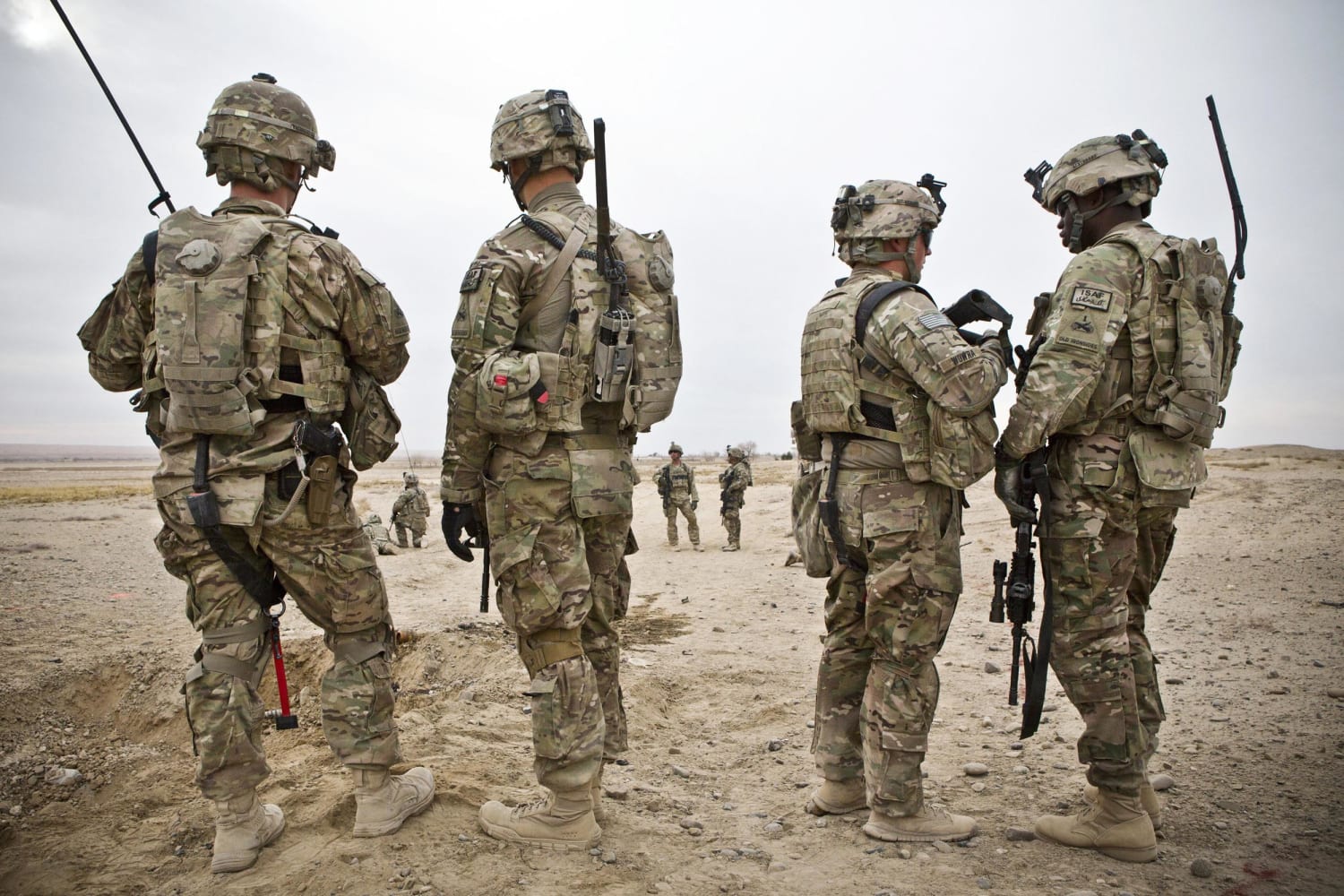
With Veteran’s Day on Tuesday, The New York Times uncovered an unfortunate military oversight that could affect over 600 service members. Originally, NYT found 17 soldiers who had been exposed to abandoned, damaged, or degraded chemical weapons in Iraq. Later 25 more came forward, and after a review of Pentagon records, Defense Secretary Chuck Hagel has said that hundreds of troops told the military they were exposed. The Pentagon says it will now expand outreach to veterans who believe they may have been exposed.

The New York Times—“Phillip Carter, who leads veterans programs at the Center for a New American Security, called the Pentagon’s failure to organize and follow up on the information “a stunning oversight.” Paul Rieckhoff, founder and executive director of Iraq and Afghanistan Veterans of America, said the military must restore trust by sharing information.”

Kawaoka’s Controversial Flu Research at UW-Madison On Hold Again

Once again, Yoshihiro Kawaoka has halted his research of H5N1 at the University of Wisconsin-Madison. Kawaoka created an altered version of the H5N1 flu virus to look at transmissibility between mammals. On October 17, the Obama administration said they would postpone federal funding for gain-of-function studies, including those involving flu, SARS and MERS. Roughly 50% of Kawaoka’s work involves gain of function, and he paused all experiments that “might enhance pathogenicity or transmissibility.”

Wisconsin State Journal—“The White House announcement comes in response to incidents this year involving anthrax, flu and smallpox at the Centers for Disease Control and Prevention and the Food and Drug Administration. “The incidents occurring at federal facilities this summer have underscored the importance of laboratory safety, and they also prompted calls for a reassessment of the risks and benefits that are associated with research involving dangerous pathogens,” Samuel Stanley, chairman of the National Science Advisory Board for Biosecurity, said during a meeting of the group Oct. 22.”

This Week in Ebola

The Ebola ‘outbreak’ in Texas is over and MSF has confirmed the decline of cases in Liberia, however, Ebola cases have risen ‘sharply’ in Sierra Leone. While Kari Hickox remained in the news explaining the reasons she fought against quarantine, it appears, as feared, that mandatory quarantine for volunteers returning from West Africa is causing some to re-consider their commitments. Meanwhile the U.S. Army has identified five possible bases for returning troop quarantine and the Pentagon has awarded a $9.5 million contract Profectus BioSciences, Inc. for development of an Ebola vaccine. President Obama asked Congress for $6 billion to fight Ebola in the U.S. and West Africa. NBC News reported that “The U.S. is keen to be seen as leading the international response to Ebola” but there is another country in the Americas contributing to the fight—Cuba. Also in the Americas, Canada’s policy of denying visas for people coming from West Africa is called into question, and five American airports are learning a lot about infection control. Back in West Africa, Nigeria’s success in fighting Ebola has been attributed to their fight against polio. Lastly, on the heels of Mark Zuckerberg’s $25 million donation to fight Ebola, he launched a button at the top the newsfeed that links users to places where they can donate, too.

Stories You May Have Missed


Image Credit: NBC News

Pandora Report 11.2.14

For this edition of the Pandora Report we look at Jonas Salk, avian influenza in China, TB and diabetes as a co-epidemic, and, of course, an Ebola update. As the weather is turning cooler, don’t forget to get your flu shot, and remember to protect yourself by washing your hands!

Have a great week!

On Jonas Salk’s 100th Birthday, A Celebration of his Polio Vaccine

If you visited Google.com on Tuesday you may have seen one of their famous doodles dedicated to Jonas Salk. Salk’s polo vaccine was declared safe and effective in 1955 and was, interestingly enough, never patented. “The notion handed down to us is that Salk decided not to patent the vaccine as a noble act of self-abnegation.”

The Los Angeles Times—“But the more important reason the vaccine went unpatented, as related by David M. Oshinsky in his 2005 book, “Polio: An American Story,” is that legally it was thought to be unpatentable. The National Foundation and the University of Pittsburgh, where much of the work was done, had looked into patenting the vaccine. They were dissuaded by Salk, who informed them that his techniques weren’t novel and his work had been based on years of prior work by others.”

Five Strains of H5 Avian Flu Reported Across China 

The Chinese veterinary authority reported outbreaks of five different subtypes of Highly Pathogenic Avian Influenza (HPAI) to the World Organization of Animal Health (OIE) on October 24. There were a total of 51 positive findings of the following strains; H5N3, H5N8, H5N2, H5N6, and H5N1. A map of all strain outbreaks is available here.

CIDRAP—“Two of the strains—H5N8 and H5N3—have not been reported by China to the OIE before. Two outbreaks of the former were reported in September, each involving one bird (a duck and an unspecified bird) sampled during a national surveillance plan. One was at a slaughterhouse and the other in a wetland area; both were in Liaoning province in the northeast.”

Unlikely Marriage of Diseases: TB and Diabetes Form a ‘Co-Epidemic’

A white paper presented on Wednesday at the 45th Union World Conference on Lung Health in Barcelona, Spain, warns, “diabetes is fueling the spread of TB.” The paper warns that having diabetes increases the risk that a person will become sick with TB will make TB more difficult to manage, adding that a patient with both diseases is more likely to have complications that do not exist when only one disease is present.

NPR—“The TB/diabetes double-whammy has at least two important differences from the TB/HIV co-epidemic. [1.] It involves the interaction of an infectious disease (TB is the world’s second-deadliest, next to HIV/AIDS) and a non-communicable chronic disease, rather than two infections. [2.] It has potentially more global impact. The TB/HIV co-epidemic was concentrated in sub-Saharan Africa, where 18 countries saw TB rates quadruple because of HIV. Many more countries have high rates of TB and, increasingly, of diabetes.”

This Week in Ebola

Not sure if it was because of Halloween or what, but it seemed to me there were fewer Ebola stories this week. Dallas nurse Amber Vinson, was finally released from Emory Hospital, free of the Ebola virus. Many other stories this week focused on quarantine. Kaci Hickox, the nurse who worked treating patients in Sierra Leone, first protested over her isolation in New Jersey, and then broke her quarantine in Maine, was reportedly ‘humbled’ when a judge in her home state of Maine ruled she can come and go as she pleases. She was still in this news this weekend as it was reported that her roommate in Africa tested positive for Ebola and there was a skit about her on SNL. President Obama has said that quarantines may dissuade doctors and nurses from traveling to West Africa, while Secretary of Defense Chuck Hagel has said that U.S. military personnel returning from West Africa will be subject to a 21-day quarantine. The WHO reported that Ebola infections are slowing in Liberia, and the New England Journal of Medicine says they have a suspect zero for this whole outbreak.

Stories You May Have Missed


Image Credit: Google

Pandora Report 5.9.14

The stories this week cover topics that I am especially interested in: avian flu in Antarctica, wild poliovirus, and the Russia biological weapons program. Have a great weekend!

Avian Influenza Present in Antarctic Penguins

A team of international researchers have discovered a new strain of avian influenza among Adelie penguin populations in Antarctica which has been identified as H11N2. Presence of this strain of influenza was found in eight penguins from a sample size of 301 swabbed penguins and 270 penguins who had had blood drawn. Though the six adult penguins and two chicks only represent 2.6% of the total group, approximately 16% of the samples contained antibodies for H11N2, indicating the virus has likely been present in the population for “some length of time.”

Guardian Liberty Voice—“There has already been a theory posited which might explain how the H11N2 virus was transmitted to the Antarctic region. Due to both the relatively small incidence of the virus in the sample population, and the region from which the sample size was drawn. Hurt has posited that the introduction of the virus into the Antarctic ecosystem was conducted by migratory birds from South America, such as the yellow-billed pintail duck. This conclusion has been supported by the fact that distant similarities between the H11N2 strain of the virus and South American AIVs, primarily from Brazil and Chile, do in fact exist.”

Wild Poliovirus Making a Comeback, WHO says

In a statement made on Monday, the WHO applauded worldwide efforts to eradicate polio while cautioning that the wild poliovirus is spreading and may negate the hard fought eradication efforts. They declared this spread of wild poliovirus a Public Health Emergency of International Concern and warned that if the spread remains unchecked “this situation could result in failure to eradicate globally one of the world’s most serious vaccine preventable diseases.” The WHO declared that Pakistan, Cameroon, and Syria pose the greatest risk of wild poliovirus exportation while Afghanistan, Guinea, Ethiopia, Iraq, Israel, Somalia and Nigeria are infected with wild poliovirus but are not exporting it.

National Geographic—“The effort is to break the chains of transmission. The WHO is recommending that countries currently infected with polio ensure that their people who are traveling outside the country get vaccinated. About 72 percent of the people who are infected with the polio virus have no symptoms, but they can still spread the disease. Polio is now in just a few countries. The concern is not to re-infect the countries that have gotten rid of polio.”

Lawmakers Mull Biological Weapons Threat from Russia

Providing an opportunity for me to majorly geek out, the U.S. House of Representatives held a committee hearing this week regarding the biological weapons threat from Russia and beyond. Witnesses included Dr. Christopher Davis, a biomedical weapons expert and former member of the U.K.’s Defense Intelligence Staff; Dr. Amy E. Smithson, a senior fellow at the James Martin Center for Nonproliferation Studies; Milton Leitenberg, a senior research scholar at the University of Maryland and author of The Soviet Biological Weapons Program; and Dr. David Franz, former Commander of USAMRIID.

Time—“Leitenberg said it’s almost impossible to evaluate the extent of the Russian biological weapons stockpile because three Russian laboratories remain closed to outside inspection. “We don’t know what they’re doing,” Leitenberg said. ‘They may or may not have an active offensive program—I presume they do. I do not believe that the U.S. government thinks they are producing and stockpiling agent any more, but we don’t know that.’”

A recording of the hearing is available here.


Image Credit: Andrew Mandemaker/ Wikimedia Commons