Pandora Report 10.9.15

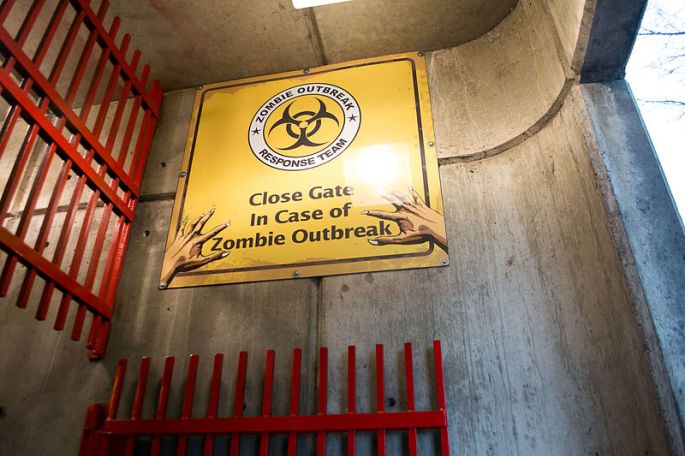
Happy Friday! Since we’ve made it through Hurricane Joaquin, let’s celebrate with some biodefense news by way of air defense, Ebola, some amazing original work from the GMU Biodefense clan, and all the fun in between. Fun fact: On October 8, 2001, President George W. Bush established the Office of Homeland Security. Let’s start your weekend off right with some zombies, shall we?

Zombies & Air Defense?
With Halloween around the corner and The Walking Dead about to premiere, it’s time for some zombies – Pentagon style! Ever heard of JLENS? This $2.7 billion radar blimp was initially designed to act as an early warning system for low-flying weapons, drones, etc. Unfortunately, this system has been plagued with problems (pun intended) as it failed to detect the low-flying aircraft piloted by Florida postal worker, Douglas Hughes. We’ll let that slide since JLENS wasn’t deemed operational that day but that hasn’t stopped many from calling it a “zombie” program, meaning it’s “costly, ineffectual, and seemingly impossible to kill”. Check out the LA Times investigation into whether this defense technology is really “performing well right now” as claimed by Raytheon.

2016 Presidential Candidates on Nonproliferation- Part I

GMU’s Greg Mercer has churned out another fascinating commentary in a new series related to what 2016 presidential candidates are saying about nonproliferation. His series will pull together candidate stances and comments to take an in-depth look into the role nonproliferation is taking in this race. Greg notes, “Lucky for us though, there’s been a major nonproliferation news event to drive the foreign policy debate: the Iran nuclear deal.  So this is a rundown of what’s been said and being said about nonproliferation and WMD policy in the 2016 election.” This week we’ll be looking at the Republican Party, so make sure to check in over the next few months to see how everyone’s stance has changed or strengthened.

Crimean-Congo Hemorrhagic Fever Spike in Pakistan
Pakistan is currently seeing a spike in their cases of CCHF with the most recent death of a patient in Quetta at the Fatima Jinnah Chest and General Hospital. The death toll is now 3 in 3 days and a total of 15 patient mortalities this year. There are 9 other CCHF patients under observation and treatment at the regional hospitals. The WHO’s Diseases Early Warning System (DEWS) in Pakistan tracks these seasonal spikes in hopes to also prevent its spread. The concerning aspect is the high amount of deaths this year so far when compared to other years.

Iran’s Shifting Preference?
How lucky are we to have two amazing GMU Biodefense commentaries this week? Scott McAlister is discussing the Iranian nuclear deal and the potential consequences. He hammers out a topic we biodefense folks are all too familiar with – dual-use and the hiding-in-plain-sight reality of so many programs. Scott points out that, “the scary thing about biological and chemical weapons programs is their ability to hide in plain sight.  Due the dual use of much of today’s biotechnological advancements, an offensive weapons program can be disguised as a facility to create vaccines or research centers for diseases with minimal effort.” Take a look at his notes on nuclear weapon capabilities and Iranian perspective on biological weapons.

Tacit Knowledge & Biological Weapons Proliferation
On a scale of 1-10, having your research cited during a meeting of the State Parties to the Convention on the Prohibition of Biological Weapons, is pretty much a 12. What can we say, GMU Biodefense professor, Dr. Sonia Ben Ouagrham-Gormley, did just that! At the meeting of experts in August, the State parties met to discuss the field of science and technology while emphasizing tacit  knowledge in relation to bioweapon proliferation. When discussing tacit knowledge, the U.S. noted at the conference, “the concept of communal or collective tacit knowledge has been explored extensively, particularly in the work of Donald Mackenzie and Graham Spinardi, who examined its role in the context of nuclear weapons creation, and Kathleen Vogel and Sonia Ben Ouagrham- Gormley, who examined it with respect to biological weapons creation.” During this meeting, the role and relevance of tacit knowledge as a risk modulator was heavily discussed, pointing to its corresponding role of increasing the risk of bioweapon proliferation.

Bioweapons for Dummies?
Speaking of tacit knowledge and the rise of the biotechnology revolution… Zian Liu from the Bulletin of the Atomic Scientists goes through the five steps of building a biological weapon to address the barriers to weaponization. Broaching the topic of “biohacking”, Zian points to the concern within the biodefense industry related to synthetic biology and fourth generation bioweapons. From ordering the synthetic genes to recently published research that discusses the developments of genetic modification, this commentary hits on the very real barriers that a fourth-year bioengeneering undergraduate student identifies -even with the available tools. Between the need for increased regulations on synthetic DNA and the dual-use concerns, Zian notes that “novice biologists are not likely to construct advanced weapons any time soon.”
Screen Shot 2015-10-09 at 9.34.50 AM

Stories You May Have Missed:

  • Guinea outbreak region goes a full week without a new Ebola case! We’re all holding our breaths in hope this means the outbreak is nearing an end in this hard-hit region. Sierra Leone has reached 3 weeks (a full incubation period) of no new cases and the last healthcare worker infection was back in August. The WHO and local public health workers are still maintaining door-to-door case finding efforts and contact tracing.
  • PPD Awarded Contracts with US Army & BARDA – Pharmaceutical Product Development (PPD) was just awarded two US government contracts to address health outcomes in armed forces and test the efficacy of the national strategic stockpile’s supply of avian influenza vaccine.
  • Findings of the 7th WHO Ebola Emergency Committee Meeting – Last week this committee met to discuss the ongoing outbreak in West Africa. They provided updates and furthering advisement regarding the disease and international travel as 34 countries “continue to enact measures that are disproportionate to the risks posed.”
Ebola 2014: The Infection Preventionist Perspective

By Saskia Popescu

Unlike many infectious diseases, especially ones with a relatively small number of occurrences, the Ebola outbreak that started in 2014 received a sensational amount of attention. While many in public health keep tabs on outbreaks (thanks ProMed!), it’s not uncommon for the rest of society to remain blissfully unaware unless the bug comes knocking on their front door. I’ve been captivated with Ebola (now called Ebola Virus Disease, or EVD) since a young age after Richard Preston’s sensational book, The Hot Zone got passed to me during a family vacation. The first whispers and later emails of the surging cases in West Africa were pretty astounding in early 2014. Usually these outbreaks occur in small blips and then die off a few weeks or months later. I was working in Infection Prevention & Control at a pediatric hospital at the time and, like many, didn’t think too much about the outbreak pertaining to the US and even if it did, our infection control practices should be able to handle an organism that required Contact/Droplet isolation. I put some updates in our monthly newsletter and continued to watch as West Africa became overwhelmed with EVD.

Like many public health issues, no one really starts hitting the panic button until a disease shows up and you’re scrambling (and trust me, most of the time, you find out retrospectively) to do damage control. The IP (infection prevention) world started to get worried in late July when Emory University Hospital accepted and began treatment the first two EVD patients transported into the US from their field assignments in West Africa. Questions about isolation and practices were asked, but again, no one really worried too much since these patients were flown directly to Emory due to their special infectious disease isolation unit. Suddenly, on September 30th, 2014 a media storm announced that a patient being treated at Texas Health Presbyterian Hospital in Dallas, Texas, was positive for EVD. I can personally tell you, this is when the proverbial crap hit the fan for just about every healthcare facility and IP in the US. A visiting your emergency department, being sent home, and then coming back with a highly infectious disease that few physicians know well enough to suspect, let alone diagnose or treat, is pretty much the equivalent of an IP nightmare. So what could we do?

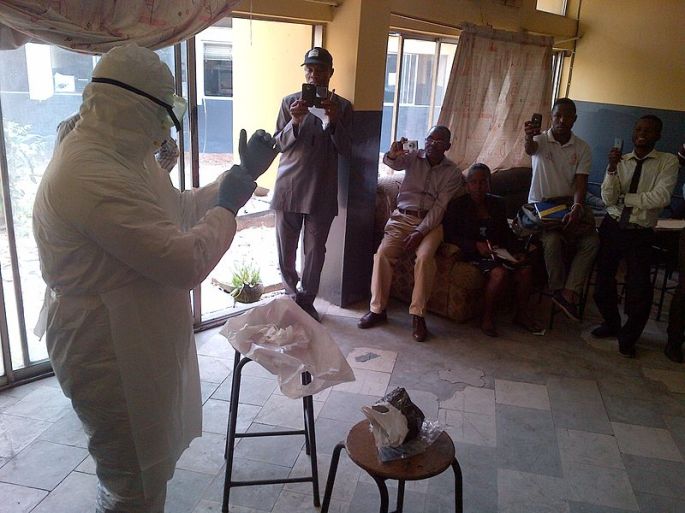
First, I should say that every hospital with an IP team (most of them have at least one IP) experienced a massive level of panic, anxiety, and stress dedicated to avoiding this, so please, give them a pat on the back. I am fortunate that my IP team consists of not only enthusiastic, ridiculously talented and intelligent people, but they know how to respond to crisis in the flip of a switch. We quickly pulled together a committee to encompass all people that would play a role in the preparedness and response of an EVD patient. Fortunately, by this time, Emory had released an extremely helpful document that discussed their experiences and lessons learned. We met our committee (now filled with people from environmental services, facilities, nursing, medical staff, infectious disease, emergency preparedness, the emergency department, and many others) with this document and everything else the Centers for Disease Control and Prevention (CDC) had on EVD response. For many, the difficulty laid in where do we put this patient, what designated staff will care for them, and what will we do with the waste? You pretty much need to have a specific process for both your emergency department if there is a suspected case, but also a designated wing you can move patients out of and move this potential EVD patient into. Without going too much into detail, one of the trickier components became the PPE (personal protective equipment) and waste process of a potential patient. CDC PPE recommendations were changing almost daily (or at least that’s how it felt). Information was changing so rapidly it was a constant cycle of checking their website, talking with peers, and attempting to update instructional handouts and training tools for staff incase we happened to get a potential patient. Historically, EVD PPE recommendations came from outbreaks in Africa with little access to the equipment and capabilities we’re used to in the US. The ability to intubate a patient or insert a central line opened up a Pandora’s box of potential transmission scenarios, leading to difficulty in establishing a solid PPE process. Acquiring the PPE was another struggle. Our materials management team worked tirelessly to find the ever changing products we would need to not only have PPE kits in our emergency department and urgent cares, but also to sustain care for a patient for several days. The sustainability was a huge concern as staff were changing in and out of PPE every 45 minutes due to heat exhaustion and CO2 build-up from the N-95 masks. Once we were able to obtain the PPE, and this was a constantly changing cycle to follow CDC recommendations, training went into effect. One of the greatest struggles was training enough staff to have a proficient understanding of an extremely complex (and dangerous) process. The unique part about EVD PPE practices is that you utilize a buddy system with a checklist – something healthcare workers are not used to and something we had to remind them of (don’t try and memorize this)! We did several drills involving patients projecting a mixture of chocolate syrup and glitterbug to not only prepare healthcare staff, but also show their cross contamination when doffing the PPE.

Courtesy of USA Today

The PPE struggles were one small piece of this EVD pie. Many IP’s could probably write a novel about the struggles and random problems that came up during this time. Our ridiculously long days were filled with preparedness meetings, educational trainings, hospital-wide communication, worried calls from people and staff (the comical relief of people calling to ask for an EVD vaccine but refusing to get their flu shot showcases the ridiculousness of what we experienced), educating physicians on signs and symptoms, identifying routes for patient transportation, and coordinating surveillance mechanisms like electronic mandatory travel history (from the affected countries) questions and alerts in the intake process of patients from the emergency department or urgent cares. The simple truth is that the US became so panicked and so obsessed with a disease no one really worried about a few months before, the amount of preparedness that was initiated simply couldn’t be maintained for an extended period of time. Emergency departments and hospitals are comprised of some of the most hardworking and intelligent people you’ll ever meet, but I can honestly say, something like what happened in Dallas could’ve happened in any hospital. Healthcare is an imperfect system and while we struggle to make it better and more robust, it always comes down to overworked staff and communication gaps. My experiences as an IP during the EVD 2014 outbreak, while exhausting, were truly eye opening to the ability of our healthcare infrastructure to respond to such an event. It revealed a lot of gaps in our practices and the state of our preparedness, but overall, it highlighted the growing need for better disease surveillance, preparedness, and attention to biosecurity.


Pandora Report 6.14.15

I’ve got brunch reservations this morning so the big story about the coming egg shortage is hitting close to home. We’ve also got a story about ISIS’ WMD and a bunch of stories you may have missed.

As a final reminder, the Early Registration Deadline for the Pandemics, Bioterrorism, and International Security is tomorrow, Monday, June 15. For more information and registration, please click here.

Enjoy the rest of your weekend!

Egg Shortage Scrambles U.S. Food Industries

The unprecedented outbreak of avian influenza in the U.S. has meant massive losses in the domestic poultry industry which has left experts warning that U.S. consumers are very likely to see an increase in egg prices. Cases of avian flu have been reported in 15 states, with Iowa and Minnesota being some of the hardest hit. “In Minnesota, the number of lost turkeys represent about 11 percent of our total turkey production…of the chickens we’ve lost that are laying eggs, 32 percent… have been affected by this” In Iowa, about 40 percent of the state’s egg-laying chickens and 11 percent of its turkeys have been affected. All these losses will mean a shortage of whole eggs and other egg-based products.

U.S. News and World Report—“Consumers haven’t felt the pinch too much just yet, but they are unlikely to emerge with their pocketbooks unscathed, [Rick] Brown [Senior VP at Urner Barry, a food commodity research and analysis firm]. He says two-thirds of all eggs produced in the U.S. remain in a shell, many of which are placed in cartons and sold in grocery stores. This stock of eggs has been hit significantly less by the avian flu outbreak than those used in the egg products industry, which Brown says encompasses “everything from mayonnaise to salad dressings to cake mixes to pasta to bread.”

Australian Official Warns of Islamic State Weapons of Mass Destruction

You may have already seen this, since this story was everywhere this week. Julie Bishop, Australia’s Minister for Foreign Affairs, said the Islamic State (ISIS) already has and is already using chemical weapons. Bishop made these comments in an address to the Australia Group—a coalition of 40 countries seeking to limit the spread of biological and chemical weapons. In a follow-up interview, Bishop also said that NATO was concerned about the theft of radioactive material and what that could mean for nuclear weapons proliferation.

The Washington Post—“‘The use of chlorine by Da’ish, and its recruitment of highly technically trained professionals, including from the West, have revealed far more seriou­s efforts in chemical weapons development,” Bishop said, using an alternate name for the Islamic State in a speech reported by the Australian. She did not specify the source of her information.  “… Da’ish is likely to have amongst its tens of thousands of recruits the technical expertise necessary to further refine precursor materials and build chemical weapons.’”

Stories You May Have Missed


Image Credit: Hannahdownes

Pandora Report 3.28.15

This week we’re covering a new treatment for inhalation anthrax, Russian nuclear threats, chlorine accelerating antibiotic resistance and other stories you may have missed.

Have a great week and see you back here next weekend!

FDA Approves Emergent BioSolutions’ Inhaled Anthrax Treatment

Considered one of the most likely agents to be used in biological warfare, Anthrax now has a new enemy—Anthrasil. This treatment, developed by Emergent BioSolutions Inc., neutralizes toxins of Bacillus anthracis and requires only two doses to confer immunity, versus the three of BioThrax (the current treatment for inhaled anthrax).

Reuters—“The company developed the treatment, Anthrasil, as part of a $160 million contract it signed in 2005 with the Biomedical Advanced Research and Development Authority (BARDA), a part of the HHS. Anthrasil, which is approved in combination with other antibacterials, is already being stored in the U.S. Strategic National Stockpile, the company said on Wednesday. The drug is made using plasma from healthy, screened donors who have been immunized with Emergent Bio’s Anthrax vaccine, BioThrax, the only FDA-licensed vaccine for the disease. Anthrasil has an orphan drug designation and qualifies for seven years of market exclusivity.”

Russia Threatens to Aim Nuclear Missiles at Denmark Ships if it Joins NATO Shield

Denmark has said that in August it will contribute radar capacity on some of its warships to NATO’s missile defense system. Russia has now threatened to aim nuclear missiles at Danish warships if Copenhagen goes through with its actions. Moscow opposes the system arguing that it reduces the effectiveness of the Russian nuclear arsenal and could lead to a new Cold War-style arms race.

The World Post—“‘We have made clear that NATO’s ballistic missile defense is not directed at Russia or any country, but is meant to defend against missile threats. This decision was taken a long time ago, so we are surprised at the timing, tone and content of the statements made by Russia’s ambassador to Denmark,” [NATO spokeswoman Oana Lungescu] said. “Such statements do not inspire confidence or contribute to predictability, peace or stability.’”

Chlorine Treatment Can Accelerate Antibiotic Resistance, Study Says

Research presented at the American Chemical Society meeting last week shows that chlorine treatment of wastewater may actually encourage the formation of new antibiotics—rather than eliminating the drug residues. While scientists are looking for new antibiotics, this isn’t good news. ACS says that upon re-entering the environment, the new drugs—in theory—can promote the growth of antibiotic resistant bacteria. In a test, doxycycline was exposed to chlorine; the results are described below.

Gizmodo—“The study evaluated the changes in the antibacterial activity of the products that form in the reaction between doxycycline and chlorine using antibiotic resistance assays. The results showed that some of the transformation products have antibiotic properties. The products of chlorination were also examined…and several chlorinated products were detected. These transformation products may still select for antibiotic resistant micro-organisms in the environment even in the absence of the parent doxycycline molecule. This suggests that re-evaluation of wastewater disinfection practices may be needed.”

Stories You May Have Missed

Image Credit: The U.S. Food and Drug Administration

Dana Perkins @ George Mason University


On Monday, March 31, 2014, Dana Perkins was the featured speaker at the George Mason University Biodefense Policy Seminar.

Ms. Perkins’ full biography is available here.