Pandora Report: 11.13.2015

Given the auspicious nature of Friday, the 13th, how about we start the Easy-Bake Oven version of bioreactors? (insert evil genius laugh). Our report this week is rich in biosafety, GMU Open Houses, and updates on global outbreaks. Fun History Fact Friday – this week in 1989, the Berlin Wall came down! Before we venture down the rabbit hole, don’t forget to get your flu shot before the 2015/2016 influenza season hits too hard!

DIY Bioengineering 
If you’re in search of the perfect holiday gift for your favorite biodefense/bioengineer, you can thank the creators of Amino (personally, I think calling it the Easy-Bake Oven Bioreactor is just so much more fun). The kit starts at $700 and comes with all the essentials for your “recipe” (main bacterial culture, DNA, pipettes, incubators, agar plates and various sensors for monitoring microbial growth). Did I mention it comes in a nice color-coded, pleasing-to-the-eye plywood dashboard? MIT graduate, Julie Legault, is the master genius behind Amino, and uses the “apps” (step-by-step guides) to help make even the most science adverse individual capable of making DNA products. Liz Stinson points out that “they walk users through how to insert the DNA into untransformed bacteria cells, and how to incubate, grow, and maintain the altered microorganisms”. Just make sure your new gift comes with some information on dual-use research of concern and avoids any select agents…

Master’s Open House 
Make sure to swing by our GMU Master’s Open House on Wednesday, November 18th at 6:30pm to learn about all our different programs! Good news – you can virtually attend via this link and even ask questions live! We’ll be talking biodefense and all the ways you can use our MS degree (online or in person!). Whether its fighting food safety issues, pandemic influenza, or zombies, we’re passionately trying to make the world of global health security stronger and more diverse!

Biological Research: Rethink Biosafety 
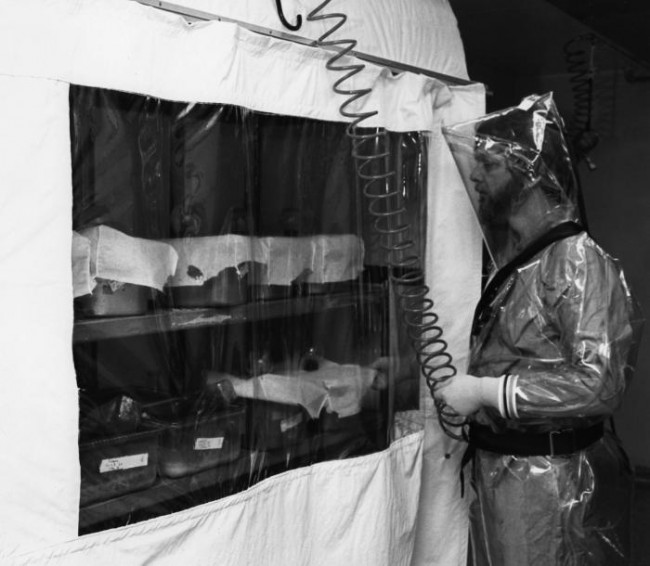
“Biology must move forward on safety and security. Let’s not reinvent the wheel, but learn from those doing safety better.” Tim Trevan’s comments echo the sentiments of many within the biosecurity field. The anthrax mishaps at Dugway and the CDC BSL-3 lab in Atlanta compound a growing concern over the handling of select agents and the lab safety practices and processes that seem to be failing. Trevan poses the question, “what are the prospects for managing the more intractable risks globally if measures to ensure the safe handling of dangerous pathogens are failing at the best-equipped facilities in the country with the most advanced biotechnology in the world?” In his words, Trevan has hit the nail on the head and summarized the realities of lab safety culture. So what’s to be done? Trevan makes the unexpected recommendation of  using nuclear security experts to advise on biosafety and biosecurity. This strategy utilizes a practice that is also common in healthcare – a culture of safety. By focussing on the prevention of failure, instead of maximizing output, safety becomes an engrained practice in all levels of an organization, transforming it into a “high-reliability organization” (HRO). By using examples within industries like offshore oil drilling, airlines, etc., Trevan points to the growing biotech capabilities that make biosecurity that much more imperative. In healthcare, I’ve seen organizations truly transform their practices by moving to a culture of safety (and utilizing “just culture” when it comes to patient safety) and while it’s not a wholly easy process, the foundations are already present in the existing teachings of patient care. Labs have the training and knowledge for safety, but as Trevan points out, it’s time to bring in those with the expertise to help move towards a culture of safety.

Screen Shot 2015-11-12 at 9.56.04 AM
Courtesy of HDOH

Dengue Fever Outbreak in Hawaii 
If you’re considering a winter retreat to Hawaii, make sure to grab some bug spray. Hawaii Island is currently experiencing a Dengue outbreak that has just reached 33 cases. Dengue is not endemic to Hawaii and while travelers have imported cases from time to time, this is marks the first big cluster of locally-acquired cases since 2011. The Hawaii Department of Health (HDOH) continues investigations and reports (as of 11/11)  25 Hawaii Island residents and 8 visitors have been laboratory confirmed with dengue fever. The HDOH has provided maps related to exposure areas to help people avoid high-risk locations or at least use preventative measures. If you’re traveling to Hawaii Island or an area where dengue is endemic, make sure to take steps to reduce the risk of mosquito bites and the potential for transmission!

Ebola Update
Guinea has reported no new cases in the last week. While they’re still on high alert after the cases surrounding a family, they are hopeful. Liberia and Sierra Leone have hit their 90-day enhanced surveillance period, meaning they have no new cases and are now working towards the WHO’s second objective (managing and responding to residual risks). Pauline Cafferkey has made a full recovery after her hospitalizations due to post-Ebola recovery complications. Researchers at Columbia University’s Mailman School of Public Health used a new statistical model to map the outbreak. Results will be published in the Journal of Royal Society Interface, which shows the development of the outbreak and role early detection and response plays.

Stories You May Have Missed: 

  • Joint Services Mask Leakage Tester (JSMLT) Contract – the DoD has announced that Air Techniques International, Inc. has been awarded a contract regarding the maintenance of the JSMLT. The JSMLT does quality control and ensures proper fitting (portably) on CBRN protective masks.
  • H7N9 Cases in China Rise– China has confirmed two more cases that occurred in October, bringing the total case count to four. Many in public health are noting that these cases bring about a fourth wave of infections (starting in October). The two new cases were a a 62-year-old woman from Shengzhou and a 51-year-old farmer from Hangzhou.
  • Boosting Biosecurity in Nigeria & Kenya– The Institute of Human Virology at the University of Maryland have announced two grants to help build biosecurity in Nigeria and Kenya. The first grant of $13 million will go to strengthen laboratory infrastructure in Kenya, and the second of $10 million will help those in Nigeria quickly detect and respond to emerging infectious diseases.

Enjoying your weekly dose of the Pandora Report? Sign up to receive it every week so the fun never ends! 

Pandora Report 10.30.2015

The witching hour is upon us! Halloween is tomorrow and with that we must ask, how good are your zombie fighting skills? Good news if you’re in Arlington, VA, as it’s considered one of the top ten cities to survive the zombie apocalypse – good thing GMU has a campus there (we biodefense folks are the ultimate planners!). This week was busy with the release of the Blue Ribbon Study Panel on Biodefense’s National Report. I was able to attend the panel event, so read on for my comments and your weekly dose of biodefense news!

DSC_3586GMU Biodefense Program News & Alumni 
We’ve added a new page to salute our biodefense alumni and all that they do with their GMU education. GMU Biodefense students have a diverse background in their education, experiences, and interests, and we absolutely love getting to brag about all the amazing things they accomplish after their studies. Whether it’s a new publication or an award, we hope to pass along their accolades, so please check out our new page to see how GMU Biodefense alumni are contributing to the world of global health security!

12111966_10104338304988922_3051154411712634566_n-1Blue Ribbon Study Panel on Biodefense Releases Report– I had the pleasure of attending the Blue Ribbon panel on Wednesday, in which they reviewed their report, “A National Blueprint for Biodefense: Leadership and Major Reform Needed to Optimize Efforts”. The panel event saw Senator Joe Lieberman, former Governor Tom Ridge, and former Homeland Security Advisor, Kenneth L. Wainstein, discuss the challenges of biodefense, the report, and answer several questions regarding their findings. The report is comprised of 33 recommendations that range from unification of biodefense budgeting to optimizing the National Biosurveillance Integration System and to improving surveillance and planning for animal and zoonotic outbreaks. Along with these 33 recommendations, there are 100 action items. Perhaps one of the biggest take-aways from the report is the recommendation that the Office of the Vice President of the US assume authority over biodefense efforts. There is heavy emphasis on a unified budget and centralization to combat the redundancy and current siloing we see in existing programs.  Senator Lieberman discussed the role of the research and private sector’s involvement, with former Gov. Ridge noting that “we need to start thinking differently about how we incentivize the private sector.” The panel discussed that despite our past efforts, the Ebola outbreak in 2014 showed that the “threat is real, lets not wait for it to occur” and as former Gov. Ridge noted, “we don’t give bioweapon threats the attention they need. The threat is ahead of us.” Senator Lieberman commented on the Ebola situation,  noting that our response was dismal and despite 10 months of warning, basic human errors led to a failure in providing hospitals with general guidelines. Whether it is an intentional bioweapons attack, outbreak of an emerging infectious disease, or unintentional, accidental release due to lab safety errors, the panel’s goal of having centralized leadership reveals the complex nature of these challenges. Also, did I mention that they included infection control in their guidelines (#18)?! Overall, I found the event highly engaging and was pleased to hear the panel members approach these topics with not only a sense of urgency, but a holistic manner to meet the challenges of biodefense.

Jump Start – Accelerating Government Response to A National Biological Crisis
UPMC Center for Health Security has released their July 2015 report that “examines a scenario in which the US is suddenly faced with a newly emerged intentional biological threat that could produce catastrophic public health consequences and threaten our economy, government, and social structure.” The report reviews governance, public health response, medical countermeasures, healthcare system response, decontamination and remediation, and environmental detection, while making recommendations. Utilizing published literature and subject matter expert interviews, the Jump Start report scenario occurs in central Moscow subway stations and Red Square. It discusses responses in a post-Amerithrax world and highlights the need to stop the spread of infectious diseases while emphasizing that in a similar scenario, the US government should push out table-top exercises at a national level to test readiness to biothreats. The role of healthcare infrastructure and capacity comes into play, highlighting the limitations that diagnostic testing plays – even if the solutions aren’t available. I’d be curious to see a more detailed analysis of how we approach novel agents and the time-lag this can often cause in diagnosis. Also – what would be the ethical dilemmas regarding invasive medical treatments for a novel agent? Medical ethics became a very real issue during Ebola preparedness (perhaps not as well discussed in media circuits) as the invasive care capabilities of healthcare professionals in the US correlates with increasing risk for disease transmission.

White House Calls for Better Biosafety –  As fallout from several lab safety breaches, the White House issued recommendations that focus on labs that are registered to work with pathogens from the Select Agents list. Ranging from increased training to assessing the number of high containment labs we have in the US, this memo, with a deadline for the recommendations, sets the tone for change when it comes to biosafety.

Saudi Arabi MERS Cluster – reports from Saudi Arabi’s Ministry of Health have confirmed a healthcare-associated cluster of MERS-CoV cases that involved seven individuals. The initial patient was seen in the emergency department of Almana General Hospital, with five other patients exposed in the hospital, and an additional case that is believed to not have had a healthcare exposure. All patients are under observation in the King Fahad Hospital. One of the patients is reported to be a nurse. In previous weeks, there was a cluster of cases related to janitors living together in Riyadh.

Stories You May Have Missed:

  • The African Development Bank Group (AfDB) has approved a $33.3 million grant towards a Post Ebola Recovery Social Investment Fund (PERSIF) for efforts in Guinea, Liberia, and Sierra Leone. The US State Department is contributing a $5 million grant towards this to help support livelihood development for women, girls, and orphans from the affected countries. The goal is to build resilience in the affected countries and strengthen the economic systems while improving governance and communication.
  • Nigeria was just removed from the WHO’s list of polio-endemic countries! After halting the spread of wild poliovirus transmission during a 15 month period, Nigeria was declared free of the disease! The WHO is continuing to work on the remaining two polio-endemic countries; Afghanistan and Pakistan.
  • Three more cases of Ebola in Guinea were reported this week. The three patients are all family members, with one being a pregnant woman. Guinea experienced several cases last week while Liberia has been EVD-free since September 3rd and Sierra Leone just passed their six week mark without a new case.
  • The WHO announces that TB surpassed HIV as the leading cause of death from infectious disease in 2014. Better surveillance enabled global public health teams to identify new cases. In Indonesia alone, there were one million new cases reported this year. The WHO notes that while surveillance efforts are revealing new cases, progress is still insufficient, especially in regards to drug resistance.


The Pandora Report 12.6.13

Highlights this week include the second case of H7N9 in Hong Kong, WHO ramping up calls for increased surveillance for MERS, EEE in Vermont, why that one friend never gets sick, and the Philippines ramping up its biosecurity. Happy Friday!

Hong Kong sees second case of H7N9 bird flu in a week

Hong Kong has seen its second case of H7N9 in the last week. An 80-year old man with diabetes sought medical attention after experiencing minor heart failure, and within a couple days of hospitalization developed symptoms consistent with the flu virus strain. He has subsequently been isolated for further treatment – it remains unclear if he came into contact with poultry prior to his hospitalization. However, don’t freak out yet –  the two cases are consistent with expected resurgent flu numbers following the onset of winter. According to all literature and available case evidence,  the virus still cannot effectively transmit person-to-person.

South China Morning Post – “It was unclear whether the man had come into contact with birds and live poultry and which district in Shenzhen he lived in. The three family members coming with him to the city had been back in Shenzhen and the city had contacted the Shenzhen health authority for subsequent medical monitoring…Border checks have been stepped up after the first confirmed case, and three people, who stayed in the same ward as the helper but had had no symptoms, are being isolated at the Lady MacLehose Holiday Village in Sai Kung.”

WHO calls for action on Mers following death in Abu Dhabi

Earlier this week, a Jordanian woman infected with MERS died from the virus shortly after giving birth to her second child. Her eight-year old son and husband are both also infected, and are still under surveillance in Jordan. It is unclear if the newborn is also infected with the  virus. None of the family had any travel history, any prior contact with animals, or any contact with infected persons, further confounding public health officials trying to determine the virus’ vector. In response to the mother’s death, the WHO has strongly encouraged countries to ramp up their surveillance and monitoring efforts. To date, there have been 163 cases of the virus worldwide, with a case fatality rate of approximately 42% causing 70 deaths.

The National – “More must be done to stop the spread of the deadly Mers coronavirus, the World Health Organisation has warned. Countries must strengthen their surveillance, increase awareness and try to find out how people are infected, the WHO’s emergency committee said on Wednesday…But Mers-CoV is not yet considered an international public health emergency. ‘After discussion and deliberation on the information provided, the committee concluded that it saw no reason to change its previous advice to the director general,’ the WHO said. The 15-member committee, which includes the deputy health minister of Saudi Arabia, Ziad Memish, said the situation continued to be of concern, in view of new cases and of information about the presence of the virus in camels in Qatar last month. It called for more support for countries that are particularly vulnerable, such as Saudi Arabia – where most of the cases have been confirmed – and urged for more studies to investigate exactly how people become infected with Mers-CoV.”

Vt. testing deer samples to test for EEE virus

Biologists in Vermont have begun testing over 700 blood samples collected from local moose and deer in order to track the spread of Eastern Equine Encephalitis (EEE). The virus was first introduced to Vermont in 2011, following the importation of an emu flock. EEE is a zoonotic alphavirus virus which primarily affects horses. The virus’ natural reservoir is wading birds, and it is spread, like so many horrible diseases, by mosquitoes. Although in the US there are usually less than 15 human cases of EEE, the virus’ fatality rate can approach 60%. As an encephalitic virus, symptoms are typically nasty – first fever, splitting headaches, photophobia (aversion to light),  then irritability, coma, and death. Among those lucky enough to survive, the virus often causes permanent sequelae, including severe brain damage.

Seattle PI – “Biologists say that mapping where the virus is found will help broaden the state’s understanding of the spread of the virus — which killed two people in Vermont in 2012 and two horses this year. EEE antibodies detected in deer and moose have been found in every Vermont country. Biologists hope that by looking for antibodies in the deer and moose, they’ll be able to determine if infected animals are more commonly found near certain bodies of water or wetlands.”

A genetic defect protects mice from infection with Influenza viruses

Everyone has that one friend/relative/colleague who not only never gets sick, but also thinks the best time to discuss their fabulous immune system is when you’re knee deep in tissues and throat lozenges. It turns out there may be a genetic reason for their immunological smugness. According to a new study from researchers at the Helmholtz Centre for Infection Research (HZI) in Braunschweig, mice who possess a mutation in the gene which encodes for the Tmprss2 protease (a catalytic enzyme) are resistant to infection from the H1 influenza A viruses. While the virus still infects the mice, it is unable to produce mature, infectious virus particles, and the infection is quickly cleared from their symptoms. This opens up a potential new field for drug development, and by targeting the host system rather than the virus, concerns over drug-resistance fade.

Medical Express – “The virus uses haemagglutinin as a key to enter the host cell which is then captured to build new virus particles. To reach its final shape, the coating protein has to be cleaved by a molecular scissor. This is done by an enzyme of the infected host. Otherwise, the protein is not functional and the virus particles are not infectious. A variety of host enzymes, so-called proteases, that process the haemagglutinin have been identified using cell cultures. Scientists from the HZI have now been able to show how important those enzymes are for the progression of the infection. Mice with a mutation in the gene for the protease Tmprss2 do not become infected by flu viruses containing haemagglutinin type H1. They are resistant against H1N1, the pathogen responsible for seasonal influenza epidemics, the ‘swine flu’ and the ‘Spanish flu’, which caused an epidemic in 1918. ‘These mice do not lose weight and their lungs are almost not impacted,’ says Professor Klaus Schughart, head of the Department ‘Infection Genetics’ at the HZI.”

Philippine airports on alert for bird flu

The Philippines is on high alert for the H7N9 strain of avian influenza found in Hong Kong for the first time last week. Manilla has  banned the import of all Chinese poultry products, and  airports across the island nation already screen inbound travelers to prevent the virus’ spread. This is an interesting form of biosecurity, which is something we don’t often talk about on the PR, mostly because it’s not as much of a concern for us as our colleagues in say, Australia.In this instance, the human body itself is seen as the vector for pathogen movement, rather than a kiwi or tomato plant.

Xinhua – “The Philippine government has alerted airport authorities to ensure that the deadly bird flu H7N9 could not enter the country following the recent discovery of first case in Hong Kong, the Philippines’ Department of Health ( DOH) said Wednesday. To date there are 141 cases of bird flu and 47 deaths worldwide. Deaths were due to severe pneumonia with multi-organ failure. So far, two-thirds of bird flu H7N9 cases were males and two-thirds were more than 50 years old.”

(image via Hagerty Ryan, U.S. Fish and Wildlife Service)