Pandora Report 1.12.2024

This week’s Pandora Report covers the passing of Graham Pearson, the winners of the 2023 Arms Control Person(s) of the Year contest, growing global COVID-19 case counts, the launch of ERINHA’s INTERCEPTOR project, and more.

Graham Pearson Dead at 88

Famed British scientist, civil servant, and author of The UNSCOM Saga: Chemical and Biological Weapons Non-Proliferation, Graham Pearson, died this month at the age of 88.

An obituary written by his cousin, Oliver Pickering, explains “Arising from a growing interest in arms control, which led him while still in post to work on verification methods to enforce the Biological Weapons Convention, in 1996 he joined Bradford University’s Department of Peace Studies as an honorary visiting research fellow in international security. His skills as an organiser, analyser and writer, helped by his boundless energy and genial personality, involved him in numerous meetings designed to strengthen the BWC, including in Geneva during Pugwash conferences on science and world affairs. He published widely in the field of chemical and biological weapons. Subsequently a visiting professor, he was made a DUniv of Bradford in 2018.”

Read more here.

2023 Arms Control Person(s) of the Year Winner Announced

The Arms Control Association announced the winners of its annual Arms Control Person of the Year contest. This year’s winners are the workers and technicians at the US Army Pueblo Chemical Depot in Colorado and the Blue Grass Army Depot in Kentucky. According to the Association’s press release, “The workers and technicians at the two chemical stockpile depots were nominated for their successful and safe completion of eliminating the last vestiges of the United States’ once-enormous declared stockpile of lethal chemical munitions as required by the 1997 Chemical Weapons Convention…Under the supervision of the U.S. Army’s Office of Assembled Chemical Weapons Alternatives, the last mustard gas munition was destroyed in June at Pueblo; Blue Grass destroyed the last missile loaded with Sarin nerve agent in July. The elimination program cost an estimated $13.5 billion.”

Read more here.

WHO Director-General Says Holiday Gatherings and JN.1 Variants Responsible for Increcased COVID-19 Cases Globally

WHO Director-General Tedros Adhanom Ghebreyesus told reporters Wednesday that a combination of holiday gatherings and the global spread of the JN.1 variant led to increased transmission of COVID-19 last month. Ghebreyesus said in a statement from Geneva, “Although 10,000 deaths a month is far less than the peak of the pandemic, this level of preventable deaths is not acceptable.”

The Director-General further added that it is “certain” cases are on the rise in places that have failed to report cases in a call to governments to increase surveillance and provide access to treatments and vaccines. The US CDC now estimates that the JN.1 variant is responsible for over 44% of COVID-19 cases nationally.

VOA explained in their article on the topic that, “Maria Van Kerkhove, technical lead at WHO for COVID-19, cited an increase in respiratory diseases across the globe due to the coronavirus but also flu, rhinovirus and pneumonia. “We expect those trends to continue into January through the winter months in the northern hemisphere,” she said, while noting increases in COVID-19 in the southern hemisphere — where it’s now summer…While bouts of coughs, sniffling, fever and fatigue in the winter are nothing new, Van Kerkhove said this year in particular, “We are seeing co-circulation of many different types of pathogens.”‘

European Research Infrastructure on Highly Pathogenic Agents Announces INTERCEPTOR Project

ERINHA recently announced the launch of its INTERCEPTOR project in a statement explaining, “INTERCEPTOR, short for INTERnational Cooperation of high containment research infrastructures: from Epidemic Preparedness TO Response, is a groundbreaking initiative led by the European Research Infrastructure on Highly pathogenic Agents (ERINHA) in collaboration with key high containment laboratories (HCLs) from Europe and around the world.”

“Emerging infectious diseases (EIDs) pose a global catastrophic risk, transcending borders and threatening humanity, akin to climate change and biodiversity loss. The recent COVID-19 pandemic underscored the critical importance of global cooperation, research coordination, and the sharing of data and expertise in effectively preparing for and responding to EIDs. Despite these lessons, significant challenges persist, hindering seamless cooperation among HCLs.”

“ERINHA, in partnership with other leading institutions, has taken a bold step to address these challenges by initiating the INTERCEPTOR project. The project’s consortium aims to establish and strengthen interactions with HCL research infrastructures worldwide, with a primary focus on enhancing pandemic preparedness and response capacities.”

DTRA, US Army Developing Treatment to Combat BW Threat Posed by Tularemia and Other Bacterial Agents

Researchers with the Defense Threat Reduction Agency, the United States Army Medical Research Institute of Infectious Diseases, and Walter Reed Army Institue of Research are working together to develop new antibiotics to treat tularemia as well as anthrax, plague, glanders, and melioidosis. “The partnered institutions seek to address increasing antibiotic resistance among these common bacteria, aiming to counteract the threat of antibiotic-resistant pathogens, both naturally occurring and those possibly engineered for malicious purposes,” according to Army Technology

Read more about this collaboration and the history of tularemia as a biological agent in this piece by Andrew Salerno-Garthwaite.
“Fifty-Five Hours of Risk: The Dangerous Implications of Slow Attack Attribution”

Schar School adjunct professor JD Maddox recently published this article with West Point’s Modern War Institute in which he discusses the delayed attribution of the Islamic State’s dual suicide bombings in Kerman, Iran, earlier this month. He writes in part, “While the United States was not the target of the Islamic State’s physical attacks in Kerman, it was a target of intentional information releases, and the United States’ narrative vulnerability was on full display. Immediately after the attacks, a notorious US-based social media account claiming expertise in open-source intelligence alleged that the supreme leader of Iran ordered the Iranian military to stand down, and the posting attracted nearly seven hundred thousand views by the end of the first day, with thousands of likes and reposts—demonstrating the uncritical acceptance of unchecked information. Meanwhile, anti-Israel accounts on social media were quick to conflate Israel’s actions against Hamas with Israel’s purported attacks in Kerman, and the posts remained online even after Islamic State attribution. Furthermore, op-eds by activist anti-Israel publications like Tasnim News and the Tehran Times appeared after the attack, blaming Israel and the United States for the bombings. Posts like these are the kernels of misinformation from which deliberate disinformation campaigns can be grown.”

“The Evolving Landscape of U.S. Economic Security: The Confluence of Trade, Technology, and National Security”

Schar School adjunct professor Andrea Viski recently published this article in the Korea Economic Institutes journal, Korea Policy: “This paper examines the current evolution of U.S. economic security discourse to demonstrate the implications, challenges, and shortcomings of U.S. economic security tools and the catalyzing impact of technology. While component economic security considerations are broad and encompass issues from natural disaster planning to cybersecurity, this paper focuses specifically on the impact of trade and technology in the economic security context. It discusses the main influences and features of U.S. economic security policy as it relates to trade, technology, and the security of the supply chain. The paper includes sections on evolving notions of the dual-use concept; the need to manage and respond to technology flows with more effective strategies, and new foreign policy efforts and tools to strengthen economic security. The paper focuses on the trends forging the path for the United States to define economic security so closely with national security, and in exploring these trends, it delineates how the United States has implemented policies and adopted, reoriented, or created new policy tools designed to strengthen economic security. The paper also explores why the rapid evolution of emerging technologies has played such a defining role. Finally, the paper examines the effectiveness of the U.S. approach to economic security and its challenges and offers insights into how it can be strengthened in the future”

“ASPR Looks Back at 2023”

Dawn O’Connell, Assistant Secretary for Preparedness and Response, reflects on the last year at her agency in this piece, writing in part “We don’t have quiet, slow years at ASPR. We have years that require us to move quickly, to innovate often, and to get the most out of our teams and resources. 2023 was no exception. Looking back, I want us to remember the great work we did on behalf of the American people as we helped our country prepare for, respond to, and recover from public health emergencies and disasters. In 2023, great work happened throughout ASPR, here are some highlights…”

“National Security Commission on Emerging Biotechnology Interim Report”

The National Security Commission on Emerging Biotechnology (NCSEB) recently released an interim report following its first year of work. The report’s executive summary explains in part, “Continued U.S. leadership in biotechnology development is not guaranteed. Researchers, inventors, and investors agree that there are significant policy and investment roadblocks that could hinder biotechnology growth and innovation in the United States. One such roadblock is U.S. Government oversight for biotechnology, which needs to be clarified and streamlined. Another roadblock is a lack of both physical infrastructure and the workforce required to operate it. An investment in both human capital and physical infrastructure is critical to continued U.S. leadership in biotechnology. This investment need not come just from government but should draw on both public and private sources of funding, as did the CHIPS and Science Act.”

“After Grilling Fauci on COVID Origins, House Republicans Want to Consider New Rules for Foreign Research”

Sarah Owermohle details the outcome of a recent closed-door briefing during which House GOP members grilled former NIAID Director, Anthony Facui, in this article for STAT News. She explains, “That included lengthy interrogations about federal oversight of foreign labs that received U.S. funding, including the Wuhan Institute of Virology, a Chinese research establishment that has been central to unproven theories that the virus was leaked from a lab rather than spread to humans from animal contact. In April 2020, President Trump ordered the National Institutes of Health to terminate a coronavirus-focused research project by EcoHealth Alliance based at the Wuhan lab…GOP lawmakers told STAT they were unsatisfied by Fauci’s answers on those grants and the agency’s requirements for funding infectious disease research abroad.”

She continues later in the piece, writing “Those potential improvements include a “better vetting process” for grantees working with labs outside the U.S., and ways to hold them to higher biosafety requirements like properly ventilated spaces, Griffith said.”

“Global Health Security and Diplomacy in 2024: Lead, Leverage, and Elevate”

Hillary H. Carter and Thomas J. Bollyky recently published this piece in Think Global Health discussing key ways to improve human and environmental health in 2024. They focus on turning the themes of lead, leverage, and elevate from “buzzwords to action,” discussing leading through partnerships, leveraging investments for global health security, and elevating health security as a foreign policy priority. They write in their conclusion, “If cooperation, coordination, collaboration, and communication are the cornerstones of efforts to strengthen global health security in 2024 and beyond, diplomacy can harness humanity’s collective potential to meet the health security challenges of the days and years ahead.”

“Interpreting the Biological Weapons Convention – What Are “Necessary Measures” Under Article IV of the Convention?”

Sally Longworth recently published this report with the Swedish Defence Research Agency. She explains in her summary, “Article IV of the Biological Weapons Convention 1972 (BWC) requires States Parties to implement national implementation measures to prohibit and prevent the development, production, stockpiling, retention, acquisition, transfer, and use of biological agents, toxins and weapons in violation of the Convention. No definition of “national implementation measures” is included in the treaty, but there has been over 50 years of State practice in implementing this obligation, which can provide guidance on how States Parties interpret the obligations under Article IV. The Final Declarations agreed by consensus by States Parties at the Convention Review Conferences held every five years are particularly useful tools in understanding what measures are required and what, if any, development there has been in interpreting Article IV. Using legal methods to interpret international treaties, this memo first analyses the obligations set out in Article IV and then considers the interpretative value of the Final Declarations in relation to the BWC. It goes on to highlight a number of measures identified by the States Parties considered necessary in the implementation of the obligations contained in Article IV and important developments in what must be covered.”

“STCE Implementation Guide 2023 Version”

From the World Customs Organization: “The Strategic Trade Control Enforcement Implementation Guide has been the backbone of the STCE programme since its inception in 2016. The latest update of the Guide is currently available in English, and it contains, among other things, updated HS codes of strategic commodities, as well as new Annexes on Post Control Audit and Investigations. Other language versions will follow in 2024.”

NEW: Advancing Threat Agnostic Biodefense Webinar Series

From PNNL: “Join us as we welcome Dr. Betsy Pugel, Planetary Protection Group Lead at the NASA Goddard Space Flight Center. Her talk, titled “Planetary Protection and the Interaction Potential for Fragments Returned to the Earth’s Biosphere from Asteroid or Cometary Material” will be Tuesday, January 16, at noon PT.”

“Is there evidence to ponder the re-evaluation of threats from Unrestricted Earth Returns? When NASA returns samples from planetary bodies, those extraterrestrial samples can be subject to containment if the environment may support life as we currently know it. The temperature, presence of water, and levels of ionizing and non-ionizing radiation present may support that life and so, interaction potential between those extraterrestrial samples and Earth are reduced by taking containment or sterilization measures, known as Restricted Earth Return.”

Register here.

“When Medicine Stops Saving Us: The Antimicrobial Resistance Crisis”

“Interim Dean Abel Valenzuela and the UCLA Division of Social Sciences present an exclusive screening of a new documentary from the team behind the award winning NETFLIX documentary, RESISTANCE. This genre-bending short film, HOLOBIOME, features the harrowing story of UCLA graduate Bradley Burnam’s personal encounter with a deadly superbug. Through a variety of creative elements, HOLOBIOME examines the need for innovation in AMR and questions the overall human relationship with infectious disease and the microbial world. The screening will be followed by an interdisciplinary panel discussing the looming AMR crisis through the lenses of sociology, public policy, industry, and public health.”

This event will be moderated by Biodefense PhD Program alumna Jomana Musmar. It will take place on January 22, at 5 pm PST. Learn more and register here.

AI Executive Order Report Card Reviewing the First 90 Days

“On October 30, 2023, the Biden Administration issued a call to action outlining a host of requirements and deliverables for U.S. government agencies on artificial intelligence. The executive order touched on a range of AI-relevant issues, including testing and evaluation of new AI systems, developing a healthy and capable U.S. AI workforce, and ensuring U.S. competitiveness in the years to come.”

“Join CSET researchers on January 31, 2024, for a discussion of what the U.S. Government has accomplished so far, what have we learned, and what’s left to do to complete the EO’s ambitious goals.”

This online event will begin at 12 pm EST. Learn more and register here.

International Conference, CBRNE Research & Innovation

“The last 40 years have demonstrated that both military and civilian populations could be exposed to highly hazardous CBRNE agents following conflicts, natural outbreaks and disasters, industrial incidents or terrorist attacks.”

“Worldwide, researchers, responders and industrial capacities have been commited to provide adapted response to these challenges.”

“Building on the success of the first 5 International Conferences « CBRNE Research and Innovation » which took place in Antibes (2015), Lyon (2017), Nantes (2019), on line (2021) and Lille (2022), we want to give you a new opportunity to build up or strengthen collaborative networks in Strabourg (March 19th – 21rst 2024).”

“The CBRNE R&I Conference is specifically devoted to scientific updates, responders’ feedbacks and expression of needs. It also includes workshops and demonstrations of innovative materials, technologies and procedures, according to the following themes: DETECTION – IDENTIFICATION, PROTECTION – DECONTAMINATION, MEDICAL COUNTERMEASURES, RISKS & CRISIS MANAGEMENT.”

“Looking forward to your proposals for communication and to welcoming you at Strasbourg in March 2024!”

Learn more here.

Registration for GHS 2024 Now Open

Registration is now open for the Global Health Security 2024 conference in Sydney, Australia. This iteration will take place 18-21 June, 2024. The call for abstracts is also still open. “The mission of the Global Health Security conference is to provide a forum where leaders, researchers, policy-makers, and representatives from government, international organisations, civil society, and private industry from around the world can engage with each other, review the latest research and policy innovations, and agree solutions for making the world safer and healthier. To that end, our mission is to help foster a genuinely multidisciplinary community of practice that is committed to working collaboratively to enhance global health security and eliminate disease, irrespective of its origin or source.”
Pandora Report 4.21.2023

This week is another mixed bag highlighting recent alumni achievements and program happenings, discussing the release of annual State Department reports on global compliance with the NPT, CWC, and BWC, and Senate Republicans’ latest report on the origins of SARS-CoV-2. Several new publications and upcoming events are included, as well as open calls for experts and fellowship opportunities.

Fairfax County Health Department Recognizes Mason for Pandemic Response

Recently, “George Mason University was recognized by the Fairfax County Health Department (FCHD) for being an outstanding system partner in managing and operationalizing the university’s pandemic planning, response, and recovery. The partnership, which began long before the COVID-19 pandemic, has been vital in enhancing the health and well-being of the shared communities.”

The same piece announcing this interviewed a Biodefense PhD alumna, Julie Zobel, who is currently associate vice president of Safety, Emergency, and Enterprise Risk Management and Mason’s COVID director-“Julie Zobel…expressed her gratitude for the partnership between Mason and FCHD. “We are honored to have worked alongside the Fairfax County Health Department to serve our community during these challenging times,” said Zobel. “The success of our pandemic response would not have been possible without this partnership. We look forward to continuing our collaboration and commitment to public health”’

Pathogens Project Convenes Meeting in Geneva

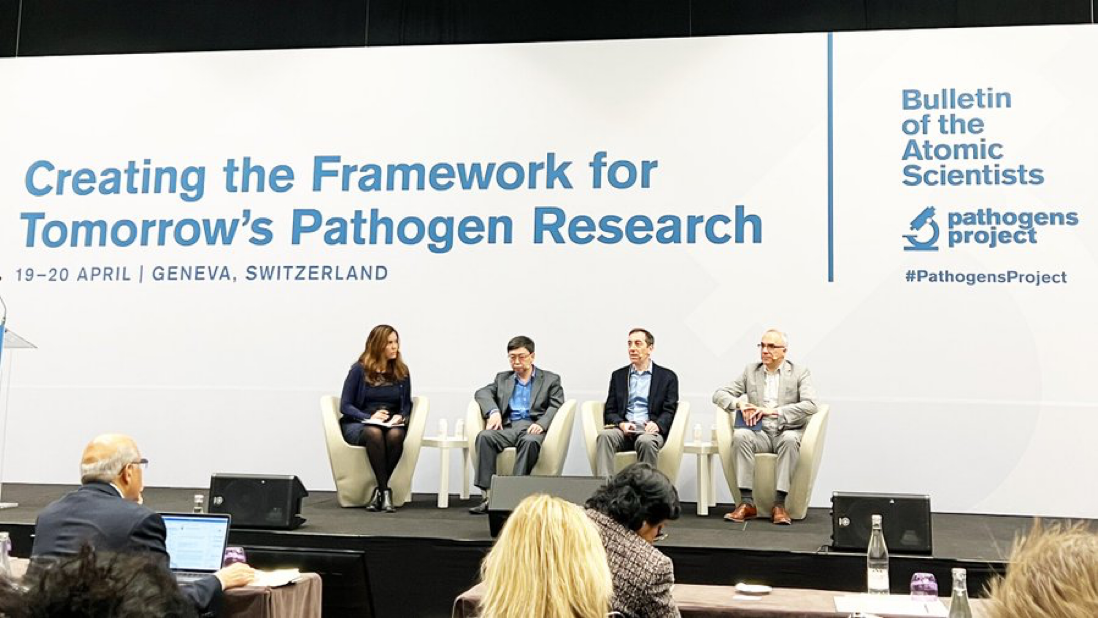
The initiative on “Creating the Framework for Tomorrow’s Pathogen Research” hosted a public meeting in Geneva, Switzerland this week. This conference included Pathogens Project taskforce members, policy leaders, journalists, scientists, and civic leaders, among others.

The conference featured both private and public (recorded) workshops. Furthermore, according to the Project’s site, “It will produce a final summary report with recommendations, along with individually prepared papers focused on risk assessment and mitigation of high-risk pathogen research. Conference papers will be published in a special edition of the Bulletin of the Atomic Scientists and made available on the Bulletin’s website.”

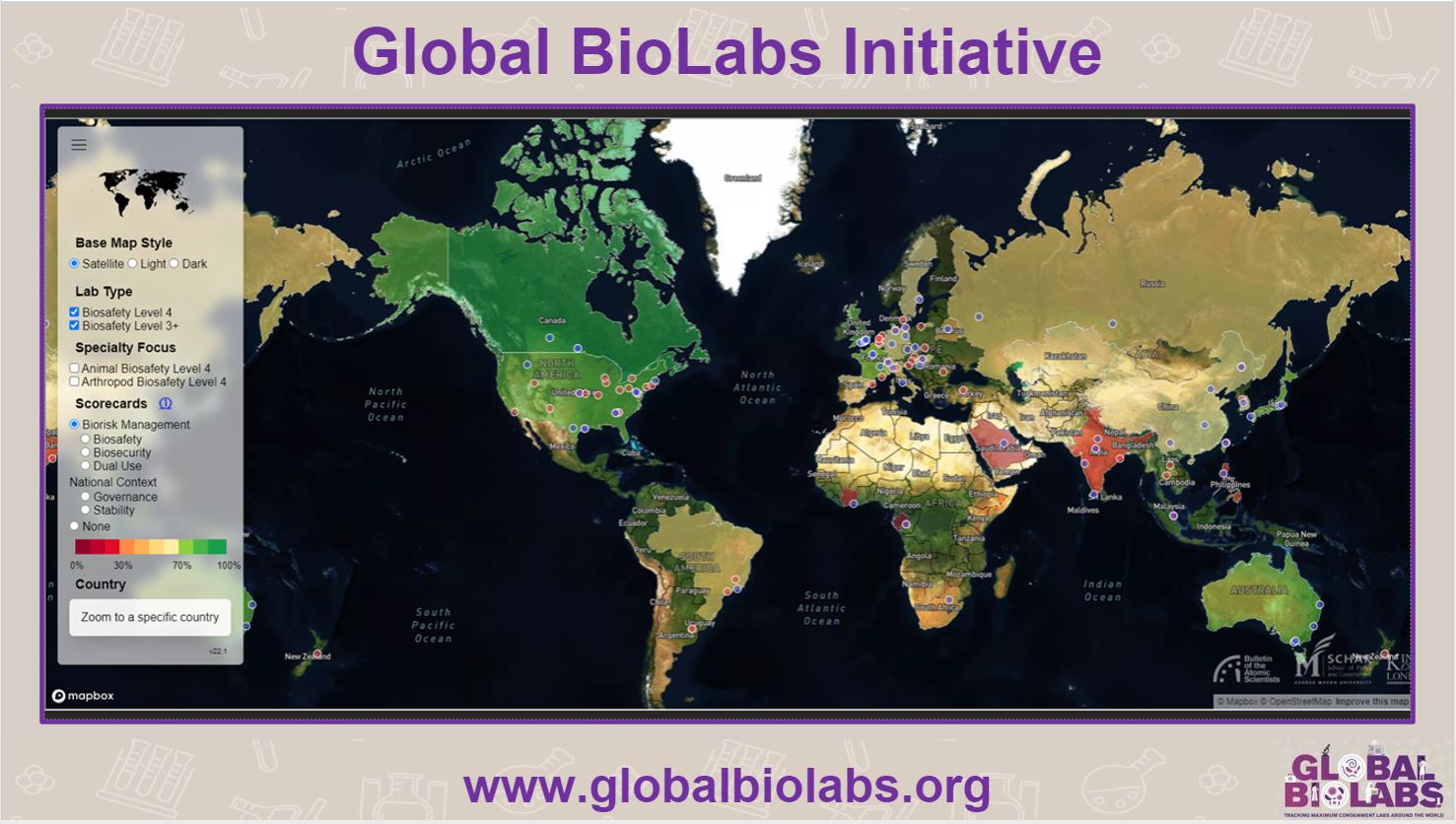
Biodefense Graduate Program Director Dr. Gregory Koblentz was on a panel at the event, “Empirical studies tracking risks”, alongside Dr. Rocco Casagrande (Founder and Chair of the Board, Gryphon Scientific), Dr. Weiwen Zhang (Distinguished Professor of Synthetic Biology and Biochemical Engineering, Tianjin University of China), and Dr. Sandra López-Vergès (Senior Health Researcher and Chief, Gorgas Memorial Institute of Health Sciences). Koblentz discussed ongoing work from the Global BioLabs project, which he co-leads with Dr. Filippa Lentzos of King’s College London. Global BioLabs offers an interactive map of BSL-4 and BSL-3+ facilities globally and recently released Global BioLabs Report 2023.

Biodfense Graduate Program Director Dr. Gregory Koblentz on the “Empirical studies tracking risks” panel
Visit https://www.globalbiolabs.org/ to access this interactive map feature

State Department Releases Arms Control, Nonproliferation, and Disarmament Compliance Reports

The State Department’s Bureau of Arms Control, Verification, and Compliance recently released the 2023 Annual Report on Compliance with the Chemical Weapons Convention (CWC) and the 2023 Adherence to and Compliance with Arms Control, Nonproliferation, and Disarmament Agreements and Commitments Report. The latter notes BWC compliance issues in the People’s Republic of China, Islamic Republic of Iran, Democratic People’s Republic of Korea, and the Russian Federation. This includes discussion of the lack of information needed to assess if China has eliminated its BW program, concerns about Iran’s ability to produce lethal BW agents, knowledge of North Korea’s BW program, and Russia’s violations of Articles I and II of the BWC.

The report also notes concerns about lack of transparency in Myanmar’s nuclear work (though evidence does not indicate that the country violated the NPT). The appended report on CWC compliance discusses further concerns with Myanmar and other countries’ compliance with the treaty. The report explains that “Four States Parties – Burma, Iran, Russia, and Syria – are certified in non-compliance with the CWC. Russia and Syria were first certified in non-compliance in April 2018. Iran was first certified in non-compliance in November 2018. Burma was first certified in non-compliance in 2019. Additional information is available in the 2023 classified Condition (10)(C) Reports. The United States also cannot certify the People’s Republic of China’s compliance, which was first reported in 2021.”

Dr. Gregory Koblentz and Madeline Roty (Biodefense MS ’21) authored a piece in the Bulletin of the Atomic Scientists in 2020 discussing Myanmar’s past with CW and US efforts to get the country to reconcile and come into compliance with the CWC. Following the 2021 coup d’état and the ouster of Aung San Suu Kyi, Myanmar is unlikely to meet the requirements needed to be in compliance, despite the progress outlined by Koblentz and Roty.

Senate Republicans Release COVID Origins Report

Senate Republicans have released their report exploring the origins of the COVID-19 pandemic, building on the short interim report released in October 2022. Two documents titled “Muddy Waters: The Origins of COVID-19” were released; one by the Muddy Waters Group and another prepared by Senator Roger Marshall alongside Dr. Bob Kadlec, Bob Foster, and members of the 117th GOP Health, Education, Labor & Pensions (HELP) Committee’s staff. The report was a product of the work of former Senator Richard Burr of North Carolina, who commissioned the report and oversaw the release of the October HELP committee interim report. Readers may recall the controversy that accompanied the release of that interim report, which coincided with the release of articles by Vanity Fair and ProPublica that were widely criticized for poor quality translations and other inaccuracies we discussed in November.

That troubled trend seems to continue in this new report, with admitted circumstantial evidence used to find that “The preponderance of information affirms the plausibility of a research-related incident that was likely unintentional resulting from failures of biosafety containment during vaccine-related research.”

Axios explains that the report “…argues that scientists haven’t found any naturally occurring viruses with the same composition of the coronavirus, and that there’s evidence the virus was circulating in Wuhan before the first known cases connected to the wet market were reported…It also argues that it appears Chinese researchers began development of at least two COVID vaccines in November 2019, including at the WIV, which “means SARS-CoV-2 would have been present at the WIV before the known outbreak of the pandemic,” and “It also documents numerous instances of lab safety concerns throughout 2019, including around the time when the virus may have first appeared.”

Much of this, however, relies on the same previously disputed points made in the interim report and the accompanying ProPublica and Vanity Fair pieces. Furthermore, as Caitlin Owens highlights in another piece for Axios, the reports rely on circumstantial evidence which means “The absence of evidence pointing, for example, to a precise transmission route from animals to humans will lead to very different interpretations of the same information.”

Dr. Angela Rasmussen, a virologist who has worked on high-profile studies supporting the idea of a natural origin of SARS-CoV-2 told Owens that the report “…demonstrates, in my view, a political agenda that’s meant to bolster the idea that the lab leak hypothesis is more supported than it is. But also it is so full of just factual errors.” Rasmussen also counters a number of key assertions made in the new report, including those such as the presence of a furin cleavage site on SARS-CoV-2’s spike protein is in itself suspicious and that the Wuhan Institute of Virology was dealing with substantial biosafety problems that Party leadership was concerned about.

All told, this report seems unlikely to change much or anything in this ongoing public debate.

Understanding Cyber-Warfare: Politics, Policy and Strategy

Chris Whyte and Brian Mazanec (a Biodefense PhD alumnus) are pleased to announce the publication of the second edition of their textbook Understanding Cyber-Warfare: Politics, Policy and Strategy (Routledge, 2023).  This second edition of their popular textbook offers an accessible introduction to the historical, technical, and strategic context of global cyber conflict. The second edition has been revised and updated throughout, with three new chapters, to include coverage of the role of cyber in the war in Ukraine as well as a discussion of the role of emerging information technologies like artificial intelligence and quantum computing in shaping the dynamics of global cyber conflict.  The second edition has recieved positive reviews. For example James R. Clapper, the former Director of National Intelligence, called it “an authoritative tutorial on the arcane complexities of cyber warfare” and said this edition “updates a previous version and makes the book more contemporary. It is a must-read for those who are serious about mastering this unique medium of combat, in all its dimensions.”  More details can be found here.

“Artificial Intelligence and Machine Learning for Bioenergy Research: Opportunities and Challenge”

New from the US Department of Energy’s Genomic Science Program: “The integration of artificial intelligence and machine learning (AI/ML) with automated experimentation, genomics, biosystems design, and bioprocessing represents a new data-driven research paradigm poised to revolutionize scientific investigation and, particularly, bioenergy research. To identify the opportunities and challenges in this emerging research area, the U.S. Department of Energy’s (DOE) Biological and Environmental Research program (BER) and Bioenergy Technologies Office (BETO) held a joint virtual workshop on AI/ML for Bioenergy Research (AMBER) on August 23–25, 2022.”

“Approximately 50 scientists with various expertise from academia, industry, and DOE national laboratories met to assess the current and future potential for AI/ML and laboratory automation to advance biological understanding and engineering. They particularly examined how integrating AI/ML tools with laboratory automation could accelerate biosystems design and optimize biomanufacturing for a variety of DOE mission needs in energy and the environment.”

The report describing the workshop findings is now available here.

“The Making of a Biosafety Officer”

David Gillum discusses the roles of biosafety professionals in this piece for Issues in Science and Technology, writing in part “The question of how the biosafety community generates and transmits knowledge is interesting in itself, but it is also an urgent issue. The need for biosafety workers is growing just as current professionals are skewing older: an estimated 54% are over 50 and one of the few surveys of the field suggests there are six times as many biosafety officers over 70 as there are under 30. Preparing more of us—and keeping the public safe as the complexity of biological research, health, and manufacturing projects burgeons—is made more difficult by the importance of tacit knowledge in our education. Methods for understanding, communicating, and mitigating risk are difficult to transfer to others. To enhance public health and safety, people in my line of work should ease this transfer by considering how the profession might be standardized and formalized.”

“Viral Families and Disease X: A Framework for U.S. Pandemic Preparedness Policy”

In this policy brief for the Center for Security and Emerging Technology, Schuerger et al. explain that “Pandemic threats are increasing as globalization, urbanization, and encroachment on animal habitats cause infectious outbreaks to become more frequent and severe. It is imperative that the United States build a pipeline of medical countermeasure development, beginning with basic scientific research and culminating in approved therapies. This report assesses preparedness for families of viral pathogens of pandemic potential and offers recommendations for steps the U.S. government can take to prepare for future pandemics.”

“Integrating Public and Ecosystem Health to Foster Resilience: Proceedings of a Workshop”

“Ecosystems form the foundation upon which society can survive and thrive, providing food, water, air, materials, and recreation. The connections between people and their environments are under stress from human-driven climate change, pollution, resource exploitation, and other actions that may have implications for public health. Existing intellectual frameworks including One Health, Planetary Health, ecosystem services, and nature-based solutions help to connect different elements related to the resilience of public health and ecological health systems. However, because of the breadth of this issue, many implications regarding public health are not well characterized, leading to gaps in understanding the interconnections between public health and ecosystem health systems and how ecosystem resiliency may affect public health.”

“The National Academies of Sciences, Engineering, and Medicine held a workshop in September 2022 focused on the integration of public and ecosystem health to foster resilience. This workshop was designed to inform the development of a research agenda aimed at bridging the knowledge-to-action gap and spur a move from research to policy and practice. Participants included a broad range of interdisciplinary researchers and practitioners from the public health, natural resource management, and environmental protection communities. The workshop provided a forum for the exchange of knowledge, discussion of critical gaps in understanding and practice, and identification of promising research that could support the development of domestic and international policy and practice.”

“The proceedings summarizing the workshop is now available for free download, and a public webinar exploring the workshop topics will take place virtually in early May. Click below to download the proceedings, register for the webinar, and visit the project page to more about this publication.”

“The Right People and the Right Question: Getting Chemical Weapons Out of Syria”

In this recent video story for the Stanley Center for Peace and Security, Tom Countryman discusses his tenure as the Assistant Secretary of State for Non-Proliferation as the Department navigated concerns about Syria’s chemical weapons. He highlights key lessons learned in doing this, including the need to mind the political context one is operating in, the importance of knowing who the right people are and being able to motivate and mobilize them, appropriately identifying goals and what is needed to achieve them, and, finally, not allowing the difficulties of political relationships to overshadow common interests.

“Reducing the Problem: Eliminating Syria’s Chemical Weapons”

Andy Weber discusses elimination of the Syrian CW stockpile in this video story for the Stanley Center. He covers how he came to be the Assistant Secretary of Defense for Nuclear, Chemical, and Biological Defense Programs and more, saying in part “Sometimes, whether it’s Gaddafi in Libya, or Assad in Syria, it’s unsavory characters, who have these horrific weapons. And you have to work with them sometimes, and it’s hard, and it’s challenging, and you have to keep your eyes open. You need to make sure you’re not indirectly helping them in another area. But that’s where good oversight comes in, and you have to think about the objective of all these programs. The objective is to save lives, to prevent mass casualties in any country, anywhere in the world. These are global programs that improve global security.”

“Armed Conflict and Nuclear Security: Implications for Europe”
Muhammed Ali Alkiş discusses the efficacy of the traditional approach to nuclear security in this recent publication for SIPRI: “The traditional approach to nuclear security is unlikely to be effective against the full spectrum of current threats, including those posed by state actors. The lessons learned from the Russian occupation of Ukrainian nuclear power plants, the potential radiological consequences of armed attacks against nuclear facilities and the potential increase in the number of nuclear power states in the future underscore the need for a strong international framework to address nuclear security challenges.”

“The European Union (EU) is committed to implementing the highest international standards for nuclear security and may therefore be in a position to lead efforts to address threats of armed attacks against nuclear installations. This paper provides a range of potential policy recommendations and actionable steps that the EU and its member states could take at legal, institutional and operational levels to minimize the nuclear security threats posed by armed conflict in the future. While they may appear politically challenging or even unrealistic at present, the conflict in Ukraine highlights the very real need for the types of actions recommended by this paper.”

“Technology Primer: Artificial Intelligence & Machine Learning”

Checkout this new report from the Harvard Belfer Center: “Artificial Intelligence (AI), can be defined as the theory and application of machines—especially computer programs—to perform tasks that typically require human intelligence, such as image captioning and generation, speech recognition and synthesis, natural language understanding and production, tool assembly and utilization, as well as various other perception-action based engagements. AI, in its current technological state, is being applied in various industries and domains, such as online advertising, financial trading, healthcare, pharmaceutical, and robotics. The lucrative market opportunities offered by AI applications have attracted investments from tech giants like Alphabet, Apple, Meta, Amazon, and Microsoft, as well as research universities and startups.”

“Machine Learning (ML), commonly categorized as a subfield of AI, is a field of study concerning the automatic discovery of historical patterns in data using statistical algorithms. ML’s driving principle is that historical patterns are likely to reappear in the future. The discovered historical patterns can therefore be leveraged to make accurate predictions on data that has not been seen before. Once an algorithm is trained, it can be applied to new, larger streams of data. ML is already an integral component of many deployed commercial applications, such as content generation (e.g., text, image, audio, video generation), virtual assistants, social media feed ranking, content recommendation systems, financial market prediction, and healthcare screening and diagnostic tools, as well as administrative applications. In addition, ML is foundational in various other emerging technologies, such as autonomous vehicles and next-generation cybersecurity.”

“Currently, United States policy with regards to AI often derives from interpretations of various pre-existing legislations and legal precedents. However, with the increased awareness of AI-related risks (e.g., bias, accountability, misuse, etc.), and the potential size of their impact, over the last decade, the number of proposed bills containing AI provisions significantly increased at both the state and federal levels (i.e., from two bills in 2012 to 131 in 2021), with 2% of them becoming law at the federal level and 20% of them becoming law at the state level. Similarly, policies and regulatory frameworks are being crafted to guide the development and application of AI in other continents too, with Europe and Asia leading the process. Acknowledging the potential impact of this technology on human life and societal dynamics, there is a pressing need for U.S. legislators and policymakers to remain engaged in the ethical and practical development of artificial intelligence.”

Lessons From the COVID War: An Investigative Report

The independent, nonpartisan Covid Crisis Group has spent two years investigating the causes and consequences of the COVID-19 pandemic. The Schar School of Policy and Government and Biodefense Graduate Program are proud to host two members of the group, Andrew Kilianski and Melissa Harvey, for an in-depth discussion of the group’s long-awaited report on what went wrong—and right—with America’s response to the pandemic: Lessons from the Covid War: An Investigative Report (Public Affairs, 2023).

The Covid Crisis Group is a remarkable group of 34 distinguished practitioners and scholars from a variety of backgrounds who came together determined to learn and share the most valuable lessons from the worst peacetime catastrophe of modern times. Lessons from the Covid War is plain-spoken and clear-sighted. It cuts through the jumble of information to make some sense of it all and answer: What just happened to us, and why? And crucially, how, next time, could we do better? Because there will be a next time.

Register here: https://gmu.universitytickets.com/w/event.aspx?id=1471 

Book Event: Open Source Investigations in the Age of Google 

From the Center for Strategic and International Studies: “How did a journalist find out who was responsible for bombing hospitals in Syria without leaving his desk in New York? How can South Sudanese activists safely track and detail the weapons in their communities, and make sure that global audiences take notice? What are policy makers, lawyers, and intelligence agencies doing to keep up with and make use of these activities? A team of authors tackle these questions in their new book “Open Source Investigations in the Age of Google.”‘ 

“This new interdisciplinary book seeks to answer these questions and more, with contributions by prize-winning practitioners, experts, and rising stars from across the open source investigation community. Painting a comprehensive picture of the digital information space today, it explores the manner and methods in which current open source investigations are conducted, as well as examines the opportunities and challenges they present to salient issues to the information environment such as trust and transparency, accountability, justice, amongst others.”‘

“Please join CSIS virtually on April 24, 1-2 pm EDT for a panel discussion on open-source investigations moderated by Diane Cooke, visiting fellow with the International Security Program. The conversation will include Hans Kristensen, Director of the Nuclear Information Project, Federation of American Scientists; Christiaan Triebert, journalist on the New York Times Visual Investigation Team; and Henrietta Wilson, Senior Analyst for the Strategic Concept for the Removal of Arms and Proliferation, SOAS University of London & King’s College London.”

Register here.

Online Event: Civil Society at the 5th CWC Review Conference

From the CWC Coalition: “The Fifth Five-Year Review Conference (RC-5) for the 1997 Chemical Weapons Convention will be held in the Hague from May 15-19, 2023.”

“At the CWC RevCon, member states and the broader chemical weapons disarmament community will gather to assess past achievements, treaty implementation and compliance, and discuss plans to strengthen the CWC in the years ahead.”

“You are invited to join a virtual discussion on the upcoming Fifth Five-Year CWC Review Conference (RC-5), major issues to be addressed, and the role of civil society and non-governmental organizations.”

“We will be joined by Elisabeth Waechter, Head of Public Affairs at the OPCW. Paul Walker, the Chair of the CWC Coalition, will moderate.”

This event will take place on April 26 at 10 am EST. Register here.

National Biodefense Science Board Public Meeting

The NBSB will meet virtually on May 4 at 2 pm EST to discuss lessons from COVID-19 and will present recommendations on several topics, including collection, analysis, and sharing of operational health data, uses of virtual healthcare during disaster response, and disaster response challenges specific to rural and underserved communities. Register here.

Virtual Workshop: Prioritizing Actions for Epidemic and Pandemic Preparedness

From the National Academies: “Please join us May 4 & 18, 2023 from 8 a.m. to 12 p.m. ET for a virtual symposium examining how to strengthen the evidence-based prioritization of epidemic and pandemic preparedness and response capabilities.

The symposium will convene global health planning stakeholders, including those in government and academia, and across health- and non-health sectors to:

  • Review assessment tools and how, independently and together, they relate to national action planning.
  • Gain insight into how countries and organizations currently select priorities in funding for epidemic prevention, detection, and response.
  • Assess evidence for effective prioritization approaches to building disease surveillance and risk communication capabilities.
  • Identify governance structures that can support robust and reliable systems for epidemic and pandemic preparedness and response investments.

This symposium is in collaboration with the Division on Earth and Life Studies. Learn more about this workshop by visiting the event webpage.”

Nobel Prize Summit-Truth, Trust and Hope

Taking place May 24-26 this year in DC and virtually, this Nobel Prize Summit asks “How can we build trust in truth, facts and scientific evidence so that we can create a hopeful future for all?”

“Misinformation is eroding our trust in science and runs the risk of becoming one of the greatest threats to our society today.”

“Join us at this years’ Nobel Prize Summit which brings together laureates, leading experts and you in a conversation on how we can combat misinformation, restore trust in science and create a hopeful future.”

Learn more and register here.

CSWMD 2023 Annual Symposium: WMD in the Decisive Decade

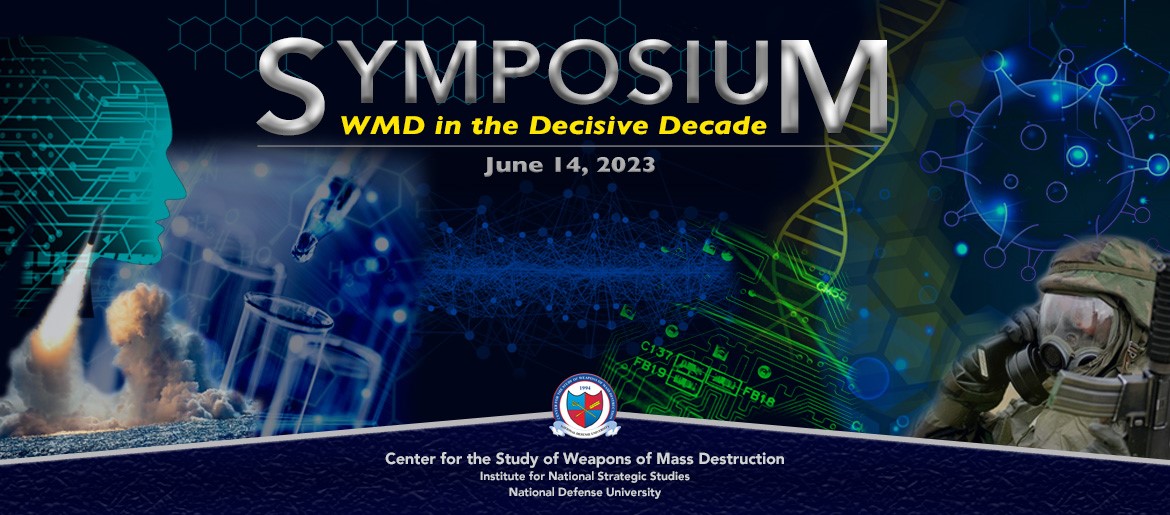
“The National Defense University’s Center for the Study of Weapons of Mass Destruction (CSWMD) invites you to join us on 14 June 2023 for the virtual Annual CSWMD Symposium, titled WMD in the Decisive Decade.”

“This year’s symposium will explore the cognitive impacts WMD has on strategic decision making and the challenges associated with operating in an environment where WMD has been employed. It will be an opportunity for the WMD community to engage with officials and thought leaders on current WMD challenges at the unclassified level, including keynote addresses by Richard Johnson, Deputy Assistant Secretary of Defense for Nuclear and CWMD Policy and Rebecca Hersman, Director of the Defense Threat Reduction Agency.”

“For more information and to register for this event click here. Please RSVP by 9 JUNE 2023.”

“We look forward to hosting you for the event. For more information about the WMD Center and reference our research, please visit our website at https://wmdcenter.ndu.edu/ and follow us on Twitter and on LinkedIn.”

Gordon Research Conference: Cross-Cutting Science Facilitating Collaboration Across the Threat-Science Research Community

“The Nonproliferation, Counterproliferation and Disarmament Science GRC is a premier, international scientific conference focused on advancing the frontiers of science through the presentation of cutting-edge and unpublished research, prioritizing time for discussion after each talk and fostering informal interactions among scientists of all career stages. The conference program includes a diverse range of speakers and discussion leaders from institutions and organizations worldwide, concentrating on the latest developments in the field. The conference is five days long and held in a remote location to increase the sense of camaraderie and create scientific communities, with lasting collaborations and friendships. In addition to premier talks, the conference has designated time for poster sessions from individuals of all career stages, and afternoon free time and communal meals allow for informal networking opportunities with leaders in the field.”

This conference will take place July 9-14 in Ventura, CA. Learn more and register here.

Call for Applications: Early-Career Fellowship for Reducing Nuclear Weapons Risks

The Council on Strategic Risks “is announcing a continuation of its Early-Career Fellowship for Reducing Nuclear Weapons Risks. Through this six-month program, early-career professionals will work with leading experts from CSR’s team and network to develop a better understanding of practical risk reduction concepts and to generate new ideas regarding:

  • Nuclear strategic stability
  • Strengthening norms against nuclear weapons threats and use
  • Avoiding miscalculations and preventing accidents/incidents
  • Preventing and addressing nuclear proliferation
  • Responsibilities of nuclear weapons-capable states”

Learn more and apply here.

Seeking Subject Matter Expert(s) (SMEs) with Experience Educating Global Audiences on the Importance of Securing Emerging Technologies

“CRDF Global is seeking subject matter expert(s) (SMEs) to engage and educate global audiences. The expert(s) will work on deliverables relating to building a culture of security in the private sector. These deliverables will include the development of an online asynchronous course and four hybrid hackathons, which will take place at local incubator hubs in several countries.”

“The expert(s) will design and develop an asynchronous course to counter misuse and raise awareness of emerging technologies with potential weapons of mass destruction (WMD)-related applications by state and non-state actors. The audience for this course will be individuals in the private sector (particularly in start-ups, innovation hubs, and incubator spaces) in various countries globally. This asynchronous course should train key stakeholders on how to develop and foster a culture of security.”

Learn more here.

Weekly Trivia Question

You read the Pandora Report every week and now it’s time for you to show off what you know! The first person to send the correct answer to biodefense@gmu.edu will get a shout out in the following issue (first name last initial). Our question this week is: “In 1984, what group spread Salmonella enterica at restaurants and shops in Dulles, Oregon in an attempt to influence local elections?”

Last week, our question was: “In the 2011 film Contagion, Dr. Erin Mears (played by Kate Winslet) is an officer in which CDC program?” The answer is the Epidemic Intelligence Service.

Pandora Report 4.7.2023

Happy Friday! This week includes updates from our program, discussion of an upcoming hearing on the death of Dawn Sturgess, ASPR’s new National Health Security Strategy, and more. We also have several recent publications, upcoming events, and professional opportunities as well, including a publication from a Biodefense PhD student and a fellowship opportunity at CDC.

Biodefense PhD Program Alumnus Named Rodel Federal Executive Fellow

Biodefense PhD alumnus and Schar School adjunct faculty member Dr. Brian Mazanec was recently selected as a member of the Class of 2023 cohort of the Rodel Federal Executive Fellowship. Mazanec is currently the Deputy Assistant Secretary and Director, Office of Security, Intelligence, and Information Management, Administration for Strategic Preparedness and Response, US Department of Health and Human Services.

The Rodel Federal Executive Fellowship is an intellectual and leadership professional development fellowship for senior-level career civil servants across the federal government’s executive branch agencies. For each cohort, the program selects 20 to 24 exceptional members of the Senior Executive Service (SES), Senior Foreign Service (SFS), GS-15’s, and equivalent positions from across the federal government to come together for a series of three multi-day seminars. Working with expert moderators, the Fellows study and discuss challenging texts on leadership and innovation in large organizations, the nature of democracies, emerging technologies, the American economy, and the changing geopolitical landscape. They also engage in practical, relevant leadership training focused on promoting innovation within the context of large government bureaucracies.”

Hearing Covering Death of Dawn Sturgess Set for October 14

Dawn Sturgess was a Wiltshire woman who died after her and her partner, Charlie Rowley, found a fake perfume bottle containing a Novichok agent. This incident happened months after the targeted attack against the Skripals in Salisbury in 2018 and, though former Home Secretary Priti Patel announced the hearing in November 2021, Sturgess’s family has pushed for the process to finally move forward. According to the Guardian, “At a preliminary hearing last month, lawyers for the UK government defended delays in disclosing documents, claiming that substantial redactions were needed to protect sensitive information from the “hostile state that is Russia”…The UK government has blamed the Russian state for the novichok attack, and the British police have identified three suspects wanted over the poisonings.”

ASPR Releases National Health Security Strategy

“Every four years, ASPR develops the National Health Security Strategy (NHSS) to establish a strategic approach to enhance the security of the nation’s health in times of crisis. The NHSS provides a roadmap to strengthen and adapt health care, public health, and emergency preparedness and response no matter the threat. This includes emphasis on equitable access to post-disaster health services and meeting the needs of at-risk individuals and underserved communities. The 2023-2026 NHSS includes an enhanced focus on several health care and public health challenges exacerbated during COVID-19 and other public health emergencies, including supply chain resiliency, health care and public health workforce capacity, risk communication, and health equity.”

“The 2023-2026 NHSS Implementation Plan builds on the goals and objectives of the NHSS; guides federal actions for desired outcomes; and recommends implementation activities for state, local, tribal, and territorial partners; the health care industry; public health professionals; pharmaceutical manufacturers; communities; and other stakeholders. The NHSS Evaluation of Progress examines the actions taken by the United States between 2019 and 2022. The 2023-2026 NHSS builds on the progress made between 2019 and 2022 to provide a strategic direction that can be used to better protect people in communities nationwide from health security threats in the years to come.”

This NHSS includes three overarching strategic goals: Strengthen health care and public health systems to prepare for and respond to concurrent health emergencies, including those that arise from unknown threats; Improve capabilities to safeguard and protect against an array of health security threats, including emerging and re-emerging infectious diseases, especially zoonotic diseases; Ensure a resilient and sustainable public health industrial base and supply chain that can rapidly develop and deploy safe medical countermeasures (MCMs).

Read the strategy, implementation plan, evaluations, and FAQs here.

You-Whippee-Ki-Yay, UIPE is Getting a Facelift Already!

JPEO-CBRND made a very important announcement this week:

Other interesting ideas included revamping the 66P legacy system to include mesh panels to improve breathability. 😉 Learn more about UIPE (“you-whip-ee”) here.

“The Analytic Challenges of Shifting to Domestic Terrorism”

Biodefense PhD student Chris Quillen recently published an article in the Journal of Policing, Intelligence, and Counter Terrorism.  After many years of fighting the Global War on Terrorism, the U.S. Intelligence Community is increasingly focusing on the issue of domestic terrorism.  This shift in analytic effort raises intriguing questions about the most appropriate tools needed to combat this growing threat.  This article addresses the historical approach and possible solutions from similar countries and organizations before proposing a broader focus on extremist movements over designated terrorist groups. 

“The Origin of SARS-CoV-2: Animal Transmission or Lab Leak?”

Johns Hopkins’ Dr. Gigi Kwik Gronvall breaks down publicly available evidence of the start of the COVID-19 pandemic in this piece for Lawfare. She writes in part, “While the scientific evidence points to a “natural” emergence, it is decidedly not natural to have the conditions in place that led to this spillover event, or the very similar circumstances that led to the SARS epidemic in 2003. (In that epidemic, the market was not immediately cleared out, and samples could be taken from the civet cats and other animals sold there.) There is plenty of guidance available for how to sell and butcher animals safely, regulate markets, and crack down on the illegal wildlife trade—a global phenomenon that has a great deal of overlap with other criminal activities, including human trafficking, money laundering, and the illegal drug trade. Further research could also help improve these standards and better prepare for other viruses that could emerge in similar settings. There are many scientific knowledge gaps that need to be filled about viral evolution and bats, and more undetermined infections that might turn out to be the next pandemic need to be investigated so that researchers and policymakers can do more, earlier and better.”

“Surveillance of SARS-CoV-2 at the Huanan Seafood Market”

The much anticipated China CDC article was made available by Nature this week. Its abstract reads: “SARS-CoV-2, the causative agent of COVID-19, emerged in December 2019. Its origins remain uncertain. It has been reported that a number of the early human cases had a history of contact with the Huanan Seafood Market. Here we present the results of surveillance for SARS-CoV-2 within the market. From January 1st 2020, after closure of the market, 923 samples were collected from the environment. From 18th January, 457 samples were collected from 18 species of animals, comprising of unsold contents of refrigerators and freezers, swabs from stray animals, and the contents of a fish tank. Using RT-qPCR, SARS-CoV-2 was detected in 73 environmental samples, but none of the animal samples. Three live viruses were successfully isolated. The viruses from the market shared nucleotide identity of 99.99% to 100% with the human isolate HCoV-19/Wuhan/IVDC-HB-01/2019. SARS-CoV-2 lineage A (8782T and 28144C) was found in an environmental sample. RNA-seq analysis of SARS-CoV-2 positive and negative environmental samples showed an abundance of different vertebrate genera at the market. In summary, this study provides information about the distribution and prevalence of SARS-CoV-2 in the Huanan Seafood Market during the early stages of the COVID-19 outbreak.”

Dr. Angela Rasmussen breaks down issues and concerns with this article, including flaws in its metagenomic analysis, in this thread.

“What Happened When WMD Experts Tried to Make the GPT-4 AI Do Bad Things”

In this piece for the Bulletin of the Atomic Scientists, Thomas Gaulkin covers an open letter recently written and signed by hundreds of leaders in industry, policy, and academia calling for “…an immediate moratorium on the development of artificial intelligence “more powerful than GPT-4,” the large language model (LLM) released this month by OpenAI, an AI research and deployment firm. The letter proposes the creation of shared protocols and independent oversight to ensure that AI systems are “safe beyond a reasonable doubt.”’

He explains that “The letter’s call for a temporary halt on AI development may not be entirely at odds with OpenAI’s own recent representations of its outlook on the issue. The company’s CEO, Sam Altman, recently said “we are a little bit scared of this” and has himself called for greater regulation of AI technologies. And even before the world reacted to GPT-4 and ChatGPT’s release, OpenAI’s creators appear to have been sufficiently concerned about the risks of misuse that they organized months of testing dedicated to identifying the worst things that the AI might be used for—including the proliferation of weapons of mass destruction. 

“Ready or Not: Protecting the Public’s Health from Diseases, Disasters, and Bioterrorism”

From Trust for America’s Health: “Ready or Not: Protecting the Public’s Health from Diseases, Disasters, and Bioterrorism, has tracked the nation’s public health emergency preparedness since 2003. This twentieth edition of the report is as critical to policymakers now as it has ever been. The report is designed to give policymakers at all levels of government actionable data and recommendations with which they can target policies and spending to strengthen their jurisdiction’s emergency preparedness. The report’s 10 key public health preparedness indicators give state officials benchmarks for progress, point out gaps within their states’ all-hazards preparedness, and provide data to compare states’ performances against similar jurisdictions.”

Lessons From the COVID War: An Investigative Report

Beyond the Pandemic: Addressing Attacks on Researchers and Health Professionals

From the National Academies: “Last fall, the Committee on Human Rights (CHR) held a webcast series, Silencing Scientists and Health Workers during the Pandemic, which examined threats and attacks against science and health professionals connected to their work to combat the spread of COVID-19, as well as related implications for internationally-protected human rights.”

“On April 11 (3:00-4:15 pm ET), the CHR will host a webcast to mark the launch of the webcast series’ Proceedings-in Brief.  This event will gather experts to explore practical steps that scientists, researchers, and health professionals are taking to protect themselves and their colleagues from targeting—including violence, harassment, and other attacks.”

Learn more and register here.

Brain-Computer Interfaces Webinar Series, Part 2: BCIs in the Context of International Security: Military Uses, Applications and Risks

From UNIDIR: “Brain-computer interfaces (BCIs) are technical means and systems that provide direct links and communication between the brain and external devices. BCIs have been used for decades in the medical field, mainly in rehabilitation, including by the armed forces to support the recovery of injured servicemembers. Increasingly, however, the interest in the uses of BCIs has grown in scope, with novel applications exploring ways to enhance physical and cognitive functions in soldiers and weapon systems operators. Research areas include leveraging BCIs to monitor cognitive workload and performance, to enhance learning, to improve training, sensory and decision-making skills, as well as to enable remote direct control of weapon systems. Other areas of research explore convergences with the field of artificial intelligence, including using information and signal from the brain to train artificial intelligence systems.”

“BCIs can have a highly disruptive impact for the future of warfare, with significant legal and ethical consequences that deserve closer analysis.”

“UNIDIR is organizing a webinar series to unpack emerging questions related to the uses of brain-computer interfaces in the context of warfare and international security.”

This event will take place virtually on April 12 from 2-3 pm CEST. Register here.

Nobel Prize Summit-Truth, Trust and Hope

Taking place May 24-26 this year in DC and virtually, this Nobel Prize Summit asks “How can we build trust in truth, facts and scientific evidence so that we can create a hopeful future for all?”

“Misinformation is eroding our trust in science and runs the risk of becoming one of the greatest threats to our society today.”

“Join us at this years’ Nobel Prize Summit which brings together laureates, leading experts and you in a conversation on how we can combat misinformation, restore trust in science and create a hopeful future.”

Learn more and register here.

Gordon Research Conference: Cross-Cutting Science Facilitating Collaboration Across the Threat-Science Research Community

“The Nonproliferation, Counterproliferation and Disarmament Science GRC is a premier, international scientific conference focused on advancing the frontiers of science through the presentation of cutting-edge and unpublished research, prioritizing time for discussion after each talk and fostering informal interactions among scientists of all career stages. The conference program includes a diverse range of speakers and discussion leaders from institutions and organizations worldwide, concentrating on the latest developments in the field. The conference is five days long and held in a remote location to increase the sense of camaraderie and create scientific communities, with lasting collaborations and friendships. In addition to premier talks, the conference has designated time for poster sessions from individuals of all career stages, and afternoon free time and communal meals allow for informal networking opportunities with leaders in the field.”

This conference will take place July 9-14 in Ventura, CA. Learn more and register here.

CDC Laboratory Leadership Service Application Open

The CDC’s Laboratory Leadership Services (LLS) program is currently accepting applications through June 1. Designed as a companion to the Epidemic Intelligence Service, this service was launched in 2015 and aims to train lab-oriented public health professionals. “The LLS fellowship provides a one-of-a-kind training experience for laboratory scientists who are ready to apply their expertise inside and outside of the lab, ultimately preparing them to be the next generation of public health laboratory leaders who work to protect public health. Fellows conduct cutting-edge research, support rapid response to disasters and disease outbreaks, help investigate emerging health threats, and enhance the laboratory systems and practices that are essential for public health. LLS seeks laboratory scientists looking to take their careers to the next level while doing work that delivers real benefits to communities across the country.” Learn more and apply here.

Call for Papers: “Training Programmes To Counter Current And Emerging Biological And Chemical Proliferation Risks: Themes, Practices, And Lessons Learnt”

From the Journal of Strategic Trade Control: “The purpose of this call for papers is to facilitate inter-disciplinary exchange regarding the implementation of training to counter emerging chemical and biological proliferation challenges. In particular, the call welcomes contributions in the form of JOSTC articles on the processes, mechanisms, and tools for creating awareness of the following topics:

– Cross-border movement (e.g. transport, shipment) of chemical and biological materials and equipment.
– Cross-border movement of genetically modified organisms (GMOs).
– Trade in sensitive and dual-use chemical, biological, radiological, and nuclear (CBRN) materials and equipment.
– Strategic trade control regimes of relevance to disarmament and non-proliferation.
– Information security, data sharing, and cybersecurity challenges to CBRN non-proliferation.
– Due diligence and risk management initiatives to safeguard global supply chains against misuse and diversion.

Information about this call is available on the JoSTC webpage and the full description of the call can be accessed here. The deadline for paper submission is 2 October 2023.”

Weekly Trivia Question

You read the Pandora Report every week and now it’s time for you to show off what you know! The first person to send the correct answer to biodefense@gmu.edu will get a shout out in the following issue (first name last initial). Our question this week is: “The Forced Evolutionary Virus was developed by the the West Tek Corporation’s NBC Division in what popular video game franchise?”

Shout out to Daniel G. for correctly answering last week’s trivia. Our question was: “This well-known Irish-born American cook is thought to have infected as many as 122 people with typhoid fever and was the first person in the US identified as an asymptomatic carrier of the bacteria that cause the disease-Salmonella typhi. What was her legal name?” The answer is Mary Mallon, who became popularly known as Typhoid Mary.

Pandora Report 3.3.2023

Happy end to yet another very eventful week! Today we are covering the Department of Energy’s updated assessment on the start of the pandemic, the subsequent discourse, the IC’s assessment on Havana syndrome, the newly-signed NSM 19, and Iran’s investigation into alleged poisonings of schoolgirls.

Spy Agencies Gone Wild RE: COVID-19 Origins? Not Quite…

This week, the Department of Energy (DOE) and Federal Bureau of Investigation (FBI) provided assessments and statements indicating that they believe the initial spread of SARS-CoV-2 was the result of a lab leak in Wuhan. The initial firestorm was kicked off by a Wall Street Journal article with a less-than-helpful headline regarding DOE’s delivery of an assessment to the White House. In the following days, the FBI director provided statements indicating his agencies reached the same conclusion. Subsequent discussion has been rife with poor understandings of the Intelligence Community (IC) and intelligence itself, in addition to flawed claims about what these assessments actually mean. This section aims to break down what all has happened in this area this week and highlight the intrinsically interdisciplinary nature of intelligence and national security more broadly.

What Actually Happened This Week

As previously mentioned, the Wall Street Journal published an article on Sunday entitled “Lab Leak Most Likely Origin of COVID-19 Pandemic, Energy Department Now Says” to much uproar from all matter of folks. The assessment referenced by the article stemmed from analysis conducted by Z-Division at Lawrence Livermore National Laboratory, which led DOE to conclude “as part of a new government-wide intelligence assessment that a lab accident was most likely the triggering event for the world’s worst pandemic in a century.”

As the Washington Post explains, “…other intelligence agencies involved in the classified update — completed in the past few weeks and kept under wraps — were divided on the question of covid-19’s origins, with most still maintaining that a natural, evolutionary “spillover” from animals was the most likely explanation. Even the Energy Department’s analysis was carefully hedged, as the officials expressed only “low confidence” in their conclusion, according to U.S. officials who spoke on the condition of anonymity to describe a classified report.”

“U.S. officials confirmed that an updated assessment of covid-19’s origins was completed this year, and said the document was based on fresh data as well as new analysis by experts from eight intelligence agencies and the National Intelligence Council.” Furthermore, the IC remains firm in its view that SARS-CoV-2 was absolutely not developed as a biological weapon.

Of course, this news sparked a lot of conversation from lab leak and natural origin proponents alike. As NPR notes:

…at the end of the day, the origin of the pandemic is also a scientific question. Virologists who study pandemic origins are much less divided than the U.S. intelligence community. They say there is “very convincing” data and “overwhelming evidence” pointing to an animal origin.

In particular, scientists published two extensive, peer-reviewed papers in Science in July 2022, offering the strongest evidence to date that the COVID-19 pandemic originated in animals at a market in Wuhan, China. Specifically, they conclude that the coronavirus most likely jumped from a caged wild animal into people at the Huanan Seafood Wholesale Market, where a huge COVID-19 outbreak began in December 2019.

Virologist Angela Rasmussen, who contributed to one of the Science papers, says the DOE’s “low confident” conclusion doesn’t “negate the affirmative evidence for zoonotic [or animal] origin nor do they add any new information in support of lab origin.”

“Many other [news] outlets are presenting this as new conclusive proof that the lab origin hypothesis is equally as plausible as the zoonotic origin hypothesis,” Rasmussen wrote in an email to NPR, “and that is a misrepresentation of the evidence for either.”

The FBI also re-iterated its moderate confidence assessment that the virus originated in a lab, with FBI Director Christopher Wray highlighting this in an interview with Fox News. To summarize, the FBI maintained its moderate confidence assessment that the COVID-19 pandemic began with a lab accident, DOE changed its view to that above, and the CIA and another agency remain undecided as they did in the 2021 unclassified assessment. The others continue to favor a natural origin. So where does that leave us?

The Breakdown

As this discussion has been fraught with confusion about the IC, we will cover some brief basics about the IC’s structure and work. First, the IC is broad and diverse. It is composed of 18 organizations, including the Office of the Director of National Intelligence (ODNI) and the 17 constituent organizations that report to ODNI. ODNI and the Central Intelligence Agency are independent organizations. Nine others are Department of Defense elements (including the Defense Intelligence Agency, the National-Geospatial Intelligence Agency, the National Reconnaissance Office, and the DoD service intelligence elements). Seven other organizations are elements of other departments and agencies. These include the “Department of Energy’s Office of Intelligence and Counter-Intelligence; the Department of Homeland Security’s Office of Intelligence and Analysis and US Coast Guard Intelligence; the Department of Justice’s Federal Bureau of Investigation and the Drug Enforcement Agency’s Office of National Security Intelligence; the Department of State’s Bureau of Intelligence and Research; and the Department of the Treasury’s Office of Intelligence and Analysis.”

Naturally, each of these agencies has its strong suits and purposes, though there is intentional overlap. The intelligence failures in the lead up to the events of September 11, 2001, significantly changed the IC, bringing the abolition of the Director of Central Intelligence, the establishment of ODNI and the Director of National Intelligence position, creation of new agencies and restructurings of existing ones, and an overall effort to improve coordination, collaboration, and communication in the community. The main failure in the case of 9/11 was in not “connecting the dots”, so there have been strong efforts to make agencies share information in a timely, useful manner. Of course, this has not made the IC immune to failures, but it has been a positive step in improving coordination and creating appropriate overlap that can help provide more comprehensive intelligence to decision makers.

Furthermore, far from simply being “spy stuff”, intelligence draws on broad expertise and knowledge sources in a cycle of evaluation and feedback. In fact, it is estimated that about 80% of intelligence relies on open information, including news and academic sources. Information gaps and limitations may require further collection, but the bulk of information is often times openly available. Furthermore, the community is simply not full of a bunch of spies. For example, in 2003, it was estimated that just 10% of the CIA’s workforce were clandestine officers-the ones that recruit sources and go on covert missions like you might see in the movies. The rest are all kinds of analysts, mission management and admin folks, and even all kinds of scientists, physicians, public health experts, and so on. Agencies oftentimes have entire directorates dedicated to S&T work, and there are entire sub-organizations dedicated to specific S&T-related topics, including the National Center for Medical Intelligence.

There is also confusion about how analysts conduct their work. The 2011 IC Consumers Guide referenced by many news outlets and scholars discussing these assessments and their confidence levels explains how analysts conduct their work. It reads in part “Intelligence analysts are generally assigned to a particular geographic or functional specialty area. Analysts obtain information from all sources pertinent to their area of responsibility through information collection, processing, and forwarding systems. Analysts may tap into these systems to obtain answers to specific questions or to generate information they may need.”

“Analysts receive incoming information, evaluate it, test it against other information and against their personal knowledge and expertise, produce an assessment of the current status of a particular area under analysis, and then forecast future trends or outcomes. The analyst also develops requirements for the collection of new information…Analysts rarely work alone; they operate within a system that includes peer review and oversight by more senior analysts.

With this information in mind, it is clear that statements that paint the IC as a hive mind that produces assessments on political whims without oversight, methodologies, or internal review processes are unhelpful and untrue. Though it is not publicly known who specifically wrote these assessments, it is reasonable to believe they were made in good faith and in accordance with the above information. In addition to personal knowledge and expertise, importantly, IC analysts do have access to classified information-a fact seemingly overlooked by many in the last week.

One of the main points of confusion in public discussion of this has centered on why the Department of Energy is making an assessment on the origins of a virus. It is true that the Department of Energy, as the name implies, oversees national energy policy and manages nuclear power and weapons, but that is not its only tasking. In fact, the idea that eventually led to the Human Genome Project was conceived in the Department’s Office of Science. DOE has an intelligence element (as referenced above) and also oversees the National Laboratories, a broad system that aims to address critical scientific challenges “from combating climate change to discovering the origins of our universe”. Three of these laboratories (Lawrence Livermore, Los Alamos, and Sandia) are National Nuclear Security Administration labs, meaning they do work related to nuclear weapons in addition to other kinds of research-including global security research. The labs do work in conjunction with other organizations and, in some cases, support the IC. Lawrence Livermore National Laboratory, for example, has its Laboratory Intelligence Program, which has been at the heart of this frenzy and provides “critical science and technology support to the intelligence community’s foundational intelligence missions in strategic intelligence and anticipatory intelligence, as well as mission objectives in counterproliferation, cyber intelligence and counterterrorism.” The point is-DOE is not just a bunch of physicists working on the nuclear weapons stockpile. The Department is as large and diverse as its taskings, including those requiring expertise in the life and social sciences.

Much attention has also been paid to the confidence levels of the assessments. WSJ noted later in its piece that the assessment was made with low confidence, a term used by analysts when “…information used in the analysis is scant, questionable, fragmented, or that solid analytical conclusions cannot be inferred from the information, or that the IC has significant concerns or problems with the information sources.” Unfortunately, this information is not particularly helpful for the general public as the assessment itself is classified, so it is not known what information led to the assessment and why specifically it was rated low confidence. Analytical confidence can be influenced by several factors, including analyst expertise (which is likely limited given the nature of this specific assessment), time constraints, source reliability and corroboration, and more.

As ODNI identified in its unclassified October 2021 Intelligence Community Assessment on COVID-19 Origins, at the time, four elements and the National Intelligence Council also assessed with low confidence that initial SARS-CoV-2 infection was likely caused by natural exposure to an infected animal. One agency (the FBI) was noted to assess that the first human infection with SARS-CoV-2 most likely was the result of a laboratory-associated incident. This assessment was made with moderate confidence, which “…generally indicates that the information being used in the analysis may be interpreted in various ways, or that the IC has alternative viewpoints on the significance or meaning of the information, or that the information is credible and plausible but it is not sufficiently corroborated to warrant a higher level of confidence.” At that time, three other IC elements remained unable to coalesce around either explanation. Again, however, these assessments are classified, so there is no way of knowing why they were judged this way in the open source.

Others have taken aim at a low confidence assessment finding a lab origin “very likely”, arguing that these terms are mutually exclusive. Analytic confidence is separate from the estimative language employed by the IC. Estimative language (“very likely”, “almost certainly”, “unlikely”, etc.) expresses an assessment or judgement. Assessments are oftentimes based on incomplete information, which is why analysts use estimative language to express the likelihood or probability of something given what information is available. Because information gaps are inherent to this work, these products include declarations of underlying assumptions and judgements analysts made in their processes. Confidence levels “reflect the scope and quality of the information supporting its judgements.” In fact, to avoid confusion, the ODNI indicates that a confidence level and degree of likelihood should not be included in the same sentence. Again, as these assessments are classified, we do not know what assumptions were made nor what sources were used. However, it is possible and okay to judge that something is very likely with low confidence, particularly when dealing with something as complex as the origin of this virus.

The Bottom Line

Flashy news headlines aside, what have we really learned from these reports? Well…not much. It was well-established in late 2021 that the IC is unclear on the origins of SARS-CoV-2, and the events of this week have not settled that debate. As the NSC Coordinator for Strategic Communications, John Kirby, told the press this week, “There is not a consensus right now in the U.S. government about exactly how covid started…That work is still ongoing, but the president believes it’s really important that we continue that work and that we find out as best we can how it started so that we can better prevent a future pandemic.”

Furthermore, it is important to address the question of to what extent we can know this and what it would change at this point. China is clearly not going to cooperate on any kind of investigation into COVID-19’s origin. That has been clear since the early days of the pandemic and is part of a pattern of behavior on the part of the CCP. Irrespective of where this virus actually came from, it is clear that China did cover up its initial spread in the population, censoring netizens and healthcare professionals until it was impossible to conceal further. While an in-depth investigation into the start of this pandemic has always been needed, hyper focusing on this runs the risk of diverting attention from other critical issues we have much more information readily available on. China did cover up the initial spread of this virus and has been disingenuous in its reporting and handling of it ever since. The United States failed to adequately respond to this pandemic for a variety of reasons, a fact that does not depend on how the virus initially spread. It is vital to balance desires to find the truth of COVID-19’s origins, something that is indisputably important, with using the information that is available and can reasonably be acquired to address these problems before the next pandemic. This information could inform debates on laboratory safety and oversight, though, as Biodefense Graduate Program Director Dr. Gregory Koblentz demonstrated in his interview with the New York Times this week, there is a wealth of information available already driving these discussions.

Finally, this all demonstrates the intrinsically inter/multidisciplinary and cross-sectoral nature of these problems. False dichotomies pitting national defense against public health, particularly in terms of funding, are not helpful, particularly as it is increasingly clear that public health threats are critical national security threats. As the IC learned in the early years of this century, siloing information is incredibly dangerous-a lesson we cannot afford to have to re-learn at the intersection of public health and national security. While respect for expertise and experience is an absolute necessity, understanding the need to collaborate, work across lanes, and recognize what unique capabilities others can offer is equally vital. These threats are not going anywhere, so learning to understand how different disciplines approach these problems and how best to work together is of the utmost importance.

New ICA-Havana Syndrome Very Likely Not Caused by Foreign Adversary

Director of National Intelligence Avril Haines released a statement this week regarding the Intelligence Community’s assessment of the mysterious “Havana syndrome”, indicating the IC finds it very unlikely a foreign adversary is responsible for the phenomenon. The Washington Post writes “The new intelligence assessment caps a years-long effort by the CIA and several other U.S. intelligence agencies to explain why career diplomats, intelligence officers and others serving in U.S. missions around the world experienced what they described as strange and painful acoustic sensations. The effects of this mysterious trauma shortened careers, racked up large medical bills and in some cases caused severe physical and emotional suffering.”

The DNI Statement reads in part “Today we are sharing key judgments and investigative efforts from our Intelligence Community Assessment (ICA) on Anomalous Health Incidents (AHIs). This assessment builds on the Intelligence Community’s (IC) interim findings released last year, which described the IC’s judgment that U.S. adversaries, including Russia, were not engaged in a global campaign resulting in AHIs, but indicated that we continued to investigate whether a foreign actor was involved in a subset of cases. Since then, we continue to surge resources and expertise across the government to explore all possible explanations.”

“Based on the latest IC-wide effort, which has resulted in an ICA that will be issued today, I can share with you that most IC agencies have now concluded that it is “very unlikely” a foreign adversary is responsible for the reported AHIs. IC agencies have varying confidence levels because we still have gaps given the challenges collecting on foreign adversaries — as we do on many issues involving them.”

President Biden Signs National Security Memorandum to Counter Weapons of Mass Destruction Terrorism and Advance Nuclear and Radioactive Material Security

This week, President Biden signed National Security Memorandum (NSM) 19 to Counter Weapons of Mass Destruction (WMD) Terrorism and Advance Nuclear and Radioactive Material Security. According to the White House, “This comprehensive new strategy advances several of President Biden’s most enduring national security priorities: protecting our nation and the international community from the existential threats posed by WMD terrorism and preventing non-state actors from using chemical, biological, radiological, and nuclear weapons.”

Among its central aims is that of keeping radioactive materials used in industry out of terrorists’ hands, notes the New York Times. The same article explains that “Details of the new memorandum are classified. Previous versions of the policy focused on securing fissile material commonly used in nuclear weapons such as the ones the United States used against Hiroshima and Nagasaki in 1945. The effort focuses on specific radioisotopes that terrorists could potentially use in so-called dirty bombs — improvised weapons that use explosives to blast radiological materials into the surrounding area, potentially sickening or killing people and causing environmental harm.”

President Biden’s Homeland Security Advisor, Elizabeth Sherwood-Randall, explained the impact of NSM 19 on the medical field at an event at the Nuclear Threat Initiative: “In her remarks, the homeland security adviser said that medical devices for treating blood with X-rays — a process that makes transfusions safer — have traditionally used cesium-137 as the radioactive source to produce those rays, but that alternatives that use less dangerous materials now exist…The Department of Veterans Affairs, which manages the largest public health care network in the country, recently removed all cesium-based blood irradiators from its hospitals, she said, and transitioned in October to machines that produce X-rays though different processes.”

This comes just over a month after a small quantity of cesium-137 went missing in Western Australia, prompting a large search for the tiny cylinder that lasted six days.

Iran Investigating Reports of Schoolgirl Poisonings

Iran announced this week it is investigating reports that several schoolgirls were poisoned as revenge for the role of young women in recent protests in the country. The Guardian explains “Iran’s deputy education minister, Younes Panahi, told reporters yesterday: “After the poisoning of several students in [the city of] Qom … it was found that some people wanted all schools, especially girls’ schools, to be closed.” He added: “It has been revealed that the chemical compounds used to poison students are not war chemicals … the poisoned students do not need aggressive treatment and a large percentage of the chemical agents used are treatable.”

Dan Kaszeta, author of multiple well-known works on chemical weapons, discussing Iran’s investigation

“Report: A Summary on Ending Biological Threats-Event Summary”

From the Council on Strategic Risks: “This report summarizes discussions held during a workshop hosted by the Council on Strategic Risks (CSR) on September 26, 2022, focused on ending extreme risks from biological threats. For several years, CSR has convened diverse experts who agree that it is more feasible than ever to halt the spread of infectious disease threats from all sources before they cause significant damage. After several years of virtual discussions during the heights of the COVID-19 pandemic, this in-person, invitation-only event brought together experts from government, academia, industry, and non-profit organizations to discuss how to use technological advances, policy, and other tools to gauge progress, identify open questions and ongoing challenges, and think strategically about what steps must be done next.”

“Conversations and panels held during “The Summit on Ending Biological Threats” were held under the Chatham House Rule. This report does not represent consensus among participants, nor does it assign specific perspectives to any individual participant. Though many topics were covered throughout the Summit, conversation centered around a few core subject areas: pathogen early warning, public-private collaboration, interagency efforts and collaboration, and strategic communications. This summary report will discuss these central topics and provide a general overview of discussions.”

“A Bipartisan Approach to Pandemic Security? It’s Within Reach”

Beth Cameron, Gary Edson, and J. Stephen Morrison recently published this opinion piece with STAT News in which they discuss the findings of the “Democracy and Pandemic Security” roundtable convened by their respective organizations. They write in part “Covid-19 laid bare persistent inequities across America. Polarization, a comorbidity that made the pandemic worse, continues to impede a unified and effective response to public health threats, and not just those caused by viruses. When the next threat emerges — and it will — it is uncertain if most Americans will adhere to public health measures.”

“That is why our organizations — the Brown University School of Public Health Pandemic Center, the Covid Collaborative, and the Center for Strategic and International Studies Global Health Policy Center — recently convened a diverse group of leaders to discuss how to better protect Americans from pandemic threats while at the same time reinforcing American values of freedom and democracy. The group included former governors and mayors; officials from red, blue, and purple states and from the Biden, Trump, Obama, and Bush administrations; as well as experts in incident management and pandemic inequity.”

“Prevention of Zoonotic Spillover”

From the WHO: “The devastating impact of COVID-19 on human health globally has prompted extensive discussions on how to better prepare for and safeguard against the next pandemic. Zoonotic spillover of pathogens from animals to humans is recognized as the predominant cause of emerging infectious diseases and as the primary cause of recent pandemics.”

“This spillover risk is increased by a range of factors (called drivers) that impact the nature, frequency and intensity of contact between humans and wild animals. Many of these drivers are related to human impact, for instance, deforestation and changes in land use and agricultural practices. While it is clear that the triad of prevention-preparedness-response (P-P-R) is highly relevant, there is much discussion on which of these three strategic activities in the field of emerging infectious disease should be prioritized and how to optimally target resources. For this, it is important to understand the scope of the respective activity and the consequences of prioritization. “

Read this position paper here.

“WHO Warns of Worsening Health Situation in Ukraine”

This Devex Inside Development piece discusses the WHO’s data on health care in Ukraine since Russia invaded the country last year. It reads in part “About 44% of people in liberated areas are seeking health care for chronic conditions, such as kidney and heart disease. One in 3 people can no longer afford to buy medicines. An estimated 10 million people may have a mental health condition. All this is happening against a backdrop of continued attacks on health care in the country. Since the war started, WHO has recorded more than 800 attacks on health care, a huge majority of which damaged or destroyed facilities, including hospitals and pharmacies.”

Third International Summit on Human Genome Editing

The Royal Society will host this hybrid summit March 6-8, 8:30- 6 pm GMT. “Building on previous events held in Washington, DC (2015) and Hong Kong (2018), the London meeting will continue the global dialogue on somatic and germline human genome editing. Major themes for discussion include developments in clinical trials and genome editing tools such as CRISPR/Cas9, as well as social, ethical and accessibility considerations these scientific developments entail.”

“The three-day Summit is being organised by the Royal Society, the UK Academy of Medical Sciences, the US National Academies of Sciences and Medicine and The World Academy of Sciences. Find out more about the Summit’s Organising Committee, chaired by Professor Robin Lovell-Badge FMedSci FRS.”

Register here.

Report LaunchPreparing for Success at the Fifth Review Conference of the CWC: A Guide to the Issues

“The United Nations Institute for Disarmament Research (UNIDIR) is pleased to invite you to the in-person launch of a new report on Preparing for Success at the Fifth Review Conference of the Chemical Weapons Convention: A Guide to the Issues. This is the first in a series of events the Institute is hosting in preparation for the Fifth CWC Review Conference, which is scheduled to take place from 15 to 19 May 2023.” One version will be hosted in The Hague on Monday, March 6 from 12:30-14:30 CET and another in Brussels on Tuesday, March 7 from 12:30-14:30 CET. Both will also be broadcast via Zoom.

Penetrate, Exploit, Disrupt, Destroy – with Dr. Craig J. Wiener

From the Alperovitch Institute: “Join us on Wednesday, March 15th at 5pm at the SAIS Hopkins Kenney Auditorium. Dr. Craig J. Wiener is recognized as an expert in major foreign adversary espionage, sabotage and strategic capabilities that pose threats to the U.S. Government (USG) and North Atlantic Treaty Organization. Dr. Wiener’s previous position was as the Senior Technical Analyst for the Department of Energy’s (DOE) Office of Intelligence and Counterintelligence where he fulfilled a role as DOE’s lead all source cyber threat analyst, the Department’s representative to the National Security Council for Cyber Operations, a key member of National Intelligence Council Special Analytic Groups, and a government briefer and/or advisor for Defense Science Board studies on Cyber as a Strategic Capability, Homeland Defense, Strategic Surprise and the future of US Military Superiority among other topics. Additionally, Dr. Wiener initiated and led studies for special nuclear weapons related threat and vulnerability analyses and advanced technical security threats to USG equities by foreign adversaries and engaged in the development, planning and operationalization of counter-adversary strategies across multiple domains of operations. Dr. Wiener joined the MITRE Corporation as a Technical Fellow in early-2020, where he supports key U.S. Government (USG) national security initiatives. He was recently appointed by the Secretary of Energy to the Electricity Advisory Committee to advise DOE on current and future electric grid reliability, resilience, security, sector interdependence, and policy issues.”

Dr. Wiener is an alumnus of the Biodefense PhD Program! Learn more and register for this event here.

Intelligence Studies Consortium

“On March 24, 2023, the Intelligence Studies Consortium is convening its third symposium, entitled New Perspectives in Intelligence Studies. This year, George Mason’s Schar School of Policy and Government is hosting. The symposium will be from 8 AM to 4 PM in Rooms 125-126 Van Metre Hall, 3351 Fairfax Drive, Arlington, VA. The closest Metro is Virginia Square/GMU on the Orange and Silver lines.

The symposium will feature student presentations in four panels:

  • Russia and China
  • Violent Non-State Actors
  • Emerging Technologies
  • Transnational Challenges

There will be an 8:30 AM keynote address from the Assistant Secretary of the Treasury, Shannon Corless, and a lunchtime conversation with General Michael V. Hayden.

We encourage students to attend in person. We have also provided a livestream option for those not in the Washington DC area.”

Learn more and register here.

Charity Entrepreneurship 2023 Charity Ideas

Charity Entrepreneurship currently has a call open to support the launch of a nonprofit in Biosecurity and Large-Scale Global Health. Possible organizations includes: “An organization that addresses antimicrobial resistance by advocating for better (pull) funding mechanisms to drive the development and responsible use of new antimicrobials,” and “An advocacy organization that promotes academic guidelines to restrict potentially harmful “dual-use” research.” Learn more and apply for these grants here.

Sustainable Diagnostic Containment Laboratories – Request for Expressions of Interest

“This Expression of Interest (RFEI) is seeking bold ideas that will reinvent the diagnostic laboratory, making it fit-for-purpose in resource-limited contexts globally. These innovative solutions are expected to reimagine the physical laboratory in order to reduce ongoing operational and maintenance costs and allow sustainable presence of safe and secure handling of high-consequence pathogenic materials, whilst maintaining and/or optimizing core functions of a diagnostic laboratory in low- and middle- income countries.”

“This RFEI represents Phase I of a dual-phase approach to development of a Grand Challenge for Sustainable Diagnostic Laboratories. The pool of Expressions of Interest received will be used to inform the scope of a full Grand Challenge program in Phase II, under which Grand Challenges Canada will award funding. Submission of an Expression of Interest does not constitute an application for funding; however, Expressions of Interest will receive feedback from an external review process designed to improve the quality of full proposals submitted for an open call for funding applications in Phase II. Most promising Expressions of Interest may also be shortlisted for direct invitations to submit full proposals for funding in Phase II.”

Learn more and register here.

Weekly Trivia Question

You read the Pandora Report every week and now it’s time for you to show off what you know! The first person to send the correct answer to biodefense@gmu.edu will get a shout out in the following issue (first name last initial). This week, we are throwing it back to middle school English class: This chemical agent features in Roald Dahl’s famous short story, The Landlady, in which the main character is given a tea that tastes of bitter almonds. What is the name of this agent?

The correct answer to last week’s question, “What is the first multilateral disarmament treaty that banned an entire category of WMD?” is the Biological Weapons Convention.

Pandora Report: 2.24.2023

This week we have several exciting announcements, a leadership change at Africa CDC, and more to cover. We also have plenty new publications, including multiple from our own students and faculty. This edition rounds out with new upcoming events, an AMR resource from the CDC, and, as always, a trivia question so you can show off what you know.

Biodefense Alumna, Faculty Member Named to PLOS Global Public Health Editorial Board

Biodefense faculty (and alum) Dr. Saskia Popescu is now a member of the  PLOS Global Public Health Editorial Board.  PLOS Global Public Health is an open access global forum for public health research that reaches across disciplines and regional boundaries to address the biggest health challenges and inequities facing our society today. ­­PLOS Global Public Health addresses deeply entrenched global inequities in public health and makes impactful research visible and accessible to health professionals, policy-makers, and local communities without barriers. The journal amplifies the voices of underrepresented and historically excluded communities and prioritize equity, diversity, and inclusion at all levels – editors, editorial boards, peer reviewers and authors – to broaden the range and diversity of perspectives at the forefront of public health and advance the health of all humankind. 

Dr. Jean Kaseya Becomes Head of Africa Centres for Disease Control and Prevention

Dr. Jean Kaseya, a Congolese physician with more than twenty years of experience working in public health both in the DRC government and in international institutions, has become the first Director General of the Africa Centres for Disease Control and Prevention. Kaseya’s candidacy was approved by the African Union this past weekend, and he joins the agency amid a transition designed to allow it to operate with more authority and flexibility. Whereas his predecessors were directors of the Africa CDC (which functioned as a technical institute), Kaseya is director general of Africa CDC that functions now as a public health agency, which will grant him more powers and less expectations of dealing with African Union bureaucratic issues.

Kaseya has indicated one of his main priorities is healing the relationship between Africa CDC and the WHO. Health Policy Watch noted “Today, after the confirmation, my first call was with Dr [Mashidiso] Moeti, Regional Director, WHO/AFRO region to reiterate my commitment to work closely with WHO to address health issues in Africa,” he stated, putting aside the rift that opened between the Africa CDC and WHO last summer over the degree of autonomy that Africa CDC should have in declaring regional public health emergencies.”

While Africa CDC grew its prominence through its COVID-19 response, Kaseya now must manage maintaining that level of prominence as the AU shifts to managing other challenges. The same Health Policy Watch article continues with “But COVID-19 is no longer the priority that it used to be, Guzman noted.  Instead, many countries are now preoccupied with a burgeoning fiscal and debt crisis, as well as multiple other competing priorities.  These include accelerating the African Continental Free Trade Area, the main agenda item at the 36th AU Assembly, as well as confronting the growing effects of climate change and the war in Ukraine on food security, and beyond. “

South Sudan Assents to Accession to Biological Weapons Convention

On February 15, the United States notified the BWC Implementation Support Unit that South Sudan deposited its instrument of accession to the Biological Weapons Convention in Washington DC. This makes South Sudan the 185th State Party to the Biological Weapons Convention. South Sudan joins the majority of other countries as a State Party, including Namibia, which acceded to the BWC less than a year ago on February 25, 2022. Learn more about the Convention and the ISU’s work here.

“How the James Webb Space Telescope Can Inform Health Security”

Biodefense PhD student Ryan Houser recently published this article in Disaster Medicine and Public Health Preparedness. He writes in part, “In a moment when life on Earth has felt increasingly tragic and troubling based on what has become the background noise of the continued impacts of the COVID-19 pandemic, dangerous climate change impacts, and other international affairs challenges, NASA and its partners released images of the early universe from a historical space telescope. The launch of the James Webb Space Telescope in December, 2021 was the result of decades of innovation and challenges, but the images just beginning to be released are awe-inspiring. Not since the release of ‘Earthrise’ from the Apollo 8 mission has images from space highlighted how Earth is both grand and delicate. Against the vastness of the universe, the fragile nature of the Earth is overshadowed by the endless possibilities that exist within the galaxies around us. The images from the Webb telescope are an inspiration for scientific progress and for the next generation of scientists who will lead us into the future. The story of the James Webb Space Telescope and its creators serves as an important and informative lesson for the future of global health security which is still reeling from the continued threat of COVID-19 and the newly emerging Monkeypox threat. The necessary advancements in global health security will be a formulation of great failures such as the overall COVID-19 response, the result of never-ending commitment to progress from practitioners and policy makers, an effort of global collaboration, and one of increasing complexity that requires a diversity of thought to find innovative solutions; all themes which line the story of the James Webb Telescope and serve as an analogy for the mission towards the next great frontier in global health security, one free of global catastrophic biological risks.”

“Biology Is Dangerously Outpacing Policy”

Dr. Gregory Koblentz, Director of the Biodefense Graduate Program, and Dr. Rocco Casagrande recently published this opinion piece in The New York Times. In it they discuss concerns about dual-use research and the National Science Advisory Board for Biosecurity’s recent recommendation to majorly overhaul government oversight such research. They explain the core problem this recommendation aims to address, writing “Historically, the United States has taken a reactive and haphazard approach to preventing lab accidents and the misuse of high-risk science. A patchwork of regulations, guidance and policies exists based on the specific pathogen being researched, the type of research being conducted and the source of funding. But some research doesn’t fall under any agency, leaving an oversight vacuum.”

They continue, explaining “This fragmented system has not kept pace with the evolving risk landscape. There are now more powerful tools for genetic engineering, and these tools are easier to use and more widely available than ever before. There are also more researchers interested in conducting research with engineered pathogens for scientific and medical purposes. According to the Global Biolabs Initiative, of which Dr. Koblentz is a co-director, there are more than 100 high and maximum containment labs around the world conducting high-risk research, with more planned. The United States has more such labs than any other country. Failure to update bio-risk-management policies is too great a concern.”

They later offer a proposal to create a government agency specifically tasked with managing this oversight: “The United States also needs to establish an independent government agency that has the authority and resources to regulate this research. This agency would serve a similar purpose as the National Transportation Safety Board or the Nuclear Regulatory Commission, and be dedicated to understanding the cause of accidents and mitigating risk anywhere in the United States. This would provide a central place for scientists to receive guidance about their work or to raise concerns. Such an agency could develop and promote policies so that all institutions doing this work would be held to the same standards.”

“Some researchers argue that these recommendations are too far-reaching and will inhibit science. But many of these measures would align the regulatory environment of the United States with those of its peers, such as Canada, Switzerland, the Netherlands, the United Kingdom and Germany. Fears that more oversight will have a chilling effect on research are belied by the robust research programs found in each of these countries. Still, the implementation of these recommendations will require a careful balancing act: fostering innovation in the life sciences while minimizing the safety and security risks.”

“Blind Spots in Biodefense”

In this editorial for Science, Ann Linder and Dale Jamieson discuss the Biden administration’s National Biodefense Strategy and critical areas it fails to address. They write in part “In October, the Biden administration released its National Biodefense Strategy (NBS-22), the first update since the COVID-19 pandemic began. Although the document notes that one of the lessons of the pandemic is that threats originating anywhere are threats everywhere, it frames threats as largely external to the United States. NBS-22 focuses primarily on bioterrorism and laboratory accidents, neglecting threats posed by routine practices of animal use and production inside the United States. NBS-22 references zoonotic disease but assures readers that no new legal authorities or institutional innovations are needed. Although the US is not alone in failing to confront these risks, its failure to comprehensively address them echoes across the globe.”

“More zoonotic diseases originated in the United States than in any other country during the second half of the 20th century. In 2022, the US processed more than 10 billion livestock, the largest number ever recorded and an increase of 204 million over 2021. Risks occur across the supply chain, from facilities where animals are born to homes where they are consumed. The ongoing H5N1 avian influenza outbreak has left 58 million animals dead in backyard chicken coops and industrial farms. It has infected animals in one of the dozens of live poultry markets in New York City (elsewhere called “wet markets”). Of the many agencies that govern food animal production, the US Department of Agriculture is the most important, but even it has no authority to regulate on-farm animal production.”

“Interventions to Reduce Risk for Pathogen Spillover and Early Disease Spread to Prevent Outbreaks, Epidemics, and Pandemics”

This online report by Vora et al. was recently published in Emerging Infectious Diseases. Abstract: “The pathogens that cause most emerging infectious diseases in humans originate in animals, particularly wildlife, and then spill over into humans. The accelerating frequency with which humans and domestic animals encounter wildlife because of activities such as land-use change, animal husbandry, and markets and trade in live wildlife has created growing opportunities for pathogen spillover. The risk of pathogen spillover and early disease spread among domestic animals and humans, however, can be reduced by stopping the clearing and degradation of tropical and subtropical forests, improving health and economic security of communities living in emerging infectious disease hotspots, enhancing biosecurity in animal husbandry, shutting down or strictly regulating wildlife markets and trade, and expanding pathogen surveillance. We summarize expert opinions on how to implement these goals to prevent outbreaks, epidemics, and pandemics.”

“Hundreds of Incidents of Lost Nuclear and Radioactive Material Logged in Latest CNS Trafficking Database”

From the Nuclear Threat Initiative: “The latest edition of the Global Incidents and Trafficking Database, produced by the James Martin Center for Nonproliferation Studies (CNS) exclusively for NTI, documents 352 incidents of nuclear and radiological material outside of regulatory control between 2020-2021. The Global Incidents and Trafficking Database is the only publicly available account of incidents involving nuclear and other radioactive materials. It aims to give researchers and policymakers a comprehensive picture of the amount and types of incidents that occur, from which they can develop data-driven policy solutions. CNS has logged more than 1,500 global incidents since the database was launched in 2013, emphasizing that the security of nuclear and radioactive materials remains a persistent global safety and security concern.”

“The latest dataset, available as a downloadable spreadsheet, is published with an accompanying analytical report and interactive map to illustrate where incidents have taken place. Delays and disruptions in national reporting due to the COVID-19 pandemic led to the publication of a two-year aggregate report of 2020 and 2021 incidents. The dataset illustrates several alarming trends, including more incidents occurring because of failure of individuals to abide by appropriate procedures and attempts by right-wing extremist groups to acquire nuclear and other radioactive materials. Furthermore, the deteriorating relationship between Russia and the United States, even before the 2022 Russian invasion of Ukraine, has stymied progress on nuclear and other radioactive materials security issues on the international stage and the threat of radiological crime and terrorism remains high, particularly in unstable regions.”

“Disinformation in the Kremlin’s Toolkit of Influence: Training Guidance for Scoping the Threat to the Norms and Institutions of Weapons of Mass Destruction Nonproliferation”

The Center for the Study of Democracy recently published this report: “Russia’s hybrid warfare operations utilize a combination of tactics and tools. Disinformation – the deliberate spread of inaccurate, incomplete, or fabricated information – remains one of the core instruments through which the Krem­lin seeks to assert its political authority domestically and exercise influence abroad. During the ongoing invasion of Ukraine, Russia has stepped up its disinformation campaigns focusing in particular on technically specific and malign narratives around chemical, biological, and nuclear weapons – collectively referred to as weapons of mass destruction (WMD). This training guidance focuses on hybrid threats that involve the use of materials associated with the development of chemical, biological, and nuclear weapons. It seeks to illustrate 1) how the use of WMD materials fits within the Kremlin’s toolbox of influence and 2) how disinformation activities regarding WMD-enabled attacks can impact the existing WMD nonproliferation norms and institutions. The guidance contains indicative scenarios which are intended to facilitate consideration of the possible manifestations of disinformation activities and the types of approaches and strategies that can be implemented to counter foreign malign activities in the media sector.”

What We’re Listening To 🎧

This Podcast Will Kill You, Special Episode: David Quammen & Breathless

Latest episode of TPWKY: “What do you get when you combine a love of reading with an interest in biology/public health/medical history and a background in podcasting? The TPWKY book club, of course! This season’s miniseries of bonus episodes features interviews with authors of popular science books, covering topics ranging from why sweat matters to the history of food safety, from the menstrual cycle to the persistence of race science and so much more. So dust off that library card, crack open that e-reader, fire up those earbuds, do whatever it takes to get yourself ready for the nerdiest book club yet.”

“We’re starting off this book club strong with a discussion of Breathless: The Scientific Race to Defeat a Deadly Virus, the latest book by award-winning science writer David Quammen (@DavidQuammen). Breathless recounts the fascinating – and sometimes frightening – story of how scientists sought to uncover the secrets of SARS-CoV-2, the virus that causes COVID. In this interview, Quammen, whose 2012 book Spillover explores the increasing pathogen exchange occurring among humans, wildlife, and domestic animals, shares with us how he decided to write Breathless and why this story of discovery needs to be told. Our conversation takes us into musings over why we saw this pandemic coming yet could not keep it from happening, the controversy over the origins of SARS-CoV-2, and the question of whether future pandemics are preventable or inevitable. Through this discussion, we find that the global response to future pandemics depends just as much on locating the gaps in our knowledge about this virus as it does on applying what we have learned so far. Tune in for all this and more.”

Osterholm Update: COVID-19 Episode 125-Masks, Memories, & Middle Ground

“In “Masks, Memories, & Middle Ground,” Dr. Osterholm and Chris Dall discuss the state of the pandemic in the US and around the world, the newly released CIDRAP Coronavirus Vaccine R&D Roadmap, and the rise of vaccine misinformation and disinformation.” Find this episode on CIDRAP’s website.

Personal Protective Equipment and Personal Protective Technology Product Standardization for a Resilient Public Health Supply Chain

“The National Academies will convene a public workshop, March 1-2, to examine standards gaps related to personal protective equipment (PPE) and personal protective technology (PPT). The event will explore innovative approaches and technologies needed to update and streamline the U.S. standardization system for PPE and PPT in support of supply chain resiliency. Policymakers, manufacturers, users, and relevant technical contributors will discuss ways to improve the effectiveness, safety, supply stability, and accessibility of PPE and PPT in health care settings and increase usage by critical infrastructure workers and the general public.” Learn more and register here.

The Biden Administration’s New Strategy for Countering Weapons of Mass Destruction Terrorism 

From the Nuclear Threat Initiative: “Join us as White House Assistant to the President for Homeland Security Dr. Elizabeth Sherwood-Randall and other senior U.S. officials discuss the Biden administration’s new strategy to counter weapons of mass destruction terrorism and advance nuclear and radiological security.” This event will be held on March 2 at 11 am EST. Register here.

Report Launch Preparing for Success at the Fifth Review Conference of the CWC: A Guide to the Issues

“The United Nations Institute for Disarmament Research (UNIDIR) is pleased to invite you to the in-person launch of a new report on Preparing for Success at the Fifth Review Conference of the Chemical Weapons Convention: A Guide to the Issues. This is the first in a series of events the Institute is hosting in preparation for the Fifth CWC Review Conference, which is scheduled to take place from 15 to 19 May 2023.” One version will be hosted in The Hague on Monday, March 6 from 12:30-14:30 CET and another in Brussels on Tuesday, March 7 from 12:30-14:30 CET. Both will also be broadcast via Zoom.

CDC Launches Antimicrobial Resistance Investment Map

From CDC: “Antimicrobial resistance (AR), when germs do not respond to the drugs designed to kill them, threatens to return us to the time when simple infections were often fatal. CDC is committed to protecting people and the future of the healthcare, veterinary, and agriculture industries from the threat of antimicrobial resistance.

The AR Investment Map showcases CDC’s critical activities in the U.S. and abroad to combat antimicrobial resistance with investments in laboratory and epidemiological expertise and public health innovation. CDC supports most of these activities through its AR Solutions Initiative, while also leveraging investments from successful programs across the agency for maximum efficiency.

The map also includes projects related to combating antimicrobial resistance that are funded by supplemental appropriations provided to CDC to respond to the COVID-19 pandemic, such as the American Rescue Plan Act or the CARES Act. These activities are also highlighted in a fact sheet.

Go To CDC’s Antimicrobial Resistance Website

Sustainable Diagnostic Containment Laboratories – Request for Expressions of Interest

“This Expression of Interest (RFEI) is seeking bold ideas that will reinvent the diagnostic laboratory, making it fit-for-purpose in resource-limited contexts globally. These innovative solutions are expected to reimagine the physical laboratory in order to reduce ongoing operational and maintenance costs and allow sustainable presence of safe and secure handling of high-consequence pathogenic materials, whilst maintaining and/or optimizing core functions of a diagnostic laboratory in low- and middle- income countries.”

“This RFEI represents Phase I of a dual-phase approach to development of a Grand Challenge for Sustainable Diagnostic Laboratories. The pool of Expressions of Interest received will be used to inform the scope of a full Grand Challenge program in Phase II, under which Grand Challenges Canada will award funding. Submission of an Expression of Interest does not constitute an application for funding; however, Expressions of Interest will receive feedback from an external review process designed to improve the quality of full proposals submitted for an open call for funding applications in Phase II. Most promising Expressions of Interest may also be shortlisted for direct invitations to submit full proposals for funding in Phase II.”

Learn more and register here.

Weekly Trivia Question

You read the Pandora Report every week and now it’s time for you to show off what you know! The first person to send the correct answer to biodefense@gmu.edu will get a shout out in the following issue (first name last initial). For this week, our question is: What is the first multilateral disarmament treaty that banned an entire category of WMD?

The correct answer to last week’s question, “This viral disease is primarily spread by Aedes aegypti mosquitoes and was first detected in humans through a serological survey conducted in Uganda in 1952. What is its name?,” is Zika.

Pandora Report: 2.17.2023

Happy Friday! This week we are tackling reporting on the WHO’s investigation into COVID-19’s origin, estimates that counter China’s official COVID-19 death count, new insight into the death of Pablo Neruda, and more. New publications listed in this issue include Rolf Ekéus’ book discussing his time leading UNSCOM and a recent CBWNet working paper authored by Ralf Trapp. New professional opportunities are also included in this week’s announcement section alongside our weekly trivia question.

Biodefense Alumnus Named 2023 Emerging Leader in Biosecurity Fellow

Matthew Ferreira (Biodefense MS ’22) was recently selected as a 2023 Emerging Leaders in Biosecurity Initiative (ELBI) fellow by the Center for Health Security at Johns Hopkins University. Ferreira joins a class of 31 fellows selected from a pool of more than 227 applicants. He told the Schar School, “I am so excited to be accepted into the ELBI Fellowship program…I am looking forward to meeting and connecting with the others in the Fellowship class as well as alumni of the program. Many of the professionals and scholars that I have had the pleasure to work with have participated in ELBI, so I’m honored to have the chance to meet and learn from this cohort of diverse and talented people in the coming year.”

Read more about Ferreira and his time in the Biodefense Graduate Program here.

Confusion Over Nature WHO COVID-19 Investigation Reporting

This week, Nature published a news article indicating the WHO had abandoned the planned second phase of its investigation into the origin of COVID-19. In it, Smriti Mallapaty began by writing “The World Health Organization (WHO) has quietly shelved the second phase of its much-anticipated scientific investigation into the origins of the COVID-19 pandemic, citing ongoing challenges over attempts to conduct crucial studies in China, Nature has learned. Researchers say they are disappointed that the investigation isn’t going ahead, because understanding how the coronavirus SARS-CoV-2 first infected people is important for preventing future outbreaks. But without access to China, there is little that the WHO can do to advance the studies, says Angela Rasmussen, a virologist at the University of Saskatchewan in Saskatoon, Canada. “Their hands are really tied.”

Naturally, this caused quite the ruckus. However, the WHO was quick to pushback and clarify that it has no plans to abandon this investigation. Dr. Maria Van Kerkhove released a statement denying the claims. In Nature‘s reporting, Van Kerkhove is quoted saying “There is no phase two,” to the investigation and that “the plan has changed,” as “The politics across the world of this really hampered progress on understanding the origins.” However, on Wednesday, she clarified-“I think we need to be perfectly clear that WHO has not abandoned studying the origins of Covid 19. We have not, and we will not.” As Health Policy Watch explains, she elaborated with “In a sense, phase two became the Scientific Advisory Group for the Origins of novel pathogens (SAGO),” she clarified. SAGO held its first meeting in November 2021 and was established as a permanent advisory group to work on drawing up a framework to understand the origins of not just COVID-19 but any future outbreaks. “So the creation of SAGO was in effect, our best effort to move this work forward.”

On issues with the PRC’s cooperation (or lack thereof), she added “Studies that were recommended from the March 2021-WHO report, from the June 2022-SAGO report and studies that we’ve been recommending at the animal human interface and markets, on farms need to be conducted in China. We need cooperation from our colleagues there to advance our understanding…”

The WHO is not the only one investigating COVID-19’s origin either, with House Republicans launching their investigation into whether the pandemic began with an accident at the Wuhan Institute of Virology. AP reports “The Republican chairmen of the House Oversight Committee and the Subcommittee on the Coronavirus Pandemic are seeking information, including from Dr. Anthony Fauci, concerning the idea that the coronavirus leaked accidentally from a Chinese lab.”

China-From CRISPR to COVID

China’s Post-Zero-COVID Wave

As China rolled back its Zero-COVID policies in early December, estimates and concerns about the deadly wave of infections the country faced abounded. This was particularly true as the new year travel season approached, as millions were set to travel from urban centers to their hometowns in rural areas across the country. Soon, reports of overflowing crematoriums and funeral parlors, sold out coffin makers, and sweeping infections coincided with continuously relaxing COVID-19 control policies. However, as of February 9, China has reported just 83,150 COVID-19 deaths, and leaders just declared a “decisive victory” against the virus. Of course, this is a number particularly difficult to believe in a country that has struggled so much with acquiring and delivering effective vaccines, relying instead on harsh lockdown and testing requirements.

As the New York Times explains, “The question of how many people died has enormous political relevance for the ruling Communist Party. Early in the pandemic, China’s harsh lockdowns largely kept the coronavirus at bay. Xi Jinping, the top leader, has portrayed that earlier success as evidence of China’s superiority over the West, a claim that would be hard to maintain with a high death toll.”

“The differences between China’s figures and researchers’ estimates are dramatic. The official numbers would give China the lowest death rate per capita of any major country over the entirety of the pandemic. But at the estimated levels of mortality, China would already have surpassed official rates of death in many Asian countries that never clamped down as long or as aggressively.”

So what gives? As we have discussed in the posts linked above, China is using much more narrow definitions of COVID-19 deaths, counting only those who died from respiratory failure and excluding those who died of liver, kidney, and even cardiac failure. Worse, the government quit counting COVID-19 deaths that occurred outside of hospitals which, coupled with the sudden absence of required testing and reporting, certainly had a major contribution to these suspicious numbers.

This piece from the New York Times discusses the numbers below and how experts at different institutions calculated them, including factors like China’s less effective vaccines, elderly populations, and more.

Source: The New York Times

The He Jiankui Saga Continues

Biodefense Graduate Program Associate Professor Dr. Sonia Ben Ouagrham-Gormley recently hosted an event along with her colleagues, titled “Looking Back into the Future: CRISPR and Social Values-BioGovernance Common’s Open Discussion with Chinese Academics.” Among other things, they highlight in their event summary that “We’ve exposed that there is little substance behind the ambitious Duchenne muscular dystrophy (DMD) gene therapy that Dr. Jiankui He, the scientist behind the illegal heritable human genome editing, has been boasting about to global patients. We were concerned that he might endanger another vulnerable population if his new venture remains unchecked,” and “Our event nudged Chinese media to publicly challenge Dr. He for the first time on his DMD research. As a result Dr. He has announced that he will prioritise research rather than social media promotion.”

Nature also covered the event, highlighting He’s refusal to discuss his past work and potential challenges this will create in understanding other important ethical issues. The article explains “On Saturday, He spoke at a virtual and in-person bioethics event that was promoted as “the first time that Dr. He has agreed to interact with Chinese bioethicists and other CRISPR scientists in a public event”. But during the talk, He did not discuss his past work and refused to answer questions from the audience, responding instead that questions should be sent to him by email.”

It continues later with “Some researchers worry that interest in He Jiankui is diverting attention away from more important ethical issues around heritable genome editing. “This event puts the spotlight on He Jiankui — Will he apologize? Is he displaying remorse?,” says Marcy Darnovsky, a public interest advocate on the social implications of human biotechnology at the Center for Genetics and Society in Oakland, California. Instead, she thinks researchers should focus on discussing whether there is a medical justification for heritable genome editing.”

He, who was recently released from prison and is now working in Beijing, garnered sharp criticism in 2018 when he announced that a woman had given birth after He implanted into her uterus two embryos he had used CRISPR-Cas9 to edit the CCR5 gene to make them resistant to HIV infection. It was later revealed that a second woman carried a third child whose genome He edited.

Was Pablo Neruda Murdered by a Physician Acting on Behalf of General Pinochet?

In late September 1973, the famed Chilean poet Pablo Neruda died in a clinic in Santiago, having checked out of a hospital earlier that day. The Nobel laureate was hospitalized with prostate cancer earlier that month, just as the coup d’état led by US-backed Augusto Pinochet ousted Chile’s socialist president, Salvador Allende. Neruda, a member of Chile’s Communist Party and close advisor to President Allende, checked out of the hospital after he claimed a physician injected him with an unknown substance. He reportedly died that evening of heart failure. In the decades since, his family and many members of the public have insisted he was murdered on the orders of Pinochet. This was spurred by reports from Manuel Araya, Neruda’s driver, that he witnessed Neruda tell his wife he believed the physician was ordered by Pinochet to kill him and the belief that Neruda was flying to Mexico to counter Pinochet in exile.

In 2013, a Chilean court ordered the launch of an investigation into Neruda’s death in light of these allegations and concerns. Neruda’s body was exhumed that same year, allowing scientists to test samples to better understand the poet’s death. This Wednesday, following a ten-year investigation by scientists in Chile, Canada, and Denmark, Chilean Judge Paola Plaza received the findings of an international report on the matter. The report indicates Pablo Neruda may have been killed by botulinum toxin-producing bacteria. The New York Times reports “The scientists found in Mr. Neruda’s body a potentially toxic type of bacteria that would not naturally occur there, and confirmed that it was in his system when he died, according to a two-page summary of the report shared with The New York Times. But they could not distinguish whether it was a toxic strain, and they could not conclude whether he was injected with the bacteria or if, instead, it came from contaminated food.”

The same article continues, “Yet the scientists conceded that other circumstantial evidence supported the theory of murder, including that in 1981, the military dictatorship poisoned political prisoners with bacteria possibly similar to the strain found in Mr. Neruda. (However, that method of poisoning stemmed from a chemical-weapons program the dictatorship began in 1976, three years after Mr. Neruda’s death.)”

While definitive answers remain out of reach in this case, Neruda’s is not the only contested death from this period. As the same article also explains “Yet Wednesday’s report and Ms. Plaza’s eventual conclusion may never sway some of the Chilean public. Karen Donoso, a Chilean historian, compared the uncertainty over Mr. Neruda’s death to some people’s lasting questions over the death of the leftist President Salvador Allende, who shot himself rather than fall into the hands of the military as it overthrew his government.”

“World’s Largest Collection of Viruses: Inside the Massive Biodefense Lab in Houston Area”

Houston’s ABC13 recently got an insider’s look at Galveston National Laboratory, located at the University of Texas Medical Branch. Their reporting offers an overview of the work that goes on at the facility, including in the BSL-4 area. As the station explains, “The Galveston National Laboratory is one of 14 U.S. facilities with BSL4 labs built by the National Institutes of Health in the years following the 2001 Anthrax attacks as a network of biodefense laboratories to “study viruses of pandemic potential and to develop medical countermeasures…The team is proud that in its 15 years, there has never been a “major laboratory incident resulting in the transmission of a disease” at the facility. This may be why most of us know little to nothing about their work.”

You can learn about the other 13 BSL-4 labs in the US and more around the world at globalbiolabs.org.

“Chemical and Microbiological Forensics in Investigations of Alleged Uses of Chemical and Biological Weapons – A Preliminary Analysis”

New from CBWNet: “In the latest CBWNet working paper, Ralf Trapp discusses the mechanisms for investigating the use of chemical and biological weapons and the development of scientific capacity for such investigations. The author highlights the importance of investigations in determining if a chemical or biological weapon was used, the type of agent used, and the origin of the weapon. The OPCW and the UN Secretary General’s Mechanism have set up systems with designated laboratories to investigate such allegations. However, there are still significant scientific challenges to be addressed, including validation of methods, agreed acceptance criteria, and distinguishing between natural and deliberate events. The paper emphasizes the need for continued investment and attention from governments to make progress in this field.”

“A Notorious Syria Conspiracy Theory is Definitively Debunked”

Brian Whitaker tackles the OPCW IIT’s newest report on the Assad regime’s use of CW in Douma and its debunking of disinformation surrounding the attack in this piece for New Lines Magazine. He writes in part, “The essence of the disinformation campaign was a refusal by its purveyors to accept that the Bashar al-Assad regime was conducting chemical warfare in Syria. Instead, they claimed all such attacks were “staged” by rebels to frame the regime and trigger a Western intervention. There was never any evidence for this, but it became the deniers’ standard response to reports of chemical attacks. The main reason the Douma attack in particular became a cause celebre for the deniers is it was one of only two chemical attacks (out of a total of over 300) that did in fact result in punitive airstrikes by Western powers. In addition, for the deniers, the emergence of two dissenters from within the OPCW and a series of leaked documents kept the issue alive longer than might otherwise have been expected. Meanwhile, Russia’s attempts to shield its Syrian ally led to political divisions in the OPCW, which threatened to undermine the global prohibition against chemical weapons.”

Iraq Disarmed: The Story Behind the Story of the Fall of Saddam

Rolf Ekéus, Chair of the UN Special Commission on Iraq from 1991-97, recently published his book covering his tenure and the organization’s struggles in disarming Iraq of its WMDs-Iraq Disarmed:

“The quest to disarm Iraq took place between two wars—one justified and right, the other a dreadful mistake, a violation of international law that led to hundreds of thousands of deaths.”  With these unvarnished words, Rolf Ekéus begins his political-thrilleresque story of the disarmament of Iraq—and the machinations that ultimately led to the fall of Saddam Hussein and the rise of ISIS.”

“After Saddam’s invasion of Kuwait and the war that followed, the UN Security Council ruled that Iraq must rid itself of all weapons of mass destruction. The difficult, politically sensitive, and dangerous task of accomplishing this rested with the UN Special Commission (UNSCOM), led by Ekéus, one of Sweden’s most seasoned diplomats. This was a radical experiment in UN governance—essentially conveying to one individual the power to conduct a disarmament program, with oversight only by the Security Council.”

“What followed were a succession of tense conversations with the Iraqi leadership, often-dangerous inspections, complex destruction processes, negotiations with Security Council representatives, and diplomatic maneuvering by world leaders. The recounting of these events lies at the heart of Ekéus’s personal narrative of disarmament history in the making, a narrative that adds substantially to the evidence that UNSCOM’s mission was successful and the 2003 war clearly illegal.”

“Crafted not in the interests of a political agenda, but rather for the sake of historical accuracy, Iraq Disarmed serves today as a sobering cautionary tale.”

“Private-Sector Research Could Pose a Pandemic Risk. Here’s What To Do About It”

Dr. Gerald Epstein, Distinguished Fellow at the Center for the Study of Weapons of Mass Destruction at the National Defense University, recently published this piece in the Bulletin of the Atomic Scientists. In it he discusses biosecurity issues in the private sector, using the 2018 synthesis of horsepox in a Canadian academic lab and Larry Wayne Harris’ attempt to order freeze-dried Y. pestis as touch points. He writes in his conclusion, “With the growth of the bioeconomy and increasing amounts of privately funded life sciences research, restricting biosecurity policy only to government-funded institutions creates an ever-growing gap. Even though research with enhanced potential pandemic pathogens constitutes an extremely small fraction of the overall life science and biotechnology enterprise—and the fraction of that work done with private funding even smaller—the potential global consequences of such work make it increasingly important to develop governance approaches that go beyond attaching strings to US government dollars. Closing this gap within the United States is not sufficient, given the global extent of the life science enterprise and the global consequences of any lab-caused pandemic—but it is a necessary start.”

Strategic Trade Review, Winter/Spring 2023

The 10th issue of the Strategic Trade Review covers a number of timely topics. Dr. Andrea Viski, Schar School Adjunct Professor and editor for the Review, writes in here introduction “The role of the Strategic Trade Review is to empower readers from all stakeholder communities with the powerful tool of rigorous and consummate scholarship from some of the top experts in the world on this and other questions. From discovering the ways that North Korean nuclear researchers acquire sensitive technology through international collaborations to how companies implement R&D compliance, this 10th issue of STR holds a mirror to today’s most important trade and security concerns.”

“MCMi Program Update”

“This newly released annual report provides an update on the US Food and Drug Administration’s work to support medical countermeasure-related public health preparedness and response efforts:

FDA plays a critical role in protecting the United States from chemical, biological, radiological, nuclear, and emerging infectious disease threats. FDA ensures that medical countermeasures (MCMs)—including drugs, vaccines and diagnostic tests—to counter these threats are safe, effective, and secure. FDA works closely with interagency partners through the U.S. Department of Health and Human Services (HHS) Public Health Emergency Medical Countermeasures Enterprise (PHEMCE, or Enterprise) to build and sustain the MCM programs necessary to effectively respond to public health emergencies. FDA also works closely with the U.S. Department of Defense (DoD) to facilitate the development and availability of MCMs to support the unique needs of American military personnel. The Pandemic and All-Hazards Preparedness Reauthorization Act of 2013 (PAHPRA), requires FDA to issue an annual report detailing its medical countermeasure activities. This report responds to that requirement for the latest fiscal year available.”

Personal Protective Equipment and Personal Protective Technology Product Standardization for a Resilient Public Health Supply Chain

“The National Academies will convene a public workshop, March 1-2, to examine standards gaps related to personal protective equipment (PPE) and personal protective technology (PPT). The event will explore innovative approaches and technologies needed to update and streamline the U.S. standardization system for PPE and PPT in support of supply chain resiliency. Policymakers, manufacturers, users, and relevant technical contributors will discuss ways to improve the effectiveness, safety, supply stability, and accessibility of PPE and PPT in health care settings and increase usage by critical infrastructure workers and the general public.” Learn more and register here.

Novel Applications of Science and Technology to Address Emerging Chemical and Biological Threats

For the first time since 2019, this Gordon Research Conference is back, this time in sunny Ventura, CA. “The Chemical and Biological Defense GRC is a premier, international scientific conference focused on advancing the frontiers of science through the presentation of cutting-edge and unpublished research, prioritizing time for discussion after each talk and fostering informal interactions among scientists of all career stages. The conference program includes a diverse range of speakers and discussion leaders from institutions and organizations worldwide, concentrating on the latest developments in the field. The conference is five days long and held in a remote location to increase the sense of camaraderie and create scientific communities, with lasting collaborations and friendships. In addition to premier talks, the conference has designated time for poster sessions from individuals of all career stages, and afternoon free time and communal meals allow for informal networking opportunities with leaders in the field.” The conference will be held March 19-24, 2023. Learn more and apply here by February 19.

Call for Applications: Fellowship for Ending Bioweapons (2023 – 2024)

From the Council on Strategic Risks: “In a time of rising geopolitical tensions and the continued emergence of biological events, the devastation that biological threats can cause is clearer than ever. Whether biological threats arise naturally, by accident, or through a deliberate effort to weaponize infectious diseases, they pose grave risks to international security and stability, and significantly impact the welfare and health of people around the globe. The urgency for mitigating this area of catastrophic risks is further driven home by Russia’s ongoing invasion of Ukraine and concerns that its leaders might consider using weapons of mass destruction in conflict, which includes biological weapons, and continued misinformation and disinformation related to biological weapons threats.”

“The Council on Strategic Risks (CSR) is continuing to develop and cultivate creative solutions to help address biological threats, including a particular focus on reducing risks of the deliberate weaponization of infectious diseases. As part of this work, CSR is announcing a call for applications for the 2023–2024 class of our Fellowship for Ending Bioweapons. Applications are due by 5pm Eastern Daylight Savings Time on March 24, 2023. Four to six Fellows will be selected.” Learn more and apply here.

IFBA Launches New Professional Certification in Cyberbiosecurity

From the International Federation of Biosafety Associations: “The IFBA is pleased to announce the launch of their new Professional Certification in Cyberbiosecurity which identifies individuals with demonstrated competencies in the mitigation of cybersecurity risks within biological laboratories. This includes Information Technology (IT) and Operational Technology (OT) risks in order to protect sensitive biological research, data, databases, and laboratory facilities and equipment against illicit or unauthorized access, theft, tampering, or other forms of misuse.” Read more here.

Weekly Trivia Question

You read the Pandora Report every week and now it’s time for you to show off what you know! The first person to send the correct answer to biodefense@gmu.edu will get a shout out in the following issue (first name last initial). For this week, our question is: This viral disease is primarily spread by Aedes aegypti mosquitoes and was first detected in humans through a serological survey conducted in Uganda in 1952. What is its name?

Shout out to Scott H. for winning last week’s trivia! The correct answer to “This disease, named for a Brazilian physician, is caused by the Trypanosoma cruzi parasite, and is commonly spread by kissing bugs. What is it?” is Chagas disease.