Pandora Report 5.24.2024

Happy Friday! This week’s Pandora Report includes updates on H5N1 following the report of another human case in the United States, the Department of Health and Huaman Services’ announcement of actions against EcoHealth Alliance leader Peter Daszak, discussion of recently-introduced agricultural bills, and more.

H5N1 Updates

United States Reports Another Human Case

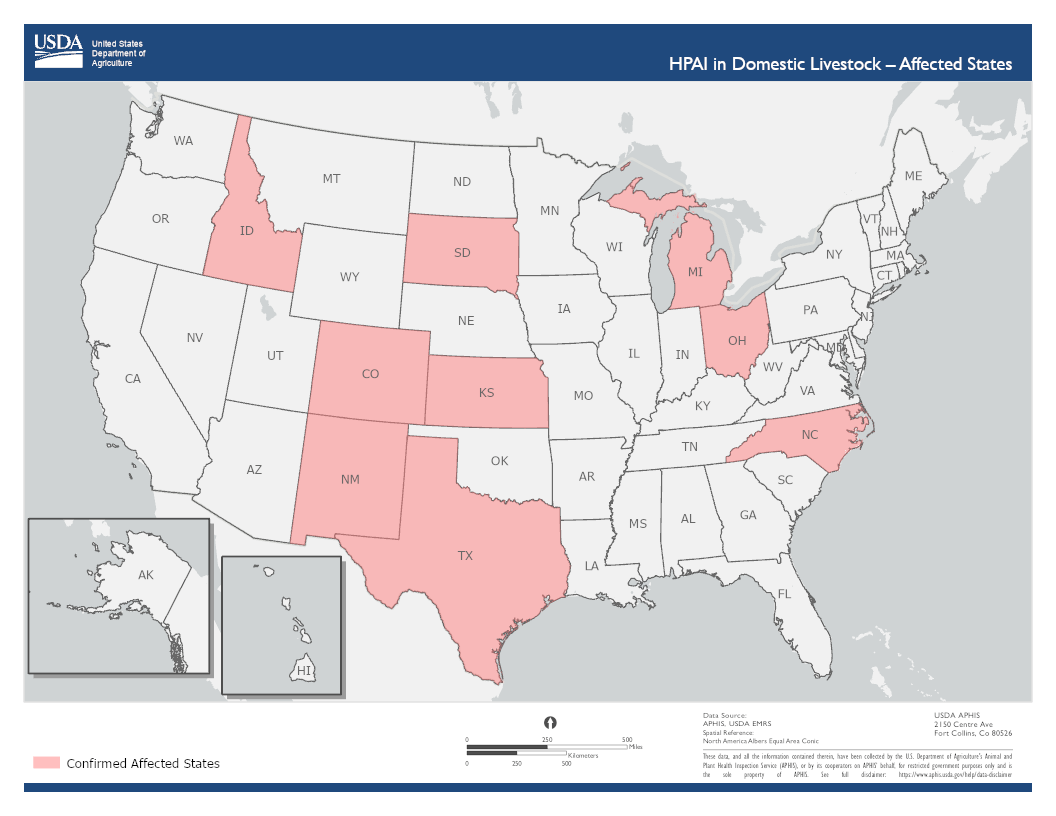
Earlier this week, the United States reported a third human case of highly pathogenic avian influenza (HPAI) A(H5) in Michigan. This is the second human case associated with the current multistate outbreak of A(H5N1) in dairy cows. According to the CDC, “As with the case in Texas, the individual is a worker on a dairy farm where H5N1 virus has been identified in cows. While a nasal swab from the person tested negative for influenza in Michigan, an eye swab from the patient was shipped to CDC and tested positive for influenza A(H5) virus, indicating an eye infection. Similar to the Texas case, the patient only reported eye symptoms. CDC has been watching influenza surveillance systems closely, particularly in affected states, and there has been no sign of unusual influenza activity in people, including in syndromic surveillance.”

However, based on information currently available, CDC says that the risk to the general public remains low. People with exposure to potentially infected animals are urged to take recommended precautions. People with close or prolonged, unprotected exposures to infected birds and other animals-or to environments contaminated by them-are at a greater risk of infection. The CDC has issued interim recommendations for prevention, monitoring, and public health investigations of H5N1 cases in people as well as updated recommendations for worker protection and use of personal protective equipment.
Source: USDA

Putting the Vacca Back in Vaccination

Earlier this month, the USDA issued a request for information to US companies about their abilities to produce H5N1 vaccines for cows. However, Science explains that market uncertainties and concerns about safety rules and export standards could be major roadblocks to developing and using such vaccines widely. The same article also explains that “The outbreak of avian influenza in U.S. dairy herds raises an obvious question: Why not adopt the strategy many countries use to protect poultry and vaccinate the cows? An H5N1 vaccine might not only protect cattle from infection and the concomitant drop in milk production, but also reduce the risk of the virus sickening farm workers. And it could limit opportunities for the virus to mutate and further adapt to mammals, which in theory could trigger a pandemic.”

Early Warnings in Texas

Multiple articles published recently have discussed the early warning signs of H5N1’s spread in Texas, including this piece from KFF Health News, which explains “In early February, dairy farmers in the Texas Panhandle began to notice sick cattle. The buzz soon reached Darren Turley, executive director of the Texas Association of Dairymen: “They said there is something moving from herd to herd.”’

“Nearly 60 days passed before veterinarians identified the culprit: a highly pathogenic strain of the bird flu virus, H5N1. Had it been detected sooner, the outbreak might have been swiftly contained. Now it has spread to at least eight other states, and it will be hard to eliminate.”

A CNN article discusses the run-up to Texas’ announcement that H5N1 was spreading amongst dairy cattle in the state for the first time. It discusses how, in early March, scientists at the Texas Epidemic Public Health Institute, Baylor College of Medicine, and UTHealth Houston were aware of the spread of the virus because of wastewater surveillance.

As the KFF article explains, “Why did it take so long to recognize the virus on high-tech farms in the world’s richest country? Because even though H5N1 has circulated for nearly three decades, its arrival in dairy cattle was most unexpected. “People tend to think that an outbreak starts at Monday at 9 a.m. with a sign saying, ‘Outbreak has started,’” said Jeremy Farrar, chief scientist at the World Health Organization. “It’s rarely like that.”’

Biden Administration Suspends Peter Daszak’s Funding

This week, the Department of Health and Human Services (HHS) sent a letter to Peter Daszak announcing actions similar to those taken against his organization, the EcoHealth Alliance (EHA), less than a week prior. The administration has “…suspended from all federal funding programs the scientist at the heart of the lab leak theory of the origins of the coronavirus, and proposed blocking him from receiving federal funding in the future.”

The letter explains that HHS aims to hold Daszak accountable for EHA’s “failure to adequately monitor the activities of the Wuhan Institute of Virology and then subsequently failing to report on the lab’s high-risk virus studies.” It further stated, “The alleged conduct of EHA is imputed to you, because during all or part of the time relevant, you participated in, knew of, or had reason to know of EHA’s improper conduct, through your role as the President of EHA.”

Read more about this letter and the circumstances leading to it here.

National Security Commission on Emerging Biotechnology Announces Introduction of Agriculture Bills

The National Security Commission on Emerging Biotechnology (NSCEB) announced this week that its Congressional Commissioners-Senators Padilla and Young and Representatives Bice and Khanna-have introduced multiple agriculture bills that incorporate recommendations from NSCEB’s first report. NSCEB explains that “Recognizing that food security and agricultural supply chains are key elements of national security, the Commission developed its first three legislative proposals: the Agriculture and National Security Act, the Agricultural Biotechnology Coordination Act, and the Biotechnology Oversight Coordination Act. These bills direct the U.S. Department of Agriculture (USDA) and other agencies to consider emerging technology in multiple ways. Each bill makes structural improvements that strengthen the government’s abilities at the intersection of national security and emerging biotechnology.”

Furthermore, in addition to the bills (the Agriculture and National Security Act, Agricultural Biotechnology Coordination Act, and Biotechnology Oversight Coordination Act), “…the Senate package includes the Synthetic Biology Advancement Act (originally sponsored by Commissioner Senator Young and endorsed by the Commission). This would create a Synthetic Biology Center under USDA with a focus on the application of synthetic biology to food security and agriculture. Endorsing legislation is another mechanism that the NSCEB can use to promote good policy options.”

Learn more about these bills and their potential impact here.

CORRECTION: Last week in our announcement about graduating Biodefense MS students, we erroneously announced the winner of this year’s Frances Harbour Award as Olivia Parker. The winner of this year’s Frances Harbour Award is Sophia Hirshfield in recognition of her community leadership in the Biodefense Program. Congratulations to Sophia!
“Lessons Learned From the Kyrgyz Republic’s Public Health Response to COVID-19”

Biodefense MS Program alumnus Lewis Grant recently published this commentary piece in Health Security. He explains in part, “Throughout the pandemic, the Kyrgyz Republic also experienced border clashes over water resources with its neighbor, the Republic of Tajikistan. On April 28, 2021, tensions between Kyrgyz residents of Batken Province and Tajik residents of Sughd Province escalated into armed conflict, resulting in over 40,000 Kyrgyz people evacuated, 36 deaths, and 173 injuries.7 The COVID-19 pandemic was described as a major challenge to care provision in the final report from the International Federation of Red Cross and Red Crescent Societies.7 The report states that social distancing was difficult for Red Crescent Society of Kyrgyzstan workers while assisting Kyrgyz citizens affected by the violence. The report also states that infection prevention measures were difficult to promote among the emotionally distressed population.”

“New Biotech Platforms Offer Better Paths to Biosecurity”

Ryan Morhard recently published this piece with Think Global Health, writing in part, “The emergence of improved cybersecurity across information technologies can point the way how to secure another technological domain undergoing revolutionary change—biotechnology. The tools of biotechnology continue to improve rapidly, and governments, including that of the United States, are rightfully prioritizing biotechnology in their economic and security strategies. Now is a good time to consider how lessons from securing digital tech can guide efforts to safeguard the potential of the bioeconomy.”

“Safeguarding the Pandemic Agreement from Disinformation”

Alexandra Finch, Kevin A. Klock, Lawrence O. Gostin, Sam F. Halabi, and Sarah Wetter recently published this piece in Think Global Health that discusses a “sustained disinformation campaign worldwide that is “undermining the highly anticipated pandemic agreement.” They write in part of their introduction, “Complicating matters has been a sustained disinformation campaign worldwide to undermine the agreement by making and amplifying spurious assertions about what it intends to accomplish and how it will do so. Central to the disinformation campaign are erroneous claims about national sovereignty and forcible takings of pandemic countermeasures. Further, legitimate and unfounded unease concern weakened intellectual property (IP) and speech rights…Having followed the negotiations and provided technical assistance to the World Health Organization’s (WHO’s) leadership over the last three years, our team is here to set the record straight.”

“Loyce Pace: U.S. Priorities at the 77th World Health Assembly”

Brian Simpson interviews Loyce Pace, the Assistant Secretary for Global Affairs at the US Department of Health and Human Services and part of the US delegation to the upcoming World Health Assembly, about the United States’ priorities at this meeting. When asked about the United States’ big priorities, Pace explained “Broadly speaking, we want to make sure that we continue to have the important conversations around global health security, and not just around response or emergency mode. Preparedness or prevention is just as important.”

“Also, we need to get back to basics when it comes to global health access overall, and explicitly equity across global health services and other issues.”

“A third priority for the U.S. is to make sure we have a sound WHO. We talked about WHO reform for a number of years—and WHO resources. The [WHO] is going to be unveiling their draft program of work, which is their strategy for the next several years. And that, notably, is going to lift up some areas that are increasingly important for global health and for global health institutions to prioritize.”

Read more here.

“Fatal Attacks on Health-Care Workers Doubled in 2023”

Allison Krugman recently authored this piece for Think Global Health discussing the findings of a new report from the Safeguarding Health in Conflict Coalition that indicates 2023 was the deadliest year for attacks against healthcare workers since the coalition began its reporting a decade ago. She explains, “SHCC documented 480 health worker killings last year, almost double the figure from 2022. The report draws on conflicts across 30 countries, the greatest number of killings taking place in Myanmar, Palestinian territories (including Gaza), Sudan, and Ukraine…Doctors, nurses, ambulance drivers, and pharmacists were among those targeted or caught in crossfire. In Gaza, the number of health workers killed in 2023 was the highest of any conflict documented by the SHCC since its reporting began in 2016.”

“Dstl Helps Develop National Microbial Forensics Capability”

From the UK’s Defence Science and Technology Laboratory, this post discusses a recent workshop focused on the United Kingdom Microbial Forensics Consortium (UKMFC). The post explains in part, “The attendees of the workshop considered the strategic aims of the UKMFC and examined what existing computational tools and approaches could help meet this requirement. They also considered what analytical tools the UKMFC would need in the future to address new and emerging areas of concern…This is the first time bioinformaticians from government genomics laboratories have come together to consider the microbial forensics question. The connections have already led to new cross government collaborations in human, animal and plant pathogen genomics.”

“Body Lice May Be Bigger Plague Spreaders Than Previously Thought”

This Science Daily piece summarizes a recent PLOS study on body lice and Y. pestis transmission: “A new laboratory study suggests that human body lice are more efficient at transmitting Yersinia pestis, the bacterium that causes plague, than previously thought, supporting the possibility that they may have contributed to past pandemics. David Bland and colleagues at the United States’ National Institute of Allergy and Infectious Diseases present these findings in the open-access journal PLOS Biology on May 21.”

“Will Destruction Of Smallpox Virus Get Postponed Again?”

Mark Kortepeter discusses the elimination of variola virus in this piece for Forbes, writing in part, “Is it finally time to eliminate the remaining stocks of variola (smallpox) virus for good? The World Health Assembly will discuss the current status on May 27. The World Health Assembly in 1996 set a date for virus destruction, but in subsequent resolutions the destruction of the virus has been postponed repeatedly to provide opportunities for research on the deadly virus to develop new countermeasures. There has been a decades-long debate on whether to eliminate the virus.”

“Meeting China’s Nuclear and WMD Buildup: Regional Threat Perceptions and Responses”

“This NBR Special Report presents case studies of how six regional countries (Australia, India, Japan, the Philippines, Taiwan, and Vietnam) view China’s development of its nuclear weapons and other WMD capabilities. The case studies are preceded by an introduction from editor Bates Gill that discusses key findings and policy implications.”

Nuclear Facilities in Times of Crisis

From the Nuclear Threat Initiative: “As increasingly frequent and intense global crises pose new threats to civilian nuclear facilities, NTI has released a new paper, Nuclear Facilities in Times of Crisis, that evaluates existing strategies for reducing risks and recommends additional steps that governments, industry, and other stakeholders can take to build resiliency.”

“The NTI Paper examines two types of crises: armed conflict and natural disasters. Russia’s invasion of Ukraine and seizure of the Zaporizhzhia Nuclear Power Plant is a stark example of the type of armed conflict that nuclear facilities were not designed for, but now find themselves facing. At the same time, over 90% of the world’s nuclear energy plants are in locations that face high or extremely high risks of wildfire, drought, or flooding. The risks associated with these crises are particularly important to prepare for now, as a growing number of countries embark on nuclear energy programs in an effort to reduce their reliance on fossil fuels, bolster energy security, and improve grid reliability.”

“The paper’s recommendations fall into four categories:

  1. Plugging gaps and planning for the future by developing an international code of conduct for dealing with armed conflict near nuclear facilities.
  2. Preventing attacks on nuclear facilities by establishing and strengthening political and legal commitments for protecting facilities during armed conflict
  3. Building resiliency at nuclear facilities and improving response and contingency planning
  4. Containing crises that may erupt at a nuclear facility by keeping the most dangerous weapons-usable nuclear materials out of the fuel cycle”

“Burning Skin, Teary Eyes: Ukraine’s Troops Say Russia Is Using a Banned Toxic Gas”

Jane Lytvynenko recently authored this piece for the Wall Street Journal, writing in its introduction, “The Ukrainian soldiers were hunkered down last month in a front-line dugout and under siege from Russian drones dropping grenades. They were relieved at first when bomblets landed that didn’t explode. Then a strong smell of chlorine filled the air: The grenades were seeping poisonous gas.”

“The Ukrainians felt their skin sting, eyes water and lungs fill with smoke, provoking a hard cough. They rushed to wet rags with water and place them over their faces as the heavy gas filled the air around them. One of the fighters left the protection of the dugout to distract the enemy drones, allowing his compatriots to escape.”

“Oleksiy Bozhko, a volunteer medic whose team examined the men near the eastern city of Avdiivka, identified the gas as chloropicrin, a banned chemical irritant, based on the men’s symptoms and description of the smell. U.S. and Ukrainian officials, as well as medics, soldiers and international researchers say Russian use of toxic gases on the battlefield is increasing as Moscow ramps up an offensive designed to seize more of Ukraine’s territory than the roughly 20% it already occupies.”

Read more here.

“International Scientific Report on the Safety of Advanced AI”

From the UK Department for Science, Innovation and Technology and the AI Safety Institute: “The International Scientific Report on the Safety of Advanced AI interim report sets out an up-to-date, science-based understanding of the safety of advanced AI systems. The independent, international, and inclusive report is a landmark moment of international collaboration. It marks the first time the international community has come together to support efforts to build a shared scientific and evidence-based understanding of frontier AI risks.”

“The interim report restricts its focus to a summary of the evidence on general-purpose AI, which have advanced rapidly in recent years. The report synthesises the evidence base on the capabilities of, and risks from, general-purpose AI and evaluates technical methods for assessing and mitigating them.”

“The report underlines the need for continuing collaborative international efforts to research and share knowledge about these rapidly evolving technologies. The approach taken was deliberately inclusive of different views and perspectives, and areas of uncertainty, consensus or dissent are highlighted, promoting transparency.”

ICYMI-Death Dust: Why the World Should Still Worry about Radiological Weapons – A Geneva Security Debate

From the Middlebury Institute: “Should the world still worry about state-level radiological weapons—a category of nonconventional weapons often referred to as “dirty bombs” and usually associated with non-state actors? What factors account for the initial pursuit of radiological weapons in the United States, the Soviet Union, the United Kingdom, Egypt, and Iraq, and what explains their eventual abandonment? Looking forward, what are the prospects for the proliferation and use of radiological weapons and what can be done to curb their spread?”

“Two distinguished arms control experts will discuss lessons from prior radiological weapons programs and past efforts at the Conference on Disarmament to prohibit this category of nonconventional weapons. They also will examine a new US-led initiative to revive negotiations on a legally binding prohibition of radiological weapons production and use.”

“This seminar focuses on the findings of the new book “Death Dust: The Rise, Decline and Future of Radiological Weapons Programs” co-authored by William Potter, Sarah Bidgood, Samuel Meyer, and Hanna Notte (Stanford University Press, 2023).”

Watch the recording here.

ICYMI-Today’s Threats, Tomorrow’s Health: A Discussion with CDC Leaders

From CSIS: “The Centers for Disease Control and Prevention’s (CDC) overseas mission is an integral part of its mandate to respond to outbreaks at their source, protect the health of all Americans, and strengthen global health security. But this global programming has long remained underpowered, under resourced, and unrecognized for the critical contributions it secures for both national security and the stability of the broader world. This oversight threatens the sustainability of these vital programs, which are essential not only globally but also for maintaining health security within the United States.”

A full recording of this event is available here.

ICYMI-Strengthening US Defense Capabilities Against Deliberate Biological Threats: What Congress Needs to Know

From Johns Hopkins Center for Health Security: The panel discussion, moderated by Dr. Tom Inglesby, discussed how the US government views and prepares for deliberate biological threats. Panelists shared how each of their agencies contributes to US biodefense and how they work across government to advance this mission.”

Watch the event recording here.

NEW: Security and Emerging Technology Series: Assessing the AIxBio Policy Landscapes

From CSET: “We are pleased to invite you to the next session of our Security and Emerging Technology Seminar Series on June 6 at 12PM ET, which will feature a discussion of the policy challenges at the intersection of AI and biotechnology.”

“The Biden Administration’s Executive Order on AI included several provisions relevant to AI, biology, and the intersection of the two. For example, the EO calls for a study on the biosecurity risks presented by novel AI tools and directs the creation of a DNA synthesis screening mechanism.”

“Now that we’ve passed the 180 day milestone since the EO’s signing, where do things stand? Join us on June 6 for a discussion on what’s been accomplished, what we have learned, and what challenges remain. CSET Research Analyst Vikram Venkatram will moderate a discussion with CSET Research Fellow Dr. Steph Batalis, National Security Commission on Emerging Biotechnology Fellow Matthew E. Walsh, and Science Policy Consulting Principal Dr. Sarah Carter. Their discussion will be followed by audience Q&A.”

Learn more and register here.

NEW: Advancing Data Sharing to Strengthen One Health Effectiveness: A Webinar Series

From the National Academies: “Data sharing is critical for evidence-based decision making for health security and resilience. The One Health approach, which is founded on the interconnectedness of human, plant, animal, and environmental health, demonstrates the need for cross-disciplinary data sharing and interoperability. The National Academies Forum on Microbial Threats will host the first event in a quarterly webinar series that explores how a One Health approach can inform more robust data sharing.”

“The series will present a call to action, identify barriers and success stories, and highlight potential future actions to advance data sharing through a One Health lens. The five webinars will provide an overview of data sharing and One Health and will demonstrate how data sharing is critical for addressing climate change, building resilient data systems, and developing trust among diverse stakeholders in order to address pressing global health issues.”

This event will take place on June 11 at 12 pm ET. Learn more and RSVP here.

NEW: 2024 ChABSA Annual Scientific Symposium

The Chesapeake Area Biological Safety Association (ChABSA) is hosting its 2024 Annual Scientific Symposium in-person in Rockville, MD, and virtually on June 5. This year’s keynote presentation will be delivered by Lisa Hensley, Zoonotic and Emerging Disease Research Unit USDA, National Bio and Agro-Defense Facility. Learn more and register here.

Ready or Not 2024: Protecting the Public’s Health from Diseases, Disasters, and Bioterrorism

From TFAH: “Please join Trust for America’s Health (TFAH) for a virtual Congressional briefing and national webinar on our recent report, Ready or Not 2024: Protecting the Public’s Health from Diseases, Disasters, and Bioterrorism.”

“The report identifies gaps in national and state preparedness to protect residents’ health during emergencies and makes recommendations to strengthen the nation’s public health system and improve emergency readiness. As the nation experiences an increasing number of infectious disease outbreaks and extreme weather events, the report found that while emergency preparedness has improved in some areas, policymakers not heeding the lessons of past emergencies, funding cuts, and health misinformation are all putting decades of progress at risk.”

“A panel of subject matter experts will discuss the nation’s readiness for public health emergencies, examine the findings of the report, and discuss key recommendations for policymakers. The briefing will include time for Q&A from the audience.”

This event will take place on May 29 and 2 pm EST. Learn more and register here.

Optimizing Federal, State, and Local Response to Public Health Emergencies

From NASEM: “The National Academies of Sciences, Engineering, and Medicine’s Committee on Science, Technology, and Law cordially invites you to attend a virtual workshop to examine how legal authorities affected the ability of public health agencies and federal, state, and local governments to respond to the COVID-19 pandemic and explore approaches to ensure a more effective response to future public health crises. The allocation of legal authority has become an issue of immediate relevance as the United States confronts an H5N1 avian influenza outbreak in dairy cattle.”

“The workshop, which will highlight ideas for optimizing the response to future public health emergencies, will be held on Thursday, May 30, 2024 from 12:00 to 5:30 pm U.S. Eastern and Friday, May 31, 2024 from 12:00 to 4:30 pm U.S. Eastern. It will include the following sessions:

1) Optimizing Federal, State, and Local Public Health Preparedness  
2) The COVID-19 Pandemic: What happened? What went right? What went wrong?  
3) Public Health Emergency Authorities: What we know about them and how did we experience them before, during, and after the COVID-19 pandemic? 

  • Case Study I: Pandemic Orders and Religious Liberty
  • Case Study II: New York City Vaccine Mandates: Who Has the Authority?
  • Case Study III: The Experience with Public Health Emergency Authorities Before, During, and After COVID-19
  • Case Study IV: The Future of Public Health Authority at the Federal, State, and Local Level

4) Exploring Routes and Barriers to Effective Public Health Response Efforts During the COVID-19 Pandemic
5) Looking to the Future: Where do we go from here? 
6) Concluding Thoughts from Workshop Planning Committee”

Learn more and register here.

American Democracy and Health Security Initiative: Lighting a Path Amid Pandemic Polarization

“Please join the Brown University School of Public Health Pandemic Center, the COVID Collaborative, and the CSIS Bipartisan Alliance for Global Health Security for the launch of the American Democracy and Health Security Initiative.”

“The story of how America fared under the Covid-19 pandemic is actually two stories. While the more well-known story is one of failure, confusion, and polarization, the other story is one of American ingenuity amidst profound uncertainty. State and local leaders were at the center of this untold story—in serving their communities they innovated, bridged divides, and illuminated America’s path during the Covid-19 pandemic’s darkest days. The American Democracy and Health Security Initiative spotlights these lamplighters and harvests their hard-won lessons, to ensure the most successful strategies can be sustained or replicated in future crises.”

“On June 5, the American Democracy and Health Security Initiative will publish its findings on what actionable steps are needed to advance our health security for the future. The event will feature leaders from across the country from Governors, advisors, and health leaders to community organizations, educators, businesses, and crisis managers. We will discuss urgent opportunities to make the country more resilient against future threats to our health security and to our democracy and identify national and local innovations that must be retained and playbooks that are needed to reinvigorate leadership, bipartisanship, and equitable access in the face of the next health emergency in America.”

This event will take place on June 5 at 2 pm ET. Register here.

Addressing the Challenges Posed by Chemical and Biological Weapons: Intensive Online Introductory Course for Students of Technical Disciplines

“SIPRI and the European Union Non-Proliferation and Disarmament Consortium (EUNPDC) invite graduate and postgraduate students of the technical or natural science disciplines to apply for an intensive online introductory course on chemical and biological weapons—their proliferation, the efforts to eliminate them, the various mechanisms used to control their spread—and endeavours underway to reduce the risk of chemical or biological agents in terrorist attacks. The course will take place online, during four half-days on 2831 May 2024, 14:00 to 18:00 Central European Summer Time (CEST).”

“The course will cover the fundamentals of chemical and biological weapons as well as of missiles and other means of delivery; the history of chemical and biological warfare; the evolution of international norms against these weapons; the threats associated with potential terrorist uses of chemical and biological material; bioweapons and other related scientific advances; the current challenges posed by chemical weapons; arms control treaties; and mechanisms to curb the spread of dangerous substances, including export controls.”

“The course will also discuss the role of the EU institutions and industry to address the challenges mentioned above. The course will be instructed by renowned experts on non-proliferation, arms control, disarmament, export controls, verification and related subjects from SIPRI, other European research centres, think tanks and international organizations.”

Learn more and apply here.

Registration for GHS 2024 Now Open

Registration is now open for the Global Health Security 2024 conference in Sydney, Australia. This iteration will take place 18-21 June, 2024. The call for abstracts is also still open. “The mission of the Global Health Security conference is to provide a forum where leaders, researchers, policy-makers, and representatives from government, international organisations, civil society, and private industry from around the world can engage with each other, review the latest research and policy innovations, and agree solutions for making the world safer and healthier. To that end, our mission is to help foster a genuinely multidisciplinary community of practice that is committed to working collaboratively to enhance global health security and eliminate disease, irrespective of its origin or source.”

SBA.3 International Synthetic Biology, and Biosecurity Conference in Africa

“Join us for the SBA.3 International Synthetic Biology and Biosecurity Conference in Africa, a groundbreaking event that brings together experts, researchers, and enthusiasts in the field of synthetic biology. This in-person conference will take place at the Laico Regency Hotel from Wed, Jul 17, 2024 to Friday, Jul 19, 2024.”

“Get ready to dive into the exciting world of synthetic biology and explore its potential applications in Africa. From cutting-edge research to innovative solutions, this conference offers a unique opportunity to learn, network, and collaborate with like-minded individuals.”

“Discover the latest advancements, trends, and challenges in synthetic biology through engaging keynote speeches, interactive workshops, and thought-provoking panel discussions. Immerse yourself in a vibrant atmosphere where ideas flow freely and new connections are made.”

“Whether you’re a seasoned professional or just starting your journey in synthetic biology, this conference provides a platform to expand your knowledge, exchange ideas, and contribute to the growth of the field in Africa.”

“Don’t miss out on this extraordinary event that promises to shape the future of synthetic biology and biosecurity in Africa. Mark your calendars and join us at the SBA.3 International Synthetic Biology and Biosecurity Conference in Africa!”

Learn more and register here.

IFBA Launches “BIORISK ADVENTURE” Online Risk Assessment Game

From the International Federation of Biosafety Association: “The IFBA is pleased to announce the launch of BIORISK ADVENTURE, an online game-based learning tool, illustrating the concepts of the risk-based approach for managing biological risks as outlined in the WHO 4th Edition Laboratory Biosafety Manual and its supporting monographs. Through real-life scenarios set in several geographical locations and incorporating the core requirements and options for heightened control measures, players use their judgment in selecting available risk mitigation measures depending on the nature of the pathogen and laboratory activities, local geographic conditions, and available resources.”

“Biological risk assessment forms the foundation of sustainable and impactful biosafety and biosecurity solutions. By playing this game, you will learn how to apply knowledge and make sound judgments in the selection of appropriate risk-control measures that are achievable using the local resources available, that are not overly restrictive, and that enable the work to proceed safely and securely.”

“Click here to create and account and start playing, earn achievement badges and see your name at the top of the leaderboard! http://ifbabioriskadventure.org/

“On July 1st, after the first month of play, the highest-ranking individual on the leaderboard will be awarded a voucher towards a free online IFBA professional certification exam.”

AdvancingBiosecurity Tianjin Biosecurity Roleplay Challenge

AdvancingBiosecurity now offers this roleplaying challenge which allows users to “…take on the role of different stakeholders in the biosecurity realm, that face different dilemmas in their everyday lives.” It is designed to help better understand the Tianjin Biosecurity Guidelines for Codes of Conduct for Scientists. The page also includes several brief videos explaining different facets of the guidelines. Learn more and play here.

Pandora Report 5.17.2024

This week’s edition of the Pandora Report covers news from the Biodefense Graduate Program, HHS’ announcement to cut federal funding to the EcoHealth Alliance, and more.

Biodefense Program Receives Gift from the CBRNE Industry Group

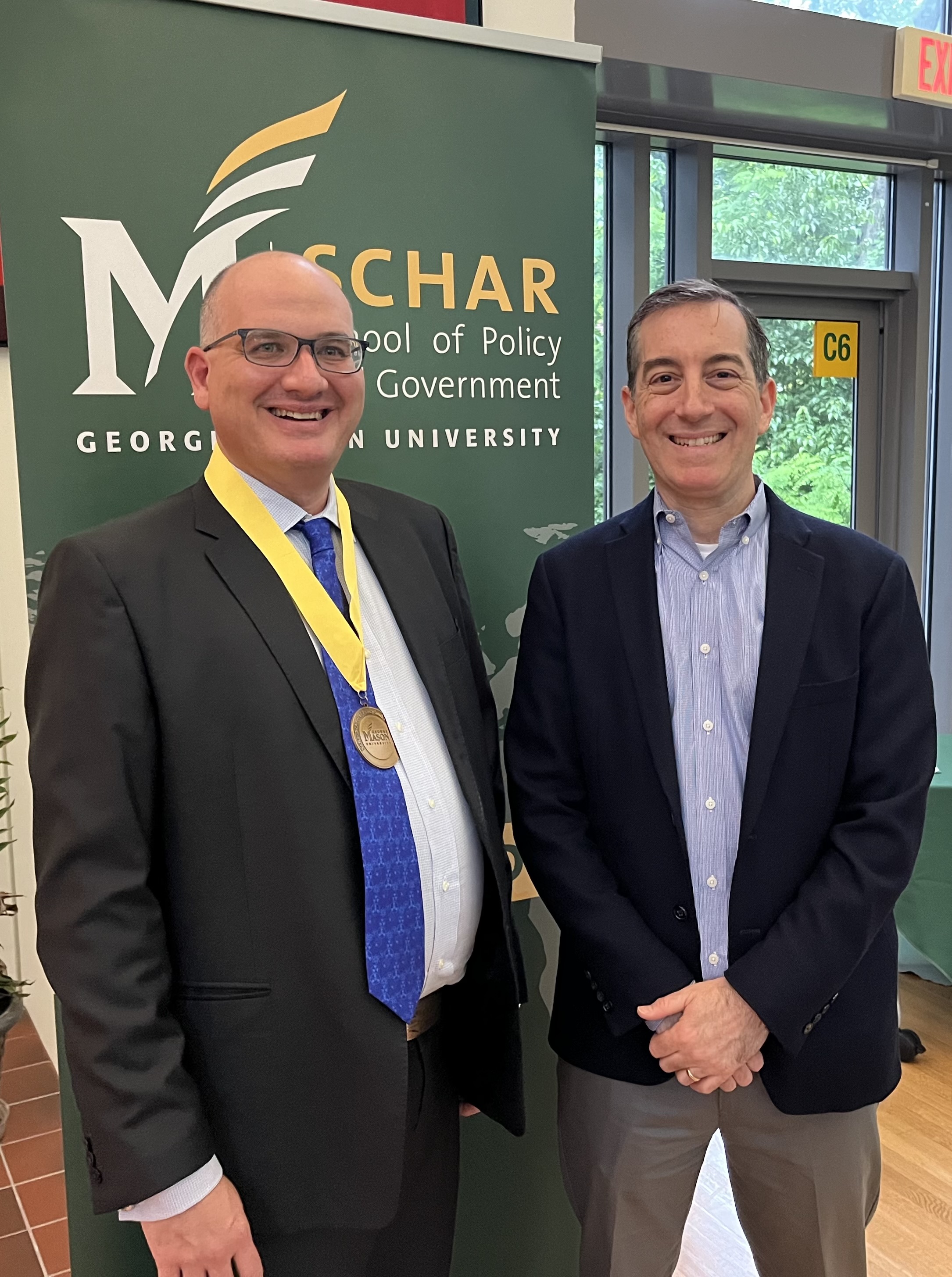
For the second year, the Schar School of Policy and Government at George Mason University received a generous gift from the CBRNE Industry Group, an association of organizations supporting chemical, biological, radiological, nuclear, and explosive defenses, to support the Biodefense Graduate Program. Program director Dr. Gregory Koblentz accepted the award on behalf of the Schar School and Biodefense Program at the CBRNE Industry Group’s annual dinner on May 15. The dinner’s keynote speaker was Rebecca Hersman, director of the Defense Threat Reduction Agency (DTRA).

Congratulations to Graduating Biodefense Students

Congratulations to the newly minted MS in Biodefense students who graduated from the Schar School this week: Abigail Danfora, Theresa Hoang, Emily Johnson, John Kisko, Nick Marko, Geoff Mattoon, Jack Moore, Miranda Nastasi, Brittany Novak, Olivia Parker, Max Towers and Jacob Wellerman. A special congratulations to Nick Marko for receiving the Outstanding Biodefense MS Student Award for his exemplary scholarship and to Olivia Parker for receiving the Frances Harbour Award in recognition of her community leadership in the Biodefense Program.

Biden Administration Moves to Ban Funding for EcoHealth Alliance

Following a tense Congressional hearing and the release of a highly critical select subcommittee interim report earlier this month, the Department of Health and Human Services announced in a letter on Wednesday that it is moving forward with debarment proceedings and implementing a government-wide suspension of federal funding for EcoHealth Alliance. This includes active grants, three of which totaled $2.6 million in NIH funding for EcoHealth Alliance last year. The NIH cited multiple failures on the part of the organization that it first reported three years ago, including EcoHealth’s failure to “promptly report findings from studies on how well bat coronaviruses grow in mice…”

House Select Subcommittee on the Coronavirus Pandemic Chairman Brad Wenstrup (R-OH) said in a statement about the announcement, ‘“EcoHealth Alliance and Dr. Peter Daszak should never again receive a single penny from the U.S. taxpayer. Only two weeks after the Select Subcommittee released an extensive report detailing EcoHealth’s wrongdoing and recommending the formal debarment of EcoHealth and its president, HHS has begun efforts to cut off all U.S. funding to this corrupt organization. EcoHealth facilitated gain-of-function research in Wuhan, China without proper oversight, willingly violated multiple requirements of its multimillion-dollar National Institutes of Health grant, and apparently made false statements to the NIH. These actions are wholly abhorrent, indefensible, and must be addressed with swift action. EcoHealth’s immediate funding suspension and future debarment is not only a victory for the U.S. taxpayer, but also for American national security and the safety of citizens worldwide.”

‘“The Select Subcommittee’s investigation into EcoHealth and the origins of COVID-19 is far from over. Dr. Daszak and his team are still required to produce all outstanding documents and answer the Select Subcommittee’s questions, specifically related to Dr. Daszak’s potential dishonesty under oath. We will hold EcoHealth accountable for any waste, fraud, and abuse and are committed to uncovering any illegal activity, including lying to Congress, NIH, or the Inspector General,” he continued.

EcoHealth Alliance said in a statement that it “is disappointed by HHS’[s] decision today and we will be contesting the proposed debarment. We disagree strongly with the decision and will present evidence to refute each of these allegations and to show that NIH’s continued support of EcoHealth Alliance is in the public interest.”

“China and Medical AI: Implications of Big Biodata for the Bioeconomy”

Caroline Schuerger, Vikram Venkatram, and Katherine Quinn recently published this CSET Issue Brief: “China supports medical artificial intelligence development to achieve bioeconomy leadership. Countries that strategically prioritize medical AI could benefit from an economic advantage and set global norms for future developments. Our new report examines China’s stated goals for medical AI, which range from the collection and protection of vast amounts of biodata, to facilitating research and development, to supporting medical AI commercialization. China’s comprehensive actions to prioritize medical AI development have major implications for U.S. economic and technological competitiveness.”

“China’s Industrial Clusters: Building AI-Driven Bio-Discovery Capacity”

Anna Puglisi and Daniel Chou recently authored this CSET Data Brief: “China is banking on applying AI to biotechnology research in order to transform itself into a “biotech superpower.” In pursuit of that goal, it has emphasized bringing together different aspects of the development cycle to foster multidisciplinary research. This data brief examines the emerging trend of co-location of AI and biotechnology researchers and explores the potential impact it will have on this growing field.”

“China’s Hybrid Economy: What to Do About BGI?”

Anna Puglisi tackles China’s industrial policy and BGI (formerly Beijing Genomics Institute) in this CSET blog post: “As the U.S. government considers banning genomics companies from China in the Biosecure Act, it opens a broader question of how the U.S. and other market economies should deal with China’s national champions. This blog post provides an overview of BGI and how China’s industrial policy impacts technology development.”

“Science and Technology Advisory Mechanism for the Biological Weapons Convention, A Proof-of-Concept Exercise”

From The Interacademy Partnership: “This document encapsulates the insights emanating from the recent ‘Proof of Concept Meeting for a Scientific Advisory Body for the Biological and Toxin Weapons Convention’ (BWC) that IAP hosted in Trieste, Italy, on 27-28 February 2024.”

“The meeting, convened under the auspices of IAP and in coordination with the US National Academies of Sciences, Engineering, and Medicine (NASEM), brought together 38 technical experts from 32 countries. Their deliberations focused on the potential impact of Artificial Intelligence (AI) on global biosecurity and international cooperation within the framework of the BWC. Participants stressed the need for a continuous review process to monitor AI trends, especially its implications for biology relevant to the BWC. The report serves as the report of a putative Science Advisor to the BWC, summing up the expert deliberations from the proof of concept meeting.”

“The release of “Science and Technology Advisory Mechanism for the Biological Weapons Convention, A Proof-of-Concept Exercise”, deriving from the proof of concept meeting, marks a key moment in the journey towards establishing a scientific advisory body for the BWC.”

“Read and download the Biosecurity Report here.”

“USDA, FDA Turf Battles Hamper Responses to Outbreaks Like H5N1 Bird Flu”

Rachel Cohrs Zhang, Lizzy Lawrence, and Nicholas Florko discuss federal agencies’ turf battles in this STAT News piece that includes information derived from interviews with more than 20 former federal officials. They explain in part, “Because H5N1 is currently an animal disease, it’s clearly the USDA’s responsibility to test cattle and get a handle on the outbreak. But already, public health experts are concerned that the scope of that agency’s testing regime is too limited. The department is requiring farmers test only lactating cows before moving them across state lines.”

‘“There needs to be a better understanding of the scope and scale of the problem,” said Stephen Ostroff, a former deputy commissioner in charge of food safety at the FDA. “This seems like it’s not necessarily going to be able to identify problems that could occur within a state.”’

Read more here.

“As Bird Flu Looms, the Lessons of Past Pandemics Take On New Urgency”

John M. Barry discusses lessons learned from the 1918 flu pandemic and other pandemics and their significance as bird flu continues to spread in this New York Times opinion piece. He writes in part, “While much would still have to happen for this virus to ignite another human pandemic, these events provide another reason — as if one were needed — for governments and public health authorities to prepare for the next pandemic. As they do, they must be cautious about the lessons they might think Covid-19 left behind. We need to be prepared to fight the next war, not the last one…Two assumptions based on our Covid experience would be especially dangerous and could cause tremendous damage, even if policymakers realized their mistake and adjusted quickly.”

“Rise of Drug-Resistant Superbugs Could Make COVID Pandemic Look ‘Minor’, Expert Warns”

This piece from The Guardian discusses warnings from Prof Dame Sally Davies, England’s former chief medical officer and the UK’s current special envoy on AMR. It explains, “She paints a bleak picture of what could happen if the world fails to tackle the problem within the next decade, warning that the issue is “more acute” than climate change. Drug-resistant infections already kill at least 1.2 million people a year…“It looks like a lot of people with untreatable infections, and we would have to move to isolating people who were untreatable in order not to infect their families and communities. So it’s a really disastrous picture. It would make some of Covid look minor,” said Davies, who is also the first female master of Trinity College, Cambridge.”

“Dissecting Pandemic-Prone Viral Families, Volume 4: The Pneumoviridae”

This document by Amesh A. Adalja for Johns Hopkins Center for Health Security covers the pandemic threats posed by the Pneumoviridae family: “The Pneumoviridae viral family, formerly a subfamily of Paramyxoviridae, consists of 2 genera: Orthopneumovirus, the members of which infect mammals, and Metapneumovirus, which are specific for either mammals or birds.”

Pneumoviridae poses a largely underappreciated pandemic threat. Only 2 known viral family members infect humans: human respiratory syncytial virus (HRSV, commonly RSV) and human metapneumovirus (HMPV).1 These 2 endemic respiratory viruses confer substantial morbidity and mortality on the human species, particularly among older adults and young children and across different sociodemographic strata.2 If a zoonotic or yet undiscovered viral family member acquired the ability to efficiently infect humans, it could spread prolifically, especially when faced with little immunity”

Read more here.

“Remarks by Dr. Liz Sherwood-Randall Assistant to the President for Homeland Security on Countering Bioterrorism in an Era of Technology Convergence”

Read Liz Sherwood-Randall’s remarks at the Ash Carter Exchange that focus on preventing bioterrorism and threats posed by rapidly advancing biotechnologies. She said in part, “And this frame of “preventive defense” – which identifies what we can do now to prevent far more pernicious threats from emerging in the future – is a guiding principle for me as we face the emergence of a whole new category of “A list” threats at the intersection of biology, engineering, and artificial intelligence.”

“Given my current duties as the President’s Homeland Security Advisor, this is a major concern because of the very real prospect that these technologies – which are largely out “in the wild” rather than controlled by governments – could be accessed and weaponized by terrorists with potentially catastrophic effects.”

“So, I chose to talk with you here today about what we can do to counter biological terrorism and other malicious uses of advances in biotechnology in this era of rapid technology convergence.”

“Getting Down to Science”

This USDA post by Stephanie Jacques discusses the work starting to take shape at the new National Bio and Agro-Defense Facility (NBAF). She writes in part “Science at NBAF is starting in phases. This phased process began with low-risk, common science practices that don’t involve infectious pathogens and is moving to more advanced or mission-focused science in later phases. As NBAF is ramping up science operations in Manhattan, Kansas, its predecessor — the Plum Island Animal Disease Center in New York — will continue protecting American agriculture until NBAF is ready to assume the center’s full mission.”

“Trumping Pandemic Preparedness”

Chelsea Cirruzzo and Ben Leonard recently published this piece in Politico that discusses former President Trump’s promise that, if re-elected, he will abolish the White House’s Office of Pandemic Preparedness and Response Policy. While they explain that he can not entirely get rid of the office on his own, they cover three ways he could undermine the office, including not appointing anyone to run or staff the office, asking Congress to overturn the law it passed creating the office, or reshaping the office to better suit his political interests.

“A ‘Plague’ Comes Before the Fall: Lessons from Roman History”

Colin Elliott discusses the effects of the Antonine plague in this piece, writing in part “The Pax Romana—the 200-year “golden age” of the Roman Empire—was a marvel of diversity, connectivity, and unchallenged hegemony. By the middle of the second century AD, imperial Rome ruled territory across three different continents. Roughly one-quarter of the Earth’s population, some 60 million people, lived under Rome’s vast aegis, and the emperors of the age—most notably Marcus Aurelius—enjoyed the consent of those they governed. The Empire’s elites—witnessing the disciplined legions, widespread religiosity, cultural efflorescence, and dominant economy—likely expected their world order to endure forever.”

“In the year 166 AD, however, seemingly eternal Rome was caught completely off-guard as a deadly novel disease swept across the Eurasian landmass. It ransacked Rome’s cities for at least a decade and preceded centuries of decline. This major biological event—now known as the Antonine plague—appears to have been the world’s first pandemic.”

“Chloropicrin and Its Alleged Use in the Ukrainian War”

JP Zanders breaks down the United States’ accusation that Russia used RCAs and chloropicrin against Ukrainian forces in this post on The Trench: “This three-part blog contribution analyses the publicly available information about RCA and chloropicrin use in the Russo-Ukrainian war. The first part summarises the chemical warfare allegations between 2014 and 2024. Part 2 investigates the reports of chloropicrin use, and the final part discusses how the international community can address the CW allegations through action in the Organisation for the Prohibition of Chemical Weapons (OPCW).”

What We’re Listening To🎧

The Arms Control Poseur, The US and the Chemical Weapons Convention with Laura J. Gross

“On the ninth episode of season 2, William is joined by Laura J. Gross to discuss the completion of the destruction of the US chemical weapons stockpile.”

“In order to understand the current commitments of the United States to the Chemical Weapons Convention (CWC), Laura J. Gross joins William to discuss the completion of the destruction of the US chemical weapons stockpile, which was announced on the 7th of July 2023. This destruction was then verified by the Organisation for the Prohibition of Chemical Weapons (OPCW). In this episode, Ms Gross discusses the challenges that were faced in the destruction of this stockpile, and outlines the achievement itself in light of upholding global norms on arms control and verifiability. However, various challenges remain regarding the implementation of the Convention’s provision, such as the conflict in Gaza, the potential possession of chemical weapons by the Syrian Arab Republic, and the war in Ukraine. Ms Gross explains how the US assists other countries in the destruction of their declared chemical weapons stockpiles. When looking towards the future of the CWC, Ms Gross also touches upon the renewed use of chemical weapons by Syria, Russia, and North Korea and what the US is undertaking to counter the return to such use.”

“Laura J. Gross is the director of the Office of Chemical and Biological Weapons Affairs, Bureau of Arms Control, Deterrence, and Stability, at the United States Department of State, and she is the Executive Director of the US National Authority for the CWC.”

NEW-Pandemic Accord: Partial Failure or Partial Success?

From Brown Pandemic Center: “On 23 May at 12:00PM ET the Pandemic Center will host a webinar titled Pandemic Accord: Partial Failure or Partial Success?”

“Member States of the World Health Organization have been negotiating a new pandemic treaty to address challenges in the response to and sub-optimal international coordination during the Covid-19 pandemic. A vote on the treaty is expected during the upcoming World Health Assembly, taking place 27 May through 1 June. This Pandemic Center webinar will convene an expert panel to assess the strengths and limitations of the current draft of the treaty and its prospects for adoption.”

Learn more and RSVP here.

NEW-Ready or Not 2024: Protecting the Public’s Health from Diseases, Disasters, and Bioterrorism

From TFAH: “Please join Trust for America’s Health (TFAH) for a virtual Congressional briefing and national webinar on our recent report, Ready or Not 2024: Protecting the Public’s Health from Diseases, Disasters, and Bioterrorism.”

“The report identifies gaps in national and state preparedness to protect residents’ health during emergencies and makes recommendations to strengthen the nation’s public health system and improve emergency readiness. As the nation experiences an increasing number of infectious disease outbreaks and extreme weather events, the report found that while emergency preparedness has improved in some areas, policymakers not heeding the lessons of past emergencies, funding cuts, and health misinformation are all putting decades of progress at risk.”

“A panel of subject matter experts will discuss the nation’s readiness for public health emergencies, examine the findings of the report, and discuss key recommendations for policymakers. The briefing will include time for Q&A from the audience.”

This event will take place on May 29 and 2 pm EST. Learn more and register here.

NEW-Optimizing Federal, State, and Local Response to Public Health Emergencies

From NASEM: “The National Academies of Sciences, Engineering, and Medicine’s Committee on Science, Technology, and Law cordially invites you to attend a virtual workshop to examine how legal authorities affected the ability of public health agencies and federal, state, and local governments to respond to the COVID-19 pandemic and explore approaches to ensure a more effective response to future public health crises. The allocation of legal authority has become an issue of immediate relevance as the United States confronts an H5N1 avian influenza outbreak in dairy cattle.”

“The workshop, which will highlight ideas for optimizing the response to future public health emergencies, will be held on Thursday, May 30, 2024 from 12:00 to 5:30 pm U.S. Eastern and Friday, May 31, 2024 from 12:00 to 4:30 pm U.S. Eastern. It will include the following sessions:

1) Optimizing Federal, State, and Local Public Health Preparedness  
2) The COVID-19 Pandemic: What happened? What went right? What went wrong?  
3) Public Health Emergency Authorities: What we know about them and how did we experience them before, during, and after the COVID-19 pandemic? 

  • Case Study I: Pandemic Orders and Religious Liberty
  • Case Study II: New York City Vaccine Mandates: Who Has the Authority?
  • Case Study III: The Experience with Public Health Emergency Authorities Before, During, and After COVID-19
  • Case Study IV: The Future of Public Health Authority at the Federal, State, and Local Level

4) Exploring Routes and Barriers to Effective Public Health Response Efforts During the COVID-19 Pandemic
5) Looking to the Future: Where do we go from here? 
6) Concluding Thoughts from Workshop Planning Committee”

Learn more and register here.

NEW-American Democracy and Health Security Initiative: Lighting a Path Amid Pandemic Polarization

“Please join the Brown University School of Public Health Pandemic Center, the COVID Collaborative, and the CSIS Bipartisan Alliance for Global Health Security for the launch of the American Democracy and Health Security Initiative.”

“The story of how America fared under the Covid-19 pandemic is actually two stories. While the more well-known story is one of failure, confusion, and polarization, the other story is one of American ingenuity amidst profound uncertainty. State and local leaders were at the center of this untold story—in serving their communities they innovated, bridged divides, and illuminated America’s path during the Covid-19 pandemic’s darkest days. The American Democracy and Health Security Initiative spotlights these lamplighters and harvests their hard-won lessons, to ensure the most successful strategies can be sustained or replicated in future crises.”

“On June 5, the American Democracy and Health Security Initiative will publish its findings on what actionable steps are needed to advance our health security for the future. The event will feature leaders from across the country from Governors, advisors, and health leaders to community organizations, educators, businesses, and crisis managers. We will discuss urgent opportunities to make the country more resilient against future threats to our health security and to our democracy and identify national and local innovations that must be retained and playbooks that are needed to reinvigorate leadership, bipartisanship, and equitable access in the face of the next health emergency in America.”

This event will take place on June 5 at 2 pm ET. Register here.

Getting Ahead of Avian Influenza: Why Organizations Need to Prepare Today

From Bluedot: “Highly Pathogenic Avian Influenza A(H5N1), commonly referred to as bird flu, has been making headlines around the world, as the virus rapidly spreads to new animal species. Already the cause of a panzootic (global animal pandemic), last month a human H5N1 case was reported in the U.S. after likely contracting it from infected dairy cattle. The virus has now been detected in dairy herds across multiple states, with evidence to suggest it has been spreading more widely than previously thought — begging the question: Are we at risk for an avian influenza-instigated pandemic?”

“Join us for a deep dive into avian influenza as we explore why and how organizations should prepare to safeguard against bird flu. Together, through collaborative efforts and informed decision-making, we can mitigate the risk of increased transmission to humans. BlueDot’s experts have been closely monitoring the situation and potential risks, issuing multiple alerts on H5N1 — and other avian influenzas — over the past 15 months.”

This event will take place on May 23, at 11 am ET. Learn more and register here.

Addressing the Challenges Posed by Chemical and Biological Weapons: Intensive Online Introductory Course for Students of Technical Disciplines

“SIPRI and the European Union Non-Proliferation and Disarmament Consortium (EUNPDC) invite graduate and postgraduate students of the technical or natural science disciplines to apply for an intensive online introductory course on chemical and biological weapons—their proliferation, the efforts to eliminate them, the various mechanisms used to control their spread—and endeavours underway to reduce the risk of chemical or biological agents in terrorist attacks. The course will take place online, during four half-days on 2831 May 2024, 14:00 to 18:00 Central European Summer Time (CEST).”

“The course will cover the fundamentals of chemical and biological weapons as well as of missiles and other means of delivery; the history of chemical and biological warfare; the evolution of international norms against these weapons; the threats associated with potential terrorist uses of chemical and biological material; bioweapons and other related scientific advances; the current challenges posed by chemical weapons; arms control treaties; and mechanisms to curb the spread of dangerous substances, including export controls.”

“The course will also discuss the role of the EU institutions and industry to address the challenges mentioned above. The course will be instructed by renowned experts on non-proliferation, arms control, disarmament, export controls, verification and related subjects from SIPRI, other European research centres, think tanks and international organizations.”

Learn more and apply here.

Registration for GHS 2024 Now Open

Registration is now open for the Global Health Security 2024 conference in Sydney, Australia. This iteration will take place 18-21 June, 2024. The call for abstracts is also still open. “The mission of the Global Health Security conference is to provide a forum where leaders, researchers, policy-makers, and representatives from government, international organisations, civil society, and private industry from around the world can engage with each other, review the latest research and policy innovations, and agree solutions for making the world safer and healthier. To that end, our mission is to help foster a genuinely multidisciplinary community of practice that is committed to working collaboratively to enhance global health security and eliminate disease, irrespective of its origin or source.”

SBA.3 International Synthetic Biology, and Biosecurity Conference in Africa

“Join us for the SBA.3 International Synthetic Biology and Biosecurity Conference in Africa, a groundbreaking event that brings together experts, researchers, and enthusiasts in the field of synthetic biology. This in-person conference will take place at the Laico Regency Hotel from Wed, Jul 17, 2024 to Friday, Jul 19, 2024.”

“Get ready to dive into the exciting world of synthetic biology and explore its potential applications in Africa. From cutting-edge research to innovative solutions, this conference offers a unique opportunity to learn, network, and collaborate with like-minded individuals.”

“Discover the latest advancements, trends, and challenges in synthetic biology through engaging keynote speeches, interactive workshops, and thought-provoking panel discussions. Immerse yourself in a vibrant atmosphere where ideas flow freely and new connections are made.”

“Whether you’re a seasoned professional or just starting your journey in synthetic biology, this conference provides a platform to expand your knowledge, exchange ideas, and contribute to the growth of the field in Africa.”

“Don’t miss out on this extraordinary event that promises to shape the future of synthetic biology and biosecurity in Africa. Mark your calendars and join us at the SBA.3 International Synthetic Biology and Biosecurity Conference in Africa!”

Learn more and register here.

IBBIS Announces The Common Mechanism

The International Biosecurity and Biosafety Initiative for Science (IBBIS) recently launched The Common Mechanism, “An open-source, globally available tool for DNA synthesis screening.” The organization explains on its website that “The Common Mechanism helps providers of synthetic DNA and RNA to effectively screen orders to prevent synthesis technology from being exploited. We provide free, distributed, open-source, automated software for screening sequences of nucleic acids (including DNA and RNA) as well as resources to facilitate customer screening.”

Learn more and access the tool here.

Pandora Report: 1.27.2023

The year of the rabbit is off to one heck of a start. This week we cover COVID-19’s spread in China as the Party increasingly cracks down on Zero-COVID protesters, growing concern amount H5N1 in mammals, new insight into the history of the plague, and more. Several new publications are listed, including a fresh book from Ed Regis about the history of the Pacific Ocean Biological Survey Program and multiple works on misinformation’s impact on COVID-19 responses. As always, we round out with events and announcements, including multiple great upcoming professional opportunities. Happy Friday!

COVID-19 Multiplying Like Rabbits in China

China’s CDC claimed this week that cases of critically ill COVID-19 patients are down 72% from a peak earlier this month in the country, with daily deaths of hospitalized COVID-19 patients down 79% as well. This comes as Wu Zunyou, Chief Epidemiologist at China CDC, claims that 80% of the country’s 1.4 billion people have already been infected. This seems like an effort to indicate that a rebound is unlikely in the coming months amid concerns that the new year travel season will cause further spread and deaths. Just last week, China claimed to have 60,000 COVID-19 deaths in the month since it rolled back its notorious Zero-COVID policies, a number far below the one million some models estimated the country will suffer this winter.

However, CNBC notes, “…some experts said that figure probably vastly undercounts the full impact, as it excludes those who die at home, and because many doctors have said they are discouraged from citing Covid as a cause of death.” This understanding better aligns with reports of over-crowded funeral homes and crematoriums, and reports of coffin makers and funeral decoration companies repeatedly selling out of their products amid the spread. Because of these discrepancies, many are doubtful of the government’s official statistics.

At the same time, reports of Zero-COVID protesters being arrested or intimidated are mounting. Four women in Beijing are known to have been arrested in connection with these protests, seemingly in retaliation for their role in what has been described as “the boldest challenge to the Communist Party’s rule in decades and an embarrassing affront to its leader, Xi Jinping.” The New York Times explains the Party’s need to do this, writing “The party seems determined to warn off anyone who may have been emboldened by the remarkable outburst of public discontent, which was followed just days later by Beijing’s abrupt decision to abandon Covid restrictions. Since then, domestic challenges have mounted: Youth unemployment is high, the economy is slowing, and Covid infections and deaths have accelerated.”

The same piece continues, “The party is also working to discredit the protesters by casting them as tools of malevolent foreign powers. Beijing has long dismissed dissent at home — from calls for women’s rights to pro-democracy activism to ethnic unrest — as the result of Western-backed subversion. The protests against “zero Covid” were no exception: One Chinese diplomat suggested that some of the demonstrators had been “bought by external forces.”

Chunyun, the Lunar New Year travel period in China, typically lasts from mid-January through late-February, meaning opportunities for spread in rural parts of the country are far from over, despite China CDC’s apparent claims to the contrary. The continued supply of highly suspect statistics and crackdowns on Zero-COVID protesters presents a troubling situation and indicates that the Party has done anything but change its ways.

Thinking of Offering a Nice Egg in This Trying Time? Mink Again

US egg prices skyrocketed in price by more than 137% between December 2021 and December 2022, leaving many in constant sticker shock at the grocery store as this once reliably cheap staple becomes increasingly expensive. Much of this is attributed to outbreaks of highly pathogenic avian influenza (HPAI) A(H5N1), which has been spreading in US flocks since January 2022, resulting in cullings of over 57 million birds across industrial and backyard flocks. However, over the past year, this virus has also demonstrated its ability to spread from birds to mammals, with infections found in several species in the US so far, including raccoons, foxes, seals, grizzly bears, and, most recently, minks. Naturally, this had led to increased concern about potential spread into other mammal populations.

“Transmission electron microscopic image of two Influenza A (H5N1) virions, a type of bird flu virus Note the glycoprotein spikes along the surface of the virion and as a stippled appearance of the viral envelope encasing each virion.” Credit: CDC PHIL

Nature covered this story this week, writing “Until this particular outbreak, all mammalian infections could be attributed to direct contact with virus-contaminated material, says Hualan Chen, a virologist at the Harbin Veterinary Research Institute in China. For example, animals that ingest wild-bird droppings, or that prey on infected animals, can develop the disease. But its spread between mammals “implies that this H5N1 virus may pose a higher risk to public health”, Chen says.”

A new article in Eurosurveillance discusses the alarming spread of HPAI A(H5N1) at an American mink farm in Galicia, Spain in October 2022. In it, Agüero et al. explain that the farm experienced an acute increase in its mortality rate (.77% versus an expected range of .2-.3%), prompting the facility’s clinical veterinarian to collect samples from affected animals. These animals tested positive for H5N1, and “Post-mortem examination revealed haemorrhagic pneumonia or red hepatisation of the lungs as the most notable lesions”

The authors further explain the set-up of the farm, which housed 51,986 minks, writing “The minks were housed in wire netting cages placed in rows and situated in a series of over 30 partially open barns, which provided overhead protection but not total shelter of their sides. The minks were fed with raw fish and poultry by-products, cereals and blood meal. Poultry farms and avian slaughterhouses supplying the poultry by-products were located in Galicia. Up to 10 January 2023, H5N1 poultry outbreaks have not been reported from this region.”

The outbreak soon peaked, with a weekly mortality rate of 4.3% documented between October 17 and 23. Culling measures were ordered quickly, and all minks from infected pens were culled by November 17, along with destruction of all carcasses, fomites, and waste. Of the farm’s 12 workers, 11 were in contact with infected and culled animals, though none of them tested positive and they all completed quarantine without any problems. However, as the authors note in their abstract, “The identified viruses belong to clade 2.3.4.4b, which is responsible of the ongoing epizootic in Europe. An uncommon mutation (T271A) in the PB2 gene with potential public health implications was found. Our investigations indicate onward mink transmission of the virus may have occurred in the affected farm.”

While the mink farm seems to have been thorough in its efforts to stop this outbreak, there are concerns that this new variant may be circulating in wild bird populations. Nature writes, “But Puryear thinks that because the new variant contains genetic material from gull flu, it’s likely that at least some of its genetic changes arose in gulls before entering the mink farm. This means that a strain containing those mutations is probably still circulating in the bird population. But for human populations, the outlook is still good: if the new strain did start to infect people, health authorities could probably produce a vaccine quickly, and the antiviral drug Tamiflu (oseltamivir) can reduce the severity of the disease.”

The Nature news piece concludes with, “The potential risk to wild animals is greater. Bird flu has consistently caused high levels of sickness and death among wild birds and mammals over the past year, and how the new variant will affect that trend remains to be seen. “We just simply don’t know,” says Puryear.”

Shake Ups and Mess Ups at the Department of Health and Human Services

CDC Takes Major Steps in Revamp

CDC Director Dr. Rochelle Walensky announced a number of high-level changes to her agency this week, including the creation of the Office of Health Equity and the Office of Public Health Data, Surveillance, and Technology. These are steps taken in light of last year’s internal review that found, among other things, that the agency struggled with appropriately and rapidly sharing scientific findings, communications in general, and that it needed to strengthen relationships with federal, state, and local partners. Furthermore, most of the organizations under CDC will now report directly to the Office of the Director, moving away from what has been described as a “Community of Practice structure”.

MedPage Today explained this leadership re-structuring, writing “Today, additional details about that leadership structure became clear. There will be a centralized leadership team of experts housed within the director’s office, which will include the director of the CDC/Agency for Toxic Substances and Disease Registry; the principal deputy director; the deputy director for program and science/chief medical officer; the deputy director for policy, communications, and legislative affairs/chief strategy officer; the deputy director for global health; the chief operating officer; and the chief of staff.”

“These changes will improve efficiency, speed decision-making, and strengthen the communication of scientific information to the American public, ensuring CDC’s science reaches the public in an understandable, accessible, and implementable manner as quickly as possible,” an unnamed staffer told The Hill.

OIG Report Finds NIH and EcoHealth Alliance Fell Short in Monitoring and Oversight

The Office of Inspector General (OIG) at HHS released this week the findings of its audit of the National Institutes of Health’s grants to the EcoHealth Alliance. This audit was initiated because of concerns over NIH’s grant awards to EcoHealth as well as EcoHealth’s subawards to foreign entities. OIG aimed to “…determine whether NIH monitored grants to EcoHealth in accordance with Federal requirements, and whether EcoHealth used and managed its NIH grant funds in accordance with Federal requirements.”

The Office found that, “Despite identifying potential risks associated with research being performed under the EcoHealth awards, we found that NIH did not effectively monitor or take timely action to address EcoHealth’s compliance with some requirements. Although NIH and EcoHealth had established monitoring procedures, we found deficiencies in complying with those procedures limited NIH and EcoHealth’s ability to effectively monitor Federal grant awards and subawards to understand the nature of the research conducted, identify potential problem areas, and take corrective action. Using its discretion, NIH did not refer the research to HHS for an outside review for enhanced potential pandemic pathogens (ePPPs) because it determined the research did not involve and was not reasonably anticipated to create, use, or transfer an ePPP. However, NIH added a special term and condition in EcoHealth’s awards and provided limited guidance on how EcoHealth should comply with that requirement. We found that NIH was only able to conclude that research resulted in virus growth that met specified benchmarks based on a late progress report from EcoHealth that NIH failed to follow up on until nearly 2 years after its due date. Based on these findings, we conclude that NIH missed opportunities to more effectively monitor research. With improved oversight, NIH may have been able to take more timely corrective actions to mitigate the inherent risks associated with this type of research.”

Biodefense Graduate Program Director Dr. Gregory Koblentz was quoted in the New York Timespiece on this report, saying “Although concerns were identified by NIAID staff, the proposal was not referred to NIAID’s review committee for further consideration.” He continued, saying “On paper, NIAID staff were encouraged to ‘err on the side of caution’ in identifying and referring such proposals…but in practice it looks like they erred on the side of complacency.” 

Woman Pleads Guilty to Mailing Ricin Letters in 2020

Pascale Cecile Veronique Ferrier pleaded guilty this week in a US District Court “…to sending a threatening letter containing homemade ricin to then-President Donald J. Trump at the White House in September 2020, and eight similar letters, each containing ricin, to Texas State law enforcement officials.” Ferrier, a dual French-Canadian national, holds a French engineering degree and admitted in her plea agreements that she made ricin in her Quebec home in September 2020. According to the FBI, “Ferrier placed the ricin in envelopes containing letters she wrote to then-President Trump at the White House and to eight Texas State law enforcement officials.”

“Ferrier was detained in the State of Texas for around 10 weeks in the spring of 2019, and she believed that the law enforcement officials were connected to her period of detention. In early September 2020, Ferrier used the Twitter social media service to propose that someone should “please shoot [T]rump in the face.” The letters in the envelopes contained threatening language, and the letter addressed to then-President Trump instructed him to “[g]ive up and remove [his] application for this election.” Ferrier mailed each of the threatening ricin letters from Canada to the United States. Ferrier then drove a car from Canada to the Peace Bridge Border Crossing in Buffalo, New York, on Sept. 20, 2020, where border patrol officials found her in possession of a loaded firearm, hundreds of rounds of ammunition and other weapons.”

Ferrier is scheduled for sentencing on April 26. She faces 262 months imprisonment if her plea agreements are accepted.

An Oldie, But a (Not So) Goodie: Y. Pestis Strains May Have Been Around Centuries Before Outbreaks

A new article in Communications Biology discusses how Yersinia pestis spread globally over longer periods of time than previously estimated. Eaton et al. estimate that the strain of Y. pestis responsible for the Black Death in the mid-14th century diverged from the ancestral strain as early as 1214, while the one responsible for the Plague of Justinian may have cropped up between 272 and 465–up to nearly 270 years before the epidemic began in 541. “‘It shows that each major plague pandemic has likely emerged many decades to centuries earlier than what the historical record suggests,” study coauthor and evolutionary geneticist Hendrik Poinar, director of McMaster University’s Ancient DNA Centre in Canada,” said in a statement to CNN.

The authors write in their abstract: “Plague has an enigmatic history as a zoonotic pathogen. This infectious disease will unexpectedly appear in human populations and disappear just as suddenly. As a result, a long-standing line of inquiry has been to estimate when and where plague appeared in the past. However, there have been significant disparities between phylogenetic studies of the causative bacterium, Yersinia pestis, regarding the timing and geographic origins of its reemergence. Here, we curate and contextualize an updated phylogeny of Y. pestis using 601 genome sequences sampled globally. Through a detailed Bayesian evaluation of temporal signal in subsets of these data we demonstrate that a Y. pestis-wide molecular clock is unstable. To resolve this, we developed a new approach in which each Y. pestis population was assessed independently, enabling us to recover substantial temporal signal in five populations, including the ancient pandemic lineages which we now estimate may have emerged decades, or even centuries, before a pandemic was historically documented from European sources. Despite this methodological advancement, we only obtain robust divergence dates from populations sampled over a period of at least 90 years, indicating that genetic evidence alone is insufficient for accurately reconstructing the timing and spread of short-term plague epidemics.”

Read the entire article here.

“Produced by the National Institute of Allergy and Infectious Diseases (NIAID), this digitally colorized scanning electron microscopic (SEM) image depicts a number of yellow-colored, Yersinia pestis bacteria, that had gathered on the proventricular spines of a Xenopsylla cheopis flea. These spines line the interior of the proventriculus, a part of the flea’s digestive system. The Y. pestis bacterium is the pathogen that causes bubonic plague.” Credit: CDC PHIL

It’s 90 Seconds to Midnight (That’s Not Good)

“This year, the Science and Security Board of the Bulletin of the Atomic Scientists moves the hands of the Doomsday Clock forward, largely (though not exclusively) because of the mounting dangers of the war in Ukraine. The Clock now stands at 90 seconds to midnight—the closest to global catastrophe it has ever been.” Read the Bulletin’s statement here (also available in РУССКИЙ and УКРАЇНСЬКА).

Say “Hello” to the International Biosecurity and Biosafety Initiative for Science

The Nuclear Threat Initiative recently announced the creation of the International Biosecurity and Biosafety Initiative for Science (IBBIS), an organization “trying to prevent dramatic advances in bioscience from unleashing engineered pathogens from the lab, and wants research funders, scientists and journals to help.” NTI explains: “NTI is working with international stakeholders to establish the International Biosecurity and Biosafety Initiative for Science (IBBIS), an independent organization dedicated to reducing emerging biological risks associated with technology advances. A core element of the IBBIS mission will be to strengthen international biosecurity norms and develop innovative, practical tools and incentives to uphold them. IBBIS has a broadly defined mission, but initially it will focus on preventing the misuse of DNA synthesis technology—with the understanding that it will expand its remit over time.”

“IBBIS will collaborate with stakeholders across the global bioscience and biotechnology enterprise including academia, industry, the public health community, governments and philanthropy. These activities will complement the important work of the World Health Organization, the United Nations Office of Disarmament Affairs, and other national, regional, and international organizations. NTI’s work to establish IBBIS is rooted in the vision of a world in which bioscience and biotechnology flourish, with safeguards against deliberate or accidental misuse with potentially catastrophic consequences.”

David Matthews discusses IBBIS in-depth, including the fraught geopolitical situation it faces, in this piece for Science Business.

The Lancet Series on One Health and Global Health Security

Check out this recent series from the Lancet: “Following the 2014-2016 Ebola outbreak in West Africa, and the on-going global COVID-19 pandemic, the One Health approach (bridging the Animal-Environmental-Human Health interface)  has rapidly gained political and financial support, particularly in regional and transcontinental initiatives to improve Global Health Security, including through recently established institutions like Africa CDC and other multidisciplinary consortia. This four-paper Lancet Series explores the adoption of One Health approaches to improve health security and include an analysis of the current landscape of preventive, surveillance, and response measures in outbreak situations of emerging and re-emerging zoonotic infectious diseases with epidemic potential as well as other potential public health emergencies such as neglected endemic diseases, antimicrobial resistance, environmental and chemical hazards and natural disasters.”

“Combating Misinformation as a Core Function of Public Health”

Knudsen et al. discuss the New York City Department of Health and Mental Hygiene’s role in countering misinformation in this New England Journal of Medicine Catalyst piece: “The New York City Department of Health and Mental Hygiene determined that the spread of misinformation about Covid-19 was having a harmful health impact, particularly on communities of color with low vaccination rates. It established a dedicated Misinformation Response Unit to monitor messages containing dangerous misinformation presented on multiple media platforms, including social media, non-English media, and international sites, and proliferating in community forums. The Misinformation Response Unit and the Health Department collaborated with more than 100 community partners to tailor culturally appropriate, scientifically accurate messages to different populations. The Health Department and its partners were able to rapidly identify messages containing inaccurate information about Covid-19 vaccines, treatment, and other issues and to support the delivery of accurate information to various populations. Although the harms of misinformation and benefits of addressing the problem require additional evaluation, internal and external interviews suggested that the Misinformation Response Unit helped the Health Department counter misinformation and disseminate accurate scientific information to the community, thus improving health and vaccine equity during the Covid-19 pandemic.”

“Fault Lines: The Expert Panel on the Socioeconomic Impacts of Science and Health Misinformation”

This new report from the Council of Canadian Academies includes a number of important findings, including that COVID-19 misinformation cost at least 2,800 Canadian lives and CAD 300 million in hospital expenses over a period of just nine months. “Fault Lines details how science and health misinformation can proliferate and its impacts on individuals, communities, and society. It explores what makes us susceptible to misinformation and how we might use these insights to improve societal resilience to it. The report includes a model of the impacts of COVID‑19 misinformation on vaccination rates in Canada, producing quantitative estimates of its impacts on our health and the economy, and situating these within a broader context of societal and economic harms.”

“Battling Biological Threats: Complacency, Progress, or Both?”

“As 2023 opens, there is apprehension that partisan divisions and politicized health security approaches may worsen as the United States moves into a divided government of ultra-thin margins. But over the course of 2022, several important new national security directives and policies and bipartisan legislative actions significantly advanced thinking on health security and what is required to better protect Americans—proving that progress remains in reach, despite tough odds. Global health security, including biodefense, has been elevated to new prominence in U.S. national security thinking. The Biodefense Posture Review, expected to be released in early 2023, is mandated to unify and modernize DOD’s broad, comprehensive biodefense capabilities, and synchronize these efforts with those of other federal departments in line with the recently released National Defense and Biodefense Strategies. The United States must be resolute and clear, leaning forward not backwards, investing in new capabilities sustained over many years to protect Americans and the larger world against future dangerous pathogens. In a new commentary, Thomas R. Cullison and J. Stephen Morrison argue that it remains possible to bridge divides and make measurable progress to prepare the United States for inevitable future biological threats.” Read this CSIS report here.

“The Pentagon’s Chemical and Biological Defense Program Moves Towards Modernization, Yet Congress Slashes Funding”

Dan Regan discusses DoD’s seemingly mismatched objectives and funding decisions in this piece for the Council on Strategic Risks. He writes, “To achieve its mission set, including investing in emerging biotechnologies and bolstering industrial capacity to scale MCMs to novel threats, developing and investing in stand-off pathogen early warning detection, and advancing protective equipment for the Joint Force, the CBDP budget requires a nearly two-fold increase from the President’s request of $1.32 billion in FY23 to $3 billion for FY24. However, Congress unfortunately just dealt a 7% cut to chemical and biodefense programs with the FY23 omnibus spending bill, following years of declining funds for CBDP. As the FY24 Presidential Budget Request is being drafted, the Biden Administration and Congress should consider significant increases to CBDP’s budget, along with the other biodefense and global health security priorities outlined in the 10 + 10 over 10 strategy, to combat biological threats.”

“Virology Under the Microscope–a Call for Rational Discourse”

In this commentary in mBio, more than 130 authors call for a return to rational discourse about virology and its role in modern issues like pandemic response and debates over GoF research. “Viruses have brought humanity many challenges: respiratory infection, cancer, neurological impairment and immunosuppression to name a few. Virology research over the last 60+ years has responded to reduce this disease burden with vaccines and antivirals. Despite this long history, the COVID-19 pandemic has brought unprecedented attention to the field of virology. Some of this attention is focused on concern about the safe conduct of research with human pathogens. A small but vocal group of individuals has seized upon these concerns – conflating legitimate questions about safely conducting virus-related research with uncertainties over the origins of SARS-CoV-2. The result has fueled public confusion and, in many instances, ill-informed condemnation of virology. With this article, we seek to promote a return to rational discourse. We explain the use of gain-of-function approaches in science, discuss the possible origins of SARS-CoV-2 and outline current regulatory structures that provide oversight for virological research in the United States. By offering our expertise, we – a broad group of working virologists – seek to aid policy makers in navigating these controversial issues. Balanced, evidence-based discourse is essential to addressing public concern while maintaining and expanding much-needed research in virology.”

“CRISPR Technology: A Decade of Genome Editing is Only the Beginning”

Wang and Doudna discuss the first decade of CRISPR in Science: “In the decade since the publication of CRISPR-Cas9 as a genome-editing technology, the CRISPR toolbox and its applications have profoundly changed basic and applied biological research. Wang and Doudna now review the origins and utility of CRISPR-based genome editing, the successes and current limitations of the technology, and where innovation and engineering are needed. The authors describe important advances in the development of CRISPR genome-editing technology and make predictions about where the field is headed. They also highlight specific examples in medicine and agriculture that show how CRISPR is already affecting society, with exciting opportunities for the future. —DJ”

“Zombie Viruses from the Arctic”

Jean-Michel Claverie’s new piece in Think Global Health discusses the threat global warming poses to global health by threatening Earth’s permafrost, potentially releasing ancient microbes. Claverie explains the evolution of this threat and how it may evolve throughout the piece, writing in part “This science fiction scenario became more realistic in 2015 when an international research team succeeded in resurrecting several viruses isolated from permafrost dating back 30,000 years. Following additional experiments, it is now clear that a significant proportion of prehistorical viruses can remain infectious for even longer periods of time. This article reviews the reality of the risks that their release might represent for the future.”

Science, Secrecy, and the Smithsonian

New from Ed Regis, author of The Biology of Doom, is this book, Science, Secrecy, and the Smithsonian:

“This is the story of how the Smithsonian Institute became intertwined in a secret biological warfare project.”

“During the 1960s, the Smithsonian Institution undertook a large-scale biological survey of a group of uninhabited tropical islands in the Pacific. It was one of the largest and most sweeping biological survey programs of all time, a six-year-long enterprise during which Smithsonian personnel banded 1.8 million birds, captured live specimens and took blood samples, and catalogued the avian, mammalian, reptile, and plant life of 48 Pacific islands.”

“But there was a twist. The study had been initiated, funded, and was overseen by the U.S. Biological Laboratories at Fort Detrick, Maryland. The home of the American biological warfare program. In signing the contract to perform the survey, the Smithsonian became a literal subcontractor to a secret biological warfare project. And by participating in the survey, the Smithsonian scientists were paving the way for top-secret biological warfare tests in the Pacific.”

“Critics charged the Smithsonian with having entered into a Faustian bargain that made the institution complicit in the sordid business of biological warfare, a form of combat which, if it were ever put into practice and used against human populations, could cause mass disease, suffering, and death. The Smithsonian had no proper role in any such activities, said the critics, and should never have undertaken the survey.”

Science, Secrecy, and the Smithsonian: The Strange History of the Pacific Ocean Biological Survey Program explores the workings of the survey program, places it in its historical context, describes the military tests that followed, and evaluates the critical objections to the Smithsonian’s participation in the project.”

Jonathan Tucker CBW Symposium

“The James Martin Center for Nonproliferation Studies cordially invites you to the 11th annual Jonathan Tucker Symposium on chemical and biological weapons issues on February 9th and 10th, 2023.” BW topics include “Revisiting the Siege of Caffa & Catapulting Cadavers” and “Governance of Dual-Use Biological Research,” the latter of which will be moderated by Dr. Gregory Koblentz. CW topics include “Lessons learned from the U.S. Chemical Weapons Destruction Program” and “The 2023 CWC Review Conference”. Learn more and register for the virtual events here.

Novel Applications of Science and Technology to Address Emerging Chemical and Biological Threats

For the first time since 2019, this Gordon Research Conference is back, this time in sunny Ventura, CA. “The Chemical and Biological Defense GRC is a premier, international scientific conference focused on advancing the frontiers of science through the presentation of cutting-edge and unpublished research, prioritizing time for discussion after each talk and fostering informal interactions among scientists of all career stages. The conference program includes a diverse range of speakers and discussion leaders from institutions and organizations worldwide, concentrating on the latest developments in the field. The conference is five days long and held in a remote location to increase the sense of camaraderie and create scientific communities, with lasting collaborations and friendships. In addition to premier talks, the conference has designated time for poster sessions from individuals of all career stages, and afternoon free time and communal meals allow for informal networking opportunities with leaders in the field.” The conference will be held March 19-24, 2023. Learn more and apply here by February 19.

High School and College Student Internship: Data Analytics for Elite Young Scholars – Biology and Medical Science Experience

“This Young Scholars Research Program is designed for Elite High School Students and Undergrad Students, who are interested in pursuing their study and/or career in the fields of biology or medical science with emphasis on advanced data analytics. You will work with our esteemed George Mason University faculty members on a specific team project. The team will consist of about three to four members of both high school and undergraduate students. The project will be assigned to the students at the beginning of the program based on the preference indicated by the students prior to the program. Two outputs will be expected from each team at the end of the programs: i) a final paper which will be published on the Center for Biomedical Science and Policy website as well as a special issue of World Medical & Health Policy; and ii) Team presentation at a symposium at which students compete for prizes.”

“During this program, students will be participating in a research project applying some of the following methods, including but not limited to biostatistics using R or Stata, data visualization using QGIS or ArcGIS, and network visualization using Gephi.”

“During this program, students will be participating in a research project applying some of the following methods, including but not limited to biostatistics using R or Stata, data visualization using QGIS or ArcGIS, and network visualization using Gephi.”

Special Call for Papers-Journal of Science Policy & Governance

The Journal of Science Policy & Governance recently announced a special call for papers “and competition to provide policymakers with a new perspective on how scientific expertise could be useful to the complex brew of 21st foreign policy and national security challenges, resulting in a special issue on Policy and Governance on Science, Technology and Global Security.” The journal invites “students, post-doctoral researchers, policy fellows, early career researchers and young professionals from around the world to submit op-eds, policy position papers and other articles addressing foreign policy and national security challenges. These include concerns about the use of nuclear or radiological weapons driven by the war in the Ukraine, hypersonic weapons, immigration driven by climate change, and emerging threats in cybersecurity and biosecurity.” The deadline for submission is April 30.

Additionally, there will be a science policy writing workshop on January 30 in addition to two webinars on February 20 and March 30 (one on Policy and Governance on Science and Technology and one on Foreign Policy and National Security, respectively) to help prospective authors prepare their submissions. Learn more about these events and register here.

Weekly Trivia Question

You read the Pandora Report every week and now it’s time for you to show off what you know! The first person to send the correct answer to biodefense@gmu.edu will get a shout out in the following issue (first name last initial). For this week, our question is “On April 22, 1915, the German Army infamously unleashed more than 160 tons of chlorine gas on French trenches near which Belgian city?”

Shout out to Morgan M. for winning last week’s trivia! The correct answer to “In 1985, an American extremist group’s compound was raided by more than 300 law enforcement officers from several federal, state, and local agencies following a three-day standoff. Among other items, officers seized about thirty gallons of potassium cyanide the group intended to use to poison water supplies of several cities. What was the name of this group?” is the Covenant, the Sword and the Arm of the Lord.