Highlights include our shutdown soapbox, more rumors of Syrian BW, the WHO’s pandemic influenza preparedness plans, Boston’s BSL-4 lab, and a real-life zombie apocalypse. Happy Friday!
CDC Director: ‘Microbes Didn’t Shut Down’
As we wrap up our first week of the shutdown, we thought we’d take a second to assess the damage. Many critical biomedical experiments are hemorrhaging money. Health and Human Services has furloughed 52% of its employees. DHS has furloughed over 31,000 employees. The number that concerns us most, however, involves the CDC. We tweeted earlier this week that the CDC has had to furlough 8, 754 people, or 68% of its staff. This means that flu season is starting, and no one is watching. If we’re hit with a novel strain, a mutated strain, a particularly virulent strain, we’d have no idea. This giant blind-spot isn’t limited to the US – CDC employees are some of the world’s top epidemiologists, often helping with investigations at outbreak hotspots globally. What are we currently very worried about in the Middle East? MERS. Hajj is around the corner, which means an influx of millions of people from around the world to the virus’ epicenter. Is it inconceivable that a pilgrim travels from New York to Mecca, picks up the virus and brings it back? Absolutely not. What’s inconceivable is that because of the shutdown, we might not know.
Wall Street Journal – “The CDC won’t be able to conduct routine inspections of high security labs around the nation that work with ‘select agent’ pathogens that pose severe threats to human and animal health such as Marburg virus or hemorrhagic fevers, said spokeswoman Barbara Reynolds. Most of the CDC’s own lab work has been stopped. The agency is not conducting surveillance for flu outbreaks. Only one CDC staffer is tracking reports of dangerous foodborne pathogens rather than the usual six staff – not a lot given that 48 million Americans develop foodborne illnesses every year.”
The World Hasn’t Tackled Syria’s Real WMD Nightmare
Foreign Policy has a piece out discussing Syria’s alleged biological weapons program. “Forget the nerve gas,” the byline states, “It’s Assad’s bioweapons program that should keep you up at night.” We disagree. For the many, clearly elucidated reasons why, please see Dr. Ben Ouagrham-Gormley’s excellent piece, “On Not Falling Prey to Biological Weapons Alarmism in Syria” here.
Foreign Policy – “A recent U.N. report on chemical weapons use in Syria has strengthened claims that the regime killed more than a thousand innocent Syrians, including hundreds of children, with the nerve agent sarin. Video images after the Aug. 21 attacks showed victims frothing at the mouth, convulsing, and suffering tortured deaths. But the effects of a chemical attack, horrible as they are, can be minuscule compared with a worst-case assault with a biological weapon.”
WHO Group To Discuss Plan For Industry Use Of Pandemic Flu Viruses
A group of WHO experts is meeting next week to work on a plan, Pandemic Influenza Preparedness, for companies to pay for use of flu virus strains in development of patented treatments. The meetings will include members of a special WHO Advisory Group, as well as key industry stakeholders. The funds gathered would then be used primarily for pandemic preparendess (70%), with the remaining funds used for global response efforts.
Intellectual Property Watch – “The focus of the three-day meeting will be to discuss the draft implementation plan for the use of Partnership Contribution funds through the end of 2016, a WHO source said. WHO is aiming for final completion of the process by year’s end. The second day of the meeting will be dedicated to consultations with industry and other stakeholders, the source said. Other issues to be discussed include the status of SMTA-2 negotiations (Standard Material Transfer Agreement), and ‘technical matters’ in the PIP Framework, the source said.”
Federal judge OKs Boston U disease research lab
Boston University’s proposed BSL-4 lab has cleared another hurdle to construction, with a federal judge dismissing the case against the lab’s construction. Residents of Boston’s South End have obstructed the lab’s construction for years, citing fears of exposure to pathogens like Ebola. While we can sympathize with any and all fears of Ebola exposure, in this case we think the judge was right. The research conducted in BSL-4 labs are critical to helping us detect, prevent, and treat some of the world’s most dangerous pathogens.
Seattle PI – “A Boston University laboratory built to study some of the world’s most dangerous diseases is one step closer to opening following a federal judge’s decision issued this week that it poses little risk to the public…The lab now only needs a final review from the Boston Public Health Commission. Some portions of the 192,000-square foot building have already opened to study less dangerous germs. The court’s decision “affirms our view that this type of research can be done safely in Boston,” BU spokesman Steve Burgay told The Boston Globe.”
Our Puff Piece of the Week: Scientists Discuss The Reality Of A Zombie Apocalypse
RedOrbit reached out to a bunch of microbiologists and asked them to imagine what a “real” zombie virus might look like. We approve.
In case you missed it:
– Dr. Paul Walker, October Biodefense Seminar Speaker, Wins Prestigious Rights Livelihood Award
– Chemical Weapons Team Arrive in Syria: Blair on Why the End in Not Nigh
– DTRA’s New, Highly Sensitive Bio-agent Detector
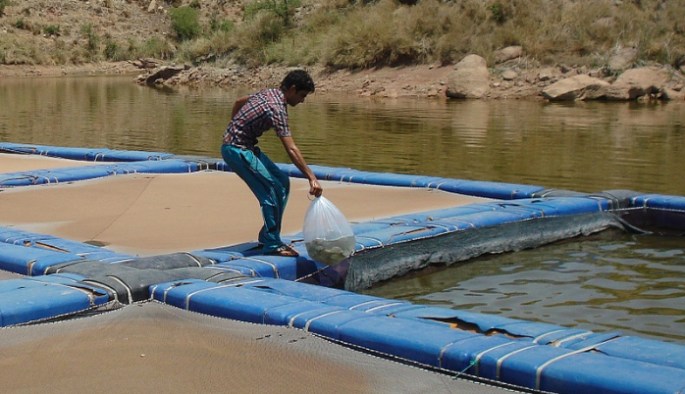
– Using an Army of Fish to Fight Dengue
(image: Rich Renomeron/Flickr)


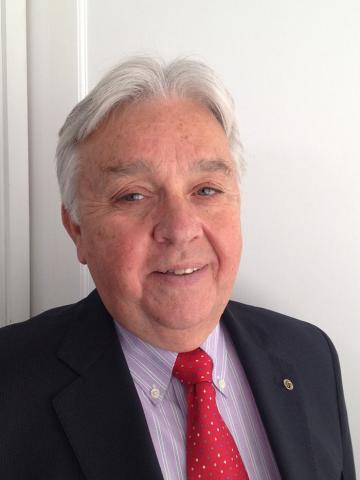 Paul Walker will join us to discuss Syrian proliferation concerns. Dr. Walker is the International Director of the Environmental Security and Sustainability (ESS) Program for Green Cross International (GCI) and manages the Washington DC office for GCI and its US national affiliate, Global Green USA. The ESS Program is an international effort to facilitate and advocate the safe and environmentally sound demilitarization, nonproliferation, and remediation of nuclear, chemical, biological, and conventional weapons stockpiles. Walker has worked, spoken, and published widely in the related areas of international security, threat reduction, non-proliferation, weapons demilitarization, and environmental security for over three decades and took part in the first on-site inspection by US officials of the Russian chemical weapons stockpile at Shchuch’ye in the Kurgan Oblast in 1994. Since that time he has worked closely with the Organization for the Prohibition of Chemical Weapons (OPCW), US and Russian officials, the US Cooperative Threat Reduction (CTR) Program, the G-8 Global Partnership, and other multilateral regimes to help foster cooperative, timely, and safe elimination of nuclear, chemical, and biological weapons and related systems. He has helped to permanently eliminate over 50,000 tons of chemical weapons and millions of munitions in six countries to date. Dr. Walker was also recently awarded the 2013 Right Livelihood Award, widely known as the alternate Nobel Peace Prize. To read more about the award and Dr. Walker’s work, visit their website here.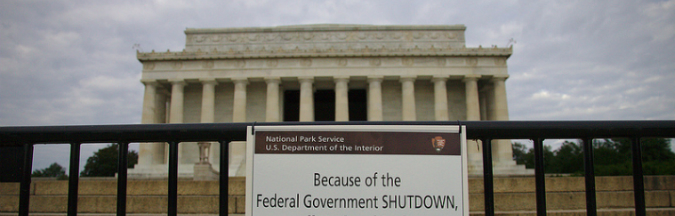

 The Pandora Report