April 13, 2015
Iraq Under Abadi: Bridging Sectarian Divides in the Face of ISIS
Date: April 13, 9:00am
Location: American Enterprise Institute, 1150 Seventeenth Street NW, Twelfth Floor, Washington DC
At the request of Iraqi Prime Minister Haider al-Abadi, US warplanes began airstrikes against ISIS positions in Tikrit on March 25. But ISIS isn’t the only challenge standing in the way of a stable, unified, democratic Iraq. How should the United States approach Iranian influence in Iraq? Can Iraq ever achieve a true power-sharing democracy in spite of the sectarian divides between Kurds, Sunnis, and Shi’ites?
A day before Abadi meets with President Obama in Washington, please join us for a panel discussion on the future of America’s strategic partnership with Iraq. Experts with extensive regional experience will address the ISIS threat, growing Iranian influence, an economy hamstrung by low oil prices, and looming Kurdish separatism.
RSVP here.
Big Data for Defense and National Security: Maintaining the U.S. Technological Edge
Date: April 13, 11:00am
Location: Government Executive
With posting, tweeting, and streaming, the average American knowledge worker creates 1.8 million megabytes of data a year, enough to fill 9 CD-ROMS a day. But the big data revolution has just begun. There will be 44 times as much digital information in 2020 (35 ZB) as there was in 2009 (.8 ZB) according to IDC.
The national security community is a pioneer in the use of big data to achieve mission objectives but the analytics space is growing as quickly as the volume of digital data, itself. This session will focus on using big data analytics to maintain the U.S. technological edge and gaining advantage over adversaries. Join the discussion to learn:
- What is the future of big data analysis biometrics relating to defense and national security?
- How do we translate the insights into operational relevance?
- What can be done to mitigate the risks of false positives?
- Can we balance data collection for the purpose of national security with privacy concerns?
Share your questions during the live viewcast using: #NatSecData
Register here to watch live online.
The Iran Nuclear Deal
Date: April 13, 11:00am
Location: Carnegie Endowment for International Peace, 1779 Massachusetts Ave NW, Washington DC
What are the short and long-term obstacles to finalizing and sustaining a nuclear deal with Iran, and how would a U.S.-Iran nuclear détente impact ongoing conflicts and long-standing alliances in the Middle East? Join the Carnegie Endowment for International Peace for two panels discussing the nuclear deal and its regional implications.
Register here.
The Newburgh Sting and the FBI’s Production of the Domestic Terrorism Threat
Date: April 13, 12:00pm
Location: Cato Institute, 1000 Massachusetts Ave NW, Washington DC
Since 2001 the Federal Bureau of Investigation has led a vigorous hunt for domestic terrorists. The results have been mixed. Several attacks have occurred, though not with the apocalyptic results officials predicted. Authorities have stopped other domestic terrorists and, arguably, manufactured more. Through informants and undercover agents, the FBI has essentially organized fake terrorist plots, some ensnaring individuals so inept that they seemed incapable of succeeding in terrorism without government assistance.
One such case is featured in The Newburgh Sting, a 2014 documentary that aired on HBO. The film uses the FBI’s own secret recordings to show how an undercover informant induced four men to join a plot to blow up a Bronx synagogue and attack a nearby U.S. military base. The presiding judge said the government “came up with the crime, provided the means, and removed all relevant obstacles,” thus making a terrorist out of a man “whose buffoonery is positively Shakespearean in scope.”
Please join us for a discussion with The Newburgh Sting’s creator, featuring segments of the film, along with experts from Cato and Amnesty. They will discuss why these sorts of investigations occur and what harm they might cause.
Register here to attend in person or here to watch live online.
Lunch Panel on Iran Deal: Some Answers, More Questions
Date: April 13, 12:00pm
Location: JINSA, 1307 New York Ave NW, Washington DC
The recently announced Iran-P5+1 framework agreement raises as many questions as it answers – both political and technical – when it comes to securing an acceptable final deal that prevents a nuclear-capable Iran. The Iran Task Force at JINSA’s Gemunder Center for Defense and Strategy will hold a lunch panel event on April 13, 2015, to discuss its report assessing the outcome of negotiations thus far and next steps for the Administration and Congress.
Register here.
Cracking Down on Militancy in Pakistan
Date: April 13, 3:30pm
Location: Atlantic Council, 1030 15th Street NW, 12th Floor, West Tower, Washington DC
Pakistan experienced a ‘Pearl Harbor’ moment last December, when militants attacked the Army Public School in Peshawar. Some say the attack caused a key shift in media and government attitude toward militant factions. However, real directional change had already occurred within the Pakistani Army in June 2014, after it reoriented its objectives and dropped the notion of “good” and “bad” Taliban. The internal dynamics of Islamist militant factions have been in flux for some time amid the changing landscape. What paths are militant groups – such as Jammat-al-Ahraar, Lashkar-e-Taiba, Lashkar-e-Jhangvi, and even core Al Qaeda and the resurgent Islamic State of Iraq and al-Sham – pondering, given the current climate? Hamid will discuss the militancy challenges facing Pakistan.
April 14, 2015
A Different Route to Countering Violent Extremism: What Works?
Date: April 14, 9:30am
Location: United States Institute of Peace, 2301 Constitution Ave NW, Washington, DC
From Paris to northeastern Nigeria to Burma, violent extremism has emerged as a critical threat to peace and stability. Military and police responses make headlines, but many governments, civil society organizations and individuals also are doing painstaking work to build resilience, support alternative narratives, reduce underlying divisions and ultimately counter the allure of militant groups. State Department Counselor on Counterterrorism and Preventing Violent Extremism, Eric Rosand, joins the Conflict Prevention and Resolution Forum on Tuesday, April 14, at the U.S. Institute of Peace for a discussion of the results of these efforts, and how to build on effective approaches.
RSVP here.
A Discussion on the FBI 9/11 Review Commission Report
Date: April 14, 10:00am
Location: Elliott School of International Relations, 1957 E Street NW, City View Room, Washington DC
In 2013 Congress directed the Federal Bureau of Investigation to establish a commission to carry out a “comprehensive external review of the implementation of the recommendations related to the FBI” that were proposed by the 9/11 Commission in 2004. That new review commission was convened in late 2013 and released its final report last month, available at this link.
The report examines a range of issues related to the FBI’s counterterrorism and intelligence roles, including such issues as how the FBI addresses emerging threats; the FBI’s relationships with key federal, state, and local partners; and the role of intelligence analysts at the Bureau.
The GW Center for Cyber & Homeland Security (CCHS) is convening a roundtable discussion to assess the findings and recommendations of the report, with participation by Bruce Hoffman, Georgetown University, and Ambassador Tim Roemer, two of the three Commissioners who led the Review; John Gannon, the Executive Director of the Review; and Mark Giuliano, the Deputy Director of the Federal Bureau of Investigation. The discussion will be moderated by Christian Beckner, Deputy Director of CCHS, and the event will include time for participant Q&A.
Register here.
Everything You Ever Wanted to Know About U.S. Sanctions on Russia * (*but were afraid to ask)
Date: April 14, 12:00pm
Location: Georgetown University, 37th and O Street NW, Edward B. Bunn, S.J. Intercultural Center, Washington DC
The BMW Center invites you to “Everything You Ever Wanted to Know About U.S. Sanctions on Russia* (*but were afraid to ask)” with Adam Smith from the United States Treasury.
U.S. sanctions on Russia are among the most complicated and most consequential economic measures the United States has ever imposed – Russia is by far the largest, most connected economy ever targeted, and the sanctions bring with them unique challenges to the U.S., our closest allies, and the global economy. The result has been a sanctions regime unlike any other, requiring the development of innovative economic tools and intensive US-EU and US-G7 diplomacy.
Adam’s lecture will provide an overview of the mechanics of U.S. sanctions, how new sanctions tools have been developed to address Russian aggression, the ways in which these measures have been deployed in coordination with sanctions imposed by other states and the EU, and the impacts we have been seen.
Register here.
Setting the Stage for Peace in Syria
Date: April 14, 12:00pm
Location: Atlantic Council, 1030 15th St NW, 12th Floor, Washington DC
After four years of conflict, the prospect of a stable Syria continues to be bleak, with a diplomatic solution nowhere in sight and military steps lacking in international support. In their report titled, Setting the Stage for Peace in Syria: The Case for a Syrian National Stabilization Force, authors Hof, Kodmani, and White present a new way forward – one that takes President Obama’s train and equip program to the next level forging a Syrian ground force which could constitute the core of the future Syrian Army. The force would have the military mission of defeating any combination of enemies obstructing the stabilization of the country and the establishment of legitimate, inclusive governance in all of Syria. How can this force change the dynamics of the conflict on the ground and how can the international community help build it? What other elements need to be in place to make this force an effective part of a broader resolution of the conflict? Please join us for a discussion of these and other questions focusing on this new report.
At the Hariri Center, Ambassador Frederic Hof specializes in the conflict in Syria. Bassma Kodmani is Cofounder and Executive Director of the Arab Reform Initiative, a consortium of policy analysis institutes that mobilize research capacity to advance democratic change in Arab countries. Jeffrey White is a Defense Fellow at the Washington Institute specializing in the military and security affairs of the Levant.
RSVP here.
Subcommittee Hearing: Yemen Under Attack by Iranian-Backed Houthis
Date: April 14, 2:00pm
Location: U.S. House Committee on Foreign Affairs, 2172 Rayburn House Office Building, Washington DC
The Subcommittee on the Middle East and North Africa hosts the following witness: The Honorable Gerald M. Feierstein, Principal Deputy Assistant Secretary, Bureau of Near Eastern Affairs, U.S. Department of State.
April 15, 2015
Hearing: Confronting Russia’s Weaponization of Information
Date: April 15, 10:00am
Location: U.S. House Committee on Foreign Affairs, 2172 Rayburn House Office Building, Washington DC
Chairman Royce on the hearing: “For years, Putin has used the Russian media to consolidate power at home and divide societies abroad. The strategies employed today by the Kremlin are highly sophisticated and well-funded with an estimated annual budget of more than $600 million. Russia’s media machine has polluted the media environment, the truth is lost, listeners don’t know whom to believe, and fear divides society. Unfortunately, the U.S. has been slow to respond to this challenge and the agency charged with leading the effort – the Broadcasting Board of Governors – has a well-documented history of dysfunction. We need to reform the BBG if we are to have a chance against this ‘weaponization’ of information.”
Moving Cybersecurity Innovations from the Research Lab to the Marketplace
Date: April 15, 12:00pm
Location: Association of Public and Land Grant Universities, 1307 New York Ave NW, Washington DC
The Cyber Security Division (CSD) within the Department of Homeland Security’s Science & Technology Directorate has successfully transitioned over 30 of its research efforts since 2004 into commercial and government use. These results include a number of start-up firms, new products, and open source projects. Established in 2012 with White House support, the Transition to Practice (TTP) Program is tasked with spreading the CSD methodology for tech transition to other federal organizations conducting cybersecurity research. TTP provides a structured process for taking research results, validating them through testing and pilots with partners, and working with an appropriate private sector entity on development and commercialization. The program currently has over 20 technologies in the pipeline for transition. Mr. Michael Pozmantier, manager of the TTP, will speak about the program’s methodology, success stories and lessons learned, and his perspective on technology transfer based on the TTP’s notable track record.
Register here.
Subcommittee Hearing: The Continuing Threat of Neglected Tropical Diseases
Date: April 15, 2:30pm
Location: U.S. House Committee on Foreign Affairs, 2172 Rayburn House Office Building, Washington DC
The subcommittee on Africa, Global Health, Global Human Rights, and International Organizations host the following witnesses: Ariel Pablos-Méndez, M.D., Assistant Administrator, Bureau for Global Health, U.S. Agency for International Development; Peter J. Hotez, M.D., President, Sabin Vaccine Institute; and Mr. Nicholas Kourgialis, Vice President, Eye Health, Helen Keller International.
Crime and Counterterrorism in Karachi
Date: April 15, 3:00pm
Location: Project for Study of the 21st Century, 1333 H Street NW, Washington DC
Drawing on his time as a police officer and counterterrorism official in Karachi, Omar Hamid discusses the nexus of crime, militancy and corruption in Pakistan’s most populous city. With ever more people living in ever more crowded metropolises, will it ever be possible to maintain the rule of law? And from half a world away, what hope does Washington ever have of influencing events on the ground?
Register here.
Russia and the West: A New Cold War
Date: April 15, 3:00pm
Location: International Institute for Strategic Studies, 2121 K Street NW, Washington DC
Are Russia and the NATO embarking on a new Cold War? Since the Ukraine crisis intensified with Russia’s annexation last year of Crimea, this question has been covered intensively in the IISS journal Survival: Global Politics and Strategy. In the February-March 2015 issue, Georgetown associate professor Matthew Kroenig argued that NATO needed to face reality by preparing for such a struggle, including planning ‘for the development and deployment of a new generation of sub-strategic nuclear weapons to Europe.’ In the April-May issue Brookings Fellow Jeremy Shapiro, in a commentary co-authored with IISS Senior Fellow Samuel Charap, argued on the contrary that a new Cold War ‘would be hugely dangerous and costly,’ and to avoid it the US should be prepared for ‘negotiations on a revised regional order in Europe.’
Please join both authors as they present their arguments in a session chaired by Survival Editor Dana Allin.
Register here.
Russian Media and Ukraine’s Domestic Politics
Date: April 15, 3:30pm
Location: Woodrow Wilson International Center for Scholars, 1300 Pennsylvania Ave NW, Washington DC
The Russian state increasingly uses state-controlled television as a means of propaganda both within its own borders and abroad. Using precinct-level electoral returns and survey data, Leonid Peisakhin will discuss how exposure to Russian television impacted Ukrainian voters in the 2014 presidential and parliamentary elections.
Register here.
April 16, 2015
Next Generation Nuclear Energy: Cooperation Between Korea and the United States
Date: April 16, 8:30am
Location: Capitol Visitor Center, East Capitol Street and 1st Street NE, Washington DC
On Thursday, April 16 the Global America Business Institute (GABI) in collaboration with the Korea Economic Institute of America (KEI) will host a hill briefting on the ‘Next Generation Nuclear Energy: Cooperation Between Korea and the U.S.’
If you have any questions, please contact Mr. Mark Olson here. The venue is subject to change.
RSVP here.
Assessing U.S. Sanctions: Impact, Effectiveness, Consequences
Date: April 16, 8:45am
Location: Woodrow Wilson International Center for Scholars, 1300 Pennsylvania Ave NW, 6th Floor, Washington DC
The unfolding crisis in Ukraine has the United States and its European allies struggling to find a way to respond to Russia’s actions and continuing violation of Ukrainian sovereignty. To date, that response is centered on calibrated but escalating sanctions against Russia. Once again, American reliance on sanctions as an essential foreign policy tool is on display.
The deployment of sanctions as the primary response directed at a foreign government has ample precedent in modern American foreign policy. Given the importance and likely duration of the conflict in Ukraine, this is an important moment to examine the impact, effectiveness, and consequences of U.S. and U.S.-led sanctions as a policy tool. Past and current examples of sanctions, including Iran, South Africa, Cuba and others will provide important context for understanding the role that sanctions play in American statecraft.
RSVP here.
The Iran Nuclear Negotiations: Critical Issue
Date: April 16, 12:00pm
Location: Heritage Foundation, Lehrman Auditorium, 214 Massachusetts Ave NW, Washington DC
The nuclear negotiations between Iran and the P5 plus 1 have entered a crucial phase ahead of the March 30 deadline for a framework agreement. A distinguished panel of experts will examine some of the key issues involved in the negotiations and assess some of the pitfalls that must be avoided if an acceptable agreement is to be reached by the June 30th deadline for a final agreement.
Register here to attend in person.
U.S.-Japan-Australia Security Cooperation: Prospects and Challenges
Date: April 16, 12:00pm
Location: The Stimson Center, 1211 Connecticut Ave NW, 8th Floor, Washington DC
In the last several years, the trilateral security relationship among the United States, Japan, and Australia has quickly emerged as one of the most robust “minilateral” cooperative relationships that the United States has with its allies. Much of this is due to the degree to which security relations between the non-US participants – Japan and Australia in this case – have deepened. Today, Japan and Australia are growing to be each nation’s most important security partner following the United States. The US-Japan-Australia trilateral security relationship is also unique in its strong inclination to engage in preserving and buttressing the existing international order in the region. The trilateral relationship has the potential to become a foundation for engagement with other countries in activities that build regional peace and stability. For these reasons, Stimson Center’s latest publication US-Japan-Australia Trilateral Cooperation: Prospects and Challenges dedicates its attention to the US-Japan-Australia trilateral security relationship and seeks to serve as an introduction to the evolving and dynamic trilateral security relations among Washington, Canberra, and Tokyo.
RSVP here.
Reform in Ukraine and What Kyiv Can Learn from the Baltic Experience
Date: April 16, 1:00pm
Location: Atlantic Council, 1030 15th Street NW, 12th Floor, West Tower, Washington DC
Please join the Atlantic Council for a conversation with the former Prime Minister of Lithuania, Mr. Andrius Kubilius, and Dr. Anders Aslund, Senior Fellow at the Peterson Institute for International Economics, on how the Lithuanian experience can inform Ukraine’s economic reform process.
Continued Kremlin aggression in Ukraine’s east has forced Ukraine into war on two fronts: a military war to secure its borders, and an economic war to secure its future stability. Last month, the International Monetary Fund (IMF) approved $17.5 billion in financial assistance to Ukraine. The IMF package aims to stabilize Ukraine’s finances, restore growth, and support modernization. The new Ukrainian government, under President Petro Poroshenko, is determined to implement IMF reforms, but reformers face challenges left behind by the Soviet legacy and years of mismanagement of the country’s finances. The Baltic States faced similar, seemingly insurmountable, economic challenges in the early 1990s. Today, the Baltics are the emblematic example of successful post-Soviet transformation. Can Ukraine repeat the Baltic economic miracle?
Mr. Kubilius was Prime Minister of Lithuania from 1999 to 2000 and again from 2008 to 2012. This year, he will join Ukraine’s International Advisory Council for Reforms. Dr. Aslund, Swedish economist, is a leading thinker on economic transformation in Eastern Europe. In a conversation moderated by Ambassador John Herbst, Director of the Dinu Patriciu Eurasia Center and former Ambassador to Ukraine, Mr. Kubilius and Dr. Aslund will discuss the Ukrainian economy and how the transatlantic alliance can support Ukraine’s reform process. Damon Wilson, Executive Vice President of the Atlantic Council, will deliver welcoming remarks.
This event is open to press and on the record.
Register here.
Options for Dealing with North Korea: More Patience or Engagement?
Date: April 16, 2:00pm
Location: Korea Economic Institute, 1800 K Street NW, Suite 1010, Washington DC
The United States and South Korea find themselves at a crossroads in managing policy towards North Korea. With the Six Party Talks dormant and a growing concern that North Korea is advancing its nuclear program unchecked, there is much distrust on the peninsula. At the same time, economic engagement has faced challenges with North Korea continuing to make unilateral changes at the Kaesong Industrial Complex.
Please join KEI for a discussion with the Honorable Stephen Bosworth and Dr. Marcus Noland on economic and diplomatic options for the United States and South Korea in dealing with North Korea.
RSVP here.
The State of Healthcare and Women’s Rights in Libya
Date: April 16, 4:00pm
Location: O’Neill Institute for National and Global Health Law, 550 First Street NW, Washington DC
Working as CEO and Deputy Director General of the Benghazi Medical Center, one of Libya’s two biggest tertiary healthcare centers, for the last four years, Dr. Laila Bugaighis is one of a few women executive leaders working in the public healthcare sector in Libya. Her achievements have led to her official nomination to minister of health more than once.
She grew up between Libya and Austria, spent a gap year studying political economics in the USA before pursing her medical education in Libya. In 2001 Dr. Bugaighis went on to train and finish her postgraduate studies in the UK to become a member of the Royal College of Obstetricians and Gynecologists of London. She returned to Libya in 2006 and started working as consultant and Senior Lecturer at the University of Benghazi Medical School. She started her advocacy for reform, ending corruption, and saving women from violence and death. In 2010 she presented results of a four-year Audit, which looked into the failure of reducing maternal deaths in Libya, at an International British Conference, and pushed for the recommendations for reducing maternal mortality in Libya.
Dr. Bugaighis is a member of the Scientific Committee for Reproductive Health of Libya, and a member of the Libyan-EU initiative for healthcare systems reform. In 2012 she reached out to the Global Health arm of Harvard and MGH to link healthcare centers and improve standards and quality in her country. In March 2011 she founded the National Protection Against Violence Committee, which aimed to implement a comprehensive program for gender-based violence in Libya. The Committee, which she chaired, was later incorporated into the Ministry of Health. She also chaired the violence cluster of the United Nations Mission in Libya in 2011, and was invited by the University of Toronto Law School in February 2013 to join a panel of experts on Gender Based Violence in Libya and Syria.
She is co-founder of Al Tawafuk Al Watani, a political NGO working to raise awareness.
Register here.
Unconventional Methods for Assessing Unconventional Threats
Date: April 16, 6:00pm
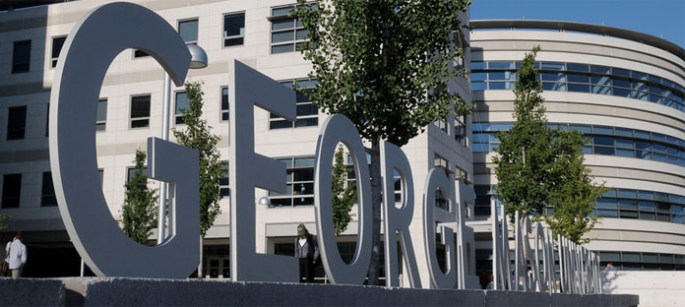
Location: George Mason University, 1202 Merten Hall, 4400 University Drive, Fairfax, VA
Dr. Gary Ackerman is the Director of the Unconventional Weapons and Technology Division at the National Consortium for the Study of Terrorism and Responses to Terrorism (START). Prior to taking up his current position, he was Research Director and Special Projects Director at START and before that the Director of the Weapons of Mass Destruction Terrorism Research Program at the Center for Nonproliferation Studies in Monterey, California.
His research encompasses various areas relating to terrorism and counterterrorism, including terrorist threat assessment, radicalization, terrorist technologies and motivations for using chemical, biological, radiological, and nuclear (CBRN) weapons, and the modeling and simulation of terrorist behavior. He is the co-editor of Jihadists and Weapons of Mass Destruction (CRC Press, 2009), author of several articles on CBRN terrorism and has testified on terrorist motivations for using nuclear weapons before the Senate Committee on Homeland Security.
Dr. Ackerman received an M.A. in International Relations from Yale University and a Ph.D. in War Studies from King’s College London.
The Future of Global Health
Date: April 16, 6:30pm
Location: The Hamilton, 600 14th Street NW, Washington DC
Hosted by Global Health Council and the Global Health Fellows Program II, The Future of Global Health 2015 is an event for global health unlike any other. It is a unique opportunity to step outside the usual panel discussion format and engage in meaningful conversation with peers and potential mentors.
The goal of TFGH15 is to foster connections and increase knowledge through conversations among new and established members of the global health community. This year’s event will focus on the global health workplace – the challenges, solutions and skills needed to advance progress on the global health issues of our time. The breadth of sectors – private, non-profit, government, academic and donor – will be represented among the event’s discussion group leaders, mentors and attendees.
This unconference features small group discussions and one-on-one conversation opportunities with senior global health professionals.
Tickets are available here for $30.
April 17, 2015
Honeypots and Sticky Fingers: The Electronic Trap to Reveal Iran’s Illicit Cyber Network
Date: April 17, 2:00pm
Location: American Enterprise Institute, 1150 17th Street NW, Washington DC
The West has severely underestimated Iran’s cyberwarfare capabilities. Despite sanctions, the Islamic Republic has managed to build a sophisticated information technology (IT) infrastructure, and new intelligence indicates that the Iranian regime may be maintaining front companies in the West to obtain cyber technology. How can the United States and its allies enhance their security and combat Iran in cyberspace?
We invite you to join AEI and the Norse Corporation for a groundbreaking discussion on the Iranian cyber threat and the key findings from their joint report analyzing Iran’s IT infrastructure and malware activity. General Keith Alexander, former commander of US Cyber Command and former director of the National Security Agency, will deliver a keynote address. At the end of the event, attendees will have the opportunity to explore the report’s data firsthand at interactive workstations.
Register here.
Lessons Learned from the Ebola Response Enhancing Global Health Security
Date: April 17, 3:00pm
Location: The Stimson Center, 1211 Connecticut Ave NW, 8th Floor, Washington DC
In 2011 the WHO International Health Regulations (IHR) review committee warned that, “the world is ill-prepared to respond to a severe influenza pandemic or to any similarly global, sustained and threatening public-health emergency.” Three years later the spread of Ebola in West Africa was a vivid demonstration of shortcomings in global health security.
Stimson and the Government of Finland invite you to join us to discuss the lessons learned from the 2014 Ebola outbreak. We will highlight the activities of Global Health Security Agenda partner countries in the affected West African countries, their efforts to rebuild health systems, and their lessons from the crisis. We will also discuss the role of civil society and private industry to the Ebola response. We will draw lessons learned from international organizations as we consider how the Global Health Security Agenda can best contribute to the strengthening of common capacities to prevent, detect, and respond to the threat of infectious diseases in the future.
RSVP here.





 The Pandora Report

.jpg#/media/File:Tick_male_size_comparison_(aka).jpg)
