Two Killed in Polio Vaccination Drive in Pakistan

A bomb killed two and injured 20 others during a polio vaccination drive in Pakistan. Pakistanis one of just three remaining states where polio remains endemic. An anti-Taliban group member and police officer comprised the fatalities. This is just the latest in a long campaign against aid workers, doctors, nurses, and public health officials working to try and eradicate the crippling disease in the region. The vaccinators, often relatively poor women, often work to inoculate local populations at great personal risk, usually travelling door-to-door in an attempt to reach as many children as possible.

Poliomyelitis, or polio, is an often fatal disease spread by the poliovirus. Once contracted, the disease is incurable, and can result in complete paralysis of the legs. The disease is easily preventable through a vaccine administered as oral drops.

The Independent – “When the authorities are unable to provide sufficient security, these women bear the brunt of the Taliban attacks. Last year, gunmen killed four female polio workers in the city of Karachi on the same day, and two women were killed in Peshawar, very close to where Monday morning’s bomb was detonated, apparently by remote control. In Nigeria, Islamist gunmen killed nine health workers in February.”

Read more here.

Bioweapons Alarmism in Syria

by Dr. Sonia Ben Ouagrham-Gormley, originally published in the Bulletin of Atomic Scientists

As Secretary of State John Kerry challenged Syrian President Bashar al-Assad to hand over Syria’s chemical weapons in early September, articles published in the Washington Post and National Interest argued that the current focus on Syria’s chemical weapons is distracting the international community from a much deadlier threat: Syria’s biological weapons. The sources for the Washington Post article (one of whom also happens to be a co-author of the National Interest piece) warn that Assad’s regime could use its biological weapons in retaliation against Western forces or its own population. Both articles assert that Syria has maintained a dormant program since the country last engaged in biological weapons developments in the 1970s and 1980s and could easily reactivate its program to produce, on short notice, the stockpile of agents required to retaliate against its enemies. This threat is real, the argument goes, because Syria could tap into its pharmaceutical and agricultural industries to support the effort. Finally, the articles warn that Syria might have retained a strain of smallpox from a 1972 outbreak, which could be used to develop a devastating biological weapon.

These two articles provide no tangible evidence to support their claims. More important, their speculations contradict extant empirical evidence on the difficulty of achieving the level of biological weapons capability that the articles claim Syria maintains or could reestablish. To avoid falling prey to the same biological weapons hysteria that led to the invasion of Iraq in 2003, it is important to look carefully at such claims. Close examination shows them to be exaggerated, at best.

To evaluate Syria’s ability to revive a dormant program, one would need to know what kind of research and production infrastructure the Syrian government currently possesses. There is, however, very little publicly available information on the scope of Syria’s bioweapons program, if any.

If Syria retains only a small research capability developed in its bioweapons program of the 1970s and ‘80s, the likelihood that it would be able to quickly produce sufficient amounts of bioweapons for retaliation is very slim. The country would first need to create the research, development, production, and weaponization infrastructure needed for a crash program, a process that may take several months to even years, particularly in a war zone. Assuming that the Syrians already have stocks of agents—and it is pure speculation to say they do— they will need to conduct exploratory research to determine which agent is the most promising as a bioweapon and develop a production process that will maintain the agent’s lethal characteristics during scale-up and storage. Creating this production capability is also neither easily or quickly achieved.

In the early 1980s, Iraq attempted to reactivate a biological weapons program that had been largely abandoned in the preceding decade; it took the Saddam Hussein regime three years—from 1983 to 1986—to conduct the needed exploratory research and identify the agents most desirable for bioweapons work. Even then, the Iraqis were able to develop only crude liquid agents that lost toxicity within six to eight months. They were also unable to develop a bioweapons-specific dissemination capability, relying instead on personnel from their chemical weapons program to adapt chemical bomb casings and warheads for bioweapons use. This strategy resulted in ineffective weapons that would have released agents upon impact, destroying most of the bio-agent in the process.

Even if Syria already has significant bioweapons infrastructure in place, reactivating it would not necessarily be a quick or simple process. When in the early 1980s Soviet-era authorities decided to activate the mobilization facility in Stepnogorsk, Kazakhstan in order to produce anthrax, it took about two years to launch production, even though the facility had been established for several years and had the equipment and minimum staff needed for its operation. The suggestion that Syria could swiftly launch a crash program from a long-dormant infrastructure and produce effectively weaponized agents in amounts sufficient for a retaliatory military attack seems a considerable stretch from likely reality.

Read the rest of the piece here.

(Image credit: Scott Montreal/Flickr)

This Week in DC: Events

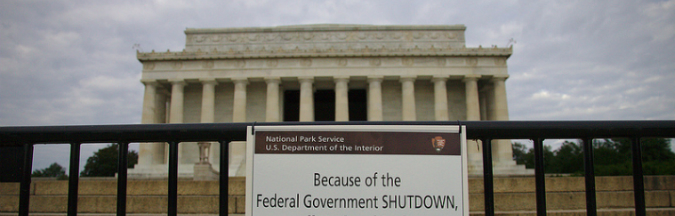
The government may be shutdown, but apparently DC isn’t. Here are a smattering of the week’s science, international security, and public health events. 

Monday, October 7, 2010

When Children are Refugees: Pediatric Health Care in Refugee Camps
George Mason University, Founders Hall, Arlington, VA
9:00am – 11:00AM

Co-sponsored by the World Medical & Health Policy journal, the Policy Studies Organization, the Center for International Medical Policy and Practice at the School of Public Policy and the Biodefense Program in the Department of Public and International Affairs at George Mason University. Dr. Khuri-Bulos, has written and spoken on “The Role of Immunization in Achieving the Millennium Development Goals,” and is responsible for the immunization program Jordan established for children living at Zaatari. Dr. Waldman, former Technical Director of the USAID-funded BASICS program, a global child survival effort, is President of the Board of Directors of Doctors of the World-USA.

Deciphering Russian Policy on Syria: What Happened…and What’s Next
Wilson Center
12:00 – 1:00PM

Since the Arab Spring arrived in Syria in 2011, Russia has strongly supported the Assad regime’s efforts to suppress its opponents, while the U.S. has remained relatively uninvolved. But when, in August 2013, over 1,400 people were killed in a chemical weapons attack (believed to have been perpetrated by the Syrian government), President Obama declared his intention to launch a military strike against Syria once he obtained Congressional approval for it. Russian Foreign Minister Lavrov then proposed that Syrian chemical weapons be placed under international control. While the Obama Administration has embraced this proposal, it is still not clear whether it can be implemented or if (even if it is) Russia and the U.S. can work together to resolve the conflict in Syria.

A New Look at American Foreign Policy: The Third in a Series of Discussions
Heritage Foundation
12:00PM – 1:00PM

For decades, libertarians and conservatives have been at odds over American foreign policy. But perhaps a conversation is possible today between classical liberals and conservatives on the nature of American foreign policy. Some are trying to find a “middle way” that is less doctrinaire. At the same time the “neo” conservative phase of hyper military interventionism is a spent force in conservative circles. Therefore, the time may be ripe for an open and honest conversation among some libertarians and conservatives about the future of American foreign policy. It may be possible a new consensus could be found between Americans who consider themselves classical liberals and traditional conservatives on the purposes of American foreign policy. Join us as Heritage continues the discussion regarding this question, what the dangers and opportunities are and whether they afford an opportunity to take a “new look” at American foreign policy.

Domestic Barriers to Dismantling the Militant Infrastructure in Pakistan
US Institute of Peace
2:00 PM

Pakistan’s inability to tackle Islamist militancy within its borders and to prevent cross-border attacks from its soil remains a constant worry for the world. While the Pakistani state pledges lack of capacity to deal with the various facets of the militant challenge, the world is unconvinced of the ‘will’ of the Pakistani leadership to fight with determination. The Pakistani security establishment has been seen as selectively targeting certain Islamist outfits while ignoring, supporting, or abetting others

Revolutionary Mosquitoes: Malaria, Yellow Fever, and Independence in the Americas, 1776-1825
Wilson Center
4:00PM – 5:30 PM

John McNeill argues that yellow fever and malaria, both mosquito-borne diseases, helped make the Americas free. In the campaigns of 1780-81 in the Carolinas and Virginia, in the Haitian Revolution of 1791-1804, in the wars of independence in the Spanish Americas of 1808-25, locally born and raised soldiers and militia enjoyed a strong advantage over European troops in terms of their resistance to these two infections. Did disease tip the military balance?

Tuesday, October 8

Rethinking U.S. Nuclear Weapons Policy
CATO Institute
12:00 PM

Featuring Benjamin Friedman, Research Fellow in Defense and Homeland Security Policy, Cato Institute; and Christopher Preble Vice President for Defense and Foreign Policy Studies, Cato Institute; moderated by Laura Odato, Cato Institute. The United States maintains nearly 1,600 deployed nuclear weapons and a triad of systems—bombers, intercontinental ballistic missiles (ICBMs), and submarine-launched ballistic missiles (SLBMs)—to deliver them. Current plans call for modernizing all three legs of the nuclear triad, which could cost taxpayers over $100 billion. A just-released Cato paper explains why a triad is no longer necessary. U.S. nuclear weapons policies have long rested on Cold War–era myths, and the rationales have aged badly in the two decades since the Soviet Union’s demise. Two of the paper’s authors, Benjamin Friedman and Christopher Preble, will discuss the origins of the nuclear triad and explain why a far smaller arsenal deployed entirely on submarines would be sufficient to deter attacks on the United States and its allies and would save roughly $20 billion annually.

Security and Governance in Somalia: Consolidating Gains, Confronting Challenges, and Charting the Path Forward
U.S. Senate Committee on Foreign Relations
3:00PM

For more information, visit the website here.

Wednesday, October 9

Towards an International Response Framework: Emergency Preparedness in the Asia-Pacific
Banyan Analytics
9:00AM – 4:00PM

How should the USG prepare to respond to future Asian disasters, especially CBRNE? What are the response and assistance expectations of our Asian friends and allies? How necessary and practical is an International Response Framework (IRF)? What should an IRF look like?

NSA Surveillance: What we know, What to do About it
CATO Institute
10:00 AM

Since June, news reports based on documents leaked by former National Security Agency contractor Edward Snowden have revealed the depth and breadth of NSA surveillance activities. The NSA scandal’s many dimensions include: mass domestic surveillance of telephone call information; allegations that officials deceived Congress, the courts, and the public about the nature of the NSA’s programs; alleged access to the Internet’s backbone and the traffic of major Internet companies; and systematic efforts to undercut the use of the encryption that secures communications and financial information. Please join us on October 9 at a conference focusing on these issues and more, featuring keynote addresses by Senator Ron Wyden (D-OR), Rep. Justin Amash (R-MI), and Rep. F. James Sensenbrenner (R-WI). Conference speakers and panels will explore the reporting challenges, legal issues, technology and business dimensions, and potential for reforms related to NSA surveillance. Additional information on speakers and panel topics will be posted soon.

Thursday, October 10

Rise of Radical Islamism in the South Caucasus: The Threat and Response
Hudson Institute
9:00 AM – 2:30 PM

The conference topic is especially timely as the U.S. continues its withdrawal from Afghanistan, instability mounts in North Africa and the Middle East, and Tehran continues to reject international calls for a halt to its enrichment activities. This turmoil also underscores the importance of strong and stable American allies in a region, the South Caucasus, of increasing importance to U.S. interests. While Iran is using home-grown Shia Islamists to undermine the secular nature of Azerbaijan, the growing influence of Salafi groups in the North Caucasus is now spilling into neighboring countries. At the same time, poorly designed and inadequately executed responses by various governments have contributed to this increase in extremism. Given this situation, how can South Caucasian governments and the international community prevent the spread of radicalism and promote traditions of tolerant Islam that allow co-existence and cooperation among Christians, Jews, and Sunni and Shia Muslims? What is the U.S. security strategy and vision for the Caucasus region? What is Iran’s strategy in the South Caucasus and to what extent should the region shape U.S.-Iran relations?

NSA Surveillance Programs and the Najibullah Zazi Terrorist Threat
Brookings Institution
10:30AM – 12:00PM

The extensive National Security Agency surveillance programs revealed this summer by former U.S. intelligence contractor Edward Snowden have been defended by the United States government, citing their role in preventing terrorist attacks at home and abroad. The most frequently cited example of such success is the thwarting of the September 2009 al Qaeda terrorist plot – led by Najibullah Zazi, an Afghan-American – to attack the New York City subway system. Pulitzer-prize winning journalists Matt Apuzzo and Adam Goldman have just finished an in depth investigation of the Zazi threat, and in their new book, Enemies Within: Inside NYPD’s Secret Spying Unit and Bin Ladin’s Final Plot Against America (Touchstone, 2013), they outline how the plot was foiled and what the plot reveals about the al Qaeda threat today.

Streamlining US Visa Policies for Scientists, Engineers, and Students
GMU Technology, Science, and Innovation Policy Research Seminars
12:00 – 1:30 PM

This monthly seminar series, sponsored by George Mason University’s Center for Science and Technology Policy (School of Public Policy), explores new ideas and work-in-progress with the Washington-area research community. It’s open and free to all interested researchers with a special invitation extended to graduate students. The seminars are held at the George Mason University’s School of Public Policy (Founders Hall) on the Arlington campus, a short walk from the Orange Line’s Virginia Square/GMU Metro stop (map). The seminar starts at about 12:00 and concludes no later than 1:30. CSTP will provide coffee and cookies — participants are welcome to bring a brown bag lunch. Driving Directions can be found here.


October Biodefense Policy Seminar

We are delighted to have Dr. Paul Walker, chemical weapons destruction expert and recently named Laureate of the prestigious Right Livelihood Award join us to discuss destruction of Syria’s chemical weapons arsenal. As always, the seminar is free and open to the public.

October Seminar Title: “Syria and Chemical Weapons: Building a World Free of Weapons of Mass Destruction”
Speaker: Dr. Paul Walker
Date: Wednesday, October 16, 2013 at 7:20PM
Location: Meese Conference Room, Mason Hall, GMU Fairfax Campus

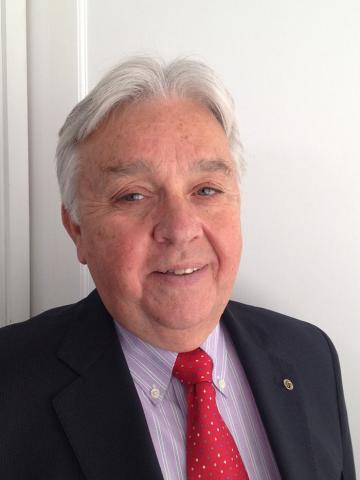
Paul-Walker_imagePaul Walker will join us to discuss Syrian proliferation concerns. Dr. Walker is the International Director of the Environmental Security and Sustainability (ESS) Program for Green Cross International (GCI) and manages the Washington DC office for GCI and its US national affiliate, Global Green USA. The ESS Program is an international effort to facilitate and advocate the safe and environmentally sound demilitarization, nonproliferation, and remediation of nuclear, chemical, biological, and conventional weapons stockpiles.  Walker has worked, spoken, and published widely in the related areas of international security, threat reduction, non-proliferation, weapons demilitarization, and environmental security for over three decades and took part in the first on-site inspection by US officials of the Russian chemical weapons stockpile at Shchuch’ye in the Kurgan Oblast in 1994. Since that time he has worked closely with the Organization for the Prohibition of Chemical Weapons (OPCW), US and Russian officials, the US Cooperative Threat Reduction (CTR) Program, the G-8 Global Partnership, and other multilateral regimes to help foster cooperative, timely, and safe elimination of nuclear, chemical, and biological weapons and related systems. He has helped to permanently eliminate over 50,000 tons of chemical weapons and millions of munitions in six countries to date. Dr. Walker was also recently awarded the 2013 Right Livelihood Award, widely known as the alternate Nobel Peace Prize. To read more about the award and Dr. Walker’s work, visit their website here.

The Pandora Report 10.4.13

Highlights include our shutdown soapbox, more rumors of Syrian BW, the WHO’s pandemic influenza preparedness plans, Boston’s BSL-4 lab, and a real-life zombie apocalypse. Happy Friday!

CDC Director: ‘Microbes Didn’t Shut Down’

As we wrap up our first week of the shutdown, we thought we’d take a second to assess the damage. Many critical biomedical experiments are hemorrhaging money. Health and Human Services has furloughed 52% of its employees. DHS has furloughed over 31,000 employees. The number that concerns us most, however, involves the CDC. We tweeted earlier this week that the CDC has had to furlough 8, 754 people, or 68% of its staff. This means that flu season is starting, and no one is watching. If we’re hit with a novel strain, a mutated strain, a particularly virulent strain,  we’d have no idea. This giant blind-spot isn’t limited to the US – CDC employees are some of the world’s top epidemiologists, often helping with investigations at outbreak hotspots globally. What are we currently very worried about in the Middle East? MERS. Hajj is around the corner, which means an influx of millions of people from around the world to the virus’ epicenter. Is it inconceivable that a pilgrim travels from New York to Mecca, picks up the virus and brings it back? Absolutely not. What’s inconceivable is that because of the shutdown, we might not know.

Wall Street Journal – “The CDC won’t be able to conduct routine inspections of high security labs around the nation that work with ‘select agent’ pathogens that pose severe threats to human and animal health such as Marburg virus or hemorrhagic fevers, said spokeswoman Barbara Reynolds. Most of the CDC’s own lab work has been stopped. The agency is not conducting surveillance for flu outbreaks. Only one CDC staffer is tracking reports of dangerous foodborne pathogens rather than the usual six staff – not a lot given that 48 million Americans develop foodborne illnesses every year.”

The World Hasn’t Tackled Syria’s Real WMD Nightmare

Foreign Policy has a piece out discussing Syria’s alleged biological weapons program. “Forget the nerve gas,” the byline states, “It’s Assad’s bioweapons program that should keep you up at night.” We disagree. For the many, clearly elucidated reasons why, please see Dr. Ben Ouagrham-Gormley’s excellent piece, “On Not Falling Prey to Biological Weapons Alarmism in Syria” here.

Foreign Policy – “A recent U.N. report on chemical weapons use in Syria has strengthened claims that the regime killed more than a thousand innocent Syrians, including hundreds of children, with the nerve agent sarin. Video images after the Aug. 21 attacks showed victims frothing at the mouth, convulsing, and suffering tortured deaths. But the effects of a chemical attack, horrible as they are, can be minuscule compared with a worst-case assault with a biological weapon.”

WHO Group To Discuss Plan For Industry Use Of Pandemic Flu Viruses

A group of WHO experts is meeting next week to work on a plan, Pandemic Influenza Preparedness, for companies to pay for use of flu virus strains in development of patented treatments.  The meetings will include members of a special WHO Advisory Group, as well as key industry stakeholders. The funds gathered would then be used primarily for pandemic preparendess (70%), with the remaining funds used for global response efforts.

Intellectual Property Watch – “The focus of the three-day meeting will be to discuss the draft implementation plan for the use of Partnership Contribution funds through the end of 2016, a WHO source said. WHO is aiming for final completion of the process by year’s end. The second day of the meeting will be dedicated to consultations with industry and other stakeholders, the source said. Other issues to be discussed include the status of SMTA-2 negotiations (Standard Material Transfer Agreement), and ‘technical matters’ in the PIP Framework, the source said.”

Federal judge OKs Boston U disease research lab

Boston University’s proposed BSL-4 lab has cleared another hurdle to construction, with a federal judge dismissing the case against the lab’s construction. Residents of Boston’s South End have obstructed the lab’s construction for years, citing fears of exposure to pathogens like Ebola. While we can sympathize with any and all fears of Ebola exposure, in this case we think the judge was right. The research conducted in BSL-4 labs are critical to helping us detect, prevent, and treat some of the world’s most dangerous pathogens.

Seattle PI – “A Boston University laboratory built to study some of the world’s most dangerous diseases is one step closer to opening following a federal judge’s decision issued this week that it poses little risk to the public…The lab now only needs a final review from the Boston Public Health Commission. Some portions of the 192,000-square foot building have already opened to study less dangerous germs. The court’s decision “affirms our view that this type of research can be done safely in Boston,” BU spokesman Steve Burgay told The Boston Globe.”

Our Puff Piece of the Week: Scientists Discuss The Reality Of A Zombie Apocalypse

RedOrbit reached out to a bunch of microbiologists and asked them to imagine what a “real” zombie virus might look like. We approve.

In case you missed it:

Dr. Paul Walker, October Biodefense Seminar Speaker, Wins Prestigious Rights Livelihood Award
– Chemical Weapons Team Arrive in Syria: Blair on Why the End in Not Nigh
DTRA’s New, Highly Sensitive Bio-agent Detector
– Using an Army of Fish to Fight Dengue

(image: Rich Renomeron/Flickr)

DTRA’s Chem Bio division develops highly sensitive bio-agent detector

The Defense Treat Reduction Agency through its collaborative Ruggedized Antibody Program project, has developed a bio-agent detector 1000x more powerful than currently used ELISA methods.

From DVIDS– ” This technology has demonstrated exquisite analytical and clinical sensitivity, as well as a broad dynamic range. The combination of these two technologies will robustly increase the Department of Defense’s diagnostic armamentarium. This could lead to warfighters being able to detect lower levels of the toxin, therefore decreasing false negatives in environmental samples and earlier discovery in the course of clinical intoxication. SdAbs are recombinant ligand binding antibody fragments derived from the unusual structure of native antibodies found in camels and llamas. These unique heavy chain binding elements offer many desirable properties such as their small size (~15 kDa) and thermal stability, which makes them attractive alternatives to conventional monoclonal antibodies.”

Read more here.

 (image courtesy of DTRA)

Video of the Week: OPCW Weapons Inspectors Leaving for Syria

What does a chemical weapons inspector leaving to investigate chemical arsenals at a country in the middle of a raging civil war pack? Markers, apparently. The last thing they do before getting on said plane? You guessed it, fill out paperwork.  Meet some of the men and women helping keep us out of Syria below.

(credit: OPCW)

Chemical weapons team arrives in Syria; Blair on our options

In the last 48 hours, chemical weapons inspectors have crossed the border into Syria, reaching Damascus last night. The 19-member inspection team, sent from the Organization for the Prohibition of Chemical Weapons in the Hague, will be responsible for verifying and dismantling the 1,000 tonne Syrian chemical weapons arsenal. The team will have approximately nine months to conduct their investigation and help the Syrian government destroy their arsenal by the middle of next year.

Charles Blair, GMU adjunct professor and columnist at the Bulletin of Atomic Scientists, recently published a piece on the fundamental issue at stake here – will it make any difference?

“Regardless of how Lavrov-Kerry fares, the Obama administration faces a high-stakes dilemma. If the agreement is successful, the Syrian civil war still threatens to metastasize—further destabilizing the entire region and, due to the West’s dependence on oil from the Middle East, threatening the world economy. In short, even without a Syrian chemical arsenal, and apart from the normal winter ebb in fighting, the civil war shows no signs of slowing down.

“But failure to rid Syria of the stockpile could result in additional chemical weapons use by the Assad regime and hastens the day when extremists acquire these arms, too. If Syria does not abide by the agreement, the United States would likely resort to air strikes, amid strong calls for a redoubling of efforts to quickly arm opposition forces with more weaponry. Both actions are inherently risky. Indeed, significant sections of Syria could fall under the rule of violent Islamists armed with chemical weapons. As an authority on terrorism at the RAND Corporation, Michael Jenkins, recently wrote me, ‘the Syrian civil war has significantly raised the risk that its chemical weapons will fall into the hands of terrorists, creating a greater international crisis than the one we think we have just solved.’”

Read more at the Bulletin.

(image: Steven Damron/Flickr)

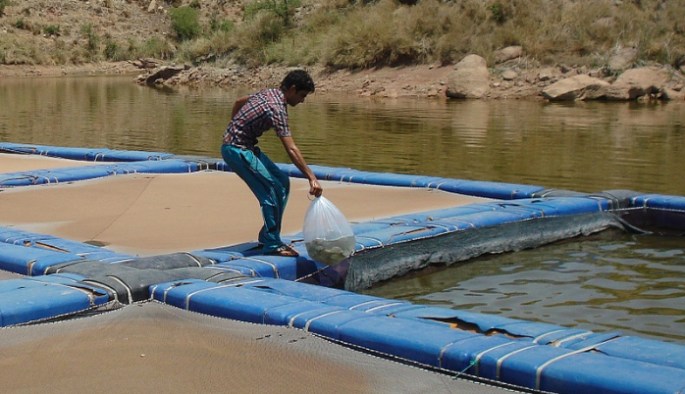
Using a Fish Army to fight Dengue

In what has to be one of the strangest public health strategies to date, health officials in the Punjab districts of Pakistan have released over a million Tilapia into pools, ponds, large puddles – just about any body of standing water – in an effort to combat dengue. Pakistan has a long rainy season which creates thousands of pools of water where the mosquitoes who carry dengue lay their eggs. By releasing the fish into these pools, the larvae are eaten before they can hatch, killing the virus’ vector and preventing its spread.

While it may be tempting to dismiss the strategy as a bizarre version of the woman-who-swallowed-the-fly nursery rhyme, don’t – apparently, it’s working. In 2011, the Punjab districts had over 20,000 cases of dengue, including 300 fatalities. So far this year, following the release of over 1.6 million fish, there have been just 100 cases total.  The question of what happens to the fish when the pools evaporate has not yet been addressed, but we’re still impressed – can you imagine having to pitch this idea to your superiors?

Read more about this very innovative use of fish at the Guardian.

(Image: Tilapia farmer in Pakistan, courtesy of USDA/Flickr)

This Week in DC: Events

Lots of events to take your mind of the possible government shutdown tomorrow.

Tuesday, October 1, 2013

Narrative and Syria: Popular Discourses that limit alternative conflict resolution options with Rich Rubenstein
GMU School for Conflict Analysis and Resolution
2:00 – 4:00PM

This roundtable will explore how certain discourses consciously or unconsciously limit certain alternative conflict resolution options. This will be a discussion, so please bring your thoughts regarding various discourses relating to this conflict including stories told by rebels, regime supporters, USG people, peace advocates, etc.

Strategy: A History [Book Discussion]
Woodrow Wilson Center for International Scholars
4:00 – 5:30PM

In Strategy: A History, Sir Lawrence Freedman, one of the world’s leading authorities on war and international politics, captures the vast history of strategic thinking, in a consistently engaging and insightful account of how strategy came to pervade every aspect of our lives.A brilliant overview of the most prominent strategic theories in history, from David’s use of deception against Goliath, to the modern use of game theory in economics, this masterful volume sums up a lifetime of reflection on strategy.

Successfully Conducting Information, Psychological, and Military Deception Operations
Institute of World Politics
4:00 – 6:00PM

Brigadier General Thomas Draude, USMC (Ret.) was in charge of the Marine Corps Information Operations during the Gulf War. He successfully oversaw the Military Deception & Psychological Operations that resulted in diverting Iraqi forces from the main attack by U.S. Marine and Army forces during the beginning of Operation Desert Storm. He will talk about the history of conducting successful information and military deception operations including during the Gulf War and the effective use of these operations in the future. Brigadier General Draude is the President of the Marine Corps University Foundation and a professor at the Marine Corps University at Marine Corps Base Quantico.

Wednesday, October 2nd

An Assessment of Rouhani’s Visit to New York: Real Diplomacy or Failed Expectations?

Woodrow Wilson International Center for Scholars
12:00 – 1:00PM

Two experts will provide a candid assessment of how realistic diplomacy may be after Presidents Barack Obama and Hassan Rouhani spoke at the United Nations General Assembly.

Cybersecurity One-on-One Luncheon
Politico
12:00PM

Join POLITICO for Cybersecurity one-on-one conversations focused on the intersection of policy and information security. This event will be held as part of the Visa Global Security Summit.

Thursday, October 3rd

Cybersecurity Summit
Washington Post
8:30AM – 12:30PM

The 2013 Cybersecurity Summit at The Washington Post will bring together leading national security officials, industry experts and those who write about them, including syndicated columnist David Ignatius. What are top officials most focused on and why? We will discuss efforts to defend the nation’s critical infrastructure, financial system, and intellectual property. What is the current thinking about the government outsourcing of cyber security efforts and its collaboration with private industry? How safe is the information stored in the Cloud? Few issues are as urgent as the concern about cyber theft and cyber espionage. The full program will live stream on their website Oct. 3.

Hearing – Al-Shabaab: How great a threat?
House Committee on Foreign Affairs
9:45 AM

Chairman Royce on the hearing: “We’’ve known for some time that the al-Qaeda-affiliated terrorist group al-Shabaab remains a threat in the Horn of Africa. Following the recent brutal attack on Nairobi’s Westgate shopping mall, it is critical that the United States and our allies reassess the threat that al-Shabaab poses outside of Somalia and outside the region. This hearing will examine the extent of the al-Shabaab threat to the interests of the United States around the world and those of our allies.”

The New Battle for the Pacific: How the West is Losing the South Pacific to China, the UAE, and Just About Everyone Else
East-West Center
2:00 – 3:30 PM

The South Pacific is usually considered as being, literally, at the edge of the map. However, as the world pivots to the Asia-Pacific, the South Pacific region’s true geopolitical, strategic and economic value is coming to the fore. In transit terms alone, as U.S. Pacific Command Commander Admiral Samuel Locklear said in the Cook Islands in 2012: “Five trillion dollars of commerce rides on the (Asia-Pacific) sea lanes each year, and you people are sitting right in the middle of it.” Far from being small island states, the Pacific Island Countries are showing themselves as large ocean states, with vast fisheries, potential seabed resources, and increasingly important geostrategic positioning – as the range of military bases dotted throughout the region can attest. However, just as the region is showing its importance, Western influence is waning. When the larger Western powers pulled out of the region following the end of the Cold War (the United Kingdom, for example, closed three South Pacific High Commissions in 2006), they turned to Australia and New Zealand to “manage” the area for the West.

Friday, October 4th 

Echoes of the Spring: How the Arab World’s Transitions are Resonating in Russia, Iran and Iraq

Radio Free Europe
11:30AM – 12:30AM

The pro-democracy protests of the Arab Spring rippled through North Africa and the Middle East in 2011, bringing down once-secure authoritarian regimes and setting loose passions that continue to roil much of the Arab World. Many people living in the RFE/RL broadcast region express similar desires for change. How has the Arab Spring phenomenon affected attitudes and events in places such as Russia, Iran and Iraq?

Monday, October 7th

Domestic Barriers to Dismantling the Militant Infrastructure in Pakistan
US Institute for Peace
2:00 – 3:30PM

Please join USIP on Monday October 7 for a discussion on the nature of Islamist militancy, and to examine the barriers to dismantling the militant infrastructure in Pakistan. Pakistan’s inability to tackle Islamist militancy within its borders and to prevent cross-border attacks from its soil remains a constant worry for the world. While the Pakistani state pledges lack of capacity to deal with the various facets of the militant challenge, the world is unconvinced of the ‘will’ of the Pakistani leadership to fight with determination. The Pakistani security establishment has been seen as selectively targeting certain Islamist outfits while ignoring, supporting, or abetting others.

Big Data Keynote Speaker Series: A Conversation With Michael Leiter, Former Director of NCTC
YPFP
6:30 – 7:00 PM

Join YPFP and learn from the one of most prominent practitioners of data analysis, Michael E. Leiter, Senior Counselor to the CEO of Palantir Technologies and former Director of the National Counterterrorism Center (NCTC). A leader in applying data analysis principles to the arenas of politics and security in both the public and private sectors, Mr. Leiter has been invited as part of the Keynote Speaker Series for the Big Data and Analytics incubator in order to help future leaders of foreign policy understand the role of data analysis in developing foreign policy and crafting solutions to critical global challenges.

(image: Dell)