Pandora Report 10.9.15

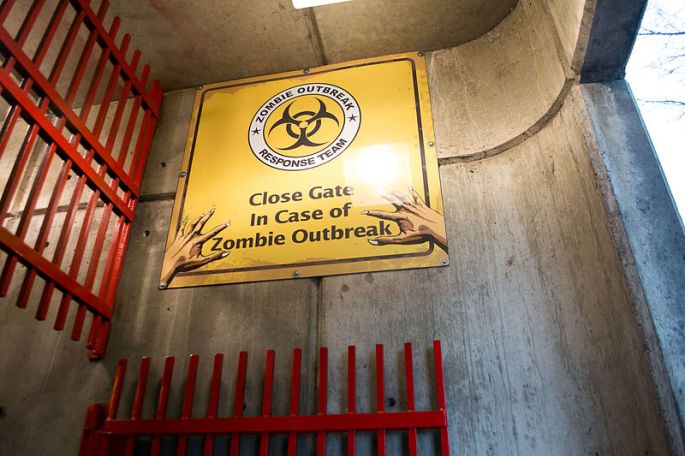
Happy Friday! Since we’ve made it through Hurricane Joaquin, let’s celebrate with some biodefense news by way of air defense, Ebola, some amazing original work from the GMU Biodefense clan, and all the fun in between. Fun fact: On October 8, 2001, President George W. Bush established the Office of Homeland Security. Let’s start your weekend off right with some zombies, shall we?

Zombies & Air Defense?
With Halloween around the corner and The Walking Dead about to premiere, it’s time for some zombies – Pentagon style! Ever heard of JLENS? This $2.7 billion radar blimp was initially designed to act as an early warning system for low-flying weapons, drones, etc. Unfortunately, this system has been plagued with problems (pun intended) as it failed to detect the low-flying aircraft piloted by Florida postal worker, Douglas Hughes. We’ll let that slide since JLENS wasn’t deemed operational that day but that hasn’t stopped many from calling it a “zombie” program, meaning it’s “costly, ineffectual, and seemingly impossible to kill”. Check out the LA Times investigation into whether this defense technology is really “performing well right now” as claimed by Raytheon.

2016 Presidential Candidates on Nonproliferation- Part I

GMU’s Greg Mercer has churned out another fascinating commentary in a new series related to what 2016 presidential candidates are saying about nonproliferation. His series will pull together candidate stances and comments to take an in-depth look into the role nonproliferation is taking in this race. Greg notes, “Lucky for us though, there’s been a major nonproliferation news event to drive the foreign policy debate: the Iran nuclear deal.  So this is a rundown of what’s been said and being said about nonproliferation and WMD policy in the 2016 election.” This week we’ll be looking at the Republican Party, so make sure to check in over the next few months to see how everyone’s stance has changed or strengthened.

Crimean-Congo Hemorrhagic Fever Spike in Pakistan
Pakistan is currently seeing a spike in their cases of CCHF with the most recent death of a patient in Quetta at the Fatima Jinnah Chest and General Hospital. The death toll is now 3 in 3 days and a total of 15 patient mortalities this year. There are 9 other CCHF patients under observation and treatment at the regional hospitals. The WHO’s Diseases Early Warning System (DEWS) in Pakistan tracks these seasonal spikes in hopes to also prevent its spread. The concerning aspect is the high amount of deaths this year so far when compared to other years.

Iran’s Shifting Preference?
How lucky are we to have two amazing GMU Biodefense commentaries this week? Scott McAlister is discussing the Iranian nuclear deal and the potential consequences. He hammers out a topic we biodefense folks are all too familiar with – dual-use and the hiding-in-plain-sight reality of so many programs. Scott points out that, “the scary thing about biological and chemical weapons programs is their ability to hide in plain sight.  Due the dual use of much of today’s biotechnological advancements, an offensive weapons program can be disguised as a facility to create vaccines or research centers for diseases with minimal effort.” Take a look at his notes on nuclear weapon capabilities and Iranian perspective on biological weapons.

Tacit Knowledge & Biological Weapons Proliferation
On a scale of 1-10, having your research cited during a meeting of the State Parties to the Convention on the Prohibition of Biological Weapons, is pretty much a 12. What can we say, GMU Biodefense professor, Dr. Sonia Ben Ouagrham-Gormley, did just that! At the meeting of experts in August, the State parties met to discuss the field of science and technology while emphasizing tacit  knowledge in relation to bioweapon proliferation. When discussing tacit knowledge, the U.S. noted at the conference, “the concept of communal or collective tacit knowledge has been explored extensively, particularly in the work of Donald Mackenzie and Graham Spinardi, who examined its role in the context of nuclear weapons creation, and Kathleen Vogel and Sonia Ben Ouagrham- Gormley, who examined it with respect to biological weapons creation.” During this meeting, the role and relevance of tacit knowledge as a risk modulator was heavily discussed, pointing to its corresponding role of increasing the risk of bioweapon proliferation.

Bioweapons for Dummies?
Speaking of tacit knowledge and the rise of the biotechnology revolution… Zian Liu from the Bulletin of the Atomic Scientists goes through the five steps of building a biological weapon to address the barriers to weaponization. Broaching the topic of “biohacking”, Zian points to the concern within the biodefense industry related to synthetic biology and fourth generation bioweapons. From ordering the synthetic genes to recently published research that discusses the developments of genetic modification, this commentary hits on the very real barriers that a fourth-year bioengeneering undergraduate student identifies -even with the available tools. Between the need for increased regulations on synthetic DNA and the dual-use concerns, Zian notes that “novice biologists are not likely to construct advanced weapons any time soon.”
Screen Shot 2015-10-09 at 9.34.50 AM

Stories You May Have Missed:

  • Guinea outbreak region goes a full week without a new Ebola case! We’re all holding our breaths in hope this means the outbreak is nearing an end in this hard-hit region. Sierra Leone has reached 3 weeks (a full incubation period) of no new cases and the last healthcare worker infection was back in August. The WHO and local public health workers are still maintaining door-to-door case finding efforts and contact tracing.
  • PPD Awarded Contracts with US Army & BARDA – Pharmaceutical Product Development (PPD) was just awarded two US government contracts to address health outcomes in armed forces and test the efficacy of the national strategic stockpile’s supply of avian influenza vaccine.
  • Findings of the 7th WHO Ebola Emergency Committee Meeting – Last week this committee met to discuss the ongoing outbreak in West Africa. They provided updates and furthering advisement regarding the disease and international travel as 34 countries “continue to enact measures that are disproportionate to the risks posed.”

The Candidates on Nonproliferation – Part 1

By Greg Mercer

I initially set out to write this as a candidate-by-candidate look at what the 2016 crop had to say about an issue near and dear to Biodefense students’ hearts: nonproliferation.  As it turns out, though, not many candidates have well-developed stances on highly specific policy issues (or any issues, depending on how serious a candidate we’re talking about) more than a year from the general election.  Lucky for us though, there’s been a major nonproliferation news event to drive the foreign policy debate: the Iran nuclear deal.  So this is a rundown of what’s been said and being said about nonproliferation and WMD policy in the 2016 election.

So over the next couple of weeks, I’m going to take a look at what the 2016 election looks like for nonproliferation.  I’m learning a lot about the way candidate’s structure their websites.  And no, I don’t want to donate.

I’ll start first with the Republicans.  There are 15 of them right now (plus a handful of fringe/joke candidates).  Some of them have extensive platforms, others don’t.  Most of them don’t have much to say about nonproliferation.  Fair.  But the Republican Party is unified, though, in its stern opposition to the Iran nuclear deal, as evidenced by the recent attempt to block the deal in Congress.  What the candidates think about nonproliferation is also likely a function of the faith they place in the UN and international institutions.  Those who trust those mechanisms will probably push treaties as the best counterproliferation tool.  Those who don’t will probably call for strong deterrence.


Marco Rubio: 

Marco Rubio lumps defense and foreign policy together in this video staged to look like an interview, where he says that he aims not to make America popular, but safe, and pledges to rebuild the military.  He doesn’t talk about deterrence or proliferation in that video, but he does devote two entire sections of his “Issues” page to the Iran deal, and he alludes to nuclear proliferation in his hour-long talk at the Council on Foreign Relations (helpfully, the website provided a transcript): “The president’s proposed deal with Tehran will likely lead to a cascade of nuclear proliferation in the Middle East and could force Israel to take bold action to defend itself, making war with Iran even more likely.”  This interesting statement links the Iran deal with going to war with Iran (backing up Israel in an all-out war is a foregone conclusion, it seems).  Huh.

It’s safe to say Marco Rubio is anti-Iran deal, but right now he hasn’t spoken extensively about nonproliferation efforts beyond advocating for American strength in the international community.


Jeb Bush:

Thanks to some name association, Jeb Bush tends to get asked about the Iraq War frequently.  The war did have quite a lot to do with nonproliferation, given the controversy (at the time) of whether or not Saddam Hussein possessed or was attempting to develop weapons of mass destruction.  Jeb has praised his brother’s actions (although he’s said that “knowing what we know now,” he would not have gone into Iraq).  Jeb is still thinking about Iraq, because his defense issues section is titled “Defeating ISIS.”  Fair enough; that’s pretty direct and avoids Marco Rubio’s blog-like setup that made me comb through three different pages.  (I think the content of the page was cobbled together from a few different sources because it switches back and forth between “ISIS” and “Islamic State,” and if you’ve read me before you’ll know that’s fascinating to me.)  On this issue page, Jeb links the Iran nuclear deal with Iran’s support for Assad and Hezbollah, and more or less explicitly promises to dismantle the deal, if elected.  He doesn’t have much else to say about nonproliferation.


Ted Cruz:

Ted Cruz’s website offers “proven record” sections instead of “issues” pages.  While they’re mostly bullet points on things he’s said in the past, it’s not a recycled speech so that’s nice.  Among the ways Cruz plans to create a “stronger, safer America,” Cruz specifically notes his opposition to the Iran deal.  Cruz also links ending sanctions with locking in military action as the only way to prevent Iran from developing nuclear weapons, and calls on all of the candidates to promise to repudiate the deal.  So far, that’s not a controversial stance among Republicans.  He’s also agreed that the Iraq War was a “mistake.”  Cruz has little else to say about nonproliferation, but he’s taken a stance on another interesting biodefense issue: He authored legislation to give military service members deployed to provide aid during the 2014 Ebola outbreak the same tax benefits that service members in combat zones receive.  So far, both the House and Senate versions of this bill have only been referred to their respective committees, but it’s an interesting point that hasn’t seen too much discussion.

Week in DC Events: 10.5-10.9.2015

MONDAY 10.5
Come listen and chat with Dr. David R. Franz, former commander of USAMRIID, about balancing research and regulations when it comes to dual-use!
Date & Time: Monday, October 5, 2015, 4:30-6pm
Location: Hanover Hall, L-003 George Mason University, Fairfax, VA, see map
Dr. Franz was the Chief Inspector on three United Nations Special Commission biological warfare inspection missions to Iraq and served as technical advisor on long-term monitoring.  He also served as a member of the first two US-UK teams that visited Russia in support of the Trilateral Joint Statement on Biological Weapons and as a member of the Trilateral Experts’ Committee for biological weapons negotiations.  He previously served as member of the National Science Advisory Board for Biosecurity (NSABB). Dr. Franz currently serves on several committees including the National Academy of Sciences Committee on International Security and Arms Control and the National Research Council Board on Life Sciences. Dr. Franz is a leader in the areas of cooperative threat reduction and health security and an expert in the development of U.S. regulations for biological threat reduction and biological security.  Dr. Franz will discuss the history and current debates related to U.S. and international regulations for select agents, dual use research of concern, and gain-of-function experiments.

Innovation and the Defense Industrial Base

Heritage Foundation

Date & Time: Monday, October 5, 2015, 11:30am-1pm
Location Heritage Foundation214 Massachusetts Ave NE, Washington, D.C. 20002 (map)
Defense reform sparks a great deal of debate in Congress, in the Pentagon, and across Washington. When it comes to acquisition and innovation, senior Pentagon leaders have heavily invested in outreach to Silicon Valley and emerging technology companies. The Department of Defense must do a better job of acquiring innovative technology, but how does this drive for innovation affect the defense industrial base? In the first of a series of public events on defense reform, this program will feature opening comments by Dr. Jerry McGinn followed by a panel discussion on this critical component of our national defense industrial base.

TUESDAY 10.6
Analyzing and Assessing Saudi Arabian Defense Strategy National Council on U.S.-Arab Relations
Date & Time: Tuesday, October 6, 2015, 10am-noon
Location: Rayburn House Office Building45 Independence Ave SW Washington, DC 20515 (map) Gold Room (2168)

The featured specialist will be HRH Navy Captain (Ret.) Prince Sultan bin Khalid Al-Faisal Al Sa’ud – President, Al Joshan Security Services; Former Commander, Royal Saudi Naval Forces (RSNF) Counter-Insurgency Special Operations Task Force; Designer and Inaugural Commandant, RSNF Special Forces Training Center. Serving as context provider and moderator will be Dr. John Duke Anthony – Founding President and CEO, National Council on U.S.-Arab Relations; and Member, U.S. Department of State Advisory Committee on International Economic Policy and Subcommittee on Sanctions.

WEDNESDAY 10.7
Open or Closed Borders? Understanding Europe’s Migration Challenge
Center for Strategic and International Studies
Date & Time: Wednesday, October 7, 2015, 11am-noon
Location: Center for Strategic and International Studies1616 Rhode Island Ave NW, Washington, DC 20036(map)

Please join us for a discussion featuring Thomas Zwiefelhofer, Deputy Prime Minister of Liechtenstein, and UNHCR Regional Representative for the USA and the Caribbean Shelly Pitterman as they assess Europe’s ongoing migration crisis and recent decisions taken by European leaders on border control and asylum policies. Although not a member of the European Union, the Principality of Liechtenstein is a member of the Schengen Agreement enabling border-free travel among 26 European countries, and a signatory to the Dublin Convention regulating Europe’s open border policies. The migration crisis is presenting enormous challenges to Schengen countries. As tens of thousands of migrants continue to arrive across Europe, individual states are taking disparate approaches. While some are increasing their refugee quotas, others are sealing their borders. Deputy Prime Minister Zwiefelhofer leads the ministries of Home Affairs, Justice and Economic Affairs. As Minister of Home Affairs he is in charge of border issues and will discuss how the greater European community can promote unity to address the crisis while minimizing internal clashes. The conversation will examine the future of the Schengen Agreement and the Dublin Convention and explore the role of international agencies such as the UNHCR and foreign countries in support of European partners during this crisis.

THURSDAY 10.8
Policy & Politics of the Iran Agreement
Georgetown University
Date & Time: Thursday, October 8, 2015, 4:30-6pm
Location: Georgetown University37 St NW and O St NW, Washington, DC (map)

Joseph Cirincione is president of Ploughshares Fund, a global security foundation. He is the author of the new book Nuclear Nightmares: Securing the World Before It Is Too Late, Bomb Scare: The History and Future of Nuclear Weapons and Deadly Arsenals: Nuclear, Biological and Chemical Threats. He is a member of Secretary of State John Kerry’s International Security Advisory Board and the Council on Foreign Relations.

Switzerland’s Good Offices: Protection of Interests in Cuba, Iran and Beyond
Women’s Foreign Policy Group
Time & Date: Thursday, October 8, 2015, 6pm
Location: Thursday, Oct 8, 2015
6:00 pm

H.E. Martin Dahinden assumed his position as Ambassador of Switzerland to the United States in November 2014. Prior to that, he served as Director of the Swiss Agency for Development and Cooperation (2008 – 2014) and headed the Directorate of Corporate Management of the Federal Department of Foreign Affairs (2004 – 2008).
During his long career in the Swiss diplomatic service, Dahinden has served as Director of the Geneva International Centre for Humanitarian Demining, as a member of the Swiss Delegation to GATT, at the Embassy of Switzerland in Paris, as Deputy to the Swiss Ambassador in Nigeria, and in a temporary posting at the Swiss Mission to the UN in New York. In addition, he worked in the FDFA’s Service for Disarmament Policy and Nuclear Issues, as Head of the OSCE Service of the Directorate of Political Affairs, and held the position of Deputy Head of the OSCE Coordination Unit during the Swiss Chairmanship of the OSCE in 1996. The following year, he was sent abroad as Deputy Head of the Swiss Mission to NATO in Brussels. Dahinden holds a PhD in Economics from the University of Zurich. Before joining the diplomatic service, he worked as a postgraduate assistant at the university, and was then employed by a bank and a publishing house.
WFPG Members — $40          Non-Members — $60   Space is limited. Advance registration is required. Some parking is available.
Event proceeds support WFPG mentoring activities and programs.

Migrant States, Mobile Economies: 
Rethinking the Political in Contemporary Turkey

Date & Time: Thursday, October 8, 2015, 3:30-8pm
Location: George Mason University, Merten Hall 1201

This event brings together scholars from anthropology and political science to interrogate the conceptual relationship between state formation and capital accumulation as related but distinct technologies of power in contemporary Turkey.  From gold traffic between Turkey and Iran and smuggling economies in Turkey’s Kurdistan to the historical development of energy infrastructures and im/mobilities across the Turkey-Syria border, the authors aim to chronicle the shifting and transnational operations of economic and political power. By exploring states of migrancy as well as economies of mobility in conjunction with state formation and capital accumulation, Migrant States & Mobile Economies aims to rethink the political in both political economy and political theory through the historiography and ethnography of contemporary Turkey.


FRIDAY 10.9
Producing More with Less Through Partnerships
Center for Strategic and International Studies
Date & Time: Friday, October 9, 2015, 9-11am
Location: Center for Strategic and International Studies1616 Rhode Island Ave NW, Washington, DC 20036(map)

Join the CSIS Global Food Security Project and the Royal Danish Embassy for a half-day event focused on how to produce more with less through partnerships for agricultural development. Harnessing the power of agriculture to feed a growing planet requires a multi-stakeholder approach that moves beyond typical public-private partnership rhetoric and has sustainable, deep relationships along entire supply chains. Solutions must include low-cost, innovative technologies that help farmers maximize production and minimize resources.

This event will provide an interactive forum in which leaders from business, non-governmental organizations, academia, and government agencies will come together to explore how to best tackle dwindling natural resources in a world of ever-increasing demand, and how to scale up partnerships to catalyze efficient production.

Pandora Report 10.2

All this rain and grey weather (at least in DC) makes us want to curl up with a good book and luckily, we’ve got just the reading list! This week we’re sharing some top-notch work by our phenomenal faculty and alumni for you to enjoy. Earlier this week, straight out of a James Bond movie, Elon Musk presented Tesla’s Model X and its Bioweapon Defense Mode. Google had its 2015 Science Fair and a pretty amazing high school student took home top honors for her work on Ebola. Did I mention Kansas is prepping for the zombie apocalypse? Needless to say, there was a lot going on this week in the world of biodefense, so let’s venture down the rabbit hole….

 Zombie Preparedness Month Starts for Kansas 
I’m thinking we may need to take a class trip to Kansas since Governor, Sam Brownback, will be signing a proclamation to officially designate October as “Zombie Preparedness Month”! Brownback’s rationale is to emphasize preparedness in any form, stating, “If you’re prepared for zombies, you’re prepared for anything. Although an actual zombie apocalypse will never happen, the preparation for such an event is the same as for any disaster: make a disaster kit, have a plan, and practice it.” During Zombie Preparedness Month, state emergency management services will have activities and information for residents to help get their preparedness on. They’ll also be using social media to engage people people on these topics. The one thing we’ve learned in biodefense, Gov. Brownback, is to never say never!

Connecticut Teen Wins Google Science Award By Developing Affordable Ebola Test
High school junior, Olivia Hallisey, just took home the Google Science Fair top prize for developing an affordable and easy Ebola test in her project, “Ebola Assay Card”, which quickly (we’re talking 30 minutes quick!) detects the virus and doesn’t require refrigeration. Each test only costs $25 and picks up antigens on photo paper. Hallisey summarizes, “In this new device, that is stable and stored at room temperature, 30µl drops of water were used to dissolve silk-embedded reagents, initiating a timed-flow towards a center detection zone, where a positive (colored) result confirmed the presence of 500pg/ml Ebola(+)control antigens in 30min, at a cost of $25,” Hallisey hopes this project will encourage other girls to pursue their passions in science. Hallisey is truly an inspiration and we tip our hats to her passion for solving world problems while encouraging her peers!

Let’s Talk Dual-Use!
Come listen and chat with Dr. David R. Franz, former commander of USAMRIID, about balancing research and regulations when it comes to dual-use!
Date & Time: Monday, October 5, 2015, 4:30-6pm
Location: Hanover Hall, L-003 George Mason University, Fairfax, VA, see map

​Dr. Franz was the Chief Inspector on three United Nations Special Commission biological warfare inspection missions to Iraq and served as technical advisor on long-term monitoring.  He also served as a member of the first two US-UK teams that visited Russia in support of the Trilateral Joint Statement on Biological Weapons and as a member of the Trilateral Experts’ Committee for biological weapons negotiations.  He previously served as member of the National Science Advisory Board for Biosecurity (NSABB). Dr. Franz currently serves on several committees including the National Academy of Sciences Committee on International Security and Arms Control and the National Research Council Board on Life Sciences. Dr. Franz is a leader in the areas of cooperative threat reduction and health security and an expert in the development of U.S. regulations for biological threat reduction and biological security.  Dr. Franz will discuss the history and current debates related to U.S. and international regulations for select agents, dual use research of concern, and gain-of-function experiments.

1977 H1N1 Influenza Reemergence Reveals Gain-of-Function Hazards
Dr. Martin Furmanski discusses the gain-of-function (GoF) research hazards in relation to the 1977 H1N1 strain and it’s laboratory origins. Highlighting a previous article on the GoF debate, Dr. Furmanski notes that “separating the risks of vaccine development from those of basic GoF research is inappropriate, because GoF research seeks to discover antigenic and genomic changes that facilitate human-to-human transmission and/or augment virulence, with the aim of preemptively producing vaccines.” He also notes that while the 1977 H1N1 epidemic originated in a lab and it’s release was unintentional, the culprit laboratory matters little in the GoF debate.

Define Acceptable Cyberspace Behavior
GMU Biodefense alum, Dr. Daniel M. Gerstein, discusses the US-China cybersecurity agreement and the Friday announcement between Chinese Premier Xi Jinping and President Barack Obama. The agreement highlights the mutual desire to prevent cybertheft of business secrets. Dr. Gerstein emphasizes that while this agreement is a step in the right direction, it points to larger preparedness and response capability gaps. He notes, “So while a U.S.-China agreement is a welcome step, it also underscores the greater issues facing the United States, and indeed the international community, in this largely ungoverned space.” Dr. Gerstein highlights the necessity to define cyberspace boundaries, especially as there are delays in DHS security system deployments while US vulnerabilities continue to develop.

Implementation for the US Government Policy for Institutional Oversight of Life Sciences Dual Use Research of Concern
As of September 24, 2015, all institutions and USG funded agencies are now required to comply with the policies. Agencies now must have “a mechanisms in place to evaluate research that is potentially Dual Use Research of Concern (DURC).” Institutions must also organize an Institutional Review Entity (IRE) to review and manage compliance with these requirements.

Dr. Sonia Ben Ouagrham-Gormley’s  new book, Barriers to Bioweapons, received glowing reviews in the latest issue of Perspective on Politics. Her work, which is a staple for biodefense courses, and particularly this text, focusses on the perception of risk and lethality of bioweapons while addressing the realities of these assumptions. Ouagrham-Gormley discusses the key role of tacit versus explicit knowledge in the development and dissemination barriers for bioweapons. “The author identifies important factors internal to a weapons-development program- talented individuals and cohesive groups, corporate culture, communities of practice, organization structure- as critical nodes or ‘reservoirs’ of knowledge that must be configured to optimize the sharing of ideas and information.” The case studies of Iraqi and South African programs, as well as Aum Shinrikyo, lay the foundation for her points on the role of internal and external variables that can hinder or help a bioweapons program. Whether you’re reading  it for class (GMU Biodefense folks, I’m looking at you!) or you’re looking to brush up on nonproliferation, this book is a well-written and captivating necessity to understand bioweapon development. Did I mention how awesome the cover is?
Our very own GMU Biodefense PhD alum, Dr. Denise N. Baken, has a wonderful new book being released – let’s check it out! Al Qaeda : The Transformation of Terrorism in the Middle East and North Africa examines violence and the way it is marketed by the global terrorism industry.  Authors Denise Baken and Ioannis Mantzikos frame the violence discussion through the prism of its use by Al Qaeda, Al Qaeda in the Arabian Peninsula (AQAP) and Islamic State of Iraq and Syria (ISIS).Baken and Mantzikos look at the business parameters of violence –its cost, return on investment, efficiency, and effectiveness; They propose a new approach to that violence. One that looks at violence as a controlled commodity that evolved from Al Qaeda’s initial presentation of future possibilities, AQAP exploited those possibilities and ISIS pushed the boundaries of usability.
Stories You May Have Missed:

Ebola 2014: The Infection Preventionist Perspective

By Saskia Popescu

Unlike many infectious diseases, especially ones with a relatively small number of occurrences, the Ebola outbreak that started in 2014 received a sensational amount of attention. While many in public health keep tabs on outbreaks (thanks ProMed!), it’s not uncommon for the rest of society to remain blissfully unaware unless the bug comes knocking on their front door. I’ve been captivated with Ebola (now called Ebola Virus Disease, or EVD) since a young age after Richard Preston’s sensational book, The Hot Zone got passed to me during a family vacation. The first whispers and later emails of the surging cases in West Africa were pretty astounding in early 2014. Usually these outbreaks occur in small blips and then die off a few weeks or months later. I was working in Infection Prevention & Control at a pediatric hospital at the time and, like many, didn’t think too much about the outbreak pertaining to the US and even if it did, our infection control practices should be able to handle an organism that required Contact/Droplet isolation. I put some updates in our monthly newsletter and continued to watch as West Africa became overwhelmed with EVD.

Like many public health issues, no one really starts hitting the panic button until a disease shows up and you’re scrambling (and trust me, most of the time, you find out retrospectively) to do damage control. The IP (infection prevention) world started to get worried in late July when Emory University Hospital accepted and began treatment the first two EVD patients transported into the US from their field assignments in West Africa. Questions about isolation and practices were asked, but again, no one really worried too much since these patients were flown directly to Emory due to their special infectious disease isolation unit. Suddenly, on September 30th, 2014 a media storm announced that a patient being treated at Texas Health Presbyterian Hospital in Dallas, Texas, was positive for EVD. I can personally tell you, this is when the proverbial crap hit the fan for just about every healthcare facility and IP in the US. A visiting your emergency department, being sent home, and then coming back with a highly infectious disease that few physicians know well enough to suspect, let alone diagnose or treat, is pretty much the equivalent of an IP nightmare. So what could we do?

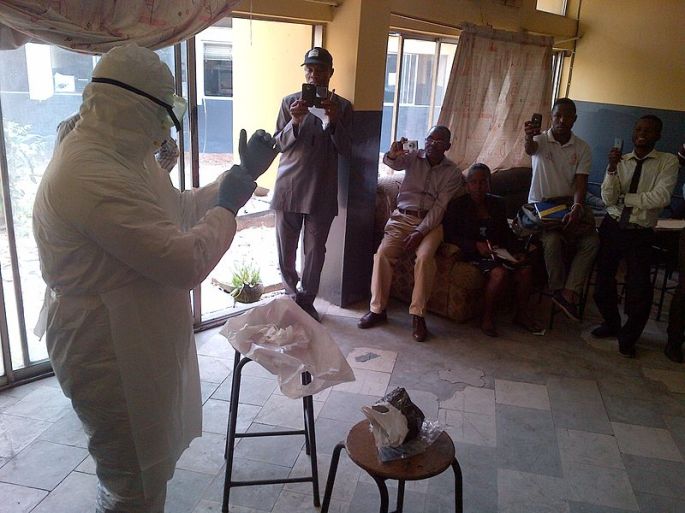
First, I should say that every hospital with an IP team (most of them have at least one IP) experienced a massive level of panic, anxiety, and stress dedicated to avoiding this, so please, give them a pat on the back. I am fortunate that my IP team consists of not only enthusiastic, ridiculously talented and intelligent people, but they know how to respond to crisis in the flip of a switch. We quickly pulled together a committee to encompass all people that would play a role in the preparedness and response of an EVD patient. Fortunately, by this time, Emory had released an extremely helpful document that discussed their experiences and lessons learned. We met our committee (now filled with people from environmental services, facilities, nursing, medical staff, infectious disease, emergency preparedness, the emergency department, and many others) with this document and everything else the Centers for Disease Control and Prevention (CDC) had on EVD response. For many, the difficulty laid in where do we put this patient, what designated staff will care for them, and what will we do with the waste? You pretty much need to have a specific process for both your emergency department if there is a suspected case, but also a designated wing you can move patients out of and move this potential EVD patient into. Without going too much into detail, one of the trickier components became the PPE (personal protective equipment) and waste process of a potential patient. CDC PPE recommendations were changing almost daily (or at least that’s how it felt). Information was changing so rapidly it was a constant cycle of checking their website, talking with peers, and attempting to update instructional handouts and training tools for staff incase we happened to get a potential patient. Historically, EVD PPE recommendations came from outbreaks in Africa with little access to the equipment and capabilities we’re used to in the US. The ability to intubate a patient or insert a central line opened up a Pandora’s box of potential transmission scenarios, leading to difficulty in establishing a solid PPE process. Acquiring the PPE was another struggle. Our materials management team worked tirelessly to find the ever changing products we would need to not only have PPE kits in our emergency department and urgent cares, but also to sustain care for a patient for several days. The sustainability was a huge concern as staff were changing in and out of PPE every 45 minutes due to heat exhaustion and CO2 build-up from the N-95 masks. Once we were able to obtain the PPE, and this was a constantly changing cycle to follow CDC recommendations, training went into effect. One of the greatest struggles was training enough staff to have a proficient understanding of an extremely complex (and dangerous) process. The unique part about EVD PPE practices is that you utilize a buddy system with a checklist – something healthcare workers are not used to and something we had to remind them of (don’t try and memorize this)! We did several drills involving patients projecting a mixture of chocolate syrup and glitterbug to not only prepare healthcare staff, but also show their cross contamination when doffing the PPE.

Courtesy of USA Today

The PPE struggles were one small piece of this EVD pie. Many IP’s could probably write a novel about the struggles and random problems that came up during this time. Our ridiculously long days were filled with preparedness meetings, educational trainings, hospital-wide communication, worried calls from people and staff (the comical relief of people calling to ask for an EVD vaccine but refusing to get their flu shot showcases the ridiculousness of what we experienced), educating physicians on signs and symptoms, identifying routes for patient transportation, and coordinating surveillance mechanisms like electronic mandatory travel history (from the affected countries) questions and alerts in the intake process of patients from the emergency department or urgent cares. The simple truth is that the US became so panicked and so obsessed with a disease no one really worried about a few months before, the amount of preparedness that was initiated simply couldn’t be maintained for an extended period of time. Emergency departments and hospitals are comprised of some of the most hardworking and intelligent people you’ll ever meet, but I can honestly say, something like what happened in Dallas could’ve happened in any hospital. Healthcare is an imperfect system and while we struggle to make it better and more robust, it always comes down to overworked staff and communication gaps. My experiences as an IP during the EVD 2014 outbreak, while exhausting, were truly eye opening to the ability of our healthcare infrastructure to respond to such an event. It revealed a lot of gaps in our practices and the state of our preparedness, but overall, it highlighted the growing need for better disease surveillance, preparedness, and attention to biosecurity.


Pandora Report 9.18.2015

What an interesting week! Ongoing salmonella cases, imported plague in Michigan, ISIS was found to be using chemical weapons, and a new prion disease was discovered. Pretty busy in the world of biodefense, I’d say. The Pandora Report is also fortunate to share with you a great piece by one of our graduate students, Greg Mercer, who tapped into Google Trends to look at ISIS nomenclature, and an upcoming book written by Dr. Brian Mazanec, regarding cyber warfare. So sit back and relax while we catch up on the week’s biodefense news.

US Confirmation of Islamic State Chemical Weapons

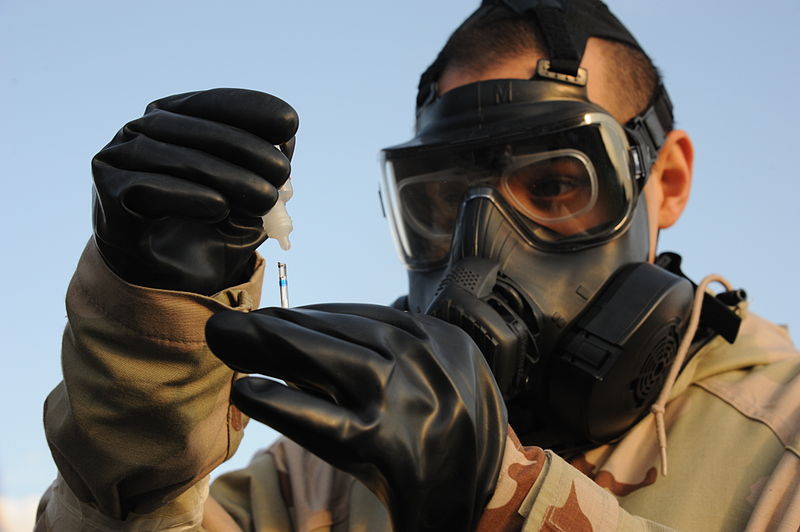
Operational_Readiness_Exercise_121014-F-LP903-827Sulfur mustard traces were found on fragments of ordnance used by the Islamic State, as well as on scraps of clothing from victims in Syria and Iraq. There have been several accounts by Kurdish officials that have claimed chemicals, like chlorine, were dispersed this summer, which is concerning for the ongoing use of these internationally banned substances. Testing done in the US was reported by officials on Friday, September 11, 2015, stating that, “there’s no doubt ISIS has used this,”. Officials have also said that the chemical residue recently found does not match known chemical ordinance that was used in the former Iraqi inventory. Overall, the use of chemical weapons is highly distressing and the method of acquisition, either manufacturing or from undeclared stocks, is under investigation.

Michigan Experiences Imported Plague Case

 A Michigan woman is the second case of bubonic plague that was traced back to the Little Rainbow area of Colorado. The Michigan resident was visiting family in Salida, CO during a music festival in late August. While her exact exposure hasn’t been established, she became ill after returning home and was hospitalized shortly thereafter. Lucky for the diagnosticians, she displayed textbook plague symptoms, leading to CDC involvement and antimicrobial treatment. Fortunately, she was released from the hospital and is beginning the long road to recovery, although it’s probably the last time she’ll attend that particular music festival or go hiking around it….

The So-Called Islamic State 2
By Greg Mercer

In February, I wrote about a topic that had been puzzling me- the contentious nomenclature of the Islamic State, or ISIS, or ISIL, or Daesh.  I decided to revisit this question now that the issue is a staple in the news, and that we’re probably saying it more frequently while thinking less about what we call it.  So I fired up my good friend Google Trends[1] again to take a look.  Google is a decent measure of public interest in a subject.  It’s the most popular search engine[2] in the world, with 66.78% of search volume worldwide as of August 2015.

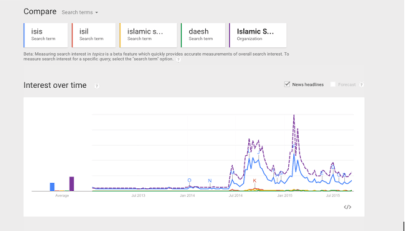
Last time, I found that ISIS was the most popular term by a fair amount.[3]  This seems to be true this time around too, which isn’t terribly surprising.  Here’s what I got:
Screen Shot 2015-09-17 at 6.24.26 PM


This time around, ISIS is still the most popular, but Google’s added a feature that tells us a little more.  While I suspected that the terrorist organization was driving most of the searches for ISIS before, it’s true that ISIS is the only of the names that has other popular uses, notably an Egyptian goddess, a think tank, and of course a fictional intelligence organization.  The new “topics” option in Google Trends lets us identify search volume for an entire subject.  The dotted purple line indicates all searches for the organization, regardless of naming specifics.  Since the searches for “ISIS” specifically and all of the searches for the organization are strongly correlated, it’s safe to say that mythology enthusiasts, nuclear scholars, and Archer fans aren’t skewing the trends.

It’s also still the case that search volumes for all of the names spike with major news events- no surprise there.

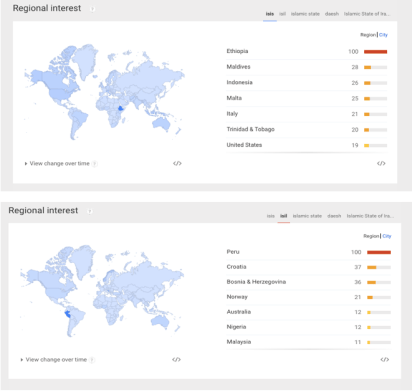
I also found the search trends by country interesting, here’s a look at the different terms and how they show up globally:

Screen Shot 2015-09-17 at 7.33.14 PM
Click on image to see Google Trend analysis and additional graphs


A couple of takeaways:  Looking at the organization as a whole, the two most interested parties (by Google search) are Iraq and Iran.  That’s not too surprising.  Iran is also #1 for “Daesh”, which is used in both Arabic and Farsi and is considered more a disparaging name.  In fact, the Iranian foreign minister told Iranian state media in January (fair warning, this links to Iran Daily) that he hates the term “Islamic State” and prefers “Daesh.”  In my earlier article, I noted that other foreign policy practitioners share this sentiment, and prefer a name that doesn’t recognize the organization as a state or representative of Islam.  This is also definitely the least popular name in mainstream American media.[4]  Ethiopia and Peru are the highest by volume for ISIS and ISIL, respectively, neither of which I would have expected offhand.

It’s interesting to see how these trends break down, and to look at a single massive political issue and international crisis with such a proliferation of terms.  I think the name that finally sticks remains to be seen.

[1] This links to the search parameters I used for this article, so you can play around with the data.
[2] This site is really cool if you’re into this sort of thing- you can see what site users choose based on browser, operating system, and device type.
[3] Personally, I tried ISIL in the name of accurate translation, but I tended to use ISIS when being flippant, and then it ended up sticking.
[4] To get anecdotal, the only person I’ve heard use it is my buddy who does Arabic translation and Middle East studies for a living.

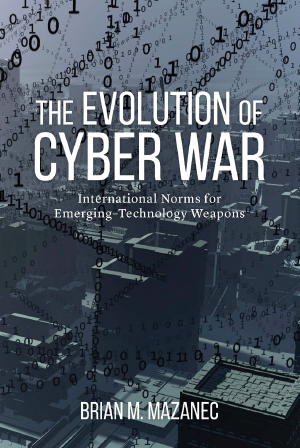
The Evolution of Cyber War

Screen Shot 2015-09-18 at 6.39.11 AMGMU’s very own, Dr. Brian Mazanec, delves into the world of cyber warfare and the reality of this threat. “Already, major cyber attacks have affected countries around the world: Estonia in 2007, Georgia in 2008, Iran in 2010, and most recently the United States. As with other methods of war, cyber technology can be used not only against military forces and facilities but also against civilian targets. Information technology has enabled a new method of warfare that is proving extremely difficult to combat, let alone defeat.” Available on November 1, 2015, we’re excited to share Brian’s phenomenal work!

Stories You May Have Missed:

  • Flu vaccination rates went up a bit for the 2014/2015 season, however, the efficacy was only 18% due to an antigenic drift. Fortunately, vaccination compliance for healthcare workers increased and overall rates showed that women were more likely than men to get vaccinated.
  • The Australian government will pass a new law, the “No Jab, No Pay Bill“, that will penalize parents who don’t vaccinate their children by withholding child care and other payments.
  • An additional 77 cases of Salmonella Poona were reported since September 9, 2015, related to the multi-state cucumber outbreak. The total infected is now 418 people across 31 states, with 91 hospitalizations.
  • A new prion disease has been identified by a team of scientists led by Stanley Prusiner. Their report outlines the discovery and the potentially infectious nature of this new prion.

Pandora Report 9.11.15

Miss us? Good news – the Pandora Report weekly update is back! With a new school year comes new faces and some organizational change-up. Dr. Gregory Koblentz is now the Senior Editor of Pandora Report and Saskia Popescu (yours truly) will be taking over from Julia Homstad as the Managing Editor. I come from the world of epidemiology, public health, and infection control. Having just started in the GMU Biodefense PhD program, I look forward to venturing down the rabbit hole that is the Pandora Report!

There’s been some pretty fascinating news over the past few weeks, so let’s try and catch up…

Lab Safety Concerns Grow 

Our very own Dr. Gregory Koblentz, director of the GMU Biodefense program, was interviewed by USA Today regarding the lab security issues that now involve mislabeled samples of plague. “Since there are now concerns about the biosafety practices at multiple DoD labs there needs to be an independent review of the military’s biosafety policies and practices,” Koblentz said Thursday. He said the Critical Reagents Program is an important biodefense resource. “It’s crucial that all problems with handling and shipping inactivated samples be resolved quickly so the program can resume its important role in strengthening U.S. biopreparedness.”

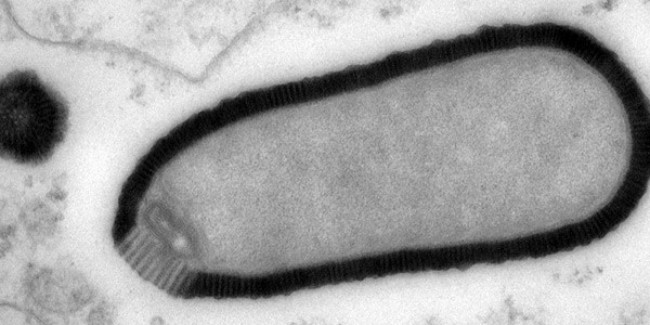
Reviving a 30,000-Year-Old Virus…Isn’t This How the Zombie Apocalypse Starts?

You may recall last year that French scientists stumbled across a 30,000-year-old virus frozen in the Siberian permafrost. Considered to be a “giant virus” (doesn’t that give you a warm, fuzzy feeling inside?), this is actually the fourth ancient, giant viral discovery since 2003. The new plan is to try to revive the virus in order to better study it.

Dr. Claverie told Agency France-Presse, “If we are not careful, and we industrialise these areas without putting safeguards in place, we run the risk of one day waking up viruses such as smallpox that we though were eradicated.” Given the recent concerns over biosafety lab specimen transport, we’re all curious to see how this new organism, coined “Frankenvirus”, turns out!

Cucumbers and A Multi-State Salmonella Outbreak

CDC updates regarding the Salmonella Poona outbreak reveal the brevity of the potentially contaminated product. As of September 9th, there have been two deaths, 70 hospitalizations, and 341 confirmed cases across 30 states. Perhaps the most worrisome is that 53% of affected individuals are children under the age of 18. While the produce company, Andrew & Williamson, issued a voluntary recall of their “slicer” or “American cucumber on September 4th, there have been 56 additional cases reported since then. Isolated samples from cucumbers in question were found in Arizona, California, Montana, and Nevada. The California Department of Public Health issued a warning and pictures of the affected cucumbers. 

Stories You May Have Missed:

Trends in Global Health Security (June 17, 2015)

Recent events in Africa, Asia, and the United States have reaffirmed the significant enduring challenges to strengthening global health security.

While Liberia has not reported any Ebola cases since April 2015, Guinea and Sierra Leone continue to report approximately 20-30 new cases a week. Most of these new cases can be traced to previous cases along well-characterized chains of transmission, but a worrying number of them arose from unknown sources of infection and/or were associated with a large number of high-risk contacts. The emergence of Ebola cases of unknown origin in Guinea and Sierra Leone emphasizes the need for stronger surveillance and contact-tracing efforts in those countries and highlights the risk that the outbreak could spread uncontrollably again if containment measures are relaxed. The development of an Ebola vaccine continues apace, with three vaccine candidates entering Phase III clinical trials in West Africa. Vaccine testing hit a setback in Ghana, however, where the parliament suspended a planned trial of two vaccines after local protests.

South Korea has become the epicenter for the largest outbreak of MERS-CoV outside of the Middle East. South Korea now reports 161 cases and 19 deaths from the virus. The outbreak has been traced to a single infected traveler who returned to South Korea in May after visiting several Persian Gulf countries, highlighting the vulnerability of all countries in this globalized world to unexpected outbreaks of unusual diseases. According to the World Health Organization (WHO), gene sequencing does not reveal any significant differences between the strain responsible for the outbreak in South Korea and strains circulating in the Middle East. Transmission of the virus in South Korea, as in other hard-hit Middle East countries like Saudi Arabia, has been strongly associated with health care settings. So far, there is no evidence of sustained community transmission. A joint South Korean-WHO inquiry identified several reasons for the severity of the outbreak in South Korea including a lack of awareness among health care workers and the general public about MERS; weak infection prevention and control measures in hospitals; close and prolonged contact of infected MERS patients in crowded emergency rooms and multi-bed rooms in hospitals; the practice of “doctor shopping” (seeking care at multiple hospitals); and the custom of many visitors or family members staying with infected patients in the hospital rooms which facilitated the secondary spread of infections among contacts. An interesting parallel between the Ebola outbreak in West Africa and MERS in South Korea is the role of social practices and customs that amplify disease transmission. On June 17, WHO reaffirmed that the MERS-CoV outbreak, which has caused at least 1,320 infections and 466 deaths since 2012, still does not qualify as a public health emergency of international concern under the 2005 International Health Regulations.

The inadvertent shipping of live anthrax spores by the Department of Defense’s Dugway Proving Ground has expanded to 69 labs in 19 states and the District of Columbia and five foreign countries (Australia, Canada, Japan, South Korea, and the United Kingdom). The list of foreign countries that may have accidentally received samples of live anthrax may grow since the such samples might have been sent to U.S. bases in the Persian Gulf for proficiency testing of biodetection systems deployed in that region. The Pentagon’s inquiry into what human, technical, and/or procedural errors led to this long-standing unsafe handling and shipping of anthrax is due to be completed by early July. The Centers for Disease Control and Prevention (CDC) is conducting its own investigation, but there is no word on when it will be completed. In the meantime, USA Today has reported that Dugway was cited in 2007 for shipping live anthrax spores after using an unproven chemical inactivation method and ignoring results from sterility testing that showed that some of the samples still contained live bacteria. While the current inactivation technique used at Dugway is irradiation, this previous incident might reflect the lack of a strong safety culture at the facility which may have contributed to the current biosafety failure. Dugway’s biosafety problems are also similar to problems encountered by the CDC in 2004 and 2014 when it also failed to improperly inactivate anthrax and inadvertently shipped live samples of the bacteria to other labs. This recurring pattern of anthrax being inactivated improperly and not detected by post-inactivation testing raises serious questions about the scientific and technical foundations for this process.

A common theme throughout these outbreaks and incidents is the need for the scientific, public health, academic, private sector, and policy communities to work together to devise solutions to the most pressing problems in global health security.  Pandemics, Bioterrorism, and International Security is a three-day non-credit course offered by George Mason University that introduces participants to the challenges facing the world at the intersection of national security, the life sciences and public health. This course provides participants with an opportunity to learn about cutting-edge issues in global health security from a Special Agent in the FBI’s Weapons of Mass Destruction Directorate, the former commander of USAMRIID, the lead virologist and Ebola expert at NIH’s BSL-4 laboratory, and internationally recognized biosecurity experts from MIT, Dartmouth, and George Mason University. For more information and to register, please visit http://www.ocpe.gmu.edu/programs/health_public_safety/bioterrorism.php

Week in DC: Events

March 23, 2015

Maidan. Ukraine. Road to Freedom.
Date: March 23, 4:00pm
Location: Elliott School of International Affairs, Art Gallery, Second Floor, 805 21st Street NW, Washington DC

What began as a peaceful protest on November 21, 2013 in Kyiv’s Independence Square ultimately turned into a national socio-political revolution against corruption, authoritarianism, and opaque governance. Instead of heeding protestors’ call for change, the government opened fire on its own citizens, thereby galvanizing protests across the country and catalyzing an entire chain of events known as “EuroMaidan,” the repercussions of which are still palpable today. What may perhaps escape the attention of the average person is artists’ critical role in this movement. This exhibition brings together photographs, paintings, and music from activist-artists, as well as original artifacts from the Kyiv uprisings. The curator, Serhiy Fomenko, is a cultural and social activist and founder of the popular band Mandry.

Register here to attend.

New Trends and Dilemmas in Military Ethics
Date: March 23, 5:15pm
Location: Berkley Center for Religion, Peace, & World Affairs, 3307 M Street NW #200, Washington DC

From violent non-state actors to failed states, the contemporary security environment challenges the norms associated with the law of armed conflict.  How should governments respond ethically to these challenges? The Ashgate Companion on Military Ethics brings together over two dozen experts from around the world to consider the depth of these challenges.

Four contributors to the book will discuss the frontiers of military ethics in the twenty-first century: just war historian James Turner Johnson (Rutgers University); Eric Patterson (Berkley Center) on the ethics of post-conflict; Mary Manjikian (Regent University) on preemption; and intelligence and counter-terrorism expert Keith Pavlischek (USMC, ret.) on asymmetric warfare.

RSVP here.

March 24, 2015

China’s Foreign Policy in a New Era of Sino-Latin American Relations
Date: March 24, 9:00am
Location: Woodrow Wilson International Center for Scholars, 1300 Pennsylvania Ave NW, 6th Floor Flom Auditorium, Washington DC

China has become a major economic and political force in Latin America. Chinese leader Xi Jinping has made two trips to the region in 13 months. At a Beijing meeting of the Community of Latin American and Caribbean States this past January, he pledged $250 billion in investment to Latin America over the next ten years. A Chinese company is planning to build a canal in Nicaragua and the government has announced plans for a space satellite base in Argentina. China is the primary market for Latin American natural resources and a driver of regional infrastructure projects.

The Wilson Center’s Latin American Program, Kissinger Institute on China and the United States, and China Environment Forum, in collaboration with the Institute of the Americas, are pleased to invite you to a seminar exploring China’s evolving political engagement with Latin America. We hope you will join noted Chinese and international experts to examine the latest developments in China-Latin American relations, their place in China’s foreign policy, and the political and economic logic that drive Chinese engagement in the region.

RSVP here.

Subcommittee Hearing: Oversight of the State Department and Agency for International Development Funding Priorities for the Western Hemisphere
Date: March 24, 11:00am
Location: U.S. House Committee on Foreign Affairs, 2255 Rayburn House Office Building, Washington DC

Chairman Duncan on the hearing: “This hearing will examine the Administration’s FY2016 budget request, which gives nearly $2 billion for countries in Latin America and the Caribbean and represents a whopping 35% increase over the FY2014 funding level. Some of the dubious priorities the Administration has for the region include $6.6 million to implement the U.S.-Cuba policy shift by converting the U.S. Interests Section in Havana into a full U.S. Embassy, $1 billion for Central America (225% more than the FY2014 funding level), and $75.5 million for climate change programs. In contrast, total U.S. security assistance for the region would decline by about $4 million under the Administration’s request. I look forward to conducting vigorous oversight of the State Department and USAID’s funding priorities and holding these agencies accountable by eliminating any mismanagement or waste in their operations, terminating programs that aren’t working and applying those funds to the deficit, and ensuring that any U.S. foreign assistance given to countries in the region advances U.S. national security and economic interests.

Germany’s Role in World Politics
Date: March 24, 12:00pm
Location: Georgetown University, Edward B. Bunn, S.J. Intercultural Center, 701, ECR, 37th and O Street NW, Washington DC

The BMW Center invites you to another installment of the Remapping Europe, 1989-2014 event series, “Germany’s Role in World Politics” with Dr. Helga Haftendorn, Freie Universität Berlin, on Tuesday, March 24, 2015.

Dr. Haftendorn will present a short historical overview on how Germany has evolved from a country that says “no” to one that is prepared to take over greater responsibilities. The latter part of the lecture will deal with current international issues such as trying to cope with the war in the Ukraine and to solve the financial crisis in the European Union. In doing so, Dr. Haftendorn will also discuss Germany’s volatile domestic basis for this policy.

Register here.

The Vietnam Forum with Ambassador of Vietnam Pham Quang Vinh and Ambassador of the United States to Vietnam Ted Osius
Date: March 24, 12:00pm
Location: Center for Strategic and International Studies, 1616 Rhode Island Ave NW, Washington DC

The CSIS Sumitro Chair for Southeast Asia Studies is pleased to host a discussion with His Excellency Pham Quang Vinh, ambassador of Vietnam to the United States, and The Honorable Ted Osius, ambassador of the United States to Vietnam. They will discuss the twentieth anniversary of the normalization of U.S.-Vietnam diplomatic relations, and the opportunities and challenges facing the bilateral relationship in the years ahead.

Ambassador Vinh was appointed by President Truong Tan Sang as the fifth ambassador of Vietnam to the United States in July 2014. Previously, he served as deputy minister of foreign affairs, overseeing Vietnam’s relations with South Asia, Southeast Asia, and the South Pacific. Ambassador Vinh also served as Vietnam’s senior official to the ASEAN Senior Officials Meeting from 2007 to 2014. His earlier postings include New York and Thailand.

Ambassador Osius was sworn in as U.S. ambassador to Vietnam in December 2014. He served previously as associate professor at the National War College from 2013 to 2014, and as a senior State Department visiting fellow at the Center for Strategic and International Studies from 2012 to 2013. A career diplomat, Ambassador Osius served as deputy chief of mission at the U.S. Embassy in Jakarta, Indonesia, from 2009 to 2012. His earlier postings include India, the Philippines, Thailand, and Vietnam.

Click here to RSVP

ISIS and the State of Terror: The Genesis, Evolution, and Impact of the Islamic State
Date: March 24, 2:00pm
Location: Brookings Institution, 1775 Massachusetts Ave NW, Washington DC

Though insurgent groups are a fixture of contemporary politics and warfare, the Islamic State or ISIS is unprecedented in its mix of brutality, media savvy, territorial gain, and recruitment.

In ISIS: The State of Terror, two of America’s leading experts on violent extremism and terrorism explain the genesis, evolution, and impact of the Islamic State. Drawing on their unique access to intelligence and law enforcement and through their own groundbreaking research, Jessica Stern and J.M. Berger detail ISIS’s strategies and techniques – and challenge our own conceptions of terrorism in a rapidly changing jihadi landscape.

On March 24, the Project on U.S. Relations with the Islamic World will host Berger and Stern to discuss the threat posed by ISIS. The authors will outline their recommendations for government responses to the ISIS threat. After the discussion, the panelists will take audience questions.

Register here.

Subcommittee Hearing: Iran’s Noncompliance with Its International Atomic Energy Agency Obligations
Date: March 24, 2:00pm
Location: U.S. House Committee on Foreign Affairs, 2172 Rayburn House Office Building, Washington DC

Chairman Ros-Lehtinen on the hearing: “The latest IAEA reports show that Iran is still not complying with its obligations to either the IAEA or the P5+1. Outstanding questions on the possible military dimension are very troubling and indicate Iran is attempting to deceive and circumvent the international community. If Iran won’t comply with the IAEA now, we’ll have an even harder time verifying its nuclear program if a comprehensive agreement is reached. This just goes to show what many of us fear, and what the administration continues to ignore: there is no way to fully monitor and verify Iran’s program, and that’s why the only option must be a complete dismantling of its nuclear program. This hearing will give our Members an opportunity to hear from experts in the field on exactly what Iran’s noncompliance with the IAEA means for U.S. and global security as well as the nuclear negotiations.”

March 25, 2015

Facing Terrorism: A Lebanese Perspective
Date: March 25, 12:00pm
Location: Woodrow Wilson International Center for Scholars

Voices of Civil Society in Iraq
Date: March 25, 12:00pm
Location: National Endowment for Democracy

Belarus on the Eve of Presidential Elections
Date: March 25, 12:30pm
Location: Freedom House

Afghanistan: The Next Phase
Date: March 25, 2:30pm
Location: Woodrow Wilson International Center for Scholars

A Conversation with H.E. Mohammad Ashraf Ghani: President of the Islamic Republic of Afghanistan
Date: March 25, 5:00pm
Location: United States Institute of Peace

Cross-Border Successions Under the New European Regulation 2012
Date: March 25, 5:00pm
Location: American University Washington College of Law

PONI Live Debate—If Failure in Iran, Then What?
Date: March 25, 5:30pm
Location: Center for Strategic and International Studies

March 26, 2015

Fragility and Extremism in Yemen, Again
Date: March 26, 9:00am
Location: Bipartisan Policy Center

March National Security Task Force Meeting
Date: March 26, 9:00am
Location: U.S. Chamber of Commerce

The Way Forward in the U.S.-Afghanistan Security Partnership
Date: March 26, 11:00am
Location: Heritage Foundation

The Modern Mercenary: Private Armies and What They Mean for World Order
Date: March 26, 12:00am
Location: The College of International Security Affairs, National Defense University

March 27, 2015

States of Fragility: Post-2015 Ambitions; OECD Releases Annual Report on Fragility
Date: March 27, 10:30am
Location: United States Institute of Peace

Islamic State Update

By Erik Goepner

The Battle for Tikrit

An estimated 20,000 to 30,000 pro-Iraqi government fighters appear poised to eject the remaining IS fighters from Tikrit, the birthplace of Saddam Hussein. Concerning on-going sectarian tensions, Shia militia reportedly constitute the vast majority of the pro-government fighting force, supported by approximately 3,000 Iraqi troops and a small group of Sunnis. No surprise, then, that U.S. officials expressed concerns over the potential for similar “sectarian alienation” between Sunnis and Shias, which left Iraq vulnerable to ISIS in the first place. In addition, Iranian advisors are participating, with the commander of Iran’s Revolutionary Guard Quds Force, General Qasem Soleimani, helping to lead the battle. Soleimani’s presence in Iraq appears to be in violation of a 2007 U.N.-imposed travel ban stemming from the terrorist support provided by the Quds force he commands. The U.S. is not taking part in the operation, with U.S. officials saying they were not asked by Iraq to participate.

~~~~~

Foreign fighters

Twenty-thousand foreign fighters from 81 countries are estimated to have joined the Islamic State in Syria and Iraq, with a fifth coming from western European nations. For additional information see “Foreign Fighters in Syria” by Richard Barrett and the Munich Security Report 2015 (p. 38).

Image Credit: U.S. Army