November Biodefense Policy Seminar: Dr. Kathleen Vogel

November Seminar Title: Project BACHUS: Forecasting Bioweapons Threats with Experiment and Demonstration

Speaker
: Kathleen Vogel
Date: Thursday, November 21, 2013, 7:20PM
Location: Meese Conference Room, Mason Hall,  GMU Fairfax Campus

20110912_Fall Scholars 2011Dr. Vogel will describe a 1990s bioweapons threat assessment that involved setting up a mock bioweapons production facility as an “experiment”. The talk will discuss the difference between a scientific experiment and scientific demonstration and why it is important to interrogate what things are labeled as “experiments” and the implications that has for bioweapons assessments. Kathleen Vogel is an associate professor at Cornell, with a joint appointment in the Department of Science and Technology Studies and the Judith Reppy Institute for Peace and Conflict Studies. Vogel holds a Ph.D. in biological chemistry from Princeton University. Prior to joining the Cornell faculty, Vogel was appointed as a William C. Foster Fellow in the U.S. Department of State’s Office of Proliferation Threat Reduction in the Bureau of Nonproliferation. Vogel has also spent time as a visiting scholar at the Cooperative Monitoring Center, Sandia National Laboratories and the Center for Nonprolif­eration Studies, Monterey Institute of International Studies. Her research focuses on studying the social and technical dimensions of bioweapons threats and the production of knowledge in intelligence assessments on WMD issues.

The Pandora Report 11.8.13

Highlights include MERS in Spain and Abu Dhabi, a possible H1N1 fatality in Alaska, polio potentially spreading to Europe, and differing containment strategies for H5N1 outbreaks in Cambodia and Vietnam. Be sure to check out this week’s “Delving Deeper”, in which GMU Biodefense’s Yong-Bee Lim explores the threats and challenges of synthetic biology. Happy Friday!

MERS in Spain; Abu Dhabi

Both Spain and Abu Dhabi have identified their first cases of the Middle Eastern Respiratory Virus (MERS). The Spanish case involved a Moroccan citizen who lives in Spain and recently returned from hajj-related travel to Saudi Arabia. Health officials with Spain and the WHO are attempting to determine if the patient was treated in Saudi Arabia, whether she had contact with animals, and whether she flew commercially or by private plane (hopefully the latter). In Abu Dhabi, a 75-year-old Omani man has contracted the virus – it remains unclear where or how he became infected. In both cases, concerns over infection stemming from contact during the Muslim pilgrimage of hajj remain. If the two cases do involve hajj-related transmission, we may start to see similar cases popping up in regions with no prior incidence of the virus (North America, anyone?)

Spain reports its first MERS case; woman travelled to Saudi Arabia for Hajj

Vancouver Sun – “In its press release, the ministry said it is following up with people who were in contact with [the patient] to determine if others have contracted the sickness. That will likely involve tracking people who travelled on the same plane or planes with the ill woman, who journeyed back to Spain shortly before being hospitalized. The woman was already sick before she left the Kingdom of Saudi Arabia, a World Health Organization expert said Wednesday. ‘She became symptomatic while she was in KSA,’ said Dr. Anthony Mounts, the WHO’s point person for the new virus, a cousin of the coronavirus that caused the 2003 SARS outbreak.

Mers coronavirus diagnosed in patient in Abu Dhabi hospital

The National (UAE) – “The victim, who was visiting the UAE, began to suffer from respiratory symptoms last month and is now in intensive care. The diagnosis of Middle East respiratory syndrome was revealed by the Health Authority Abu Dhabi today, reported the state news agency Wam. The health authority is coordinating with the Ministry of Health and other organisations as it treats the patient. The authority said it had taken the necessary precautionary measures in line with international standards and recommendations set out by the World Health Organisation (WHO).”

H1N1 Fatality in Alaska?

A young adult patient in Anchorage has died from what is thought to be the 2009 strain of H1N1. According to Alaskan health officials, it is still too early to tell if H1N1 will be the dominant strain for their flu season – however, the majority of flu cases reported to health officials in the area involved the H1N1 strain. People, even sometimes young, healthy people, die of flu – get vaccinated.

Alaska Dispatch – “The hospital sent out an email Wednesday informing employees of the death of a young adult who had tested positive for what in-depth results could reveal as H1N1. The email also noted that some of the patients admitted to the medical center during the past week who tested positive for flu are ‘seriously ill’…It’s the time of year when flu cases increase, although flu is difficult to predict, said Donna Fearey, a nurse epidemiologist in the infectious disease program with the state of Alaska. There’s no way to know how severe the flu will be or how long it will last, she said.”

Polio emergence in Syria and Israel endangers Europe

In an article published in the Lancet today, two German scientists argue that the outbreak of wildtype poliovirus 1 (WPV1) in Syria, as well as the discovery of the virus in Israeli sewage, may pose a serious threat to nearby Europe. The vast majority of polio infections are asymptomatic – only one in 200 cases results in acute flaccid paralysis. Therefore, the flood of refugees streaming out of Syria and seeking asylum in European countries may serve as a large pool of asymptomatic carriers, resulting in the virus’ silent spread. Following polio’s eradication in Europe in 2002, many states limited their vaccination campaigns, resulting in large, unprotected populations, and a recipe for reintroduction of the crippling disease. This is why we should all care about eliminating polio from Afghanistan, Pakistan, and Nigeria – because the one thing an asymptomatic virus can do well is spread

The Lancet – “It might take more than 30 generations of 10 days (5) —nearly 1 year of silent transmission—before one acute flaccid paralysis case is identified and an outbreak is detected, although hundreds of individuals would carry the infection. Vaccinating only Syrian refugees—as has been recommended by the European Centre for Disease Prevention and Control (6)—must be judged as insufficient; more comprehensive measures should be taken into consideration. Oral polio vaccination provides high protection against acquisition and spreading of the infection, but this vaccine was discontinued in Europe because of rare cases of vaccination-related acute flaccid paralysis. Only some of the European Union member states still allow its use and none has a stockpile of oral polio vaccines.2 Routine screening of sewage for poliovirus has not been done in most European countries, (2) but this intensified surveillance measure should be considered for settlements with large numbers of Syrian refugees.”

H5N1 Epidemics in Cambodia; Vietnam

Both Cambodia and Vietnam are experiencing small outbreaks of H5N1, with the Cambodian outbreak infecting over 23 humans and the Vietnamese outbreak concentrated mainly within farm animals in two regions. To date, twelve of the 23 Cambodian cases have resulted in fatalities, compared with just two cases of human H5N1 in Vietnam. Vietnamese containment of the virus is attributed to the prevalence of larger, commercial farms, in which culling can occur quickly and effectively. This is unfortunately not the case in Cambodia, in which farming is largely sustenance-driven.  The differing methods of spread and containment in two otherwise similar countries help shed light on what practices can be undertaken to limit the virus’ reach.

Cambodia Daily – “But managing [the virus] in backyards, we are dealing with free-range poultry who run around villages and transmit it from one poultry to another,” he said, adding that 80 percent of Cambodian poultry are kept in people’s backyards. In all 23 avian influenza cases reported this year, the victims had contact with dead or sick animals. The Cambodian government also does not provide compensation for farmers whose poultry needs to be killed, which many experts say provides a disincentive to report sick birds.”

Tuoitre News (Vietnam) -“The southern Tien Giang Province People’s Committee on Wednesday declared an epidemic of the H5N1 avian flu in two communes, where the disease spread widely with most of the 557 affected ducks having died. The declaration was issued by deputy chairwoman of the Committee, Tran Thi Kim Mai, who asked the local Veterinary Sub-Department and other concerned agencies to take measures to control and drive back the epidemic in accordance with the Ordinance on Veterinary. All concerned agencies are required to tighten control over poultry-related activities and absolutely ban transporting of poultry into or out of epidemic areas, the authorities said.”

In case you missed it:
Delving Deeper: Synthetic Biology and National Security Policy
Fourth Case of H7N9 in China

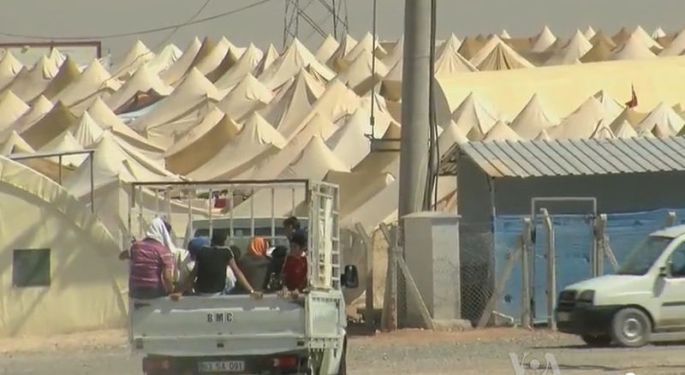
(Image: Syrian refugees on the Turkish border, via Henry Ridgwell/VOA/Wikimedia Commons)

Event: Doomsday Clock Symposium

The Bulletin of the Atomic Scientists will convene its 5th Annual Doomsday Clock Symposium on Thursday, November 14, 2013, at the American Association for the Advancement of Science in Washington, D.C.

The daylong program, this year titled “Communicating Catastrophe,” is free and open to the public. Panelists will include scientists, artists, authors, and a psychiatrist. Following the Symposium at the AAAS, the Bulletin is co­hosting a “Meet the Artist” event at the Hirshhorn Museum and Sculpture Garden featuring Japanese artist Yoshimoto Nara; Nara’s work is included in the Hirshhorn’s current exhibit, “Damage Control: Art and Destruction Since 1950.” Students and faculty are welcome to the Symposium and Hirshhorn events; please see the Symposium program on the Bulletin website.

Attendance is free but registration is required – please register here.  For more information about the symposium, including an agenda, please visit the website.

The day’s events will be streamed live through the Bulletin website. Students may also be interested in submission requrements for the Bulletin’s “Voices of Tomorrow,” a monthly essay, op­ed article, or multimedia presentation written or produced by a high school student, college undergraduate, or graduate student. For more information, please visit the website here.

Fourth Case of H7N9 in China

Chinese health officials have confirmed the fourth case of H7N9 in China in the last three weeks. The most recent case, involving a 64-year-old woman, was confirmed on October 30th in the Zhejiang province on China’s eastern shore.  At this point, the scattered cases are in keeping with expected patterns of infection, and are not yet a cause for concern. It remains too early to tell if this is simply indicative of normal numbers of H7N9 cases due to cooler weather, or if another outbreak may occur. We’ll keep you posted.

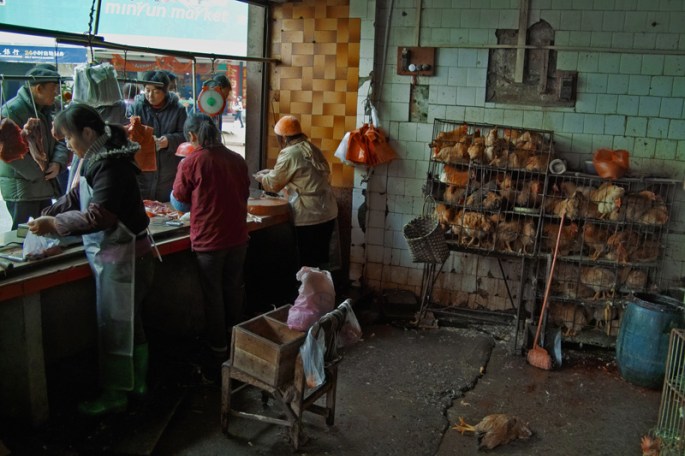
(Image: A Chinese poultry shop, via Jing Photography/Flickr)

Image of the Week: Y. Pestis

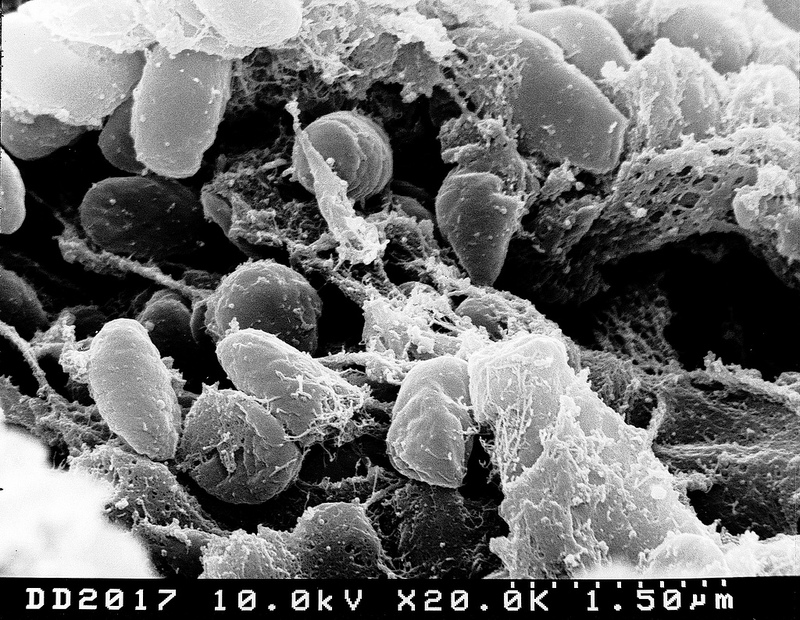
We know we featured a gallery of plague pictures last week, but the one picture we failed to include was of the bacteria itself. Pictured below is the Yersinia pestis, the bacteria which killed millions by causing plague. While today plague in its bubonic form is easily treated, pneumonic plague has a 100% fatality rate unless antibiotics are administered within 24 hours.
7316086176_d95bc87f19_c

(Image credit: NIAID)

Event: Blinking Red – Crisis and Compromise in American Intelligence After 9/11

“Blinking Red: Crisis and Compromise in American Intelligence After 9/11”

Speakers: Michael Allen, General Michael Hayden, Chuck Alsup
Date
: Tuesday,  November 12, 6:00 – 8:00 PM
Location: Founders Hall, at the Arlington Campus of George Mason University.

The National Security Law Journal in partnership with the Homeland and National Security Law Program at George Mason University School of Law, the Biodefense Program at George Mason University, and George Mason University School of Public Policy presents a conversation with author Michael Allen on his new book with a panel discussion and critique featuring General Michael V. Hayden (Ret.) former director of the Central Intelligence Agency and National Security Agency and Mr. Chuck Alsup former Associate Deputy Director of National Intelligence for Policy, Plans and Requirements.

Registration is complimentary, but attendance is limited and advance registration is required. Please register online at www.nslj.org. 

Delving Deeper: Synthetic Biology and National Security Policy

By Yong-Bee Lim

Synthetic Biology and National Security Policy: Balancing Risk and Innovation to Address the Dual-use Dilemma

Mankind’s knowledge of technology, and the building blocks of life, has rushed forward in leaps and bounds over the past 50 years. Using various techniques and databases stored with genome data, analyses are now available to health practitioners and researchers to, among other things:

  1. Spot differences between virulent (capable of causing a disease) and avirulent (incapable of causing disease) strains of a pathogen
  2. Apply epidemiological information to estimate mortality/morbidity rates of pathogens
  3. Help create innovative new preventative and prophylactic measures to deal with pathogens ranging from naturally-occurring diseases to potential biological weapons

One new biological technology that has roused interest in the science and security fields is called synthetic biology (synbio). This multi-disciplinary science (which combines elements of scientific and engineering fields) seeks to create new biological systems, or recreate older systems with novel/ enhanced characteristics by using chemically-synthesized DNA as building blocks; in essence, this is a field that seeks to build living things (biology) from the ground up (engineering).

Although synbio has only been around for a decade, it potentially offers tremendous benefits for the world, including:

  1. Diminishing World Hunger: Scientists are looking to develop plants that produce more food per harvest by findings ways to increase photosynthesis (the ability of plants to convert sunlight and nutrients into energy).
  2. Producing Energy without Fossil Fuels: Synbio scientists are researching ways to use types of algae to secrete biodiesel and other fuels.
  3. Cleaning Environmental Damage: While microbes are already used at oil spill sites to clean up petroleum, synbio scientists are looking for ways to help these microbes do a faster job.
  4. Promoting Health: Synbio scientists are finding novel ways to approach issues with drug and treatment development. Synbio has actually been used to artificially engineer the rare chemical precursor to the antimalarial drug artemisinin, which has allowed larger quantities of artemisinin to be produced than ever before.

While synthetic biology comes with many potential benefits, it also comes with a number of risks. Like many technologies, synbio suffers from the “dual use dilemma” – a phrase that refers to how scientific procedures, materials, and knowledge may be used for both beneficial and harmful purposes. The same synbio technology that produces better medicines and environmental cleaning mechanisms may also contribute to the intentional modification of an existing disease or the creation of a novel, highly pathogenic biological agent by states or terrorist organizations.

Gaps and concerns in policies have already been highlighted in regards to synbio. In 2006, journalists from The Guardian were able to order a segment of the smallpox genome from a DNA synthesis company without offering any legitimate reason for the purchase. In 2010, the National Science Advisory Board for Biosecurity (NSABB) noted that the interdisciplinary nature of synbio may mean that practitioners are not biologists that are aligned with a university or institutional setting; therefore, individual practitioners of synbio such as engineering, materials sciences, or chemistry may not follow commonly accepted principles and practices of biological risk assessment and biocontainment. The fact that synbio has been used to recreate the Spanish Flu of 1918, as well as the SARS virus for research purposes highlights the potential danger of this technology in the wrong hands.

So what should be done about synthetic biology? It is clear that the potentials for misuse of synthetic biology constitute both a national threat. However, the potentials for positive good to come from synbio highlights a need to balance security with innovation in policy. While this is not a comprehensive list, U.S. policymakers should focus on addressing the following issues related to synbio:

  1. Dealing with access to genomic data: Synbio is a field that is primarily driven by genomic knowledge and information. The first step in recreating/producing a particular pathogen involves knowing the genomic code of a particular pathogen. Crafting policies that balance the restriction of this information while providing access to researchers is a key to foster both security and innovation.
  2. Dealing with regulatory policies related to the ordering of synthetic biology materials and products: Currently, places that receive federal funding must follow certain reporting requirements to the type and purpose of their research (including why they would purchase particular materials and products). Furthermore, HHS adopted codes of conduct that issued some customer and screening guidelines for the sale of synthetic genes in 2010. While this has proven successful so far, future policies that are crafted must continue to balance the restriction of the materials and products while providing access to researchers to foster both security and innovation.
  3. Enhancing and expanding good laboratory practices (including ethical training) for all practitioners of synbio: Raising awareness and good practices for practitioners of synbio would help contribute to a culture of responsible conduct of research that mitigates the risks of synbio misuse.
  4. Increasing funding and resources for biosurveillance and response capabilities: While preventative measures would be all that is necessary in an ideal world, mitigating the effects of the misuse of synbio is a necessity in modern times. Resources should be poured into state and federal entities (such as the CDC and the USDA) to both enhance epidemiological surveillance capabilities, as well as enhance response capabilities in the event of a biological incident.

———————————————————————————————————————
Yong-Bee Lim is a PhD student in Biodefense at George Mason University. He holds a B.S. in Psychology and an M.S. in Biodefense from George Mason University as well. Contact him at ylim3@masonlive.gmu.edu or on Twitter @yblim3.

(image: Martin Hieslmair/Ars Electronica/Flickr)

This Week in DC: Events 11.4.13

Be sure to check out the Wilson Center’s synthetic biology event this Friday!

Monday, November 4, 2013

Women, Terrorism, and Counterterrorism
McCain Institute
3:30 PM

Cohosted by the Georgetown Institute for Women, Peace and Security and the McCain Institute for International Leadership, this panel will examine the roles that women play in both the perpetuation and alleviation of conflict. The event aims to highlight the tangible advantages of considering both women’s roles within terrorist organizations and women’s potential in countering terrorism, in the hopes of contributing to more comprehensive security policies and programs.

Tuesday, November 5, 2013

Roadblocks to US-Iran Rapprochement
Marine Corps Base, Quantico
1:00PM – 4:00PM

Speaking will be Ambassador Seyed Houssein Mousavian, Karim Sadjadpour, and Amin Tarzi for a discussion on Roadblocks to US-Iran Rapporochement. Where: Gray Research Center, 2040 Broadway Street, Marine Corps Base Quantico. For more information email Adam Seitz at seitzac@grc.usmcu.edu

Upcoming Event: Preventing Terrorist Abuse of the Nonprofit Sector
Center for Global Counterterrorism Cooperation
8:30AM

The nonprofit sector is a vital means of harnessing voluntary resources in the provision of assistance to those most in need and fulfills a range of positive social, cultural, religious, and educational purposes, including in helping to address so-called conditions conducive to the spread of terrorism. Its growth derives from fundamental human rights, such as the right to freedom of association. Yet the sector itself has become an object of concern, perceived as being at risk of misappropriation and abuse. A number of governmental and intergovernmental assessments have warned that nonprofit organizations are vulnerable to exploitation by terrorists, who may use them to raise, transfer, and divert funds, or as a vehicle for the mobilization and movement of personnel. Governments have responded with a variety of regulatory approaches and the nonprofit sector has implemented due diligence and self-regulatory strategies.

Lessons Learned? The U.S. Withdrawal from Iraq and What It May Mean for Afghanistan
RAND
12:00PM – 1:20PM

Can the impending transition of major combat forces out of Afghanistan be informed by lessons learned during the U.S. military-diplomatic transition in Iraq? Ending the U.S. war in Iraq was a massive, complex undertaking that posed daunting challenges for U.S. government policymakers, as the military not only was involved with security-related activities but also assisted in political and economic functions across Iraq. A new RAND study being released at this joint Woodrow Wilson Center/RAND Corporation event, Ending the U.S. War in Iraq: The Final Transition, Operational Maneuver, and Disestablishment of United States Forces–Iraq (by Richard R. Brennan, Jr., Charles P. Ries, et al.), examines the planning and execution of the U.S. military’s exit from Iraq, and the transition of responsibilities to the Iraqi government and other U.S. departments and agencies.

Wednesday, November 6, 2013

Air-Sea Battle, China, and the U.S. Rebalance to Asia
Center for National Policy
12:30 – 1:30PM

In order to overcome “anti-access” challenges to its ability to project power, the U.S. military is developing the Air-Sea Battle concept. As a concept of operations, Air-Sea Battle posits the value of attacking and destroying—preemptively if possible—an opponent’s targeting, command, and weapons systems wherever they are located in order to disrupt the opponent’s ability to hinder U.S. military operations. However, while Air-Sea Battle agnostically seeks to defeat anti-access challenges around the globe, with no particular country or region in mind, it may be undermining U.S. foreign policy objectives in Asia. In particular, despite repeated official U.S. denials to the contrary, the concept continues to be seen as a military strategy to attack China. Should this belief solidify among the Chinese leadership, it could complicate U.S. efforts to improve relations with China—a key pillar of the U.S. rebalance to Asia. In addition, it could result in an unnecessary and costly arms race between the United States and China.

Drone Wars: Challenges and Solutions
GMU School of Law
6:30PM – 8:00PM

You are invited to attend an upcoming panel discussion sponsored by the National Security Law Journal, Drone Wars: Challenges and Solutions, to be held at the School of Law on Wednesday, November 6. A 6:00 p.m. reception will be followed by the panel discussion from 6:30 to 8:00 p.m. The event is presented in partnership with the Federalist Society and the Military Law Society at the School of Law. The evening’s program will feature a discussion on a framework for the use of unmanned aerial vehicles under the law of armed conflict with panelists from the Heritage Foundation, The New York Times, Newsweek, and George Mason University School of Law.

Thursday, November 7, 2013

Preventing another Great War: Lessons from 1914
Brookings Institution
2:00Pm – 3:00PM

As the 100th anniversary of World War I approaches, historians continue to be haunted by the question of cause, examining the confluence of ideologies, ambitions and circumstances which led to one of the 20th century’s most brutal conflicts. On November 7, the Brookings Institution will host noted historian Margaret MacMillan, author of The War that Ended Peace: The Road to 1914 (Random House, 2013) for a discussion to compare current tensions around the globe – rising tides of nationalism, economic pressures of globalization, sectarian strife, and the fading role of the United States as the world’s policeman – to the period preceding the Great War. Brookings Senior Fellow Robert Kagan will join MacMillan in conversation about modern conflict points and how world leaders must learn the lessons of 1914 and work together to build a more stable international order. Ted Piccone, acting vice president and director of Foreign Policy at Brookings, will provide introductory remarks.

National Security vs. Privacy
Institute of World Politics
4:30PM – 6:00PM

Much has been written in the press recently about government programs that track and record an individual’s electronic communications, both here and abroad. The intelligence community defends these programs as necessary for national security; others assert they violate the individual’s right to privacy. This presentation will briefly examine the historical tensions which have ever been present between the rights of the group vs the rights of the individual and how various forms of government have sought to address this tension with an eye toward self-preservation. We will examine the “operative factors” affecting how these systems have (or have not) changed to adapt to this tension, including how our system of Democracy is structured to handle this issue. We will then discuss how the present situation could be addressed and evaluate the path US democracy offers to resolve this tension.

Friday, November 8, 2013

The Nagoya Protocol and Synthetic Biology Research: A Look at the Potential Impacts
Wilson Center
12:00PM – 2:00PM

The United Nations (UN) is working to ensure that the benefits of genetic resources are shared in a fair and equitable way via the Nagoya Protocol to the Convention on Biological Diversity. The Nagoya Protocol was adopted in 2010 to provide a transparent legal framework for sharing genetic resources. “Its objective is the fair and equitable sharing of benefits arising from the utilization of genetic resources, thereby contributing to the conservation and sustainable use of biodiversity,” according to the UN. A new report from the Synthetic Biology Project at the Woodrow Wilson International Center for Scholars looks at how the protocol may affect U.S. researchers working in the field of synthetic biology.

(image: Dell)

The Pandora Report 11.1.13

Highlights include polio in Syria (really not a highlight), bats and SARS (surprise, bats carry everything!), rabies in a French kitten, MERS in Oman, and cholera in Mexico. Happy Friday!

Polio outbreak in Syria threatens whole region, WHO says
For the first time since 1999, a polio outbreak has occurred in Northern Syria. This is not a spontaneous re-emergence of the otherwise eradicated disease. This is the same strain found in the recent Iraqi outbreak, as well as that found in sewage in Egypt, Israel, the West Bank, and Gaza, a strain which originates in Pakistan. Pakistan is one of just three countries globally in which polio remains endemic. Pakistan is also a country in which the Taliban has banned administration of the vaccine, and routinely kills the poor, often women, workers who administer the vaccine anyway. As a result of this tremendous bit of stupidity, polio is re-emerging in Syria, a country in the middle of a civil war, and therefore a ripe breeding ground for the crippling virus’ spread.

Reuters – “‘This virus has come over land which means the virus is not just in that corner of Syria but in a broad area,’ Bruce Aylward, WHO assistant director-general for polio, emergencies and country collaboration, told Reuters in an interview.’We know a polio virus from Pakistan was found in the sewage of Cairo in December. The same virus was found in Israel in April, also in the West Bank and Gaza. It… is putting the whole Middle East at risk quite frankly,’ he said by telephone from Oman.”

Bat virus clues to origins of SARS
Researchers at the Commonwealth Scientific and Industrial Research Organisation have discovered two viruses closely related to SARS in the Chinese horseshoe bats. The viruses both bind to the same receptor in humans as SARS does, the ACE2 receptor, which is primarily expressed in endothelial cells of the kidney and heart. The use of the same receptor in both species suggests that coronaviruses may be able to jump directly from bats to humans without a vector species. Our first thought here is MERS?

BBC – “According to Gary Crameri, virologist at CSIRO and an author on the paper, this research ‘is the key to resolving the continued speculation around bats as the origin of the Sars outbreaks’. This Sars-like coronavirus is around 95% genetically similar to the Sars virus in humans, the research shows. And they say it could be used to develop new vaccines and drugs to combat the pathogen.

WHO: Middle East respiratory syndrome Coronavirus (MERS-CoV) – update

The WHO has confirmed another four cases of the Middle Eastern Respiratory Virus, including the first case in Oman. The three other cases, including one fatality, were all located in Saudi Arabia. While none of the three had recent contact with animals, one of the Saudi cases had been in recent contact with an infected patient. All three however were immunocompromised. The Omani case had no recent contact with animals or travel to Saudi Arabia.

WHO – “The patient in Oman is a 68-year-old man from Al Dahkliya region who became ill on 26 October 2013 and was hospitalized on 28 October 2013…Globally, from September 2012 to date, WHO has been informed of a total of 149 laboratory-confirmed cases of infection with MERS-CoV, including 63 deaths. Based on the current situation and available information, WHO encourages all Member States to continue their surveillance for severe acute respiratory infections (SARI) and to carefully review any unusual patterns.”

France issues rabies warning after kitten’s death
It is no secret that rabies is scary. We’ve all joked at one point or the other about what a zombie apocalypse would look like, which is all fun and games until someone mentions rabies.  While our vaccine is very good, in order for it to be effective, you have to know you’ve caught rabies. The virus itself usually has an incubation period of a few weeks, although cases have occurred in which the virus lay dormant for years.  At that point it’s of course too late. So we definitely understand Paris health authorities preemptively vaccinating five people, setting up a public hotline, and imploring anyone who may have handled or come near the kitten to contact authorities to be vaccinated.

BBC – “France was first declared a rabies-free zone for non-flying terrestrial mammals 12 years ago following the elimination of fox rabies. The 2008 canine rabies outbreak led to that status being suspended for two years. The BBC’s Christian Fraser in Paris said that the urgent appeal seeking anyone who came into contact with the infected animal is likely to be fuelled by fears of a repeat of the 2008 outbreak. The rabies virus is present in the saliva of an infected animal and is usually transmitted to humans by a bite.”

Haitian Cholera in Mexico
The cholera strain introduced to Haiti three years ago has spread to Mexico, which has seen 171 cases of the disease since September 9th of this year. The Haitian epidemic has infected as many as 600,000 people and caused nearly 8,500 deaths in Haiti, before spreading to the Dominican Republic and causing a further 31,000 cases there.

IBT – “Mexico has reported 171 cases of the disease, which has been identified as the same strain that arrived in Haiti, Dominican Republic and Cuba and one that is different from the strain that circulated in Mexico during a 1991-2001 epidemic. The Pan American Health Organization (PAHO) is warning that the illness could spread worldwide. Mexican health authorities reported the 171 cases in Mexico City and in the states of Mexico, Hidalgo, Veracruz and San Luis Potosí between Sept. 9 and Oct. 18. According to the Mexican Ministry of Health, there has been only one fatality, while 39 other cases have required hospitalization. The recent devastation caused by hurricanes Ingrid and Manuel contributed to the spread of the disease, which had not been reported in Mexico since the previous epidemic.”

(image: CDC Global Health/Flickr)

Deadly Pig Virus from China

According to a new study research, porcine epidemic diarrhea virus (PEDV) striking piglets across farms in the US may have originated in China. After comparing strains from an outbreak in China and the recent US strains, research from Virginia Tech indicates the virus’ source is in the Anhui province.

Fox News – “The report should help diagnostic researchers and federal officials, who have been trying to trace the origin of the porcine epidemic diarrhea virus (PEDv) since it was first identified in the United States this past spring. Previously, investigators and veterinary researchers tracking the outbreak said that there was some indication that the PEDv strain seen in the U.S. was 99.5 percent similar in genetic make-up to that identified in China. But exactly where it came from and how it arrived in the United States were mysteries. According to the report published last week in the American Academy of Microbiology journal mBio, the researchers extracted strains of PEDv virus from infected animals in Minnesota and Iowa.”