Pandora Report 7.26.15

Mason students are working through their summer courses and I’m happy to say mine is OVER! Let the summer begin (two months late)! This week we’ve got great news about Polio in Nigeria and a somber anniversary in Japan. We’ve also got other stories you may have missed.

Enjoy the rest of your weekend and have a great week!

A-Bomb Victims Remembered in Potsdam, Where Truman Ordered Nuclear Strikes

Coming up on the 70th anniversary of the atomic bombs being dropped on Hiroshima and Nagasaki, German and Japanese citizens in the city of Potsdam held a remembrance ceremony for both the victims that died in the blast and the future. Japan has become, according to the former President of the International Court of Justice, the world’s conscience against nuclear weapons and power. Why? Japan is “the only country in the world to have been the victim of both military and civilian nuclear energy, having experienced the crazy danger of the atom, both in its military applications, destruction of life and its beneficial civilian use, which has now turned into a nightmare with the serious incidents of Fukushima.”

Japan Times—“The Potsdam Conference was held between July 17 and Aug. 2 in 1945. The United States dropped an atomic bomb on Hiroshima on Aug. 6 and another bomb on Nagasaki three days later. On Aug. 15 that year, Emperor Hirohito announced to the nation that Japan had accepted the Potsdam Declaration, in which the United States, Britain and China demanded the nation’s unconditional surrender.”

Nigeria Beats Polio

Very, very, very exciting news: Nigeria has not had a case of polio in a year. A year! This makes Nigeria polio free and the last country in Africa to eliminate the disease. The achievement was possible with contributions from the Nigerian government (where elimination of the disease was a point of “national pride”), UNICEF, the WHO, the CDC, the Bill and Melinda Gates Foundation, Rotary International, and other organizations. With Nigeria’s accomplishment, there are only two other countries in the world where polio still exists—Afghanistan and Pakistan.

Voice of America—“Carol Pandek heads Rotary International’s polio program. She told VOA via Skype that a year being polio-free is a milestone for Nigeria, but noted that it is not over. “Now they need to continue to do high quality immunization campaigns for the next several years,” she said, as well as have a strong surveillance system so, should there be any new cases, they can be identified as soon as possible.”

Stories You May Have Missed


Image Credit: Fg2

Week in DC: Events

July 20, 2015

Global Digital Policy: Views from the United States and South Korea
Date: July 20, 2:00 pm
Location: Brookings Institution, Falk Auditorium, 1775 Massachusetts Ave NW, Washington Dc

With more than 193 member countries, the International Telecommunication Union (ITU) is a U.N. specialized agency for information and communication technologies (ICTs) whose goal is to connect people through modern communication technology. Hosted last year in Busan, South Korea, the ITU’s Plenipotentiary Conference 2014 helped propel South Korea as a central player in the dialogue on Internet policy. Crucial policy topics included Internet governance, the Internet of Things, and ICTs being used for development purposes. This event will examine global digital policy with views from the U.S. and South Korea.

On July 20, the Center for Technology Innovation at Brookings will host a panel to discuss the increasing challenges and opportunities to providing Internet access to a globalized, shifting, and high-demand population. Speakers will discuss the importance of spurring creativity, ingenuity, and innovation in economies around the world. What are the economic and social benefits of the Internet economy, and what are the possible avenues for future U.S.- Korea bilateral engagement on ICT? Participants will reflect upon the international landscape and what lies ahead in the wake of the 2014 ITU conference in Korea with a view towards the United Nation’s upcoming WSIS +10 High Level Meeting, which will take place in December 2015.

After the session, panelists will take audience questions. Register here to attend.

Preparing for Disaster: U.S. Disaster Response Policy and Areas for Reform
Date: July 20, 2:00 pm
Location: Heritage Foundation, Lehrman Auditorium, 214 Massachusetts Ave NE, Washington DC

As summer drags on and we move through hurricane season, concerns about the inevitable severe tropical storm grow. Together with other disasters, the federal government should be evaluating how well prepared the U.S. is to respond to a national disaster.

Have we implemented the lessons learned from the government’s response to natural disasters like Hurricanes Katrina and Sandy and from pandemics like the 2013-2014 Ebola outbreak? What is the state of the federal government’s emergency preparedness systems and response plans? What role does the military play and how can they best support civil authorities? How could the Federal Emergency Management Agency (FEMA) be improved to strengthen U.S. disaster response capabilities?

Join us for a discussion regarding the state of disaster preparedness in the United States, as we host a panel of experts who will examine current U.S. disaster policy and potential areas for reform.

Register here to attend in person or watch live online.

July 21, 2015

China’s Transition at Home and Abroad
Date: July 21, 9:00 am
Location: Brookings Institution, Falk Auditorium, 1775 Massachusetts Ave NW, Washington DC

As China transitions from an economy driven by exports to an economy driven by consumption, the effects are being felt worldwide. In spite of this economic “new normal,” China has also become increasingly active in seeking a role in global governance as exemplified by the recent establishment of the Asian Infrastructure Investment Bank and the “one belt, one road” development strategy. On the other side of the globe, the state of the U.S. economy remains uncertain, breeding serious concern regarding future U.S. economic policies.

On July 21, The John L. Thornton China Center at the Brookings Institution will bring together key insiders from the policymaking communities in China and the United States to explore the issues raised by China’s rise and economic transition.

Questions will be taken from the audience following the discussions. Register here.

Iran and the Future of the Regional Security and Economic Landscape
Date: July 21, 9:00 am
Location: Center for a New American Security, NYU Washington DC, 1307 L Street NW, Washington DC

The international community is negotiating a deal with Iran on its nuclear program ahead of a June 30 deadline. Under a potential deal, Iran would put significant limitations on its nuclear program in exchange for sanctions relief from the international community. But the details and effects of any potential agreement are far from simple. Iran’s regional rivals, who are core U.S. partners in the Middle East, are deeply concerned about how a deal will change regional power dynamics. There are also questions about economic competition, particularly in energy markets, in the aftermath of a nuclear deal. And there are many questions about how the United States and the European Union would be able re-impose their punishing economic sanctions in the event that Iran does not adhere to a deal. To address these questions, the Center for a New American Security and the Center on Law and Security at the New York University School of Law will convene a high level forum of Middle East and sanctions experts to discuss Iran and the future of regional security and economics.

Register here.

Islamic Extremism, Reformism, and the War on Terror
Date: July 21, 10:00 am
Location: American Enterprise Institute, 12th Floor, 1150 17th Street NW, Washington DC

President Barack Obama has said that the Islamic State (ISIS, ISIL, Daesh) and other extremist groups do not represent true Islam. The extremists, however, dispute this. This leads to a basic question: What role, if any, does Islam play in fomenting terrorism?

As extremist forces increasingly sow destruction, how should policymakers respond? How prevalent are moderates, and how serious are regional calls for a “reformation” within Islam? What role, if any, can the US play to encourage reform? How do anti-Islamic polemics undercut reform?

Please join us at AEI for a two-panel discussion on the religious basis of Islamist terrorism and how or whether it should factor into a comprehensive US strategy to defeat extremists.

We welcome you to follow the speech and comment on Twitter with #TalkingIslam. RSVP to attend.


Negotiating the Gulf: How a Nuclear Deal Would Redefine GCC-Iran Relations
Date: July 21, 12:00 pm
Location: The Arab Gulf States Institute, 1050 Connecticut Ave NW, Suite 1060, Washington DC

With an agreement now struck between Iran and the P5+1 on the country’s nuclear program, few in the international community have more at stake than Iran’s Arab neighbors across the Gulf.

Will the agreement usher in a new era of detente in the Middle East? Will Iran emerge as a more responsible partner, not just to the West but also to regional powers? Can Iran and the GCC states begin to identify areas of cooperation to bring about more stability and security to the region? Will the agreement truly prevent Iran from developing nuclear weapons, or does the Middle East stand on the brink of another, particularly dangerous, arms race?

This AGSIW special event will examine these and other key issues from multiple perspectives, providing a timely guide to understanding the complex implications of the Vienna agreement.

RSVP here.

Russian Expansion—A Reality or Fiction: A Conversation with Elmar Brok
Date: July 21, 12:30 pm
Location: German Marshall Fund, 1744 R Street NW, Washington DC

With the Minsk II ceasefire in eastern Ukraine looking increasingly shaky, Europe risks a frozen conflict for years to come. However, is Russian President Vladimir Putin finished in Ukraine? Can the United States and Europe expect more aggression from the Kremlin or is consolidation Russia’s strategy now? What do the future of Russian relations with the European Union and Germany look like and what role do sanctions play in this calculation? Elmar Brok, chairman of the European Parliament’s Committee on Foreign Affairs, will answer these questions and provide analysis of U.S.-European views toward Ukraine and Russia. GMF, the Konrad Adenauer Foundation, and the European Parliament Liaison Office are pleased to jointly host this conversation.

Register here.

From Sea to Denial to Nuclear Deterrence: India’s Quest for a Nuclear Submarine
Date: July 21, 1:00 pm
Location: Nuclear Proliferation International History Project, 6th Floor, 1300 Pennsylvania Ave NW, Washington DC

In July 2009, Prime Minister Manmohan Singh unveiled India’s first nuclear submarine, INS Arihant, catapulting India into a select group of countries possessing naval nuclear prolusion technology. Contemporary commentaries and popular historical narratives often assign the desire for a nuclear deterrent to the entire history of India’s submarine program. Instead, scholar Yogesh Joshi argues that theArihant’s historical trajectory contradicts any such retrospective reasoning—the program appears evolutionary and the rationale, shifting.

India’s quest for a nuclear submarine began with an interest in nuclear propulsion as a “technology of future” in late 1960s, but the strategic rationale soon shifted to “sea denial” against extra-regional powers operating in the Indian Ocean. Joshi will argue that until the end of the 1970s, there is no evidence available that India was planning to develop its submarine program into a platform for its nuclear weapons. While India’s submarine program gained speed during the 1980s with help from the Soviet Union, the program was configured around the Soviet Charlie-II class submarine, an attack submarine. Moreover, the collapse of the USSR meant that the promise of Soviet technological assistance never materialized in full.

Joshi will argue that the program’s shift towards ballistic missile submarines began after the nuclear tests of 1998, but his research also suggest that the strategic inertia of “sea denial” continued to have heavy influence on the program, as seen through India’s official pronouncements and internal documents. Using declassified materials from the British, Indian, US, and Russian archives, interviews with key decision-makers, and open sources, this seminar will explore the process through which “sea based nuclear deterrence” became a part of India’s strategic calculus.
RSVP here.

Rebuilding Afghanistan: Transparency & Accountability in America’s Longest War
Date: July 21, 6:30 pm
Location: PS21, Thomson Reuters Conference Room, 1333 H Street NW, Washington DC

As the longest running and one of the most expensive wars in U.S. history winds down, PS21 asks: just where did the money go? We are delighted to present a discussion with the man looking into that very question, Special Inspector General for Afghanistan Reconstruction John F. Sopko, and Just Security.

Register here.

July 22, 2015

Drones and Aerial Observation: New Technologies for Property Rights, Human Rights, and Global Development
Date: July 22, 8:00 am
Location: New America Foundation, 1899 L Street NW, Washington DC

Clear and secure rights to property—land, natural resources, and other goods and assets—are crucial to human prosperity. Most of the world’s population lack such rights. That lack is in part a consequence of political and social breakdowns, and in part driven by informational deficits. Unmanned Aerial Vehicles (UAVs), also known as drones, by virtue of their aerial perspective, are able to gather large amounts of information cheaply and efficiently, as can unpowered aerial platforms like kites and balloons.

That information, in the form of images, maps, and other environmental data, can be used by communities to improve the quality and character of their property rights. These same tools are also useful in other, related aspects of global development. Drone surveillance can help conservationists to protect endangered wildlife and aid scientists in understanding the changing climate; drone imagery can be used by advocates and analysts to document and deter human rights violations; UAVs can be used by first responders to search for lost people or to evaluate the extent of damage after natural disasters like earthquakes or hurricanes.

Earlier this year, New America launched a website, drones.newamerica.org, which comprises a database of such uses of drones, as well as the first comprehensive compilation of global drone regulations. In conjunction with this July 22nd Symposium, New America is publishing a primer that discusses the capabilities and limitations of unmanned aerial vehicles in advancing property rights, human rights and development more broadly. The primer contains both nuts-and-bolts advice to drone operators and policy guidance. Though drones have substantial potential—in particular they are capable of making new maps cheaply, in a decentralized fashion—they are also a technology with pitfalls.

Please join Anne-Marie Slaughter, New America’s president and CEO, for a half-day discussion of these important issues. Breakfast and lunch will be served.

RSVP here.

U.S.-China Relations in Trans-Atlantic Context
Date: July 22, 10:00 am
Location: Woodrow Wilson International Center for Scholars, 5th Floor, 1300 Pennsylvania Ave NW, Washington DC

Conflicting responses to Chinese leadership of the Asian Infrastructure Investment Bank and the prospects of the renminbi as a reserve currency make clear that the U.S. and its traditional European partners do not always see China’s growing influence in the same light. Differences may be exacerbated by Eurasian projects like China’s One Belt, One Road and Western groupings like the Transatlantic Trade and Investment Partnership. U.S.-China-EU relations are of growing importance, but the trans-Atlantic implications of U.S.-China relations are not as well understood as the Japanese, Russian, or Southeast Asian contexts.

The Wilson Center is pleased to partner with the Carnegie-Tsinghua Center for Global Policy in hosting this discussion of U.S.-Chinese-EU relations.

Register here.

The Future of Energy Markets: The Other Middle East Revolution
Date: July 22, 10:30 am
Location: Atlantic Council, 1030 15th Street NW, 12th Floor, West Tower, Washington DC

Please join us for a discussion with Majid Jafar, Chief Executive Officer of Crescent Petroleum, as part of the Global Energy Center’s CEO Series. Mr. Jafar will discuss how conflict and security issues in the Middle East coupled with the low oil price environment have impacted hydrocarbon producing countries in the region.  He will also address the steps that countries like Iraq should take in improving energy infrastructure, tackling subsidies, and reforming oil laws and regulations to improve investment in the oil and gas sector and bolster domestic stability.

Register here to attend in person or here to watch live online.

Terror Gone Viral: The Rise of Radicalism and America’s Response
Date: July 22, 10:30 am
Location: Heritage Foundation, Lehrman Auditorium, 214 Massachusetts Ave NW, Washington DC

America faces the most serious terror threat environment since 9/11. The Islamic State of Iraq and Syria (ISIS) has now been linked to dozens of plots or attacks against the West, including at least nine inside the United States since January. This surge in Islamist terror activity includes a rise in extremism here at home, as terrorists seek to radicalize and recruit operatives from our own communities. This year alone, the FBI has arrested more than 40 U.S.-based ISIS supporters and is investigating homegrown violent extremists in every state.

Join us for an in-depth discussion as our expert panel offers insights on the state of homeland security, counterterrorism, and U.S. strategy in the war against violent Islamist extremists.

Register here.

On Knife’s Edge: The International Criminal Tribunal for the former Yugoslavia’s Impact on Violence Against Civilians
Date: July 22, 12:00 pm
Location: Woodrow Wilson International Center for Scholars, 5th Floor Conference Room, Washington DC

The post-Cold War era has witnessed horrific violence against non-combatants. In the Bosnian War alone, tens of thousands of civilians died. The founders of the International Criminal Tribunal for the former Yugoslavia (ICTY)—and then of the permanent International Criminal Court (ICC)—hoped these courts might curb such atrocities.  However, we still know very little about their actual impact.  This talk will draw on the ICTY’s experience as the first wartime international criminal tribunal to provide insight into how and when these institutions might affect violence against civilians.

RSVP here.

The Chinese Cyberthreat: Challenges and Solutions
Date: July 22, 12:15 pm
Location: American Enterprise Institute, 1150 17th Street NW, 12th Floor, Washington DC

US investigators are blaming China for the Office of Personnel Management cyberattack that stole more than 21.5 million US federal employees’ personal information. The attackers appear to be the same Chinese hackers who targeted Anthem this past February, stealing the data of as many as 80 million customers. Yet China’s cyber victims are not limited to government workers and consumers, as Chinese actors are probing American firms, military, and critical infrastructure.

In the absence of international norms guiding the use and deterrence of cyberattacks, what can the United States do to counter Chinese cyberespionage? Join AEI for a conversation with Chairman Cory Gardner (R-CO), followed by an expert panel on how to defend US economic and security interests from China’s growing cyber capabilities.

If you are unable to attend, we welcome you to watch the event live on this page. Full video will be posted within 24 hours. RSVP here to attend in person.

The Cost of Wars: Overseas Contingency Operations and Future Defense Spending
Date: July 22, 3:30 pm
Location: The Stimson Center, 1211 Connecticut Ave NW, 8th Floor, Washington DC

While the number of troops deployed overseas has decreased significantly, the cost per troop has increased markedly since the imposition of the 2011 Budget Control Act caps as the Obama administration and Congress have turned to Overseas Contingency Operations to fund increasingly unrelated programs. In his Fiscal Year 2016 request, President Obama requested a 6.8% increase above the 2015 level for base budget Pentagon spending, arguing for the third year that budget caps put in place by the 2011 Budget Control Act are not sustainable for either defense or non-defense spending. President Obama proposed instead to raise revenues and adopt alternate savings. Congress has again ignored the administration’s proposed alternative, choosing instead this year to use Overseas Contingency Operations as a loophole that allows the Pentagon to increase funding for base budget activities without regard to the constraints of the caps. Without better controls on Overseas Contingency Operations spending, the Pentagon is likely to continue to avoid making choices about how to accommodate the modernization and readiness increases that it wants with the freeze in defense spending mandated by the Budget Control Act. The Stimson Center invites you to join us for a discussion of Overseas Contingency Operations and future defense spending priorities.

RSVP here.

July 23, 2015

The National Idea in Russia and China
Date: July 23, 11:00 am
Location: Woodrow Wilson International Center For Scholars, 6th Floor Conference Room, 1300 Pennsylvania Ave NW, Washington DC

Challenges in U.S. relations with great powers such as China and Russia derive not only from divergent national interests, but from distinct conceptions of nationhood, sovereignty, and modernity. Americans must therefore consider not only what the United States would like Russia and China to do, but how Chinese and Russians see themselves, one another, and the wider world, including the United States.

China and Russia: On Their Own Terms is a joint project of the Wilson Center’s Kennan and Kissinger Institutes. The goal of the series is to offer U.S. policymakers, analysts, and the broader public a primary source perspective on how China and Russia see their evolving international roles in light of their histories, cultural narratives, and national myths.

RSVP here.

Pandora Report 7.19.15

An out of town visitor and a newly rescued pet have kept me very busy this week. Luckily, the news was very straightforward—the nuclear deal with Iran and ISIS with their chemical weapons. We’ve even got a few stories you may have missed.

Have a great week!

A Historic Deal to Prevent Iran from Acquiring a Nuclear Weapon

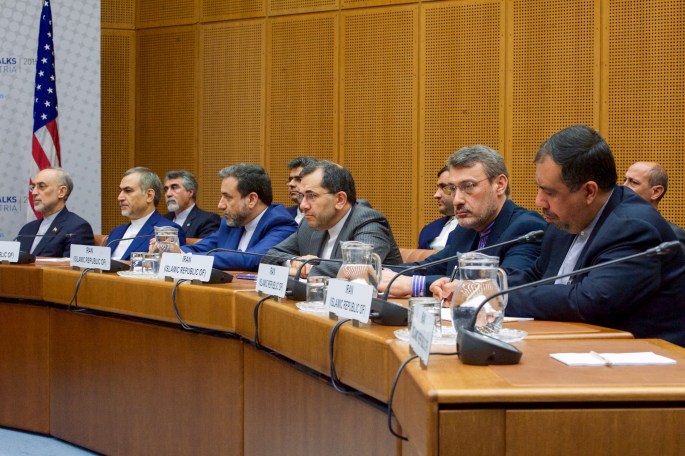
After two years in the making, the P5+1 settled negotiations to reach a comprehensive, long-term nuclear deal with Iran this week. Despite satisfaction with the outcome, many say that the deal will not end Iran’s nuclear weapons ambitions and will not change Iranian policy towards the USDick Cheney responded that the deal makes use of nuclear weapons use more likely and former Senator Jim Webb said the deal weighs in Iran’s favor. Nevertheless, the Obama administration seems pleased with the deal and will work on its passage.

DipNote—“President Obama said “I am confident that this deal will meet the national security interests of the United States and our allies. So I will veto any legislation that prevents the successful implementation of this deal. We do not have to accept an inevitable spiral into conflict. And we certainly shouldn’t seek it.’”

ISIS Has Fired Chemical Mortar Shells, Evidence Indicates

It seems like déjà vu all over again as reports this week said that the Islamic State appears to have manufactured rudimentary chemical weapons and attacked Kurdish positions in Iraq and Syria, evidently multiple times in multiple weeks. Investigators reported that the incidents seemed to involve toxic industrial or agricultural chemicals repurposed as weapons. This could signal “a potential escalation of the group’s capabilities” though, is not without precedent.

The New York Times—“In the clearest recent incident, a 120-millimeter chemical mortar shell struck sandbag fortifications at a Kurdish military position near Mosul Dam on June 21 or 22, the investigators said, and caused several Kurdish fighters near where it landed to become ill.”

Stories You May Have Missed

 Image Credit: U.S. Department of State

Pandora Report 7.11.15

Sorry for the late update here at Pandora Report. We’ve got how the plague turned so deadly, an Ebola update, and of course other stories you may have missed.

Have a great week!

These Two Mutations Turned Not-so-Deadly Bacteria Into the Plague

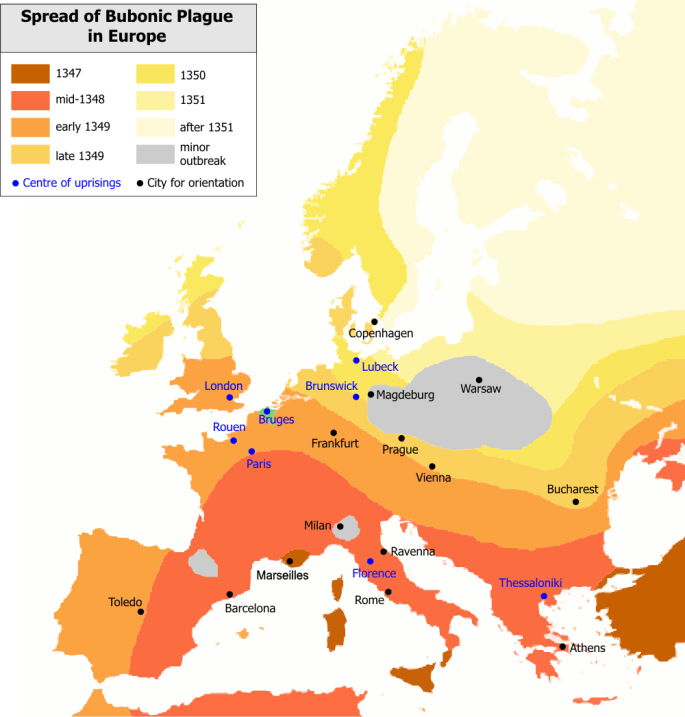
Researchers at Northwestern University have been investigating how Yersinia pestis—the bacteria that causes bubonic, pneumonic, and septicemic plague—became the infective cause of the Black Death. They discovered two mutations that help to explain the bacteria’s lethality.

Smithsonian.com—“The first mutation gave the bacteria the ability to make a protein called Pla. Without Pla, Y. pestis couldn’t infect the lungs. The second mutation allowed the bacteria to enter deeper into the bodies, say through a bite, to infect blood and the lymphatic system. In other words, first the plague grew deadly, then it found a way to leap more easily from infected fleas or rodents to humans.

Ebola Strain Found on Teen in Liberia Genetically Similar to Viruses in Same Area Months Ago

I’m sure you’ve heard that there were three new cases of Ebola in Liberia—a country that was declared free of the disease on May 9. According to the World Health Organization, samples taken from a teenager who died from Ebola two weeks prior indicate that the disease is genetically similar to strains that infected people in the same area over six months ago—while the outbreak was still ongoing.

US News and World Report—“That finding by genetic sequencing suggests it is unlikely the virus was caught from travel to infected areas of Guinea or Sierra Leone, the group said. “It also makes it unlikely that this has been caused by a new emergence from a natural reservoir, such as a bat or other animal,” it said.”

Stories You May Have Missed

Image Credit: en.wikipedia

NASA’s Unique Place in American Science and Security

By Greg Mercer

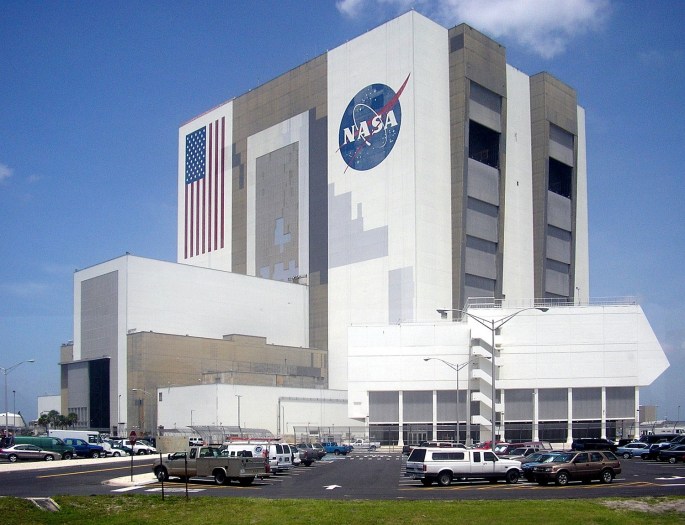
We talk a lot here about the intersection of science, technology, and security studies, and NASA has sat squarely in the center of that relationship since it was called the National Advisory Committee for Aeronautics. The Hill reports that GOP legislation is threatening NASA’s plan to develop its own launch vehicles to carry astronauts to the International Space Station. Currently, the US relies on Russia for this capability. Defunding domestic launch capabilities would result in continued reliance on Russian launch capacity, which has cost $1.2 billion since late 2011. The House and Senate spending measures undercut the $1.24 billion needed for the Commercial Crew Program—which would pay for Boeing and SpaceX to develop manned spacecraft by 2017—by up to $300 million.

Relying on Russia for launch capacity creates an interesting contradiction. First, NASA is not a military organization, and its activities are largely in the spirit of international cooperation, especially when it comes to Russia. However, defense hawks tend to oppose Russia’s ongoing incursions into Ukraine, sometimes loudly. This generally means supporting increased sanctions and avoiding cooperation, so it wouldn’t seem to follow that while scolding Russia for their military actions towards their neighbor, the US should also continue to rely on them for launch capacity. This isn’t the first time this sort of relationship has been framed this way. Foreign oil dependence has been a buzzword for decades, and it’s an issue that combines two different issues- energy and defense- into one. The argument goes that relying on potentially unstable partners for oil is a threat to national security, since the collapse of an oil-exporting partner could require military action to protect American energy interests. Regardless of this argument’s veracity, it has persuaded lawmakers on both sides of the aisle to pursue energy production means other than oil imports. A similar argument follows for Russia: if the US wants to economically punish Russia’s aggression and remain the forefront player in the space industry, why would it pay Russia to transport its astronauts?

I support NASA’s budget pretty vehemently, but for somewhat more optimistic reasons. I’m a strong proponent of space exploration of a national goal and a human endeavor, but I’m not adverse to a simple economic argument. Take a look at the list of NASA spin-off technologies. NASA has developed a huge range of technologies that undeniably benefit technology investors, the US, and the world at large.

For the first time since the shuttle program, NASA’s Orion program is providing the agency with long-term goals for manned spaceflight. And if you want to talk about a real security threat, no organization is better suited to detect and potentially avert objects that pose a threat to Earth. NASA pays science and security dividends in spades. Hopefully the hawks and the doves can come together to support it.

Image Credit: MrMiscellanious

Week in DC: Events

July 7, 2015

The New Containment: Changing America’s Approach to Middle East Security
Date: July 7, 12:00 pm
Location: Atlantic Council, 1030 15th Street NW, 12th Floor, West Tower, Washington DC

Securing the Middle East after an Iran nuclear deal is the region and the world’s next big challenge. The United States and its allies have engaged in tireless diplomacy with Iran over the past few years to produce an agreement that would limit Tehran’s nuclear program for the next decade and a half. A final deal is expected to be reached by the June 30 deadline. But the hard work does not stop here, and in fact, it may have just begun.

To protect the deal and take full advantage of its potential benefits – which include the drastic reduction of the risk of nuclear weapons proliferating in the region – the United States needs a comprehensive strategy for regional security in the Middle East. After all, the ultimate prize and broader objective is and has always been to secure and stabilize the region, and a nuclear deal with Iran – as strategically significant as it is – is only one piece of the Middle East security puzzle.

Please join the Atlantic Council for a launch of a report by Brent Scowcroft Center Senior Fellow for Middle East Security Bilal Saab entitled The New Containment: Changing America’s Approach to Middle East Security and a debate on the future role of the United States in the Middle East following a nuclear deal with Iran.

Register here.

Two Unforseen Wars: A Military Analysis of the Conflict in Ukraine and the Campaign Against ISIS
Date: July 7, 2:00 pm
Location: International Institute for Strategic Studies, 2121 K Street NW, Suite 801, Washington DC

The unexpected Russian occupation of Crimea, the subsequent insurgency in eastern Ukraine and the rapid conquest of much of northern and western Iraq by ISIS were all strategic shocks. But there is now enough reporting on the conflicts to allow a preliminary analysis of their military contours, including the similarities and differences between the two wars.

Brigadier Ben Barry will present the military dynamics of both the Ukrainian conflict and the ISIS insurgency, while examining the emerging military lessons of the conflicts and the military challenges that the pose for the US, NATO and their allies.

Register here.

July 8, 2015

India’s Evolving Nuclear Force and Doctrine
Date: July 8, 9:30 am
Location: Carnegie Endowment for International Peace, 1779 Massachusetts Ave NW, Washington DC

India stands at a new juncture in its nuclear development. New Delhi is unveiling ballistic missiles of ever-greater range, while its nuclear-armed submarine fleet is finally taking operational form with the launch of the Arihant. Despite these developments, India’s nuclear doctrine has not been officially updated since 2003. What is the future direction of India’s doctrine? Will India continue to adhere to a force posture informed by credible minimum deterrence? What are the potential implications for India’s relationships with the United States, Pakistan, China, and the global nonproliferation regime?

Frank O’Donnell and Yogesh Joshi will discuss current Indian perspectives on these questions and more. Carnegie’s George Perkovich will moderate.

Register here.

Sen. Lindsey Graham on “America’s Role in the World”
Date: July 8, 10:00 am
Location: Atlantic Council, 1030 15th Street NW, 12th Floor, West Tower, Washington DC

Please join us at the Atlantic Council as we launch a new series on “America’s Role in the World” that will offer a platform for all US presidential candidates to speak on foreign policy and national security.  As part of this series, the Council is pleased to welcome Senator Lindsey Graham (R-SC).

This is Senator Graham’s first major foreign policy speech as a 2016 presidential candidate. He will discuss why strong US leadership and comprehensive strategies, which include military and diplomatic options, are needed to tackle security challenges such as a nuclear Iran and radical extremist ambitions in the Middle East, and a wide range of other threats.

This series is part of the Atlantic Council’s Strategy Initiative led by the Brent Scowcroft Center on International Security. This Strategy Initiative seeks to encourage and support a more constructive and substantive public dialogue on US strategy in a complex and dynamic global context.

Senator Graham’s remarks will be followed by a moderated discussion and an audience Q&A session. We look forward to having you at the Atlantic Council for what is sure to be an exciting event.

Register here.

The Iran Negotiations: Is this Really the End Game?
Date: July 8, 11:00 am
Location: Woodrow Wilson International Center for Scholars, 6th Floor Conference Room, 1300 Pennsylvania Ave NW, Washington DC

Despite the uncertainties, the United States and Iran seem to be in the final stages of what promises to be a comprehensive accord on the nuclear issue.

Join us as four analysts and observers of Iran, Middle Eastern politics, and U.S. foreign policy assess the state of the current negotiations, the implications of an accord and the consequences for the region without one.

RSVP here.

Statesmen’s Forum: DHS Secretary Jeh Johnson
Date: July 8, 1:00 pm
Location: Center for Strategic and International Studies, 1616 Rhode Island Ave NW, 2nd Floor Conference Center, Washington DC

Secretary Jeh Johnson will speak at CSIS on the role of DHS in cybersecurity.

Register here.

Joint Subcommittee Hearing: Reviewing the U.S.-China Civil Nuclear Cooperation Agreement
Date: July 8, 2:00 pm
Location: U.S. House Committee on Foreign Affairs, 2172 Rayburn House Office Building, Washington DC

Chairman Salmon on the hearing: “The Obama Administration recently submitted a new 30-year peaceful nuclear cooperation agreement with the People’s Republic of China for congressional review. While the current “China 123” agreement is set to expire at the end of the year, proliferation sanctions on Chinese companies and individuals remain in place and China continues to expand its own nuclear arsenal.  Congress, especially this subcommittee, has the responsibility to examine the specifics of this agreement and to determine if China is fulfilling its nonproliferation commitments.  This vital hearing will allow for a much-needed discussion on the benefits of continuing the agreement as well as the concerns we have over sharing access to dual use technologies.”

Chairman Poe on the hearing: “There has been a big debate over the renewal of the current Section 123 agreement with China, which is set to expire in December. This hearing will give Members of the Committee the opportunity to hear from knowledgeable government officials and policy experts so we can gain a better understanding of the details of this agreement and the ramifications of its renewal or expiration.”

Watch live online here.

July 9, 2015

Hearing: Implications of a Nuclear Agreement with Iran
Date: July 9, 10:00 am
Location: U.S. House Committee on Foreign Affairs, 2173 Rayburn House Office Building, Washington DC

Chairman Royce on the hearing: “As we anticipate a congressional review of the Administration’s possible nuclear agreement with Iran, we’ll be looking to see how the Administration has done on Congress’ red lines.  Did we get anywhere, anytime inspections?  Full Iranian transparency regarding its past nuclear activities? No large-scale, immediate sanctions relief; but guaranteed, workable sanctions snap-backs? Meaningful restraints on Iran’s nuclear program that last decades?  This hearing will be the first in a series the Committee will hold should the Administration strike what might be one of the most significant agreements in decades.  As I have said, no deal is far better than a bad deal.”

Watch live here.

Surface Warfare in a Complex World
Date: July 9, 1:00 pm
Location: Center for Strategic and International Studies, 1616 Rhode Island Ave NW, Washington DC

The Maritime Security Dialogue brings together CSIS and U.S. Naval Institute, two of the nation’s most respected non-partisan institutions. The series is intended to highlight the particular challenges facing the Navy, Marine Corps, and Coast Guard, from national level maritime policy to naval concept development and program design. Given budgetary challenges, technological opportunities, and ongoing strategic adjustments, the nature and employment of U.S. maritime forces are likely to undergo significant change over the next ten to fifteen years. The Maritime Security Dialogue provides an unmatched forum for discussion of these issues with the nation’s maritime leaders.

This series is made possible with support from the Lockheed Martin Corporation.

Register here.

The Iran Deal and its Consequences
Date: July 9, 2:00 pm
Location: Atlantic Council, 1030 15th Street NW, 12th Floor, West Tower, Washington DC

Iran and the five permanent members of the United Nations Security Council plus Germany (P5+1) are expected to reach a ground-breaking comprehensive nuclear agreement by the end of June or shortly thereafter. The panelists will analyze the agreement in terms of its impact on nonproliferation, regional dynamics, US-Iran relations, and trade and investment in Iran. They will also discuss the potential obstacles to implementation both in Iran and in the United States.

The Iran Task Force, chaired by Ambassador Stuart E. Eizenstat, seeks to perform a comprehensive analysis of Iran’s internal political landscape, its role in the region and globally, and any basis for an improved relationship with the West. It is supported generously by the Ploughshares Fund.

Register here.

July 10, 2015

A View from the Frontlines of Islamist Insurgency: Perspectives on Terrorism in the Middle East and South Africa
Date: July 10, 12:00 pm
Location: Heritage Foundation, Lehrman Auditorium, 214 Massachusetts Ave NE, Washington DC

What do ISIS’s rise in Iraq and Syria and Iran’s new-found power and growing sphere of influence in the region portend for the broader Middle East? What is being done to counter Islamist extremist forces in the region and what is the current state of play? How do the current regional dynamics impact the threat from al-Qaeda, especially in Afghanistan and Pakistan? Join us at The Heritage Foundation as a panel of experts discuss the evolving regional dynamics and trends pertaining to the threat of Islamist extremism and share with us various perspectives on the struggle against the threat.

Register here to attend in person or here to watch live online.

America’s War on Terror: Democracy is No Panacea

Nine days after the attacks of September 11, the President declared America’s war on terror had begun. After the Bush Administration perceived early successes in Afghanistan, spreading democracy became one of the key policies supporting America’s strategy for the war on terror. Over time, the President came to view the promotion of democracy as a positive and transformational change agent for the Middle East and Muslim-majority countries. Empirical analysis, however, suggests democracy promotion did not help America achieve its broad objectives in the war on terror, though democracy indicators did marginally improve.          

This is Part 4 of 4 of Erik Goepner‘s paper. In case you missed them, read Part 1, Part 2, and Part 3; the full paper is available here.

America’s efforts in the war on terror have not achieved the desired objectives. Whether measuring the number of global terror attacks, number of attacks against the U.S. homeland, fatalities caused by terrorists, number of Islamist-inspired terror groups or the amount of fighters aligned with Islamist-inspired terror groups, the data suggests U.S. efforts in the war on terror have achieved disappointing results. During the 12 years prior to 9/11, terrorists committed an average of just over 3,200 attacks annually. In 2001, that number dropped to under 1,900 attacks. Since the U.S. initiated its war on terror, however, the average number of attacks has climbed to almost 4,300 per year.[1] Regarding the U.S. homeland, the attacks of 9/11 were a statistical outlier, making it difficult to determine if other similarly sized attacks might have followed. In the 13 years before 2001, there were five Islamist-inspired terror attacks in America. That compares to four attacks in the 13 years since.[2] Another 63 Islamist-inspired terror attacks against the homeland have been thwarted in the past 13 years, as well.[3]

Similar to the rise in worldwide terror attacks, the number of fatalities have likewise climbed, but at a faster rate. Nearly 6,500 people were killed worldwide per year in terror attacks for the decade-plus before 9/11. In 2001, more than 7,700 were killed. Then, in the 12 years since, the annual average has risen to just under 9,500. The before and after numbers for U.S. citizens killed by acts of terrorism are similarly discomforting, with 45 killed per year before 9/11 and 64 each year since.[4]

A final macro measurement for the war on terror examines the number of Islamist-inspired groups identified by the Department of State (DoS) as foreign terrorist organizations and how many fighters comprise those groups. Since 2000, the overall number of foreign terrorist organizations (FTOs) increased by 86 percent, from 29 to 54. The subset comprised of Islamist-inspired FTOs, though, grew by 185 percent, from 13 to 37 groups.[5] Moreover, the number of fighters within those groups has dramatically increased from an estimated 32,200 in 2000 to more than 110,000 in 2013.[6]

Unlike the overall measures of performance for the war on terror which have all worsened since 2001, governance and democracy measures are not as clear-cut. Freedom House’s indicators show a marginal, though statistically insignificant, improvement for the 47 Muslim-majority countries since 2001. The average political rights and civil liberties’ scores for all Muslim-majority states were essentially identical in the years prior to, and including, 2001. Since that time, they have improved by nearly 6 percent (Freedom House scores range from 1 “most free” to 7 “least free”).[7] However, a chi-square statistical analysis indicates the difference in pre- and post-9/11 scores were not statistically significant (X2=7.819, p=0.729). Though insignificant, the modest improvement occurred as average freedom scores declined worldwide for the past nine years.[8]

Afghanistan and Iraq had the lowest possible Freedom House scores for the years prior to 9/11 (i.e., 7). Scores for both countries have improved since, though neither has yet been listed among the 125 countries currently meeting the definition of an “electoral democracy.” The Polity IV Project from the Center for Systemic Peace provides another governance measurement. Their assessment of Afghanistan is unchanged from 2001. Throughout the past 13 years, they have assessed the country as “moderately fragmented,” meaning 10 to 25 percent of Afghanistan is ruled by authorities unconnected to the central government.[9] The assessment of Iraq, though, has changed rather dramatically. In the decade prior to the U.S. invasion, they assessed Iraq as extremely autocratic. Beginning in 2003 and holding for the next six years, they assessed Iraq as seriously fragmented, with between 25 and 50 percent of the country being ruled by authorities that were not connected to the central government. Then, beginning in 2010, Iraq was listed as slightly democratic and that assessment remained through 2013, which was the last year recorded. [10] No assessment has been made since the Islamic State seized sizeable portions of the country, so it is quite likely that the next report will list Iraq as moderately or seriously fragmented.

In conclusion, the decision to include democracy promotion as a key part of the war on terror did not happen immediately. Rather, it appears to have occurred in response to perceived early successes in Afghanistan. Policymakers apparently missed or ignored much of the research and intelligence available at the time that highlighted the numerous challenges to successfully democratizing Afghanistan and Iraq. Additionally, the research since 9/11 largely corroborates the earlier research. Finally, the quantitative analysis indicates democracy promotion did not help achieve the desired outcomes in the war on terror, though modest gains in democracy measures were observed.

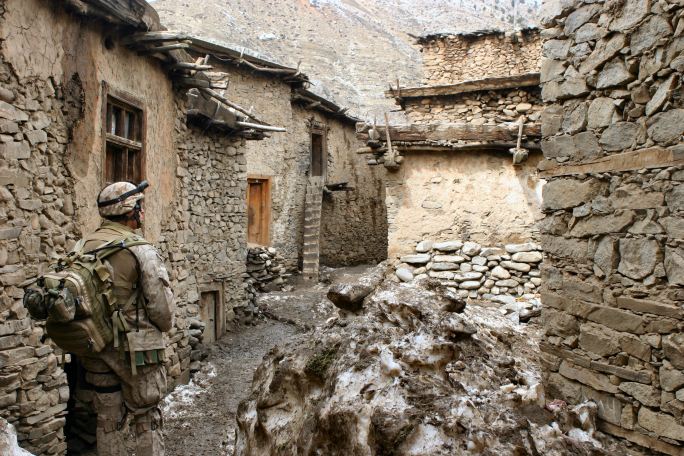
Image Credit: Cpl. James L. Yarboro


[1] Data from the Global Terrorism Database, available at http://www.start.umd.edu/gtd/.
[2] National Consortium for the Study of Terrorism and Responses to Terrorism (START). (2013). Global Terrorism Database [globalterrorismdb_0814dist-1.xlsx]. Retrieved from http://www.start.umd.edu/gtd.
[3] David Inserra and James Phillips, “67 Islamist Terrorist Plots Since 9/11: Spike in Plots Inspired by Terrorist Groups, Unrest in Middle East,” The Heritage Foundation, April 22, 2015, http://www.heritage.org/research/reports/2015/04/67-islamist-terrorist-plots-since-911-spike-in-plots-inspired-by-terrorist-groups-unrest-in-middle-east.
[4] Data from the National Consortium for the Study of Terrorism and Responses to Terrorism (START). (2013). Global Terrorism Database [globalterrorismdb_0814dist-1.xlsx]. Retrieved from http://www.start.umd.edu/gtd.
[5] Bureau of Public Affairs Department Of State. The Office of Website Management, “2000 (Patterns of Global Terrorism),” March 23, 2006, http://www.state.gov/j/ct/rls/crt/ 2000/; Bureau of Public Affairs Department Of State. The Office of Website Management, “Country Reports on Terrorism 2013,” U.S. Department of State, April 30, 2014, http:// http://www.state.gov/j/ct/rls/crt/2013/index.htm; Martha Crenshaw, “Mapping Militant Organizations,” Stanford University, accessed March 27, 2015, http://web.stanford.edu /group/mappingmilitants/cgi-bin/groups.
[6] Martha Crenshaw, “Mapping Militant Organizations,” Stanford University, accessed March 27, 2015, http://web.stanford.edu/group/mappingmilitants/cgi-bin/groups. See also Department of State Country Reports and Patterns of Global Terrorism at http://www. state.gov/j/ct/rls/crt/.
[7] Data from https://freedomhouse.org/report-types/freedom-world#.VTwGJBd422k.
[8] Arch Puddington, “Discarding Democracy: A Return to the Iron Fist,” Freedom House, 2015, https://freedomhouse.org/report/freedom-world-2015/discarding-democracy-return-iron-fist#.VRIay2Z422k.
[9] Monty Marhsall, Ted Gurr, and Keith Jaggers, Political Regime Characteristics and Transitions, 1800-2013: Dataset Users’ Manual (Vienna, VA: Center for Systemic Peace, 2014), 13.
[10] Monty Marshall, Ted Gurr, and Keith Jaggers. 2014. Polity IV Project: Political Regime Characteristics and Transitions, 1800-2013. [p4v2013-2.xls]. Retrieved from http://www.systemicpeace.org/inscrdata.html.

Week in DC: Events

June 29, 2015

Degrade and Defeat: Examining the Anti-ISIS Strategy
Date: June 29, 9:00 am
Location: Center for Strategic and International Studies, 1616 Rhode Island Ave NW, 2nd Floor Conference Center, Washington DC

June 9th, 2015 marked one year since Iraq’s second largest city fell to ISIS. Since the fall of Mosul, ISIS has suffered losses at the hands of coalition air power, Iraqi Security Forces, Peshmerga, and Shia militias. Despite this, ISIS has made worrisome gains in both Syria and Iraq, most recently by seizing Ramadi and expanding in Syria. Additionally, the group has attracted the bulk of the more than 22,000 foreign fighters arriving on the battlefield from more than 100 nations. U.S. President Barack Obama’s decision to increase U.S. troop deployments to Iraq signals more is needed to degrade and defeat ISIS.

Please join the Transnational Threats Project for a dynamic discussion with Stephen Kappes, David Ignatius, and TNT Director Tom Sanderson as they review developments since the fall of Mosul in addition to the struggles ahead against ISIS and the conditions enabling their continued operations.

Register here to attend in person or watch live online here.

Yemen in Crisis: What Next?
Date: June 29, 9:00 am
Location: National Council on U.S.-Arab Relations, Rayburn House Office Building, Room B339, 45 Independence Ave SW, Washington DC

The National Council on U.S.-Arab Relations and the U.S.-GCC Corporate Cooperation Committee are hosting a public affairs briefing on “Yemen in Crisis: What Next?”

The featured specialists include Dr. Noel Brehony, Chair, Menas Associates; Former Chair, British Yemeni Society; Author, Yemen Divided: The Story of a Failed State in South Arabia; Ms. Sama’a Al-Hamdani, Analyst and Writer, Yemeniaty; former Assistant Political Officer, Embassy of the Republic of Yemen in Washington, DC; and Mr. Peter Salisbury, Journalist and Analyst, the Financial TimesThe EconomistVice News, and other publications; former Consultant, Chatham House Yemen Forum. Serving as moderator and facilitator will be Dr. John Duke Anthony, Founding President and CEO, National Council on U.S.-Arab Relations; and Member, U.S. Department of State Advisory Committee on International Economic Policy and Subcommittee on Sanctions.

RSVP here.

Zero Hour—Examining the Iranian Nuclear Threat with Dr. Matthew Kroenig
Date: June 29, 12:00 pm
Location: Endowment for Middle East Truth

As the final round of negotiations over the Iranian nuclear program draw to a close, the public is left with more questions than answers. The results of these negotiations have the potential to set a new, and dangerous, precedent for the future of nuclear proliferation, as well as profound effects for the security of the U.S., our allies, and the global community. What was supposed to be a negotiation that would mitigate the threat posed by Iran has the potential to create more problems than solutions. Iran has become more aggressive in the midst of the P5+1 talks; with significant incursions being seen in Iraq, Yemen, and Syria. The released framework resulted in inconsistent points between the various actors, and no substantive understandings to build from. In response to the amorphous nature of the discussions, skeptical U.S. allies like Saudi Arabia are exploring the nuclear option, creating the potential for a nuclear arms race in the Middle East.

What is the threat we face from Iran? Will the negotiations mitigate these threats? What are the implications for a future deal?

Join us the day before the negotiation deadline, as Dr. Matthew Kroenig answers these questions and more. Call (712)432-0075 and use participant code 397784 to participate.

Diplomacy Beyond the Nation-State: An Ambassador’s Roundtable
Date: June 29, 2:00 pm
Location: Atlantic Council, 1030 15th Street NW, 12th Floor, West Tower, Washington DC

In an era of diffuse power, the 2015 QDDR makes a strong case for much greater diplomatic engagement with non-state actors. Similarly, the Atlantic Council has long made the case that more systematized engagement with non-state actors ought to become a core component of the US government’s strategic outlook. The Council’s first Strategy Paper, titled Dynamic Stability: US Strategy for a World in Transition, asserts that in a ‘Westphalian-Plus’ world, states must be able to harness the power and capabilities of non-state actors in order to succeed diplomatically.

Ambassadors from Chile, Morocco, Singapore, and other nations will join the State Department’s Thomas Perriello, Special Representative for the QDDR, at this event. They will discuss the forces of change in the twenty-first century and how the interstate system must adapt to harness these forces within a rapidly evolving global system.

Register here.

Policy Recommendations for the 2016 Nuclear Security Summit
Date: June 29, 2:30 pm
Location: Center for Strategic and International Studies, 1616 Rhode Island Ave NW, 1st Floor Conference Center, Washington DC

The CSIS Proliferation Prevention Program, a member of the Fissile Materials Working Group (FMWG), will host a briefing on the FMWG’s new report The Results We Need in 2016: Policy Recommendations for the Nuclear Security Summit, which offers innovative solutions to nuclear security challenges.

The 2016 Nuclear Security Summit (NSS) must result in bold, concrete commitments that will keep the world safe from acts of nuclear terrorism. To help achieve this goal, a group of respected international experts developed new recommendations that can help prevent such a tragedy.

Speakers at this event include: Andrew Bieniawski, of the Nuclear Threat Initiative; James Doyle, an independent analyst; and Sharon Squassoni, of the CSIS Proliferation Prevention Program.

Register here to attend in person or watch live online here.

June 30, 2015

Are Super Intelligent Computers Really A Threat to Humanity?
Date: June 30, 9:00 am
Location: Information Technology and Innovation Foundation, 1101 K Street NW, Suite 610, Washington DC

While artificial intelligence is at the heart of some of the most notable innovations in the past decade, including Google’s self-driving car, IBM’s Watson, and Apple’s Siri, a number of technologists, including luminaries such as Elon Musk and Bill Gates, have spoken publicly about their concern that advances in artificial intelligence may eventually lead to the rise of supremely intelligent computers that could go out of control and threaten the very existence of mankind. These fears have gripped the popular imagination, in no small part because these ideas are widely represented in pop culture. This year alone has witnessed a parade of digital supervillains in blockbuster films such as Avengers: Age of Ultron, Ex Machina, and Terminator: Genisys. But is the sky really falling? Others argue that these fears are merely hyperbolic nonsense, ungrounded in reality and detrimental to technological progress.

Please join ITIF for a spirited discussion about the state of artificial intelligence, whether super intelligent computers will someday pose a threat to the human race, and how policymakers should respond to these ideas.

The event will be open to the public, and the proceedings will be recorded and webcast. Follow @ITIFdc during the event and join the conversation using #AI

Register here.

Underestimated: Our Not So Peaceful Nuclear Future
Date: June 30, 10:00 am
Location: Heritage Foundation, Lehrman Auditorium, 214 Massachusetts Ave NE, Washington DC

With the world focused on the nuclear crisis in Iran, it is tempting to think that addressing this case, North Korea, and the problem of nuclear terrorism is all that matters and is what matters most. Perhaps, but if states become more willing to use their nuclear weapons to achieve military advantage, the problem of proliferation will become much more unwieldy. In this case, our security will be hostage not just to North Korea, Iran, or terrorists, but also to nuclear proliferation more generally, diplomatic miscalculations, and wars between a much larger number of possible players.

This, in a nutshell, is the premise of Underestimated: Our Not So Peaceful Nuclear Future, which explores what we may be up against over the next few decades and how we currently think about this future. Will nuclear weapons spread in the next 20 years to more nations than just North Korea and possibly Iran? What is the current thinking about our nuclear proliferation future? Join us as a distinguished panel of experts examines these questions and more.

Register here.

Finding Its Way to the West? Ukraine and Its Challenges
Date: June 30, 11:00 am
Location: Woodrow Wilson International Center for Scholars, 5th Floor Conference Room, 1300 Pennsylvania Ave NW, Washington DC

The Maidan revolution was launched to ensure that Ukraine could make its European choice. Political rhetoric aside, what are Ukraine’s true prospects for success and how much assistance is the West really prepared to offer? In discussing these issues, the panelists will offer their impressions from recent visits to Ukraine and on-going discussions with leading European policymakers.

RSVP here.

Cyber Security: A Loo at Legal Implications and Risk Management
Date: June 30, 11:30 am
Location: International Stability Operations Association, 2101 L Street NW, Suite 1000, Washington DC

Cyber-attacks, data breaches and social media snafus are just a few reasons to be concerned with the current cyber security landscape. While cyber security remains at the top of the headlines in news outlets, many companies remain unaware of the implications a cyber security event can actually pose.

Join the International Stability Operations Association in partnership with Clements Worldwide for a free round-table event where a panel of experts will discuss the issues and challenges of cyber security as well as how to take the necessary steps to mitigate risk and what happens after a breach.

Register here.

July 1, 2015

Assessing State Fragility in Africa
Date: July 1, 10:00 am
Location: Center for Strategic and International Studies, 1616 Rhode Island Ave NW, 2nd Floor Conference Center, Washington DC

Please join us for a discussion on state fragility in Africa as we examine its underlying causes and seek to identify strategies for building resilience in fragile states. The session will serve as the launch of a new IMF paper, “Building Resilience in Fragile States in Sub-Saharan Africa.” CSIS will also unveil the main findings of its year-long study into fragile states, informed by case studies from Africa and Southeast Asia. Panelists will explore how best to mitigate drivers of fragility, including achieving a balance between national and sub-national engagement, altering dysfunctional political economy dynamics, and improving development outcomes.

RSVP here.

July 2, 2015

Team of Teams: Lessons from JSOC for a Complex World
Date: July 2, 3:00 pm
Location: New America Foundation, 1899 L Street NW, Suite 400, Washington DC

When General Stanley McChrystal took command of the Joint Special Operations Task Force in 2003, he quickly realized that conventional tactics were failing. Al Qaeda in Iraq was a decentralized network that could move quickly, strike ruthlessly, then seemingly vanish into the local population. The Allied forces had a huge advantage in numbers, equipment, and training—but none of that seemed to matter. General McChrystal and his colleagues remade the task force, in the midst of a grueling war, into something new: a network that combined extremely transparent communication with decentralized decision-making authority. In Team of Teams General McChrystal and his coauthors, David Silverman and Chris Fussell, show how the challenges they faced in Iraq, Afghanistan, and over a decade of special operations missions around the globe can be relevant to businesses, nonprofits, and other organizations here at home.

A retired four-star general, General McChrystal is the former commander of US and International Security Assistance Forces (ISAF) Afghanistan and the former commander of the nation’s premier military counter-terrorism force, Joint Special Operations Command (JSOC). He is best known for developing and implementing the current counter-insurgency strategy in Afghanistan, and for creating a comprehensive counter-terrorism organization that revolutionized the interagency operating culture.

Chris Fussell, a co-author of Team of Teams, is a Senior Fellow at New America and spent 15 years on U.S. Navy SEAL Teams from war-torn Kosovo to Iraq and Afghanistan to the Arabian Peninsula and North Africa. Fussell served as Aide-de-Camp to then-Lieutenant General McChrystal during General McChrystal’s final year commanding the Joint Special Operations Command (JSOC). He is also the Chief Growth Officer at CrossLead, the consulting firm that General McChrystal and his colleagues founded based on the theory laid out in Team of Teams.

New America is pleased to welcome General McChrystal and Mr. Fussell for a discussion of their book and the lessons from JSOC.

RSVP here.

Pandora Report 6.28.15

It was a big week, right? The Supreme Court was making declarations and in California the General Assembly was making some decisions of their own. We’ve got the mandate for childhood vaccines in California, World War II chemical weapons testing, and other stories you may have missed.

There will be no news round up next week, in honor of one of my favorite holidays, Independence Day! I’ll be wearing red, white, and blue, watching July 4th themed movies, and celebrating with all the American spirit I can muster. I wish all of you the same!

See you back here in July!

California Passes Bill to Require Vaccines and Ban Religious Exemptions

On Thursday, the California State Assembly passed SB 277, which mandates that children attending day care or public school must be vaccinated. The bill eliminated personal-belief and religious exemptions. Largely, this bill was in response to the outbreak of measles that began at Disneyland last year. Children who cannot receive vaccinations for medical reasons can still receive the vaccine exemption. Governor Jerry Brown is expected to sign the bill into law.

Slate—“The New York Times quoted Christina Hildebrand, the founder of A Voice for Choice, a nonprofit organization that has lobbied against the bill, about her unsuccessful campaign to stop this legislation, “There are large numbers of parents who are very concerned about the fact that we’re going to have mandated medical treatment against a fundamental right to education. Parental freedom is being taken away by this, because the fear of contagion is trumping it.’”

Secret World War II Chemical Experiments Tested Troops by Race

According to documents declassified in the 1990s, the U.S. Army conducted secret chemical weapons tests on minority soldiers in order to determine the effect weapons had on non-white skin. African-American and Puerto Rican soldiers were tested upon to see if their darker pigment made them less susceptible to the weapons. Japanese-Americans were used to determine how the weapons would affect enemy Japanese soldiers. The soldiers were subjected to mustard gas and lewisite and volunteered for the assignment.

NPR—“All of the World War II experiments with mustard gas were done in secret and weren’t recorded on the subjects’ official military records. Most do not have proof of what they went through. They received no follow-up health care or monitoring of any kind. And they were sworn to secrecy about the tests under threat of dishonorable discharge and military prison time, leaving some unable to receive adequate medical treatment for their injuries, because they couldn’t tell doctors what happened to them.”

Stories You May Have Missed

Image Credit: David Monniaux

Week in DC: Events

June 22, 2015

Report Release: Project Atom
Date: June 22, 9:00 am
Location: Center for Strategic and International Studies, 1616 Rhode Island Ave NW, 2nd Floor Conference Center, Washington DC

Project Atom took a competitive strategies approach to its zero-based, “blue sky” review of U.S. nuclear strategy and force posture. Three independent think tank teams – the Stimson Center, the Center for a New American Security, and the National Institute for Public Policy – investigated U.S. nuclear strategy for the new era (2025-2050) and what U.S. nuclear posture is needed to support that strategy. Their analysis, unconstrained by current strategy and policy and conducted within a common framework of assumptions, resulted in competing recommended strategies and postures for 2025-2050.  The panel will discuss their analysis and recommended nuclear strategies and postures. Hard copies of the report will be available in limited number.

Register here or watch live online.

Shared Water Resources in a Warming World: Conflict and Cooperation
Date: June 22, 10:00 am
Location: The Stimson Center, 1211 Connecticut Ave NW, 8th Floor, Washington DC

Growing populations, rising resource demands, and mounting environmental pressures are putting increasing strains on global water supplies. From the Middle East to the Sahel and South Asia, stresses on the world’s crucial transboundary river basins—those shared by two or more nations—are stoking tensions and stirring conflict. Continuing global climate change will exacerbate the challenges confronting policy makers, altering river flows in every populated basin on Earth by 2050.

Meeting these emerging threats to the planet’s common water resources will require increased dialogue and collaboration among all riparian nations. How can international water diplomacy, multilateral development agencies, civil society organizations, and other stakeholders help build cooperative governance structures, institutions, and practices to ensure global water security in the 21st century? In a panel discussion co-hosted by the Stimson Center and the Wilson Center, water policy experts and practitioners will explore innovations, insights, and impediments to the cooperative management of shared rivers around the world. The conversation will include discussion of a new book onTransboundary Water Management and the Climate Change Debate by Anders Jägerskog and colleagues, and the findings of a new Stimson Center study of civil society initiatives to promote water cooperation in international river basins.

RSVP here.

A New Foreign Policy for America
Date: June 22, 12:00 pm
Location: Woodrow Wilson International Center for Scholars, 1300 Pennsylvania Ave NW, 6th Floor, Washington DC

In an era of new and emerging global threats, Senator Chris Murphy believes there is an urgent need to refocus the traditional debate between isolationism and military interventionism. Join us as Senator Murphy outlines the eight principles for a new foreign policy vision that seeks to maintain U.S. global leadership but looks beyond our traditional military toolkit for engaging the world.

In discussion with the Wilson Center’s Aaron David Miller, he will set these principles in the context of current international crises, from nuclear negotiations with Iran, to the rise of ISIS in Iraq and Syria, to Russian aggression in Eastern Europe.

Register here.

India’s Nuclear Command and Control and its Implications for Strategic Stability in South Asia
Date: June 22, 3:30 pm
Location: Atlantic Council, 1030 15th Street NW, 12th Floor, West Tower, Washington DC

Although the US has reconciled itself to accepting India and Pakistan as de facto nuclear weapon powers since 1998, its concerns about the likelihood of a nuclear conflict in the region have increased in recent years. These concerns derive from a recent evolution in Pakistan’s nuclear doctrine and associated threats to use nuclear weapons in a tactical role on the conventional battlefield. As during the Cold War, sub-strategic nuclear use is considered highly destabilizing. In this context, Brigadier Arun Sahgal will discuss India’s nuclear command and control and its effects on strategic stability in South Asia.

Register here.

June 23, 2015

Nations in Transit: Democracy on the Defensive
Date: June 23, 12:00 pm
Location: Freedom House, 1850 M Street NW, Suite 1100, Washington DC

Democratization in post-communist Europe and Eurasia is not simply stalled but is actively opposed by forces that are determined to see it fail. The findings of the 2015 edition ofNations in Transit, Freedom House’s annual study of democratic governance in Central Europe to Central Asia, underscore the growing audacity of democracy’s foes in Eurasia, where four of every five people live under authoritarian rule.

Register here.

Financing for Global Health
Date: June 23, 2:00 pm
Location: Center for Strategic and International Studies, 1616 Rhode Island Ave NW, Washington DC

Please join us for the launch of the Institute for Health Metrics and Evaluation (IHME)’s Financing Global Health 2014 report: Shifts in Funding as the MDG Era Closes.

Dr. Christopher Murray , Director of the IHME at the University of Washington, will lead off with a presentation of findings from IHME’s newest report and a new article in JAMA, the Journal of the American Medical Association. Dr. Murray will highlight how funding patterns have shifted across time and identify where funding gaps persist.

Following Dr. Murray’s presentation, there will be a roundtable discussion, moderated by Talia Dubovi, Deputy Director of the CSIS Global Health Policy Center that will feature: Dr. Christopher Murray, Dr. Howard Bauchner, Editor-in-Chief of JAMA and Dr. Jennifer Kates , Vice President and Director of Global Health and HIV Policy at the Kaiser Family Foundation. The roundtable discussion will focus on the policy implications of IHME’s report.

Register here.

Envisioning the Future of Urban Warfare
Date: June 23, 3:00 pm
Location: Atlantic Council, 1030 15th Street NW, 12th Floor, West Tower, Washington DC

In the not-too-distant future, most of humanity will live in megacities. Megacities will serve as economic, cultural, and political hubs of international affairs–but they also will form the complex landscape of rivalry and violent conflict. Recent instances of urban combat–Saigon, Sarajevo, Fallujah–only begin to inform the epic challenge of fighting in our mid-century megacities. To fill in our understanding of that challenge, the Art of Future Warfare project will host a discussion on Envisioning the Future of Urban Warfare at the Atlantic Council on June 23 from 3:00 p.m. to 4:30 p.m. The event is the capstone of the project’s “war-art challenge” that is eliciting illustrations (as from a graphic novel) that render scenes from urban fights in the 2040s and 2050s.

To further engage the topic, Max Brooks, New York Times bestselling author of World War Z, will join Jon Chang, the writer of the Black Powder Red Earth series, and Caerus Associates CEO Erin Simpson, plus the winner of the challenge in a panel discussion moderated by August Cole, the project’s Director. The best illustrations will be on display and the panelists will share their own perspectives on urban conflict, the future of warfare, and how creativity and the arts can enhance foresight, preparedness, and understanding of this singularly challenging battleground of the future.

The Art of Future Warfare is a project of the Brent Scowcroft Center on International Security which aims to give artists, writers, illustrators, directors, videographers, and other creative expressions a recognized voice in the defense establishment’s planning and preparation for the future of warfare and conflict.

Please also join us for a book signing by Max Brooks and Jon Chang following the event.

Register here to attend in person or watch live online here.

June 24, 2014

Cybersecurity: Managing the Risks of the Digital Frontier
Date: June 24, 8:00 am
Location: Newseum, Knight Broadcast Studio, Third Floor, 555 Pennsylvania Ave NW, Washington DC

American officials say thousands of cyberattacks are aimed at the United States every day. These malicious hacks have been called possibly the biggest systemic risk to the country. The administration declared them a national emergency and has rolled out a slew of financial penalties to respond to the threat.

In Congress, efforts to boost cybersecurity include legislation to ease information sharing between companies and the government. While many businesses support the move on Capitol Hill that offers them a degree of liability protection, civil liberties groups say it would increase cyber-surveillance.

Join National Journal for a forum of key stakeholders and experts to discuss the nation’s cybersecurity policy and strategy: Are efforts by the administration and Congress sufficient to deter and combat cyberattacks? What can companies do to deal with cyber risk and protect their critical infrastructure? What safeguards need to be in place to protect the personal information of consumers?

Register here.

Building Peace in Permanent War: Counterterrorism and Constraints on Peacebuilding Five Years After Holder v. Humanitarian Law Project
Date: June 24, 9:30 am
Location: Charity & Security Network

Five years ago this month, the U.S. Supreme Court in Holder v. Humanitarian Law Project upheld the application of the “material support” prohibition to include key conflict prevention and resolution activities aimed at getting terrorist groups to lay down their arms, making it clear that good faith is no defense. As the report states, the HLP ruling “sent shockwaves through the peacebuilding community.” This is but one in a broad range of counterterrorism policies in numerous countries that are impacting the work of civil society around the world, leading some organizations to scale back or withdraw assistance programs in conflict zones where their services are often most needed.

This webinar will explore these issues, what civil society has done to adapt to this environment and what can be done to make peacebuilding feasible in terrorist-controlled areas.

Register here to attend the webinar.

Defending U.S. Critical Infrastructure
Date: June 24, 11:00 am
Location: Government Executive

Please join Government Business Council, in conjunction with our partners at CDW-G and Palo Alto Networks, for a panel discussion on the evolving threats to U.S. critical infrastructure and the federal government’s role in countering them.

The threat of crippling cyber attacks against U.S. critical infrastructure presents an unprecedented challenge for the Departments of Defense, Homeland Security, and other organizations tasked with securing our nation’s most vital systems. Between 2011 and 2014, the United States witnessed an 82 percent increase in the number of cyber attacks targeting critical infrastructure, a trend likely to escalate over the next decade. To address the mounting capabilities gap between sophisticated cyber intruders and the increasingly outdated techniques used to protect U.S. critical infrastructure today, the federal government will need to invest in tools that provide defense in depth.

Tune in to learn more about some of the most pressing questions in cybersecurity today, including:

  • How has the threat to U.S. critical infrastructure evolved over the last two decades?
  • Why has critical infrastructure been slow to adapt to the current threat environment?
  • What is the federal government’s current approach to defending its vital systems, and where is there room for innovation?
  • What strategies and tools can help federal agencies achieve their missions?

Register here to attend the webinar.

Defense Acquisition Reform
Date: June 24, 12:00 pm
Location: Hart Senate Office Building, SH-902, Washington DC

The Lexington Institute is organizing a Capitol Hill forum on Wednesday, June 24th to discuss ways of streamlining management and procurement at the defense department.

The forum will be a series of back-to-back presentations by subject matter experts. It will be held from 12:00 PM until 3:00 PM, and is designed to bring out useful information quickly from experts and policymakers.

This forum will focus on:

—  what the Pentagon can do to make itself a better buyer, increase incentives, and attract a broader spectrum of companies to bid on its work.  DoD’s policies on profit, intellectual property, commerciality, long time to contract, constantly changing and burdensome regulations are widely cited as contributing factors to reluctance of commercial suppliers to do business with the defense department

—  actions the defense department can take unilaterally to weed out duplicative regulations and requirements. Can cost accounting, testing and earned value management be improved in ways that will speed up procurements, and lower costs?

—  the role Congress plays in mandating cost increases on weapons programs.  By some calculations half of the mandates the defense department must follow are generated by the legislative branch

—  the trade spaces, if any, between the McCain and Thornberry approaches to acquisition reform.  Should the defense department welcome the McCain effort to decentralize power back to the military services?

Clearly, there is tremendous potential to achieve significant savings within defense management and acquisition. Unquestionably such changes would be difficult, but we need to keep exploring additional reforms for functions and processes that do not contribute to defense readiness at a time of tremendous fiscal pressures, and growing overseas threats.

RSVP to Constance Baroudos at baroudos@lexingtoninstitute.org or via telephone 703.522.5828

Pirates, Islam, and U.S. Hostage Policy
Date: June 24, 12:00 pm
Location: Woodrow Wilson International Center for Scholars, 1300 Pennsylvania Ave NW, 5th Floor, Washington DC

Michael Scott Moore, Freelance journalist, Spiegel Online and Author, will discuss his two and a half year ordeal as a captive of Somali pirates, with a focus on certain myths about hostage-taking.

RSVP here.

Eradicating Boko Haram Sustainably: An Integrated Regional Approach
Date: June 24, 2:00 pm
Location: Woodrow Wilson International Center for Scholars, 1300 Pennsylvania Ave NW, 6th Floor Conference Room, Washington DC

In recent months, Boko Haram has expanded its raids from Northern Nigeria across the border into Northern Cameroon. The attacks, including attacks in March and April which killed numerous Cameroonian villagers, have mainly been attempts to obtain more supplies for the group. The spread of Boko Haram across borders highlights the need for regional cooperation to halt the group. This week, President Muhammadu Buhari of Nigeria announced plans to conduct talks with Chad, Cameroon, Niger and Benin to form a regional military force to combat Boko Haram.

Join the Wilson Center Africa Program on June 24th at 2:00 p.m. in the 6th floor board room for a meaningful discussion on ways to combat Boko Haram, both from the perspective of a U.S. official and a prominent Cameroonian activist who has traveled to the Far North of Cameroon, where Boko Haram attacks have been taking place.

RSVP here.

Coming to America: Global Suppliers for Defense and Security
Date: June 24, 4:30 pm
Location: Atlantic Council, 1030 15th Street NW, 12th Floor, West Tower, Washington DC

The United States relies on global sources of supply to meet a growing share of the materiel requirements for its defense and security. The upstream end of this supply chain is replete with imported components, assemblies, and even sub-systems. In addition, the preponderance of Europe’s preeminent defense/security companies have invested in the establishment of indigenous businesses in this country both to facilitate these imports and to manage US operating companies. The panel will address the business strategies underlying their companies’ respective participation in this market and the public policies administered to shape their engagement.

The Atlantic Council Captains of Industry Series is a platform for senior executives in aerospace and defense to address the public interests their companies serve and the public policies that shape these markets. By engaging the perspective of business leaders about issues at the interface of defense ministries and industries, the series is cultivating a constituency for practical solutions to these problems.

Register here.

Should the U.S. Put Boots on the Ground to Fight ISIS?
Date: June 24, 5:30 pm
Location: Brookings Institution

The question at hand: Should the U.S. put boots on the ground to fight ISIS?  Do you have a strong opinion? Can a well-informed debate change your mind?

On Wednesday evening, June 24, three policy experts and one U.S. senator will go head-to-head in the first Brookings debate.

Arguing in favor of intervention will be Michael Doran and Michael O’Hanlon. Arguing against will be Senator Chris Murphy (D-Conn) and Jeremy Shapiro.

Watch the live webcast here.

June 25, 2015

Annual Global Missile Defense Conference
Date: June 25, 8:30 am
Location: Atlantic Council, 1030 15th Street NW, 12th Floor, West Tower, Washington DC

Missile Defense is a critical element for the United States’ strategy to defend its homeland and its collaborative efforts to secure the territories of its allies and partners in Europe, the Middle East and Asia.  In each of these regions, the combination of increased volatility, if not conflict, and new deployments by potential adversaries of increasingly capable ballistic missiles has made missile defense collaboration all the more challenging and urgent.

The Atlantic Council’s annual missile defense conference convenes leading missile defense and regional security experts to analyze the future trajectory of global missile defense issues. The conference focuses on how current and prospective geopolitical developments are shaping the requirements and opportunities for missile defense collaboration in Europe, the Middle East, and the Asia Pacific and will include a panel addressing the programmatic and technological challenges that define success and failure in missile defense programs. The conference will also feature an opening address by former Vice Chairman of the Joint Chiefs of Staff General James E. Cartwright.

Register here.

Cold War Crucible: The Korean Conflict and the Postwar World
Date: June 25, 9:00 am
Location: Woodrow Wilson International Center for Scholars, 1300 Pennsylvania Ave NW, 5th Floor, Washington DC

What, really, was the Cold War? No declarations nor explosions. Hostility was in the air, but where was the battlefront? What made millions of people worldwide willingly embrace the existence of an invisible war?

Masuda Hajimu’s pathbreaking Cold War Crucible is an inquiry into this peculiar nature of the Cold War. It examines not only centers of policymaking, but apparent aftereffects of Cold War politics: social suppressions across the world during the Korean War. Such purges were not merely end results of the Cold War, as Masuda shows, but forces that drove Cold War reality in attempts at restoring tranquility at home. Revealing social construction and popular participation, Cold War Crucible elucidates how a mere discourse turned into an irrefutable reality, how and why ordinary people shaped such a Cold War world, and what the Cold War really was.

Examining historical experiences of the Cold War, Masuda’s book ultimately raises questions that are still relevant today: How and for whom are images of threats formed and circulated? How real are the rubrics used to understand global situations? In short, what is reality?

Join the Wilson Center as Masuda Hajimu (National University of Singapore) discusses these questions and introduces Cold War Crucible: The Korean Conflict and the Postwar WorldAndrew Rotter (Colgate University) and Ryan Irwin (University at Albany-SUNY) will provide commentary on Masuda’s presentation.

RSVP here.

Rouhani at Two Years: An Assessment on the Cusp of a Nuclear Deal
Date: June 25, 12:00 pm
Location: Woodrow Wilson International Center for Scholars, 1300 Pennsylvania Ave NW, 5th Floor, Washington DC

During President Rouhani’s first two years in office, attention has understandably been focused on Iran’s nuclear negotiations with the P5+1. Yet these two years have also witnessed important developments—and conflicts—in the sphere of politics, the economy, human rights and social policy. Our panel will examine this broad spectrum of issues.

RSVP here.

Ukraine, Minsk II, and Deadlock: A Conversation with Tim Judah
Date: June 25, 12:00 pm
Location: German Marshall Fund, 1744 R Street NW, Washington DC

With reports of additional Russian troops amassing along Ukraine’s Eastern border captivating headlines, the fragile deadlock in Ukraine remains in place. In Kyiv, political leadership is trying to manage an untenable economic situation, as the country teeters on the brink of financial ruin. All the while, conflict simmers in the East and as with the Minsk II barely hanging on, transatlantic leaders are considering levying additional sanctions against Russia following the most recent G-7 meeting in Germany. Yet gains made by Russian backed rebels appear intractable and an end to the conflict elusive. Tim Judah is among the most informed and fearless observers of the Ukraine crisis, having reported extensively from Eastern Ukraine and Kyiv since the beginning of the conflict for the New York Review of Books and other publications. GMF is honored to host Judah for a conversation based on his unique experience on developments and deadlock inside Ukraine. The conversation will be moderated by GMF’s Counselor and Senior Advisor for Security and Defense Derek Chollet.

RSVP here.

Beyond Centrifuges: The Geopolitical Implications of an Iran Deal
Date: June 25, 2:00 pm
Location: National Iranian American Council, Stimson Center Conference Room, 1211 Connecticut Ave NW, 8th Floor, Washington DC

As negotiators work towards a comprehensive nuclear agreement with Iran by the June 30th deadline, there is much more at stake for the U.S. than just centrifuges and sanctions. While a deal has been contested by U.S. allies in Israel and Saudi Arabia, former Chairman of the Joint Chiefs of Staff Admiral Mike Mullen says a deal could “rebalance American influence” and that “Detente with Iran might better balance our efforts across the sectarian divide.”

How can a deal provide new options for the U.S. to resolve some of the most important challenges in the region? Join us for a timely discussion with Peter Beinart, contributing editor for The Atlantic and National Journal; Fred Kaplan, War Stories columnist for Slate; Trita Parsi, President of the National Iranian American Council; and moderator Barbara Slavin, South Asia Center Senior Fellow for the Atlantic Council.

RSVP here.

The China Challenge: Shaping the Choices of a Rising Power
Date: June 25, 4:00 pm
Location: Brookings Institution, Falk Auditorium, 1775 Massachusetts Ave NW, Washington DC

Many see China as a rival superpower to the United States and imagine the country’s rise to be a threat to U.S. leadership in Asia and beyond. In his new book, “The China Challenge: Shaping the Choices of a Rising Power” (W.W. Norton 2015), Nonresident Senior Fellow Thomas J. Christensen argues against this zero-sum vision. Instead, he describes a new paradigm in which the real challenge lies in dissuading China from regional aggression while encouraging the country to contribute to the global order.

On June 25, the John L. Thornton China Center at Brookings will host Christensen for a discussion on the challenges in U.S. policy toward China. Drawing on decades of scholarship and his experience as deputy assistant secretary of state for East Asian and Pacific affairs from 2006 to 2008, Christensen shows that although China is nowhere near powerful enough to be considered a global “peer competitor” of the United States, the country is already strong enough to destabilize East Asia and to influence economic and political affairs worldwide. Following his remarks, Christensen will be followed by Senior Fellow David Dollar and Alan Romberg, distinguished fellow and director of the East Asia program at The Stimson Center.

Register here.

One Year Since Caliphate Declared: Combating ISIL
Date: June 25, 6:30 pm
Location: World Affairs Council—Washington DC, 1608 Rhode Island Ave NW, Washington DC

Nearly a full year after it declared itself a caliphate, ISIL has greatly expanded its territory in Iraq and Syria, in addition to gaining the allegiance of terror networks around the globe. In the territory under their control they have effectively implemented a strict form of Sharia law, heavily utilizing corporal punishment as a means of enforcement, and they have been accused of committing genocide against ethnic and religious groups.  The question remains of how the United States’ and Coalition allies’ strategy will change to more effectively address the spread of ISIL’s ideology and their expansion of territory. Join World Affairs Council- Washington, DC as we welcome back Dr. Shadi Hamid and Thomas Sanderson for a discussion about ISIL; one of the most momentous and imposing insurgent groups facing America today.

Our speaker panel includes the knowledgeable and versed voices of Dr. Shadi Hamid; a current fellow at the Brookings Institution – Project on U.S. Relations with the Islamic World in the Center for Middle East Policy. Thomas Sanderson is the co-director and senior fellow in the Center for Strategic International Studies Transnational Threats Project.  Bryan Bender, defense editor for Politico, will moderate the discussion.

Register here.