Libyan Town in the Hands of IS?

By Erik Goepner

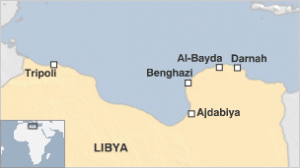
In early October, the Islamic Youth Shura Council announced that Darnah, Libya, had joined the Islamic State’s caliphate.  Alternatively referred to as Derna or Darna, 80,000 call the city home.  Sitting along the Mediterranean, Darnah has a “notorious” reputation as a center for the recruitment of fighters for the wars in Afghanistan, Iraq and Syria.  Two hundred miles to its east lies the Libyan border with Egypt, while Benghazi sits 180 miles to Darnah’s west.

Darnah, Libya

Relatively unknown, the Islamic Youth Shura Council (aka MSSI) is thought to have begun operations in March of this year under the banner of al-Qaeda.  The current rift between al-Qaeda and IS notwithstanding, the Islamic Youth Shura Council is now one of 20+ jihadi groups which have pledged their allegiance to IS.  With things moving so quickly and on-the-ground access for journalists often too risky, the affiliation between the two groups remains uncertain.

At the same time, Tripoli and Benghazi are purportedly under the control of Islamist groups as well, though those groups have no known affiliation with the Islamic Youth Shura Council.  In Tripoli, a federation of dubious unity, known as Fajr Libya, appears to be nominally in control, while in Benghazi multiple groups have also loosely aligned themselves, the largest of which is Ansar al-Shariah.  Against this backdrop of insecurity, Khalifa Haftara, an ex-Libyan general, now leads an interesting array of forces attempting to reassert government control.  He oversees Libyan military units, ostensibly under government control, along with assorted militiamen; loyal, it would seem, only to him.


Map Credit

Week in DC: Events

November 10, 2014

The U-2 Incident, Preserving Cold War History, and Honoring Cold War Veterans
Date: November 10, 5:00pm
Location: Institute of World Politics, 1521 16th Street NW, Washington DC

In this lecture, Francis Gary Powers, Jr., Founder and Chairman Emeritus of the Cold War Museum and son of the downed U-2 pilot Francis Gary Powers, will dispel common myths about the U-2 incident and discuss the importance of preserving Cold War history. This lecture will be in honor of the veterans of the Cold War.

Copies of Operation Overflight, written by pilot Francis Gary Powers, will be available for purchase at the event.

Register here.

Rethinking Seminar: Ambassador Gallucci on Impact and Implications of Iranian Nuclear Weapons on U.S. and Regional Security
Date: November 10, 6:00pm
Location: Marriott Residence Inn, Pentagon City, 550 Army Navy Drive, Arlington, VA

Ambassador Gallucci is currently the Distinguished Professor in the Practice of Diplomacy at Georgetown University’s School of Foreign Service where he served as dean for 13 years. He left in 2009, to become president of the John D. and Catherine T. MacArthur Foundation. Previously, he had 21 years of distinguished service in a variety of government positions, focusing on international security. As Ambassador-at-Large and Special Envoy for the U.S. Department of State, he dealt with the threats posed by the proliferation of ballistic missiles and weapons of mass destruction. Among other duties, he was chief U.S. negotiator during the North Korean nuclear crisis of 1994, and served as Assistant Secretary of State for Political Military Affairs and as Deputy Executive Chairman of the UN Special Commission overseeing the disarmament of Iraq following the first Gulf War. (Biography)

For the Rethinking Seminar, Ambassador Gallucci will discuss Iran and North Korea, their pursuit of nuclear weapons, as well as the current U.S. strategy to prevent nuclear proliferation. He will also share his thoughts on global zero, challenges to the paradigm, and the evolving thinking concerning the future role of nuclear weapons.

Register here.

Addressing Emerging Cyber Threats: A Discussion with Computer Scientist Dr. Costis Toregas
Date: November 10, 6:30pm
Location: Elliott School of International Affairs, 1957 E Street NW, Room B12, Washington DC

Join Delta Phi Epsilon: Professional Foreign Service Fraternity for a discussion with Dr. Costis Toregas, computer scientist and lead researcher at GW’s Cyber Security and Policy Research Institute.

Dr. Toregas will discuss cyber security issues and concerns, including:

  • the new framework for cyber security promulgated by the National Institute of Standards and Technology;
  • the concept of cyber insurance as a policy instrument to address cyber threats; and,
  • recent agreement signed between US and German government officials that will organize a long term, sustained program of academic exchanges, seminars and collaborative research.

This event is part of “International Affairs Week”, a week-long series of events hosted by GW’s various international affairs related student organizations.

Register here.

November 11, 2014

The EU-Ukraine Association Agreement and its Geopolitical Meaning
Date: November 11, 4:00pm
Location: GMU School for Conflict Analysis and Resolution, Metropolitan Building, Conference Room 5183, Arlington, VA

Often presented as being merely trade pacts, the Association Agreements that the EU has recently signed with Ukraine, Moldova, and Georgia have a large meaning for the history, politics, and structure or Europe. If duly and fully ratified as well as consistently implemented, they will bring these three countries into the economic and legal sphere of the EU, and prepare them for membership. Given the size, culture, and location of Ukraine, the Ukranian Association Agreement will have large repercussions for the entire post-Soviet region, in that it could become a model for other former states of the USSR. Moscow undoubtedly understood this and reacted accordingly.

Europe’s Lost Decade and Its Strategic Consequences
Date: November 11, 6:00pm
Location: Johns Hopkins School of Advanced International Studies, 1619 Massachusetts Ave NW, Rome 806, Washington DC

Thomas Wright is a fellow at the Brookings Institution in the Project on International Order and Strategy. Previously, he was executive director of studies at the Chicago Council on Global Affairs, a lecturer at the Harris School of Public Policy at the University of Chicago and senior researcher for the Princeton Project on National Security. Wright has a Ph.D. from Georgetown University, an M.Phil from Cambridge University and a B.A. and an M.A. from University College Dublin. He has also held a pre-doctoral fellowship at Harvard University’s Belfer Center for Science and International Affairs and a post-doctoral fellowship at Princeton University. Wright’s writings have appeared in the American Political Science Review, Orbis, Survival, The Washington Quarterly, Financial Times, International Herald Tribune, and the Washington Post, as well as a number of international newspapers and media outlets. His currents projects include the future of U.S. alliances and strategic partnerships, the geopolitical consequences of the euro crisis, U.S. relations with rising power and multilateral diplomacy.

Register here.

November 12, 2014

Chinese Foreign Policy: The Challenge for Beijing
Date: November 12, 11:00am
Location: Georgetown University, Edward B. Bunn, S.J. Intercultural Center, 302-P, 37th and O Streets NW, Washington DC

What are some of the most pressing issues in Chinese foreign policy today? In this presentation, Dr. Reardon-Anderson will review Chinese foreign policy decisions in the last few decades and discuss many new challenges faced by the government in Beijing, including the issues of Xinjiang, Tibet, island disputes, and energy.

Register here.

Cyber Warfare and Sino-American Crisis Instability
Date: November 12, 3:00pm
Location: International Institute for Strategic Studies-US, 2121 K Street NW, Suite 801, Washington DC

David Gompert and Martin Libicki will expand on the argument made in their recent piece in Survival: that while both Washington and Beijing recognize that an armed conflict between them will involve cyber warfare, there has been no systematic weighing of the tactical military advantages offered by cyber weapons against the strategic hazards they pose.

Register here.

Prospects for a Nuclear Agreement with Iran: A Discussion in Honor of Michael Adler
Date: November 12, 3:00pm
Location: Woodrow Wilson International Center for Scholars, 1300 Pennsylvania Ave NW, 6th Floor, Conference Room, Washington DC

The world’s major powers (the P5+1) and Iran have been negotiating since last January to convert an interim nuclear accord into a final agreement, and now face a November 24 deadline. As this critical date nears, please join us for this meeting to address the outcome of the negotiations—whether successful in yielding an agreement, extended to allow further negotiations, or at a point of breakdown. What are the implications for U.S. policy toward Iran moving forward, as well as for the broader global effort to forestall the proliferation of nuclear weapons? This event honors the late Michael Adler, distinguished journalist and Public Policy Scholar at the Wilson Center, whose illuminating work improved the quality of public discourse on this vital issue.

RSVP here.

The Ebola Crisis: U.S. Leadership and International Response
Date: November 12, 3:30pm
Location: Brookings Institution, Falk Auditorium, 1775 Massachusetts Ave NW, Washington DC

The deadly Ebola epidemic currently unfolding in the West African countries of Guinea, Liberia, and Sierra Leone is the most severe outbreak of the disease on record. The World Health Organization reports that more than 13,500 people have been diagnosed with the disease in those three African countries alone. Even as isolated cases emerge in the United States and Western Europe, the Ebola outbreak continues largely unchecked in West Africa, with the number of diagnosed cases increasing daily. The United States has responded to the Ebola crisis with the largest global health response in American history, providing immediate humanitarian assistance while also working to alleviate health, economic and social impacts of the outbreak in West Africa.

On Wednesday, November 12, the Brookings Institution will host a discussion on the current state of the Ebola crisis, featuring a conversation with USAID Administrator Rajiv Shah, who will detail his recent trip to West Africa and the U.S. response to the crisis. Brookings President Strobe Talbott will moderate the discussion. Administrator Shah will also discuss USAID’s new effort, “Fighting Ebola: A Grand Challenge for Development,” the agency’s effort to generate new ideas to fight Ebola.

The discussion with the administrator will be followed by a panel discussion with Brookings Senior Fellows Elizabeth Ferris, Amadou Sy, Michael O’Hanlon and Oscar Bloh, who is chairperson of the Civil Society Organization Ebola Response Taskforce in Liberia and the country director of Search for Common Ground Liberia. The panelists will outline the humanitarian, economic, political and security dimensions of the crisis.

Register here.

Perspectives from Pakistan’s Changemakers
Date: November 12, 4:00pm
Location: Atlantic Council, 1030 15th Street NW, 12th Floor, West Tower, Washington DC

Youth are considered the asset of a country. With about half of the population under the age of 24, the country possesses an immense resource that will determine the success of Pakistan’s young democracy and future. The Emerging Leaders of Pakistan (ELP) fellowship supports and empowers the next generation of Pakistan’s leaders by creating a sustainable forum of collaboration to strengthen their engagement and impact in their communities. This year’s contingent of fifteen dynamic civil society leaders, who were selected through a highly competitive process, embody Pakistan’s ethnic, religious, and geographic diversity. They are educators, entrepreneurs, journalists, social activists, social innovators, and community organizers who are working to solve some of Pakistan’s most pressing challenges. The fellowship provides the opportunity to collaborate with each other, address misperceptions, and glean best practices from people and organizations they meet to foster creative ideas and lessons to apply in Pakistan.

We invite the DC community to meet the 2014 fellows, hear about their experiences addressing Pakistan’s challenges, and discuss outstanding issues facing their communities and country.

Register here.

November 13, 2014

Supporting Democracy Abroad
Date: November 13, 9:00am
Location: Freedom House, 1301 Connecticut Ave NW, 4th Floor Conference Room, Washington DC

Please join us for the release of Freedom House’s study on “Supporting Democracy Abroad,” which provides qualitative ratings and in-depth analysis on the democracy assistance policies of 10 countries—Brazil, France, Germany, India, Indonesia, Japan, Poland, South Africa, Sweden, United States—and the European Union.

RSVP here.

Power or Promise: Do Online Health Campaigns Impact Offline Behavior?
Date: November 13, 12:00pm
Location: Carnegie Institution for Science, 1530 P Street NW, Washington DC

Twitter, Facebook and other digital platforms have forged a new frontier for public health campaigns, giving us many tools for promoting health communication initiatives that seek to encourage healthy lifestyles and move people to specific health behaviors. But how can we know if a digital campaign is actually affecting behavior?

The American Institutes for Research invites you to a conversation on how to evaluate digital communication’s impact on offline health behavior. What can such measures as page views, likes and other digital analytics tell us about online behavior, and how does that relate to offline behavior? Once people put their phones down and their laptops away, how can communicators know if Google ads, Twitter campaigns, Facebook memes or YouTube videos actually influence whether people cut down on sugar consumption, get tested for HIV or stop smoking? Our panelists will discuss these questions and share some groundbreaking private-sector work on understanding the relationship between digital communication and offline behavior.

Register here.

Combating the ISIS Threat: A Path Forward
Date: November 13, 12:30pm
Location: Elliott School of International Affairs, 1957 E Street NW, Lindner Family Commons, Room 602, Washington DC

Join GW’s Stephen Biddle and Marc Lynch for an in-depth discussion of the Obama administration’s current strategy toward the ISIS threat, the evolving security situation on the ground in Syria and Iraq, and next steps for regional and global stakeholders

RSVP here.

The Best of Times, the Worst of Times: Life in Biomedical Science
Date: November 13, 5:30pm
Location: Embassy of Canada, 501 Pennsylvania Ave NW, Washington DC

Fulbright Canada and the Embassy of Canada will host a public lecture by Dr. Shirley M. Tilghman. Dr. Tilghman is President Emeritus, Princeton University and will speak to the challenges facing the field of biomedical science.

The lecture is free and open to the public. Please RSVP to rsvp@fulbright.ca. Please include your name, title and affiliation.

November 14, 2014

Twenty Five Years Later: Memory Culture and Political Controversy over the Legacy of East Germany
Date: November 14, 10:00am
Location: Elliott School of International Affairs, 1957 E Street NW, Lindner Family Commons, Room 602, Washington DC

This symposium brings together two eye witnesses and two professors discussing East Germany, the Berlin Wall, and the East German secret police, the Stasi. In the morning, Mario Röllig (10:00 a.m. – 11:00 a.m.) will discuss life in East Germany, his failed escape attempt and subsequent imprisonment by the Stasi, and Ralph Kabisch (11:00 a.m. -12:00 p.m.) will share his experience of being part of a group of university students in West Berlin who built a tunnel under the Berlin Wall which helped 57 people escape from East Berlin. In the afternoon session, Prof. Mary Beth Stein (12:40 p.m. -1:20 p.m.) will present her research on controversies surrounding the legacy of the Stasi, and the efforts by its victims and by historians to remember and educate the public at one memorial museum in Berlin. Prof. Hope M. Harrison (1:20 p.m. – 2:00 p.m.), who will have just returned from Berlin as a participant in the official celebrations surrounding the 25th anniversary of the fall of the Berlin Wall, will discuss the evolution of Germany’s approach to the history and memory of the Berlin Wall since 1989.

RSVP here.

Ukraine’s Pivotal Parliamentary Poll
Date: November 14, 2:00pm
Location: National Democratic Institute, Dirksen Senate Office Building, Room 608, Washington DC

On October 26, Ukraine held early parliamentary elections that international observers—including the Organization for Security and Cooperation in Europe—assessed as largely positive, with the exception of the disenfranchisement of voters in Russian-occupied Crimea and southeastern Ukraine. The elections, which swept into power Ukraine’s most pro-Western parliament in history, represented a critical milestone in the country’s democratic evolution.

Experts from three major organizations with decades of on-the-ground experience in Ukraine will examine the conduct and results of the elections, as well as the potential for the newly elected parliament to confront the coming challenge of forging a democratic, secure, independent future for their strategically important country.

The following panelists are scheduled to participate:

  • Olha Aivazovska, Board Chair, Ukrainian citizen network OPORA
  • Katie Fox,  Deputy Director, Eurasia, National Democratic Institute
  • Stephen Nix, Director of Eurasia, International Republican Institute

Pandora Report 11.9.14

We’ve got some timely stories this week: just in time for Veteran’s Day, we look at military exposure to chemical agents in Iraq, and at the beginning of flu season we look at the newest suspension of Yoshihiro Kawaoka’s H5N1 research. We’ve also got an Ebola update.

Have a great week!

More Than 600 Reported Chemical Exposure in Iraq, Pentagon Acknowledges

With Veteran’s Day on Tuesday, The New York Times uncovered an unfortunate military oversight that could affect over 600 service members. Originally, NYT found 17 soldiers who had been exposed to abandoned, damaged, or degraded chemical weapons in Iraq. Later 25 more came forward, and after a review of Pentagon records, Defense Secretary Chuck Hagel has said that hundreds of troops told the military they were exposed. The Pentagon says it will now expand outreach to veterans who believe they may have been exposed.

The New York Times—“Phillip Carter, who leads veterans programs at the Center for a New American Security, called the Pentagon’s failure to organize and follow up on the information “a stunning oversight.” Paul Rieckhoff, founder and executive director of Iraq and Afghanistan Veterans of America, said the military must restore trust by sharing information.”

Kawaoka’s Controversial Flu Research at UW-Madison On Hold Again

Once again, Yoshihiro Kawaoka has halted his research of H5N1 at the University of Wisconsin-Madison. Kawaoka created an altered version of the H5N1 flu virus to look at transmissibility between mammals. On October 17, the Obama administration said they would postpone federal funding for gain-of-function studies, including those involving flu, SARS and MERS. Roughly 50% of Kawaoka’s work involves gain of function, and he paused all experiments that “might enhance pathogenicity or transmissibility.”

Wisconsin State Journal—“The White House announcement comes in response to incidents this year involving anthrax, flu and smallpox at the Centers for Disease Control and Prevention and the Food and Drug Administration. “The incidents occurring at federal facilities this summer have underscored the importance of laboratory safety, and they also prompted calls for a reassessment of the risks and benefits that are associated with research involving dangerous pathogens,” Samuel Stanley, chairman of the National Science Advisory Board for Biosecurity, said during a meeting of the group Oct. 22.”

This Week in Ebola

The Ebola ‘outbreak’ in Texas is over and MSF has confirmed the decline of cases in Liberia, however, Ebola cases have risen ‘sharply’ in Sierra Leone. While Kari Hickox remained in the news explaining the reasons she fought against quarantine, it appears, as feared, that mandatory quarantine for volunteers returning from West Africa is causing some to re-consider their commitments. Meanwhile the U.S. Army has identified five possible bases for returning troop quarantine and the Pentagon has awarded a $9.5 million contract Profectus BioSciences, Inc. for development of an Ebola vaccine. President Obama asked Congress for $6 billion to fight Ebola in the U.S. and West Africa. NBC News reported that “The U.S. is keen to be seen as leading the international response to Ebola” but there is another country in the Americas contributing to the fight—Cuba. Also in the Americas, Canada’s policy of denying visas for people coming from West Africa is called into question, and five American airports are learning a lot about infection control. Back in West Africa, Nigeria’s success in fighting Ebola has been attributed to their fight against polio. Lastly, on the heels of Mark Zuckerberg’s $25 million donation to fight Ebola, he launched a button at the top the newsfeed that links users to places where they can donate, too.

Stories You May Have Missed


Image Credit: NBC News

Biodefense Policy Seminar Wrap Up: Part 1

All Biodefense Policy Seminar events for Fall 2014 have concluded. Please enjoy a summary of the October 2014 event and join us for our Spring 2015 series. 

Carus and Caves

On Wednesday, October 22, Dr. W. Seth Carus and John P. Caves, both of the National Defense University, were speakers at the George Mason University Biodefense Policy Seminar on the topic of “The Future of Weapon of Mass Destruction in 2030.” Based on their 2014 paper of the same name, Carus and Caves investigate the possible nature and roles that WMD may play sixteen years from now.

In 2030, Carus and Caves argue, nuclear weapons may play an even larger role than they currently do. They anticipate that more states—for example, Japan and South Korea—could develop a nuclear arsenal in order to safeguard their own security. Proliferation isn’t the only threat that nuclear weapon pose, however. Carus and Caves also highlighted the potential for governments to lose physical control over existing weapons.

Furthermore, they said that the absence of current WMD terrorism is caused more by a lack of intent rather than lack of ability. Regarding chemical and biological weapons, Carus and Caves argue that these weapons could be more attractive in 2030 if the weapons have perceived military value, though they offer very little deterrent value.

In terms of U.S. policy, the speakers said that the United States should respond strongly to violations of WMD norms to deter proliferation. They also warned that if U.S. allies doubt the security guarantees of the United States, they may see developing their own weapons as the only surefire way to protect themselves in a multipolar world. Therefore, the United States needs to reinforce the strength of its security guarantees to prevent weapons proliferation among its allies.

So, should we be worried? Carus and Caves said that there will be a greater scope for WMD terrorism in 2030 thanks to new dual-use technologies that could make it easier to assemble, acquire, and deploy chemical or biological weapons. Moreover, the definition of WMD could change by 2030, beyond the traditional CBRN group, to include nanotechnology or cyber warfare. Overall, the speakers said that WMD in 2030 is likely to present a high consequence, low probability threat, but the danger of wider proliferation and increased use is still very real.

Characterization of Turkey Pox

By Jonathon Marioneaux

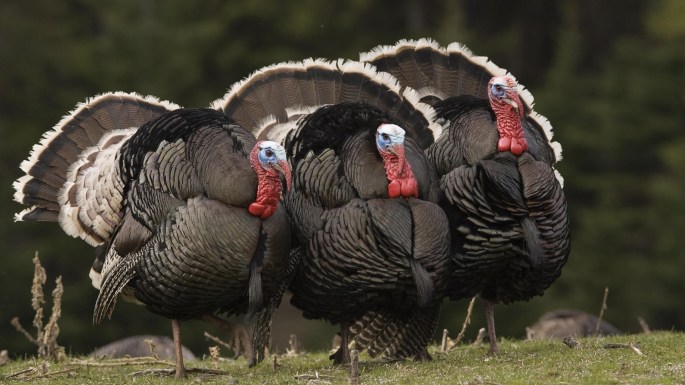
This week we start a new series of articles about the diseases of birds. We will start with viruses and then progress to bacterial and fungal later in the month.   In celebration of the next major holiday, we will cover turkeys and the threats to both our feathered friends and to their handlers.  To begin our series will look at fowl pox, more specifically turkey pox.  We begin with a short characterization of the virus, how it works in hosts, and the general routes of transmission.  Then we progress to a short case study of turkey pox in Europe where it is becoming an endemic problem among breeders.  Finally, we wrap up with a discussion of how our feathered friends help us in the wild (and on the plate.)


Pox viruses belong to two major families—Chordopoxvirinae, which infects vertebrates including mammals and birds, and Entomopoxvirinae, which infects invertebrates including beetles, butterflies, and flies.   Both of these families share similar characteristics including large genomes, early RNA’s made in the virion core, and an internal envelope formed de novo, not during budding.  Mature particles of Chordopoxvirinae attach to the target cell membrane glycosaminoglycans during the first uncoating stage and release enzymes ready to begin DNA replication (Acheson, 2011).

Pox viruses are unlike many other viruses because they replicate solely in the cytoplasm and therefore they must carry all of the genes coding for DNA replication proteins with them.  These early genes code for proteins that break down the viral core and expose intermediate genes that code for DNA replication.  As theses intermediate genes are activated by compound promoters they produce intermediate mRNA which code for intermediate proteins.  These intermediate RNA’s are unique because they have 5’ terminal poly(A)heads added, facilitated by a TAAA sequence, which allows for a slippage mechanism adding the AAA head (Acheson, 2011).  These proteins are created in viral factories and set the stage for late gene activation.  The late genes code for structural proteins used in the encapsulation process.  The process includes the packaging of completed DNA (incomplete viruses) and enzymes (mature viruses); the final step is dependent on the infection route of the virus.

If the host cell ruptures before the virus escapes then it is left with an extra protein layer and is called an extracellular virus, which can infect cells easier.  If the virus is able to escape the cell then it sheds its protein shell during the budding process and is left with only its envelope. One difference between these viruses is their stability in the external host environment.  These enveloped viruses are extremely stable in the environment and are found in the scabs and mucus of infected individuals (Acheson, 2011).  Poxviruses have several means to evade host immune systems including TNF-binding proteins and soluble IFN-γ proteins which diminish inflammatory cytokine activity.  Finally, the general routes of transmission include contact with abraded epithelium of mucosal membranes or skin and physical inoculation of epithelial tissues either by pecking or blood feeding arthropods (Kindt et al, 2007).


In 2010 a turkey farm in Austria experienced an outbreak of fowl pox in the cutaneous form (Hess et al, 2011).  The farm had 11,680 birds spread over six flocks in stages ranging from polts to mature birds.  The effect on the birds included “nodular red-brown wart-like growth” and encrusted lesions on the head and neck region.  Samples were taken a plated on Columbia agar, McConkey agar, Schaedler agar, and Sabouraud-gentamicinchloramphenicol agar and included at 37 ͦC in aerobic conditions. Other tissue samples were used to isolate the virus using pathogen-free-Gallus gallus domesticus embryos.  PCR DNA replication was performed by using tissue samples and fowl pox base pairs were isolated by gel electrophoresis.  These isolates were reconstituted and sequenced with the original fragments and compared to the GenBank database using BlastN algorithm.

The results included antibiotic Staphylococcus aureus which is common on most skin surfaces but can become problematic when entered into the blood stream.  The tissue isolates showed hyperplasia and hypertrophy as well as distended eosinophilic inclusion suggestive of excessive dissolved lipids.  The GenBank search yielded 100% matches to avipox-AY530304 and turkeypox-DQ873808.  Interestingly no lesions were reported on internal organs, however, no septicemia test was done so a blood infection could not be excluded.

In contrast to other outbreaks the morbidity rate was very low due to a lack of perceived aggressiveness among the birds.  It was noted that a large number of flies were observed in heavy litter suggesting an initial route of exposure and a persistent route of infection to other individuals (Hess et al, 2011.)  Both flies and mosquitoes are known transmitters of fowlpox (Larson et al, 2007).

In conclusion, there are many types of fowl pox ranging from pigeons and turkeys to ducks and chickens however it is generally assumed that the pox viruses that effect each are unique to that species.  These pox viruses have commonalities among birds and generally affect the non-feathered regions of the neck, feet, and head.   In many cases the disease is spread by pecking/scratching or by blood feeding arthropods and covers most of the southeastern part of the USA. In general, wild turkeys are less affected by the virus than domesticated turkeys, however that could be in part due to a lack of recorded data and the predation of sick individuals (Davidson and Doster).

No need to worry, though, as all farm raised stocks are vetted by the USDA and are disease free so the risk of contracting fowl pox by eating a farm raised turkey is very slim. So this Thanksgiving eat lots of turkey and remember the complex interactions that happened to get it to your plate.


Image Credit


Acheson, N. (2011). Poxviruses. In Fundamentals of Molecular Virology (2nd ed., pp. 312-323). Hoboken: John Wiley & Sons.

Davidson, W., & Doster, G. (n.d.). Avian Pox – A disease that can affect any bird. NWTF Wildlife Bulletin, 24:1-24:4.

Hess, C., Maegdefrau-Pollan, B., Bilic, I., Liebhart, D., Richter, S., Mitsch, P., & Hess, M. (2011). Outbreak of Cutaneous Form of Poxvirus on a Commercial Turkey Farm Caused by the Species Fowlpox. Avian Diseases, 714-718.

Kindt, T., Goldsby, R., & Osborne, B. (2007). Immune Effector Mechanisms. In Kuby Immunology (6th ed., p. 314). New York: W. H. Freeman and Company.

Larson, C., Beranger, J., Bender, M., & Schrider, D. (2007). Common Diseases and Ailments of Turkeys and Their Management. In How to Riase Hertigae Turkeys on Pasture (pp. 35-52). American Livestoock Breeds Conservancy.


Image (Video) of the Day: Zombie Modeling!

For those Geographical Information Science (GIS) and Agent-Based Modeling (ABM) wonks out there, you might appreciate Dr. Andrew Crooks’ simple agent-based model of zombie attack.
Dr. Crooks, an Assistant Professor in the Department of Computational Social Science and a researcher in the Center for Social Complexity at George Mason University‘s Krasnow Institute for Advanced Study, explains this model:

At each time step, a human moves to a nearby unoccupied space, and a zombie moves to the nearest human. If a zombie and an uninoculated human occupy the same space, a fierce battle ensues, in which the probability that the human will kill the zombie is pkH-z, and the probability that the zombie kills the human and converts them to their horrific undead form is pkZ-h. 

Zombies, however, are not attracted to inoculated humans and ignore them. If recovery? is enabled, then there is a chance (given by recoveryRate) that a zombified person will see the errors of their cannibalistic ways and return to human form. All these factors working together provide some interesting population dynamics, illustrated by the “Totals” population count plot on the screen. 
Enjoy!

Islamic State Goes Old School

By Erik Goepner

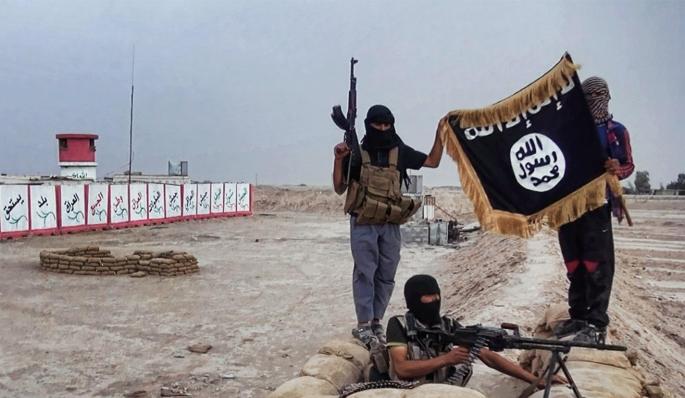
Recent reports suggest that IS has employed chlorine as a weapon.  Though currently unconfirmed, these reports suggest that IS is looking to bolster its inventory of tactics, techniques and procedures. In so doing, they’ve gone old school.

IS’ first use of chlorine as a weapon may have been in September against Iraqi security forces and Shiite militias north of Baghdad.  Reports indicate the chlorine was delivered via bombs.  No one died, but approximately 40 reported difficulty breathing and heavy coughing.  One source said IS had taken the chlorine from purification plants overtaken during their advance.

Additional reports suggest that IS employed toxic gas in Kobani on October 21. Patients reportedly sought medical care for trouble breathing, burning eyes, and blisters.  A doctor on-scene ruled out chlorine as the cause, while assessing the injuries as consistent with exposure to an as-of-yet unidentified chemical.  The Guardian noted, however, there was no consensus or confidence from experts regarding potential causes of these injuries.

Five days later, an Iraqi military commander said seven chlorine filled projectiles were fired into a residential area of Anbar province, though no casualties were reported.

According to the Organization for the Prohibition of Chemical Weapons (OPCW), though, this is not new.  The implementing body of the Chemical Weapons Convention reported chlorine was already used “systematically and repeatedly” in northern Syrian villages earlier this year.  Western government officials assert Assad’s forces had employed the chlorine, though it is unclear if other groups may also have been responsible.

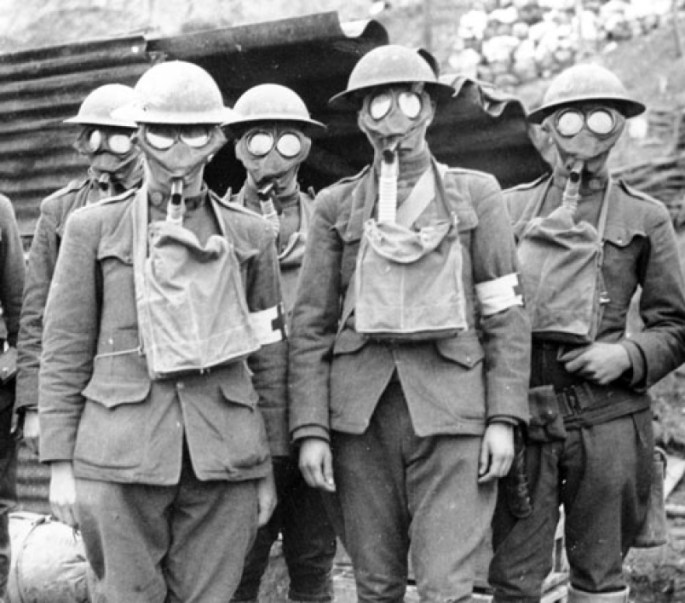
Historically, perhaps the most heinous and deadly precedent for chlorine-as-weapon comes from World War I, when the Germans dispersed 168 tons of chlorine during the Second Battle of Ypres in Belgium.   Approximately half of the 10,000 allied soldiers in the affected area died.  Two days later, chlorine was again used, killing an additional 1,000 Allied service members.

What might the future hold?  The Nuclear Threat Initiative, writing in 2007 about chemical weapon fears in Iraq, noted that the worst industrial accident in history was the release of 40 metric tons of methyl isocyanate at a pesticide plant in Bhopal, India.  3,000 were killed and more than 100,000 were injured.  The author concluded that a “sufficiently large release of elemental chlorine may be capable of exacting a comparable toll, particularly if discharged in a highly populated civilian area.”  However, the author also noted chlorine is typically ineffective against a “prepared adversary” because its visible color and potent odor announce its arrival and the effects of chlorine can be mitigated with “simple countermeasures,” such as gas masks or wet cloths placed across the nose and mouth.

Image Credit: Stripes

Week in DC: Events

November 3, 2014

Kurdistan: From Pawn to Player
Date: November 3, 10:00am
Location: Johns Hopkins School of Advanced International Studies, Rome Auditorium, 1619 Massachusetts Ave NW, Washington DC 20036

Minister Falah Mustafa Bakir was appointed as the first Head of the Kurdistan Regional Government (KRG) Department of Foreign Relations in September 2006, tasked with administering KRG foreign policy and bolstering the Region’s relations with the international community for the government’s fifth cabinet. He was reappointed as the Head of the Department in each successive cabinet, including most recently the eighth cabinet in June 2014. Minister Bakir’s vision, dedication, and passion to serve the people and the government of Kurdistan have paved the way for a successful Department and rapidly expanding relations between the KRG and foreign governments.

The Minister previously served as the KRG’s liaison officer to the Coalition Provisional Authority in 2003 and to the Multi-National Forces’ Korean Contingent stationed in Erbil in 2004. He was a Senior Adviser to the KRG Prime Ministerfrom 2002 until 2004, when he was appointed Minister of State. Earlier in his career, Minister Bakir was the KRG Deputy Minister of Agriculture & Irrigation, from 1999 to 2002. Prior to that, he served as the Kurdistan Democratic Party (KDP) Public Relations Officer from 1996 to 1999. Minister Bakir joined the KDP’s International Relations/Public Relations office in 1991. The Minister regularly represents Kurdistan at regional and international events and conferences, and actively promotes political and economic ties with diplomats and businesspeople around the world.

At the same time, Minister Bakir promotes and encourages cultural and educational exchange programs, scholarships, and capacity-building programs designed to benefit Kurdistan’s youth. He regularly provides insight and analysis about the Kurdistan Region and its policies to journalists, researchers, think tanks, and postgraduate students. Minister Bakir obtained his undergraduate degree at the University of Mosul, his graduate degree in Development Studies at the University of Bath in the United Kingdom, and a senior manager’s executive program certificate at Harvard University’s Kennedy School of Government.

Register here.

From Hizbullah to the Islamic State
Date: November 3, 3:00pm
Location: Carnegie Endowment for International Peace, 1779 Massachusetts Ave NW, Washington DC 20036

From humble beginnings in the 1980s, Hizbullah’s political clout and public perception have trended upward, thanks to a communications strategy that has adapted to changes in the local and regional environment. Join Carnegie  for a discussion of the recently released book, The Hizbullah Phenomenon: Politics and Communication by Lina Khatib, Dina Matar, and Atef Alshaer. Carnegie Middle East Center Director Khatib will join Carnegie’s Joseph Bahout to discuss  how Hizbullah’s strategic communication has influenced other Islamist movements in the region, including the Islamic State. Carnegie’s Frederic Wehrey will moderate.

Register here.

Combating the Spread of Ebola: The U.S. Aid Effort in Liberia
Date: November 3, 6:00pm
Location: Women’s Foreign Policy Group, 1307 L Street NW, Washington DC

Helene Cooper is a Pentagon correspondent with The New York Times. She has just returned from a two-week assignment covering the Ebola outbreak in Liberia. Prior to her assignment at the Pentagon, Cooper covered the White House, was The Times’s diplomatic correspondent, and served as an assistant editorial page editor.

Cooper has reported from 64 countries, from Pakistan to the Congo. Prior to joining The Times, she worked for 12 years at the Wall Street Journal, where she served as a foreign correspondent, reporter, and editor. Born in Monrovia, Liberia, Cooper is the author of the New York Times best seller “The House at Sugar Beach: In Search of a Lost African Childhood”. She has appeared on Meet the Press, Washington Week, The Tavis Smiley Show, The Chris Matthews Show, and This Week, as well as twice as a clue on Jeopardy. She has received numerous award including: a Raymond Clapper award, Sandy Hume award, National Association of Black Journalists award, and an Urbino Press Award.

Elisabeth Bumiller (moderator) is deputy Washington bureau chief of The New York Times, where she oversees White House and domestic policy reporting. She was a Times Pentagon correspondent from 2008 to early 2013, a period when she traveled frequently with the Secretary of Defense and embedded with the American military in Afghanistan. Bumiller previously served as White House correspondent, political reporter and City Hall bureau chief for The New York Times. She also worked for The Washington Post in Washington, New Delhi, Tokyo and New York. In 2006 and 2007, Bumiller was a public policy scholar at the Woodrow Wilson Center and a Transatlantic Fellow at the German Marshall Fund. She has published three books, the most recent of which was Condoleezza Rice: An American Life. She serves on the WFPG Board of Directors.

Purchase tickets here.

November 4, 2014

Challenges and Opportunities in the Fight Against Drug-Resistant Tuberculosis: Lessons from the IOM Workshops
Date: November 4, 12:00pm
Location: Center for Global Development, 2055 L Street NW, Fifth Floor, Washington DC 20036

The increasing burden of drug-resistant tuberculosis introduces new challenges to traditional TB control and treatment programs, and calls upon the global health community to collaborate in new and different ways. From 2008 to 2013, the Institute of Medicine (IOM) convened six public workshops on the science and policy surrounding drug-resistant tuberculosis. The issues discussed ranged from biology, epidemiology, and surveillance to diagnosis, treatment, and infection control as well as the drug supply chain and needs of vulnerable populations. Dr. Gail Cassell, chair of the planning committee convening the IOM workshops, will present the themes, challenges, and opportunities emerging from the IOM initiative and discuss potential global actions and next steps to combat DR TB.

Register here.

The Challenges of Chemical Weapons Proliferation and Use
Date: November 4, 12:30pm
Location: The Stimson Center, 1111 19th Street NW, 12th Floor, Washington DC

During the Stimson Center’s 25th anniversary year, we are convening events to celebrate accomplishments and to consider hard work that lies ahead.  One source of pride is Stimson’s involvement in the issues surrounding the negotiation and ratification of the Chemical Weapons Convention.  The Organization for the Prohibition of Chemical Weapons is now 17 years old and the recipient of the 2013 Nobel Peace Prize “for its extensive efforts to eliminate chemical weapons”.  The OPCW, the United States and other member states explored new territory with the Syrian demilitarization effort, and are still digesting lessons learned. The Syrian government continues to use chemical weapons, and there are other outliers from the CWC and its obligations. Even so, the CWC has helped to strengthen norms against the use of chemical weapons. Please join us for a panel discussion on chemical weapons proliferation, norm-building, and the challenges ahead.

RSVP here.

Ukraine: The Way Forward
Date: November 4, 7:00pm
Location: GMU School for Conflict Analysis & Resolution, Arlington Campus, Metropolitan Building, Room 5183

The Ambassador will discuss current situation in Ukraine. He will also analyze the prospects for political, social, and economic development in Ukraine and for strengthening of Ukraine-US strategic partnership.

RSVP here.

November 5, 2014

Cyber Risk Wednesday: NATO’s Cyber Defense Mission and Capabilities
Date: November 5, 9:00am
Location: Atlantic Council, 1030 15th Street NW, 12th Floor, West Tower, Washington DC

The moderated panel discussion will analyze the new enhanced NATO Policy on Cyber Defense endorsed at the recent NATO summit in Wales, the cyber challenges facing the alliance and member states, and confidence-building measures in cyberspace. The event will also accompany the release of two publications: NATO’s Cyber Capabilities: Yesterday, Today, and Tomorrow analyzing NATO’s past, present, and future cyber organizations and capabilities and Confidence-Building Measures in Cyberspace: A Multi stakeholder Approach for Stability and Security –  the culmination of a NATO-funded effort to explore new approaches to cyber confidence building measures.

Register here.

The United States, Russia and ISIS
Date: November 5, 2:00pm
Location: Center on Global Interests, 1050 Connecticut Ave NW, 10th Floor, Washington DC

One year after planned U.S. strikes in Syria were sidelined by an unexpected proposal from Russia, the United States faces a new challenge in the region in the spread of the Islamic State. But while Russia is concerned about ISIS, it has expressed no intention to join the U.S.-led coalition and condemned any strikes without international approval. Amid U.S. sanctions and the ongoing conflict in Ukraine, can Washington and Moscow resuscitate their relationship by addressing the ISIS threat? More importantly—should they?

Please join Michael Kofman of the Kennan Institute and John C.K. Daly of the Jamestown Foundation for a discussion on U.S.-Russian differences in perception about ISIS, the consequences of the U.S. military campaign, and possible opportunities for U.S.-Russian counter terrorism cooperation on the issue. They will also explore the likelihood of a broader effort between the two countries to maintain stability in the Middle East following the U.S. pullout from Afghanistan at the end of 2014. CGI Program Director Konstantin Avramov will moderate the discussion. A Q&A with the audience will follow.

RSVP here.

Iran’s Strategic Penetration of Latin America
Date: November 5, 4:30pm
Location: Institute of World Politics, 1521 16th Street NW, Washington DC

In recent years, significant attention has focused upon the Islamic Republic of Iran’s nuclear ambitions, and the threat they pose to the United States and the West. Far less well understood, however, has been the phenomenon of Iran’s regional advance in America’s own hemisphere-an intrusion that has both foreign policy and national security implications for the United States and its allies. In this collection, noted specialists and regional experts examine the various facets of Iran’s contemporary presence in Central and South America, and detail what the Islamic Republic’s growing geopolitical footprint south of the U.S. border signifies, both for Iran and for the United States.

Register here.

Pathway to Civilian Medical Countermeasure Requirement Setting and Utilization
Date: November 5, 2014, 7:30pm
Location: George Mason University, Research Hall 163, Fairfax, VA

Richard I. Jaffe, M.S., Ph.D., MT(ASCP), Director, Medical Countermeasures, Strategy, & Requirements , Office of the Assistant Secretary for Preparedness and Response , U.S. Department of Health and Human Services (HHS), will discuss Civilian Medical Countermeasures as part of the George Mason Biodefense program’s Biodefense Policy Seminar series.

November 6, 2014

The Islamic State and Beyond: U.S. Military Strategy in the Middle East
Date: November 6, 11:00am
Location: Atlantic Council, 1030 15th Street NW, 12th Floor, West Tower, Washington DC

Please join the Atlantic Council’s Brent Scowcroft Center on International Security for a Commanders Series event with General Lloyd J. Austin III, commander of US Central Command, to discuss the US-led coalition campaign against the Islamic State and the broader role the US military will play in the Middle East in the coming years.

As one of the first military leaders into Iraq in 2003, General Austin has over a decade of first-hand, on-the-ground experience in the challenging operating environment of the Middle East theater. Often called a “soldier’s soldier,” General Austin currently leads Central Command which oversees US operations and military relationships with countries stretching from Afghanistan and Pakistan to the Central Asian nations to Iraq, Iran, Syria, Lebanon, Yemen, the UAE, and Egypt. Today, one of CENTCOM’s highest priorities is Operation Inherent Resolve against the Islamic State and how the US-led coalition can “degrade and destroy” the terrorist group. GEN Austin will discuss how the anti-Islamic State effort is progressing in Iraq and Syria, as well as the future of US military engagement in the Middle East.

Register here or watch online.

Lessons from the Latest War: What the Future Holds for the Israeli-Islamist Conflict
Date: November 6, 12:00pm
Location: Georgetown University, 37th and O Street NW, Copley Formal Lounge, Copley Hall, Washington DC

Dr. Rafael Frankel (Georgetown University) will present as part of the Program for Jewish Civilization’s fall lecture series.

RSVP requested. A light lunch will be served.

Afghanistan in Transition
Date: November 6, 12:00pm
Location: Johns Hopkins School of Advanced International Studies, Nitze Building, Kenney Herter Auditorium, 1740 Massachusetts Ave NW, Washington DC

Daniel F. Feldman is the Special Representative for Afghanistan and Pakistan (SRAP). He has served in the S/SRAP office since its creation in 2009, first as deputy and then as principal deputy to Ambassadors Richard Holbrooke, Marc Grossman, and James Dobbins. He has been deeply engaged in all aspects of U.S. policy formulation and implementation for both countries, including overseeing political transition issues, economic growth initiatives, regional integration efforts, international engagement with key partners, strategic communications, and Congressional outreach. For his service in the S/SRAP office, he was awarded the Secretary’s Distinguished Honor Award by Secretary Clinton.

Before reentering government, he was a law partner and co-chair of the international Corporate Social Responsibility group at Foley Hoag LLP, the only such legal practice in the U.S. His previous government experience includes serving as Director of Multilateral and Humanitarian Affairs at the National Security Council in the Clinton Administration, and as Counsel and Communications Adviser to the U.S. Senate Homeland Security and Governmental Affairs Committee.

He was Senior Foreign Policy and National Security Advisor to the Kerry presidential campaign in 2004, communications advisor and recount attorney for the Gore campaign in 2000, and a senior campaign advisor to Senator Mark Warner. He helped to found, and subsequently served on the board of, the National Security Network, and is a life member of the Council on Foreign Relations. He has been appointed a White House Fellow and a Henry Luce Scholar, and was a law clerk on the U.S. Court of Appeals for the Ninth Circuit and on the South African Supreme (Constitutional) Court. He is a graduate of Tufts University, Columbia Law School, and Princeton University’s Woodrow Wilson School.

Register here.

Pakistan’s Role in Afghanistan’s Transition
Date: November 6, 3:30pm
Location: Carnegie Endowment for International Peace, 1779 Massachusetts Ave NW, Washington DC

As the deadline for withdrawal of U.S. troops in Afghanistan approaches, Afghanistan’s neighbors will have a greater impact on shaping the country’s uncertain future. Samina Ahmed and Mark L. Schneider will discuss the transition with a particular focus on Pakistan’s role. They will look at civil-military divisions over Pakistan’s Afghanistan policy, assess the impact of cross-border militancy on Afghanistan’s stabilization, and discuss the implications of Pakistan’s involvement in a potential negotiation process between the Ashraf Ghani Ahmadzai government and the Taliban. Carnegie’s Frederic Grare will moderate.

Register here. 

Elections Under Crisis: Evaluating Ukraine’s Parliamentary Vote
Date: November 6, 4:00pm
Location: Elliot School of International Affairs, 1957 E Street NW, Suite 412, Voesar Conference Room, Washington DC

Ukraine’s October 26 parliamentary elections were held under extraordinarily challenging conditions. The on-going fighting in the Donetsk and Luhansk regions made it impossible for several of the precincts to vote. This presentation will address the capabilities of the Ukrainian state to hold elections. It will also assess the implications of the election outcomes for Ukraine’s future political and economic development.

RSVP here.

A Look at the Ebola Crisis (Searching for Solutions to the Ebola Epidemic)
Date: November 6, 4:30pm
Location: Johns Hopkins School of Advanced International Studies, 1717 Massachusetts Ave NW, Washington DC

A SAIS Africa Association discussion with Gilbert Burnham, co-director, Johns Hopkins Center for Refugee and Disaster Response. Open to the public and media.

For information or to RSVP, email africa.sais@gmail.com 

November 7, 2014

Pursuing Freedom and Democracy: Lessons from the Fall of the Berlin Wall
Date: November 7, 10:30am
Location: Heritage Foundation, Lehrman Auditorium, 214 Massachusetts Ave NE, Washington DC

On November 9, 1989, the Berlin Wall fell. Two years later, the Soviet Union collapsed and the Cold War came to an end. At stake during this war, which encompassed almost every nation, was whether the world would be dominated by the forces of totalitarianism led by the Soviet Union or inspired by the principles of economic, political, and religious freedom championed by the United States.

To commemorate the 25th anniversary of the fall of the Berlin Wall, our panel will discuss some of the lasting lessons of the Cold War. Do the ideas undergirding a regime matter? Does leadership matter or is history essentially determined by forces beyond our control? Are strength and resolve the dominant factors in crafting a national strategy, or does a prudent foreign policy guided by our founding principles of liberty and justice offer the best path for America?

Register here.

THIS WEDNESDAY: November Biodefense Policy Seminar

Title: Pathway to Civilian Medical Countermeasure (MCM) Requirement Setting and Utilization
Speaker: Richard I. Jaffe, M.S., Ph.D., MT(ASCP), Director, Medical Countermeasures, Strategy, & Requirements , Office of the Assistant Secretary for Preparedness and Response , U.S. Department of Health and Human Services (HHS)
Date: Wednesday, November 5, 2014
Time: 7:30 – 9:00pm; food will be served at 7:00pm
Location: Research Hall 163, George Mason University, Fairfax, VA
Dr. Richard Jaffe is an internationally recognized subject matter expert in the field of chemical, biological, radiological and nuclear defense issues with almost 30 years of technical and operational experience in government, academia, military, and industry.

Dr. Jaffe was the scientific lead for the Federal Bureau of Investigation’s AMERITHRAX case in 2001-2003 while working at Commonwealth Biotechnologies, Inc. in Richmond VA. There he led a scientific team that developed the molecular assays that provided the FBI the crucial scientific evidence to proceed in their investigation. From 2006-2012, as the Senior Medical Advisor to the Office of the Assistant Secretary of Defense for Nuclear and Chemical and Biological Defense/Chemical and Biological Defense Programs at the Pentagon, he helped lead, guide, and integrate the Department of Defense’s (DoD) policies in areas such as medical countermeasures (MCM), diagnostics, public health, and biosurveillance.

Dr. Jaffe is currently the Director of the Division of Medical Countermeasures, Strategy, and Requirements in the Office for Policy and Planning, Office of the Assistant Secretary for Preparedness and Response at HHS. The Division leads the efforts to develop policy initiatives, planning and analysis, activities for storage, dispensing, administration, etc., and requirements for MCM that help protect the U.S. civilian population during public health emergencies.

Dr. Jaffe received a Ph.D. in Microbiology and Immunology from Medical College of Virginia, a M.S. in Human Genetics from George Washington University, and a B.S. in Microbiology from the University of Maryland. He is a board certified Medical Technologist and served honorably in the United States Air Force before separating at the rank of Major.

Pandora Report 11.2.14

For this edition of the Pandora Report we look at Jonas Salk, avian influenza in China, TB and diabetes as a co-epidemic, and, of course, an Ebola update. As the weather is turning cooler, don’t forget to get your flu shot, and remember to protect yourself by washing your hands!

Have a great week!

On Jonas Salk’s 100th Birthday, A Celebration of his Polio Vaccine

If you visited Google.com on Tuesday you may have seen one of their famous doodles dedicated to Jonas Salk. Salk’s polo vaccine was declared safe and effective in 1955 and was, interestingly enough, never patented. “The notion handed down to us is that Salk decided not to patent the vaccine as a noble act of self-abnegation.”

The Los Angeles Times—“But the more important reason the vaccine went unpatented, as related by David M. Oshinsky in his 2005 book, “Polio: An American Story,” is that legally it was thought to be unpatentable. The National Foundation and the University of Pittsburgh, where much of the work was done, had looked into patenting the vaccine. They were dissuaded by Salk, who informed them that his techniques weren’t novel and his work had been based on years of prior work by others.”

Five Strains of H5 Avian Flu Reported Across China 

The Chinese veterinary authority reported outbreaks of five different subtypes of Highly Pathogenic Avian Influenza (HPAI) to the World Organization of Animal Health (OIE) on October 24. There were a total of 51 positive findings of the following strains; H5N3, H5N8, H5N2, H5N6, and H5N1. A map of all strain outbreaks is available here.

CIDRAP—“Two of the strains—H5N8 and H5N3—have not been reported by China to the OIE before. Two outbreaks of the former were reported in September, each involving one bird (a duck and an unspecified bird) sampled during a national surveillance plan. One was at a slaughterhouse and the other in a wetland area; both were in Liaoning province in the northeast.”

Unlikely Marriage of Diseases: TB and Diabetes Form a ‘Co-Epidemic’

A white paper presented on Wednesday at the 45th Union World Conference on Lung Health in Barcelona, Spain, warns, “diabetes is fueling the spread of TB.” The paper warns that having diabetes increases the risk that a person will become sick with TB will make TB more difficult to manage, adding that a patient with both diseases is more likely to have complications that do not exist when only one disease is present.

NPR—“The TB/diabetes double-whammy has at least two important differences from the TB/HIV co-epidemic. [1.] It involves the interaction of an infectious disease (TB is the world’s second-deadliest, next to HIV/AIDS) and a non-communicable chronic disease, rather than two infections. [2.] It has potentially more global impact. The TB/HIV co-epidemic was concentrated in sub-Saharan Africa, where 18 countries saw TB rates quadruple because of HIV. Many more countries have high rates of TB and, increasingly, of diabetes.”

This Week in Ebola

Not sure if it was because of Halloween or what, but it seemed to me there were fewer Ebola stories this week. Dallas nurse Amber Vinson, was finally released from Emory Hospital, free of the Ebola virus. Many other stories this week focused on quarantine. Kaci Hickox, the nurse who worked treating patients in Sierra Leone, first protested over her isolation in New Jersey, and then broke her quarantine in Maine, was reportedly ‘humbled’ when a judge in her home state of Maine ruled she can come and go as she pleases. She was still in this news this weekend as it was reported that her roommate in Africa tested positive for Ebola and there was a skit about her on SNL. President Obama has said that quarantines may dissuade doctors and nurses from traveling to West Africa, while Secretary of Defense Chuck Hagel has said that U.S. military personnel returning from West Africa will be subject to a 21-day quarantine. The WHO reported that Ebola infections are slowing in Liberia, and the New England Journal of Medicine says they have a suspect zero for this whole outbreak.

Stories You May Have Missed


Image Credit: Google