Pandora Report 10.13.2017

What could be spookier than a Friday, 13th, in October? Actually, a few things – antimicrobial resistance, biological weapons, plague in Madagascar…..

The Trump Administration’s Misaligned Approach to National Biodefense
This recent publication from Reid Kirby is casting light upon the calamitous state of current and future U.S. biodefense efforts. Kirby points to several factors that will ultimately impact the new administration’s ability to create a new national biodefense strategy – the dysfunction rampant throughout the White House, the anti-science culture that continues to bubble up, a general inability to appoint fill key positions in a timely manner, and the disparage between the Trump administration’s ability to strategize and execute effective actions. “Again, how is the Trump administration doing so far in national biodefense? To answer this question, it is helpful to think in terms of ways, means, and ends – where the “ends” amount to security itself, the “ways” are formation of strategy, and the “means” are execution of strategy. What is concerning about the Trump administration is that the ways and means through which it pursues biodefense policy are fundamentally mismatched with the execution of meaningful biodefense ends.” Kirby highlights these failures through several examples, like the administration’s continued disrespect for science, whether it be climate change or nuclear energy. The administration’s resistance against government-sponsored research (and science in general), is in direct opposition to what a new biodefense strategy will need. “The Trump administration’s worldview, and its inability to distinguish between defense and security, may well be incompatible with a biodefense strategy. Biodefense is a scientific and technological endeavor.” Kirby states that “the administration has expressed a desire to formulate a comprehensive biodefense strategy, but the ways and means it is marshalling are not in alignment with achieving that goal. The future of US biodefense is at significant risk.

North Korea’s Biological Weapons Program – The Known and Unknown
The Harvard Kennedy School’s Belfer Center has just released a new report on North Korea’s biological weapons program. There’s been significant attention recently on their nuclear program however, there is still speculation regarding the real capacity for a biological weapons program. Bioweapon programs are always challenging to determine from the outside – so much of the equipment has dual-use capacity that makes external monitoring inaccurate at best. The new report utilizes publicly available information and interviews with experts to investigate the knowns and unknowns of North Korea’s BW program. Researchers “examine where policy on North Korea’s BW stands. We focus our analysis on the policies of South Korea and the United States, rather than at an international level, as North Korea has had limited participation in the Biological Weapons Convention (BWC).” The report also provides recommendations on how to improve assessment and surveillance efforts, not to mention current policies regarding North Korea’s BW program. Within this report, you’ll also find sections regarding means of delivery, strategic and tactical usage, gaps in current policies, how to improve nonproliferation policy, etc.

GMU Biodefense MS Open House – October 19th
Next week, GMU’s Schar School will be hosting a Masters Open house for prospective students, which means you get another chance to learn about our engaging and exciting Biodefense MS programs! You’ll be able to speak to faculty, learn about admissions, and how you can study biodefense on campus or remotely, at 6:30pm on Thursday, October 19th at our Arlington campus.

Biodefense: Federal Efforts to Develop Biological Threat Awareness
The most recent report from the U.S. Government Accountability Office (GAO) is drawing attention to biothreat awareness and how key agencies, like the DHS, DoD, USDA, HHS, and EPA, work to develop such awareness, regardless of the origin of the threat. The report highlighted three categories of efforts – intelligence gathering, scientific research, and analysis activities. “Federal agencies with key roles in biodefense share biological threat information through many different mechanisms designed to facilitate collaboration among government partners, including working groups and interagency agreements. For example, agency officials reported using collaborative mechanisms to coordinate activities and avoid duplication and overlap. However, as GAO and others have noted, opportunities exist to better leverage shared resources and inform budgetary tradeoffs. Recent legislation requires key biodefense agencies to create a national biodefense strategy that has the potential to help address these issues, by, among other things, supporting shared threat awareness. Until the strategy is developed, the extent to which it will meet this need is unknown.” Due to the variety of sources that biological threats can originate from, this report was established to review how federal agencies not only develop, but also share threat information and how this impacts future biodefense efforts. GAO utilized policies, directives, and strategies that were all related to biodefense to appropriately assess processes and the main agencies that would have critical roles within biodefense efforts.

NASA Backs Research on Evolution of Viruses in Extreme Environments Understanding how viruses adapt and infect hosts is a critical component to predicting movement and hopefully, prevention. NASA has recently funded Portland State biologist Ken Stedman to study viral evolution and how hybrid viruses work. “The study stems from a bizarre virus Stedman discovered in a hot spring at Lassen Volcanic National Park five years ago. The virus’s genetic code is derived from both DNA and its evolutionary predecessor, RNA. The vast majority of life on Earth switched its genetic code from RNA to DNA about four billion years ago, so the fact that this virus has both is highly unusual, according to Stedman.” The NASA grant will allow Stedman and his research team to study hybrid viruses, who they infect, and how they were able to adapt to such extreme environments.
Pandora Report Twitter
Feeling like you need a little extra biodefense information and humor in your life outside of our weekly reports? Check out our Twitter account (@PandoraReport) for a pretty constant stream of not only informative headlines, but also a taste of the hysterical biodefense community. The hidden world of biosecurity/biodefense twitter nerdom is pretty outstanding and probably the best thing on twitter (well, we may be a bit biased, but find out for yourself!).

Seychelles Identifies A Case of Plague
As Madagascar is struggling against a severe outbreak of plague, a nearby chain of islands, Seychelles, has just identified its first imported case. Seychelles is currently working to prophylactically treat fifteen people who were in close contact with the 34-year-old man who fell ill after returning from Madagascar. This is the first case that has spread beyond Madagascar, so officials are working diligently to avoid secondary cases. The WHO is currently sending 1.2 million antibiotics to Madagascar to fight the plague outbreak that is rapidly spreading, especially since many of the cases are pneumonic. Currently, there have been 50 deaths and 500 cases in Madagascar since the outbreak began in August.
Backing the Global Health Security Agenda
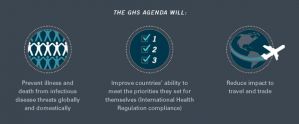
After months of speculation and concern regarding the Trump administration’s support for the future of the GHSA, Secretary of State Rex Tillerson brought forth a wave of relief. In a recent keynote speech, Tillerson “voiced support for US collaboration on global infectious disease issues, including ongoing efforts to battle threats such as HIV and malaria. He also signaled US support for extending to 2024 the Global Health Security Agenda (GHSA), a partnership of 50 nations, international organizations, and nongovernmental organizations geared toward building countries’ capacity to prevent and respond to infectious disease threats.” While discussing the importance of the President’s Emergency Plan for AIDS Relief (PEPFAR), he also highlighted that HIV/AIDS is not the only biological threat that needs addressing, commenting that the GHSA was a useful framework. Tillerson noted that “While we’ve made tremendous progress since GHSA was launched in 2014, considerable work remains. That is why the United States advocates extending the Global Health Security Agenda until the year 2024. the United States commitment to working in multi-sectoral partnerships to counter infectious diseases through the Global Health Security Agenda will remain constant,”.

Strategies Against Antimicrobial Resistance
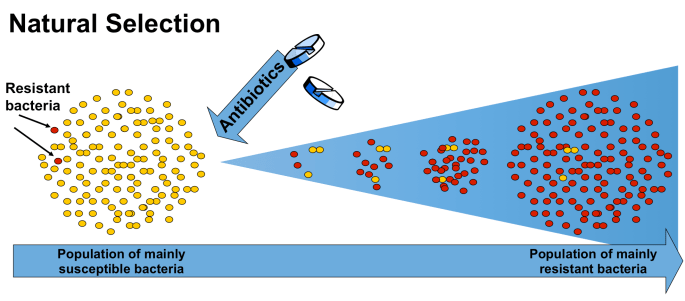
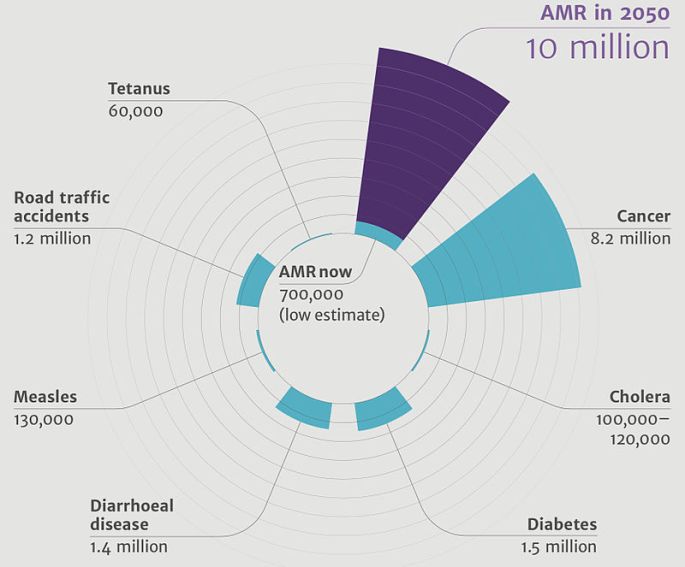
We’ve been waging war on antimicrobial resistance (AMR) for decades now, but the truth is that future strategies may require thinking outside the box. Here are some of the potential avenues for helping to stop the global burden of microbial resistance – utilizing the human micro biome to help develop new antimicrobials and deploying tiny semiconductors – “A minuscule amount of drug with some light can treat some of the worst superbug infections we tested in clinical strains acquired from a Colorado hospital,” Nagpal says. “Of course, more work and extensive studies in preclinical and clinical trials need to be done before we can administer these quantum dots to patients. However, this initial study shows a lot of promising features.” Efforts also includes infection killing polymers, changing the culture of research to move away from siloing and towards efforts across multiple channels, making existing antibiotics stronger, etc. In fact, if you want to see how AMR spreads around the world, check out this graphic from Pew Charitable Trusts.

Stories You May Have Missed:

  • Puerto Rico’s Post-Hurricane Infectious Disease Woes – Following the destruction of Hurricane Maria, Puerto Rico is now working against the clock of infectious diseases. “Four deaths in Hurricane Maria’s aftermath are being investigated as possible cases of a disease spread by animals’ urine, Puerto Rico’s governor said Wednesday amid concerns about islanders’ exposure to contaminated water. A total of 10 people have come down with suspected cases of leptospirosis, Gov. Ricardo Rossello said at a news conference.”
  • The Interesting Case of the World’s First Vaccine– a recent report on a 115-year-old smallpox vaccine vile is shedding light onto the ingredients of this revolutionary medical countermeasure. “With the evolution of science and the advanced tools now used to conduct it, it has become clear that vaccinia — the virus used in modern smallpox vaccines — is neither cowpox nor horsepox. Whether it is a virus that formerly infected some species of animals — rodents, maybe — or is something that evolved in laboratories through the deliberate mingling of pox viruses isn’t clear.”

Thank you for reading the Pandora Report. If you would like to share any biodefense news, events, or stories, please contact our Editor Saskia Popescu (biodefense@gmu.edu) or via Twitter: @PandoraReport
Pandora Report 10.6.2017

Welcome to your favorite weekly dose of biodefense news!

George Mason University Global Health Security Ambassador Fellowship
We’re excited to announce the selection of two GMU Biodefense students, Anthony Falzarano and Stephen Taylor, as recipients of the George Mason Global Health Security Ambassador Fellowship. As GMU Global Health Security Ambassadors, they will be attending the 4th Annual GHSA Ministerial Meeting in Kampala, Uganda as part of the Next Generation Global Health Security Network delegation. The Next Generation Network engages and facilitates contributions by emerging scholars, scientists, and professionals from government and non-governmental institutions to the Global Health Security Agenda (GHSA) and other global health security projects. The NextGen Network is led by Jamechia Hoyle, who is not only an infectious disease guru, but also an adjunct professor at GMU, teaching Global Health Security Policy. The GHSA meeting, which will take place from October 25-27, is the world’s premier meeting on global health security and will be attended by senior representatives of the Ministries of Health, Agriculture, Finance, and Security from more than 50 GHSA member states as well as implementing partners from civil society and the private sector. The theme of this year’s meeting is Health Security for All: Engaging Communities, Non-Government Actors, and the Private Sector.                                                                                                                                                       Thanks to the generous support of the Schar School, our Biodefense graduate students will be able to provide you with detailed accounts of the meeting from the front row. Following the GHSA meeting, we will be publishing their experiences and thoughts on the summit, so you’ll want to stay tuned. Anthony is a microbiologist and environmental engineer, who focuses his research on antimicrobial resistance, food and agriculture microbiology, and microbial enhanced oil recovery. Anthony also worked with Ohio State University’s Medical Center to study biofilms as a public health burden. Stephen is a biologist and Peace Corp-alum where he served in Mozambique  teaching biology, information technology, and English. Since 2015, he has worked for the U.S. Department of Agriculture at the Animal Parasitic Diseases Laboratory in Beltsville, Maryland.

Blue Ribbon Study Panel: U.S. Not Prepared to Identify Perpetrators of Biological Crimes, Terrorism, Proliferation, and Warfare
The Blue Ribbon Study Panel just released information on their recent special meeting, Biological Attribution: Challenges and Solutions, which sought to better understand the ability of the U.S. government to accurately identify pathogens and their sources, “attribute the use of biological weapons with scientific and other forms of evidence; and explore the processes used for investigative, legal, policy, and political decisions involving biological attribution.” “Effective prosecution depends on the ability to quickly and accurately attribute crimes to their perpetrators,” said Ken Wainstein, meeting chair, and former Homeland Security Advisor and United States Attorney. “In the aftermath of a biological attack, we need to find out who did it, how they did it, what disease agent they used, and where they obtained it. The biological threat is real and growing, and the Nation needs this attribution capability now.” Adds former Senate Majority Leader Tom Daschle, whose office received some of the anthrax letters in 2001, “We face some major challenges in microbial forensics and biological attribution, but we can overcome many of them. We need to do what we can to eliminate them now, before we find ourselves under attack again. We can’t afford to have another investigation drag on for years.” The Panel also addressed the impact of the President’s FY2018 budget request on biodefense efforts and how it could eliminate critical health security functions.

Fostering an International Culture of Biosafety, Biosecurity, and Responsible Conduct in the Life Sciences
GMU biodefense MS alum Kathleen Danskin and PhD student Elise Rowe are tackling the importance of biosecurity, biosafety, and responsible conduct in life sciences. Citing the lack of an internationally agreed upon definition and approach to disseminating lessons, they highlight “how these concepts are covered by relevant international treaties, international organizations, and professional organizations. While there are some efforts under way, opportunities exist to evaluate and strengthen the culture of biosafety, biosecurity, and responsible conduct in the life sciences in order to prevent the loss, theft, misuse, and diversion of biological agents, related materials, technology, or equipment, and the unintentional or intentional exposure to (or release of) biological agents.” Responding to this gap, Danskin and Rowe propose three changes: partnership between international regimes, organizations, and professional organizations to share and enhance best efforts, use of the nuclear safety and security culture as a model for creating organizational culture within life sciences, and that the international community should amplify efforts to recognize “champions of change” at the state level. “Challenges remain on how best to address the issue of operationalizing the concept of a culture of biosafety, biosecurity, and responsible conduct in order to address goals such as: (1) reducing the occurrence of laboratory-acquired infections (LAIs), incidents, and near misses, (2) ensuring that biosafety, biosecurity, and responsible conduct receive adequate attention, (3) ensuring that organizational members share the same beliefs and attitudes about risks, LAIs, and near misses, (4) increasing commitments to biosafety and biosecurity, and (5) assessing the breadth and strength of a biosafety and biosecurity program.”

Reasonable Doubts: Foreseeing Failures in WMD Security
GMU biodefense MS alum Greg Mercer is evaluating the historical failures in WMD security and what we can take away from such terrifying events. Pulling on examples from the live anthrax spores being mailed due to poor DoD lab practices to antinuclear protesters managing to get into the Oak Ridge nuclear facility, Mercer addresses serious system failures and a “culture of complacency”. Unfortunately, since the creation of nuclear weapons, there has been a colorful history of accidents and close calls. Mercer cites such examples to point out that while not spectacularly dramatic (I’m thinking of something like the film, The Rock), they nonetheless highlight significant vulnerabilities. “As a class, these organizational problems are not unique to the management of WMD. Insights into their nature, and into the sorts of practices that could help to anticipate and remedy them, may also be found further afield. Especially within the broader study of national security, a new literature has begun to emerge proposing either a new framing of the issues, or identifying tools and ideas that might be employed to guard against recurring ‘complacency’.” Mercer points to analyses, like those from Janne E. Nola, which suggest grass-roots changes that aim at fixing things at the organization level. What is to be done though? Some suggest the use of red teaming, while others point to forecasting and prediction, as a means to identifying risks and vulnerabilities. “History shows that warning signs are often ignored until disaster strikes, and that disaster is the engine of change. In the United States, the public demands change. If better institutional checks are to be placed on American nuclear and biological security, it will take a public outcry like the one that follows a disaster. The public will have to demand that the country’s nuclear- and biological-defense enterprises stop stepping out to the brink, and instead avert the disasters foreshadowed by the many uncomfortable compromises and accidents we have seen.”

Madagascar Battles Plague
The death toll has risen to twenty as government officials are banning public gatherings in the country’s capital. While plague is endemic to the country and causes roughly 400 cases a year, this spike in cases and the swift spread is concerning the WHO after already 114 cases have been reported since August. “More than half of recorded cases – 73 out of 133 – are pneumonic plague, the most virulent form, which is passed through person-to-person transmission. If it is not treated, pneumonic plague can be fatal within 24 hours. The epidemic also involves bubonic plague, which is spread by rats and kills about 50% of people it infects.” The WHO has released $300,000 in emergency funds and is asking for $1.5 to support outbreak response as the disease has quickly spread to several cities and outbreak season (September-April) is just beginning. You can read the latest WHO report on the outbreak here.

HBO VICE’s Contagion Episode
Check out the latest VICE episode regarding two interesting topics – Russian hacking and contagions. “The outbreak of an infectious disease sparks worldwide panic nearly every year. And as humans cluster themselves in denser cities and encroach closer to the wildlife harboring disease, the chances of a devastating global pandemic only intensifies. But scientists are finding that diligent surveillance of these threats could help keep the next nightmare disease at bay. VICE founder Suroosh Alvi went to Uganda to see how vulnerable humans are to a new pandemic and the options there are for staving it off.”

Bavarian Nordic Wins Up-to-$539M BARDA Contract for Smallpox Vaccine BARDA has contracted with Bavarian Nordic to ensure the U.S. Strategic National Stockpile has smallpox vaccine in the form of freeze-drived Imvamune. “The contract consists of an initial $100 million base award toward manufacturing and storage of Imvamune vaccine bulk—the third bulk contract inked between the company and BARDA. The two earlier bulk contracts total a combined $233 million. In addition, the contract includes two initial options: Up to $299 million toward the filling and freeze-drying of Imvamune produced under the three bulk awards and up to $140 million toward clinical development, regulatory commitments, and portions of the establishment and validation of fill/finish activities.” This new contract will cover roughly 13 million doses at $48 per dose.

The Risk of Adoption of Chemical and Biological Weapons by Non-State Actors in the EU                                                                                                                                             James Revill addresses growing concern over the potential for non-state groups to utilize chemical or biological terrorism within the European Union. Pulling on historical events involving CBW use by non-state actors, he addresses the current and future risks. “To achieve this, the article analyses six interlinked clusters of factors that can be seen as important in assessing the risk of whether or not to adopt such weapons. These are: the perceived relative advantage of CBW and their utilities; the complexity of such weapons; their ideological compatibility; the role of organisational structures; the visibility and ‘fashionability’ of such weapons; and the wider environmental context.” Overall, Revill finds that while there is potential for sophisticated CBWs to do great harm, they are unlikely, and the use of a “scruffy low-level chemical weapon” is much more realistic.

ABSA International 60th Annual Biological Safety Conference
October is national Biosafety Month, so don’t miss out on this conference held by the Association for Biosafety and Biosecurity on October 13-18th in Albuquerque, New Mexico. The conference will include special meetings like public health interest groups, next generation/new biosafety professionals shared interest group meetings, and great networking opportunities for biosafety and biosecurity professionals!

How the 1918 Flu Pandemic Revolutionized Public Health
As the centennial of the 1918/1919 pandemic approaches, it encourages us to really look at what has changed and what we’ve learned from such a global catastrophe. Public health itself has evolved – no longer restricted by the antiquated policies that were marked with eugenics and social stigma. At the time, influenza was not a reportable disease either, which meant that public health surveillance was shotty at best and quarantine efforts were usually too little, too late. “The lesson that health authorities took away from the catastrophe was that it was no longer reasonable to blame an individual for catching an infectious disease, nor to treat him or her in isolation. The 1920s saw many governments embracing the concept of socialized medicine—healthcare for all, delivered free at the point of delivery.” Now, disease surveillance and epidemiology are a cornerstone of public health, not to mention the development of the WHO in 1946. The 1918 flu pandemic forced us to change our approach to public health, but also taught a vital lesson – infectious disease was a global problem and not isolated to a single country, region, or group of people.

Biosafety Governance
The Federal Experts Security Advisory Panel (FESAP) just released their report on ensuring institutional compliance with biosafety, biocontainment, and laboratory biosecurity regulations and guidelines. FESAP recommendations are crucial, as they are supposed to be followed within research facilities that perform work with human, plant, and/or animal infectious agents and toxins. “The United States has a comprehensive biosafety, biocontainment, and biosecurity oversight system designed to protect laboratory workers, public health, agriculture, the environment, and national security. Biosafety and biocontainment oversight rests on a foundation of federal regulations, guidelines, and policies and is provided at multiple levels. Oversight of day to day research activities is largely a responsibility of the institutions and the investigators conducting the research with direct biosafety oversight being implemented at the local level.” In efforts to ensure compliance and build a culture of responsibility, FESAP has released guidance that aims to ensure biosafety, biosecurity, and biocontainment, while encouraging research. Some of the regulations and guidelines include: “conduct regular assessments of committees, offices, and departments with responsibilities for biosafety and biosecurity oversight to assess their function and strengthen their performance when necessary” and “promote transparency regarding institutional biosafety and biosecurity oversight.” The report also includes federal regulations and guidelines regarding research conduct, environmental regulations, dual-use research of concern oversight at the institutional level, etc.

Stories You May Have Missed:

  • BioShield Adds Ebola Vaccine To SNS & BARDA Industry Day – Project Bioshield, responsible for acquiring MCM against CBRN agents, is now adding two Ebola treatments and two vaccines to the Strategic National Stockpile (SNS). The new additions include “a single-dose vaccine licensed by Merck, a prime-boost vaccine regimen from Johnson & Johnson, and monoclonal antibody treatments from Mapp Biopharmaceutical and Regeneron Pharmaceuticals.” If you’re looking to get more information on MCM, you can also attend the 2017 BARDA Industry Day on November 7-8, at the Ronal Reagan Building. Presented by ASPR (Assistant Secretary for Preparedness and Response), the conference will give individuals the opportunity to learn about the past, present, and future of BARDA, MCM development opportunities, experiences partnering with BARDA, and more. Robert Kadlec, Assistant Secretary for Preparedness and Response, will be the keynote speaker for the event.
  • Bioweapons and Virtual Terrorism – Considering the threat of biological weapons and virtual terrorism? It was recently estimated that the cost of a bioweapon is 0.05% the cost of a convention weapon that would produce the same casualties per square kilometer. What are your thoughts on the author’s notion that biological weapons are “comparatively easy, using common technology available for the production of some antibiotics, vaccines, foods, and beverages, and delivery systems such as spray devices from an airplane, boat, or car are commonly available”?
  • History and Future of the Global HIV/AIDS Response: A Conversation with Dr. Michael Merson and Dr. Stephen Inrig– The Center for Strategic and International studies will be hosting this event on Monday, October 16th from 10-11:30am. Drs. Merson and Inrig will discuss the origins and evolution of the global HIV/AIDS response, as well as critical current and future issues affecting the fight against the disease worldwide, which were recently highlighted in papers issued by the CSIS HIV Working Group.  “This ambitious book provides a comprehensive history of the World Health Organization (WHO) Global Programme on AIDS (GPA), using it as a unique lens to trace the global response to the AIDS pandemic. The authors describe how WHO came initially to assume leadership of the global response, relate the strategies and approaches WHO employed over the years, and expound on the factors that led to the Programme’s demise and subsequent formation of the Joint United Nations Programme on HIV/AIDS (UNAIDS). The authors examine the global impact of this momentous transition, portray the current status of the global response to AIDS, and explore the precarious situation that WHO finds itself in today as a lead United Nations agency in global health. The global response – the strategies adopted, the roads taken and not taken, and the lessons learned – can provide helpful guidance to the global health community as it continues tackling the AIDS pandemic and confronts future global pandemics.” The event will be webcast live from the event page. Please register by clicking the “Register” button above and contact Sara Allinder, sallinder@csis.org, with questions.
  • MoBE 2017 Symposium to highlight research on the Microbiology of the Built Environment – October 10-12th, in Washington, D.C.  The event will highlight recent research on the Microbiome of the Built Environment and explore ways to bridge the gaps between research and applications. More specifically, The MoBE 2017 Symposium will bring together leading researchers and stakeholders to discuss MoBE findings pertinent to human health, safe drinking water, healthy built environments and urban design. Ed Yong of The Atlantic, Susan Lynch of the University of California at San Francisco and Marc Edwards of Virginia Tech will provide keynote addresses.

Thank you for reading the Pandora Report. If you would like to share any biodefense news, events, or stories, please contact our Editor Saskia Popescu (biodefense@gmu.edu) or via Twitter: @PandoraReport
Pandora Report 9.29.2017

 Homeland Security Struggles to Fund ChemBio Defense & The Invisible Threat Looming budget cuts within DHS are doing little to qualm concern that state and local infrastructure is simply unprepared to handle a biological or chemical attack. “In terms of bsecurity, ‘we are much better prepared than we were’ post-9/11, said Tom Inglesby, director of the Center for Health Security at the Johns Hopkins School of Public Health in Baltimore, Maryland. ‘But we are not where we need to be, and the progress is, in some cases, somewhat fragile’.” Internationally, the use of chemical weapons in Syria and growing tensions with North Korea are continual reminders that preparedness is vital. “The department’s science and technology directorate took a 28 percent budget cut when the omnibus bill for fiscal year 2017 was signed in May, and the chemical biological defense division is ‘taking a cut much more significant than that’ in fiscal year 2018, said John Fischer, division director. The directorate in May released a budget overview for congressional justification, which stated over $58 million would be put toward chemical, biological and explosive defense research and development for 2017, assuming a continuing resolution would remain in effect for the rest of the fiscal year. Less than $53 million was requested for 2018, according to the document. DHS did not respond to requests for an interview.” 2018 will be a year of harsh budget reductions for biosurveillance and chemical detection programs, as border security will be headlining in terms of priority. The surge of biodefense funding that was seen post-Amerithrax has certainly waned, but there is also concern for complacency and a tendency to go from fire to fire instead of working to establish robust and effective prevention and response mechanisms. Overall, this fiscal tightening will surely have an impact on prevention, identification, and response strategies for biological and chemical threats, leaving many people holding their breath that the blowback won’t be severe.

 Now more than ever, it is important we change the narrative of lackluster efforts to defend against biological threats. Budgetary slashing, lowering of barriers, and an era of increasing globalization and rapid international travel – these are all the things that should remind us that biological threats are not a figment of science fiction. “What was unthinkable back in the day is now quite common and easy,” Inglesby said. “Genetic engineering is now possible with kits from boxes at younger and younger ages with less and less training.” The dual-use nature of biological research not only has the capacity to lower the barriers to bioweapon development, but can also muddy the waters when determining if research is  offensive or defense. “That’s not the only challenge facing those sounding the alarm about biothreats. Government scientists worry that there aren’t enough biologists working on this problem. “We have relatively few biologists working in national security,” Matheny told FP. “This is one area where we’re just starting to catch up to the fact.” While the future of NBACC is still not set, such uncertainty has rippling effects when it comes to staffing. While we consider biological threats a multi-faceted enemy – natural, intentional, or accidental, it is now biodefense efforts that are facing attacks at multiple fronts. The recent de novo synthesis of smallpox has brought many of these concerns to fruition. Whether it be through the advancement of life sciences that poses dual-use risk, severe budgetary cuts, or a shifting focus onto border walls, we cannot afford to allow this threat to be invisible much longer.

 GMU Schar School MS Open House – October 19th
Have you ever wanted to study what you love to further your career? GMU’s MS in Biodefense is just that chance and we’ve got an open house coming up so you can get all the information on it. On Thursday, October 19th at 6:30pm at our Arlington campus, we’ll be hosting an information session about our in-person and online biodefense MS program. From anthrax to Zika, GMU is the place for all things biodefense!

Navigating Our Way Out of the Jungle: Modernizing Meat Inspection
It’s been over 111 years since the famous Meat Inspection Act of 1906 and we’re still struggling to keep food safety efforts at a pace that can beat risks from farm to table. “What triggered such a shift after decades of poor industry practice? The year prior, in 1905, a book by Upton Sinclair was published in a series, which would then be published in entirety in early 1906. The Jungle brought forth the unsavory and grotesque underbelly of the American meat system. Although this may not have been the focus of his book, readers took away from it that their trusted source for meat was corrupt and lacked safety mechanisms. Within the year, the Federal Meat Inspection Act was established.” Pew Charitable Trusts is working to help evaluate and strengthen the meat and poultry industry and to help reduce the impact that contamination has within the U.S. population (2 million are sickened annually due to contamination). “A June 2017 report from Pew and Cargill, an American privately held global corporation based in Minnetonka, Minnesota, highlighted some of these concerns and established an open dialogue to develop recommendations. They addressed the need to establish a risk-based oversight system, which would incorporate data from across the food-safety system. The guidance also included better risk communication, a modernized approach to slaughter inspection that would include current technology and pathogen-specific appropriate levels of protection, among other components.” Food safety and security is truly the soft underbelly of American and it’s vital that we modernize such efforts.

BBC Pandemic
If you’re one of our readers in the UK, make sure to take advantage of this new outbreak tool through the BBC. The BBC Pandemic app can be downloaded onto your phone and may just help us understand how future outbreaks spread. “Through the app, BBC Pandemic will be conducting two experiments: the National Outbreak, which is open to anyone in the UK from 27th September 2017; and the Haslemere Outbreak, a closed local study that is only open to people in the town of Haslemere, Surrey, and runs for 72 hours starting on Thursday 19th October 2017. In the National Outbreak, the app will track your approximate movement at regular intervals over a 24 hour period. (Don’t worry, it won’t know exactly where, or who you are.) It will also ask some questions about your journeys and the people you spent time with during those 24 hours. All data collected will be grouped to ensure your anonymity, and a research team from the University of Cambridge and the London School of Hygiene and Tropical Medicine will use it to predict how a flu pandemic might spread across the country – and determine what can be done to stop it.” If you’re still not sold on it, here’s another reason why apps like this can truly help future pandemic response – data modeling. Despite our best efforts, epidemiological models are only as good as the data we have available. Simulation efforts help response efforts coordinate resources and plan accordingly however, if our modeling isn’t a decent representation of the population due to limited data, it won’t be that effective. Getting information from a broad range of people helps strengthen such efforts.

Recommendations for Incentivizing the Development of Therapeutics, Diagnostics, and Vaccines to Combat Antibiotic-Resistance 
The Presidential Advisory Council on Combating Antibiotic-Resistant Bacteria (PACCARB) has been working since 2015 to curb the threat of resistant germs. The group has found that current economic efforts are insufficient and through three working groups on incentives (for vaccines, diagnostics, and therapeutics), they have released a new report. Identifying 46 critical issues that are preventing the development of new/improved products and providing 64 recommendations to address them, this new report is a robust 42 pages worth the read. For example, regarding human health and incentives for vaccine use, the group found that “federal and nonfederal stakeholders lack a common understanding about the current and potential economic value and societal impact of vaccines that can reduce AMR.” Their recommendation for this issue: “Analyses on the cost and societal impacts associated with new vaccine development and administration in the AMR arena developed via a multi-agency process that involves at least CDC, the Centers for Medicare and Medicaid Services (CMS), and the Treasury Department, in partnership with industry and public health stakeholders.” Within each section, you can find issues and recommendations categorized by economic, R&D, regulatory, and behavioral. The United Nations Foundation and the Wellcome Trust has also released a new report regarding the global efforts that have been sustained to fight AMR. “The report, published a year to the day that the United Nations (UN) General Assembly agreed to address the root causes of AMR and take action to tackle the problem, shows that many nations are following up on their pledge to encourage more responsible use of antimicrobials in human medicine and agriculture. Out of 151 countries recently surveyed, 85% say they are developing or have developed national action plans on AMR and 52% have a fully developed plan that addresses the One Health spectrum of human, animal, and environmental sectors.”

 Chemical & Biological Attacks: Underground Transport Restoration Project
After four years, this DHS-sponsored project is finally wrapping up their work studying the methods for chem-bio agent dispersion in subways. “Sandia National Laboratories’ engineer Bob Knowlton has worked on this challenge for a dozen years. His team has developed scientific sampling methods to determine the extent and nature of the contamination. Sampling also is essential to confirm the decontamination was effective and the site is safe to re-enter. Sandia researchers and their collaborators at other national laboratories and local, state and federal agencies have looked at everything from how to clean subway stations and grimy tunnels to where a surrogate for anthrax would go when released inside the New York City subway system and the best way to decontaminate a subway car.” Check out their findings on this project and from the 2016 large-scale testing they did in a mock subway system.

Little Island of Horrors – Vozrozhdeniya 
During height of the Soviet offensive bioweapons program, an ideal island, like Vozrozhdeniya, was the perfect place to test cutting-edge biological weapons. Present day, the island is a sad reminder of one of the largest state-sponsored bioweapons programs. “The island’s secrets have endured, partly because it isn’t the kind of place where you can just turn up. Since Vozrozhdeniya was abandoned in the 1990s, there have only been a handful of expeditions. Nick Middleton, a journalist and geographer from Oxford University, filmed a documentary there back in 2005. ‘I was aware of what went on, so we got hold of a guy who used to work for the British military and he came to give the crew a briefing about the sorts of things we might find,’ he says. ‘He scared the pants off me, to be honest’. Aerial photographs taken by the CIA in 1962 revealed that while other islands had piers and fish-packing huts, this one had a rifle range, barracks and parade ground. But that wasn’t even the half of it. There were also research buildings, animal pens and an open-air testing site. The island had been turned into a military base of the most dangerous kind: it was a bioweapons testing facility.” An isolated secret, this island was the testing ground for some of the worst pathogens. It was also chosen as a holding place for “the largest anthrax stockpile in human history” and while the cache’s location was never disclosed, the pits were visible from space, which meant that the U.S. pledge $6 million towards a clean-up project. Sadly, this isn’t a resolution as the open-air testing done on the island has surely left residual microbial burden, not to mention the burial pits of infected animals. Make sure to read about Dave Butler’s journey to this island and how even now, it still instills fear.

Stories You May Have Missed:

  • China to Open BSL-4– The first certified BSL-4 lab in China will be opening this year. The research institute, located in Wuhan, represents a partnership with the Chinese Academy of Sciences and the Wuhan government. “The lab is part of a 10-year-plan by the Ministry of Science and Technology that proposes to build five to seven BSL-4 laboratories by 2025 as well as one BSL-3 lab in every province. It was built with technology and equipment imported from France, and some of its future research staff have visited France for BSL-4 training. Although construction was finished in 2015, the lab has since undergone multiple assessments, Yuan Zhiming, director of the Wuhan branch of CAS, told the Science and Technology Daily. ‘The lab will become a public platform for Chinese scientists to conduct research into dangerous viruses,’ Yuan said.”
  • Signature Science-led Team awarded $2.9M contract to develop advanced genomic computational technologies in support of IARPA’s Functional Genomic and Computational Assessment of Threats Program – “The Intelligence Advanced Research Projects Activity (IARPA) awarded Signature Science, LLC a $2.9M contract for the development of new computational tools to screen DNA sequences to detect biological threats that may manifest from synthetic microbial manipulation. The challenge is to overcome the speed and precision limitations of contemporary synthetic DNA screening practices to rapidly detect and isolate a prospective threat within a segment of DNA. The research team will re-tool bio-threat detection methods, and focus detection efforts on functional genetic elements to increase analytic speed and precision, thereby dramatically improving predictive capacity to isolate the toxic gene that constitutes the threat.”
  • Medieval Plague Gives Insight Into Human Pollution History – “A recent study indicates that much less lead occurs naturally in the air than we thought—in fact, there should be almost none. Scientists measured lead trapped in an ice core from the Swiss-Italian Alps. They found that lead levels dropped dramatically only once in the past 2,000 years, during a time that coincided with the Black Death pandemic. This means that in Europe, lead levels in the air have been elevated for thousands of years. Most people think about air pollution as a problem that began with the Industrial Revolution, but we’ve been spoiling the quality of our air for a very long time. It has harmed our health throughout history, from Medieval Europe to the Roman Empire to Ancient Egypt and Peru, and continues to do so today.”

Thank you for reading the Pandora Report. If you would like to share any biodefense news, events, or stories, please contact our Editor Saskia Popescu (biodefense@gmu.edu) or via Twitter: @PandoraReport
Pandora Report 9.22.2017

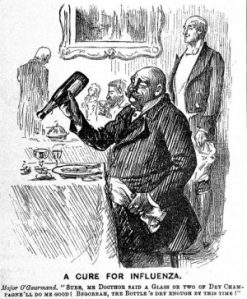
Happy Friday! Are you a fan of antibiotics and their ability to fight off microbial threats? So are we, which makes the recent WHO report that much scarier. Since this latest report points to the dire situation of antibiotic development, we’re super-sizing the focus on the antimicrobial resistance and super bugs this week.

Fifteen Years of Public Health Emergency Preparedness  & AJPH Special Edition
Make sure not to miss the special edition of the American Journal of Public Health (AJPH), focusing on public health emergency preparedness. Within this edition there are great articles on science in emergency response at the CDC, children’s health in emergency preparedness, evolution of the field, funding, etc. One of the best parts was the Editor’s Choice – From Anthrax to Zika: Fifteen Years of Public Health Emergency Preparedness. This article discusses public health threats, regardless of origin, and how they can lead to national emergencies. “Our current frame of reference is shaped by the events of September 11, 2001. In response to the terrorist attack, the US Congress set up appropriations to support state, local, tribal, and territorial public health departments nationwide; these funds are administered through a cooperative agreement from the Centers for Disease Control and Prevention (CDC) to fortify national security. The Public Health Emergency Preparedness (PHEP) cooperative agreement helps health departments strengthen their abilities to effectively respond to a range of public health threats, including infectious diseases; natural disasters; and biological, chemical, nuclear, and radiological events. As a result, the CDC and the PHEP community have played critical roles over the past 15 years in preventing, responding to, and rapidly recovering from public health threats ranging from anthrax (2001) to Zika (ongoing currently as of publication). Responses to these public health threats highlight the need for preparedness efforts to protect people and support communities when disaster strikes.” The authors discuss the impact of the 2001 Amerithrax attacks on public health countermeasures and response, and then the 2009 pandemic of H1N1 during the school year. They also touch on food safety and biosurveillance, which caught the 2015 E. coli and meningitis B outbreaks in Oregon, not to mention the recent impact of Zika and Ebola. “These are just a few examples of public health preparedness capabilities that the CDC identified in its 2011 guidance document issued to aid in the development of successful public health preparedness programs. The articles in this issue of AJPH provide detailed accounts of preparedness in action, showcasing competencies in biosurveillance, incident management, community resilience, information management, countermeasures and mitigation, and surge management. These articles demonstrate how and why public health agencies, health care systems, and communities play a vital role in protecting and securing the nation’s public health.”

CARB-X: Fighting AMR through Public-Private Partnerships
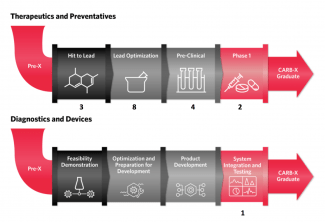
GMU biodefense MS alum Nick Guerin is taking us through the journey of fighting resistant organisms and the importance of antimicrobial stewardship partnerships. Guerin looks to the new CARB-X strategy at curbing the impending threat of antimicrobial resistance (AMR). “One possible protection against AMR is the development of new medical countermeasures (MCMs). The strategies to find the best MCMs crisscross multiple organizations and functions, namely through either public or private initiatives. However, such divided efforts create limitations that might best be overcome through comprehensive public-private collaborative efforts.” Not only does Guerin highlight the details of CARB-X and other partnerships, but he also addresses past approaches and failures in fighting AMR. “AMR’s threat demands expedient solutions; the decade’s long wait for new antibiotics cannot continue. AMR poses one of the most difficult development requirements for these new MCMs, one that public and private sectors haven’t overcome on their own.”  

Global Health 2030 Symposium  
The second annual Global Health 2030 Symposium will be held on October 4th at the United Institute of Peace in Washington, D.C. “Experts, academics, and practitioners will be exploring the Science of Health: Bridging Epidemics and Technology. Join us as we convene the community to prepare for the growing health challenges at home and abroad. Learn about the latest technology and global health innovations combating widespread epidemics and improving disaster response. The keynote address, ‘The Persistence of Epidemics and Our Response’ will be given by Dr. Michael Cowan, Executive Director, Association of Military Surgeons of the United States.”

Space – The Next Microbial Frontier?
How do bacteria act in space? Sure, we know the microgravity can permanently alter bacteria and make them even better at reproducing, but we need to really understand why this happens and how it might impact our health during space exploration. “In an experiment planned by researchers at the University of Colorado at Boulder and carried out on the ISS, cultures of Escherichia coli bacteria were doused with the antibiotic gentamicin sulphate, which usually kills off E. coli quite easily. Out in space, it was a totally different story. ‘We knew bacteria behave differently in space and that it takes higher concentrations of antibiotics to kill them,’ says one of the researchers, Luis Zea. ‘What’s new is that we conducted a systematic analysis of the changing physical appearance of the bacteria during the experiments’.” Their experiment found that E. coli reacted with a 13-fold increase in cell numbers and reduced their cell volume by almost 75%. This reduction in size can make treatment with antimicrobials tricky as there is a smaller surface area for them to interact with. Researchers also found that the bacteria increased cell envelope thickness and outer membrane vesicles. “The bacteria threw up extra shields by thickening their cell walls and outer membranes, and growing in clumps so a shell of outer cells could protect the inner ones from getting exposed. ‘Both the increase in cell envelope thickness and in the outer membrane vesicles may be indicative of drug resistance mechanisms being activated in the spaceflight samples,’ says Zea. ‘And this experiment and others like it give us the opportunity to better understand how bacteria become resistant to antibiotics here on Earth’.” While more research is needed, perhaps this environment will be the new proving ground for novel antimicrobials and tougher processes. If nothing else, this just gives me a lot of appreciation for how tough space disinfection is.

How China’s AMR Outbreak Revealed the Changing Landscape of Infection Control                                       The news that a Chinese hospital lost five patients to a severe strain of drug-resistant Klebsiella pneumoniae left many concerned about the growing threat of antibiotic resistance. The strain of K. pneumoniae was not only highly resistant, but also hypervirulent and highly transmissible, which is just about everyone’s worst nightmare when it comes to antimicrobial resistance. GMU biodefense PhD student and infection preventionist Saskia Popescu takes a look at this outbreak and how it reveals the changing landscape of infection control. “The recent report from the Chinese ICU outbreak points to the increasing threat of microbial resistance and the desperate need to address prevention efforts in terms of both stewardship and infection control. As the landscape changes for both medical care and biothreats, it is important that infection prevention and control efforts be a part of this evolution. We must consider these practices and hospital programs when modernizing healthcare and public health. These infectious disease events can, and should, teach us about the diverse range of issues hospitals face and how we can better prevent the spread of infection through active, instead of passive, efforts. “

Attribution of Biological Crime, Terrorism, and Warfare: Challenges and Solutions                                                                                                                                         The latest Blue Ribbon Study Panel on Biodefense event, highlighting biocrimes and biowarfare, will be on October 3rd from 10am-1pm. “Effective prosecution and decisions regarding U.S. response depend on accurate attribution of biological attacks. Despite ongoing biological crimes and suspected development of biological weapons for the purpose of attacking the Nation, the United States has yet to establish this capability fully. The Study Panel will host a special focus meeting entitled Attribution of Biological Crime, Terrorism, and Warfare: Challenges and Solutions. This meeting of the Study Panel, chaired by former Homeland Security Advisor Ken Wainstein and former Senate Majority Leader Tom Daschle, will address the current states of science, investigations, and intelligence for biological attribution and the extent to which they inform strategic, operational, and tactical decisions; and provide a better understanding of the ability of the United States to identify pathogens and their sources correctly, attribute biological crimes, terrorism, proliferation, and warfare to their perpetrators, using scientific and other forms of evidence and information, and explore the processes used for investigative, legal, policy, and political decisions involving biological attribution.”

Cryptology History Symposium
GMU biodefense PhD alum Craig Wiener will be presenting his dissertation research at the October Center for Cryptology History Symposium. His research, “Penetrate, Exploit, Disrupt, Destroy: The Rise of Computer Network Operations as a Major Military Innovation”. Don’t miss out on this opportunity to listen to Craig discuss his research “determining the origins of computer network exploitation and computer network attacks in the U.S. intelligence community.”

Health Security Call for Papers – Extended Deadline
The call for papers on communication and health security deadline has been extended to December 31st, 2017. “A special feature in Health Security will be devoted to analysis of the current communication environment and efforts to effectively communicate during outbreaks of infectious diseases and other health threats. The journal seeks papers that address the wide range of policy, practice, and research issues relevant to communication in large-scale health events. The special Journal section devoted to communication and health security will be published in the March/April 2018 issue of Health Security. Scholarly and review articles, descriptions of practice, and opinion and commentary pieces are welcome. Manuscripts can be up to 5,000 words exclusive of the abstract, tables, figures, and references. Please consult the journal website for specific submission instructions.”

Stories You May Have Missed:

  • Biosecurity Luncheon – NAS– Don’t miss the September 27th luncheon and “informal discussion on Global Catastrophic Biological Risks (GCBRs), led by the Director of the Johns Hopkins Center for Health Security, Dr. Thomas Inglesby. Dr. Inglesby will review the Center’s recent attention on GCBRs, and how the synthesis of horsepox by a Canadian researcher has moved the needle on the necessity of discussing these potential future events. This meeting is the second in a series of biological, chemical, and health security discussions to address compelling topics and to provide a forum for engagement among the DC-based community interested in biosecurity issues. The lunch will take place at the Keck Center of the National Academies of Sciences, Engineering, and Medicine (located at 500 Fifth Street NW, Washington, DC). The event is free and lunch will be provided, but space is limited, so you must register to attend this event.” Make sure to register here!
  • CDC & Its Partners’ Contributions to Global Health Security– A new report from Emerging Infectious Diseases is highlighting the challenges many countries face when attempting to comply with the WHO’s IHR. “The US Centers for Disease Control and Prevention (CDC) works with countries and partners to build and strengthen global health security preparedness so they can quickly respond to public health crises. This report highlights selected CDC global health protection platform accomplishments that help mitigate global health threats and build core, cross-cutting capacity to identify and contain disease outbreaks at their source. CDC contributions support country efforts to achieve IHR 2005 compliance, contribute to the international framework for countering infectious disease crises, and enhance health security for Americans and populations around the world.”
  • San Diego Battles Hepatitis A – San Diego is battling a deadly hepatitis A outbreak, in which sixteen people have died. Shortly after announcing it had become a public health emergency in San Diego, Los Angeles reported cases and has declared an outbreak. Sanitary conditions, especially in public bathrooms, have been considered one source of transmission and many cases have been within the homeless population. The outbreak has “infected 421 since November, ravaging San Diego’s large homeless and illicit drug-using population. It could eventually cost the county health department up to a million dollars, a local health official estimated.” While there hasn’t been a point source identified, efforts are being taken within homeless shelters and even bleaching of streets are underway. Many are pointing to the lack of affordable housing in San Diego as a catalyst for homelessness and the certain laws and practices that push homeless people into smaller areas, which can facilitate the spread of disease. “It was a wake-up call that this is killing people,” Norris said. “It’s killing people we know. It’s killing our neighbors.” “We’re not a third world country,” added McConnell, the community advocate. “We should quit acting like we are.”

Thank You For Reading the Pandora Report. If you would like to share any biodefense news, events, or stories, please contact our Editor Saskia Popescu (biodefense@gmu.edu) or via Twitter: @PandoraReport
Pandora Report 9.15.2017

Global Health and the Future Role of the United States
The latest report from the National Academies of Science Engineering, and Medicine, is now available! “Growing forces for globalization have increased the interconnectedness of the world and our interdependency on other countries, economies, and cultures. Monumental growth in international travel and trade have brought improved access to goods and services for many, but also carry ongoing and ever-present threats of zoonotic spillover and infectious disease outbreaks that threaten all.” The report includes chapters on investing in global health for America and how such investments protect U.S. interests, the effects of globalization, and looking into the future. There are individual chapters on infectious diseases like pandemic influenza and global health security as national security, TB, and how we can enhance productivity and economic growth. “By investing in global health over the next 20 years, there is a chance to save the lives of millions of children and adults. Beyond these health benefits to individuals, global health is directly linked to economic productivity and growth worldwide. According to the Lancet  Commission on Investing in Health, the return on investments in global health can be substantial—as the benefits can exceed the costs by a factor between 9 and 20, for low-income and lower middle-income countries, respectively. Worldwide, investing in core capacities to prevent, detect, and respond to infectious disease outbreaks through the development of multidisciplinary ‘One Health’ systems focused on the interface of human and animal health can result in an estimated savings of $15 billion annually from the prevention of outbreaks alone.” The report emphasizes the importance of continued commitment to global health and that ultimately, aid is truly an investment in global health, which benefits us all. Disease knows no borders and an outbreak anywhere is an outbreak everywhere. Melinda Gates also recently discussed the importance of foreign aid, noting that “If we don’t make these investments in global health, my argument to people is, you’re going to see a lot more things like Ebola in our own country, and we’ll be dealing with them in our own health clinics because borders are porous,”.

GMU Biodefense Graduate Program Information Sessions 
Don’t miss out on the chance to learn about our PhD program on September 21st! You can join the info session at 7pm at the GMU Arlington Campus. The GMU Schar School PhD info session will also include a panel of current PhD students to discuss their experiences and answer questions. This is also a great chance to chat with faculty and learn about admissions. Where else can you study a range of topics that include biosurveillance, select agents, global health security, and policy with such an engaged group of faculty and students?

Tom Frieden Launches New Global Health Initiative
Former CDC director Dr. Tom Frieden is launching a new program to combat not only global cardiovascular disease, but also infectious diseases. The new initiative Resolve to Save Lives, will be located in New York City, and “will prevent heart attacks, strokes, and epidemics with the goal of saving 100 million lives and making the world safer from epidemics.” The initiative has $225 million in backing over the next five years by major funders including the Chan Zuckerberg Initiative, Bloomberg Philanthropies, and the Bill and Melinda Gates Foundations. Frieden hopes to work with major players like the WHO and CDC “to persuade more countries to ban trans fats and lower the salt content in foods and shore up defenses against disease outbreaks”.

Johns Hopkins Center for Health Security ELBI Workshop
The Johns Hopkins Center for Health Security Emerging Leaders in Biosecurity Initiative (ELBI) recently hosted their last event for the 2017 class. The 2017 group capped off their fellowships with a day of engaging lectures and discussions including talks from FBI SSA Ed You, STAT reporter Helen Branswell, MIT’s Peter Carr, and more. The group was able to tour the Ginkgo Bioworks and George Church labs while chatting with Andy Weber, George Church, Patrick Boyle, Tom Knight, and Devin Leake about the future of synbio and biotechnology. Last but not least, the fellows participated in a viral storm exercise, which challenged them through a real-world scenario that required policy, security, public health, and science responses on a global scale. GMU biodefense PhD student Saskia Popescu attended as a member of the class, noting that “one of my favorite parts from this workshop was getting to hear from Tom Inglesby and several analysts from the CHS regarding their research and initiatives they’ve worked on. Learning about projects like Outbreak Observatory, data-driven outbreak response (outbreak science), and healthcare capacities during natural disasters, was fascinating and really opened my eyes to the range of topics the CHS is involved in.”

Biological Engagement Programs: Reducing Threats and Strengthening Global Health Security Through Scientific Collaboration
Don’t miss out on this latest eBook addressing biological engagement programs and the health security perspective. “Biological engagement programs are a set of projects or activities between partner countries that strengthen global health security to achieve mutually beneficial outcomes. Engagement programs are an effective way to work collaboratively towards a common threat reduction goal, usually with a strong focus on strengthening health systems and making the world a safer place. Cooperative programs are built upon trust and sharing of information and resources to increase the capacity and capabilities of partner countries.” You can download the PDF here – make sure not to miss the chapter “Strengthening Biosecurity in Iraq: Development of a National Biorisk Management System”, co-authored by GMU biodefense professor and graduate program director, Dr. Gregory Koblentz.

NAS Symposium on Cooperative Threat Reduction (CTR) for the Next Ten Years and Beyond
The National Academy of Science will be hosting this symposium on September 18-19 at the Keck Center in Washington, D.C. “In 2009 the National Academy of Sciences (NAS) report Global Security Engagement: A New Model for Cooperative Threat Reduction concluded that expanding and updating U.S. Government Cooperative Threat Reduction (CTR) programs in both form and function would enhance U.S. national security and global stability. The NAS Committee on International Security and Arms Control (CISAC) is convening a symposium to examine how CTR has evolved since that time and to consider new approaches for CTR programs and related WMD elimination efforts to increase their ability to enhance U.S. security. The symposium is sponsored by the Project on Advanced Systems and Concepts for Countering Weapons of Mass Destruction (PASCC) in the Naval Postgraduate School and will be open to the public. A ‘meeting in brief’ document will be issued by NAS after the symposium. For detailed information on this event and a draft agenda please visit:  www.nas.edu/cisac.”

Stories You May Have Missed:

  • GAO Report on Medical Devices for Infectious Disease Rapid Diagnosis – The latest GAO report is looking to the capabilities and challenges of technologies that allow for the rapid diagnosis of infectious diseases. Diagnosis of bio-threats is a crucial component to prevention and control, which makes the efficacy of these technologies critical. “Some stakeholders GAO spoke to identified the need for more clinical studies to establish the benefits of these technologies. Implementation challenges included reluctance by medical users to adopt these technologies, due to factors such as (1) lack of familiarity with such technologies, (2) costs and resources to use them, and (3) reluctance to order, and pay for, all of the tests for a given multiplex assay. Further, in some situations, positive test results for rare diseases are more likely to be false positives; thus systematic testing for such diseases may result in wasted resources to address all patients who test positive.”
  • CSIS Event: The New Barbarianism- don’t miss out on this event organized by the CSIS Global Health Policy Center on Monday, September 18th, from 6:30-9pm at the Newseum. “This hour-long film explores the recent surge of violence we’ve witnessed against the health sector across multiple wars, both new and old, and the accompanying shredding of international humanitarian norms”. Make sure to register here.

Pandora Report 9.1.2017

Craving some satyrical genome editing? Check out the Onion’s pros and cons list on this biotechnology.

The De Novo Synthesis of Horsepox Virus: Implications for Biosecurity and Recommendations for Preventing the Reemergence of Smallpox 

The recent de novo synthesis of horsepox by Canadian researchers has raised concern and spurred serious conversations about the future of orthopoxviruses, like smallpox, and the dual-use research that could bring them back. GMU biodefense associate professor and graduate program director Dr. Gregory Koblentz evaluates this horsepox experiment and what it means for biosecurity and efforts to prevent the reemergence of smallpox. Koblentz notes that this experiment represents a significant crossroads within the field of biosecurity and that the techniques for synthesis of such viruses are increasingly reducing barriers to potential misuse. Unleashing smallpox back into the world would be a global disaster as most of the world is no longer immune. Koblentz points out that “The threat of smallpox has been held at bay for the past 40 years by 2 conditions: the extreme difficulty of acquiring the virus and the availability of effective medical countermeasures. Synthetic biology is on the brink of erasing both of these formidable barriers to the reemergence of smallpox as a global health threat.” He highlights the limited and rather lackluster legal and technical safeguards against smallpox synthesis and that the increasing normalization and globalization of it will likely create a boom of researchers performing such experiments. Think of the gold rush, but rather the orthopoxvirus syntehesis rush. As orthopoxviruses, are being used to develop new vaccines and oncolytic medical treatments, its popularity and wider range of applications carries with it inherent risks that should be considered. “The combination of rising demand and increasing supply could lead to the global diffusion of the capability and expertise to create orthopoxviruses de novo as well as modify these synthetic viruses. With this diffusion will come an increased risk that scientists, acting on their own volition or on behalf of a terrorist group, might misuse their know-how to create variola virus, or that governments could use civilian biomedical research with synthetic orthopoxviruses as a cover for offensive applications. The release of the smallpox virus— whether due to a biosafety failure, a breach in biosecurity, or an act of biological warfare—would be a global health disaster.” Koblentz draws attention to the challenges that the normalization and globalization of orthopoxvirus synthesis poses to national and international systems working to ensure life sciences research is safely conducted. He points out that there is no clear international legal framework to prevent the synthesis of the variola virus, few comphresensive legal safeguards, and that the private DNA industry (the main supplier of large synthetic DNA fragments) has inconsistent regulatory interventions. With these concerns, Koblentz suggests several recommendations to prevent the return of smallpox, ranging from the WHO’s World Health Assembly (WHA) passing a resolution to enshrine the WHO’s Advisory Committee on Variola Research (ACVVR) recommendations on the handling and synthesis of variola virus DNA into international law, to efforts within the DNA synthesis industry to declare a temporary moratorium on the synthesis of orthopoxvirus DNA fragments until effective WHO oversight can be established. Overall, Koblentz points to the importance of this experiment in terms of how such work is performed and the lack of informed debate surrounding the dual-use nature prior to the start of research. He emphasizes  “the risks posed by the routine and widespread synthesis of orthopoxviruses that could lead to the creation of a widely distributed network of laboratories and scientists capable of producing infectious variola virus from synthetic DNA.”

GMU Biodefense Master’s Open House – September 14th
We’re two weeks away from the first Master’s Open House and you won’t want to miss the chance to learn about GMU’s biodefense MS program. From 6:30-8:30pm on Thursday, September 14th, at the GMU Arlington campus, you can speak to faculty, learn about admissions, and why biodefense students have a blast while getting their graduate degrees. From Anthrax to Zika, we’ve got the place for all things biodefense.

Stanford’s New Biosecurity Initiative  

Stanford University’s Freeman Spogli Institute for International Studies (FSI) just announced their new biosecurity initiative, the Stanford Biosecurity Initiative, which will be led by David Relman and Megan Palmer. “Relman said the biosecurity initiative will seek to advance the beneficial applications of the life sciences while reducing the risks of misuse by promoting research, education and policy outreach in biological security. His CISAC leadership gives him the know-how to lead such a wide-ranging effort across diverse disciplines and communities,”. Palmer is a senior research scholar at Center for International Security and Cooperation (CISAC) and leads research on risk governance in emerging technology development and is an all around biotechnology guru. The biosecurity initiative also includes key Stanford partnerships and expertise within the fields of life sciences, engineering, law, and policy. Palmer noted that, “Stanford has an opportunity and imperative to advance security strategies for biological science and technology in a global age. Our faculty bring together expertise in areas including technology, policy, and ethics, and are deeply engaged in shaping future of biotechnology policy and practices.” We look forward to seeing the amazing work this new initiative will accomplish!                                                                                         

NAS Symposium on Cooperative Threat Reduction (CTR) for the Next Ten Years and Beyond
Don’t miss out on this September 18-19 event at the Keck Center. “In 2009 the National Academy of Sciences (NAS) report Global Security Engagement: A New Model for Cooperative Threat Reduction concluded that expanding and updating U.S. Government Cooperative Threat Reduction (CTR) programs in both form and function would enhance U.S. national security and global stability. The NAS Committee on International Security and Arms Control (CISAC) is convening a symposium to examine how CTR has evolved since that time and to consider new approaches for CTR programs and related WMD elimination efforts to increase their ability to enhance U.S. security. Speakers will include Amb. Laura Holgate, former U.S. Representative to the Vienna Office of the UN and IAEA, Amb. Ronald Lehman, Counselor to the Director of LLNL, William Tobey, former Deputy Administrator for Defense Nuclear Nonproliferation at NNSA, Andrew Weber, former Assistant Secretary of Defense for Nuclear, Chemical, and Biological Defense Programs, and other key thinkers and practitioners from CTR programs as well as experts from outside of CTR implementing agencies who have experience addressing complex international security problems. The symposium is sponsored by the Project on Advanced Systems and Concepts for Countering Weapons of Mass Destruction (PASCC) in the Naval Postgraduate School and will be open to the public. A ‘meeting in brief’ document will be issued by NAS after the symposium.”

International Biosecurity Fellows Reflect on SB7.0
The Johns Hopkins Center for Health Security recently partnered with Stanford’s Drew Endy to bring 32 emerging biosecurity leaders together for a fellowship program to attend the 7th International Meeting on Synthetic Biology (SB7.0) in Singapore. “In addition to attending the conference, fellows had the opportunity to engage with practicing experts and to discuss—with peers and senior scientists and government officials—biosecurity as it relates to synthetic biology. The fellows represented 19 countries on 6 continents and professions in the public and private sectors, the nonprofit space, and academia. The fellowship program was sponsored by the Open Philanthropy Project, hosted by Endy, and coordinated by the Center, BioBricks Foundation, and SynBioBeta. Center staffers Crystal Watson, DrPH, MPH, senior associate, and Matt Watson, senior analyst, organized the fellowship discussions and events and joined the fellows in Singapore for the 4-day experience. Gigi Kwik Gronvall, PhD, a senior associate at the Center and author of Synthetic Biology: Safety, Security, and Promise, spoke at SB7.0 and helped lead the fellowship’s panel discussions along with Watson and Watson.” Don’t miss out on GMU Biodefense PhD student Yong-Bee Lim’s reflection on page 39. Lim comments on the unique insight that comes from researchers with a non-technical background who still focus on the biosecurity, biosafety, and governance of emerging biotechnologies. “However, the enthusiasm of the technical conference attendees and fellows that I met about the advancements in synthetic biology was infectious. Whether Christina Smolke was talking about leveraging yeast to produce opioids to address medical access inequities, Kate Adamala was discussing synthetic cells as an alternative for research purposes, or Dorothee Krafft explained how her lab was seeking to synthesize a simple cell with alternate building blocks, their passion for their work came through. This allowed me the rare opportunity to enjoy the possibilities of these new avenues of innovation.” Don’t miss out on his tales of confiscated beef jerky and how there’s often a disparage between the science and security communities.

Building Airborne Isolation Units During Emergent Times  & Why the CDC Quarantined Potentially Defective Equipment
GMU biodefense PhD student Saskia Popescu is taking a deep-dive into faulty PPE and hospital preparedness efforts that might just save us during an airborne outbreak. Popescu first looks at the recent CDC actions to pull defective PPE from the SNS. “The special focused on personal protective equipment (PPE) that was being stockpiled by the CDC for use against future outbreaks or public health emergencies, such as treating an influx of Ebola patients during an outbreak. The 60 Minutes investigative team filed a Freedom of Information Act request to obtain documents regarding MicroCool gowns that are part of the US Strategic National Stockpile (SNS). The filing of the Freedom of Information Act request is especially prudent as a group of hospitals were recently awarded $454 million in damages from PPE manufacturers Kimberly-Clark and Halyard Health (formerly a division of Kimberly-Clark) after a jury found they were liable for fraud and defects within the MicroCool gowns.” While these gowns were advertised as meeting standards for the highest level of impermeability, their efficacy is clearly in question. Many are concerned about the existing stockpiles hospitals have been holding onto since the Ebola outbreak in 2014 and if such PPE is still effective. Popescu also takes a look into a recent study that evaluated the potential for hospitals to readily and cheaply convert entire wings into negative-pressure, airborne isolation units. Such a measure would be necessary if there was an influx of infectious patients with SARS, MERS, or another disease that requires airborne isolation, as most hospitals have limited amounts of negative-pressure rooms. “Following their analysis, the team found that they were able to maintain negative pressure that was actually higher than the CDC recommendations for airborne isolation and there was no pressure reversal during the entering and exiting of the ward by medical staff. They did find that ‘pressures within the ward changed, with some rooms becoming neutrally or slightly positively pressured’, which means that healthcare staff would need to wear proper personal protective equipment (PPE) at all times in the unit and not just while in the patient rooms.” While this isn’t a permanent response measure, it does show proof of concept that would allow safer hospitalization for infectious patients during an airborne outbreak.

Stem Cells, Smallpox Vaccines, and FDA Crackdowns 
Earlier this week, the FDA announced it was taking action to shut down clinics that were advertising and performing unproven stem cell therapies. Clinics in California and Florida have received warning letters and the StemImmune Inc, clinic in San Diego, CA, received a visit from U.S. Marshals, who seized five vials of smallpox vaccine. “The FDA says it learned that StemImmune was using the vaccines as well as stem cells from body fat to create an unapproved stem cell therapy. On its website, StemImmune says ‘The patient’s own (autologous, adult) stem cells, armed with potent anti-cancer payloads, function like a ‘Trojan Horse,’ homing to tumors and cancer cells, undetected by the immune system’.” These clinics have been using stem cell treatments for patients suffering from Parkinson’s, ALS, COPD, heart disease, and pulmonary fibrosis. “Action by the FDA on clinics promoting unproven stem cell therapies is ‘a long time coming,’ says Sean Morrison, former president of the International Society for Stem Cell Research (ISSCR) and d irector of the Children’s Research Institute at UT Southwestern.”

Hurricane Harvey – Harbinger of Infectious Disease?

As hospitals are forced to evacuate patients and medical centers become overwhelmed, the George R. Brown Convention Center has become the city’s largest emergency shelter. It’s always challenging though, meeting the medical demands of so many people in an emergent environment. As providers work to meet basic medical needs there is another concern that bubbles up with an influx of people into a small environment…disease. Floodwater injuries are of course a concern, but we also worry about infectious diseases associated with overrun sewage systems, lack of potable water and safe food, and the existence of mega-shelters that are ripe for transmission of respiratory and diarrheal illness. That’s not even considering the potential for nasty resistant infections like MRSA, VRE, etc. Did I mention mosquitoes? “Based on experience following Hurricane Katrina, there will be several competing effects on the population of mosquitoes and the prevalence of arboviruses, such as Zika, dengue and West Nile, that they transmit. Mosquitoes need stagnant water to lay eggs. Winds and floods will wash away containers that would have been breeding pools, said Hayden, who studies weather and vector-borne disease. In the immediate future, both Hayden and Hotez anticipate that local mosquito populations will decline. But once the floodwaters recede, mosquitoes will recover. In 2006, a year after Katrina, Tulane University public-health experts reported that cases of West Nile infection increased more than twofold in communities that had been in that hurricane’s path. The study authors suggested that increased exposure was the culprit. Fleeing partially submerged buildings, people spent days outside waiting for rescue.” Sadly, it will take years to recover and rebuilding Houston after Harvey, and there are lessons we can apply from not only Harvey, but also Hurricane Sandy, towards future preparedness and response efforts. Matt Watson and Eric Toner from the Center for Health Security are drawing attention to the need for Congress to start gearing up for the health impacts following Harvey.  “Stepping back from the operational response, it’s important to recognize that Congress has a vital role to play in both preparing for and enabling recovery following large scale disasters. On the recovery front, it will be important for lawmakers to pass an emergency appropriation that provides emergency funding. It is critical that Congress reverse that trend and continue to support annual appropriations for hospital and public health preparedness so that the nation is able to respond to increasingly frequent natural disasters and other large-scale emergencies.”

Stories You May Have Missed:

  • Distinguishing Virulent from Harmless Bacteria to Improve Biosurveillance- “Researchers at Los Alamos National Laboratory are working to eliminate false positives in detection of Francisella bacteria, a few species of which include highly virulent human and animal pathogens. The effort contributes to more efficient and effective biological surveillance, such as that conducted by the US Department of Homeland Security and the Department of Defense, which provides early warning of infectious disease outbreaks, hazardous environmental exposures, or possible bioterrorist attacks by spotting trends of public health importance.”
  • Deadly Strain of Klebsiella pneumoniae Found In China– Chinese researchers are reporting a highly virulent, resistant, and deadly strain of the bacteria in five patients at a hospital in Hangzhou, China. “All five patients—who were admitted to the ICU between late February and April of 2016—had undergone surgery for multiple trauma followed by ventilation and subsequently developed carbapenem-resistant K pneumoniae infections and severe pneumonia that responded poorly to all available antibiotics. All five patients died of severe lung infection, multi-organ failure, or septic shock.”


Pandora Report 8.25.2017

Happy Friday and welcome to your weekly dose of all things biodefense. Have you ever wanted to take a tour of Dugway Proving Ground? Here’s your chance at a virtual tour through some amazing photography.

GMU Biodefense Graduate Programs & Information Sessions
Classes are just starting up and if you’ve ever wanted to take classes on synthetic biology and biosecurity, global health security policy, nonproliferation and arms control, biosurveillance, or emerging infectious diseases, we’ve got just the program for you! GMU offers both Masters and PhD programs in biodefense and has several informational sessions coming soon. Our program provides the perfect intersection of policy and science with courses taught by a range experts. If your time is limited or distance is a problem, we also offer an online MS program, which means you can study biodefense from anywhere!

Revisiting NIH Biosafety Guidelines
It’s been forty years since NIH established the Guidelines for Research Involving Recombinant or Synthetic Nucleic Acid Molecules to assess the risks of genome editing. Now more than ever, with the speed of biotech development, it is relevant to take a moment and look back at the significance of such guidelines. “Responsibilities include setting up Institutional Biosafety Committees (IBCs) to assess risks and potential hazards through standards for containment and laboratory practices. Noncompliance on any project, whatever the funding source, can result in loss of all such NIH funding. In his address to the workshop.” Since its inception, there have been several advances in the field, like DIY gene editing and CRISPR, which may require changes to the existing guidelines. “And conventional risk management practices that focus on listed pathogens may underestimate risks of new, unlisted organisms. The informality of voluntary guidelines has enabled prompt responses by funders and researchers to emerging evidence on benefits and risks of technologies. But what has worked with those receiving NIH funding with IBCs may not work with the wider range of actors who now have access to these technologies.” How can the NIH meet these challenges with a forty-year-old set of rules? A few things might help it maintain relevancy- participation in international forums, facilitating researchers/publishers/insurers to set common benchmarks on researcher conduct, engage more with institutional biosafety officials, and working to ensure there are more IBCs. Overall, there is a need to modernize the guidelines to better meet and serve the expanding plain of the life sciences.

Revisiting Compliance in the Biological Weapons Convention                                                                       Have you noticed a trend this week? Revisiting is the name of the game and that’s just what the latest occasional paper from the Middlebury Institute of International Studies at Monterey is doing. The latest RevCon was a dud and the future of the BWC and its relevance is being tested. James Revill is looking at compliance and an incremental approach within the BWC. Revill notes that “compliance with the BWC is more than a simple binary choice to sign a commitment not to develop or produce biological weapons. It requires the adherence to all the obligations, both negative and positive, undertaken by BWC states parties in signing and ratifying the convention. In the BWC context, this is complicated by the ambiguity surrounding certain obligations, changes in science and security, and the limited resource capacity of some states to fulfill their obligations. Under such circumstances, without episodically revisiting compliance, there remains the risk that BWC will become ever more fragmented, outmoded and poorly implemented.” He emphasizes that despite many pushing for multilaterally negotiated, legally binding verification protocols, this is an unlikely outcome. An incremental approach to revisiting compliance, Revill suggests, could incorporate several activities – review relevant science and technology, enhance the collection and analysis of compliance indicators, develop the consultative mechanism, building the provision of assistance in the event of a violation of the BWC, explore voluntary visits, enhance the United Nations Secretary-General’s Mechanism, and remedy the institutional deficient. Overall, he points to the wavering nature of norms against bioweapons and that “without revisiting compliance and tending the convention, there is a risk that the regime will be left to fester and fragment, in time potentially diminishing the norms against biological weapons.”

Meeting on the Attribution of Biological Crime, Terrorism, and Warfare
The Blue Ribbon Study Panel on Biodefense will be hosting this October 3rd meeting in Washington D.C. “Effective prosecution and decisions regarding U.S. response depend on accurate attribution of biological attacks. Despite ongoing biological crimes and suspected development of biological weapons for the purpose of attacking the Nation, the United States has yet to establish this capability fully. The Study Panel will host a special focus meeting entitled Biological Attribution: Challenges and Solutions. This meeting of the Study Panel, chaired by former Homeland Security Advisor Ken Wainstein and former Senate Majority Leader Tom Daschle, will provide federal government, industry, and academic representatives with the opportunity to discuss their perspectives, experiences, challenges, and recommended solutions with regard to biological attribution.” Stay tuned for more details!

SynBio Salmagundi: Proposed Framework for Identifying Potential Biodefense Vulnerabilities Posed by Synthetic Biology – Report, SB7.0 & Options for Synthetic DNA Screening 
It’s a good day to get your synbio nerdom on with this potpourri of news! If you missed the webinar on Tuesday, you can now access the latest NAS interim report regarding the biodefense implications of synthetic biology. “Synthetic biology and related biotechnologies hold great promise for addressing challenges in human health, agriculture, and other realms. At the same time, synthetic biology raises concerns about possible malicious uses that might threaten human health or national security. This interim report is the first phase of a study by the National Academies of Sciences Engineering and Medicine to assess potential vulnerabilities. The report proposes a strategic framework that can be used to identify and prioritize potential areas of concern.” Within the report you can find definitions and study scope regarding synthetic biology in the context of biodefense, factors to assess capability for malicious use, technologies and applications to assess, and framework approach (parameters to consider, use and limitations, etc.). Check out this latest article regarding the screening processes of for synthetic DNA ordering. Sure, there are current screening processes (providers affiliated with the International Gene Synthesis Consortium voluntarily screen double-stranded DNA synthesis orders over 200bp to check for regulated pathogens and additional customer screening), but truly, the processes isn’t that easy…or cheap. Researchers, like Gigi Kwik Gronvall, pointed out actions that could help “preserve the effectiveness of DNA order screening as a security tool and develop additional mechanisms to increase the safety and security of DNA synthesis technologies.” Highlighting the DHHS screening guidance as quickly becoming obsolete, they emphasized options like including direct financial support to companies for screening, especially as we look to the future costs and responsibilities of the U.S. government. “The screening of dsDNA orders is not a panacea for biosecurity concerns: it is possible for nefarious actors to work around the screening. However, we believe that screening dsDNA orders still raises barriers to the development of biological weapons and may offer some protection against biosafety concerns.” The future of synthetic DNA ordering will surely be debated as experiments, like the recent horsepox reconstitution, bring to light new gaps. One such focus onto the realm of biosecurity and synthetic biology comes from Dr. Eric van der Helm, who participated at the latest SB7.0 synthetic biology conference. Van der Helm attended as part of the SB7.0 biosecurity fellowship and has highlighted some of the biorisks we worry about. He also points to the latest horsepox experiment which brought about so much attention to the biosecurity implications of reconstituting an extinct virus. “Synthetic biology has only been recently recognized as a mature subject in the context of biological risk assessment — and the core focus has been infectious diseases. The main idea, to build resilience and a readiness to respond, was reiterated by several speakers at the SB7.0 conference.  In the case of biosecurity, we’re already dependent on biology [with respect to food, health etc.] but we still have an opportunity to develop biosecurity strategies before synthetic biology is ubiquitous.  There is still an opportunity to act now and put norms and practices in place because the community is still relatively small.” Van der Helm emphasizes the need to have these conversations regarding biosecurity measures and synbio, like those at SB7.0, more frequently and openly.

North Korea’s Bioweapon Program: What do we actually know?
If you haven’t gotten enough on discussions regarding North Korea’s bioweapons program, check out GMU biodefense professor Sonia Ben Ouagrham-Gormley‘s latest interview in which she discusses what we know and what we might be missing. What a perfect way to enjoy the morning commute or a lunch break!

Post-Ebola Recovery – An Upside to an Epidemic
A recent mudslide in Sierra Leone is revealing a positive outcome from the 2014/2015 Ebola outbreak – sustained disaster response. Shortly after the mudslide, emergency response crews were already working alongside volunteers to help rescue victims. Sidi Tunis chatted with Buzzfeed, noting that “During Ebola we had a lot of community engagement, so they knew how to be first responders. They knew how to do search and rescues, they knew how to convey corpses safely to the morgue.” Many of the young men digging through rubble were already experienced, having helped with Ebola burial teams and the ambulance system was better equipped and supported as a result of the outbreak. “There was a lesson learnt from Ebola that instead of creating parallel system of NGOs, let’s take leadership from the start,” she said. “So this time it’s been led by the government from the onset, and having them take that ownership is more of a sustainable system.” “Still, NGOs playing a critical role are in a better position than they might typically have been. Three days after the mudslide, unclaimed bodies piling up in Freetown’s main mortuary posed another health risk. There were so many that they began to decompose in the tropical heat, prompting the government to order mass burials over the following two days. Workers from UNICEF were among those who helped scrub out the morgue during a massive clean-up operation that followed. ‘That needed a lot of infection prevention equipment – gloves, boots, aprons,’ James said. ‘UNICEF had emergency stock ready to go from Ebola’.”

Meeting of the Presidential Advisory Council on Combating Antibiotic-Resistant Bacteria
Don’t miss out on this September 13th and 14th meeting in which the “Advisory Council will provide advice, information, and recommendations to the Secretary regarding programs and policies intended to preserve the effectiveness of antibiotics by optimizing their use; advance research to develop improved methods for combating antibiotic resistance and conducting antibiotic stewardship; strengthen surveillance of antibiotic-resistant bacterial infections; prevent the transmission of antibiotic-resistant bacterial infections; advance the development of rapid point-of-care and agricultural diagnostics; further research Start Printed Page 38913on new treatments for bacterial infections; develop alternatives to antibiotics for agricultural purposes; maximize the dissemination of up-to-date information on the appropriate and proper use of antibiotics to the general public and human and animal healthcare providers; and improve international coordination of efforts to combat antibiotic resistance.” The meeting will be held at the DHHS Hubert Humphrey Building or you can attend online here.

Pandemic Readiness (Hint: We’re Not There Yet)
Despite funding for the Hospital Preparedness Program (HPP) and an increase in funding to the Public Health Emergency Preparedness Program (PHEP), many are pointing out that these programs are chronically underfunded to begin with. “This House bill also does little to create a realistic public health emergency response fund, a standing pot of money to meet the immediate needs of a public health crisis. We saw how long it took to get emergency funds to respond to Zika, Ebola and Hurricane Sandy, with each event taking longer and longer to help these communities respond to devastating disasters.” You can also check out this latest meeting with Judy Woodruff and Liberian-born Dr. Raj Panjabi at Spotlight Health. Dr. Panjabi discusses the seriousness of infectious disease threats and the challenges of pandemic prevention.

Forecasting Outbreaks One Image at a Time
Tracking infectious diseases is a tough job and requires a lot of boots on the ground (shout out to gumshoe epidemiologists who go door to door doing contact tracing). Researchers at Los Alamos National Laboratory have been using computer modeling for a while to track disease movement, but a new partnership with Descartes Labs, is bringing high-resolution satellite imagery into the arsenal. “By mapping where high-moisture areas intersect with those social media signals and clinical surveillance data, we can help identify areas at risk for disease emergence and subsequently predict its potential path. Descartes Labs collects data daily from public and commercial imagery providers, aggregating the images into a single database. Our team at Los Alamos will use the Descartes Labs Platform to correlate satellite imagery with multiyear clinical surveillance data from approximately 5,500 Brazilian municipalities for mosquito-borne diseases such as dengue, chikungunya, and Zika in order to better understand how they spread.” This new imagery will allow Los Alamos Lab researchers to focus on specific neighborhoods and other small geographical areas. By using retrospective analysis via historical data, they’ll make sure the mathematical models are accurate and ensure that future models are truly capable of prediction.

Stories You May Have Missed:

  • Munich Re Signs Strategic Agreement With Metabiota to Enhance Insurability Against Epidemic Losses – The risk analytics firm Metabiota has announced a strategic agreement with Munich Re, one of the world’s leading reinsurers, to better establish insurability “by protecting companies and local economies from the financial loss related to epidemics. This really is the next frontier for the insurance industry – given the high risk of infectious disease outbreaks, it is imperative that we find new ways to manage and finance these risks for our customers.” Metabiota’s newest platform is a modeling method for estimating epidemic preparedness and risk, as well as the cost and severity of outbreaks by using historical data and disease scenarios and analytics.
  • Ebola Survivors Plagued With Long-term Disabilities – Imagine becoming infected with one of the most deadly viruses on the planet. Now, imagine by some stroke of luck and medical marvel, you’re able to survive. After the long, miserable road that is Ebola infection, survivors have been finding themselves with chronic conditions and high rates of disabilities. A new study found that Ebola survivors have seven times the disability rate compared to their close contacts. “In the first study, researchers followed 27 Ebola survivors in Sierra Leone for 1 year after diagnosis and found they were seven times more likely than their close contacts to report a disability. Almost 80% of the survivors (77.8%) reported a disability 1 year post-infection, compared with 11.1% of their close contacts. Disabilities included major limitations in vision, mobility, and cognition. ‘This study has demonstrated that a year following acute disease, survivors of the recent EVD outbreak have higher odds of persisting disability in mobility, vision, and cognition,’ the authors concluded. ‘Mental health issues such as anxiety and depression persist in EVD survivors and must not be neglected’.”
  • Minnesota Measles Woes & Anti-vaxxers– The benefits of vaccines have been under fire from anti-vaccine activists, despite the overwhelming good they’ve done for the world. While Minnesota continues to battle their worst outbreak of measles in decades, the antivaxxers are becoming energized in their efforts. “In Facebook group discussions, local activists have asked about holding ‘measles parties’ to expose unvaccinated children to others infected with the virus so they can contract the disease and acquire immunity.” The initial cases of this outbreak were in the Somali American community, which are believed to be the result of anti-vaccine activists speaking to community members and instilling fears and concerns. “Despite the anti-vaccine drumbeat, Minnesota’s Somali American community has begun to push back, according to some health-care providers. As part of an unprecedented collaboration clinicians and public health officials launched this summer, ­Somali American imams are urging families to protect their children by getting the measles-mumps-rubella (MMR) vaccine.”

Pandora Report 8.18.2017

ECDC Tool for Prioritizing Biothreats
The European Centre for Disease Prevention and Control has released their tool for the prioritization of infectious disease threats. “This qualitative tool, implemented as an Excel workbook, is based on multi-criteria decision analysis. It ranks infectious disease threats in a transparent, comparable and methodologically reproducible manner. The tool enables the relative ranking of different infectious disease threats. It is intended as a supplement to other methods that also support decision-making in preparedness planning.” Part of the tool involves a scoring of diseases, in which it suggests that a multidisciplinary expert group works to establish reliable information and adequate scoring. The ECDC tool also includes a handbook and manual for users to get the most out of it.

 Long Ignored: The Use of CBW Against Insurgents
GMU Biodefense PhD alum Glenn Cross investigates the use of chemical and biological weapons in counterinsurgency campagins like that of Rhodesia, South Africa, and Syria. Cross notes that history has shown the efficacy of CBW against ill-equipped and often poorly trained insurgents. He points to the debate regarding application of use – some say that these weapons are used when conventional forces are ineffective and often a last resort, while others note that the lack of an international and effective response have given insurgents incentive. “The conclusion from these examples is that regimes in extremis — when the battle is for their very survival — seem to have little compunction about resorting to chemical and biological weapons use. The much-heralded international norms and conventions prohibiting and condemning chemical and biological development and use go out the window when a regime’s survival is at stake. The examples of Rhodesia and Syria show that the international community must be united and demonstrate the requisite political will to enforce norms if the use of chemical and biological weapons is to be prevented.” Cross highlights two case studies, Rhodesia and Syria, pointing to the use of biological weapons by Rhodesian forces as being the only example of a nation using bioweapons since the end of WWII. While the regime was aware of treaty obligations, it had no bearing on their decision to use such weapons. So what are effective constrains on the use of CBW? The case studies reveal that regimes care little about their efficacy, international norms, or international agreements, but it is really deterrence that likely prevents the use of such weapons. The credible threat of military action is the strongest deterrent and realistically, until international norms include uniform enforcement amongst nations, they won’t be as effective. “As we’ve seen in Syria, such consensus is elusive, and the international community has failed to act. As a consequence, the world faces a sad, but inevitable conclusion. The Syrian regime is unlikely to ever face justice for its use of chemical weapons.”

A View from the CT Foxhole: Edward You, FBI Weapons of Mass Destruction Directorate, Biological Countermeasures Unit
As if we need any more reasons to think Edward You is a biosecurity action hero! The Combating Terrorism Center recently sat down with Supervisory Special Agent in the FBI’s WMD Directorate, Biological Countermeasures Unit, and discussed not only his role within the FBI but also their work and coordination with partners. You notes that hisprimary mission is to support outreach and engagement, but probably most importantly it is to backstop the WMD Coordinators who are positioned in the field. They have to cover the whole broad range of modalities—chem, bio, nuke, explosives. They do the initial engagements, the partnerships, the initial response, but they can always call back to headquarters where we leverage all of our expertise as subject matter experts. We can bring in the laboratory division; we can bring in Centers for Disease Control and Prevention (CDC), if necessary, the Department of Homeland Security to support them when they run into an incident out in the field.” He emphasizes the importance of the relationship the FBI has with the private sector, not only in terms of shared interests, but also communicating security problems to help get more buy-in and coordination. When asked about the DIY biohacker, You notes that “We look at these community labs as a big positive force in the economy and engines of innovation. That has helped us overcome the natural tendency for such outfits to be a little bit anti-establishment. By engaging with them, we’re helping them to raise their level of awareness that they could potentially be targeted by malicious actors seeking to subvert their work, steal their technology, or recruit insiders on their staff. By helping them establish a form of ‘neighborhood watch,’ they will be best positioned to identify and report on instances of suspicious activity both internal and external to their community. Who better to identify threats than the community members themselves?” While the partnerships with DIY labs haven’t garnered any leads to potential threats, they help the FBI understand the direction biotech is heading, which allows them to flag areas of concern faster than if they used a top-down approach. You also addresses the 2016 Europol warning of potential ISIS experimentation with bioweapons, commenting that “With ISIS, al-Qa`ida, or any other threat actor for that matter, we are faced with two significant challenges. The first is ideology. What happens if that lone individual that becomes persuaded by their ideology happens to be a microbiologist or a biochemist? The counter WMD mission has always proceeded by identifying the actors expressing the intent to acquire, develop, or use WMDs (e.g., counterproliferation efforts). And historically, significant effort and investments have been made to counter the biological weapon threat ranging from state/non-state actors to individual level biological crimes (e.g., attempted ricin poisonings). But this introduces the second challenge. Unlike the chemical and radiological/nuclear realms where materials of concern are highly regulated and the expertise is almost arcane, biology could be classified as dual use or multi-use. The strength of the field is based on the fact that it is inherently open in nature (e.g., peer-reviewed scientific journals), which has led to significant advances in areas such as healthcare.” Lastly, You points to what he considers the greatest biosecurity threat facing the U.S. – the concerns of non-state actors, but also the role of data in terms of gene editing and other biotech, noting that “we may have have been short-sighted. Most of our legal frameworks have been focused on privacy and not on security.” “Because there’s a lack of understanding about where bio is going, we’re in danger of falling behind, and my biggest concern is that for lack of our foresight and being strategic in this space, I think China is going to become a potential biological superpower.” Did I mention that Edward You is frequently a speaker at our summer workshops?

North Korea’s Chemical Arsenal Complicates U.S. Options 
As concerns over North Korea’s nuclear weapons program grows, the threat of chemical weapons has seemingly been downplayed. Tackling nuclear threats through preemptive strikes could push North Korea to utilize their chemical weapons program and sizable stockpile, which is considered to be one of the largest. “Experts are also disturbed by Kim Jong-un’s brazen public assassination of his half-brother using the nerve agent VX, saying it demonstrates the regime’s willingness to use deadly toxins. ‘I think if people paid more attention to the chemical side, they’d be less inclined to talk about preemption and going first against North Korea,’ said Greg Koblentz, a researcher of weapons of mass destruction at George Mason University.” In the event that chemical weapons are deployed, the South Korean capitol of Seoul would surely take a hit, which is home to 25 million people. While details of North Korea’s biological weapons program have given little insight into what is actually going on, there is considerably more knowledge regarding their chemical weapons initiatives. “The exact composition and size of North Korea’s chemical arsenal is unclear, but it’s believed to include everything from antiquated chlorine gas all the way up to sarin, VX, and other highly lethal nerve agents. These weapons are distributed at facilities across the country, often tucked away in underground bunkers or other sites unknown to U.S. and allied intelligence. The weapons are also deployed along the armistice line, which sits just 35 miles north of Seoul.” While there are limits to their chemical weapons capabilities, they surely provide little comfort to South Korean citizens and those living in Seoul.

 Chatting With the WHO
New WHO Director-General Tedros Adhanom Ghebreyesus spoke with Foreign Affairs’ regarding his plans for the future of the WHO and efforts to combat global disease. Tedros notes that epidemics or pandemics keep him up at night, especially something like the 1918 pandemic and the “serious gaps we have”. He comments that “I think the world should unite and focus on strong health systems to prepare the whole world to prevent epidemics—or if there is an outbreak, to manage it quickly—because viruses don’t respect borders, and they don’t need visas.” In regards to irrational beliefs as a public health threat, Tedros highlights the role of governments (and the WHO in supporting them) to communicate with communities and use media as a tool for teaching. Tedros discussed the WHO’s response to Ebola and when asked about hesitancy governments may experience regarding raising the alarm for an outbreak, he noted that “it’s not an issue between the WHO and the member state in question; it’s about the overall implementation of the International Health Regulations [the rules that govern how states respond to outbreaks]. That involves not only the country in question but other countries, as well. For instance, a country may fear the impact on the economy if it reports a certain disease. And if the other countries, instead of banning travel or other measures, could be supportive and implement the IHR, then the country could be encouraged to report immediately.”

Book Review – Barriers to Bioweapons
As the summer winds down, you may find yourself needing a new book to delve into. GMU biodefense professor Sonia Ben Ougrham-Gormley‘s book, Barriers to Bioweapons, is a great addition to any lover of health security and the realities of biological experiments. This latest book review gives a witty and entertaining overview of her work, noting that “Barriers to Bioweapons argues that actually, we’re not all living on borrowed time – that there are real organizational and expertise challenges to successfully creating bioweapons. She then discusses specific historical programs, and their implications for biosecurity in the future.”

Pandemic Preparedness & A Global Catastrophic Biological Risk By Any Other Name Would Smell As Sweet

GMU biodefense PhD student Saskia Popescu tackles the importance of pandemic preparedness and the latest publication from the Center for Health Security regarding global catastrophic biological risks. “We may think written plans and the occasional table-top exercise are making us more prepared to handle a pandemic, but true preparation goes far beyond that. The ability to prevent, detect, respond, and control outbreaks is a hefty investment that countries are still struggling to make, and as a new report recently revealed, a paltry amount of countries may be ready for a pandemic.” She highlights the latest World Bank report that only six countries have truly taken efforts to evaluate their readiness to handle a pandemic. Like many things, the devil is in the details, and often that is as simple as a real name for a problem. A recent publication from the Johns Hopkins Center for Health Security sought to fix this by establishing a working definition for global catastrophic biological risks (GCBR). “What makes this definition unique, aside from it being the first working definition for GCBRs, is that it highlights several components, such as sustained catastrophic damage, and instead of highlighting a specific number of deaths, it looks to a range of negative outcomes, such as infertility. The challenging task of defining such a globally feared, but poorly understood risk was daunting; however, the Center for Health Security has provided us with a working tool that can now be applied to policy, and future preparedness and response efforts.”

H5 Hits the Philippines and Plague in Arizona
The Philippines is reporting its first highly pathogenic H5 avian influenza outbreak. Hitting a commercial poultry farm in Luzon, the outbreak began in July and killed 36,485 of the 190,000 birds. “A report today in the Manila Times, based on a media briefing with Emmanuel Pinol, the country’s agriculture secretary, said the outbreak was confirmed in the city of San Luis and that six poultry farms were affected. Most of the poultry deaths were in layer chickens. Pinol told reporters that the outbreak may have begun as early as April when deaths were reported in quail housed above ducks. He said ducks are the likely source of the outbreak, since they had contact with migratory birds. The Manila Times report said the outbreak site is 37 miles north of Manila and is close to swamps that are stopovers for migratory birds from the Asian mainland.” Public health officials in Arizona have announced that fleas in two counties have tested positive for plague (Yersinia pestis). While plague is endemic in the southwest, public health officials still work to ensure residents are aware that there is an increased risk. Officials are warning residents to be mindful of the potential for exposure via pets. “Fleas can bite rabbits, prairie dogs and other rodents — and anything that may eat them — and transfer the disease to pets, who in turn can infect humans. Cats who get plague transmit it through their cough. Dogs typically carry the fleas on their fur. Health officials cautioned county residents and visitors to keep their pets leashed and to avoid touching dead animals. Evidence of a large die-off could indicate plague is present, they say.”

Strategies for Identifying and Addressing Biodefense Vulnerabilities Posed by Synthetic Biology
Don’t miss out on these events by the National Academies Committee on Strategies for Identifying and Addressing Biodefense Vulnerabilities Posed by Synthetic Biology:

  • August 21 – the committee’s interim report and proposed framework will be released at 11am EDT here
  • August 22 – a public release webinar and report briefing will be held from 11am-12pm EDT. Committee Chair Michael Imperiale and committee members Patrick Boyle and Andrew Ellington will be reviewing the interim report and the proposed framework. This webinar is free to attend and open to the public, but you must register to attend. You can register at the following link:  https://nasevents.webex.com/nasevents/onstage/g.php?MTID=e39277a767b1f0190db4f7ee491c01271  You will be able to submit questions and comments during this webinar through a text-based feature but will not be able to speak directly with the presenters.
  • August 23-24: The meeting will be held at the National Academies of Sciences, Engineering, and Medicine’s Keck Center at 500 5th Street NW, Washington, DC Room 208. You must register to attend the meeting in person; the Keck Center is a secure building and we will need to have your name on the guard’s list to enter the building. You can register by emailing synbiodefense@nas.edu. If you would like to attend via teleconference, you can access the conference by dialing the following: to listen, please dial 1-(866) 668-0721 and use conference code 380 454 1676.

The committee is also soliciting feedback from the public on the interim report and the associated framework. You can submit questions or comments through September 5, 2017 at the following link:  http://www.surveygizmo.com/s3/3758337/A-Proposed-Framework-For-Identifying-Potential-Biodefense-Vulnerabilities-Posed-By-Synthetic-Biology  Due to the anticipated volume of questions, the committee may not explicitly address every comment received but all comments will be considered and reviewed. PLEASE NOTE: if you submit a question, your question and any associated identifying information you provide will be added to the study’s public access file as per the National Academies’ requirements to comply with FACA.

Stories You May Have Missed:

  • Uganda Ebola-like Illness Demystified- Public health officials in Uganda are sighing with relief as results from the Uganda Virus Research Institute (UVRI) have reported the death of a 20-year-old woman in Luweero was due to carbon monoxide poisoning and not the suspected Ebola virus. “There are currently 3 female cases admitted at Bishop Asili hospital, Luweero. However, results from UVRI indicate that all cases were negative for Ebola, Marburg, Crimean-Congo hemorrhagic fever, Rift Valley fever, and Sosuga viruses. ‘The ministry of health team is working closely with the District Health Team to monitor, review, and manage these cases as well as orienting health workers on management and referral protocols of suspected cases,’ reads the statement.”

Pandora Report 8.11.2017

Norovirus may be plaguing athletes in London for the World Championships, but we’re making sure to deliver the latest biodefense news to you (germ free)! Check out these WHO courses for managing public health emergencies.

CDC Invests $200 Million For Infectious Disease Preparedness
Last week the CDC announced that it awarded more than $200 million to help prevent, detect, respond to, and control biothreats posed by emerging and re-emerging infectious diseases. The funds will go through the Epidemiology and Laboratory Capacity for Infectious Diseases (ELC) cooperative agreement and reach all fifty state health departments and several local health agencies in large metropolitan areas. The CDC announcement noted that the “CDC and states work together to improve local surveillance, laboratory diagnostic capabilities, and outbreak response. The CDC has awarded more than $200 million through the Epidemiology and ELC cooperative agreement to help states, cities, counties, and territories prevent, detect, respond to, and control the growing threats posed by emerging and re-emerging infectious diseases. State programs are the foundation of the U.S. public health system and are integral to the nation’s efforts to combat infectious disease threats. CDC and states work together to improve local surveillance, laboratory diagnostic capabilities, and outbreak response.” This also includes $77 million to help state health departments combat antibiotic resistance in their areas. The 2017 funding enhances current Antibiotic Resistance Laboratory Network (AR Lab Network) activities by increasing testing nationwide for Candida fungal threats, strengthening national TB surveillance and infrastructure, and enhancing detection of drug-resistant gonorrhea. This surge of funds, mixed with a new strategy that combines market entry rewards with population-based payments from insurers, could help bring us ahead in the battle against the resistant bug. “The proposal, dubbed the Priority Antimicrobial Value and Entry (PAVE) award, would use limited public funds to cover the majority of revenue for the first 1 to 2 years a new antibiotic is on the market, but that revenue would be phased out over 5 years and replaced by revenue from population-based contracts with health insurers. The purpose of the PAVE award, the authors said in their recent Journal of the American Medical Association paper, is to guarantee a return-on-investment for antibiotic developers by ‘de-linking’ the revenue of new antibiotics from the volume used and to promote stewardship of those drugs, so that thy remain effective and available.”

A Short History of Biological Warfare: From Pre-History to 21st Century
Don’t miss out on the latest bioweapon gem from W. Seth Carus – a history on biological warfare! “It covers what we know about the practice of BW and briefly describes the programs that developed BW weapons based on the best available research. To the extent possible, it primarily draws on the work of historians who used primary sources, relying where possible on studies specifically focused on BW. By broadening our knowledge of BW, such studies have enabled us to write about the topic with more accuracy and detail than could have been done even a few years ago.” Carus breaks BW history into three sections – prehistory to 1900, 1900-1945, and then 1945-modern day. He focuses on the agents covered by the BWC and looks at the history of state-sponsored programs, the role of scientific advances in understanding microorganisms, use of BW in warfare, and more.

What It Means To Militarize Biotechnology
Biotechnology is a fickle beast and a frequently debated topic. While many focus on the security implications of gene-editing and other biotechnologies in the hands of nefarious actors, there has been an increasing militarization of the field. Military research and investment in biotechnology can be a bag of mixed outcomes and there has been little discussion regarding the growing military interest in it. “One such issue is the risk that military investment in biotechnology will adversely affect research priorities. Another is the possibility that military investment into defensive or public health projects by one state might be misinterpreted by other states as having offensive potential. In the same vein, the scarcity of publicly available information about military research into biotechnology might fuel public distrust of valuable and well-intended work. It is clear, for example, that research into preventing, identifying, and treating infectious diseases by various militaries around the world will continue to provide broader spin-off benefits—but publics in some states might be unsure why military rather than public health institutions lead such work.” Progress in fields like synthetic biology has brought forth almost a renaissance of research and also engagement in security discussions. Brett Edwards highlights the role of the Amerithrax attacks in bringing biology into the forefront of American terrorism worries. He notes that the synbio community has been heavily engaged in the debate of misuse and its implications for innovation and regulation. Working in the synbio field inherently carries with it a forced sensitization to these issues. Edwards emphasizes that the future should include international dialogue with researchers regarding biotechnology militarization. “This sort of dialogue might allow shared principles regarding state investment in biotechnology to be identified and articulated—principles that would both guide research priorities and establish hard limits about what is permissible. Such discussions could draw upon relevant principles in international human rights, humanitarian, and arms control law—including, but not limited to, treaties specifically dealing with biological, chemical, and environmental warfare.”

Air Travel or Bug Travel?
We’ve all been on that flight with one (or more) people who are visibly and audibly ill…and there’s nothing like that ominous feeling of “I’m definitely getting sick after this flight.” A new study investigated disease transmission on airplanes and found that things like plane size and boarding method can have some pretty profound implications for disease transmission. Sure, jamming ourselves into a metal box where it’s cold and we’re in close quarters should already be a redflag for disease transmission, but there are many more variables that impact airborne disease spread. Researchers started first with how Ebola might be transmitted on a plane. “Unfortunately for current fliers, the commonly used three-section boarding technique, where passengers board by first class, middle zone and back section, is actually the worst strategy for reducing the number of infected. The reason this works so poorly is that it forces passengers to stand together in the aisle while they all wait to get to their seats, which means more time for a tightly packed group to be exposed to the contagious passenger”. They found that changing the boarding method to a two-section, random method is much more protective. Also, the speed at which we all race off the airplane once we’re landed appears to have little impact. “For plane size, you might think the bigger the plane, the smaller your odds, right? Not quite. In fact, the study found that planes with less than 150 seats are better at reducing new infections; there are fewer susceptible people present overall, fewer people within a given person’s contact radius and less time spent moving through the plane to reach assigned seats. ‘Using smaller airplanes during an outbreak, instead of completely banning flights to a specific destination, can drastically reduce the probability of introduction of infection,’ Mubayi said.” The investigative team found that if airlines stuck to their existing boarding strategies during an ebola outbreak, there would be a 67% chance of infection rates reaching 20 air-travel-related cases per month. Regardless of plane size, if airlines modified their boarding strategies, the change for infection drops to 40%. Such work gives us great insight into strategies to help slow the rate of transmission during outbreaks through the powerful vector that is international air travel.

Computer Security and DNA Sequencing
A recent article on the implications of DNA sequencing and big data highlights investigations into the “robustness of such tools if (or when) adversarial attacks manifest”. Researchers noted that DNA synthesis can provide attackers with arbitrary remote code execution and highlight the need to look at the feasibility of such attacks. Performing their own attacks on a modified down-stream sequencing utility, they found data leakage and used such lessons to evaluate security hygiene of the more common DNA processing programs. Such work is especially prudent given that biohackers recently encoded malware in a DNA strand. University of Washington researchers revealed at the USENIX Security conference this week that it’s actually possible to encode malware into DNA strands, “so that when a gene sequencer analyzes it the resulting data becomes a program that corrupts gene-sequencing software and takes control of the underlying computer. While that attack is far from practical for any real spy or criminal, it’s one the researchers argue could become more likely over time, as DNA sequencing becomes more commonplace, powerful, and performed by third-party services on sensitive computer systems.” The researchers are calling it the “the first ‘DNA-based exploit of a computer system‘.” This new finding sounds like something out of a science fiction film, but points to the unexpected threats within DNA sequencing and data processing. Thankfully, the process was pretty unreliable and the researchers had to take some significant shortcuts, which means attacks like this may be not be in the immediate future. Nonetheless, it brings forth the need to consider the security implications of information stored within DNA.

Next Generation Global Health Security Network & the Nuclear Threat Initiative Webinar 
Don’t miss out on this webinar today, at 2pm EST regarding the Next Generation for Biosecurity in GHSA Competition! This webinar will provide an overview of eligibility and submission requirements for the NTI-sponsored biosecurity competition to develop regional and global partnerships among next generation professionals. Participants will also have an opportunity ask questions about the competition. Click here to add the event to your calendar.

Bio-Labs of the Future – The Promises & Perils of the Fourth Industrial Revolution
The Wilson Center’s Science and Technology Innovation Program takes a deep-dive into the bio-labs of the future . The rise of the biotech revolution and advances in gene-editing DNA synthesis, AI, etc. are all helping laboratories grow in connectivity and intelligence. “While this may be a boon for the development of novel vaccines and therapeutics by parties that have traditionally not had access to the necessary tools, it also opens the risk of nefarious use to engineer or edit biological agents or toxins. While there have been attempts at governance to limit the avenues by which a bad actor may gain access to the pathogens or tools to create biological weapons, the ever-increasing pace of innovation has left gaps that may be exploited.” Many are calling this time a Fourth Industrial Revolution, and with technologies like portable genomics sequencers, there is a need to examine the vulnerabilities, which includes things like growing accessibility. The Wilson Center paper highlights the need to evaluate threat, potential for exploitation of gaps, and provides policy recommendations.

Combating Biological Terrorism Roundtable Discussion
Don’t miss out on this event put on by the Inter-University Center for Terrorism Studies on Thursday, August 24th, noon-2pm at the Potomac Institute for Policy Studies (901 N Stuart Street, Suit 200, Arlington, VA 22203). Roundtable speakers include Professors Rita Colwell, S. Gerald Sandler, Rashid Chotani, and Normal Kahn. “Biological security concerns are a permanent fixture of history, ranging from Mother Nature’s infectious diseases to man-made threats. Recent epidemics, such as Ebola and Zika, and the potential dangers of biological terrorism urgently need to be addressed through international partnerships to reduce the gravest health risks at home and abroad. Experts with governmental, inter-governmental, and non-governmental experience will provide an assessment of future challenges and offer recommendations for an international comprehensive biosecurity strategies.” RSVP is required (please email icts@potomacinstitute.org).

The Future of the GHSA Matters for US Clinicians
GMU Biodefense PhD student Saskia Popescu discusses the importance of the GHSA and why it should matter to U.S. clinicians. “Fundamentally, the GHSA is a crucial component to ensuring a solid and reliable global foundation exists for responding to, detecting, and preventing public health crises. Whether you are a physician in an urgent care, a nurse in a major hospital, a public health epidemiologist, or working in national policy, the importance of the GHSA and its work is apparent and a future without it will only serve to weaken US and global health security.”

CBRN Insurance Approaches
GMU biodefense MS alum Zamawang F Almemar is looking at a new actuarial approach to a CBRN insurance policy. A WMD attack against a major city would have devastating consequences but countries often struggle with the realities of costly prevention efforts. It’s important to truly analyze the threats of national security and develop countermeasure infrastructure accordingly. Drawing parallels to homeowners insurance, “investing national resources to prevent and recover from the effects of a nuclear attack is an appropriate choice for national policymakers, but what level of protection is warranted to guard against non-state actor developed and employed chemical or biological weapons, or against a radioactive attack.” The authors looked to factors that may help determine how much should be spent on WMD “insurance” and a method for evaluation. While calculating some factors, like societal fears, are challenging, there are things to consider, like economic cost of property cost damage and recovery costs, economic and societal costs of injuries, deaths, disruption, and changes to society, etc. “Factors affecting the cost of implementing a protection action include the difficulty of taking the action, the equipment needed, and the extent of the measure being taken”. Regarding policy recommendations, the authors focus on the imminent threat from terrorist organisations, noting that “it is now of utmost importance for the new administration to prioritize cWMD efforts within the national defense strategy and to ensure there is a balance in appropriations investing in these cWMD efforts.”

A Shadow Network of Science Experts
At first glance, this sounds like an elusive club of James Bond-esque scientists. In reality, the truth gives a startling look into the White House. In effort to combat several science gaps within the new administration, there are reports that an unofficial network of Obama loyalists is working to continue the Obama science agenda. “Participants have provided counsel to Democratic lawmakers and their staffs on Capitol Hill, and they have held group-wide strategy sessions much in the same fashion as they did when they worked out of a fourth-floor wing in the Eisenhower Executive Office Building, adjacent to the White House.” “In interviews, members of the new Obama group — which numbers in the dozens — said they have remained more engaged than they expected to before Trump’s victory in November. Beyond fielding policy questions from congressional offices, they have consulted with scientific societies, and advised organizers of the March for Science, among other activists — a few have even made those organizations their new professional homes. They have also assisted in analyzing the impact of White House budget proposals — which have outlined deep cuts to federal research agencies — and the impact of policies including Trump’s decision to withdraw the United States from the Paris climate accords.”

Using Vaccines to Fight Antimicrobial Resistance
While we’re working to find new antimicrobials, reducing antibiotic use, and stopping the spread of AMR, there may be another strategy – vaccines. Many are pointing to the prevention of disease via vaccines as a means of countering infections in the first place, which are frequently misdiagnosed and treated with unnecessary antibiotics. Consider pneumococcal conjugate or influenza vaccines. “A study published in the Lancet led by Ramanan Laxminarayan of the Center for Disease Dynamics, Economics, and Policy found that if every child under 5 years old in the 75 countries studied received pneumococcal conjugate vaccines, the resulting reduction of pneumonia would avert 11.4 million days of antibiotic use each year.” Vaccines can be an effective tool in reducing illness and these infections often lead to not only the missuse of antibiotics, but also hospitalizations that often result in exposure to resistant organisms. We know the benefits of vaccines against specific viral infections however, perhaps it’s time we start adding them to the arsenal against antibiotic resistance? Overcoming AMR will not be a result of a singular effort, but rather a mosaic of combined practices and changes as diverse as the reasons resistance occurred in the first place.

A Silent Anthrax Outbreak Within The Chimpanzee Population
Researchers in the Tai forest within the Ivory Coast are working to find out why chimpanzees are dying from anthrax. The anthrax strain, a new form of Bacillus cereus, known as Bcbva, has been responsible for 38% of local wildlife deaths in the forest. Anthrax in the rainforest environment is unique and this outbreak is challenging the ways we traditionally think about such infections. “In the savannah, anthrax almost always infects hoofed grazing mammals, which ingest soil laced with bacterial spores. Although it can spill over into humans, until 2001, there was no record of it afflicting wild primates. Now, we know that the Taï strain hits chimpanzees, as well as other unusual hosts like mongooses and porcupines. It even affects monkeys that spend all their time in the treetops, far away from contaminated soil. ‘We don’t know how they get infected,’ says researcher Fabian Leendertz. ‘How do the spores make it up in the trees?’” Fortunately, Bcbva isn’t active in other parts of Africa. Chimpanzees, like many great apes in this region are already fighting off disease like Ebola, so this new surge of an unsual disease is worrying researchers.

Stories You May Have Missed:

  • Hot Topics In Biodefense –  What would you consider the hottest topics? GMU’s Biodefense program has students just as diverse as the topics we face in global health security, which makes the classroom discussions pretty fantastic. One of our PhD students recently sat down and wrote about the biggest issues we face in biodefense and why this field is so crucial – check it out here.
  • Graphic Design – A New Public Health Tool?– A new exhibit at London’s Welcome Collection is drawing attention to the role of graphic design during outbreaks and epidemics. The designs range from ambulances, hospital interiors, posters, cigarette packaging, and street art. “Rebecca Wright, who has co-organised the show with graphic designer Lucienne Roberts, says that exhibits in a section about contagion are especially dramatic. An Italian ‘plague notice’ from 1681 ‘uses bold typography to give authority in time of panic,’ she says, adding that it is a beautiful object. Graphic design responding to the early spread of HIV/Aids is included, such the historic and controversial, ‘Don’t Die of Ignorance’ campaign launched by the British government in 1986. ‘It was the first time every household in the UK received a health leaflet, Wright says.”
  • China & the U.S. Battle for Biotech – Check out this latest article on FBI Supervisory Special Agent, biosecurity guru, and GMU summer workshop instructor, Ed You on the U.S.-China dispute over genetic data and its implications for biotechnology. FYI – You’ll need access to the Financial Times.

Pandora Report 8.4.2017

We all know that kitchen sponges are like little densely populated germ cities, but did you know that cleaning them could make it worse?

Only Six Nations Have Evaluated Pandemic Readiness
A new report from the World Bank is calling out how little work has been done to evaluate and prepare for pandemic readiness. The report notes that only six countries have evaluated their capacity and capabilities for responding to a pandemic. Of these countries, three are wealthy (Finland, Saudi Arabia, and the U.S.) and are were poor (Eritrea, Pakistan, and Tanzania). All six countries had gone under external evaluations and developed funding plans to rectify their inadequacies. “The annual number of disease outbreaks around the globe has more than tripled since 1980, and air travel spreads contagions across oceans far more often. To convince countries that preparedness pays, the report included estimates of the economic damage various epidemics had done. For example, the viral pneumonia SARS — which ultimately killed only 774 people — shrank China’s gross domestic product by 0.5 percent in 2003.” We’re seeing an increasing emphasis on the financial aspect of pandemics and as this report points out, knowledge is power. The report includes an entire section on incentivizing countries to prioritize allocation of funds to preparedness, assessment of economic vulnerability, sovereign credit rating, etc. It was interesting to see that antimicrobial resistance was not considered a pandemic. What would happen if a fully resistant bacteria swept the world?

We Don’t Need Another Biodefense Strategy
Al Mauroni is taking a deep dive into the history of American biodefense strategies and why Thomas Bossert’s recent comments about a new one aren’t exactly promising. White House homeland security advisor Bossert announced this during a security forum in Aspen, noting that until the development of a new plan, the U.S. lacked a comprehensive biodefense strategy. When this was announced there was a collective “um….about that..” from many within the biodefense community. Mauroni points to the three recent biodefense strategies within the last fifteen years, highlighting what we’re all thinking – this won’t be the first comprehensive strategy. First, there was the Homeland Security Presidential Directive 10 in 2005, then the National Strategy for Countering Biological Threats (Presidential Policy Directive 2) in 2009, and most recently, the National Strategy for Biosurveillance in 2012. So, if we’ve had strategies for the better part of two decades, why is there a demand for a new one? Increased outbreaks and concern for biothreats have many calling for further funding of biodefense efforts, like that of the Blue Ribbon Study Panel on Biodefense. Funding is one thing though, but a whole new strategy? “A recent article on the ‘proliferation’ of national strategies suggests that strategic guidance only adds to the confusion, allowing executive agencies to pick and choose what they want to implement.” Mauroni notes that “Going back to Bossert’s statement at the Aspen Security Forum, he referenced the 2001 anthrax-filled letters, pandemic influenza outbreaks, genetic engineering research, and the Global Health Security Agenda. He didn’t reference the protection of US military forces against adversarial use of biological warfare agents. All of these fall under the area of ‘biodefense,’ and there is no one agency that comprehensively addresses all of these threats. Because US government funding, authorities, and capabilities for biodefense reside in different agencies, it is very difficult to articulate objectives and responsibilities in one single strategy. There is no single point of authority to execute the strategy, and very often, no incentive to change given an inability to redirect resources or authorities”. Biodefense is a unique term though as it is often considered in a singular context and while the DoD plays a significant role in countering biological threats, there are other players. Biosafety and biosecurity is a large component, which rests heavily on both the private and public sectors. The DHHS leads in times of public health concerns (even if some of these efforts are duplicated by the DoD) and we can’t forget the role of public health surveillance and health security efforts like that of the GHSA. Mauroni leaves us with several points – “there cannot be one national biodefense strategy because there are at least three distinct policy areas that, while overlapping, are significantly different in execution of their policy objectives.” He notes that “I am not optimistic that the US government will consider a more diverse and complex policy process that articulates these differences. Having one national biodefense strategy offers a façade of simplicity and organization that three separate strategies will not.”

Opening Statements for ASPR Nominee
The nomination hearing for Dr. Robert Kadlec as Assistant Secretary for Preparedness and Response (ASPR) at the U.S. Department of Health and Human Services began on August 1st. You can check out the transcript here, in which Kadlec highlights five priority issues he wishes to pursue if confirmed. His priorities include providing stable leadership and clear policy direction, creating a “national contingency health care” system, supporting the sustainment of robust and reliable public health security capabilities, re-invorgorating and advancing an innovative MCM enterprise, and working to reauthorize the Pandemic and All-Hazards Preparedness Act in 2018. You can watch the nomination hearings here. Reports are pointing to his likely confirmation as his nomination “lacks controversy“.

European Report on Drug Resistance
Is the food we eat helping antimicrobial resistance take over? A new joint report from several European public health agencies notes that “To contain antibiotic resistance we need to fight on three fronts at the same time: human, animal and the environment. This is exactly what we are trying to achieve in the EU and globally with our recently launched EU Action Plan on antimicrobial resistance. This new report confirms the link between antibiotic consumption and antibiotic resistance in both humans and food-producing animals.” The impact of consuming antimicrobial agents is increasingly becoming an area of concern. While there are many factors that contribute to the rise of antimicrobial resistance, it’s not surprising that antibiotic use in food-producing animals would become a topic of interest. “Although consumption is defined differently in humans and animals, to make the comparison as consistent as possible, the report expresses consumption in milligrams of active substance per kilogram of estimated biomass (mg/kg). Human antimicrobial consumption is typically reported as defined daily doses per 1,000 inhabitants. Overall, the report found that average antimicrobial consumption was higher in food-producing animals than in humans, although the difference was largely influenced by a handful of countries with significant animal populations.” Analysis points to a relationship between consumption and antimicrobial resistance (seen in isolates in certain species of bacteria). This latest report underscores the complexity of antimicrobial resistance and the challenges in truly addressing this hydra-like problem. Perhaps we are what we eat?

Australian Raid Finds Chemical Weapon Attempts
The Sydney police raids across four properties, which resulted in four arrests, found components for improvised explosive devices (IEDs) and construction on an “improvised chemical dispersion device”. Two men were ultimately charged with building the military-grade device and were reportedly supported by ISIS operatives but their attack plans were foiled. “Police will allege that components for an improvised explosive device (IED) were sent to Australia in air cargo from Turkey via Isis operatives in Syria. Two men, who remained in custody after facing court on Friday, then allegedly assembled the devices with instruction from ‘a senior Isis operative’, according to the Australian federal police deputy commissioner Mike Phelan.” In response to the attempt, intelligence and law enforcement agencies are working to improve screening. Fortunately, the chemical weapon was in the early stages of development.

Biothreat Worries Over Cancer Research
At last week’s DEF CON hacking conference in Las Vegas, Intel’s chief medical officer John Sotos brought forth a somewhat surprising topic – bioweapons. Building on his discussion of the cancer moonshot, Sotos discussed the same technology (DNA manipulation) having the potential for misuse and development into biological weapons. “’The reason you haven’t heard much about bioweapons is that they’ve been held back by a pretty severe limitation, which is the potential for blowback’,” Sotos said. It is hard for any attacker to use weaponised diseases because they spread beyond their initial distribution range: destroy your neighbouring nation and you destroy your own as well. Sotos noted, ‘the cancer moonshot is going to really drive new technologies to manipulate DNA because cancer is a disease of DNA. [And] the same exquisite targeting that allows it to attack only your cancer cells also overcomes the blowback potential for bioweapons’.” While this level of precision medicine isn’t available yet, it draws parallels to gene-editing tools like CRISPR, in which targeted application is becoming more real. Soto hones in on the fear that such genetic engineering capabilities will not only be possible, but used for nefarious purposes like stealing genetic codes or rewriting DNA to tamper with fertility. Soto’s points are valid and it is important to consider the full spectrum of use for biotech developments in the future however, we must not lose sight of the consistent and growing threat that is natural disease.

Stories You May Have Missed:

  • Saliva Secretions & Zika Transmission – A recent study found that rhesus monkeys, when infected with high levels of the virus, could theoretically transmit via saliva. When compared to rhesus monkeys with more common viral loads, it was possible, although extremely unlikely, that the highly infected monkey could spread via saliva “All three monkeys who were exposed to high doses of Zika virus (20-fold higher than that typically found in saliva) applied directly on their tonsils developed the disease. Another group of 7 monkeys were exposed to the virus via the saliva of monkeys who had received subcutaneous infections, representing a typical virus count. None of the monkeys exposed to doses typically found in saliva contracted the disease when their tonsils (5 animals), conjunctivae (1), or nasal passages (1) were exposed. ‘We tried to simulate sneezing, sharing utensils, and other mucosal exposures,’ said Friedrich. ‘But the amount of virus typically founding saliva was not enough to infect a monkey or suggest any seroconversion [development of detectable antibodies]’.”
  • Biodefense World Summit Coverage – Get the latest overview of the Biodefense World Summit here, with a focus on biosurveillance! Topics range from DHS work to enhancing situational awareness for global disease surveillance.