Pandora Report 12.4.2015

This week, Washington, DC hosted the Summit on Human Gene Editing, where the ethical and legal implications of gene editing technologies, like CRISPR-Cas9, were heavily discussed. In this week’s report, Greg Mercer works his magic, revealing the internet and social media trends following the shootdown of a Russian SU-24 on November 24th. We’re also reporting updates in the Zika virus and dengue fever outbreaks as well as the Harvard-LSHTM Panel Report on Global Response to Ebola. France is currently experiencing an increase of highly pathogenic avian influenza cases while a Black Angus beef cow in Alberta was discovered to have bovine spongiform encephalopathy (BSE). Fun history fact Friday – on December 3, 1967, the first human heart transplant was performed in Cape Town, South Africa and on December 4, 1945, the Senate approved US participation in the UN. Before we start our weekly roundup, make sure to mark your calendars to attend GMU’s seminar on Ebola surveillance and laboratory response this Monday, December 7th from 4:30-6pm at our Fairfax campus (details below!).

Zika Virus Outbreak – Updates
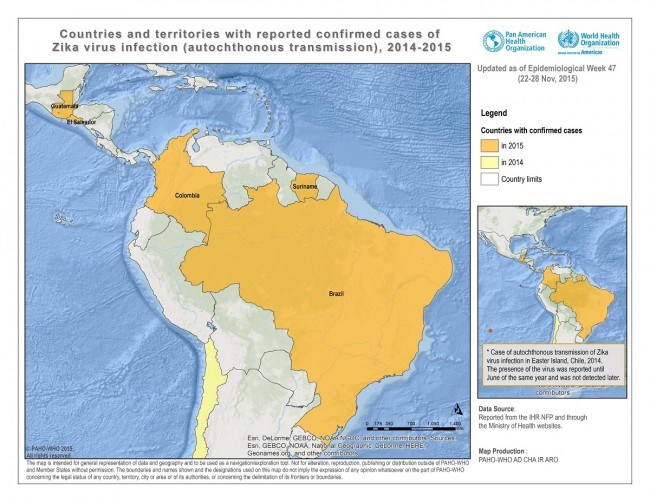
The growing outbreak of Zika virus has now seen locally acquired cases reach ten countries, causing the Pan American Health Organization (PAHO) to issue an alert, “urging countries in the region to be on the lookout for the disease and to watch for unusual patterns in newborn.” Brazil has been hit hard with a rise from 739 on November 27th, to 1,248 cases reported on November 30th. Six of the ten countries saw cases occur in November, hinting that the outbreak could just be starting. The growing concerns regarding the outbreak are also related to the newest evidence linking microcephaly and maternal cases. Zika virus genome was found in the amniotic fluid of two pregnant women and fetal diagnosis of microcephaly was performed via ultrasound. Even more so, French Polynesian health officials reported an unusual spike in nervous system malformations in babies that were born during a Zika virus outbreak in the region from 2014 to 2015. The concern regarding neurological conditions raises red flags as Brazilian health officials are reporting neurological complications, like that of Guillain-Barre syndrome, in Zika virus patients. The WHO reported 739 Brazilian microcephaly cases in newborns and while there is only ecological evidence linking the virus and microcephaly, investigations are ongoing. The outbreak first started in February 2014, on Easter Island (Chile) and has seen been identified in Colombia, Guatemala, Brazil, El Salvador, Mexico, Paraguay, Panama (confirmed cases as of December 4, 2015), Suriname, and Venezuela. Spread by Aedes mosquitoes, this vector-borne organism has similar symptoms to dengue fever and illness tends to last between four and seven days.

Event: Ebola Surveillance & Laboratory Response – Lessons for Global Health SecurityScreen Shot 2015-12-03 at 9.34.57 AM
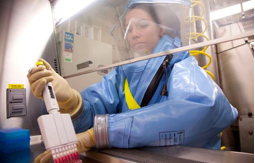
Time/Location: Monday, December 7, 2015 from 4:30pm-6pm in Robinson A-203 at George Mason University.
As the recently released Harvard-London School of Hygiene and Tropical Medicine Independent panel on the Global Response to Ebola indicates, the West African Ebola epidemic highlighted
many gaps in national and international health and response systems that are critical for protecting global health security.  Join leaders and experts who helped to lead the U.S. response for Ebola to discuss the international response to the epidemic, the importance of robust biosurveillance systems, and how the experience with Ebola influences our approach to Global Health Security. Speakers:

  • Dr. Matthew Lim, Senior Policy Advisor for Global Health Security, HHS, fmr Civil-Military Liaison Officer to WHO
  • May Chu, Ph.D. fmr Assistant Director for Public Health, Office of Science Technology and Policy, White House; Senior Science Advisor, CDC
  • Jeanette Coffin, Manager U.S. mobile laboratory deployment, MRIGlobal

It’s Definitely Maybe World War 3
GMU’s Greg Mercer breaks down the November 24th Turkish shootdown of a Russian SU-24. Greg reviews the media attention following the event and the “immediate buzz about declarations of war, what exactly NATO owes Turkey vis-à-vis Russia, and the possibility of military confrontation between Russia and the West.” Through his use of google trends and Twitter, Greg shows just how much hype and concern the notion of WWIII got during this time. Take a look at his recap and debunking of the WWIII buzz and how quickly it caught like wild fire.

Reporting from the Panel on the Final Report of the Harvard-LSHTM Independent Review of the Global Response to Ebola
If you missed the Center for Strategic & International Studies (CSIS) Global Health Policy Center’s Launch of the final report of the Harvard-LSHTM Independent Panel on the Global Response to Ebola, don’t worry! I was fortunate to attend and a great deal of the report (we reported on last week) heavily emphasized “on the ground” capacity. Dr. Peter Piot, Director and Handa Professor of Global Health, London School of Hygiene and Tropical Medicine (LSHTM), joined via video link and started by saying that this would not be a WHO-bashing event. As one of the original researchers on Ebola during its 1976 discovery, he mentioned that the Democratic Republic of Congo (DRC) is a great example of local capacity in their success of ridding themselves of the disease within a few months of the outbreak starting. Dr. Piot heavily emphasized the work of several countries and how the WHO brought together multiple ethicists to review research during such a terrible outbreak. Lastly, Dr. Piot noted that “we risk focussing too much on global and not enough on local” in our future efforts. Dr. Suerie Moon, Research Director and Co-Chair of the Forum on Global Governance for Health at Harvard Global Health Institute, then spoke on the “weak coordination of global response” and how it severely aided the spread of Ebola. Dr. Moon highlighted the need for a global strategy to ensure adequate funding (external financing for the poorer countries and transparent tracking of financing) and the necessity for external assessment of country capacity. She pointed to the need for political and economic incentives and disincentives to not only report cases but also discourage the hiding of outbreaks. Reviewing each recommendation, the panel noted that “human health is a vital part of human security”. In one of her closing comments, Dr. Moon stated that “there are many unanswered questions regarding ebola response and we need to address a number of aspects that went wrong” and “a major theme is accountability at all levels, across all types of players.” Dr. Moon pointed out that the necessity of so many reforms shows just how much work is needed and that now is the time to see political support occur. Muhammad Pate, former Nigerian Minister of State for Health, expressed that “one of the lessons, at the national level, in terms of surveillance and accountability to respond, was missing and something that national leaders need to own up to is building their own public health systems.” Dr. Sophie Delaunay, Doctors Without Borders/MSF, then discussed the role of medical innovations and how the outbreak provided us with a unique opportunity to collect data. Dr. Delaunay said it will “be a complete nightmare to connect all the dots” in this outbreak and there is a desperate need for better R&D regarding disease outbreaks and response. “We ask for governments and policy makers to support collaboration on R&D to demonstrate their willingness to be more effective in the next outbreak” noted Dr. Delaunay. She heavily pushed for global financing efforts to facilitate investment in R&D and response. After the initial panel, there was a secondary group that shared their thoughts on the report, including Dr. Tom Frieden (CDC Director), Julie Gerberding (Exec. VP for Strategic Communications, Global Public Policy and Population Health, Merck) and Ron Klain (Former US Ebola Response Coordinator, White House and General Counsel, Revolution LLC). Ron Klain pointed to the failure of the WHO and “if institutions failed us, individuals shined. We did see extraordinary compassion from the rest of the world and tremendous outpouring of support. ” Mr. Klain mentioned that “the scariest thing about Ebola is the warning signs of how badly we failed this when the threat could’ve been worse and the epidemic we face could be much much more dangerous in the future.” Dr. Frieden emphasized the need of human resources management improvement at the WHO and how global outbreak response could work to support each other better. Lastly, Dr. Frieden emphasized a topic near and dear to my heart; infection control and it’s necessity in global disease prevention. Overall, the panel touched on several key points to the outbreak, emphasizing the need for the biggest players (including MSF) to lead by example via data sharing, etc. The push for political support on incentives and local capacity/accountability was perhaps one of the biggest recommendations and points emphasized from this event.

Gene Editing and CRISPR!
This was a busy week in the biotech world. The International Gene Editing Summit kicked off in Washington, DC. Bringing together experts from around the world, the summit touched on the newest technical innovations, ethical and legal concerns, and even social implications of genome editing advances. Genome Web has provided a great overview of the summit. Nature also published their Four Big Questions related to genome editing, touching on points related to editing the human germline and the ethical implications for technology that “researchers are still grappling with the known unknowns”. Recently, biologist, Emmanuelle Charpentier, discussed CRISPR-Cas9 and that it’s simply too early to begin gene editing as “the tools are not ready” and “as of today, I’m in favor of not having the manipulation of the human germlines. As long as they’re not perfect and ready, I think it’s good to have this ban against editing the germline.” Buzzfeed noted that over the course of the conference, there was a substantial push for a delay in the use of genetic engineering in fertility clinics due to the risk of making “designer babies”. Given the heavily debated nature of this topic it’s not surprising that the US National Academy of Sciences, Engineering and Medicine, the UK’s Royal Society, and the Chinese Academy of Science, all agreed that it “would be irresponsible to proceed with any clinical use of germline editing.” While the future is left open to gene editing on humans, there was heavy accentuation throughout the conference on the ethics and societal views of these scientific breakthroughs and the necessity to revisit their applications on a regular basis.

Dengue Fever Outbreak in Hawaii 
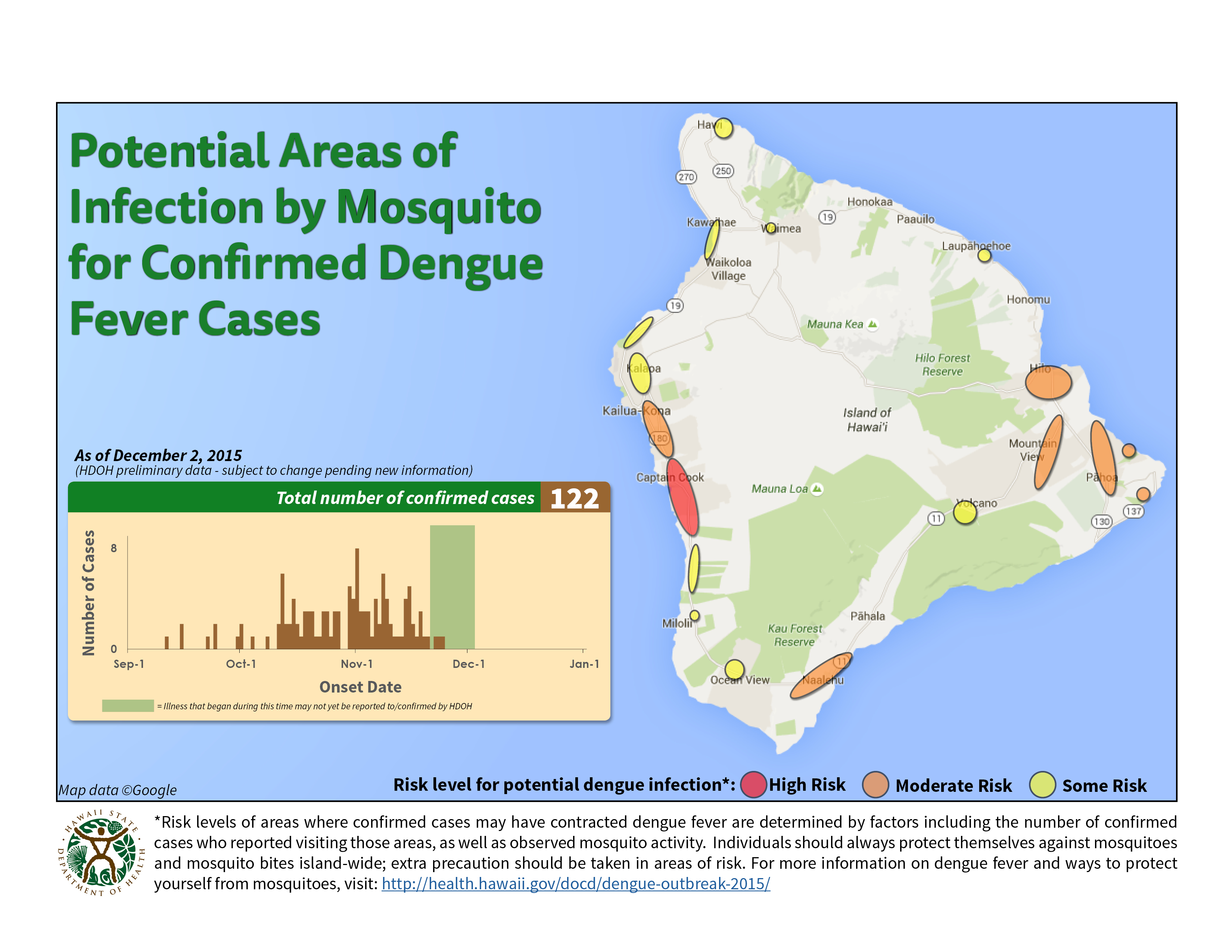
The Dengue fever outbreak on Hawaii Island is still growing. Now at 122 confirmed cases, this is one of the biggest outbreaks they’ve seen with local transmission. As of 12/2, the confirmed cases involved 106 Hawaii Island residents and 16 visitors. The Hawaii Department of Health (HDOH) has published information, hoping to aid prevention efforts, regarding the Aedes aegypti and Aedes albopictus mosquitos that are responsible for spreading the disease. There have been 313 reported potential cases and you can even find a map of the case distribution here!

Stories You May Have Missed:

  • 2015/2016 Flu Season- Where Are We?– The CDC 2015/2016 influenza activity showed a bit of a spike during the November 15-21 week. Influenza A (H3) is still the predominant species in laboratory confirmed cases. If you’re looking to keep an eye on seasonal flu, Google Flu Trends may no longer be operational, but you can still keep an eye on Flu Near You or the CDC’s page.
  • MERS-CoV Severity and Incubation Period– The CDC & Emerging Infectious Diseases published a report regarding the association of severe MERS-CoV illness and a shorter incubation period. Analyses of 170 patents in South Korea revealed a longer incubation period associated with a decreased risk for death while “patients who died had a shorter incubation period.” This mirrors the results of a previous study that had similar results with SARS coronavirus.
  • Salmonella Outbreak Associated With Recalled Nut Butters – The CDC is currently investigating 11 illnesses across nine states that may be linked to recalled nut butters. The Salmonella serotype is Paratyphoid B variant L (+) tatrate (+) (previously called Salmonella Java) and has caused illness in California, Colorado, Georgia, Hawaii, Idaho, Illinois, North Carolina, and New Jersey.
  • Taiwan CDC Holds Bioterrorism Drill – Involving 70 participants, the course utilized a subway union station to allow people to simulate first responders and real-life operations. “CDC bioterrorism teams are tasked with the investigation and identification of biological threats and attacks. Members take on containment and mitigation of damage for any individuals that are harmed during and as a result of an attack.” Go Taiwan!

Enjoying your weekly dose of the Pandora Report? Sign up to receive it every week so the fun never ends! 

Biocrime: Lessons Learned Contribute to Future Cases

By Chris Healey

Three individuals associated with Peanut Corp. of America are going to court over charges  related to intentionally shipping tainted peanuts. Those charges come after nine people died and 714 people were infected with Salmonella typhimurium after consuming peanut products shipped from the company.

Most cases of food contamination are not prosecuted, but the Justice Department alleges the individuals involved knew the peanuts were tainted and shipped their product anyway to avoid lost revenue.

Their case is considered a biocrime, a distinct offense unrelated to a more common term – bioterrorism. Biocrime involves the use of a biological agent to kill or sicken one or more individuals for revenge or monetary gain. Bioterrorism, however, is the use of biological agents to create casualties, terror, societal disruption, or economic loss inspired by ideological, religious or political beliefs. Biocrime is personal; bioterrorism is theater.


A notable, unsolved biocrime took place October 1996 at a large medical center in Texas. 12 laboratory workers became ill after eating muffins and doughnuts tainted with Shigella dysenteriae, which has been anonymously left in a break room between the night and morning shift. All 12 had consumed muffins, and stool isolates from nine of the victims were identical to Shigella dysenteriae retrieved from an uneaten muffin in the break room. Bacterial isolates from stool samples and the uneaten muffin were identical to a partially-missing laboratory stockpile of the same pathogen.

Biocrime is an attractive avenue for criminals with biological agent knowhow. Toxins and pathogens are indirect and stealthy. Pathogens must pass an incubation period—the time between introduction of the pathogen into the body and the onset of symptoms. During that time, criminals can escape and distance themselves from victims to avoid discovery.

Determining if an infection is the result of biocrime is extremely difficult. Many agents which can be used criminally, can also occur naturally. Biocrime identification depends on astute epidemiologic investigation and successful communication between scientific and law enforcement officials.

The advent of molecular biology in the late 20th century birthed the field of microbial forensics—assisting criminal investigations involving microbial organisms. However, it wasn’t until the anthrax letter attacks of 2001 that investigative short comings, such as inadequate methods of identifying agent sources based on genetic mutations, were addressed.

The anthrax letter attack investigation was a turning point in microbial forensics. It served as a proverbial rough draft that established a template for future biocrime and bioterrorism investigations. The justice system demonstrated it could wield biological science as an investigative tool and apply that knowledge toward identifying and prosecuting perpetrators.


Image Credit: Bhaskaranaidu

Pandora Report 3.14.14

Editor’s note: As Managing Editor, I know my job is never done because the news never stops. As a social scientist, I know there is always more than one side to any story. As such, before we get into the news roundup for March 14, here are two follow up articles from our report last week.

Mount Sinai Scientists Discover How Marburg Virus Grows in Cells

Last week we learned about BCX4430, a drug that could possibly treat Marburg virus. This week, news coming out of Mount Sinai in New York outlines further research findings on the virus that can lead to greater understanding or possible development of virus inhibitors. The full findings of this research are available at Cell Reports.

Newswise — “A protein that normally protects cells from environmental stresses has been shown to interact Marburg virus VP24, allowing the deadly Marburg virus to live longer and replicate better, according to a cell culture study led by scientists at the Icahn School of Medicine at Mount Sinai. The investigators say that deciphering the molecular details of how Marburg virus and the host protein interact may help in developing inhibitors of the virus.”

Nazi Scientists May Have Plotted Malaria Mosquito Warfare (Redux)

As was pointed out by our eagle-eyed reader Jean Pascal Zanders, there, of course, is disagreement about the supposed Nazi insect weapons program. Jean writes about it on his blog, and GMU Biodefense’s own, Dr. Gregory Koblentz, is incredulous.

National Geographic – “‘Research to assess the threat posed by different biological agents and vectors, such as May’s research on mosquitoes and malaria, is especially hard to categorize as offensive or defensive,’ Koblentz says. ‘Even if May’s intent was offensive, it was very preliminary-many steps away from actually producing a viable insect-borne biological weapon.’”


And now for our regularly scheduled Friday news…

Highlights include Project BioShield, Destruction of Syrian chemical weapons, and  Clostridium difficile with antibiotics. Happy Friday!

The Only Thing Scarier Than Bio-Warfare is the Antidote

Should we be afraid of bio-terror or bio-error? In this massive, front-page Newsweek story, the author looks at the creation of the Project BioShield Act and its resulting effects including the Public Readiness and Emergency Preparedness Act and increased availability of biological threat agents used for scientific research. The Soviet bioweapons program, BSL-4 labs, and the intersection of science and government are also addressed.

Newsweek – “Though BioShield’s initial goals made sense when the threat of biological warfare seemed imminent, the act may have permanently undermined some of the essential protections against unsafe practices in at least one area of science research: the regulations that keep untested drugs off the market, and labs from leaking deadly biological agents into the environment.”

Greeks protest against Syria chemical weapon destruction at sea

Under the UN Security Council backed deal to deal to destroy Syria’s chemical weapon arsenal, provisions are included for this to happen aboard a U.S. cargo ship in the eastern Mediterranean Sea.  Under the plan, hydrolysis systems aboard the ship are to mix heated water and other chemicals to break down the lethal agents, resulting in a sludge equivalent to industrial toxic waste. This plan has prompted protests in Italy, Malta, and Greece despite assurances there will be no negative impact on the surrounding environments.

Agence France-Presse – “‘If this happens it will obliterate the island’s economy, will pollute the sea and will lead the people of the Mediterranean to a grim future.’ Pavlos Polakis, mayor of the city of Sfakia told AFP.”

Severe diarrheal illness in children linked to antibiotics prescribed in doctor’s offices

According to the CDC, an overwhelming percentage of cases of pediatric Clostridium difficileinfection occur in children who were prescribed antibiotics during the 12 weeks prior to illness for unrelated conditions—such as ear, sinus, or upper respiratory infections.  C. difficile is a bacteria that causes severe diarrhea and is potentially life threatening.

CDC – “Taking antibiotics is the most important risk factor for developing C. difficile infections for both adults and children.  When a person takes antibiotics, beneficial bacteria that protect against infection can be altered or even eliminated for several weeks to months. During this time, patients can get sick from C. difficile picked up from contaminated surfaces or spread from a health care provider’s hands.”


(image courtesy of CDC/James Gathany)

The Pandora Report 1.23.14

Highlights include dengue in Texas, H7N9 spiking ahead of the Chinese New Year, renaming the 1918 influenza, and a man selling abrin on the black market. Happy Friday (stay warm)!

Rare Disease Linked to Dengue Virus Caused Texas Woman’s Death
A Texan woman thought to have been infected and died with West Nile Virus has been discovered to have actually succumbed to   dengue. The woman’s case was recently published by the CDC, which warned of the need for effective surveillance. Dengue thankfully remains relatively rare in the US – the woman represented just the third case in nearly a decade.

LiveScience – “The woman died after her dengue infection brought on another condition called hemophagocytic lymphohistiocytosis (HLH), in which white blood cells build up in the skin, spleen and liver, and destroy other blood cells. HLH is most frequently associated with Epstein Barr virus infection, but also has been linked to dengue, according to the researchers, from the Centers for Disease Control and Prevention.”

H7N9: Bird flu cases surge ahead of Chinese New Year
As the Chinese New Year approaches, the number of H7N9 cases has steadily increased, with  73 cases in the last three weeks alone. This is making people very nervous  – Chinese New Year often means millions of people travelling in very close quarters, over long periods of times. However, health officials are careful to point out that influenza case numbers, across strains, increase in the colder months. As long as the virus remains poorly transmitted person-to-person, things are fine.

BBC – “Proffesor John McCauley, the director of a WHO collaborating centre on influenza in London, said: ‘I’ve been worried all the time about H7N9; it’s highly virulent and the case fatality is about one in three, so it poses a threat.’ The range of the virus had also spread, he added, with cases in Guangdong province, further south and east than previously. He said the winter might not be the whole explanation, particularly in southern provinces closer to the equator. ‘It may be seasonal, or an alternative is more poultry exposure in the build-up to Chinese New Year, and more poultry going through the markets. They might need to reconsider closure of the markets’.”

1918 Flu Pandemic That Killed 50 Million Originated in China, Historians Say
The 1918 Spanish influenza, like so many strains of the virus, has apparently suffered for decades under an egregious misnomer. According to a new hypothesis, proposed by historian Mark Humphries, the grandfather of modern H1N1 strains may have originated in China. Humphries published his research in the journal War in History, in it arguing that the importation of almost 100,000 Chinese laborers to support the British and French lines may have introduced the virus to Europe. For those of you wondering, the pandemic strain was dubbed the Spanish flu apparently because Spain was one of the only countries to report on its heavy case numbers during the otherwise heavily censored WWI.

National Geographic – “In the new report, Humphries finds archival evidence that a respiratory illness that struck northern China in November 1917 was identified a year later by Chinese health officials as identical to the Spanish flu. He also found medical records indicating that more than 3,000 of the 25,000 Chinese Labor Corps workers who were transported across Canada en route to Europe starting in 1917 ended up in medical quarantine, many with flu-like symptoms…Writing in the January issue of the journal War in History, Humphries acknowledges that his hypothesis awaits confirmation by viral samples from flu victims. Such evidence would tie the disease’s origin to one location.”

Feds: Fla. man sold deadly toxin to NJ agent
A 19 year old in Florida has been apprehended after selling to toxin abrin to an undercover FBI agent. The deal was agreed upon online, with the FBI agent posing as a buyer on an intermediary cyber black market. The suspect was arrested after directing the FBI agent to two candles filled with the toxin, left in a fast food bag at a rest stop in Florida. A McDonalds bag, for those of you wondering about the culinary preferences of illicit toxin sellers. On a less flippant note, abrin is tremendously potent – while it presents similarly to ricin, it is 75 times more toxic.

The Grand Island Independent – “Prosecutors said Korff negotiated over the Internet with the undercover agent in New Jersey.’He allegedly peddled the poison on a virtual black market of illegal and dangerous good, hidden in the shadow of a secretive computer network favored by cybercriminals,’ said New Jersey U.S. Attorney Paul J. Fishman. Korff received $1,500 over the Internet from the agent and left the toxin hidden in two candles at a rest stop near Fort Myers, Fla., authorities said. Korff was arrested after the candles were found to contain abrin.”

(image:Calvin Teo)

The Pandora Report 10.18.13

Highlights include a MERS-free hajj?, Craig Venter and bioterrorism, coronaviruses in hedgehogs,  DoD contributing to key biodefense infrastructure, bacteriophages eating superbugs, and (briefly) the Ebola cure and the oh-so-secret botulinum toxin. Happy Friday!

Hajj Numbers Down In 2013 By 1 Million Over MERS Virus Fears

Public health officials globally have kept a nervous eye on Saudi Arabia over the last week, as hajj brought 1.5 million pilgrims into Mecca, and potentially into contact with MERS. However hajj is concluding, and so far, not  a single case of MERS has emerged from the Muslim holy city. While it’s too early to tell with certainty whether this year’s hajj has been totally MERS-free, credit where credit is due.  Saudi Arabia was careful to institute a slew of preventative measures designed to prevent the virus’ spread, including severely limiting visas to susceptible populations, mandating mask-wearing in high density spaces, and a broad information campaign emphasizing good hygiene. We’re impressed (and grateful!).

International Business Times – “Hajj placed 1.75 million foreign pilgrims in contact with 1.4 million Saudi pilgrims last year, and officials feared that such contact could prove a deadly mix for a disease that has been, thus far, largely contained within the kingdom. Interior Minister Prince Mohammed bin Nayef said international numbers were down 21 percent to 1.37 million pilgrims from 188 countries this year, while the number of pilgrims from within the kingdom is believed to be half of what it was last year…Saudi Minister of Health, Abdullah bin Abdulaziz Al-Rabeeah, announced late Saturday that all health facilities were ready for hajj pilgrims, with some 22,000 health workers (3,000 more than previous years) on standby to help the ill or injured. He added that there had been no epidemic or coronavirus cases among pilgrims thus far.”

Craig Venter (briefly) Discusses Bioterrorism 

If you’re even tangentially involved in the biosciences, you already know that Craig Venter was the lead scientists of the Human Genome Project, which was the first to successfully characterize an entire human genome. It took Venter and his team thirteen years and nearly three billion dollars to sequence his genome. Today, it’s possible to sequence a human genome in less than a month at under $5,000, leading many scientists to worry about the potential of terrorists simply sequencing highly pathogenic bugs. Popular Mechanics caught up with Venter in advance of his new book, Life at the Speed of Light: From the Double Helix to the Dawn of Digital Life, and asked him about, amongst other things, synthetic biology and biological terrorism.

Popular Mechanics – [Venter, on his biggest concern for synthetic biology] “Certainly the biggest concern is the potential for bioterrorism. But using synthetics for bioterrorism is a huge, huge, huge, challenge. Right now there are so many sources of materials for bioterrorism that it’s unlikely that somebody would go to all the difficulty to synthetically make it. For example, anthrax exists on most cattle farms. Any dead cow has a good chance of having anthrax in it, so it’s not like you need to get anthrax from some high security lab. But certainly, in theory, people could make things like smallpox that aren’t readily available. My main concern is people doing biology in their kitchens. It’s great that so many people are curious about biology, but without proper training these DIY biologists don’t learn the right safety approaches and mechanisms. Someone could inadvertently cause harm to a lot of people. Like any new frontier with powerful technology, people have to think about it carefully. What are its implications? How can we regulate it without over-regulating it?”

Bacteria-eating viruses ‘magic bullets in the war on superbugs’

Researchers at the University of Leicester have isolated a new strain of bacteriophage – viruses which infect and kill bacteria – which specifically targets the bacteria Clostridium difficile. The use of phages instead of comparatively indiscriminate antibiotics in treatment would help diminish the over-prescription antibiotics, reduce the likelihood of antibiotic resistance, and preserve healthy host bacteria. One of the researchers raises a very good point – with fewer and fewer new antibiotics discovered, and more and more cases of antibiotic resistance, an earnest search for viable alternatives is necessary.

University of Leicester – “Dr. Clokie and her team have achieved the remarkable feat of isolating and characterising the largest known set of distinct C. diff phages that infect clinically relevant strains of C. diff. Of these, a specific mixture of phages have been proved, through extensive laboratory testing, to be effective against 90% of the most clinically relevant C. diff strains currently seen in the U.K. As a testament to their therapeutic potential, these phages, that are the subject of a patent application, have been licensed by AmpliPhi Biosciences Corporation – a US-based biopharmaceutical company and pioneers in developing phage-based therapeutics. AmpliPhi have already made progress in developing phages targeted against Pseudomonas aeruginosa, a pathogen that causes acute, life-threatening lung infections in cystic fibrosis patients. They were also the first biopharmaceutical company to demonstrate the effectiveness of Pseudomonas phages in controlled and regulated human clinical trials.”

DOD Funding Contributes to U.S. Biodefense Infrastructure

The Department of Defense has co-funded the Texas A&M Center for Innovation in Advanced Development and Manufacturing, which was created in response to the 2009 influenza pandemic. The Center’s primary focus is flexible and fast development of therapeutics in response to novel disease outbreaks. Its primary investigator, Dr. Brett P. Giroir, formerly of DARPA, describing the need for the Center explained that “[l]iterally, what once took weeks during medical school to produce in a multimillion-dollar laboratory can be done [today] in an afternoon on a benchtop by someone with a relatively less degree of scientific training…So the barriers to entry have decreased’. We couldn’t agree more.

DoD – “The facility is called the National Center for Therapeutics, or NCTM, and a key feature there is the use of modular and mobile stand-alone biopharmaceutical clean rooms, called modular clear rooms, or MCRs. The initial MCR concept was funded by DOD through DARPA and the Army Research Office, Giroir said. NCTM is the core facility and main site for developing and manufacturing medical countermeasures and vaccines against chemical, biological, radiological and nuclear threats for the Texas A&M Center for Innovation, he added. Another part of the Center for Innovation’s biomanufacturing infrastructure is the Caliber Biotherapeutics Facility, Giroir said. Caliber was developed and built through Texas A&M and G-CON Manufacturing, with funding from the DARPA Blue Angel Program. According to a 2012 DARPA news release, the Blue Angel Program demonstrated a flexible and agile capability for DOD to rapidly react to and neutralize any natural or intentional pandemic disease.”

Characterization of a novel betacoronavirus related to MERS-CoV in European hedgehogs

It’s understood that bats are the established hosts for viruses similar to human coronaviruses, which prompted researchers to wonder if hedgehogs, which are closely related to bats, carry similar viruses. Researchers at the  University of Bonn in Germany acted on this hunch, and discovered a  novel “sister” betacoronavirus species in European hedgehogs. We’re disappointed – staying away from bats is fine because we don’t want rabies and bats are odd-looking, but hedgehogs? Really?

Journal of Virology – “58.9% of hedgehog fecal specimens were positive for the novel CoV (EriCoV) at 7.9 Log10 mean RNA copies per ml. EriCoV RNA concentrations were higher in the intestine than in other solid organs, blood and urine. Detailed analyses of the full hedgehog intestine showed highest EriCoV concentrations in lower gastrointestinal tract specimens, compatible with viral replication in the lower intestine and fecal-oral transmission. 13 of 27 (48.2%) hedgehog sera contained non- neutralising antibodies against MERS-CoV. The animal origins of this betacoronavirus clade including MERS-CoV may thus include both bat and non-bat hosts.”

In Case You Missed It:

Working on Ebola: We are very supportive of any treatment which helps mitigate our very real fear of Ebola. 
– Scientists Withhold Details of New Botulinum Toxin: We get it. We even agree. We’re curious if you do too.

(image credit: Michael Gäbler)

Read Now: Nature Report on Bioterrorist Attack Scenario

We know we live in a globalized world, which we all know means in one 48-hour period, a person can get from California to Hong Kong to London and back. What we don’t know is what this means for bioterrorism. If a bioterrorist were to release pneumonic plague in Delhi, how long would it take it spread to New York City? How many people would it infect along the way? How many fatalities would have to occur before we noticed? Nature looks at these questions, in metapopulation modelling detail, in its recent Scientific Report, Human mobility and the worldwide impact of intentional localized highly pathogenic virus release. They selected smallpox (which we think is kind of an obvious choice, to each their own) and developed a couple models of spread, with the most likely being bioterrorist “suicide bombers” – terrorists who infect themselves with the pathogen and then intermix with populations in large, metropolitan cities. The results are frightening. 

Abstract: “The threat of bioterrorism and the possibility of accidental release have spawned a growth of interest in modeling the course of the release of a highly pathogenic agent. Studies focused on strategies to contain local outbreaks after their detection show that timely interventions with vaccination and contact tracing are able to halt transmission. However, such studies do not consider the effects of human mobility patterns. Using a large-scale structured metapopulation model to simulate the global spread of smallpox after an intentional release event, we show that index cases and potential outbreaks can occur in different continents even before the detection of the pathogen release. These results have two major implications: i) intentional release of a highly pathogenic agent within a country will have global effects; ii) the release event may trigger outbreaks in countries lacking the health infrastructure necessary for effective containment. The presented study provides data with potential uses in defining contingency plans at the National and International level.”

Read the full report here

Forbes Piece: “Bioterrorism: A Dirty Little Threat With Huge Potential Consequences”

For those of you who wonder why we do what we do (and think us arguing our own merits may seem a bit biased), check out this excellent Forbes Opinion piece on the potential threat of bioterrorism.

Excerpt:

“Although federal efforts involving numerous agencies to combat the threat of bioterrorism expanded rapidly following the 2011 anthrax letter attacks, which killed five people and infected 17 others, various congressional commissions, nongovernmental organizations, industry representatives and other experts have highlighted flaws in these activities. A 2008 report published by the congressionally-mandated Commission on the Prevention of WMD Proliferation and Terrorism concluded that ‘…unless the world community acts decisively and with great urgency, it is more likely than not that a weapon of mass destruction will be used in a terrorist attack in the world by the end of 2013.’ It went on to say ‘The Commission further believes that terrorists are more likely to be able to obtain and use a biological weapon than a nuclear weapon.’ Making matters worse, unlike most other terrorist attacks, a biological attack could infect victims without their knowledge, and days could pass before victims develop deadly symptoms. To address this problem, the U.S. has been forced to implement air quality monitors throughout the country and stockpile antibiotics for emergency use.”

US and South Korea Engage in Annual Anti-bioterrorism Exercise

Starting tomorrow, the United States and South Korea will engage in their third annual, three-day anti-bioterrorism exercise in Seoul.  The approximately 200 officials involved in the “Able Response 13” exercise will study likely scenarios and evaluate the South Korean government’s response system. South Korean officials fear that Seoul’s 10.5 million people, living in relatively close quarters, render it a prime bioterrorist target.

For more information, see here.